1
Manufacture and characteristics of oil-modified refined lacquer for wood coatings
Chia-Wei Chang, Hsiu-Ling Lee, Kun-Tsung Lu
*Department of Forestry, National Chung Hsing University, 250, Kuo-Kuang Rd. Taichung, 402, Taiwan
*Corresponding author, Fax: +881-4-22873628, e-mail:
[email protected]
【
Abstract
】
Oriental lacquer, a natural and renewable polymeric coating, comes from the sap
produced by lacquer trees. For practical application, oriental lacquer must be refined to reduce excess water and enhance its quality. In this study, drying oils were blended with oriental
lacquer during the refining process to prepare an oil-modified refined lacquer (OMRL). The type and adding amount (0, 10, and 20% by wt.) of drying oils for wood coatings utilization
were evaluated. Rhus succedanea oriental lacquer is composed of 54.1% urushiols, 34.3% water, 7.2% plant gum, and 4.4% nitrogenous compounds, and drying oils, including tung oil
(TO), linseed oil (LO), and dehydrated castor oil (DCO) were used as materials in this study. The results show that the drying oil acts as a diluent, which reduces the viscosity and
enhances the workability and could shorten the touch-free drying time and speed up the hardened drying of the OMRL. The results also indicate that the hardness, mass retention, Tg,
tensile strength, abrasion resistance, and lightfastness of OMRL films decrease as more drying oils are blended. Conversely, the bending resistance, elongation at break, impact
resistance increase, and particularly, the gloss, is greatly improved through the blending of more drying oils. In conclusion, the LO-modified refined lacquer (RL) has the highest film
gloss and the DCO-modified RL has the shortest drying time for coating; otherwise, the film properties are similar among the three types of drying oil.
Keywords: oriental lacquer; oil-modified refined lacquer; drying oil; blending; wood coating.
2
1. Introduction
Oriental lacquer, a natural and renewable polymeric coating, comes from the sap
collected from Rhus succedanea lacquer trees and is known to have a low environmental impact throughout its production and application. Known as a “green coating,” it does not
produce as many volatile organic compounds as petrochemical coatings do [1, 2]. The lacquer film, with its satiny texture, excellent character, and high durability, gives lacquerwares a
long-lasting, elegant beauty. The composition of oriental lacquer is influenced by its cultivar,
habitat, age, and harvest season
[3]
. Generally, oriental lacquer is composed of 60–65% urushiols, with the rest being 20–25% water, 5–7% plant gum, 2–5% nitrogenous compounds,and approximately 1% laccase
[4]
. Urushiols contain 1,2,3-tri-o- or 1,3-di-o-substituted catechol and isomers containing double bonds or small amounts of saturated alkyl groups[5]
. The gum is a water-soluble pentose similar to Arabic gum, which functions as an emulsifier toencapsulate and disperse water molecules in the urushiols
[5]
. Nitrogenous compounds are identified as glycoproteins that are insoluble in acetone or water. Laccase is acopper-containing polyphenol oxidase that enables the oxidative polymerization of urushiols
[6]
. To refine the oriental lacquer for multipurpose utilization, its water content must be decreased and its molecular weight increased. After the refining process, oriental lacquer becomes a refined lacquer (RL) with a blackness, transparency, gloss, oligomer, and polymercontent that is higher than in its initial state. With a curing time shorter than that of oriental
lacquer, the RL is often used for the surface decoration of precious wares
[7]
.Vegetable oil is an important natural coating that can be classified as a drying oil, semi-drying oil, or non-drying oil based on its iodine value. If its iodine value is >130, it is
considered to be a drying oil (e.g., linseed oil (LO) and tung oil (TO))
[8]
. The large amount of unsaturated fatty acids in drying oil readily reacts with atmospheric oxygen leading to3 eleostearic acid, which contains three conjugated double bonds. This characteristic makes it susceptible to oxidative polymerization, as the conjugated double bonds form peroxides with
oxygen which react with another unsaturated fatty acid via addition polymerization to form a
cross-linked network
[9]
. Thus, TO dries the quickest and is commonly used as a raw material in coating[10, 11]
. The iodine value of LO is 170–204, slightly higher than that of TO [8]. LO is composed of a number of fatty acids: 53% linolenic acid, 15% linoleic acid,18% oleic acid, 6% hexadecanoic acid, and 6% stearic acid. Unlike in TO, the methylene next to an unsaturated double bond is activated by dehydrogenation during oxidative
polymerization in LO. The double bonds are converted from cis to the more thermodynamically stable trans form and produce hydroperoxides via the reaction of trans
free radicals with oxygen in an autoxidation process. The hydroperoxides decompose into free radicals, which trigger propagation reactions. In the termination step, the fatty acids are linked
by C-C, C-O-C, or C-O-O-C bonds to form an insoluble network-like coating
[12. 13]
. Dehydrated castor oil (DCO) is produced through the dehydration of raw castor oil, in whichricinoleic acid forms C-9, 11 conjugated and C-9, 12 non-conjugated linoleic acids, whose
drying properties are between those of TO and LO
[14]
.During the curing of the RL, urushiols are transformed into less-antioxidative quinones through the catalytic polymerization of laccase. The unsaturated double bonds on the side
chains of urushiols undergo autoxidation and polymerization to form a highly crosslinked network structure, which imparts excellent hardness, wear resistance, and durability to the RL
films but also makes them hard, brittle, and less ductile. Additionally, to obtaining a high-gloss RL, the mixing blade must be much closer to the wall of the container during the
refining process. The higher frictional heat will reduce the activity of laccase and result in a RL that is slow- or non-drying. Therefore, the most practical method is to blend drying oils
during the refining process to obtain a high-gloss RL.
4 unsaturated fatty acids of the drying oil undergo addition polymerization with the side chains of urushiols. This facilitates the curing of the RL, which endows the coating film with
flexibility and transparency, lightens the color, provides a glossier appearance and makes color blending easier. In this study, we blended RL with TO, LO, and DCO to achieve further
refinement. The effects of the type and quantity of drying oil added to the oil-modified refined lacquer (OMRL) are subsequently discussed.
2. Materials and methods
2.1.Materials
The oriental lacquer, harvested from the cultivar Rhus succedanea, was purchased from the
Long-Nan Museum of Natural Lacquer Ware in Taiwan. The sample, milky-yellow in color, was analyzed in our laboratory and the following data were obtained: (1) the lacquer was
composed of 54.1±0.3% urushiols, 7.2±0.4% plant gum, 4.4±0.7% nitrogenous compounds,
and 34.3±0.1% water according to the CNS 2810 Standard; (2) the viscosity was 1494 cps
according to the Brookfield viscometer; and (3) the weight-average molecular weight (Mw) was 1072, and number-average molecular weight (Mn) is 682 by the gel permeation
chromatography. Acetone was purchased from Merck Co., Taiwan. The iodine value (IV) of the TO was 151, as prescribed by the CNS 3646 Standard; the IV of LO was 180 and the IV
of DCO was 146. All of these materials were commercially available. Cryptomeria japonica
boards (with a moisture content of 10.7%), glass sheets, an S-16 wear-resistant steel plate,
tin-coated iron sheets, and Teflon sheets were all prepared as specified by the CNS 9007 Standard and were used as experimental substrates.
2.2.Preparation of refined lacquer (RL)
The oriental lacquer (400 g) was placed in a glass container and stirred at 60 rpm while
5 water content was reduced to 3.5%.
2.3.Preparation of the oil-modified refined lacquer (OMRL)
During the preparation of the RL, different quantities of TO, LO, and DCO were added when the water content of the RL reached 10%, to achieve weight ratios of 0/100, 10/100, and
20/100 between the drying oil and the RL. The refinement was continued until the water content was reduced to 3.5%.
2.4. Determination of coating properties
The viscosity was measured at 26°C using a Brookfield Viscometer DV-E. The drying
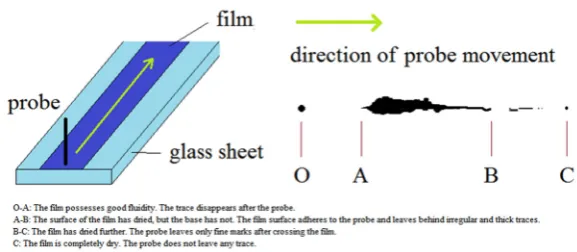
time was measured with a 3-speed BK Drying Time Recorder. The OMRL was coated on long glass sheets to form wet films with a thickness of 76 µm. The specimens were placed in
the recorder and measured at a constant temperature of 25°C and a constant humidity of 80% RH. The drying process was then categorized into a dust-free dry (DF), which corresponded
to the trace of (O-A) as shown in Figure 1, touch-free dry (TF, O-B), and hardened dry (HD, O-C) [15].
Fig. 1. The drying time test method and trace of coatings during drying process.
2.5.Determination of the film properties
The experimental substrates were coated with wet films that were 100 μm thick and placed in a constant temperature and humidity chamber at 25°C and 80% RH (relative
6 RH for three weeks. The tests were carried out after this process was completed. The hardness was measured using the König/Persoz Pendulum Hardness Tester from Braive Co., according
to the DIN 53157 König Standard. To conduct the mass retention measurements, the films were placed in extraction thimbles and heated in a Soxhlet extractor with refluxing acetone
for four cycles (fill/siphon)/h. After this process was conducted for 6 h, the films were taken out and dried to calculate the mass retention. The glass transition temperature (Tg) of the
films was measured using dynamic mechanical analysis (DMA) under the tension mode using a Perkin-Elmer DMA 8000 at 1 Hz with the temperature increasing from 30°C to 170°C at 5
°C/min. The bending resistance was determined using a bending tester (Ueshima Seisakusho Co., Ltd., Japan) with steel bars possessing diameters of 2, 3, 4, 6, 8, and 10 mm, respectively.
The bars’ diameters of film rupture were recorded; a smaller diameter indicates a higher bending resistance.
The tensile strength and elongation at break were performed once the films were considered to be specimens according to the ASTM D-638 Standard; they were subsequently
pulled into a Shimadzu EZ Test Series Tensile Tester at a speed of 5 mm/min. The impact resistance was measured using the Impact Tester IM-601 by Du Pont Co (U.S.). The impact
needle has a diameter of 2.54 cm and the falling weight is 300 g. The adhesion was tested using the cross-cut method outlined in CNS 1076 K6800. The adhesion ability of the film
varied between 10, 8, 6, 4, 2, and 0. The abrasion resistance was performed on the Taber Abrasion Tester using a CS-10 abrading wheel with a load of 500 g. The mass losses of the
films after 1,000 abrasion cycles were recorded. The gloss was measured using a Dr. Lange 60° Reflectometer in the direction of the wood texture. The lightfastness of the films before
and after color fading was measured using a Minolta Spectrophotometer CM-3600d with an 8 mm target mask and a D65 light source. The sensor was aligned at 10° to the surface of the
7 fading of the films was performed using a fade meter (SUGA Test Instruments Co., Ltd., Japan) at 32 ± 4°C, using an H400-F mercury lamp as the light source.
3. Results and discussion
3.1
Properties of the oil-modified refined lacquer (OMRL) coatingsDuring the refining process of the oriental lacquer, the timing for adding the drying oil is very important. In this study, the TO was used as an example. When the water content of the
oriental lacquer was at 30, 20, and 10%, the TO with an oil/oriental lacquer weight ratio of 20/100 was added until the water content was reduced to 3.5%; this process yielded the
TO-modified RL. The hardened drying time (HD) was evaluated. The results showed that when the water content of the oriental lacquer was at 30, 20, and 10%, the HD of RL was 13.5,
11.0, and 7.0 h, respectively. This indicates that the suitable point for adding the drying oil to the refining process occurs when the water content of the oriental lacquer reaches 10%.
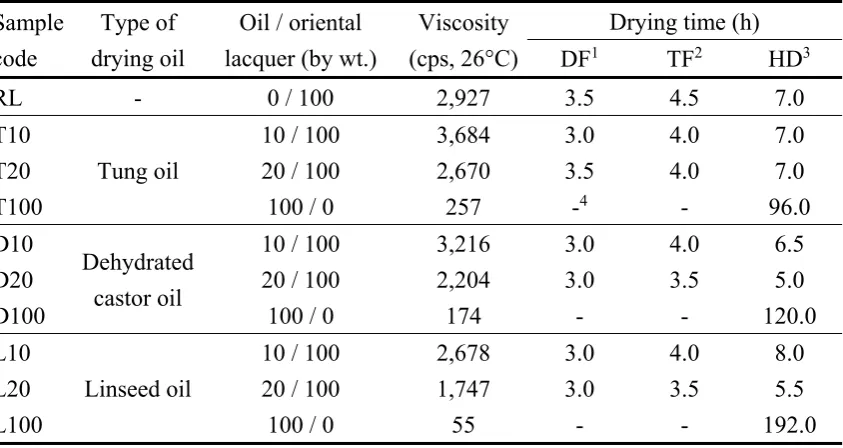
The viscosity and drying time of the RL with different types of drying oil and weight ratios are listed in Table 1. The RL had a viscosity of 2,927 cps, while the viscosities of all the
three drying oils were lower; LO (L100) had the lowest viscosity at only 55 cps. More than 70% of the fatty acid of TO (T100) is eleostearic acid, which contains 3 highly reactive
conjugated double bonds for easy oxidative addition in an aerobic environment, which in turn increases the molecular weight of TO and gives it a viscosity of 257 cps. The ricinoleic acid
in raw castor oil dehydrates at high temperatures to form two types of linoleic acids: one with conjugated double bonds and the other with non-conjugated double bonds. At 174 cps, the
viscosity of DCO (D100) was slightly lower than that of TO. After the blending and refining process of the oriental lacquer with different types of drying oil, T10 and D10 (with
oil/oriental lacquer weight ratio of 10/100) both had viscosities higher than RL and the viscosity of T10 was also greater than that of D10, proving that drying oils act as more than
8 side chains of urushiols as the oriental lacquer is refined with these drying oils. This leads to an overall increase in molecular weight and viscosity of the OMRL. On the other hand, in
L10, though the fatty acids of LO contain 40% linolenic acid and a large number of double bonds, all of the double bonds are non-conjugated and do not undergo significant oxidative
addition during the refinement process. Thus, the OMRL that was obtained did not have high a viscosity. When the ratio of the drying oils reached 20/100, oxidative addition still had the
effects highlighted above. However, once an excess of low-viscosity drying oil is introduced to the process, it begins to dilute the RL and ultimately reduces the OMRL viscosity. The
addition of the drying oil, which enhances the workability and utilization of ORML, makes it possible to use ordinary coating brushes instead of those made from human hair for the
application of RL.
Table 1 Viscosity and drying time of refined lacquer with different types of drying oil and weight ratios
Sample
code
Type of
drying oil
Oil / oriental
lacquer (by wt.)
Viscosity
(cps, 26°C)
Drying time (h)
DF
1TF
2HD
3RL
-
0 / 100
2,927
3.5
4.5
7.0
T10
Tung oil
10 / 100
3,684
3.0
4.0
7.0
T20
20 / 100
2,670
3.5
4.0
7.0
T100
100 / 0
257
-
4-
96.0
D10
Dehydrated
castor oil
10 / 100
3,216
3.0
4.0
6.5
D20
20 / 100
2,204
3.0
3.5
5.0
D100
100 / 0
174
-
-
120.0
L10
Linseed oil
10 / 100
2,678
3.0
4.0
8.0
L20
20 / 100
1,747
3.0
3.5
5.5
L100
100 / 0
55
-
-
192.0
1 DF: Dust-free dry, 2 TF: Touch-free dry, 3 HD: Hardened dry, 4
-: Cannot be detected.
9 oriental lacquer, laccase reacts with oxygen and promotes free radical polymerization to produce phenoxy radicals from urushiols, which are also known as urushiol semiquinone
radicals. This drying stage corresponds to DF in the curing test. These radicals are then disproportionate to produce urushiol quinones; this is the TF drying stage. When urushiols are
polymerized into urushiol quinones and lose their antioxidant activity, their side chains oxidize and polymerize to a produce densely cross-linked film in the HD drying stage. The
DF and HD drying times of RL measured in this study were 3.5 h and 7 h, respectively, consistent with previously reported results. As the oxidative polymerization and complete
hardening of drying oils can take weeks or even months, none of the drying oils used herein reached the HD stage within one day. The TO with conjugated double bonds took at least 96 h
to achieve this. The oxidative addition and polymerization of drying oils also require atmospheric oxygen; however, because oxygen diffuses into the interior of the wet film, an
oxygen concentration gradient is formed between the film surface and the interior, leading to different drying rates throughout the film. When the surface dries too quickly, it toughens and
blocks oxygen penetration to the interior, resulting in incomplete drying inside the film. OMRL containing drying oils is also potentially subject to these effects.
In DCO-modified RLs, the TF and HD time was shortened as more DCO was added and become shorter than that those of the RL. This is because the low viscosity of the oil-modified
RL allows oxygen to easily permeate into the coating, promoting the laccase-catalyzed polymerization and reducing the TF time. The abundant conjugated double bonds also
participate in the oxidative polymerization of urushiol side chains, thus decreasing the time it takes to reach the HD stage.
The DF and TF times of TO-modified refined lacquers were shorter than RL, but the HD time was the same (7.0 h). This is due to the three highly reactive conjugated double bonds on
10 ability of laccase to catalyze oxidation polymerization is reduced, which is not beneficial to the drying of the RL.
For the LO-modified refined lacquers, the DF and TF times of L10 and L20 are shorter than those of RL, but the HD time varies with the amount of LO added. The HD time of L20
was only 5.5 h, while that of L10 was 8.0 h. This is due to the high content of linolenic acid, which is characterized by non-conjugated double bonds, in the fatty acids of LO and a
reactivity that falls between that of TO and DCO. As a result, the HD time of the RL was shortened only when the proportion of drying oil/ oriental lacquer reached 20/100.
3.2 Properties of OMRL films
After the RLs blended with the three respective drying oils hardened into films at 25°C and 80% RH in a constant temperature and humidity chamber, they were placed in an air-conditioned environment at 26°C and 60% RH for 3 weeks. The film properties, including the hardness, mass retention, Tg, and bending resistance, were then determined (as shown in Table 2).
Table 2 The hardness, mass retention, Tg, and bending resistance of OMRL films
Sample code
Hardness
(König, sec)
Mass retention
1(%)
Tg
3(
°C)
Bending resistance
(mm)
RL
104 ± 1
91.6 ± 0.5
80.2
> 10
T10
81± 2
86.4 ± 0.6
55.0
8
T20
80 ± 1
87.1 ± 0.7
44.5
4
T100
70 ± 5
-
210.4
33
L10
61 ± 2
86.0 ± 0.5
59.9
8
L20
33 ± 1
80.6 ± 0.7
27.8
4
L100
29 ± 2
-
-12.5
32 >
D10
83 ± 1
87.2 ± 0.4
66.6
6
D20
52 ± 2
81.4 ± 0.8
33.0
4
D100
63 ± 2
-
-14.0
32 >
1 Acetone as solvent, 2
-: Cannot be detected,
3 Tg was measured by aluminum plate method.11 D10 and D20, the DCO-modified RLs had hardness values of 83 s and 52 s, respectively; and L10 and L20, the LO-modified refined lacquers, had hardness values of 61 s and 33 s. As is evident from these results, the highly reactive eleostearic acid in the TO-modified RLs readily forms cyclic peroxide with oxygen and decomposes into either oxygen or peroxy radicals, initiating polymerization and the rapid drying of the RL into a film. When TO was blended with the oriental lacquer, the fast-oxidative polymerization inhibited the catalytic polymerization by laccase, but still enabled the formation of a highly cross-linked film or a film with a tough surface [9]. For linolenic acid in LO, which contains non-conjugated double bonds, the oxidative polymerization requires dehydrogenation by methylene, after which it reacts with oxygen to form hydroperoxide and decomposes into either oxygen or peroxy radicals, initiating the cross-linking reaction. Therefore, the drying time of LO-modified RLs is longer [12]. The oxidative polymerization of LO also competes with the catalyzed polymerization by laccase, lowering the crosslink density of the dried film and giving rise to a softer film. The DCO contains both conjugated and non-conjugated double bonds, and thus, the film hardness of the DCO-modified RLs was between that of the TO and LO-modified RLs.
The mass retention for each RL composition is listed in Table 2. Except for the pure drying
oils (T100, L100, and D100) on which isolated film cannot be obtained, the highest mass retention was seen on RL (91.6%), while the other OMRLs all showed lower values. Though
the mass retention of pure drying oils cannot be measured, the crosslink density of the films of LO and DCO-modified RLs were found to decrease as the LO or DCO content increased. This
indicated the possible slowing effect that the antioxidant activity of urushiols had on the oxidative polymerization of drying oils, or the competition between the cross-linking that
occurred during the oxidative polymerization of the drying oils and the catalyzed polymerization by laccase, which lowered the crosslink density in the film. However, this
phenomenon was not observed in the TO-modified RLs (close mass retentions of approximately 86.4 and 87.1%), as TO, composed of unsaturated fatty acids with highly
12 laccase, the oxidative polymerization of TO still formed cross-linked structures as TO underwent rapid oxidative polymerization with urushiol side chains, giving the film its high
mass retention. Due to the abundance of conjugated double bonds in the fatty acids of DCO, the mass retention in films formed by DCO-modified RLs was higher than in their LO
counterparts.
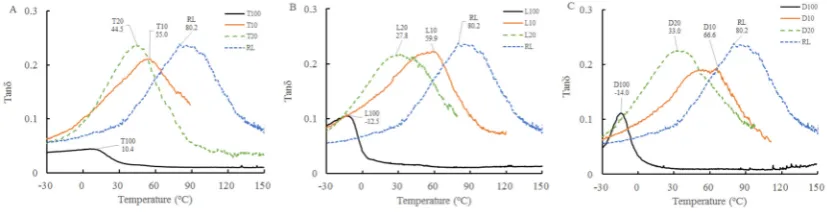
Figure 2 shows the DMA results of the films and the Tg values of the films as given by the peaks of the Tan δ plots shown in Table 2. As intact films of the three pure drying oils cannot
be obtained, the standard method of film chips covered in aluminum is used to measure the Tg of the films. The RL film had the highest Tg at 80.2°C, indicating the high degree of
cross-linkage, as is also reflected in the mass retention. The Tg of the various OMRL decreased as the drying oil proportion increased, with the highest Tg recorded in D10 at 66.6oC, while T10
and L10 had similar Tg values of 55.0oC and 59.9oC, respectively. These results were also consistent with the mass retention.
Fig. 2 Tan δ of OMRL films (A) TO-modified refined lacquer, (B) LO-modified
refined lacquer and (C) DCO-modified refined lacquer.
The results above show that OMRL, composed of long chain fatty acids, has lower rigidity than the RL. The cross-linking reaction is still possible for the films of TO-modified
13 despite the antioxidant activity of urushiols. Therefore, the mass retention of the films increased even as the quantity of TO increase from 10% to 20%, and the decrease in Tg was
smaller (from 44.5oC to 55.0oC). The iodine value of LO was higher than DCO, which indicates that the cross-linking density in films of LO-modified RLs should be higher than that of their
DCO counterparts, whose fatty acids have been completely oxidized and polymerized. However, the mass retention and DMA tests show opposite results, which means that the
laccase-catalyzed polymerization of oriental lacquer competes effectively with the oxidative polymerization of the drying oils, resulting in incomplete oxidative polymerization. On the
other hand, the DCO consists of fatty acids with highly reactive double bonds, giving the RL films a higher mass retention and Tg. The high hardness, mass retention, and Tg values
exhibited by the films of DCO-modified RLs also indicate the presence of both conjugated and non-conjugated double bonds in the fatty acids of DCO, which form highly cross-linked films
despite the possibility of laccase-catalyzed polymerization.
The bending resistance test showed that the film formed by the RL was hard brittle and was broken using a 10 mm-diameter steel bar. Films of pure drying oils all demonstrated good
bending resistance during a 2–3 mm-diameter, steel shaft test. The addition of TO, LO, and DCO greatly improved the bending resistance of the OMRL films. A higher bending resistance
was observed as more drying oils were added, as seen for D10 and D20 which were tested using 6 mm- and 4 mm-diameter steel bars, respectively. This shows the enhanced flexibility in
OMRL films as compared to the traditional RL.
The tensile strength and elongation at break for the films are shown in Figure 3. The T100, L100, and D100 films were so low in strength that intact films could not be isolated.
The tensile strength of RL film was around 27.6 MPa. The tensile strengths of OMRL films all decreased with an increase in the drying oil proportion, as drying oils reduce the
14 highest tensile strength of 20.7 MPa, while the films of LO and DCO-modified RLs had similar tensile strengths of approximately 13.0–15.2 MPa. With the addition of 10 or 20%
drying oil, the DCO-modified RLs had the lowest tensile strengths. Although these films have the highest cross-linking density, they have poor homogeneity as both conjugated and
non-conjugated fatty acids participate in the oxidative polymerization as the films dry, in addition to the laccase-catalyzed polymerization. This could be verified as D10 showed the
broadest peak in the DMA test results (Figure 2c).
Fig. 3 Stress-strain curves of OMRL films.
The elongation at break for RL was only about 12% but increased for the OMRL films as
more drying oils were added. The best results were obtained for LO-modified RLs, which had an elongation at break of 34.2% for L20. The unsaturated fatty acids of LO contain
non-conjugated double bonds and show low reactivity in oxidation polymerization. Thus, films of LO-modified RLs do not exhibit dense cross-linking and are soft and flexible as a
result.
The impact resistance, adhesion, abrasion resistance, and gloss of OMRL films are listed
15 they could not be tested for impact resistance. The RL film was hard and brittle, but it withstood the impact of a fall from 5 cm. The OMRL films all showed reasonably high impact
resistances of about 10–20 cm, with the highest exhibited by T20, L20 and D20. Both RL and pure drying oils (T100, L100, and D100) showed an excellent adhesion of grade 10, but the
adhesion of OMRL was low and decreased with an increased drying oil content. Among the various OMRLs, the adhesion of LO and DCO-modified RL dropped most significantly. The
oxidative polymerization of drying oils depends on the penetration of atmospheric oxygen into the wet film, but oxygen permeation is impeded with increasing film thickness and
coating material viscosity, resulting in an oxygen concentration gradient in the wet film. The oxygen concentration at the film’s surface is higher, which leads to oxidative polymerizations
rates that vary between varied the surface and bottom of the film. This effect is more substantial when the fatty acids in the drying oils are not very reactive.
Table 3 The impact resistance, adhesion, abrasion resistance and gloss of OMRL films
Sample code
Impact
resistance (cm)
Adhesion
(grade)
Abrasion resistance
(mg/1000cycles)
60° Gloss
RL
10
10
13.2 ± 0.7
26 ± 2
T10
15
8
14.1 ± 1.8
35 ± 1
T20
20
8
18.3 ± 2.4
52 ± 1
T100
-
110
-
2 ± 0
L10
10
8
11.5 ± 2.6
43 ± 1
L20
20
4
27.4 ± 2.7
82 ± 3
L100
-
10
-
6 ± 2
D10
10
10
13.7 ± 0.8
33 ± 1
D20
20
6
32.2 ± 3.4
54 ± 2
D100
-
10
-
3 ± 1
1 -: Cannot be detected
The abrasion resistances of OMRL films are also shown in Table 3. The weight loss due
16 increased with the increasing drying oil content. With the exception of the L10 film (a weight loss of 11.5 mg), the other OMRL films all lost more weight (approximately 13.7–32.2 mg)
than the RL. D20 film has the highest weight after the abrasion test at 32.2 mg, while that of the D10 film was closest to RL at 13.7 mg. The results of the abrasion resistance test are consistent
with the tensile stress-strain curves of Figure 3
[16]
, which show the smallest area-under-curve for the D20 film. The 60° gloss of RL film had a value of 26%, while OMRL films all showedgreatly improved gloss, particularly L20, which had a gloss value of 82%. The films of TO and DCO-modified RLs showed little difference in this respect, and all had high gloss values such
as 52 and 54% for T20 and D20, respectively. Drying oils reduce the viscosity of the RLs, facilitating a smoothening of the film and the release of air bubbles, which makes the film
surface smoother after drying. The OMRL films with drying oils have a high gloss and are lustrous in appearance, and are well adapted for special utilization.
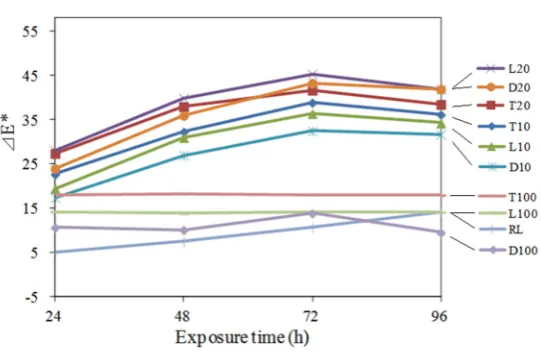
The lightfastness values of the OMRL films before and after color fading test are given in
Figure 4. The color difference (⊿E*) of RL and OMRL films increased with prolonged
exposure time under ultraviolet light irradiation, accounting for the color changes of the films.
The ⊿E* values of RL during the first 72 h were lower than those of the pure drying oils (T100,
L100, and D100), but steadily rose after 72 h of irradiation. Conversely, the drying oils do not
show any increase. This is because RL contains a large number of aromatic rings, which are
easily converted to quinones and undergo photo-degradation, thus increasing ⊿E*. The ⊿E* of
drying oils does not increase appreciably but still had values of 11–17, with the highest
observed in TO and the lowest in DCO. This is related to the unreacted or newly formed conjugated double bonds in the films, as these conjugated double bonds absorb light and are
17 similar to the pure drying oils, with ⊿E* values in the following order: TO-modified RL >
LO-modified RL > DCO-modified RL. When the proportion of drying oil increased to 20%, the
⊿E* of the TO-modified RLs decreased significantly. The order of ⊿E* became LO-modified
RL > DCO-modified RL > TO-modified RL. As TO is blended with oriental lacquer, rapid
oxidative polymerization inhibits and dominates the laccase-catalyzed polymerization, forming
highly cross-linked films. Less conjugated double bonds are left in the film, reducing ⊿E*.
Generally speaking, the ⊿E* values of OMRLs were higher than RL, as the colors of the OMRL
films were lighter, resulting in more intense color changes. In the lightfastness test, the ⊿E*
values of OMRL films were found to stabilize and stop increasing at 96 h, while that of RL
continued to rise. Lightfastness tests of longer duration or with a higher irradiation intensity will be needed for a comprehensive study of this observation.
18
Conclusion
Different OMRLs were prepared by adding TO, LO, and DCO into oriental lacquer at 10
wt.% and 20 wt.%. The effects of the type and weight proportion of drying oils on the properties of OMRL coatings and films were investigated. The results show that the drying oil
acts as a diluent, reducing the viscosity and enhancing the workability of OMRL. Also, the addition of drying oil can potentially shorten the TF time and an appropriate amount of drying
oil, such as the addition of 20% DCO and LO, can speed up the HD of the RLs. The results also indicated that as more drying oils were blended the hardness, mass retention, Tg, tensile
strength, abrasion resistance, and lightfastness of OMRL films was reduced, while the
bending resistance, elongation at break, impact resistance was enhanced
.
Gloss, in particular, can be greatly improved through the addition of more drying oils. Generally, the LO-modified RL has the highest film gloss and DCO-modified refined lacquer has the shortest coatingdrying time. Otherwise, the other film properties were all similar between the three types of drying oil.
References
1. Niimura, N.; Miyakoshi, T. Structural Study of Oriental Lacquer Films During the
Hardening Process. Talanta2006, 70, 146-152; DOI: 10.1016/j.talanta.2005.12.039. 2. Bai, W.; Cai, L.; Zhuo, D.; Xu, Y.; Xue, H.; Chen, Q.; Lin, J. Resurrection of Dead
Lacquer-Cupric Potassium Chloride Dehydrate (K2CuCl4·2H2O) used as the mimic laccase.
Prog. Org. Coat.
2014, 77, 431-438, DOI: 10.1016/j.porgcoat.2013.11.007.3. Ma, X.M.; Lu, R.; Miyakoshi, T. Recent Advances in Research on Lacquer Allergy.
Allergol Int.2012, 61, 45-50, DOI:10.2332/allergolint.11-RA-0324.
4. Honda, T.; Lu, R.; Sakai, R.; Ishimura T.; Miyakoshi T. Characterization and Comparison
19 5. Lu, R.; Harigaya, S.; Ishimura, T.; Nagase, K.; Miyakoshi T. Development of a Fast Drying
Lacquer Based on Raw Lacquer Sap.
Prog. Org. Coat.
2004, 51, 238-243, DOI: 10.1016/j.porgcoat.2004.08.006.6. Kumanotani J. Enzyme Catalyzed Durable and Authentic Oriental Lacquer: a Natural
Microgel-printable Coating by Polysaccharide–Glycoprotein–Phenolic Lipid Complexes.
Prog. Org. Coat.
1998,
34, 135-146, DOI: 10.1016/S0300-9440(97)00115-X.7. Kumanotani, J. Urushi (oriental lacquer) - a Natural Aesthetic Durable and
Future-promising Coating.
Prog. Org. Coat.
1995
,
26, 193-195, DOI: 10.1016/0300-9440(95)00559-5.8. Karak, N. Vegetable Oil-Based Polymers 1st Edition, Woodhead Publishing, India, 2012;
pp54-95, eBook ISBN: 9780857097149.
9. Hutchinson, G.H. Some Aspects of Drying Oils Technology. J. Am. Oil Chem. Soc. 1973,
56,44-53, DOI: none.
10. Gȕner, F.S.; Yağci, Y.; Erciyes, A.T. Polmers from Triglyceride Oils. Prog. Polym. Sci.
2006, 31, 633-670, DOI: 10.1016/j.progpolymsci.2006.07.001.
11. Oldring, P.K.T.; Hayward G. A Manual for Resins for Surface Coatings, 1, 2, 2nd Ed.,
SITA Technology, London, 1987; pp49-63, ISBN 0947798048.
12. Tuman, S.J.; Chamberlain, D.; Scholsky, K.M.; Soucek, M.D. Differential Scanning
Calorimetry Study of Linseed Oil Cured with Metal Catalysts.
Prog. Org. Coat.
1996
,
28,251-258, DOI: 10.1016/0300-9440(95)00605-2.13. Soucek, M.D.; Khattab T.; Wu, J. Review of Autoxidation and Driers. Prog. Org. Coat. 2012, 73, 435-454, DOI: 10.1016/j.porgcoat.2011.08.021.
14. Ogunniyi, D.S. Castor Oil: A Vital Industrial Raw Material. Bioresour. Technol., 2005, 97, 1086-1091, DOI: 10.1016/j.biortech.2005.03.028.
15. Lu, R.; Honda, T.; Ishimura, T.; Nagase, K.; Miyakoshi, T. Study of A Naturally Drying
20 10.1295/polymj.37.309.