University of South Carolina
Scholar Commons
Theses and Dissertations
6-30-2016
Understanding Conceptualizations and Structural
Environment for Improving Pre-Pregnancy
Planning for Adolescent Girls and Young Women
in Harare, Zimbabwe
Chiwoneso Beverley Tinago
University of South Carolina
Follow this and additional works at:https://scholarcommons.sc.edu/etd
Part of theHealth and Medical Administration Commons
This Open Access Dissertation is brought to you by Scholar Commons. It has been accepted for inclusion in Theses and Dissertations by an authorized administrator of Scholar Commons. For more information, please [email protected].
Recommended Citation
U
NDERSTANDINGC
ONCEPTUALIZATIONS ANDS
TRUCTURALE
NVIRONMENT FORI
MPROVINGP
RE-P
REGNANCYP
LANNING FORA
DOLESCENTG
IRLSAND
Y
OUNGW
OMEN INH
ARARE,
Z
IMBABWEby
Chiwoneso Beverley Tinago
Bachelor of Science William Carey University, 2009
Master of Public Health
University of Southern Mississippi, 2010
Submitted in Partial Fulfillment of the Requirements
For the Degree of Doctor of Philosophy in
Health Promotion, Education, and Behavior
The Norman J. Arnold School of Public Health
University of South Carolina
2016
Accepted by:
Lucy Annang Ingram, Major Professor
Edward A. Frongillo, Committee Member
Christine E. Blake, Committee Member
David Simmons, Committee Member
Barbara Engelsmann, Committee Member
DEDICATION
I dedicate this research to my family. To my dearest mother, Gloria Chiedza
Tinago for being my rock throughout this process. I appreciate all the sacrifices you make
for me and my sisters and for believing in us and our capacity to break through barriers as
women and girls. You are my greatest advocate and I share this accomplishment with
you. To my dearest father, Brian Alphabet Tinago, I thank you for believing in educating
the girl child and for sacrificing to send all your girls to the best schools so that we could
realize our dreams through a sound education. To my older sister Chidochashe, I’ve
always thought you could do anything you put your mind to and I am truly appreciative
for your encouragement and support throughout this process. To my loving twin sister
and womb-mate Chatinoda, you are the constant in my life. A constant source of support,
guidance, encouragement, and laughter. You always say, “We are built for teamwork”,
and I agree. Thank you for always standing by me because together we are stronger. To
my youngest sister Chamapuwa, I thank you for being a light in my life and for
reminding me to see the good in all things. It’s your turn now. To my maternal
grandparents Leonard Chipindu and Loice Mukwenga, and paternal grandparents David
and Enesta Tinago, your granddaughter is getting a PhD! I hope you’re celebrating in
heaven. My final dedication is to the research participants. Thank you for trusting me to
share your stories and for reminding me to continue in sincerity and fortitude because
ACKNOWLEDGEMENTS
First and foremost, to God be the glory. Your love and grace has sustained me
throughout this doctoral program. To my fearless and dedicated committee chair and
advisor Dr. Lucy Annang Ingram, you inspire me and are always there to challenge and
support me in my educational and professional endeavors. I cannot thank you enough for
always being there for me and for believing in me. Dr. Edward Frongillo, thank you does
not seem sufficient to express the immense gratitude I feel towards you. You’ve been a
reliable source of guidance and inspiration, and I am honored to have you as a mentor.
Dr. Christine Blake, you were the first to ignite my passion for qualitative research and
you always challenge me to dig deeper and unpack my thoughts. I am truly grateful for
your mentorship and support. Dr. David Simmons, you inspired my choice to enroll in
the doctoral program at USC and I am so grateful for your mentorship throughout my
tenure at USC. Dr. Barbara Engelsmann, you inspired the conception of this dissertation
research and you provided much needed guidance and support throughout the process and
for that and so much more, I am deeply thankful. I would also like to thank my other
mentors; Dr. Daniel Schabot, Jennifer Talbert, Dr. Andrew Reid, Dr. Carolyn Parks-Bani,
Dr. James McGuire, Mr. Grant Guthrie, Professor Rose Kambarami, Dr. Heather Brandt,
and Dr. Casey Goldston-Giraudy. Thank you also to my dearest friends in the Circle and
the Sistrens, Chineme, Helen, Chati, Oddessy, Odelia, Monalisa, Rumbi, Tanyaradzwa,
Ann, Andrea, Sarah, Shaun, Rudo, Maggie, and the staff and residents of Preston
Residential College. Finally, a huge thank you to the Sackler Institute for Nutrition
ABSTRACT
Zimbabwe has a high maternal mortality with adolescent girls and young women
facing disproportionately high risk of maternal morbidity and mortality. Current
approaches to reducing maternal mortality in Zimbabwe focus on the pregnancy period
with antenatal care, obstetric care, and micronutrient supplementation during pregnancy.
Although important, these approaches are not reaching a large number of women and
may benefit from integration with pregnancy approaches. The importance of
pre-pregnancy interventions to promote young women’s health has been emphasized, yet
many young women in developing countries like Zimbabwe do not have access to
pre-pregnancy care because little is understood about the concept of pre-pre-pregnancy planning.
Furthermore, it is unknown which interventions will have the greatest impact on maternal
outcomes of women in these countries. The purpose of this research was to work
collaboratively with adolescent girls, young women, and key stakeholders in Harare,
Zimbabwe to bridge the knowledge gap around pre-pregnancy planning and to inform the
development of a pre-pregnancy planning intervention. Interview data were collected
from June-August 2015 from adolescent girls and young women (14-24 years) (n=48)
and key community stakeholders (n=24) from two low-income high-density communities
in Harare. Sixteen focus groups were also conducted in November 2015 with females
aged 14-24 years, healthcare workers, and partners of females aged 14-24 years (n=134).
time for pregnancy, pregnancy decision makers, who is responsible for the pregnancy,
pregnancy burden, pregnancy dangers, and increase in social status with pregnancy.
Participants expressed mixed views concerning the possibility of planning a pregnancy
and described pregnancy planning across the pre-pregnancy, pregnancy and
post-pregnancy phases. Key community stakeholders described a physical environment related
to pregnancy and planning for pregnancy that was limited in programming targeting
adolescent girls and young women and a social environment that was deeply rooted in
culture and cultural practices. Focus group participants described potential pre-pregnancy
efforts that included clinic programs, community outreach, edutainment, empowerment
of young women, parent and partner involved or targeted programs, peer education,
school programs, technology programs, and youth friendly environments. Findings
suggest that considering the socio-sociocultural influences on pregnancy will be
beneficial in developing pre-pregnancy efforts to improve maternal and child health in
TABLE OF CONTENTS
DEDICATION ... iii
ACKNOWLEDGEMENTS ... iv
ABSTRACT ... vi
LIST OF TABLES ... xi
LIST OF FIGURES ... xii
LIST OF ABBREVIATIONS ... xiii
CHAPTER 1:INTRODUCTION ...1
1.1OVERVIEW OF STUDY ...3
CHAPTER 2:BACKGROUND AND SIGNIFICANCE ...7
2.1SETTING ...7
2.2MATERNAL HEALTH,MORBIDITY, AND MORTALITY IN ZIMBABWE ...8
2.3FACTORS THAT CONTRIBUTE TO MATERNAL HEALTH IN ZIMBABWE ...15
2.4NATIONAL STRATEGY AND INTERVENTIONS TO PROMOTE MATERNAL HEALTH IN ZIMBABWE ...27
2.5ANEW APPROACH FOR IMPROVING MATERNAL HEALTH IN ZIMBABWE:PRE -PREGNANCY HEALTH ...29
2.6GAPS IN THE LITERATURE...39
2.7STUDY SIGNIFICANCE ...40
CHAPTER 3:METHODOLOGY ...42
3.3CONCEPTUAL MODEL ...44
3.4SAMPLING ...50
3.5PARTICIPANT RECRUITMENT ...51
3.6DATA COLLECTION...52
3.7DATA MANAGEMENT ...53
3.8DATA ANALYSIS ...54
3.9ETHICAL CONSIDERATIONS AND ETHICAL APPROVAL MECHANISM ...57
3.10DISSEMINATION PLAN ...57
CHAPTER 4:RESULTS ...59
4.1UNDERSTANDING CONCEPTUALIZATIONS OF PREGNANCY AND PLANNING FOR PREGNANCY AMONG ADOLESCENT GIRLS AND YOUNG WOMEN IN HARARE, ZIMBABWE ...60
4.2UNDERSTANDING THE SOCIAL ENVIRONMENTAL INFLUENCES ON PREGNANCY AND PLANNING FOR PREGNANCY IN HARARE,ZIMBABWE ...88
CHAPTER 5:SUMMARY,IMPLICATIONS AND RECOMMENDATIONS ...113
5.1SUMMARY OF MAJOR FINDINGS ...113
5.2PUBLIC HEALTH SIGNIFICANCE ...125
5.3STUDY LIMITATIONS ...127
5.4CONCLUSION AND IMPLICATIONS FOR FUTURE RESEARCH ...127
REFERENCES ...131
APPENDIX A–STUDY FLIERS ...143
APPENDIX B–SEMI-STRUCTURED INTERVIEW GUIDE ...149
APPENDIX C–FOCUS GROUP DISCUSSION GUIDE ...156
APPENDIX D–INTERVIEW AND FOCUS GROUP SOCIO-DEMOGRAPHIC SURVEYS ...159
APPENDIX F–CODE BOOK FOR SPECIFIC AIMS 1-3 ...178
APPENDIX G–INSTITUTIONAL REVIEW BOARD APPROVAL LETTERS ...184
APPENDIX H–SPECIFIC AIM 2RESULTS:PHYSICAL ENVIRONMENT ...187
LIST OF TABLES
Table 2.1 Causes of Maternal Deaths in Zimbabwe Maternal and Perinatal Mortality
Study 2006 ...11
Table 2.2 Zimbabwe Trends in Current Use of Contraception ...17
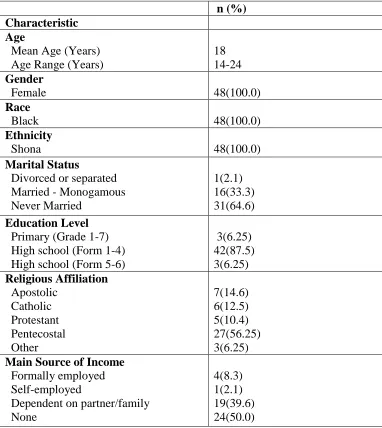
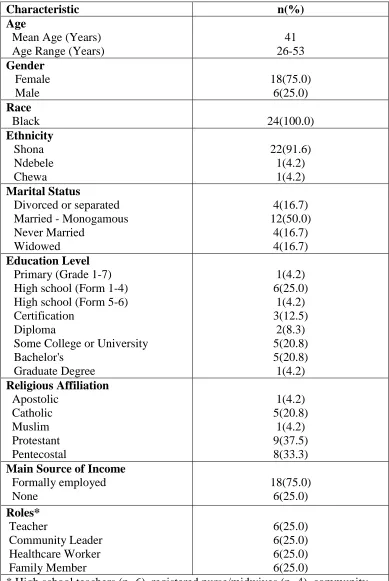
Table 4.1 Socio-demographic Characteristics of Study Participants (N=48) ...69
Table 4.2 Socio-demographic Characteristics of Study Participants (N=24) ...97
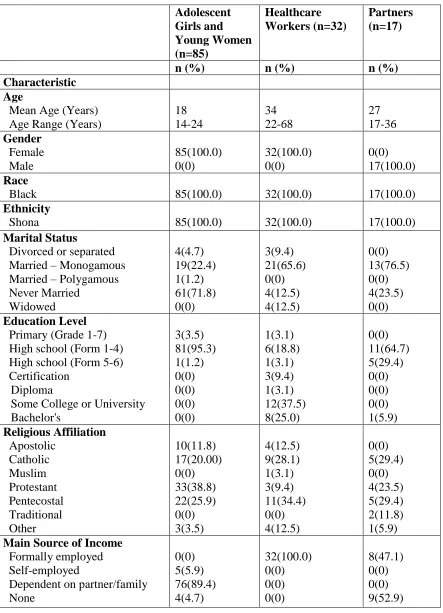
Table 5.1 Socio-demographic Characteristics of Focus Group Participants (N=134)...119
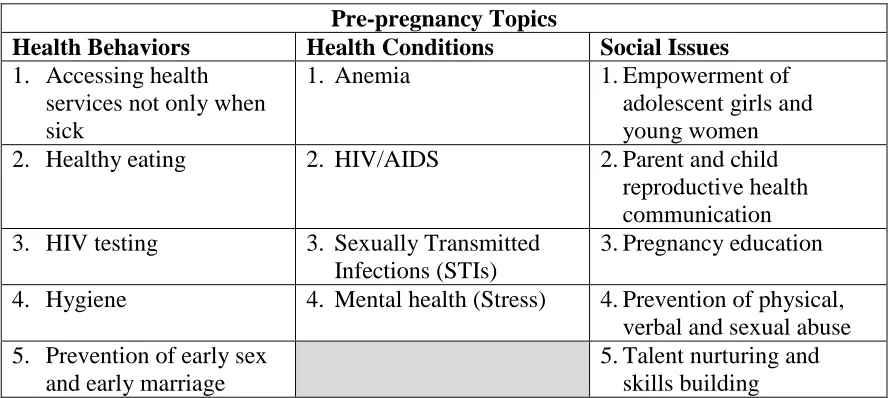
Table 5.2 Potential Pre-pregnancy Topics ...121
LIST OF FIGURES
Figure 2.1 Distribution of Zimbabwean Population by Province ...8
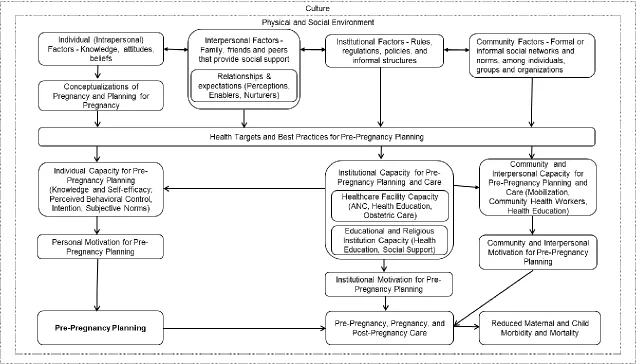
Figure 3.1 Conceptual Model: Understanding Conceptualizations and Structural Environment for Improving Pre-Pregnancy Planning for Adolescent Girls and Young Women in Harare, Zimbabwe ...49
LIST OF ABBREVIATIONS
AIDS ... Acquired Immunodeficiency Syndrome
ANC ... Antenatal care
CDC ... Centers for Disease Control and Prevention
HIV ... Human Immunodeficiency Virus
IFA ... Iron and Folic Acid
IMB ... The Information-Motivation-Behavioral Skills Model
IUD ...Intrauterine Device
LAM ... Lactational Amenorrhea Method
MCHIP ... Maternal and Child Health Integrated Program
MDG ... Millennium Development Goal
MOHCC ... Ministry of Health and Child Care
NHS... National Health Survey
PIH ... Pregnancy-induced Hypertension
PITC ... Provider Initiated Testing and Counseling for HIV
PMI ... President’s Malaria Initiative
PMTCT ... Prevention of Mother to Child Transmission of HIV
UNAIDS ... The Joint United Nations Programme on HIV/AIDS
WHO ... World Health Organization
ZDHS ... Zimbabwe Demographic and Health Survey
CHAPTER
1
INTRODUCTION
Zimbabwe has a high maternal mortality ratio of 581 deaths per 100,000 live
births and the five leading causes of maternal mortality, accounting for 80% of all
maternal deaths, are preventable and are namely HIV/AIDS, pregnancy-induced
hypertension/eclampsia, postpartum hemorrhage, puerperal sepsis, and malaria
(Munjanja, 2009; ZIMSTAT, 2015). Maternal health has thus become an integral part of
Zimbabwe’s national health strategy and current approaches to reducing maternal
mortality focus on the pregnancy period with an emphasis on antenatal care, obstetric
care, and micronutrient supplementation during pregnancy.
Although important, these approaches are not reaching a large number of women
due to delayed or non-uptake of antenatal care, home deliveries, low adherence to
micronutrient supplementation in pregnancy, and structural challenges within the
healthcare system such as staff shortages (City of Harare, 2012; Darnton-Hill, 2012;
Gadaga, Madzima, & Nembaware, 2009; Munjanja, 2009; ZDHS, 2012). These barriers
were also identified during a formative study identifying the factors influencing the
utilization of iron and folic acid (IFA) supplementation among pregnant women in
Harare, Zimbabwe (unpublished data). The dissertation research explored a new approach
to reducing maternal mortality in Zimbabwe that identifies the time before pregnancy as a
Whitworth & Dowswell, 2009).
Pre-pregnancy health emphasizes that early prenatal care may already be too late
and as such, we need to intervene before a woman contemplates pregnancy or becomes
pregnant (Atrash, Johnson, Adams, Cordero, & Howse, 2006). Pre-pregnancy care, which
is any intervention that seeks to improve the health of a woman before pregnancy, and
pre-pregnancy planning, which is any effort to modify or sustain a woman’s positive
health and health behaviors before pregnancy, are both integral to promoting
pre-pregnancy health (Jack & Culpepper, 1990; Johnson et al., 2006).The importance of
pre-pregnancy interventions to promote health among adolescent girls and young women
(14-24 years) has been emphasized, yet many young women in developing countries like
Zimbabwe do not have access to pre-pregnancy care because little is understood about
the concept of pre-pregnancy planning (Bhutta et al., 2013; Dean et al., 2013; Draper et
al., 2014; Hanson, Gluckman, Ma, Matzen, & Biesma, 2012; Sawyer et al., 2012; Viner
et al., 2012). Furthermore, it is unknown what interventions will have the greatest impact
on maternal outcomes of women in these countries. As such, we need to gain a
fundamental understanding about how adolescent girls and young women of childbearing
age (14-24 years) conceptualize pregnancy, planning for pregnancy and the structural
environment in which they live in order to effectively inform the development of
behavioral change interventions around pre-pregnancy planning (Monterrosa, Pelto,
Frongillo, & Rasmussen, 2012).
The dissertation research applied a participatory, holistic approach, to bridge the
knowledge gap around pre-pregnancy planning in Zimbabwe. We worked collaboratively
development of a pre-pregnancy planning intervention with the hope of improving
overall maternal and child health in Zimbabwe. The following is a description of the
specific aims, background, significance, innovation, research plan and logistics of the
dissertation research.
1.1 Overview of Study
The overall goal of the dissertation research was to explore pre-pregnancy
planning among adolescent girls and young women (14-24 years) in Harare, Zimbabwe.
The dissertation research was a qualitative study in Harare, Zimbabwe and addressed
three specific aims.
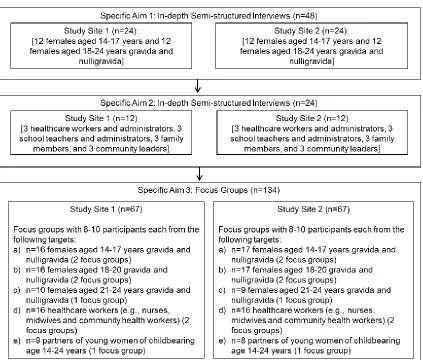
Specific Aim 1 took an emic approach (Pelto & Pelto, 1978) to understand and describe
how adolescent girls and young women (14-24 years) in Harare conceptualize pregnancy
and planning for pregnancy, and how the aforementioned conceptualizations inform
decisions about pregnancy and planning for pregnancy.
Research Question 1: How do adolescent girls and young women (14-24 years) in Harare,
Zimbabwe conceptualize pregnancy and planning for pregnancy?
Research Question 2: How do conceptualizations of pregnancy and planning for
pregnancy among adolescent girls and young women (14-24 years) influence their
decisions related to pregnancy and planning for pregnancy?
Specific Aim 2 was to understand and describe the structural environment related to
pregnancy and planning for pregnancy in Harare, Zimbabwe and its influences on
Research Question 3: What is the structural environment related to the pre-pregnancy
period and pregnancy?
Research Question 4: How do elements of the structural environment impact
pre-pregnancy planning?
Specific Aim 3 was to work collaboratively with adolescent girls and young women
(14-24 years) with or without a previous or current pregnancy, healthcare workers, and
partners of adolescent girls and young women to: 1) develop intervention protocol
guidelines for a pre-pregnancy planning intervention for adolescent girls and young
women (14-24 years) in Harare, Zimbabwe; 2) identify essential components of the
intervention; 3) identify who, where, and when to potentially implement the intervention;
and 4) identify potential channels for delivery of the intervention.
Research Question 5: What are participants’ views concerning specific health conditions
or behaviors that will be addressed through a pre-pregnancy planning intervention for
adolescent girls and young women (14-24 years) in Harare, Zimbabwe and the preferred
methods for delivering the intervention?
Research Question 6: What are participants’ views concerning best practices for
pre-pregnancy planning?
Expected outcomes for specific aim 1 were descriptions of how adolescent girls
and young women (14-24 years) conceptualize pregnancy and planning for pregnancy
and how the aforementioned conceptualizations inform decisions about pregnancy and
planning for pregnancy. Expected outcomes for specific aim 2 were descriptions of the
structural environment related to the pre-pregnancy period and pregnancy in Harare,
Expected outcomes for specific aim 3, were the identification of participants’ views
concerning specific health conditions or behaviors that will be addressed through a
pre-pregnancy planning intervention, the preferred methods for delivering the intervention, in
addition to best practices for pre-pregnancy planning.
The dissertation research sought to bridge the knowledge gap around
pre-pregnancy planning in Zimbabwe and add to our understanding of pre-pregnancy and
planning for pregnancy among adolescent girls and young women (14-24 years) in
Zimbabwe. The dissertation research also shifted emphasis from treatment to the
prevention of maternal illnesses, which is the core of public health. Currently, many
women are not benefitting from approaches that target the pregnancy period alone,
particularly in terms of antenatal care with delayed or non-uptake of these services, thus
intervening before pregnancy presents an opportunity to reach these women. The
dissertation research complemented existing efforts in Zimbabwe to improve maternal
health that currently focus on the pregnancy phase, with the hope that coordinated efforts
at addressing women’s health before, during, and after pregnancy will result in improved
maternal and child morbidity and mortality.
The results of this research will be used to guide the development of
pre-pregnancy efforts that address participant identified pre-pre-pregnancy health conditions or
behaviors and intervention delivery methods, with an emphasis on prevention and
informed decision-making to improve pre-pregnancy health. Since Zimbabwe currently
has no national policy, nor do standard tools exist for the delivery of pre-pregnancy care
services, this research may provide some foundational information in developing policies
describe the background and significance of the research, the methodology used to collect
and analyze research data, the research results presented in the form of two manuscripts,
and a summary of findings, implications and recommendations for future research and
CHAPTER 2
BACKGROUND AND SIGNIFICANCE
The following is a description of pertinent background information that guided
the development of the dissertation research. The section begins with a description of the
setting and an overview of maternal health, morbidity, and mortality in Zimbabwe.
Factors that contribute to maternal health in Zimbabwe are then outlined with a
description of the current Zimbabwe national health strategy and interventions to promote
maternal health in the country. A new approach for improving maternal health in
Zimbabwe is presented before finally outlining the gaps in the literature.
2.1Setting
Zimbabwe is in south-east Africa and has a population of 12,973,808 with
6,234,931 males and 6,738,877 females (ZIMSTAT, 2013). Harare Province, which is the
capital city of Zimbabwe and one of the 10 provinces in the country (Figure 2.1), is
densely populated compared to the other provinces with a population of 2,098,199
accounting for 16.2% of the total population (ZIMSTAT, 2013). English and Shona are
Figure 2.1 Distribution of Zimbabwean Population by Province (Source: Zimbabwe Census 2012: Preliminary Report)
2.2Maternal Health, Morbidity, and Mortality in Zimbabwe
The 2010-11 Zimbabwe Demographic and Health Survey (ZDHS) is a commonly
cited document throughout this section and it provides results from a nationally
representative sample of nearly 11,000 households in Zimbabwe. Data were collected
from September 2010 through March 2011 qualitatively through interviews and
quantitatively though questionnaires, while anthropometry measurements, anemia, and
HIV testing were also conducted (ZDHS, 2012). Data were collected and analyzed by the
Zimbabwe National Statistics Agency (ZIMSTAT).
The World Health Organization (WHO) defines maternal health as “the health of
women during pregnancy, childbirth and the postpartum period” (WHO, 2014a).
Maternal health is a critical indicator of national health and is directly related to newborn
and child health because “babies and young children who have lost their mothers in
Zimbabwe’s national health strategy with the objective of achieving the previous
Millennium Development Goal (MDG) 5 targets to: 1) reduce by three quarters, between
1990 and 2015, the maternal mortality ratio, and 2) achieve, by 2015, universal access to
reproductive health (National Health Service, 2009; WHO, 2014e). According to the
WHO, maternal mortality or maternal death is “the death of a woman while pregnant or
within 42 days of termination of pregnancy, irrespective of the duration and site of the
pregnancy, from any cause related to or aggravated by the pregnancy or its management
but not from accidental or incidental causes” (WHO, 2014b). Globally, about 830 women
of childbearing age die every day due to complications of pregnancy and child birth,
while over 15 million suffer long term illness or disability (Bhutta, Dean, Imam, & Lassi,
2011; WHO, 2015b). An estimated 99% of all global maternal mortality occurs in
developing countries, with sub-Saharan Africa alone accounting for 66% of these
maternal deaths (WHO, 2015b). In addition, young women face higher risks of maternal
mortality with pregnancy and childbirth complications being the leading cause of death
among adolescent girls in developing countries (Conde-Agudelo, Belizán, & Lammers,
2005; Patton et al., 2009). Most maternal deaths occur during labor, delivery, and the
immediate postpartum period (Bhutta et al., 2011). Obstetric hemorrhage is the main
medical cause of maternal death with other causes being hypertensive diseases,
sepsis/infections, obstructed labor, and abortion related complications (Bhutta et al.,
2011).
Although global maternal mortality dropped by almost 44% between 1990 and
2015, Zimbabwe experienced an increase in maternal deaths within this time period
555 deaths per 100,000 live births as documented in the 2005-06 ZDHS to an alarming
960 deaths per 100,000 live births in the latest 2010-11 ZDHS. This means that for every
1000 births, there were approximately 10 maternal deaths. The latest national maternal
mortality data from the 2014 Multiple Indictor Cluster Survey outlined a maternal
mortality ratio lower than the 2010-11 ZDHS at 581 deaths per 100,000 live births;
however, this rate is still high (ZIMSTAT, 2015). Harare Province has the highest
recorded rate of maternal mortality at 29% (Munjanja, 2009). The 2009-2013 Zimbabwe
National Health Strategy addressed plans to reduce the maternal mortality ratio to 300
deaths per 100,000 births by 2015 (National Health Service, 2009); a daunting task
considering the current status of maternal mortality in the country.
Maternal deaths in Zimbabwe are documented through the Maternal Death
Notification System; however, this system does not capture maternal deaths outside the
healthcare system from women who die giving birth at home or those who die after they
are discharged from healthcare facilities (United Nations in Zimbabwe, 2013). As a
result, the current statistics on maternal mortality may not be capturing the scope of
maternal deaths in the country. The latest Zimbabwe Maternal and Perinatal Mortality
Study (2007) identified HIV/AIDS, pregnancy induced hypertension/eclampsia,
postpartum hemorrhage, puerperal sepsis, and malaria as the five leading causes of
maternal mortality in Zimbabwe (Munjanja, 2009) (Table 2.1). The study identified that
effectively preventing and treating the four leading causes of maternal deaths may
potentially reduce maternal deaths by 73.5% (Munjanja, 2009).
The following is a description of the five leading causes of maternal mortality,
and Perinatal Mortality Study. The descriptions will use percentage rates of maternal
deaths based on the assessor’s diagnosis to determine the rank and percentage of maternal
deaths related to each health issue.
Table 2.1: Causes of Maternal Deaths in Zimbabwe Maternal and Perinatal Mortality Study 2006
Source: Zimbabwe Maternal and Perinatal Mortality Study (2007)
1. HIV and AIDS
The Zimbabwe Maternal and Perinatal Mortality Study (2007) found that HIV
and AIDS were the leading causes of maternal mortality in Zimbabwe, accounting for
26.9% of maternal deaths (Munjanja, 2009). Other national data document the percentage
of maternal deaths due to HIV at as much as 52.7% (MCHIP, 2013). Ciaranello and
colleagues (2012) estimate a 16% HIV prevalence in antenatal care in Zimbabwe, with an
estimated 61 000 children born to HIV-infected women each year (Ciaranello et al.,
Women living with HIV/AIDS may be more susceptible to post-partum
hemorrhage, puerperal sepsis, complications of caesarean section and opportunistic
infections such as tuberculosis progress faster among pregnant women (McIntyre, 2003).
The high impact of HIV and AIDS on Zimbabwe’s maternal mortality mirrors the
impacts of HIV and AIDS on the general population. In 2014, Zimbabwe had an adult
HIV prevalence of 16.7% with 830,000 women aged 15 years and older living with HIV
(UNAIDS, 2015). These decreasing HIV prevalence rates in addition to Zimbabwe’s
adoption of the WHO’s 2013 guidelines to prevent mother to child transmission with
Option B+, has seen increased access to HIV treatment among pregnant and
non-pregnant women in Zimbabwe and will hopefully contribute to a decrease in maternal
deaths related to HIV (WHO, 2013b)
2. Postpartum Hemorrhage
The WHO defines postpartum hemorrhage as “a blood loss of 500 ml or more
within 24 hours after birth, while severe postpartum hemorrhage is defined as a blood
loss of 1000 ml or more within the same timeframe” (WHO, 2012, p. 8). The most
common causes of postpartum hemorrhage include uterine atony, genital tract trauma,
uterine rupture, retained placental tissue, or maternal coagulation disorders (WHO, 2012).
Women with grand multiparity, anemia and multiple gestations are at an increased risk of
postpartum hemorrhage (WHO, 2012). The Zimbabwe Maternal and Perinatal Mortality
Study (2007) identified postpartum hemorrhage as the second leading cause of maternal
3. Pre-eclampsia and Eclampsia
The Zimbabwe Maternal and Perinatal Mortality Study (2007) identified
pregnancy-induced hypertension (PIH) or pre-eclampsia and eclampsia as the third
leading causes of maternal mortality in Zimbabwe, accounting for 15.7% of all maternal
deaths (Munjanja, 2009). Pre-eclampsia is characterized by a rapid rise in blood pressure
that can lead to seizure, stroke, multiple organ failure and increased risk of fetal distress
(Mudokwenuy-Rawdon, Bezuidenhout, & Ehlers, 2003; Pre-Eclampsia Foundation,
2013). If not managed correctly, pre-eclampsia progresses to eclampsia. Currently, efforts
to reduce pre-eclampsia related maternal mortality center on treatment with magnesium
sulphate, with no documented efforts to prevent this illness (Sevene et al., 2005). Key
indicators of pre-eclampsia include blood pressure, weight, and proteinuria. High blood
pressure defined as 140/90mmHg or greater at two occasions 6 hours apart, weight gain
of more than .91kg (2 pounds) in a week, and a simple dipstick test of the urine with a
measure of 1+ and greater all indicate a pre-eclampsia diagnosis (Pre-Eclampsia
Foundation, 2013).
4. Puerperal Sepsis
The WHO defines puerperal sepsis as “any bacterial infection of the genital tract
which occurs after the birth of a baby” with symptoms usually occurring more than 24
hours after delivery (WHO, 2008, p. 17). Symptoms include fever, chills and general
malaise, lower abdominal pain, tender uterus, subinvolution of the uterus and purulent,
foul-smelling lochia (WHO, 2008). Risk factors include pre-existing anemia and
2008). The Zimbabwe Maternal and Perinatal Mortality Study (2007) identified puerperal
sepsis as the fourth leading cause of maternal mortality, accounting for 12.3% of all
maternal deaths (Munjanja, 2009).
5. Malaria
Malaria is caused by a parasite that commonly infects a certain type of mosquito
that feeds on humans (CDC, 2012). In Zimbabwe, 98% of all cases of malaria are caused
by P. falciparum and the primary vector is Anopheles arabiensis (President’s Malaria
Initiative (PMI), 2014). Symptoms include high fevers, shaking chills, and flu-like illness (CDC, 2013). Malaria in pregnancy is a serious health threat to both the woman and her
baby. The Zimbabwe Maternal and Perinatal Mortality Study (2007) identified malaria as
the fifth leading cause of maternal mortality, accounting for 7.4% of maternal deaths.
Malaria is primarily transmitted during the rainy season, from November to April, and
50% of the Zimbabwe population is at risk of contracting malaria (Presidents Malaria
Initiative (PMI), 2009).
Global recommendations for the prevention of malaria in pregnancy include the
use of insecticide-treated bed nets, intermittent preventive treatment (IPTp) for women in
high transmission areas, and effective case management (CDC, 2012). IPTp is the
administration an antimalarial drug, usually sulfadoxine-pyrimethamine, beginning in the
second trimester and at each subsequent antenatal care visit (CDC, 2012). According to
the 2010-11 ZDHS, 10% of pregnant women reported that they had slept under an
insecticide treated mosquito net (ITN) the previous night, while 7% of women reported
The Zimbabwe Maternal and Perinatal Mortality Study (2007) identified that the
majority of maternal deaths (63%) occurred in the postpartum period, 24% in the
antenatal period, and 6.6% in the intrapartum period. The majority of these deaths
occurred at home (42.3%) and at tertiary hospitals (17.7%) (Munjanja, 2009). The study
also found that the risk of maternal death increased significantly by delivering outside
institutions, operative delivery, delivery by non-skilled persons and if the woman
belonged to the Apostolic faith religious sect (Munjanja, 2009).
2.3Factors that Contribute to Maternal Health in Zimbabwe
Factors that contribute to maternal health in Zimbabwe are mainly reproductive
health and family planning, nutrition, antenatal care, obstetric care, and structural
environmental influences. Below is a description of these factors.
1. Reproductive Health and Family Planning
The WHO defines reproductive health as “the reproductive processes, functions
and system at all stages of life” (WHO, 2014c). In Zimbabwe, the average age of initial
sexual activity is 18.9 years and 20.6 years for women and men respectively while the
median age at first birth among women aged 25-49 years is 20.2 years (ZDHS, 2012). In
addition, 24% of women aged 14-19 years have begun childbearing (ZDHS, 2012). The
fertility rate in Zimbabwe has increased from 3.8 in 2006 to 4.1 in 2011, yet the total
wanted fertility is 3.4 children per woman (ZDHS, 2012). Twenty-five percent of
pregnancies are reported as mistimed (wanted later), and 7% are unwanted (ZDHS,
postpartum, which is below the recommended WHO guidelines for birth spacing to
reduce pregnancy risks (ZDHS, 2012).
Stover and Ross (2010) propose that family planning plays an integral role in
reducing maternal mortality “by reducing the number of births and, thus, the number of
times a woman is exposed to the risk of mortality” (p. 688). The type of contraception
used is equally important in ensuring effective family planning. According to the 2009
Zimbabwe Multiple Indicator Monitoring Survey (MIMS), 98% of married women in
Zimbabwe have knowledge of a modern family planning method (MIMS, 2009). Data
from the 2010-11 ZDHS lists modern methods of contraception as the most common
types of contraceptives used by married women aged 15-49 years with 58.5% of married
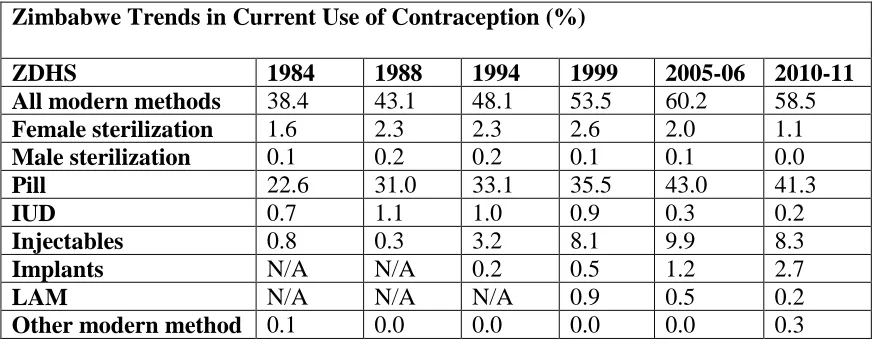
women utilizing this method. Table 2.2 highlights the trends in current use of
contraception as outlined in the 2010-11 ZDHS.
The most popular modern methods are the pill, used by 41.3% of married women,
and injectables, used by 8.3% of married women (ZDHS, 2012). Despite the popularity
of these modern methods, less than 1% of married women utilized intrauterine devices
(IUDs) , diaphragms and the lactational amenorrhea method (LAM) irrespective of age,
residence, region, education and number of living children (ZDHS, 2012). It is important
to note that these low percentages were also evident in the 2005-06 survey showing a
decrease or unchanged percentages among this population. Unmarried sexually active
women are more likely to utilize modern family planning methods (62%) when compared
to currently married women (57%) (ZDHS, 2012). It is also interesting to note that
condoms, only 3% of currently married women’s partners utilize this method (ZDHS,
2012).
Table 2.2 Zimbabwe Trends in Current Use of Contraception
Zimbabwe Trends in Current Use of Contraception (%)
ZDHS 1984 1988 1994 1999 2005-06 2010-11
All modern methods 38.4 43.1 48.1 53.5 60.2 58.5 Female sterilization 1.6 2.3 2.3 2.6 2.0 1.1 Male sterilization 0.1 0.2 0.2 0.1 0.1 0.0 Pill 22.6 31.0 33.1 35.5 43.0 41.3 IUD 0.7 1.1 1.0 0.9 0.3 0.2 Injectables 0.8 0.3 3.2 8.1 9.9 8.3 Implants N/A N/A 0.2 0.5 1.2 2.7
LAM N/A N/A N/A 0.9 0.5 0.2
Other modern method 0.1 0.0 0.0 0.0 0.0 0.3
Source: ZDHS (2012)
In Zimbabwe, a reported 10.4% of married women who want to postpone their
next birth for two or more years or who want to stop childbearing altogether are not using
a contraceptive method (ZIMSTAT, 2015). The highest rates of unmet need for family
planning in Zimbabwe are found among adolescents, older women, rural women with no
education, and in the lowest income quintile (Loewenson, Kadungure, & Shamu, 2012).
A study conducted by the Zimbabwe National Family Planning Council (ZNFPC)
identified deep cultural and religious resistance to contraception in addition to husband
disapproval as the most influential factors of contraception use at the household level
(Chitereka & Nduna, 2010). The researchers also found that knowledge levels of family
planning methods did not translate to use and the monetary cost of contraceptives was not
much of a hindrance to use of family planning methods when compared to the social and
Contraceptive Commodity Availability Patterns
The majority of Zimbabwean contraceptive users obtain their contraceptives from
the public sector (73%) such as government hospitals/clinics, rural clinics/health centers,
and ZNFPC clinics, while 14% obtain contraceptives from the private medical sector
(ZDHS, 2012). The national committee that works on ensuring contraceptive security in
Zimbabwe is the Reproductive Health Commodity Security Committee while the agency
that advocates for contraceptive security is the Zimbabwe National Family Planning
Counsil (ZNFPC). The ZNFPC is allocated a budget for family planning by the
government with additional funding from partners (ZNFPC, 2010).
There are charges to the client in the public sector for family planning, but there
are exemptions for those who cannot afford to pay. Contraceptives are generally in full
supply at the central level with no significant issues with commodity security according
to Contraceptive Security (CS) Indicators 2011 Data developed by USAID/DELIVER
Project; however, information concerning the availability of contraceptives at health
facility level is not readily available.
2. Nutrition
Micronutrient deficiencies are prevalent across the lifespan of Zimbabweans with
serious health and social implications; particularly among women of childbearing age (15
to 49 years). The prevalence of iron deficiency among women is 61% and vitamin A
deficiency is 22% while pregnant women, who have an increased nutritional need, have a
higher prevalence of vitamin A deficiency (32%) and anemia (32.4%), which is
Pregnant women receive IFA supplements at their first antenatal care visit and throughout
pregnancy; however adherence to IFA supplementation among pregnant women is low
with 49.8% of women reporting that they did not take iron supplements during their last
pregnancy and 36.5% reporting that they took the iron supplements for less than 60 days
(Gadaga et al., 2009; ZDHS, 2012).
Preliminary results of the aforementioned formative study assessing the
influences on utilization of IFA supplementation among pregnant women in Harare,
Zimbabwe points to delayed entry into antenatal care, misconceptions about IFA
supplementation, influences of social networks, lack of supportive social environments
for IFA supplementation, side effects and a lack of nutrition knowledge as possible
reasons for low utilization of IFA supplementation, while possible enhancers of
utilization of IFA supplementation included supportive social environments and social
networks for IFA supplementation, knowledge of risks and benefits of IFA
supplementation, fear of negative health complications, and healthcare provider
recommendation.
Micronutrient deficiencies are a common risk factor for the four leading causes of
maternal mortality in Zimbabwe (Munjanja, 2009; ZDHS, 2012). Specifically, maternal
micronutrient deficiency may increase the progression of HIV, with vitamin A deficiency
increasing the transmission of HIV from mother to child (McIntyre, 2003). Furthermore,
iron deficiency is a risk factor for postpartum hemorrhageandpuerperal sepsis, while
calcium deficiency is a risk factor for pregnancy-induced hypertension/eclampsia
(Pre-Eclampsia Foundation, 2013; WHO, 2012; WHO, 2008). As a result, preventing maternal
leading causes of maternal mortality.
Micronutrient deficiencies persist in developing countries like Zimbabwe due to
high rates of food insecurity, lack of a national micronutrient fortification policy, low
nutrition knowledge among women, lack of nutrition programming targeting
non-pregnant women, low reach of micronutrient supplementation due to delayed entry into
antenatal care, low utilization of antenatal care, and low adherence to IFA
supplementation in pregnancy (City of Harare, 2012; Darnton-Hill, 2012; Gadaga et al.,
2009; MOHCC, 2014; ZDHS, 2012).
3. Antenatal Care
Antenatal care is integral to improving health during pregnancy because it
provides health education, identifies and reduces risks for maternal illnesses, and
provides treatment and care throughout pregnancy to improve maternal and child health
outcomes. Zimbabwe follows WHO recommendations for at least 4 antenatal care visits
during pregnancy at 8-12 weeks, 24-26 weeks, 32 weeks and 36-38 weeks respectively
(Lincetto, Mothebesoane-Anoh, Gomez, & Munjanja, 2006; ZDHS, 2012). The median
months pregnant at first antenatal care visit among pregnant Zimbabwean women is 5.3
months (19 weeks) (ZDHS, 2011). The aforementioned study assessing the influences on
utilization of IFA supplementation among pregnant women in Harare found similar
results with participants reporting that they attended their initial antenatal care visit at, on
average, 6 months pregnant (unpublished data). This means that most pregnant women
are not benefitting from these antenatal care services, particularly in terms of
Observations of antenatal care sessions at the study clinics revealed that the initial
antenatal care visit was termed a “booking” and subsequent antenatal care visits were
termed “scale”. Pregnant women paid $25 for antenatal care services at their initial
antenatal care visit and this covered their antenatal care and general healthcare during
pregnancy and six weeks post-delivery. Each pregnant woman received a maternity book
where healthcare providers documented their medical and maternal history and this book
was used to track the health and health conditions of each pregnant woman throughout
pregnancy. Antenatal care sessions were group sessions with on average between 20-40
pregnant women at each initial visit and between 30-70 pregnant women at each repeat
visit.
Trained cadres that provided antenatal care counseling to pregnant women at the
study clinics were nurses, nurse/midwives, and midwives; however, HIV councilors were
also at hand to provide health education about HIV prevention, and prevention of
mother-to-child transmission of HIV/AIDS (PMTCT). This is comparable, with the exception of
doctors, to national-level data that states that nurses are the primary healthcare workers
providing antenatal care services to pregnant women in Zimbabwe with 59.3% of
pregnant women reporting receiving antenatal care services from nurses, 10.0% from
doctors, and 20.5% from nurse-midwives (ZDHS, 2012).
The group antenatal care sessions were long and pregnant women arrived early in
the morning between 6am-7am and left later on in the afternoon between 2pm-3pm.
Initial antenatal care sessions covered various topics such as HIV education and
counseling, IFA supplementation, and expectations for clinic delivery. Repeat visits
tests that were taken during the initial visit. These sessions usually took between 2-4
hours and at one of the study clinics, repeat visits were only conducted one day during
the week, while the other clinic had repeat visits four days out of the week.
Although most of the pregnant women in the study attended their initial antenatal
care visit later on in their pregnancy (on average at 6 months pregnant) it was very
possible for them to have attended at least four antenatal care visits at the time of delivery
because the majority of the pregnant women in the study attended an antenatal care visit
every 2 weeks or monthly following their initial antenatal care visit up until delivery. In
Zimbabwe, 64.8% of pregnant women attend at least four of the WHO recommended
antenatal care visits and the 2010-11 ZDHS found that of the women who reported
attending at least 4 antenatal care visits, 73.6% also reported delivering their child in a
health facility (ZDHS, 2012).
4. Obstetric Care
According to the WHO, Essential Obstetric and Newborn Care (EmONC) is
defined for two different levels of the health care system: 1) Basic Essential Obstetric and
Newborn Care (BEmONC) services at the health center level which include parenteral
antibiotics, parenteral oxytocic drugs, parenteral sedatives for eclampsia, manual removal
of placenta, and manual removal of retained products, and 2) Comprehensive Essential
Obstetric and Newborn Care (EmONC) services at the district hospital level (first referral
level) which include surgery, anesthesia, and blood transfusion (WHO, 2015a). The
Zimbabwe Maternal and Perinatal Mortality Study (2007) identified that effectively
hypertension/eclampsia and sepsis, may potentially reduce maternal deaths by 46%
(Munjanja, 2009). As such, the health care system plays a critical role in preventing
maternal mortality in Zimbabwe.
Efforts are currently underway in Zimbabwe through funding from the Health
Transition Fund (described in depth later in the background section) to provide health
care workers such as doctors, midwives, nurses and primary care nurses from provincial,
district and rural health facilities with training on the five signal functions of BEmONC.
The Ministry of Health and Child Care of Zimbabwe has a database that tracks the
number of healthcare workers trained in providing these obstetric care services (UNICEF
Zimbabwe, 2014). In 2012, 100% of health facilities had at least one health worker
trained in EmONC and midwifery lifesaving skills, 65% of health facilities were capable
of providing three BEmONC signal functions namely; parenteral antibiotics,
anticonvulsants, uterotonics and over 70% were able to provide neonatal resuscitation
(UNICEF Zimbabwe, 2014). Despite these successes, there are still gaps in basic and
comprehensive EmONC service provision at health facilities. These gaps include
essential equipment and supply shortages, particularly in rural clinics (UNICEF
Zimbabwe, 2014). Funding from the Health Transition Fund has been allocated to
strengthen EmONC in Zimbabwe and mitigate the aforementioned resource gaps.
5. Structural Environmental Factors
Structural environmental influences on maternal health are those changeable
environmental factors that influence health behavior and that change conditions beyond
Farley, 2000). Physical environmental influences include availability or accessibility to
health resources or physical structures that inherently reduce or increase opportunities for
healthy behaviors and outcomes (Cohen et al., 2000). Social environmental influences
include social structures such as laws or policies that promote or prohibit behaviors or
cultural and media messages that are viewed regularly (Cohen et al., 2000).
Over the past decade, Zimbabwe’s healthcare system has faced challenges with a
shortage of trained healthcare professionals and the high cost of healthcare services
(UNICEF, 2011). Initially, the Zimbabwean health sector faces challenges with a
shortage of trained healthcare professionals such as doctors, nurses, pharmacists and
specialists, particularly in the public sector which provides as much as 65% of the
country’s health services (McPake et al., 2013; Mudyarabikwa & Mbengwa, 2006). The
shortage of trained healthcare professionals is due to migration, retention, lack of
incentives, poor salaries and conditions of services (Mudyarabikwa & Mbengwa, 2006).
To mitigate this issue, the Zimbabwean government introduced a new cadre of healthcare
professional called a primary care nurse with the sole responsibility of providing
healthcare services at the primary health care level (National Health Service, 2009).
In addition, the issue of cost is a challenge facing the Zimbabwean healthcare
system. In 2011, it is estimated that pregnant women paid between US$3 and US$50 to
deliver in a government or municipal facility, in addition to transportation costs to the
health facility (UNICEF, 2011). Results of the 2010-11 ZDHS found that women aged
15-49 years identified cost and distance from health facility as key barriers to accessing
healthcare services. Specifically, 36.8% and 58.6% of urban and rural women
respectively identified distance to health facility as a barrier to accessing healthcare
services (ZDHS, 2012). These percentages highlight the disparities in access to maternal
and general health services among women in urban and rural areas, with women in rural
areas being disproportionately affected by the aforementioned barriers.
The Access to Health Care Services Study (2008) found that 23% of communities
in Zimbabwe live between 5 to 10 km and 17% are live over 10km from their nearest
health center (Makuto & James, 2007). The cost and distance barriers, in addition to the
limited availability of ambulance services for emergencies, have attributed to home
deliveries with on average 33% of women delivering their children at home (Loewenson
et al., 2012; ZDHS, 2012). This disparity widens between women in urban and rural areas
with 14.2% and 41.6% of women in urban and rural areas respectively delivering at home
(ZDHS, 2012).
In 2011, the Ministry of Health and Child Care, with aid from international
donors, established the Health Transition Fund to strengthen health systems and aid in
removing healthcare user fees for pregnant women and children under 5 years attending
non-private health facilities (UNICEF, 2011). Currently, Zimbabwe’s policy is to provide
free maternal services to pregnant women through the Health Transition Fund with the
hopes of improving maternal and child health on the road to meeting the previous
health-related Millennium Development Goals and the current Sustainable Development Goals
(UNICEF, 2011; United Nations, 2016). However, due to economic instability in the
country, pregnant women continue to pay fees for maternal services in some non-private
incur costs related to travel to and from the health facility and loss of work time among
others.
A focus on cost of maternal healthcare services is critical; however, Loewenson
and colleagues (2012) propose that simply tackling the issue of cost of accessing
healthcare services will not address the social differentials, which include religion and
culture among others, that exist in maternal health. To support their argument,
Loewenson and colleagues (2012) conducted a study to assess the facilitators and barriers
(perceived and measured) to accessing maternal, neonatal and child health services in
women and in children under five years in Zimbabwe. The researchers interviewed both
key informants and mothers from four urban and rural districts and identified the absence
of a waiting mother shelter, availability of supplies, cost, transport and distance to
services, culture, religion and stigma in elderly and young people, and lack of access to
information as the major barriers to maternal health service uptake and coverage
(Loewenson et al., 2012).
The researchers’ findings through both qualitative and quantitative methodologies
provided an extension of the cost and distance barriers to more socio-cultural factors that
impact access to maternal health services in Zimbabwe. Specifically, taking into account
how culture plays a role in establishing the social norms concerning pregnancy in
Zimbabwe. A study conducted by Murira and colleagues (2003) determined that culture
played an integral role in pregnant women’s beliefs and behaviors about pregnancy
practices with information being passed down from mothers to daughters (Murira,
Lützen, Lindmark, & Christensson, 2003). For example, women are encouraged not to
rituals are performed to improve labor and delivery (Murira et al., 2003). Therefore,
addressing cultural factors may lead to the effectiveness of maternal health programs in
this context.
2.4National Strategy and Interventions to Promote Maternal Health in Zimbabwe
The National Health Strategy 2009-2013 outlines a goal of reducing Zimbabwe’s
maternal mortality ratio to 300 deaths per 100,000 live births by 2015 through the
following 6 objectives:
1. Increase the availability and utilization of youth friendly Family Planning and
HIV prevention services.
2. Increase the availability and utilization of quality focused antenatal care including
prevention of mother to child transmission of HIV/AIDS (PMTCT) services.
3. Improve access to skilled attendance at delivery; including EmONC.
4. Improve access to quality prenatal care including PMTCT services.
5. Strengthen the capacity of the health system for the planning and management of
maternal and newborn health programs.
6. Improve the policy environment for provision and utilization of quality and
equitable maternal and newborn health services. (National Health Service, 2009,
p. 45)
With these clearly outlined goals in mind, a series of interventions and approaches are
currently being implemented by governmental and non-governmental organizations in
Interventions to promote maternal health in Zimbabwe focus on the pregnancy
period with PMTCT, antenatal care, micronutrient supplementation in pregnancy,
obstetric care, and malaria in pregnancy prevention. Currently, Zimbabwe has a strong
PMTCT program which provides pregnant women with provider initiated testing and
counseling for HIV (PITC), in addition to access to antiretroviral treatment (ART)
treatment (AVERT, 2013). In 2013, 82% of HIV-positive pregnant women received ART
for PMTCT with national reductions in mother to child transmission of HIV from 21% in
2009 to 6.6% in 2014 (UNAIDS, 2015).
Antenatal care is an integral intervention that is currently being implemented in
Zimbabwe to improve maternal health. Pregnant women receive health education, testing
and treatment, in addition to micronutrient supplementation during pregnancy with the
goal of ensuring meeting WHO recommendations that all women have access to antenatal
care during pregnancy, skilled care during childbirth and the postpartum period in order
to prevent maternal deaths (WHO, 2014b). Obstetric care is another important
intervention being implemented to improve maternal health in Zimbabwe with the
training of healthcare workers to provide obstetric care services in health facilities across
the country (UNICEF Zimbabwe, 2014). Prevention of malaria in pregnancy efforts
through ITNs and IPTp are also currently underway to increase utilization and access to
these commodities through various national and international agencies and donors
2.5A New Approach for Improving Maternal Health in Zimbabwe: Pre-Pregnancy
Health
Efforts to address maternal health in Zimbabwe have focused on the time during
pregnancy with an emphasis on PMTCT, antenatal care, micronutrient supplementation
in pregnancy, obstetric care, and prevention of malaria in pregnancy. Although important,
these approaches often neglect the critical phase before pregnancy. Pre-pregnancy health
is considered an important component of maternal newborn and child health promotion
and is defined as “the provision of biomedical and behavioral interventions prior to
conception in order to optimize women's wellness and subsequent pregnancy outcomes”
(Boulet, Parker, & Atrash, 2006, p. S29) and includes the interconception period which is
the period between pregnancies (WHO, 2013a). Pre-pregnancy health emphasizes that
early prenatal care may already be too late and as such, we need to intervene before a
woman contemplates or becomes pregnant (Atrash et al., 2006). The following is an
overview of the critical elements that contribute to pre-pregnancy health with a focus on
pre-pregnancy care, pre-pregnancy planning, and pre-pregnancy interventions. A
justification for intervening among adolescents is also presented.
1. Pre-pregnancy Care
Pre-pregnancy care is defined across the literature as “a set of interventions that
aim to identify and modify biomedical, behavioral, and social risks to a woman’s health
or pregnancy outcome through prevention and management” (Johnson et al., 2006) or
‘‘any intervention provided to women and couples of childbearing age, regardless of
newborns and children’’ (Dean, Lassi, Imam, & Bhutta, 2014, p. 10). Pre-pregnancy care
acknowledges the importance of healthcare before pregnancy for improving maternal,
newborn and child health outcomes and evidence pointing to earlier care before
pregnancy has been emphasized (Bhutta et al., 2011; Jack & Culpepper, 1990; Johnson et
al., 2006; Whitworth & Dowswell, 2009). Although the terms “preconception care” and
pregnancy care” are often used interchangeably across the literature, the term
“pre-pregnancy care” was chosen by the WHO as a simpler term which could be understood
across contexts (WHO, 2013a).
Currently Zimbabwe, much like all other countries, has no national policy, nor do
standard tools exist, for the delivery of pre-pregnancy care services. Developed countries
such as Canada, the United States, Spain, and the United Kingdom tend to have better
access to and quality of healthcare systems and as such provide pre-pregnancy care
services within the healthcare sector that address various health topics related to specific
health conditions such as diabetes and heart disease, lifestyle modifications such as
smoking cessation and reduction in alcohol consumption, and nutrition, among others
(Boulet et al., 2006). In developing countries, many women of childbearing age,
particularly young women, do not have access to pre-pregnancy care and the need to
increase the reach of cost-effective pre-pregnancy interventions in these settings has been
emphasized (Dean et al., 2013; Draper et al., 2014). Within countries such as Ecuador,
Peru and Nicaragua that do provide pre-pregnancy care through grants from donor
agencies, these pre-pregnancy health messages are often delivered at the community level
2. Pre-pregnancy Planning
Although pre-pregnancy planning is not consistently defined across the literature,
the purpose of pre-pregnancy planning is to modify or sustain positive health and health
behaviors before pregnancy at the individual level in order to improve maternal and child
health outcomes. Pre-pregnancy planning could include receiving health education on
preventing certain illnesses such as HIV and gestational diabetes, modifying diet or
taking micronutrients to improve nutrition status, using contraceptive methods to prevent
unplanned pregnancy or to ensure adequate spacing of pregnancies, or seeking healthcare
services to screen for, prevent or treat illness before pregnancy.
Researchers need to have a fundamental understanding about how young women
of childbearing age conceptualize pregnancy and planning for pregnancy before we can
effectively inform the development of pre-pregnancy planning interventions (Monterrosa
et al., 2012). The following is a description of current conceptualizations of pregnancy
and planning for pregnancy among women of childbearing age, perceptions of
pre-pregnancy planning among women, healthcare providers and researchers, and social
environmental influences on pre-pregnancy planning as outlined in the literature.
Current Conceptualizations of Pregnancy and Planning for Pregnancy
The literature on women of childbearing age’s conceptualizations of pregnancy
and planning for pregnancy is limited among developed and developing contexts alike.
Information on conceptualizations of pregnancy and planning for pregnancy can often be
gleaned from results of studies assessing other perspectives such as a study conducted in
and sexual violence in pregnancy which found that participants perceived that women
had less decision making power than their partners in terms of their reproductive health
and timing of pregnancy; factors which may impact their ability to plan for pregnancy
(Shamu, Abrahams, Temmerman, Shefer, & Zarowsky, 2012).
Some researchers have provided insights into how pregnancy is conceptualized in
Zimbabwean culture. Pregnancy is positively viewed in the confines of marriage and is
viewed as a cultural symbol of maturity for both husband and wife (Murira et al., 2003).
Mutambirwa (1984) addresses how conception, pregnancy, and labor are matters not
readily and openly discussed outside the family. Murira and colleagues (2003) propose
that pregnancy is viewed by many Zimbabwean men as a “woman’s issue” and despite
men mostly controlling the women’s fertility by deciding the number of children in a
family, many men are not active participants in pregnancy care.
Perceptions about pre-pregnancy planning have been assessed among women of
childbearing age and healthcare providers mostly in developed countries; however, to my
knowledge, no such studies have been conducted in Zimbabwe. Among women of
childbearing age, a study conducted by Frey and Files (2006) in the United States
assessed women’s perceptions of pre-pregnancy planning, their knowledge level and
beliefs about pre-pregnancy healthcare, and preferred information avenues for receiving
pre-pregnancy health information. The researchers found that almost all the women in the
study realized the importance of pre-pregnancy care and receiving pre-pregnancy health
information before pregnancy and preferred receiving pre-pregnancy health information
from their physician; however only about a third of the participants had ever discussed
with low-income African American and White women in the eastern Unites States by
Borrero and colleagues (2015) found that participants viewed pre-pregnancy planning as
an unattainable ideal because they did not always perceive that they had reproductive
control because of coercion from partners. In addition, financial stability and marital
unions were identified as optimal for pre-pregnancy planning.
Among healthcare providers, Stephenson and colleagues (2014) interviewed 20
health professionals in London to assess their knowledge and perceptions of
pre-pregnancy care and the results highlighted low awareness of preconception health issues,
missed opportunities and confusion about responsibility for delivery of preconception
care. Among researchers, although the majority of literature concerning pre-pregnancy
health leans favorably towards the need and positive effects of intervening in the
pre-pregnancy phase, there are emerging critics of this concept. Specifically, in the United
States critics argue that the pre-pregnancy health and health care paradigm imposes the
idea that women should be mothers and therefore, associates women’s health with
maternal health (Waggoner, 2013). Waggoner (2013) and researchers describe this as
“maternalism” or “defining women’s needs in terms of maternal needs” (p. 2) and
proposes that this presents challenges to how we view women’s roles in society.
It is important to note that the aforementioned views are heavily influenced and
stem from a western perspective and have not been viewed through varying cultural
lenses; particularly a culture like Zimbabwe that values childbearing. In framing our
proposed research, we are aware of these opposing views and we realize that a woman’s
health is not simply equated with her reproductive or maternal health. Pre-pregnancy
by intervening early, during the pre-pregnancy phase, in addition to creating
environments conducive to pre-pregnancy health, women will have access to information
and resources to make an informed and non-coerced decision about their health and
health behaviors.
Structural Environment Influences on Pre-pregnancy Planning
The structural environmental influences on pre-pregnancy planning have not been
well documented in the literature. In Zimbabwe, possible structural influences on
pre-pregnancy planning could include poverty, gender-based violence, and cultural views
surrounding pregnancy and planning for pregnancy. Young women of childbearing age,
much like the majority of the Zimbabwe population, face socioeconomic barriers such as
lack of employment, early school dropout, and limited access to health and social
services (National Health Service, 2009). Unemployment rates for the general population
are as high as 80%, pushing many into poverty (National Health Service, 2009).
Gender-based violence against women in the form of domestic violence, sexual coercion and rape
is also common and is strongly linked to cultural beliefs and messages about men and
women’s status in society.
Zimbabwean culture is patriarchal whereby males dominate socio-political and
family life (Kambarami, 2006). Children are socialized into these patriarchical practices
at a young age and thus gender inequality is shaped and perpetuated across the life
course. Kambarami (2006) proposes that patriarchy in Zimbabwe leads to the control of
female sexuality by males. Although Zimbabwean culture values childbearing,
timing of childbearing is important. If an adolescent female becomes pregnant while
attending school, she is often expelled and more than likely, will not finish the remainder
of her education. This results in lower education attainment and decreased employment
opportunities. More research is needed to identify specifically how and whether these
structural environmental factors influence pre-pregnancy planning in Zimbabwe.
3. Pre-pregnancy Interventions: Adolescence as a Critical Phase for Pre-pregnancy Care
and Planning
Dean and colleagues (2011) conducted a systematic review of pre-pregnancy risks
and interventions, and identified recent research establishing linkages of pre-pregnancy
interventions with improved maternal, perinatal and neonatal health outcomes. The
researchers separated the period before pregnancy into 1) a proximal period which is the
period immediately preceding pregnancy (up to 2 years prior to conception), and 2) a
distal period which is the period during adolescence or in general a longer time before
pregnancy (Dean et al., 2011). Dean and colleagues (2011) emphasize that pre-pregnancy
interventions should begin in adolescence with distal interventions and progress
throughout a woman’s reproductive years with proximal interventions.
Adolescence is considered a critical phase for pre-pregnancy care and intervention
because according to Dean et al. (2012) this is when future patterns of adult health are
established (Dean et al., 2013; Sawyer et al., 2012; Viner et al., 2012). Viner and
colleagues (2012) propose that because transitions such as puberty and rapid brain
maturation result in new behaviors and capacities, these transitions modify childhood