R E S E A R C H
Open Access
A novel multimedia device ability matching
technique for ubiquitous computing
environments
Jianwei Zhang
1, Pan Deng
2, Jiafu Wan
3*, Biying Yan
2, Xiaohui Rong
1and Feng Chen
1Abstract
In wireless multimedia sensor networks (WMSNs), wirelessly interconnected devices are able to ubiquitously retrieve multimedia contents such as video and audio streams from the environment. However, since WMSN applications are large-scale, dynamic and highly concurrent, how to achieve both effective multimedia device resource management and collaborative task scheduling simultaneously becomes a serious problem. In this paper, using the hierarchical modeling technique, we first propose a device ability model including spatial information. In order to solve the problem of insufficient capacity of single devices, we then give a composite device ability model and relevant calculation formulae. Next, we introduce a novel device resource matching technique based on the proposed model. Compared with previous works, experimental results show that our technique achieves better recall and precision and meets WMSN application needs more effectively. Furthermore, our proposed approach greatly reduces the design complexity as well as the workload of application designers.
1 Introduction
Wireless multimedia sensor networks (WMSNs) [1] have drawn the attention of researchers in recent years, driven by a wealth of theoretical and practical challenges. This growing interest can be largely attributed to new appli-cations enabled by large-scale networks of small devices, such as multimedia video surveillance systems, traffic avoidance and control systems, environment monitoring systems and so on [2]. Most WMSN applications require coordination and cooperation among large-scale multi-media devices in ubiquitous computing environments [3]. The matching between the large-scale device collabora-tion demand and device resources is the basis of the realization of WMSN applications. The resource abil-ity matching technique [4], which is always a research hotspot in the field of collaboration technology [5-7], is realized by matching the requirement of virtual device capacity with the description of device resource ability.
In the WMSNs’ environment, the multimedia device resource ability has the following characteristics [8]: (a) It
*Correspondence: [email protected]
3College of Information Engineering, Guangdong Jidian Polytechnic, Guangzhou, China
Full list of author information is available at the end of the article
is related to the spatial extent [9], i.e., the device resource ability in a certain point of the space depends on both the absolute spatial position of this device resource and the relative spatial distance between this point and itself [10,11]. (b) It can be superimposed, i.e., superimposing multiple device resource ability in a certain point of the space may achieve better device ability in this point and meet greater requirement which single device could not satisfy [12-14].
Resource matching researches [15-20] currently focus on the web service matching, including syntax service matching [21] and semantic service matching [22]. The former [23] do exact keyword matching by registration information including the name and valid property val-ues of the service in the service library, while the latter is based on semantic web technology. With the combination of ontology repository, matching service and authentica-tion service, the latter can determine the matching degree between the request and service ability [24].
However, both the syntax service matching and the semantic matching are limited. The syntax service match-ing method [25] cannot accurately describe the desired multimedia device ability and measure the distance between the physical device ability and the desired device
ability. Besides, the high user involvement [26] makes it hard to do service matching automatically in ubiquitous computing environment. The semantic service matching method, due to the huge type and number of devices in WMSNs, could not establish the ontology repository and make users understand easily. Furthermore, in the cur-rent study [27-29], since resource ability modeling always regards the resource access interface as a function and lacks the spatial location information of device, users build their own collaborative process only by understanding the details of all devices in the system [30], which is not suitable for WMSN applications in the WMSNs.
Given the above problems, this paper proposes a mul-timedia device resource matching method based on the device resource ability model. The remainder of the paper is organized as follows: Section 2 introduces the related work, Section 3 first defines a multimedia device abil-ity model with spatial location information and its cal-culation formula which can calculate the device ability accurately and then gives a device resource matching method based on the above model to reduce the complex-ity in the design of large-scale device collaboration process of WMSN application, Section 4 gives the experimental results, and Section 5 concludes the paper.
2 Related work
Currently, there are various syntax service modeling techniques such as Web Service Description Language (WSDL), Resource Specification Language, Resource Description Framework (RDF), etc. Besides, there are also semantic service modeling techniques which include the RDFS (RDF Schema) [26], Web Ontology Language (OWL)/OWL-S [29], WSDL [27,28], etc. Among them, the OWL-S has become a very important general resource description technique, which describes the attribute and function of the web resource from the syntax perspective and service perspective. Recently, researchers try to com-bine the OWL-S technique with the WSDL technique to achieve a new resource description resolution which has comprehensive superiority.
The syntax service matching method [31] focuses on the implementation details of the resource interface, which makes it easy to implement [32]. However, the recall and precision of this method is lower, and it cannot effectively support users doing service discovery based on func-tional semantic. The typical study is Universal Descrip-tion, Discovery, and Integration (UDDI) [33-35]. UDDI uses WSDL to describe its web service and does exact key-word matching by the registration information in service library, mainly on ID, name, and valid property values of service.
The semantic service matching technique [36] focuses on the web service matching [37], including single ser-vice resource matching and serser-vice-oriented resource
association matching [38]. The former research [39] used DAML-S for service modeling, which combines the users’ needs with the properties of candidate service to achieve a single downlink (DL) expression. It judged the rela-tionship between two collections of corresponding DL expressions by the DL inference engine and expanded the service matching algorithm. The latter research [40] solved the optimal matching problem among services using an exhaustive method. As the exponential growth of elapsed time, there will come a time-consuming prob-lem when the parameters of service operation become larger [41], giving a service-oriented resource associa-tion matching mainly on interface parameter matching which does not filter the service matching according to the corresponding priority [42].
3 Modeling and matching method
3.1 Definition
In this section, we give the formal definition of device and device operation at first and then define the operation ability and performance attribute of device resource.
Definition 1.Terminal. In the large-scale device collab-orative system, terminal is the smallest unit of the system control. Each terminal has finite states. Assumetiis a ter-minal, its state set is {ts1,ts2,. . .,tsm}, and one terminal can only be in one state at a time.
Definition 2. Device. In the large-scale device collab-orative system, a device is composed by n terminals and denoted as d = {t1,t2,. . .,tn}. The operation set supported by devicedis, and the state set of device isQ.
Definition 3.Device state. The state of device d =
{t1,t2,. . .,tn} is composed of nterminal states. Assume that device dhask states, the state setQof device dis Q= {s1,s2,. . .,sk}. Each device state s is an ordered pair ofnterminal state, i.e.,s = {tst1,tst2,. . .,tstn}, wheretsti represents a state of terminalti.
According to the definition of the device state, we find that if a device containsnterminals and each terminal has mstates, the number of device state ismn.
Definition 4.Device operation. Device operation changes the device state by changing some terminal state of this device. Assume the collection of device opera-tion in deviced= {t1,t2,. . .,tn}is= {op1,op2. . .,opl}, where op = {< ti,tsi >,. . .,< tj,tsj >},ti,. . .,tj ∈ {t1,t2,. . .,tn}.
ability. The first ability of device resource is monitor oper-ation, whose collection is empty, and it is used for gaining the current state of the device. The second one is terminal control operation, whose collection contains only one ele-ment, and it can only set one terminal state each time. The last one is advanced control operation, whose collection contains multiple elements, and it can set several terminal states each time.
Definition 5.Composite device. In the large-scale device collaborative system, it is necessary that several devices work in parallel to achieve a synergistic effect, where all these devices are called a composite device.
Assume d1 = {t11,t12 ,. . .,t1n}, . . .,dk = {tk1, tk2,
. . .,tkn} is a set of concurrent collaborative working devices. Then, its corresponding device operation set is 1,. . .,k , and the device state set is Q1,. . .,Qk. The
composite device com_d contains k i=1
in terminals, i.e.,
com_d= {d1,. . .,dk}.
The operation set supported by composite devicecom_d iscom_= {com_op1,com_op2,. . .,com_opr},com_op=
The state set of composite devicecom_dis
com_q = {com_s1,com_s2,. . .,com_ss}, com_s = k i=1
siji,siji∈Qi, 1≤ji≤ |Qi|,
and the number of composite device iss=
k i=1
|Qi|.
3.2 The device resource ability model
In the large-scale device collaborative system, the mini-mum ability calculation unit is the terminal ability model of the device. The ability of a device’s operation is a union of the ability of terminal controlled by this device. The fol-lowing is the description and calculation formula of these ability models.
3.2.1 Terminal ability model
Definition 6.Terminal ability. The terminal ability of a device refers to a set of function parameters in its spatial extent and state. Assuming thattis a terminal and its state set is{ts1,ts2,. . .,tsm}, whents ∈ {ts1,ts2,. . .,tsm}, the
spatial extent of the terminal, andtm=1indicates that the ability is on the point(xt1,yt1,zt1).
• ai, 1≤i≤nrepresents theith function parameter of
the terminal.
• fa represents the map function between function parameters and spatial extent.
For example, denoting the state set in terminal of device d= {t1,t2,. . .,tn}as{ON, OFF}, when the state of
termi-Definition 7.Device operation ability. The device oper-ation ability refers to the aggregoper-ation of terminal ability in the spatial extent of device operation when this termi-nal is in its changing state. For deviced = {t1,t2,. . .,tn}
the spatial extent of the device operation.
• ai, 1≤i≤nrepresents thei th function parameter of
the device operation.
• f a represents the map function between function parameters and spatial extent.
Rule 1. Device operation ability calculation. Assume the functionis the cumulative calculation function of spatial extent, andi is the aggregation function of the
ith function parameter, = {, MAX,. . .}. The spatial extent and calculation rule of the function parameter of the device operation is as follows:
• The space extent of the device operation can be calculated by all the space extents of terminal controlled by this device, i.e.,
σ{(xop1,yop1,zop1),. . .,(xopm,yopm,zopm)} =(σ{(xti1,yti1,zti1),. . .,(xtim,ytim,ztim)},. . ., σ{(xtj1,ytj1,ztj1),. . .,(xtjm,ytjm,ztjm)}).
(3)
• The function parameter of the device operation in spatial extentσ{(x1,y1,z1),. . .,(xm,ym,zm)}can be
terminal controlled by this device in the same spatial extent, i.e.,
σ{(x1,y1,z1),. . .,(xm,ym,zm)}:ai =i(σ{(x1,y1,z1),. . .,(xm,ym,zm)}:aii,. . ., σ{(x1,y1,z1),. . .,(xm,ym,zm)}:aji),
(4)
whereaii,. . .,ajiis the corresponding function
parameter of terminal control ability by the device operation.
For example, denoting the operation of device d =
{t1,. . .,tn} asop = {< t1, ON >,< t2, ON >}, when the state of terminal t1 is ON, its terminal ability is
tA(t1, ON) = l1 × r1(lx){(x01,y01),π × ((r1+r)2 −
r12), 0 ≤ r1 ≤ r1max}, and when the state of termi-nal is OFF, its termitermi-nal ability is tA(t2, OFF) = l2 ×
r2(lx){(x02,y02),π×((r2+r)2−r22), 0 ≤ r2 ≤ rmax2 }. That is to say, in the two-dimensional spatial extent (x0,y0),π ×((r+r)2−r2), the ability of terminaltis
l×r.
Assume the operation space intersection for terminalt1 andt2is as follows:
{(x01,y01),π×((r1+r)2−r12), 0≤r1≤rmax1 }∩
{(x02,y02),π×((r2+r)2−r22), 0≤r2≤rmax2 } =σ (r1,r2).
(5)
Then, the ability of device operation is as follows:
opA(op)= ⎧ ⎨ ⎩
l1×r1(lx),{(x01,y01),π×((r1+r)2−r12)−σ (r1,r2), 0<r1≤r1max}
(l1×r1+l2×r2)(lx),{σ (r1,r2), 0≤r1≤rmax1 , 0<r2≤r2max}
l2×r2(lx),{(x02,y02),π×((r2+r)2−r22)−σ (r1,r2), 0<r2≤r2max}.
(6)
The spatial extent of device operationOP is the union of the operation spatial extent for terminal t1 and t2, i.e.,{(x01,y01),π×((r1+r1)2−r12)} ∪ {(x02,y02),π×
((r2+r2)2 − r22)}. The device operation ability is a piecewise function: in the intersection of two terminal’s operation spaceσ (r1,r2), the ability is(l1×r1+l2×r2), i.e., the joint result of two terminals; in the terminalt1’s oper-ation space, the ability isl1×r1, i.e., the result of terminal
t1; and in the terminalt2’s operation space, the ability is
l2×r2, i.e., the result of terminalt2.
Definition 8.Device ability. The device ability refers to all the device operation abilities in spatial extent. Assume the collection of device operation in deviced =
{t1,t2,. . .,tn}is= {op1,op2,. . .,opl}. The device ability is denoted as follows:
dA(d)=fa(σ{(xd1,yd1,zd1),. . .,(xdm,ydm,zdm)}, (a1,a2,. . .,an)),dm≥1,n≥1
(7)
• σ{(xd1,yd1,zd1),. . .,(xdm,ydm,zdm)}denotes the
spatial extent of the device.
• ai, 1≤i≤ndenotes thei th function parameter of
the device.
• f a denotes the map function between function parameters and spatial extent.
Rule 2.Device ability calculation. Assume the function is the cumulative calculation function of spatial extent, iis the aggregation function of theith function parame-ter,= {, MAX,. . .}. The spatial extent and calculation rule of function parameter of a device is as follows:
• The space extent of a device can be calculated by all the space extents of the terminals controlled by this device, i.e.,
σ{(xd1,yd1,zd1),. . .,(xdm,ydm,zdm)}
=(σ{(xt11,yt11,zt11),. . .,(xt1m,yt1m,zt1m)},. . ., σ{(xtn1,ytn1,ztn1),. . .,(xtnm,ytnm,ztnm)}).
(8)
• The function parameter of a device in spatial extent σ{(x1,y1,z1),. . .,(xm,ym,zm)}can be aggregated by
all the device operations in the same spatial extent. The minimum value of device function parameterai
in this spatial extent is:
σ{(x1,y1,z1),. . .,(xm,ym,zm)}:θminai =MIN(σ{(x1,y1,z1),. . .,(xm,ym,zm)}:a1i,
σ{(x1,y1,z1),. . .,(xm,ym,zm)}:a2i,. . ., σ{(x1,y1,z1),. . .,(xm,ym,zm)}:ali),
(9)
wherea1i,. . .,aliis the corresponding function
parameter of device ability.
The maximum value of device function parameteraiin this spatial extent is:
σ{(x1,y1,z1),. . .,(xm,ym,zm)}:θmaxai =MAX(σ{(x1,y1,z1),. . .,(xm,ym,zm)}:a1i,
σ{(x1,y1,z1),. . .,(xm,ym,zm)}:a2i,. . ., σ{(x1,y1,z1),. . .,(xm,ym,zm)}:ali),
(10)
where the interval of function parameteraiis:
σ{(x1,y1,z1),. . .,(xm,ym,zm)}:ai =[σ{(x1,y1,z1),. . .,(xm,ym,zm)}:θminai ,
σ{(x1,y1,z1),. . .,(xm,ym,zm)}:θmaxai ] =[MIN(σ{(x1,y1,z1),. . .,(xm,ym,zm)}:a1i, σ{(x1,y1,z1),. . .,(xm,ym,zm)}:a2i,. . ., σ{(x1,y1,z1),. . .,(xm,ym,zm)}:ali), MAX(σ{(x1,y1,z1),. . .,(xm,ym,zm)}:a1i, σ{(x1,y1,z1),. . .,(xm,ym,zm)}:a2i,. . ., σ{(x1,y1,z1),. . .,(xm,ym,zm)}:ali)]
For example, assume the operation set of device d =
{t1,t2,t3} is = {op1,op2}, op1 = {< t1, ON >,<
t2, ON>},op2= {<t2, OFF>,<t3, ON>}. The abilities of device operationop1andop2are:
opA(op1)=
⎧ ⎨ ⎩
l1×r1(lx),{(x01,y01),π×((r1+r)2−r12)−σ (r1,r2), 0<r1≤rmax1 }
(l1×r1+l2×r2)(lx),{σ (r1,r2), 0≤r1≤rmax1 , 0<r2≤r2max}
l2×r2(lx),{(x02,y02),π×((r2+r)2−r22)−σ (r1,r2), 0<r2≤r2max}
(12)
opA(op2)=l3×r3(lx) π
×((r3+r)2−r32), 0≤r3≤r3max (13)
The intersection of operation spatial extent of terminals t1,t2, andt3is:
{(x01,y01),π×((r1+r)2−r12), 0≤r1≤r1max}∩
{(x02,y02),π×((r2+r)2−r22), 0≤r2≤r2max}∩
{(x03,y03),π×((r3+r)2−r32), 0≤r3≤rmax3 } =σ (r1,r2,r3).
(14)
Assumel1≤ l2≤ l3, then the minimum device ability in operation spatial extentσ (r1,r2,r3)is:
θmina =MIN((l1+l2)×r(lx),l3×r(lx))=l3×r(lx).
(15)
The maximum device ability is:
θmaxa =MAX((l1+l2)×r(lx),l3×r(lx))=(l1+l2)×r(lx).
(16)
The function parameter interval of the device ability is:
a=[θmina ,θmaxa ]=[l3×r(lx),(l1+l2)×r(lx)]. (17)
Similarly, when the operation spatial extent isr1max < r≤rmax2 orr2max <r≤r3max, the corresponding function parameter interval of the device ability is:
a=[θmina ,θmaxa ]=[l2×r(lx),l3×r(lx)]. (18)
a=[θmina ,θmaxa ]=[l3×r(lx),l3×r(lx)]. (19)
The ability of the deviced= {t1,t2,t3}is:
dA(d)= ⎧ ⎨ ⎩
[l3×r(lx),(l1+l2)×r(lx)]π×((r+r)2−r2), 0≤r≤rmax1 [(l2×r(lx),l3×r(lx)]π×((r+r)2−r2),r1max<r≤r2max [l3×r(lx), [l3×r(lx)]π×((r+r)2−r2),r2max<r≤rmax3
(20)
3.2.3 Composite device ability model
Definition 9.Composite device operation ability. It refers to the aggregation of device operation ability when devices execute concurrently in the spatial extent of device operation. Assume comD = {d1,. . .,dk} is a compos-ite device; the operation of this device is comOp =
k i=1
opi,opi∈i, and the operation ability is as follows:
comOpA(comOp)=fa(σ{(xcomOp1,ycomOp1,zcomOp1),. . .,
(xcomOpm,ycomOpm,zcomOpm)},
(a1,a2,. . .,an)),comOpm≥1,n≥1 (21)
• σ{(xcomOp1,ycomOp1,zcomOp1),. . .,(xcomOpm,
ycomOpm,zcomOpm)}represents the spatial extent of
the device operation.
• ai, 1≤i≤nrepresents thei th function parameter of
the device operation.
• f a represents the map function between function parameters and spatial extent.
Rule 3.Composite device operation ability calculation. Assume the functionis the cumulative calculation func-tion of spatial extent and is the aggregafunc-tion funcfunc-tion of theith function parameter,= {, MAX,. . .}. Then, the spatial extent and calculation rule of function parameter of composite device operation is as follows:
• The space extent of composite device operation can be calculated by all the space extents of participated device operations, i.e.,
σ{(xcomOp1,ycomOp1,zcomOp1),. . .,(xcomOpm,ycomOpm,zcomOpm)} =(σ{(xop11,yop11,zop11),. . .,(xop1m,yop1m,zop1m)},
,. . . σ{(xopk1,yopk1,zopk1),. . .,(xopkm,yopkm,zopkm)}) (22)
• The function parameter of composite device
operation in spatial extentσ{(x1,y1,z1),. . .,(xm,ym,
zm)}can be aggregated by all these function
parameters of participated device operations in the same spatial extent, i.e.,
σ{(x1,y1,z1),. . .,(xm,ym,zm)}:ai
=i(σ{(x1,y1,z1),. . .,(xm,ym,zm)}:a1i,. . ., σ{(x1,y1,z1),. . .,(xm,ym,zm)}:aki),
(23)
wherea1i,. . .,aliis the corresponding function
Definition 10.Composite device ability. The composite device ability refers to all the participated device abili-ties in spatial extent. AssumecomD = {d1,. . .,dk} is a composite device. The ability is denoted as follows:
comDA(comD)=fa(σ{(xcomD1,ycomD1,zcomD1),. . .,
(xcomDm,ycomDm,zcomDm)},
(a1,a2,. . .,an)),comDm≥1,n≥1 (24)
• σ{(xcds1,ycds1,zcds1),. . .,(xcdsm,ycdsm,zcdsm)}
represents the spatial extent of composite device.
• ai, 1≤i≤nrepresents thei th function parameter of
the device.
• f a represents the map function between function parameters and spatial extent.
Rule 4. Composite device ability calculation. Assume the functionis the cumulative calculation function of spatial extent, i is the aggregation function of the ith function parameter, and = {, MAX,. . .}. The spa-tial extent and calculation rule of function parameter of composite device is as follows:
• The space extent of composite device can be calculated by all the space extents of participated devices, i.e.,
σ{(xcds1,ycds1,zcds1),. . .,(xcdsm,ycdsm,zcdsm)} =(σ{(xd11,yd11,zd11),. . .,(xd1m,yd1m,zd1m)},. . .,
σ{(xdk1,ydk1,zdk1),. . .,(xdkm,ydkm,zdkm)})
(25)
• The function parameter of composite device in spatial extentσ{(x1,y1,z1),. . .,(xm,ym,zm)}can be
aggregated by all these function parameters of participated devices in the same spatial extent, i.e., the minimum value of the device function parameter in this spatial extent is:
σ{(x1,y1,z1),. . .,(xm,ym,zm)}:θminai
=MIN(σ{(x1,y1,z1),. . .,(xm,ym,zm)}:θmina1i,
σ{(x1,y1,z1),. . .,(xm,ym,zm)}:θmina2i,. . .,
σ{(x1,y1,z1),. . .,(xm,ym,zm)}:θminaki),
(26)
wherea1i,. . .,aliis the corresponding function
parameter of composite device ability.
The maximum value of device function parameteraiin this spatial extent is:
σ{(x1,y1,z1),. . .,(xm,ym,zm)}:θmaxai
=MAX(σ{(x1,y1,z1),. . .,(xm,ym,zm)}:θmaxa1i,
σ{(x1,y1,z1),. . .,(xm,ym,zm)}:θmaxa2i,. . .,
σ{(x1,y1,z1),. . .,(xm,ym,zm)}:θmaxaki),
(27)
where the interval of the function parameteraiis:
σ{(x1,y1,z1),. . .,(xm,ym,zm)}:ai =[σ{(x1,y1,z1),. . .,(xm,ym,zm)}:θminai ,
σ{(x1,y1,z1),. . .,(xm,ym,zm)}:θmaxai ] =[MIN(σ{(x1,y1,z1),. . .,(xm,ym,zm)}:θmina1i,
σ{(x1,y1,z1),. . .,(xm,ym,zm)}:θmina2i,. . .,
σ{(x1,y1,z1),. . .,(xm,ym,zm)}:θminaki),
MAX(σ{(x1,y1,z1),. . .,(xm,ym,zm)}:θmaxa1i,
σ{(x1,y1,z1),. . .,(xm,ym,zm)}:θmaxa2i,. . .,
σ{(x1,y1,z1),. . .,(xm,ym,zm)}:θmaxaki )] . (28)
3.3 Device resource matching method based on ability model
Resource matching is a process [43,44] which selects a resource candidate set among the device resource sets based on a given user demand. Every device resource con-tained in the resource candidate set meets the demand. We first give the description of user device ability require-ments as follows and then propose the device ability matching method in a large-scale device collaboration system.
3.3.1 Description of user demand
The user demand for device resource ability [45,46] involved in a process is a sum of all ability demands for vir-tual device resource. It is denoted asR= {r1,. . .,rm},m≥ 1 , whererpresents a description of a user’s demand, i.e., the ability demand of virtual device resource. r can be presented in a tuple:r=(dss,rs).
• dss=dsrepresents the virtual device resource involved in the description of user demand.
• rs represents the user demand for the virtual device resource ability in the description:rs=dA(ds1).
3.3.2 Device ability matching method
Rule 5.Device ability matching. AssumeR= {r1,. . .,rm},
dA(ds)=fa(σ{(xds1,yds1,zds1),. . .,(xdsm,ydsm,zdsm)}, (a1s,a2s,. . .,ans)), dsm≥1,ns≥1,
(29)
and the ability of devicedis:
dA(d)=fa(σ{(xd1,yd1,zd1),. . .,(xdm,ydm,zdm)}, (a1,a2,. . .,an)), dm≥1,n≥1.
(30)
If devicedmeets the following three conditions at the same time, then we believe that this device matches the device resource ability in users’ demand:
•
σ{(xds1,yds1,zds1),. . .,(xdsm,ydsm,zdsm) ≺σ{(xd1,yd1,zd1),. . .,(xdm,ydm,zdm)
(31)
•
(a1s,a2s,. . .,ans)⊆(a1,a2,. . .,an) (32)
•
If ∀σ{(x1,y1,z1),. . .,(xm,ym,zm)}
≺σ{(xds1,yds1,zds1),. . .,(xdsm,ydsm,zdsm),
then ∀ais∈(a1s,a2s,. . .,ans)
σ{(x1,y1,z1),. . .,(xm,ym,zm)}:
ais∩σ{(x1,y1,z1),. . .,(xm,ym,zm)}:ai=ϕ
where aisandaiare the same function parameter
ai∈(a1,a2,. . .,an).
(33)
3.3.3 Composite device ability matching method
Definition 11.Matching distance of device ability. It refers to the size of operation spatial extent and function parameter matching between two devices. Assume the abilities of devicesd1andd2are as follows:
dA(d1)=fa(σ{(xd11,yd11,zd11),. . .,(xd1m,yd1m,zd1m)}, (a11,a12,. . .,a1n)),d1m≥1, 1n≥1 (34)
dA(d2)=fa(σ{(xd21,yd21,zd21),. . .,(xd2m,yd2m,zd2m)}, (a21,a22,. . .,a2n)),d2m≥1, 2n≥1. (35)
The matching distance of device ability is calculated as follows:
F(dA(d1),dA(d2))=
(σ1−σ2)2+ n
i=1
(a1i−a2i)2
(36)
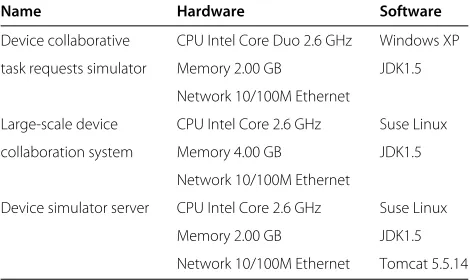
Table 1 Configuration of ability matching experiment
Name Hardware Software
Device collaborative CPU Intel Core Duo 2.6 GHz Windows XP task requests simulator Memory 2.00 GB JDK1.5
Network 10/100M Ethernet
Large-scale device CPU Intel Core 2.6 GHz Suse Linux collaboration system Memory 4.00 GB JDK1.5
Network 10/100M Ethernet
Device simulator server CPU Intel Core 2.6 GHz Suse Linux
Memory 2.00 GB JDK1.5
Network 10/100M Ethernet Tomcat 5.5.14
•
σ1=σ{(x11,y11,z11),. . .,(x1m,y1m,z1m)},
σ2=σ{(x21,y21,z21),. . .,(x2m,y2m,z2m)} (37)
• a1ianda2iare the same function parameters,
a1i∈(a11,a12,. . .,a1n),a2i∈(a21,a22,. . .,a2n).
Now, we give our composite ability matching algorithm based on the above matching distance. Assume Ds = {d1,. . .,dl},l ≥ 0 is the device satisfied by users, and
Dal = {d1,. . .,dk},k ≥ 1 is the device in the large-scale collaborative system. The description of algorithm is as follows:
1. The first input is the device resource ability r=(dss,rs),rs=dA(ds)of users’ demand R= {r1,. . .,rm},m≥1in the large-scale
collaborative system, i.e.,
dA(ds)=fa(σ{(xds1,yds1,zds1),. . .,(xdsm,ydsm,zdsm)}, (a1s,a2s,. . .,ans)),dsm≥1,ns≥1. (38)
The second input is the device setD=Das−Ds= {d1,. . .,dn},n≥1except that meets the demand, i.e.,
dA(di)=fa(σ{(xdi1,ydi1,zdi1),. . .,(xdim,ydim,zdim)},
(a1i,a2i,. . .,ani)), dim≥1,ni≥1.
(39)
Table 2 Parameters of ability matching experiment
Name Description
Depth Device ability matching depth, i.e., the maximum number of matching candidate found by virtual device DN The number of devices with different abilities in
large-scale collaborative system
Figure 1Distribution of candidate device resource (depth=20).
2. Set the matching depth of composite device bek. 3. Calculate the device ability matching distance
F(dA(di),dA(ds)),di∈Din device set
D= {d1,. . .,dn},n≥1.
4. Add the devicediwith the minimum matching
distance to the candidate composite devicecomDk
whereD=D−di,dA(ds)=dA(ds)−dA(di).
5. Repeat steps 3 and 4 untildA(ds)=0; nowcomDkis
a candidate composite device.
6. If all the devices are traversed anddA(ds)=0, the algorithm terminates; otherwise, repeat steps 3, 4, and 5 to find the candidate composite devicescomDk
which meet the matching depthk.
The following is the detail algorithm (Algorithm 1):
4 Experiments
4.1 Configuration
The experiments are conducted in three desktop com-puters: the first one simulates the requests of device collaborative tasks, the second one deploys a large-scale device collaboration system which uses our proposed matching method to assign the device resource with col-laborative tasks, and the last one deploys a device sim-ulator which can produce a lot of device resources with different abilities. Tables 1 and 2 show the configuration and parameters in our experiments, respectively.
Figure 2Distribution of candidate device resource (depth=40).
Figure 3Time of device ability matching (depth=20).
4.2 Effect of matching method
This part measures the relationship between the num-ber of candidate device resource in virtual device and the total number of device resource in a system. Assume the matching depth of device ability depth = 40, the parameter number of device ability AN = 2, and the number of device in large-scale collaborative system is 1,000, 2,000,. . . , 20,000, respectively. In order to reduce the random error, each test performs 50 times.
Figures 1 and 2 show the result: When the total num-ber of devices DN=1, 000, our matching method can ensure the percentage of candidate device resource to be more than 75; and with the growth of the total num-ber, this percentage becomes nearly 100, which indicates that our matching method can meet the effect demand of large-scale device collaboration system.
4.3 Performance of matching method
This part tests the performance of our matching method. Assume the matching depth of device ability depth=40, the parameter number of device ability AN = 2, and the number of device in large-scale collaborative system be 1,000, 2,000, . . . , 20,000, respectively. In order to reduce the random error, each test is performed 50 times.
Figures 3 and 4 show the result due to the pre-processing operation for device matching; the growth of the total number of device in the system only affects the increase in time of pre-processing, while it affects match-ing time a little. Besides, when DN=20, 000, the total
Algorithm 1 Composite device ability matching method
Table 3 The number of matching resources in the case of different devices
Device Depth=20 Depth=40
number Total number dNumber comD Number Total number dnumber comD
Number
1,000 18.55 11.55 7 30.7 15.8 14.9
2,000 19.05 15.25 3.8 33 22.8 10.2
5,000 20 18.7 1.3 39.1 36.1 3
10,000 20 20 0 39.9 39.5 0.4
15,000 20 19.8 0.2 39.7 38.7 1
20,000 20 20 0 40 40 0
Table 4 The time of matching resources in the case of different devices
Device Depth=20 Depth=40
number Filter time dTime comD Time Filter time dTime comD Time
1,000 195.8 223.0 134.15 184.1 210.6 327.6
2,000 380.7 296.3 132.65 365.2 382.15 487.4
5,000 1,048.2 461.8 112.35 1,049.1 794.05 302.7
10,000 2,144.1 659.8 0 2,148.9 882.2 79.55
15,000 3,279.2 1,248 59.25 3,411.8 1,304.85 477.35
Figure 5The relationship between single device matching time and DN.
time of device ability matching is less than 6 s, which indicates that our matching method can meet the perfor-mance demand of large-scale device collaboration system. The details are in Tables 3 and 4.
4.4 Matching method between single and composite device
This part measures the relationship between matching time and number of device resource in the case of dif-ferent matching depths. Assume the matching depth of device ability depth = 20, 40, 60, 80, and 100, respec-tively, the parameter number of device ability AN = 2, and the number of device in large-scale collaborative system be 1, 000, 2, 000,. . ., 20, 000, respectively. In order to reduce the random error, each test is performed 50 times.
Figures 5 and 6 show the result when depth < 40; the matching time of both single and composite device increase slowly with the growth of total device number DN. The reason is that in device ability match-ing process, we should use as less as possible devices to meet the demand of virtual device in order to reduce the conflict of device operations. Thus, when the matching depth is small, single device will meet the requirement.
However, the matching time of composite device grows rapidly with the growth of total device number DN, which indicates that considering both the less conflict of device
Figure 6The relationship between composite device matching time and DN.
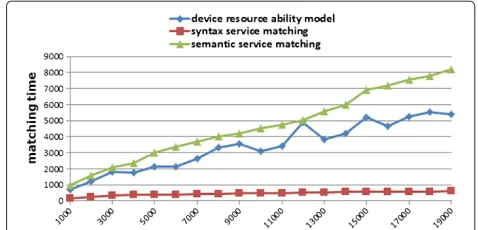
Figure 7The relationship between matching time and DN in the case of three methods.
operation and higher matching efficiency of device ability, we should select as less as possible devices to meet the demand of virtual device.
4.5 Comparisons with traditional methods
At present, resources matching research mainly conclude syntax service matching and semantic service matching. In order to compare the efficiency of our proposed device resource matching method based on the device resource ability model with the two traditional resource matching methods, we designed a set of comparative experiments, testing in the case of the same user requirements how much time is cost by each of the resource matching tech-nique and how many devices are matched up by each of the technique.
Assume the matching depth of device ability depth = 40, the number of device in large-scale collaborative sys-tem is 1, 000, 2, 000,. . ., 20, 000, respectively. In order to reduce the random error, each test is performed 50 times. In Figures 7 and 8, horizontal axes show the total num-ber of devices DN in large-scale device collaboration system, and the vertical axes show the cost time used for matching and the number of the candidate devices matched, respectively. It can be seen that syntax service
Table 5 Part of the experimental data
Device number
Cost time Number of matched resources
Device Syntax Semantic Device Syntax Semantic
ability service service ability service service
model matching matching model matching matching
1,000 722.3 163.4 986.05 30.7 12.4 28.3
2,000 1,234.75 240.33 1,564.35 33 15 31.2
5,000 2,145.85 398.15 2,988 39.1 21.3 39.2
10,000 3,110.65 478.25 4,534.38 39.9 23.9 39.5
15,000 5,194.05 553.25 6,933.55 39.7 24.6 40
20,000 5,530.25 602.3 8,022.25 40 29 40
matching method costs the least amount of time, but the matching result is not so good as the result of our pro-posed method. The number of the candidate devices is far less than the number of matched devices in the case of the device resource ability model matching method and semantic matching method. The effect of the seman-tic service matching method is almost the same with our proposed device resource matching method based on the device resource ability model, but the semantic service matching method costs much more time than that of our proposed method cost. In order to analyze the experimen-tal results quantitatively, we give part of the experimenexperimen-tal data in our experiments (Table 5).
5 Conclusions
WMSN applications usually involve a large number of devices and complex spatial information configurations. To address this challenge, in this article, we propose a mul-timedia device ability model, which incorporates spatial information management into the modeling phase. Based on this model, we further derive a multimedia device resource matching technique for ubiquitous computing environments. By adopting this technology, automatic execution of the collaboration process is done efficiently. Experimental results show that our proposed technique achieves better recall and precision. Compared with previ-ous works, our approach not only has better performance but also meets WMSN application needs much better. The multimedia device ability matching method can greatly reduce the design complexity and workload of application designers.
Competing interests
The authors declare that they have no competing interests.
Acknowledgements
The work was supported by the National Natural Science Foundation of China (nos. 61100066, 61133005, 61262013), Special Fund Research in the Public Interest (no. 201008002), the National Science Foundation of Guangdong Province, China (no. S2011010001155), and the High-level Talent Project for Universities, Guangdong Province, China (431, YueCaiJiao 2011).
Author details
1State Key Laboratory of Software Development Environment, Beihang University, Beijing, China.2Lab of Parallel Software and Computational Science, Institute of Software Chinese Academy of Sciences, Beijing, China.3College of Information Engineering, Guangdong Jidian Polytechnic, Guangzhou, China.
Received: 1 January 2013 Accepted: 15 May 2013 Published: 4 July 2013
References
1. M Chen, CF Lai, HG Wang, Mobile multimedia sensor networks: architecture and routing. EURASIP J Wireless Commun. Netw. 2011, 1–9 (2011)
2. J Campbell, PB Gibbons, S Nath, P Pillai, S Seshan, R Sukthankar, in Proceedings of the 13th Annual ACM International Conference on Multimedia. IrisNet: an internet-scale architecture for multimedia sensors (ACM, New York, 2005), pp. 81–88
3. M Chen, V Leung, SW Mao, Y Yuan, Directional geographical routing for real-time video communications in wireless sensor networks. Comput. Commun.30(17), 3368–3383 (2007)
4. CH Chen-Ritzo, C Harrison, J Paraszczak, F Parr, Instrumenting the planet. IBM J. Res. Dev.53(3), 1 (2009)
5. P Deng, JW Zhang, XH Rong, F Chen, Modeling the large-scale device control system based on PI-calculus. Adv. Sci. Lett.4(6–7), 6–7 (2011) 6. P Deng, F Chen, XH Rong, P Jiang, W Jin, A meta communication protocol
in support lighting device unified access of olympic center. ITCS. 2, 48–52 (2009)
7. DJ Sobajic, YH Pao, Artificial neural-net based dynamic security assessment for electric power systems. Power Sys. IEEE Trans. 4, 220–228 (1989)
8. T Devadithya, K Chiu, K Huffman, DF McMullen, inProceedings of the First International Conference on Science and Grid Computing, 2005. The common instrument middleware architecture, overview of goals and implementation (IEEE, Piscataway, 2005), pp. 96–106
9. IM Atkinson, Dd Boulay, C Chee, K Chiu, P Coddington, A Gerson, T King, DF McMullen, R Quilici, P Turner, A Wendelborn, MJ Wyatt, D Zhang, Developing CIMA-based cyberinfrastructure for remote access to scientific instruments and collaborative e-research. CRPIT.68, 3–10 (2007) 10. R Bramley, K Chiu, T Devadithya, N Gupta, C Hart, JC Huffman, K Huffman,
Y Ma, DF McMullen, Instrument monitoring, data sharing, and archiving using common instrument middleware architecture (CIMA). J. Chem. Inf. Mod.46(3), 1017–1025 (2006)
11. JF Wan, HH Yan, H Suo, F Li, Advances in cyber-physical systems research. KSII Trans. Internet Inf. Sys.5(11), 1891–1908 (2011)
12. K Chiu, R Bramley, JC Huffman, K Huffman, DF McMullen,Instruments and, Sensors as Web Services. (National Science Foundation of ACI,
Arlington, 2003)
14. JH Shi, JF Wan, HH Yan, H Suo, in2011 IEEE International Conference on Wireless Communications and Signal Processing (WCSP). A survey of cyber-physical systems (IEEE, Piscataway, 2011), pp. 1–6 15. J Peng, KH Law, inProceedings of the International Symposium on
Earthquake Engineering in the Past and Future Fifty Years. A Reference Data Model for NEESgrid Shake Table Experiments (Harbin, August 2004) 16. M Chen, “Towards smart city: M2M communications with software agent
intelligence”, Multimedia Tools Appl., pp.1–12, Feb.2012
17. M Chen, S Gonzalez, Q Zhang, VC Leung, Code-centric RFID system based on software agent intelligence. IEEE Intell. Syst.25(2), 12–19 (2010) 18. M Chen, S Gonzalez, Y Zhang, VC Leung, inQuality of Service in
Heterogeneous Networks. Multi-agent itinerary planning for wireless sensor networks (Springer, Heidelberg, 2009), pp. 584–597
19. M Chen, V Leung, SW Mao, T Kwon, M Li, inIEEE International Conference on Communications, 2009. Energy-efficient itinerary planning for mobile agents in wireless sensor networks (IEEE, Piscataway, 2009), pp. 1–5 20. L Zhou, X Wang, W Tu, GM Muntean, B Geller, Distributed scheduling
scheme for video streaming over multi-channel multi-radio multi-hop wireless networks. Selec. Areas Commun. IEEE J.28(3), 409–419 (2010) 21. DucklingTeam, CERC (2009). http://duckling.escience.cn/dct/.
Accessed 2 July 2010
22. GRIDCC Project report (2008). http://ec.europa.eu/information_society/ apps/projects/logos/2/511382/080/publishing/readmore/GRIDCC-WP8-D8_3-20080201-06-INF-Final_Report.pdf. Accessed 10 June 2009 23. AS McGough, A Akram, L Guo, M Krznaric, L Dickens, D Colling, J
Martyniak, R Powell, P Kyberd, C Kotsokalis, inProceedings of the 2nd Workshop on Workflows in Support of Large-scale Science. GRIDCC: real-time workflow system (ACM, New York, 2007), pp. 3–12
24. E Christensen, F Curbera, G Meredith, S Weerawarana,Web Services Description Language (WSDL) 1.1. (World Wide Web Consortium, Cambridge, 2001)
25. Z Huang, L Gu, B Du, C He, inProceedings of 2004 IEEE International Conference on Services Computing. Grid resource specification language based on XML and its usage in resource registry meta-service (IEEE, Piscataway, 2004), pp. 467–470
26. D Brickley, RV Guha,RDF Vocabulary Description Language 1.0: RDF Schema. (World Wide Web Consortium, Cambridge, 2004)
27. V Tosic, B Pagurek, K Patel,“WSOL - a language for the formal specification of classes of service for web services”. (International Conference on Web Services, Las Vegas, Nevada, USA, June 2003)
28. V Tosic, K Patel, B Pagurek, inWeb Services, E-Business, and the Semantic Web. WSOL-web service offerings language (Springer, Heidelberg, 2002), pp. 57–67
29. D Martin, M Burstein, O Lassila, M Paolucci, T Payne, S McIlraith, Describing Web services using OWL-S and WSDL. DAML-S Coalition working document. [http://www.daml.org/services/daml-s/0.7/daml-s-wsdl.html] Accessed 13 Aug 2002
30. A Matoussi, R Laleau,A Survey of Non-functional Requirements in Software Development Process. (University of Paris, Paris, 2008)
31. L Li, I Horrocks, A software framework for matchmaking based on semantic web technology. Int. J. Electron. Commerce.8(4), 39–60 (2004) 32. M Paolucci, T Kawamura, TR Payne, K Sycara, inThe Semantic Web-ISWC
2002. Semantic matching of web services capabilities (Springer, Heidelberg, 2002), pp. 333–347
33. N Srinivasan, M Paolucci, K Sycara, Semantic web service discovery in the OWL-S IDE. Proc. 39th Annual IEEE Hawaii Int. Conf. Syst. Sci.6, 109b (2006) 34. D Ardagna, B Pernici, Adaptive service composition in flexible processes.
Softw. Eng. IEEE Trans.33(6), 369–384 (2007)
35. B Xu, T Li, Z Gu, G Wu, inThe 8th IEEE International Conference on E-Commerce Technology, 2006 and The 3rd IEEE International Conference on Enterprise Computing, E-Commerce, and E-Services. SWSDS: Quick web service discovery and composition in SEWSIP (IEEE, Piscataway, 2006), pp. 71–71
36. IB Arpinar, R Zhang, B Aleman-Meza, A Maduko, Ontology-driven web services composition platform. Inf. Syst. E-Business Manage. 3(2), 175–199 (2005)
37. M Tian, A Gramm, H Ritter, J Schiller, inProceedings of the 2004 IEEE/WIC/ACM International Conference on Web Intelligence, IEEE Computer Society. Efficient selection and monitoring of QoS-aware web services with the WS-QoS framework (IEEE, Piscataway, 2004), pp. 152–158
38. A Soydan Bilgin, MP Singh, inProceedings of IEEE International Conference on Web Services, 2004. A DAML-based repository for QoS-aware semantic web service selection (IEEE, Piscataway, 2004), pp. 368–375
39. L Sha, G Shaozhong, C Xin, L Mingjing, A QoS based web service selection model. IFITA.3, 353–356 (2009)
40. F Qiqing, P Xiaoming, L Qinghua, H Yahui, A global QoS optimizing web services selection algorithm based on MOACA for dynamic web service composition. IFITA.1, 37–42 (2009)
41. AJS Cardoso,Quality of service and semantic composition of workflows. PhD thesis. (University of Georgia Athens, Georgia, 2002)
42. M Kerrigan, inProceedings of the 2006 ACM Symposium on Applied Computing. Web service selection mechanisms in the web service execution environment (WSMX) (ACM, New York, 2006), pp. 1664–1668 43. C Zhou, LT Chia, BS Lee, inProceedings of IEEE International Conference on
Web Services, 2004. DAML-QoS ontology for web services (IEEE, Piscataway, 2004), pp. 472–479
44. Em Maximilien, MP Singh, A framework ontology for dynamic web services selection. Int. Comp. IEEE.8(5), 84–93 (2004)
45. L Sha, G Shaozhong, C Xin, L Mingjing, A qos based web service selection model. IFITA.3, 353–356 (2009)
46. S Ali, M Zeeshan, in2012 IEEE Wireless Communications and Networking Conference (WCNC). A utility based resource allocation scheme with delay scheduler for LTE service-class support (IEEE, Piscataway, 2012), pp. 1450–1455
doi:10.1186/1687-1499-2013-181
Cite this article as:Zhanget al.:A novel multimedia device ability match-ing technique for ubiquitous computmatch-ing environments.EURASIP Journal on Wireless Communications and Networking20132013:181.
Submit your manuscript to a
journal and benefi t from:
7Convenient online submission
7 Rigorous peer review
7Immediate publication on acceptance
7 Open access: articles freely available online 7High visibility within the fi eld
7 Retaining the copyright to your article