Yield Point
Effects
in
Palladium
By
R.
G.
Hollister,
A.I.M.,and
A.
s.
Darling,
Ph.D., A.M.1.Mech.E.Johnson Matthey & Co Limited
A pronounced yield p o i n t effect i s sometimes encountered when heavily worked palladium i s aged between 500” and 800°C. S u c h strain-ageing pheno- mena are usually associated with body centred cubic metals such as iron, and i t i s surprising to Jind that palladium,
a face centred cubic metal, can exhibit analogous behaviour. In this article it i s shown that the effect i s caused by the presence of silicon, in concentrations as low as a f e w parts p e r million, which can be taken up even f r o m a nominally p u r e alumina crucible in melting under reducing conditions. T h e precise mechanism involved i s not understood, although the eflect, when it occurs, complicates fabrication procedures such as wire drawing, contact manufacture and the production of high quality sheet, Working d i f i u l t i e s of this sort can, however, be avoided by adding small quantities of sodium or calcium to the palladium in the course of melting.
Interesting and unusual deformation char- acteristics have recently been detected in heavily cold worked palladium which had been subsequently annealed at moderately low temperatures. The effect was first ob- served in a sheet of palladium containing
I per cent of ruthenium, which developed, after annealing, a remarkable system of strain markings similar to those illustrated in Fig. I, I n addition to these striations the sheet exhibited a number of sharp edged inflexions and responded to the slightest handling by a sudden yielding, with the formation of a sharp-edged bend. Bending was frequently
accompanied by a faint cracking noise reminis- cent of “tin cry”.
This behaviour has since been occasionally observed in nominally pure palladium, in dilute alloys such as iron-palladium, and other materials. Because discontinuous yielding complicates subsequent working procedures the underlying reasons for this deformation behaviour were investigated in some detail.
Specimens of those batches of material which exhibited this effect were subjected to tensile testing and all were found to possess a pronounced yield point. Material that exhibited a yield point had a much higher elastic limit than normal palladium. The yield point was present only in heavily worked specimens that had been freshly annealed, and was destroyed by the slightest working or bending. After destruction it could be restored by annealing at moderately low temperatures, the optimum treatment being f hour at 640°C. Below 500°C the yield point was not restored, while above S2ooC it
was completely lost. h e a l i n g atmospheres had no effect upon the yield point, which developed just as strongly in vacuum an-
nealed specimens as in those treated in hydrogen,
Effect
of
Impurities
Although no correlation appears to exist between alloy composition and the incidence of discontinuous yielding, the effect has so far not been detected in palladium containing more than 5 per cent by weight of alloying elements. In view of the similarities between
Fig. 1 Strain markings sometimes observed on the surface ofpalladium containing about 10 p.p.m. of silicon after annealing between 600 and 700°C
gen being responsible and the results showed that sulphur content had no influence upon yield point. Similarly silicon did not appear a likely suspect as the yield point effect was frequently encountered in specimens contain- ing as little as 0.001 per cent of this element. At an early stage in the investigation strong yield point effects were detected in dilute iron-palladium alloys which also contained significant quantities of carbon. It seemed possible that iron and carbon could react together during low temperature annealing
to form Fe,C and that the reinforcing effect of small particles or layers of cementite might be responsible for the yield points observed.
the carbon content to 0.009 per cent. This alloy, when worked and annealed, exhibited a slight yield point. It was remelted under an atmosphere of 10 per cent hydrogen/
nitrogen in an alumina crucible and 0.01 per cent of carbon added. When this ternary alloy was subsequently worked and aged the yield point effect was more difficult to detect than it had been before the carbon was added.
Metal-Crucible Reactions
As most of the experiments had hitherto been made on metals and alloys melted under production conditions, it was decided to ascertain whether laboratory melted palladium exhibited similar effects.
Pure palladium grain was first induction melted under a 10 per cent hydrogen/nitrogen atmosphere in an alumina crucible (Morgan Triangle R). The resultant ingot was cold worked to -f6 inch diameter rod and then aged
in nitrogen for
4
hour at 640°C. Tensile testing yielded the lower stress-strain curve on Fig. 2, which is typical of that displayed by a pure ductile metal. This batch of metal was then remelted in a sillimanite pot, again under 10 per cent hydrogen/nitrogen, the ingot being worked down to rod which was aged at 640°C. As shown by the upper curve in Fig. 2, this material exhibited apronounced yield point, the elastic limit
being approximately three times higher than that of the original alumina-melted material. Similar results were obtained when palla- dium grain was melted in air in an alumina crucible and then deoxidised by the addition of 0.04 per cent of aluminium. The lower curve in Fig. 3 illustrates the extreme ductility of this material after ageing at
640°C for
Q
hour. The upper curve shows the effect of remelting in a sillimanite crucible under a 10 per cent hydrogen/ nitrogen mixture. Whatever was picked up from the sillimanite has increased the elastic limit and introduced a pronounced yield point.Some pure palladium sponge was converted to ingot form by argon arc melting on a water cooled copper hearth and then reduced, without annealing, to inch diameter rod which contained less than 50 p.p.m. of impurities. This rod, when aged and tested, provided no evidence of discontinuous yield- ing. After remelting in alumina under an atmosphere of pure hydrogen, a pronounced yield point developed.
Effect of Silicon
Content
Effect of Atmospheric Conditions upon the Silicon and Aluminium Contents of
Palladium Melted in an Alumina Crucible
2 Melted under carbon monoxide
3 Melted under pure hydrogen
4 (2) Remelted with sili- con addition
5 Vacuum melted after hydrogen reduction
Si Material
0 . W 5
0.003
0.002
0.001 1 Palladium grain
I
o.ooo1-0.0002 Al Wt.?&
not
detected
0.003
0.003
0.W3
- Yield
Point
No
Yes
Yes
Yes
largely to high purity alumina refractories, showed that yield point effects were due en- tirely to the presence of silicon. The results of these tests are summarised in the table.
These figures show that silicon contents as low as 0.001 per cent can induce discon- tinuous yielding effects in palladium. As there is little free silica in Triangle R alumina the affinity of molten palladium for silicon must be considerable. Where the silicious content of the refractory is high, as in zircon and sillimanite, high reduction potentials
are not required for silicon transfer. Palla- dium melted in these refractories under protective covers of carbon monoxide or a 10 per cent hydrogenlnitrogen mixture frequently exhibited well defined yield points.
Melting Additions
Although yield point effects were rarely detected in palladium melted under carbon monoxide in a pure alumina refractory, some method of protection against inadvertent silicon contamination was obviously desirable. The effect of alloying additions that would react strongly with silicon to form stable compounds was therefore investigated.
Calcium additions were found to be very beneficial (I) and Fig. 4 illustrates some of the effects obtained with this metal. These curves relate to a 600 g charge of palladium grain melted originally in an alumina crucible under a carbon monoxide atmosphere. Curve I illustrates the stress strain behaviour of this material after ageing at 640°C. When re- melted under pure hydrogen in the same crucible, it exhibited, after ageing, a pro- nounced yield point as shown by Curve 2 . A calcium addition of
0.5 per cent added to the melt under a pro- tective cover of carbon monoxide almost com- pletely eliminated the yield effect as shown by Curve 3, although in this instance the elastic limit was still above that of the silicon- free material. The ana- lytical results of these tests showed that cal- cium reduced the silicon content from 0.005 to
0.002 per cent and that approximately 0.04 per cent of calcium remain- ed in the palladium.
Fig. 5 Microstructure of fully annealed palladium reduced 20 per cent i n area by cold swaging and then aged at 640°C ( x 100) has shown that additions of 0.05 per cent of calcium are quite adequate to ensure freedom from silicious contaminations. Be- cause little excess calcium remains behind in alloyed form the resultant palladium is no harder than that of untreated material. Sodium additions are found to be as effective as calcium, although the high volatility of sodium makes it difficult to add to the melt. Aluminium, potassium and magnesium addi- tions have no effect on the yield point behaviour, nor upon the elastic limit of palladium containing silicon.
Microstructure
Microscopic examination showed that the discontinuous yielding in palladium was not completely analogous to strain ageing in body centred cubic metals because it always in- volved recrystallisation.
Fig. 6 Microstructure of .fully annealed
palladium reduced 75 per cent in area by drawing and then aged at 640°C (
x
100)In one series of experiments a work- hardened bar of palladium containing 0. I per
cent of iron was selected because this material, when aged, exhibited a very strong yield point. Vacuum annealing for *hour at I O O O ~ C completely destroyed the yield point, even though ageing at 640°C was carried out for periods up to 16 hours in nitrogen. The cross- section of this test piece was then reduced in a swage by 20 per cent after which ageing failed to restore the yield point. The same test piece was then drawn to
4
inch diameter wire, areduction in area of 75 per cent being involved. Subsequent ageing completely restored the yield point.
These results suggested that the cold work imposed must be great enough to ensure complete recrystallisation of the metal during annealing, and microscopic exarnina- tion seemed to bear out this hypothesis.
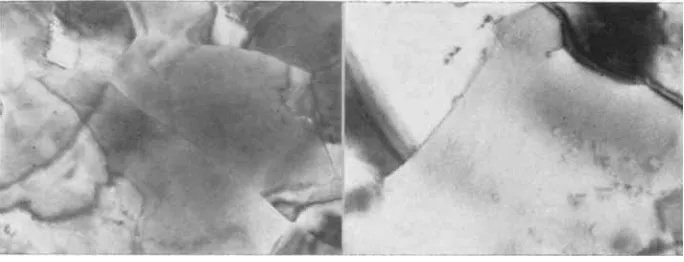
Fig. 7 Cellular structure of aged section of palladium exhibiting a strong yield point.
Fig. 8 Structure of palladium remelted with
0.08 per cent of calcium, thus destroying
Fig. 5, for example, shows the structure of the vacuum annealed material which, after being reduced in area by 20 per cent and subsequently aged, did not develop a yield point. The metal aged after a 75 per cent reduction in area had recrystallised com- pletely as shown in Fig. 6.
Under high power optical examination, the grain boundaries of material which exhibited
a pronounced yield point were indistinguish- able from those of normal ductile palladium and no evidence of precipitation on ageing was ever detected with the optical microscope. The structure as revealed by high power transmission electron microscopy is shown in Fig. 7. No constituent that might be responsible for the strong yield point exhibited
by the material from which this specimen was taken can be observed in this diffuse cellular structure. Calcium, when added to destroy the yield point, appears to clarify the microstructure to some extent. The globular dispersion shown in Fig. 8 probably represents the residue of the calcium silicide or silicate phase which did not separate from the palladium and adhere to the refractory during melting.
Acknowledgements
The authors would like to acknowledge the expert assistance of Mr J. Day and Miss J. M. Yorke, who made valuable contributions to this
work. They are most grateful to Mr A. A.
Hershman of the BNFMRA who carried out the transmission electron microscopy.
Reference
I R. G. Hollister, British Patent Appln. 43404/63
The
Palladium-Hydrogen Svstem
The Palladium-Hydrogen System, by
F. A. Lewis, Pp. xii and 178. Academic Press, London and New York. 45s. ($9.00)
The ability of palladium to dissolve very large volumes of hydrogen without losing its ductile metallic character continues to fascinate many gifted investigators and few problems in physical chemistry have received such detailed attention as this remarkable binary system. D r Lewis has been active in this field of study for many years and he provides in this book a concise and accurate summary of the present state of knowledge.
Until quite recently the palladium-hydrogen system was of theoretical rather than of practical importance and it was generally believed that a fuller understanding of the constitutional relationships of its non-stoi- chiometric phases would help to resolve some basic thermodynamic anomalies. The chapter dealing with thermodynamic factors can, in fact, be regarded as a monograph complete in itself.
The chapter dealing with the effect of hydrogen on the shape and properties of palladium is of direct practical importance, and provides what is probably the first complete and systematic survey of this problem. Alloy characteristics are inter- preted in metallographic terms and much of
J
the information provided should be of direct value to engineers using semi-permeable membranes of palladium for chemical separa- tion processes and fuel cell development.
Palladium cathodes can be readily charged with hydrogen, and the electrochemical techniques which have been employed for quantitative studies of the hydrogen content and dissociation pressures of palladium- hydrogen solid solutions are comprehen- sively treated in this book. Industrial con- siderations are not neglected, however, and considerable attention is given to the rates at which hydrogen diffuses through palladium and its alloys and to the technical problems involved. Pure palladium is unsuitable for use as an industrial diffusion membrane because of the distortion and cracking which occurs when it is cooled in the presence of hydrogen. The characteristics of silver- palladium alloys, some of which are free from this defect, are well described and alternative materials such as platinum, gold and boron palladium alloys are mentioned.
The references provided supplement and bring up to date the bibliography of D. P.
Smith, and the book can be confidently re- commended to those chemists, engineers and metallurgists involved in the rapidly increas- ing industrial applications of palladium and its alloys.