Western University Western University
Scholarship@Western
Scholarship@Western
Electronic Thesis and Dissertation Repository
4-19-2013 12:00 AM
The sub-lethal effects of repeated cold exposure in insects
The sub-lethal effects of repeated cold exposure in insects
Katie Elizabeth Marshall The University of Western Ontario Supervisor
Dr. Brent J. Sinclair
The University of Western Ontario Graduate Program in Biology
A thesis submitted in partial fulfillment of the requirements for the degree in Doctor of Philosophy
© Katie Elizabeth Marshall 2013
Follow this and additional works at: https://ir.lib.uwo.ca/etd
Part of the Comparative and Evolutionary Physiology Commons
Recommended Citation Recommended Citation
Marshall, Katie Elizabeth, "The sub-lethal effects of repeated cold exposure in insects" (2013). Electronic Thesis and Dissertation Repository. 1205.
https://ir.lib.uwo.ca/etd/1205
This Dissertation/Thesis is brought to you for free and open access by Scholarship@Western. It has been accepted for inclusion in Electronic Thesis and Dissertation Repository by an authorized administrator of
(Thesis format: Integrated Article)
by
Katie Elizabeth Marshall
Graduate Program in Biology
A thesis submitted in partial fulfillment of the requirements for the degree of
Doctor of Philosophy
The School of Graduate and Postdoctoral Studies The University of Western Ontario
London, Ontario, Canada
ii
Abstract
While insect cold tolerance has been well studied, the vast majority of work has focused on the effects of a single cold exposure. However, many abiotic environmental stresses, including temperature, fluctuate within an organism's lifespan. In this thesis I address two major questions. First, does frequency of cold exposure impose additional stress on insects? Second, how does this stress translate to performance and fitness? I first summarize the literature on the effects of repeated cold exposure in insects, critically examining experimental designs. I then address my questions experimentally using four insect species with contrasting life histories and responses to cold exposure. I examine the fitness costs of repeated cold exposure in the chill-susceptible fly Drosophila melanogaster by recording survival, generation time, and number of offspring in flies that had received five 2 h, one 2 h, or one 10 h exposure to -0.5 ºC. I found that D. melanogaster trades off immediate survival and reproductive output in response to repeated cold exposure. In the freeze-tolerant caterpillar Pyrrharctia isabella, repeated freezing did not deplete energy reserves, but did damage hemocytes and Malpighian tubules, and led to decreased survival in repeatedly-frozen caterpillars. Similarly, I found in the freeze-avoiding caterpillar Choristoneura fumiferana that frequency of exposure, independent of period, intensity, or duration of cold exposures significantly increased mortality, likely due to increased investment in cryoprotection at the expense of glycogen reserves. Finally, in the freeze-tolerant fly Eurosta solidaginis, the frequency of exposure, again independent of period, intensity, or duration of cold exposures led to a significant decline in egg production. Repeated cold exposure therefore imposes additional costs to insects, even when intensity and duration of cold are controlled for. This cost may either be a result of accrued damage, or may be energetic as individuals trade off investment in survival mechanisms for reproductive output. Given that many environments are not static, these effects indicate that investigating the effects of repeated stress exposure is important for understanding and predicting physiological responses in the wild.
Keywords
iii
Co-Authorship Statement
A version of Chapter 2 is published in Journal of Experimental Biology with Dr. Brent Sinclair as a co-author. Dr. Sinclair contributed significantly to the ideas and discussion included in this chapter, and provided editorial comments on the manuscript.
A version of Chapter 3 is published in Proceedings of the Royal Society B with Dr. Brent Sinclair as a co-author. Dr. Sinclair aided in the design and provided funding and equipment for the experiment conducted in this chapter. Dr. Sinclair also contributed significantly to the ideas and discussion included in this chapter, and provided editorial comments on the manuscript.
A version of Chapter 4 is published in Journal of Experimental Biology with Dr. Brent Sinclair as a co-author. Dr. Sinclair aided in the design and provided funding and equipment for the experiment conducted in this chapter. Dr. Sinclair also contributed significantly to the ideas and discussion included in this chapter, and provided editorial comments on the manuscript.
Chapter 5 is currently in preparation for submission to Journal of Animal Ecology with Dr. Brent Sinclair as a co-author. Dr. Sinclair aided in the design and provided funding and equipment for the experiment conducted in this chapter. Dr. Sinclair also contributed significantly to the ideas and discussion included in this chapter.
iv
Acknowledgments
I would like to begin by thanking Áron Roxin, my partner of nine years. It’s been a long haul through post-secondary education, but your patience, support, and willingness to ask me the hard questions about my work have made you an incredible partner through this journey (even if you decided you preferred chemistry to biology!). Whether coming into the lab on a Saturday again, staying up late with me as I ran one more analysis, or agreeing to hunt for yet another bug outside with me, you’ve always been there for me. Thank you.
The hardest decision to make about grad school is your supervisor. Without a drop of doubt, I can say that joining Brent Sinclair’s lab is the best decision I could have made. His mentorship and guidance on everything from experimental design, teaching, writing grants, publishing, and even how to negotiate my next job has been invaluable. He consistently challenged me to be the best that I could, had faith in me when I didn’t, and supported even my crazy ideas. Thank you.
v
Over 120,000 individual insects were reared, collected, maintained, exposed to low temperatures, assayed and/or measured in this thesis. This would not have been possible without a small army of undergraduate volunteers. Thank you especially to Dan Marshall, Evan Horn, Tilly MacRae, Steven Holterman ten Hove, Moriah Sokolowski, Jamie Lee, and Laura Chee. Thank you also to Bonnie Tarnowski for the bucketful of caterpillars you brought me!
I received excellent education before I arrived at Western, and I would particularly like to thank my professors in the Biology Department at Acadia University for their excellent preparation. In particular, I would like to acknowledge my undergraduate supervisor Phil Taylor for introducing me to the R language, thesis writing, and the joys of entomology. I would like to thank the National Sciences and Engineering and Research Council (NSERC) for providing me with a postgraduate scholarship for the last two years of PhD research, as well as the Government of Ontario for an OGSST that supported me for eight months. I received grant money as well from The University of Western Ontario for research. I would also like to thank NSERC, the Canadian Foundation for Innovation, and the Ontario Ministry for Innovation for funding to my supervisor Brent Sinclair that allowed me to conduct the experiments in this thesis.
I would finally like to thank my family for being so patient with my long educational process. My brother, Dan Marshall, has always been there for me, and my parents Alan and Betty Marshall whose love and support have given me a strong foundation. In my extended family, I would also especially like to thank my aunt Gayle Marshall, whose early encouragement (and cool books!) nurtured my early love of science.
Finally, if I hadn’t had loving family that didn’t mind if I read too much, I wouldn’t be here. From one of those books:
“…many places you would like to see are just off the map and many things you want to know are just out of sight or a little beyond your reach. But someday you’ll reach them all, for what you learn today, for no reason at all, will help you discover all the wonderful secrets
vi
Table of Contents
Abstract ... ii
Co-Authorship Statement ... iii
Acknowledgments ... iv
List of Tables ... xiii
List of Figures ... xvii
List of Appendices ... xx
List of Abbreviations ... xxi
Chapter 1 ... 1
1 Introduction ... 1
1.1 Overview of thesis ... 1
1.2 Insect populations and life history in temperate environments ... 2
1.2.1 The importance of winter to insects in temperate regions ... 2
1.2.2 Overwintering temperature regimes in temperate climates ... 3
1.2.3 Diapause in northern temperate insects ... 5
1.2.4 Predicting insect population dynamics and distribution under climate change ... 7
1.3 Physiological effects of low temperatures ... 9
1.3.1 Cold-induced damage ... 9
1.3.2 Freezing-induced damage ... 11
1.3.3 Overwintering energetics ... 12
1.4 Insect cold hardiness ... 13
1.4.1 Insect responses to low temperature ... 13
1.4.2 Biochemical mechanisms of low temperature survival ... 15
vii
1.6 Summary and Objectives ... 22
1.7 Thesis overview ... 24
1.8 References ... 28
Chapter 2 ... 41
2 The impacts of repeated temperature exposure on insects ... 41
2.1 Introduction ... 41
2.2 Design of repeated cold exposure studies ... 44
2.3 Fitness impacts of repeated cold exposure... 49
2.4 Physiological impacts of (and responses to) repeated cold exposure ... 50
2.5 Future directions ... 52
2.6 Acknowledgements ... 54
2.7 References ... 55
Chapter 3 ... 60
3 Repeated stress exposure results in a survival-reproduction trade-off in Drosophila melanogaster ... 60
3.1 Introduction ... 60
3.2 Methods... 62
3.2.1 Fly collection and rearing ... 62
3.2.2 Experimental Design ... 63
3.2.3 Mortality and fertility assays ... 63
3.2.4 Energy reserves and cryoprotectant content ... 64
3.2.5 Data analysis ... 64
3.3 Results ... 65
3.3.1 Total offspring produced... 67
3.3.2 Sex ratio ... 67
viii
3.3.4 Energy reserves ... 70
3.4 Discussion ... 73
3.5 Acknowledgements ... 77
3.6 References ... 78
Chapter 4 ... 82
4 The sub-lethal impacts of repeated freezing in the woolly bear caterpillar Pyrrharctia isabella ... 82
4.1 Introduction ... 82
4.2 Methods ... 85
4.2.1 Animal collection and maintenance ... 85
4.2.2 Freezing treatments ... 86
4.2.3 Survival ... 86
4.2.4 Metabolic rate ... 87
4.2.5 Quantification of metabolic reserves and cryoprotectants ... 87
4.2.6 Immune challenge ... 88
4.2.7 Tissue damage ... 89
4.3 Results ... 90
4.3.1 Survival ... 90
4.3.2 Supercooling points ... 90
4.3.3 Metabolic rate ... 90
4.3.4 Energy reserves and cryoprotectants ... 95
4.3.5 Immune challenge ... 95
4.3.6 Tissue damage ... 95
4.4 Discussion ... 99
4.5 Acknowledgements ... 103
ix
Chapter 5 ... 108
5 Low temperature exposure during overwintering causes delayed mortality in the eastern spruce budworm ... 108
5.1 Introduction ... 108
5.1.1 Cold hardiness ... 109
5.1.2 Temperature fluctuations ... 111
5.2 Methods... 112
5.2.1 Animal source and rearing ... 112
5.2.2 Low temperature exposures ... 113
5.2.3 Supercooling points ... 116
5.2.4 Glycerol and glycogen assays ... 116
5.2.5 Life history measures ... 117
5.2.6 Statistical analyses ... 117
5.3 Results ... 119
5.3.1 Survival ... 119
5.3.2 Life history measures ... 124
5.3.3 Supercooling points ... 125
5.3.4 Glycerol and glycogen measures ... 125
5.4 Discussion ... 140
5.4.1 Causes of mortality ... 141
5.4.2 Energetic reserves and cryoprotection ... 142
5.4.3 The importance of frequency of low temperature exposure ... 143
5.4.4 Conclusions ... 144
5.5 Acknowledgements ... 145
5.6 References ... 146
x 6 The four axes of stress: the impacts of intensity, duration, frequency, and period of an
environmental stressor on physiology and fitness ... 151
6.1 Introduction ... 151
6.2 Methods ... 154
6.2.1 Study system ... 154
6.2.2 Insect collection and maintenance ... 155
6.2.3 Experimental design ... 156
6.2.4 Cold exposures ... 156
6.2.5 Survival, egg production, adult mass, and development time ... 157
6.2.6 Supercooling points ... 157
6.2.7 Tissue damage ... 159
6.2.8 Metabolite and energy reserve assays ... 160
6.2.9 Statistical analysis ... 161
6.3 Results ... 164
6.3.1 Survival, egg production, adult mass, and development time ... 164
6.3.2 Supercooling point ... 175
6.3.3 Tissue damage ... 175
6.3.4 Lipid reserves ... 176
6.3.5 Carbohydrates and cryoprotectants ... 177
6.4 Discussion ... 188
6.4.1 Fitness proxies ... 192
6.4.2 Freeze-induced damage ... 193
6.4.3 Cryoprotectants ... 194
6.4.4 Energetic costs ... 195
6.4.5 Cooling rate ... 196
xi
6.4.7 Conclusions ... 197
6.5 Acknowledgements ... 198
6.6 References ... 199
Chapter 7 ... 206
7 Discussion ... 206
7.1 The impacts of repeated cold exposure on fitness measures ... 206
7.2 Potential mechanisms of negative impacts of repeated cold exposure ... 209
7.2.1 The costs of repair ... 211
7.2.2 The costs of preparation ... 212
7.3 The relationship between number of exposures and costs ... 214
7.4 Life histories and responses to repeated cold exposures ... 215
7.5 Interpreting responses to repeated cold exposure in the context of natural temperature variation ... 217
7.5.1 Microclimates ... 218
7.5.2 Timescales and types of temperature variation ... 219
7.5.3 Effects of climate change ... 221
7.6 Implications for future studies in thermal biology ... 223
7.6.1 Laboratory experiments ... 223
7.6.2 Modelling species range limits ... 224
7.7 Limitations and future directions ... 226
7.7.1 Time course following exposure ... 226
7.7.2 Other stressors ... 227
7.8 Conclusions ... 229
7.9 References ... 230
Appendix A: Chapter 2 Supplementary Material ... 239
xii
Appendix B: Chapter 5 Supplementary Material ... 249
Appendix C: Chapter 6 Supplementary Material Results ... 255
Results ... 255
Male development time ... 255
Adult male mass ... 255
Metabolites ... 256
Glycogen mass ... 256
Appendix D: Permission to Reprint Published Material ... 282
Reprint Permission for Chapter 2 and 4 from Journal of Experimental Biology ... 282
Reprint Permission for Chapter 3 from Proceedings of the Royal Society B ... 283
xiii
List of Tables
Table 3.1 Number and sex ratio of offspring produced by female flies after cold treatment at -0.5 ºC as a function of treatment in Drosophila melanogaster. ... 68 Table 4.1 Energy reserves, cryoprotectant, and protein content (mean ± SE) of Pyrrharctia isabella caterpillars either frozen five times for 7 h at -12 °C, a single 35 h exposure at -12 °C, or control (maintained at 0 °C; n = 10 per group). ... 96 Table 5.1 The effects of repeated 12 h cold exposure during the 2nd instar on adult
characteristics of Choristoneura fumiferana. ... 121 Table 5.2 The effects of a single 120 h cold exposure during the 2nd instar on adult
characteristics of Choristoneura fumiferana. ... 122 Table 5.3 The effects of low temperatures exposure during the 2nd instar on adult
characteristics of Choristoneura fumiferana. ... 123 Table 5.4 The effects of low temperatures exposure on supercooling points of 2nd instar
xiv Table 6.2 Principle components for metabolites in overwintering Eurosta solidaginis pre-pupae. ... 180 Table 6.3 MANCOVA statistics comparing lipid components (lcTAG, FFA, and acTAG mass) among Eurosta solidaginis pre-pupae as a result of low temperature exposure. ... 189 Table 6.4 MANCOVA statistics comparing carbohydrate components (glucose, glycogen, glycerol, and sorbitol) among Eurosta solidaginis pre-pupae as a result of low temperature exposure. ... 190 Table 6.5 A summary of how intensity, duration, frequency, and period of low temperature stress affect the physiological processes of damage, repair, and preparation in Eurosta solidaginis, and how that in turn impacts fitness. “-“ indicates no effect. ... 191
Table A.1 The 26 studies of repeated cold exposure (RCE) on insects reported in this review. ... 239 Table A.2 Effects of repeated cold exposure (RCE) on insects. ... 243 Table A.3 Effects of repeated freeze-thaw (RFT) on insects. ... 246 Table B.1 The effects of repeated 12 h cold exposures during the 2nd instar on adult male characteristics of Choristoneura fumiferana. ... 252 Table B.2 The effects of a 120 h cold exposure during the 2nd instar on adult male
characteristics of Choristoneura fumiferana. ... 253 Table B.3 The effects of low temperature exposure during the 2nd instar on adult male characteristics of Choristoneura fumiferana. ... 254 Table C.1 Coefficients from the MANCOVA described in Table 6.1. ... 260 Table C.2 Coefficients from the MANCOVA described in Table 6.2. ... 261 Table C.3. ANCOVA statistics comparing adult characteristics among Eurosta solidaginis
xv
Table C.4. ANCOVA statistics comparing adult characteristics (body mass, number of eggs, and development time) among Eurosta solidaginis flies as a result of exposure temperature ... 264 Table C.5. ANCOVA statistics comparing adult characteristics (body mass, number of eggs, and development time) among Eurosta solidaginis flies as a result of exposure type ... 265 Table C.6. ANOVA statistics comparing supercooling points of Eurosta solidaginis pre-pupae exposed to repeated (12 hour exposures) and prolonged exposures (120 hour
exposures) to -5, -10, -15, or -20 °C. ... 266 Table C.7. ANOVA statistics comparing supercooling points of Eurosta solidaginis pre-pupae exposed to repeated (12 hour exposures) and prolonged exposures (120 hour
exposures) to -5, -10, -15, or -20 °C. ... 267 Table C.8. ANOVA statistics comparing log number of damaged cells of Eurosta solidaginis
pre-pupae exposed to repeated (12 hour exposures) exposures to -20 °C. ... 268 Table C.9. ANOVA statistics comparing log number of damaged cells of Eurosta solidaginis
pre-pupae exposed to prolonged (120 h) exposures to -20 °C in either January or March, as well as flies exposed in January then sampled in March. ... 269 Table C.10. ANOVA statistics comparing log number of damaged cells of control Eurosta solidaginis pre-pupae maintained at 0 °C for three months, and sampled at three different points (beginning of January, middle of February, and end of March). ... 270 Table C.11. ANOVA statistics comparing log number of damaged cells in Eurosta
xvi Table C.14. Coefficients from the MANCOVA described in Table 6.5. ... 274 Table C.15. Coefficients from a MANCOVA comparing carbohydrate components among exposure types (either ten 12 hour exposures, one 120 hour exposure, or control conditions) in Eurosta solidaginis pre-pupae. ... 275 Table C.16. ANCOVA statistics comparing amount of glucose and glycogen among Eurosta solidaginis flies as a result of exposure temperature ... 276 Table C.17. ANCOVA statistics comparing amount of glucose and glycogen among Eurosta solidaginis flies as a result of exposure temperature ... 278 Table C.18. ANCOVA statistics comparing glucose and glycogen mass among Eurosta solidaginis pre-pupae during control conditions. ... 280 Table C.19. ANCOVA statistics for glucose and glycogen in overwintering Eurosta
xvii
List of Figures
Figure 1.1 A conceptual model linking repeated low temperature stress to fitness, mediated
by physiology. ... 23
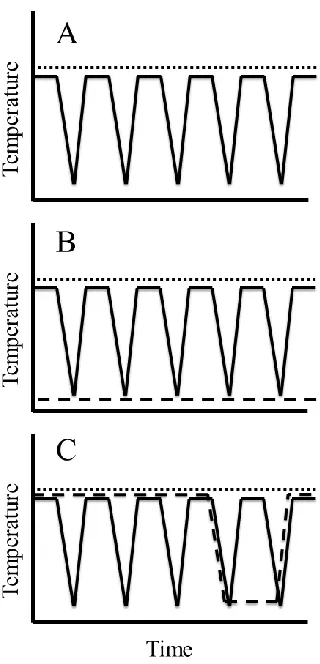
Figure 2.1 Hourly recordings of air (dotted line) and soil surface (dashed line) temperatures in London, Ontario, Canada during the winter of 2009-2010. ... 42
Figure 2.2 Schematic of common study designs in RCE experiments, incorporating “warm” non-stressful temperatures and “cold” stressful low temperatures, the exact values of which will depend on the study species. ... 46
Figure 3.1 Mortality four days after cold treatment at -0.5 ºC in female adult Drosophila melanogaster. ... 66
Figure 3.2 Fecundity effects of cold exposure at -0.5 °C in Drosophila melanogaster. ... 69
Figure 3.3 Intrinsic rate of population increase (mean ± 99 % confidence interval) after cold treatment at -0.5 °C as a function of number of 2 h treatments in female adult Drosophila melanogaster. ... 71
Figure 3.4 Effects of cold treatment on energy reserves in Drosophila melanogaster. ... 72
Figure 3.5 Effects of cold treatment on glycerol content in Drosophila melanogaster. ... 74
Figure 4.1 Mortality of Pyrrharctia isabella caterpillars 24 h after freeze treatments. ... 91
Figure 4.2 Cumulative survival in freeze tolerant Pyrrharctia isabella caterpillars after repeated freeze thaw cycles. ... 92
Figure 4.3 Supercooling points (mean ± SE) of freeze tolerant Pyrrharctia isabella caterpillars. ... 93
xviii Figure 4.5 Survival of Pyrrharctia isabella caterpillars following freezing and injection with
Metarhizium anisopliae spores. ... 97 Figure 4.6 Tissue damage in Pyrrharctia isabella caterpillars caused by freezing at -12 ºC. 98 Figure 5.1. Experimental design for studying the effects of frequency, intensity, duration, and period of low temperature exposure on Choristoneura fumiferana. ... 114 Figure 5.2 Sampling scheme for the experiment described in Figure 5.1. ... 115 Figure 5.3 The effects of cold exposure on long-term survival of Choristoneura fumiferana.
... 120 Figure 5.4 The effect of cold exposure during the 2nd instar on adult mass of female
xix
Figure 6.5 The effects of low temperature exposure during overwintering on the survival of
Eurosta solidaginis to eclosion. ... 174 Figure 6.6 The effects of low temperature exposure on acetylated triacylglycerol (acTAG) mass in Eurosta solidaginis pre-pupae. ... 178 Figure 6.7 The effects of low temperature exposure on long-chain triacylglycerol (lcTAG) mass in Eurosta solidaginis pre-pupae. ... 182 Figure 6.8 The effects of low temperature exposure on glycerol mass in Eurosta solidaginis
pre-pupae... 184 Figure 6.9 The effects of low temperature exposure on sorbitol mass in Eurosta solidaginis
pre-pupae... 186 Figure B.1 The distribution of supercooling points of 2nd instar Choristoneura fumiferana larvae. ... 249 Figure B.2 The effects of cold exposure on the supercooling point of 2nd instar
Choristoneura fumiferana larvae. ... 250 Figure B.3 The effects of cold exposure on glucose content of 2nd instar Choristoneura fumiferana larvae. ... 251 Figure C.1. The effects of low temperature exposure on supercooling point of Eurosta solidaginis pre-pupae. ... 257 Figure C.2 The effects of low temperature exposure on cell damage in Eurosta solidaginis.
... 258 Figure C.3 The effects of low temperature exposure on glycogen mass in Eurosta solidaginis.
xx
List of Appendices
Appendix A: Chapter 2 Supplementary Material ... 239
Appendix B: Chapter 5 Supplementary Material ... 249
Appendix C: Chapter 6 Supplementary Material Results ... 255
xxi
List of Abbreviations
acTAG: acetylated triacylglycerol AIC: Akaike’s information criterion AMP: Adenosine monophosphate ANCOVA: Analysis of covariance ANOVA: Analysis of variance ATP: Adenosine triphosphate AWG: American wire gauge BHT: butylated hydroxytoluene C.I.: confidence interval
CTmin: critical minimum temperature DF: degrees of freedom
FFA: free fatty acids
FTR: fluctuating thermal regime GFP: green fluorescent protein Hsp: Heat shock protein
lcTAG: long-chain triacylglycerol
maxem: Maximum emission wavelength
maxex,: Maximum excitation wavelength
xxii
MANOVA: Multivariate analysis of variance NAO: North Atlantic oscillation
PCA: Principle components analysis
r: Intrinsic rate of population increase RCE: Repeated cold exposure
RCH: Rapid cold hardening RFT: Repeated freeze-thaw Ro: Reproductive output
SCP: Supercooling point SE: Standard error Tg: Generation time
Chapter 1
1
Introduction
1.1
Overview of thesis
Temperature varies on multiple temporal and spatial scales in terrestrial environments. Insects are integral parts of every terrestrial ecosystem on the planet and their abundance and distribution is shaped by temperature. In these systems, insects face the multiple stressors of winter, and adjust their life histories around this important season. During winter, cold temperatures and freezing can induce physiological damage, which can lead to mortality. Insects have a variety of biochemical and behavioural mechanisms to prevent and repair this damage. These mechanisms are elicited during both long-term seasonal acclimation and short-term rapid hardening responses to temperature changes. Following a low temperature event, there are measurable changes to an individual insect’s physiology, which may have consequences for that individual’s response to subsequent exposures. While responses to a single cold exposure are relatively well-explored, natural temperature regimes fluctuate, and individual insects are exposed to repeated cold exposures during their lifespan. In this thesis, I link physiological responses to fitness consequences of repeated low temperature stress in insects using four species that represent a broad range of life histories and physiological responses to cold. This integrative approach allows me to explore the mediators of the relationship between low temperature exposure and fitness.
insect population and range dynamics. I end by describing the structure of my thesis, and the study systems I used to explore the effects of repeated low temperature exposure.
1.2
Insect populations and life history in temperate
environments
Insects dominate terrestrial ecosystems in terms of both biodiversity and abundance (Scheffers et al., 2012). Their presence and activity impacts ecosystems on the landscape scale, regulating boreal forest dynamics (McCullough et al., 1998) and soil nutrient cycling (Brussaard, 1998). Insects are also key providers of ecosystem services such as pollination, control of pest species, and decomposition, with one estimate placing the annual value of these insect-provided services at $57 billion a year in the United States (Losey and Vaughan, 2006). In addition, the introduction of invasive insect species such as the emerald ash borer Agrilus planipennis (Coleoptera: Buprestidae) and the gypsy moth Lymantria dispar (Lepidoptera: Ereibidae) has caused wide-spread damage through both direct effects such as herbivory of native plant species and indirect effects such as interspecific competition and spread of introduced diseases (Kenis et al., 2008). Therefore understanding the ways that insect population dynamics are regulated is a key component to understanding whole ecosystem function.
In temperate environments, unfavorable conditions in the winter months require insects to adapt their life histories. Winter is a key driver of insect populations through its effects on temperature regimes. Many insects spend the winter in dormancy in characteristic life stages, and in many species overwintering survival is aided by the process of diapause. Due to the central role of winter in insect life histories, understanding the responses of insects to wintering conditions is an important aspect of predicting population effects under climate change.
1.2.1 The importance of winter to insects in temperate regions
the seasonality of temperate thermal regimes (Bradshaw et al., 2004; Danks, 2006a; Schmidt et al., 2005). Insects in temperate climates spend a large portion of their lives in dormancy during which growth and development cannot occur due to unfavourable conditions like reduced temperature and decreased food availability (Danks, 2006b; Hahn and Denlinger, 2011; Koštál, 2006; Leather et al., 1995). These stresses have large effects on individual insects, and consequently populations.
As small ectotherms, the body temperature of insects varies directly with the temperature they experience, and so environmental temperature is of great importance for influencing survival, growth, and reproduction. Summer maximum temperatures do not vary greatly with latitude, but winter minimum temperatures do (Sunday et al., 2011). In many species, the northern range limit is set by the minimum temperature experienced in a particular location while summer maximum temperatures are of lesser importance (Calosi
et al., 2010; Gray, 2008; Stahl et al., 2006). Consequently, winter temperatures can drive species range edges. For example, the population growth rate of butterfly populations in the Northeastern United States is strongly influenced by the overwintering life stage, rather than by growing season characteristics such as host plant or habitat specialization (Breed et al., 2012). Similarly, the date of spring snow melt explains the majority of variation in population growth in the butterfly Speyeria mormonia (Lepidoptera: Nymphalidae), (Boggs and Inouye, 2012). Therefore understanding the processes that drive individual fitness through the winter is an important aspect of understanding how species ranges are set.
1.2.2 Overwintering temperature regimes in temperate climates
Hemisphere has been suggested as an explanation for the predominance of freeze tolerant insect species in this environment (Sinclair et al., 2003a). Predictability impacts the ability of insects to anticipate stressful conditions, which can have important consequences depending on the physiological status of the insect experiencing them. Dynamic air temperatures can be dampened or exacerbated through the filter of microclimate. Overwintering insects can be found in a broad range of microhabitats such as under bark (Vermunt et al., 2012b), in leaf litter beneath snow cover (Marshall and Sinclair, 2012), or in galls suspended above snow level (Irwin and Lee, 2003). Microclimate selection can have profound influences on the temperatures experienced by the insect during the overwintering period, and thus on the insect’s physiology and subsequent fitness. For example, snow cover insulates the ground beneath, which both increases the mean temperature over the course of the winter and buffers the soil from temperature extremes (Henry, 2008; Marshall and Sinclair, 2012). These effects can work together to increase overall metabolic rate in insects that overwinter beneath the snow relative to individuals above the snow, which can manifest in smaller sizes and lower fecundity in the spring (Irwin and Lee, 2003; Marshall and Sinclair, 2012). Similarly, temperatures underneath tree bark are significantly impacted by aspect, with the north side of trees generally colder than the south side (Vermunt et al., 2012a). Other factors such as shade, rock size, soil type, and slope can all influence the thermal regime and produce vastly different overwintering conditions for different species (Layne, 1991; Pincebourde and Woods, 2012; Sinclair, 2001a; Sinclair, 2001b; Sinclair et al., 2013). Fluctuations in air temperatures in concert with the effects of microclimate determine the temperature stress that individual insects experience.
1.2.3 Diapause in northern temperate insects
Most species require the reception of these token stimuli, but many species have an obligate diapause whereby the diapause program is triggered by a particular life stage (Danks, 2006a). Induction frequently occurs well before the onset of adverse conditions (Tauber et al., 1986).
Following induction, the diapause program is initiated (Koštál, 2006). The initiation phase includes a broad array of physiological adjustments that prepare the individual for the onset of winter. These adjustments may include suppression of metabolic rate (Williams et al., 2012), accumulation of large quantities of energetic reserves (Hahn and Denlinger, 2011), production of compounds that aid in stress resistance (Rinehart et al., 2007; Storey and Storey, 1986), and cessation of development (Koštál, 2006). This phase occurs well ahead of adverse conditions, in late summer or early fall (Tauber et al., 1986). Diapause is then maintained, despite the occurrence of favourable development conditions, for weeks or months until termination (Ragland et al., 2011; Régnière, 1990). In some species, this diapause stage can be maintained for years or decades, as in the yucca moth Prodoxus y-inversus (Lepidoptera: Prodoxidae) (Powell, 1989). After the reception of appropriate stimuli (which can include events such as chilling, shortened photoperiod, or depletion of energetic reserves), diapause is terminated (Koštál, 2006; Ragland et al., 2011; Régnière, 1990). This phase frequently occurs in early or mid-winter, well before the cessation of adverse conditions (Hodek, 2002). The insect spends the remainder of winter in quiescence until favourable conditions re-occur and development can resume. Different insect species produce different physiological adaptations for winter as part of their diapause program, which then alters the effects of temperature regimes.
fumiferana (Lepidoptera: Tortricidae) are univoltine (Han and Bauce, 1998), relatively inflexible in their development, and pass each winter in a dormant state in a particular life stage (Régnière, 1990).
The life histories and overwintering stage of individual species helps determine their response to overwintering. Insects can overwinter in every life stage from egg to adult, but which life-stage overwinters is highly species-specific (Sinclair et al., 2003a). Depending on the life stage that a species overwinters in, the life history consequences can greatly vary. For example, species that overwinter in later life stages such as pupae or adults must conserve nutrients acquired in the larval stage for use in the spring, while species that overwinter as eggs or early-instar larvae have the opportunity to replace overwintering nutrient consumption in the spring (Hahn and Denlinger, 2011). Therefore, studies of the effects of low temperatures in winter must incorporate knowledge about individual life histories.
1.2.4 Predicting insect population dynamics and distribution under
climate change
understanding how insects respond to winters, and will be a critical part of predicting range shifts in insect populations.
The effects of climate change are seen on broad geographical and temporal scales, and understanding the resultant effects on insect populations must be similarly broad. In recent years there has been a call to reunify the fields of macroecology and physiology through the establishment of a macrophysiology that seeks to understand the variation of physiological traits over broad geographical scales (Chown and Sinclair, 2010; Gaston et al., 2009). Some of the work in this field has attempted to address the question of how species live where they do by correlating laboratory-measured thermal tolerance of ectotherms with range extent (Addo-Bediako et al., 2000). In the case of low temperature tolerance, two studies have found that many species ranges extend into regions that are colder than those species can tolerate in lab-based tests (Sánchez-Fernández et al., 2012; Sunday et al., 2012). It is difficult to ascertain from these types of studies whether this is a result of microclimate buffering, the capacity of these species to increase their cold tolerance, or inadequate laboratory measurement of potential plasticity in the field.
Predictive models of species ranges under climate change fall into two categories: bioclimatic envelope models and mechanistic eco-physiological models. Bioclimatic envelope models correlate species’ presence and abundance data with measures of climatic variables within a species’ range (Chevin et al., 2010). Predicted changes in climatic variables are then used to extrapolate from the current range extent to a predicted distribution under climate change. These models can be extremely complicated and integrate large quantities of information about the realized niche of a species (Gray, 2008), but they do not take into account information about the physiological mechanisms that set range boundaries. They assume that the processes that set range limits remain inflexible, and they may have poor predictive power in novel climates (Buckley et al., 2010; Kearney and Porter, 2009).
predict population growth and persistence (Kearney and Porter, 2009). These models may offer more robust predictions in novel temperature conditions such as climate change since they do not rely on current temperature regimes (Buckley et al., 2010; Kearney and Porter, 2009). In addition, mechanistic models can incorporate fine-scale temporal variability (Régnière et al., 2012), and explicit tests of the effects of these small fluctuations have shown they can have large effects on model outputs (Kearney et al., 2012; Marshall and Sinclair, 2012; Williams et al., 2012). However mechanistic models generally do not incorporate the plasticity in physiological parameters caused by seasonal acclimation or RCH (but see Régnière et al., 2012; Williams et al., 2012).
Modelling species’ development times and population growth is not a purely academic exercise. This type of work plays a central role in decision making for management of pest species in the agriculture and forestry industries (Knight, 2007; Régnière et al., 2012). To provide more accurate predications of population dynamics under climate change, investigating the fitness impacts of and physiological responses to repeated cold exposure is an important first step to more accurate modelling.
1.3
Physiological effects of low temperatures
Through the winter months, decreasing temperature induces a range of direct and indirect effects on insect physiology. During the occurrence of low temperature episodes, there is the potential for freezing to occur, which imposes additional stressors. Winter is also a time of low nutrient availability, so insects frequently fuel overwintering metabolism on the energetic resources that they gathered through the growing season. Since metabolic rate is directly dependent on body temperature, increased temperatures can increase resource use. Both low and high temperatures during overwintering can therefore be stressors for insects.
1.3.1 Cold-induced damage
temperatures: the biological activities of important macromolecules such as phospholipids and enzymes slow in cold conditions. At low enough temperatures, this can disrupt the function of these macromolecules, and lead to chill coma and chilling injury (Chen and Walker, 1994; Lee, 2010; MacMillan and Sinclair, 2011a). Chill coma is the reversible cessation of movement in an insect that occurs when temperatures drop (MacMillan and Sinclair, 2011a), and the temperature this occurs at (the CTmin) is plastic
on both evolutionary (Huey, 2010) and individual (Ransberry et al., 2011) time-scales. Chilling injury is the damage, unrelated to freezing of water, induced by low temperature exposure, and may be divided into two categories based on the speed of damage accumulation (Lee, 2010). Direct chilling injury occurs on the scale of minutes, while indirect chilling injury may take days or weeks to accumulate. Damage caused by either type of chilling injury usually accumulates exponentially over time, with increasing intensity, or with the interaction between the two (Nedvĕd et al., 1998).
2012). Similarly, low temperature exposure can oxidize the double bonds within unsaturated lipids within living insects (Lalouette et al., 2011). There is much less known about the mechanisms of indirect chilling injury. This type of chilling injury takes much longer to accrue, and is often associated with mortality that occurs much later in development (Rojas and Leopold, 1996). While many of the mechanisms appear to be similar between direct and indirect chilling injury, selection for survival of direct chilling injury in Drosophila melanogaster (Drosophila: Drosophilidae) does not confer resistance to indirect chilling injury (Chen and Walker, 1994). Despite the ongoing research in this area, the majority of studies have only focused on the physiological effects of a single exposure to low temperature (Chown and Sinclair, 2010).
1.3.2 Freezing-induced damage
Pure water is capable of supercooling (cooling below its melting point without the nucleation of ice) to -40 ºC (Zachariassen and Kristiansen, 2000; Zachariassen et al., 2004). Due to their small size and high concentration of solutes, even very cold-intolerant insects do not risk freezing until well below 0 ºC, despite having relatively high melting points (Lee, 2010; Lee and Costanzo, 1998; Renault et al., 2002; Strachan et al., 2011; Zachariassen, 1985). Ice forms in insects in one of two ways: either by heterogeneous or homogeneous nucleation (Zachariassen, 1985; Zachariassen et al., 2004). Homogeneous nucleation occurs when, at low enough temperatures, water molecules aggregate spontaneously into a lattice structure. By contrast, heterogeneous nucleation occurs when water molecules aggregate around another substance (Zachariassen et al., 2004). Regardless of the method of nucleation, ice formation in insects can cause lethal damage to biological tissues.
disrupt ion homeostasis (Boardman et al., 2011), and damage nervous tissue (Collins et al., 1997). In addition, animals are hypoxic while frozen (Joanisse and Storey, 1996). During thawing, reperfusion of oxygen can generate reactive oxygen species, and therefore insects and may face oxidative damage during reperfusion during thawing (Storey and Storey, 2010). Despite study of these effects, in insects that can survive freezing it remains unclear which process results in the most damage: the freezing event itself, the physiological effects of remaining frozen, or the events during thawing.
1.3.3 Overwintering energetics
Another important stress during overwintering is energetic drain. Nutrient resources are usually unavailable through the winter months due to the senescence of plant tissues in temperate environments as well as the dormancy of prey species. As a result, insects must overwinter on the lipid and carbohydrate resources they have stored during the growing season (Hahn and Denlinger, 2011). Since body temperature is directly linked to environmental temperature, and metabolic rate is directly related to body temperature, temperature regimes can therefore greatly alter the nutrient usage of overwintering insects. For example, increased overwintering temperature raises the metabolic rate of
Eurosta solidaginis (Diptera: Tephritidae), which results in fewer eggs per individual in the spring (Irwin and Lee, 2003). Many species deeply depress their metabolic rates during diapause and thereby reduce energetic demand (Hahn and Denlinger, 2011). In addition to the effects of increased mean temperature, increased variation in temperature can also increase metabolic rate due to the nonlinear relationship between metabolic rate and temperature (“Jensen’s Inequality”; Ruel and Ayres, 1999). As a result, some species have adapted by reducing the sensitivity of their metabolic rate to temperature (Williams
1.4
Insect cold hardiness
Insect responses to cold exposure can be grouped into several broad categories based on the relationship between their lower lethal temperature and supercooling point (SCP; the temperature at which the supercooling of an insect’s body fluids stops Lee, 2010; Sinclair, 1999). Species that have lower lethal temperatures significantly higher than their SCP are “chill-susceptible”. Species that are killed by ice formation, but not otherwise injured by chilling are “freeze avoiding”, and species with lower lethal temperatures lower than their SCP that can survive freezing are “freeze tolerant” (Lee, 2010; Sinclair, 1999). Most cold-hardy species spend the winter exhibiting one of these responses to cold, although individuals can alter their response from season to season (Williams and Lee, 2005), and species can switch strategies from freeze tolerance to freeze avoidance on a year-to-year basis (Régnière and Bentz, 2007). Despite differences in the ability to survive cold and freezing, insects in each category utilize similar molecular mechanisms of low temperature tolerance.
1.4.1 Insect responses to low temperature
Chill susceptible species die of chilling injury unrelated to freezing. These species include well-known species such as D. melanogaster, the fall field cricket Gryllus pennsylvanicus (Orthoptera: Gryllidae), and the active life stages of most insects (Addo-Bediako et al., 2000; MacMillan and Sinclair, 2011b; Strachan et al., 2011). Based on a phylogeny of Drosophila species, Strachan et al. (2011) concluded that chill-susceptibility is likely the basal state for Drosophila larvae, and it may be for insects generally. By contrast, freeze avoidant species such as the emerald ash borer A. planipennis (Crosthwaite et al., 2011) and the gall moth Epiblema scudderiana
and speed of ice formation (Lee, 2010; Sinclair et al., 2009). Generally, tolerance of internal ice formation is restricted to extracellular freezing only, although a very few species such as E. solidaginis can survive intracellular freezing of specific cell types (Sinclair and Renault, 2010). Freeze tolerance has evolved independently in many insect lineages, including Diptera, Lepidoptera, and Coleoptera, leading to the suggestion that it is a derived state in insects (Sinclair et al., 2003a; Vernon and Vannier, 2002).
The broad overlap in biochemistry between species that are freeze tolerant and freeze avoiding, the frequent evolution of freeze tolerance in the insect lineage, and the fact that freeze tolerant and freeze avoiding species can overwinter in identical microhabitats (Churchill and Storey, 1989) produces a puzzle: what constrains a species to be freeze tolerant or avoiding? There are several hypotheses that address this problem. It is unlikely that phylogenetic constraint is the solution, since freeze tolerance has evolved independently in several insect lineages (Sinclair et al., 2003a; Vernon and Vannier, 2002). Voituron et al. (2002) produced an energetics model predicting the most adaptive strategy, and found that the freeze avoiding strategy is favoured when pre-winter energy stores are high and the cost of supercooling is low. By contrast, freeze tolerance is favoured when the pre-winter energy level is low and when prolonged freezing and freeze-thaw cycles are not overly stressful. Evidence for this explanation is mixed. The metabolic rates of many freeze tolerant species are significantly lower when frozen, which also reduces their rate of water loss (Irwin and Lee, 2002; Sinclair et al., 2004). However, freeze-thaw can induce substantial costs in freeze tolerant animals by damaging gut tissues such as in the sub-Antarctic caterpillar Pringleophaga marioni
1.4.2 Biochemical mechanisms of low temperature survival
Insects have evolved a suite of biochemical adaptations to survive low temperatures. These can be divided into two groups by molecular weight. First, the low molecular weight carbohydrate or polyol cryoprotectants are frequently seasonally accumulated in large quantities. The amino acid proline has recently been identified as another important low molecular weight cryoprotectant. Secondly, several classes of proteins are important in cold and freeze tolerance. Heat shock proteins can be upregulated following heat shock, and aid in stabilizing enzymes at low temperature. Antifreeze proteins either prevent freezing or reduce recrystallization following freezing. Ice nucleating proteins are important for controlling the initiation and spread of ice. In addition, there are several enzymes that may repair or prevent other forms of cold or freezing injury such as dehydrins and aquaporins. Finally, lipid compounds are receiving attention as potential cryoprotectants. This broad array of mechanisms together allows insects to survive very cold temperature conditions.
1.4.2.1
Cryoprotectants
of cryoprotectants decreases the amount of freezable water, and colligatively depresses the SCP by almost double the colligative depression of melting point (1.86 ºC/Osm, Zachariassen, 1985). In freeze tolerant insects, increased supercooling capacity due to accumulation of cryoprotectants is unlikely due to the retention of ice nucleators. In these species, cryoprotectants serve to depress melting point, which helps reduce the amount of ice formed at a given temperature (Lee, 2010). In addition, cryoprotectants prevent osmotic stress during freezing by reducing the amount of water that flows out of cells into extracellular ice thereby minimizing cell volume changes, and bind to proteins and cell membranes producing a hydration shell to prevent damage (Lee, 2010; Storey and Storey, 1988). Even in relatively small quantities (~0.25 M), carbohydrate and polyol compounds can still impart cryoprotection (Koštál et al., 2007b).
The most well-studied cryoprotective molecules are low molecular weight polyols or sugars, but there have been several studies that show the importance of free amino acids (particularly proline) in freeze tolerance (Storey, 1997). For example, the free amino acid pool significantly increases in the winter in the freeze tolerant alpine weta
Hemideina maori (Orthoptera: Anostostomatidae), and this is largely a result of accumulation of proline (Ramløv, 1999). Similarly, feeding freeze tolerant larvae of
Chymomyza costata (Drosophila: Drosophilidae) proline-enriched diet significantly increases survival at -196 ºC (Koštál et al., 2011). Most remarkably, freeze tolerance was induced in larvae of the chill susceptible D. melanogaster by subjecting them to fluctuating temperatures and feeding them free proline (Koštál et al., 2012). Proline is believed to aid in freeze tolerance by stabilizing cell membrane phospholipid head groups (Storey, 1997), or by promoting vitrification (the solidification of water into an amorphous, rather than crystalline, solid, Koštál et al., 2011).
diapause, suggesting that they be helpful for surviving low temperature stress (Rinehart et al., 2007). In addition, the freeze tolerant Antarctic midge Belgica antarctica (Diptera: Chironomidae) significantly upregulates hsp70 expression in response to repeated freeze-thaw cycles, suggesting a cryoprotective role for Hsp70 (Teets et al., 2011). However this response is not universal—for example the freeze tolerant gall fly E. solidaginis does not upregulate heat shock proteins in response to low temperature stress (Lee et al., 1995). In addition, a few species appear to upregulate small heat shock proteins (<30 kDa) during diapause (Joplin et al., 1990; Yocum et al., 1991). While these proteins may also function as chaperones, it has been suggested that small heat shock proteins may function to arrest the cell cycle during periods of low temperature stress (Joplin et al., 1990).
1.4.2.2
Control of ice
Control of the initiation of ice crystallization is essential for both freeze tolerant and freeze avoiding species (Zachariassen and Kristiansen, 2000). This requires precise control by the insect over the retention of substances that can nucleate ice: removing them in the case of freeze avoiding insects, and retaining or producing them in the case of freeze tolerant insects (Duman, 2001). Gut contents can also nucleate ice, and therefore are seasonally cleared by freeze avoiding insects (Zachariassen, 1985). Freeze avoiding species may also prevent inoculation by external ice by the accumulation of cuticular waxes (Crosthwaite et al., 2011), avoiding contact with water by behavioural means (Larsen and Lee, 1994), or reducing the volume of freezable water in their bodies (Han and Bauce, 1993). By contrast, nucleation is adaptive in freeze tolerant insects, ensuring that ice nucleation happens extracellularly and at a high enough temperature to promote slow freezing (Duman, 2001; Sinclair et al., 2009; Zachariassen and Kristiansen, 2000). Some insects are only freeze tolerant when inoculated by ice crystals (Gehrken et al., 1991). Nucleation is induced by both the fat body cells as well as calcium phosphate spherules found in the Malpighian tubules in the freeze tolerant E. solidaginis (Mugnano
such as Pseudomonas syringae (Pseudomonadales: Pseudomonadaceae), (Widehem and Cochet, 2003), and can nucleate ice at relatively high temperatures.
Another group of proteins interact with water and ice, binding to ice crystals to keep them small, stabilizing supercooling solutions, or preventing inoculation (Duman, 2001). These “antifreeze proteins” are also known as thermal hysteresis agents, since they lower the freezing point of solutions below the melting point in a non-colligative manner (Duman, 2001). They are found in a broad range of organisms, including fish, bacteria, plants, and several groups of terrestrial arthropods (reviewed in Duman, 2001). In insects, these proteins are extremely effective, producing thermal hysteresis between 5-10 ºC in the case of the spruce budworm C. fumiferana (Tyshenko et al., 1997). Antifreeze proteins, while very diverse among taxa, generally are relatively small, threonine- and cysteine-rich in insects, and may function by adsorbing to ice crystal surfaces, preventing their growth (Duman, 2001). Antifreeze proteins may be produced by freeze avoiding species like C. fumiferana to prevent inoculation (Tyshenko et al., 1997; Zachariassen and Husby, 1982), or more rarely by freeze tolerant species such as the beetle Dendroides canadensis (Coleoptera: Pyrochoidae), (Duman et al., 1998) to prevent recrystallization after freezing. Antifreeze proteins can also increase low temperature survival in freeze tolerant animals (Tursman and Duman, 1995). The roles of antifreeze proteins are diverse, but significant for low temperature survival.
1.4.2.3
Other cryoprotective molecules
role of dehydrins, proteins that aid in retaining water, during overwintering is now also beginning to be elucidated as well (Lee, 2010).
In addition, modifications to lipids or novel lipid compounds can also increase cold tolerance. Many species of insect desaturate fatty acid components of triacylglycerols and phosopholipids to increase fluidity at low temperature (Bennett et al., 1997; Michaud and Denlinger, 2006; Pruitt and Lu, 2008). In addition, a non-protein antifreeze consisting of a sugar backbone and fatty acids that can produce thermal hysteresis of 3.7 ºC was described from the Alaskan beetle Upis ceramboides (Coleoptera: Tenebrionidae), (Walters et al., 2009), and has since been found in many other taxa (Walters et al., 2011). Finally, an unusual class of lipid (acetylated triacylglycerols) is accumulated in large quantities by E. solidaginis prior to overwintering and appears to be related to intracellular freeze tolerance (Marshall et al., submitted).
1.4.2.4
Costs of cold tolerance
depleted energy stores is usually impossible. In addition, these considerations are particularly important for those species that overwinter in later life stages that do not have the opportunity to feed following overwintering.
1.4.3 Plasticity of insect cold tolerance
Individual insects respond to the multiple temporal scales of temperate fluctuations in temperate environments by modifying their cold hardiness. These modifications are generally organized into two categories. The first is the longer-term acclimatization that happens as part of the diapause program and prepares the insect for a prolonged period of stress. The second, called “Rapid Cold Hardening” (RCH), happens on very short time-scales. Plastic responses in anticipation of low temperature are reliant on the previously-described biochemical mechanisms.
Seasonal acclimatisation to low temperatures includes mechanisms at many scales of biological organization. At the whole animal level, these preparations include suppression of metabolism to conserve energy through the winter (Williams and Lee, 2005; Williams et al., 2012) and depression of supercooling point in freeze avoiding species (Crosthwaite et al., 2011). At a biochemical scale, these include increases in cryoprotectant concentrations (Han and Bauce, 1995), upregulation of heat shock proteins (Rinehart et al., 2007), and remodelling of lipid membranes to increase fluidity (Pruitt and Lu, 2008). Seasonal acclimation responses can also be induced in many species by shortening photoperiod and gradually reducing temperature (Hoffmann, 1995; Hoffmann
et al., 2003; Wang et al., 2006). These seasonal shifts in cold hardiness are essential for survival in cold conditions.
rates and in the field in D. melanogaster (Kelty and Lee, 1999; Overgaard and Sørensen, 2008; Sinclair et al., 2003b). As a result, the RCH response likely plays an important role in natural conditions. The mechanisms of RCH remain under active investigation. Induction of additional cryoprotectant synthesis may be important (Lee and Denlinger, 2010; Overgaard et al., 2007; but see MacMillan et al., 2009). Membrane remodelling to increase fluidity (including desaturation of fatty acid tails and swapping of phospholipid head groups) may also aid survival of subsequent exposures (Michaud and Denlinger, 2006; Overgaard et al., 2006; but see MacMillan et al., 2009). Finally, additional heat shock protein may be synthesized (Lee and Denlinger, 2010).
Both RCH and acclimation increase cold hardiness, but there is evidence that they do so through differing mechanisms. RCH can increase freeze resistance even in acclimated B. antarctica (Lee et al., 2006), and RCH is effective at increasing cold tolerance in
Drosophila species where cold acclimation is not (Strachan et al., 2011). In addition, the benefits of acclimation and RCH have been found to work additively in D. melanogaster
(Rajamohan and Sinclair, 2009; Shintani and Ishikawa, 2007). Inhibition of protein synthesis decreases basal resistance to cold shock in D. melanogaster, but does not reduce the ability to rapidly cold-harden (Misener et al., 2001). Similarly, RCH does not appear to come at a fitness cost, although seasonal acclimation does (Powell and Bale, 2004). Taken together, it appears that insects operate with dual systems for increasing cold hardiness: a long-term acclimation and a short-term hardening response.
1.5
Temperature fluctuations, trade-offs, and the
importance of repeated cold stress
temperature stress during overwintering suggests that trade-offs between somatic investment and fecundity might become important mediators of the relationship between low temperature and fitness in insects (Zera and Harshman, 2001).
The effects of repeated cold exposures on insects are interesting for several reasons. First, temperatures during overwintering do not remain static: they fluctuate on multiple, interacting timescales. Secondly, even very short-term low temperature exposures can induce chilling injury or freezing (if low enough). Thirdly, it is clear that insects increase their cold hardiness after very short-term low temperature exposures (RCH). This hardening can be additive with seasonal acclimation. Therefore, when insects experience subsequent cold exposures, the insect is not naïve to low temperature exposure and may have initiated physiological changes that mitigate these exposures. We might expect then that repeated low temperature exposures would induce a different fitness response than single cold exposures for one of two reasons: unrepaired damage could accumulate causing increased injury or resources devoted to repair and preparation for subsequent exposures could reduce injury, but potentially invoke trade-offs due to the nutrient-limiting state of overwintering (Figure 1.1). Testing whether these trade-offs exist, as well as understanding some of the physiological mechanisms that might underlie them, is an essential part of predicting population dynamics and range shifts in future climate conditions. The existing research on the impacts of repeated cold exposure is reviewed in Chapter 2.
1.6
Summary and Objectives
under differing climate conditions. The mechanisms of insect low temperature survival include a broad suite of biochemical adaptations that aid in the control of ice formation, prevent and repair damage to proteins, and aid in the function of membranes at low temperatures. Species differ in their ability to survive cold and/or freezing, but the mechanisms of low temperature survival are similar among responses to cold. Despite extensive research on these mechanisms, the majority of studies have focused on the effects of a single cold exposure, despite the fact that insects experience repeated cold exposures through their lifespans.
In this thesis I address two major questions: 1) Does frequency of cold exposure impose additional stress on insects? and 2) What are the sub-lethal components of this stress? To answer these questions, I structured my thesis with the following objectives, each addressed with different insect species that overwinter in southern Ontario and represent the range of responses to low temperature. My first objective was to understand how repeated cold exposure impacts survival in the fruit fly Drosophila melanogaster
(Diptera: Drosophilidae), and whether increased survival would be costly. My second objective was to find out whether freeze-thaw events imposed additional damage above the cost of being frozen, and whether repair of this damage was possible, which I addressed in the freeze tolerant woolly bear caterpillar Pyrrharctia isabella (Lepidoptera: Arctiidae). My third objective was to explore how other low temperature parameters including intensity of exposure, number of exposures, and period between exposures in addition to frequency of exposure impacted energetics and survival of freeze avoiding insects, which I addressed using the eastern spruce budworm Choristoneura fumiferana
(Lepidoptera: Tortricidae). Finally, my fourth objective was to address how these additional low temperature parameters impacted a freeze tolerant insect (where the cost of freeze-thaw events could be a factor), as well as understand potential fecundity trade-offs. To answer these questions I used pre-pupae of the goldenrod gall fly Eurosta solidaginis (Diptera: Tephritidae).
1.7
Thesis overview
phylogenetically-independent approach (Garland et al., 2005), practicalities require that a few species are chosen to focus on. To this end, I selected four insect species, all found in Ontario, that offered contrasting strengths as models, and allowed for the study of each of the three principal cold tolerance responses (freeze tolerance, freeze avoidance, and chill-susceptibility). Each study was prepared as a separate manuscript for publication. Chapters 2 – 4 are published, and Chapter 5 and 6 are currently being prepared for publication.
In chapter 2 (“The impacts of repeated cold exposure in insects”), I review published work that focused on repeated cold exposures, synthesize general responses, critique popular experimental designs, and offer recommendations for future studies on the topic. I find that while many studies report increased cold hardiness as a result of repeated cold exposure, few follow through to measure fitness effects, and many experimental designs fail to adequately address the questions posed.
In Chapter 3 (“Repeated stress exposure results in a survival-reproduction trade-off in
Drosophila melanogaster”), I investigate how repeated cold exposure impacts
metabolites, survival, and fertility in the chill-susceptible D. melanogaster. This species was chosen for the ability to rear large numbers of individuals, as well as the relative ease of measuring investment into reproductive output. Drosophila melanogaster likely overwinters as an adult, so this life stage was chosen for study (Izquierdo, 1991). I found that while repeated cold exposure decreases mortality due to chilling injury, it also reduces investment in female offspring. This investment seems to be mediated by a reduction in glycogen reserves. I conclude that repeated cold exposures can induce trade-offs between investment in somatic maintenance and reproductive output.
In Chapter 4 (“The sub-lethal effects of repeated freezing in the woolly bear caterpillar
Pyrrharctia isabella”), I investigate how repeated freeze-thaw cycles impact the