Type of the Paper (Article)
1
Chitosan decorated copper nanoparticles as efficient
2
catalyst for one-pot multicomponent synthesis of
3
novel quinoline derivatives: Sustainable perspectives
4
K.S. Alghamdi 1, N.S.I. Ahmed 2, D. Bakhotmah1 and M. Mokhtar1,3*
5
1Chemistry Department, Faculty of Science, King Abdulaziz University, Jeddah 21589, Saudi Arabia
6
2Department of Therapeutic Chemistry, Pharmaceutical and Drug Industries Research Division, National Research Centre,
7
El Buhouth St., Dokki, Cairo 12622, Egypt
8
3Physical Chemistry Department, National Research Centre, El Buhouth St., Dokki, Cairo 12622, Egypt
9
*Correspondence: (MM; email: [email protected], Tel.: +966 500 558045)
10
11
Abstract: Chitosan decorated copper nanoparticles catalysts (CSCuNPs) were synthesized via
12
reduction methods utilizing green protocol. The CSCuNPs catalysts were tested for the synthesis of
13
quinoline derivatives utilizing one-pot multicomponent reaction (MCR) under ultrasonic
14
irradiation. The best catalyst (Cu-CS-NPs) that provided good conversion reaction yield and high
15
turnover frequency (TOF) was characterized using FTIR, TGA, XRD, TEM and XPS techniques.
16
Generalization of the scope of the proposed catalytic process was studied using different aldehydes.
17
Excellent products yield and high TOF in even shorter reaction time (~5 min) was attained.
18
Recyclability performance of the catalyst over five times re-use without detectable loss in product
19
yield was recorded. The current method is green process utilizing environmentally benign catalyst
20
and considered to be promising sustainable protocol for the synthesis of fine chemicals.
21
22
Keywords: Chitosan-copper NPs; Quinolone derivatives; Ultrasonic irradiation; One- pot synthesis;
23
Green-sustainable perspectives
24
25
1. Introduction
26
Quinolone and their derivatives have several biological activities, such as anti-malaria 1,anticancer2,3
27
, anti-inflammatory 4,5 , anti-bacterial 5 , anti-asthmatic 6, anti-platelet activity 7 ,anti-hypertensive 8
28
.Therefore, several methods have been developed for the synthesis of quinolone derivatives utilizing
29
various catalysts 9-12 . Recently, green and eco-friendly synthesis have attracted much attention.
30
Numerous approaches have been established which improved green conditions to safer synthesis.
31
ultrasonication is one of the auspicious green technology in the synthesis of organic compounds13,14.
32
The use of nanoparticles (NPs) in catalysis is considered to be one of the most significant principles
33
of green chemistry that is owing to a number of different reasons; the reaction time is short,
34
diminishes generation of hazardous materials, economically visible as high yields produced with low
35
cost 15. Nanoparticles have been widely used as the catalyst support in organic transformation 16. Our
36
previous achievements in the synthesis of different organic synthons of important biological activities
37
utilizing different nanosized solid heterogeneous catalysts under green protocol 17-22 revealed that
38
exploring efficient, sustainable and green catalyst is crucial to achieve green sustainable perspectives.
39
To attain our goal, natural bio-polymer supported heterogeneous nano-catalysts that have been
40
utilized in recent years 23,24, was selected to be a catalyst support. One of the promising catalyst’s
41
toxic is an excellent candidate to be used as a support for copper and other transition metals due to
44
its insolubility in organic solvents and the presence of functionalization of the free amine groups in
45
the structure which is represented active sites for several of chemical modifications 26-28.
46
Nanoparticles have a special characteristic to aggregate and well clump together to form larger
47
particles, thus nanoparticles lose their large surface area and other benefits 29 . Chitosan as a
polymer-48
based stabilizes the nanoparticles to prevent their aggregation via coordination with metal
49
nanoparticles through chelation mechanism, makes it a perfect support for metal nanoparticles30 .
50
Gold, silver and transition metals nanoparticles such as palladium are available for the development
51
of hybrid catalyst complexes and they can also be used in chemical transformation whereas a new
52
glyoxal cross-linked chitosan Schiff base was prepared as a support material for palladium catalyzed
53
Suzuki cross coupling reactions31,32. In addition, chitosan was used as support of copper nanoparticles
54
as catalyst for the C-S coupling of thiophenol with aryl halides 33 . The synthesis of Cu nanoparticles
55
using chitosan as both reducing and capping agent have been reported 34,35 . This single step method
56
is considered to be cost-effective, convenient and eco-friendly relative to other method of preparation
57
34 .
58
In the present work, chitosan decorated copper nanoparticles catalysts were synthesized through
59
green methods 34,35 and its application as an efficient catalyst in multicomponent reaction to the
60
synthesis of novel quinolone derivatives under ultrasonic irradiation were extensively studied. The
61
Cu-CS-NPs catalyst is a promising efficient sustainable green catalyst for the synthesis of quinolone
62
derivatives in satisfactory yield in short reaction time under ultrasonication conditions.
63
2. Results and Discussion
64
2.1 Catalytic Test
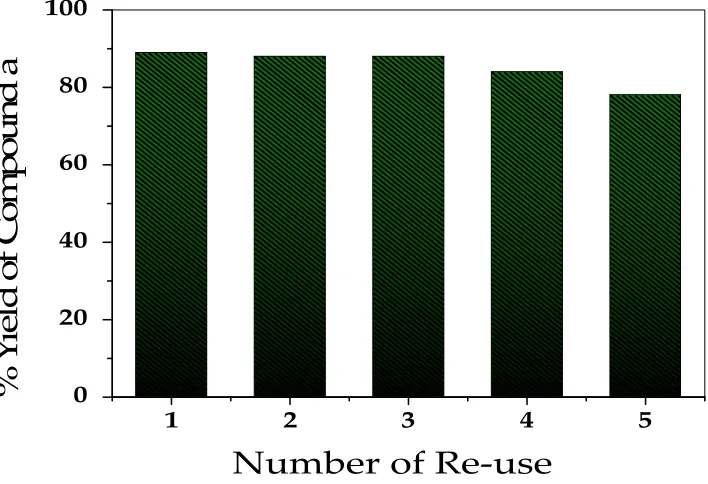
65
The synthesis of quinoline derivatives via four-component one-pot reaction of dimedone,
p-66
chlorobenzaldehyde, ethyl cyanoacetate and ammonium acetate is represented in scheme 1. Neat
67
reaction (absence of catalyst) showed ~25% yield in 6 h using ethanol under refluxing condition. The
68
neat reaction carried out under ultrasonic irradiation resulted in poor isolated yield of the product
69
(~29%) in 15 min.
70
71
Scheme 1: Synthesis protocol of quinolone derivatives.
72
In order to find out suitable Cu-CS NPs catalyst, for the synthesis of quinoline derivatives via MCR
73
under ultrasound irradiation, two different catalysts (Cu-CS NPs and Cu-CS NPs /TPP) were
74
synthesized and tested. The effect of mass of the two catalysts was studied and the results displayed
75
in Fig. 1. The results clearly showed that 0.1 g of Cu-Cs NPs provided high product’s yield (~90 %)
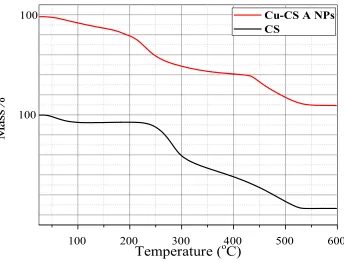
76
Figure 1. Catalytic activity of all the investigated catalysts with different masses*
78
*Reaction conditions: dimedone (3.6 mmol), aromatic aldehyde (3.6mmol), ethylcyanoacetoacetate
79
(3.6 mmol), ammoniumacetate (28.8 mmol) and different weight of catalysts in10 ml absolute ethanol
80
under ultrasonic irradiation at 80°C for 15 min.
81
82
The ultrasonic irradiation method was selected based on the advantages of this method in
83
comparison to the conventional one in enhancing the product yield in shorter reaction time.
84
Therefore, a variety of quinolines derivatives were also synthesized via this method by using the
85
highly efficient catalyst (Cu-CS NPs, 0.1 g). The optimal reaction conditions were determined to be
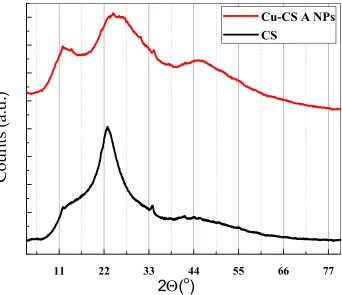
86
catalyst loading: 0.1g Cu-CS NPs; dimedone (3.6 mmol); aromatic aldehyde (3.6mmol);
87
ethylcyanoacetoacetate (3.6 mmol); ammoniumacetate (28.8 mmol) and 10 ml absolute ethanol under
88
ultrasonic irradiation at 80°C for 15 min. Then, with the optimum reaction parameters, the catalytic
89
performance of the catalyst was examined in MCR for quinoline derivatives and results are displayed
90
in Table 1. As seen from the data in Table 1 catalyst provides an efficient synthesis of a new quinoline
91
derivatives with high yield productivity, in short reaction time. In addition, the TON and TOF
92
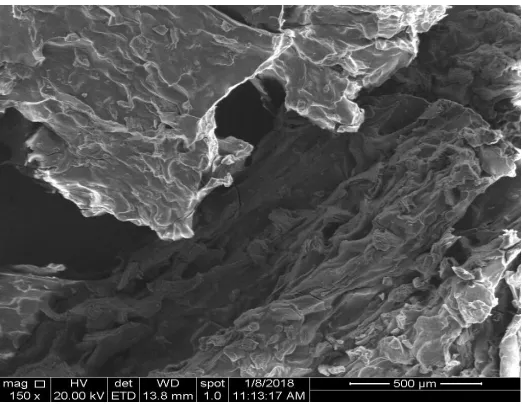
values were calculated and are existing in Table 1. A remarkably high TON and TOF values were
93
found with small mass of catalyst. Considering such cyclocondensation reactions, chitosan decorated
94
copper nanoparticles is considered to be a suitable efficient catalyst. Basically, catalytic activity of
95
nanoparticles is related to the size of the particles and the good dispersion of active species on the
96
catalyst’s support. Therefore, extensive characterization of the most effeicient Cu-CS NPs catalyst
97
was attained and presented in the next section.
98
99
Table 1: Effect of Cu-CS NPs catalyst on the synthesis of polyhydroquinolines 2 a-j using various
100
aromatic aldehydes**
101
0 20 40 60 80 100
0.05 0.1 0.15 0.2
%
Y
ie
ld
Catalyst weight / gm
*1 S. Kumar, P. Sharma, K.K. Kapoor, M.S. Hundal, An efficient, catalyst-and solvent-free, four-component, and
102
one-pot synthesis of polyhydroquinolines on grinding, Tetrahedron 64 (2008) 536-542.
103
**Reaction conditions: dimedone (3.6 mmol), aromatic aldehyde (3.6mmol), ethylcyanoacetoacetate (3.6 mmol),
104
ammoniumacetate (28.8 mmol) and 0.1g of catalyst in10 ml absolute ethanol under ultrasonic irradiation at
105
80°C for 15 min.; TON: (turnover number, yield of product/ per mol of Cu); TOF: (turn over frequency,
106
TON/time of reaction)
107
Many catalysts have been used for one pot-catalytic synthesis of organic precursors utilizing
108
nanocrystalline and nanoparticle catalysts such as ClO4/Zr-MCM-41 nanoparticles 36, Fe3O4
@B-MCM-109
4137, and ZnO nanoparticles 38. All of these catalysts showed pronounced catalytic activity due to their
110
nanosized and large surface area features. In contrary to that the produced % yield of products
111
especially after re-use of catalysts for four time was not sufficient relative to our proposed catalyst in
112
the present work. In order to study the sustainability of the present efficient catalyst towards four
113
components one-pot catalytic synthesis of novel quinoline derivatives under ultrasound irradiation,
114
116
2.2 Reusability Procedure
117
118
Reusability is crucial for supported catalysts 39. Therefore, the same catalytic particles were used after
119
filtration from the reaction mixture for several reactions under the same conditions. Typically, after
120
15 min ultrasound irradiation, Cu- CS NPs was filtered and washed 4-6 times with hot ethanol to
121
remove all the unreacted educts then dried at room temperature for 24 h. The dried catalyst was used
122
in the subsequent runs and the results are displayed in Fig.2.
123
1
2
3
4
5
0
20
40
60
80
100
%
Y
ie
ld
o
f
C
o
m
p
o
u
n
d
a
Number of Re-use
124
Figure 2. Robust feature of Cu-CS NPs catalyst after five times r-use
125
The results shown in Fig. 2 depicted that there is no apparent decay of catalytic activity even after 5
126
runs, and the attained yields of the reusability test are within the experimental deviations.
127
128
2.3 Catalyst Characterization
129
2.3.1 FTIR
130
FT-IR spectra of chitosan and copper decorated chitosan nanoparticles (Fig.3) displayed a broad band
131
for OH and NH stretching of amine groups located at 3250 cm−1. The existence of band at 1553 cm−1
132
is due to the presence of the NH2 groups. Stretching vibrations due to C-OH and C-N appeared
133
consequently in the absorption bands in the range 1016 and 1402 cm−1. The absorption band placed
134
at 2936 cm−1 is credited to the C−H stretching mode of methylene groups40. The decoration of chitosan
135
by copper nanoparticles resulted in the formation of new intense peaks in the fingerprint region
136
at low -frequency (600-500 cm-1) due to formation of Cu−N and Cu−O coordinate bonds.
137
Furthermore, the peak at 612 cm-1 assigns for CuNPs–chitosan interaction, indication that NPs were
138
capped by the biopolymer 34.
4000 3500 3000 2500 2000 1500 1000 500 CS
Cu-CS NPs
T
ra
n
ce
m
at
te
n
ce
,
a.
u
.
Wavenumber, cm
-1140
Figure 3. FTIR spectra of pure chitosan and chitosan decorated copper nanoparticles.
141
142
2.3.2 TGA analyses
143
Thermograms of CS and Cu-CS A NPs samples are shown in Figure 4. The TGA study is used
144
to illuminate the thermal stability and approach of decomposition of the pristine chitosan and copper
145
decorated chitosan. The TGA thermogram of investigated samples display three mass loss stages.
146
The preliminary mass loss (8%) for CS and (21%) for Cu-CS A NPs in the temperature range 25-200oC,
147
could be to attributed to the hygroscopic nature of the chitosan and dehydration of copper decorated
148
chitosan sample 41. The second thermal stage in the temperature range 200-400 oC displayed 48 and
149
40% mass loss for CS and Cu-CS A NPs, respectively is mainly assigned to de-polymerization along
150
with breakdown of acetylated and deacetylated unit of chitosan. The third thermal decomposition
151
stage (400-550oC) was accompanied by about 30% mass loss for both investigated samples. The total
152
mass loss of copper nanoparticles decorated chitosan is higher than that of pristine chitosan (~10%
153
higher) as the introduction of a metal nanoparticles into the biopolymer matrix, affect the chain
154
packing and causes releasing of the packed assembly 42,43.
100 200 300 400 500 600 100
Temperature (
oC)
Cu-CS A NPs CS
M
as
s%
100156
Figure 4. TGA of chitosan (CS) and Cu-CS A NPs.
157
158
2.3.3 XRD analyses
159
160
X-ray diffraction patterns of pure chitosan (CS) and copper nanoparticles decorated chitosan
161
(Cu-CS NPs) are displayed in Figure 5. Some characteristic peaks for chitosan at 2θ = 11.5o and 22.5o
162
were observed 44,45. A slight right shift with wider peak at 2θ=23o recommends the decrease in
163
crystallinity after anchoring copper nanoparticles in the chitosan structure. The main structure of
164
chitosan was not disturbed with the absence of any characteristic peaks for copper nanoparticles. This
165
observation suggests the dispersion of copper nanoparticles over the surface of chitosan and the
166
11
22
33
44
55
66
77
C
o
u
n
ts
(
a
.u
.)
2
(
o)
Cu-CS A NPs
CS
168
Figure 5. XRD patterns of chitosan (CS) and Cu-CS A NPs.
169
170
171
2.3.4 SEM-EDX of Cu-Cs NPs catalyst
172
173
The morphology of Cu-decorated chitosan sample (CuNPs) described by SEM image (Fig. 6)
174
displayed asymmetrical deposits of chitosan. The nonattendance of copper nanoparticles could be
175
ascribed to the good scattering of copper nanoparticles over chitosan. EDX spectra (Fig. 7) showed
176
copper in addition to carbon, nitrogen and oxygen elements. The atomic % of copper should be
177
complemented by XPS analysis in order to give accurate turnover number of copper relative to the
178
total atomic percentage derived from ICP-AES analysis.
179
181
Figure 6. SEM image for Cu-CS NPs
182
183
184
185
186
187
188
189
190
191
192
193
194
Figure 7. EDX spectra of copper decorated chitosan nanoparticles.
195
2.3.5 XPS and HRTEM of Cu-Cs NPs catalyst
196
XPS peaks at 932.7 and 952.5 eV corresponding to Cu2p3/2 and Cu2p1/2, respectively, which
197
confirmed the presence of copper, which is not appeared in XRD patterns. Copper nanoparticles are
198
fashioned in three diverse oxidation states, which could improve the catalytic efficacy of the
199
synthesized catalyst. The number of moles of copper nanoparticles was detected from both EDX and
200
XPS analyses for the determination of turnover number of active species. TEM images (Fig. 8
right-201
side) show copper nanoparticles are well dispersed over chitosan. The corresponding selected area
202
diffraction (SAED pattern) shows uniform distribution of copper NPs in two faces (111) and (110).
203
These information about the uniform distribution of copper species with different oxidation states in
204
different crystallographic faces could deliver elucidation of the superior catalytic activity of the
205
catalyst and the suitability of the catalyst’s support in avoiding the agglomeration of copper
206
nanoparticles.
207
208
209
212
Figure 8. XPS (left-side) and HRTEM images (right-side) for Cu-CS NPs.
213
214
4. Tentative Mechanism
215
A tentative mechanism for multicomponent reaction of quinolines derivatives over Cu-Cs NPs
216
has been proposed to occur via three different reaction steps (Scheme 2). Firstly, the well dispersed
217
copper nanoparticles facilitate the electrophilicity of carbonyl group of the aldehyde via reduction of
218
Cu2+ ions into Cuo, which resulted in ease of attack on the active methylene carbon of
219
ethylcyanoacetate and elimination of water. Secondly, the reaction proceeded via Michael addition
220
assisted by basic sites of the catalyst then followed by the last step in ionic mechanism.
221
222
223
224
225
226
227
228
229
230
231
232
233
Scheme 2: proposed mechanism for the synthesis of quinolone derivatives.
234
235
236
0 0.8 1.6 2.4 3.2 4
928 933
938 943
948
cp
s
T
h
o
u
sa
n
d
s
Binding Energy (eV)
Cu 2p
3/2CPS
Cu 2p3/2_Cu2O
Cu 2p3/2_CuO
Cu 2p3/2_Sat
Cu 2p3/2_Sat
Baseline
5. Experimental Section
237
5.1 Materials
238
Chitosan (molecular weight 100,000-300,000) (Acros Organics- Belgium). Sodium
239
tripolyphosphate (Acros Organics- Belgium), copper (II) acetate monohydrate (Central Drug House
240
CDH, New Delhi, India), dimedone, ethyl cyanoacetate, and ammonium acetate (Techno Pharm
241
Chem, New Delhi, India). 4-chlorobenzaldehyde, 4-bromo benzaldehyde, 4-florobenzaldhyde,
242
piperonal(1,3-benzodioxole-5-carbaldehyde), salicylaldehyde (2-hydroxybenzaldehyde, thiophen
-3-243
aldehyde,4-dimethylaminobenzaldehyde, 2-methoxybenzaldhyde,3,4- dimethoxy benzaldehyde,
m-244
nitro benzaldehyde (Merck KGaA, Darmstadt, Germany), absolute ethanol and acetone (Fisher
245
scientific, Leicestershire, U.K).
246
247
5.2 Materials characterization
248
249
The reactions were monitored by TLC and all yields refer to isolated products. Melting points
250
were obtained by the Barnstead international 1002 melting point apparatus. IR spectra of the catalyst
251
and products were recorded for the compounds in PerkinElmer spectrum 100 FT-IR
252
spectrophotometer. 1H NMR and 13C spectra of products were recorded on Burker WM 400 and 850
253
MHz spectrometer using TMS (0.00 ppm). Chemical shifts (δ) are given in ppm relative to the signal
254
for TMS as standard, and coupling constants in Hz. Thermo-Microbalance TG 209 F3 (NETZSCH)
255
was used to perform thermal gravimetric analysis for the prepared samples. The sample was first
256
heated form room temperature up to 150ºC, 5ºC/min, and kept half an hour at 150ºC. Then the sample
257
temperature was raised up to 550ºC, afterwards cooled down to 40ºC at the same rate of 10ºC / min.
258
Mixture of 20 ml/min of dry air and 10 ml/min of helium was passed through during these processes.
259
PXRD patterns catalyst sample were analyzed using a Powder XRD diffractometer (Model
260
Equinox1000 – INEL (France) with Co Kα (λ= 1.7890 Å) radiation at 30kV and 30mA. XPS
261
measurements were carried out in an ultra-high vacuum multi- technique surface analysis system
262
(SPECS GmbH, Germany) operating at a base pressure range of 1010 bar. Catalyst morphology was
263
investigated by means of field emission scanning electron microscopy (FEG-SEM, Quanta FEG450,
264
FEI, the Netherlands) using an ETD Everhart Thornley detector (High Vacuum mode), a solid-state
265
backscattering electron detector (VCD)and EDS detector (XFLASH6-30, Brucker) for elemental
266
analysis. HRTEM samples were prepared by sonication of the suspended powder in ethanol. A single
267
drop of the sonicated suspension was deposited on TEM carbon grid 200 mesh and leaved for total
268
evaporation at room temperature. Then the grid was mounted on a TEM single tilt holder, the
269
residual solvent was removed by plasma cleaning process. The reactions that carried out by U.S
270
irradiation was done using Daihan (Wiseclean, D-40 MHz) ultrasonic bath. Microanalysis was
271
performed by Perkin Elmer elemental analyzer at the Faculty of Science, King Abdul Aziz University.
272
273
5.3 Method
274
5.3.1 Synthesis of Cu-Chitosan Catalyst
275
276
The synthesis of Cu- chitosan nanoparticles was carried out according to two methods: Firstly:
277
Cu- chitosan NPs (Cu-Cs NPs) have been prepared via one-step synthesis green protocol. In a typical
278
method, 0.75 g chitosan dissolving in 100 ml 0.1% acetic acid (in distilled water) then 50 ml of the
279
solution and 25 ml of 0.05 M copper solution were delivered under stirring at 70°C for 9 h till the
280
reaction was completed. the colloid was centrifuged for 10min. to separate particles from suspension
281
then washed with acetone (90%, v/v) and the centrifugation was repeated three times to remove
282
unreacted reagents. The particles were dried under vacuum at the room temperature overnight and
283
stored 34.
284
Secondly: Cu-chitosan NPs (Cu-Cs NPs /TPP) were prepared based on the ionotropic gelation
285
between chitosan and sodium tripolyphosphate (TTP). Chitosan acted as a reducing/stabilizing
286
agent. TPP was dissolved in water to a concentration of 0.25%. Under magnetic stirring at room
287
using a water bath, after a blue color appeared, stirring continued for another 90 min. before
291
removing the heater. The resulting solution was cooled to room temperature for characterization 35 .
292
293
5.3.2 Synthesis of polyhydroquinolines in the presence of Cu-chitosan NPs
294
295
A mixture of dimedone (3.6 mmol, 0.5 gm), aromatic aldehyde (3.6mmol, 0.5 gm),
296
ethylcyanoacetoacetate (3.6 mmol, 0.38 ml), ammoniumacetate (28.8 mmol, 2.219 gm) and catalytic
297
amounts of Cu-chitosan NPs (0.1 gm) in 10 ml absolute ethanol irradiate with ultrasonic waves at
298
80°C. After completion of the reaction (monitored by TLC, petroleum ether: EtOAc, 1:2), the reaction
299
mixture was filtered to separate the catalyst, then cooled at room temperature and the solid product
300
obtained and was filtered off, dried and recrystallized from ethanol.
301
302
5.3.3Physical and spectroscopic data of product compounds
303
304
Ethyl-2-amino-4-(4-chlorophenyl)-7,7-dimethyl-5-oxo-1,4,5,6,7,8hexahydroquinoline-3-305
carboxylate (IVa)
306
Off – white crystals (1.09gm, 82.47 % yield); m.p 173 °C. FTIR; 3478,3328, 3200 (-NH, NH2);
307
1686,1655 (2C=O ); and 1621 cm-1 (C=C). 1H NMR (400 MHz, CDCl3): δH = 0.96, 1.09 (6H, 2s, 2CH3);
308
1.14 (3H, t, -CH2CH3, J=7.2 Hz); 1.84 (1H,br.s, -NH); 2.17 (2H, dd, C8-H, J = 14 Hz); 2.41 ( 2H, s , C6-H
309
); 4.03 (2H, q, -CH2CH3, J = 7.2 Hz); 4.66 (1H, s, C4-H); 6.21 (2H, br.s, NH2) and 7.15, 7.21 (4H, 2d,
Ar-310
H). 13C NMR (CDCl3): δC = 14.22 (CH2CH3); 27.36, 29.09 (2CH3); 32.24 (C7); 33.48 (C4); 40.66 (C8); 50.69
311
(C6); 59.77 (CH2CH3); 80.30 (C3); 116.40 ( C4a) ; 127.91 (C3\, C5\); 129.63 (C2\, C6\); 131.63 (C4\); 144.46
312
(C1\); 158.37 (C8a); 161.54 ,196.43 (2 C=O); and 168.95 (C2) . Anal. Calcd. for C20H23ClN2O3 (374.86): C,
313
64.02; H, 6.61; N, 7.47; O, 12.80. Found : C, 64.42; H, 6.43; N, 7.01; O, 12.58.
314
315
Ethyl-2-amino-4-(4-bromophenyl)-7,7-dimethyl-5-oxo-1,4,5,6,7,8hexahydroquinoline-3-316
carboxylate (IVb)
317
Semisolid Off – white (1.41 gm, 93.49 % yield). FTIR; 3473,3331,3204 (-NH, NH2); 1686,1654
318
(2C=O ); and 1620 cm-1 (C=C). 1H NMR (850 MHz, CDCl3): δH = 0.96, 1.09 (6H, 2s, 2CH3); 1.15 (3H, t,
-319
CH2CH3, J=7.56 Hz); 2.08 (1H,br.s, -NH); 2.18 (2H, dd, C8-H, J = 14 Hz); 2.42 ( 2H, d.d , C6-H , J= 17
320
HZ); 4.03 (2H, q, -CH2CH3, J = 7.56 Hz); 4.65 (1H, s, C4-H); 6.20 (2H, br.s, NH2) and 7.13, 7.33 (4H, 2d,
321
Ar-H). 13C NMR (CDCl3): δC = 14.21 (CH2CH3); 27.36, 29.10 (2CH3); 32.25 (C7); 33.44 (C4); 40.63 (C8);
322
50.65 (C6); 59.79 (CH2CH3); 80.22 (C3); 116.30 ( C4a) ; 119.64 (C3\, C5\); 130.07 (C2\, C6\); 130.84 (C4\);
323
144.93 (C1\); 158.31 (C8a); 161.55 ,196.46 (2 C=O); and 168.94 (C2) . Anal. Calcd. for C20H23BrN2O3
324
(419.31): C, 57.24; H, 4.48; N, 6.68; O,11.45. Found : C, 57.40; H, 4.33; N, 6.43; O, 11.30 .
325
326
Ethyl-2-amino-4-(4-florophenyl)-7,7-dimethyl-5-oxo-1,4,5,6,7,8hexahydroquinoline-3-carboxylate
327
( IVc)
328
Off – white crystals (1.08 gm, 84.65 % yield); m.p 154 °C. FTIR; 3398,3285, 3200 (-NH, NH2);
329
1689,1652 (2C=O ); and 1601 cm-1 (C=C). 1H NMR (850 MHz, CDCl3): δH = 0.96, 1.09 (6H, 2s, 2CH3);
330
1.14 (3H, t, -CH2CH3, J=7.65 Hz); 2.06 (1H,br.s, -NH); 2.17 (2H, dd, C8-H, J = 16.15 Hz); 2.41 ( 2H, d.d ,
331
C6-H , J= 17.83 HZ ); 4.03 (2H, q, -CH2CH3, J = 6.8 Hz); 4.67 (1H, s, C4-H); 6.26 (2H, br.s, NH2) and 6.87,
332
7.23 (4H, 2d, Ar-H). 13C NMR (CDCl3): δC = 14.21 (CH2CH3); 27.33, 29.08 (2CH3); 32.23 (C7); 33.24 (C4);
333
40.62 (C8); 50.68 (C6); 59.71 (CH2CH3); 80.53 (C3); 114.54 ( C4a) ; 116.61 (C3\, C5\); 129.65 (C2\, C6\); 141.65
334
(C4\); 158.32(C1\); 160.65 (C8a); 161.42 ,196.53 (2 C=O); and 169.03 (C2) . Anal. Calcd. for C20H23FN2O3
335
(358.41): C, 66.96 ; H, 6.42; N, 7.81; O, 13.39. Found : C, 66.98; H, 6.27; N, 7.40; O, 13.11.
336
337
Ethyl-2-amino-4-(3-nitrophenyl)-7,7-dimethyl-5-oxo-1,4,5,6,7,8hexahydroquinoline-3-carboxylate
338
(IVd)
Dark green crystals (1.04 gm, 75.89 % yield); m.p 147 °C. FTIR; 3449,3332, 3200 (-NH, NH2); 1371
340
(NO2); 1686,1657 (2C=O ); and 1621 cm-1 (C=C). 1H NMR (850 MHz, CDCl3): δH = 0.96, 1.09 (6H, 2s,
341
2CH3); 1.14 (3H, t, -CH2CH3, J=7.65 Hz); 2.10 (1H,br.s, -NH); 2.17 (2H, dd, C8-H, J = 16.15 Hz); 2.47 (
342
2H, s , C6-H ); 4.03 (2H, q, -CH2CH3, J = 6.8 Hz); 4.79 (1H, s, C4-H); 6.31 (2H, br.s, NH2) and
343
7.37(1H,d.d,C5-H, J=7.65, J=8.5 Hz of Ar) ; 7.64 (1H, d, C4-H , J=7.65 of Ar );7.98(1H, d, C6-H , J=8.5
344
Hz of Ar ); 8.09(1H, S, C2-H of Ar ). ( 13C NMR (CDCl3): δC = 14.19 (CH2CH3); 27.37, 29.06 (2CH3); 32.31
345
(C7); 34.15 (C4); 40.61 (C8); 50.58 (C6); 59.91 (CH2CH3); 79.51 (C3); 115.56 ( C4a) ; 121.35(C4\, C6\); 123.16
346
(C5\); 128.51 (C2\); 134.91 (C3\); 148.14 (C3\);158.36 (C8a); 162.15 ,196.43 (2 C=O); and 168.66 (C2) . Anal.
347
Calcd. for C20H23N3O5 (385.41): C, 62.27; H, 5.97; N, 10.89; O, 20.76 . Found : C, 62.48; H, 5.53; N, 10.45;
348
O, 12.63.
349
350
Ethyl-2-amino-7,7-dimethyl-5-oxo-4-(thiophen-3-yl)-1,4,5,6,7,8-hexahydroquinoline-3-carboxylate
351
(IVe)
352
Drak brown powder (1.22 gm, 98.53% yield); m.p 123 °C. FTIR; 3427,3310, 3208 (-NH, NH2);
353
1688,1654 (2C=O ); and 1636 cm-1 (C=C). 1H NMR (850 MHz, CDCl3): δH = 1.01 , 1.12 (6H, 2s, 2CH3);
354
1.20 (3H, t, -CH2CH3, J=6.8 Hz); 2.13 (1H,br.s, -NH); 2.26 (2H, dd, C8-H, J = 16.15 Hz); 2.42 ( 2H, s , C6
-355
H ); 4.10 (2H, q, -CH2CH3, J = 7.65 Hz); 4.89 (1H, s, C4-H); 6.19 (2H, br.s, NH2) and 6.95(1H, d, C5-H of
356
thiophene ), 7.10 (1H, S, C2-H of thiophene ), 7.12(1H, m , C4-H of thiophene) . 13C NMR (CDCl3):
357
δC = 14.18 (CH2CH3); 27.44, 28.65 (2CH3); 32.24 (C7); 40.67 (C8); 41.21 (C4); 50.74 (C6); 59.73 (CH2CH3);
358
80.38 (C3); 116.61 ( C4a) ; 120.92 (C3\); 124.55 (C2\) ; 127.71 (C4\); 147.76 (C1\); 158.73 (C8a); 162.03 ,197.34
359
(2 C=O); and 169.35 (C2) . Anal. Calcd. for C18H22N2O3S(346.44): C, 62.35; H, 6.35;N, 8.08; O, 13.85;
360
S,9.24 . Found : C, 62.22; H, 6.16; N, 8.01; O, 13.46; S, 9.17.
361
362
363
Ethyl-2-amino-4-(3,4-dimethoxyphenyl)-7,7-dimethyl-5-oxo-1,4,5,6,7,8-hexahydro-quinoline-3-364
carboxylate (IVf)
365
Off – white powder (1.17 gm, 81.59 % yield); m.p 128 °C. FTIR; 3429,3314, 3200 (-NH, NH2);
366
1687,1663 (2C=O ); and 1588 cm-1 (C=C). 1H NMR (850 MHz, CDCl3): δH = 0.98, 1.10 (6H, 2s, 2CH3);
367
1.19 (3H, t, -CH2CH3, J=6.8 Hz); 2.13 (1H,br.s, -NH); 2.19 (2H, dd, C8-H, J = 16.9 Hz); 2.41 ( 2H, d.d ,
368
C6-H, J =17.85 Hz ); 3.96,3.97(6H,2S,2-OCH3); 4.38 (2H, q, -CH2CH3, J = 7.65 Hz); 4.65 (1H, s, C4-H);
369
6.69 (2H, br.s, NH2) and 7.74,7.80,8.16 (3H, d.d, s, Ar-H). 13C NMR (CDCl3): δC = 14.22 (CH2CH3); 27.30,
370
29.27 (2CH3); 32.24 (C7); 33.29 (C4); 40.67 (C8); 50.81 (C6); 55.65,56.07 ( 2-OCH3 ) ; 59.69 (CH2CH3); 80.92
371
(C3); 110.995 ( C4a) 111.66 (C5\); 112.02 (C2\); 138.71 (C1\); 147.15 (C4\);148.36(C3\); ;149.29 (C8a); 161.26
372
,196.62(2 C=O); and 163.13(C2) . Anal. Calcd. for C22H28N2O5 (400.47): C, 65.92; H, 6.99; N, 6.99; O,
373
19.98. Found: C, 65.99; H, 6.61; N, 6,36; O, 19.44.
374
375
Ethyl-2-amino-4-(benzo[d][1,3]dioxol-5-yl)-7,7-dimethyl-5-oxo-1,4,5,6,7,8-hexahydro-
quinoline-3-376
carboxylate (IVg)
377
Off – white crystals (1.20 gm, 87.36% yield); m.p 133 °C. FTIR; 3437, 3204 (-NH, NH2); 1688,1653
378
(2C=O ); and 1606 cm-1 (C=C). 1H NMR (850 MHz, CDCl3): δH = 0.99, 1.09 (6H, 2s, 2CH3); 1.18 (3H, t,
-379
CH2CH3, J=7.65 Hz); 2.08 (1H,br.s, -NH); 2.19 (2H, dd, C8-H, J = 16.15 Hz); 2.41 ( 2H, s , C6-H ); 4.36
380
(2H, q, -CH2CH3, J = 6.8 Hz); 4.62 (1H, s, C4-H); 5.87(2H,2d,-O-CH2-O);6.08 (2H, br.s, NH2) and
381
6.65,6.74,6.90(3H, d,d.d,d, Ar-H). 13C NMR (CDCl3): δC = 14.28 (CH2CH3); 27.52, 29.04 (2CH3); 32.25
382
(C7); 33.29 (C4); 40.64 (C8); 51.23(C6); 59.72 (CH2CH3); 80.88 (C3); 100.68(-O-CH3-O); 107.59( C4a) ;
383
109.21(C5\); 116.82(C2\); 121.34 (C6\); 139.98 (C1\); 145.65(C4\); 147.07(C3\); 158.20 (C8a); 162.99
384
,196.56 (2 C=O); and 169.11 (C2) . Anal. Calcd. for C21H24N2O5 (384.17): C, 65.59; H, 6.25; N, 7.29; O,
385
20.82. Found: C, 65.92; H, 6.13; N, 7.01; O, 20.54.
386
387
Ethyl-2-amino-4-(2-dimethylamino(phenyl)-7,7-dimethyl-5-oxo-1,4,5,6,7,8 hexahydroquinol
ine-3-388
carboxylate (IVh)
t, -CH2CH3, J=6.8 Hz); 1.61 (1H,br.s, -NH); 2.14 (2H, dd, C8-H, J = 14 Hz); 2.26 ( 2H, s , C6-H
393
);3.09(6H,s,N(CH3)2) ;4.34 (2H, q, -CH2CH3, J = 7.65 Hz); 4.98 (1H, s, C4-H); 6.64(2H, br.s, NH2) and
394
6.70, 7.94 (4H, 2d, Ar-H). 13C NMR (CDCl3): δC = 14.30 (CH2CH3); 27.38, 28.34 (2CH3); 32.90 (C7); 39.98
395
(C4); 40.03 (C8); 41.40,42.64 (N-(CH3)2), 50.72 (C6); 61.58 (CH2CH3); 94.06 (C3); 110.09 ( C4a) ;
396
111.50,112.67 (C2\, C6\);117.60,119.81 (C3\, C5\); 134.07 (C1\); 136.07 (C1\); 154.58 (C8a); 163.15 ,197.59
397
(2 C=O); and 164.32 (C2) . Anal. Calcd. for C22H29N3O3 (383.48): C, 68.84; H, 7.56; N, 10.95; O, 12.52.
398
Found: C, 68.92; H, 7.32; N, 10.61; O, 12.17.
399
400
Ethyl-2-amino-4-(2-methoxyphenyl)-7,7-dimethyl-5-oxo-1,4,5,6,7,8hexahydroquinoline-3-401
carboxylate (IVi)
402
403
Dark green crystals (0.96 gm, 71.99% yield); m.p 185 °C. FTIR; 3421,3309, 3200 (-NH, NH2);
404
1685,1649 (2C=O); and 1613 cm-1 (C=C). 1H NMR (400 MHz, CDCl3): δH = 0.94, 1.08 (6H, 2s, 2CH3); 1.15
405
(3H, t, -CH2CH3, J=7.65Hz); 2.08 (1H,br.s, -NH); 2.13 (2H, dd, C8-H, J = 17 Hz); 2.41 ( 2H, dd , C6-H, J
406
= 16.15 Hz ); 3.75(3H,S, -OCH3),4.00 (2H, q, -CH2CH3, J = 6.8 Hz); 4.77(1H, s, C4-H); 6.48 (2H, br.s, NH2)
407
and 6.76,6.83, 7.09,7.32 (4H, d,dd,d,dd Ar-H). 13C NMR (CDCl3): δC = 14.18 (CH2CH3); 26.87,29.35
408
(2CH3); 31.61 (C4); 32.15 (C7); 40.74(C8); 50.73 (C6); 55.20 (-OCH3) ; 59.46 (CH2CH3); 78.94 (C3) ; 110.72
409
( C4a) ; 114.57(C3\ ); 119.82 (C1\, C5\); 127.37 (C4\); 132.03 (C6\); 157.79 (C8a); 158.91 (C2\); 162.10
410
,196.70 (2 C=O); and 169.57 (C2) . Anal. Calcd. for C21H26N2O4 (370.44): C, 68.03; H, 7.02; N, 7.56; O,
411
17.28. Found : C, 68.44; H, 6.99; N, 7.05; O, 17.01.
412
413
414
Ethyl2-amino-4-(2-hydroxyphenyl)-7,7-dimethyl-5-oxo-1,4,5,6,7,8hexahydroquinoline-3-415
carboxylate (IVj)
416
417
Yellow powder (1.11 gm, 87.49 % yield); m.p 114 °C. FTIR; 3600-2900 (br.band for -NH, NH2,
418
OH); 1705,1655 (2C=O ); and 1630 cm-1 (C=C). 1H NMR (400 MHz, CDCl3): δH = 0.99 (6H, 2s, 2CH3);
419
1.08 (3H, t, -CH2CH3, J=7.2 Hz); 1.18 (1H,br.s, -NH); 2.53 (2H, dd, C8-H, J = 14 Hz); 2.66 ( 2H, s , C6-H
420
); 3.90 (2H, q, -CH2CH3, J = 7.2 Hz); 4.67 (1H, s, C4-H); 6.45 (2H, br.s, NH2) and 7.01,7.16,7.26,7.86 (4H,
421
dd,dd,2d, Ar-H). 13C NMR (CDCl3): δC = 14.05 (CH2CH3); 27.21, 27.78 (2CH3); 32.32 (C7); 32.58 (C4);
422
42.55 (C8); 47.88 (C6); 53.82 (CH2CH3); 99.25 (C3);115.75 (C3\) ;118.32 ( C4a) ; 123.38 (C5\); 124.31 (C1\);
423
127.99 (C4\); 130.04 (C1\); 147.64 (C8a);151.61 (C2\) ;161.48,197.35 (2 C=O); and 169.73(C2) . Anal. Calcd.
424
for C20H24N2O4 (356.42): C, 67.34; H, 6.73; N, 7.86; O, 17.96. Found: C, 67.82; H, 6.37; N, 7.42; O, 17.55.
425
426
6. Conclusions
427
A series of chitosan decorated copper nanoparticles were successfully synthesized using green
428
methods. All the investigated catalysts showed high catalytic performance towards the synthesis, in
429
acceptable yield, of novel quinoline derivatives at very short time under ultrasonic irradiation.
Cu-430
CSNPs catalyst showed superior TOF for the synthesis of novel quinoline derivatives of expected
431
biological activity. Thanks to the well dispersion of nanoparticles over natural inactive good support
432
the pronounced superior catalytic efficacy was attained. The re-use of this particular catalyst for five
433
times without appreciable change in its catalytic efficacy open the gate towards promising noble
434
metal free catalysts for fine chemical products utilizing green protocol.
435
Abbreviations
436
NPs Nanoparticles
FT-IR Fourier Transform Infrared Spectroscopy.
TEM Transmission Electron Microscopy.
SEM Scanning Electron Microscopy.
XPS X-ray Photoelectron Microscopy.
NMR Nuclear Magnetic Resonance Spectroscopy.
XRD X-ray Powder diffraction.
TGA
Thermogravimetric Analysis.
EDS Energy dispersive spectroscopy.
TLC Thin layer Chromatography.
437
Availability of data and material
438
All the data are submitted as supplementary data
439
Competing interests
440
The authors declare that they have no competing interests
441
Funding
442
The current research was funded by the authors themselves.
443
Author’s contributions
444
M.M. and D.B have defined the research topic. K.S.A and N.S.A. involved in the preparation,
445
characterization and data analysis. K.S.A., N.S.A. and M.M. wrote the scientific manuscript. D.B.
446
provided important suggestions on the draft of the manuscript. All authors examined and approved
447
the final manuscript.
448
Acknowledgements
449
K.S.A. acknowledges chemistry department, faculty of science, King Abdulaziz University for
450
providing the lab facilities for doing the research during her MSc. Thesis.
451
References
452
(1) Kwiek, J. J.; Haystead, T. A.; Rudolph, J. Kinetic mechanism of quinone oxidoreductase 2 and its
453
inhibition by the antimalarial quinolines. Biochemistry2004, 43, 4538-4547.
454
(2) Kohn, L. K.; Pavam, C.; Veronese, D.; Coelho, F.; De Carvalho, J.; Almeida, W. P. Antiproliferative
455
effect of Baylis–Hillman adducts and a new phthalide derivative on human tumor cell lines. European
456
journal of medicinal chemistry2006, 41, 738-744.
457
(3) Ahmed, N.; Badahdah, K.; Qassar, H. Novel quinoline bearing sulfonamide derivatives and their
458
cytotoxic activity against MCF7 cell line. Medicinal Chemistry Research2017, 26, 1201-1212.
459
(4) Roma, G.; Di Braccio, M.; Grossi, G.; Mattioli, F.; Ghia, M. 1, 8-Naphthyridines IV. 9-Substituted
460
N, N-dialkyl-5-(alkylamino or cycloalkylamino)[1, 2, 4] triazolo [4, 3-a][1, 8]
naphthyridine-6-461
carboxamides, new compounds with anti-aggressive and potent anti-inflammatory activities. European
462
journal of medicinal chemistry2000, 35, 1021-1035.
463
(5) Bekhit, A. A.; El-Sayed, O. A.; Aboulmagd, E.; Park, J. Y. Tetrazolo [1, 5-a] quinoline as a potential
464
promising new scaffold for the synthesis of novel anti-inflammatory and antibacterial agents. European
465
journal of medicinal chemistry2004, 39, 249-255.
profile of L-746,530. Bioorganic & medicinal chemistry letters1998, 8, 1255-1260.
469
(7) Ko, T.-C.; Hour, M.-J.; Lien, J.-C.; Teng, C.-M.; Lee, K.-H.; Kuo, S.-C.; Huang, L.-J. Synthesis of
470
4-alkoxy-2-phenylquinoline derivatives as potent antiplatelet agents. Bioorganic & medicinal chemistry
471
letters2001, 11, 279-282.
472
(8) Muruganantham, N.; Sivakumar, R.; Anbalagan, N.; Gunasekaran, V.; Leonard, J. T. Synthesis,
473
anticonvulsant and antihypertensive activities of 8-substituted quinoline derivatives. Biological and
474
Pharmaceutical Bulletin2004, 27, 1683-1687.
475
(9) Das, B.; Ravikanth, B.; Ramu, R.; Rao, B. V. An efficient one-pot synthesis of polyhydroquinolines
476
at room temperature using HY-zeolite. Chemical and pharmaceutical bulletin2006, 54, 1044-1045.
477
(10) Sapkal, S. B.; Shelke, K. F.; Shingate, B. B.; Shingare, M. S. Nickel nanoparticle-catalyzed facile
478
and efficient one-pot synthesis of polyhydroquinoline derivatives via Hantzsch condensation under
solvent-479
free conditions. Tetrahedron Letters2009, 50, 1754-1756.
480
(11) Dondoni, A.; Massi, A.; Minghini, E.; Bertolasi, V. Multicomponent Hantzsch cyclocondensation as
481
a route to highly functionalized 2-and 4-dihydropyridylalanines, 2-and 4-pyridylalanines, and their
N-482
oxides: preparation via a polymer-assisted solution-phase approach. Tetrahedron2004, 60, 2311-2326.
483
(12) Karade, N. N.; Budhewar, V. H.; Shinde, S. V.; Jadhav, W. N. L-proline as an efficient
organo-484
catalyst for the synthesis of polyhydroquinoline via multicomponent Hantzsch reaction. Letters in Organic
485
Chemistry2007, 4, 16-19.
486
(13) Pilli, S.; Bhunia, P.; Yan, S.; LeBlanc, R.; Tyagi, R.; Surampalli, R. Ultrasonic pretreatment of
487
sludge: a review. Ultrasonics sonochemistry2011, 18, 1-18.
488
(14) Hussain, S.; Jadhav, S.; Rai, M.; Farooqui, M. ONE-POT NEDA CATALYZED KNOVENAGEL
489
CONDENSATION UNDER ULTRASONIC IRRADIATION IN SOLVENT-FREE MEDIUM.
490
International Journal of Pharmaceutical, Chemical & Biological Sciences2014, 4.
491
(15) Polshettiwar, V.; Varma, R. S. Green chemistry by nano-catalysis. Green Chemistry2010, 12,
743-492
754.
493
(16) Rostamizadeh, S.; Shadjou, N.; Azad, M.; Jalali, N. (α-Fe2O3)-MCM-41 as a magnetically
494
recoverable nanocatalyst for the synthesis of pyrazolo [4, 3-c] pyridines at room temperature. Catalysis
495
Communications2012, 26, 218-224.
496
(17) Mokhtar, M.; Saleh, T.; Ahmed, N.; Al-Thabaiti, S.; Al-Shareef, R. An eco-friendly N-sulfonylation
497
of amines using stable and reusable Zn–Al–hydrotalcite solid base catalyst under ultrasound irradiation.
498
Ultrasonics sonochemistry2011, 18, 172-176.
499
(18) Mokhtar, M.; Saleh, T. S.; Basahel, S. N. Mg–Al hydrotalcites as efficient catalysts for aza-Michael
500
addition reaction: a green protocol. Journal of Molecular Catalysis A: Chemical2012, 353, 122-131.
501
(19) Saleh, T. S.; Narasimharao, K.; Ahmed, N. S.; Basahel, S. N.; Al-Thabaiti, S. A.; Mokhtar, M. Mg–
502
Al hydrotalcite as an efficient catalyst for microwave assisted regioselective 1, 3-dipolar cycloaddition of
503
nitrilimines with the enaminone derivatives: A green protocol. Journal of Molecular Catalysis A: Chemical
504
2013, 367, 12-22.
505
(20) Narasimharao, K.; Sabban, E.; Saleh, T. S.; Gallastegui, A. G.; Sanfiz, A. C.; Basahel, S.;
Al-506
Thabaiti, S.; Alyoubi, A.; Obaid, A.; Mokhtar, M. Microwave assisted efficient protocol for the classic
507
Ullmann homocoupling reaction using Cu–Mg–Al hydrotalcite catalysts. Journal of Molecular Catalysis
508
A: Chemical2013, 379, 152-162.
(21) Bagabas, A. A.; Mokhtar, M.; Akhmedov, V. M.; Narasimharao, K.; Basahel, S. N.; Al-Rabiah, A.
510
Ru–C–ZnO Composite Catalysts for the Synthesis of Methyl Isobutyl Ketone via Single Step Gas Phase
511
Acetone Self-Condensation. Catalysis letters2014, 144, 1278-1288.
512
(22) Basahel, S. N.; Ahmed, N. S.; Narasimharao, K.; Mokhtar, M. Simple and efficient protocol for
513
synthesis of pyrido [1, 2-a] pyrimidin-4-one derivatives over solid heteropolyacid catalysts. RSC Advances
514
2016, 6, 11921-11932.
515
(23) Koga, H.; Tokunaga, E.; Hidaka, M.; Umemura, Y.; Saito, T.; Isogai, A.; Kitaoka, T. Topochemical
516
synthesis and catalysis of metal nanoparticles exposed on crystalline cellulose nanofibers. Chemical
517
communications2010, 46, 8567-8569.
518
(24) Wang, X.; Hu, P.; Xue, F.; Wei, Y. Cellulose-supported N-heterocyclic carbene-palladium catalyst:
519
Synthesis and its applications in the Suzuki cross-coupling reaction. Carbohydrate polymers 2014, 114,
520
476-483.
521
(25) Rinaudo, M. Chitin and chitosan: properties and applications. Progress in polymer science2006, 31,
522
603-632.
523
(26) Baig, R. N.; Varma, R. S. Copper on chitosan: a recyclable heterogeneous catalyst for azide–alkyne
524
cycloaddition reactions in water. Green Chemistry2013, 15, 1839-1843.
525
(27) Yang, B.; Mao, Z.; Zhu, X.; Wan, Y. Functionalised chitosan as a green, recyclable, supported
526
catalyst for the copper-catalysed ullmann CN coupling reaction in water. Catalysis Communications2015,
527
60, 92-95.
528
(28) Baig, R. N.; Nadagouda, M. N.; Varma, R. S. Ruthenium on chitosan: a recyclable heterogeneous
529
catalyst for aqueous hydration of nitriles to amides. Green Chemistry2014, 16, 2122-2127.
530
(29) Yan, K.; Chen, A. Selective hydrogenation of furfural and levulinic acid to biofuels on the
531
ecofriendly Cu–Fe catalyst. Fuel2014, 115, 101-108.
532
(30) Hardy, J. J.; Hubert, S.; Macquarrie, D. J.; Wilson, A. J. Chitosan-based heterogeneous catalysts for
533
Suzuki and Heck reactions. Green Chemistry2004, 6, 53-56.
534
(31) Qiu, Y.; Ma, Z.; Hu, P. Environmentally benign magnetic chitosan/Fe 3 O 4 composites as reductant
535
and stabilizer for anchoring Au NPs and their catalytic reduction of 4-nitrophenol. Journal of Materials
536
Chemistry A2014, 2, 13471-13478.
537
(32) Zhou, J.; Dong, Z.; Yang, H.; Shi, Z.; Zhou, X.; Li, R. Pd immobilized on magnetic chitosan as a
538
heterogeneous catalyst for acetalization and hydrogenation reactions. Applied Surface Science2013, 279,
539
360-366.
540
(33) Frindy, S.; el Kadib, A.; Lahcini, M.; Primo, A.; García, H. Copper Nanoparticles Stabilized in a
541
Porous Chitosan Aerogel as a Heterogeneous Catalyst for C− S Cross‐coupling. ChemCatChem2015, 7,
542
3307-3315.
543
(34) Manikandan, A.; Sathiyabama, M. Green synthesis of copper-chitosan nanoparticles and study of its
544
antibacterial activity. Journal of Nanomedicine & Nanotechnology2015, 6, 1.
545
(35) Huang, H.; Yang, X. Synthesis of chitosan-stabilized gold nanoparticles in the absence/presence of
546
tripolyphosphate. Biomacromolecules2004, 5, 2340-2346.
547
(36) Abdollahi-Alibeik, M.; Hoseinikhah, S. S. ClO 4−/Zr-MCM-41 nanoparticles prepared at mild
548
conditions: a novel solid acid catalyst for the synthesis of polyhydroquinolines. Journal of the Iranian
549
Chemical Society2016, 13, 1339-1347.
Materials2016, 398, 205-214.
553
(38) Kassaee, M.; Masrouri, H.; Movahedi, F. ZnO-nanoparticle-promoted synthesis of
554
polyhydroquinoline derivatives via multicomponent Hantzsch reaction. Monatshefte für Chemie-Chemical
555
Monthly2010, 141, 317-322.
556
(39) Webb, J. D.; MacQuarrie, S.; McEleney, K.; Crudden, C. M. Mesoporous silica-supported Pd
557
catalysts: An investigation into structure, activity, leaching and heterogeneity. Journal of Catalysis2007,
558
252, 97-109.
559
(40) Sudheesh, N.; Sharma, S. K.; Shukla, R. S. Chitosan as an eco-friendly solid base catalyst for the
560
solvent-free synthesis of jasminaldehyde. Journal of molecular catalysis A: Chemical2010, 321, 77-82.
561
(41) Kumari, S.; Pathak, D. D. Synthesis and development of Chitosan anchored copper (II) Schiff base
562
complexes as heterogeneous catalysts for N-arylation of amines. Tetrahedron Letters2015, 56, 4135-4142.
563
(42) Antony, R.; David, S. T.; Saravanan, K.; Karuppasamy, K.; Balakumar, S. Synthesis,
564
spectrochemical characterisation and catalytic activity of transition metal complexes derived from Schiff
565
base modified chitosan. Spectrochimica Acta Part A: Molecular and Biomolecular Spectroscopy 2013,
566
103, 423-430.
567
(43) Tirkistani, F. A. Thermal analysis of some chitosan Schiff bases. Polymer degradation and stability
568
1998, 60, 67-70.
569
(44) Kumar, S.; Dutta, P.; Koh, J. A physico-chemical and biological study of novel chitosan–
570
chloroquinoline derivative for biomedical applications. International journal of biological macromolecules
571
2011, 49, 356-361.
572
(45) Roberts, G. A.: Chitin chemistry; Macmillan International Higher Education, 1992.