O R I G I N A L R E S E A R C H
A Novel Detection of
Enterococcus faecalis
Using
Multiple Cross Displacement Ampli
fi
cation Linked
with Gold Nanoparticle Lateral Flow Biosensor
This article was published in the following Dove Press journal: Infection and Drug Resistance
Xu Chen1,2 Kai Ma3 Xu Yi1 Ziyu Xiao4 Lijuan Xiong3 Yu Wang5 Shijun Li2
1Central Laboratory of the Second
Affiliated Hospital, Guizhou University of
Traditional Chinese Medicine, Guiyang,
Guizhou 550003, People’s Republic of
China;2Laboratory of Bacterial Infectious
Disease of Experimental Centre, Guizhou Provincial Centre for Disease Control and Prevention, Guiyang, Guizhou
550004, People’s Republic of China;
3Clinical Laboratory Centre of the
Second Affiliated Hospital, Guizhou
University of Traditional Chinese Medicine, Guiyang, Guizhou 550003,
People’s Republic of China;4School of
Public Health, Guizhou Medical University, Guiyang, Guizhou 550025,
People’s Republic of China;5Department
of Clinical Laboratory Centre, The First
People’s Hospital of Guiyang, Guiyang,
Guizhou 550004, People’s Republic of
China
Background: Enterococcus faecalis, an opportunistic bacterial pathogen, is one of the most frequently isolated bacterial species and cause of serious nosocomial infections in recent decades. A reliable and rapid assay for E. faecalisdetection is significant for the diagnosis and follow-up treatment.
Methods:A novel assay method, named multiple cross displacement amplification linked with nanoparticle-based lateralflow biosensor (MCDA-LFB), was applied for detectingE.
faecalisstrains. A set of special 10 primers was designed according to E. faecalis-specific
geneEf0027. The MCDA amplification conditions, including the target DNA concentration,
reaction temperature and time, were optimized. The sensitivity and specificity of MCDA method were tested in the current study, and then, the MCDA-LFB technology was applied to detect theE. faecalisstrain from clinical samples.
Results:TheE. faecalisspecific primers were valid for the establishment of MCDA-LFB technology forthe detection ofE. faecalisbased on theEf0027gene. The MCDA amplifi ca-tion condica-tion was optimized at 62°C for 35 min. The MCDA products were directly sensed and displayed with a biosensor. The full process, comprising genomic DNA template preparation (approximately 30 mins), amplification of MCDA (35 mins), and the product identification (approximately 2 mins), could be achieved in 70 mins. The MCDA technique could detect as little as 10 fg per reaction system of pure E. faecalisgenomic DNA. The specificity ofE. faecalis-MCDA-LFB method is 100%, with no cross-reactions to non-E.
faecalisstrains.
Conclusion: The MCDA-LFB technique established in the present study is a reliable, simple, rapid, sensitive and specific method to assayE. faecalisand can be applied for the detection of clinical samples.
Keywords: Enterococcus faecalis, limit of detection, multiple cross displacement amplification, gold nanoparticle, lateralflow biosensor, MCDA-LFB
Introduction
Enterococcus faecalis(E. faecalis), a Gram-positive enterococci, is widely
distrib-uted in the gastrointestinal tracts of humans, animals, and insects and natural environment.1,2E. faecalis has emerged as a major opportunistic pathogen cause of outbreaks of nosocomial infections affecting various tissues, including human urinary tract infections, intraabdominal infections, infective endocarditis, neonatal sepsis, and bacteremia.3Thus, to develop a reliable and rapid assay forE. faecalis, detection is significant for the diagnosis and follow-up treatment.
Correspondence: Shijun Li
Experimental Centre, Guizhou Provincial Centre for Disease Control and Prevention, 115 Bageyan Road, Guiyang, Guizhou
550004, People’s Republic of China
Tel/Fax +86 851 86824290 Email [email protected]
Infection and Drug Resistance
Dove
press
open access to scientific and medical research
Open Access Full Text Article
Infection and Drug Resistance downloaded from https://www.dovepress.com/ by 118.70.13.36 on 22-Aug-2020
The traditional and gold standard for the detection of
E. faecalis is cultivation on agar plates, while this
detection method took more than 48 h of growth.4,5 Moreover, the sensitivity of cultivation-based techniques was significantly decreased if the clinical samples were collected after antimicrobial therapy.5Polymerase chain reaction (PCR) and PCR-based technologies (real-time PCR and multiplex PCR) were applied to detect clinical pathogens because these detection methods are specific, rapid, and sensitive.6–9 Nevertheless, PCR-based meth-ods need special experimental instruments and skilled personnel that may not be readily available in many resource-poor settings. Herein, advanced assays are urgently required for low-cost, reliable, sensitive,
speci-fic, and simple detection of target pathogens to ensure prompt treatment.
Multiple cross displacement amplification (MCDA) technique has been applied to detect a range of pathogens such as Shigella spp, Listeria monocytogenes, and
Neisseria meningitides.10–12 MCDA method can amplify
target gene sensitively and efficiently, using a water bath or sample heater at a constant temperature.13,14 In the MCDA amplification system, six primers for amplification (C1, D1, C2, D2, R1, and R2), two displacement primers (F1 and F2), and two cross primers (CP1 and CP2), designed according to target DNA sequence, were used for the amplification.15,16 MCDA method is able to yield amplicons from as little as three microbes. These amplifi -cation products can be rapidly, reliably, and visually detected with disposable gold nanoparticles-based lateral
flow biosensors (LFB).17
In the present study, the MCDA-LFB detection was developed for the visual, rapid, highly specific, and sensi-tive detection of E. faecalis carrying the Ef0027 gene, which appeared to be uniquely present inE. faecalisas it showed no homology with other microbial genomes at GenBank by BLAST searches. The detection performance was analyzed with pure cultures and clinical samples.
Materials and Methods
Ethics Statement
The study was approved by the Human Ethics Committee of the Second Affiliated Hospital of Guizhou University of Traditional Chinese Medicine and complied with the Declaration of Helsinki. All data/isolates were analyzed anonymously.
Reagents and Materials
Reagents including DNA extraction kits (Qiagen, Hilden, Germany), visual detection reagent (Malachite Green, MG) and isothermal amplification kits (Beijing HaiTaiZhengYuan technology Co., Ltd., Beijing, China), streptavidin-immobi-lized 30-nm gold nanoparticles (SA-Gs) (Resenbio Co., Ltd., Xian, China), Antarctic thermal-sensitive uracil-DNA-glyco-sylase (AUDG), dNTP ((New England Biolabs, Inc, Beijing, China) rabbit anti-fluorescein antibody (anti-FITC Ab), and biotinylated bovine serum albumin (biotin-BSA) (Abcam Co., Ltd., Shanghai, China) were used in this study. Materials including the sample pad, membrane backing card, nitrocellulose membrane (NC), conjugate pad, and absorbent pad were acquired from the Jieyi Biotechnology Co., Ltd. (Shanghai, China).
Design of MCDA Assay Primers
Based on the reaction mechanism of MCDA, 5 pairs of special primers according to the Ef0027 gene (Genbank accession no. 1198935) of E. faecalis were devised by PRIMER PREMIER 5.0 and Primer Explorer V4 (Eiken Chemical, Japan).
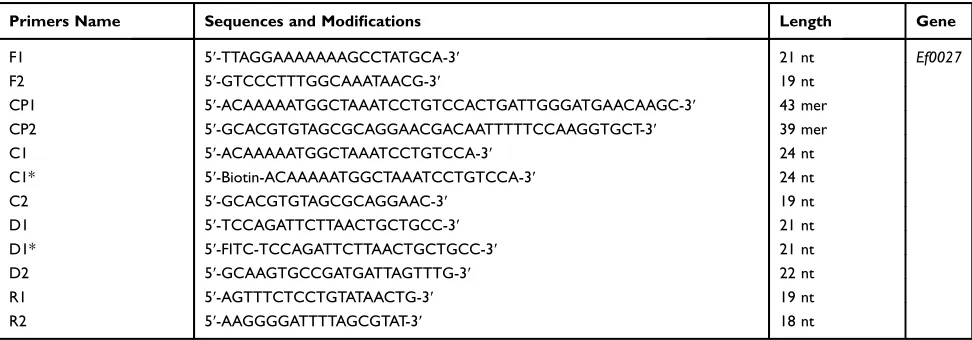
Hybrids and hairpin structures of the primers were analyzed by the Integrated DNA Technologies design tools. The specificity of E. faecalis-MCDA primers was verified by Blast analysis tool. The C1 and D1 primers were labeled by biotin and fluorescein isothiocyanate (FITC) at their 5ʹ end, respectively. All of the primers were synthesized by TsingKe Biotech Co., Ltd (Beijing, China) with HPLC purification grade. The primer sequences are shown in Table 1, and the primer positions of theE. faecalisgene are displayed inFigure 1.
Bacterial Strains and Genomic DNA
Template Preparation
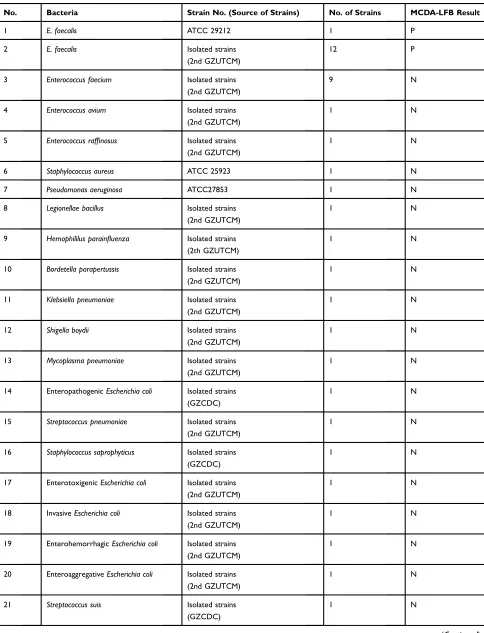
In the present study, forty-nine bacterial strains, including standard strain ofE. faecalis(ATCC 29212), twelve
clin-icalE. faecalis-positive isolates, and thirty-six non-E.
fae-calis strains, were used in this study (Table 2). The E.
faecalisstandard strain (ATCC 29212) was applied for the
optimization of the target method. The DNA templates were prepared by extracting the genomic DNA from the bacterial isolates using QIAamp DNA Mini Kit in accor-dance with the instructions from the manufacturer and measured with a Nanodrop ND-2000 (Beijing, China) at A260/280.
Infection and Drug Resistance downloaded from https://www.dovepress.com/ by 118.70.13.36 on 22-Aug-2020
Gold Nanoparticle-Based Lateral Flow
Biosensor Preparation
The LFB (4mm×60 mm) was constructed according to the previous reports.18,19In brief, a plastic adhesive back-ing card was laminated with NC membrane, sample pad, absorbent pad, and conjugate pad, followed by spraying with biotin-BSA (2.5 mg/mL) and anti-FITC Ab (0.15 mg/mL) conjugates onto the NC membrane to produce the line for control sample (CL) and test sample (TL). Each line was separated with 5 mm. And the conjugate pad of the strip was deposited with SA-G in 0.01M PBS (PH 7.4). The 4-mm-wide strips were prepared by cutting the assembled cards. The prepared biosensors were preserved in a plastic box with a desiccant gel at room temperature.
MCDA-LFB Detection
MCDA was performed in a 25 μL reaction system as described by previously reported.20In brief, 0.4μM of d F1 and F2 (displacement primers), 1.2 μM of R1, R2, D1* and D2, 0.8 μM of C1* and C2, 1.2 μM of CP1 and CP2 (cross primers), 1.25μL ofBst DNA polymer-ase (10 U), and 12.5 μL of 2×reaction mix, and 1 μL prepared DNA.
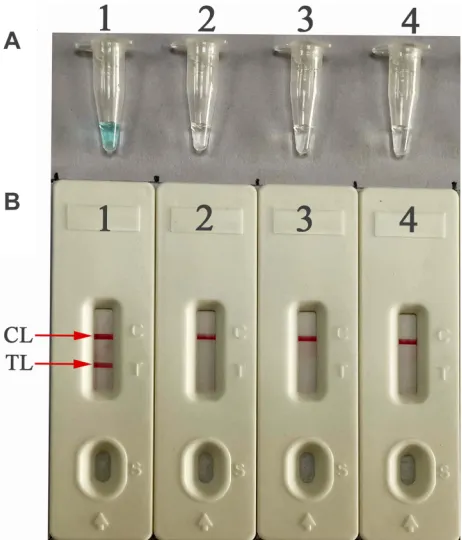
Colorimetric indicator (Malachite Green, MG) and lateral flow biosensor (LFB) methods were applied for the determination and verification of the E. faecalis -MCDA products, respectively. The color of effectively amplified products could change from colorless to light green by using MG method. However, the color of nega-tive and blank controls kept colorless. For the LFB assay, two visible red lines (the CL and TL) could display for the positive results but only the line (CL) appeared for the negative and blank control samples.
Temperature Optimization of the
E. faecalis
-MCDA-LFB Assay
TheE. faecalis-MCDA reaction temperature used for
opti-mization was from 60°C to 67°C for 60 mins with 10 pg
Enterococcus faeciumDNA template. In addition, DNA of
Staphylococcus aureus(ATCC 25923) and double-distilled
water (DW) were used as negative control and a blank control, respectively. The MCDA amplifications were monitored through the turbidity of products. The curves of DNA concentrations of each amplified products were exhibited in the graph. Turbidity >0.1 was considered as positive.
Table 1The Primers Used in the Present Study
Primers Name Sequences and Modifications Length Gene
F1 5ʹ-TTAGGAAAAAAAGCCTATGCA-3ʹ 21 nt Ef0027
F2 5ʹ-GTCCCTTTGGCAAATAACG-3ʹ 19 nt
CP1 5ʹ-ACAAAAATGGCTAAATCCTGTCCACTGATTGGGATGAACAAGC-3ʹ 43 mer
CP2 5ʹ-GCACGTGTAGCGCAGGAACGACAATTTTTCCAAGGTGCT-3ʹ 39 mer
C1 5ʹ-ACAAAAATGGCTAAATCCTGTCCA-3ʹ 24 nt
C1* 5ʹ-Biotin-ACAAAAATGGCTAAATCCTGTCCA-3ʹ 24 nt
C2 5ʹ-GCACGTGTAGCGCAGGAAC-3ʹ 19 nt
D1 5ʹ-TCCAGATTCTTAACTGCTGCC-3ʹ 21 nt
D1* 5ʹ-FITC-TCCAGATTCTTAACTGCTGCC-3ʹ 21 nt
D2 5ʹ-GCAAGTGCCGATGATTAGTTTG-3ʹ 22 nt
R1 5ʹ-AGTTTCTCCTGTATAACTG-3ʹ 19 nt
R2 5ʹ-AAGGGGATTTTAGCGTAT-3ʹ 18 nt
Notes:C1*, 5ʹ-labeled with biotin when used in MCDA-LFB assay; D1*, 5ʹ-labeled with FITC when used in MCDA-LFB assay.
Abbreviations:FITC,fluorescein isothiocyanate; mer, monomeric unit; nt, nucleotide.
Figure 1Location and sequence of theEnterococcus faecalisspecific geneEf0027applied for the MCDA primer design. The nucleotide sequence of the sense strand of theE.
faecalisgeneEf0027is shown in the diagram. Right arrows and left arrows indicate sense
and complementary sequences which were used in the current study, respectively.
Abbreviation:MCDA, multiple cross displacement amplification.
Infection and Drug Resistance downloaded from https://www.dovepress.com/ by 118.70.13.36 on 22-Aug-2020
Table 2Bacterial Strains Used in the Current Study
No. Bacteria Strain No. (Source of Strains) No. of Strains MCDA-LFB Result
1 E. faecalis ATCC 29212 1 P
2 E. faecalis Isolated strains
(2nd GZUTCM)
12 P
3 Enterococcus faecium Isolated strains
(2nd GZUTCM)
9 N
4 Enterococcus avium Isolated strains
(2nd GZUTCM)
1 N
5 Enterococcus raffinosus Isolated strains
(2nd GZUTCM)
1 N
6 Staphylococcus aureus ATCC 25923 1 N
7 Pseudomonas aeruginosa ATCC27853 1 N
8 Legionellae bacillus Isolated strains
(2nd GZUTCM)
1 N
9 Hemophililus parainfluenza Isolated strains
(2th GZUTCM)
1 N
10 Bordetella parapertussis Isolated strains
(2nd GZUTCM)
1 N
11 Klebsiella pneumoniae Isolated strains
(2nd GZUTCM)
1 N
12 Shigella boydii Isolated strains
(2nd GZUTCM)
1 N
13 Mycoplasma pneumoniae Isolated strains
(2nd GZUTCM)
1 N
14 EnteropathogenicEscherichia coli Isolated strains
(GZCDC)
1 N
15 Streptococcus pneumoniae Isolated strains
(2nd GZUTCM)
1 N
16 Staphylococcus saprophyticus Isolated strains
(GZCDC)
1 N
17 EnterotoxigenicEscherichia coli Isolated strains
(2nd GZUTCM)
1 N
18 InvasiveEscherichia coli Isolated strains
(2nd GZUTCM)
1 N
19 EnterohemorrhagicEscherichia coli Isolated strains
(2nd GZUTCM)
1 N
20 EnteroaggregativeEscherichia coli Isolated strains
(2nd GZUTCM)
1 N
21 Streptococcus suis Isolated strains
(GZCDC)
1 N
(Continued)
Infection and Drug Resistance downloaded from https://www.dovepress.com/ by 118.70.13.36 on 22-Aug-2020
Analytical Sensitivity of
E. faecalis
-MCDA-LFB Assay
The sensitivity of E. faecalis-MCDA-LFB method was determined using 1μL of the serial dilution (10 ng, 10 pg, 1 pg, 100 fg, 10 fg, 1fg and 100 atto gram per micro-liter) of the genomic DNA extracted fromE. faecalis. The amplification was carried out at the optimized temperature to measure the limit of detection (LoD) of E. faecalis -MCDA-LFB. Three replicates of each dilution were tested.
Optimization of the Amplification Time forE.
faecalis-MCDA-LFB Assay
The E. faecalis-MCDA reaction system was amplified at
the optimized temperature for diverse amplification times (from 15 to 45 mins, 10 mins of the interval). And then, the products were determined using LFB, and each
ampli-fication time was tested at least three times.
Speci
fi
city Analysis of
E. faecalis
-MCDA-LFB Detection
Genomic DNA templates from 49 different bacterial strains (Table 2) were used to verify the specificity ofE. faecalis
-MCDA-LFB method. The 49 bacterial strains included the standard strain ofE. faecalis(ATCC 29212), 12E. faecalis
isolates, and 36 non-E. faecalis strains. DW was used as a blank control. All of the MCDA results were tested with LFB and confirmed at least three times.
Application of
E. faecalis
-MCDA-LFB
Method for the Detection of Clinical
Samples
Fifty-three urine samples of patients, 30 hospital surface samples, and 35 urine samples of healthy volunteers were collected from the Second Affiliated Hospital of Guizhou University of Traditional Chinese Medicine. All of the samples were detected for E. faecalis using traditional culture, PCR, and DCDA-LFB techniques, respectively. Traditional culture methods including colony morphology, Gram stain, and biochemical identification were used for identification of theE. faecalisisolates. PCR detections of all the genomic DNA templates were conducted by using
E. faecalis specific primers.8 The MCDA-LFB detection
results were compared with that of traditional culture and PCR assay.
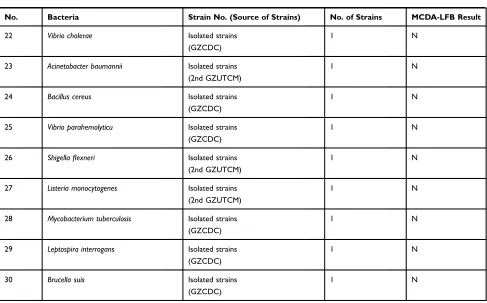
Table 2(Continued).
No. Bacteria Strain No. (Source of Strains) No. of Strains MCDA-LFB Result
22 Vibrio cholerae Isolated strains
(GZCDC)
1 N
23 Acinetobacter baumannii Isolated strains
(2nd GZUTCM)
1 N
24 Bacillus cereus Isolated strains
(GZCDC)
1 N
25 Vibrio parahemolyticu Isolated strains
(GZCDC)
1 N
26 Shigellaflexneri Isolated strains
(2nd GZUTCM)
1 N
27 Listeria monocytogenes Isolated strains
(2nd GZUTCM)
1 N
28 Mycobacterium tuberculosis Isolated strains
(GZCDC)
1 N
29 Leptospira interrogans Isolated strains
(GZCDC)
1 N
30 Brucella suis Isolated strains
(GZCDC)
1 N
Notes:2nd GZUTCM, the Second Affiliated Hospital, Guizhou University of Traditional Chinese Medicine.
Abbreviations:ATCC, American type culture collection; GZCDC, Guizhou Provincial Center for Disease Control and Prevention; P, positive; N, negative.
Infection and Drug Resistance downloaded from https://www.dovepress.com/ by 118.70.13.36 on 22-Aug-2020
Results
Veri
fi
cation of
E. faecalis
-MCDA
Productions
In order to confirm the validity of primers (Table 1) for theE.
faecalis-MCDA assay, genomic DNA from pureE. faecalis
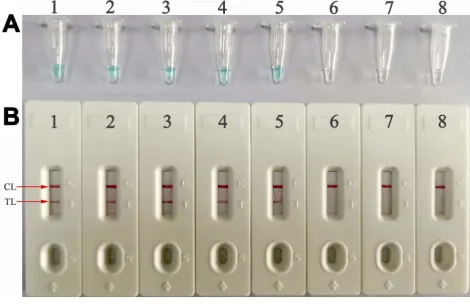
cultures were amplified at 64°C for 60 mins. The products were identified using MG and LFB methods. The results showed that amplification appeared with genomic DNA
fromE. faecalis(ATCC 29212), but not withE. faecium, S.
aureus, and the blank control (Figure 2AandB). Therefore,
theE. faecalis-MCDA primers used in the current study were
valid for the development ofE. faecalis-MCDA-LFB.
Optimal Temperature for
E. faecalis
-MCDA-LFB Detection
To certify the optimum amplification temperature, 10 pg of genomic DNA of E. faecalis strain was utilized as the target template in each reaction mixture. The results showed that 62°C was the faster amplification as indicated by the kinetics graphs of real-time turbidity (Figure 3).
Therefore, the most suitable temperature for E. faecalis -MCDA-LFB was determined as 62°C, which was applied to the rest of the assays in the current study.
Sensitivity of MCDA-LFB Method for
E.
faecalis
Assay
The sensitivity of E. faecalis-MCDA-LFB was tested by serially diluted DNA sample from E. faecalis strain (ATCC29212) and determined by visual inspection of reaction productions with MG reagents and lateral flow biosensors, respectively. Both of the two methods demon-strated that the LoD ofE. faecalis-MCDA-LFB was 10 fg DNA template (Figure 4A andB).
Optimized Ampli
fi
cation Time for
E.
faecalis
-MCDA-LFB Detection
In order to confirm the optimum amplification time for the
E. faecalis-MCDA-LFB detection during amplification
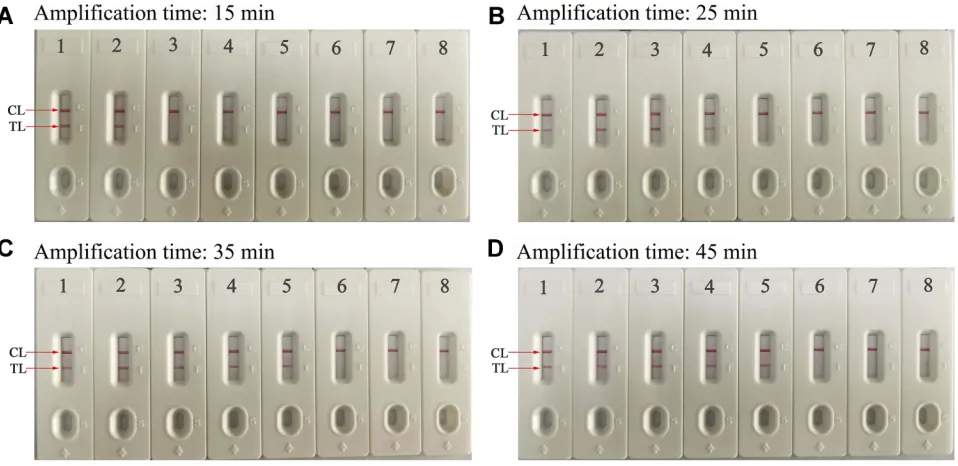
phases, 15-, 25-, 35-, and 45-min amplification times were selected and compared at 62°C, respectively. The detection limit level of DNA (10 fg ofE. faecalisgenomic templates per reaction) showed both TLand CL when the reaction proceeded for 35 and 45 mins (Figure 5). Therefore, 35 mins was deemed as an appropriate
ampli-fication time forE. faecalis-MCDA-LFB detection.
Speci
fi
city of MCDA-LFB Method for
E.
faecalis
Assay
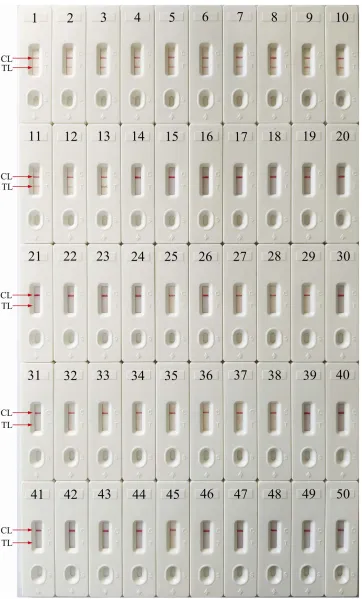
The genomic DNA from all of the bacterial strains (Table 1) were used forE. faecalis-MCDA-LFB specificity determination. The results showed that only the genomic DNA from E. faecalis strains showed positive results, while other non-E. faecalis isolates and blank control showed negative results (Figure 6).
Detection Results of
E. faecalis
-MCDA-LFB for Clinical Samples
In order to demonstrate that the MCDA-LFB method is a reliable and rapid tool forE. faecalisdetection in clinical samples, 53 urine samples of patients, 30 hospital surface samples, and 35 urine samples of healthy volunteers col-lected from the Second Affiliated Hospital of Guizhou University of Traditional Chinese Medicine were used for the application ofE. faecalis-MCDA-LFB established in the current study. The results showed that 23 of 118 samples had been verified as E. faecalis-positive results through traditional culture technique, and the other 95
Figure 2Confirmation and verification ofE. faecalis-MCDA products. (A) TheE.
faecalis-MCDA amplification products were detected by the MG method through
visual observation of the color change. (B) LFB was applied for the visual detection
of E. faecalis-MCDA products. Tube 1/Biosensor 1: positive amplification of E.
faecalisstrain 29212; Tube 2/Biosensor 2: negative amplification ofEnterococcus
faecium (2nd GZUTCM); Tube 3/Biosensor 3: negative amplification of
Staphylococcus aureus(ATCC25923); Tube 4/Biosensor 4: blank control (DW).
Infection and Drug Resistance downloaded from https://www.dovepress.com/ by 118.70.13.36 on 22-Aug-2020
samples showed E. faecalis-negative outcome. The MCDA-LFB assay results were consistent with traditional cultivation detection results. However, only 15 urine sam-ples showed positive results when using conventional
Ef0027 gene-based PCR, and all of the 15 positive urine
samples were covered by the E. faecalispositive samples detected by traditional culture and MCDA-LFB methods (Table 3).
Discussion
E. faecalisis becoming increasingly important for causing
bacteremia, endocarditis, and other nosocomial infections in recent decades.21,22 Moreover, more and more E.
faecalisisolates build up antibiotic resistance.2,23,24Thus, developing a reliable, rapid, specific, and sensitive detec-tion method for E. faecalis is essential for the disease diagnosis and its therapy. Our study showed that the newly establishedE. faecalis-MCDA-LFB is a rapid, sen-sitive, and specific method to detectE. faecalis.
The specificity of MCDA was powerfully confirmed with genomic DNA fromE. faecalispure cultures. All of theE.
faecalisisolates showed positive results, but all the non-E.
faecalis strains displayed a negative outcome (Figure 6).
Thus, theE. faecalis-MCDA-LFB method has a high level of specificity for the identification ofE. faecalisspecies. The high degree of specificity of the MCDA-LFB established in the present study seems due to using theEf0027gene, which encodes a putative phosphosugar-binding transcriptional reg-ulator. This gene appeared to be uniquely present in E.
faecalis as it showed no homology with other microbial
genomes at GenBank by BLAST searches, and theEf0027
gene also applied to develop some advanced methods for detectingE. faecalisspecies.8,25 Another reason to explain the high degree of specificity ofE. faecalis-MCDA-LFB is because we designed ten primers targeting the different regions of theEf0027gene sequence.
Compared with conventional culture and PCR-based methods, the MCDA-LFB developed in this study is more time-saving and economical.10,12,26The E.
faecalis-MCDA-LFB reaction just requires a simple incubation at 62°C for 35 mins. There are various portable user-friendly instruments for MCDA reaction. For example, the dry block heater (Labnet, USA) is one of the suitable instru-ments, which is a portable, battery-powered equipment supporting 96-channel MCDA reactions per detection.
Figure 3(A–H) Optimization of reaction temperature forE. faecalis-MCDA primers. The MCDA amplifications for the detection ofE. faecaliswere monitored through real-time turbidity, and the corresponding curves of DNA concentrations were displayed in the graph. The threshold value was 0.1 and a turbidity>0.1 was considered as positive. Mixtures with 10-pg genomic templates ofEnterococcus faecium(isolated strain)and Staphylococcus aureus(ATCC 25923) were used as negative controls (NCs), and 1μL of double-distilled water (DW) was used as a blank control (BC). Eight kinetic graphs were obtained at different temperatures (60–67°C, 1°C intervals) with 10-pg target genomic DNA per reaction. The graphs from C to H showed robust amplification.
Figure 4 Sensitivity analysis of the MCDA-LFB detection by serial dilutions of genomic DNA extracted fromE. faecalisstrain. Two detection methods, colori-metric indicator (MG;A) and lateralflow biosensor (B), were used to analyze the amplification productions. The serial dilutions ofE. faecalisgenomic DNA (10 ng, 10 pg, 1 pg, 100 fg, 10 fg, 1fg, and 100 atto gram per microliter) were subjected to standard MCDA amplifications. Tubes (A)/Biosensors (B) 1–8 represent the DNA levels of 10 ng, 10 pg, 1 pg, 100 fg, 10 fg, 1 fg, and 100 atto gram per reaction of target templates and blank control (DW), respectively. The target gene levels of 10 ng, 10 pg, 1 pg, 100 fg, 10 fg per reaction showed positive amplifications.
Infection and Drug Resistance downloaded from https://www.dovepress.com/ by 118.70.13.36 on 22-Aug-2020
Moreover, the universal isothermal amplification kits such as NEB Warmstart and Eiken Loopamp kits can be com-mercially obtained and applied for MCDA amplification, and the cost of MCDA reaction is estimated to be $3.5 USD, the LFB detection merely costs approximately $2 USD, which is cheaper than the common PCR-based methods.15,16 Additionally, this method can decrease labor costs because performing the MCDA-LFB assay does not need skilled technical personnel. The entire detection process, including template preparation (approxi-mately 30 mins), isothermal amplification (35 mins), and LFB reading (approximately 2 mins), could be accom-plished within 70 mins. Thus, this method can save pre-cious time and cost of detection compared with the traditional methods.
In addition, the advanced E. faecalis-MCDA-LFB technique was more sensitive than normal PCR and loop-mediated isothermal amplification (LAMP) methods. The newly developed E. faecalis-MCDA-LFB method was capable of assaying 10 fg of E. faecalis genomic DNA
(Figure 4), which was more sensitive than E.
faecalis-LAMP-LFB detection (250 fg per reaction) reported by the previous study.25 Although the amplification products could be detected equally with the MG method used in the present study, the LFB was deemed as the preferred method as observing the amplification results is more objective and does not need any apparatus.19,27 In
conclusion, the newly E. faecalis-MCDA-LFB assay in this study is a valuable method for the convenient, rapid, sensitive, specific, visual, reliable, and low-cost detection
ofE. faecalisin clinical and environmental samples,
espe-cially in resource-constrained settings. However, the E.
faecalis-MCDA-LFB method has some limitations when
compared with some methods which can be applied forE.
faecalis antimicrobial resistance detection. Later, we will
study on the rapid and reliable assay of drug resistance genes ofE. faecalisbased on theE. faecalis MCDA-LFB method created in the current study.
Conclusion
In this study, a reliable and rapidE. faecalis-MCDA-LFB method was developed for detecting E. faecalis, causing nosocomial infection, including urinary tract infection, bloodstream infection, and surgical site infection in human. This method could rapidly, sensitively, specifi -cally, and reliably detect the E. faecalis agent in the urine sample and did not rely on expensive instruments and reagents. Using LFB detection could help to obtain a rapid, objective, and easily interpretable result. Hence, the
E. faecalis-MCDA-LFB assay could be considered as a
useful method for reliable and rapid detection ofE. faeca-lis in clinical and environmental samples, particularly in resource-limited regions of the world.
Figure 5Optimization of amplification time forE. faecalis-MCDA-LFB detection method. Different amplification times (A, 15mins;B, 25 mins;C, 35 mins;D, 45 mins) were tested at 62°C, respectively. Biosensors 1, 2, 3, 4, 5, 6, 7, and 8 represent genomic DNA levels of 10 ng, 10 pg, 1 pg, 100 fg, 10 fg, 1 fg, and 100 atto gram per reaction of target templates and blank control (DW). The best sensitivity was observed when the amplification lasted for 35 mins (C).
Infection and Drug Resistance downloaded from https://www.dovepress.com/ by 118.70.13.36 on 22-Aug-2020
Figure 6Specificity analysis of theE. faecalis-MCDA-LFB detection for different strains. The MCDA amplifications were carried out using different strain genomic DNA as templates and determined by means of visual LFB method. Biosensor 1,E. faecalisstrain (ATCC 29212); biosensor 2–13, twelve isolated strain ofE. faecalisfrom the Second Affiliated Hospital, Guizhou University of Traditional Chinese Medicine; biosensor 14–22, nine isolatedEnterococcus faeciumstrains, biosensor 23–49,Enterococcus avium,
Enterococcus raffinosus, Staphylococcus aureus, Pseudomonas aeruginosa, Legionellae bacillus, Hemophililus parainfluenza, Bordetella parapertussis, Klebsiella pneumonia, Shigella boydii,
Mycoplasma pneumonia, EnteropathogenicEscherichia coli, Streptococcus pneumonia, Staphylococcus saprophyticus, EnterotoxigenicEscherichia coli, InvasiveEscherichia coli,
EnterohemorrhagicEscherichia coli, EnteroaggregativeEscherichia coli, Streptococcus suis, Vibrio cholera, Acinetobacter baumannii, Bacillus cereus, Vibrio parahemolyticu, Shigella
flexneri, Listeria monocytogenes, Mycobacterium tuberculosis, Leptospira interrogans, Brucella suis; biosensor 50, blank control (DW).
Infection and Drug Resistance downloaded from https://www.dovepress.com/ by 118.70.13.36 on 22-Aug-2020
Acknowledgments
This study was funded by the Program of the High-Level Creative Talents Cultivation in Guizhou Province (Qian Ke He (2016)4021), the Program of Scientific and Technological Innovation Team of Guizhou Province (Grant No. Qian Ke He Platform talent [2018]5606), the Guizhou Provincial Special Funds for Science and Technology Supporting Program ([2019]1186 and [2018]5767), and the Program of Science and Technology of Guizhou Provincial Health Commission (gzwjkj2018-1-012).
Disclosure
All of the authors declared that there are no competing interests in this article.
References
1. Beganovic M, Luther MK, Rice LB, et al. A review of combination antimicrobial therapy forEnterococcus faecalisbloodstream infections and infective endocarditis. Clin Infect Dis. 2018;67(2):303–309. doi:10.1093/cid/ciy064
2. Jabbari Shiadeh SM, Pormohammad A, Hashemi A, et al. Global prevalence of antibiotic resistance in blood-isolatedEnterococcus fae-calisandEnterococcus faecium: a systematic review and meta-analy-sis.Infect Drug Resist.2019;12:2713–2725. doi:10.2147/IDR.S206084 3. Janani M, Jafari F, Samiei M, et al. Evaluation of antibacterial efficacy of photodynamic therapy vs. 2.5% NaOCl againstE. faecalis-infected root canals using real-time PCR technique.J Clin Exp Dent.2017;9 (4):e539–e544. doi:10.4317/jced.53526
4. Pongsachareonnont P, Honglertnapakul W, Chatsuwan T. Comparison of methods for identifying causative bacterial microorganisms in presumed acute endophthalmitis: conventional culture, blood culture, and PCR. BMC Infect Dis.2017;17(1):165. doi:10.1186/s12879-017-2264-5 5. Okui A, Soga Y, Kokeguchi S, et al. Detection of identical isolates of
Enterococcus faecalisfrom the blood and oral mucosa in a patient with infective endocarditis. Internal Med. 2015;54(14):1809–1814. doi:10.2169/internalmedicine.54.3223
6. Mirnejad R, Sajjadi N, Masoumi Zavaryani S, et al. Identification of aminoglycoside resistance genes by triplex PCR inEnterococcusspp. isolated from ICUs.Infez Med.2016;24(3):222–229.
7. Medeiros AW, Pereira RI, Oliveira DV, et al. Molecular detection of virulence factors among food and clinical Enterococcus faecalis strains in South Brazil. Braz J Microbiol. 2014;45(1):327–332. doi:10.1590/S1517-83822014005000031
8. Liu D, Wang C, Swiatlo EJ, et al. PCR amplification of a species-specific putative transcriptional regulator gene reveals the identity ofEnterococcus faecalis. Res Microbiol. 2005;156(9):944–948. doi:10.1016/j.resmic. 2005.05.004
9. Farrell JJ, Tsung AJ, Flier L, et al. PCR and electrospray ionization mass spectrometry for detection of persistentEnterococcus faecalis in cerebrospinalfluid following treatment of postoperative ventri-culitis. J Clin Microbiol. 2013;51(10):3464–3466. doi:10.1128/ JCM.01343-13
10. Wang Y, Wang Y, Xu J, et al. Development of multiple cross displacement amplification label-based gold nanoparticles lateralflow biosensor for detection ofShigellaspp.Front Microbiol.2016;7:1834.
11. Wang Y, Li H, Wang Y, et al. Development of multiple cross dis-placement amplification label-based gold nanoparticles lateralflow biosensor for detection of Listeria monocytogenes. Int J Nanomedicine.2017;12:473–486.
12. Li S, Liu C, Liu Y, et al. Development of a multiple cross displace-ment amplification combined with nanoparticles-based biosensor assay to detect Neisseria meningitidis. Infect Drug Resist.
2019;12:2077–2087. doi:10.2147/IDR.S210735
13. Zhao F, Niu L, Yan L, et al. Establishment and application of multiple cross displacement amplification coupled with lateralflow biosensor (MCDA-LFB) for visual and rapid detection of Candida albicans in clinical samples. Front Cell Infect Microbiol. 2019;9:102. doi:10.3389/fcimb.2019.00102
14. Niu L, Zhao F, Chen J, et al. Isothermal amplification and rapid detection ofKlebsiella pneumoniaebased on the multiple cross dis-placement amplification (MCDA) and gold nanoparticle lateralflow biosensor (LFB).PLoS One.2018;13(10):e204332. doi:10.1371/jour-nal.pone.0204332
15. Wang Y, Li H, Li D, et al. Multiple cross displacement amplification combined with gold nanoparticle-based lateral flow biosensor for detection ofVibrio parahaemolyticus.Front Microbiol.2016;7:2047. 16. Gong L, Liu E, Che J, et al. Multiple cross displacement amplifi ca-tion coupled with gold nanoparticles-based lateralflow biosensor for detection of the mobilized colistin resistance gene mcr-1.Front Cell Infect Microbiol.2019;9:226. doi:10.3389/fcimb.2019.00226 17. Wang Y, Yan W, Fu S, et al. Multiple cross displacement amplifi
ca-tion coupled with nanoparticles-based lateral flow biosensor for detection ofStaphylococcus aureusand identification of methicillin-resistant S. aureus. Front Microbiol. 2018;9:907. doi:10.3389/ fmicb.2018.00907
18. Wang Y, Wang Y, Zhang L, et al. Multiplex, rapid, and sensitive isothermal detection of nucleic-acid sequence by endonuclease restriction-mediated real-time multiple cross displacement amplifi ca-tion.Front Microbiol.2016;7:753.
19. Wang Y, Li H, Wang Y, et al. Nanoparticle-based lateralflow bio-sensor combined with multiple cross displacement amplification for rapid, visual and sensitive detection of Vibrio cholerae. Fems Microbiol Lett.2017;364(23):1–11. doi:10.1093/femsle/fnx234 20. Wang Y, Wang Y, Ma A, et al. Rapid and sensitive isothermal
detection of nucleic-acid sequence by multiple cross displacement amplification.Sci Rep.2015;5:11902. doi:10.1038/srep11902 21. Weaver KE. The type I toxin–antitoxin par locus fromEnterococcus
faecalisplasmid pAD1: RNA regulation by both cis-and trans-acting elements.Plasmid.2015;78:65–70. doi:10.1016/j.plasmid.2014.10.001 22. Madsen KT, Skov MN, Gill S, et al. Virulence factors associated with
Enterococcus faecalis infective endocarditis: a mini review. Open Microbiol J.2017;11:1–11. doi:10.2174/1874285801711010001
Table 3Comparison of Conventional Culture, PCR. and MCDA-LFB Methods for the Assay ofE. Faecalisin Clinical Samples
Detection Methods Clinical Samples (n=53) Hospital Surfaces Samples (n=30) Healthy Volunteers Samples (n=35)
Positive Negative Positive Negative Positive Negative
Culture 18 35 2 28 3 32
PCR 14 39 0 30 1 34
MCDA-LFB 18 35 2 28 3 32
Infection and Drug Resistance downloaded from https://www.dovepress.com/ by 118.70.13.36 on 22-Aug-2020
23. Bolocan AS, Upadrasta A, Bettio P, et al. Evaluation of phage therapy in the context ofEnterococcus faecalisand its associated diseases.Viruses.2019;11(4):1–18. doi:10.3390/v11040366 24. Heidari H, Hasanpour S, Ebrahim-Saraie HS, et al. High incidence of
virulence factors among clinical Enterococcus faecalis isolates in Southwestern Iran.Infect Chemother. 2017;49(1):51–56. doi:10.3947/ ic.2017.49.1.51
25. Wang Y, Li H, Wang Y, et al. Loop-mediated isothermal amplification label-based gold nanoparticles lateralflow biosensor for detection of Enterococcus faecalisand Staphylococcus aureus.Front Microbiol.
2017;8:192. doi:10.3389/fcimb.2018.00192
26. Cheng X, Yang J, Wang M, et al. Visual and rapid detection of Acinetobacter baumanniiby a multiple cross displacement amplifi ca-tion combined with nanoparticles-based biosensor assay.AMB Expr.
2019;9(1):30. doi:10.1186/s13568-019-0754-0
27. Li S, Liu Y, Wang Y, et al. Rapid detection ofBrucellaspp. and elimination of carryover using multiple cross displacement
ampli-fication coupled with nanoparticles-based lateralflow biosensor. Front Cell Infect Microbiol. 2019;9:78. doi:10.3389/fcimb. 2019.00078
Infection and Drug Resistance
Dove
press
Publish your work in this journal
Infection and Drug Resistance is an international, peer-reviewed open-access journal that focuses on the optimal treatment of infection (bacterial, fungal and viral) and the development and institution of preventive strategies to minimize the development and spread of resis-tance. The journal is specifically concerned with the epidemiology of
antibiotic resistance and the mechanisms of resistance development and diffusion in both hospitals and the community. The manuscript manage-ment system is completely online and includes a very quick and fair peer-review system, which is all easy to use. Visit http://www.dovepress.com/ testimonials.php to read real quotes from published authors.
Submit your manuscript here:https://www.dovepress.com/infection-and-drug-resistance-journal
Infection and Drug Resistance downloaded from https://www.dovepress.com/ by 118.70.13.36 on 22-Aug-2020