47
NEUROCOGNITIVE AND BALANCE PERFORMANCE FOLLOWING A DUAL-TASK AND SINGLE-TASK TRAINING INTERVENTION IN HEALTHY COLLEGIATE
RECREATIONAL ATHLETES
Joseph Marc Ingriselli
A thesis submitted to the faculty of the University of North Carolina at Chapel Hill in partial fulfillment of the requirements for the degree of Master of Arts in the Department of
Exercise & Sport Science in the College of Arts & Sciences (Athletic Training).
Chapel Hill 2012
Approved by: Johna K. Register-Mihalik, PhD, ATC
ii © 2012
iii
ABSTRACT
JOSEPH INGRISELLI: Neurocognitive and balance performance following a dual- and single-task training intervention in healthy collegiate recreational athletes.
(Under the direction of Johna K. Register-Mihalik, PhD, ATC)
iv
TABLE OF CONTENTS
CHAPTER I ... 1
INTRODUCTION ... 1
PURPOSE ... 4
INDEPENDENT VARIABLES ... 4
DEPENDENT VARIABLES ... 5
RESEARCH QUESTIONS ... 6
RESEARCH HYPOTHESES ... 6
STATISTICAL HYPOTHESES ... 7
DEFINITIONS ... 8
DELIMITATIONS ... 8
LIMITATIONS ... 9
ASSUMPTIONS ... 10
CHAPTER II ... 11
REVIEWOFTHELITERATURE ... 11
DEFINITION OF CONCUSSION ... 11
EPIDEMIOLOGY OF CONCUSSION ... 13
ANATOMY ... 14
Frontal Lobe ... 14
Temporal Lobe ... 15
Parietal Lobe ... 15
Occipital Lobe ... 15
v
Brain Stem ... 15
Cranial Meninges... 15
Cerebrospinal Fluid ... 16
NEUROMETABOLIC CASCADE FOLLOWING CONCUSSION ... 16
ACUTE EFFECT OF CONCUSSION ... 17
SYMPTOMATOLOGY ... 19
POSTURAL STABILITY ... 20
NEUROPSYCHOLOGICAL ASSESSMENT ... 22
LONG-TERM CUMULATIVE EFFECTS OF CONCUSSION ... 24
POSTCONCUSSION SYNDROME ... 25
CONCUSSION REHABILITATION ... 26
DUAL TASK PARADIGM ... 30
METHODOLOGICAL CONSIDERATIONS ... 33
SUMMARY ... 34
CHAPTER III ... 35
SUBJECTS ... 35
MEASUREMENT AND INSTRUMENTATION ... 35
Sensory Organization Test ... 35
Balance Error Scoring System ... 37
Neuropsychological Testing... 38
CNSVS Scoring ... 41
PROCEDUREERD ... 44
vi
Intervention Progression ... 45
DATA ANALYSIS ... 47
Balance Performance... 47
Research Question 1 ... 47
Research Question 2 ... 48
Research Question 3 ... 48
CHAPTER IV ... 51
INTRODUCTION ... 51
METHODS ... 52
DATA ANALYSIS ... 58
RESULTS ... 59
DISCUSSION ... 61
vii
LIST OF TABLES
Table 1: Neurocognitive Domain Descriptions and Score Calculations ... 72
Table 2: Demographic Information ... 73
Table 3: Balance Clinical Measures Scores Means and Standard Deviations ... 74
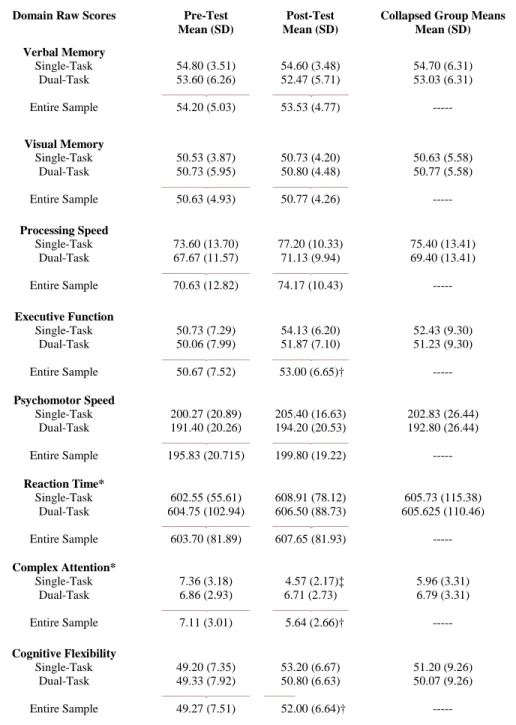
Table 4: Neurocognitive Clinical Measures Scores Means and Standard Deviations ... 75
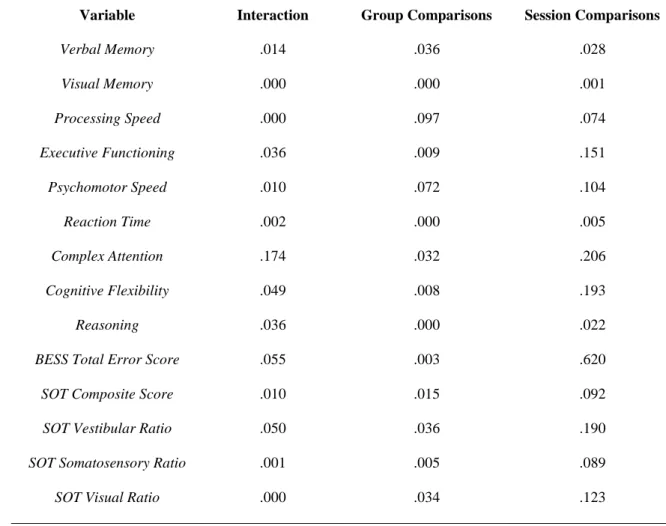
Table 5: Table 5: Balance and Neurocognitive Effect Sizes (Partial Eta Squared) ... 76
viii
LIST OF FIGURES
ix
LIST OF APPENDICES
Appendix 1: Single-Task Progression ... 83
Appendix 2: Dual-Task Progression ... 84
Appendix 3: Weekly Exercise Progression... 85
Appendix 4: Subjective with Objective Task Difficulty Scale ... 100
Appendix 5: General Health History Questionnaire ... 104
47
CHAPTER I
INTRODUCTION
Introduction
It is estimated that up to 3.8 million sports related traumatic brain injuries occur each year, including those which do not seek medical care (Langlois, Rutland-Brown et al. 2006). Concussions are the most frequent form of traumatic brain injury that occur in sport
(Guskiewicz, Weaver et al. 2000). Along with the continuing push for concussion prevention there is also a need to turn attention to management, recovery, and current concepts in
concussion rehabilitation. Previously, the focus of concussion research has been on
2
purpose of the exertional progression is to determine if any signs or symptoms of concussion return with physical activity. If there is no re-occurrence of symptoms the next step should be to tax the systems affected by injury to strengthen the weakened areas. The majority of concussions resolve within 7-10 days, during this period rest and serial evaluation of balance, neurocognition and symptoms are the standard of care (McCrory, Meeuwisse et al. 2009). Decreases in cognitive processing speed, verbal fluency, and memory can be seen up to 36 hours post injury and even longer with increased severity of injury (Lovell, Collins et al. 2003; McCrea, Guskiewicz et al. 2003). Sports medicine professionals strive to provide optimal post-injury care to safely return injured athletes to competition for all injuries. However in managing athletes after a concussion, little is understood regarding appropriate intervention and rehabilitation. The brain may return to normal function more quickly with rehabilitation just as other injuries sports medicine professionals are faced with daily, especially in cases where symptoms following concussion are prolonged in duration. Although the majority of concussion symptoms resolve within a 7 to 10 day window (Guskiewicz, McCrea et al. 2003), some physical, cognitive, and emotional symptoms may not resolve for several months to years following injury (Bohnen and Jolles 1992; Gouvier, Cubic et al. 1992; Brown, Fann et al. 1994).
Further research is necessary to determine how a rehabilitation paradigm, where an athlete is cognitively and physically exerted, compares to rest and physical exertion alone. This research is important to determine optimal concussion rehabilitation strategies and the overall benefits from concussion rehabilitation, specifically in cases of prolonged recovery.
Previous research regarding rehabilitation has focused primarily on patients
3
off from work due to traumatic brain injury (Relander, Troupp et al. 1972). Although minimizing time lost due to injury is the goal of all sports medicine professionals, extreme care must be taken with advancing an athlete through a rehabilitation progression towards full return to play. Athletes that return to play prematurely may be vulnerable to recurrent damage to the brain (Cantu 1998), with potentially catastrophic results such as second impact syndrome, which has a mortality rate of 50% and a morbidity rate near 100%. Second impact syndrome can occur when an athlete returns to play while still symptomatic and sustains a second head injury, often a low impact blow to the body which indirectly causes acceleration of the brain. Within 15 seconds following a second, even mild, blow the semicomatose athlete will collapse and eventually go into respiratory failure (Cantu 1998). Adequate recovery time is critical to the health of each and every athlete suffering from injury.
Most information regarding concussion rehabilitation is composed of general guidelines with little evidence based justification. These recommendations heavily
emphasize an exertional return to play progression following resolution of symptoms after the typical 7-10 day recovery window. It may be appropriate for sports medicine
4
concussion during the transition between cognitive rest and full return to play (McCrory, Meeuwisse et al. 2009).
A rehabilitation strategy utilizing a dual-task paradigm, in which a concussed athlete engages in cognitive and motor tasks simultaneously, may effectively address the systems affected by concussion for a complete recovery and return to sport. A study by Broglio et al. observed that normal healthy young adults showed improvements in postural control when balance and cognitive tasks were performed concurrently in a dual-task paradigm (Broglio, Tomporowski et al. 2005). This research study offers interesting insight into how healthy individuals respond to dual-task paradigms and suggests that the paradigm may benefit athletes if implemented during concussion recovery as part of rehabilitation. If
improvements following dual-task rehabilitation intervention are seen in healthy people and these types of intervention methods are feasible and useful, then these methods may be expanded to concussed individuals in the future.
Purpose
The purpose of this study was to examine neurocognitive and balance performance in healthy collegiate recreational athletes, prior to and following a dual-task training
intervention compared to matched single-task controls. The intent of this research was to determine the utility and feasibility of a dual-task training program to potentially be applied following concussion.
Independent Variables
1. Intervention Groups – Between Subjects
a. Dual-Task Training- Concurrent Balance and Cognitive Training
5 2. Test Time – Within Subjects
a. Pre-Intervention b. Post-Intervention
Dependent Variables
1. Dependent Variables
a. Balance Performance Variables
i. Sensory Organization Test (SOT) Composite Score ii. SOT Sensory System Ratios
a. Vestibular Ratio b. Visual Ratio
c. Somatosensory Ratio
iii. Balance Error Scoring System (BESS) Total Error Score b. Neurocognitive Testing
i. CNS Vital Signs Composite Domain Raw Scores a. Verbal Memory
6
Research Questions
Balance Performance
1. Are there significant differences in balance performance, as measured by the SOT, prior to and following intervention between collegiate recreational athletes
completing a four-week dual-task training program and a group of single-task control participants?
2. Are there significant differences in balance performance, as measured by the BESS, prior to and following intervention between collegiate recreational athletes
completing a four-week dual-task training program and a group of single-task control participants?
Neurocognitive Performance
3. Are there significant differences in neurocognitive performance, as measured by components of CNS Vital Signs, prior to and following intervention between collegiate recreational athletes completing a four-week dual-task training program and a group of single-task participants?
Research Hypotheses
Balance Performance
7
2. Athletes that complete the dual-task training program will have significantly better balance performance, as measured by the BESS, in comparison to those in the single-task group.
Neurocognitive Performance
3. Athletes that complete a dual-task training program will significantly improve on neurocognitive performance, as measured by components of CNS Vital Signs with significant improvement in the domains of complex attention, cognitive flexibility, reasoning, and executive functioning, compared to those collegiate recreational athletes in the single-task group.
Statistical Hypotheses
Null Hypotheses Balance Performance
1. There will be no significant differences in athletes before and after completing a dual-task training program compared to those within the single-dual-task group on balance performance as measured by the SOT.
2. There will be no significant differences in collegiate recreational athletes before and after completing a dual-task training program compared to those within the single-task group on measures of BESS.
Neurocognitive Performance
8 Alternate Hypotheses
Balance Performance
1. There will be a significant difference in athletes before and after completing a dual-task training intervention compared to those within the single-dual-task group on balance performance as measured by the SOT.
2. There will be a significant difference in collegiate recreational athletes before and after completing a dual-task training intervention compared to those within the single-task group on balance performance as measured by the BESS.
Neurocognitive Performance
3. There will be a significant difference in neurocognitive performance, as measured by CNS Vital Signs, in athletes that complete a dual-task training intervention compared to those collegiate recreational athletes within the single-task group
Definitions
1. Dual-Task – Engaging in cognitive and balance tasks simultaneously.
2. Single-Task – Engaging in separate balance or cognitive training.
3. Collegiate Recreational Athletes – A male or female student ages 18-25 who is currently participating in at least 30 minutes of exercise 3 times per week.
4. Balance – The process of maintaining an individual’s center of gravity within the
body’s base of support (Guskiewicz 2011).
Delimitations
9
2. All athletes reported exercising 3 times per week for at least 30 minutes or more each time.
3. All subjects were tested at least four weeks apart pre- and post- intervention. 4. Subjects with the following were excluded:
• Concussion within the past six months • A history of two or more concussions • Neurologic disorder
• Vestibular disorder • Hearing disorder
• Vision disorder not correctable by contact lenses or glasses
• ADHD
• Learning disability
• A lower extremity injury in the past 6 months effecting balance
Limitations
1. Subjects represented a sample of convenience. 2. Testers were not blinded to group assignment.
3. Subject motivation may have been low while performing selected tasks.
4. Compliance with home intervention sessions may have been low due to exercises were self-reported in an activity log.
10
Assumptions
1. Subjects performed to the best of their ability and extended full effort on every task during each session.
11
CHAPTER II
REVIEW OF THE LITERATURE
Concussion management and the critical time period from injury to full return to play present a unique challenge to sports medicine professionals. Like other athletic injuries suffered during sport there is a need to address the systems affected and deficits that occur due to concussive injury. Recent concussion related research has focused on clinical recognition, symptomatology, and return to play guidelines. Still little is known about concussion rehabilitation strategies and the active role the clinician should take in this process, specifically following more complicated concussive injuries. This review of literature is designed to examine research pertaining to concussion rehabilitation, identify current knowledge and understanding of concussion rehabilitation amongst sports medicine professionals, and discuss areas where future research is still needed pertaining to sport related concussion.
Definition of Concussion
Over the years the medical diagnosis of concussion has taken on many different definitions amongst clinicians. In November of 2001 the first International Symposium on Concussion in Sport was held in Vienna, Austria to discuss a unitary model of understanding for concussion in sport. Amongst other things this conference also served to provide
12
the brain, induced by traumatic biomechanical forces.” Within this definition common features of concussion were identified and read as follows:
1. Concussion may be caused by direct blows to the head, face, neck, or other parts of the body which may transmit force to the head.
2. Impairment of neurological function is often short lived and typically resolves spontaneously.
3. Symptoms often reflect functional impairment rather than structural brain damage.
4. Concussion often presents as a multitude of clinical symptoms, which may or may not include loss of consciousness, which often follows a sequential resolution.
5. Concussion is often not identifiable with the use of neuroimaging studies (Aubry, Cantu et al. 2002).
Since 2001, the second and third International Conference on Concussion in Sport has been held in Prague in 2004 and in Zurich in 2008. Through each conference the definition of concussion has remained relatively constant. Specific to post-injury management, the most recent consensus developed a specific graduated return-to-play protocol (McCrory, Johnston et al. 2005; McCrory, Meeuwisse et al. 2009). This protocol provides sports medicine professionals with a universal progression to safely return the athlete to sport.
13
Epidemiology of Concussion
Concussion is the most common head injury sustained by athletes and is of growing concern not only in the United States but in all areas of the world (Guskiewicz, Weaver et al. 2000). In a study conducted by the National Population Health Survey conducted by
Statistics Canada in 1996-1997 it was reported that 85% of concussion in people ranging in age from 16 to 34 occurred while participating in sports (Gordon, Dooley et al. 2006). Recent data suggests that between 1.6 million to 3.8 million sport related concussion occur in the United States each year (Langlois, Rutland-Brown et al. 2006). This epidemiological study also acknowledges that these estimates may be low due to cases in which no medical care was sought.
In 2004, 1,532 varsity football players from 20 high schools in Milwaukee, Wisconsin completed preseason and postseason concussion questionnaires. This study reported that 30% of the high school football players had sustained a concussion while playing football. Of the 229 high school football players that reported suffering a concussion only 47.3% actually reported the injury in season. A majority of these athletes thought that their concussion was not serious enough to warrant medical attention and were fearful of not being able to participate in sport due to their injury (McCrea, Hammeke et al. 2004).
14
asymptomatic and are able to pass exertional testing they may still be suffering from impairment due to concussion. It seems possible that concussion rehabilitation could help address deficits seen following injury and may help lower the re-occurrence rate of
concussion during current and future seasons.
These numbers provide important insight into the prevalence of concussion in sport. With this epidemiological evidence it is also understood that athletes may be returning to play too quickly due to underreporting and lack of athlete education. Premature return to play not only predisposes the athlete to more severe injury, but also returns an athlete to competition without addressing the systems affected by concussion. Future research is necessary to investigate concussion incidence to further understand concussion and
concussion recovery to facilitate concussion rehabilitation strategies to address impairment post-injury.
Anatomy
To better understand the dysfunction and pathophysiology associated with concussion and its rehabilitation process a basic understanding of neuro-anatomy and function is
necessary. The brain is a complex system with several distinct areas affected by concussion. These areas affected should be considered when developing concussion rehabilitation
strategies. The most common areas affected by concussion include: Frontal Lobe
15 Temporal Lobe
The temporal lobe is located bilaterally on the sides of the brain in the area of the ear. This area of the brain processes auditory and visual information. It is also responsible for visual and auditory memory.
Parietal Lobe
The parietal lobe is located just posterior to the frontal lobe. The parietal lobes main role is to discriminate texture, size, and shape of objects. It also helps the rest of the body discriminate head movement and position.
Occipital Lobe
The occipital lobe is the posterior portion of the brain. This area is the primary site for processing visual information including light intensity, shape, location, and size. Cerebellum
The cerebellum is located just inferior to the occipital lobe. The primary functions of the cerebellum are to regulate balance, limb movement, and fine motor movements.
Brain Stem
The brain stem is formed by the medulla oblongata and pons which acts as the connection between the cerebellum and the spinal cord. The brain stem controls involuntary functions such as heart rate, respiratory rate, vasodilation and vasoconstriction, coughing and vomiting.
Cranial Meninges
16
house arterial and venous blood supply, and cerebrospinal fluid is secreted by the choroid plexus deep within the subarachnoid space.
Cerebrospinal Fluid
A watery fluid within the brain that allows it to float and serves as a buffer to repetitive microtrauma and concussive blows (Cech and Martin 2002; Starkey and Ryan 2002).
Neurometabolic Cascade Following Concussion
Animal research has shown that following concussion multiple physiological changes occur at the cellular level. Immediately following injury there is a release of
neurotransmitters and ion fluctuations, which negatively influence cellular physiology. Axonal stretching results in the opening of voltage-dependent potassium channels increasing extracellular potassium (Katayama, Becker et al. 1990). Sodium and potassium channels must work harder in order to restore neuronal membrane potential caused by this ionic shift. This extra work causes an increased need for adenosine triphosphate (ATP) and a spike in glucose metabolism (Ackermann and Lear 1989). With increased demand for ATP there is increased glycolysis causing a rise in lactic acid levels (Meyer, Kondo et al. 1970). An abnormally high level of lactic acid cause neuronal tissue acidosis facilitating neuronal dysfunction. After injury blood flow to the brain decreases worsening the depletion of glucose supply. Damaged cells go into a state of energy crisis. After the initial rush of glucose metabolism the brain enters a period of depressed metabolism. A reduction in magnesium is also seen here (Vink, McIntosh et al. 1987). Mechanical stretching causes axonal damage which results in membrane disruption and in some cases membrane
17
can eventually lead to the over production of free radicals and eventually cell death. Post concussive deficits occur often as a result of neuronal dysfunction rather than cell death (Giza and Hovda 2001). This diffuse axonal injury, increased lactate production, accelerated glycolysis, and decreased cerebral blood flow demonstrated in animal models following concussive injury may be responsible for prolonged recovery lasting longer than 7 days (Giza and Hovda 2001; Guskiewicz, McCrea et al. 2003).
Acute Effect of Concussion
As previously defined concussion is often not identifiable with the use of neuroimaging studies (Aubry, Cantu et al. 2002). Based on this premise, an accurate diagnosis of concussion relies heavily on a multifaceted approach. This approach includes thorough medical history, cranial nerve assessment, range of motion, strength testing, and subjective symptoms. Assessment of cognitive function testing short-term memory, working memory, attention, concentration, visual spatial capacity, information processing speed, and reaction time and a balance assessment are also necessary (Guskiewicz and Cantu 2004).
Acutely, there are numerous signs and symptoms that athletes may experience following a concussion. These signs can be defined within the following domains: somatic, cognitive, emotional; and physical (McCrory, Meeuwisse et al. 2009). Typical symptoms following a concussion include but are not exclusive to headache, balance deficits, nausea, and visual problems, feeling “foggy” or “dazed”, tinnitus, and or irritability. Physical signs may include gait abnormality, vomiting, speech pathology, poor coordination, and significant decrease in athletic ability (McCrory, Johnston et al. 2005). Of concussed NCAA Division I, II, and III football athletes from 1999-2000 77.8% did not experience any loss of
18
Prichep et al. 2010). Although some athletes may present with loss of consciousness and post traumatic amnesia, a majority of athletes do not experience these two signs of concussion. The presence of loss of consciousness and post traumatic amnesia results in significantly lower Standardized Assessment of Concussion Scores (SAC scores), a measure of mental status, immediately following concussion (McCrea, Kelly et al. 2002).
Symptoms of concussion may not present themselves immediately following the mechanism of injury. Symptoms may take anywhere from 15 minutes to 3 hours to present themselves following a concussion (Guskiewicz, McCrea et al. 2003; McCrea, Prichep et al. 2010). Athletes that present with extended periods of on-the field mental status changes are 5 times more likely to suffer a significant memory deficits 36 hours post-concussion (Lovell, Collins et al. 2003).
Initially following injury there is a spike in symptom severity, cognitive impairment, and balance issues. On average these symptoms resolve within 7 days following concussion (McCrea, Guskiewicz et al. 2003). Objectively, quantitative electroencephalograms have shown changes in brain function can be seen up to 8 days post injury in high school and collegiate football players (McCrea, Prichep et al. 2010). Cognitive impairment typically reaches peak severity 48 hours post injury and on average resolves in 5 to 7 days. Balance deficits following concussion on average begin to improve 24 hours post injury and typically resolve in five days. Deficits in cognitive processing speed and verbal fluency are also seen 7 days following initial injury (Cavanaugh, Guskiewicz et al. 2006; McCrea, Prichep et al. 2010).
19
most concussions resolve within 7 to 10 days, clinicians also have to deal with the effect of multiple concussions and more severe concussions which result in substantially longer recovery times (Guskiewicz, McCrea et al. 2003). Athletes suffering from prolonged recovery ranges from 7.4 to 30% as history of concussion increases from zero to three or greater (Guskiewicz, McCrea et al. 2003). Concussive injury and post concussive symptoms, which do not resolve within the 7 day average, present additional problems for the athlete and clinician. Future research is needed addressing persistent symptoms and impairment through concussion rehabilitation strategies.
Symptomatology
Concussion is associated with common signs and symptoms that are reported by the athletes. Among NFL football, collegiate football, and high school athletes the most commonly reported symptoms of concussion are headache, dizziness, and confusion
(Guskiewicz, Weaver et al. 2000; Delaney, Lacroix et al. 2002). Other signs and symptoms may include nausea, seeing stars, double vision, fatigue, and sleep disturbances (Aubry, Cantu et al. 2002). Loss of consciousness and post traumatic amnesia were previously believed to be key symptoms for defining concussion and concussion severity but concussion is rarely associated with loss of consciousness or post traumatic amnesia. In a study
investigating collegiate and high school football players 8.9% of individuals suffering from concussion experiences a loss of consciousness and 27.7% experienced post traumatic amnesia (Guskiewicz, Weaver et al. 2000).
20
physiological changes and injury severity following concussion so the appropriate course of action may take place both immediately and following during the recovery process.
Although this subjective assessment is important, previous studies report that only 47.3% of high school football athletes that sustained a concussion actually reported these symptoms (McCrea, Hammeke et al. 2004). Subjective reporting of concussion symptoms is possible through graded symptoms checklists. These checklists allow sports medicine professionals to obtain baseline measures as well as to track concussion symptom resolution over time through repeated administration (Guskiewicz, McCrea et al. 2003; McCrea, Guskiewicz et al. 2003; Guskiewicz, Bruce et al. 2004). Symptomatology is crucial for diagnosing concussion but a multifaceted approach including assessment of balance and neurocognition are
necessary identifying deficits after injury.
Postural Stability
Balance or postural stability is defined as the process of maintaining ones center of gravity within the body’s base of support. In order to maintain equilibrium the central nervous system must integrate afferent information from the vestibular, somatosensory, and visual systems to effectively execute a musculoskeletal task. The vestibular system serves two primary purposes to maintain the eyes fixed on a stationary target when the head and body is in motion and to maintain balance with additional input from visual and
somatosensory systems. This is accomplished through the semicircular canal and vestibular labyrinth in the inner ear. Under normal conditions somatosensory and visual information is enough to maintain balance (Guskiewicz 2011).
21
balance deficits include the Balance Error Scoring System (BESS) and the Sensory Organization Test (SOT). The BESS and SOT have been shown to expose balance impairment from 3 to 7 days following concussion (Guskiewicz, Riemann et al. 1997; Riemann and Guskiewicz 2000; Guskiewicz, Ross et al. 2001; McCrea, Guskiewicz et al. 2003; Register-Mihalik, Mihalik et al. 2008).
The SOT uses technical force plate systems designed to disrupt an individual’s sensory selection process by changing the orientation of visual and somatosensory inputs. The SOT uses six different conditions each condition altering either the visual,
somatosensory, and or vestibular systems while measuring an individual’s anterior to posterior sway (Guskiewicz 2011). Although the SOT is a useful system in identifying postural instability following concussion the instrumentation is not easily accessible by many clinicians due to its cost and overall size. A more clinically realistic tool for balance
evaluation is the BESS.
The BESS was developed at the University of North Carolina at Chapel Hill and requires an athletes to complete 20 second trials of three different stances including double leg, single leg, and tandem stance on a firm and medium density foam surface for a total of six trials (Guskiewicz, Riemann et al. 1997; Riemann and Guskiewicz 2000; Guskiewicz, Ross et al. 2001; McCrea, Guskiewicz et al. 2003). The BESS is an effective, affordable way for clinicians to identify deficits in postural stability following concussion. Each subjects performance is scored by adding 1 error point for each error committed during each
22
It has been reported that in collegiate football athletes BESS error scores indicating postural stability have ranged from 1.46 to 5.66 errors above pre-season baseline testing following post game or practice evaluation and up to 3 days post injury (McCrea, Guskiewicz et al. 2003). The BESS can be administered in a multitude of settings. The sideline during an athletic event may present an environment where the athlete has extraneous sensory
information. In this sideline setting the BESS has been observed to result in poorer balance when compared to a controlled setting such as an empty locker room (Onate, Beck et al. 2007). This should be taken into consideration when administering the BESS test to an injured athlete.
The Balance Error Scoring System and Sensory Organization Test provide objective information on static balance. These measures are extremely helpful with tracking an athlete’s recovery following concussion. As these deficits are made more easily identifiable clinicians can better target the systems affected by concussion during the rehabilitation process.
Neuropsychological Assessment
At all levels of sport the use of neuropsychological testing is becoming an
increasingly common tool for the evaluation and management of sport-related concussion. Neuropsychological tests include multiple subtests which measure cognitive domains that may be impaired after concussion. These domains include attention, concentration, cognitive processing (speed and efficiency), learning and memory, working memory, executive
23
days after initial injury(McCrea, Kelly et al. 2002; Lovell, Collins et al. 2004; McClincy, Lovell et al. 2006).
Neuropsychological testing may be used to evaluate concussion and should be used to identify baseline levels of neurocognitive function (Collins, Grindel et al. 1999; Echemendia, Putukian et al. 2001; Erlanger, Saliba et al. 2001; Lovell, Collins et al. 2003; McCrea,
Guskiewicz et al. 2003). These baseline measures should be obtained from athletes before his or her respective sport seasons and help clinicians objectively measure cognitive function. Following concussion neuropsychological testing can be used as a comparison for tracking an individual’s recovery.
The timing of neuropsychological testing administration after injury is a topic of debate. Currently two approaches to determine timelines for serial neuropsychological testing are commonplace in the clinical setting. The first approach endorses
neuropsychological testing once the athlete reports he or she is asymptomatic. The second approach utilizes neuropsychological testing at set intervals for example day 1 post injury or day 7 post injury to track recovery (Guskiewicz, Bruce et al. 2004). It should be noted that the second approach should not be used in the clinical setting when an athlete is still
24
evaluation is necessary to assess concussion recovery. Neuropsychological testing is just one piece of information, which should be combined with other clinical factors in determining the most appropriate rehabilitation strategy for concussion rehabilitation.
Long-Term Cumulative Effects of Concussion
Previous research has shown that a history of concussion predisposes an athlete to repeated mild traumatic brain injury. Athletes with a previous history of three or more concussions are three times more likely to sustain a repeated concussion then those athletes with no previous history of concussion. Athletes with a history of concussion are also more likely to experience loss of consciousness, anterograde amnesia and confusion following a concussion (Collins, Lovell et al. 2002). The recovery period following a concussion is also prolonged with repeated concussions. Athletes with a previous history of concussion are more likely to take greater than 7 days to recover from concussion, a longer period of recovery compared to athletes with no previous injury (Guskiewicz, McCrea et al. 2003). Some individuals may even suffer from post-concussion symptoms for months to years (Ryan and Warden 2003). This is partly due to the altered brain physiology following
cumulative concussions. The brains of athletes with previous concussion may be in a state of energy crisis, calcium ion influx, and long-term neurotransmission impairment (Sanders, Sick et al. 2000; Giza and Hovda 2001).
25
outbursts of anger or aggression, irritability, confusion, and reduced concentration (Guskiewicz, Marshall et al. 2005; McKee, Cantu et al. 2009). Several studies and case reports of retired NFL players have shown evidence of chronic traumatic encephalopathy and cognitive impairment later in life following their careers as professional athletes
(Guskiewicz, Marshall et al. 2005; Omalu, DeKosky et al. 2005; Omalu, DeKosky et al. 2006). With the growing knowledge base that concussion impairment may persist longer than 7 days following injury, research is necessary to address concussion with hopes of improving the care provided to athletes. Few research studies have focused on rehabilitation following injury and how intervention may aid clinicians in safely returning an athlete to pre-concussion ability while reducing the risk for later cognitive impairment and life
complications. Athletes suffering from prolonged recovery which persists outside of the typical 7-10 day recovery window would benefit from rehabilitation strategies to address persistent deficits seen following injury.
Postconcussion Syndrome
26
symptoms include headaches, dizziness, fatigue, visual disturbances, noise sensitivity, and light sensitivity. Cognitive postconcussive symptoms include memory deficits, attention and concentration deficits, and executive function deficits. Emotional postconcussive symptoms commonly include depression, anxiety, and heightened irritability (Ryan and Warden 2003). Impairments of neurocognitive functioning including attention, concentration, memory, problem solving, and decreases in measures of information processing, reasoning, and verbal learning have also been observed (Rimel, Giordani et al. 1981; Leininger, Gramling et al. 1990). These symptoms not only effect acts of daily living but also affect the dynamic tasks athletes are asked to perform on the playing field.
PCS has been treated using pharmacological intervention including the use of antidepressants, anti-anxiety, and non-steroidal anti-inflammatory medications with some success (Mittenberg and Burton 1994; Ryan and Warden 2003). Patient education, support, reassurance, and a graded increase in activity has also been observed as effective treatment strategies for individuals suffering from PCS (Mittenberg and Burton 1994). These
intervention strategies are successful in the treatment of some PCS symptoms but athletes suffering from PCS may benefit from the addition of a rehabilitation program which extends beyond the standard cognitive rest period and gradual exertional return to play regiment. The effects of a concussion rehabilitation program on healthy athletes will provide the critical frame work for its future application to those athletes suffering from prolonged concussion deficits and PCS.
Concussion Rehabilitation
27
cognitive and balance impairment, clinicians should address these issues during the
rehabilitation process to help athletes return to a pre-concussion performance level prior to returning to play. Clinicians need to address the functional capacity of systems affected by concussion to put the athlete in the best position for return to play (Johnston, Bloom et al. 2004).
Rehabilitation has been used for patients with moderate and severe traumatic brain injury, but has not been considered as a standard of care for mild traumatic brain injury such as sport related concussion with prolonged recover (Relander, Troupp et al. 1972; Ponsford 2005). Individuals suffering from moderate to severe traumatic brain injury have been shown to benefit from cognitive rehabilitation regardless of location in a hospital setting or at home with return to work and or fitness duties as required by the military (Salazar, Warden et al. 2000; Warden, Salazar et al. 2000). Following one year of rehabilitation in those that sustain a severe traumatic brain injury, independent living, employment, and or student status has been observed to rise to 58.9% and 37.2% regardless of rehabilitation strategy
28
heavily emphasize an exertional return to play progression to examine if signs and symptoms of concussion return with activity. These return to play progressions do not effectively target the systems affected by concussion. Current return to play protocols follow a step wise progression beginning with no activity as the first step followed by light aerobic exercise, sport-specific exercises, non-contact training drills, full-contact practice, and concluding with full return to play in a game situation. These progression protocols are not aimed at
rehabilitating athletes following concussion, but rather serve as checkpoints for determining whether symptoms return with exertion. Objectives for each stage of return to play
progression include recovery, increase in heart rate, the addition of movement and a cognitive load with exercise, and restoring an athlete’s functional skill and confidence (Aubry, Cantu et al. 2002; Johnston, Bloom et al. 2004; McCrory, Johnston et al. 2005; McCrory, Meeuwisse et al. 2009).
29
those student athletes restricted from all school and athletic activity and those with full participation in school activity and sports games (Majerske, Mihalik et al. 2008). Improved balance and decreased subjectively reported dizziness has been observed with vestibular rehabilitation intervention consisting of four visits over 33 days (Alsalaheen, Mucha et al. 2010). The results of these studies suggest that early return to light physical and cognitive activity is beneficial and may decrease recovery time following concussion.
Although the guidelines and research studies noted do serve their purpose in
30
rehabilitation strategies (Broglio, Tomporowski et al. 2005). There are few studies
addressing concussion rehabilitation and a continued push in this area of research is needed.
Dual Task Paradigm
Although previous studies have given us insight into effects of early return to physical activity following concussion they fail to address specific impairments commonly seen following concussion and do not address intentionally intervening on concussion recovery through rehabilitation. As mentioned previously concussion effects cognition, balance, and over all sport performance ability, all important components to an athlete’s attention during competition (Posner and Boies 1971). Sports are not only made up of exertional motor tasks but also a complex paradigm involving cognitive skill combined with body movement.
In order to effectively complete a task an individual must be able to process information effectively and determine which systems involved in the task need increased resource investment. This concept is depicted by Wicken’s model which describes task performance (P) as an individual’s resources available (R) divided by the task difficulty (D):
P = ோ
31
rehabilitation program that would simultaneously exert an athlete physically and cognitively. This “dual-task” rehabilitation methodology would require a person to execute a secondary cognitive task while being physically exerted to address cognitive, balance, and or visual deficits following concussion. This condition of attention is unique because it forces an individual to connect the mental level of cognitive science with the anatomical level of neuroscience. The dual-task rehabilitation paradigm is the closest way to replicate sport performance in an effort to evaluate the multiple systems affected by concussion
concurrently (Posner and Petersen 1990; Broglio, Tomporowski et al. 2005).
Creating a dual-task concussion rehabilitation protocol cannot be done without review of current literature and the effects of a dual-task environment on healthy and concussed people. With the addition of a secondary task various differences in biomechanics are seen. Some studies using healthy individuals under a dual-task have observed that performing a secondary task does not affect gait or stability yet improvements in postural sway have been observed (Shumway-Cook and Woollacott 2000; Hunter and Hoffman 2001; Swan, Otani et al. 2004; Broglio, Tomporowski et al. 2005; Siu, Catena et al. 2008). Elderly individuals suffering from balance impairment have displayed improvements in functional balance following a four week dual-task training session (Silsupadol, Siu et al. 2006). Improvements in dual-task performance over time has also been observed regardless of age which further demonstrates the positive benefits of a dual-task training intervention (Bherer, Kramer et al. 2005). Concussed individuals adapt a significantly shorter stride length, 42% increase in medio-lateral sway, and slower gait velocity with the addition of a cognitive task which has been attributed to adapting a safer walking and obstacle avoidance strategy due to
32
individuals have been shown to display no difference in correct answers for dual-task
situations when compared to healthy controls yet, healthy individuals have shown declines in secondary task performance including slower reaction time during auditory Stroop tasks (Catena, van Donkelaar et al. 2011). Concussed individuals subjected to various virtual reality environments not only recreated symptoms of concussion including nausea, dizziness, and disorientation but also induced postural destabilization (Cavanaugh, Guskiewicz et al. 2005; Parker, Osternig et al. 2005; Slobounov, Tutwiler et al. 2006; Parker, Osternig et al. 2008; Siu, Catena et al. 2008). Although balance has been shown to decrease onset latency of the gastrocnemius and tibialis anterior muscle, latency was not affected when a secondary math task was added to balance conditions (Rankin, Woollacott et al. 2000). This increase in muscle activation may explain the improved postural stability observed in some individuals while completing a dual-task. This increased muscle stiffness, practice effects leading to refinement of motor control, and the effect of voluntary eye movement have been postulated to improve an individual’s balance with the addition of a cognitive task (Dault, Geurts et al. 2001; Broglio, Tomporowski et al. 2005).
33
rehabilitation strategies will help athletes return to sport and improve their quality of
activities of daily living which are rarely single-task in nature. Concussion intervention has been successful in some cases when administered to children slow to recover from sport related concussion (Gagnon, Galli et al. 2009). Continued research in this area would give clinicians insight into effective rehabilitation treatment and help determine if dual-task rehabilitation during concussion recovery should be the new standard in concussion rehabilitation and return to play progression.
Methodological Considerations
Previous literature on dual-task performance and clinical assessment of concussion varies in methodology. Accurate diagnosis of concussion includes a multifaceted approach investigating balance, cognitive, and various neurophysiological deficits. Current literature suggests that the BESS, SOT, and CNSVS are all reliable and valid tools sports medicine professionals can utilize in identifying deficits, such as balance and reaction time, and monitoring improvement following concussive injury (Riemann, Guskiewicz et al. 1999; Riemann and Guskiewicz 2000; Guskiewicz 2001; Guskiewicz, Ross et al. 2001; McCrea, Guskiewicz et al. 2003; Gualtieri and Johnson 2005; Gualtieri and Johnson 2006; Onate, Beck et al. 2007). Improvements in the outcome measures of these tests will help determine the feasibility and utility of a concussion rehabilitation strategy addressing all of the systems affected by concussion. This study will utilized these tools to make the results of this
34
Summary
Concussion is a serious injury with short and long term complications. Although the average recovery window is between 7 to 10 days, some individuals may suffer from
prolonged recovery and postconcussion syndrome which causes issues not only in the athletic setting but in all facets of daily living. As with any injury to the body, the systems involved or affected by injury often require rehabilitation strategies for a complete return to pre-injury state. Current recommendations for concussion rehabilitation are based primarily on the premises of cognitive rest followed by an exertional return to play progression. This current rehabilitation strategy fails to address deficits seen following concussion. Improvement in postural stability with secondary task completion has been demonstrated with the use of dual-task paradigms in healthy individuals. These findings support the need for further research in the application of a dual-task intervention for the rehabilitation of mild traumatic brain
35
CHAPTER III
METHODOLOGY
Subjects
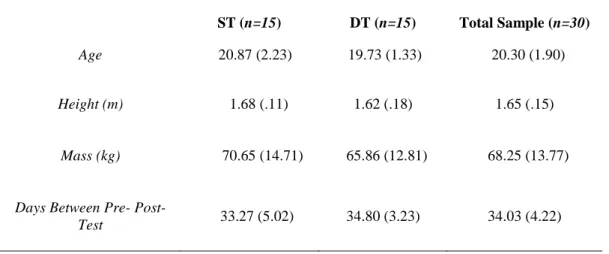
A sample of 33 healthy, physically active 18-25 year old males and females were recruited from the University of North Carolina at Chapel Hill. The sample consisted of 15 males and 15 females that reported participating in at least 30 minutes of self-reported physical activity at least 3 times per week. Demographic information is located in Table 1. Subjects were stratified by gender and then randomly assigned to either the dual-task (DT) intervention or single-task (ST) groups (15 DT, 15 ST). Each subject read and signed an IRB-approved informed consent and completed a brief general health history questionnaire. Subjects were excluded (n=3) from the study if they had been diagnosed with a concussion within the past three months, a history of two or more concussions, neurologic disorder, vestibular disorder, attention deficit hyperactive disorder, learning disorder, visual disorder not correctable by contact lenses or glasses, or a lower extremity injury within the past six months affecting balance.
Measurement and Instrumentation
Sensory Organization Test
36
through sway referencing in regards to the participants sway as well as having an individual close their eyes in selected conditions. Sway referencing refers to changes in the orientation of the support surface or visual surroundings to follow the subject’s center of gravity
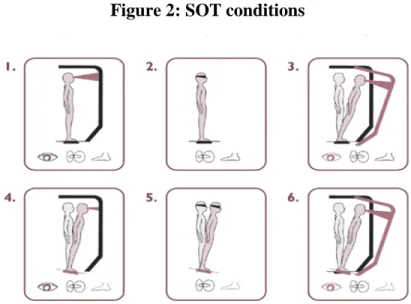
(Guskiewicz 2011). The SOT utilizes six conditions each 20 seconds and performed three times in random order. These conditions include (Figure 2): (1) fixed surface with a fixed visual field; (2) fixed surface with eyes closed; (3) fixed surface with sway referenced visual field; (4) sway referenced surface with fixed visual field; (5) sway referenced surface with eyes closed; (6) and a sway referenced surface with sway referenced vision. During sway referenced surface conditions the forceplate moved corresponding to the subjects’ postural sway in the anterior-posterior direction. During sway referenced visual conditions the visual surrounding moved corresponding to the subjects’ postural sway in the anterior-posterior direction.
37
system to each subjects overall balance. Contributions of these systems are represented by sensory ratios. The visual ratio was the ratio of the condition 4 equilibrium score to the condition 1 equilibrium score. The somatosensory ratio was the ratio of the condition 2 equilibrium score to the condition 1 equilibrium score. The vestibular ratio was the ratio of the condition 5 equilibrium score to the condition 1 equilibrium score. As with the
composite score, higher ratio scores indicate improved ability to maintain postural stability while other systems are being simultaneously altered (Register-Mihalik, Mihalik et al. 2008; Sosnoff, Broglio et al. 2011).
Balance Error Scoring System
38
stumble, or fall, moving the hip into greater than 30 degrees of abduction, lifting the forefoot or heel, and or remaining out of test position for greater than 5 seconds.
Neuropsychological Testing
CNS Vital Signs (CNS Vital Signs, Chapel Hill, NC) was utilized to administer a computerized neurocognitive test battery. CNSVS contained a battery of seven subtests. These CNSVS subtests included:
Verbal Memory Test
The verbal memory test (VBM) utilized words as target stimuli to test word list learning immediately after memorizing and following a period of approximately 20 minutes. For this test each subject was asked to remember a list of 15 target words, presented one by one every two seconds, on the computer screen. Subjects then immediately viewed a longer list of 30 words that contained all of the 15 target words and 15 additional words that were not contained in the original list. When a subject recognized one of the original target words they are instructed to press the space bar on the key board. Another list of 30 words
containing all 15 of the original words was re-administered at the end of the test battery to test delayed recognition of the word list. Scoring for this section includes one point for each correct hit and correct pass during both the immediate and delayed testing. The maximum score is 120 and the minimum score is 60. A score below 60 suggests willful exaggeration. Visual Memory Test
39
shapes mixed randomly among fifteen new shapes. When a subject recognized one of the original target shapes they were instructed to press the space bar on the key board. Each subject is also retested approximately 20 minutes later following the conclusion of the six remaining tests. Scoring for this section includes one point for each correct hit and correct pass for immediate and delayed testing. The maximum score is 120 and the minimum score is 60. A score below 60 suggests willful exaggeration.
Finger Tapping Test
The finger tapping test (FTT) measured an individual’s fine motor control. For this test each subject was asked to press the space bar with their right index finger as many times as possible in 10 seconds. Each subject was allowed one practice run followed by three test trials. This was then repeated with the left hand. Scoring for this section was composed of the average number of taps of the right and left hand. This test is believed to be one of the most sensitive neuropsychological tests for determining brain impairment (Mitrushina, Boone et al. 1999).
Symbol-Digit Coding
40
CNSVS utilized a version of the Stroop test developed by JR Stroop in 1935 (Strauss, Sherman et al. 2006). The CNSVS version utilized four color/color words including red, green, yellow, and blue. The test was broken down into three sections. During the first section the words red, green, yellow, and blue were flashed on the computer screen at random in black text. The subject was asked to click the space bar as soon as they see the word. This section tested simple reaction time. The second section randomly displays the words red, yellow, blue and green on the screen printed in color. The subject was asked to click the space bar if the text color matched the word displayed. For example, the participant would hit the spacebar if the word yellow was written in yellow text, but not if the word yellow was written in red text. This section tested complex reaction time. The third section also tested complex reaction time but the subject was asked to click the space bar if the color and the word do not match. For example, the participant would hit the spacebar if the word blue was written in green text, but not if the word blue was written in blue text. Information processing speed was quantified by averaging the two complex reaction scores from this portion of the test.
The Shifting Attention Test
41
either striking the right or left arrow key. The score from the SAT included the number of correct responses, the number of incorrect responses, and response time in milliseconds. The Continuous Performance Test
The Continuous Performance Test (CPT) measured attention over time. The CPT is sensitive to CNS dysfunction and the ability to maintain attention (Schein 1962). During this test each subject were asked to click the space bar only when the letter “B” appeared on the monitor. The letter “B” appeared randomly throughout the 5 minute presentation of 200 letters. Of the 200 letters 40 are “B”. Scoring for this test was composed of the correct responses, impulsive responses, and the number of times a subject does not click the space bar when presented with the letter “B”.
Non-verbal Reasoning Test
The Non-verbal reasoning test (NVRT) was a 5 minute test in which the subject was presented with a series of 15 – 4x4 square puzzles or visual analogies. Within each 4x4 square, one block was empty. The subject was asked to identify the correct response from four possible answers by selecting the number that matches the answer that makes most sense within the empty block within 14 seconds. Scoring was composed of the number of correct and incorrect responses as well as reaction time.
CNSVS Scoring
From these subtests listed above CNSVS computed raw domain scores, standard, and percentile scores. The raw scores were used as the outcomes measures for all analyses. To ensure test validity CNSVS validity indicators were used to identify possible invalid test or domain scores for each of the domains. These domains include:
42
Verbal memory was calculated by adding VBM correct hits immediate with VBM correct passes immediate, VBM correct hits delay, and VBM correct passes delay. A higher verbal memory score indicated better performance. A verbal memory raw score greater than 30 was required to qualify as a valid test score.
Visual Memory
Visual memory was calculated by adding VIM correct hits immediate with VIM correct passes immediate, VIM correct hits delay, and VIM correct passes delay. A higher visual memory score indicated better performance. A visual memory raw score greater than 30 was required to qualify as a valid test score.
Processing Speed
Processing speed was calculated by subtracting SDC errors from SDC correct responses. A higher processing speed score indicated better performance. More than 20 correct responses during the symbol digit coding test were required to ensure test validity. Executive Function
Executive function was calculated by subtracting SAT errors from SAT correct responses. A higher processing speed score indicated better performance. Shifting attention test correct responses was required to be greater than shifting attention test errors in order to ensure test validity.
Psychomotor Speed
43
must have achieved greater than 20 correct responses during the symbol digit coding test to ensure test validity.
Reaction Time
Reaction time was calculated by dividing the sum of ST complex reaction time correct with Stroop reaction time correct by 2. A lower reaction time score indicated better performance. To ensure valid reaction time domain scores simple reaction time must have been less than complex reaction time and less than stroop reaction time.
Complex Attention
Complex attention was calculated by adding Stroop commission errors with SAT errors, CPT commission errors, and CPT omission errors. A lower complex attention score indicated better performance. Correct responses must have been greater than incorrect responses for the stroop test, continuous performance test, and shifting attention test to ensure test validity.
Cognitive Flexibility
Cognitive flexibility was calculated by subtracting SAT errors and Stroop
commission errors from SAT correct responses. A higher cognitive function score indicated better performance. Correct responses must have been greater than incorrect responses for the stroop test and shifting attention test to ensure test validity.
Reasoning
44
Procedure
All subjects reported to the Matthew Gfeller Sport-Related Traumatic Brain Injury Research Center for testing and intervention sessions. Prior to the beginning of the testing session all inclusion/exclusion criteria were reviewed with each subject.
Assessments
All subjects reported for pre- and post- intervention testing including two balance performance measures: SOT, BESS; and a neurocognitive test battery: CNSVS. Subjects were also administered a General Health History Questionnaire (Appendix A) to obtain demographic information, physical activity level, and injury/medical history. BESS trials were captured using video analysis and independently scored, blinding for BESS Total Error Score throughout the intervention. A paper-pencil battery was also included in the testing order but was not part of the objective measures of this study. Subjects repeated the same testing order during their post testing. The SOT conditions were always completed in a randomized order, no matter the task. SOT screen scores were covered to assure test administrator blinding.
45
progression over 4 weeks for a total of 12 training sessions (8 in person and 4 at home). Subjects were required to complete at least one observed or home session per week and twelve sessions overall to be included in study analysis. All observed sessions were mandatory to be included in study analysis. Subjects were allowed a fifth week of
intervention progression to account for missed observed sessions due to academic breaks and scheduling issues (n=16). Subjects were asked to log their home training sessions and outside activities completed during the intervention period. Two sets of each designated exercises, unless specified, was performed regardless of group. All subjects regardless of group and task proficiency completed a mass progression of four weeks. A detailed explanation of the single-task and dual-task intervention and difficulty progression is provided in Appendix A.
Intervention Progression
All subjects in the single-task intervention group (ST) completed activities broken down into balance and cognitive exercises of varying degrees of difficulty. Each subject began at the entry level of both balance and cognitive exercises and progressed to the
46
composed of difficulty level 6. A detailed explanation of the single-task intervention progression is provided in Appendix A.
All subjects in the dual-task intervention group (DT) completed activities from all four progressive dual-task levels broken down into the Entry Level, Moderate Level, Advanced Level, and the Activity Specific Level. The progression began with one week of Entry Level tasks. The entry level is composed of difficulty levels 1-3 and focused on concurrently completing basic balance exercises level 1-3 and cognitive exercises level 1-3. Following week one subjects were progressed to the moderate level. The moderate level was composed of difficulty levels 4-6 utilizing balance levels 4-6 and cognitive exercises level 1-4. The moderate level also incorporated Wii Fit (Nintendo, Redmond, WA, USA) activities at each level including soccer heading and running with memory tasks. Following the second week the subject was progressed to the advanced level. This level was composed of difficulty levels 7-9 utilizing balance levels 1-6 and cognitive exercises from level 4-6 along with ball throwing activities. Wii Fit including obstacle courses and table tilt games were again used for each difficulty level. The final week consisted of the activity specific level and was composed of difficulty levels 10-12. These levels incorporated balance activities combined with ball or object response, movement decisions, and obstacle avoidance. A detailed explanation of the dual-task and single-task weekly exercise task progression is provided in Appendix A.
47
subjective task score incorporated asking each subject to answer the subjective difficulty scale question based on the difficulty of each task. Each question was scaled to the Borg CR10 Rating of Perceived Exertion Scale. Each subject was asked to identify the number that most closely corresponded to the difficulty of tasks completed at each tier. The subjective scores from each task were averaged across the week and recorded. A detailed explanation of the subjective task difficulty scale is provided in Appendix A. Along with the subjective questionnaire each subject was videotaped to be objectively scored each week proceeding intervention progression. If subjects are able to achieve the specified objective score the yes box would be checked for future analysis. If subjects were not able to achieve the specified objective score the no box would be checked for future analysis. Weekly checkpoints allowed for future analysis of individual rate of progression. A detailed
explanation of the intervention progression weekly check point is provided in Appendix A.
Data Analysis
All data analyses were conducted using SPSS 19.0 (Chicago, IL). An a priori alpha level set at 0.05 was utilized for each dependent variable. This alpha level was adjusted for the four SOT variables, as the composite score is not independent of the three ratio scores. Alpha level for SOT Composite score was set at .0167 and SOT ratios utilized and alpha level of .025. Statistical analyses for each research question were as follows:
Balance Performance Research Question 1
48
across the two assessment sessions for the following dependent variables: SOT composite score, somatosensory ratio, vestibular ratio, and visual ratio.
Research Question 2
To address our second research question we utilized a single 2 (group) x 2 (session) mixed model ANOVAs. This analysis addressed BESS balance performance (total error score) between the two groups and across the two assessment sessions.
Neurocognitive Performance Research Question 3
49
Research Question Comparison Data Source Methods
1. Are there significant differences in balance performance, as measured by the SOT, prior to and following intervention between collegiate recreational athletes completing a four-week dual-task training program and a group of single-task control
participants? Dual-Task Group vs Single-Task Group Balance Performance (SOT) IV: Intervention Groups – o Dual-Task o Single-Task Time – o Pre- o Post- DV: SOT Outcomes
Composite score Visual Ratio Vestibular Ratio Somatosensory Ratio 4 separate 2x2 mixed model subjects ANOVAs
2. Are there significant differences in balance performance, as measured by the BESS, prior to and following intervention between collegiate recreational athletes completing a four-week dual-task training program and a group of single-task control
participants? Dual-Task Group vs Single-Task Group Balance Performance (BESS) IV: Intervention Groups – o Dual-Task o Single-Task Time – Pre- Post- DV:
BESS Total Error
Score A single 2x2 mixed model subjects ANOVAs
3. Are there significant differences in neurocognitive performance, as measured by components of CNS Vital Signs, prior to and following
intervention between collegiate recreational athletes completing a four-week dual-task training program and a group of single-task participants?
Dual-Task Group vs Single-Task Neurocognitive Performance (CNSVS) IV: Intervention Groups – o Dual-Task o Single-Task Time – Pre- Post- DV: CNSVS Domain Scores: Verbal Memory Visual Memory Processing Speed Executive Function Psychomotor Speed Reaction Time Complex Attention Cognitive Flexibility Reasoning
9 separate 2x2 Mixed Model
50
CHAPTER IV
RESULTS AND DISCUSSION
Concussions are the most frequent form of traumatic brain injury that occur in sport (Guskiewicz, Weaver et al. 2000). Along with the continuing push for concussion prevention there is also a need to turn attention to management, recovery, and current concepts in
concussion rehabilitation (Ponsford 2005). Previously, the focus of concussion research has been on prevention, evaluation and acute management. Although much more is to be understood in these areas, further research is necessary to determine how rehabilitation may play a role in recovery following a concussion. The brain may return to normal function more quickly with rehabilitation just as other injuries sports medicine professionals are faced with daily, especially in cases where symptoms following concussion are prolonged in duration. Although the majority of concussion symptoms resolve within a 7 to 10 day window (Guskiewicz, McCrea et al. 2003), some individuals may suffer from Post
51
chance of experiencing protracted recovery and symptoms consistent with PCS (Guskiewicz, McCrea et al. 2003).
If concussion symptoms include, but are not exclusive to, cognitive and balance impairment then why not address these issues during the rehabilitation process to facilitate recovery? Sports medicine professionals need to address the functional capacity of systems affected by concussion to put injured athletes in the best position for return to play (Johnston, Bloom et al. 2004). Rehabilitation has been used for patients with moderate and severe traumatic brain injury, but has not been considered as a standard of care for mild traumatic brain injury such as sport related concussion with prolonged recovery (Relander, Troupp et al. 1972; Ponsford 2005). The current standard of care for sports related concussion centers around cognitive rest followed by gradual return to activity (Guskiewicz, Bruce et al. 2004).
52
matched single-task controls. The intent of this research was to determine the utility and feasibility of a dual-task training program to potentially be applied following concussion.
Methods
Participants
Thirty-one, physically active males and females were recruited to participate in the study. One subject was dropped due to lack of intervention compliance. The final study sample consisted of 15 males and 15 females that reported participating in at least 30 minutes of self-reported physical activity at least 3 times per week. Demographic information is located in Table 1. Subjects were stratified by gender and then randomly assigned to either the dual-task (DT) intervention or single-task (ST) intervention group (15 DT, 15 ST).
Instrumentation
All subjects reported for pre- and post- intervention testing including two balance performance measures: Sensory Organization Test (SOT), Balance Error Scoring System (BESS); and a neurocognitive test battery: CNS Vital Signs (CNSVS). Subjects were also administered a General Health History Questionnaire to obtain demographic information, physical activity level, and injury/medical history.
Sensory Organization Test