BREASTFEEDING KNOWLEDGE AND CLINICAL MANAGEMENT AMONG SPEECH-LANGUAGE PATHOLOGISTS
Adara N. Blake
A thesis submitted to the faculty at the University of North Carolina at Chapel Hill in partial fulfillment of the requirements for the degree of Master of Science in the Division of Speech and
Hearing Sciences (Speech-Language Pathology) in the School of Medicine.
Chapel Hill 2014
iii ABSTRACT
Adara N. Blake: Breastfeeding Knowledge and Clinical Management among Speech-Language Pathologists
(Under the direction of Cara McComish)
As healthcare professionals with training in dysphagia, speech-language pathologists (SLPs) are potentially valuable team members in the management of breastfeeding issues. This survey aimed to describe the clinical breastfeeding knowledge, skills, and experiences of SLPs who provide pediatric swallowing and/or feeding services. Knowledge of breastfeeding
iv
ACKNOWLEDGEMENTS
To my advisor and mentor, Cara McComish, thank you for your gentle guidance. Not only have you helped me through this thesis project, but through my entire graduate experience as my academic advisor. I am so grateful for your patience and insight.
Thank you to Elizabeth Crais and Suzanne Thoyre, for rounding out my committee and helping to focus my ideas and writing with your feedback. I have been astounded at the level of attention you have given me during this time, as I know you were also working on many important projects of your own.
A special thank you to Krisi Brackett and Jamie Mahurin Smith for test driving my survey and helping me to finalize it.
v
TABLE OF CONTENTS
LIST OF TABLES ... vii
LIST OF FIGURES ... viii
LIST OF ABBREVIATIONS ... ix
CHAPTER 1: INTRODUCTION ...1
CHAPTER 2: LITERATURE REVIEW ...2
Breastfeeding in the United States ...2
Speech-Language Pathologists and Pediatric Feeding Disorders ...4
The American Speech-Language-Hearing Association’s Published Breastfeeding Statements ...6
Speech-Language Pathologists and Breastfeeding in the Literature ...10
CHAPTER 3: METHOD ...14
Survey Development ...14
Participant Recruitment ...16
CHAPTER 4: RESULTS ...17
Demographic Information ...17
Breastfeeding Knowledge ...19
Experiences with Breastfeeding Management ...21
CHAPTER 5: DISCUSSION ...31
Demographic Information ...32
vi
Role of the American Speech-Language-Hearing Association ...34
Implications for Practice ...35
Implications for Further Research ...36
Limitations ...36
CHAPTER 6: CONCLUSION ...38
APPENDIX A: RECRUITMENT MESSAGE ...39
APPENDIX B: SURVEY ...40
vii
LIST OF TABLES
Table 1: Frequency of Breastfeeding Issues in Clinical Practice ...23
Table 2: Participant Comments on Collaboration with Lactation Consultants...27
Table 3: Participant Comments on Resources for Breastfeeding Education ...28
Table 4: Preferred Resources for Breastfeeding Education ...29
viii
LIST OF FIGURES
Figure 1: Geographic Location of Participants ...18
Figure 2: Self-Described Breastfeeding Competence ...22
Figure 3: Areas Targeted During an Evaluation of Breastfeeding ...24
ix
LIST OF ABBREVIATIONS
ASHA American Speech-Language-Hearing Association
CCC-SLP Certificate of Clinical Competence for Speech-Language Pathologists CLC Certified Lactation Counselor
1
CHAPTER 1: INTRODUCTION
In 2011, United States Surgeon General Regina M. Benjamin and the Department of Health and Human Services released a Call to Action detailing “the important roles and
responsibilities of clinicians, employers, communities, researchers, and government leaders and to urge us all to take on a commitment to enable mothers to meet their personal goals for
breastfeeding.” International Board Certified Lactation Consultants (IBCLC’s) are the health
professionals most thoroughly trained in the clinical management of lactation, and as such are usually the first line of defense in addressing breastfeeding concerns (US Department of Health and Human Services, 2011). However, there are feeding and swallowing issues that sometimes go beyond the scope or experience of an individual IBCLC. As medical professionals with “knowledge and skills in assessment and management of swallowing and feeding problems in infants and young children” (ASHA, 2002), speech-language pathologists who work as pediatric
feeding therapists are in a uniquely qualified position to collaborate with IBCLCs and contribute their knowledge of dysphagia in order to best serve families.
2
CHAPTER 2: LITERATURE REVIEW Breastfeeding in the United States
The health benefits of breastfeeding have been well established. In a systematic review of existing literature, Ip, et al. (2007) concluded that even in developed countries, a history of breastfeeding was associated with reduced risk of acute otitis media, gastroenteritis, severe lower respiratory tract infections, atopic dermatitis, asthma, obesity, type 1 and type 2 diabetes,
childhood leukemia, sudden infant death syndrome, and necrotizing enterocolitis. Premature infants have demonstrated readiness for oral feedings at breast earlier than for the bottle (Lemons and Lemons, 1996), and remain more physiologically stable at breast than at bottle (Bier, et al., 1993; Goldfield, Richardson, Lee and Margetts, 2006). Maternal benefits include decreased risk of type 1 diabetes, and breast and ovarian cancer (Ip, et al., 2007). In developing countries breastfeeding is a life-saving practice, with dramatic reductions in infant mortality reported (WHO, 2001).
3
Despite increases in overall breastfeeding rates, significant disparities exist among socio-economic and ethnic groups. The most recent data collected by the CDC reflected that only 59.7% of black children were ever breastfed, compared to 73.8% of American Indian children, 77.7% of white children, 80.6% of Hispanic or Latino children, and 83% of Asian or Pacific Islander children. Household income was very predictive of breastfeeding, with the rate of babies ever breastfed ranging from 84.4% among households with a poverty income ratio of 350% or greater, to as little as 67% in households with a poverty income ratio of less than 100%. Mothers without a college education, unmarried mothers, and mothers under the age of 30 were also less likely to breastfeed (CDC, 2007).
Though these disparities exist, breastfeeding initiation among all groups continues to rise. However, with an increase in breastfeeding comes an inevitable increase in breastfeeding
difficulties and the need for competent clinicians who can address these issues. Of women who discontinued breastfeeding within the first year of their child’s life, 60% did so earlier than
desired; issues such as nipple pain, ineffective milk transfer and infant weight gain were cited as reasons why (Odom, Li, Scanlon, Perrine & Grummer-Strawn, 2013).
But perhaps more important than the physical deterrents to breastfeeding success are the potential benefits of effective support from health care providers. Skilled support from health care professionals is positively associated with increased breastfeeding duration, particularly when that support is offered routinely and not just when mothers seek it (Renfrew, et al., 2012). As impactful as skilled support can be, the quality of that support is crucial. “Inadequate and
4
Not only does the literature show that support from health care professionals improves breastfeeding outcomes, but also that providers themselves agree that greater knowledge and skills in breastfeeding management will improve their service delivery. In a British learning needs assessment (McFadden, Renfrew, Dykes & Burt, 2006), 95% of representatives
(unidentified by the authors) from various Royal Colleges and other professional organizations related to maternal and child health agreed that “care provided by their members could be enhanced by greater knowledge and expertise in the field of breastfeeding,” and that their “main contribution was to enhance their own members’ breastfeeding knowledge.” Efforts to increase
this knowledge could be very beneficial, as health care providers initiate support more frequently when they are confident in their own knowledge (Burglehaus, Smith, Sheps and Green, 1997). Speech-Language Pathologists and Pediatric Feeding Disorders
The role of speech-language pathologists in the treatment of swallowing and feeding disorders is fairly recent. With the advent of new research on clinical dysphagia management in the 1970’s, an increasing number of SLPs began to assess and treat adults. In 1987, the American
Speech-Language-Hearing Association first developed official documents detailing the roles and responsibilities of speech-language pathologists regarding dysphagia treatment. Currently, ASHA outlines eight Standards for the Certificate of Clinical Competence in Speech-Language Pathology (CCC-SLP). Standard IV: Knowledge Outcomes consists of eight areas of knowledge that candidates must demonstrate in order to earn the CCC-SLP. Standard IV-B states “The applicant must have demonstrated knowledge of basic human communication and swallowing processes, including the appropriate biological, neurological, acoustic, psychological,
5
the life span” (ASHA, 2014). Standard IV-C states that “The applicant must have demonstrated knowledge of communication and swallowing disorders and differences…” (ASHA, 2014).
Over the years, increased need for dysphagia service provision across all settings has been reflected in an increase in graduate coursework and practicum placements. The distinct needs of the pediatric population have also become apparent, with a growing number of SLPs providing pediatric dysphagia services (ASHA, 2001). In a 2013 survey of speech-language pathologists working in health care settings, clinicians reported that of time spent providing pediatric services, a mean of 15% of time was spent on swallowing and feeding (ASHA, 2013). Population density affected areas of intervention, with 19.5% of time spent on swallowing and feeding in urban areas, versus 11.9% and 11.2% of time spent in suburban and rural areas respectively (ASHA, 2013).
The availability of pediatric dysphagia services is necessitated by the prevalence of pediatric feeding disorders. The percentage of typically developing children with some degree of a feeding disorder ranges from 25% (Manikam and Perman, 2000) to 35% (Burklow, Phelps, Schultz, McConnel & Rudolph, 1998), while Arvedson (2008) reports that up to 45% of children may be affected. Severe feeding disorders affect 3% to 10% of children (Manikam & Perman, 2000). Feeding disorders can arise from a variety of sources, including structural abnormalities, neurological conditions, behavioral issues, cardio-respiratory problems, and metabolic
dysfunction (Burklow, Phelps, Schultz, McConnel & Rudolph, 1998). Some children have feeding difficulties from birth, as in the case of a child with a cleft lip or palate. Others may develop or become more apparent over time, such as in a child who has a difficult transition from liquids to solids. In addition, concomitant health issues increase the prevalence of feeding
6
medical diagnoses, physical disabilities and prematurity affected at higher rates than typically developing children (Arvedson, 2008; Manikam & Perman, 2000).
Given these statistics and the continued increase in breastfeeding rates, it is inevitable that there will be breastfeeding dyads who contain a child with a feeding disorder. While an IBCLC may often resolve any breastfeeding issues that arise, there may be difficulties that extend beyond the scope of their training in dysphagia. In these situations, an SLP with competence in the management of breastfeeding could be the most appropriate professional to address the problem.
The American Speech-Language-Hearing Association’s Published Breastfeeding
Statements
In its mission statement, ASHA lists “setting standards” and “fostering excellence in professional practice” as two of its goals. In order to identify the American Speech-Language-Hearing Association’s positions and contributions regarding the SLP’s role in breastfeeding management, ASHA’s position statements on dysphagia were reviewed for any mention of
breastfeeding. Two major documents, Roles of Speech-Language Pathologists in Swallowing and Feeding Disorders: Technical Report (ASHA, 2001) and Knowledge and Skills Needed by
Speech-Language Pathologists Providing Services to Individuals with Swallowing and/or Feeding Disorders (ASHA, 2002) make no explicit reference to breastfeeding. However, if we consider breastfeeding to be the normal physiological feeding process for infants, the basic competency of “normal and abnormal anatomy and physiology related to swallowing function”
(ASHA, 2002) should be interpreted to include breastfeeding.
7
breastfeeding is not included in a list of over 200 suggested lecture topics, two texts, two journal articles and one videotape focused on breastfeeding are listed under references for pediatric dysphagia. These include Dr. Ruth Lawrence’s Breastfeeding: A Guide for the Medical
Profession (2005) and Dr. Jack Newman’s The Ultimate Book of Breastfeeding Answers (2000). The inclusion of these resources would suggest that ASHA expects breastfeeding to be taught alongside other topics relevant to the management of pediatric dysphagia.
The ASHA document that makes the most explicit reference to breastfeeding competency is the Roles of Speech-Language Pathologists in the Neonatal Intensive Care Unit: Technical Report (2004). This report includes in the role of feeding and swallowing evaluation and
intervention the “evaluation of breast and bottle-feeding ability.” Research supporting the safety and benefits of breastfeeding for very low birth weight infants is cited in the section “Outcomes
with Feeding Focused Interventions.” Breastfeeding is also included in a discussion of transitioning premature infants to oral feeding. In addition, breastfeeding is referenced as a caregiving practice that should be facilitated in the design of the NICU, such as providing rooming-in facilities so that mothers may breastfeed overnight. Research on the differences between breast and bottle feeding is cited in the “Infant Development” section.
The Technical Report (ASHA, 2004) does not just summarize relevant breastfeeding knowledge, but provides practical resources for professionals as well. While the authors indicate in the document that there is a lack of standardized assessments for breastfeeding readiness, they cite and describe ones that are available, including Systematic Assessment of the Infant at Breast (Association of Women’s Health, Obstetric, and Neonatal Nurses, 1990) and the Breastfeeding
8
auscultation is presented as a non-standardized tool that can be used as an “adjunct to behavioral observations for appreciating breath sounds and timing of swallowing.” Holding infants
skin-to-skin and non-nutritive sucking facilitation, such as allowing infants to suck at the emptied breast, are interventions described as beneficial for breastfeeding. The authors go on to present evidence on premature infants’ typical age of readiness for introducing breastfeeding, alternatives to the
breast when the mother is not present in the NICU, and health benefits of breast milk. Definitions for lactation and nipple shield are included in the glossary, and breastfeeding is included in the definition of nutritive sucking.
In the companion to the technical report, Roles and Responsibilities of the Speech-Language Pathologist in the Neonatal Intensive Care Unit: Guidelines (2005), the authors take the research presented in the technical report and organize it by each role and responsibility – communication evaluation and intervention, feeding and swallowing evaluation and intervention, and parent/caregiver education and counseling. Most of the breastfeeding research from the technical report is discussed in the feeding and swallowing section.
While the discussion of breastfeeding is frequent and thorough in the technical report and reprised in the guidelines, it is important to recognize that the committee members who wrote these documents were only charged with describing the NICU. This may inadvertently lead professionals to believe that only clinicians who work in the NICU need have competence in breastfeeding management, despite its relevance to speech-language pathologists working in early intervention, private practices, or with full term children in the hospital setting.
9
convention presentations, 4 articles in the ASHA Leader, 1 article published in the Journal of Speech, Language, and Hearing Research, and 1 mention in the Special Interest Group on Swallowing’s newsletter. In addition to discussing many of the interventions presented in the Technical Report (ASHA, 2004), contributors to the Pediatric Dysphagia Practice Portal discuss considerations for thickening breast milk.
Another way to look at ASHA’s focus on breastfeeding is to identify the number of
sessions on the topic offered at the annual ASHA convention. In 2013, 3 out of 140 sessions on swallowing and swallowing disorders focused on breastfeeding management, one of which was withdrawn. The offerings at the 2012 convention were similar, with 2 of 123 swallowing sessions explicitly covering breastfeeding. Further, 0 out of 17 upcoming pediatric feeding continuing education courses listed on the ASHA website mention breastfeeding as a topic in the course.
Perhaps the most obvious plea for SLPs to provide breastfeeding services appeared in the ASHA Leader in 2005, when Fletcher and Ash argued that the knowledge and skills of speech-language pathologists in infant swallowing are key to addressing disordered breastfeeding. The authors also called for increased collaboration between SLP’s and International Board Certified Lactation Consultants (IBCLC’s) in order to provide optimal care. They suggested, “The SLP
and the IBCLC bring both overlapping and unique skills to the table when assessing and treating infant feeding difficulties. An awareness and respect for each other’s roles as well as forming a
partnership will only improve the quality of care provided. Promoting and supporting
consumption of breast milk via the most efficient method whether it is the breast or bottle will provide the infant with the optimal nutrition to promote brain growth and development”
10
Speech-Language Pathologists and Breastfeeding in the Literature
While many texts on pediatric feeding acknowledge the benefits of breast milk and the importance of breastfeeding, they often lump breast and bottle feeding together with limited discussion of their differences; however, effort is made to provide some specific breastfeeding information. For example, Wolf and Glass (1992), occupational therapists, devote an entire chapter to breastfeeding with discussions of physiology, suck mechanics, considerations for the typical and hospitalized infant, and alternative methods of supplementation. Several helpful illustrations are also included. Elsewhere in the text is brief information on breastfeeding infants with oro-facial anomalies.
More recently, Morris and Klein (2000) mention in their text the possible issues a short lingual frenulum or a disordered suck may cause for the breastfeeding infant. The benefits of variations in breast milk flavor and fat content are repeated throughout the text as well. The authors suggest referral to a lactation consultant for breastfeeding issues in the same section that they recommend referral to a cardiologist, neurologist, gastroenterologist or pulmonologist when necessary, highlighting the significance of disordered breastfeeding. Breastfeeding the premature infant, alternatives for supplementation, supportive positioning techniques, and the pros and cons of demand versus scheduled feedings are also discussed. As did the other texts that were
reviewed, Morris and Klein also include recommendations for breastfeeding infants with cleft lips and/or palates. A unique contribution that the authors make is to discuss the breastfeeding behaviors that may be seen in children with autism, such as avoiding touch to the face by refusing the breast or constant, perseverative feeding.
11
eliminate dairy from the diet in the case of infant milk protein allergies, and include the
American Academy of Pediatrics recommendations for breastfeeding duration (2000) and health benefits of exclusivity. The clinical usefulness of pre- and post-feeding weights is presented, as well as special considerations for pre-term infants and infants with clefts. Instrumentally, the ability to visualize the oral phase during breastfeeding using ultrasonography, and the inability to do so using videofluoroscopy are discussed.
Most recently, editor Kelly VanDahm (2012) compiled a pediatric dysphagia text with contributions from a variety of disciplines, including speech-language pathology, occupational therapy, physical therapy, and nutrition. Breastfeeding considerations are mentioned throughout, including descriptions of various positions, discussion of flow rate confusion, commenting on breastfeeding in a feeding assessment, strategies for adjusting flow rate at the breast, and the effects of oral-motor issues on breastfeeding. The benefits of collaborating with a lactation consultant are also discussed, with VanDahm stating that “The support of a lactation consultant can be a valuable asset to the feeding specialist. In many cases the perspective and training of the two clinicians is different, but the two can be effective teammates in a collaborative effort” (p.113).
There are currently very few published articles that discuss speech-language pathology in conjunction with breastfeeding management. In 2007, Sheppard and Fletcher published a review of available literature on facilitating oral skills in premature infants. Evidence that non-nutritive sucking supports successful breastfeeding was explored, as well as techniques for positioning. Several breastfeeding evaluations were presented, as well as ten steps for promoting and
12
Service delivery models for delivering breastfeeding support may vary. However, in numerous texts and articles, interdisciplinary teaming is presented as the ideal model. SLPs are mentioned as helpful members of an interdisciplinary breastfeeding support team, along with lactation consultants, dieticians and pediatricians (Falconer, 2010; Pillet, Pasty, Goyet, & Malfroy-Camine, 2012). Examples of ways SLPs have been involved in breastfeeding
intervention teams include a meta-analysis of tongue tie research, in which the authors found that Australian surgeons performing frenotomies on infants received 16.9% of their referrals from speech-language pathologists (Edmunds, Miles & Fulbrook, 2011), while a speech-language pathologist administered the lingual frenulum protocol for another study (Martinelli, Marchesan, & Berretin-Felix, 2012). In a Portugese study of preterm infants, the the authors found that a non-nutritive sucking protocol performed by speech-language pathologists aided in the direct transition of those infants from enteral feeding to breastfeeding (Medeiros, et al., 2011).
In another article published in Seminars in Speech and Language (Miller, 2011) the author identifies the speech-language pathologist as the ideal clinician for identifying, intervening in and modifying feeding difficulties typical among infants with craniofacial anomalies. Miller presents a short section on interventions for breastfeeding, and includes techniques such as upright positioning to avoid nasal regurgitation and teaching the mother to occlude the cleft lip with a finger. The author is positive about the breastfeeding potential of this special population, provides supporting evidence, and encourages speech-language pathologists to use their clinical judgment. The included list of references also contains three texts on
13
14
CHAPTER 3: METHOD Survey Development
Very little information exists about the extent of the involvement of speech-language pathologists in breastfeeding management. Survey methodology was chosen in order to efficiently obtain general information about speech-language pathologists’ experiences in this area. The survey was comprised of 39 questions divided into three categories – demographic information, breastfeeding management experiences, and breastfeeding knowledge and skills (See Appendix B). The categories were selected in order to identify the demographic
characteristics of the clinicians who address breastfeeding issues, to identify their experiences in breastfeeding management, and to identify areas of breastfeeding knowledge that
speech-language pathologists currently have, as well as those they may need more exposure to in pre-professional coursework and continuing education.
The content of the survey was developed in collaboration with two speech-language pathologists and professors with experience in pediatric dysphagia, and a nurse and professor specializing in infant feeding. The survey was piloted by two speech-language pathologists who specialize in pediatric dysphagia, one of whom is also an International Board Certified Lactation Consultant; survey questions were further refined using their feedback.
15
This project was submitted to and approved by the Institutional Review Board at the University of North Carolina at Chapel Hill.
Demographic information. Participants were asked general questions about their clinical practice, including state and population density where they practice, number of years practicing, and type of setting. These questions were used to determine whether any of these factors influenced the clinician’s responses to the remainder of the survey.
Experiences with breastfeeding management. The bulk of the survey consisted of questions targeting participants’ experiences. This project not only aimed to describe those
experiences, but perhaps more importantly to determine if there is a desire from clinicians to expand their knowledge in this area. Identifying a gap in knowledge is important, but that gap cannot be sufficiently remediated without buy-in from clinicians; do they believe that increasing their breastfeeding knowledge is beneficial to them, and are they interested in doing so? Also included in this section were questions about the nature of participants’ collaboration with other
professionals in the management of breastfeeding.
16 Participant Recruitment
The primary recruitment source for this project was the American Speech-Language and Hearing Association’s online discussion forums. A recruitment message (See Appendix A) was
posted in the following forums: Special Interest Group 13: Swallowing, Swallowing Disorders and Dysphagia (10,651 subscribers), Early Intervention (1,856 subscribers), SLP Health Care (2,130 subscribers), SLP Private Practice (1,448 subscribers), and Research (1,311 subscribers). In addition, 21 feeding programs around the country for which a contact email could be
17
CHAPTER 4: RESULTS
In total, 97 survey responses were recorded. Participant inclusion was determined by the first survey question, which asked if the participant currently provides pediatric swallowing and/or feeding services. If their response was no, they were thanked for their participation and that survey was excluded from the results. Of the 97 completed surveys, 11 were excluded. The 86 remaining surveys were included in this analysis (89%).
Demographic Information
18 Figure 1: Geographic Location of Participants
Population density. All 86 respondents indicated the population density of the area where they primarily work. Forty-one (48%) participants practice in an urban area, 32 (37%) in a suburban area, and 13 (15%) in a rural area.
Clinical setting. Participants were asked to identify their primary practice setting. The majority of respondents (n=45, 52%) work in a hospital, 13 (15%) work in private practice, 9 (10%) in home health, and 7 (8%) in a rehabilitation setting. Twelve participants (14%) indicated “other,” and their text responses included outpatient clinics and university clinics.
Number of years practicing. Of the 86 respondents, 83 (96.5%) indicated the number of years they have been practicing as a speech-language pathologist. Ten participants (12%) had worked for 1 to 3 years, 29 (34.9%) had worked for 4 to 10 years, 26 (31.3%) had worked for 11 to 20 years, 13 (15.7%) had worked for 21 to 30 years, and 5 (6%) had worked for 31 years or more.
19
responded. For 29 participants (34%), less than 25% of their caseload was swallowing or feeding. Fourteen (16%) indicated that distribution as 25% to 50% of their caseload, 10 (12%) indicated 51% to 75%, and 33 (38%) indicated that greater than 75% of their caseload consisted of swallowing or feeding.
IBCLC certification. Participants were asked if they held an International Board Certified Lactation Consultant certification; 85 of 86 participants responded. Of these, 4 (5%) were IBCLCs. In comments, one participants wrote that they completed the 40-hour Certified Lactation Counselor (CLC) program, and another wrote that they were a Certified Lactation Educator (CLE).
Breastfeeding Knowledge
Participants were asked a series of questions intended to identify areas of breastfeeding knowledge that were well known by speech-language pathologists. Responses would also indicate which areas were less familiar, and as such should be targeted in breastfeeding education.
When asked if infants were usually more coordinated at bottle than they are at breast, the majority of participants selected the targeted response of false (91%, n=78). Ninety-two percent of participants (n=79) selected the targeted response, “true,” when asked if non-nutritive sucking at the breast can be beneficial when transitioning infants to oral feeding at the breast.
For the question “which of the following is an appropriate intervention for poor milk transfer,” the targeted response was “dancer hold (supporting the breast and baby’s chin for increased jaw stability.” Fifty-one percent of participants (n=43) selected the targeted response.
20
Participants were asked “which of the following positions can be helpful for reducing milk flow? Check all that apply.” The targeted responses were “elevated clutch/football,” which 51% of participants (n=41) selected, and “laid back/prone,” which 55% (n=44) selected. Sixteen percent (n=13) selected “cross-cradle,” and 6% (n=5) selected “cradle.”
When asked “Which of the following can be signs of a poor latch? Check all that apply,” 75% of participants (n=64) chose “nipple pain that lasts longer than a week or that is felt
throughout an entire feeding, 54% (n=46) chose “lipstick shaped or creased nipple after the baby detaches,” and 36% (n=31) chose “dimpling of the cheeks.” These were all targeted responses. “Frequent feeding” was chosen by 38% of participants (n=32), “widely flanged lips” was chosen by 34% (n=29), and “movement near baby’s temporal region/in front of the ear” was chosen by
9% (n=8).
Participants were asked to name one method of supplementation other than a bottle or tube feeding by entering their answer into a text box. Of note, this item had the least number of responses of the entire survey (n=48). Frequent responses included a supplemental nursing system (SNS), syringe/finger feeding, and cup feeding.
When asked “which of the following appropriately describes a typical growth trend in breastfed children,” 69% of participants (n=53) selected the targeted response “breastfed babies
typically grow more quickly than formula fed babies from birth to 3 months, and less quickly than formula fed babies from 3 to 12 months.” “Formula fed babies are leaner than breastfed babies from 4 to 12 months” was selected by 17% (n=13), “breastfed babies often require supplementation when they start to fall off of the growth curve around 3 months” was selected by 10% (n=8), and “breastfed boys grow slightly slower than breastfed girls” was selected by 4%
21
For the question “Which of the following can be reasons for clicking noises during feeding? Check all that apply,” the targeted responses were “ankyloglossia,” “infant trying to control flow of milk,” and “poor positioning/latch.” Eighty-seven percent of participants (n=73) selected “poor positioning/latch,” 56% (n=47) selected “ankyloglossia,” and 40% (n=34)
selected “infant trying to control flow of milk.” Of the incorrect responses, 17% (n=14) selected “insufficient milk supply,” and 7% (n=14) selected “strong tongue.”
Finally, participants were asked “which of the following is an appropriate intervention for infants with laryngomalacia and/or tracheomalacia (floppy laryngeal or tracheal anatomy that can cause airway obstruction)?” Thirty percent of participants (n=25) selected the targeted response of “head extension and prone positioning.” Sixty-five percent (n=53) selected “side lying position” and 5% (n=4) selected “fewer, longer feedings.”
Experiences with Breastfeeding Management.
The following section includes questions that were intended to determine whether speech-language pathologists encountered breastfeeding issues in their practice and, if so, describe the nature of these encounters.
Current breastfeeding competence. Participants were asked to select the statement that best described their clinical breastfeeding management knowledge and skills. Forty-seven percent (n=40) indicated that they had “sufficient clinical knowledge of breastfeeding to address concerns that might come up in my practice,” while 41% (n=35) indicated that they possessed “some clinical knowledge of breastfeeding, but would refer concerns to another professional.” Ten participants (n=9) reported “advanced knowledge, skills, and experience with breastfeeding management,” and 2% (n=2) reported “little to no clinical knowledge of breastfeeding.” See
22 Figure 2: Self-Described Breastfeeding Competence
When asked to indicate all sources of breastfeeding knowledge, 93% (n=78) selected “personal experience and/or self-directed education,” 79% (n=66) selected “collaboration with other knowledgeable professionals,” 50% (n=42) selected “continuing education course(s),” and 19% (n=16) selected “inservice education provided by my employer.” Only 4% (n=3) had
received any graduate school instruction on breastfeeding, and 7% (n=6) had exposure to
breastfeeding issues during their graduate school practicum. Eleven percent of participants (n=9) indicated “other” sources of breastfeeding knowledge, and among the specified responses were
completion of lactation training programs, articles, books, and on the job training.
23
Current breastfeeding management. To gain information on the amount of
breastfeeding management that SLPs provide, participants were asked to indicate how often they encounter breastfeeding issues in their practice. The majority of respondents indicated that they encountered breastfeeding issues “once per month or less” (44%, n=37). However, nearly a
quarter indicated that they encountered breastfeeding issues “more than once per week” (24%, n=20). See Table 1 for a summary.
Table 1
Frequency of Breastfeeding Issues in Clinical Practice
Frequency n %
Never 7 8%
Once per month or less 37 44%
More than once per month 18 21%
Once per week 3 4%
More than once per week 20 24%
Total 85
Clinicians who worked in hospital settings reported seeing a greater number of breastfeeding issues than clinicians working in other settings. For participants who saw these problems “more than once per week,” 19 out of 20 (95%) worked in a hospital.
When asked to select statements that best described the nature of the breastfeeding concerns they encounter, participants most frequently selected “infant nutrition and weight gain” (76%, n=61), “breastfeeding a baby with medical issues” (75%, n=60), “latch” (70%, n=56), and “suck” (66%, n=53). “Positioning” (50%, n=40) and “milk transfer” (39%, n=31) followed. Nineteen percent (n=15) specified “other” concerns, including tongue tie, suck/swallow/breathe
coordination, aspiration, and weaning.
24
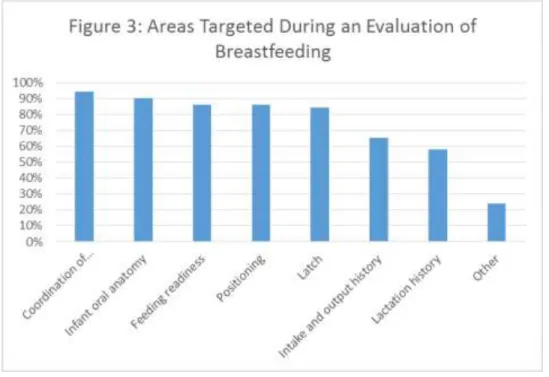
(n=77) chose “infant oral anatomy,” and an equal number (86%, n=74) chose “feeding
readiness” and “positioning.” Eighty-four percent (n=72) selected “latch,” 65% (n=56) selected “intake and output history,” and 58% (n=50) selected “lactation history.” Twenty-four percent (n=21) specified “other” topics, including maternal and infant medical history, flow rate, and signs/symptoms of aspiration. Mother’s comfort, stress and amount of support were also
specified as considerations by 6% of participants. Two participants wrote that they would not perform an evaluation of breastfeeding. See Figure 3 for summary.
Figure 3: Areas Targeted During Evaluation of Breastfeeding
When asked to select areas they would feel comfortable targeting for intervention, participants most frequently selected “coordination of suck/swallow/breathe” (96%, n=81), “positioning” (89%, n=75), “feeding readiness” (88%, n=74), and “structural anomalies (such as cleft lip, tongue tie)” (81%, n=68). Sixty percent (n=50) selected “latch,” and 45% (n=38) selected “supplementation.” Eight percent (n=7) specified “other” areas, including managing
25
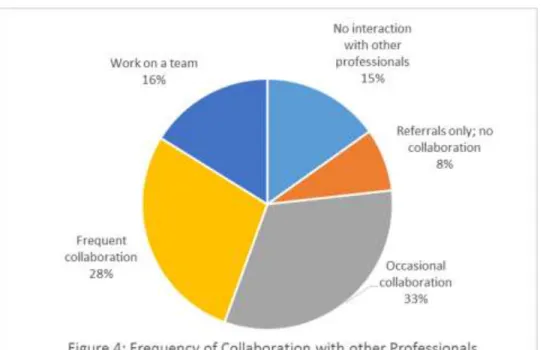
Collaboration with other professionals. Participants were asked if they had ever received a breastfeeding referral from another professional; 60% (n=52) responded yes. Participants were asked to select the statement that best described the nature of their collaboration with other professionals regarding breastfeeding support. Thirty-two percent (n=27) responded that they “occasionally collaborate with other professionals,” and 28% (n=24) responded that they “frequently collaborate with other professionals.” Sixteen percent (n=14) of participants indicated that they “work on a team” with other professionals when it comes to
breastfeeding management. See Figure 4 for a summary.
Figure 4: Frequency of Collaboration with Other Professionals
When asked what types of professionals they have collaborated with about breastfeeding concerns, participants indicated that they’ve worked with lactation consultants (82%, n=53),
26
neonatologists, otolaryngologists, and pediatric gastroenterologists. One participant commented, “…as an SLP, I thought I myself was knowledgeable enough to nurse my infant daughter, but had to seek the help of a lactation consultant… As a profession we should put more focus on teaming with pediatricians and lactation consultants to support all mothers in nursing.”
Participants were also asked specifically about their collaboration with International Board Certified Lactation Consultants (if they indicated earlier that they were an IBCLC, these questions were skipped). When asked if there was an IBCLC available for referral in their community, 48% (n=39) selected “Yes; an IBCLC is employed by my workplace,” and 28% (n=23) selected “Yes; there is an IBCLC in my community who I can refer clients to.” Six
27 Table 2
Participant Comments on Collaboration with Lactation Consultants
“Often, I will attempt to problem solve through issues that arise. If my knowledge isn’t sufficient, I refer to lactation. For inpatients, I will often attempt to provide a co-evaluation with lactation. Often, my knowledge is sufficient for the motor aspects of feeding, but I more frequently refer to lactation for issues with milk supply, breast milk storage, nutrition for nursing mothers, and pumping issues.”
“I have had the opportunity to work with a number of our lactation specialists during
evaluation/treatment sessions. While this can at times be a bit challenging because we come at problems from different perspectives, it’s also been very informative for both the lactation specialists and myself. I have learned a lot about the mother’s side of the equation from the lac [sic] specialist.”
“At our center – a large pediatric hospital, ALL assessments by an SLP of breastfeeding dyad [sic] are done in conjunction with an IBCLC.”
“In the 2 large children’s hospitals I have worked in I have also had access to lactation consultants. At the first hospital I worked at we worked very closely with the lactation consultant, co-treating frequently, but in my current hospital our interaction is significantly less…”
When asked if they were satisfied with their current level of collaboration with other professionals regarding management of breastfeeding issues, 65% of participants (n=56) indicated that they would like to collaborate more often with other professionals. Thirty-four percent (n=29) were satisfied with their current level of collaboration, and only one wanted less collaboration with other professionals. Clinicians who occasionally collaborated with other professionals indicated the desire for increased collaboration more than clinicians who reported other frequencies of collaboration (40%, n=22).
28
Forty-four percent of participants (n=38) indicated that the ability to manage
breastfeeding issues is very important for competence in providing treatment for swallowing and/or feeding disorders, while 48% (n=41) felt that it is moderately important. Only 8% (n=7) indicated that this skill was minimally important, and none indicated that it was not at all important.
Opportunities for professional development. When asked if they felt there were currently enough resources for increasing their clinical breastfeeding skills, 72% (n=61) of participants indicated that there were not, and 28% (n=24) indicated that there were. See Table 3 for participant comments regarding breastfeeding education.
Table 3
Participant Comments on Resources for Breastfeeding Education
“The minimal amount of breastfeeding I’ve learned has been via CEU courses. AHEC [Allied Health Education Centers] and local hospitals frequently offer good basic courses on
breastfeeding but I’ve also had training with live subjects. There’s very little in the SLP CEU world on infants, breastfeeding, and dysphagia anyhow! It’s gotten better since I’ve graduated, but it’s difficult without hands on experience.”
“…It makes little sense that most of the graduate coursework focuses on bottle feeding with mere mentions of breast feeding…”
Participants were then asked to select which resources for professional development they would take advantage of if they were available. The most popular choices were “online module” (73%, n=62), “3-hour workshop in my area” (72%, n=61), “ASHA short course” (67%, n=57), “full day workshop” (66%, n=56), and “shadowing a knowledgeable professional” (54%, n=46). Other selections included “graduate school instruction” (24%, n=20), and “journal club” (18%,
n=15). For the choice of “other,” one participant specified books as a potential resource, while another expressed interest in taking the five day Certified Lactation Counselor (CLC)
29 Table 4
Preferred Resources for Breastfeeding Education
Resource n %
Online module 62 73%
3-hour workshop in my area 61 72%
ASHA short course 57 67%
Full day workshop 56 66%
Shadowing a knowledgeable professional 46 54%
Graduate school instruction 20 24%
Other 3 4%
Total 85
Participants were asked to select all topic areas related to breastfeeding management that they would like to see covered in continuing education. The listed topics were chosen from the Core Curriculum for Lactation Consultant Practice (Mannel, Martens & Walker, 2013), with consideration of which topics were likely to be encountered by speech-language pathologists. Ninety-one percent of participants (n=78) selected techniques as an area to be addressed, 88% of participants (n=76) selected infants with special needs, and 71% (n=61) selected nutrition. Equipment and technology was chosen by 69% of respondents (n=59), followed by anatomy and physiology (62%, n=53). Topics suggested in the “other” category (7%, n=6) included tongue
30 Table 5
Preferred Content Areas for Breastfeeding Education
Content Area n %
Techniques 78 91%
Special needs infants 76 88%
Nutrition 61 71%
Equipment and technology 59 69%
Anatomy and physiology 53 62%
Total 86
31
CHAPTER 5: DISCUSSION
As the benefits of breastfeeding continue to become more widely recognized as a matter of public health, the promotion and protection of breastfeeding also increases. From the Joint Commission’s implementation of breastfeeding measures (United States Breastfeeding
Committee, 2010), to the surgeon general’s Call to Action (US Department of Health and Human
Services, 2011), there is a rising expectation that all healthcare workers will be compliant with practices that support breastfeeding. As medical professionals with specialized training and a scope of practice that includes dysphagia management, speech-language pathologists are in a unique position to provide assistance with issues that may arise within the breastfeeding dyad – issues that will only become more prevalent as more families choose to initiate and continue breastfeeding. This survey aimed to describe the knowledge, skills, and experience of SLPs who provide pediatric dysphagia services with regard to the management of breastfeeding problems.
To date, very little information regarding the role of the SLP in breastfeeding
management has been available. This survey yielded useful information regarding a group of SLPs who provide pediatric dysphagia services and their demographic characteristics;
32 Demographic Information
The geographic distribution of SLPs who took part in this study was fairly representative of the United States population. The greater number of Southern participants reflects the larger population of this region (Mackun & Wilson, 2011).
In contrast, participants in this survey provided a greater amount of dysphagia services when compared to the average speech-language pathologist. ASHA’s 2013 survey of SLPs in health care settings found that for pediatric clinicians a mean of 15% of time was spent on swallowing and feeding, with that amount increasing to 19% for clinicians working in urban areas. While 34% of participants in the current study indicated that a quarter or less of their caseload consisted of feeding or swallowing, 38% indicated that dysphagia made up 75% or more of their caseload. These differences in caseload are not surprising given that the exclusion criterion for participation was provision of pediatric feeding or swallowing services. ASHA’s
survey targeted all SLPs, and many do not ever provide dysphagia services. Despite a different caseload distribution compared to the general population of pediatric SLPs, the entire range was represented in the sample.
In terms of International Board Certified Lactation Consultant certification rates, 5% of survey respondents indicated that they held the IBCLC certification. While the International Board of Lactation Consultant Examiners (IBCLE) could not provide a breakdown of members by discipline, the results of this survey seem to indicate that there are very few speech-language pathologists who are also IBCLCs. The certification is more typically held by nurses and dieticians. However, IBCLE includes speech-language pathologists in its list of “Recognized Health Professions,” and as such they do not have to complete the health sciences education
33
SLPs and encourages their certification as lactation consultants. This survey helps confirm the existence of SLP-IBCLCs, who could be an invaluable resource in the promotion of
breastfeeding competence within the field of speech-language pathology. Implications for Education
While many participants described themselves as having sufficient clinical knowledge to address the breastfeeding concerns in their practice, a similar number indicated that they had some clinical knowledge, but would refer breastfeeding concerns to another professional. This perceived level of competence was also reflected in responses to the knowledge questions. While the target responses were generally selected more often, incorrect responses were also frequently chosen. For example, more than a third of participants thought that widely flanged lips, often considered to be a classic characteristic of a good latch onto the breast, were actually a sign of a poor latch. Regardless of the level of intervention that an SLP will attempt, all SLPs who provide pediatric dysphagia services should have a thorough understanding of the mechanics and
physiology of breastfeeding.
Most participants reported interest in increasing their knowledge and skills in
breastfeeding, and felt that this increased knowledge would benefit their practice. Despite this interest, 72% of participants felt there were not enough resources for increasing their
breastfeeding knowledge and skills. This mismatch in reported interest, perceived benefit, and availability of resources reveals a gap in pre-service and continuing education for speech-language pathologists. These gaps should be seen as opportunities to advance knowledge, and improve practice standards and actual practice within the profession.
34
the mechanics of breastfeeding would help the practicing speech-language pathologist to at least identify that there is an issue and refer to someone with more experience, or seek to learn more about it. For those SLPs who routinely address pediatric dysphagia and are already working, continuing education could help them become more skilled in a topic area. This information could be valuable as, according to the participants of this survey, some SLPs experience these issues as frequently as several times per week. In terms of desirable forms of continuing education, participants indicated that online modules, 3-hour or full day workshops, and short courses at the ASHA convention would all be useful. Hospitals and the SLPs who work there might be an ideal target for these programs, as almost all participants who frequently saw
breastfeeding issues reported working in the hospital setting. Conversely, because hospital based SLPs are more likely to have a lactation specialist available to them, clinicians in other settings may benefit more from increased knowledge and skills in breastfeeding, as they may have fewer available resources.
Role of the American Speech-Language-Hearing Association.
35
curriculum, would encourage employers to provide continuing education in this area, and would suggest to practicing SLPs that they should pursue continuing education in breastfeeding if that knowledge and skills are not in their repertoire.
Implications for Practice
Another salient result of this survey was the reported importance of collaboration with other professionals. When asked where their breastfeeding knowledge came from, 79% of participants indicated that it came from collaboration with other knowledgeable professionals. Sixty-five percent of those who took the survey wanted increased collaboration with others. The participants in this survey seemed to value and gain from these professional interactions.
As suggested by many professionals, interdisciplinary teaming is the ideal model of service delivery for addressing the many interrelated systems that might affect feeding (VanDahm, 2012; Arvedson, 2008). Not only does teaming benefit the client, teaming also benefits the clinicians by providing the opportunity for them to learn from colleagues from another discipline in the context of a case they are mutually invested in serving. However, only 16% of participants indicated that they addressed breastfeeding issues within a team.
Breastfeeding issues are feeding issues, and effort should be made to follow evidence-based practice and address these problems using a team approach when possible.
However, in a description of interdisciplinary teams, ASHA (2014) notes that “the ideal service delivery model requires that participants share a common perspective…” While
36
shadow and collaborate with them in practicum placements, would help facilitate this shared perspective.
Implications for Further Research
As a result of the current study, there is evidence that a number of SLPs who provide pediatric dysphagia services encounter breastfeeding difficulties when serving their clients. Therefore, closer examination of those encounters is warranted. More detailed descriptions of what issues arise, in what contexts, and how they are handled would help less experienced SLPs apply that knowledge to their own clinical work. It would also be helpful to differentiate the SLP’s management of breastfeeding from that of other professionals, so that roles are not
redundant and each type of breastfeeding issue could be routed to the person best equipped to handle it. Additionally, it might be beneficial to study the effect of continuing education on SLP’s perceived competence and implementation of breastfeeding strategies.
Limitations
37
Another limitation of the survey was a potential mismatch between terminology that speech-language pathologists use and lactation terminology. This was apparent in the knowledge questions that offered “side-lying position” as a choice. In speech-language pathology, side-lying
38
CHAPTER 6: CONCLUSION
The promotion of breastfeeding as the biological and cultural norm in the United States is an effort that continues to grow each year. Crucial in the successful promotion of breastfeeding is the widespread availability of adequate support from knowledgeable professionals. Speech-language pathologists are professionals with specific skills in pediatric swallowing and feeding, and these skills can and should be complementary to the management of breastfeeding. With the right training and experience, SLPs could have a unique advantage in handling issues that may arise within a breastfeeding dyad. Even in situations where intervention is not necessary, it is prudent that all healthcare providers who work with young children have at least a basic working knowledge of breastfeeding. This would also help address the issue of conflicting breastfeeding advice among health care providers, as presented in the review of literature.
This survey identified that speech-language pathologists providing feeding and
39
APPENDIX A: RECRUITMENT MESSAGE
Do you provide pediatric swallowing and/or feeding services?
Hello! I am an MS-SLP candidate at the University of North Carolina at Chapel Hill and am completing a thesis. My goal is to describe the breastfeeding knowledge and skills of
speech-language pathologists, their clinical experiences with providing breastfeeding services, opportunities for continuing education, and collaboration with other professionals. If you provide pediatric swallowing and/or feeding services, please consider taking this brief survey. It will take
approximately 15 minutes to complete and your responses will be recorded anonymously.
To participate, please follow the link below. Thank you!
https://unc.az1.qualtrics.com/SE/?SID=SV_6huWNgKPNhPmv6l
Adara Blake, IBCLC
MS Candidate, Speech-Language Pathology The University of North Carolina at Chapel Hill
40
APPENDIX B: SURVEY
This survey is being conducted as part of a thesis project by Adara Blake, Masters of Science candidate in Speech-Language Pathology at the University of North Carolina at Chapel Hill. The purpose of this study is to describe the clinical breastfeeding experiences of speech-language pathologists who provide pediatric swallowing and/or feeding disorders. This survey should take about 15 minutes to complete and responses will be recorded anonymously. No risks or
discomforts are anticipated from taking part in this study. Your participation is voluntary and you may leave any question blank if you choose not to answer. You may choose to discontinue the survey at any time. You may change your responses by using the back button to return to previous questions. If cookies are enabled on your browser, your responses will be preserved should you close the survey and return to it at a later date. If cookies are not enabled, you may still return to the survey at a later time but your previous responses will not be preserved. You will be warned when you are about to submit your responses to be recorded. Once recorded, you will not be able to change your responses. By beginning the survey, you acknowledge your agreement to participate in this research. If you have concerns or questions about this study, please contact Adara Blake at [email protected].
Do you provide pediatric feeding and/or swallowing services? Yes
41 In which state do you practice?
Alabama Alaska Arizona Arkansas California Colorado Connecticut Delaware Florida Georgia Hawaii Idaho Illinois Indiana Iowa Kansas Kentucky Louisiana Maine Maryland Massachusetts Michigan Minnesota Mississippi Missouri Montana Nebraska Nevada
New Hampshire New Jersey New Mexico New York North Carolina North Dakota Ohio
42 South Carolina
South Dakota Tennessee Texas Utah Vermont Virginia Washington West Virginia Wisconsin Wyoming
Which of the following best describes the area where you primarily work? Urban
Suburban Rural
What setting do you primarily practice in? Hospital
Private practice Home health
Rehabilitation center
Other (please specify): ____________________
For how much of your caseload do you provide pediatric swallowing and/or feeding services? Less than 25% of my caseload
25% to 50% of my caseload 51% to 75% of my caseload Greater than 75% of my caseload
For how many years have you been practicing as a speech-language pathologist?
Are you an International Board Certified Lactation Consultant (IBCLC)? Yes
43
How important do you think understanding the anatomy, physiology and mechanics of breastfeeding are for competence in normal and abnormal swallowing function? Not at all
Minimally important Moderately important Very important
How important do you think the ability to manage breastfeeding issues is for competence in providing treatment for swallowing and/or feeding disorders?
Not at all
Minimally important Moderately important Very important
How well do you feel that ASHA promotes and facilitates breastfeeding knowledge among speech-language pathologists?
Not at all Only a little Somewhat Very well
How frequently do you encounter breastfeeding issues in your practice? Never
Once per month or less More than once per month Once per week
More than once per week
What is the nature of these breastfeeding concerns? Check all that apply. Latch
Positioning Milk transfer
Infant nutrition and weight gain
Breastfeeding a baby with medical issues
44
Which of the following best describes your clinical knowledge of breastfeeding? Little to no clinical knowledge of breastfeeding
Some clinical knowledge of breastfeeding, but would refer concerns to another professional Sufficient clinical knowledge of breastfeeding to address concerns that come up in my
practice
Advanced knowledge, skills, and experience with breastfeeding management
Each clinician may take a slightly different approach during an evaluation. Which of the following would you focus on in an evaluation of breastfeeding? Check all that apply. Lactation history
Infant oral anatomy Feeding readiness Positioning Latch
Coordination of suck/swallow/breathe Intake and output history
Other (please specify): ____________________
Which of the following areas would you feel comfortable targeting for intervention? Check all that apply.
Feeding readiness Positioning Latch
Coordination of suck/swallow/breathe Supplementation
Structural anomalies (such as cleft lip, tongue tie) Other (please specify): ____________________
Please record any additional comments about your experiences with breastfeeding evaluation and/or intervention:
Is there an International Board Certified Lactation Consultant (IBCLC) available for referrals in your community?
Yes; an IBCLC is employed by my workplace
Yes; there is an IBCLC in my community who I can refer clients to No
45
Have you ever referred a client with breastfeeding concerns to an International Board Certified Lactation Consultant (IBCLC)?
Yes No
Have you ever received a referral from an International Board Certified Lactation Consultant (IBCLC)?
Yes No
Have you ever received a breastfeeding referral from another professional? Yes
No
How would you describe your collaboration with other professionals regarding breastfeeding management of clients?
No interaction with other professionals regarding breastfeeding Referrals only from other professionals; no collaboration Occasionally collaborate with other professionals
Frequently collaborate with other professionals Work on a team
Which types of professionals have you collaborated with regarding the breastfeeding management of clients? Check all that apply.
Pediatrician
Occupational therapist
Another speech-language pathologist Dietician
Nursing
46
Thinking about your current practice, would you like to collaborate with other professionals more often, less often, or are you satisfied with your current level of collaboration when it comes to management of breastfeeding issues?
More often Less often
Satisfied with my current level of collaboration
From what sources did your breastfeeding knowledge derive? Check all that apply. Personal experience and/or self-directed education
Graduate school curriculum Graduate school practicum Continuing education course(s)
Inservice education provided by my employer
Collaboration with other knowledgeable professionals Other (please specify): ____________________
Are you interested in increasing your clinical breastfeeding knowledge and skills? Yes
No
Would increased competence in breastfeeding management benefit your practice? Yes
No
Do you feel there are currently enough resources for increasing your clinical breastfeeding skills?
47
What resources for breastfeeding education would you take advantage of, if they were available to you? Check all that apply.
Graduate school instruction Journal club
Online module
Shadowing a knowledgeable professional 3-hour workshop in my area
Full day workshop ASHA short course
Other (please specify): ____________________
What content areas would you like to see covered in continuing education? Check all that apply. Anatomy and physiology
Nutrition Techniques
Equipment and technology Special needs infants
Other (please specify): ____________________
The following questions are designed to gauge your familiarity with certain breastfeeding topics that may be relevant to you as a speech-language pathologist who provides swallowing and/or feeding services. Please answer to the best of your knowledge.
Infants are usually more coordinated at bottle than they are at breast. True
False*
Non-nutritive sucking at the empty breast can be beneficial when transitioning infants to oral feeding at the breast.
48
Which of the following is an appropriate intervention for poor milk transfer? Increasing mom's supply
Dancer hold (supporting the breast and baby's chin for increased jaw stability)* Side lying position
Limiting time at the breast
Which of the following positions can be helpful for reducing milk flow? Check all that apply. Elevated clutch/football*
Cradle
Laid back/prone* Cross-cradle
Which of the following can be signs of a poor latch? Check all that apply. Movement near baby's temporal region/in front of the ear
Dimpling of the cheeks*
Lipstick shaped or creased nipple after baby detaches* Widely flanged lips
Frequent feeding
Nipple pain that lasts longer than a week or that is felt throughout an entire feeding*
Name one method of supplementation other than a bottle or tube feeding.
Which of the following appropriately describes a typical growth trend in breastfed children? Breastfed babies often require supplementation when they start to fall off of the growth curve
around 3 months.
Formula fed babies are leaner than breastfed babies from 4 to 12 months. Breastfed boys grow slightly slower than breastfed girls.
Breastfed babies typically grow more quickly than formula fed babies from birth to 3 months, and less quickly than formula fed babies from 3 to 12 months.*
Which of the following can be reasons for clicking noises during feeding? Check all that apply. Ankyloglossia*
Strong tongue
Insufficient milk supply
49
Which of the following is an appropriate intervention for infants with laryngomalacia and/or tracheomalacia (floppy laryngeal or tracheal anatomy that can cause airway obstruction)? Side lying position
Head extension and prone positioning* Fewer, longer feedings
Are there any topics or issues not addressed in the survey that you would like to comment on?
50 REFERENCES
American Academy of Pediatrics Committee on Nutrition. (2000). Hypoallergenic infant formulas. Pediatrics, 106, 346-349.
American Speech-Language-Hearing Association. (2001). Roles of speech-language pathologists in swallowing and feeding disorders: technical report [Technical report]. Retrieved from http://www.asha.org/policy/TR2001-00150/
American Speech-Language-Hearing Association. (2002). Knowledge and skills needed by speech-language pathologists providing services to individuals with swallowing and/or feeding disorders [Knowledge and Skills]. Retrieved from
http://www.asha.org/policy/KS2002-00079/
American Speech-Language-Hearing Association.(2004). Roles of speech-language pathologists in the neonatal intensive care unit: technical report [Technical report]. Retrieved from http://www.asha.org/policy/PS2004-00111/
American Speech-Language-Hearing Association. (2005). Roles and responsibilities of speech-language pathologists in the neonatal intensive care unit: guidelines [Guidelines]. Retrieved from http://www.asha.org/policy/GL2005-00060/
American Speech-Language-Hearing Association. (2007). Graduate curriculum on swallowing and swallowing disorders (adult and pediatric dysphagia) [Technical report]. Retrieved from http://www.asha.org/policy/TR2007-00280.htm
American Speech-Language-Hearing Association. (2013). SLP health care survey. Retrieved from http://www.asha.org/uploadedFiles/2013-SLP-Health-Care-Survey-Summary-Report.pdf
American Speech-Language-Hearing Association. (2014). 2014 standards and implementation procedures for the certificate of clinical competence in speech-language pathology. Retrieved from http://www.asha.org/Certification/2014-Speech-Language-Pathology-Certification-Standards/
American Speech-Language-Hearing Association. (2014). Interdisciplinary teams. Retrieved from http://www.asha.org/NJC/faqs-interdisciplinary.htm
Arvedson, J.C., and Brodsky, L. (1993). Pediatric swallowing and feeding: Assessment and management. San Diego, California: Singular Publishing Group, Inc.
Arvedson, J.C. (2008). Assessment of pediatric dysphagia and feeding disorders: Clinical and instrumental approaches. Developmental Disabilities Research Reviews, 14(2), 118-127. Retrieved from