Risk & Resilience among African American Single Mother Families: A Closer Look at Parenting & Adolescent Outcomes
Carlye Yates Kincaid
A dissertation submitted to the faculty of the University of North Carolina Chapel Hill in partial fulfillment of the requirements for the degree of Doctor of Philosophy in the Department of Psychology (Clinical).
Chapel Hill 2011
Approved by:
Deborah J. Jones, Ph.D., Chair Martha Cox, Ph.D.
Laura McKee, Ph.D. Enrique Neblett, Ph.D.
ii
ABSTRACT
CARLYE YATES KINCAID: Risk & Resilience among African American Single Mother Families: A Closer Look at Parenting & Adolescent Outcomes
(Under the direction of Deborah Jones, Ph.D.)
ACKNOWLEDGMENTS
The author would like to express her deep appreciation to the members of her
iv
TABLE OF CONTENTS
LIST OF TABLES ... vii.
LIST OF FIGURES ... viii.
Chapter I. Study Overview ...1
II. Background ...4
Unique Vulnerabilities of Adolescence ...4
Co-morbidity of Problem Behaviors ...5
Risks among African American Adolescents ...6
Delinquency and Externalizing Problems……… .6
Elevated Risks among African American Single Mother Families………. ...9
Positive Parenting: Implications for Psychosocial Adjustment and Problem Behavior ...9
The Role of Coparents in African American Resiliency ...18
Individual Assets: Reducing Problem Behaviors And Psychosocial Difficulties ...20
Study Hypotheses...29
III. Method ...32
Overview ...32
Participants ...32
Procedure ...33
Measures ...34
Independent Variables ...34
Dependent Variables ...40
IV. Results ………. ...44
Overview of Analyses ...44
Testing Moderating Effects...45
Review of Analyses from Time 1 and Time 2 ...46
Preliminary Analyses ...46
Confirmatory Factor Analyses at Time 1 ...48
Measurement Invariance for Internalizing And Problem Behavior Constructs at Time 1 ...50
Confirmatory Factor Analyses at Time 2 ...51
Time 1 Cross-Sectional Structural Equation Models ...52
Testing for Structural Invariance: Examining The Moderating Role of Gender ...54
Longitudinal Structural Equation Models ...55
V. Discussion ...57
Appendices Appendix A: Interaction Behavior Questionnaire- Mother Questions……….. ...94
Appendix B: Monitoring Scale-Adolescent Version……….. ...95
Appendix C: Maternal Knowledge- Adolescent Report………. ...96
Appendix D: Psychological Control………. ...98
Appendix E: Interaction Behavior Questionnaire- Coparent Questions…….……… ...99
vi
Appendix G: Multigroup Ethnic Identity Measure-
Adolescent Report ………. ...101
Appendix H: Religiosity-Adolescent Report ...102
Appendix I: Child Behavior Checklist- Mother Report ...105
Appendix J: Beck Hopelessness Scale ...108
Appendix K: Adolescent Delinquency Scale- Adolescent Report ...111
Appendix L: Youth Behavior Risk Surveillance Survey- Adolescent Report ...111
LIST OF TABLES
Table
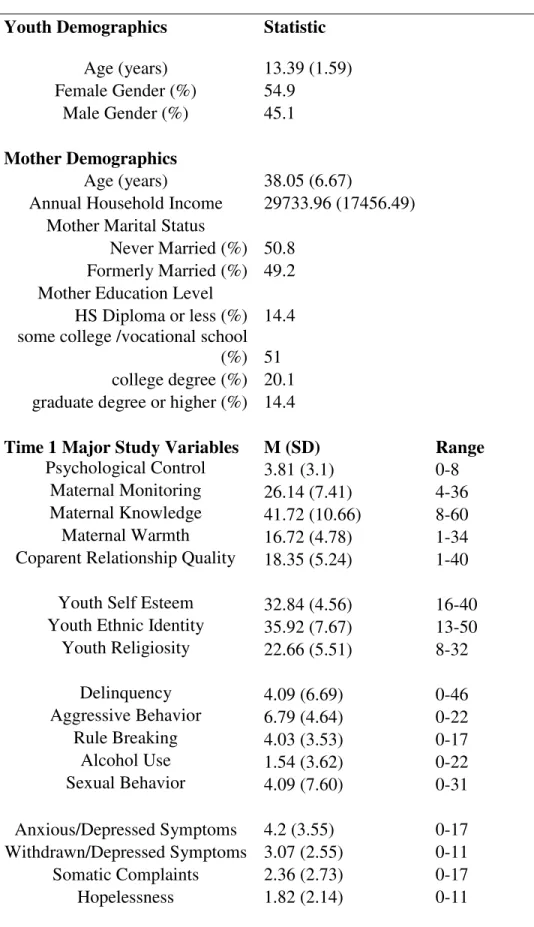
1. Sample Characteristics and Demographics ……….……….. 77
2. Correlation Matrix for Time 1 Outcomes ………. 79
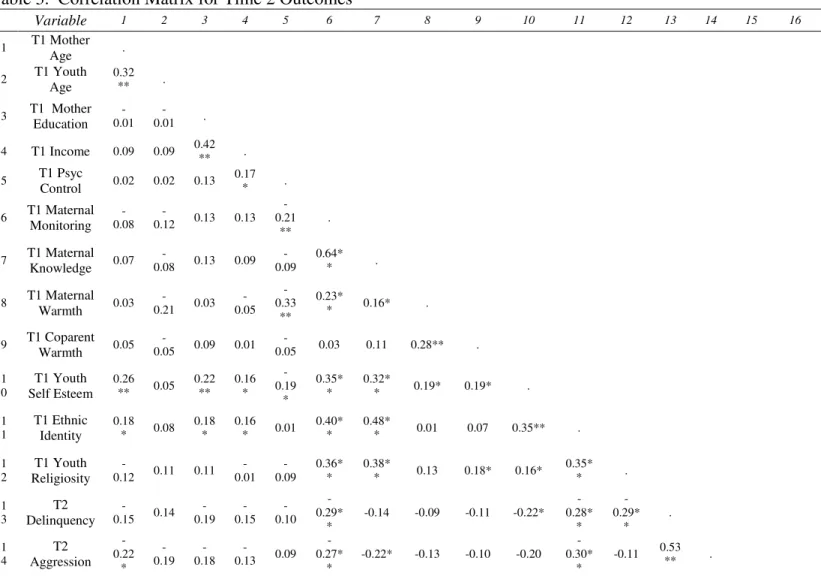
3. Correlation Matrix for Time 2 Outcomes ………. 81
viii
LIST OF FIGURES
Figure
1. Proposed Structural Model/Basic Conceptual Model ...85
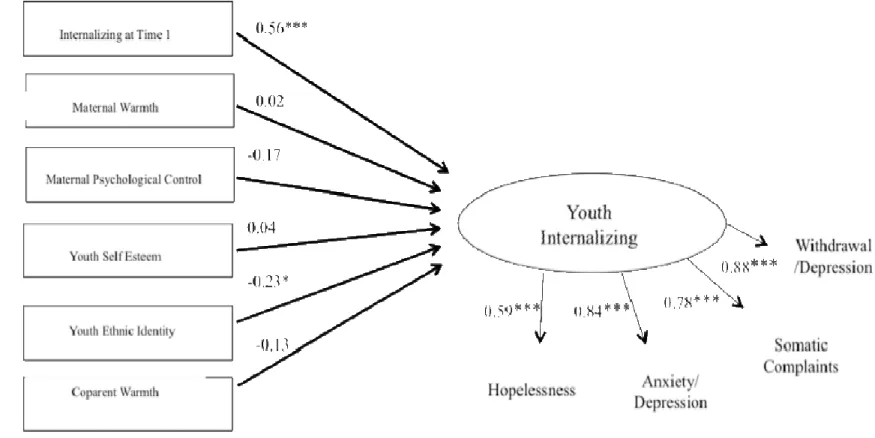
2. Structural Model for Internalizing, Time 1 Cross-Sectional Analysis ...86
3. Structural Model for Internalizing, Time 1- Trimmed Model ...87
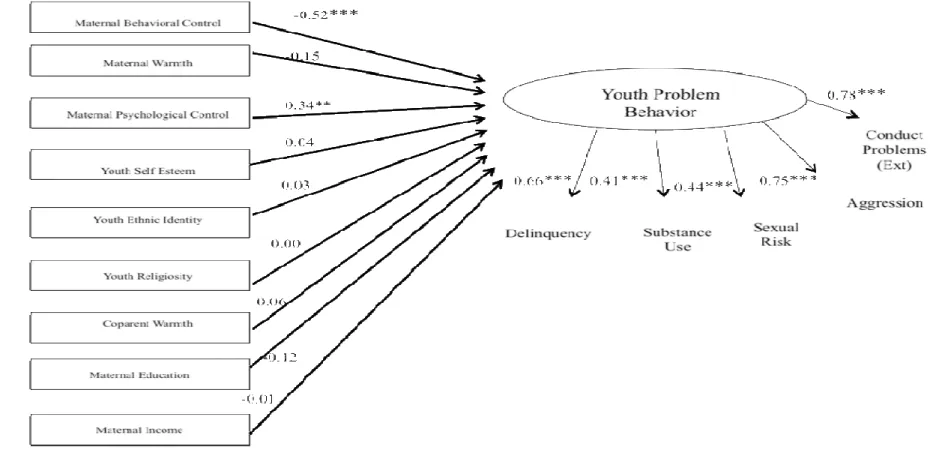
4. Structural Model for Problem Behavior, Time 1 Cross-Sectional Analysis. ...88
5. Structural Model for Problem Behavior, Trimmed Model. ...89
6. Gender Invariance for the Problem Behavior Model, Time 1 Cross-Sectional Analysis (Boys). ...90
7. Gender Invariance for the Problem Behavior Model, Time 1 Cross-Sectional Analysis (Girls). ...91
8. Structural Model for Problem Behavior, Time 2 Longitudinal Analysis. ...92
CHAPTER 1 Overview of the Study
Recent census data indicates that nearly half of African American adolescents are being raised in single mother households (United States Census, 2010). Although African American adolescents from single mother households are at increased risk for negative outcomes relative to youth from other racial groups and youth from intact homes, many African American adolescents raised in single mother families evidence positive outcomes nonetheless (e.g., fewer psychosocial difficulties, fewer problem behaviors; Brody & Flor, 1998; Jessor, 1993; Kim and Brody, 2005). While traditional methods focused on a problem-focused paradigm in order to understand youth development, an ecological resiliency
framework offers a unique opportunity to focus the identification of strengths and protective factors across multiple spheres of influence (Short & Russell-Mayhew, 2009), yielding information about positive youth development in spite of elevated risk (Benson, 1997; Fergus & Zimmerman, 2005; Scales, Benson, & Mannes, 2006). Bronfenbrenner’s (1979)
ecological framework emphasizes the various spheres that influence adolescents (e.g., families, non-parental adults, neighborhoods), highlighting the many environmental contexts that play a part in shaping youth development. In order to enable a greater number of
2
useful in organizing research on African American families because it allows investigators to study adolescent development by integrating components of ecological theory and resiliency perspectives (Murry et al., 2001).
For the purposes of this study, resilience is defined as positive adaptation in the context of risk exposure (Fergus & Zimmerman, 2005; Luthar, Cicchetti, & Becker, 2000). In this study, African American youth from single mother homes are conceptualized as an inherently at-risk population given the many stressors with which single mother-headed families must contend (for reviews, see Murry, Bynum, Brody, Willert, & Stephens, 2001; Jones, Zalot, Foster, Sterrett, & Chester, 2007). African American adolescents living in single mother homes are at risk for a variety of problem behaviors, including risky sexual behavior (Mulatu, Leonard, Godette, & Fulmore, 2008; Coley, Votruba-Drzal, & Schindler, 2009; Smith, Buzi, & Weinman, 2002), substance use (Griffin, Botvin, Scheier, Diaz & Miller, 2000), and delinquency (Cookston, 1999; McLoyd, 1990), as well as higher levels of psychosocial adjustment difficulties (e.g. internalizing & externalizing difficulties; Barrett & Turner, 2005; Lipman, Boyle, Dooley, & Offord, 2002; McLoyd, Jayaratne, Ceballo, & Borquez, 1994; O’Connor, Dunn, Jenkins, Pickering, & Rasbash, 2001; Simons, Chen, Simons, Brody, & Cutrona, 2006).
Whereas risk factors are defined as variables that increase the likelihood of a negative outcome, protective factors are variables that alter the trajectory from risk exposure to
compensatory model of resiliency is specified as the model of choice for this particular study. The compensatory model of resiliency focuses on factors that individual African American youth possess that counter negative outcomes and asserts that the resilient factors are associated with more positive outcomes across all levels of risk among youth from African American single mother homes (Zimmerman, Bingenheimer, & Notaro, 2002).
The proposed study will examine protective factors contributing to positive youth development (e.g., defined in this study as fewer problem behaviors/psychosocial adjustment difficulties) among African American adolescents from single parent homes via three
CHAPTER 2 Background Unique Vulnerabilities of Adolescence
Adolescence is inherently conceptualized as a risky period of development (Steinberg, 2008; Somerville, Jones, & Casey, 2010). Extant neurobiological theories suggest that the developing adolescent is more vulnerable to problem behavior (e.g., risky sexual behavior, substance use, delinquency, aggression) as a result of a “functionally
imbalanced pattern of neural activity that may be related to behavioral deficits in successfully inhibiting emotional responses” (Somerville e al., 2010). The accelerated development of the socio-emotional network leads to a heightened responsiveness to emotional cues (e.g., sexual attraction, substance use, peer pressure to become involved in risky or deviant behavior), although the capacity to engage in cognitive and emotional regulation is still relatively immature (Somerville et al., 2010). In fact, this “executive control center,” the area of the brain responsible for decision-making, reasoning, and planning, does not reach full
maturation until early adulthood. As a result, the youth cognitive control network is less effective at imposing regulatory control over impulsive and risky behaviors (Steinberg, 2008). Given this neurobiological propensity for risk-taking behavior, adolescents are at greater risk for a variety of problem behaviors (e.g., sexual risk behavior, substance use, delinquency).
substance use, and delinquency (Ary et al., 1999; Culhane et al., 2009; Jessor et al., 2003; National Youth Violence Prevention Resource Center, 2003). Jessor & Jessor (1977) originally proposed the Problem Behavior Theory to explain this co-morbidity of problem behaviors among adolescents, proposing that adolescents engage in these behaviors for a variety of reasons (e.g., lack of identification with social conventions, learned ways of coping, and/or maladaptive strategy meet developmental needs for autonomy and
independence). Common etiology is thought to yield problem behavior (Donovan & Jessor, 1985), and longitudinal work has found that all three problem behaviors are positively correlated with one another (Brookmeyer & Henrich, 2009; Stueve & O’Donnell, 2005). Furthermore, similar risk and protective factors are associated with these multiple problem outcomes across gender, age, socioeconomic status, and ethnicity (Costa, Jessor, & Turbin, 1999; Jessor, Turbin, & Costa, 1998a, 1998b; Jessor, Van Den Bos, Vanderryn, Costa, & Turbin, 1995).
The inter-correlation of problem behaviors has been consistently found across other empirical studies, as well, including correlational, longitudinal, and factor analytic work. For example, Duncan, Stryker, and Duncan (1999) found that when adolescents endorse higher levels of one problem behavior (e.g., substances, sexual behavior), they are at higher risk for high levels of the other behavior, as well. Of substances used among adolescents, alcohol is most widely available to adolescents and, in turn, has been found to be most strongly
predictive of sexual risk behavior, as well (Brookmeyer & Henrich, 2009; Kotchick, Shaffer, Forehand, & Miller, 2001; Levy, Sherritt, Gabrielli, Shrier, & Knight, 2009;
6
2000). Furthermore, multiple factor analytic studies have demonstrated that these problem behaviors are tied to an underlying single factor (see Ary et al., 1999; Culhane & Taussig, 2009; Farrell, Danish, & Howard, 1992; Jessor & Donovan, 1985). Of particular relevance to this study, Farrell and colleagues (1992) found that a single factor explained between 50-67% of the variance in measures of substance use, sexual behavior, and delinquency among a sample of predominantly African American adolescents. Thus, the current study will
examine these main problem behaviors (e.g., substance use, sexual behavior, and delinquency) within one integrative model.
Risks among African American Adolescents
Sexual risk behavior. According to the national survey which monitors priority health risk behaviors among adolescents in grades 9 to12 (the Youth Risk Behavior Surveillance Survey, YRBSS), African American adolescents are engaging in the highest level of sexual risk behavior relative to their Latino or White counterparts (CDC, 2010). For example, although approximately one half of White (49%) and Latino adolescents (42%) report having ever had sexual intercourse, approximately two thirds (65%) of African
American adolescents report having had sexual intercourse. Additionally, African American adolescents (15%) were two times more likely than Latino adolescents (7%) and five times more likely than White (3%) adolescents to have had sexual intercourse prior to age 13, an age often used to define “early” intercourse. African American adolescents reported similarly elevated patterns of sexual risk behavior in regard to having had more than four sexual partners in adolescence (CDC, 2010).
African American adolescents are disproportionately affected by the negative
of human immunodeficiency virus/acquired immunodeficiency syndrome (HIV/AIDS), other sexually transmitted diseases (STDs), and unplanned pregnancy (CDC, 2010). For example, African American adults and adolescents account for 51% of all new HIV diagnoses cases in the United States, although they comprise 13% of the U.S. population (CDC, 2007a). Racial disparities in HIV diagnoses are particularly severe among young people, as well; among youth aged 13-24, African Americans accounted for 61% of the diagnoses (CDC, 2007b). Additionally, rates for STDs such as chlamydia, gonorrhea, and syphilis were highest among African American youth across all age groups (CDC, 2009). Lastly, African American ages 15-19 have the second highest rate of unplanned pregnancy, following Hispanic youth (Martin et al., 2009).
Substance use. In regard to alcohol and substance use, African Americans adolescents are typically less likely to engage in these problem behaviors related to their White and Latino counterparts (CDC, 2010); however, the consequences of use are worse for African American adolescents (e.g., increased involvement with the criminal justice system, school dropout, and engagement in risky sexual behavior; Belenko, Sprott, & Peterson, 2004; Pavkov, McGovern, & Geffner, 1993; Perkins, Luster, Villarruel, & Small, 1998).
8
Delinquency & externalizing problems. The results of the national 2009 Youth Risk Behavior Survey and other delinquency statistics also indicated that African American adolescents are at heightened risk for delinquency and externalizing problems, including aggression and conduct problems (CDC, 2010; Elliott, Huizinga, & Menard 1989; Tittle & Paternoster, 2000). Among African American adolescents across the United States, 41% reported having been in more than one physical fight over the past 12 months, versus 36% of Hispanic adolescents and 29% of Caucasian students; furthermore, 15% of African American adolescents reported purposefully hitting their boyfriend or girlfriend, versus 12% of
Hispanic adolescents and 8% of Caucasian adolescents (CDC, 2010). According to the most recent U.S. Bureau of Justice report (2005), African Americans are also overrepresented in the reports of criminal incidents, including higher rates of offending and victimization.
Theoretical perspectives on the development of delinquent behavior propose
economic hardship, perceptions of limited opportunity, and negative labeling as predictors of delinquent behavior (Elliott, Ageton, & Canter, 1979); all too often, each of these stressors are realities for African American adolescents. The severe ramifications of externalizing behaviors, including but not limited to juvenile detention, long-term incarceration, and fatality (Loeber & Farrington, 2000), bring delinquent and externalizing behaviors to the forefront of prevention and intervention research among adolescents, emphasizing the need for research which sheds light on risk and protective factors among African American adolescents.
Although the overlap of substance use, sexual behavior, and delinquency has been
warrant further empirical attention (Allen, Leadbeater, & Aber, 1994; Willoughby, Chalmers, & Busseri, 2004), particularly among understudied populations.
Elevated Risk among African American Single Mother Families
African American youth from single parent homes are at an even greater risk for problem problem behaviors and psychosocial adjustment difficulties (Barrett & Turner, 2005; O’Connor et al., 2001; Simons et al., 2006). The stressors associated with single motherhood are linked with more compromised parenting behaviors and, in turn, increased psychosocial adjustment problems (see Murry et al., 2001 for a review). Specifically, compromises in parent well-being and parenting practices have been found to contribute to negative outcomes among adolescents raised in single parent homes (Anderson, 2008; for a review, see Jones et al., 2007). Given that African American adolescents from single parent homes are overrepresented in the statistics, it is particularly important to understand the protective mechanisms that may be at work for this at-risk population. Consistent with a resiliency framework, several studies of single parent families have demonstrated that positive parenting practices are associated with positive youth development, despite the risks associated with single parent status (Jones et al., 2007; Jones, Forehand, Brody, &
Armistead, 2002, Kim & Brody, 2005). The family context, therefore, is a purported as a central area of focus in understanding resiliency among African American adolescents from single mother homes within the current study.
Positive Parenting: Implications for Psychosocial Adjustment and Problem Behavior Bronfenbrenner’s (1979) ecological systems theory places parents within the
10
neighborhoods, etc); thus, parenting is considered a critical protective factor for developing African American adolescents. Parents exert influence on the child’s development directly via shared genetics, parenting style, and parenting behaviors and, indirectly, as a filter and interpreter of more distal forces. Across families of various ethnicities and compositions, positive parenting practices (e.g., high levels of behavioral control & warmth, and low levels of psychological control) have consistently been found to be associated with the most
optimal child outcomes (e.g., Jones et al., 2002; Lamborn, Mounts, Steinberg, & Dornbusch, 1991; Steinberg, Darling, Fletcher, Brown, & Dornbusch, 1995; Windle et al., 2010).
Parenting practices that are considered optimal for healthy adolescent development are typically categorized within the authoritative parenting style (Baumrind, 1967) in the broad parenting literature, and labeled as positive parenting in more recent empirical work among under-served populations (e.g., Jones et al., 2002; Kim & Brody, 2005). The foundation for the positive parenting literature, built upon Baumrind’s (1966) original conceptualization of optimal parenting practices, has primarily focused on the protective effect of behavioral control (e.g., monitoring and direction of youth activities) and warmth/support (e.g., the relationship quality between parents and their children); Accordingly, the majority of parenting research has centered on these two domains of
parenting, which will be discussed below in relation to psychosocial adjustment and problem behavior.
active strategies to track children’s activities and whereabouts, Stattin and Kerr (2000) were the first to suggest that that the critical ingredient of monitoring may be parental knowledge of the child’s whereabouts and activities, regardless of how the parent obtains this
information (Bean, Barber, & Crane, 2006; Kerr & Stattin, 2000; Miller, Forehand, & Kotchick, 1999; Tolou-Shams, Paikoff, McKirnan, & Holmbec, 2007). The association between higher levels of parental knowledge about children’s whereabouts (e.g., monitoring) and lower levels of adolescent problem behavior has been well-documented in the literature, including diverse socioeconomic and ethnic groups (Windle et al., 2010).
In some cases, monitoring reduces problem behavior by restricting adolescent
opportunities to engage in these behaviors, limiting time with risky peers, and affecting their perceptions and intentions for engaging in these behaviors (Freisthler, Byrnes, &
Gruenewald, 2009). In other cases, monitoring may also be an indicator of the quality and content of communication between parents and their children about adolescent behaviors (Stattin & Kerr, 2000). Specifically, monitoring has been associated with lower levels of delinquency (Ary et al., 1999; Forehand, Miller, Dutra, & Chance, 1997; Graber, Nichols, Lynne, Brooks-Gunn, & Botvin, 2006), lower levels of substance use (Freisthler et al., 2009; Latendresse et al., 2008) and less risky sexual behavior (Li, Feigelman, & Stanton, 2000; Rai et al., 2003; for reviews, see Zimmer-Gembeck & Helfand, 2008; Kotchick et al., 2001).
12
contributing to resiliency among children and adolescents, however, Masten and Coatsworth (1998) reported that warmth is an essential ingredient for positive youth development. In the studies that have examined the impact of warmth/support on adolescent outcomes, however, parental warmth/support has been linked to decreases in externalizing/aggression (Aspy et al., 2009; Jones et al., 2008), substance use (Hops et al., 1999; Nash et al., 2005; White et al., 2000) and risky sexual behavior (Kotchick et al., 2001; Fletcher et al., 2004).
Parenting characterized by lower levels of warmth/support is shown to increase the child’s vulnerability to internalizing difficulties (e.g., Burge & Hammen, 1991; Ge, Conger, Lorenz, & Simons, 1994; Jones et al., 2002), whereas the presence of parental
warmth/support, is purported to engender psychological well-being, confidence, and self-efficacy, thus facilitating healthy adolescent development (Barber, Maugahn, Olsen, & Thomas, 2002; Gray & Steinberg, 1999; O’Donnell, Schwab-Stone, & Muyeed, 2002). Among African American adolescents, parental support has been found to be associated with higher levels of self-esteem (Bean, Bush, McKenry, & Wilson, 2003) and lower levels of depression (Bean et al., 2006; Mounts, 2004; Zimmerman, Ramirez-Valles, Zapert, & Maton, 2000). Galambos, Barker, and Almeida (2003) found that parental support explained the largest amount of variance in adolescent internalizing when compared to other parenting practices (e.g., parental control).
behavior, disciplining), a form of parental control which is broadly associated with positive youth development, Baumrind’s (1966) seminal parenting work also warned against this concept of “psychological control,” a parenting practice which adversely affects the child’s development of personal autonomy and independence. Whereas behavioral control is typically defined as the regulation of child’s behavior through consistent and firm discipline, psychological control is a parenting behavior characterized by love withdrawal, guilt
induction, and criticism (Schaeffer, 1965; Barber, 1996) and is often used to maintain parental authority at the expense of the child’s emotional security. Rather than shaping appropriate external behaviors, psychological control interferes with the adolescent’s thoughts and feelings via manipulation of the parent-child relationship, and can inhibit the development of psychological autonomy.
14
externalizing/delinquency (Eccles, Early, Frasier, Belansky, & McCarthy, 1997; Grey & Steinberg, 1999; Herman, Dornbusch, Herron, & Herting, 1997; Kuppens, Grietens,
Onghena, & Michiels, 2009; Pettit, Laird, Dodge, Bates, & Criss, 2001; Rogers, Buchanan, & Winchel, 2003), and higher levels of internalizing (Barber, Olsen, & Shagle, 1994; Bean et al., 2006; Eccles et al., 1997; Garber, Robinson, & Valentiner, 1997; Herman et al., 1997). Rather than regulating the behaviors of the youth in a prosocial manner, the intrusive and emotionally-manipulative nature of psychological control appears to have only adverse effects for adolescents. In contrast, greater autonomy was associated with higher
self-esteem, fewer depressive symptoms, and less delinquent behavior among a sample of African American adolescents from the National Longitudinal Study of Adolescent Health (Bynum, Smith, & Kotchick, 2006).
Although psychological control may represent parental effort to gain control over their adolescents’ gravitation toward greater autonomy and independence, the empirical data suggests that psychological control appears only to back-fire as a parenting strategy—
psychological control may be a particularly salient parenting behavior to consider when studying adolescent outcomes.
Galambos and Ehrenberg (1997) suggested that adolescence is a particularly sensitive period for parents and adolescent children because parents must learn to a) facilitate
appropriate levels of autonomy in their children, b) relax some control while providing appropriate boundaries and guidelines, and c) remain supportive during a demanding transition. To this point, Steinberg and colleagues (1990) established a new theoretical and empirical paradigm that delineated three essential ingredients for authoritative/positive parenting: high levels parental warmth, high levels of behavioral supervision, and low levels of psychological control. Psychological forms of control adversely affect adolescent
development by impeding the development of autonomy and self-regulation (Steinberg, 1990). In contrast, optimal parenting encourages a child’s expression of opinions, mutual parent-child communication, and youth autonomous expression of individuality with the aim of recognizing the child’s individual interests and affirming the child’s qualities (Baumrind, 1978; Steinberg, 1990). Thus, the important role of autonomy in the developmental tasks of adolescence warrants the inclusion of the psychological control construct in the integrative model of parenting for studies of adolescent development.
Psychological control & African American families. Although psychological control has received increasing attention in the parenting literature over the past decade, few studies have been conducted among African American adolescents, and even fewer studies include an integrative model of parenting behaviors. Among the few studies that have examined psychological control in context of other central parenting behaviors (e.g.,
16
externalizing, and increased risk behavior among African American adolescents, above and beyond the contributions of monitoring and warmth/support (Bean et al., 2006; Kincaid et al., 2011; Mandara & Pike, 2008). Accordingly, the lack of empirical data for African American families warrants further investigation of an integrative model among predominantly African American families. This study is designed to look at how each parent behavior is related to the youth problem behaviors and internalizing difficulties among African American single parent families.
In the literature examining parenting across ethnicities, two main models have received attention: the cultural values and ethnic equivalence models of parenting (Lamborn & Felbab, 2003). Cultural-values models indicate that parenting behaviors are differentially related to adolescent outcomes due to differences within the family’s ecological context. Some research aligning with the cultural values model of parenting has suggested that a more ‘‘authoritarian’’ or ‘‘harsh’’ parenting style may be less detrimental among African
American than European American youth (e.g., Deckard & Dodge, 1997; Deater-Deckard, Dodge, Bates, & Pettit, 1996). For example, “no-nonsense parenting” (e.g.,
characterized by high levels of support and high levels of control) is thought to be a deterrent for antisocial behavior among youth from single parent African American families by
conveying to the child that the parent is vigilant and concerned for the child’s welfare (Brody & Flor, 1998, p. 805).
Although some aspects of parent-child socialization may differ based on
The ethnic equivalence model, as the name suggests, emphasizes the commonality of parent-child socialization experiences and suggest that parenting behaviors are similarly related to adolescent outcomes across ethnicity. The preponderance of empirical evidence suggests that an authoritative or positive parenting style is associated with the most optimal outcomes for children, regardless of ethnic/racial background or socioeconomic status (e.g., Amato & Fowler, 2002; Barnes, Farrell, & Banerjee, 1994; Bean et al., 2006; McLoyd, 1998). This study will provide additional empirical evidence to test the function of warmth, monitoring, and psychological control among a sample of African American mothers and adolescents.
Psychological control & vulnerabilities of single parenthood. In contrast to dual-parent households, single dual-parent mothers may be particularly vulnerable to the use of psychological control for a variety of reasons. For example, single parents must often contend with the strain of greater role responsibility and daily stressors (e.g., assuming the roles and parenting work typically shared by two parents), and other risk factors associated with single parenthood (e.g., depression, anxiety; Murry et al., 2001) that may impede the quality of parenting. Second, single mothers may experience less interpersonal power within the parent-child relationship; in the literature on psychologically controlling parenting, for example, a lack of support and interpersonal power has been indicated as a potential
18
African American adolescents of single parents who lack the potential protection of an involved second parent, however, it is possible that psychological control may have an increased negative impact on psychosocial adjustment and problem behavior (Kincaid et al., 2011). In the current study, the links between the specific parenting behaviors of interest (e.g., behavioral control, warmth, and psychological control) will be explored in connection with the outcomes of interest (e.g., psychosocial adjustment and health behaviors), as well as the potentially protective factor of a positive youth-coparent relationship (discussed below). The Role of Coparents in African American Adolescent Resiliency
Another protective family-level characteristic often found in African American single mother families is the presence of a nonmarital coparent, defined as an adult, regardless of formal relation to the child (e.g., grandmother, aunt, biological father), who plays a
significant role in childrearing (e.g., Forehand & Jones, 2003; Jones et al., 2003; also see Jones et al., 2007 for a review). The majority of single mother-headed families rely, at least to some extent, on nonmarital coparents (e.g., Jones et al., 2003; McAdoo & McAdoo, 2002). African American families are rooted in multigenerational family systems in which parenting is viewed as a communal task, with mothers relying on extended family and neighborhood networks to share child-rearing tasks (for a review, see Forehand & Kotchick, 1996; Jones & Lindahl, in press).
In their study of African American single mothers, Jones and colleagues (2003) found that 97% of the mothers identified one other person who was significantly involved in
Forehand, Dorsey, & Brody, 2010). However, most research on African American single mothers’ nonmarital coparents has focused on either 1) the coparent-parent relationship’s impact on family functioning (Forehand & Jones, 2003; Jones et al., 2005; Jones et al., 2003; Shook et al., 2010) or 2) the impact of the youth-coparent relationship quality (i.e., coparent warmth) on youth psychosocial adjustment and self-esteem (Sterrett et al., 2009; Sterrett, 2010). However, the extant body of research on coparents has yet to explore the role of coparent warmth in the context of a more integrative range of parenting behaviors (e.g., warmth, behavioral control, and psychological control), youth internalizing, and youth problem behaviors (e.g., alcohol use, sexual risk behavior, delinquency, and
aggression/conduct problems).
20
more adaptive self-identity (Swann & Brown, 1990) that is less vulnerable to involvement in problem behavior. Furthermore, in a similar way that positive parenting is hypothesized to impacts adolescents’ future relationships (Ainsworth, 1978; Kincaid et al., 2011), a positive youth-coparent relationship may provide another example of a healthy relationship which can shape an adolescents’ expectations and standards for future relationships (i.e., deterring maladaptive relationship patterns, which are often associated with increased sexual risk behavior; Foshee et al., 2009). In summary, the current study will examine whether the youth-coparent relationship (i.e., is a protective factor for African American adolescents from single parent homes, given their higher risk for maladjustment and problem behavior. The youth-coparent relationship is hypothesized directly contribute to positive youth development (e.g., psychosocial adjustment, problem behaviors).
Individual Assets: Reducing Problem Behaviors and Psychosocial Difficulties
adolescents from single parent homes, this study will examine the protective role of personal self-esteem, positive ethnic identity, and religiosity in regard to problem behavior and psychosocial adjustment.
Self esteem. Personal self-esteem typically includes one’s beliefs, opinions, attitudes, values, and feelings about oneself (Rosenberg & Simmons, 1971). Adolescents who have high self-esteem and view themselves positively affirm their strengths while acknowledging their weaknesses, allowing an adaptive approach to life challenges (Doswell, Millor,
Thompson, & Braxter, 1998). Similarly, resilient youth have been conceptualized as having a strong sense of self which enables them to view obstacles (such as those encountered by youth in single parent homes) as challenges which they have the skills to manage, as opposed to viewing themselves as incapable of coping (Short & Russell-Mayhew, 2009). Resilient youth are aware of their weaknesses, but are also able to identify their individual strengths (Brooks & Goldstein, 2001).
Despite the theoretical rationale for examining self-esteem as a predictor of positive youth outcomes among adolescents (Byrne & Mazanov, 2001; Short & Russell-Mayhew, 2009, Zimmerman, 1997), fewer studies to date have examined the link between self-esteem, problem behavior, and psychosocial adjustment among African American adolescents. Of note, some data from a longitudinal study of a nationally representative sample of
22
Among the studies that have examined the links among self-esteem and problem behaviors among ethnic minority adolescents, the findings indicate that lower levels of self-esteem are associated with increased substance use and sexual risk taking behavior (e.g., Carvajal, Evans, Nash, & Getz, 2002; Carvajal et al., 1999; Shrier, Harris, Sternberg, & Beardslee, 2001; Wills et al., 2007), delinquency (Donnellan, Trzesniewski, Robins, Moffitt, & Caspi, 2005; Parker, Morton, Lingefelt, & Johnson, 2005) and psychosocial difficulties (Repetto, Caldwell, & Zimmerman, 2004). In the current study, higher self-esteem is similarly hypothesized to act as an intrinsic protective factor for African American
adolescents in relation to psychosocial adjustment and problem behaviors. Furthermore, this study is unique in its ability to examine within-group variability in self-esteem among
African American youth as a predictor of positive youth development (e.g., fewer adjustment difficulties and problem behavior), versus between-group variability with other ethnic
groups.
or angry, or they may react to pressures to conform (Pipher, 1994, p. 43). Adolescents who conform may be more vulnerable to engage in substance use, delinquency, and/or risky sex as a means of gaining approval and a sense of identity.
Positive ethnic identity. The acquisition and maintenance of self esteem in
adolescence is a challenging task in general, and may be more complex for youths in ethnic minority populations who confront unique stressors related to potential discriminatory treatment as a result of their minority status (Wills et al., 2007). For African American adolescents, developing a positive ethnic identity is posited to be a part of general esteem processes (Harter, 1999), and studies with minority adolescents have shown correlations between ethnic identity indices and measures of generalized self-regard (Phinney, Cantu, & Kurtz, 1997; Rowley, Sellers, Chavous, & Smith, 1998). Theorists suggest that ethnic identity involves perceiving one’s ethnic group in positive terms, as well as perceiving that group membership is a central part of one’s self-image and feeling close to other group members (Smith & Brookins, 1997; Williams, Spencer, & Jackson, 1999).
24
less substance use and less sexual risk behavior (Wills et al., 2007). In this study, a positive ethnic identity will be studied as a protective factor for problem behavior and psychosocial adjustment.
Religiosity. Religiosity is also posited as protective factor for adolescents across ethnicity, and may be a particularly salient individual asset for adolescents within this sample given higher rates of religiosity among African American adolescents (Donahue, 1995). Many adolescents use religion to find direction and meaning in their lives (Smith & Denton, 2005). Religion may guide youth by providing a moral code and sense of purpose as youth mature, contributing to the internalization of ideals that facilitate moral reasoning and decision-making (King, 2003; Smith & Denton, 2005). Furthermore, adolescents may rely on their faith from religion to cope with hardship as religion promotes beliefs and practices that may help youth make sense of losses or life challenges (Milot & Ludden, 2009), as may be the case for adolescents from single parent homes. Religion may also serve to facilitate positive youth development by providing mentorship, support, and social and cultural capital as adolescents undergo transitions and challenges. In a nationally representative longitudinal study of adolescents in the United States, religiosity was associated with better psychosocial adjustment, less delinquency, less substance use, and lower incidence of early sexual
initiation (Donahue, 1995; Donahue & Benson, 1995). Although empirical data suggests a strong link between religiosity and problem behavior, less evidence supports the association between religiosity and psychosocial adjustment. A review of the empirical findings and implications for the current study hypotheses will be discussed.
1999; Ellison, 1991; Milam, Ritt-Olson, & Unger, 2004), other studies have found a lack of association between religiosity and positive adjustment (Benson, Donahue, & Erikson, 1989; Markstrom, 1999; Milot & Ludden, 2009). In fact, a previous analysis of data from the current sample found associations between higher levels religiosity and higher levels of internalizing (Johnson, 2008). Although several aspects of positive development are associated with adolescent religiosity, such as identity formation, social competence, and moral reasoning (King, 2003; Smith & Denton, 2005), it is possible that the protective effects of religiosity do not buffer against psychosocial adjustment problems (e.g., depression, anxiety), but religion may serve instead as an outlet or coping mechanism for adolescents during hardship or times of crisis. Thus, during times where adolescents experience higher levels of psychosocial adjustment problems, higher religiosity may be exhibited as a means of coping with emotional difficulties. In studies that have examined the impact of both parenting and religiosity, however, parenting has been strongly linked to adolescent well-being (Milot & Ludden, 1999; Wentzel, 1998). In the current study, therefore, parenting is predicted to be a more robust predictor of adolescent psychosocial adjustment.
Problem behavior. In contrast, an abundance of empirical data indicates that
26
or inconsistent with the prosocial values often emphasized within the religious context (Milot & Ludden, 2009). Adolescents high in religious identity often have a higher sense of
personal meaning and social responsibility (King & Furrow, 2004), a deterrent for
involvement in problem behavior. Along these lines, Hirschi’s (1969) social control theory states that connections to conventional institutions with prosocial value systems (e.g., places of faith) can inhibit deviant behavior.
levels of religiosity and lower levels of delinquency among adolescents across ethnicity (Donahue, 1995; McKnight & Loper, 2002; Regnerus, 2003; Regnerus & Elder, 2003).
Although several studies have indicated an association between higher levels of religiosity and lower levels of sexual risk behavior among adolescents (for reviews, see Rostosky, Wilcox, Wright, & Randall, 2004; Whitehead, Wilcox, Rostosky, Randall, & Wright, 2001), a perplexing phenomenon complicates the study of the religion-sexual risk connection among African Americans (Steinman & Zimmerman, 2004). Although African American adolescents report higher levels of religiosity than peers from other ethnic groups (Donahue, 1995; Johnston et al., 1999) and are less likely to smoke cigarettes or drink alcohol (Johnston, O’Malley, & Bachman, 2001), they also engage in sexual intercourse more often and suffer more consequences associated with sexual risk behavior (e.g., STDS, HIV, unplanned pregnancy, CDC, 2010; Johnston et al., 2001). Competing hypotheses are offered by Steinman & Zimmerman (2004) to explain this disconnect. One hypothesis is that religious activity will limit the development of certain problem behaviors in the African American population (e.g., alcohol use), but not others (e.g., sexual risk behavior). The competing hypothesis, however, suggests that the religiosity is likely to be associated with less sexual risk behavior among African Americans if their religious institutions explicitly prohibit the risk behaviors (e.g., alcohol, sex); for example, if alcohol and premarital sexual activity are explicitly discouraged within a religious context, these messages may be
28
was for Caucasian, Asian, and Hispanic adolescents; Bearman & Bruckner, 2001). In support of the competing hypothesis, however, several studies have found religiosity to be a protective factor for sexual risk behavior among African American adolescents. In their sample of African American adolescents, Steinman & Zimmerman (2004) found a strong association between religiosity and less sexual intercourse. Similarly, in a longitudinal study of individual assets among an ethnically-diverse group of adolescents, Aspy and colleagues (2009) found that adolescent religion was a consistent predictor of delayed sexual debut across age, race and ethnicity. A longitudinal study by Hardy & Raffaelli (2003) also found that religiosity had a direct, unidirectional impact on delayed sexual intercourse and did not vary by ethnicity or gender. Other studies including African American adolescents have also demonstrated religiosity to be protective against sexual risk behavior, as well (Francis, 2006; Holder, Durant, Daniel, Obeidallah, & Goodman, 2000; Miller & Gur, 2002).
sexual risk behavior and associated negative consequences (e.g., STDS, HIV, unplanned pregnancy) among African American adolescents (CDC, 2010).
Study Hypotheses
Hypotheses Related to Aim 1: Examining an Integrative Model of Parenting in Association with Adolescent Outcomes. For the first aim, parenting was examined as a dynamic system of influence by simultaneously considering the unique contributions of multiple dimensions of parenting (e.g., behavioral control, warmth, and psychological control). From a behavioral family systems perspective (Bronfenbrenner, 1979; Robin & Foster, 1989; Scott, 1990), parenting influences are best understood in combination, rather than in isolation. As originally outlined by Galambos et al. (2003), there were several reasons to examine an inclusive model of the three focal parenting dimensions. First, studies that have examined multiple parenting dimensions reveal interesting differential associations, as detailed above (Barber, 1997). Second, consideration of the three primary parenting dimensions simultaneously will allowed for the examination and description of
multicollinearity between the parenting behaviors. Although maternal support, psychological control, and behavioral control have been examined simultaneously among a few Caucasian samples (see Eccles et al., 1997; Galambos et al, 2003; Gray & Steinberg, 1999; Herman et al., 1997), this is to the author’s knowledge the first study that was designed to include a integrative model of all three parenting dimensions in the study of African American youth from single parent homes.
30
fewer internalizing difficulties (depression, anxiety, hopelessness), as well as fewer adolescent problem behaviors (e.g., sexual risk behavior, substance use, delinquency) among African American adolescents from single mother homes.
Hypotheses Related to Aim 2: The Role of the Youth-Coparent Relationship. Secondly, the
importance of the relationships African American youth have with the individuals identified by their single mothers as playing a significant role in child-rearing (i.e., nonmarital
coparents) has received little empirical attention (see Sterrett et al., 2009, for an exception). As most African American single mothers identify a nonmarital coparent (Jones et al., 2003, McAdoo & McAdoo, 2002), coparent warmth was accordingly examined in combination with maternal parenting practices among African American single parent families.
1. It was hypothesized that African American youth from single parent homes who have a positive relationship with their coparent would exhibit fewer internalizing
difficulties (depression, anxiety, hopelessness) and fewer problem behaviors (e.g., sexual risk behavior, substance use, delinquency).
Hypotheses Related to Aim 3: Examining Individual Adolescent Assets in Association with Adolescent Outcomes. Third, it was considered important to understand individual assets
that contribute to positive youth development (e.g., fewer psychosocial adjustment issues and less problem behavior).
1. It was hypothesized that higher self esteem would be associated with lower levels of internalizing and problem behaviors.
3. Third, it was hypothesized that higher levels of religiosity would be associated with fewer problem behaviors.
Exploratory Hypothesis:
A recent review of the literature on parenting and sexual risk behavior suggested that monitoring may be more protective against sexual risk behavior for male versus female adolescents, whereas the amount of parental warmth and emotional connection experienced within the parent-child relationship appears to be an especially salient factor for adolescent girls (Kincaid, Jones, McKee, & Sterrett, under review). Similarly, Roche, Ahmed & Blum (2008) found longitudinal evidence that close parent-adolescent relationships are more protective for females in regard to problem behavior (e.g., sexual risk behavior, drinking), whereas parental behavioral control was more predictive of fewer problem behaviors for males. These findings, along with a host of other research examining unique contributions of gender, supported further research on gender as an important mechanism for understanding adolescent development.
CHAPTER 3 Method Overview
Data for the current study was drawn from the first and second assessment of the African American Families and Children Together (AAFACT) Project. AAFACT was a longitudinal study designed to examine the role of extended family members in the health and well-being of African American youth from single mother homes. African American single mother-headed families with an 11 to 16-year-old youth were recruited from counties across central North Carolina. Recruitment was conducted through community agencies (e.g., health departments, YMCAs, churches), public events (e.g., health fairs), local
advertisements (e.g., university-wide informational emails, bus displays, brochures), and word-of-mouth (e.g., participants telling other families about the project).
Participants
Time 1, approximately half of the sample was retained (105 mothers, 94 adolescents). The primary reason for attrition was that participants moved and provided no documentation of change of address. The mean age for the adolescents was 15.54 (SD = 1.56; 56% girls). On average, mothers were 40.32 (S.D. = 6.09) years of age (Range = 29 – 55 years); the majority (86%) completed some college/vocational school after high school/GED; the majority (85%) were employed; and the average household income was $39,772/year (SD = $20,267). Missing Data
Overall, analysis revealed that there was missing data for a small percentage of the participants (n = 19). For the measures of parenting behavior, youth psychosocial
adjustment, and youth assets, youth who reported on less than half of the items in the measure or who did not complete the measure were dropped from the current analysis (n = 4). For the risk behavior outcome variables, some youth either chose the “refuse to answer” option or skipped the items entirely. For the items that asked youth about their alcohol use, nine youth were missing data (three were missing data altogether, and six chose the “refuse to answer” response choice). For data on sexual intercourse, 13 youth were missing data (four were missing data altogether, and nine chose the “refuse to answer” response choice). For the Time 1 analyses, 175 youth had sufficient data coverage for the structural equation models.
34
difference that emerged was maternal age. On average, youth who did not complete risk behavior data (e.g., indicated “refuse to answer” or skipped) had younger mothers (M = 34 years, SD = 4.89) than youth who did complete data on their risk behavior (M = 38 years, SD = 6.69). In addition, there was a trend for youth who did not complete risk behavior data (M = 13, SD = 1.85) to be younger than those who did have complete risk behavior data (M = 14, SD = 1.56).
For Time 2 analyses, 94 families had sufficient data for the analyses. Analyses comparing youth with data at Time 2 to the youth without data at Time 2 revealed no
significant differences between the two groups on the demographic variables of interest (e.g., gender, age, income, maternal education). In regard to primary study variables, comparisons between youth with data at Time 2 and those without data at Time 2 revealed that the only significant differences were for youth report of maternal monitoring (p < .05), delinquency (p < .05), and alcohol use (p < .01). In comparison to youth who participated in Time 2, youth who were not retained at Time 2 reported lower levels of monitoring at Time 1, higher levels of delinquency, and higher levels of alcohol use.
Procedure
youth’s participation, and the youth gave assent for participation. In order to maximize the confidentiality of the interviews and to reduce the potential for biased responses, data from each family member was separately collected on laptop computers using Audio Computer-Assisted Self-Interviewing (ACASI) software, and participants’ answers are linked to an assigned number rather than to any form of identity. Respondents listened through earphones to pre-recorded questions and personally recorded their answers via the computer mouse and keyboard. This approach helped to reduce the potential for interviewer influence, minimized the error that can result from varying literacy levels in the sample, and maximized
confidentiality of the home or community interviews. The mother and youth self-report questionnaires assessed a variety of psychosocial variables, including the constructs of study in the current project. The interviews took approximately 60 to 90 minutes for mother-child dyads to complete. Mother-child dyads were compensated $25 for their participation ($15 for mothers and $10 for youth).
Assessment 2. Given that relationships had been established with families, that families had experience with the sensitive nature of the questionnaires, and that there was no evidence of difficulties with literacy at Assessment 1, families were given the following options for participating at Assessment 2 in completing questionnaires (i.e., the same questionnaires administered at the first Assessment): a) Home visit to complete
36
Measures
Demographic Information. Mothers completed a demographic measure where they provided information about themselves (e.g., maternal age, education), their children (e.g., child age), and their families (e.g., physical address, family income). Basic demographic information was also obtained from youth. Youth were asked to report on their gender, age, and current grade level in school. For students not currently enrolled, they were asked to report on the highest grade completed. Data was collected at Assessment 1 and Assessment 2.
Independent Variables
Maternal warmth/support. Self-reports from the adolescent on the short form of the Interaction Behavior Questionnaire (IBQ; Prinz, Foster, Kent, & O'Leary, 1979) were used to assess warmth and support in the mother-child relationship. This form consists of the 20 items that have the highest phi coefficients and the highest item-to-total correlations with the 75 items in the original IBQ. The short form correlates .96 with the longer version. Sample items, which may be endorsed as True or False, include, “You enjoy spending time with your mother,” and “You think your mother and you get along very well” (see Appendix A for complete list of items). Scores can range from 0 to 20, with higher scores indicating greater warmth and support in the mother-child relationship. In addition to being discussed as a measure of warmth in the child-parent relationship or of relationship quality, the IBQ has also been discussed in previous research as measuring parent-child interaction and
colleagues (1979) and Robin and Weiss (1980) have reported adequate internal consistency and discriminant validity. The alpha for the current sample is 0.87 for mothers and 0.78 for adolescents.
Measures of Behavioral Control: Maternal Monitoring and Maternal Knowledge. Monitoring. Two domains of behavioral control, maternal monitoring and parental knowledge, were used. For the first indicator, monitoring was assessed using adolescent and mother-report on the Monitoring Measure developed by Stattin and Kerr (2000). Nine items assessed parental awareness of the adolescent’s whereabouts, activities, and relationships (Dishion & McMahon, 1998). The items were rated on a 5-point scale: 0 (Not at All), 1 (Rarely), 2 (Some of the time), 3 (Most of the time), and 4 (Always). Sample items asked mothers how much they knew about “Who this child has as friends during his or her free time,” “When this child has an exam or assignment due at school,” and “What this child does during his or her free time” (see Appendix B for complete list of items). This measure has demonstrated acceptable reliability data in prior research as well as good test-retest
correlations (Kerr & Stattin, 2000; Stattin & Kerr, 2000). Higher scores indicated more maternal monitoring. For the current sample, the alpha for the youth-report version of the measure was 0.82; for the mother-report measure, the alpha was 0.81.
38
and mother control; five items were used to measure each of the three constructs. Sample items measuring child disclosure included “Do you talk at home about how you are doing in the different subjects in school?” and “Do you hide a lot from your parents about what you do during nights and weekends?” Items focused on mother included “How often do your parents talk with your friends when they come to your home?” and “During the past month, how often have your parents started a conversation with you about your free time?” Mother control was measured with items such as “Do you need to ask your mother before you can decide with your friends what you will do on a Saturday evening?” and “Does your mother always require that you tell them where you are at night, who you are with, and what you do together?” (See Appendix C for a complete list of items.) Previous research demonstrated acceptable reliability (Cronbach’s alpha of .82 for parents’ reports and .85 for children’s reports) as well as good 2-month test-retest correlations of .83 (Stattin & Kerr, 2000). The alpha for the current study was .80 for adolescents, and 0.65 for mothers.
Cronbach's alphas ranging from .72 to .86. The alpha for the current sample was 0.76 (youth-report).
Coparent Warmth. Adolescents also completed the IBQ in regards to their
relationship with their coparent (see Appendix E), and their scores were used as a measure of coparent warmth/youth-coparent relationship quality. To confirm that adolescents responded about the same individual that the mother identified as the coparent, each adolescent was asked to identify the coparent they were referring to using first and last initials. The alpha for the coparent version of IBQ in the current sample was .91.
Adolescent self-esteem. A revised version of the Rosenberg Self-Esteem Scale (Rosenberg, 1965) was used to measure adolescents' self-esteem. Youth answered ten items rated on a 4-point Likert-type scale, (e.g., “At times, I think I am no good at all,” “I wish I could have more respect for myself”). The scale ranges from strongly disagree (1) to
disagree (2) to agree (3) to strongly agree (4). For a complete list of items, see Appendix F. Possible scores range from 10 to 40, with 40 indicating the highest level of self-esteem. Previous research has demonstrated acceptable reliability and a Cronbach's alpha of .83 for the Rosenberg Self-Esteem Scale (Connor, Poyrazli, & Ferrer-Wreder, 2004). An alpha of 0.75 was obtained for the current sample.
40
Ethnic identity, Affirmation and belonging, Ethnic identity achievement, Ethnic behaviors and practices, Ethnicity, Other-group orientation, and Self-identification. The current study assessed overall ethnic identity using a sum total score. Sample items for the MEIM included “I have a strong sense of belonging to my own ethnic group” and “I feel good about my cultural or ethnic background”. The MEIM has demonstrated validity and reliability (with alphas above .80) within African American adolescent populations similar to that of the current study (Simons et al., 2002). The alpha for the current study was 0.89.
Adolescent religiosity. Level of religiosity for adolescent is measured using a 10-item Religiosity Scale taken from the Ball, Armistead & Austin (2003) study of religiosity among adolescents. The scale has a Likert-type response format with items reflecting both the degree of religious beliefs (i.e., How important do you think it is for teens to attend religious services?) and frequency of religious behaviors (i.e., How often do you pray?). See Appendix H for a complete list of items. Results from factor analysis indicated adequate validity and reliability. Internal consistency for this scale in past research has yielded an alpha of 0.71 (Ball, Armistead & Austin, 2003). The alpha for the current study was 0.78 for adolescents.
Dependent Variables
3-point Likert-type scale to rate how well the item describes them during the past 6 months (0 = not true, 1 = somewhat true, or 2 = very true). A high degree of validity for the
anxious/depressed scale in predicting youth internalizing symptoms has been demonstrated (Ivarsson, Gillberg, Arvidsson & Broberg, 2002; Rey & Morris-Yates, 1992). Additionally, internal consistency has been demonstrated repeatedly with alphas greater than .70 (Broberg, et. al., 2001). The internalizing subscale of the YSR had an alpha coefficient of 0.87 for the current sample.
Hopelessness. Youth internalizing difficulties were also assessed using the Beck Hopelessness Scale, a 20-item self-report measure consisting of true-false statements that were intended to measure the adolescents’ level of pessimism or negativity about the future (e.g., 0 = True and 1 = False). Adolescents completed a slightly shortened version of the adult measure with wording adapted to be more age-appropriate. The BHS version
administered to adolescents did not include true-false statements “My future seems dark to me,” “My past experiences have prepared me well for the future,” and “I have great faith in the future” (see Appendix J for a complete list of items). Previous research reported internal consistency showing alpha coefficients between .87 and .93, indicating high levels of
reliability (Beck & Steer, 1993). Beck, Weissman, Lester and Trexler (1974) also reported good levels of concurrent and predictive validity. The alpha for the current sample was 0.72.
Externalizing: Aggression and conduct problems. Youth-reported aggression and rule-breaking were examined using 30 items across the aggression and rule-breaking
42
aggression/conduct problems, respectively. These subscales, selected because they assess the types of aggression and conduct problems typically displayed by children in the age range included in this study, have acceptable reliability and validity data (Achenbach, 1991). Prior research has demonstrated that the YSR is a reliable instrument for African American samples in the current age range (e.g., Forehand, Jones, Brody, & Armistead, 2002; Jones et al., 2002; Zalot, Jones, Forehand, & Brody, 2007). The alpha for youth-reported externalizing
problems (e.g., aggression and conduct problems) in the current sample was 0.86. Delinquency. In order to examine a broader array of delinquent behaviors, the current study utilized the Self-Reported Delinquency Instrument (SRD; Elliott, Huizinga, & Ageton, 1985). The measure consists of 29 items that examine the adolescent’s engagement in a range of delinquent activity, including minor and major acts of delinquency as well as the frequency of substance use (see Appendix K for a complete list). Adolescents reported on the number of times he or she has engaged in an activity during the last six months. The SRD has been utilized in studies involving African American youth (Lynam et al., 2000), and prior research indicated test-retest reliabilities ranging from .75 to .98, internal consistency estimates ranging from .65 to .92, and criterion correlations of approximately .50 between self-report and police or parent data (Elliott et al., 1985). For the current sample, the
coefficient alpha is .83 for the SRD total scale, .82 for the Delinquency subscale, and .91 for the Drug Use subscale.
Sexual risk behavior and alcohol use. Adolescent sexual risk behavior and alcohol use were examined using items from the Youth Risk Behavior Surveillance System
that all of their responses were confidential and would not be shared with their mother participating in the study. Sexual risk behavior questions asked about vaginal intercourse, anal intercourse, and oral sex. Youth reported on their level of involvement in sexual risk behavior by answering questions pertaining to their initial age of involvement (i.e., “How old were you when you had sexual intercourse, including vaginal, anal, or oral, for the first time?”), the frequency and amount of involvement during the past 30 days, as well as the frequency and amount of involvement during their lifetime (i.e., “During your lifetime, with how many partners have you had sexual intercourse?”). Youth also reported on the level of protection they engaged in during sexual behavior (i.e., “Of the times you have had sexual intercourse, during the past 30 days, how often have you and your partner used a condom?”).
In addition to sexual behavior, youth reported on alcohol use. Similar to the domains of sexual risk behavior, youth reports were obtained for their age of initiation for alcohol use, frequency of alcohol use, and quantity of alcohol use (i.e., “During the past 30 days, on how many days did you have 5 or more drinks in a row, that is, within a couple of hours?”). See Appendix L for a complete list of items. The Youth Risk Behavior Survey has been widely used and the items used in our study have demonstrated acceptable reliability in previous research (Brener, Kann, McManus, Kinchen, Sundberg, & Ross, 2002). Alphas were not calculated due to the categorical nature of the YRBSS. For the purposes of this study, an index of risk behaviors were created for sexual risk behavior and alcohol use (i.e., youth with higher frequencies of sexual intercourse, more numbers of partners, less frequency of
CHAPTER 4 Results Overview of Analyses
Following initial examination of descriptive data, structural equation modeling (SEM) was used to examine hypothesized relations. As reviewed by Byrne (2001) and Hoyle
(1995), SEM offers several multivariate features of relevance to the proposed study,
including the following: 1) a confirmatory approach to data analysis, 2) a unified framework of simultaneous sets of regression equations across multiple relations, 3) a measurement model which provides explicit estimates of error variance parameters, and 4) a method of testing whether inferences about causation are consistent with the data.
Evaluating overall model fit. Model fit was evaluated using five fit indices. First, the chi-square statistic was used to test the null hypothesis that that the difference between the observed covariance matrix and the covariance matrix implied by the model is zero (i.e., a non-significant chi-square statistic indicates good model fit). Because the chi-square test of absolute model fit is sensitive to both sample size and non-normality in the distribution of variables (Bryne, 2001), other fit indices were also examined. The Tucker Lewis Index (TLI) or non-normative fit index (NNFI) was used (i.e., a TLI index larger than 0.95 was
considered a good-fitting model). Additionally, the Standardized Root Mean Square Residual (SRMR) was used as a measure of the standardized difference between the
model. Lastly, the Root Mean Square Error of Approximation (RMSEA) was examined as the final fit index; MacCallum, Browne, and Sugawara (1996) have suggested that RMSEA values between .08 and .10 indicate mediocre fit and those greater than .10 indicates poor fit. Values between .05 and .06 or lower have been recommended as indicating good model fit (Browne & Cudeck, 1993; Hu & Bentler, 1999).
Evaluation of the measurement model. Factor analytic measurement models were estimated prior to estimating the structural models to ensure that all indicators were
statistically reliable representations of the latent constructs under investigation. This produced factor loadings of all observed variables (indicators) on their respective latent constructs.
Evaluation of the structural model. Family variables (e.g., maternal warmth, behavioral control, psychological control; coparent warmth) and individual variables (e.g., adolescent self-esteem, ethnic identity, and religiosity) were included as predictors and were allowed to covary; youth internalizing and problem behavior were included as predicted outcomes. Separate sets of models were tested for internalizing and problem behaviors (N = 175 at Time 1, N = 94 at Time 2).
Testing Moderating Effects.
It was hypothesized that gender would moderate the association between the
46
model demonstrated better fit than the constrained model. The significance of the difference between the constrained and unconstrained model was tested by calculating the difference in the model fit statistics (e.g., a statistically significant chi-square test indicates significant moderation).
Review of Analyses for Time 1 and Time 2.
For each model (e.g., the respective internalizing and the problem behavior models), the analytic steps were as follows: first, preliminary analyses were conducted to provide descriptive statistics and correlations for the major study variables; second, factor analytic measurement models were constructed to examine the statistical reliability of the
hypothesized latent variables (e.g., internalizing, problem behavior, and maternal behavioral control); third, the measurement models were tested for gender invariance; fourth, structural models were used to test study hypotheses. Lastly, the moderating role of gender was examined by comparing constrained and unconstrained models for both groups (e.g., males and females) to examine structural invariance in regard to gender. At Time 2, the following analytic steps were conducted: a) confirmatory factor analyses were repeated to examine the fit of the constructs at the second time point, and b) structural models including Time 1 predictors and Time 2 outcomes were examined to test for any longitudinal effects, after controlling for T1 values. Given the reduction in sample size at Time 2 (N = 94), the models were not re-run for cross-sectional findings at Time 2 or for measurement or structural invariance at Time 2.