1
Academic and Workplace Accommodations for People
with Epilepsy:
A Retrospective Chart Review
Michelle Ballasiotes
Readers: Dr. Nancy Bagatell, PhD, OTR/L, Gene Hobbs, BA, Dr. Karl Umble, PhD, MPH
Honors Thesis
Health Policy and Management Department
University of North Carolina at Chapel Hill
2
ABSTRACT
Background: While various studies analyzing accommodations for people with epilepsy
(PWE) exist, few studies examine data in health records. Research Questions: This study
analyzed letters of accommodation and descriptive data recorded by medical professionals in
electronic health records to determine gaps in the quality of care for PWE needing academic or
workplace accommodations. Methods: This retrospective chart review gathered quantitative
data. We obtained a sample of 26,271 patients ages 0-99 with billing codes related to epilepsy
seen at UNC Health from January 1st, 2016 to December 31st, 2019. We sorted the data into two
groups of 100: neurosurgery patients with epilepsy and non-neurosurgery patients with epilepsy.
We looked at descriptive statistics in both workplace and academic settings among patients who
had neurosurgery and those who had not including: the percentage of medical providers that
write letters of accommodation, the types of medical providers who write the accommodations,
the most common type of accommodations, demographic characteristics of patients with
accommodations on file, and any recorded response from the school or employer. Results and
Discussion: We found that 11 percent of all 200 patients sampled had a letter of accommodation
on file. The neurosurgery group had 15 more letters accommodation for epilepsy than the
non-neurosurgery group. Overall, school-aged patients had 19 percent more letters of accommodation
on file than adults. Most of the accommodations listed in this study were consistent with what we
would expect for PWE. About 64 percent of the sample for adult patients without a letter in both
the neurosurgery and non-neurosurgery group were retired, on disability, or unemployed. Gender
bias in the workplace may help explain why a higher proportion of females than males had a
letter on file. The results showed that a low proportion of Hispanic patients had a letter of
accommodation on file. We did not find any racial bias. The labeling of letters of
3
dissemination of reasonable accommodations for PWE, we recommend training medical
providers, implementing an algorithm in Epic to ask patients about accommodations, and
including an accommodation Snapshot box in Epic. Further qualitative studies should investigate
4
BACKGROUND AND PROBLEM STATEMENT
Epilepsy is one of the most common neurological disorders, affecting approximately 2.2
million people in the United States (Sung & Connor, 2017). The disorder results in the physical
presentation of seizures due to altered neural activity in the brain (England et al., 2012). People
with epilepsy (PWE) may also be affected socially and cognitively (Sung & Connor, 2017).
Anti-epileptic drugs (AEDs) can be effective at preventing seizures for up to 70 percent of PWE
assuming they adhere to the medication (Getnet et al., 2016). After two failed attempts with
AEDs managing seizures, it is recommended that PWE consider brain surgery (Anderson et al.,
2013). Epilepsy is considered a disability under the Americans with Disabilities Act because of
the limited neurological functions that can occur during a seizure (Thomas & Gostin, 2009).
Epilepsy can diminish overall quality of life (England et al., 2012) as well as workplace
performance (Thomas & Gostin, 2009). Approximately three to 10 per 1,000 employees will
have epilepsy (“Accommodating Epilepsy in the Workplace”, n.d.). Employment is directly
linked to a higher quality of life among PWE (Peterson et al., 2019). If needed, employers are
required to provide reasonable accommodations for PWE (Frierson, 1992). However, PWE are
over twice as likely to be unemployed when compared with the national average. If a person
presents with seizures, the chance of unemployment increases to 50 percent (Fraser, 2018).
Ensuring that PWE have proper workplace accommodations and that employers are willing and
able to satisfy these accommodations may help reduce the high levels of unemployment among
PWE. Accommodations are usually cost-effective and do not involve making exceptions for
people with disabilities. Thus, providing reasonable accommodations for those with epilepsy
5
Epilepsy also affects performance in school. Despite the varying presentation of epilepsy
among all individuals, children with epilepsy overall have a lower IQ score compared to the
general population (Wodrich & Cunningham, 2008). In addition, children who are on medication
to manage their seizures may experience side effects including attention deficits and reduced
psychomotor speed (Wodrich & Cunningham, 2008). School is also a time for children to learn
how to interact with other people. Those with epilepsy report having difficulty with social
inclusion at school (Wodrich et al., 2011). A study analyzing teacher’s knowledge about epilepsy
found that only 54.9 percent of respondents were aware of reasonable accommodations in the
classroom for these children (Wodrich et al., 2011). Ensuring that children who may benefit from
accommodations in the classroom receive them can help enhance their educational experience.
Medical providers play an essential role in making sure that PWE receive proper
accommodations. The sooner that patients are able to safely return to work (RTW) or school
after diagnosis, the better their mental, social, and physical outcome will be (Ikezawa et al.,
2010). Studies have found that patients with other neurological disorders who present a letter
from a medical provider to an employer are twice as likely to receive accommodations than if
they ask on their own (Kosny et al., 2006), and we expect this to be similar with epilepsy.
Therefore, it is crucial that medical providers are aware of proper accommodations and the
benefits of asking for them. However, a shortage of guidelines for many specific disorders
hinders medical providers from determining and requesting specific accommodations for PWE
(Pransky et al., 2002). In addition to the workplace, youth with epilepsy sometimes need
accommodations in academic settings, but few studies analyze effective school accommodations
6
If medical providers such as physicians are aware that a patient can receive
accommodations, they may not always communicate this to the patient nor know the most
reasonable accommodation to suggest (Pransky et al., 2002). This study analyzes letters of
accommodation that medical providers write for PWE in workplace and academic settings. To
further analyze the data, we compare patients who have had neurosurgery with patients who have
not had neurosurgery. This research will be the first step in streamlining the process for
accommodation requests, which will ease patients’ transition as they prepare to RTW or school
7
RESEARCH QUESTIONS
A chart review will be conducted using data in Epic, an electronic health record (EHR) system,
to analyze accommodations for patients with epilepsy who have and have not had neurosurgery.
The data will be organized in an Excel chart with information pertaining the following research
questions:
1. What percentage of medical providers at UNC Health have written letters of
accommodation for employed adults in a workplace setting and students in an academic
setting between January 1st, 2016 to December 31st, 2019?
2. For both employed adults and students, what type of medical providers most frequently
write letters of accommodation (i.e. occupational therapist, vocational therapist,
neurologist)?
3. Across all medical providers at UNC Health treating patients with epilepsy between
January 1st, 2016 to December 31st, 2019, what types of accommodations are described in
letters and at what frequency?
4. Do specific demographics of a patient (age, gender, race, etc.) correlate to an increased
likelihood of having an accommodation letter from a medical provider on file?
5. At what frequency is the school’s or employer’s response to the accommodation letter
written by a medical provider at UNC Health between January 1st, 2016 to December
8
LITERATURE REVIEW
Epilepsy Among Youth
Epilepsy affects approximately one-half to one percent of youth ages four to 18 and with
AEDs being the most common form of treatment for PWE (Wagner et al., 2009), it is important
to understand side effects of AEDs (French & Staley, 2012). A focus group by Wagner et al.
found that caregivers for children with epilepsy noticed seizure medication adversely affecting
school performance (Wagner et al., 2009). Children taking AEDs are more likely to experience
neurological effects compared to adults because their brain is still developing (Ortinski &
Meador, 2004). This is important for teachers to be aware of because students taking AEDs may
be affected by epilepsy throughout the school day and not only during a seizure. This may result
in the need for additional classroom accommodations.
Because epilepsy affects the central nervous system, PWE may have deficits in addition
to seizures and thus require a variety of accommodations (Wodrich & Cunningham, 2008).
Wodrich and Cunningham (2008) conducted a qualitative study that describes an example of
effective academic accommodations for a 7th grade girl with epilepsy. The young girl described
is one example. Nevertheless, her case can yield valuable information in assisting medical
providers and school professionals with noting accommodations that may be helpful for other
PWE. The girl received accommodations to help with linguistic deficits including: simplified and
slower-paced instructions, examples and visual aids, a peer to clarify directions, and written
directions. To help with memory deficits, she also received accommodations including: exams
for recognition and broad understanding rather than recall of specific facts, receiving brief tests
9
Cunningham, 2008). These accommodations represent the variety of challenges that PWE may
face and teachers must consider.
A request for accommodations from a medical provider will enable conversations among
school personnel on how to assist students as they transition from their home or hospital back to
school. In order to provide the best care possible, accommodations should be discussed with a
comprehensive group of professionals including school psychologists, nurses, and teachers
(Wodrich & Cunningham, 2008). A school district in Minnesota implemented a project that
provided accommodations for students with epilepsy in the form of seizure action plans (Brook
et al., 2015). The plans were developed with the assistance of a medical professional and
disseminated to nurses, teachers, and other school professionals with the goal of improving
educational outcomes for children with epilepsy. Nurses rated the program as helpful, but hoped
for dissemination of information to peers as well (Brook et al., 2015). This study shows the
importance of including a seizure action plan developed in partnership with medical providers as
an accommodation for PWE as well as ensuring that classmates of a student with epilepsy have a
basic knowledge of seizures.
School accommodations should not only focus on academic accommodations, but
psychological accommodations as well (Wodrich et al., 2011). Accommodations are more likely
to be enforced if teachers have a full understanding of how epilepsy affects the child in the
classroom (Wodrich & Cunningham, 2008). Data from a survey of 91 K-12 teachers of students
with epilepsy showed that teachers are aware that children with epilepsy can qualify for
accommodations. However, the teachers’ knowledge of mental health issues for children with
epilepsy is not as widely recognized (Wodrich et al., 2011). Psychological comorbities and the
10
2009). School psychologists are stakeholders that may assist in educating teachers on
psychological aspects of epilepsy (Wodrich & Cunningham, 2008).
When a child presents with epilepsy, it affects the entire family unit and parents may also
qualify for accommodations. Working parents of a child with a disability may need flexible
schedules, time to take their children to appointments, and the ability to take personal calls
related to the disability. Formal policies that some employers have in place include the ability to
take days off when their child gets sick and taking a leave of absence if their child needs surgery
(Freedman et al., 1995). Ensuring that caregivers of a person with epilepsy also receive an
official letter of accommodation can increase the likelihood that an employer will make
accommodations (Kosny et al., 2006). Conversations surrounding accommodations should focus
on the entire family and not just the child with epilepsy.
Epilepsy in the Workplace
Employers are required to make reasonable accommodations for people with disabilities
according to requirements in the Americans with Disabilities Act (ADA). This means that
employers must modify the work environment in such a way that will allow the employee with a
disability to perform the typical duties (Krumholz et al., 2016). Employers are not required to
make accommodations if they pose an undue hardship including through expense or
implementation, or the presence of the employee with a disability results in harm to other
workers (Krumholz et al., 2016). Common accommodations for PWE include: installation of a
safety guard on machinery, installation of rubber matting on a concrete floor, scheduling
consistent day shifts, providing a safety helmet or flame-retardant clothing, and allowing
extended breaks (Fraser, 2010). Accommodations for PWE are usually low-cost (Fraser, 2010).
11
due to lack of incentives (Guzman et al., 2002). In addition to an unwillingness of employers to
provide accommodations, 20 percent of PWE report stigma as a major issue affecting their work
life (Hart & Shorvon, 1995). Requesting an accommodation to educate the coworkers of a person
with epilepsy on how the disorder affects them may help reduce stigma in the workplace (Brook
et al., 2015).
Several demographic characteristics play a role in the chance of PWE securing
employment. The presence of active seizures is a major factor in predicting the rate of
unemployment for PWE, which is estimated to be at 50 percent (Fraser, 2018). PWE also have a
decreased chance of employment if they have a lower level of education, mental health
comorbidities, belong to a racial minority, or the depend on financial assistance (Sung et al.,
2014). Enforcing non-discrimination policies and reporting unethical practices to Human
Resources may help decrease the rate of unemployment.
People with surgically managed epilepsy have a recovery process that differs from people
taking AEDs to manage their epilepsy, which may affect when neurosurgery patients RTW.
Thorbecke et al. (2014) analyzed the “effects of an inpatient rehabilitation program after
temporal lobe epilepsy surgery and other factors on employment 2 years after epilepsy surgery”
(Thorbecke et al., 2014, p. 14). The study found that patients who participated in the
rehabilitation program were more likely to be employed two years after surgery. In addition,
securing employment post-surgery was more likely for those who were employed prior to
surgery. Other characteristics increasing the chance of employment for patients post-surgery
included: being age 25 or younger at the time of surgery, not having a personality disorder, being
seizure free after surgery, and having an IQ approximately between 74-104 (Thorbecke et al.,
12
of surgery, duration of epilepsy, and a diagnosis of a psychiatric syndrome” (Thorbecke et al.,
2014). Overall, this study showed that medical providers should ensure that patients with
surgically managed epilepsy have adequate recovery time before suggesting they RTW with or
without accommodations.
PWE must also consider their ability to travel to work. Most states in the U.S. impose
driving restrictions on PWE that have had a seizure within the last three to 12 months (Krumholz
et al., 2016). These regulations can limit the ability of PWE to participate in a job that requires a
car. PWE must follow stricter rules when operating commercial vehicles as opposed to personal
vehicles (Krumholz et al., 2016). These rules are in place to protect the person with epilepsy and
other people on the road. While laws vary by state, medical providers who fail to notify patients
of the risk of driving with seizures may be sued under the law of negligence for breach of duty
(Finucane, 1999). In most states, it is the responsibility of the PWE and not the acting medical
provider to self-report to the Division of Motor Vehicles (Krumholz et al., 2016). Nevertheless,
medical providers should be cognizant of transportation needs when writing accommodation
letters.
Physician Knowledge of Epilepsy Accommodations
Rehabilitation and occupational specialists have more training than other medical
providers when it comes to accommodations, but they make up a small percentage of healthcare
providers (Pransky et al., 2002). Providers with a broader focus are expected to know the ability
of a patient to RTW and act as a gatekeeper before referring patients to specialists (Pransky et
al., 2002). It is necessary for medical providers to partner with specialists and receive training
courses on proper accommodations in order to enhance the quality of care for patients (Pransky
13
A study focusing on RTW after an occupational injury showed that physicians are aware
of their role in ensuring their patients RTW; however, there are a lack of guidelines for
physicians to follow (Guzman et al., 2002). Some physicians in a study by Guzman et al. (2002)
recommended accommodations that differ from evidence-based practices for soft-tissue injuries.
Ensuring that medical providers write letters for accommodations that follow evidence-based
practices will ensure that patients are not causing further harm to their body or receiving
unnecessary accommodations that further restrict their ability to perform tasks.
Medical providers that treat patients who undergo brain surgery to manage their epilepsy
must also consider side effects secondary to epilepsy that may result in the need for additional
accommodations. After surgery, PWE are at an increased risk for field deficits, minor or
temporary paralysis of one side of the body, and verbal memory decline (Jette et al., 2014).
While memory deficits are also a potential side effect of AEDs (Ortinski & Meador, 2004),
surgical patients may also develop physical disabilities. Depending on the surgical outcome,
patients may need accommodations related to impaired vision and motor function.
While various studies analyzing accommodations for PWE exist, few studies examine
data in health records. Research to evaluate data recorded by medical professionals in electronic
health records can be used as a basis for determining gaps in the quality of care for PWE needing
workplace or academic accommodations. Specifically, this research will look at accommodation
letters on file and any follow-up with employers or schools. By gathering this data, further
research can be conducted to analyze methods to streamline the process for requesting
14
METHODS
This retrospective chart review gathered quantitative data. We focused on analyzing any
workplace and academic accommodations recorded in charts of PWE. We looked at descriptive
statistics in both workplace and academic settings among patients who had neurosurgery and
those who had not including: the percentage of medical providers that write letters of
accommodation, the types of medical providers who write the accommodations, the most
common type of accommodations, demographic characteristics of patients with accommodations
on file, and any recorded response from the school or employer. There is currently no way to
track the number of PWE that are or are not receiving reasonable accommodations that may help
them live a better-quality life. This study will set the framework for future studies to improve the
process for writing accommodation letters.
This study required examination of electronic health records containing sensitive patient
data. Because this was a retrospective chart review, we obtained a waiver for informed consent.
Researchers extracting data ensured that any self-identifying information was kept in an
encrypted file on a UNC School of Medicine flash drive. All data abstractors were trained in
HIPPA.
Data Collection Procedures
Sampling
We obtained a sample of 26,271 patients ages 0-99 with billing codes related to epilepsy
seen at UNC Health from January 1st, 2016 to December 31st, 2019. We sorted the data into two
groups: neurosurgery patients with epilepsy and non-neurosurgery patients with epilepsy. There
15
Health during this timeframe. We used a random number generator to select 100 patients from
each category. Patients without a diagnosis of seizures or epilepsy shown in Epic were excluded.
Patients who had neurosurgery for any reason and a diagnosis related to epilepsy were included.
No procedure or follow-up with patients was conducted. Demographic data was collected
from the Snapshot function in Epic. We used the Media folder in Epic to determine if there was a
letter of accommodation on file. Approval for the study was granted by the IRB at the University
of North Carolina at Chapel Hill. Informed consent was waived due to the nature of this study.
Patient anonymity has been preserved. Neurosurgery patients without a diagnosis of epilepsy
were excluded from the study.
Procedure
The procedure was as follows:
1. Obtain a sample of patients with epilepsy aged 0-99 who were billed for a visit related to
epilepsy and treated at UNC Health from January 1st, 2016 to December 31st, 2019.
2. Sort the sample into categories of neurosurgery and non-neurosurgery patients.
3. Develop an encrypted Excel chart with variables listed in Tables 1-4 to record data.
4. Conduct the chart review and record demographic data for each patient using the
Snapshot function in Epic.
5. Record data on accommodations by analyzing the Media folder in Epic and looking for a
letter of accommodation, which may be labeled in a variety of ways including as a
Family Medical Leave Act (FMLA) letter for adults or as Correspondence.
6. Add columns for specific accommodations as the data is analyzed and letters of
16
7. If an accommodation letter is discovered, record the title of the medical provider who
signed off on it and further analyze the Media folder in Epic to see if there is a response
from the school or employer. Record any response in the Excel chart.
8. Analyze data.
9. Draw conclusions and provide recommendations for streamlining the accommodation
process at UNC Health.
Measures
The chart review analyzed demographic characteristics, other independent variables, and
outcomes that contribute to an understanding of the process for receiving workplace or academic
accommodations for PWE. Table A contains measures that were used in the research.
Table A: Measures of Independent and Outcome Variables in Sample of 500 Patients with Epilepsy Treated at UNC Health between January 1st, 2016 to November 7th,
2019
Type of Variable Variable Measure
Independent Surgical History Neurosurgery or
Non-Neurosurgery
Independent Demographic Characteristics Age, Gender, Race, Primary Language, Ethnicity,
Occupation
Independent Diagnoses Comorbidities
Outcome Accommodation Letter on
File
Yes or No. If yes, Specific Accommodation and Setting
Outcome Title of person writing the
accommodations
Neurologist, OT, etc.
Outcome Response from School or
School Employer
Affirmative, Negative, or No Response
All variables were included on the Excel spreadsheet to record data. To see the completed
17 Data Analysis
The data was organized into tables. Table 1 presents descriptive characteristics of
school-aged patients with neurosurgery who did and did not have a letter of accommodation on file in
Epic. Table 2 presents this same information for adults. Table 3 presents descriptive
characteristics of school-aged patients without neurosurgery who did and did not have a letter of
accommodation on file. Tables 4 presents the same information for adults. The layout of the
tables helped visualize PWE who had a letter of accommodation on file for academic versus
18
RESULTS
Neurosurgery Group
Table 1 contains characteristics of school-aged neurosurgery patients with and without a
letter of accommodation on file. The sample contains 21 total patients. Of all the school-aged
patients, ten had a letter of accommodation on file. Nurses and doctors listed as MDs most
commonly wrote the letters of accommodation. Eight patients had a letter of accommodation
specifically for epilepsy. The most frequent accommodations included a seizure action plan,
reduced physical activity, and extended time on testing. All patients with a letter had
comorbidities. Approximately half of patients with and without a letter were a minority race.
Table 2 contains characteristics of adult neurosurgery patients with and without a letter of
accommodation on file. The sample contains 68 total patients. Of all the adult patients, 14 had a
letter of accommodation on file. Neurologists and neurosurgeons most commonly wrote the
letters of accommodation. Ten patients had a letter of accommodation specifically for epilepsy.
The most frequent accommodations were FMLA letters. Half of patients with a letter were a
minority race and 19 percent of patients without a letter were a minority race. A higher
proportion of females had a letter on file when compared to those without a letter. All but one
patient with a letter on file had comorbidities. A negative response from the employer regarding
accommodations was on file for one adult patient.
Overall, a total of 11 neurosurgery patients under the age of six were excluded from
analysis because they were not school or working age. Of the remaining 89 school-aged and
adult neurosurgery patients sampled, 17 patients had a letter of accommodation on file for
epilepsy. Two patients had letters for other disorders, three patients had forms requesting DMV
19
one letter on file. Neurologists and nurses most often wrote letters of accommodation. When
comparing both groups, 38 percent of school-aged patients had a letter of accommodation on file
for epilepsy while 15 percent of adult patients did. Only school-aged children had a seizure
action plan and only adults had FMLA letters on file. The majority of all neurosurgery patients
were not Hispanic or Latino and listed English as their primary language. An equal or greater
percentage of minority patients had a letter on file when compared to Caucasian patients. The
20
Table 1: Characteristics of a Sample of School-Aged* Patients who had Neurosurgery Treated at UNC Health between January 1st, 2016 to December 31st, 2019
Patients with a Letter (n = 10) Patients without a Letter (n = 11)
Age x̄ +/- D Age x̄ +/- D
Age 17 +/- 5 Age 15 +/- 4
Category n (%) Category n (%)
Gender (% Female) 4 (40) Gender (% Female) 6 (55)
Ethnicity (% Hispanic) 0 (0) Ethnicity (%Hispanic) 1 (9)
Comorbidities prior to epilepsy diagnosis (% Yes) 10 (100) Comorbidities prior to epilepsy diagnosis (% Yes) 10 (91)
Primary Language Primary Language
English 10 (100) English 10 (91)
Non-English 0 (0) Non-English 1 (9)
Race Race
African-American/ Black 5 (50) African-American/ Black 5 (45)
Caucasian/White 4 (40) Caucasian/White 5 (45)
American Indian or Alaska Native 0 (0) American Indian or Alaska Native 0 (0)
Native Hawaiian or Other Pacific Islander 0 (0) Native Hawaiian or Other Pacific Islander 0 (0)
Asian 0 (0) Asian 0 (0)
Other 1 (10) Other 1 (9)
Hours in School Hours in School
Full-Time 1 (10) Full-Time 4 (36)
Part-Time 1 (10) Part-Time 0 (0)
Not Listed 8 (80) Not Listed 7 (64)
Accommodation in Letter
Extended Time on Testing 2 (17) Medical Equipment not for Epilepsy 2 (17) Reduced Physical Activity 2 (17) Seizure Action Plan 2 (17) Exemption from Testing 1 (8)
Homeschool 1 (8)
Medication Administration at School 1 (8) Other Disorder 1 (10)
Title of Person Writing the Accommodations
Neurologist 1 (10)
NP 2 (20)
CRP 1 (10)
FNP 1 (10)
PT 1 (10)
MD 2 (20)
Not Listed 2 (20)
Response from School
Affirmative 0 (0)
Negative 0 (0)
No Response Recorded 10 (100)
*All school-aged patients are 6-18 years old unless
21
Table 2: Characteristics of a Sample of Adult Patients who had Neurosurgery Treated at UNC Health between January 1st, 2016 to
December 31st, 2019
Patients with a Letter (n = 14) Patients without a Letter (n = 54)
Age x̄ +/- D Age x̄ +/- D
Age 45+/- 15 Age 52 +/- 17
Category n (%) Category n (%)
Gender (% Female) 8 (57) Gender (% Female) 24 (46)
Ethnicity (% Hispanic) 0 (0) Ethnicity (%Hispanic) 0 (0)
Comorbidities prior to epilepsy diagnosis (% Yes) 13 (97) Comorbidities prior to epilepsy diagnosis (% Yes) 54 (100)
Primary Language Primary Language
English 14 (100) English 52 (96)
Non-English 0 (0) Non-English 2 (4)
Race Race
African-American/ Black 5 (36) African-American/ Black 14 (26)
Caucasian/White 7 (50) Caucasian/White 35 (65)
American Indian or Alaska Native 0 (0) American Indian or Alaska Native 0 (0)
Native Hawaiian or Other Pacific Islander 0 (0) Native Hawaiian or Other Pacific Islander 0 (0)
Asian 1 (7) Asian 0 (0)
Other 1 (7) Other 4 (7)
Unknown 1 (2)
Occupation Occupation
Employed 8 (57) Employed 7 (13)
Self-Employed 0 (0) Self-Employed 2 (4)
Not Employed 3 (21) Not Employed 12 (22)
Disabled 1 (7) Disabled 13 (24)
Retired 1 (7) Retired 11 (20)
Not Listed 1 (7) Not Listed 5 (9)
Hours in School Hours Worked
Full-Time (≥ 40 hrs/wk) 4 (29) Full-Time (≥ 40 hrs/wk) 7 (13)
Part-Time (<40hrs/wk) 3 (21) Part-Time (<40hrs/wk) 0 (0)
Not Listed 7 (50) Not Listed 47 (87)
Accommodation in Letter
FMLA 5 (31)
DMV Forms 3 (19)
Avoid cooking over open grease 1 (6) Avoid unprotected heights 1 (6) Exemption from Jury Duty 1 (6) FMLA for Relative 1 (6) Full Care Assistance 1 (6) No unsupervised water activity 1 (6) Medical Equipment not for Epilepsy 1 (6) Other Disorder 1 (6)
Title of Person Writing the Accommodations
Neurologist 2 (14) Neurosurgeon 2 (14) Primary Care Physician 1 (7)
MD 2 (14)
FNP 1 (7)
Oncologist 1 (7)
Not Listed 5 (36)
Response from Employer
Affirmative 0 (0)
Negative 1 (7)
22 Non-Neurosurgery Group
Table 3 contains characteristics of school-aged non-neurosurgery patients with and
without a letter of accommodation on file. The sample consisted of 14 total patients. Of all the
school-aged patients, two had a letter of accommodation on file. One patient had a letter of
accommodation specifically for epilepsy for a seizure action plan. A nurse was listed as writing
one of the accommodation letters. Both patients with a letter on file were female and identified
as a minority race. One school-aged patient selected English as their primary language.
Two-thirds of patients without a letter identified as a minority race and 17 percent listed a non-English
language as their primary language.
Table 4 contains characteristics of adult non-neurosurgery patients with and without a
letter of accommodation on file. The sample contains 80 total patients. Of all the adult patients,
five had a letter of accommodation on file. No doctors listed as neurologists wrote a letter of
accommodation. Two patients had a letter specifically for epilepsy. Those accommodations
included an FMLA letter and the ability of a relative to take a patient to appointments. No
responses from the school or employer were on file for these patients. About 40 percent of adults
with a letter and 31 percent without a letter identified as a minority race. All patients with a letter
listed English as their primary language and nine percent of patients do not.
Overall, a total of six non-neurosurgery patients under the age of six were excluded from
analysis because they were not school or working age. Of the remaining 94 non-neurosurgery
patients sampled, three patients had a letter of accommodation on file for epilepsy. Three patients
had letters for other disorders and one patient requested medically necessary equipment. No
patients in this group had multiple letters on file and no neurologists wrote letters of
23
accommodation on file for epilepsy compared to four percent of adults. Only school-aged
children had a seizure action plan and only adults had FMLA letters on file. Only minority
school-aged patients had a letter on file and Caucasian adult patients had a higher frequency of
letters on file. A higher proportion of Hispanic patients in both groups did not have a letter on
file. All patients with a letter on file were female.
Table 3: Characteristics of a Sample of School-Aged* Patients without Neurosurgery Treated at UNC Health between January 1st,
2016 to December 31st, 2019
Patients with a Letter (n = 2) Patients without a Letter (n = 12)
Age x̄ +/- D Age x̄ +/- D
Age 14 +/- 1 Age 13 +/- 3
Category n (%) Category n (%)
Gender (% Female) 2 (100) Gender (% Female) 6 (50)
Ethnicity (% Hispanic) 1 (50) Ethnicity (%Hispanic) 4 (33)
Comorbidities prior to epilepsy diagnosis (% Yes) 2 (100) Comorbidities prior to epilepsy diagnosis (% Yes) 12 (100)
Primary Language Primary Language
English 1 (50) English 10 (83)
Non-English 1 (50) Non-English 2 (17)
Race Race
African-American/ Black 1 (50) African-American/ Black 3 (25)
Caucasian/White 0 (0) Caucasian/White 4 (33)
American Indian or Alaska Native 0 (0) American Indian or Alaska Native 0 (0)
Native Hawaiian or Other Pacific Islander 0 (0) Native Hawaiian or Other Pacific Islander 0 (0)
Asian 0 (0) Asian 0 (0)
Other 1 (50) Other 4 (33)
Unknown 0 (0) Unknown 1 (8)
Hours in School Hours in School
Full-Time 0 (0) Full-Time (≥ 40 hrs/wk) 1 (8)
Part-Time (<12 hours for college, partial day for K-12) 0 (0) Part-Time (<40hrs/wk) 0 (0)
Not Listed 2 (100) Not Listed 11 (92)
Accommodation in Letter
Seizure Action Plan 1 (50)
Other Disorder 1 (50)
Title of Person Writing the Accommodations
RN 1 (50)
Not Listed 1 (50)
Response from School
Affirmative 0 (0)
Negative 0 (0)
No Response Recorded 2 (100)
*All school-aged patients are 6-18 years old unless
24
Table 4: Characteristics of a Sample of Adult Patients without Neurosurgery Treated at UNC Health between January 1st, 2016 to
December 31st, 2019
Patients with a Letter (n = 5) Patients without a Letter (n = 75)
Age x̄ +/- D Age x̄ +/- D
Age 53.4 +/- 26 Age 54+/-20
Category n (%) Category n (%)
Gender (% Female) 5 (100) Gender (% Female) 40 (53)
Ethnicity (% Hispanic) 0 (0) Ethnicity (%Hispanic) 2 (3)
Comorbidities prior to epilepsy diagnosis (% Yes) 5 (100) Comorbidities prior to epilepsy diagnosis (% Yes) 66 (88)
Primary Language Primary Language
English 5 (100) English 68 (91)
Non-English 0 (0) Non-English 7 (9)
Race Race
African-American/ Black 1 (20) African-American/ Black 18 (24)
Caucasian/White 3 (60) Caucasian/White 51 (68)
American Indian or Alaska Native 0 (0) American Indian or Alaska Native 1 (1)
Native Hawaiian or Other Pacific Islander 0 (0) Native Hawaiian or Other Pacific Islander 0 (0)
Asian 0 (0) Asian 1 (1)
Other 0 (0) Other 1 (1)
Unknown 1 (20) Unknown 3 (4)
Occupation Occupation
Employed 1 (20) Employed 13 (17)
Self-Employed 0 (0) Self-Employed 4 (5)
Not Employed 1 (20) Not Employed 15 (20)
Disabled 0 (0) Disabled 12 (16)
Retired 2 (40) Retired 19 (25)
Not Listed 1 (20) Not Listed 12 (16)
Hours Worked Hours Worked
Full-Time 0 (0) Full-Time 11 (15)
Part-Time 0 (0) Part-Time 0 (0)
Not Listed 5 (100) Not Listed 64 (85)
Accommodation in Letter
Take to Appointments 1 (20)
FMLA 1 (20)
Other Disorder 2 (40)
Medical Equipment 1 (20)
Title of Person Writing the Accommodations
Primary Care 1 (20)
PHR/SHRM-CP 1 (20)
MD 1 (20)
Gastroenterologist 1 (20)
Not Listed 1 (20)
Response from School
Affirmative 0 (0)
Negative 0 (0)
25 Overall Findings
Overall, 11 percent of both neurosurgery and non-neurosurgery patients had a letter of
accommodation on file for epilepsy. Neurosurgery patients had 15 more letters of
accommodation than the non-neurosurgery group. The majority of patients were adults for both
groups and they had more letters of accommodation on file. About 64 percent of the sample for
adult patients without a letter in both the neurosurgery and non-neurosurgery group were retired,
on disability, or unemployed.
The labeling of letters of accommodation varied for each patient. There was no box
visible on the Snapshot page to quickly show whether or not a patient had a letter of
accommodation on file. All letters were found in the Media tab, which was organized
chronologically. The letters were most often labeled as External Records or Correspondence.
Sometimes there was further description indicating the specifics of the document. Letters with an
additional description were most often FMLA letters. Not all descriptions clearly indicated that
26
DISCUSSION
A number of factors may explain why more neurosurgery patients had a letter of
accommodation on file. One reason could be due to the need for patients to recover after surgery
(Thorbecke et al., 2014). This would explain the higher number of FMLA letters in the
neurosurgery adult group and the need for homeschooling for one school-aged patient. Another
factor may be that neurosurgery patients have a more severe form of epilepsy that cannot always
be managed by medication alone (Anderson et al., 2013). More frequent and more severe
seizures would increase the need for accommodations.
The results showed that overall, school-aged patients had 19 percent more letters of
accommodation on file than adults, which may be explained by the culture and systems in place.
Adults may be less likely to disclose their disability to an employer and request accommodations
because they do not want to risk losing their job, even though it is illegal for employers to
discriminate on the basis of disability and not provide reasonable accommodations (Krumholz et
al., 2016). School-aged patients may be more likely to have accommodations on file due to the
use of 504 plans and Individualized Education Plans in schools that facilitate a system for
providing accommodations. Seizure action plans were found among the school-aged group for
both neurosurgery and non-neurosurgery patients, but none of the adult patients. One potential
reason for this may be because parents want to make sure their children are safe and there are
procedures already in place at schools to ensure a seizure action plan.
The data showed a low percentage of employed adults with a letter of accommodation on
file. The Federal Register estimates that 49 percent of PWE who are employed should have
accommodations (Federal Register, 2011). However, this study found that only 32 percent of
27
explanation is the high percentage of unemployed patients in our sample. The literature shows
that patients with epilepsy are twice as likely to be unemployed compared to those without
epilepsy (Fraser, 2019). Knowing that the unemployment rate in North Carolina from 2016 to
2019 ranged from 3.6 to 5.3 percent (Bureau of Labor Statistics Data, n.d.), we would expect the
percentage of PWE that are unemployed in this study to be approximately 9 percent. However,
this study showed that 24 percent of adult patients were unemployed. Because of this high
percentage of adults not in the workforce, we would expect to have fewer letters of
accommodation on file, which is consistent with the data we found.
Gender bias in the workplace may help explain the fact that a higher proportion of
females had a letter on file. Literature shows that while patients may already be receiving an
accommodation in the workforce even without a letter on file, a letter increases the chance that
an employer will fulfill the accommodation request (Kosny et al., 2006). More women may ask
for a letter because they tend to seek more medical care and are more likely to ask for help than
men (Bertakis et al., 2000).
Most of the accommodations listed in this study were consistent with what we would
expect for PWE (Fraser, 2010). One adult neurosurgery patient had an accommodation to avoid
heights and cooking over open grease due to the danger of falling during a seizure. Requests for
DMV testing were found among both neurosurgery and non-neurosurgery patients due to the
restrictions for driving with epilepsy (Krumholz et al., 2016). One neurosurgery patient had a
letter on file requesting FMLA for a relative and one non-neurosurgery patient had an
accommodation for a relative to take the person with epilepsy to appointments. While this
number should be higher, the data shows that physicians were aware that relatives can also
28
The results showed that there may be some ethnicity bias indicating whether or not a
patient had a letter of accommodation on file. Among all groups, only one Hispanic patient out
of seven and one patient who listed a non-English language as their primary language out of 13
had a letter. The low percentage of letters on file for these patients may be explained by language
barriers between providers and patients. If a patient speaks a different language than the medical
provider and there is no interpreter present, it may be difficult for patients to express their needs
and thus be less likely to receive a letter of accommodation. Interpreters or the patients
themselves may also be unaware of their right to accommodations. The racial distribution for
patients with and without a letter in both the neurosurgery and non-neurosurgery group was
relatively even between white and minority patients, indicating no racial bias.
Limitations
Flow of the EHR
The Epic chart allows for free-text fields for medical providers to make notes. This can lead
to variability in recorded data between patients (Sandhu et al., 2012). Some patients had
demographic data missing that may alter the results if it was inputted. In addition, we saw that
that some patients listed as retired had a letter of accommodation on file. This may be because
they were still working at the time the letter was written and Epic automatically updated the
employment status.
Variables Excluded from the Chart Review and EHR
The data used in this study was only obtained from the Epic EHR system through analyzing
demographic data via the Snapshot function and the Media folder. If data was not recorded in the
29
review consisted of predetermined data to extract. The EHR may include additional data outside
of the Snapshot view and Media folder; however, reviewing this data was outside the scope of
this study. In addition, the Epic EHR is not used by all hospitals. If a patient saw a medical
provider who does not utilize Epic, we did not know whether or not the patient obtained an
accommodation letter from that provider. Finally, we did not ask follow-up questions from
patients or medical providers.
Limited generalizability of study findings to other hospitals and for other disorders
This study was specific in that it analyzed patients with epilepsy treated at UNC Health from
January 1st, 2016 to December 31st, 2019. The training that UNC Health medical providers
receive may have influenced the frequency of letters of accommodation that they wrote.
Method for Obtaining Patient List
The list of patients was obtained through billing codes related to epilepsy. Despite this,
not all patients on the list showed a diagnosis of epilepsy or seizures on their problem list. These
patients were excluded from the study. In addition, not all neurosurgery patients had surgery to
manage their seizures. A common surgery listed was a shunt replacement for hydrocephalus.
30
CONCLUSION
The goal of this study was to identify the current process and characteristics of PWE
receiving workplace and academic letters of accommodation at UNC Health. Through this
analysis, we hope to set the stage for quality improvement projects that will ensure a valid and
efficient process for writing academic and workplace letters of accommodation. We have a few
recommendations for UNC Health to improve the reporting and dissemination of reasonable
accommodations for PWE. The basis for our recommendations comes from the Health Belief
Model, which aims to articulate individual beliefs about disorders. The model is made up of six
constructs, four of which include perceived barriers, perceived benefits, self-efficacy, and cues to
action (Champion & Skinner, 2008). If patients have a letter of accommodation, we believe that
it will eliminate perceived barriers and enhance their perceived benefits.
To increase medical providers’ self-efficacy in writing letters of accommodation, our first
recommendation is to provide training on proper academic and workplace accommodations for
people with various disorders, including epilepsy. The training should be comprehensive and
address the following: when accommodations are warranted, what to include in the letters, the
ease of writing them, the kinds of accommodations that may be requested for school-aged and
adult populations, the benefits that children and adults receive from them, and how to avoid
unnecessary accommodations. Unnecessary accommodations give an unfair advantage to
students and employees and are an extra burden on teachers and employers. The goal of this
training would be to increase confidence in medical providers’ ability to write valid letters of
accommodation (Champion & Skinner, 2008).
The training will ensure that medical providers are prepared for our second
31
patients with any chronic condition if they need academic or workplace accommodations. This
would be the cue to action for medical providers to carry out the action of writing a letter of
accommodation (Champion & Skinner, 2008), which will hopefully increase the percentage of
letters of accommodation on file, and lead to improved patient quality of life.
Our final recommendation is that UNC Health add a box on the Snapshot page in Epic
indicating any letters of accommodation on file for patients. This would help prompt physicians
to ask their patients about any accommodations on file at follow-up visits in case any changes
need to be made. In addition, it would improve the labeling and ease of access to any letters of
accommodation. The overall purpose of each recommendation is to improve the quality of life
32
APPENDIX
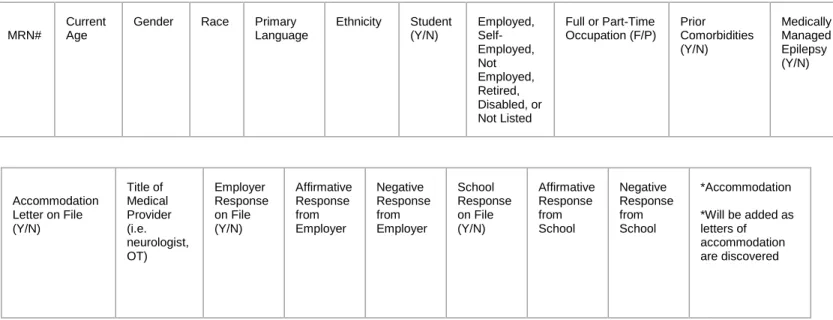
Table B: Data Collection Chart Headings
MRN#
Current Age
Gender Race Primary Language
Ethnicity Student (Y/N) Employed, Self-Employed, Not Employed, Retired, Disabled, or Not Listed
Full or Part-Time Occupation (F/P) Prior Comorbidities (Y/N) Medically Managed Epilepsy (Y/N) Accommodation Letter on File (Y/N) Title of Medical Provider (i.e. neurologist, OT) Employer Response on File (Y/N) Affirmative Response from Employer Negative Response from Employer School Response on File (Y/N) Affirmative Response from School Negative Response from School *Accommodation
33
Sources
Accommodating Epilepsy in the Workplace | Blog.SHRM.org. (n.d.). Retrieved October 2, 2019,
from https://blog.shrm.org/blog/accommodating-epilepsy
Anderson, C. T., Noble, E., Mani, R., Lawler, K., & Pollard, J. R. (2013). Epilepsy Surgery:
Factors That Affect Patient Decision-Making in Choosing or Deferring a Procedure.
Epilepsy Research and Treatment, 2013, 1–13. https://doi.org/10.1155/2013/309284
Bergvall, V. (2014). Rethinking Language and Gender Research: Theory and Practice.
Routledge.
https://books.google.com/books?hl=en&lr=&id=527JAwAAQBAJ&oi=fnd&pg=PT41&dq
=workplace+accommodation+variation+by+gender+women+female+voice+supression&ots
=JOUDw959or&sig=tkhUwciQVYEKYszN11TR89fFX9M#v=onepage&q=gain
respect&f=false
Bertakis, K., Azari, R., Helms, J., Callahan, E., & Robbins, J. (2000). Gender Differences in the
Utilization of Health Care Services. Journal of Family Practice, 49(2), 147.
https://doi.org/10.12968/pnur.2005.16.8.18584
Brook, H. A., Hiltz, C. M., Kopplin, V. L., & Lindeke, L. L. (2015). Evidence Based Practice
and Policy Increasing Epilepsy Awareness in Schools: A Seizure Smart Schools Project.
https://doi.org/10.1177/1059840514563761
Bureau of Labor Statistics Data. (n.d.). Retrieved April 20, 2020, from
https://data.bls.gov/pdq/SurveyOutputServlet
34
Health Behavior and Health Education (4th ed., pp. 40–62). John Wiley and Sons.
England, M. J., Liverman, C. T., Schultz, A. M., & Strawbridge, L. M. (2012). Epilepsy across
the spectrum: Promoting health and understanding. A summary of the Institute of Medicine
report. In Epilepsy and Behavior (Vol. 25, Issue 2, pp. 266–276).
https://doi.org/10.1016/j.yebeh.2012.06.016
Federal Register. (2011). Regulations To Implement the Equal Employment Provisions of the
Americans With Disabilities Act, as Amended. Federal Information & News Dispatch, Inc.
https://search-proquest-com.libproxy.lib.unc.edu/healthcomplete/docview/858465521/C365F79D72234235PQ/11?
accountid=14244
Finucane, A. K. (1999). Legal aspects of epilepsy. Neurologic Clinics, 17(2), 235–243.
https://doi.org/10.1016/S0733-8619(05)70127-4
Fraser, R. (2010). Disability and HR: Tips on the Accommodation & Employment of People with
Disabilities. Institute on Employment and Disability.
http://hrtips.org/article_1.cfm?b_id=10
Fraser, R. (2018). Commentary on: Considering Developing a Specialized Epilepsy Employment
Program? The PEP Jobs Program Paradigm. Int J Neurorehabilitation, 5, 317.
https://doi.org/10.4172/2376-0281.1000317
Freedman, R. I., Litchfield, L. C., & Warfield, M. E. (1995). Balancing Work and Family:
Perspectives of Parents of Children with Developmental Disabilities. Families in Society:
The Journal of Contemporary Social Services, 76(8), 507–514.
35
French, J. A., & Staley, B. A. (2012). AED Treatment through Different Ages: As Our Brains
Change, Should Our Drug Choices Also? Epilepsy Currents, 12(4_suppl), 22–27.
https://doi.org/10.5698/1535-7511-12.4s.22
Getnet, A., Woldeyohannes, S. M., Bekana, L., Mekonen, T., Fekadu, W., Menberu, M., Yimer,
S., Assaye, A., Belete, A., & Belete, H. (2016). Antiepileptic Drug Nonadherence and Its
Predictors among People with Epilepsy. Behavioural Neurology, 2016.
https://doi.org/10.1155/2016/3189108
Guzman, J., Yassi, A., Cooper, J. E., & Khokhar, J. (2002). Return to work after occupational
injury. Family physicians’ perspectives on soft-tissue injuries. Canadian Family Physician,
48(DEC.), 1912–1919.
Hart, Y. M., & Shorvon, S. D. (1995). EPILEPSY The nature of epilepsy in the general
population. I. Characteristics of patients receiving medication for epilepsy. In Epilepsy
Research (Vol. 21).
Ikezawa, Y., Battié, M. C., Beach, J., & Gross, D. (2010). Do clinicians working within the same
context make consistent return-to-work recommendations? Journal of Occupational
Rehabilitation, 20(3), 367–377. https://doi.org/10.1007/s10926-010-9230-z
Jette, N., Reid, A. Y., & Wiebe, S. (2014). Surgical management of epilepsy. In CMAJ (Vol.
186, Issue 13, pp. 997–1004). Canadian Medical Association.
https://doi.org/10.1503/cmaj.121291
Kosny, A., Franche, R. L., Pole, J., Krause, N., Côté, P., & Mustard, C. (2006). Early healthcare
provider communication with patients and their workplace following a lost-time claim for
36
39. https://doi.org/10.1007/s10926-005-9009-9
Krumholz, A., Hopp, J. L., & Sanchez, A. M. (2016). Counseling Epilepsy Patients on Driving
and Employment. In Neurologic Clinics (Vol. 34, Issue 2, pp. 427–442). W.B. Saunders.
https://doi.org/10.1016/j.ncl.2015.11.005
Ortinski, P., & Meador, K. J. (2004). Cognitive side effects of antiepileptic drugs. Epilepsy and
Behavior, 5(SUPPL. 1), 60–65. https://doi.org/10.1016/j.yebeh.2003.11.008
Peterson, C. L., Walker, C., Coleman, H., & Shears, G. (2019). Reported service needs at
diagnosis of epilepsy and implications for quality of life. Epilepsy & Behavior.
https://doi.org/10.1016/j.yebeh.2019.106527
Pransky, G., Katz, J. N., Benjamin, K., & Himmelstein, J. (2002). Improving the physician role
in evaluating work ability and managing disability: a survey of primary care practitioners.
Disability and Rehabilitation, 24(16), 867–874.
https://doi.org/10.1080/09638280210142176
Prince, M. J. (2017). Persons with invisible disabilities and workplace accommodation: Findings
from a scoping literature review. In Journal of Vocational Rehabilitation (Vol. 46, Issue 1,
pp. 75–86). IOS Press. https://doi.org/10.3233/JVR-160844
Sandhu, E., Weinstein, S., McKethan, A., & Jain, S. H. (2012). Secondary uses of electronic
health record data: Benefits and barriers. Joint Commission Journal on Quality and Patient
Safety, 38(1), 34–40. https://doi.org/10.1016/S1553-7250(12)38005-7
Sung, C., & Connor, A. (2017). Social-cognitive predictors of vocational outcomes in transition
37
Psychology, 62(3), 276–289. https://doi.org/10.1037/rep0000161
Sung, C., Muller, V., Jones, J. E., & Chan, F. (2014). Vocational rehabilitation service patterns
and employment outcomes of people with epilepsy. Epilepsy Research, 108(8), 1469–1479.
https://doi.org/10.1016/j.eplepsyres.2014.06.016
Thomas, V. L., & Gostin, L. O. (2009). The Americans with disabilities act: Shattered
aspirations and new hope. In JAMA - Journal of the American Medical Association (Vol.
301, Issue 1, pp. 95–97). https://doi.org/10.1001/jama.2008.912
Thorbecke, R., May, T. W., Koch-Stoecker, S., Ebner, A., Bien, C. G., & Specht, U. (2014).
Effects of an inpatient rehabilitation program after temporal lobe epilepsy surgery and other
factors on employment 2 years after epilepsy surgery. Epilepsia, 55(5), 725–733.
https://doi.org/10.1111/epi.12573
Wagner, J. L., Sample, P. L., Ferguson, P. L., Pickelsimer, E. E., Smith, G. M., & Selassie, A.
W. (2009). Impact of pediatric epilepsy: Voices from a focus group and implications for
public policy change. Epilepsy and Behavior, 16(1), 161–165.
https://doi.org/10.1016/j.yebeh.2009.07.008
Wodrich, D. L., & Cunningham, M. M. (2008). School-based tertiary and targeted interventions
for students with chronic medical conditions: Examples from type 1 diabetes mellitus and
epilepsy. Psychology in the Schools, 45(1), 52–62. https://doi.org/10.1002/pits.20278
Wodrich, D. L., Jarrar, R., Buchhalter, J., Levy, R., & Gay, C. (2011). Knowledge about epilepsy
and confidence in instructing students with epilepsy: Teachers’ responses to a new scale.