COMMUNITY INTERACTIONS AND IMPACTS OF EXOTIC PLANT SPECIES IN THE SOUTHEASTERN UNITED STATES
Dennis Darwin Tarasi
A dissertation submitted to the faculty at the University of North Carolina at Chapel Hill in partial fulfillment of the requirements for the degree of Doctor of Philosophy in the
Curriculum for the Environment and Ecology.
Chapel Hill 2016
Approved by:
Robert K. Peet
John F. Bruno
Alan S. Weakley
© 2016
ABSTRACT
Dennis Darwin Tarasi: Community interactions and impacts of exotic plant species in the southeastern United States.
(Under the direction of Robert K. Peet)
Native to other regions of the world, exotic species can disrupt the ecology and
function of natural areas where they are introduced. Exotic species successfully establish in
and dominate natural areas via multiple pathways and ecological processes. Given that many
of these interactions remain difficult to measure, it is imperative to properly identify
environmental factors that predict exotic species success and quantify the impacts of exotic
species dominance on natural communities. Here, I explore the interactions between exotic
plant species and communities where they have been introduced in the southeastern United
States to address the predictors of invasion, community responses to invasion and subsequent
removal of dominant invaders. Chapter 2 considers whether biotic communities predictably
incorporate or resist exotic species by examining the relationship between native species
richness and exotic species richness at multiple spatial scales across a broad range of
environmental conditions. Chapter 3 explores the predictive ability of environmental
characteristics concerning exotic species success in a large vegetation database. Chapter 4
quantifies the abiotic and biotic community changes with invasion of a dominant exotic
shrub, including assessments of species diversity and the physical structure of the
shrub invasion, including abiotic responses to removal of that dominant shrub from the
community.
Exotic species success generally and predictably responds to changes in the scale of
observation and local environmental conditions. Several environmental characteristics
correlate with exotic species success, including soil pH, calcium, tree stem density and cover
of wetland species. The unique predictive ability of any individual variable remains limited,
reflecting the complex interactions driving exotic species success and the differences among
exotic species. Invaded communities exhibit several distinct responses to exotic species
dominance, including changes in both richness and physical forest structure. Such changes
must be considered in context, as invaders of similar structure, function and origin
differentially affect the communities they invade. Although shrub invasions, and the
subsequent removal of dominant invaders, may cause demonstrable abiotic changes in the
community, such as in temperature and light availability, responses in soil moisture and
ACKNOWLEDGEMENTS
I am fortunate beyond measure to have chosen an excellent mentor in my dissertation
advisor, Robert K. Peet. You have demonstrated to me the enduring commitment, dedication
and service that make you a role model for many scientists. You have provided me with the
structure to understand the rigors of scientific research, the patience and willingness to hear
out my research ideas, and the trust to let me succeed (and fail!) on my own in data collection
and analysis. I hope to emulate your service and mentorship in my own academic career.
I owe a significant amount of gratitude to my academic committee: John Bruno, Alan
Weakley, Peter White, and Justin Wright. Your continued support aided tremendously in my
professional development and exploration of research questions, and much of this
dissertation stems directly from suggestions you made during committee meetings and
personal conversations. I was additionally fortunate to have found multiple role models of
academic success while at UNC, particularly Corey Johnson, Steve Matson, Charles Mitchell
and Patricia Gensel, among many others. Your example and interactions with me have
provided a clear model for my career goals. Thank you all for you time and effort in
supporting me.
I relied on many peers in developing my research ideas and manuscripts, and I thank
them for their tireless support in providing edits and suggestions for my research. I was
Lab, particularly Alissa Brown and Michael Lee, have graciously provided countless helpful
comments of each of my chapters.
I have been fortunate, in my time at UNC, to be a part of a very special,
interdisciplinary program. The UNC Curriculum for the Environment and Ecology has
exposed me to many more different styles of thought, content subjects, and scientific thinkers
than I expected upon entering graduate school. I am truly humbled to be a small part of such
a fantastic program, and I thank Jaye Cable, Mike Piehler, Kathleen McNeil and Violet
Anderson for their efforts in coordinating and improving the program throughout my time
here. I additionally received considerable support, in funding, training and institutional
resources from the UNC Department of Biology, the UNC Graduate School and the UNC
Graduate and Professional Student Federation.
My dissertation fieldwork would not have been possible without the assistance of
numerous volunteer field researchers. I sincerely thank Victoria Millsap, Daniel Tarasi,
Shakira Marshall and Braedon Shelton for assistance with data collection during summer
2014, and Jessica Richmond, Chris Boling, and Taek Lee for assistance with my exotic
removal experiment during summer 2015. I hope our work together helps lead you to much
success in your career pursuits, much as you all have helped me.
In addition to my field assistants, I was fortunate to make connections through my
advisor with several fantastic conservation leaders. Andy Kane, Haywood Rankin and Amy
Nason assisted me tremendously in identifying and selecting communities for my field
studies, as well as sharing their wisdom and resources in response to any request I made.
Their knowledge and support in gaining access to these lands was critical to my successful
appreciate the Allen Hurlbert lab for graciously loaning me their HOBO trackers for use
during the 2015 field season.
I thank Robert Peet, Thomas Wentworth, Michael Schafale and Alan Weakley, who
coordinated the Carolina Vegetation Survey (CVS), as well as the countless volunteers who
assisted with data collection and entry. Michael Lee was integral in helping me extract data
from the CVS database for my analyses. Without their efforts, much of my dissertation
research would not have even been possible. I truly stand on the shoulders of giants. I
additionally relied on Jack Weiss and James Umbanhowar for suggestions and support
regarding several statistical analyses.
My siblings Frank, Julie and Daniel Tarasi, with members of my extended family,
have helped ground me in what is truly important in life. Thank you each for exploring the
world with me growing up, challenging my perspective and worldview, and making the
effort to be a part of my life and graduate career, even at a great distance from home. I love
you and yours, very much.
My wife, Megan Tarasi, has provided constant and positive support in all my
graduate pursuits. From assisting me late in the night with soil sample analysis, to attending
and participating in the academic activities I helped organize, to hearing out and editing
countless manuscripts, proposals, and ideas, you have helped me grow in my scientific
efforts through your unbounding support for everything that I undertook. I am so incredibly
excited by the direction our journey together takes us beyond Chapel Hill.
untold sacrifice for me to pursue my dreams, as well as your unconditional love and support
in all pursuits that I’ve undertaken and mistakes I’ve made along the way. I hope to live my
life and love my family in your example, and I sincerely could never thank you enough. I
TABLE OF CONTENTS
LIST OF TABLES...xii
LIST OF FIGURES...xiii
CHAPTER 1: Introduction...1
References...6
CHAPTER 2: The native-exotic species richness relationship in natural communities varies with spatial grain of measurement and environmental conditions...9
Introduction...9
Methods...12
Study Region...12
Plot Design and Selection...13
Statistical Analysis and Null Model Development...13
Constraints on the Null Model...15
Comparison of Formations...16
Results...16
Discussion...18
Conclusion...24
CHAPTER 3: Exotic species establishment is correlated with many
environmental characteristics in southeastern U.S. plant communities...37
Introduction...37
Methods...39
Data Collection and Selection...39
Data Analysis...42
Results...44
Discussion...46
Conclusion...52
References...53
CHAPTER 4: Shrub invasions differentially affect forest community richness and structure...68
Introduction...68
Methods...70
Study Region...70
Data Collection...71
Data Analysis...73
Results...75
Discussion...77
Conclusion...83
References...84
CHAPTER 5: Experimental removal of dominant invasive shrubs causes abiotic responses in forested communities...97
Introduction...97
Study Region...98
Data Collection...99
Data Analysis...101
Results...103
Discussion...104
Conclusion...106
LIST OF TABLES
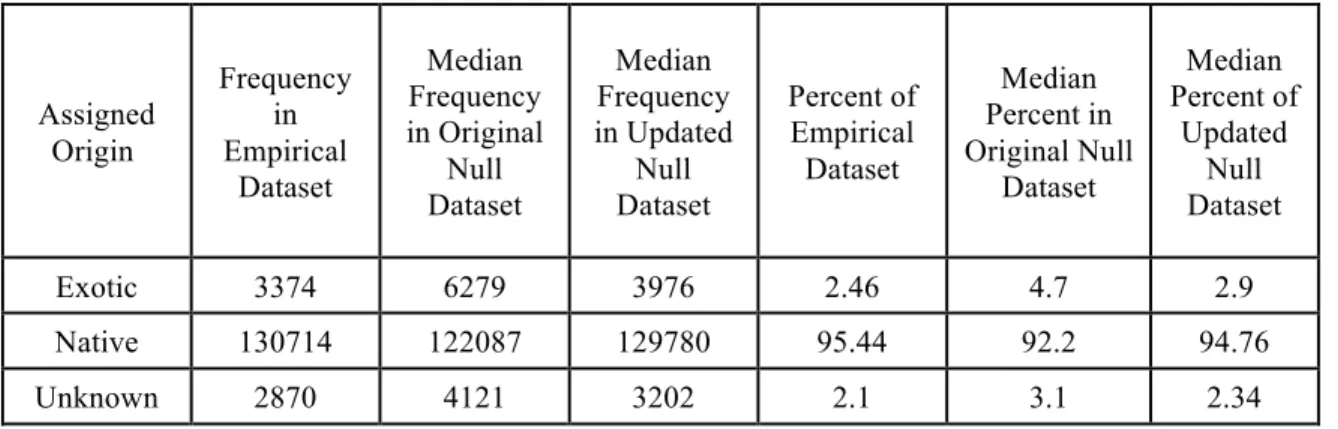
Table 2.1. The frequency of species origins within the empirical dataset and
permutations ...30
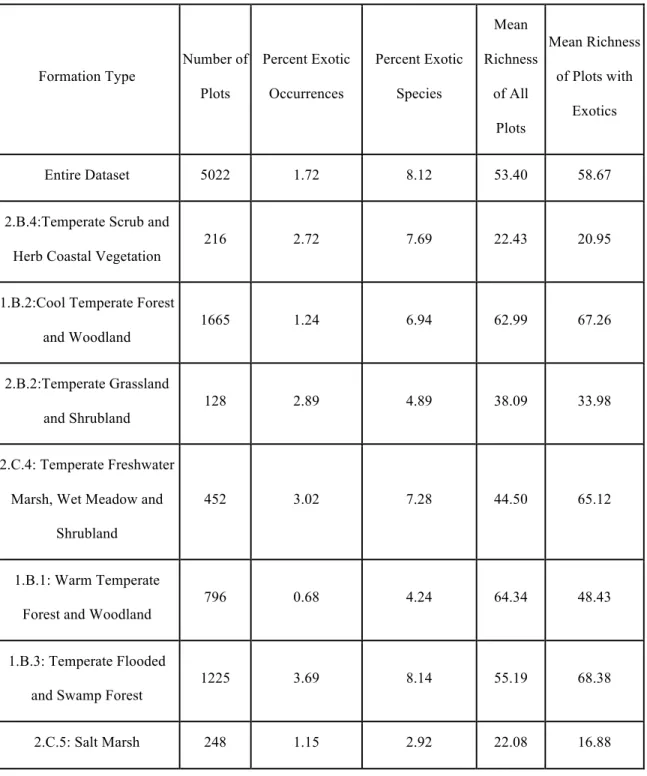
Table 2.2. Comparison of exotic species distributions among the seven most common community types of the Carolinas...31
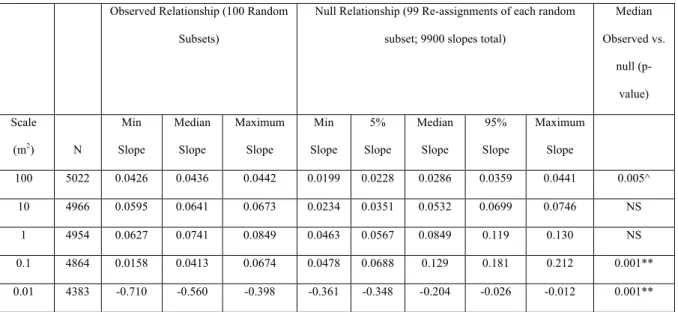
Table 2.3. Comparison of observed and permuted species richness relationships...32
Table 2.4. Median slope of the NERR among regions across all scales...33
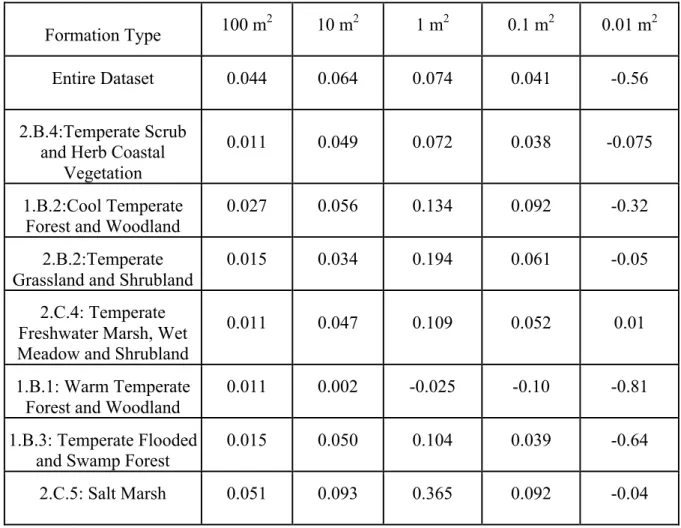
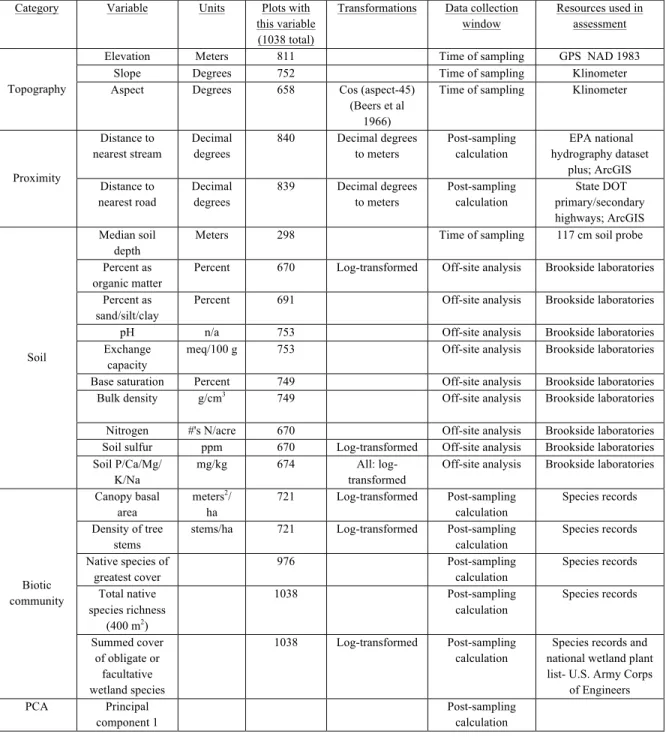
Table 3.1. The 27 potential predictors of invasion used in this manuscript...57
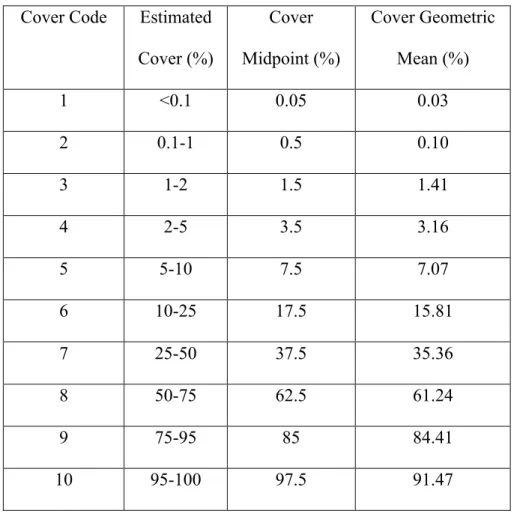
Table 3.2. Semi-log scale of cover estimates in CVS methodology...58
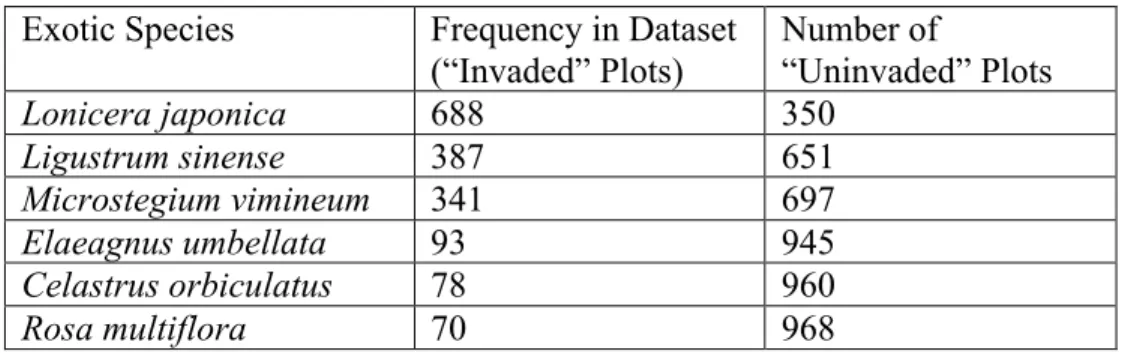
Table 3.3. The most frequent exotic species in the dataset...59
Table 3.4. The 13 continuous variables with significant relationship with exotic species cover at all thresholds...60
Table 3.5. The slope of the binomial regression for species-specific exotic cover...61
Table 4.1. The 21 potential predictors of invasion used in this manuscript...88
Table 4.2. Slope of the binomial regression between focal invader dominance and 21 standardized environmental variables...89
Table 4.3. The median distance in PCA ordination space of environmental condition for plots associated with each focal invasive shrub species...90
LIST OF FIGURES
Figure 2.1. Map of study region, centered on North and South Carolina...34
Figure 2.2. Species occurrences in the dataset and individual plots...35
Figure 2.3. The percentage of species at each spatial grain that are exotic...36
Figure 3.1. Plot design for CVS methodology...62
Figure 3.2. Distribution of CVS plots used in this analysis...63
Figure 3.3. The percentage of plots in the dataset experiencing exotic species success, partitioned by the most dominant species...64
Figure 3.4. The relative importance of significant variables in predicting exotic species success...65
Figure 3.5. Classification and regression tree of standardized environmental variables in predicting exotic species success...66
Figure 3.6. Principal components analysis of environmental variables and exotic species success...67
Figure 4.1. Geographic distribution of 52 sampled communities in a paired-plot empirical design...92
Figure 4.2. Plot design for CVS methodology...93
Figure 4.3. Mean species-area relationship for three distinct richness metrics...94
Figure 4.4. Exotic species richness-area relationship with focal invader removed...95
Figure 4.5. The relationship of plot-level structural groups and the continuous predictor of number of focal invader stems at breast height...96
Figure 5.1. Geographic distribution of 52 sampled communities in a paired-plot empirical design...110
Figure 5.2. Plot design for CVS methodology...111
Figure 5.4. Change in daily relativized temperature, light and soil moisture ratios
across the sampling season due to experimental removal of the focal invader...117
Figure 5.5. Change in hourly relativized temperature and light ratios due to
experimental removal of the focal invader...118
Figure 5.6. Changes in soil nutrient and texture due to experimental removal
CHAPTER 1: INTRODUCTION
In his seminal work On the Origin of Species, Charles Darwin (1859) articulated to the scientific community the concept of interactions between species from different regions
of the world. According to Darwin’s “naturalisation hypothesis,” species introduced to new
ecological communities would be most successful in surviving if they were biologically
unrelated to the resident species, thus exploiting different resources and life history traits
(Rejmánek 1996). Although the concepts of vacant niches and species invasions had gained
significant traction in ecological study (e.g. Hutchinson 1957), the study of invasive exotic
species as an ecological sub-discipline truly began with Charles Elton’s (1958) exploration of
the differential ecological interactions between species with shared and varying evolutionary
histories.
Since Elton’s publication, invasive exotic species have gained substantial attention
from academics and conservationists alike, corresponding to their listing as one of the
greatest threats to global biodiversity (Wilcove et al. 1998) and reflected in an exponential
increase in publications on the topic (Richardson and Pyšek 2008). Researchers have defined the unique stages of successful invasions (e.g. Theoharides and Dukes 2007, Rejmánek et al.
2013) and explored nearly every aspect of these stages, both from the perspective of
successful invaders and of communities experiencing invasion. For example, academic
-Introduction pathways of exotic species (e.g. Reichard and White 2001, Lehan et al.
2013),
-Species traits that enable successful establishment in novel environments (e.g.
Richardson et al. 2000, Tilman 2004, Pyšek and Chytrý 2014),
-Environmental and community conditions that are most susceptible to species
invasions (e.g. Fridley et al. 2004, Herben et al. 2004, Stohlgren et al. 2008,
Catford et al. 2012),
-Environmental and ecological impacts of species invasions (e.g. Vila et al. 2011,
Powell et al. 2013, Simberloff et al. 2013, Stohlgren and Rejmánek 2014), and
-Community responses to removal of invasive species (e.g. Flory and Clay 2009,
Buckley and Han 2014).
Although the body of literature concerning exotic species is both robust and growing,
general conclusions associated with species invasions remain elusive (e.g. Catford et al.
2011) or controversial (e.g. Gurevitch and Padilla 2004, Clavero and Garcia-Berthou 2005).
Because of these inconsistencies and challenges, continued research on species invasions
remains paramount to the pursuit of greater ecological understanding.
For my dissertation research, I explored several questions foundational to the
understanding of native community impacts from and interactions with introduced exotic
species. Countless dissertations could be developed on invasive species and community
ecology topics not considered in this document, such as enemy release, rapid evolution,
transformation of ecosystem conditions, and successful traits of invaders. This dissertation
research emphasizes community-related characteristics of successful invasions, bypassing the
communities. In this fashion, my research fits into a much broader sub-field of invasive
species ecology, and I attempt to draw in these complementary topics to place my work in its
proper context.
Through the use of novel methods and robust datasets, my research pursues a broad
understanding of the factors that affect exotic species success and their impacts on the
communities they invade. My focal study systems are the plant communities of the
southeastern United States, an ecological region with a rich history of academic study and
contribution to the field of ecology (e.g. Odum 1969, Peet and Christensen 1980). I employed
these systems due to their broad distribution across the landscape, the continued presence and
success of exotic species within these systems, and their importance to biological diversity
and conservation (e.g. Noss et al. 2015). Additionally, I utilized the data and methodology of
a robust vegetation database, the Carolina Vegetation Survey (CVS). This database contains
>6000 standardized plots assessing species presence and cover, woody stem distribution, and
abiotic components of vegetation communities from across the southeastern United States
(Peet et al. 1998, 2012). My work employs CVS methods and data to contribute additional
knowledge to a general understanding of ecological communities throughout the region
through the exploration of four key questions:
1. How does exotic species richness in plant communities vary with native species richness,
and how does that pattern vary across environmental conditions and with spatial scale
2. What abiotic and biotic characteristics are significantly correlated with exotic plant
presence in natural Southeastern communities, and how effective are these
characteristics for predicting exotic species persistence?
3. Does exotic shrub invasion reflect pre-existing differences in local environmental
conditions or affect changes in species richness metrics or structural components of
forests?
4. How does experimental removal of invasive shrubs affect environmental conditions, such
as temperature, light availability, soil moisture, and soil nutrient characteristics?
This research indicates generally that exotic species success is dictated by distinct
processes and interactions depending on the scale of observation, as exotics are more
prevalent in large-scale, species-rich plots than in their small-scale counterparts. Natural
communities are assembled differently than expected by chance, and those sharing particular
biogeographic and environmental conditions tend to express exotic species richness in
differing yet somewhat predictable fashions. Several environmental characteristics correlate
with exotic species success, including soil pH, calcium, woody stem density and cover of
wetland species. The unique predictive ability of any individual variable remains limited,
reflecting the complex interactions that drive exotic species success in these communities as
well as the diversity of the exotic species involved. Once dominant, invasive plant species
differentially affect invaded communities and must be considered in context, even those that
quantifiable effects on the communities they invade, such as with Elaeagnus umbellata
invasion. Although shrub invasions, and the subsequent removal of dominant invaders, may
cause demonstrable abiotic changes in the community, such as in temperature and light
availability, responses in soil moisture and nutrient levels remain limited.
Some detected patterns of species invasions seem predictable and universal, though
numerous other patterns of species invasions remain nuanced and context-specific. In this
way, this research endeavors to add to the growing body of literature exploring these species
and the communities they invade, in an effort to contribute to and broaden our understanding
REFERENCES
Buckley, Y.M., and Y. Han. 2014. Managing the side effects of invasion control. Science, 344, 975-976.
Darwin, C.R. 1859. The origin of species. John Murray, London.
Catford, J.A., P.A. Vesk, D.M. Richardson, and P. Pyšek. 2012. Quantifying levels of biological invasion: towards the objective classification of invaded and invasible ecosystems. Global Change Biology, 18, 44-62.
Catford, J.A., P.A. Vesk, M.D. White, and B.A. Wintle. 2011. Hotspots of plant invasions predicted by propagule pressure and ecosystem characteristics. Diversity and
Distributions, 17, 1099-1110.
Clavero, M. and E. Garcia-Berthou. 2005. Invasive species are a leading cause of animal extinctions. Trends in Ecology and Evolution, 20, 110.
Elton, C.S. 1958. The ecology of invasions by animals and plants. University of Chicago Press, Chicago.
Flory, S.L., and K. Clay. 2009. Invasive plant removal method determines native plant community responses. Journal of Applied Ecology, 46, 434-442.
Fridley, J.D., R.L. Brown, and J.F. Bruno. 2004. Null models of exotic invasion and scale-dependent patterns of native and exotic species richness. Ecology, 85, 3215-3222.
Gurevitch, J., and D.K. Padilla. 2004. Are invasive species a major cause of extinctions? Trends in Ecology and Evolution, 19, 470-474.
Herben, T., B. Mandak, K. Bimova, and Z. Munzbergova. 2004. Invasibility and species richness of a community: a neutral model and a survey of published data. Ecology, 85, 3223-3233.
Hutchinson, G.E. 1957. Concluding remarks. Cold Spring Harbor Symposium of Quantitative Biology, 22, 415-427.
Lehan, N.E., J.R. Murphy, L.P. Thorburn, and B.A. Bradley. 2013. Accidental introduction are an important source of invasive plants in the continental United States. American Journal of Botany, 1000, 1287-1293.
Noss, R.F., W.J. Platt, B.A. Sorrie, A.S. Weakley, D.B. Means, J. Costanza, and R.K. Peet. 2015. How global biodiversity hotspots may go unrecognized: Lessons from the North American Coastal Plain. Diversity and Distributions, 21, 236-244.
Peet, R.K. and N.L. Christensen. 1980. Succession: a population process. Vegetatio 43, 131-140.
Peet, R.K., M.T. Lee, M.F. Boyle, T.R. Wentworth, M.P. Schafale, and A.S. Weakley. 2012. Vegetation-plot database of the Carolina Vegetation Survey. Biodiversity and Ecology, 4, 243-253.
Peet, R.K., T.R. Wentworth, and P.S. White. 1998. A flexible, multipurpose method for recording vegetation composition and structure. Castanea, 63, 262-274.
Powell, K.I., J.M. Chase, and T.M. Knight. 2013. Invasive plants have scale-dependent effects on diversity by altering species-area relationships. Science, 339, 316-318.
Pyšek, P., and M. Chytrý. 2014. Habitat invasion research: where vegetation science and invasion ecology meet. Journal of Vegetation Science, 25, 1181-1187.
Rejmánek, M. 1996. A theory of seed plant invasiveness: the first sketch. Biological Conservation, 78, 171–181.
Rejmánek, M., D.M. Richardson, and P. Pyšek. 2013. Plant invasions and invasibility of plant communities. pp. 387-424 in Vegetation Ecology (2nd Ed.), Ed. van der Maarel, E., and J. Franklin. Oxford University Press, Oxford, UK.
Reichard, S.H., and P. White. 2001. Horticulture as a pathway of invasive plant introductions in the United States. BioScience, 51, 103-113.
Richardson, D.M., N. Allsopp, C.M. D’Antonio, S.J. Milton, and M. Rejmánek. 2000. Plant invasions- the role of mutualisms. Biological Reviews, 75, 65-93.
Richardson, D.M., and P. Pyšek. 2008. Fifty years of invasion ecology- the legacy of Charles Elton. Diversity and Distributions, 14, 161-168.
Simberloff, D., J.L. Martin, P. Genovesi, V. Maris, D.A. Wardle, J. Aronson, J. et al. 2013. Impacts of biological invasions: what’s what and the way forward. Trends in Ecological and Evolution, 28, 58-66.
Stohlgren, T.J., D.T. Barnett, C.S. Jarnevich, C. Flather, and J. Kartesz. 2008. The myth of plant species saturation. Ecology Letters, 11, 313-326.
Stohlgren, T.J. and M. Rejmánek. 2014. No universal scale-dependent impacts of invasive species on native plant species richness. Biology Letters, 10, 20130939.
Tilman, D. 2004. Niche tradeoffs, neutrality, and community structure: a stochastic theory of resource competition, invasion, and community assembly. PNAS, 101, 10854-10861.
Vila, M., J.L. Espinar, M. Hejda, P.E. Hulme, V. Jarosik, J.L. Maron, et al. 2011. Ecological impacts of invasive alien plants: a meta-analysis of their effects on species, communities and ecosystems. Ecology Letters, 14, 702-708.
CHAPTER 2: THE NATIVE-EXOTIC SPECIES RICHNESS RELATIONSHIP IN NATURAL COMMUNITIES VARIES WITH SPATIAL GRAIN OF
MEASUREMENT AND ENVIRONMENTAL CONDITIONS
Introduction
Do communities with high species richness exhibit greater resistance to invasion by
exotic species? Or, alternatively, do species-rich communities simply get richer? The
hypothesis of community saturation suggests that diverse communities should be more
resistant to the establishment of exotic species than their less diverse counterparts (Elton
1950). This concept, alternatively called the diversity-invasibility hypothesis, predicts that
with increasing native species richness there will be fewer resources or niches available for
exotic species to fill. Resident species can inhibit exotic species by reducing availability of
limiting resources (Tilman 1999, Fargione et al. 2003), often by complementary use of
resources (Fargione and Tilman 2005). As a consequence, resources are not readily available
for exotic species to consume. By this same logic, given similar site conditions, less diverse
communities might have higher availability of resources than their more diverse counterparts.
In experimental studies, diversity has been shown to reduce community invasibility better
than other measures, such as biomass (Hector et al. 2001, Tilman et al. 2001). Thus,
according to this logic, exotic species should more readily establish in less diverse
communities due to lower competition and greater access to resources (Case 1990,
regional flora can readily establish in suitable environments, particularly in communities with
low richness (Gilbert and Lechowicz 2005).
Although many empirical and theoretical studies have supported the
diversity-invasibility hypothesis as applied to plant communities, numerous others have reported
contrary results (reviewed in Daleo et al. 2009). Species richness values of exotic and native plants are often positively correlated in terrestrial communities (Meiners et al. 2002, Sax
2002, Tilman 2004, Stohlgren et al. 2006), particularly at large spatial grain (Brown and Peet
2003; Stohlgren et al. 1999, 2003, 2008). In general, high native-species richness predicts
high exotic-species richness in plots of 1 m2 or larger. By contrast, the diversity-invasibility
hypothesis may prove more applicable at smaller spatial grains (i.e., smaller than 1 m2). Such a pattern may be due to local biotic processes such as recruitment limitation (Seabloom et al.
2003, Sax et al. 2007, Stohlgren et al. 2008), neighborhood crowding (Kennedy et al. 2002,
Brown and Peet 2003), and competition (Brown and Peet 2003, Huston 1999). Exotic
species may successfully establish in communities of high native richness due to neutral
sampling effects, whereby high native species richness predicts increased exotic richness by
random establishment of new species (Herben et al. 2004). Exotic species establishment can
also occur due to a similarity of resource demands between exotic and native species (Hierro
et al. 2005) and increased local energy inputs and water availability (Albuquerque et al.
2011), as exotic species often succeed in areas of increased resource availability (Reichard
and White 2001). The varying patterns of exotic species success at different spatial scales
have introduced the concept of an “invasion paradox”, the observation that multiple
ecological processes may differentially impact diversity patterns at different spatial scales
Fridley et al. (2004) indicated that the paradox of scale associated with
diversity-invasibility can be readily explained by comparison with a null model distribution. This null
model randomly re-assigned species origins (i.e., exotic vs. native) within the regional
species pool to determine if patterns of exotic richness are actually structured by species
origin, or simply a random sample of species. Using 119 vegetated plots in the exotic-rich
mountain riparian vegetation of the southern Appalachians, the authors demonstrated that the
observed relationships of exotic species richness and native species were not significantly
different from the predicted relationships of the permuted models. These results suggested
that there is no evidence that exotic richness is influenced by species interactions or
community assembly processes. A similar analysis of neutrally-assembled communities
showed that the observed native-exotic richness relationships (NERR) reflected physical
constraints on the number of individuals in a community, rather than community interactions
(Herben et al. 2004).
It is important to determine whether community assembly dynamics structure exotic
species establishment, or whether these patterns are no different from random expectation.
This hypothesis is intrinsically hard to test because background species number is often a
result of environmental factors that spatially covary with diversity (Brown and Peet 2003,
Levine and D’Antonio 1999, Levine 2000, Foster et al. 2002), differences in habitat type
(Stohlgren et al. 1999), or increased spatial heterogeneity at large scales (Davies et al. 2005,
Kumar et al. 2006). In a large dataset that contains a wide range of plots, it is expected that
these plots span many different types of environment conditions. Such environmentally
overcome a background signal of correlation with environment, due to the broad range of
environmental predictors and resource types within the dataset (Fridley et al. 2007).
Here I explore three key questions:
1. How do exotic species richness patterns correlate with native species richness
with changing spatial grain?
2. Is the Native-Exotic Richness Relationship (NERR) different from what would be
expected by randomly assembled communities?
3. How does the NERR change due to changing environmental conditions?
To address these questions, I calculated the observed native and exotic species richness
patterns in a dataset representing the range of natural vegetation across North and South
Carolina. I subjected this empirical dataset to permutation tests to determine how the
relationships between exotic richness and native richness compare to a null model of
randomly assigned species origins. Finally, I subsetted this dataset to several vegetation
community formation types in an effort to determine the predictive nature of exotic species
presence with changing environmental conditions. This provided the opportunity to
determine if, having incorporated broad ranges of environment and space to account for
variation in null model applications, there is evidence that community processes shape exotic
species establishment.
Methods
Study Region
My study spanned the region of North and South Carolina in the southeastern United
of the Coastal Plain, the rolling hills of the Piedmont and reaches the highest peaks of the
southern Appalachian Mountains with a maximum elevation of 2037m. (Figure 1). The
region has a temperate climate and includes 523 community types recognized in the US
National Vegetation Classification (NatureServe 2013). My analysis includes plots that
represent 480 of these community types.
Plot Design and Selection
My analysis is based on 5022 plots from the Carolina Vegetation Survey database
(Peet et al. 2012). These plots incorporate nested quadrats that record vascular plant species
presence at multiple scales from 0.01 m2 to 1000 m2 (Peet et al. 1998). I extracted all plots
from projects in North and South Carolina and removed any plots that re-sampled existing
plots in the database. These data are representative of the geographic and compositional
range of vascular plant communities of the Carolinas. Because many of the plots do not cover
a full 1000 m2, and because I wanted to include as many representative communities as possible, I included only 5 spatial grains for this analysis (0.01 m2, 0.1 m2, 1 m2, 10 m2, and
100 m2).
Statistical Analysis and Null Model Development
To avoid spatial pseudoreplication, I randomly chose only one nested subplot from
each available full plot of 100 m2 or larger. I assigned species origins as native or exotic according to Weakley (2015). I developed generalized linear models of exotic richness as a
function of native richness at each scale using the MASS package in R version 2.15.1 (R
I randomly re-assigned species origins in the entire dataset, keeping constant the total
species richness in each plot and the frequency of exotic species throughout the entire region
to ensure that random communities correspond to species distributions in empirical
observations. I randomly re-assigned the origin of each species in the dataset in each
permutation. I then re-tallied native and exotic species richness at each scale and calculated
the slope of the generalized linear model between native and exotic species richness for each
scale. I repeated this random re-assignment process 99 times for each empirical distribution
to generate null distributions. I then repeated the random re-selection of subplots 99 times,
for a total of 100 empirical slopes and 9900 null slopes. I calculated one-tailed P values to determine statistical significance, which represented the proportion of permutation-derived
values that were as extreme or more extreme than the median empirical test statistic
(Legendre and Legendre 2012).
Although previous research used this methodology (Fridley et al. 2004) to evaluate
riparian community plots across a geographic span of 126 km and elevation gradient of 293
m, I analyzed a much larger dataset, encompassing many different community types in
several physiographic regions and spanning 872 km in extent and 1903 m in elevational
change. Additionally, the previous research had analyzed data with disproportionately high
exotic species richness, relative to the general trends of the region. The application of this
question and general methodology to a broader, more representative collection of species
records enabled greater predictive ability for exotic species success.
Because neutral models predict exotic species richness to increase with increasing
native species richness at large scales due to sampling effects, I also determined the
calculated the percentage of species in each plot that were exotic, fitting a linear model as a
function of total species richness to determine how these percentages change with changing
richness.
Constraints on the null model
Exotic species are significantly less frequent than native species throughout the
examined communities (see Figure 2). A similar methodology re-assigned species origins
within the regional species pool (Fridley et al. 2004). I replicated this re-assignment
methodology in this analysis and determined that such re-assignment led to an artificial
increase in exotic species presence throughout the permuted dataset and a biased result
(Table 1). Therefore, I chose to constrain species re-assignments to species of similar
frequencies across the dataset. This did not maintain an exactly similar distribution of exotic
occurrences in the null datasets, but the result was relatively close. Because exotic species
tend to be under-represented in natural datasets, relative to native species, random
re-assignment of species origins inflates the percentage of species and individual occurrences
that are “exotic”. This leads to an inaccurate comparison community in the random
permutation a requires constraints on the null model permutations. I considered an alternative
method of permutation, namely changing the origin of individual occurrence records rather
than species records. This approach would maintain the overall frequency of exotic
organisms within the dataset and thereby yield more mathematically accurate results. This
re-assignment strategy, however, is not representative of the biogeographic and community
assembly patterns inherent in the dataset. Species are distributed throughout the region in
environmental patterns, reducing its practical application to natural communities, and thus
was not used. Additionally, this re-assignment method did not significantly alter any of the
results.
Comparison of Formations
Because the study region of the Carolinas within the southeastern United States
contains a wide variety of environmental conditions, the NERR patterns vary among these
unique conditions and differentially impact the overall trend of the NERR for the entire
dataset. To determine how exotic species diversity varies in distribution across the study
region, I subsetted the dataset according to broad assignments corresponding to
environmental conditions. A useful subset is the formation assignment, as designated by the
US National Vegetation Classification (Faber-Langendoen et al. 2014). Within the dataset of
5022 plots, seven formations contained at least 100 plots, representing three subclasses in the
NVC hierarchy (Table 2). I performed independent empirical analyses for these formations,
randomly selecting subplots to determine the generalized linear model of native and exotic
richness at each spatial grain. I repeated the random selection of subplots 99 times, for a
total of 100 empirical slopes for each region at each spatial grain.
Results
General Patterns
Across most scales, exotic richness is positively correlated with native richness
(Table 3). At the very smallest scale examined, 0.01 m2, exotic richness is negatively correlated with native richness. As spatial grain decreases, the slope of the NERR increases
abundance. As a result, species richness is affected by the fixed number of individuals
capable of inhabiting a small subplot. Any high value of native species richness reflects a
significant number of individuals in that space and thereby reduces space for exotic species,
yielding a negative NERR. The slope at all grains is near zero, indicating that the frequency
of exotics throughout the dataset is both much lower than native species and that exotic
species are not inherently clumped at one extreme of species richness values within the
dataset. This is corroborated by the change in percent exotic species with changes in richness
(Figure 3). At scales >1 m2, the slope of the best fit line is slightly positive, indicating that speciose communities tend to have a slightly greater share of exotic species. The slope is
slightly negative at scales ≤1 m2, indicating that species-poor plots have a slightly lower share of exotic species at those scales.
Comparison to null model
The slope of the NERR is significantly higher than the null model at the largest
observed scale (100 m2) (Table 3). The slope is significantly lower than the null model at the
two smallest observed scales (0.1 and 0.01 m2). Thus, although the communities generally exhibit a positive correlation between native and exotic richness, this relationship is not
consistent relative to randomized distributions of species. At the largest scales, species-rich
plots have more exotic species than one would expect by chance alone, while species-rich
plots have fewer exotic species than expected at small scales. Indeed, the percentage of
species that are exotic in the empirical plots increases with richness at spatial grains larger
than 1 m2 (Figure 3), indicating that exotic species are congregating in speciose plots more
are exotic decreases with richness in the smallest communities, indicating limitations on local
abundance and that interspecific competition may be affecting exotic species establishment.
Comparison of patterns within Formations
The median slope of the NERR for 100 random subsets differs among formation
types across all scales (Table 4). For all but two formations, the NERR follows the general
pattern with scale for the entire dataset, namely a positive and increasing relationship for 100,
10 and 1 m2, a decreasing yet positive relationship at 0.1 m2 and a negative relationship at 0.01 m2. Warm temperate forests expressed essentially 0 slope at the largest spatial grain, decreasing to a negative relationship at 1 m2 and smaller. By contrast, temperate freshwater
marshes, wet meadows and shrublands expressed a positive relationship at all spatial grains,
though the relationship is near zero at 0.01 m2, which may reflect the very low diversity of
these systems.
Discussion
General patterns
The positive correlation between native and exotic species richness at most empirical
scales supports previous findings (e.g. Stohlgren et al. 2008). The increasing percentage of
exotic species in large-scale, speciose plots also corroborates other analyses (e.g.
Albuquerque et al. 2011), though the magnitude of this change is not as strong as has been
reported elsewhere. This suggests that different processes influence species richness at
different scales. Where spatial grain is ≥ 1 m2 greater heterogeneity can be expected, which provides increased opportunities for species establishment and a positive NERR. At the
species-rich plots have fewer exotic species than species-poor plots of the same size. This
corroborates and expands on conclusions of previous research, and suggests that
spatially-structured interspecific competitive exclusion may limit the available space for exotic
establishment at very small scales (e.g. Brown and Peet 2003; Kennedy et al. 2002).
The species richness patterns observed by this analysis likely reflect other, more
predictive patterns and processes within the observed communities. Such underlying
processes may provide valuable information for invasive species management and
prevention. Relationships between native and exotic richness are arguably less a result of
diversity itself than of environmental factors that spatially covary with diversity (Levine and
D’Antonio 1999; Levine 2000; Foster et al. 2002). Resource availability, whether reflecting
unused nutrients in the community or disturbance processes, is an important component of
establishment of any exotic species. Species richness patterns respond inconsistently to
changes along a productivity gradient (e.g. Grime 1973, Huston 1979, Adler et al. 2011;
reviewed in Peet et al. 2014). There is some evidence, however, that resource availability and
other abiotic environmental characteristics, in concert with species richness patterns, can
predict sites with high potential for potential exotic species establishment (Catford et al.
2011). Where environmental data may be challenging to collect and compare, this analysis
demonstrates that native species richness patterns may provide an adequate predictor for
exotic species establishment. While exotic species establishment can vary dramatically with
native species richness among environmental conditions (for example, the speciose yet
Increased spatial grain inherently leads to increased spatial and environmental
heterogeneity (Davies et al. 2005, Kumar et al. 2006), suggesting that larger scales should
exhibit higher species richness values and positive NERR. Spatial heterogeneity also reflects
differences in response with habitat type (Stohlgren et al. 1999), owing to the fact that
different habitats and communities are differentially susceptible to exotic species invasions
(Kalusová et al. 2013). Finally, the available species pools of both native and exotic species
significantly impact community richness patterns across all observed spatial grains
(Morueta-Holme et al. 2013). These local species pools vary with multiple factors, including
geography, proximity to human activity, and environmental conditions. As such, pools of
available species vary among community formation types, which may further explain the
differences in exotic species establishment in different habitats.
Comparison to null model
Contrary to previous findings (e.g. Fridley et al. 2004), the empirical NERR is
significantly different from the permuted relationships across most scales. At small scales,
the observed slope of the regression line is lower than expected from the null model,
suggesting that exotic species may be inhibited from successfully establishing in species-rich
communities. Conversely, species-poor communities may have higher susceptibility to
invasion, thus driving the slope down relative to those exhibited by random distributions.
These findings indicate that limitations on space and interspecific competition are likely
affecting the potential species richness, as demonstrated by Herben et al. (2004). Any high
value of native species richness reflects a significant number of individuals in that space and
thereby reduces space for exotic species, depressing the NERR. In either case, exotic species
assembled communities from the same regional species pool. At large spatial grain, the
opposite pattern is expressed; exotic species are more prevalent in species-rich communities
than expected by chance. These two results, taken together, indicate that the community
assembly processes dictating exotic species establishment vary in their impact with varying
scale, consistent with species richness patterns in plant communities (Shmida and Wilson
1985). Large-scale community interactions, such as propagule pressure and disturbance
patterns, may favor exotic species more than expected by chance (Davies et al. 2005), while
small-scale interactions, such as plant-on-plant competition (Wilson and Tilman 1993)
typically reflect a lower exotic presence. These findings corroborate the major tenants of the
invasion paradox (Fridley et al. 2007). A similar randomization approach to species richness
patterns across a 1 km2 grid in an urban landscape showed lower than expected exotic
richness on species-rich sites. However, that result derived from observations at a scale
where niche process are unlikely to operate and instead likely resulted from aliens having
different environmental requirements than natives (Ricotta et al. 2010). That study did
reinforce the importance of null model tools in determining important community patterns.
Previous empirical efforts examining the NERR have failed to resolve whether native
species richness is an adequate predictor of exotic richness, or whether it is simply a correlate
that spatially covaries with exotic species richness. My work presents a broad, general
analysis across many resource regimes, physiographic regions and community types in an
effort to detect and explain general patterns of exotic species establishment across
heterogeneous environments. Although I am not able to conclude that the observed patterns
results indicate that such processes are occurring, although likely in concert with numerous
abiotic and spatial phenomena that influence species richness.
Sessile organisms, such as plants, require a caveat in application of the
diversity-invasibility hypothesis. Given that these organisms cannot move to directly out-compete all
those beyond their immediate competitive neighborhood, coexistence can occur among a
multitude of small-scale species combinations, even if they utilize the same resources. The
carousel model (van der Maarel and Sykes 1993) explains how individuals of different
species may overlap in their growing locations within a community such that they utilize the
same resources while multiple species persist. Such is the case if inferior competitors have
sufficiently high dispersal rates to locate and colonize sites not already occupied by superior
competitors (Tilman 1994), as suggested by the persistence of “waif” species in long-term
vegetation dynamics (Grime 1973). Changes in temporal scale (Clark et al. 2013) or
disturbance pattern (Belole et al. 2008) may also impact native-exotic diversity patterns.
Thus, single-sample plots may not adequately reflect the many discernable biotic and abiotic
patterns contained in plant communities. Likewise, the assemblage of species identities and
their unique life strategies, rather than species richness, may prove more suitable predictors
of invasibility by exotic species (Crawley et al. 1999). Species traits are often linked more
directly to ecosystem functioning and productivity than metrics of species richness (Tilman
et al. 1997) and may better predict biodiversity patterns. Such considerations may provide
worthwhile future extensions of this work.
Comparison of Formations
The patterns of change in NERR with scale, for both the entire dataset and for most of
indicate that for most communities throughout the southeastern United States, exotic species
establishment may prove somewhat predictable, given the unique environmental,
biogeographic and spatial contributors of species richness. It may be expected across the
majority of communities that NERR is positive and slightly increasing up to moderate spatial
grains, below which individual competitive effects dictate, and limit, exotic species success
due to priority effects. These patterns are not universal, however, though deviations in such
patterns may prove predictable, given specific environmental conditions.
Warm temperate forests and woodlands (largely longleaf pine savannas), which
expressed relatively low NERR at all scales and negative NERR at most scales, contain
communities that are among the most speciose, yet-exotic poor in the entire study region.
Although the NERR is positive at the largest spatial grain for these formations, this is likely
reflective of simple sampling effects due to spatial heterogeneity (Herben et al. 2004). The
interspecific competition for space and resources in small-scale, speciose communities,
coupled with priority effects, indicates that exotic species seem to be only successful in
locations devoid of such high competition, as evidenced by a drastic reduction in species
richness in these plots when exotic species are present (Table 2). By contrast, the positive
NERR across scales in temperate freshwater marshes, wet meadows and shrublands suggests
disparate resource availability patterns among plots in this formation. As a result, exotic
species tend to be clumped in distribution in these plots, likely succeeding in more favorable
resource conditions in the same manner as native species. Such patterns are particularly
evident in the case of this formation, where intermittent soil flooding and saltwater intrusions
these plots when exotic species are present, a stark contrast to the patterns detected in the
warm temperate forests. The variation in species and resource distributions is inconsistent for
communities within each of these unique formations, so these results may prove predictive of
exotic species establishment based on resource, heterogeneity and species distribution data
for other temperate vegetation formations.
Conclusion
Although many abiotic and spatial factors can influence exotic species establishment
and richness in vegetated communities, this analysis examines simultaneously many
environmental conditions and community types in an attempt to overcome unique
biogeographic and abiotic predictors that may confound local empirical analyses. The results
suggest that exotic species establishment is dictated by distinct processes and interactions,
depending on the scale of observation as exotics are more prevalent in large-scale,
species-rich plots than in their small-scale counterparts. Similarly, communities sharing unique
biogeographic and environmental conditions tend to express exotic species richness in
differing and somewhat predictable fashions. I conclude that community assembly processes,
species richness patterns, and species interactions all significantly impact the potential for
REFERENCES
Adler, P.B., E.W. Seabloom, E.T. Borer, H. Hillebrand, Y. Hautier, A. Hector, et al. 2011. Productivity is a poor predictor of plant species richness. Science, 333, 1750-1753.
Albuquerque, F., P. Castro-Diez, M. Rodriguez, and L. Cayuela. 2011. Assessing the influence of environmental and human factors on native and exotic species richness. Acta Oecologica, 37, 51-57.
Belole, R.T., R.H. Jones, S.M. Hood, and B.W. Wender. 2008. Diversity-invasibility across an experimental disturbance gradient in Appalachian forests. Ecology, 89, 183-192.
Brown, R.L., and R.K. Peet. 2003. Diversity and invasibility of southern Appalachian plant communities. Ecology, 84, 32-39.
Case, T.J. 1990. Invasion resistance arises in strongly interacting species-rich model competition communities. PNAS, 87, 960-9614.
Catford, J.A., P.A. Vesk, M.D. White, and B.A. Wintle. 2011. Hotspots of plant invasion predicted by propagule pressure and ecosystem characteristics. Diversity and
Distributions, 17, 1099-1110.
Clark, G.F., E.L. Johnston, and B. Leung. 2013. Intrinsic time dependence in the diversity-invasibility relationship. Ecology, 94, 25-31.
Crawley, M.J., S.L. Brown, M.S. Heard, and G.R. Edwards. 1999. Invasion-resistance in experimental grassland communities: species richness or species identity? Ecology Letters, 2, 140-148.
Daleo, P., J. Alberti, and O. Iribarne. 2009. Biological invasions and the neutral theory. Diversity and Distributions, 15, 547-553.
Davies, K.F., P. Chesson, S. Harrison, B.D. Inouye, B.A. Melbourne, and K.J. Rice. 2005. Spatial heterogeneity explains the scale dependence of the native-exotic diversity relationship. Ecology, 86, 1602-1610.
Elton, C. 1950. The ecology of animals. Methuen, London.
Faber-Langendoen, D., T. Keeler-Wolf, D. Meidinger, D. Tart, B. Hoagland, C. Josse, et al. 2014. EcoVeg: a new approach to vegetation description and classification. Ecological Monographs, 84, 533-561.
Fargione, J.E., and D. Tilman. 2005. Diversity decreases invasion via both sampling and complementarity effects. Ecology Letters, 8, 604-611.
Flynn, K.M., K.L. McKee, and I.A. Mendelssohn. 1995. Recovery of freshwater marsh vegetation after a saltwater intrusion event. Oecologica, 103, 63-72.
Foster, B.L., V.H. Smith, T.L. Dickson, and T. Hildebrand. 2002. Invasibility and
compositional stability in a grassland community: Relationship to diversity and extrinsic factors. Oikos, 99, 300-307.
Fridley, J.D., R.L. Brown, and J.F. Bruno. 2004. Null models of exotic invasion and scale-dependent patterns of native and exotic species richness. Ecology, 85, 3215-3222.
Fridley, J.D., J.J. Stachowicz, S. Naeem, D.F. Sax, E.W. Seabloom, M.D. Smith, et al. 2007. The invasion paradox: Reconciling pattern and process in species invasions. Ecology, 88, 3-17.
Gilbert, B. and M.J. Lechowicz. 2005. Invasibility and abiotic gradients: The positive correlation between native and exotic plant diversity. Ecology, 86, 1848-1855.
Grime, J.P. 1973. Competitive exclusion in herbaceous vegetation. Nature, 242, 344-347.
Hector, A., K. Dobson, A. Minns, E. Bazeley-White, and J.H. Lawton. 2001. Community diversity and invasion resistance: an experimental test in a grassland ecosystem and a review of comparable studies. Ecological Research, 16, 819-831.
Herben, T., B. Mandak, K. Bimova, and Z. Munzbergova. 2004. Invasibility and species richness of a community: a neutral model and a survey of published data. Ecology, 85, 3223-3233.
Hierro, J., J. Maron, and R. Callaway. 2005. A biogeographical approach to plant invasions: the importance of studying exotics in their introduced and native range. Journal of Ecology, 93, 5-15.
Huston, M.A. 1979. A general hypothesis of species diversity. American Naturalist, 113, 81-101.
Huston, M.A. 1999. Local processes and regional patterns: Appropriate scales for understanding variation in the diversity of plants and animals. Oikos, 86, 393-401.
Kalusová, V., M. Chytrý, J.T. Kartesz, M. Nishino, and P. Pyšek. 2013. Where do they come from and where do they go? European natural habitats as donors of invasive alien plants globally. Diversity and Distributions, 19, 199-214.
Kumar, S., T.J. Stohlgren, and G.W. Chong. 2006. Spatial heterogeneity influences native and nonnative plant species richness. Ecology, 87, 3186-3199.
Legendre, P. and L. Legendre. 2012. Numerical Ecology. 3rd ed. Developments in Environmental Modeling Vol. 24. Elsevier, Oxford.
Levine, J.M. 2000. Species diversity and biological invasions: Relating local process to community pattern. Science, 288, 852-854.
Levine, J.M. and C.M. D’Antonio. 1999. Elton revisited: A review of evidence linking diversity and invisibility. Oikos, 87, 15-26.
Meiners, S.J., S.T.A. Pickett, and M.L. Cadenasso. 2002. Exotic plant invasions over 40 years of old field successions: Community patterns and associations. Ecography, 25, 215-223.
Morueta-Holme, N., B. Enquist, B. McGill, B. Boyle, P. Jorgensen, J. Ott, et al. 2013. Habitat area and climate stability determine geographic variation in plant species range sizes. Ecology Letters, 16, 1446-1454.
NatureServe. 2013. NatureServe Explorer: An online encyclopedia of life [web application]. Version 7.0. NatureServe, Arlington, VA. U.S.A. Available
http://www.natureserve.org/explorer. (Accessed 4 November 2013).
Peet, R.K., M.T. Lee, M.F. Boyle, T.R. Wentworth, M.P. Schafale, and A.S. Weakley. 2012. Vegetation-plot database of the Carolina Vegetation Survey. Biodiversity and Ecology, 4, 243-253.
Peet, R.K., K.A. Palmquist, and S.M. Tessel, 2014. Herbaceous layer species richness of southeastern forests and woodlands: Patterns and causes. pp. 255-276 in The herbaceous layer in forests of eastern North America, 2nd ed. (ed. by Gilliam, F.S. and M.R.
Roberts). Oxford University Press, Oxford.
Peet, R.K., T.R. Wentworth, and P.S. White. 1998. A flexible, multipurpose method for recording vegetation composition and structure. Castanea, 63, 262-274.
Reichard, S.H., and P. White. 2001. Horticulture as a pathway of invasive plant introductions in the United States. BioScience, 51, 103-113.
R Core Team. 2012. R: A language and environment for statistical computing. R Foundation for Statistical Computing, Vienna, Austria.
Sax, D.F. 2002. Native and naturalized plant diversity are positively correlated in scrub communities of California and Chile. Diversity and Distributions, 8, 193-210.
Sax, D.F., J.J. Stachowicz, J.H. Brown, J.F. Bruno, M.N. Dawson, S.D. Gaines, et al. 2007. Ecological and evolutionary insights from species invasions. Trends in Ecology and Evolution, 22, 465-471.
Seabloom, E.W., W.S. Harpole, O.J. Reichman, and D. Tilman. 2003. Invasion, competitive dominance, and resource use by exotic and native California grassland species. PNAS, 100, 13384-13389.
Shmida, A. and M.V. Wilson. 1985. Biological determinants of species diversity. Journal of Biogeography, 12, 1-20.
Stachowicz, J.J. and D. Tilman. 2005. Species invasions and the relationships between species diversity, community saturation, and ecosystem functioning. pp. 41-64 in Species invasions: insights into ecology, evolution and Biogeography (ed. by D. Sax, J. Stachowicz, and S. Gaines). Sinauer, Sunderland, MA.
Stohlgren, T.J., D. Barnett, C. Flather, P. Fuller, B. Peterjohn, J. Kartesz, et al. 2006. Species richness and patterns of invasion in plants, birds, and fishes in the United States.
Biological Invasions, 8, 427-447.
Stohlgren, T.J., D.T. Barnett, C.S. Jarnevich, C. Flather, and J. Kartesz. 2008. The myth of plant species saturation. Ecology Letters, 11, 313-326.
Stohlgren, T.J., D.T. Barnett, and J.T. Kartesz. 2003. The rich get richer: Patterns of plant invasions in the United States. Frontiers in Ecology and the Environment, 1, 11-14.
Stohlgren, T.J., D. Binkley, G.W. Chong, M.A. Kalkhan, L.D. Schell, K.A. Bull, et al. 1999. Exotic plant species invade hot spots of native plant diversity. Ecological Monographs, 69, 25-46.
Tilman, D. 2004. A stochastic theory of resource competition, invasion, and community assembly. PNAS, 101, 10854-10861.
Tilman, D. 1999. The ecological consequences of changes in biodiversity: a search for general principles. Ecology 80, 1455-1474.
Tilman, D. 1994. Competition and biodiversity in spatially structured habitats. Ecology, 75, 2-16.
Tilman, D., P.B. Reich, J. Knops, D. Wedin, T. Mielke, and C. Lehman. 2001. Diversity and productivity in a long-term grassland experiment. Science, 294, 843-845.
Van der Maarel, E. and M.T. Sykes. 1993. Small-scale plant species turnover in a limestone grassland: The carousel model and some comments on the niche concept. Journal of Vegetation Science, 4, 179-188.
Weakley, A. 2015. Flora of the Southern and Mid-Atlantic States. Herbarium, University of North Carolina, Chapel Hill, NC.
Tables and Figures
Table 1. The frequency of species origins within the empirical dataset, permutation of species
records, and constrained permutation. Due to the under-representation of exotic species,
permutation of species records artificially inflates exotic species frequency in the permuted
dataset. This bias was much less apparent when permutations were constrained to within
small ranges of similarly frequent species in the dataset.
Assigned Origin
Frequency in Empirical
Dataset
Median Frequency in Original
Null Dataset
Median Frequency in Updated
Null Dataset
Percent of Empirical Dataset
Median Percent in Original Null
Dataset
Median Percent of
Updated Null Dataset
Exotic 3374 6279 3976 2.46 4.7 2.9
Native 130714 122087 129780 95.44 92.2 94.76
Table 2. Comparison of exotic species distributions among the seven most common
community types of the Carolinas, as assigned by the US National Vegetation Classification
level of “formation”. The frequency of exotic species differs significantly among community
types.
Formation Type
Number of Plots
Percent Exotic Occurrences
Percent Exotic Species
Mean Richness
of All Plots
Mean Richness of Plots with
Exotics
Entire Dataset 5022 1.72 8.12 53.40 58.67
2.B.4:Temperate Scrub and Herb Coastal Vegetation
216 2.72 7.69 22.43 20.95
1.B.2:Cool Temperate Forest and Woodland
1665 1.24 6.94 62.99 67.26
2.B.2:Temperate Grassland and Shrubland
128 2.89 4.89 38.09 33.98
2.C.4: Temperate Freshwater Marsh, Wet Meadow and
Shrubland
452 3.02 7.28 44.50 65.12
1.B.1: Warm Temperate Forest and Woodland
796 0.68 4.24 64.34 48.43
1.B.3: Temperate Flooded and Swamp Forest
1225 3.69 8.14 55.19 68.38
Table 3. Comparison of observed and permuted species richness relationships for the entire
dataset. Across most scales, the NERR is positive in both the observed and permuted
communities, whereas this relationship is negative at the smallest observed scale (0.01 m2). At larger scales (100 m2), the observed relationship’s slope (s) is significantly higher than the
null model, but is significantly lower than the null model at smaller scales (0.1 and 0.01 m2).
Observed Relationship (100 Random Subsets)
Null Relationship (99 Re-assignments of each random subset; 9900 slopes total)
Median Observed vs.
null (p-value) Scale
(m2) N
Min Slope
Median Slope
Maximum Slope
Min Slope
5% Slope
Median Slope
95% Slope
Maximum Slope
100 5022 0.0426 0.0436 0.0442 0.0199 0.0228 0.0286 0.0359 0.0441 0.005^ 10 4966 0.0595 0.0641 0.0673 0.0234 0.0351 0.0532 0.0699 0.0746 NS
1 4954 0.0627 0.0741 0.0849 0.0463 0.0567 0.0849 0.119 0.130 NS 0.1 4864 0.0158 0.0413 0.0674 0.0478 0.0688 0.129 0.181 0.212 0.001** 0.01 4383 -0.710 -0.560 -0.398 -0.361 -0.348 -0.204 -0.026 -0.012 0.001** ** p<0.001 at lowest tail; * p<0.05 at lowest tail; ^^p<0.001 at highest tail; ^p<0.05 at
Table 4. The median slope of the NERR for 100 random subsets differs among formation
types across all scales. For all but two formations, the NERR follows the general pattern with
scale for the entire dataset, namely a positive and increasing relationship for 100, 10 and 1
m2, and a decreasing yet positive relationship at 0.1 m2 and a negative relationship at 0.01
m2. Warm temperate forests expressed essentially 0 slope at the largest spatial grain, decreasing to a negative relationship at 1 m2 and smaller. By contrast, temperate freshwater
marshes, wet meadows and shrublands expressed a positive relationship at all spatial grains,
though the relationship is near zero at 0.01 m2.
Formation Type 100 m
2 10 m2 1 m2 0.1 m2 0.01 m2
Entire Dataset 0.044 0.064 0.074 0.041 -0.56
2.B.4:Temperate Scrub and Herb Coastal
Vegetation
0.011 0.049 0.072 0.038 -0.075
1.B.2:Cool Temperate Forest and Woodland
0.027 0.056 0.134 0.092 -0.32
2.B.2:Temperate Grassland and Shrubland
0.015 0.034 0.194 0.061 -0.05
2.C.4: Temperate Freshwater Marsh, Wet Meadow and Shrubland
0.011 0.047 0.109 0.052 0.01
1.B.1: Warm Temperate Forest and Woodland
0.011 0.002 -0.025 -0.10 -0.81
1.B.3: Temperate Flooded
and Swamp Forest 0.015 0.050 0.104 0.039 -0.64
Figure 1. Map of study region, centered on North and South Carolina, southeastern United
Figure 2. Species occurrences in the dataset and individual plots. Exotic species are much
less frequent than native species (a) throughout the entire dataset (median frequency:
exotics=3 occurrences; natives=9 occurrences) and (b) in individual plots (median frequency:
Figure 3. The percentage of species at each spatial grain that are exotic, as a function of total
richness of the subplot. At scales >1 m2, the slope of the best fit line is slightly positive, indicating that speciose communities tend to have a greater share of exotic species. The slope
is slightly negative at scales ≤1 m2, indicating that species-poor plots have a greater share of exotic species at those scales.
0 20 40 60 80 100
0 10 20 30 40 50
100 sq. meters
Total species richness
Pe rce nt o f sp eci es th at a re e xo tic
0 10 20 30 40 50 60 70
0 20 40 60 80 100
10 sq. meters
Total species richness
Pe rce nt o f sp eci es th at a re e xo tic
0 10 20 30 40 50
0 20 40 60 80 100
1 sq. meter
Total species richness
Pe rce nt o f sp eci es th at a re e xo tic
0 5 10 15 20 25 30 35
0 20 40 60 80 100
0.1 sq. meters
Total species richness
Pe rce nt o f sp eci es th at a re e xo tic
0 5 10 15 20 25 30
0 20 40 60 80 100
0.01 sq. meters
Total species richness
CHAPTER 3: EXOTIC SPECIES SUCCESS IS CORRELATED WITH MANY ENVIRONMENTAL CHARACTERISTICS IN SOUTHEASTERN U.S. PLANT
COMMUNITIES Introduction
Exotic species represent a critical concern for conservation and land management
practices around the globe (Bellard et al. 2016). Exotic species are considered established in
novel environments when viable reproductive populations persist beyond initial colonization
(Rejmánek et al. 2013). Once exotic species have established, resources needed for
management and removal dramatically increase. Thus, it is imperative that the factors that
contribute to their establishment be well understood. Although many studies have examined
environmental and biotic factors associated with the successful persistence of exotic species
(hereafter, ESS for “exotic species success”; e.g. Catford et al. 2009), general predictions
remain elusive.
Factors and conditions associated with topography and human influence may best
predict establishment, such as the amount of propagule pressure due to road and stream
proximity (D’Antonio et al. 2001, Anderson et al. 2013, Greene and Blossey 2014).
Additionally, ESS is often correlated with land-use history (Lundgren et al. 2004) or changes
in local disturbance regimes (Nagler et al. 2005). Such disturbances may yield fluctuations in
soil nutrient availability, creating novel opportunities for successful establishment when