Proposed New Professional Program- Doctor of Pharmacy
– Clarifying the Case for Program Approval –
Thank you for the time on October 24, 2008 to discuss our proposed new degree program, the Doctor of Pharmacy. I trust that it is evident that we have given this endeavor much thoughtful time and consideration. I would like to submit to your office a revised budget and further clarifications of our program planning needs. I believe this communication is very important as we move forward to work together to establish a program that meets the strategic goals of our university, the Florida Board of Governors, and the state of Florida.
The following are points of consideration concerning the initiation of the USF Doctor of Pharmacy degree program:
1. Development Timeline for New Professional Degree Program- The new professional degree program requires several levels of approvals and accreditation. The organization responsible for accrediting all colleges of pharmacy in the United States is the Accreditation Council for Pharmacy Education (ACPE.) There is a published development timeline for their accreditation process (See Appendix A). To meet this required deadline, we must have approval from the USF Board of Trustees, and the Board of Governors. Legislative approval is also required as the program is preparation for a licensed profession. Through direct discussion with ACPE, USF will be permitted to submit our draft application report prior to legislative approval, which will be attained by May 2009. Once legislative approval has been granted, we will amend the application for final application submission by the May 15, 2009 deadline. We will be seeking to have an on-site visit from ACPE during the last quarter of 2009. This represents an acceleration from their published program development timeline; however, we have met with them in person, and they have agreed to this timeline as long as legislative approval is attained prior to the May application deadline. Further, this maintains the goal of accepting students for an August 2010 program initiation date.
2. Revised Budget- The program budget displayed on Table Two is revised to show program costs for Year 1 of the program. It does not show the Year 0 (planning year) required to initiate the professional degree program. We have decreased the Year 1 E&G Funding by $ 1.7 million dollars through a combination of faculty, staff, and resource reductions. The planning for this Doctor of Pharmacy program year differs from other PhD programs in that most doctoral programs have a critical mass of faculty and staff prior to doctoral program initiation. The planning year is necessary for accreditation requirements of hiring a founding dean and an initial leadership team, including faculty. A curriculum and infrastructure for teaching professional students must be developed; this will include some current resources at USF Health. Current USF financial resources will be sufficient for
Year 0, and extending just beyond the July 1, 2010 fiscal year start date. Addition outside funding sources will continue to be pursued.
3. Board of Governors approval of degree program request- Our current request is to attain approval of the degree program from the Board of Governors prior to seeking required degree approval from the Florida legislature. This may require decoupling of the degree request from the budget that has been submitted as part of the New Degree Program proposal. We will achieve two goals once BOG and legislative approval have been attained: 1) Fulfill requirements of ACPE for final submission of application, and 2) Fulfill requirement of legislative approval for degree programs leading to State licensure. As stated, the rigorous accreditation standards and timeline require us to proceed at this time. While the current fiscal environment may seem unsteady at this time, we are prepared to manage the program during the fiscal year 2009; state support would not be sought until July 1, 2010. Fiscal recovery would be expected to have occurred by this time, and the financial support sought is comparable to that of other graduate programs in the state.
4. Strategic importance to University of South Florida and the State of Florida-
a. Education- USF as an institution has matured into a premier academic health science center. Pharmacy as a discipline is a key component of all of the academic health disciplines; the faculty in these respective areas are vigorously requesting that more pharmacy interdisciplinary activities and faculty resources be added to our academic culture. Many of their respective academic governing and accreditation bodies have strongly encouraged further pharmacy interdisciplinary interaction. Further, the student demand for pharmacy education is very high (see Appendix B) Additional opportunities will be available for health professions undergraduate students from not only USF, but other Florida public institutions as well.
b. Research- There will be expanded opportunities to include pharmacy faculty with ongoing and future research activities within USF Health. Interdisciplinary research involving clinical PharmDs is increasing. Clinical and translational research very often requires the presence of clinical PharmDs. Addition of pharmacy faculty will significantly build upon the outstanding research culture that has been developed at USF during the past decade, and foster greater opportunities for clinical research, molecular drug discovery, and public health research initiatives.
c. Strategic Alliances- All of the Tampa area teaching hospitals have provided their overwhelming support for the creation of a pharmacy program at USF. There are current plans to create additional pharmacy residency programs with Tampa area hospitals. The pharmacogenomics lab at the James A. Haley VA Hospital (Tampa, FL) is eager to collaborate with our pharmacy program in curricular and research development. Other entities that have expressed their support for the creation of a pharmacy program include entrepreneurial businesses, pharmacy organizations, and pharmaceutical manufacturing organizations.
d. State of Florida workforce needs- There is a national and state workforce shortage of pharmacists. Current statistics reveal that although there are 22,000 registered pharmacists in Florida, only 16,000 maintain a current Florida address. With looming retirement of many registered pharmacists in Florida, this shortage may expand. The
public health burden of addressing pharmaceutical agents for our elderly will be addressed by the addition of a pharmacy program at USF. Pharmacy employers constantly tout the need for a pharmacy academic presence at USF. Graduates of a USF pharmacy program will be in high demand; further they will add high-wage earning positions to the Florida economy immediately upon graduation.
5. The State of Florida is behind comparable states with similar populations- The state of Florida ranks fourth in population size, and first in percentage of elderly by population. When compared to other states of similar (or less) population, the state of Florida lags behind in the number of pharmacy schools (see Appendix C). And, the state of Florida is one of the few states in eastern America that does not contain a public pharmacy school institution in a metropolitan/ urban center (with the exception of Charlotte, NC). Only Nova Southeastern University- College of Pharmacy (private entity) is in a major metropolitan area in Florida (Ft. Lauderdale). Tampa, FL remains a highly sought area for academic health education, and particularly for the academic pharmacy programs. 6. Summation statement- We request that careful consideration be given to these points.
While we understand the difficult challenges that face the state university system in Florida at this time, we also recognize the need to plan and establish this very important program to meet the needs of our faculty, future students, and most importantly the citizens of the state of Florida. We emphasize the financial resources that the university pledges to the initiation of this program, and fully expect the state to recognize its commitment to students, workforce development, and the health of citizens as quickly as feasible given our economy. We look forward to future and continued discussions with your staff concerning the initiation of this important degree program. Thank you sincerely for your time to review our revised request for a new degree program at USF- the Doctor of Pharmacy degree program.
Appendix B- Number of applicants to Florida Pharmacy Programs – Year 2005 1855 1643 1473 1000
0
500
1000
1500
2000
A
p
p
li
ca
n
ts
U of F Nova SE PB Atl
FAMU
Florida Schools
Figure 1: Applicants: Florida Pharmacy Programs
AACP Reports, 2005; Appendix B Original Source- PharmD New Degree proposal submitted to FL BOG
Appendix C- Comparison of Florida to other states with Doctor of Pharmacy Programs
Doctor of Pharmacy Program Status
California Texas New York
Pennsylvania Ohio TN
Florida
Accredited
Pharmacy
Programs
7
6
5
6 (*)
6
3
4 (*)
Candidate Status
Programs
1
1
1
1
3
Total Rx Schools8
7
6
7 (*)= 8
6
6
4(*)= 5
Note: This outline and the questions pertaining to each section must be reproduced within the body of the proposal to ensure that all sections have been satisfactorily addressed.
INTRODUCTION
I. Program Description and Relationship to System-Level Goals
A. Briefly describe within a few paragraphs the degree program under consideration, including (a) level; (b) emphases, including concentrations, tracks, or specializations; (c) total number of credit hours; and (d) overall purpose, including examples of employment or education opportunities that may be available to program graduates. Initial considerations for a College of Pharmacy at the University of South Florida (USF), and more specifically USF Health, were generated in 2004 as part of the USF Health Sciences Center 10-year projection for new and expanded programs at the USF Health Sciences Center. USF has been designated a Research I institution by the former Board of Regents, and is a Carnegie I Research Institution, with the intent that USF will place increasing emphasis on graduate and professional education in order to meet the expanding needs of the Tampa Bay region, and the state of Florida. The profession of pharmacy has been widely recognized as a very necessary and integral component of the health care system. It is now widely anticipated and expected by USF Health faculty that all of the colleges at USF Health will benefit from the addition of a college of pharmacy. Pharmacy as a discipline and as a profession co-exists extremely well with all other health professions disciplines; pharmaceutical and medicinal agents are profoundly important for health care to be administered by health care professionals, and for basic science researchers to continue their quest for new discoveries. Further, the administration, maintenance, purchasing, monitoring, and removal of pharmaceutical agents represent one of the most important public health initiatives that exist within the entire healthcare arena. USF Health currently teaches components of the pharmacy discipline throughout all of its colleges by non-pharmacists, revealing the significance of the pharmacy profession to all components of health initiatives that affect the public. The addition of a college of pharmacy at USF will serve to strengthen teaching and educational endeavors throughout the Health Sciences Center, improve opportunities for research, and add to the delivery of critical healthcare resources to the citizens of Florida, and more particularly to the citizens of the Tampa region.
(a) Level
The degree program under consideration will produce graduates with a terminal professional degree; that degree will be the Doctor of Pharmacy degree. This is a four-year professional degree, and is currently the only degree type that is sanctioned by the official accrediting body for the profession of pharmacy, the Accreditation Council for Pharmacy Education.
It is fully expected that joint degree programs will develop between the college of pharmacy and other colleges within USF Health. While attainment of a joint degree will not be mandatory for students entering the college of pharmacy, it is expected to be a very strong factor in assisting potential applicants make a decision about which pharmacy professional degree program they will choose to receive their professional training.
A stated objective of the creation of a college of pharmacy at USF Health will be to address the workforce issues of the state of Florida and of the nation. The stated emphasis of this degree program will be the creation of clinician pharmacists. The individuals graduating from the program will be eligible for state licensure from the Boards of Pharmacy throughout the United States, with a majority seeking licensure from the state of Florida. With this particular terminal degree, additional concentrations, tracks, or specializations will not be required as a condition for attaining the degree.
(c) Total number of credit hours
The total number of credit hours proposed for the USF Health College of Pharmacy will be approximately 140 - 145 hours. This is in line with other colleges of pharmacy throughout the United States, and within the state of Florida. When applied to a curriculum based on semesters, this corresponds to approximately 17-18 credit hours per semester for a total of eight semesters. Variances in the number of credit hours applied to each student for graduation will depend upon elective courses, or traditional courses with variable hours selected by the student.
(d) Overall purpose, including examples of employment or education opportunities that may be available to program graduates.
Current data shows that there is a significant shortage of pharmacists in the state of Florida, as well as nationally. Independent workforce analyses reveal that the state of Florida is at the higher end of the shortages scale.1 Traditional roles of pharmacists continue to expand as pharmacists are called upon to serve as medication experts on hospital health care teams. Increasingly, pharmacists are also called upon to serve in a primary care role. For example, the current language in the Florida Statutes of the pharmacy profession refers to pharmacists as primary care providers. Pharmacist clinicians are involved with primary care providers (physicians, nurse practitioners, etc…) through collaborative practice agreements to provide clinical services with medication management of chronic disease states such as hypertension and diabetes. The profession of pharmacy also offers professional flexibility, including entrepreneurial opportunities for pharmacists in retail ownership; other pharmacy health-related careers include the pharmaceutical industry; employment in academic institutions; careers in managed-care organizations; nursing home consultant services; health-systems administrative positions; and nuclear pharmacy. This is a special consideration when considering the pharmacy-related health care needs of the state of Florida. The creation of the College of Pharmacy at USF Health will seek to create pharmacists to serve all of these needs.
Further analysis of student demographics at the various colleges of pharmacy within the state of Florida, as well as other colleges and schools of pharmacy around the country, shows an ever-increasing number of female students enrolled (See Appendix A- Table 54). The profession of pharmacy offers unique flexibility, allowing for part-time schedules, which is very appealing to female health care professionals possibly seeking to have families. This may ultimately have the net effect of decreasing pharmacist workforce numbers. A college of pharmacy at USF Health would serve to meet the challenges of possible pharmacist work force shortages that may be created by a part-time workforce.
1. Pharmacy Manpower Project, Inc; accessed 08/20/07 - http://www.pharmacymanpower.com/state.html PMP, Inc. is a non-profit comprised of 13 national pharmacy associations that study workforce trends in pharmacy profession.
B. Describe how the proposed program is consistent with the current State University System (SUS) Strategic Planning Goals. Identify which goals the program will directly support and which goals the program will indirectly support. (See the SUS Strategic Plan at http://www.flbog.org/StrategicResources/ )
The proposed Doctor of Pharmacy professional degree program is consistent with the State University System Strategic Plan that was approved in the year 2005. The strategic plan for the State University System was developed by the Florida Board of Governors, and the proposed Doctor of Pharmacy professional degree program expressly meets the following goals:
a. Meeting statewide professional and work force needs. b. Access to and production of health related degrees.
i. Critical needs in health care.
In Appendix I of the Board of Governors Approved Accountability Measures: the following statements are noted:
II. Production of bachelor’s, master’s, professional, and doctoral degrees
Increasing the number of degrees granted.
III. Meet statewide
professional and workforce needs
Producing more degrees in education, the health professions, programs that promote economic development, programs involving emerging technologies, and other wage / high-demand areas.
The following statements are also captured from the Board of Governors State University System Strategic Plan:
I.B.1-2 Critical needs in education and health care
In the State University System Strategic Plan, the two areas identified as critical state needs are health
care and education.
As stated in the State University System Strategic Plan, the profession of pharmacy is identified as an area of critical shortage that could negatively affect health care in key patient care areas. The proposed Doctor of Pharmacy degree program supports the strategic direction of the University of South Florida’s strategic plan to “Advance Collaborative Learning and Discovery to improve health in the community,” and specifically “to advance Health Professions Education.” Within the realm of the USF Health - College of Medicine, basic scientists and clinicians work together with a goal of creating a collaborative learning community, and the addition of a USF College of Pharmacy can only serve to enhance and complement its current disciplines.
I.B.2. Critical needs: Health Care
In its July 2000 report, Shortages of Allied Health Professionals, the Florida Hospital Association documents that hospitals are experiencing shortages in other key patient care positions, such as in Pharmacy and Medical technology. Various national reports and research on the national pharmacist workforce indicate a continuing shortage of pharmacists.1 Reasons for the shortage
1 See Attached Pharmacist Workforce Analysis- State of Florida
2 U.S. Census Bureau, Population Division, Interim State Population Projections, 2005. Internet Release Date: April 21, 2005
include a marked increase in medication use, the aging of the baby boomer generation, and the emergence of more clinical activities within pharmacies.
The state of Florida leads the nation in the percentage of the population over the age of 65; this number is expected to significantly increase by the year 2015.2 The majority of these potential patients will require medication therapy as part of their healthcare, services commonly expected to be performed by trained pharmacists. With recent changes in Medicare, and more specifically with the initiation of the prescription medication plan as part of the national Medicare plan (Medicare Part D), pharmacist’s involvement in the pharmacy services for seniors has greatly increased. Medication Therapy Management (MTM) related to Medicare Part D, immunization programs, and medication formulary counseling all represent expanded services that are now provided to seniors by pharmacists.
Efforts by the Florida Board of Pharmacy to increase the number of pharmacists in the state by easing restrictions on licensure from other states have not relieved the workforce shortages that exist within the state of Florida. The Florida Pharmacy Association (FPA) reports that of the 22,000 registered pharmacists in Florida, only 16,000 maintain a Florida address. Roles of pharmacists continue to expand as the healthcare needs in primary care and hospital settings expand.
INSTITUTIONAL AND STATE LEVEL ACCOUNTABILITY II. Need and Demand
A. Need: Describe national, state, and/or local data that support the need for more people to be prepared in this program at this level. Reference national, state, and/or local plans or reports that support the need for this program and requests for the proposed program which have emanated from a perceived need by agencies or industries in your service area. Cite any specific need for research and service that the program would fulfill.
The demand for trained pharmacy professionals has grown rapidly in recent years, related in part to the rapid growth of health care delivery systems, growth of the pharmaceutical industry, and Florida’s rapidly growing elderly population.1 New roles are developing for pharmacists with active involvement in drug therapy decision-making and education for patients throughout the lifespan. Development of a new College of Pharmacy at USF is planned to meet Florida’s workforce need for increased doctorally prepared pharmacy professionals for both industry and care of the public. The program will meet the standards of the Accreditation Council for Pharmacy Education (ACPE) and will build on synergies currently available in the Health Science Center for faculty, other instructional personnel, and clinical opportunities with the numerous clinical affiliates. Further synergies are planned with various other academic units throughout the University of South Florida; this will be explained in greater detail later in the proposal. There is not a full service School or College of Pharmacy in the Tampa Bay and Southwest Florida region and thus USF will meet a large unmet need and capitalize on existing strengths of the Health Science Center.
The Institutes Of Medicine (IOM) summit committee identified five core competencies needed
for all healthprofessionals, as summarized in the following statement:"All healthprofessionals should be educated to deliver patient-centeredcare as members of an interdisciplinary team, emphasizing evidence-basedpractice, quality improvement approaches and informatics." The five core competencies as stated in the IOM report are:
1. Providing patient-centered care; 2. Working in interdisciplinary teams; 3. Employing evidence-based practice; 4. Applying quality improvement 5. Using informatics
The profession of pharmacy currently implements and supports all of the competencies listed in the IOM report. The academic pharmacy community in many cases has been the leader in implementing and endorsing many of these competencies, which has served to strengthen the pharmacy professions’ position as a vital component in all health-related systems. The USF Health academic profile does not currently include the profession of pharmacy; its addition will only serve to strengthen all of the other health-related disciplines and academic centers currently in existence within USF Health, and will foster advancement of any future health-related programs that may be implemented at USF Health. The impetus for the existence of a college of pharmacy at USF Health is clearly supported by this leading national report.
An analysis of the projected population census for various states in the country shows that the state of Florida, currently fourth in terms of population compared to other states, will overtake the state of New York and become the third largest state in the country. This change represents approximately an additional 2.5 million people residing in the state of Florida by the year 2015. The U.S. Department of Labor-Bureau of Labor statistics reveals a sharp increase in the demand for pharmacist nationwide by the year 2015, ranging from 18% to greater than 60% in the most prevalent industries requiring pharmacist labor (Dept. of Labor website). The state of Florida is currently a popular destination for persons of retirement age, and as this population continues to age, the health care needs will continue to increase. The state of Florida is the current national leader in percentage of the population over the age of 65; this percentage of the population is expected to significantly increase by the year 2015.1(See Appendix B- Population Data) The majority of these potential patients will require medication therapy as part of their healthcare, services currently performed by trained pharmacists.
With the increased influx of large businesses into the state of Florida, the influx of employees from outside the state of Florida will continue to increase. As the health care needs of Floridians continue to grow, there will be virtually no aspect of health care that will not involve advanced pharmacotherapeutic therapies. This increasing demand on the health care system will precipitate increasing use of pharmacists to assist health care teams and health care provisions.
Currently, the American Association of Colleges of Pharmacy (AACP) currently sponsors an ongoing analysis of workforce needs in all 50 states in the United States of America. This workforce analysis, referred to as the Aggregated Demand Index (ADI), is the widely accepted validated analysis for colleges of pharmacy throughout the country (See Appendix C- Workforce Data). The ADI is a national survey about pharmacist shortage that is updated monthly; this data is provided by panelists whose organizations are directly involved in hiring pharmacists throughout the country. It uses a rating scale to indicate the shortages and needs of various states
throughout the country; the scale ranges from 1 to 5, with 1 representing a high surplus and 5 representing the highest demand for pharmacist positions. At the time of this publication, Florida's ADI was 4.61, placing Florida above the national average of 4.05. An attempt by the Florida Board of pharmacy to relax restrictions on licensure reciprocation with other states has been unable to meet the needs of pharmacist shortages throughout the state of Florida. Since initiation of licensure by endorsement through the Florida State Board of Pharmacy in the year 2003, the demand for pharmacist in the state of Florida has steadily grown. All of this combined information clearly displays the necessity for creation of pharmacists by our state university system.
Emphasis will be placed upon USF College of Pharmacy faculty to be involved in research endeavors throughout USF Health. The addition of pharmacy faculty to assist in research will allow increased opportunities for entrepreneurial types of research models currently not in existence. The USF Health Clinical Research Center will utilize pharmacy faculty to promote and direct clinical research for all USF Health researchers. Entrepreneurial collaboration with the existing USF Centers of Excellence would be enhanced by the presence of the USF College of Pharmacy, potentially leading to the development of innovative medications. Creation of additional doctoral programs would be emphasized.
Significant opportunities exist to expand research with pharmacy faculty with the creation of Pharmacy-Based Research Networks, a growing trend among academic pharmacy programs throughout the nation. Clinical Trial research models and continued expansion of entrepreneurial models will be enhanced from increased partnerships with pharmaceutical and business industries. Continued expansion of research-based programs and opportunities for students enrolled in USF Health would occur with a USF College of Pharmacy.
An emerging area within health care that currently exists is the area of Pharmacogenetics and Pharmacogenomics. In the Tampa area, there are opportunities to partner with the James A. Haley Veterans Administration Hospital for the purpose of training health professions students in the sciences surrounding Pharmacogenomics. There is an opportunity to make Pharmacogenomics a core course in the pharmacy curriculum that will be developed. Further, with the ever-increasing demand to create research-trained clinicians, research will also be a focal point of a curriculum that will be developed. By developing a pharmacy program that emphasizes the science of Pharmacogenomics, increased translational clinical research, and special emphasis on geriatric populations, USF Health will be filling a critical need with regard to public health within the state of Florida.
B. Demand: Describe data that support the assumption that students will enroll in the proposed program. Include descriptions of surveys or other communications with prospective students.
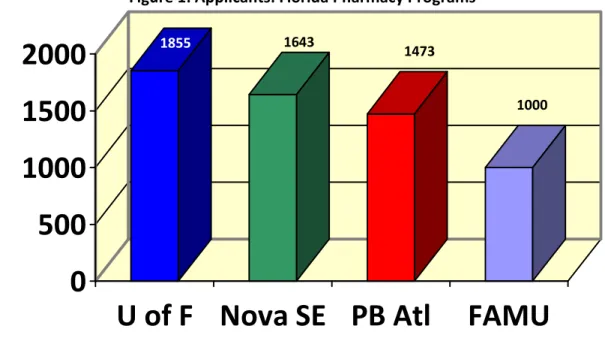
There is a significant student demand for entrance into the pharmacy profession according to the AACP’s reports of the number of student applications to the current colleges of pharmacy in the state of Florida. These reports reveal an extremely high demand for the pharmacy profession. All of the colleges of pharmacy receive applications in excess of 1000 annually; the University of Florida and Nova Southeastern report application numbers in excess of 1600 and 1700 applicants, respectively. (See Figure 1) The University Florida currently enrolls approximately 300 students
into its entry-level Doctor of Pharmacy program; the other colleges of pharmacy enroll approximately 100 to 150 students into an entry- level class. These numbers also represent application rates that exist at colleges and schools throughout the country as reported to the AACP by member schools. These enrollment numbers very likely represent the maximum student capacity that each individual program can effectively manage per their available faculty and financial resources. 1855 1643 1473 1000 0 500 1000 1500 2000 Appl icants
U of F Nova SE PB Atl FAMU Florida Schools
Figure 1: Applicants: Florida Pharmacy Programs
U of F Nova SE PB Atl FAMU
At the University of South Florida-main campus, there is a very vibrant learning community of health pre-professional students seeking admissions into the health professions. Because of the presence of the USF College of Medicine and the USF College of Nursing, many of the students prepare themselves for entry into one of these two programs. With the addition of a Doctor of Pharmacy program, many of the health professions students may also seek to gain entrance into a college of pharmacy. Currently, undergraduate students on the main campus of USF are seeking to initiate a formal pre-pharmacy organization. These students have already contacted Dr. Kevin B. Sneed with the intention of inquiring about his availability to provide his services as an adviser to the organization. This interest on the part of pre-pharmacy students on the main campus of the University of South Florida further serves notice that has a strong interest in entry into the pharmacy profession. USF Health has continued to engage pre-professional students from the main campus, and has put forth an initiative known as the Emerging Health Professions program. A College of Pharmacy at USF Health will certainly become a focal point of interest to students that have an interest in the pharmacy profession.
An increasing number of female students are enrolling in colleges of pharmacy in Florida according to an analysis of student demographics. The profession of pharmacy offers unique flexibility and the potential for part-time positions. This flexibility is appealing to female health care professionals possibly seeking to have families or balance their family and career pursuits. The part time scheduling and flexibility may ultimately have the net effect of decreasing pharmacist workforce numbers. This is a special consideration when considering the pharmacy-related health care needs of the state of Florida. A college of pharmacy at USF Health will serve to address the challenges of possible pharmacist work force shortages that may be created by a part-time workforce.
C. If similar programs (either private or public) exist in the state, identify the institution(s) and geographic location(s). Summarize the outcome(s) of any communication with such
programs with regard to the potential impact on their enrollment and opportunities for possible collaboration (instruction and research). Provide data that support the need for an additional program.
In the state of Florida there are currently five pharmacy education programs (See Table 1 Below). Two are public institutions (the University of Florida, and Florida A&M University). The other three pharmacy programs are private entities (Nova Southeastern University, Palm Beach Atlantic University, and Lake Erie College of Medicine ÆPharmacy). The University of Florida College of Pharmacy is located in Gainesville, FL; U of F also maintains three additional 4-year branch campuses in the cities of Jacksonville, Orlando, and St. Petersburg. The Florida A&M University College of Pharmacy is located in Tallahassee Florida; there are pharmacy practice branch divisions that exist in Jacksonville, Miami, and Tampa. These pharmacy practice branch divisions for Florida A&M College of Pharmacy are currently used as clinical training divisions for their graduating fourth-year professional students, and do not represent full four-year campuses offering full pharmacy curricular instruction. The U of F College of Pharmacy- St. Petersburg campus and the Florida A&M College of Pharmacy- Tampa Division are at their anticipated maximum student capacity that each individual program can effectively manage per their currently available faculty and financial resources. Nova Southeastern University College of Pharmacy exists in Fort Lauderdale and West Palm Beach. Palm Beach Atlantic University College of Pharmacy exists in Boca Raton, Florida. And the Lake Erie College of Medicine/School of Pharmacy is a new school located in Bradenton, FL. With its first entering class beginning in August 2007, they are in Candidate Status with the pharmacy accrediting agency, ACPE, and do not currently appear on any databases produced by AACP. It is not expected that opening a Doctor of Pharmacy program at USF will prove to be an impedance to the enrollment endeavors of any of the colleges of pharmacy that exist within the state of Florida. The overwhelming numbers of applications to all of the colleges of pharmacy strongly suggest that there is a very qualified applicant pool to fill all of the enrollment requirements for each college of pharmacy.
There are several distinctive characteristics that represent the five current colleges of pharmacy that exist in the state of Florida. Of the five programs listed, only the Nova Southeastern College of Pharmacy is located in a major urban area (Fort Lauderdale, Florida); all of the other main campuses are located in more rural areas by comparison. The Nova Southeastern College of Pharmacy, which is private, is also part of a larger health sciences complex. None of the other private colleges of pharmacy are part of a comprehensive health sciences educational system. The following table summarizes the information previously presented in narrative form:
Colleges of
Pharmacy currently in the state of Florida
Campus Locations- includes satellite operations Professional Student Enrollment/ class Annual Tuition (approximate) Number of Applicants/ year Public Institutions University of Florida COP
Main Campus- Gainesville Satellite Campuses-
o St. Petersburg o Orlando o Jacksonville
Florida A&M University COPPS
Main Campus- Tallahassee Divisions- o Tampa o Jacksonville o Miami ~ 150 ~ $ 5,000- first 2 professional years ~ $ 10, 500- last 2 professional years ~ 1,000 Private Institutions Nova Southeastern University COP Ft. Lauderdale West Palm Beach Puerto Rico ~ 120 N/A N/A ~ 26,000 ~ 1,600 Palm Beach Atlantic University Boca Raton ~ 100 ~ 26,000 ~ 1,400
LECOM Bradenton 75- 1st year
125- ongoing
~ 28,000 N/A
Information gathered from American Association of Colleges of Pharmacy (AACP) Table 1
The University of Florida College of Pharmacy is currently the only public university college located within an existing Health Science Center, complete with a comprehensive health sciences program profile.
The University of South Florida College of Medicine (USF) and the University of Florida (UF) College of Pharmacy had previously discussed in an innovative collaboration to potentially offer a joint PharmD program/degree in Tampa. The relationship between USF and UF extends beyond initiating a joint degree. During the past several months, USF and UF have discussed several joint collaborative projects. These projects are varied in their interest, very innovative, and represent a true spirit of joint collaboration to advance the academic, research and clinical missions of both universities. The University of Florida currently has a regional instructional pharmacy site in St. Petersburg that offers an entry-level four-year curriculum for the terminal PharmD degree. It is a natural progression for USF Health to initiate professional pharmaceutical education in addition to the other professional degree programs currently available. In the future, there will likely be areas of joint interest from which both programs may benefit.
Currently, the Florida A&M University College of Pharmacy and Pharmaceutical Sciences (FAMU COPPS) has active affiliation agreements with USF Health. For the past ten years, FAMU COP students have been actively engaged in clinical learning endeavors on the campus of USF, in particular with the USF College of Medicine. FAMU has provided clinician pharmacists to various departments with USF Health (Department of Family Medicine, and the Department of Psychiatry), and USF Health has provided clinical practice sites, office space, administrative support, and information technology support to the FAMU pharmacy faculty at no additional direct costs. In exchange, the FAMU pharmacy faculty have provided collaborative clinical services to the respective departments, and engaged the medical students and medical residents in interdisciplinary educational endeavors. This affiliation agreement remains in place, and is a prime example of collaboration between universities.
students from not only within Florida, but from schools outside of the state of Florida. This high demand is the result of having numerous teaching hospital facilities and outpatient clinical sites within the greater Tampa Bay area, all of which currently service the USF College of Medicine (See Appendix D). Other pharmacy programs such as UF, FAMU and Nova Southeastern have been the beneficiaries of the enhanced number of clinical sites in the Tampa area. Additional students from USF would not be expected to enter these clinical sites until the year 2012 as part of their Introductory Pharmacy Practice Experience (IPPE); during the program implementation phase additional clinical sites will need to be attained, with clinical teaching resources redistributed among the colleges of pharmacy that currently utilize Tampa as a service area for their students. Currently, all of the colleges of pharmacy within the state of Florida make earnest attempts to coordinate their activities together by meeting to discuss strategies for scheduling students for clinical activities.
It would be the full intention of the USF College of Pharmacy to supply clinical pharmacy instructors to the Tampa area to engage the USF professional students in clinical pharmaceutical education. Currently, only the Florida A&M University College of pharmacy offers clinical instructors for the purpose of training their own students; all of the other colleges of the pharmacy rely upon the hospitals and clinics to supply clinical pharmacy educators. With critical human resource allocation geared towards clinical faculty, the USF College of Pharmacy will allow for minimal impact on other clinical faculty resources currently being used by the other colleges of pharmacy in the Tampa area. Subsequently, the addition of a USF College of Pharmacy could serve to ease the pressure and responsibility for training pharmacy students in the hospitals in the Tampa area.
Various programmatic infrastructure components are also in place to support initiating the pharmacy program to be located at USF Health. Continued interactions with the University of Florida College of Pharmacy and the Florida A&M College of Pharmacy will continue to be assessed while the endeavor of creating a Doctor of Pharmacy program at USF Health is implemented.
D. Use Table 1 (A for undergraduate and B for graduate) to categorize projected student headcount (HC) and Full Time Equivalents (FTE) according to primary sources. Generally undergraduate FTE will be calculated as 40 credit hours per year and graduate FTE will be calculated as 32 credit hours per year. Describe the rationale underlying enrollment projections. If, initially, students within the institution are expected to change majors to enroll in the proposed program, describe the shifts from disciplines that will likely occur.
Table 1-B - Appendix E illustrates an approximation of the demographics of the students that would be expected to enroll in a USF College of Pharmacy. During the initial entering classes, it is expected that a substantial number of students applying will have a previous health pre-professional Bachelors degree from the University of South Florida, or from another State of Florida university. As previously mentioned, there is a vibrant health-professions undergraduate population at USF, and the opportunity to enter the pharmacy profession will be very appealing to these students. It is expected that there will be a number of non-traditional students that will seek admission. These students likely represent individuals that were engaged in pre-professional education as a means of entering an alternate profession from their current place of employment. These students are older than the traditional student that entered college from high school, and may have been involved in the health professions in another capacity.
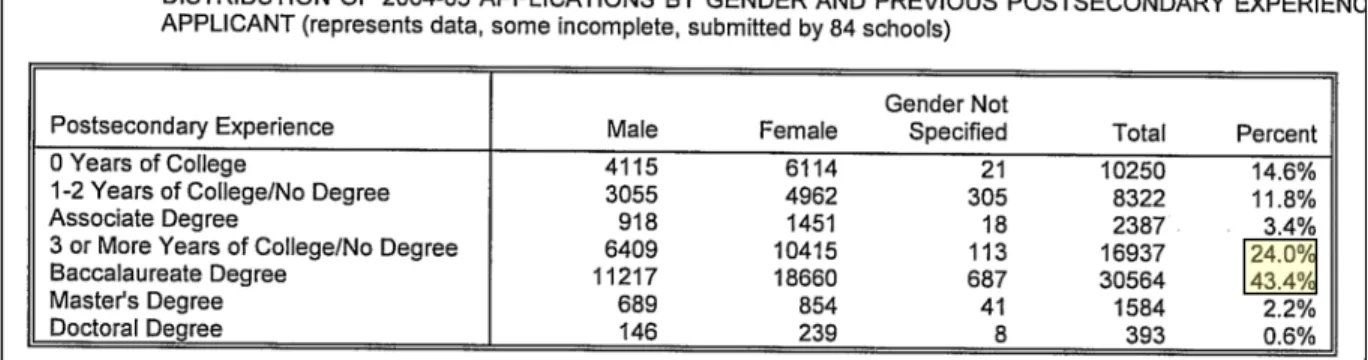
During the third entering pharmacy class, and in subsequent years, the number of students with previous bachelors degrees will continue to increase. This estimation is gathered from data collected from AACP on the demographics of students applying to pharmacy programs throughout the United States (Table 2). The AACP reports that greater than 40% of applicants have a previous baccalaureate degree; and approximately 24 % of applicants have at least 3 years of college experience, but have not yet attained a degree. This represents the 60% of students expected to apply to a USF College of Pharmacy shown in Table 1B- Appendix E. This also represents USF being located in a major urban setting in the state of Florida, separate from the two other state university Colleges of Pharmacy.
Table 2- AACP Data- Distribution of 2004-05 Applications by Gender and Previous Postsecondary Experience of Applicant
With the current health related pre-professions undergraduate degrees offered at USF, there is not an expectation that there will be a significant shift of students from one degree program to the proposed college of pharmacy. A modest number of students may attempt this degree program shift, and is represented in Table 1B- Appendix E.
E. Indicate what steps will be taken to achieve a diverse student body in this program, and identify any minority groups that will be favorably or unfavorably impacted. The university’s Equal Opportunity Officer should read this section and then sign and date in the area below.
The selection of students into the USF College of Pharmacy will be based on selecting the most qualified students. Ethnicity and race will be masked on the students’ applications.
A new college of pharmacy at the University of South Florida will present a very unique opportunity to provide a diverse student enrollment profile. USF will take several measures to foster a diverse student population. Some of these measures include:
I. Attempts will be made to produce a diverse faculty population which will create role models for aspiring pharmacy students. All qualified applicants will be encouraged to apply for positions within the USF College of Pharmacy. An appropriately qualified administrative committee charged with the selection of faculty members will be encouraged to seek diversity of all types with regards to faculty appointments.
II. Continued efforts will be made to expose high school and college students to career opportunities in the profession of pharmacy. Currently, USF Health participates in various AHEC initiatives to expose many underrepresented minority students per year to
III. Budget
A. Use Table 2 to display projected costs and associated funding sources for Year 1 and Year 5 of program operation. Use Table 3 to show how existing Education & General funds will be shifted to support the new program in Year 1. In narrative form, summarize the contents of both tables, identifying the source of both current and new resources to be devoted to the proposed program. (Data for Year 1 and Year 5 reflect snapshots in time rather than cumulative costs.)
Year 1 is representative of the possible reallocation of funds for the purpose of supporting the program’s initiation. The vast majority of the reallocated funds would go to support faculty salaries and benefits; the likely source of this reallocation is from the university’s Development and Carry- Forward funds. State enrollment growth dollars would be used to support new faculty lines, and offset necessary library support services. Because of accreditation concerns, the vast majority of faculty is expected to be hired during the year 1 planning phase, and the Year 1 enrollment phase. This is necessary to cover early clinical education that is mandated by the ACPE (pharmacy accrediting agency). By Year 5, enrollment growth dollars, E & G funding, including tuition, will be in place to cover the planned additional faculty and support staff. It is fully expected that the faculty, through dedicated research and teaching mentoring programs, will be able to complete for extramural contract and grants. It is also fully expected that program initiation funding will be sought from the legislature.
B. If other programs will be impacted by a reallocation of resources for the proposed program, identify the program and provide a justification for reallocating resources. Specifically address the potential negative impacts that implementation of the proposed program will have on related undergraduate programs (i.e., shift in faculty effort, reallocation of instructional resources, reduced enrollment rates, greater use of adjunct faculty and teaching assistants). Explain what steps will be taken to mitigate any such impacts. Also, discuss the potential positive impacts that the proposed program might have on related undergraduate programs (i.e., increased undergraduate research opportunities, improved quality of instruction associated with cutting-edge research, improved labs and library resources).
The proposed degree program is a professional program, and would not be expected to have a negative impact upon undergraduate resource programs at the University. Reallocation of existing funds will likely occur within the Health Science Center. With the addition of the proposed degree program, undergraduate opportunities will likely develop with involvement in faculty research projects, mentoring/ shadowing opportunities, and interaction with pre-professional programs.
C. Describe other potential impacts on related programs or departments (e.g., increased need for general education or common prerequisite courses, or increased need for required or elective courses outside of the proposed major).
There is not an expectation for an impact on related programs or departments. The various health professional degrees currently in existence at USF Health have very similar pre-professional requirements. Thus, there will not be an increased need for general education or common prerequisite courses, or required or elective courses beyond what is currently available at the University of South Florida.
D. Describe what steps have been taken to obtain information regarding resources (financial and in-kind) available outside the institution (businesses, industrial organizations, governmental entities, etc.). Describe the external resources that appear to be available to support the proposed program.
The Assistant Dean of the USF Division of Clinical Pharmacy has been aggressively working with the Executive Director of Development at USF Health to identify potential sources of financial resources for the proposed college of pharmacy. A strategic plan is currently being developed with the Chief Development Officer from USF Health to seek attainment of new outside financial resources specifically for the USF College of Pharmacy. Currently, none of USF Health’s dedicated external resources are available for the proposed program.
IV. Projected Benefit of the Program to the University, Local Community, and State
Use information from Table 1, Table 2, and the supporting narrative for “Need and Demand” to prepare a concise statement that describes the projected benefit to the university, local community, and the state if the program is implemented. The projected benefits can be both quantitative and qualitative in nature, but there needs to be a clear distinction made between the two in the narrative.
USF has been designated a Research I institution by the former Board of Regents, and is a Carnegie I Research Institution, with the intent that USF will place increasing emphasis on graduate and professional education in order to meet the expanding needs of the Tampa Bay region, and the state of Florida. Numerous publications and independent study groups around the country have identified the profession of pharmacy as being of critical shortages. The proposed Doctor of Pharmacy program enhances and complements USF Health in its quest to provide outstanding health care to the Tampa Bay region, and the state of Florida. USF Health is already being identified as a community leader with regards to health care delivery, and creation of the College of Pharmacy only enhances the University's efforts to continue to provide the Tampa Bay region with outstanding health care quality while serving the needs of students and pharmacy faculty.
Health, Research, and Education are of paramount importance to USF Health. With the addition of pharmacy faculty and staff, even greater health care, increased research, and outstanding education will be achieved. As shown in Figure 1 earlier in this document, and in Table 1B, student demand for this degree program is expected to be very high. State enrollment growth dollars, tuition collections, and private fundraising campaigns are expected to sustain this program from years 1 through 5. Following year 5, with normal tuition increases seen in other degree programs, continued enrollment at the proposed level, and continued efforts with regards to private fundraising campaigns, it is fully expected that the program will be self-sustaining from year six. This also takes into account normal and expected recurring state funding support throughout the existence of the program.
Florida, and of our nation. Currently, USF Health is comprised of the College of Medicine, College of Nursing, College of Public Health, and the School of Physical Therapy. All of these programs have national prominence; and all are striving to get even better. The addition of pharmacy faculty will significantly enhance the research interests of USF Health, while being a welcome addition to the teaching and learning opportunities for all of the healthcare professions at the University of South Florida. With the creation of a USF Doctor of Pharmacy program, the addition of pharmacy practice faculty will serve to assist the healthcare endeavors of USF’s medical physicians, nurses, nurse practitioners, and physical therapy practitioners. Pharmacy practice faculty’s participation in health care will occur at all of the affiliate organizations through which USF practitioners currently provide health care. With the creation of the Centers for Advanced Health Care, North and South campuses, additional clinical training sites will be provided for pharmacy faculty to achieve their required healthcare endeavors. USF Health continues to seek ways to add to the educational, health, and research profile of its colleges. All faculty will be expected to be engaged in research endeavors, especially in collaboration with the other health disciplines within USF Health. External grants and contracts will be sought by pharmacy faculty, adding further to the overall research profile of USF. The addition of a USF Doctor of Pharmacy program will add prominently to the USF Health community.
Currently, USF Health is intimately involved in community endeavors. Recently, USF researchers from the Lawton and Rhea Chiles Center for Healthy Mothers and Babies at USF Health were a pivotal part in producing legislation geared towards reducing infant mortality in the state of Florida. Numerous other departments at USF Health have been significantly involved within the community, with a particular focus in reducing health care disparities with regards to cardiovascular, cancer, and social disparities within the state of Florida. Currently, USF Health pharmacy academic clinicians are actively engaged in health disparities activities and research throughout the Tampa community. Partnerships and research projects are currently and constantly being developed with Tampa area organizations, especially non-profit organizations, to provide needed social services and activities in the areas of enhancing knowledge of cardiovascular and cancer risks, and proper pharmaceutical care utilization. The addition of a USF College of Pharmacy will significantly assist USF Health in addressing the needs of the Tampa community, and the public health needs of the state of Florida.
V. Access and Articulation – Bachelor’s Degrees Only
A. If the total number of credit hours to earn a degree exceeds 120, provide a justification for an exception to the policy of a 120 maximum and submit a request to the BOG for an exception along with notification of the program’s approval. (See criteria in BOG Regulation 6C-8.014)
N/A.
B. List program prerequisites and provide assurance that they are the same as the approved common prerequisites for other such degree programs within the SUS (see Common Prerequisite Manual http://www.facts.org). The courses in the Common Prerequisite Counseling Manual are intended to be those that are required of both native and transfer students prior to entrance to the major program, not simply lower-level courses that are required prior to graduation. The common prerequisites and substitute courses are mandatory for all institution programs listed, and must be approved by the Articulation Coordinating Committee (ACC). This requirement
includes those programs designated as “limited access.”
If the proposed prerequisites they are not listed in the Manual, provide a rationale for a request for exception to the policy of common prerequisites. NOTE: Typically, all lower-division courses required for admission into the major will be considered prerequisites. The curriculum can require lower-division courses that are not prerequisites for admission into the major, as long as those courses are built into the curriculum for the upper-level 60 credit hours. If there are already common prerequisites for other degree programs with the same proposed CIP, every effort must be made to utilize the previously approved prerequisites instead of recommending an additional “track” of prerequisites for that CIP. Additional tracks may not be approved by the ACC, thereby holding up the full approval of the degree program. Programs will not be entered into the State University System Inventory until any exceptions to the approved common prerequisites are approved by the ACC.
N/A
C. If the university intends to seek formal Limited Access status for the proposed program, provide a rationale that includes an analysis of diversity issues with respect to such a designation. Explain how the university will ensure that community college transfer students are not disadvantaged by the Limited Access status. NOTE: The policy and criteria for Limited Access are identified in BOG Regulation 6C-8.013. Submit the Limited Access Program Request form along with this document.
N/A
D. If the proposed program is an AS-to-BS capstone, ensure that it adheres to the guidelines approved by the Articulation Coordinating Committee for such programs, as set forth in Rule 6A-10.024 (see Statewide Articulation Manual http://www.facts.org). List the prerequisites, if any, including the specific AS degrees which may transfer into the program.
N/A
INSTITUTIONAL READINESS
VI. Related Institutional Mission and Strength
A. Describe how the goals of the proposed program relate to the institutional mission statement as contained in the SUS Strategic Plan and the University Strategic Plan. As previously mentioned, the proposed Doctor of Pharmacy professional degree program is consistent with the State University System Strategic Plan that has been approved in the year 2005. The strategic plan for the State University System was developed by the Florida Board of Governors, and expressly meets the following goals:
c. Meeting statewide professional and work force needs. d. Access to and production of health related degrees.
As stated in the State University System Strategic Plan, the profession of pharmacy is identified as an area of critical shortage that could negatively affect health care in key patient care areas. The proposed Doctor of Pharmacy degree program supports the strategic direction number 2 of the University of South Florida's strategic plan to “Advance Collaborative Learning and Discovery to improve health in the community, “and specifically “to advance Health Professions Education.” Within the realm of the USF Health - College of Medicine, basic scientists and clinicians work together with a spirit of collaborative learning, and the addition of a USF College of Pharmacy can only serve to enhance and be complementary to its current disciplines.
B. Describe how the proposed program specifically relates to existing institutional strengths, such as programs of emphasis, other academic programs, and/or institutes and centers.
Interdepartmental Plan for Collaboration
The proposed doctor of pharmacy program will coalesce well with the other colleges within USF Health. The additional faculty that will be recruited will enhance opportunities for collaborative research initiatives and collaborative teaching endeavors. Many of the existing departments within the College of Medicine will be the very same departments that will be serving a USF College of Pharmacy. There is an earnest attempt on the part of various departments to create a truly unique collaborative partnership that will cross traditional barriers between departments typically utilized at various universities throughout both the state of Florida and the country. The American Association of Colleges of Pharmacy developed the Center for the Advancement of Pharmaceutical Education (CAPE) Guidelines to assist colleges of pharmacy in their assessment/evaluation activities (See Appendix A- Educational Outcomes). The 2004 CAPE Educational Outcomes identify three broad domains of education for pharmacy school curricula: 1) Pharmaceutical Care; 2) Systems Management; and 3) Public Health. In most colleges of pharmacy around the country, entire departments are developed to address these outcomes. USF Health, through many of its existing departments and colleges, already possesses all the resources necessary to address the educational outcomes outlined by AACP. Rather than having to establish entire private departments within a college of pharmacy at USF, we propose that collaborative efforts with other departments and colleges throughout the University of South Florida be used to meet these educational outcomes as defined by the AACP. While issues will have to be worked out between departments and colleges throughout USF to make it short, initial discussions with all departments and colleges involved have been very favorable for joint collaborative teaching endeavors. Faculty from within a USF college of pharmacy can be shared with other colleges and departments to assist teaching endeavors of both entities, in particular in the areas of Systems Management and Public Health. The presence of existing departments and colleges throughout USF and USF health is an advantage that the University of South Florida has over many existing colleges of pharmacy, both in the state of Florida and throughout the country. The notion of interdepartmental collaboration has been very attractive for many of the departments and colleges that have been approached in preparation for a USF College of Pharmacy.
Examples of plans for interdepartmental collaboration are as follows:
1. College of Public Health- accredited colleges of pharmacy usually maintain a Social, Economic, and Administrative Sciences division. The professors responsible for teaching and conducting this portion of the curriculum share the same discipline and background as professors within our USF College of Public Health. We propose a mechanism of shared faculty resources between the proposed college of pharmacy and USF College of Public Health with the following programs:
a. Social and Administrative Sciences- processes for both colleges will be responsible for teaching the following disciplines within the pharmacy curriculum:
i. Public Health (Pharmacoepidemiology) ii. Pharmacy Management courses
iii. Biostatistics
b. Pharmacy Administrative Residency- a postgraduate administrative pharmacy residency has been proposed to be run jointly between USF Health, Tampa General Hospital, and Moffitt Cancer Center. This will involve graduate pharmacy training, as well as graduate academic studies. Currently, the graduate degree thought to best fit this program will be the Masters of Healthcare Administration (MHA). TGH and Moffitt Pharmacy administrators have identified a deficit in leadership training for the pharmacy profession’s future leaders. The goal of this residency program will be to provide a structured post-graduate experience for the administrative pharmacy resident that will provide them with the necessary supervised training to become outstanding health-system administrators; the Master’s component of the residency will serve to enhance the training and marketability of the pharmacy residents. While the proposed USF College of Pharmacy will be the administrator of the residency program, the MHA graduate degree will be conferred by the USF College of Public Health. Tampa General Hospital and Moffitt Cancer Center will be the administrators of the pharmacy administrative residency program.
i. Tampa General Hospital - Administrative Pharmacy Residency ii. Moffitt Cancer Center - Administrative Pharmacy Residency
iii. USF College of Public Health- Masters in Healthcare Administration c. Systems Management- courses currently exist within the College of Public Health
to meet this particular objective of the CAPE guidelines. Pharmacy faculty will be responsible for course coordination and teaching of this educational outcome, while also providing core support to other courses within the College of Public Health. Educational goals of this outcome are to manage and use resources of the health care system, in cooperation with patients, prescribers, other health care providers, and administrative and supportive personnel to promote health.
2. College of Medicine- proposed USF College of Pharmacy faculty, in addition to clinical adjunct pharmacy faculty, will assist in portions of teaching for other colleges throughout the USF Health. Proposed teaching collaborations include:
discussions
b. Clinical Services- Various Medical Departments
3. College of Nursing- the current academic nursing facility houses Center for Applied Clinical Skills laboratory. It has been proposed that students from the pharmacy program would participate in joint clinical skills sessions with both nursing students and medical students. More specifically, clinical skills would be honed in mock code situations, as well as simulated critical care scenarios in the hospital critical care simulation suite. Joint physical assessment skills labs would also be implemented.
4. Department of Chemistry- the chemistry department on the main campus of the University of South Florida has faculty that may be available to serve in a teaching and research capacity with the proposed USF College of Pharmacy. (i.e.- Department of Chemistry- contains several medicinal chemists). Rather than produce a separate medicinal chemistry division within the proposed USF College of Pharmacy, collaborative teaching and research could exist between the USF College of Pharmacy and the USF Department of Chemistry on the main campus of USF. Proposed collaborations for education and research include the following:
a. Medicinal Chemistry Professors- teaching, research in USF COP
b. CMD5- Center for Molecular Diversity in Drug Design, Discovery and Delivery- collaborative research for innovation and entrepreneurial endeavors.
5. Department of Pharmacology- We propose that modest numbers of pharmacology faculty would be added to the USF College of Pharmacy since there already exists an entire pharmacology unit within the USF Department of Molecular Pharmacology and Physiology. This will serve the purpose of adding to the existing pharmacology faculty without increasing their already high teaching workloads. Collaborative research projects would be an expectation for those professors jointly appointed to both educational units. The recruitment of clinical pharmacy faculty will provide clinical services throughout various areas in both USF Health and the Tampa teaching hospitals and outpatient clinics. This will serve another important initiative of the College of Medicine by adding interdisciplinary models of providing health care. The increased number of faculty that the College of Pharmacy will provide will foster academic enrichment and scholarship throughout all of the colleges that currently exist within USF Health.
The proposed USF Doctor of Pharmacy program will begin the process of nurturing developing relations between USF Health and the undergraduate departments on the main campus of the University of South Florida. Since the USF Doctor of Pharmacy program will be a professional degree program, there will be no direct impact on the undergraduate degree programs; course load, scheduling, and overall FTE issues will be worked out. However, there exists potential for an increasing number of USF undergraduate students to possibly enroll in the pharmacy program because of the presence of the USF College of Pharmacy on campus. The health professions learning communities currently in position on the main campus of the University South Florida offer a well-trained applicant pool from which of the USF College of Pharmacy could draw applicants. And with the Emerging Health Professions endeavor currently in progress through collaborative efforts of USF Health and University of South Florida College of Arts and Sciences, there will be additional opportunities for USF students.
C. Provide a narrative of the planning process leading up to submission of this proposal. Include a chronology (table) of activities, listing both university personnel directly involved and external individuals who participated in planning. Provide a timetable of events necessary for the implementation of the proposed program.
The planning process for this proposed college of pharmacy began in May 2007. It was initiated by a series of meetings between Dr. Klasko, VP of USF Health, Dr. Haney, Associate Vice President of Development for USF Health, and Dr. Kevin Sneed, Assistant Dean and Clinical Director of the newly created Division of Clinical Pharmacy. Dr. John Curran, Associate Dean of Academic Affairs for USF Health, also played an integral role in the initial phases of the proposal. Since this is a new professional degree program, the creation of this proposal is the initial endeavor. Pursuant to recommendations from the Board of Governors of the state of Florida, we contacted an outside consultant to perform a workforce analysis of the need for pharmacists within the state of Florida.
It is planned that this proposal will be submitted to the USF Provost, the USF Graduate Education Council and the Health Affairs Management Council in January 2008. Upon approval from the various councils, it will then be submitted to the USF Board of Trustees for approval. Considering the necessary timetable from the Florida Board of Governors, it will expeditiously be submitted for consideration by the Board of Governors as early as possible, but no later than the beginning of October; we would then plan to have this proposal considered by the Board of Governors during their December meeting for approval.
Once approved by the Florida Board of Governors, it will then go before the Florida legislature for program approval during the 2008 legislative session. Once approved, at this point, the remainder of 2008 in the beginning of the year 2009 will be a planning and implementation year for the addition of faculty, renovation/creation of buildings for didactic teaching and clinical teaching purposes. Admissions processes will begin in early 2009, with the initial class entering in the fall of 2009.
Planning Process
Date Participants Planning Activity
May 3, 2007 Dr. S. Klasko, Dr. Patricia Haynie Initial Planning meeting
April 16, 2007 Dr. Klasko, Dr. Haynie, Dr. Sneed,
Steve Blair, John Ekarious, Dr. Ralp Wilcox
Program planning
April 20, 2007 USF- Haynie, Klasko, Sneed, Wilcox UofF- Mike Brodeur, CFO,Assoc.Dean Bill Millard, Executive Associate Dean Jennifer Williams, Assist. Dean, St. Petersburg Campus
Bill Riffee, Dean, Pharmacy
Discussion of joint degree program, terms of agreement
April 23, 2007 Phone call – USF Participants: Drs. Haynie, Klasko, Sneed, Kathleen Moore, John Ekarius
UF Participants – Laura Barton, Mike Brodeur, Bill Millard, Sven Normann, Bill Riffee, Jennifer Williams
Discussion of joint degree program, Term Sheet developed, agreed upon.