Original Research Article
The role of laparoscopy in patients with abdominal trauma
Pranav K. Sharma
1*, Gaurav Gupta
2INTRODUCTION
Abdominal trauma is one of the major causes of death and disability in our country. In the case of young people under the age of 40 years, it is the most significant cause of mortality and permanent disability. When combined with pedestrian versus auto accidents, these types of abdominal traumas account for up to 75% of cases seen, while direct abdominal blows and falls comprise the remainder. The spleen is the most often injured organ and
may be the only intra-abdominal injury in over 60% of the cases. Liver and hollow viscus injuries follow in decreasing incidence.1
Penetrating stab wounds are encountered three times more often than gunshot wounds but have a lower mortality because of their lower velocity and less invasive tract. Gunshot abdominal penetrating trauma accounts for up to 90% mortality. Injury to the bowel is commoner than hepatic injury, regardless of type of penetrating injury.2
1Department of Surgery, Dr Y.S. Parmar Government Medical College, Nahan, Sirmour, Himachal Pradesh, India 2Department of Surgery, Maharishi Markendeshwar Institute of Medical Sciences and Research, Mullana, Ambala,
Haryana, India
Received: 11 March 2019 Revised: 25 March 2019 Accepted: 12 April 2019
*Correspondence: Dr. Pranav K. Sharma,
E-mail: [email protected]
Copyright: © the author(s), publisher and licensee Medip Academy. This is an open-access article distributed under the terms of the Creative Commons Attribution Non-Commercial License, which permits unrestricted non-commercial use, distribution, and reproduction in any medium, provided the original work is properly cited.
ABSTRACT
Background: Use of laparoscopy in penetrating trauma has been well established; however, its application in blunt trauma is gaining popularity as a useful diagnostic tool to avoid unnecessary laparotomies where there is diagnostic dilemma. Even though recent case reports seem to suggest that these patients can be managed using laparoscopy, the practice is not yet wildly adopted.
Methods: All adult patients who presented with abdominal trauma laparoscopic surgery was considered in patients who were deemed fit for the same in the Department of General Surgery, MMIMSR, Mullana, Ambala during a period of 18 months starting from January 1st 2015 to June 30th 2016. Data was analysed using descriptive statistics.
Results: A total of 53 patients with either blunt or penetrating abdominal trauma that required surgery were included in the study. Exploratory laparotomy was performed in 45 patients (84.91%) and laparoscopy was performed in 8 patients (15.09%). Overall mesenteric injury (45.28%) was the most common intra-abdominal injury noted. The most common organ involved in blunt trauma was the spleen (68.97%). The mean operating time of laparoscopy was lesser by 57 minutes as compared to exploratory laparotomy. The use of laparoscopy avoided negative and non-therapeutic laparotomy in 2 patients (25%). Therapeutic laparoscopy was performed in 3 patients with repair of bowel and mesenteric injuries. There was no documented procedure-related morbidity and mortality.
Conclusions: The positive outcomes from the study suggest that laparoscopy can be safe and feasible in both diagnostic and therapeutic interventions in carefully selected blunt abdominal trauma patients.
Keywords: Blunt Trauma, Free Fluid, Laparoscopy, Negative laparotomy, Penetrating Trauma, Therapeutic
Laparoscopy
The clinical and hemodynamic status of the patient is the
most crucial factor in deciding the mode of management viz., operative versus non-operative. Indications for exploratory laparotomy in trauma patients have traditionally been generous, to the extent that up to 41% of exploratory laparotomies turn out to be non-therapeutic.3
In the evaluation of abdominal injury patients, diagnostic tests like focussed abdominal sonography in trauma, diagnostic peritoneal lavage, and contrast enhanced computed tomography of abdomen have a defined sensitivity, specificity, and accuracy, but none of the above is a gold standard. Thus, the idea that abdominal exploration by laparotomy as the only diagnostic and therapeutic procedure for patients with equivocal and unreliable findings needs re-evaluation. It is associated with complication rates as high as 40% including a 10% to 40% negative laparotomy rate, 20% morbidity rate, a 0% to 5% mortality rate and a 3% long term risk of bowel obstruction.4
Laparoscopy can be applied for both diagnosis and definitive therapy in haemodynamically stable patients with abdominal trauma. The routine use of laparoscopy can achieve a sensitivity of 90-100% in abdominal trauma.5 The use of laparoscopy as an aid in the diagnosis
of abdominal trauma was first described in 1977 by Simon et al. In 1988, Cuschieri compared diagnostic peritoneal lavage with laparoscopy in blunt abdominal trauma patients demonstrating that laparoscopy carried a higher positive predictive value when compared to diagnostic peritoneal Lavage. In trauma patients laparoscopy may avoid unnecessary (non-therapeutic) laparotomy, may improve operative visualisation of diaphragm, and may allow laparoscopic repair of injuries.6
In 1991, Berci et al reported that he reduced the number of nontherapeutic laparotomy performed for haemoperitoneum by 25% through the use of laparoscopy in 150 patients with blunt abdominal trauma.7 Chol et al
in 2002 reported reduced negative and nontherapeutic laparotomy rates in an identical population. Haemoperitoneum associated with stable vitals with liver injury, splenic injury, bowel injury, mesenteric injury, or bladder injury can be managed very well by means of laparoscopy.8
One can visualise peritoneal cavity and act expeditiously if needed (i.e. laparotomy, laparoscopic assisted intervention or only observation) at time of laparoscopy. Advanced laparoscopic technique including bowel resection and anastomosis, ligation of blood vessels can be done as good as in elective open surgery.9,10
Laparoscopic is cost effective, reduces the rate of negative laparotomy, reduces the patient’s stay in hospital and mortality and allows early mobilization and resumption of work.11
The most common indications for laparoscopic diagnosis and treatment as defined by SAGES includes any suspected but unproven intra-abdominal injury after blunt or penetrating trauma. The benefits of laparoscopy in trauma are reduction in the rate of negative and nontherapeutic laparotomies and ability to provide therapeutic intervention. The risks associated with the use of laparoscopy are delay to definitive treatment and missed injuries with their associated morbidity.12
Conversion to conventional open approach to the thorax and abdomen should be possible without delay or additional preparation as for every trauma laparotomy.13
In the near future laparoscopic management of abdominal trauma will play a greater role in the treatment of haemodynamically stable patients and might one day be a reasonable option even for unstable patients.14
METHODS
This was a prospective study carried out in the Department of General Surgery, MMIMSR, Mullana, Ambala during a period of 18 months starting from January 1st 2015 to June 30th 2016. Patients were assessed
on the basis of history physical examination, preoperative parameters and imaging and type of surgery done. Data of all patients undergoing exploratory laparotomy and laparoscopy was collected according to the attached protocol.
It was a hospital based, time bound, prospective study and included stable patients admitted to the casualty with abdominal trauma who required further evaluation of the extent of injury.
Procedure
• Patients who were stable after adequate resuscitation were taken into the study.
• Preoperative vital signs, laboratory investigations and imaging done as per the attending team’s protocol were recorded.
• Indication for the choice of approach (laparoscopic/ laparotomy) was noted.
• Intraoperative findings and therapeutic procedures done were recorded.
Inclusion criteria
• All stable patients with abdominal trauma who required surgery for further evaluation and management of abdominal injury.
• Age group: 12 years and above.
Exclusion criteria
The following patients were excluded from our study:
• Patients with marked haemodynamically instability, those could not tolerate the delays in laparoscopic entry into the abdomen and the pneumoperitoneum that laparoscopy requires.
• Patients with general or local contra-indications for laparoscopy as decompensated cardiac patients, patients with increased intracranial tension and patients with previous major abdominal surgery expecting intra-abdominal adhesions.
Statistical analysis
Statistical analysis was done using descriptive statistics. Data was entered in Microsoft Excel and was analysed using SPSS version 16 for frequencies and proportions. Chi square test and T-test were the tests of significance.
RESULTS
The present study was conducted to evaluate the role of laparoscopy in abdominal trauma over a period of 18 months starting from 1st January 2015 to 30th June 2016.
A total of 280 trauma patients were evaluated for abdominal injury. Out of these, 61 patients (21.79%) underwent surgical intervention for abdominal trauma and were thus included in the study. The remaining 219 patients (78.21%) were either managed non-operatively or referred to other departments for management of extra abdominal injuries after ruling out abdominal injury. Out of these 61 patients, 8 patients (13.11%) were haemodynamically unstable in spite of adequate resuscitation having systolic B.P. <90 mm of Hg and were taken up for exploratory laparotomy immediately. Out of remaining 53 patients, 45 patients (84.91%) underwent exploratory laparotomy and 8 patients (15.09%) underwent laparoscopic procedure. Out of the 8 patients who underwent laparoscopy, 3 patients (37.5%) were converted to laparotomy for completion of surgery. In the present study, out of 53 patients, 44 patients (83.02%) were male and 9 patients (16.98%) were female. Out of the 45 patients who underwent exploratory laparotomy, 38 patients (84.44%) were male and 7 patients (15.56%) were female. In the laparoscopy group 6 (75%) were male patients and 2 (25%) were female patients (Table 1).
Table 1: Gender distribution.
Laparotomy Laparoscopy Total
Male 38 06 44
Female 07 02 9
Total 45 08 53
P value= 0.885
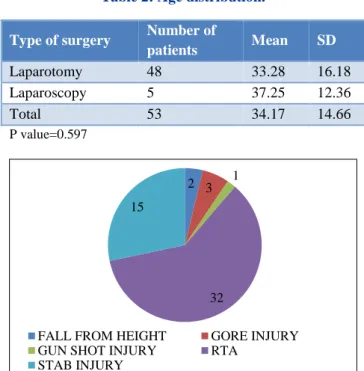
In the present study, age was used as a continuous variable as depicted in Figure 1. The mean age of the patients who underwent exploratory laparotomy was 33.28 years (33.28±16.18) with a median of 30 years. The mean age of patients who underwent laparoscopic
surgery was 37.25 years (37.25±12.36) with a median of 35 years (Figure 1).
Figure 1: Distribution of patients in various age groups.
Table 2: Age distribution.
Type of surgery Number of
patients Mean SD
Laparotomy 48 33.28 16.18
Laparoscopy 5 37.25 12.36
Total 53 34.17 14.66
P value=0.597
Figure 2: Different modes of injuries.
Table 3: Relation of mode of injury with type of surgery.
Mode of Injury Laparotomy Laparoscopy Total
Fall from height 02 0 02
Gore injury 02 01 03
Gunshot injury 01 0 01
Road traffic
accidents 29 03 32
Stab injury 14 01 15
Total 48 5 53
7
15
6
12
5 3
0
2 2
1 0 0
0 2 4 6 8 10 12 14 16 18
<20 21 to 30 31 to 4041 to 50 51 to 60 >60
Age in years
Laparotomy Laparoscopy
2 3 1
32 15
FALL FROM HEIGHT GORE INJURY
GUN SHOT INJURY RTA
However, the difference was not statistically significant
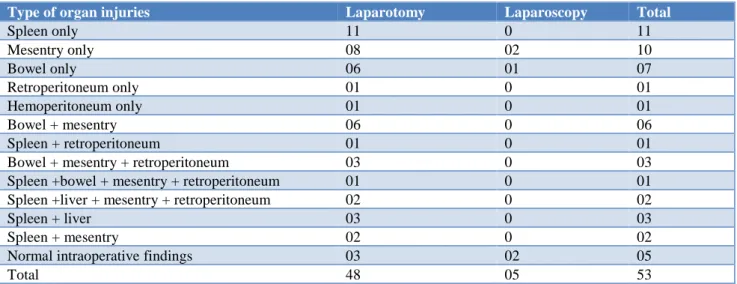
(p=0.597) (Table 2). In the present study, 32 patients (60.38%) presented with abdominal trauma secondary to road traffic accident. This was the most common mode of injury (Figure 2). The other modes of injury were stab injury in 15 patients (28.3%), animal gore injury in 3 patients (5.66%), fall from height in 2 patients (3.77%), and gunshot injury in 1 patient (1.89%) (Table 3). In the present study, type of abdominal trauma was studied on the basis of its mechanism. Out of 53 patients, 29 patients (54.72%) presented with blunt trauma and 24 patients (45.28%) presented with penetrating trauma. The relationship between the type of abdominal trauma and the type of surgery was found to be found to be statistically insignificant (Table 4). In the present study, the number of patients with mesenteric injury was 24 patients (45.28%), the numbers of patients with splenic injury were 20 patients (37.74%), the number of patients with bowel injury was 22 patients (41.51%), the number of patients with retroperitoneal injury was 11 patients
(20.75%) and the number of patients with hepatic injury was 4 patients (7.55%). The corresponding relation to the type of surgery is shown in table. The Intraoperative findings were normal in 5 patients (9.43%). This was in 3 patients (6.67%) who underwent laparotomy and in 2 patients (25%) who underwent laparoscopy. Negative laparotomy was seen in 3 patients (6.25%) out of the total 48 laparotomy done (Table 5).
Table 4: Blunt and penetrating trauma with type of surgery.
Type of surgery
Blunt trauma
Penetrating
trauma Total
Laparotomy 26 19 45
Laparoscopy 03 05 08
Total 29 24 53
P Value=0.498
Table 5: Organ injury with type of surgery.
Type of organ injuries Laparotomy Laparoscopy Total
Spleen only 11 0 11
Mesentry only 08 02 10
Bowel only 06 01 07
Retroperitoneum only 01 0 01
Hemoperitoneum only 01 0 01
Bowel + mesentry 06 0 06
Spleen + retroperitoneum 01 0 01
Bowel + mesentry + retroperitoneum 03 0 03
Spleen +bowel + mesentry + retroperitoneum 01 0 01
Spleen +liver + mesentry + retroperitoneum 02 0 02
Spleen + liver 03 0 03
Spleen + mesentry 02 0 02
Normal intraoperative findings 03 02 05
Total 48 05 53
Table 6: Co-morbidities.
Co-morbidity Laparotomy Laparoscopy Total number of patients
Diabetes mellitus 03 02 05
Hypertension 04 0 04
Bronchial asthma 02 0 02
HBSAG and HCV 02 0 02
Chronic alcoholism 01 0 01
RHD 01 0 01
Total 13 02 15
Haemoperitoneum was encountered in 42 patients (79.25%). In the present study, 15 patients (28.3%) out of 53 patients had co-morbidities. Out of 8 patients who underwent laparoscopic procedure, only 2 patients (25%)
morbidities that were observed in the 45 patients that
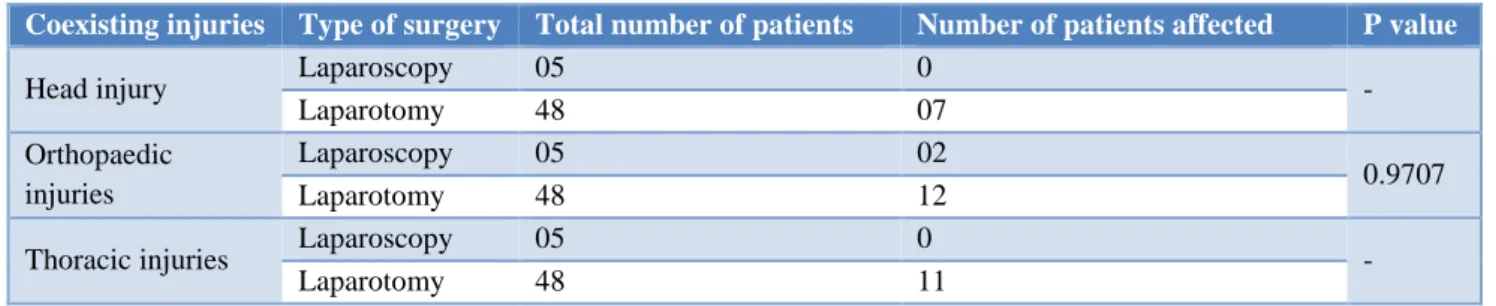
underwent laparotomy are shown in Table 6. In the present study out of the 53 patients taken for surgical intervention, 21 patients (39.62%) had co-existing extra abdominal injuries, 14 patients (26.42%) had coexisting orthopaedic injuries, 11 patients (20.75%) had coexisting thoracic injury and 7 patients (13.21%) had coexisting head injury. Isolated abdominal injury was seen in 32 patients (60.37%) (Figure 3).
The presence of coexisting injuries did not significantly affect the type of surgery chosen (Table 7). CT scan of the abdomen was performed in 20 patients (44.44%) out of 45 patients that underwent laparotomy and in 5 patients (62.5%) out of 8 patients that underwent laparoscopy. Ultrasound abdomen was used preoperatively in 15 patients (28.3%) who underwent laparotomy and in 3 patients (5.66%) who underwent laparoscopy in view of presence of significant free fluid
(p=0.904). The difference was statistically insignificant (Table 8).
Figure 3: Distribution of extra abdominal injuries.
Table 7: Coexisting extra-abdominal injuries with the type of surgery.
Coexisting injuries Type of surgery Total number of patients Number of patients affected P value
Head injury Laparoscopy 05 0 -
Laparotomy 48 07
Orthopaedic injuries
Laparoscopy 05 02
0.9707
Laparotomy 48 12
Thoracic injuries Laparoscopy 05 0 -
Laparotomy 48 11
Table 8: Preoperative imaging with type of surgery.
Laparotomy Laparoscopy
CT scan abdomen 20 05
USG abdomen 15 03
Total 35 08
P Value = 0.782
Table 9: Type of surgery and the mean duration in minutes.
Duration of surgery
(minutes) Laparotomy Laparoscopy
Mean ±SD 133±32.66 76±22.16
Median 130 80
Min-max 90-180 60-90
P Value= 0.00037
In the present study the duration of surgery was calculated in minutes from the time first incision was made to the completion of skin closure with sutures. The mean time taken for exploratory laparotomy in 48 patients, including the 3 patients that were converted
from laparoscopy to open surgery, was 133 minutes (133±32.66). In the remaining 5 patients that underwent laparoscopic procedure the mean duration of surgery was 76 minutes (76±22.16). The comparison was statistically significant (p<0.001) (Table 9). In the present study, the average blood loss observed due to intra-abdominal organ injury in the laparotomy group in millilitres was 924.67±614.59ml and in the laparoscopy group was 172.5±47.1ml. The amount of blood loss was found to be significantly different (p=0.018) in the two groups although greater blood loss was encountered in open laparotomy as compared to laparoscopy (Table 10).
Table 10: Blood loss with the type of surgery.
Blood loss (ml) Laparotomy Laparoscopy Mean ±SD 924.67±614.59 172.5±47.1
Median 900 170
Range 20-2000 100-250
P Value=0.0187
In the present study, the effect of pre-operative haemoglobin was studied to look for its impact on type of surgery chosen. The mean haemoglobin of the patients
7 14
11 32
HEAD INJURY
ORTHOPAEDIC INJURIES
THORAX INJURIES
who underwent open laparotomy was 12.79gm/dl
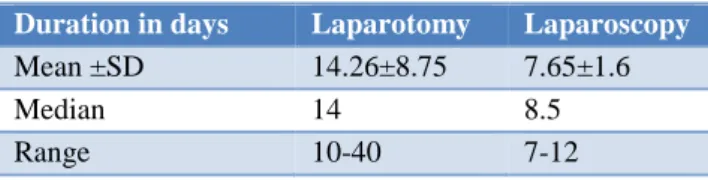
(12.79±2.15) and in the patients who underwent laparoscopy was 12.8gm/dl (12.8±1.33). This was found to be statistically insignificant (p=0.992) (Table 11). The mean duration of hospitalization of patients in days that underwent surgery following abdominal trauma is 15.76±8.16 days. The duration of stay of patients following exploratory laparotomy was 14.26 days (14.26±8.75) while the patient who underwent laparoscopy stayed for a mean duration of 7.65 days (7.65±1.6). This difference of shorter stay in patients who underwent laparoscopy was statistically significant (p=0.0395) (Table 12).
Table 11: Mean haemoglobin in millilitres with the type of surgery.
Haemoglobin (gm/dl) Laparotomy Laparoscopy
Mean ±SD 12.79±2.15 12.8±1.33
Median 12.5 12.5
Range 8-16 10.4-13.8
P Value=0.9919
Table 12: Duration of hospital stay with the type of surgery.
Duration in days Laparotomy Laparoscopy
Mean ±SD 14.26±8.75 7.65±1.6
Median 14 8.5
Range 10-40 7-12
P Value=0.0395
DISCUSSION
In the present study, feasibility of laparoscopy in patients with abdominal trauma was studied over a study period of 18 months. A total of 53 haemodynamically stable patients, with mean systolic blood pressure of 104.09±9.81 mm of Hg and mean pulse rate of 102.88±9.81 per minute, were operated for abdominal trauma. In our study 26 patients (50%) were in the age group of 21 to 40 years. Abdominal trauma is most common in the active segment of the population globally and the incidence is the highest in the 21-40-year age group.15 The findings in the present study suggest also
that the young and economically active segment of the population is very vulnerable to trauma. In the study by Johnson JJ et al the mean age of the patients with blunt and penetrating injury was 32±11 years and 29±22 years respectively (p=0.525) which is similar to the present study.16 In the present study the difference in age was not
statistically significant in the open and laparoscopy groups of patients (p=0.597). In the present study, male patients were more affected as compared to female patients in the ratio of 5:1. In this region males represent the active group of society that takes part in the high risk activities. Our results were similar to the results obtained by Musau et al where the ratio of male patients to female
patients was 12.3:1.17 In this study, more males
underwent both laparoscopy and laparotomy than females. Out of 45 patients in the laparotomy group, 38 were male patients (84.4%) while 7 were female patients (15.56%). In the laparoscopy group all the patients were male patients. The gender distribution was not statistically significant (p=0.89) with respect to the type of surgery done. However, the data was statistically significant in the type of abdominal trauma sustained. There was higher number of blunt trauma in female patients as compared to males who had higher number of penetrating injuries (p=0.003). Our study had similar results as in the study done by Jhonson JJ where the patients sustaining blunt trauma were most likely to be female (p=0.033).16 In this study we found that the most
common mode of injury encountered in abdominal trauma was road traffic accident where 32 patients (60%) presented with blunt trauma to abdomen, after sustaining injury as passenger, pedestrians or drivers. This was followed by stab injury in 15 patients (28%) most commonly due to assault by a sharp weapon secondary to interpersonal violence. The other modes of injury were fall from height in 2 patients (3.8%), animal gore injury in 3 patients (5.67%) and gunshot injury in 1 patient (1.88%). Our data was different from that of Fabian et al where the most common mode of injury observed in 182 patients was stab injury in 100 patients (55%), followed by gunshot injury in 66 patients (36%) and 16 patients (9%) of blunt trauma.18 Most studies reviewing
abdominal trauma necessitating laparotomy in the western world have reported penetrating injury as a more frequent cause of abdominal trauma.19 The less number of
gunshot injury can be explained by the restricted ownership of firearms and more frequent use of knives and other sharp objects during assaults in this region. The most common type of abdominal trauma in our study was blunt trauma abdomen seen in 29 patients (54.7%) as compared to penetrating trauma that was seen in 24 patients (45.28%). The possible explanation for greater occurrence of road traffic accidents leading to blunt trauma in our densely populated area is due to the presence of national highways near our hospital. Our findings differ from the review of laparoscopy in abdominal injury done by Johnson JJ et al who found that the most common type of injury was penetrating injury seen in 109 patients (83.20%) while blunt trauma was less common, seen in 22 patients (16.79%).16 In this study the most common indication for laparotomy was blunt trauma seen in 26 patients (57.8%) followed by penetrating abdominal trauma seen in 19 patients (42.2%). In the laparoscopy group out of 8 patients only 3 patients (37.5%) had blunt trauma abdomen whereas the remaining 5 patients (62.5%) had penetrating abdomen trauma. The relationship was found to be statistically insignificant (p=0.498). These results were similar to that of Lim KH et al who had reported higher incidence of blunt trauma than penetrating trauma in a series of 111 patients in South Korea.20 In the present study, the most
(45.28%), followed by splenic injury seen in 20 patients
(37.74%) and bowel injury seen in 22 patients (41.51%). This was followed by retroperitoneal injury seen in 11 patients (20.75%) and hepatic injury seen in 4 patients (7.55%). Haemoperitoneum was encountered intraoperatively in 42 patients (79.25%). In 29 patients with blunt trauma, the most frequently occurring injury was splenic injury which was seen in 20 patients (68.97%). In 24 patients with penetrating injury the two most common injuries were bowel injury seen in 14 patients (58.33%) and mesenteric injury seen in 10 patients (41.66%). Cathey KL came to the same conclusion in a series of 55 patients where the most commonly injured organ after blunt trauma was the spleen seen in 25 patients (45%).21 Another study in
Scotland in 672 patients with abdominal trauma by Brady RR et al described splenic injury as the most common injury secondary to blunt trauma following road traffic accidents seen in 579 patients (86.2%).22 In West Africa
Yeboah et al reported in 411 patients that the most common injury after penetrating abdominal trauma was small bowel injury in 95 patients (23.2%) followed by stomach injury in 53 patients (12.9%), colon in 42 patients (10.2%) and liver in 41 patients (10.0%).23 The
mean operating time for exploratory laparotomy was 133±32.66 minutes and for laparoscopy were 76±22.16 minutes. This was statistically significant having p value of 0.0004. Out of the 8 patients who underwent laparoscopic procedure, 3 patients (37.5%) had to be converted to laparotomy due to multiple bowel injuries thus prolonging the operative time. The operation chosen was determined by the surgeon’s discretion and was influenced by their relation to the learning curve of laparoscopy. The findings in this study were similar to Lin HF et al who studied the value of laparoscopy in abdominal stab injuries and found that mean operating time of laparoscopy (90.7 minutes) was significantly lesser than that of open laparotomy (118.7 minutes) with a p value of 0.019.24 However in the analysis done by
Lim KH et al the difference in the operating time between exploratory laparotomy (97.2±31.0 minutes) and laparoscopy (91.2±34.6 minutes) was found to be statistically insignificant (p=0.374).20 As the amount of
blood loss encountered intra-operatively in a patient with abdominal trauma is directly proportional to organ injury and is not directly related to the type of surgery done. The laparotomy group had a higher blood loss (924.67±614.59 ml) as compared to laparoscopy (172.5±47.1 ml). This difference was statistically significant (p=0.018). The findings were similar to the results in the meta-analysis of 9058 patients conducted by Li et al where the mean difference was 141.33ml more than laparoscopy which was statistically significant (p=0.01).25 In our study out of 53 patients the most
common extra abdominal injury was orthopaedic trauma in 14 patients (26.42%). Isolated abdominal injuries were seen in 32 patients (60.38%). The associated injuries impacted the duration of hospital stay of the patients. The mean duration of hospitalization in patients with isolated abdominal injuries was 18.72±5.93 days as compared to
patients with other injuries which was 13.14±2.87 days. The difference was statistically insignificant (p=0.69). Chalya et al associated extra-abdominal injuries with increased duration of hospitalization from 14.9±1.1 days to 24.3±8.3 days which was statistically significant (p=0.002).26 In our study the postoperative hospital stay
was significantly less in laparoscopy patients (7.65±1.6 days) as compared to laparotomy patients (14.26±8.75 days) (p=0.039). This is due to fact that in the open group out of 48 patients, 19 patients (39.6%) had associated extra abdominal injuries as compared to laparoscopy where out of 5 patients only 2 patients (40%) had coexisting lower limb fracture. In the study conducted by Lin HF et al in patients with abdominal stab injury the mean duration of hospital stay of patients who underwent laparoscopy was 5.0 days as compared to laparotomy which was 9.9 days (p<0.001).24 Similar results were
obtained by Taner AS in a study of 99 patients who reported shorter duration of stay in patients undergoing laparoscopy (5.2±1.42 days) as compared those in the open category (7.4±1.42 days) (p<0.001).13 CT scan of
the abdomen was performed in 20 patients (44%) out of 45 patients that underwent laparotomy and in 2 patients (25%) out of 8 patients that underwent laparoscopy. Ultrasound abdomen was used preoperatively to diagnose free fluid in the peritoneal cavity in 15 patients (28.3%) where exploratory laparotomy was performed in all the patients. ultrasound was performed in 3 patients (5.66%) the laparoscopy group (p=0.904). The difference was statistically insignificant. Diagnostic peritoneal lavage (DPL) was not used preoperatively to decide on the operative management in any patient. Liu et al performed a prospective assessment to compare sensitivity and specificity of DPL, CT Scan and Ultrasound in diagnosis of haemodynamically stable patients after blunt abdominal trauma. They observed higher sensitivity of DPL in comparison to CT scan and ultrasound (100%, 97.2%, and 91.7% respectively) and lower specificity (84.2%, 94.7%, and 94.7% respectively). DPL can lead to a higher rate of non-therapeutic laparotomy due to its poor specificity if used preoperatively to take decision for surgery.27,28 In the present study, out of the 8 patients that
laparotomy rate of 5-39% as reported in the review by
Brefort JL et al.29 The rate of missed injuries requiring
re-intervention was nil in the patients that underwent laparoscopy. In this study out of the total 53 patients, laparoscopy avoided exploratory laparotomy in 2 patients (4.16%). Due to lesser number of patients in the laparoscopy group our results differs from the meta-analysis of 37 studies with 1900 abdominal trauma patients done by Villavicencio RT et al where laparoscopy helped prevent 1197 patients (63%) from having an exploratory laparotomy.30 Our results were
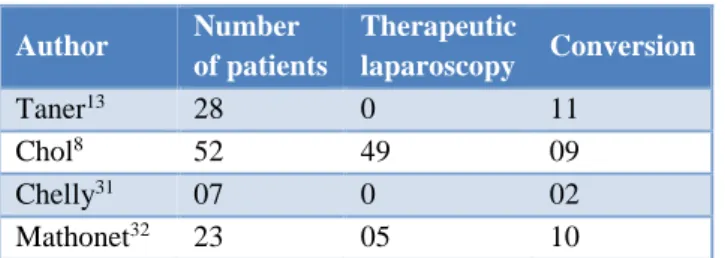
similar to the study conducted by Jhonson JJ et al of 131 patients where negative laparotomy was avoided in 2 patients (1.8%), 11 patients (10.1%) were converted to open surgery, therapeutic laparoscopy was performed in 11 patients (8.39%) and only one missed injury (0.76%) was observed after initial laparoscopy requiring re-intervention.16 The table below shows results of
laparoscopic intervention following abdominal trauma from various authors (Table 13).
Table 13: Results of various studies showing therapeutic laparoscopy.
Author Number of patients
Therapeutic
laparoscopy Conversion
Taner13 28 0 11
Chol8 52 49 09
Chelly31 07 0 02
Mathonet32 23 05 10
The present study has its limitation due to lesser number of patients in the laparoscopy group. One of the drawbacks faced during this study, was the logistic difficulty in arranging emergency laparoscopy, due to its unavailability for use in elective cases.
CONCLUSION
Based on this study we conclude that laparoscopy is a feasible modality in the management of blunt and penetrating abdominal injuries. It can decrease the number of negative laparotomies and in select cases can be therapeutic as well. However, larger sample size and a double blinded randomized study will be helpful to assert the above.
Funding: No funding sources Conflict of interest: None declared
Ethical approval: The study was approved by the Institutional Ethics Committee
REFERENCES
1. Demetriades D, Murray J, Brown C, Velmahos G, Salim A, Alo K et al. High-level falls: type and severity of injuries and survival outcome according to age. J Trauma: Injury, Infection, Critical Care. 2005;58:342-5.
2. Nicholas JM, Rix EP, Easley KA, Felliciano DV, Cava RA, Ingram WL, et al. Changing patterns in the management of penetrating abdominal trauma: the more things change, the more they say the same. J Trauma. 2002;55:1095-110.
3. Shanmuganathan K, Mirvis SE, Chiu WC, Killeen KL, Hogan GJF, Scalea TM. Penetrating torso trauma: triple-contrast helical CT in peritoneal violation and organ injury-a prospective study in 200 patients. Radiol. 2004;231:775-84.
4. Willmann J, Roos J, Platz A, Pfammatter T, Hilfiker P, Marineck B, et al. Multidetector CT: Detection of Active Haemorrhage in Patients with Blunt Abdominal Trauma. Am J Roentgenol. 2002;179:437-44.
5. Gorecki PJ, Cottam D, Angus LD, Shaftan GW. Diagnostic and therapeutic laparoscopy for trauma: a technique of safe and systematic exploration. Surg Laparosc Endosc Percutan Tech. 2002;12:195-8. 6. Cuschieri A, Hennessy TP, Stephens RB, Berci G.
Diagnosis of significant abdominal trauma after road traffic accidents: preliminary results of a multicenter clinical trial comparing minilaparoscopy with peritoneal lavage. Ann R Coll Surg Engl. 1988;70:153-5.
7. Berci G, Sackier JM, Paz-Parlow M. Emergency laparoscopy. Am J Surg. 1991;161:332-5.
8. Chol YB, Lim KS. Therapeutic laparoscopy for abdominal trauma. Surg Endosc. 2002;17:421-7. 9. Bergstein JM, Aprahamian C. Diagnostic and
therapeutic laparoscopy for trauma, textbook of Laparoscopy and Thoracoscopy surgery. In: Frantzides CT, editor. St. Louis, Missouri: Mosby-Year Book; 1995:155-171.
10. Gagner M, Rogula T, Selzer D. Laparoscopy liver resection benefits and controversies. Surg Clin N Am. 2004;84:451-62.
11. Macfadyen BV, Ponsky JL. Preface, Operative Laparoscopy and Thoracoscopic Surgery. Lippincott-Raven Press, Philadelphia, Pennsylvania; 1996:1-2.
12. Hori Y. SAGES Guidelines Committee. Diagnostic laparoscopy guidelines. Surg Endosc. 2008;22:1353-83.
13. Taner AS, Topgul K, Kucukel F, Demir A, Sari S. Diagnostic laparoscopy decreases the rate of unnecessary laparotomies and reduces hospital costs in trauma patients: J Laparoendosc Adv Surg Tech. 2004;11:207-12.
14. Bendinelli C, Balogh ZJ. Laparoscopy in trauma Patients. Advances in Laparoscopic Surgery. 2012. Dr Arshad Malik (Ed.), Available at: http://www.intechopen.com/books/advances-in- laparoscopic-surgery/laparoscopy-in-trauma-patients.
16. Jhonson JJ, Garwe T, Raines AR, Thurman JB,
Carter S, Bender JS, et al. The use of laparoscopy in the diagnosis and treatment of blunt and penetrating abdominal injuries: 10-year experience at a level 1 trauma centre. Am J Surg. 2013;205:317-20. 17. Musau P, Jani PG, Owallah FA. Pattern and
outcome of abdominal injuries at Kenyatta National Hospital, Nairobi. East African Medical J. 2006;83:37-43.
18. Fabian TC, Croce MA, Stewart RM, Pritchard FE, Minard G, Kudsk KA. A prospective analysis of diagnostic laparoscopy in trauma. Ann Surg. 1993;217:557-64.
19. Siddig HD, Ahmed ME. Management of abdominal trauma in Khartoum Teaching Hospital. Khartoum Med J. 2008;1:112-5.
20. Lim KH, Chung BS, Kim JY, Kim SS. Laparoscopy surgery in abdominal trauma: a single centre review of a 7-year experience. World J Emerg Surg. 2015;10:16.
21. Cathey KL, Brady WJ Jr, Butler K, Blow O, Cephas GA, Young JS. Blunt splenic trauma: characteristics of patients requiring urgent laparotomy. Am Surg. 1998 May;64:450-4.
22. Brady RR, Bandari M, Kerssens JJ, Paterson-Brown S, Parks RW. Splenic trauma in Scotland: demographics and outcomes. World J Surg. 2007 Nov;31:2111-6.
23. Ohene-Yeboah M, Dakubo JCB, Boakye F, Naeeder SB. Penetrating Abdominal Injuries in Adults Seen at Two Teaching Hospitals in Ghana. Ghana Med J. 2010 Sep;44:103-8.
24. Lin HF, Wu JM, Tu CC, Chen HA, Shih HC. Value of diagnostic and therapeutic laparoscopy for abdominal stab wounds. World J Surg. 2010 Jul;34:165362.
25. Li Y, Xiang Y, Wu N, Wu L, Yu Z, Zhang M, et al. A comparison of laparoscopy and laparotomy for
the management of abdominal trauma: a systematic review and meta-analysis. World J Surg. 2015 Dec;39:2862-71.
26. Chalya P, Mabula J, Giiti G, Chandika A, Dass R, Mchembe M, et al. Splenic injuries at Bugando Medical Centre in North western Tanzania: a tertiary hospital experience. BMC Res Notes. 2012;5:59.
27. Fryer JP, Grahm TL, Fong HM, Burns CM: Diagnostic peritoneal lavage as an indicator for therapeutic surgery. J Trauma. 1998;44:273-80. 28. Liu M, Lee CH, P’eng FK. Prospective comparison
of diagnostic peritoneal lavage computed tomographic scanning, and ultrasonography for the diagnosis of blunt abdominal trauma. J Trauma. 2001;51:1128-34.
29. Brefort JL, Samama G, Le Roux Y, Damamme A. Contribution of Laparoscopy in the management of abdominal stab wounds. Ann Chir. 1997;51:697-702.
30. Villavicencio RT, Aucar JA. Analysis of laparoscopy in trauma. J Am Coll Surg. 1999;189:11-20.
31. Chelly MR, Major K, Spivak J, Hui T, Hiatt HR, Margulies DR. The value of laparoscopy in management of abdominal trauma. Am Surg. 2003;69:957-60.
32. Mathonnet M, Peyrou P, Gainant A, Bouvier S, Cubertafond P. Role of laparoscopy in blunt perforations of the small bowel. Surg Endosc. 2003;17:641-5.