ADOLESCENT SOCIAL MEDIA USE AND PSYCHOSOCIAL ADJUSTMENT: TOWARD A NEW RESEARCH AGENDA
Jacqueline Nesi
A dissertation submitted to the faculty at the University of North Carolina at Chapel Hill in partial fulfillment of the requirements for the degree of Doctor of Philosophy in the Department
of Psychology and Neuroscience.
Chapel Hill 2017
Approved by: Mitchell J. Prinstein Anna M. Bardone-Cone Deborah J. Jones
iii ABSTRACT
Jacqueline Nesi: Adolescent Social Media Use and Psychosocial Adjustment: Toward a New Research Agenda
(Under the direction of Mitchell J. Prinstein)
iv
TABLE OF CONTENTS
TABLE OF CONTENTS ... iv
LIST OF TABLES... viii
LIST OF FIGURES ... ix
CHAPTER 1: ADOLESCENT SOCIAL MEDIA USE AND PSYCHOSOCIAL ADJUSTMENT: TOWARD A NEW RESEARCH AGENDA ... 1
References ... 9
CHAPTER 2: TECHNOLOGY-BASED COMMUNICATION AND THE DEVELOPMENT OF INTERPERSONAL COMPETENCIES WITHIN ADOLESCENT ROMANTIC RELATIONSHIPS: A PRELIINARY INVESTIGATION... 13
Methods ... 16
Participants ... 16
Procedure ... 17
Measures ... 17
Analysis Plan ... 18
Results ... 19
v
Associations Among Technology-Based Communication, Negative
Assertion, and Conflict Management ... 19
Tests of Measurement Invariance and Gender Moderation ... 20
Discussion ... 20
Limitations and Conclusions ... 22
References ... 24
CHAPTER 3: ADOLESCENTS’ DEPRESSIVE SYMPTOMS AND SUBSEQUENT TECHNOLOGY-BASED INTERPERSONAL BEHAVIORS: A MULTI-WAVE STUDY ... 32
Methods ... 38
Participants and Procedure ... 38
Measures ... 39
Analysis Plan ... 41
Results ... 42
Descriptive Statistics ... 42
Latent Growth Curve Models... 42
Final Model Results ... 46
Discussion ... 48
vi
CHAPTER 4: FRIENDS’ ALCOHOL-RELATED SOCIAL NETWORKING SITE ACTIVITY PREDICTS ESCALATIONS IN ADOLESCENT DRINKING:
MEDIATION BY PEER NORMS ... 62
Methods ... 66
Participants ... 66
Procedure ... 66
Measures ... 68
Data Analytic Plan ... 69
Results ... 70
Descriptives ... 70
Hypothesis Testing ... 70
Discussion ... 71
References ... 76
CHAPTER 5: IN SEARCH OF LIKES: LONGITUDINAL ASSOCIATIONS BETWEEN ADOLESCENTS’ DIGITAL STATUS SEEKING AND HEALTH-RISK BEHAVIORS ... 85
Methods ... 89
Participants ... 89
Procedure ... 90
vii
Validity Measures. ... 91
Supplemental observationally-coded measures ... 92
Health-Risk Behavior Measures ... 94
Analysis Plan ... 95
Results ... 95
Descriptive Statistics and Construct Validity ... 95
Longitudinal Associations between Digital Status Seeking and Health-Risk Behaviors ... 96
Discussion ... 97
Strengths and Limitations ... 97
Associations Between Digital Status Seeking and Health-Risk Behaviors ... 98
Conclusions ... 100
References ... 101
CHAPTER 6: ADOLESCENT SOCIAL MEDIA USE: CONCLUSIONS AND FUTURE DIRECTIONS ... 107
viii
LIST OF TABLES
TABLE 2.1 – Descriptive Statistics...28
TABLE 2.2 – Bivariate Associations by Gender...29
TABLE 2.3 - Fit Statistics for Four Competing Cross-Lagged Panel Design Models...30
TABLE 3.1 - Descriptive Statistics and Gender Comparisons of Study Variables...58
TABLE 3.2 - Bivariate Associations by Gender...59
TABLE 3.3 - Means and Variances of Unconditional and Conditional Model of Technology-Based SCFS...60
TABLE 4.1 - Means, Frequencies, and Bivariate Correlations Among Study Variables...80
TABLE 4.2 - Rates of Adolescent Endorsement of Social Networking Site Behaviors at Time 1...81
TABLE 4.3 - Probit Regression Analyses Predicting Adolescent Initiation of Drinking Behaviors...82
TABLE 4.4 - Total and Indirect Effects of Exposure to Friends’ SNS Alcohol Content on Drinking Milestones. ...83
TABLE 5.1 - Means and standard deviations of study variables with gender comparisons...104
ix
LIST OF FIGURES
FIGURE 2.1 – Cross-lagged panel model...31
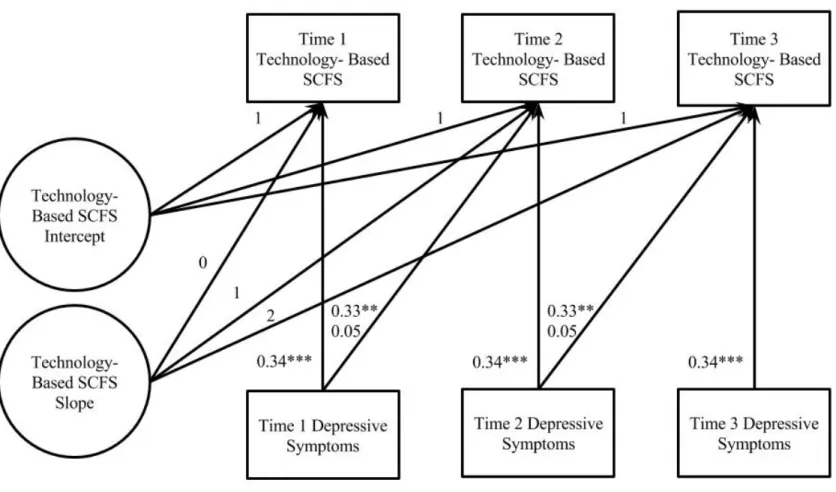
FIGURE 3.1 – Final multiple group by gender linear latent growth curve model...61
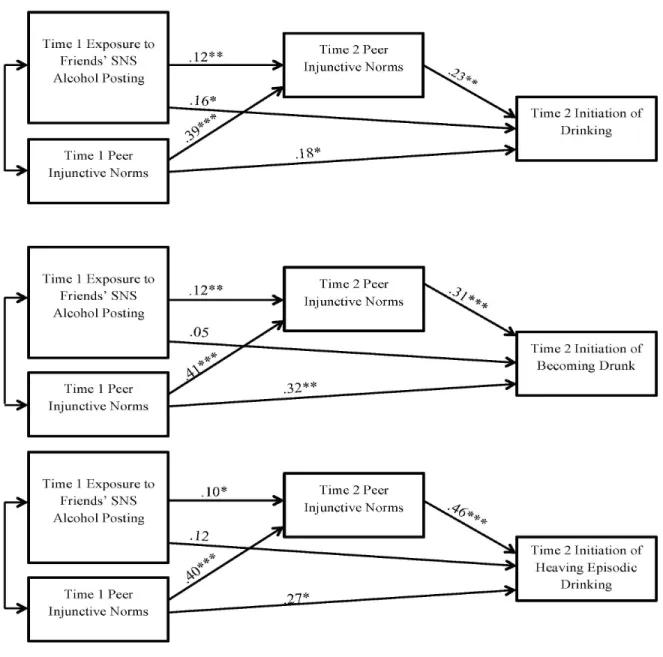
FIGURE 4.1 – Path models testing mediation...84
1
CHAPTER 1: ADOLESCENT SOCIAL MEDIA USE AND PSYCHOSOCIAL ADJUSTMENT: TOWARD A NEW RESEARCH AGENDA
The use of social media has seen rapid growth among adolescents in recent years. Social media, encompassing such technologies as social networking sites (SNS) and text messaging, is broadly defined as any digital tool that allows users to share content and interact socially with others (Moreno & Kota, 2013). Although iterations of social media have been available to the public for over 25 years (Ellison & boyd, 2013), adolescents are currently using social media at unprecedented rates and with staggering frequency. Recent estimates suggest that as many as 89% of adolescents belong to a social networking site, and 71% belong to more than one
(Lenhart, 2015). A full 92% of adolescents go online daily, and 24% report going online “almost constantly,” with as many as three-quarters of teenagers having access to a smart phone (Lenhart, 2015). Text messaging has also reached unprecedented levels of popularity, with 91% of
adolescent cell phone owners participating in text messaging, and teenagers sending an average of 30 to 80 text messages per day to friends, family, and romantic partners (Lenhart, 2015; Lenhart, Anderson, & Smith, 2015). Indeed, social media is fully engrained in the lives of adolescents, most of whom have never known a world without it.
2
2012; Quinn & Oldmeadow, 2013), anxiety (Ferguson, Muñoz, Garza, & Galindo, 2014; Mazalin & Moore, 2004), ADHD (Rosen et al., 2014), eating disorders (Tiggemann & Miller, 2010; Tiggemann & Slater, 2013), substance use (Gommans et al., 2015) and, most commonly, depression or depressed mood (e.g., Jelenchick, Eickhoff, & Moreno, 2013; Pantic et al., 2012; van den Eijnden, Meerkerk, Vermulst, Spijkerman, & Engels, 2008). In general, however, this research has produced mixed results, with many studies showing no overall associations between frequencies of use and well-being (Best, Manktelow, & Taylor, 2014). Rather, as the landscape of modern technology evolves, it has become clear that the use of social media—at high
frequencies—is the norm among adolescents. As such, advancing our understanding of social media in the context of adolescent development requires a shift in theoretical perspective.
Separate from the growing body of research examining adolescent social media use and adjustment has been a critical movement toward developmental psychopathology approaches for understanding patterns of youth behavioral maladaptation (Sroufe & Rutter, 1984).
Developmental psychopathology theories emphasize the presence of multiple systems and levels of analysis, both internal and external to the individual, which interact in complex ways to shape developmental trajectories toward risk or resilience to psychopathology (Cicchetti, 1993). Furthermore, this approach considers the process of development as a series of reorganizations among biological, psychological, and social systems, with adolescence characterized as a period of rapid and dramatic changes in these areas (Cicchetti & Rogosch, 2002). During this period of rapid reorganization, social media may be considered one such sociocultural system that interacts with adolescents’ internal and external environments in contributing to adaptation.
3
but a range of factors involving both the social media context itself and characteristics of the individual and his or her environment. Specifically, we must consider who adolescents are before logging on to social media, including differences by gender and offline functioning that may impact their use and risk for psychopathology. We must consider when adolescents are using social media within the context of larger developmental processes and tasks. And, most importantly, we must consider how adolescents are using social media, or the specific behaviors in which they are engaging online.
4
More recent work suggests other unique features of the social media environment, as well. For example, social media tools provide more public and permanent communication experiences for adolescents, in which posted content remains visible for large audiences, often for an extended period of time (boyd, 2010; McFarland & Ployhart, 2015; Valkenburg & Peter, 2011). Furthermore, social networking sites, which incorporate built-in mechanisms for peer feedback and visible connections (e.g. “likes,” “followers”), may create a more “quantifiable” social experience for adolescents than traditional environments (Chua & Chang, 2016; Singleton, Abeles, & Smith, 2016). Finally, social media may be more readily accessible compared to offline communication, allowing adolescents unprecedented access to peers at any time of day, regardless of physical location (McFarland & Ployhart, 2015; Valkenburg & Peter, 2011).
Taken together, these features create in social media a psychosocial context that allows for a variety of unique experiences and behaviors. As research moves away from examining adolescents’ overall frequencies of social media use, it is critical to identify these specific
behaviors and their associations with adolescent psychopathology. The current studies uncover a variety of technology-related behaviors, including engagement in social comparison and
feedback seeking via social media, posting and viewing friends’ SNS posts containing references to alcohol, seeking out online indicators of status (e.g. likes, comments), and using electronic communication at the expense of face-to-face interactions with romantic partners. These behaviors are examined in the context of adolescents’ adjustment, including health risk behaviors, depressive symptoms, and social functioning.
5
individual characteristics in relation to social media use. For example, studies have investigated the impact of personality factors such as extraversion, narcissism, and shyness on such online behaviors as self-disclosure, friendship formation and self-presentation (Michikyan,
6
In addition to examining who adolescents are and how they are using social media, a final consideration in examining associations between social media use and adjustment is when
adolescents are using social media. Drawing again on developmental psychopathology approaches, adolescence is considered a critical period of development, in which adolescents face numerous stage-salient tasks, including the development of sophisticated, complex peer relationships, the forging of a cohesive self-concept and identity, the establishment of
independence from adult caretakers, and the exploration of sexual and romantic relationships (Cicchetti & Rogosch, 2002; Hill, 1983; Steinberg & Morris, 2001). Social media represents a compelling context for the navigation of these tasks, as adolescents may explore their emerging identities and sexualities online while engaging in frequent peer interactions, typically outside of the view of authority figures (Peter & Valkenburg, 2013; Subrahmanyam & Šmahel, 2011). However, it may be essential to consider how these developmental tasks are transformed in the context of social media, and whether, during a sensitive period of development, social media provides the necessary tools for their successful resolution. Thus, the current studies examine the timing of certain social media behaviors within the context of development. For example, one study investigates exposure to alcohol-related content on social networking sites during a time period in which adolescents are considering the initiation of alcohol use milestones (e.g. drinking a full drink, becoming drunk). In addition, one study examines the concomitant
increase in technology-based communication and adolescents’ engagement in their first romantic relationship experiences, during which time the development of key interpersonal skills has implications for relationship functioning throughout the lifespan.
7
psychopathology approach, these studies examine the specific ways in which adolescents use social media, the individual characteristics that may make them more or less susceptible to maladaptive social media behaviors and outcomes, and the developmental time periods during which they rely on these tools. Four studies are proposed, examining a range of social processes and behavioral outcomes relevant to psychopathology. These studies offer a rare opportunity in the field of adolescent social media use to examine longitudinal processes in multiple large, diverse samples of adolescents. Furthermore, they take a unique, multi-method approach, incorporating methodologies that include self-report measures, observational coding of social media pages, and peer sociometric nomination procedures.
Study 1 investigates the use of technology-based communication during a key
developmental period in which adolescents are engaging in romantic relationships for the first time. Findings suggest that higher proportions of technology-based, versus face-to-face,
8
9
REFERENCES
Best, P., Manktelow, R., & Taylor, B. (2014). Online communication, social media and adolescent wellbeing: A systematic narrative review. Children and Youth Services Review, 41, 27–36. http://doi.org/10.1016/j.childyouth.2014.03.001
boyd, danah. (2010). Social Network Sites as Networked Publics: Affordances, Dynamics, and Implications. In Networked Self: Identity, Community, and Culture on Social Network Sites (pp. 39–58). Retrieved from
http://www.danah.org/papers/2010/SNSasNetworkedPublics
Chua, T. H. H., & Chang, L. (2016). Follow me and like my beautiful selfies: Singapore teenage girls’ engagement in self-presentation and peer comparison on social media. Computers in Human Behavior, 55, 190–197. http://doi.org/10.1016/j.chb.2015.09.011
Cicchetti, D. (1993). Developmental Psychopathology: Reactions, Reflections, Projections. Developmental Review, 13(4), 471–502. http://doi.org/10.1006/drev.1993.1021 Cicchetti, D., & Rogosch, F. A. (2002). A developmental psychopathology perspective on
adolescence. Journal of Consulting and Clinical Psychology, 70(1), 6–20. http://doi.org/10.1037//0022-006X.70.1.6
Culnan, M. J., & Lynne, M. (1987). Information technologies. In F. M. Jablin, L. L. Putnam, K. H. Roberts, & L. W. Porter (Eds.), Handbook of organizational communication: An interdisciplinary perspective (pp. 420–443). Thousand Oaks, CA, US: Sage Publications, Inc.
Daft, R. L., & Lengel, R. H. (1986). Organizational Information Requirements, Media Richness and Structural Design. Management Science, 32(5), 554–571.
Ellison, N. B., & Boyd, D. (2013). Sociality through social network sites. The Oxford Handbook of Internet Studies, 151.
Ferguson, C. J., Muñoz, M. E., Garza, A., & Galindo, M. (2014). Concurrent and prospective analyses of peer, television and social media influences on body dissatisfaction, eating disorder symptoms and life satisfaction in adolescent girls. Journal of Youth and Adolescence, 43(1), 1–14. http://doi.org/10.1007/s10964-012-9898-9
Gommans, R., Stevens, G. W. J. M., Finne, E., Cillessen, A. H. N., Boniel-Nissim, M., & Bogt, T. F. M. (2015). Frequent electronic media communication with friends is associated with higher adolescent substance use. International Journal of Public Health, 60(2), 167–177. http://doi.org/10.1007/s00038-014-0624-0
10
Jelenchick, L. A., Eickhoff, J. C., & Moreno, M. A. (2013). “Facebook Depression?” Social Networking Site Use and Depression in Older Adolescents. Journal of Adolescent Health, 52(1), 128–130. http://doi.org/10.1016/j.jadohealth.2012.05.008
Lenhart, A. (2015). Teens, Social Media & Technology Overview 2015. Retrieved from http://www.pewinternet.org/2015/04/09/teens-social-media-technology-2015/
Lenhart, A., Anderson, M., & Smith, A. (2015, October 1). Teens, Technology and Romantic Relationships. Retrieved from http://www.pewinternet.org/2015/10/01/teens-technology-and-romantic-relationships/
Mazalin, D., & Moore, S. (2004). Internet Use, Identity Development and Social Anxiety Among Young Adults. Behaviour Change, 21(2), 90–102.
http://doi.org/10.1375/bech.21.2.90.55425
McFarland, L. A., & Ployhart, R. E. (2015). Social media: A contextual framework to guide research and practice. Journal of Applied Psychology, 100(6), 1653–1677.
http://doi.org/10.1037/a0039244
Mesch, G. S., & Beker, G. (2010). Are Norms of Disclosure of Online and Offline Personal Information Associated with the Disclosure of Personal Information Online? Human Communication Research, 36(4), 570–592.
http://doi.org/10.1111/j.1468-2958.2010.01389.x
Michikyan, M., Subrahmanyam, K., & Dennis, J. (2014). Can you tell who I am? Neuroticism, extraversion, and online self-presentation among young adults. Computers in Human Behavior, 33, 179–183. http://doi.org/10.1016/j.chb.2014.01.010
Mikami, A. Y., Szwedo, D. E., Ahmad, S. I., Samuels, A. S., & Hinshaw, S. P. (2015). Online Social Communication Patterns Among Young Adult Women With Histories of
Childhood Attention-Deficit/Hyperactivity Disorder. Journal of Abnormal Psychology. http://doi.org/10.1037/abn0000053
Mikami, A. Y., Szwedo, D. E., Allen, J. P., Evans, M. A., & Hare, A. L. (2010). Adolescent peer relationships and behavior problems predict young adults’ communication on social networking websites. Developmental Psychology, 46(1), 46–56.
http://doi.org/10.1037/a0017420
Moreno, M., & Kota, R. (2013). Social Media. In V. C. Strasburger, B. Wilson, & A. B. (Beth) Jordan (Eds.), Children, Adolescents, and the Media (3rd ed.). SAGE Publications, Inc. Retrieved from
https://nls.ldls.org.uk/welcome.html?ark:/81055/vdc_100025421490.0x000001
Ong, E. Y. L., Ang, R. P., Ho, J. C. M., Lim, J. C. Y., Goh, D. H., Lee, C. S., & Chua, A. Y. K. (2011). Narcissism, extraversion and adolescents’ self-presentation on Facebook. Personality and Individual Differences, 50(2), 180–185.
11
Pantic, I., Damjanovic, A., Todorovic, J., Topalovic, D., Bojovic-Jovic, D., Ristic, S., & Pantic, S. (2012). Association between online social networking and depression in high school students: behavioral physiology viewpoint. Psychiatria Danubina, 24(1.), 90–93.
Pea, R., Nass, C., Meheula, L., Rance, M., Kumar, A., Bamford, H., … Zhou, M. (2012). Media use, face-to-face communication, media multitasking, and social well-being among 8- to 12-year-old girls. Developmental Psychology, 48(2), 327–336.
http://doi.org/10.1037/a0027030
Peter, J., & Valkenburg, P. M. (2013). The Effects Of Internet Communication On Adolescents’ Psychological Development. The International Encyclopedia of Media Studies. Retrieved from http://onlinelibrary.wiley.com/doi/10.1002/9781444361506.wbiems136/full
Quinn, S., & Oldmeadow, J. A. (2013). Is the i generation a “we” generation? Social networking use among 9- to 13-year-olds and belonging. British Journal of Developmental
Psychology, 31(1), 136–142. http://doi.org/10.1111/bjdp.12007
Ranney, J. D., & Troop-Gordon, W. (2012). Computer-mediated communication with distant friends: Relations with adjustment during students’ first semester in college. Journal of Educational Psychology, 104(3), 848–861. http://doi.org/10.1037/a0027698
Rosen, L. D., Lim, A. F., Felt, J., Carrier, L. M., Cheever, N. A., Lara-Ruiz, J. M., … Rokkum, J. (2014). Media and technology use predicts ill-being among children, preteens and
teenagers independent of the negative health impacts of exercise and eating habits. Computers in Human Behavior, 35, 364–375. http://doi.org/10.1016/j.chb.2014.01.036 Singleton, A., Abeles, P., & Smith, I. C. (2016). Online social networking and psychological
experiences: The perceptions of young people with mental health difficulties. Computers in Human Behavior, 61, 394–403. http://doi.org/10.1016/j.chb.2016.03.011
Sroufe, L. A., & Rutter, M. (1984). The Domain of Developmental Psychopathology. Child Development, 55(1), 17. http://doi.org/10.2307/1129832
Steinberg, L., & Morris, A. S. (2001). Adolescent Development. Annual Review of Psychology, 52(1), 83–110. http://doi.org/10.1146/annurev.psych.52.1.83
Subrahmanyam, K., & Šmahel, D. (2011). Digital youth: the role of media in development. New York: Springer.
Tiggemann, M., & Miller, J. (2010). The Internet and Adolescent Girls’ Weight Satisfaction and Drive for Thinness. Sex Roles, 63, 79–90.
12
Valkenburg, P. M., & Peter, J. (2009). The Effects of Instant Messaging on the Quality of Adolescents’ Existing Friendships: A Longitudinal Study. Journal of Communication, 59(1), 79–97. http://doi.org/10.1111/j.1460-2466.2008.01405.x
Valkenburg, P. M., & Peter, J. (2011). Online Communication Among Adolescents: An Integrated Model of Its Attraction, Opportunities, and Risks. Journal of Adolescent Health, 48(2), 121–127. http://doi.org/10.1016/j.jadohealth.2010.08.020
van den Eijnden, R. J. J. M., Meerkerk, G.-J., Vermulst, A. A., Spijkerman, R., & Engels, R. C. M. E. (2008). Online communication, compulsive internet use, and psychosocial well-being among adolescents: A longitudinal study. Developmental Psychology, 44(3), 655– 665. http://doi.org/10.1037/0012-1649.44.3.655
Van Zalk, M. H. W., Van Zalk, N., Kerr, M., & Stattin, H. (2014). Influences between online -exclusive, conjoint and offline-exclusive friendship networks: The moderating role of shyness. European Journal of Personality, 28(2), 134–146.
http://doi.org/10.1002/per.1895
13
CHAPTER 2: TECHNOLOGY-BASED COMMUNICATION AND THE
DEVELOPMENT OF INTERPERSONAL COMPETENCIES WITHIN ADOLESCENT ROMANTIC RELATIONSHIPS: A PRELIINARY INVESTIGATION1
The ubiquitous use of technology among youth provides a new context for the establishment and maintenance of intimate relationships in adolescence (Subrahmanyam & Greenfield, 2008). Over 89% of adolescents report using social networking sites (Lenhart, 2015) and 92% report text messaging with their romantic partners (Lenhart, Smith, & Anderson, 2015). Further, it is common for adolescents to use technology to resolve arguments and discuss
sensitive family or health-related issues with romantic partners (Lenhart et al., 2015; Widman, Nesi, Choukas-Bradley, & Prinstein, 2014). Although it is well established that romantic relationships provide a critical context for adolescents’ development of social competence (Collins & Steinberg, 2006), little is known regarding how technology-based communication may affect this process.
Social competence is a multidimensional construct, with two particular domains that may be important to adolescent romantic relationships: negative assertion (the ability to assert
displeasure with others or stand up for oneself) and conflict management (the ability to work through disagreements and solve problems; Buhrmester, Furman, Wittenberg, & Reis, 1988). These skills are particularly salient within the context of romantic relationships, where they
1This chapter previously appeared as an article in the Journal of Adolescent Health. The original citation is as follows: Nesi, J., Widman, L, Choukas-Bradley, S. & Prinstein, M.J. (2017). Technology-based communication and the development of interpersonal competencies within adolescent romantic relationships: A preliminary
14
influence relationship satisfaction, negotiation of autonomy, and general socioemotional competence (Collins, 2003).
The rising popularity of computer-mediated communication tools (e.g., texting, social media) has shifted the way youth communicate with romantic partners (Lenhart et al., 2015). Cues-filtered-out theories suggest that some of these tools contain fewer nonverbal cues than traditional interactions; this may make technology-based communication less “rich” (Walther, 2011). On the one hand, technologies with fewer cues may provide a “safe space” for
adolescents to practice self-disclosure and communicate asynchronously (Koutamanis, Vossen, Peter, & Valkenburg, 2013), thus providing opportunities for greater relationship maintenance, self-disclosure, and intimacy (Valkenburg & Peter, 2011). On the other hand, these technologies may result in lower quality interactions. Indeed, some work suggests that technology-based communication is associated with less warmth and affection, fewer expressed affiliation cues, and lower feelings of bonding (Sherman, Michikyan, & Greenfield, 2013; Subrahmanyam & Smahel, 2011).
15
yet to examine the role of technology-mediated communication in the romantic relationships of middle or high school-aged adolescents, or the role such communication may play over time.
Additionally, little is known about potential gender differences in the role of technology in the development of interpersonal competencies. There are known gender differences in the frequency of technology use, with adolescent girls reporting more social media use and texting than boys (Lenhart, 2015), but such research has not clarified how technology use differentially affects girls and boys. A separate, longstanding line of work indicates that relationship skills differ by gender, with girls reporting higher levels of intimacy, self-disclosure, and positive conflict-resolution strategies within same-gender friendships beginning in childhood (Rose & Rudolph, 2006). Girls may thus enter romantic relationships “better prepared” for handling intimacy and conflict (Maccoby, 1998). It is possible that increases in technology-based
communication are detrimental to boys’ development of romantic relationship competencies, as girls may have developed stronger foundations of relationship skills through childhood
friendships.
16 Methods
Participants
This study included 487 participants (58.0% girls; ages 13-16; Mage = 14.1; 48.5% White/Caucasian, 23.8% Hispanic/Latino, 20.6% African American/Black, 7.1% other
ethnicities). Participants were 85.9% heterosexual, 0.6% gay/lesbian, 5.5% bisexual, and 8.0% unsure/other; for multiple group analyses, both heterosexual and sexual minority youth were present in each gender group.
All 7th and 8th grade students from three rural, low-income schools (n = 1,463) were recruited for a study of peer relations and health risk behaviors. Consent forms were returned by 1,205 families (82.4%), with 900 granting consent for participation (74.7%). Baseline data were collected from 868 students (32 consented adolescents had moved, were absent, or declined participation). The current study utilizes data from the one-year (“T1”) and two-year (“T2”) follow-ups, when relevant measures were administered. Retention exceeded 88% at T1 (n = 790) and T2 (n = 772).
Only participants who reported having had a “dating partner” within the past year at both time points were included in analyses. A dating partner was defined as “a boyfriend/girlfriend or someone you like ‘more than friends’ who you have ‘talked to’ or hung out with.” This
definition was developed based on past literature (e.g., Furman & Hand, 2006), as well as pilot testing and focus groups. Of the 734 participants who participated at both T1 and T2, 66.5% (n = 488) reported having dating partners at both waves. One participant was missing data on all other study variables. Thus, the final sample included 487 participants.
17
than boys to report relationships at both time points (χ2 = 6.49, p < .05). Adolescents’ proportion of engagement in technology-based communication at T1 did not predict whether they reported a relationship at T2.
Procedure
Following informed assent procedures, surveys were administered in classrooms via computer-assisted self-interviews. Each participant received a $10 gift card at both time points. All measures were collected at both waves.
Measures
Proportion of technology-based vs. traditional communication with partner. Participants were oriented to the construct of “technology-based communication,” with “technology” defined as “texting, Facebook, and other social media (e.g., Twitter, Instagram, Snapchat, Tumblr).” Relative frequencies of the use of technology, versus traditional forms of communication, were assessed by asking, “How much do you communicate with your dating partners using your voice (in-person or phone call) versus using technology on a typical day?” These definitions of
18
to traditional communication. This measure was developed through a focus group and two pilot samples of 437 high school students.
Interpersonal competencies within romantic relationships. The Interpersonal
Competence Questionnaire (ICQ; Buhrmester et al., 1988) was used to assess negative assertion (e.g., “Turning down a request by your dating partner that is unreasonable”; a = .84 and .91 at T1 and T2, respectively) and conflict management (e.g., “Admitting that you might be wrong when a disagreement with your dating partner begins to build into a serious fight”; a = .83 and .90) with adolescents’ current or most recent dating partner. Responses were indicated on a 5-point scale (1 = I am very bad at this, 3 = I am okay at this, and 5 = I am very good at this). Several items were reworded to accommodate the sample’s reading level. Each subscale contained eight items; however, one item was dropped from each scale due to low factor loadings.
Analysis Plan
Hypotheses were examined within a structural equation modeling (SEM) framework in Mplus 7.0. Negative assertion and conflict management at T1 and T2 were estimated as latent variables by creating three parcels of items for each variable, with items randomly assigned to parcels. Using parcels allowed for increased parsimony, fewer chances for correlated residuals or dual loadings, and reductions in sampling error (MacCallum, Widaman, Zhang, & Hong, 1999). A confirmatory factor analysis demonstrated the unidimensionality of each variable.
Cross-lagged panel models were used, providing a useful framework for testing the strength of temporal relations between variables collected through longitudinal,
19
management at T1 to T2, and proportions of technology-based communication at T1 to T2); (b) a model with these autoregressive effects and paths from T1 proportions of technology-based communication to T2 negative assertion and conflict management; (c) a model with the autoregressive effects and paths from T1 negative assertion and conflict management to proportions of T2 technology-based communication; and (d) a fully cross-lagged model with autoregressive effects and all T1 variables predicting all others at T2. In these models, all T1 predictors and T2 error terms were correlated with one another (Martens & Haase, 2006). Models were compared using chi-square difference tests to determine the optimally fitting model (Bollen & Curran, 2006). Moderation by gender was then tested using a multiple group SEM. Results
Descriptives
Descriptive statistics examined patterns of technology-based versus traditional forms of communication and gender differences in those patterns (Table 2.1). Correlations between all variables were also calculated (Table 2.2).
Roughly one-third of participants (34.9%) reported that, on a typical day, they
communicated with their dating partners approximately half the time using technology and half the time through traditional communication forms (in-person or phone calls); another third (32.3%) reported using primarily traditional forms; and the remaining third (32.8%) reported that the majority of their communication with partners occurred via technology.
Associations Among Technology-Based Communication, Negative Assertion, and Conflict Management
20
constraints of this model over Model 1 resulted in a significant improvement in fit, while those of Model 3 did not. In addition, Model 4 did not provide a significant improvement in fit over Model 2, suggesting that the more parsimonious model (Model 2) should be retained. Paths from T1 negative assertion and conflict management to T2 proportions of technology-based communication were not significant in any models.
Tests of Measurement Invariance and Gender Moderation
First, measurement invariance was established across gender groups. Tests of measurement invariance revealed no statistical benefit when allowing the factor structure, χ2(147) = 221.47, p < .0001, factor loadings, Δχ2(8) = 7.337, p = .50, and all but one of the indicator intercepts, Δχ2(6) = 11.43, p = .08, to vary across gender. Thus, partial strong
invariance was established, indicating that latent constructs were assessed using the same metric across groups. This allowed for meaningful gender comparisons in subsequent analyses.
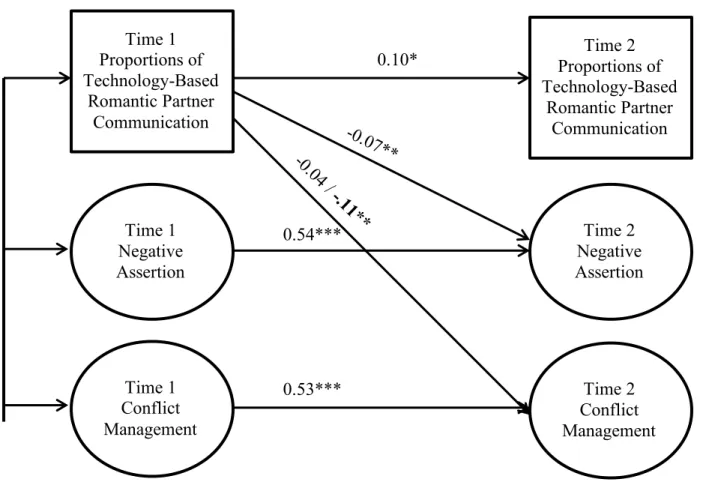
Initial fit for the structural model was good: χ2(161) = 240.43, p < .001, CFI = 0.98, TLI = 0.97, RMSEA = 0.05, SRMR = 0.08. Chi-square difference tests indicated a marginally significant gender interaction for the association between T1 technology-based communication and T2 conflict management, Δχ2(1) = 3.36, p = .07; this path was thus left free to vary across groups. Standardized path coefficients in the final model revealed that greater proportions of technology-based communication with romantic partners, relative to traditional communication at T1, were associated with lower levels of T2 negative assertion for both genders, and with lower levels of T2 conflict management for boys only (see Figure 2.1).
Discussion
21
relationships, and examined gender differences in these associations. Given that adolescents’ technology-based communication within romantic relationships is an emerging field of research, and that this study is the first to examine these associations, results should be considered
preliminary. Findings suggest that adolescents who engaged in proportionally more technology-based versus traditional communication with partners exhibited lower levels of specific
interpersonal competencies (negative assertion and conflict management) within romantic relationships one year later; this association was somewhat stronger for boys.
Notably, engagement in greater proportions of technology-based communication preceded, rather than followed, lower competencies in these areas. Poorer self-reported interpersonal skills did not predict later engagement in technology-based communication. Technology-based interactions may provide a qualitatively different communication experience, thought which adolescents lack optimal opportunities to learn or practice complex social skills, such as negative assertion and conflict management.
These preliminary findings are consistent with prior work demonstrating concurrent associations between high proportions of technology-based communication, less satisfaction, and higher avoidance in young adults’ romantic relationships (Luo, 2014). However, some past studies have found positive associations, including between more social media use and higher levels of social skills (Koutamanis et al., 2013). These mixed findings may be due to
measurement differences, as most studies (with the exception of Luo, 2014) have assessed overall frequencies, rather than proportional levels, of technology-based communication. Mixed findings may also be due to unexamined third variables (e.g., opportunity for in-person
22
Although both girls and boys showed similar patterns of results, technology-based communication significantly predicted conflict management deficits for boys only. Based on childhood interpersonal experiences that involve greater intimacy, self-disclosure, and conflict-mitigating strategies, girls may enter into romantic relationships better equipped with
interpersonal skills (Maccoby, 1998; Rose & Rudolph, 2006). Romantic relationships may provide a unique environment in which boys can develop these skills. This may be especially true for conflict management, as romantic relationships provide an important context for boys’ development of compromise strategies, a departure from the more confrontational strategies common within their same-sex friendships (Connolly & McIsaac, 2011). The use of technology-based communication in romantic relationships may limit the social “practice” of in-person conversations that is crucial for adolescent boys’ interpersonal skill development.
Limitations and Conclusions
23
as well as within friendships. Finally, this study used a single item self-report measure of communication, which did not specify how adolescents should categorize newer forms of communication that blur the lines between traditional and technology-based communication (e.g., Skype and FaceTime), and which may indirectly assess total amount of communication with partners.
Future research will benefit from the development of innovative and nuanced measures of technology use, including replacing or supplementing measures of proportional communication with those that measure raw communication frequencies. Because technology-based
communication can significantly differ in quality (across both individuals and forms of
technology), it would also be fruitful to incorporate measures of communication quality. Future research should also examine technology-based communication among adolescents with
differential in-person access to peers (e.g., rural vs. urban environments), although initial evidence suggests that these phenomena may be universal (Lenhart, 2015).
24 REFERENCES
Best, P., Manktelow, R., & Taylor, B. (2014). Online communication, social media and adolescent wellbeing: A systematic narrative review. Children and Youth Services Review, 41, 27–36. http://doi.org/10.1016/j.childyouth.2014.03.001
boyd, danah. (2010). Social Network Sites as Networked Publics: Affordances, Dynamics, and Implications. In Networked Self: Identity, Community, and Culture on Social Network Sites (pp. 39–58). Retrieved from
http://www.danah.org/papers/2010/SNSasNetworkedPublics
Chua, T. H. H., & Chang, L. (2016). Follow me and like my beautiful selfies: Singapore teenage girls’ engagement in self-presentation and peer comparison on social media. Computers in Human Behavior, 55, 190–197. http://doi.org/10.1016/j.chb.2015.09.011
Cicchetti, D. (1993). Developmental Psychopathology: Reactions, Reflections, Projections. Developmental Review, 13(4), 471–502. http://doi.org/10.1006/drev.1993.1021 Cicchetti, D., & Rogosch, F. A. (2002). A developmental psychopathology perspective on
adolescence. Journal of Consulting and Clinical Psychology, 70(1), 6–20. http://doi.org/10.1037//0022-006X.70.1.6
Culnan, M. J., & Lynne, M. (1987). Information technologies. In F. M. Jablin, L. L. Putnam, K. H. Roberts, & L. W. Porter (Eds.), Handbook of organizational communication: An interdisciplinary perspective (pp. 420–443). Thousand Oaks, CA, US: Sage Publications, Inc.
Daft, R. L., & Lengel, R. H. (1986). Organizational Information Requirements, Media Richness and Structural Design. Management Science, 32(5), 554–571.
Ellison, N. B., & Boyd, D. (2013). Sociality through social network sites. The Oxford Handbook of Internet Studies, 151.
Ferguson, C. J., Muñoz, M. E., Garza, A., & Galindo, M. (2014). Concurrent and prospective analyses of peer, television and social media influences on body dissatisfaction, eating disorder symptoms and life satisfaction in adolescent girls. Journal of Youth and Adolescence, 43(1), 1–14. http://doi.org/10.1007/s10964-012-9898-9
Gommans, R., Stevens, G. W. J. M., Finne, E., Cillessen, A. H. N., Boniel-Nissim, M., & Bogt, T. F. M. (2015). Frequent electronic media communication with friends is associated with higher adolescent substance use. International Journal of Public Health, 60(2), 167–177. http://doi.org/10.1007/s00038-014-0624-0
25
Jelenchick, L. A., Eickhoff, J. C., & Moreno, M. A. (2013). “Facebook Depression?” Social Networking Site Use and Depression in Older Adolescents. Journal of Adolescent Health, 52(1), 128–130. http://doi.org/10.1016/j.jadohealth.2012.05.008
Lenhart, A. (2015). Teens, Social Media & Technology Overview 2015. Retrieved from http://www.pewinternet.org/2015/04/09/teens-social-media-technology-2015/
Lenhart, A., Anderson, M., & Smith, A. (2015, October 1). Teens, Technology and Romantic Relationships. Retrieved from http://www.pewinternet.org/2015/10/01/teens-technology-and-romantic-relationships/
Mazalin, D., & Moore, S. (2004). Internet Use, Identity Development and Social Anxiety Among Young Adults. Behaviour Change, 21(2), 90–102.
http://doi.org/10.1375/bech.21.2.90.55425
McFarland, L. A., & Ployhart, R. E. (2015). Social media: A contextual framework to guide research and practice. Journal of Applied Psychology, 100(6), 1653–1677.
http://doi.org/10.1037/a0039244
Mesch, G. S., & Beker, G. (2010). Are Norms of Disclosure of Online and Offline Personal Information Associated with the Disclosure of Personal Information Online? Human Communication Research, 36(4), 570–592.
http://doi.org/10.1111/j.1468-2958.2010.01389.x
Michikyan, M., Subrahmanyam, K., & Dennis, J. (2014). Can you tell who I am? Neuroticism, extraversion, and online self-presentation among young adults. Computers in Human Behavior, 33, 179–183. http://doi.org/10.1016/j.chb.2014.01.010
Mikami, A. Y., Szwedo, D. E., Ahmad, S. I., Samuels, A. S., & Hinshaw, S. P. (2015). Online Social Communication Patterns Among Young Adult Women With Histories of
Childhood Attention-Deficit/Hyperactivity Disorder. Journal of Abnormal Psychology. http://doi.org/10.1037/abn0000053
Mikami, A. Y., Szwedo, D. E., Allen, J. P., Evans, M. A., & Hare, A. L. (2010). Adolescent peer relationships and behavior problems predict young adults’ communication on social networking websites. Developmental Psychology, 46(1), 46–56.
http://doi.org/10.1037/a0017420
Moreno, M., & Kota, R. (2013). Social Media. In V. C. Strasburger, B. Wilson, & A. B. (Beth) Jordan (Eds.), Children, Adolescents, and the Media (3rd ed.). SAGE Publications, Inc. Retrieved from https://nls.ldls.org.uk/
Ong, E. Y. L., Ang, R. P., Ho, J. C. M., Lim, J. C. Y., Goh, D. H., Lee, C. S., & Chua, A. Y. K. (2011). Narcissism, extraversion and adolescents’ self-presentation on Facebook. Personality and Individual Differences, 50(2), 180–185.
26
Pantic, I., Damjanovic, A., Todorovic, J., Topalovic, D., Bojovic-Jovic, D., Ristic, S., & Pantic, S. (2012). Association between online social networking and depression in high school students: behavioral physiology viewpoint. Psychiatria Danubina, 24(1.), 90–93.
Pea, R., Nass, C., Meheula, L., Rance, M., Kumar, A., Bamford, H., … Zhou, M. (2012). Media use, face-to-face communication, media multitasking, and social well-being among 8- to 12-year-old girls. Developmental Psychology, 48(2), 327–336.
http://doi.org/10.1037/a0027030
Peter, J., & Valkenburg, P. M. (2013). The Effects Of Internet Communication On Adolescents’ Psychological Development. The International Encyclopedia of Media Studies. Retrieved from http://onlinelibrary.wiley.com/doi/10.1002/9781444361506.wbiems136/full
Quinn, S., & Oldmeadow, J. A. (2013). Is the i generation a “we” generation? Social networking use among 9- to 13-year-olds and belonging. British Journal of Developmental
Psychology, 31(1), 136–142. http://doi.org/10.1111/bjdp.12007
Ranney, J. D., & Troop-Gordon, W. (2012). Computer-mediated communication with distant friends: Relations with adjustment during students’ first semester in college. Journal of Educational Psychology, 104(3), 848–861. http://doi.org/10.1037/a0027698
Rosen, L. D., Lim, A. F., Felt, J., Carrier, L. M., Cheever, N. A., Lara-Ruiz, J. M., … Rokkum, J. (2014). Media and technology use predicts ill-being among children, preteens and
teenagers independent of the negative health impacts of exercise and eating habits. Computers in Human Behavior, 35, 364–375. http://doi.org/10.1016/j.chb.2014.01.036 Singleton, A., Abeles, P., & Smith, I. C. (2016). Online social networking and psychological
experiences: The perceptions of young people with mental health difficulties. Computers in Human Behavior, 61, 394–403. http://doi.org/10.1016/j.chb.2016.03.011
Sroufe, L. A., & Rutter, M. (1984). The Domain of Developmental Psychopathology. Child Development, 55(1), 17. http://doi.org/10.2307/1129832
Steinberg, L., & Morris, A. S. (2001). Adolescent Development. Annual Review of Psychology, 52(1), 83–110. http://doi.org/10.1146/annurev.psych.52.1.83
Subrahmanyam, K., & Šmahel, D. (2011). Digital youth: the role of media in development. New York: Springer.
Tiggemann, M., & Miller, J. (2010). The Internet and Adolescent Girls’ Weight Satisfaction and Drive for Thinness. Sex Roles, 63, 79–90.
27
Valkenburg, P. M., & Peter, J. (2009). The Effects of Instant Messaging on the Quality of Adolescents’ Existing Friendships: A Longitudinal Study. Journal of Communication, 59(1), 79–97. http://doi.org/10.1111/j.1460-2466.2008.01405.x
Valkenburg, P. M., & Peter, J. (2011). Online Communication Among Adolescents: An Integrated Model of Its Attraction, Opportunities, and Risks. Journal of Adolescent Health, 48(2), 121–127. http://doi.org/10.1016/j.jadohealth.2010.08.020
van den Eijnden, R. J. J. M., Meerkerk, G.-J., Vermulst, A. A., Spijkerman, R., & Engels, R. C. M. E. (2008). Online communication, compulsive internet use, and psychosocial well-being among adolescents: A longitudinal study. Developmental Psychology, 44(3), 655– 665. http://doi.org/10.1037/0012-1649.44.3.655
Van Zalk, M. H. W., Van Zalk, N., Kerr, M., & Stattin, H. (2014). Influences between online -exclusive, conjoint and offline-exclusive friendship networks: The moderating role of shyness. European Journal of Personality, 28(2), 134–146.
http://doi.org/10.1002/per.1895
28 TABLE 2.1
Descriptive Statistics
Full Sample Girls Boys Gender
Comparison
M (SD) N M (SD) n M (SD) n t (df) Time 1 Variables
Negative Assertion 3.67 (0.82) 484 3.75 (0.81) 279 3.58 (0.83) 205 2.20 (482)*
Conflict Management 3.61 (0.81) 483 3.46 (0.80) 279 3.83 (0.77) 204 -5.08 (481)***
Proportions of Technology-Based Romantic Partner Communicationa
4.85 (2.32) 449 4.83 (2.40) 264 4.89 (2.25) 185 -0.24 (447)
Time 2 Variables
Negative Assertion 3.82 (0.78) 483 3.81 (0.79) 280 3.28 (0.93) 203 6.73 (481)***
Conflict Management 3.37 (0.89) 483 3.40 (0.82) 280 3.34 (0.98) 203 0.69 (481)
Proportions of Technology-Based Romantic Partner Communicationa
5.04 (2.11) 485 5.02 (2.19) 281 5.05 (2.00) 204 -0.15 (483)
aHigher scores indicate greater proportions of technology-based communication (texting, social media) relative to traditional
communication (in-person, phone calls) with romantic partners.
29 TABLE 2.2
Bivariate Associations by Gender
Note: Results for girls reported above the diagonal. T1=Time 1; T2=Time 2.
aHigher scores indicate greater proportions of technology-based communication (texting, social media) relative to traditional
communication (in-person, phone calls) with romantic partners
*p < .05; **p < .01; ***p < .001
1 2 3 4 5 6
1. T1 Negative Assertion -- .33*** .10 .47*** .24*** -.09
2. T1 Conflict Management .38*** -- .02 .14* .44*** -.05
3. T1 Proportions of Technology-Based
Romantic Partner Communicationa .14 -.08 -- .01 -.00 .13*
4. T2 Negative Assertion .30*** .09 -.15* -- .53** -.09
5. T2 Conflict Management .06 .27*** -.27*** .65*** -- -.02
6. T2 Proportions of Technology-Based
30 TABLE 2.3
Fit Statistics for Four Competing Cross-Lagged Panel Design Models
Model χ2 df p-value RMSE
A
SRMR CFI TLI
Model 1: Autoregressive 101.88 64 .002 .04 .05 .99 .98
Model 2: T1 CommunicationàT2 Interpersonal Competence 91.80 62 .008 .03 .04 .99 .99
Model 3: T1 Interpersonal CompetenceàT2 Communication 100.65 62 .001 .04 .05 .99 .98
Model 4: Fully Cross-Lagged 90.57 60 .007 .03 .04 .99 .99
31 0.10*
-0.07 ** -0.04
/ -.11**
0.54***
0.53***
Figure 2.1. Cross-lagged panel model (Model 2) for the relationship between technology-based vs. traditional romantic partner communication and interpersonal competencies (Conflict Management and Negative Assertion), with path coefficients. Correlations between error terms for Time 2 variables not shown. For path moderated by gender, coefficient for boys in bold. Indicators for latent variables not included in figure.
*p < .05; **p < .01; ***p < .001
32
CHAPTER 3: ADOLESCENTS’ DEPRESSIVE SYMPTOMS AND SUBSEQUENT TECHNOLOGY-BASED INTERPERSONAL BEHAVIORS: A MULTI-WAVE STUDY2
Adolescence is a developmental risk period for depression, and evidence suggests that
this risk may be due, in part, to the normative, developmental reorientation of the social landscape that takes place during this time period (Hankin & Abramson, 2001). Adolescents
begin to engage in more frequent, intimate, and autonomous peer relationships during this stage (Choukas-Bradley & Prinstein, 2014) and to rely on peer feedback and experiences as a primary means of identity development and self-esteem (Harter, Stocker, & Robinson, 1996).
Adolescents also experience far greater interpersonally-themed stress than do younger youth (Rudolph, 2009). While prior work has emphasized the role of interpersonal difficulties in
contributing to the emergence of adolescents’ depression (Rudolph, 2009), only recently have researchers begun to examine symptoms-driven models, whereby depressive symptoms precede and predict poor peer relationships (Kochel, Ladd, & Rudolph, 2012). Remarkably little is
known regarding the specific maladaptive interpersonal behaviors that may contribute to peer difficulties among those with elevated depressive symptoms, and even less is known regarding
the developmental factors that may make adolescents particularly vulnerable. It may be especially important to consider these developmental factors in light of recent changes in the social worlds of adolescents. This study focuses specifically on adolescents’ interpersonal
33
experiences online, and a set of behaviors that may be relevant to the type of experiences afforded to this social context.
For many years, research has suggested that individuals experiencing elevated levels of depressive symptoms may be especially likely to engage in maladaptive interpersonal behaviors, perhaps in an effort to augment their self-worth, or alternatively to validate their sense of low
self-concept (Coyne, 1976; Hames, Hagan, & Joiner, 2013). For instance, substantial research has suggested that depressed individuals may engage in excessive reassurance seeking (ERS;
Joiner & Metalsky, 2001), or the tendency to repeatedly ask others for reassurance of personal worth, leading to interpersonal rejection and poor friendship quality, and ultimately, exacerbation of depressive symptoms (Prinstein, Borelli, Cheah, Simon, & Aikins, 2005). Findings also have
suggested that depressed adults and youth may be especially likely to engage in negative feedback-seeking (NFS), or the tendency to seek out criticism or negative feedback in close
relationships, as well as to report high levels of sociotropy (Rudolph, 2009). Each of these behaviors contributes to dependent interpersonal stressors, or events in which depressed individuals may inadvertently contribute to their own interpersonal difficulties (Flynn &
Rudolph, 2011; Rudolph et al., 2000). Depressed adolescents also have been shown to engage in higher levels of social comparisons, particularly unfavorable comparisons that result in negative
self-evaluation, compared to non-depressed individuals (Allen & Badcock, 2003; Irons & Gilbert, 2005). In the social world of today’s teens, a heavy reliance on interpersonal
communication within technology-based platforms may make social comparisons and feedback-
or reassurance-seeking especially easy.
As researchers increasingly turn to symptoms-driven models to explain the ways in which
34
examine such behaviors as they occur within the developmental contexts most relevant to modern adolescents. Social media, which has become ubiquitous in the lives of adolescents,
represents one such context. On an average day, adolescents report spending almost seven hours using screen media (Rideout, 2015) and sending an average of 67 text messages (Lenhart, 2015). Adolescents report that a significant proportion of their social interactions now take place via
social media, with 89% belonging to at least one social networking site and 88% engaging in regular text messaging (Lenhart, 2015). Identifying maladaptive interpersonal behaviors that
occur via social media has critical implications for understanding how depressed adolescents may inadvertently contribute to their own interpersonal distress and poor peer relationships.
Within research examining social media use, there has been a growing recognition of the
importance of identifying such maladaptive online behaviors in the context of adolescents’ depressive symptoms (Davila et al., 2012; Feinstein et al., 2013). Although many studies have
used cross-sectional data and inferred that certain technology-based behaviors may contribute to depressive symptoms, it is equally plausible that problematic social media use may follow from prior depressive symptoms. For example, studies have indicated concurrent associations
between higher levels of depressive symptoms and technology-based behaviors that include:
disclosure of personal information online (Ybarra, Alexander, & Mitchell, 2005), sexting (Dake,
Price, Maziarz, & Ward, 2012), cyberbullying (Ybarra, 2004), and frequent surveillance
behavior, or passively browsing others’ photos or posts without actively engaging by
commenting or posting (Tandoc, Ferrucci, & Duffy, 2015). In addition to cross-sectional work,
a few studies have provided preliminary evidence that depressive symptoms longitudinally
predict certain maladaptive online behaviors, including posting inappropriate photos (Mikami,
35
partners (Feinstein et al., 2013). Although these studies provide an important foundation, further examination of the role that depression may play in predicting adolescents’ technology-based
social dysfunction remains critical.
One potentially problematic online behavior, which may be conceptually distinct from
similar offline behaviors, is technology-based social comparison and feedback seeking (SCFS;
Nesi & Prinstein, 2015), or the use of social media to seek out information regarding one’s
appearance, behaviors, and social status, relative to one’s peers. One study indicated that this
online behavior was associated concurrently with higher levels of depressive symptoms
(controlling for prior levels of depressive symptoms), and that this relationship was particularly
strong among females (compared to males) and adolescents lower (versus higher) in popularity
(Nesi & Prinstein, 2015). However, no studies have longitudinally examined the ways in which
depressive symptoms may precedeand predict engagement in technology-based SCFS over the
course of multiple years.
It is particularly important to examine technology-based SCFS as a consequence of adolescents’ depressive symptoms given the ways in which this behavior may be uniquely
facilitated within the environment of social media. As a context for social behaviors, social media encompasses a number of features that create the potential for new and different behaviors
than are possible offline. For example, communication on social media is often public, allowing an adolescent’s requests for reassurance or feedback to instantaneously reach a vast network of peers (boyd, 2010). Furthermore, communication via social media is immediate and accessible
from any location (Peter & Valkenburg, 2013), which may create a constant feedback loop that heightens the frequency and intensity of social comparisons. Other relevant features of social
36
creating a false sense of “safety” for adolescents to engage in problematic social behaviors (boyd, 2010; Peter & Valkenburg, 2013).
Technology-based SCFS may be facilitated by the large, public audience to whom photos and posts are displayed, the opportunity for immediate peer feedback and commentary, and the
ease with which information about peers can be accessed and scrutinized (Manago, Graham,
Greenfield, & Salimkhan, 2008). Thus, we might expect adolescents who engage in offline
excessive reassurance-seeking and social comparison to similarly exhibit higher levels of
technology-based SCFS. However, we might also expect that the features of the social media environment facilitate engagement in technology-based SCFS among adolescents who might otherwise have engaged in fewer maladaptive interpersonal behaviors. Similarly, depressed
adolescents, who might previously have withdrawn from social interactions, may find in social media an opportunity to engage in high levels of feedback-seeking and social comparison. The
unique affordances of the online environment for depressed adolescents’ social interactions render technology-based SCFS a critical area for further investigation.
In examining the prospective relationship between depressive symptoms and
technology-based SCFS, it is critical to consider the role of gender. It is well known that rates of depression are higher among adolescent girls, compared to boys (Nolen-Hoeksema, 2001). The elaborated
cognitive vulnerability-transaction stress model of depression suggests that girls are more likely to generate interpersonal stressors than boys, and that they may react to stressors with more ruminative and negative inferential response styles, which may explain these different prevalence
rates (Hankin & Abramson, 2001). Furthermore, a meta-analytic review of cross sectional studies showed a stronger relationship between ERS and depressive symptoms for adult women,
social-37
evaluative concerns and need for approval, and may engage in greater self-disclosure in the offline context (Rose & Rudolph, 2006). In the online context, girls have been shown to engage
in more frequent technology-based SCFS than boys, and the concurrent relationship between SCFS and depressive symptoms may be stronger for girls (Nesi & Prinstein, 2015). However, the literature on gender differences in the association between depressive symptoms and later
interpersonal difficulties, both offline and online, remains surprisingly limited. It remains unclear whether depressive symptoms may more strongly predict increased engagement in
technology-based SCFS among girls or boys longitudinally.
The current study examined longitudinal relationships between depressive symptoms and technology-based social comparison and feedback-seeking (SCFS) among adolescents over a
three-year period, and specifically examined whether depressive symptoms were predictive of higher levels of SCFS in the subsequent year. Using latent growth curve modeling techniques,
this study offers a unique opportunity to examine intra-individual change in technology-based SCFS over time. Specifically, this approach allows for the examination of individual
adolescents’ typical levels of engagement in technology-based SCFS, or trajectories, and to test
deviations from these patterns at each time point. Each adolescent exhibits a baseline tendency to engage in high or lower levels of technology-based SCFS; latent growth curve modeling
examines within-personincreases in this behavior, relative to the adolescents’ baseline, following higher depressive symptoms at a concurrent or previous time point.
Within this analytic framework, Hypothesis 1 predicted that adolescents who reported
higher levels of depressive symptoms at a given time point would engage in greater levels of SCFS at that same time point, controlling for their underlying trajectories of technology-based
38
reporting higher levels of depressive symptoms at a given time point would report greater levels of SCFS one year later, above and beyond what would be expected from their underlying
trajectories of SCFS and overall frequencies of technology use. Given literature suggesting gender differences in rates of depression and technology-based SCFS, we explored whether the longitudinal associations between depression and SCFS differed by gender.
Methods
Participants and Procedure
The current study included 816 participants, assessed at three waves, each one year apart.
It offers a longitudinal follow up of a sample used in prior work (citation removed for blind review). At Time 1, students were eighth and ninth grade students, between the ages of 13 and
16 (mean age = 14.1). Self-report measures were used to assess participants’ gender identity (54.7% female) and ethnicity (47.5% White/Caucasian, 24.9% African American/Black, 24.9% Hispanic/Latino, 2.8% other ethnicities). Students came from three, rural, low-income schools in
the southeastern United States, and the sample closely matched the demographic makeup of the district from which participants were recruited.
As part of a large, longitudinal study on adolescent health risk behaviors and peer
relationships, all students in seventh and eighth grade in these schools were recruited (n = 1,463). Consent forms were returned by 82.4% of families (n = 1,205), and of these, 74.7% (n = 900;
61.7% of total recruited) consented to participation. Four waves of data were collected from participants, with measures for the current study only collected at the one-year (“Time 1”),
39
current analyses, and thus were excluded. Another six participants were excluded because they indicated that they did not use any technology (cell phones, Facebook, or Instagram) at any of
the study’s three time points. Three participants were excluded because they did not report their gender, and thus could not be included in multiple group analyses. Thus, the final sample for analyses was 816 participants. Out of these 816 participants, the number who completed at least
some of the measures at each time point was n = 745 at Time 1, n = 765 at Time 2, and n = 707 at Time 3.
Following informed assent procedures, surveys were administered during the school day using computer-assisted self-interviews (CASI). All measures were self-reported by participants at each of the three time points. Participants were compensated with $10 gift cards at each time
point. All procedures were approved by the university human subjects committee.
Measures
Depressive Symptoms. Depressive symptoms were assessed using the Short Mood and
Feelings Questionnaire (SMFQ; Angold et al., 1995). The SMFQ contains 13 items that assess depressive moods and behaviors over the past two weeks, for example, “I felt miserable or
unhappy” and “I did everything wrong.” Items are endorsed on a 3-point scale (0 for not true, 1 for sometimes true, 2 for true). A mean of all items was computed, with higher scores indicating higher levels of depressive symptoms. Good psychometric properties have been reported for the
SMFQ as a reliable and valid measure of depressive symptoms among adolescents (Angold, Erkanli, Silberg, Eaves, & Costello, 2002). In the present sample, the SMFQ demonstrated good
40
Technology-based Social Comparison and Feedback-Seeking (SCFS). The Motivations for Electronic Interaction Scale (MEIS) was designed to assess adolescents’ attitudes and
behaviors regarding the use of “electronic interaction,” defined for participants as “texting, Facebook, and other social media (e.g. Twitter, Instagram, Snapchat, Tumblr”). It was
developed through a series of focus groups and pilot testing with over 419 adolescents of similar
age, gender, and ethnic composition to the current sample (see Nesi & Prinstein, 2015 for more information on measure development). The social comparison and feedback-seeking subscale is
a 10-item measure, loading onto a single factor, which assesses adolescents’ use of social media to seek out information regarding one’s appearance, behaviors, and social status, relative to one’s
peers. This subscale includes items such as “I use electronic interaction to compare my life with
other people’s lives” and “I use electronic interaction to see if others think I am cool, funny, or
popular.” Participants endorsed the personal relevance of each item on a 5-point Likert scale (1
for Not at all true and 5 for Extremely true). A mean of all items was computed, with higher
scores indicating higher levels of technology-based SCFS. The technology-based SCFS subscale
demonstrated good internal consistency across all time points in the current study: Time 1 (α =
.92), Time 2 (α = .93), and Time 3 (α = .94).
Frequency of Technology Use. The Electronic Interaction Scale for Time (EIS_T) was
designed to assess average daily frequencies of technology use and other forms of interpersonal communication. This measure was similarly developed using focus groups and pilot testing (see Nesi & Prinstein, 2015), and information on frequencies of use from national surveys of
adolescent technology use (e.g. Lenhart, 2015). Participants indicated frequencies of use on a 7-point scale (0 for I don’t use this, 1 for Less than 1 hour, and 6 for 5 or more hours), and were
41
communication, non-voice cell phone use (i.e., for “texting, games, or Internet”), Facebook use, and Instagram use. The Frequency of Technology Use variable was created by computing a
mean of the final three items (non-voice cell phone use, Facebook use, and Instagram use). Among all participants in the current sample, 92.6%, 92.2%, and 94.6% had engaged in at least one of these activities at each of Time 1, Time 2, and Time 3, respectively. Participants who had
not engaged in any of these three activities at any time point were excluded from analyses (n = 6). Notably, prior research indicates that Facebook and Instagram were the most popular social
media sites used by adolescents, ages 13 to 17, at the time of data collection (Lenhart, 2015).
Analysis Plan
To examine relationships between depressive symptoms and technology-based SCFS
over time, latent growth curve models were tested using MPlus 7.0 (Muthén & Muthén, 1998-2016). Full information maximum likelihood estimation was used to handle missing data. An unconditional latent growth model for technology-based SCFS over three time points was tested,
with both depressive symptoms and frequency of technology use at each time point entered as time-varying covariates. This allowed for the examination of Hypothesis 1, that adolescents who
reported higher levels of depressive symptoms at a given time point would report greater engagement in SCFS at that same time point, controlling for their underlying, longitudinal trajectories of technology-based SCFS and overall frequency of technology use. In order to
examine Hypothesis 2, that adolescents reporting higher levels of depressive symptoms at a given time point would report greater levels of SCFS one year later, above and beyond what
would be expected from their underlying trajectories of SCFS and overall frequencies of technology use, the addition of lagged effects of depressive symptoms and frequency of