
THE INFLUENCE OF SCHOOL ENROLLMENT AND ALCOHOL OUTLETS ON SEXUAL RISK AMONG RURAL SOUTH AFRICAN YOUNG WOMEN
Molly Sears Rosenberg
A dissertation submitted to the faculty at the University of North Carolina at Chapel Hill in partial fulfillment of the requirements for the degree of Doctor of Philosophy in the Department
of Epidemiology.
Chapel Hill 2014
Approved by:
Audrey Pettifor
Annelies Van Rie
Harsha Thirumurthy
©2014
ABSTRACT
Molly Sears Rosenberg: The Influence of School Enrollment and Alcohol Outlets on Sexual Risk among Rural South African Young Women
(Under the direction of Audrey Pettifor)
Young women in South Africa are at extremely high risk for sexually transmitted
infections and teen pregnancy. The identification of new intervention targets is critical to reduce
the burden of these outcomes, yet place-based structural determinants of sexual risk have not
been previously explored in this population. In Aim 1, we estimated the effect of school
enrollment on teen pregnancy using longitudinal census data for 15,457 South African young
women aged 12-18 years. A Cox proportional hazard model was constructed to compare the
hazard of pregnancy between school enrollees and dropouts. Our findings suggested that young
women who remained in school were at lower risk for teen pregnancy [aHR (95% CI): 0.57
(0.50, 0.65)]. In Aim 2, we estimated the association between visits to alcohol outlets and sexual
risk using cross-sectional data from a sample of 2,533 South African young women. We also
tested for interaction by alcohol consumption. Visiting alcohol outlets was associated with
having more sex partners [aOR, one versus zero partners (95% CI): 1.51 (1.21, 1.88)], more
unprotected sex acts [aOR, one versus zero acts (95% CI): 2.28 (1.52, 3.42)], higher levels of
transactional sex [aOR (95% CI): 1.63 (1.03, 2.59)], and HSV-2 infection [aOR (95% CI): 1.30
(0.88, 1.91)]. Generally, the dual combination of exposure to alcohol outlets and alcohol
consumption yielded stronger associations with the sexual risk outcomes than anticipated given
between number of alcohol outlets per village and prevalent HSV-2 infection using
cross-sectional data from a sample of 2,174 young women living across 24 villages in rural South
Africa. We used generalized estimating equations with log links to account for the clustered
nature of the data. Young women who lived in villages with more alcohol outlets were more
likely to be infected with HSV-2 [PR (95% CI): 1.08 (1.01, 1.15)]. Overall, the findings from all
three aims suggest that place-based exposures may be important determinants of sexual risk
In loving memory of Marcia Sears who showed me that she could do anything
ACKNOWLEDGMENTS
There were so many people who made this dissertation successful. I am especially
indebted to my dissertation committee and the investment of their time, expertise, guidance, and
patience. My dissertation research was supported by the Carolina Population Center, providing
me not only with financial support, but also with a unique interdisciplinary research environment
that inspired me to think differently. The administrative and emotional assistance of Nancy
Colvin, Carmen Woody, and Jan Hendrickson-Smith have been invaluable. And, without the
almost absurd levels of support from my fellow Epidemiology students, I almost certainly would
still be stuck in the computer lab struggling with some SAS error codes.
For Aim 1, I used data originally collected by the Agincourt Health and Demographic
Surveillance Site. These data were collected over an eleven year period and required an
unbelievable amount of hard work and infrastructure development from which my research
benefited. For Aims 2 and 3, I used data originally collected at baseline in the HIV Prevention
Trial Network 068 Study. These high quality data were collected under a strict randomized
controlled trial protocol requiring the investment of extensive research support staff time and
energy. And, of course, I am deeply indebted to the research participants themselves, who
volunteered their valuable time to make research like mine possible.
My family is my source of unconditional support. I would especially like to thank my
parents for instilling in me a love of laughter and a love of learning (in that order). Brian Seavey
of the time. I wish I could grant him an honorary doctorate. Mae Seavey and her soon-to-be-born
baby sister remind me not to take myself too seriously but also inspire me to do my part to make
LIST OF TABLES
Table 2.1: Theoretical support and exposure measures by study aim!...!19!
Table 3.1: Example data configuration possibilities with school enrollment exposure coding decisions!...!42
Table 3.2: The expected confidence limits and statistical power across a range of protective hazard ratios for the association between school enrollment and pregnancy!...!43
Table 3.3: Frequency of four sexual risk outcomes in baseline sample!...!43!
Table 3.4: Descriptive statistics for number of tavern visits in the last six months!...!43!
Table 3.5: Descriptive statistics for village alcohol outlets at individual-level!...!44!
Table 4.1: Baseline covariates of 15,457 young women in Agincourt, South Africa!...!68!
Table 4.2: Association between school enrollment and teen pregnancy among full and restricted samples of 15,457 young women in Agincourt, South Africa, 2000-2012!...!69
Table 4.3: Association between school enrollment and teen pregnancy, stratified by age, among a cohort of 15,457 young women in Agincourt, South Africa, 2000-2012!...!70
Table 4.4: Association between school holidays and teen pregnancy among 14,759 young women while enrolled in school in Agincourt, South Africa, 2000-2012!...!71!
Table 5.1: Demographic profile and sexual risk outcomes of 2533 young women, by frequency of alcohol outlet visits in the last six months!...!84!
Table 5.2: The association between frequency of alcohol outlet visits in the last 6 months and behavioral and biologic sexual risk outcomes, among 2533 female adolescents!...!85!
Table 5.3. The association between frequency of alcohol outlet visits in the last 6 months and behavioral and biologic sexual risk outcomes, among 672 female adolescents who experienced sexual debut prior to interview!...!86
Table 6.1: Demographic characteristics of cross-sectional sample of 2,174 South African young women across 24 villages, by number of alcohol outlets in
village of residence!...!96!
Table 6.2: Association between number of alcohol outlets in home village and
LIST OF FIGURES
Figure 2.1: Conceptual diagram of the influence of routine activities on sexual risk!...!19!
Figure 3.1: Map of the study site location!...!45!
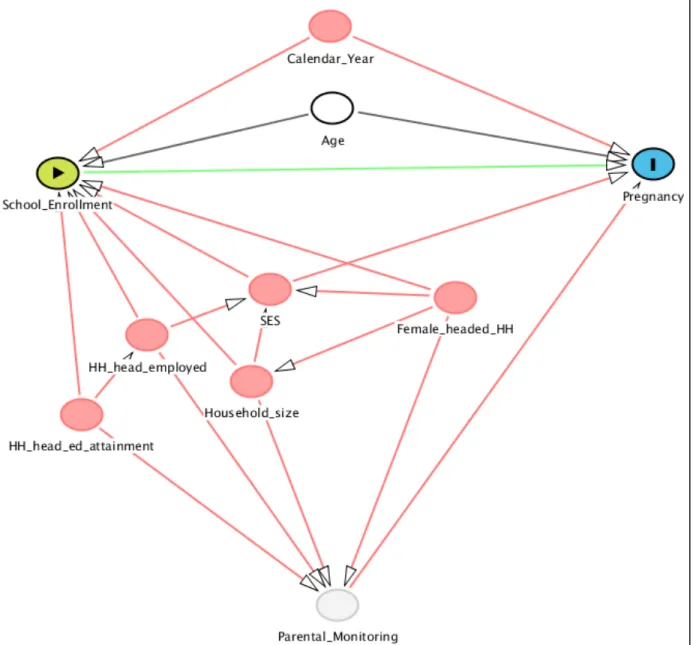
Figure 3.2: Directed acyclic graph depicting the hypothesized relationship between
school enrollment and pregnancy!...!46!
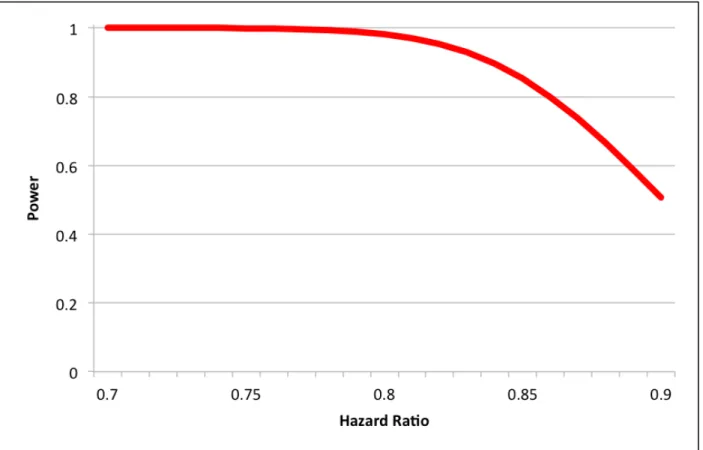
Figure 3.3: Expected statistical power to explore the association between school
enrollment and teen pregnancy over a range of hazard ratios (0.7 to 0.9)!...!47!
Figure 3.4: Histogram of unprotected sex acts in the last three months among
respondents reporting any sex in last three months (n=527)!...!48!
Figure 3.5: Histogram of number of sex partners in the last three months among
all respondents at baseline (n=2533)!...!48!
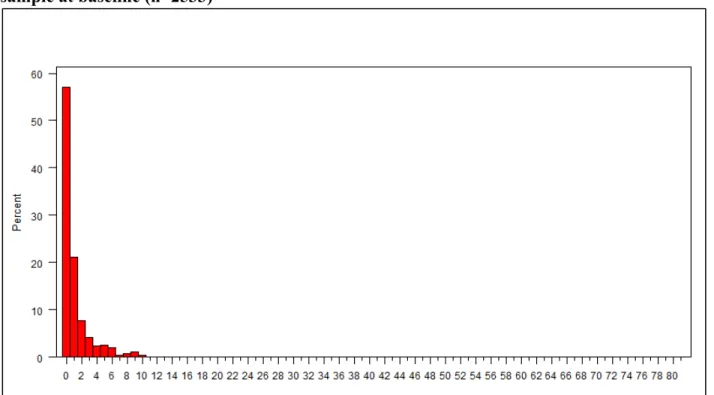
Figure 3.6: Histogram of number of alcohol outlet visits in the last six months in
the full sample at baseline (n=2533)!...!49!
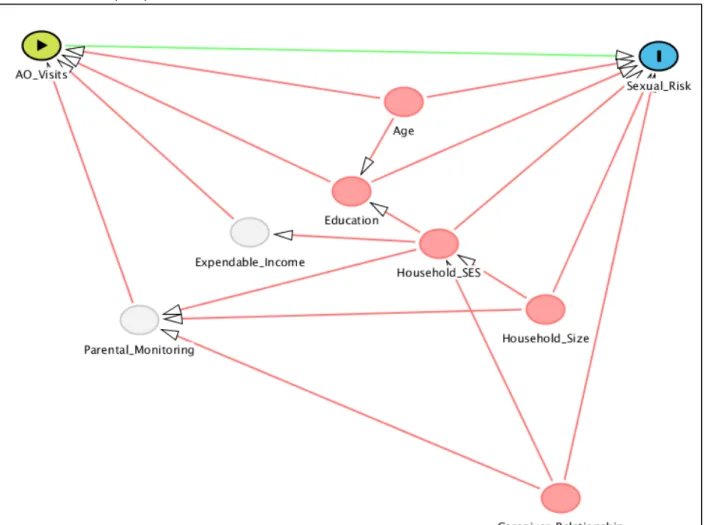
Figure 3.7: Directed acyclic graph depicting the hypothesized relationship between
visits to alcohol outlets (AO) and sexual risk.!...!50!
Figure 3.8: Expected statistical power to explore the association between exposure to alcohol outlet visits and transactional sex over a range of odds ratios
from 1.1 to 2.0!...!51!
Figure 3.9: Histogram of the individual-level distribution of alcohol outlet number
within home village!...!52!
Figure 3.10: Directed acyclic graph depicting the hypothesized relationship between
number of alcohol outlets per village and HSV-2 infection!...!53!
Figure 3.11: Expected statistical power to explore the association between number of alcohol outlets per village and HSV-2 infection across a range of odds ratios
from 1.1 to 1.5!...!54!
Figure 4.1: Flowchart of cohort construction of young women, aged 12-18, in
Agincourt, South Africa!...!72!
Figure 5.1: Flowchart of study sample construction for each of four sexual risk outcomes!...!88!
Figure 6.1: Graphical representations of the association between number of alcohol outlets in home village and prevalent HSV-2 infection among 2,174
LIST%OF%ABBREVIATIONS% %
ACASI=audio-computer assisted self-interview
AIDS=acquired immunodeficiency syndrome
ANOVA= analysis of variance
AO=alcohol outlet
CI=confidence interval
GEE=generalized estimating equation
HDSS=health and demographic surveillance site
HIV=human immunodeficiency virus
HPTN=HIV Prevention Trials Network
HR=hazard ratio (aHR= adjusted hazard ratio)
HSV-2=herpes simplex virus type 2
ICC= intra-cluster coefficient
IQR= interquartile range
IRR= incidence rate ratio
LRT= likelihood ratio test
LTFU= loss to follow-up
MI= multiple imputation
MLM= multi-level modeling
OR=odds ratio (aOR= adjusted odds ratio)
PH= proportional hazards
PLACE= Priorities for Local AIDS Control Efforts
PY= person-years
SD= standard deviation
SES=socio-economic status
CHAPTER I: Specific Aims
This study was designed to examine how the places young South African women spend
their time may influence their sexual risk. We hypothesized that spending time in structured and
supervised places would be associated with safer behaviors and related outcomes, either by
reducing opportunities to engage in unsafe behaviors or by putting youth in contact with safer
friends and partners. Similarly, unstructured and unsupervised activity could provide
opportunities to engage in unsafe behaviors or put youth in contact with unsafe friends and
partners.
An important structured place where many young women spend time is school. We
explored the influence of school enrollment on one specific outcome of risky sexual behavior –
teen pregnancy. Using a longitudinal dataset from rural South Africa, we compared pregnancy
rates at times when young women are enrolled in school to pregnancy rates at times when young
women are not enrolled in school.
A potentially significant risky activity for this population is visiting alcohol outlets. Visits
to alcohol outlets could allow for periods of unsupervised and unstructured time and provide
environments where alcohol consumption and sexual risk behaviors may be promoted. To
explore the association between frequency of visits to alcohol vendors and sexual risk, we
performed a cross-sectional ancillary study to HPTN 068: The Effects of Cash Transfer and
Finally, characteristics of home communities may play a role in shaping the specific
activities and, therefore, sexual risk of residents. The HPTN 068 study population was enrolled
within a well-defined research site across 24 villages. We were specifically interested in
exploring whether alcohol outlet accessibility within each village influenced sexual risk as
measured by individual-level prevalent herpes simplex virus type 2 (HSV-2) infection.
Much previous research has focused on identifying individual sexual risk behaviors, but
the structural and place-based characterization of sexual risk has been largely understudied,
particularly within our target population. The results of these analyses provide insight into distal
determinants of sexual risk outcomes as well as information that may be useful to better inform
and target preventive interventions.
Aim 1: Estimate the effect of school enrollment on incident teen pregnancy among rural South African young women.
Hypothesis: Pregnancy rates will be lower among those enrolled in school compared to those not enrolled in school.
Methods: We constructed a cohort from the Agincourt health and socio-demographic surveillance site of nulliparous young women aged 12 to 18 followed between 2000 and
2012. In this longitudinal analysis, we built Cox proportional hazards models to estimate the
hazard ratio comparing pregnancy rates among young women currently enrolled in school
compared to those not currently enrolled in school. We treated this school enrollment
exposure as time-varying and controlled for important time-varying and time-fixed
confounders.
transactional sex, and prevalent HSV-2 infection) among rural South African young women.
Hypothesis: Increasing number of alcohol outlet visits will be associated with increased sexual risk behaviors and increased likelihood of prevalent HSV-2 infection.
Methods: In this cross-sectional analysis, we built logistic regression models to estimate the associations between number of alcohol outlet visits in the last six months and two
dichotomous outcomes: transactional sex with most recent partner and prevalent HSV-2
infection. We built multinomial logistic regression models to estimate the association
between number of tavern visits and two categorical outcomes: unprotected vaginal sex acts
in the last three months (categorized as 0, 1, and 2+ acts) and number of sex partners in the
last three months (categorized as 0, 1, and 2+ partners). The exposure and behavioral
outcome variables were self-reported in the baseline questionnaire for all young women
enrolled in HPTN 068. Biological testing for prevalent HSV-2 was also conducted for all
participants at baseline.
Aim 3: Estimate the association between village-level number of alcohol outlets and individual-level prevalent HSV-2 infection among rural South African young women.
Hypothesis: We hypothesize that living in villages with more alcohol outlets will be associated with higher likelihood of prevalent HSV-2 infection.
Methods: Using a generalized estimating equation with log link, we modeled the association between number of alcohol outlets in home village and individual HSV-2 sero-status.
Number of alcohol outlets per village were reported by key informants in a village asset
mapping exercise associated with HPTN 068 baseline procedures in 2011. Biological testing
CHAPTER II: Background
A better understanding of the determinants of sexual risk is critical to informing new
preventive interventions to reduce the burden of related health outcomes, including unintended
pregnancy, HIV infection, and infection with other STIs. We hypothesize that an individual’s
routine activity pattern can influence her sexual risk. Below, we justify this hypothesis by:
briefly summarizing the current public health burden of sexual risk outcomes with a focus on
young women in South Africa; setting up the conceptual and theoretical framework for the
association between routine activity patterns and sexual risk; and discussing the literature to-date
on the associations between school enrollment, visits to alcohol outlets, alcohol outlet
accessibility, and sexual risk.
1 Overview
The public health burden of HIV remains high throughout the world, particularly among young South African women. There are currently 34.0 million people living with HIV worldwide, according to most recent estimates, and the number has risen continuously since
1990.(1) South Africans face a burden from HIV/AIDS at a level largely unmatched in the rest of
the world. Overall, the national HIV prevalence was estimated to be over 15% in 2011 with over
5.5 million people living with the disease.(2) Young women in South Africa are at exceptionally
high risk for HIV infection. They are infected at a rate over three times that of young men, and,
these young women so strongly affected by HIV and what can be done to prevent the spread of
the disease in this vulnerable population?
Similarly, there is a significant public health burden associated with teen
pregnancy; this burden is particularly high among adolescents in sub-Saharan Africa. Teen childbearing has been associated with negative health and social outcomes for both teen mothers
(maternal mortality, lower self-esteem, lower educational attainment, higher poverty levels,
social stigma, and family-imposed sanctions) and their children (increased risk of preterm
delivery, low birth weight, and infant mortality).(5-8) The negative consequences for children of
teen mothers persist throughout their own childhood and early adulthood as they also tend to
have higher poverty levels, attain lower educational levels, and are at higher risk of becoming
teen parents themselves.(5) Globally, over 16 million births occur to mothers under the age of 20
every year, and nearly all (95%) occur in developing countries.(9) In South Africa, over 10% of
all births are to teen mothers,(10) and, by the time they reach age 20, nearly one-third of all
young women will have borne a child.(11) Successful preventive interventions for teen
pregnancy, particularly in areas where it is most common, could potentially prevent a large
burden of negative health outcomes.
Much previous research has been conducted to identify individual-level
characteristics associated with sexual risk outcomes. In particular, increased risk of HIV has been associated with demographic factors such as age,(12) gender,(13) and socioeconomic
status;(14) and behavioral factors such as early coital debut,(15) number of sex partners,(16)
condom use,(16) and other STI diagnosis.(17) Becoming a teen mother has been associated with
demographic factors such as race/ethnicity, large household size, and not living with biological
However, many of these individual-level characteristics are difficult to modify, or are
non-modifiable, with little use in informing preventive interventions. Although more distal risk
factors such as poverty and low education have also been associated with both HIV (14, 20, 21)
and teen pregnancy,(22, 23) other structural and contextual risk factors, particularly those with
the potential to inform interventions, have been explored much less frequently.
This study explored how routine activity patterns (school enrollment and frequency of visits to alcohol-serving establishments) and community characteristics (alcohol outlet accessibility) may influence sexual risk. We drew a distinction between activities that provide structure and supervision to adolescents (school enrollment) and activities that allow for periods
of unstructured and unsupervised time (visits to alcohol outlets). In general, we hypothesized that
structured and supervised activities would be associated with lower sexual risk and unstructured
and unsupervised activities would be associated with greater sexual risk.
2 Conceptual and theoretical framework
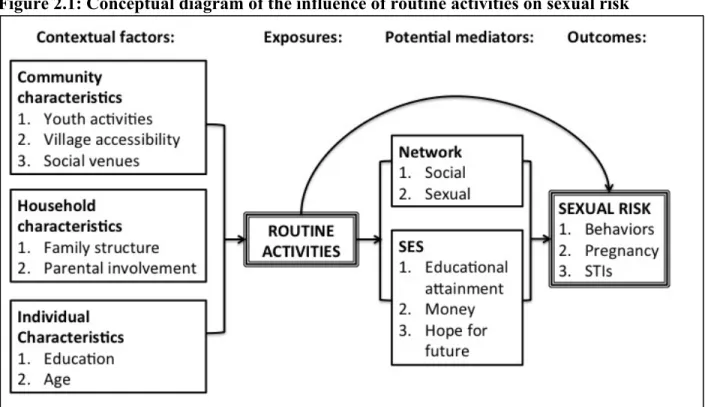
Figure 2.1 is a conceptual diagram of the association between routine activities and
sexual risk, representing the contextual factors that may influence routine activities and the
potential mechanisms through which we hypothesize routine activities may influence sexual risk.
The first column depicts the contextual factors we hypothesize influence activity participation.
The propensity for an individual to participate in any specific activity is likely shaped by factors
at the community-level (does the community provide opportunities to participate in the
activity?), household-level (does the family encourage or discourage certain activities, either
directly or because of characteristics associated with participation in the activity?), and
individual-level (does the individual have certain characteristics that are associated with
!
The third column depicts our hypothesis that routine activities can influence sexual risk
through three separate, though not mutually exclusive mechanisms. First, participation in
specific activities may improve one’s socio-economic status (SES), which could offset some of the financial motivations to engage in risky sexual activity. However, as the timeframe in which we might anticipate this kind of mechanism to influence sexual risk is likely long in
duration and we are studying more temporally-proximate outcomes in a population of young
women, this mechanism is not explored further here.
Second, routine activities may influence sexual risk outcomes directly by providing
periods of structured and supervised time during which sexual risk behavior is unlikely to occur, or by providing periods of unstructured and unsupervised time during which sexual risk behavior may be more likely to occur. The justification for this proposed direct effect is grounded in a synthesis of Social Control Theory,(24, 25) and the routine activity/time-use
perspective.(26-29) Both of these theories have been used primarily in criminology to explain
delinquent behaviors, but their applicability can be extended to sexual behavior.(30) In general,
Social Control Theory posits that individuals may choose to exhibit a wide range of behaviors,
but this range can be limited by social forces. The routine activity perspective adds to this
framework by proposing that activities involving unstructured socializing with peers (in the
absence of authority figures) are the least limited by social forces, and allow time and
opportunity for deviant behavior to occur.
Finally, participation in specific activities may change one’s social and sexual
network. If the co-participants are generally safer (e.g. younger, more educated) and become integrated into the network that influences a participant’s sexual behavior, then one might expect
less educated), then one might expect increased sexual risk for the participant. The justification
for this proposed mechanism is grounded in Social Cognitive Theory.(31) This theory posits that
people learn information and change their own behaviors by viewing others. Peers can be
strongly influential providers of sexual information and sexual norms to adolescents; more
traditional sources of general information (parents and schools) often do an inadequate job of
frankly discussing sexual matters with adolescents.(32) These peer groups, thus, can be an
important source of social support for positive behavior modeling or negative behavior
modeling, depending on the norms of the group.
Here, we will briefly link our specific research aims to this conceptual framework; a
literature review for each aim will be presented in subsequent sections below. In both Aims 1
and 2, we were interested in estimating the association between individual routine activities and
sexual risk outcomes. In Aim 1, we investigated the association between the routine activity of
school enrollment and the sexual risk outcome of teen pregnancy. In Aim 2, we investigated the
association between frequency of visits to alcohol outlets and sexual risk, using three behavioral
outcomes and one biological outcome. The conception and design of both of these aims was
grounded in the theories listed above used to explain the potential mechanisms of the association
between routine activities and sexual risk, as presented in Table 2.1.
In Aim 3, we investigated the association between community-level number of alcohol
outlets and the individual-level sexual risk outcome of prevalent HSV-2 infection. The design
and analysis of this aim was grounded in a Neighborhoods and Health theoretical
framework.(33) This framework was developed to explore how neighborhood factors influence
the health of residents, with emphasis on the idea that there exist neighborhood-level contextual
that can influence individual health above and beyond the neighborhood-level compositional
factors (aggregate individual-level factors such as median income and unemployment rate).(34)
3 Aim 1: School enrollment and teen pregnancy
An important structured place where many young women spend time is school. In South Africa, nearly all young people are enrolled in school for most of their school-aged years;
by the time they reach secondary school age, the vast majority (94%) still remain in school.(35)
However, school drop-out rates begin to rise after the mandatory enrollment age of 16.(36) The
average school year in South Africa has 200 school days and students typically spend five to six
hours a day at school.(37, 38) It is important to note, however, that the quality of education in
South Africa is substandard with reports of low performance in literacy and mathematics, high
failure rates, high drop-out rates, and underqualified teachers, particularly in poor, majority black
schools.(39, 40) Nonetheless, schooling may provide large periods of structure and supervision
in young adults’ lives, as well as teach important life skills, provide sex education, and increase
future opportunities.
Lower educational attainment is associated with higher sexual risk. Lower
educational attainment has been associated with sexual risk behaviors such as early sexual debut,
unprotected sex, and multiple partnerships throughout sub-Saharan Africa (41-43). Lower
educational attainment has also been linked to teen childbearing.(41) Finally, lower educational
attainment has been associated with HIV incidence (44) and HIV prevalence.(20, 42, 45)
However, there is evidence that this relationship has changed over time, as, earlier in the
epidemic, higher HIV risk was associated with higher education levels.(46-50)
lifetime may provide a good measure of the education to which she has been exposed, the life
skills she has learned, and/or the increased socio-economic status that comes from increased
education.(51) However, measures of educational attainment do not incorporate the potential
protective effects of structured time or safer networks that may result from school enrollment.
This is particularly true in studies of relatively older populations who may be long out of
school.(44) Further limiting the findings from the current research is that most of these studies
were performed cross-sectionally (20, 41, 42, 45) so inferences about the directionality of the
relationship between education and sexual risk are limited.
School enrollment status is also associated with sexual risk. Compared to educational attainment, school enrollment status can serve as a measure of the current level of exposure to
the structured activity space and safer networks provided in schools. School dropout has been
linked to sexual risk behaviors like multiple partnerships, partner age, unprotected sex, and
transactional sex.(52, 53) School enrollment status is also associated with lower HIV prevalence,
though no studies to date have linked enrollment status to HIV incidence.(52, 54) The
relationship between school enrollment and teen pregnancy is more complex. Teen pregnancy
among school enrollees leads to subsequent school dropout.(55-57) Conversely, school dropout
among non-pregnant teens may lead to subsequent pregnancy. Results from two interventions
designed to incentivize young women in sub-Saharan Africa to stay in school longer report lower
teen pregnancy rates,(58, 59) supporting similar results from a single longitudinal study in the
United States from 1988-1994.(60)
(52-56), limiting the ability to make inferences about the directionality of the observed associations.
However, two of these studies did try to address this issue by using detailed calendars to record
event histories.(55, 56) A more appropriate way to establish the directionality of the association
between school enrollment and sexual risk is to analyze prospectively collected data. Relatedly,
in order to establish the correct sequence of events, the timing of changes in school enrollment
status and timing of sexual risk outcomes should be recorded finely. This is often difficult in
cross-sectional studies relying on self-reported data, particularly those asking respondents to
remember temporally-distant events. More objective measures of exposures and outcomes (such
as school enrollment and delivery dates recorded in a yearly census) provide better information
to understand this complex relationship. Responding to the methodological limitations and
general sparseness of the current literature, Jukes, et al state that there is an “urgent need to
strengthen the evidence base” on education and sexual risk.(51) Using a large, longitudinal,
census-based dataset, this study addressed many of the above-mentioned limitations, adding to
the small, yet growing body of literature on the association between school enrollment and
sexual risk.
4 Aim 2: Frequency of visits to alcohol outlets and sexual risk behavior
Frequenting alcohol outlets may influence sexual risk behaviors. Visits to alcohol outlets (establishments where alcohol is sold) may allow for periods of unsupervised and
unstructured time which we hypothesize is associated with increased sexual risk. Additionally,
the alcohol consumption associated with visits to social venues like bars and taverns could
directly influence sexual risk behaviors. We discuss both of these potential mechanisms below,
Sexual behaviors are important proximate determinants of sexual risk outcomes. Although we typically think of sexual risk outcomes as disease or unintended pregnancy, the
behaviors that put young women at risk for these events can also be important to explore. In
particular, becoming sexually active and having unprotected sex have a clear relationship with
HIV, other STIs, and pregnancy as together they are the mechanism for sexual transmission of
disease and conception. Unprotected sex has been strongly linked with STI infection (61-64) and
pregnancy rates.(65) Young women in South Africa do not report particularly risky sexual
behaviors relative to their counterparts in the United States, but in the context of heavy HIV/STI
burden, any sexual activity can be risky.(66) Identifying factors associated with sexual risk
behaviors in addition to biological outcomes is important to better understand the etiology of
sexual risk and to develop potential prevention interventions.
Alcohol use and abuse is associated with sexual risk. The link between alcohol use and sexual risk is well-established in populations throughout the world.(67-71) This association has
been observed regionally among populations in sub-Saharan Africa (72-74) and specifically in
South Africa.(75, 76) These findings appear to hold across both genders, over a range of ages,
and for both behavioral outcomes such as unprotected sex,(67, 69, 72) and biological outcomes
such as HIV infection.(70, 71, 73) Additionally, these associations appear to be robust to
different measures of alcohol use, holding among global exposure studies (‘What is the
frequency and quantity of recent alcohol consumption?’), event-level exposure studies (‘Was the
individual under the influence of alcohol during particular occasions of risky sex?’), and studies
where exposure was randomized.(69, 77)
(74, 78) and decreases awareness of social norms and risk-inhibiting cues.(79) Relatedly, alcohol
use leads to a myopic focus on the present, where distant consequences of proximal activities are
discounted.(79, 80) These disruptions to the normal social and individual constraints on risky
activity are thought to lead to increased sexual risk.(81, 82) A parallel line of research indicates
that periods of sexual arousal may also lead to impaired judgment and decision-making.(83) This
negative effect is reinforced by the fact that alcohol users themselves report feelings of enhanced
sexual appeal and reduced sexual control.(76) Alcohol consumption and sexual arousal may,
therefore, work synergistically to heighten sexual risk taking. Finally, there is also evidence for a
dose-response relationship between alcohol use and sexual risk as, generally, greater sexual risk
is associated with increased quantity of alcohol consumption.(72)
Typical drinking patterns in South Africa are dangerous. Approximately 25% of men and 10% of women experience alcohol problem symptoms in South Africa.(84) Alcohol misuse
is also common among South African young adults; nearly a quarter of all high school students
report recent binge drinking activity.(84, 85) Within the WHO-based regional grouping for
southern Africa, of which South Africa is a member, an estimated 55% of males and 33% of
females drink alcohol. For each drinker in the region an estimated 16.6 liters of alcohol is
consumed per year, placing it among the few areas in the world with the most detrimental
drinking patterns.(86)
Alcohol use and misuse are associated with patronizing alcohol outlets. In South Africa, Morejele et al. have developed a conceptual model of the relationship between alcohol
use and sexual risk behaviors informed by qualitative data.(87) They found that the environment
sexual risk. This proposed relationship is supported by quantitative data linking patronizing
alcohol outlets to increased frequency and quantity of drinking in South Africa.(88)
Aside from the biological effects of alcohol consumption, the context of the places where alcohol is served may also influence sexual risk. The physical features of a drinking establishment may be conducive to unprotected sex occurring on premises. Qualitative evidence
suggests that the music, dim lights, uni-sex toilets, and lack of condoms typical in bars create
favorable environments for risky sexual activity.(87) Additionally, there is evidence that the
network of people to whom an individual is exposed in drinking establishments may be riskier
than in non-drinking environments. Sex partners are often met in these places, particularly for
young women, and these partners are often older men looking for sex in exchange for
money.(74, 89)
Risky social venues that sell alcohol have been identified using a community mapping methodology. Specific social venues have been identified as high-risk using the Priorities for Local AIDS Control Efforts (PLACE) methodology throughout the world.(90-99)
This methodology identifies venues where people meet new partners using qualitative interviews
and mapping exercises with key informants.(100) In South Africa, more than 85% of the places
identified in this manner were alcohol-serving establishments.(90) These high-risk locations are
appealing targets for interventions; however, interventions directed at PLACE-identified
locations have had mixed results.(98, 99)
Direct evidence for the association between visits to alcohol outlets and sexual risk is sparse. Although the sexual risk profiles of participants recruited at alcohol outlets have been relatively well-characterized as risky (74, 93, 101-104), studies comparing the sexual risk
cross-sectional studies in Zimbabwe report moderate associations between recent beerhall visits and
prevalent HIV infection among men (105) and prevalent HIV infection and risky sexual behavior
among both men and women.(106) A single cross-sectional study of an adult population in South
Africa found that patronizing alcohol outlets was associated with increased unprotected vaginal
sex, and an association with increased sexual risk index was significant even after controlling for
alcohol consumption.(88) A final, cross-sectional study in India found an association between
patronizing wine shops and prevalent STI infection (HIV, HSV-2, syphilis, chlamydia, or
gonorrhea) among adult males.(107) However, interventions targeted in these high-risk venues
have so far had weak or null results on sexual risk outcomes.(108, 109) Studies linking visits to
specific locations to sexual risk in adolescents are rare, though one novel study used risk
mapping and focus groups among secondary students in Zimbabwe to identify six high-risk area
categories, including commercial centers where alcohol is served.(110)
The current literature on exposure to alcohol outlets and sexual risk is limited, particularly for young women in sub-Saharan Africa. Only four studies have empirically examined this association. Although all prior studies found significant results in adult
populations, the association has not been confirmed in adolescent-specific or female-specific
populations. Also, the South African and Indian studies used convenience sampling methods
where many members of the study population were enrolled within alcohol outlets themselves
which could cause bias if they were not representative of the general population.(88, 107)
Finally, all four prior studies dichotomized the alcohol outlet exposure into patrons versus
non-patrons; this dichotomy may mask interesting nuances in the relationship between amount of
exposure to drinking establishments and sexual risk. Clearly, more research is needed to add to
5 Aim 3: Alcohol outlet density and sexual risk
Characteristics of the communities in which young women live may play a large role in shaping their exposure to different risk environments. Communities that provide safe resources and opportunities for youth may directly or indirectly lower their sexual risk while
communities that provide opportunities for youth to engage in unsupervised activities may
directly or indirectly increase their sexual risk. We hypothesize that alcohol outlets provide
opportunities for youth to engage in unsupervised activities and that living in communities with
more alcohol outlets will be associated with increased sexual risk.
Specific community characteristics are associated with sexual risk, but modifiable community characteristics are understudied. Associations with increased sexual risk have been noted for multiple sociodemographic, behavioral and spatial factors, including: urban
location and age/gender profiles;(111) urban status and ethnicity/unemployment profiles;(112)
proximity to a city and HIV prevalence within a 25 kilometer buffer;(113) GDP, mobility,
urbanization and drug use;(114) proximity to a primary road;(115, 116) proximity to a market
and distance to a health clinic;(117) and literacy rates, unemployment, poverty, and urban
residency.(118) However, most of the community-level exposures explored to-date are
non-modifiable or difficult to modify. Alcohol outlet accessibility is attractive as a potential
intervention target because it is relatively modifiable through strengthening or more strictly
enforcing existing government regulation.(119)
Alcohol outlet accessibility is associated with alcohol consumption and alcohol-related problems. The association between increased alcohol outlet density and increased frequency and consumption of alcohol consumption is well-established.(120-123) Increased
automobile injuries (124) and violent crime.(125) Public policy and economic frameworks also
support the link between alcohol outlet accessibility, alcohol consumption, and alcohol-related
problems. These perspectives posit that people tend to consume less alcohol and therefore have
fewer alcohol-related problems when the accessibility to alcohol is limited, either through higher
legal purchasing age, increased prices, or decreased outlets.(119, 126, 127) It should be noted,
however, that the research to date on alcohol outlet density is heavily skewed to populations in
the developed world. The vast majority of studies were performed in American study populations
and, to our knowledge, the exposure of alcohol outlet accessibility has been unstudied in South
African study populations.
Community alcohol outlet accessibility may be associated with sexual risk as well. To our knowledge, there have been four studies examining the association between alcohol outlet
accessibility and sexual risk.(128-131) Increasing alcohol outlet density was significantly
associated with census-level gonorrhea rates in a cross-sectional study in Louisiana (129) and a
time series analysis in California (128), and with self-reported STI infections in a cross-sectional
study in Louisiana and California.(130) A final cross-sectional study in Namibia found that
increasing alcohol outlet density was associated with increased HIV prevalence.(131) This
evidence suggests that the alcohol environment in a neighborhood can influence sexual risk.
However, in South Africa, researchers found that proximity of an alcohol outlet to home
residence was inversely associated with increased sexual risk behavior among female patrons of
alcohol outlets, indicating that the anonymity that comes from visiting more distant venues may
have a disinhibiting effect.(132)
community-level may be subject to the ecologic fallacy if inferences are made at the individual-community-level.(128,
129, 131) If studies, instead, examine the influence of community-level factors on
individual-level outcomes, appropriate statistical methods like multiindividual-level modeling or generalized
estimating equations must be used to account for the fact that observations in the same
community are likely non-independent.(130) Finally, the cross-sectional nature of nearly all of
the prior studies also limits the ability to assess directionality of the association between
exposure and outcome.
The evidence to-date on alcohol outlet density and sexual risk is incomplete. All but one of the four previous studies were conducted in the United States and all four were conducted
in adult or general study populations. Replication of these results in youth-specific populations
outside of the United States, such as the high-risk population of South African young women,
would further extend the generalizability of the results. This is particularly pertinent as youth
may have different alcohol outlet utilization patterns and alcohol-using behaviors than adults, so
6 Tables and Figures
Table 2.1: Theoretical support and exposure measures by study aim
Aim Theoretical support Exposure measure
1. School enrollment and teen pregnancy
1. Social cognitive theory 2. Social control theory
School enrollment status 2. Visits to alcohol outlets,
sexual behavior and HSV-2
1. Social cognitive theory 2. Social control theory
Number of visits to taverns in last six months 3. Alcohol outlet density and
HSV-2
Neighborhoods and Health Number of alcohol outlets per village
Figure 2.1: Conceptual diagram of the influence of routine activities on sexual risk
CHAPTER III: Research Designs and Methods 1 Study Overview
Overall, the objective of this research project was to explore the association between
routine activities on sexual risk among young women in rural South Africa. We approached this
research question in three ways. In Aim 1, we used longitudinal data routinely collected from the
Agincourt Health and socio-Demographic Surveillance Site to explore the influence of school
enrollment on teen pregnancy. The second and third aims were an ancillary studies to HPTN 068
- The Effects of Cash Transfer and Community Mobilization in Young South African Women
Study. The second aim explored the association between frequency of visits to alcohol outlets
with sexual risk behaviors and HSV-2 infection. The third aim explored the association between
village-level alcohol outlet accessibility and HSV-2 infection.
2 Study population and parent studies
To conduct the first aim of this study, we used previously collected data from the rural
Bushbuckridge sub-district in the Mpumalanga province of South Africa. The Medical Research
Council / Wits University Rural Public Health and Health Transitions Research Unit runs the
Agincourt Health and socio-Demographic Surveillance Site (Agincourt HDSS) in this area and a
complete census is performed on all the households yearly. The Agincourt HDSS is a
multi-round, prospective, community study established in 1992; since then it has continually monitored
all vital events occurring within the defined geographic area. As of 2011, the Agincourt HDSS
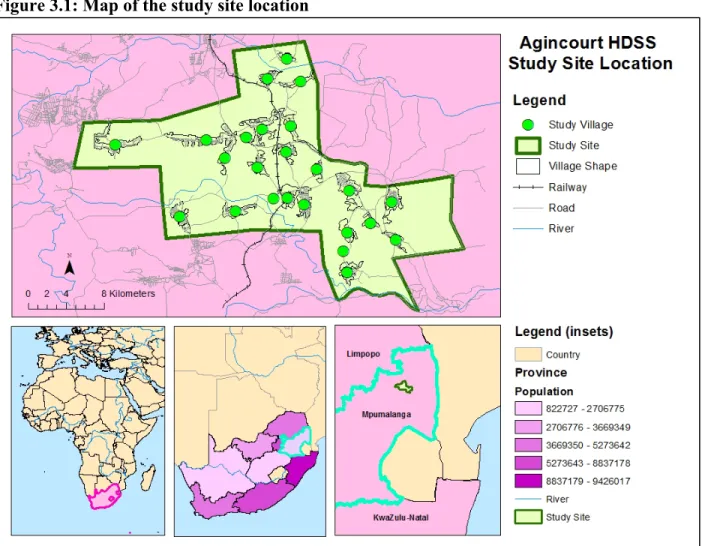
Cohort profiles and details of the data collection methods have been described previously.(133,
134) Figure 3.1 displays a map of the study site location and the spatial distribution of study
villages.
The second and third aims used baseline data originally collected by HPTN 068. HPTN
068 is a Phase III randomized trial currently being conducted within the Agincourt HDSS and
surrounding area. The study aims are to determine whether providing cash transfers conditional
on school enrollment reduces HIV risk in young women. Eligibility inclusion criteria at baseline
were: female; age 13-20; enrolled in grades 8, 9, 10, or 11 at a school in the HDSS study site;
intention to live in the study site until the end of follow-up; consent/assent to HIV and HSV-2
testing; ability to read sufficiently to self-administer a computer assisted interview;
documentation to be able to open a bank account; and residence with a parent/guardian willing to
consent to all study procedures. Eligibility exclusion criteria were: pregnancy at baseline;
married at baseline; and no parent or legal guardian in the household. Importantly, young women
who tested positive for HIV at baseline were not be excluded from study participation. A total of
2533 young women were enrolled in HPTN 068 and completed baseline procedures.
3 Aim 1: School enrollment and teenage pregnancy 3.1 Study design
To investigate the association between school enrollment and pregnancy, we conducted a
study that was longitudinal in design with both the exposure and the outcome assessed and
analyzed at the individual-level. We constructed a cohort from data originally collected by the
Agincourt HDSS that included up to six years of follow-up for each participant. School
enrollment exposure was included as a time-varying exposure and each participant was followed
3.2 Data collection and variable measurement
Cohort construction: We constructed the cohort using data from the Agincourt HDSS census. All 12-18 year-olds who had not yet experienced their first pregnancy and who lived in
the study area between 2000-2012 contributed person-time to this study. Nulliparous young
women who moved into the study site after their 12th birthday and nulliparous young women
older than 12 in 2000 were treated as late entries. Young women who moved out of the study site
or died during follow-up were censored at the time of move or death. All young women who did
not experience their first pregnancy by the age of 18 were administratively censored on their 18th
birthday.
Outcome assessment: The outcome we explored in Aim 1 was incident first pregnancy. All vital events that occur in the Agincourt HDSS study area, including births, deaths, and
migrations, have been updated continuously in the database since 1992. In the yearly census
update, fieldworkers administer a pregnancy module to collect information on all pregnancies
that took place in the previous 12 months. Although this list of pregnancies includes those that
did not result in live births, this outcome is self-reported, and miscarriages and abortions,
particularly early losses, may be under-reported.
Date of delivery was recorded for all pregnancies. We calculated the estimated
conception date for each pregnancy by subtracting 40 weeks (the average duration of pregnancy)
from the date of delivery. The time to first pregnancy was calculated as the duration, in months,
between a young woman’s 12th birthday and the estimated conception date of her first pregnancy.
We restricted our outcome to first pregnancy as opposed to pregnancy of any order for
several reasons. First, given the relatively young ages in our cohort, we did not expect to see
we theorized that young women who had previously had a child would become incomparably
different from those who had not, particularly with regards to their school enrollment. For
example, young women who have had a child are less likely to go on and have further school
enrollment exposure, even though previous pregnancy is not completely incompatible with future
schooling, particularly in South Africa.(57)
Miscarriages, perinatal deaths, and abortions were all likely to be underreported in this
sample. Unreported abortions could plausibly produce differential outcome misclassification
with respect to school enrollment status. To address this, we compared the rate of abortions in
the study sample to recent South African abortion rate estimates. As a sensitivity analysis, we
explored whether unreported abortions could plausibly account for the observed association by
estimating how many abortions would need to be unreported among school enrollees to nullify
the observed association. If this total number would yield an abortion rate of improbable
magnitude compared to national estimates, we considered our results robust to unreported
abortions. Because they are not in direct control of the participant, unreported miscarriage and
perinatal death rates were likely nondifferential with respect to school enrollment status.
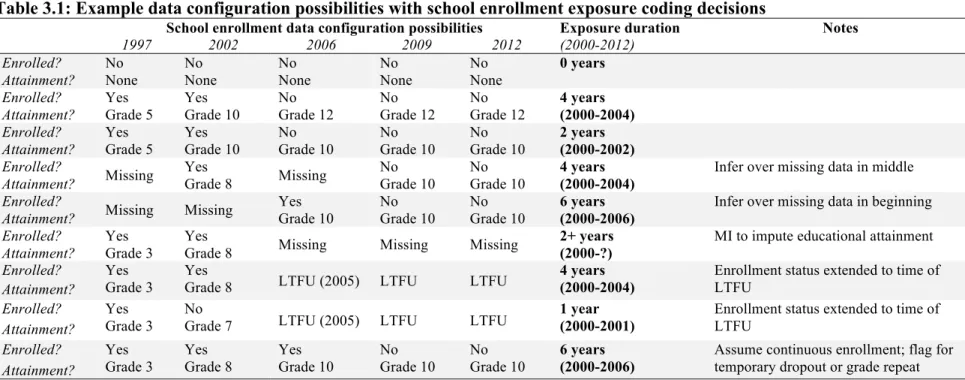
Exposure assessment: The primary exposure we explored in Aim 1 was school enrollment. School enrollment was coded as a time-varying bivariate exposure equal to one when the participant was enrolled in school and zero when not enrolled in school. An education
status module was administered in 1997, 2002, 2006, 2009, and 2012. At the time of each
module, field workers recorded the highest education level each young woman had achieved and
whether or not she was currently enrolled in school. Although these modules were only updated,
on average, every three years, we could interpolate school enrollment at any given time by
woman reported current enrollment in Grade 8 in 2002 and current enrollment in Grade 12 in
2006, we inferred that she was continuously enrolled in school between 2002 and 2006. Table
3.1 shows other potentially more complex data configurations and the a priori coding decisions
we made about school enrollment duration.
We performed three sensitivity analyses around these assumptions to evaluate the
robustness of our results to potential school enrollment misclassification. First, to address the
uncertainty around the sequence of events when exposure and outcome occurred around the
same time, we created a restricted sample removing all observations with a pregnancy within one
year before or after the estimated school dropout date. Second, to address the uncertain
enrollment status of young women who may have temporarily dropped out of school or skipped
grades, we created a restricted sample removing all observations with non-linear grade
progression patterns. Third, we created a final restricted sample by combining both of the two
restrictions above. We compared differences in results from the full sample and from each of
these three restricted samples to assess the potential influence of misclassification of the school
enrollment exposure.
Covariate assessment: We also explored the potential influence of several key covariates on the relationship between pregnancy and school enrollment. Specifically, we requested data on:
1) Age, calculated, in years, from birthdate. We hypothesized that increasing age would be associated with an increased likelihood of pregnancy and a decreased likelihood of school
enrollment.
2) Gender of household head, defined as the gender (male or female) of the individual reported as the head of household. We hypothesized that living in a household headed by
and through decreased parental monitoring and household SES) and increased likelihood
of pregnancy (through decreased household SES).
3) Household head employment, defined as whether or not the household head reports employment (employment module administered in 2000, 2004, and 2008). We
hypothesized that young women living in households headed by people with employment
would be associated with increased likelihood of school enrollment (directly and through
increased household SES) and associated with pregnancy (through increased household
SES and decreased parental monitoring).
4) Household head secondary education, defined as whether or not the household head reports 12 years of educational attainment, as updated in the education module
administered in 1997, 2002, 2006, 2009, and 2012. We hypothesized that young women
living in households headed by people who completed secondary school would be
associated with increased likelihood of school enrollment and decreased likelihood of
pregnancy (through increased household SES and increased likelihood of employment).
5) Household size, defined as the total number of individuals reporting membership in the participant’s household. We hypothesized that increasing household size would be
associated with decreased school enrollment (directly and through decreased parental
monitoring and household SES) and increased likelihood of pregnancy (through
decreased household SES).
6) Household socioeconomic status (SES), measured as a time-varying composite index of general SES based on household assets (SES module administered in 2001, 2003, 2005,
and 2007). We hypothesized that increasing household SES would be associated with an
7) We also explored the influence of calendar year on the relationship between school
enrollment and pregnancy by creating an indicator for the year in which each participant
turned 12 years old. As this study had a long follow-up period, it was possible that both
teen pregnancy rates and school enrollment rates varied over time due to external factors.
The hypothesized relationships between the covariates, school enrollment and pregnancy are
diagrammed in Figure 3.2.
3.3 Statistical approach
Using a Cox proportional hazards model, we compared the hazard of first pregnancy
among those enrolled in school compared to those not enrolled in school. The origin for each
participant began on her 12th birthday and the time scale was age. We partitioned the dataset so
that young women who switched school enrollment status during follow-up contributed both
exposed and unexposed person-time. Young women were censored at the time of their first
pregnancy; if they moved, died, or were otherwise lost to follow-up; when they attained a grade
12 educational attainment; or when they reached 18 years of age.
We assessed for the potential confounding effects of time-fixed and time-varying
covariates, using the directed acyclic graph to identify a minimally sufficient adjustment set. Age
was adjusted for implicitly as age was the time scale in this analysis. Coding decisions for all
covariates were based on likelihood ratio tests comparing a variety of different functional forms.
We also considered the potential for effect measure modification by age. To do this, we
categorized age into young (age 12 through 14 years) and old (age 15 through 17 years) and
examined the stratified estimates to assess whether there were differences in the magnitude of
effect across strata. To formally test for effect measure modification, we included an interaction
model. Interaction terms with Wald test statistic p-values of <0.10 were considered significant in
which case stratified estimates were reported.
3.4 Power
We parameterized our a priori power calculation using the publically available ten
percent sample of the full HDSS dataset. In this sample, a total of 2,097 young women between
the ages of 12 to 18 contributed 6,308 person-years between 2000 and 2012. This number of
person-years incorporates loss to follow up due to death or move outside of the study area, aging
in and out of the cohort, and censoring after first pregnancy. We therefore assumed 63,080
person-years would be observed in the full cohort. Approximately 50% of the sample reported
being enrolled in school at each of the time points; we assumed that 50% of the person years
under study in the full sample will be exposed to school enrollment as well. A total of 152 first
pregnancies (7.3%) were recorded in the ten percent sample; we assumed we would observe
approximately 1,520 first pregnancies in the full sample.
Using an expected data approach for a simple Poisson model with a two-sided test with
an alpha of 0.05, we calculated the 95% confidence limits across the range of potential protective
hazard ratios from 0.50 to 0.90 (Table 3.2). All expected confidence intervals excluded the null
and were precise with confidence limit ratios around 1.25. We maintained a statistical power
greater than 80% for hazard ratios from 0.50 to 0.86, as confirmed in a power calculation using
the same parameters estimating the expected power for all hazard ratios between 0.7 and 0.9
4 Aim 2: Alcohol outlet visits and sexual risk 4.1 Study design
To explore the association between alcohol outlet visits and sexual risk, we conducted a
cross-sectional analysis using data collected in the baseline quantitative survey for HPTN 068.
Information on the exposure (number of alcohol outlet visits) and outcomes (unprotected sex
acts, number of sex partners, transactional sex, HSV-2 infection) were collected at the
individual-level at the same point in time. All young women with baseline data collected in the
parent study were included in the analysis.
4.2 Data collection and variable measurement
Outcome assessment: In Aim 2, we explored four indicators of sexual risk as outcomes. The three behavioral outcomes were self-reported in the HPTN 068 baseline questionnaire. To
minimize the bias that may come from answering personal questions about sexual behavior to an
interviewer, an ACASI (audio computer-assisted self-interviewing) component was incorporated
into the HPTN 068 baseline questionnaire. The ACASI component allowed participants to
privately read or listen to audiotaped questions and log their responses directly in the computer,
without having direct interaction with the interviewer. To help prevent data entry errors, skip
patterns and warnings for implausible or impossible responses were coded into the program. The
biological outcome was also assessed in HPTN 068 baseline procedures. The outcomes of
interest were:
1) Unprotected sex acts: This count variable was defined by subtracting the total number of condom-protected vaginal sex acts from the total number of vaginal sex acts self-reported
in the last three months. In the full sample, those who reported no sex acts at all received
to identify potential outliers and responses with repeated single digits that may have been
due to unintentional double-striking in the ACASI software. We recoded probable
double-strike responses based on corroborating information in the number protected sex
act responses. Figure 3.4 shows the distribution of unprotected sex acts among those who
reported at least one sex act (protected or not) in the last three months with responses
greater than 15 truncated at 15. As there were very few young women with more than
two unprotected sex acts, for analysis, we categorized unprotected sex acts into zero, one,
and more than one sex acts. Table 3.3 shows the baseline frequencies of each category of
unprotected sex acts.
2) Number of sex partners: This count variable was defined as the number of self-reported sex partners in the last three months. In the full sample, those who reported no sex
partners ever received a zero value for this variable. We recoded probable double-strike
responses based on corroborating information in the number of lifetime sex partner
responses. Figure 3.5 shows the distribution of number of sex partners in the last three
months. As there were very few young women with more than two sex partners, for
analysis, we categorized sex partners into zero, one, and more than one partners. Table
3.3 shows the baseline frequencies of each category of number of sex partners.
3) Transactional sex: This dichotomous variable was constructed from responses to questions in the baseline questionnaire regarding whether the participant had received
money or gifts from her most recent sex partner and whether she felt obligated to have
sex in return. Table 3.3 shows the baseline frequency of transactional sex with most
4) Prevalent HSV-2 infection: Testing for HSV-2 infection was performed at baseline using Kalon assays. Table 3.3 shows the baseline frequency of HSV-2 infection.
Exposure assessment: The exposure we assessed in Aim 2 was frequency of alcohol outlet visits. This count variable was defined as the number of self-reported visits to a tavern/shebeen in the last six months. We removed observations with suspected double strike responses and
implausibly high responses. Figure 3.6 shows a histogram of the univariate distribution of
frequency of alcohol outlet visits. We assessed the functional form of its relationship with each
outcome variable considering different categorizations and transformations. For analysis, we
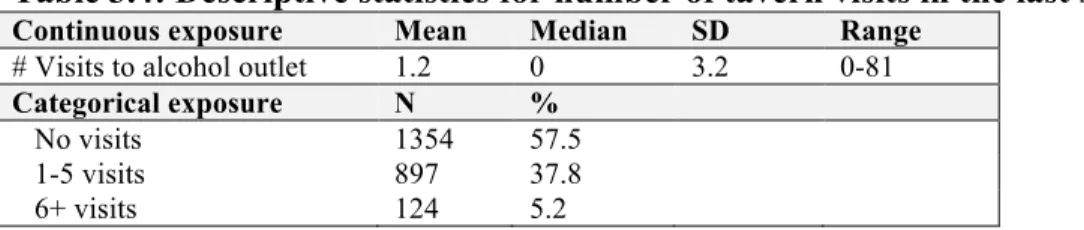
categorized the exposure into three categories: No visits, 1-5 visits (fewer than one visit per
month, on average), and 6+ visits (at least one visit per month, on average). Table 3.4 shows
descriptive statistics for number of alcohol outlet visits and frequencies of each category.
Overall, in the baseline sample, the mean number of alcohol outlet visits in the last six months
was 1.2 with a standard deviation of 3.2. The values ranged from 0 to 81. The distribution was
positively skewed with a large number of zero responses and the majority of responses ranging
between zero and ten.
Covariate assessment: We explored the influence of several key covariates on the relationship between alcohol outlet visits and each sexual risk outcome. Specifically we
examined:
1) Age, defined as age, in years, at the time of baseline interview. We hypothesized that increasing age would be associated with an increased number of alcohol outlet visits and
2) Education, defined as the current grade in which the young woman was enrolled at
baseline (an eligibility criterion for HPTN 068 was current school enrollment at
baseline). We hypothesized that increasing education would be associated with a
decreased number of alcohol outlet visits and decreased likelihood of sexual risk.
3) Household size, defined as the total number of individuals sharing a household with the young woman. We hypothesized that increasing household size would be associated with
an increased number of alcohol outlet visits (through decreased parental monitoring) and
increased likelihood of sexual risk.
4) Primary caregiver relationship, defined as how the young woman is related to her primary caregiver: daughter, sibling, niece, grandchild, other. We hypothesized that
having a primary caregiver relationship other than daughter would be associated with an
increased number of alcohol outlet visits and an increased likelihood of sexual risk. We
hypothesized that having a primary caregiver who is a grandparent would influence
sexual risk through household SES (increased likelihood that the household received the
old age pension).
5) Household SES, defined as a measure of per capita monthly household consumption of food and durable goods. We hypothesized that an increased household SES would be
associated with number of alcohol outlet visits though the direction of the association
could be positive (increased SES leads to more expendable income to be spent at alcohol
outlets) or negative (increased SES associated with decreased visits to alcohol outlets
through decreased household size or increased parental monitoring). We hypothesized
that an increased household SES would be associated with a decreased likelihood of
6) Alcohol consumption frequency, defined as the categorical response to the question “How often do you drink alcohol?” with seven possible responses ranging from “Never”
to “Daily.” For analysis, we dichotomized this variable separating those with any
consumption from those with no consumption. We explored the potential for interaction
between this variable and alcohol outlet visits in their relationship with each sexual risk
outcome.
The hypothesized relationships between these key covariates, the exposure (visits to alcohol
outlets), and the sexual risk outcomes are depicted in Figure 3.7.
4.3 Statistical approach
We used logistic regression models to estimate the association between alcohol outlet
visits and the sexual risk outcomes of transactional sex and HSV-2 infection (Equation 4.1).
This approach was appropriate given the dichotomous nature of these two outcomes.
Equation 4.1: ! !"#$ =1 =!!!"#!!!!!!!"!_!"#"$!!!!!
Risk: either of the dichotomous sexual risk outcomes – transactional sex or HSV-2 AO_visit: alcohol outlet visits
Χ: the matrix of the potential covariates in our final adjustment set
We used multinomial logistic regression models to estimate the assocation between
alcohol outlet visits and the sexual risk outcomes of unprotected sex acts and number of sex
partners.(135) This approach was appropriate given the categorical nature (0, 1, and 2+) of
both these outcomes. We used multinomial as opposed to ordinal logistic regression because,
assumption of proportional odds between all pairs of categories. To build the multinomial
logistic regression model, we simultaneously modeled two expressions: 1. The natural log of
the probability that the sexual risk outcome category was 1 versus zero (Equation 4.2) and 2.
The natural log of the probability that the sexual risk outcome category was more than one
versus zero (Equation 4.3).
Equation 4.2: !" !! !"#$!"#$!!!! =∝!+!!! !"_!"#"$ +!!"!
Equation 4.3: !" !!!"#$!"#$!!!!! =∝!+!!" !"_!"#"$ +!!!!
Risk: either of the categorical sexual risk outcomes – unprotected sex acts or number of sex partners
AO_visit: alcohol outlet visits
Χ: the matrix of the potential covariates in our final adjustment set
Solving these expressions yielded two separate beta parameters associated with
alcohol outlet visits, one for each of the two comparisons we were making. Exponentiating
the beta parameter derived from modeling Equation 4.2 yielded an approximation of the odds
ratio comparing the odds of being in category one versus zero among those with exposure to
alcohol outlets, compared to those without exposure to alcohol outlets. Exponentiating the
beta parameter derived from modeling Equation 4.3 yielded an approximation of the odds
ratio comparing the odds of being in category two versus zero among those with exposure to


![{2,4 Dibromo 6 [(2 dimethylaminoethylimino)methyl]phenolato}(thiocyanato)copper(II)](data:image/gif;base64,R0lGODlhAQABAIAAAP///wAAACH5BAEAAAAALAAAAAABAAEAAAICRAEAOw==)