AN ASSESSMENT OF NEEDLE-SYRINGE PROGRAM FOR PEOPLE WHO INJECT DRUGS IN THE KYRGYZ REPUBLIC
Anna P. Deryabina
A dissertation submitted to the faculty at the University of North Carolina at Chapel Hill in partial fulfillment of the requirements for the degree of Doctor of Public Health in the Department
of Health Policy and Management in the Gillings School of Global Public Health.
Chapel Hill 2016
ABSTRACT
Anna P. Deryabina: An Assessment of Needle-Syringe Program For People Who Inject Drugs in the Kyrgyz Republic
(Under the direction of Sandra Greene)
The study aimed at 1) describing and assessing the scope and the quality of the NSP in the Kyrgyz Republic in comparison to international standards; 2) comparing effectiveness of facility, NGO and pharmacy based NSPs; 3) identifying barriers and facilitators that affect PWID uptake of services, and 4) developing recommendations to improve NSP implementation.
The study showed that although NSP implementation in the Kyrgyz Republic was supported by the national legislation, certain standards for NSP policy and legislation were overlooked and NSP funding was fully dependent on external aid. Geographical availability of NSP was limited. Non-injecting sex partners of PWID were rarely involved. Only a few NSP sites had formalized referral pathways to other health services and the existing referrals were poorly documented. The
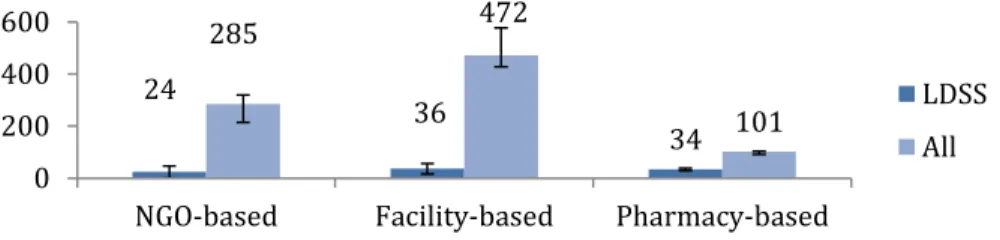
distribution of low dead space syringes recommended for distribution by NSPs was limited. Although facility-based NSPs provided a greater number of clean syringes to a greater number of clients compared with other modalities, they were serving different PWID in different locations and therefore cannot be really compared. None of the NSPs were effective in providing and properly documenting HIV counseling and testing services to PWID and their sex partners. All NSPs were characterized as providing minimal or no linkage and referral of PWID in linking and referring PWID to other health services.
highly valued by PWID.
TABLE OF CONTENTS
LIST OF TABLES ... viii
LIST OF FIGURES ... ix
LIST OF ABBREVIATIONS ... x
CHAPTER I: INTRODUCTION ... 1
Background... 1
Rationale ... 3
Purpose and Aims ... 4
CHAPTER II: LITERATURE REVIEW ... 5
Description of an Effective NSP ... 5
Impact on Access and Coverage of PWID with HIV Continuum of Care ... 9
Barriers that Affect PWID Uptake of NSP Services... 11
Conclusion ... 12
CHAPTER III: METHODOLOGY ... 16
Study Design and Statistical Procedures ... 16
Summary Description ... 16
Study Settings ... 18
Data Collection Procedures ... 20
Description of the Sample ... 22
Human Subjects Protection and Confidentiality ... 25
Data Analysis ... 25
Aim 1: Describe the existing NSP in the Kyrgyz Republic and assess the extent
to which it adheres to international standards. ... 27
National Policy and Legislation Related to NSP and Its Compliance to the WHO, UNODC, UNAIDS Recommendations ... 27
Quality of NSP Service delivery and Its Compliance to the WHO, UNODC, UNAIDS Recommendations ... 32
Aim 2: Compare effectiveness of three NSP service delivery modalities (NGO-based, government medical facility based and pharmacy based) in the Kyrgyz Republic ... 43
Reaching, engaging and providing reached PWID with the means to reduce HIV risk related to injecting and sexual behaviors. ... 43
Ensuring regular HIV testing and counseling of PWID. ... 47
Linking and referring of reached PWID to other health services ... 48
Aim 3. Identify obstacles and facilitators that affect PWID’s uptake and coverage of NSP services for each modality of NSP delivery ... 51
Key barriers that affect uptake of NSP services by PWID ... 51
Key facilitators that could improve uptake of NSP services by PWID ... 54
CHAPTER V. DISCUSSSION ... 56
Aim 1. Describe the existing NSP in the Kyrgyz Republic and assess the extent to which it adheres to international standards. ... 56
Aim 2. Compare different models of NSP service delivery currently in use ... 59
Reaching, engaging and providing reached PWID with the means to reduce injecting risks and HIV infection. ... 59
Ensuring regular HIV testing and counseling of PWID ... 60
Linking and referring reached PWID to other services. ... 61
Aim 3. Identify obstacles and facilitators that affect PWID’s uptake and coverage of NSP services for each modality of NSP delivery. ... 61
Study Limitations ... 63
CHAPTER VI. RECOMMENDATIONS AND A PLAN FOR CHANGE ... 65
APPENDIX 2: GUIDE FOR THE FOCUS GROUP DISCUSSIONS WITH PWID ... 74
APPENDIX 3: SURVEY FOR THE FOCUS GROUP PARTICIPANTS ... 75
APPENDIX 4: NSP PROGRAMMATIC DATA REVIEW FORM ... 76
LIST OF TABLES
Table 1. Study sites ... 19 Table 2. Demographic and behavioral characteristics of focus group
participants (N=53) ... 23 Table 3. Sources of clean needles/syringes during the past two months among the PWID who were focus group participants ... 23 Table 4. Number of individual client records aggregated by site for program data review, by site ... 24 Table 5. Compliance of the National policy and legislation in the Kyrgyz Republic with the WHO, UNODC, UNAIDS recommendations on the National policy and legislation related to NSP ... 29 Table 6. NSPs in the Kyrgyz Republic by proportion of needle and syringe (N&S)
distribution (Source: UNDP/GFATM PIU 2016) ... 33 Table 7. Compliance of NSP implementation in the Kyrgyz Republic with the WHO, UNODC, UNAIDS recommendations on quality standards at the service level ... 41 Table 8. Comparison of effectiveness of three NSP service delivery modalities (NGO-based, government medical facility based and pharmacy based), by select indicators ... 49 Table 9. Key weaknesses of the NSP program in the Kyrgyz Republic and key
LIST OF FIGURES
LIST OF ABBREVIATIONS ART antiretroviral therapy
CDC the US Centers for Disease Control and Prevention CI confidence interval
GFATM Global Fund to Fight AIDS, Tuberculosis and Malaria HBV hepatitis B virus
HCV hepatitis C virus
HDSS high dead-space syringe
HIV human immunodeficiency virus HTC HIV testing and counseling IBBS integrated bio-behavioral survey IRB institutional review board IQR interquartile range (midspread)
KPIS Key Populations Implementation Science LDSS low dead-space syringe
M&E monitoring and evaluation MIS management information system MOH Ministry of Health
NGO non-governmental organization NSP needle-syringe program
OST opioid substitution therapy PDI peer-driving intervention
PEPFAR the U.S. President's Emergency Plan for AIDS Relief PIU project implementation unit
RAC Republican AIDS Center RNC Republican Narcology Center STI sexually transmitted infections SVM syringe vending machines TB tuberculosis
TWG technical working group
UNAIDS the Joint United Nations Program on HIV/AIDS UNDP United National Development Program
UNODC UN Office for Drugs and Crime
CHAPTER I: INTRODUCTION Background
The Kyrgyz Republic is located in Central Asia, one of the few regions in the world where the HIV epidemic is still growing. As of December 31, 2014 there were 5,504 cumulative HIV cases confirmed in the Kyrgyz Republic. According to the country-reported Global AIDS Response Progress Report data and Spectrum1 estimates, there are more than 9,300 (7100-12,000) people living with HIV (PLWH) in the Kyrgyz Republic (UNAIDS, 2014).
Sharing of needles and syringes and drug preparation materials, as well as use of preloaded drug solutions are important risk factors for infection acquisition and transmission among PWID (CDC, 2012). Injection drug use is the reported mode of transmission for almost 60% of all confirmed HIV infections in the Kyrgyz Republic. Based on estimates from the Republican AIDS Center, in 2013, there were approximately 25,500 people who injected drugs2 (PWID) in the Kyrgyz Republic, and the prevalence of HIV among PWID varied from 6% -17% in different regions of the country (Country HIV Program Progress Report – 2014, in Russian).
Availability of syringe distribution programs was shown to have a substantial impact in reducing unsafe injecting practices (Bluthenthal, Kral, Gee, Erringer, & Edlin, 2000). Among HIV-prevention interventions for PWID, Needle and Syringe Programs3 (NSP) are probably the most
1Population projection software developed by the United Nations Program on HIV/AIDS (UNAIDS) Reference Group on Estimates, Models and Projections to support national estimates and projections.
2Refers to people who inject psychoactive substances, primarily opioids, but also amphetamine-type
stimulants, cocaine, hypno-sedatives and hallucinogens, for non-medical purposes. Injection may be through intravenous, intramuscular, subcutaneous or other injectable routes.
studied models. Peer-review literature from the mid-1980s includes a large number of studies that noted a positive effect of NSP on reducing HIV risks from injections, thereby increasing safe
injections (Abdul-Quader et al., 2013; Degenhardt et al., 2010; Des Jarlais et al., 2007; Palmateer et al., 2010).
The Kyrgyz Republic has supported implementation of various distribution points for clean needles and syringes through NSPs since 1999. In 2014, there were 40 needle and syringe
distribution points in the country (MOH, 2014). Ten thousand PWID (39% of the estimated total number of PWID in the Kyrgyz Republic) received clean needles and syringes from these NSP at least once during 2013 (UNDP, 2013). According to the national Integrated Bio-Behavioral Surveillance (IBBS) of HIV conducted in 2013, 29.4% of the 904 PWID included in the survey reported having been reached at least once during the period of July 1, 2012-June 30, 2013 with a minimal package of prevention services that included distribution of clean needles and syringes, condoms and education on their use, and other informational materials. In addition, 33.5% of the interviewed PWID reported being tested for HIV in the last six months and were aware of their test results, whether positive and negative (RAC, 2014).
Rationale
Since 2010, ICAP at Mailman School of Public Health at Columbia University (ICAP) has been funded by the President’s Emergency Plan for AIDS Relief (PEPFAR) through the CDC to provide tailored technical support to the Ministry of Health of the Kyrgyz Republic to improve the quality of the national HIV program, with a primary focus on key populations, particularly PWID. During 2011-2014, ICAP completed assessments of the HIV care and treatment system, national opioid substitution/maintenance program (OST) program, and the national HIV monitoring and evaluation (M&E) system. Results of these assessments contributed to the development and implementation of nationwide, tailored quality improvement plans for adult HIV care and treatment services, OST programs, and the national HIV M&E system. Considering that NSPs are one of three core interventions of a comprehensive HIV prevention program for PWID (the others being OST and antiretroviral therapy), the Ministry of Health of the Kyrgyz Republic identified the need to conduct a comprehensive assessment of the NSP in the Kyrgyz Republic.
At the International AIDS Conference held in Washington, DC in July 2012, Secretary Hillary Rodham Clinton announced an investment of $15 million to support Key Populations
Implementation Science (KPIS) as part of the PEPFAR program. These funds were meant to support implementation science projects focused on providing knowledge necessary to implement the most effective HIV services for key populations. In the cascade of services described in the KPIS
announcement as ‘reach-test-treat-retain’, community-level interventions were identified as key to facilitating PWID uptake and use of a range of services, starting with voluntary HIV testing and facility-based continuum of care services for HIV-positive PWID.
the HIV prevention and care continuum for PWID to access a range of prevention, care and treatment services. The idea of the comprehensive assessment of needle-syringe programs in the Kyrgyz Republic was supported by the KPIS initiative. Data collected as part of the ICAP-led comprehensive assessment of needle-syringe programs in the Kyrgyz Republic were used for the secondary analysis within this study.
Purpose and Aims
The purpose of this study was to generate evidence that will support the Ministry of Health of the Kyrgyz Republic and local service providers in making decisions to improve implementation of the needle-syringe program in the Kyrgyz Republic. The specific research aims were:
1) Describe the national needle and syringe program in the Kyrgyz Republic and assess the extent to which it adheres to international standards on the National policy and legislation related to NSP and NSP service delivery quality specified by WHO, UNODC and UNAIDS. 2) Compare effectiveness of three NSP service delivery modalities (NGO-based, government
medical facility based and pharmacy based) in the Kyrgyz Republic in:
a) reaching, engaging and providing PWID with the means to reduce HIV risks related to injecting and sexual behaviors;
b) ensuring regular HIV testing and counseling of PWID; c) linking and referring PWID to STI, OST and ART programs. 3) Identify barriers and facilitators that affect PWID uptake of NSP services.
CHAPTER II: LITERATURE REVIEW
The key objective of the literature review was to summarize information about existing international guidance and recommendations on NSP delivery, comparative effectiveness of different modes of NSP delivery in achieving better uptake and access of PWID to the HIV
prevention, care and treatment continuum of services, as well as potential barriers and mediators that could affect access to NSP in the Kyrgyz Republic and around the world. Specifically, the literature review was used to answer the following questions about the NSP in the Kyrgyz Republic and around the world:
What program elements influence NSP effectiveness in reducing risky injecting practices? What is the impact of different NSP modalities on access and coverage of PWID with HIV
continuum of care?
What are known barriers that affect PWID uptake of NSP services?
Description of an Effective NSP
testing, diagnosing and treatment of STIs and HIV management including ART; provide range of commodities tailored for local needs; involve sexual partners as an effective approach to promote sexual and drug HIV risk reduction among PWID (El-Bassel, Shaw, Dasgupta, & Strathdee, 2014); implement effective monitoring and evaluation system; provide community-based outreach services; ensure that all clients are treated with dignity and sensitivity for cultural and gender-based differences; use all opportunities to educate PWID about their risks; operate in an enabling environment; and is financially sustainable (WHO, 2007). This list was drawn mainly from 2005 ‘WHO Policy and programming guide for HIV/AIDS prevention and care among injecting drug users’ and was prepared using information from key informants’ interviews, literature review and examples of existing protocols and standards in use at that time. The idea behind this list was to switch the focus from only measuring and quantifying what has been implemented (outputs, for example: the number of syringes distributed) to understanding implementation processes that are linked to improved outcomes and impact (Medlin et al., 2008). In 2014, WHO used the mentioned above list of key elements that distinguish effective NSP to develop Consolidated guidelines on HIV prevention, diagnosis, treatment and care for key populations (WHO, 2014a). These guidelines bring together all existing guidance relevant to HIV interventions in key populations and serve as internationally accepted normative guidance for HIV programs among PWID, including NSP quality standards.
from Amsterdam showed that that regular clients of the syringe exchange, when compared with other injecting drug users, were less often than other users to share injecting equipment, but this difference was not statistically significant (Hartgers, van Ameijden, van den Hoek, & Coutinho, 1992). At the same time, a Monte Carlo simulation study showed that the increased frequency of NSP attendance had the largest impact on elimination of needle sharing behaviors (Raboud, Boily, Rajeswaran, O’Shaughnessy, & Schechter, 2003). This led to more discussions and research about the definition of coverage, which, if reached, could lead to substantial decreases in HIV prevalence. A modeling study by Vickerman et al. suggested that the threshold coverage largely depends on the frequency that PWID inject and (safely) reuse their syringes, and corresponds to less than four syringe-sharing events per PWID per month (Vickerman, Hickman, Rhodes, & Watts, 2006). WHO, UNODC, UNAIDS defines the coverage as the percentage of the estimated number of PWID who were reached by NSP at least once per month over the specified period and recommends that programs target to regularly reach at least 60% of the estimated number of PWID (WHO, 2012). This target was based on a retrospective analysis of coverage required to reverse HIV epidemics in high-income (Hyshka, Strathdee, Wood, & Kerr, 2012) and middle and low-income countries (Des Jarlais, Feelemyer, Modi, Abdul-Quader, & Hagan, 2013) and is accepted as the globally
recommended threshold for effective NSP coverage.
Coverage depends on geographical availability of services. WHO Technical Guidelines recommend that NSP are present in at least 80% of all sites where injecting drug use occurs (WHO, 2014a). Research from other settings has showed that PWID who reside in close proximity to NSPs are more likely to consistently access services and are less likely to share injection equipment (S. Allen, Ruiz, & O'Rourke, 2015; Bruneau, Daniel, Kestens, Zang, & Genereux, 2008; Hutchinson, Taylor, Goldberg, & Gruer, 2000).
needles-syringes per PWID per year in order to be effective in decreasing HIV incidence (Abdul-Quader et al., 2013; Des Jarlais et al., 2013; Vickerman et al., 2006). This target was further accepted as the globally recommended standard for NSPs (WHO, 2012).
Not only the quantity, but also the type of syringes distributed to PWID is important to control the epidemic. Changing distribution from high dead space to low dead space syringes among PWID can reverse HIV epidemics (Vickerman, Martin, & Hickman, 2013; Zule, 2012; Zule, Desmond, & Neff, 2002). Thus, WHO recommends NSPs to provide syringes that retain on average 10 times less blood than conventional syringes (referred to as “low-dead space” syringes, or LDSS) (WHO, 2014a). This recommendation was made based on the results of laboratory experiments that simulated the process of injection and showed that high dead space syringes retained over 1000 times more blood than that retained by low dead space syringes (Bobashev & Zule, 2010) as well as the review of ecological data that showed relatively low HIV prevalence in cities where PWID predominantly used low dead space syringes (Vickerman et al., 2013; Walsh, Verster, Rodolph, & Akl, 2014).
PWID are commonly discriminated, marginalized and have limited access to health services due to the illegality of drug use. Therefore, national laws and policies are critical enablers that influence effectiveness of HIV programs at different levels. WHO, UNODS and UNAIDS Technical Guide lists 18 standards and program features that need to be included into the national policy and legislation relating to NSP in order for the programs to be effective (WHO, 2012). This list has been developed through a process of consultations with international experts in the field and includes provisions on the legal status of NSP in the country, sustainability of its funding, involvement of community representatives and NSP clients in program planning, management and
Impact on Access and Coverage of PWID with HIV Continuum of Care
Distribution of needles and syringes is the primary role of NSP, however for many PWID needle and syringe distribution programs remain to be the first and sometimes the only point of contact to health care services, including substance use treatment and OST, diagnosing and treatment of sexually transmitted infections (STI) and HIV care and treatment (Cisneros, Douaihy, & Kirisci, 2009; M. M. Islam et al., 2013; Kidorf & King, 2008).
Continuum of HIV care for PWID includes timely and regular HIV testing and counseling (HTC), early enrollment in HIV care and initiation of ART for HIV-positive people and adherence to prescribed treatment regimen. Targeted periodic HTC and immediate ART combined with other interventions can improve the quality of life for PWID and lead to decreased HIV transmission (Kato et al., 2013). Although there is paucity of data on the efficacy of antiretroviral therapy (ART) for prevention in PWID, evidence from the general population shows that treating HIV-infected persons also significantly reduces their risk of transmitting the infection to sex partners who did not have the virus (Cohen et al., 2011; McNairy, Deryabina, Hoos, & El-Sadr, 2013). In addition, there is insufficient evidence that any single intervention is effective enough to guarantee HIV control but the aggregate effect of several interventions is suggested. Sterile needle and syringe availability has to be supported by a range of complementary measures, such as opioid
maintenance therapy, ARV and effective HIV testing and counseling (Amundsen, 2006; Degenhardt et al., 2010).
testing among PWID (Nazari et al., 2016). Training and active engagement of pharmacists in NSP activities was proven to be effective in increasing access of PWID to the healthcare system and HIV and STI testing and facilitating referrals of NSP clients to the methadone maintenance treatment program (Bonnet, 2006; Rudolph et al., 2010).
& Badrieva, 2006; M. Islam, Wodak, & Conigrave, 2008; Kral, Anderson, Flynn, & Bluthenthal, 2004; WHO, 2004). According to the report from one assessment of NSPs in Australia conducted by Health Outcomes International in 2007-2008 (Communicable Disease Control Directorate (2008)), the capacity of “stand-alone”/primary NSP to provide information, education and referral services is variable and highly depends on whether staff were trained to provide PWID-friendly services and the existing agreements between the NSP and local providers of health services.
Barriers that Affect PWID Uptake of NSP Services
Stigma, discrimination, and criminalization continue to pose significant barriers to HIV program access for PWID, in increasing access to healthcare (Ti & Kerr, 2013). Criminalization of possession of illicit substances and injecting equipment often forces PWID in many settings to hide their equipment and engage in unsafe injecting practices (Stoicescu, 2012) and was consistently reported as a common barrier to NSP utilization by several studies from around the world
(Beletsky et al., 2014; Koo et al., 2015; Martinez et al., 2007; Rich, Strong, Towe, & McKenzie, 1999; Spicer et al., 2011; WHO, 2014a).
In many places, PWID also experience stigma and discrimination from healthcare workers, or receive services that are not delivered in a culturally sensitive and PWID-friendly way (Stoicescu, 2012). Even in countries with well-developed harm reduction policies and services, PWID are often reluctant to disclose their injecting and have limited access to health services due to the real perceived fear of stigma by health workers (M. M. Islam et al., 2013).
the delivery of effective NSP services for people who inject drugs potentially leading to injecting risk practices (Wilson et al., 2014).
The literature search identified only one peer-reviewed publication with data from 2007 and 2008 that discussed multiple, interrelated access barriers that PWID face when trying to access different types of government and NGO-run HIV services including NSP and treatment and drugs treatment in the Kyrgyz Republic (Spicer et al., 2011). According to the study, barriers to accessing HIV services included: the interrelated problems of stigma and discrimination, compounded by poor levels of information about HIV/AIDS among PWID and society as a whole; the criminalization of drug use and discriminatory practices among law enforcement officers and service providers; and gaps in the regular supply of commodities. In the study, clients of HIV programs reported that client referrals were in practice inconsistently applied and frequently consisted of informal signposting rather than formalized referral across government and NGO providers.
Conclusion
The existing literature provides sufficient guidance on indicators that can be used to assess the overall quality of NSP implementation, including NSP related policy and legislation, as well as to compare effectiveness of different NSP modalities. Thus, key prerequisites of a successful NSP include:
Input
The program has secured long-term funding
The NSP implementation is supported by the national policy and legislation
The NSP are present in at least 80% of all locations where drug injecting is known to occur.
Process
The program actively involves PWID in planning and delivery of NSP services The service regularly seeks anonymous feedback from clients
The NSP is situated in a location known to be accessible to PWID
The program employs a range of NSP service delivery models to maximize reach The NSP service maintains confidentiality
The NSP service is low-threshold and does not require PWID to meet specific criteria The service provides a range of injecting equipment that is appropriate for local
injecting practices and substances and includes low dead space syringes/needles. The program has no limits on the quantity of injecting equipment provided
The NSP return of used injecting equipment is not a prerequisite for clients to receive new injecting equipment.
The NSP services provide targeted information, education and communication, including prevention of HIV transmission during sex and overdose prevention and involves sex partners of PWID
Formalized referral pathways between NSPs and other relevant service providers are established and NSP clients are referred to these services as appropriate
Output
The NSP covers at least 60% of the estimated number of PWID in the catchment area with at least 200 needles/syringes and 100 condoms per PWID per year
All NSP clients are tested for HIV
All HIV-positive NSP clients are linked to HIV care and treatment programs
benefits in addition to those derived from fixed-NSPs and shall be considered as complementary to primary NSPs. The capacity of primary NSPs to provide information, education and referral services highly depends on whether staff were trained to provide PWID-friendly services and whether the NSP has formalized referral agreements with local providers of health services.
There were sufficient data about barriers that affect PWID access to NSP in different parts of the world. Key barriers include: criminalization of drug use and discriminatory practices by police, stigma and discrimination of PWID by healthcare workers, and lack of trust between PWID and NSP staff that had no personal experience injecting. However, there were no studies published that would describe or assess implementation of NSP programs in the Kyrgyz Republic, except for one study from almost 10 years ago that described barriers that PWID face when trying to access different types of government and NGO-run HIV services. The impact of NSP on access and coverage of PWID with HIV continuum of care is also not clear from the existing literature.
Considering this, there is a need to understand the potential impact of NSP on the ability of PWID to access HIV care, namely to undergo HIV testing and counseling, timely access to HIV care and treatment services, remain in HIV care, and adhere to ART. If found effective, these data on NSP impact on PWID access to HIV continuum of care can be used to advocate for broader availability of NSP, as well as to provide useful information for NSP managers to improve their programs and make them more effective in providing services to HIV-positive PWID.
CHAPTER III: METHODOLOGY Study Design and Statistical Procedures
Summary Description
The study was conducted using a convergent parallel mixed methods study design
(Creswell & Clark, 2011). The data were collected during July – November 2015 using the following data collection methodologies:
1. Review of relevant documents (NSP-related policies, other NSP-related program implementation and research reports and standard operating procedures); 2. Secondary analysis of data received during in-depth interviews with NSP program
managers;
3. Secondary analysis of data received during focus-group discussions with PWID; 4. NSP programmatic data review.
As described earlier in the Introduction section above the purpose of this study was to generate evidence that will support the Ministry of Health of the Kyrgyz Republic and local service providers in making decisions to improve implementation of the needle-syringe program in the Kyrgyz Republic. The specific research aims were:
1. Describe the national needle and syringe program in the Kyrgyz Republic and assess the extent to which it adheres to international standards on the National policy and
legislation related to NSP and NSP service delivery quality specified by WHO, UNODC and UNAIDS.
reaching, engaging and providing PWID with the means to reduce HIV risks related to injecting and sexual behaviors; ensuring regular HIV testing and counseling of PWID; and linking and referring PWID to STI, OST and ART programs.
3. Identify barriers and facilitators that affect PWID uptake of NSP services.
4. Develop recommendations for a plan for change that, if implemented, would increase the number of PWID who successfully access NSP in the Kyrgyz Republic.
The use of mixed methods enabled me to adopt a pluralistic stance of gathering different types of data to best address four research aims listed above (Bamberger, Rugh, & Mabry, 2011). As one data source would have been insufficient to meet the research aims, qualitative and
quantitative data were collected in the same phase to provide multiple perspectives and stance (unbiased NSP program statistics and qualitative data collected through interviews and focus group discussions). The use of mixed methods in this study was further justified by several reasons (Bryman, 2008), including:
1. Triangulation. This multi-pronged approach facilitated gathering of data from a variety of sources that were combined and triangulated to provide a truly comprehensive picture of NSP implementation in the country.
2. Offset: The use of mixed methods provided strengths that offset the individual weaknesses of qualitative and quantitative research. Thus, NSP program data review alone was unable to provide clarity about the context in which that data was collected. On the other hand, data from individual interviews and focus group discussions are usually prone to biases and is hard to generalize.
4. Different research aims: As shown above, this study included several different research aims that required the use of different data sources and methodologies.
5. Context: combination of methods was rationalized in terms of individual interviews and focus group discussions providing contextual understanding coupled with externally valid findings of program data and literature review.
Specifically, information received from the document review and in-depth interviews with key stakeholders and NSP program managers was used to address the first aim of the study and describe the existing NSP in the Kyrgyz Republic. NSP program data, data from the document review and information from the qualitative interviews and focus groups with PWID were used to compare effectiveness of three NSP types. Barriers and facilitators that affect PWID uptake of NSP services were assessed based on the information received from PWID during focus group
discussions and in-depth interviews with NSP managers. Recommendations for a plan for change, that, if implemented would improve the quality of NSP implementation in the Kyrgyz Republic was developed based on the feedback received from key stakeholders, NSP managers and PWID who participated in the focus group discussions.
Study Settings
This study focused on facility and NGO-based fixed NSP sites, as well as pharmacy-based NSP located in the six largest purposefully sampled cities on the drug trafficking route in the south and north of the country (Bishkek city, Osh and Kara-Suu cities in Osh oblast, Kant, Kara-Balta and Sokoluk in Chui oblast). Because of logistical issues and a protracted process of entry approvals, NSPs located in penitentiary facilities were not included.
For the purpose of this study, a location was considered a “site” if the following conditions were met (adapted from WHO, UNODC, UNAIDS Technical Guide, 2012):
Includes pharmacy sites providing needles and syringes at no cost to the client. Those that only sell needles and syringes were not included.
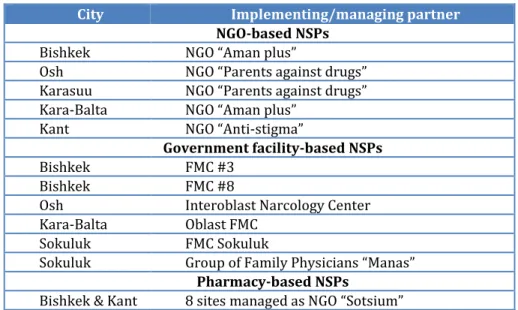
Across the three types of sites, a total of 19 NSP sites were assessed (Table 1). The three different types of NSP sites are NGO-based, government facility-based and pharmacy-based. Because all program data on pharmacy-based NSP were aggregated, all eight pharmacy-based NSP sites were included in the assessment, but considered as one site, thus resulting in a total of 12 NSP sites that were included in the assessment. The selected sites included all NSP sites located in Osh City (two sites) and Karasuu District in Osh Region (one site), as well as Kant City (one site), Kara-Balta City (two sites), and Sokuluk City (two sites) in Chui Region. In Bishkek, the assessment included one randomly selected site out of the two NGO-based sites, all seven sites that implemented pharmacy-based distribution of needles and syringes, and two sites randomly selected out of eight sites located at the Family Medicine Centers (FMC). Random sampling was performed using MS Excel.
Table 1. Study sites
City Implementing/managing partner NGO-based NSPs
Bishkek NGO “Aman plus”
Osh NGO “Parents against drugs”
Karasuu NGO “Parents against drugs”
Kara-Balta NGO “Aman plus”
Kant NGO “Anti-stigma”
Government facility-based NSPs
Bishkek FMС #3
Bishkek FMC #8
Osh Interoblast Narcology Center
Kara-Balta Oblast FMC
Sokuluk FMC Sokuluk
Sokuluk Group of Family Physicians “Manas”
Pharmacy-based NSPs
Data Collection Procedures
Document review
The document review aimed to obtain information on the following: policy and legal environments, geographical availability of NSP and the spectrum of services available, funding, human, material and information resources available and used for the program, sustainability of resources, systems for procurement and supply management, including stock-out management, monitoring and evaluation system, decision making schemes as they relate to design and
implementation of NSP services, service coverage, available capacity building resources, linkages and collaboration between programs.
Compliance of the national NSP policy and legislation to international standards was assessed using the National Policy Checklist developed by WHO, UNODC and UNAIDS (WHO, 2014a). The policy checklist has been developed collaboratively by the UN agencies through a process of consultations with international experts in the field.
In-depth interviews with NSP program managers
interviews with NSP managers was to learn what they need to have and to know to improve implementation of their NSP programs (Patton, 2015).
Focus-group discussions with PWID (NSP users and non-NSP users)
The study included a secondary analysis of qualitative data collected by ICAP at Columbia University during focus-group discussions with PWID residing in study sites using focus group discussion guide (Appendix 2 &3). The study included transcripts from five focus groups, including focus groups conducted in two largest cities (Bishkek in the north and Osh in the south) and two regional centers (Tokmok in the north and Kara-Suu in the in south) with both clients of NSP and those who do not use NSP services and a separate focus group conducted with female only PWID in Bishkek, both clients of NSP and those who do not use NSP services. Data from the focus group discussions with PWID were used to identify and discuss key challenges to access NSP services and quality of services provided at different NSPs, and factors that could improve access to NSPs.
NSP programmatic data review
Data from the UNDP-supported Management Information System (MIS) used for monitoring of NSP activities were reviewed to collect data on demographics, utilization, coverage and quality. Complete de-identified datasets covering the period of January 1, 2014 – June 30, 2015 were used to assess NSP effectiveness in reaching, engaging and providing PWID with the means to reduce HIV risks related to injecting and sexual behaviors; ensuring regular HIV testing and counseling of PWID; and linking and referring PWID to OST programs, TB screening and treatment, and ART programs. A dataset covering the period of January 1, 2014 – December 31, 2014 was used to collect information for all the annual indicators, including number of needles/syringes and
summary table (Appendix 4) developed for this study was completed for each NSP visited by abstracting data from the site-level aggregated client database or program reports. For analysis, all Excel data were transferred to Stata SE13.
Description of the Sample
Document review
As part of this study I have reviewed all available relevant written documents, protocols, reports and standard operating procedures (SOPs) relating to provision of NSP including:
National policies related to NSP implementation;
NSP program implementation manuals and reports;
NSP program monitoring reports and official statistical reports of the Ministry of Health and the GFATM
National reports on the results of the national IBBS and PWID population size estimation.
In-depth interviews with NSP program managers
The study included 14 interviews: 11 interviews with all NSP site-level program managers working in selected NGO and facility-based sites, an NSP coordinator at the Republican Narcology Center and two managers responsible for the pharmacy-based NSP at NGO “Sotsium”.
Focus-group discussions with PWID (NSP users and non-NSP users)
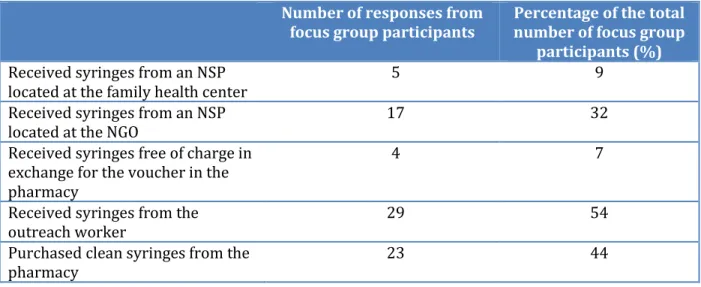
During the past two months, most (78%) of focus group participants used NSP services, while 22% did not use any NSP services in the past two months and only purchased needles and syringes from the local pharmacies. During the two months prior to the focus group discussion, most PWID, regardless of whether or not they were NSP clients, either got their syringes from the outreach worker (54%) and/or purchased them from the pharmacy (44%) (Table 3).
Table 2. Demographic and behavioral characteristics of focus group participants (N=53)
Characteristic N %
Gender
Male
Female 33 20 62 38 Age ≤25 26-35 36-45 >45 2 15 29 7 4 28 55 13 Number of years injecting drugs
<1 1-5 6-10 >10 2 13 8 30 4 24 15 57
Table 3. Sources of clean needles/syringes during the past two months among the PWID who were focus group participants
Number of responses from
focus group participants Percentage of the total number of focus group participants (%) Received syringes from an NSP
located at the family health center
5 9
Received syringes from an NSP
located at the NGO 17 32
Received syringes free of charge in exchange for the voucher in the pharmacy
4 7
Received syringes from the outreach worker
29 54
Purchased clean syringes from the
NSP programmatic data review
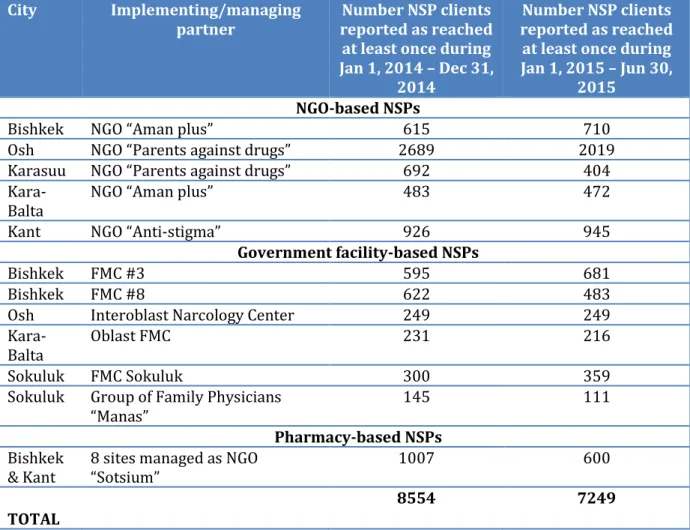
Also, this study included collection and analysis of data aggregated across all individual client records included in the MIS used for monitoring of NSP activities in the Kyrgyz Republic since 2007. The aggregated dataset used for program review included 8,554 records of clients reached during 2014, 7,249 records of clients reached during the first six months of 2015, and covered all clients that received NSP services during 2014 (Table 4). It is important to note that since any NSP client could have received NSP services at more than one location, especially in Bishkek, the total number of clients could include duplicated users.
Table 4. Number of individual client records aggregated by site for program data review, by site
City Implementing/managing
partner
Number NSP clients reported as reached at least once during Jan 1, 2014 – Dec 31,
2014
Number NSP clients reported as reached at least once during Jan 1, 2015 – Jun 30,
2015 NGO-based NSPs
Bishkek NGO “Aman plus” 615 710
Osh NGO “Parents against drugs” 2689 2019
Karasuu NGO “Parents against drugs” 692 404
Kara-Balta NGO “Aman plus” 483 472
Kant NGO “Anti-stigma” 926 945
Government facility-based NSPs
Bishkek FMС #3 595 681
Bishkek FMC #8 622 483
Osh Interoblast Narcology Center 249 249
Kara-Balta
Oblast FMC 231 216
Sokuluk FMC Sokuluk 300 359
Sokuluk Group of Family Physicians “Manas”
145 111
Pharmacy-based NSPs Bishkek
& Kant 8 sites managed as NGO “Sotsium” 1007 600 TOTAL
Human Subjects Protection and Confidentiality
The dissertation proposal was reviewed and approved by the University of North Carolina’s Institutional Review Board (IRB) and the IRB at the Ministry of Health of the Kyrgyz Republic.
No personal information from respondents that participated in the focus group discussions or individual interviews with NSP managers was collected as part of this study. For the secondary analysis the study used transcripts of fully de-identified audio records. Program data review included analysis of aggregated program reports.
All data were stored on a password-protected computer. Destruction of the data collected for this dissertation will be conducted in accordance of federal guidelines for the maintenance of federal records.
Data Analysis
As stated above information was collected from different sources using a mix of methods. Considering the convergent design of the study qualitative and quantitative data were analyzed independently and two strands were mixed when drawing conclusions during the overall
interpretation of the study results. During the final merging steps of the analysis, results received using different methods were interpreted to understand to what extent and in what ways results collected using different methodologies converge, diverge from each other, relate to each other or combine to create a better understanding of each study finding. Specifically, information was triangulated to describe the extent to which the overall NSP in the Kyrgyz Republic corresponds with the international recommendations (WHO, 2007, 2014b) and to identify factors that improve uptake and access of NSP for PWID, as well as coverage of HIV prevention services (HIV testing, linkage to OST, TB and ART).
perform a one-way ANOVA test. If there was a statistically significant difference between groups, as determined by a one-way ANOVA, a Tukey post-hoc test was performed.
For analysis, qualitative data from individual interviews and FGDs were grouped into meaningful patterns and/or themes through content and thematic analysis using NVivo©, a software for computer-assisted qualitative data analysis. In the content analysis the data were coded for certain words or content, then patterns were identified and interpreted. Words, phrases or sections of the key informant interviews were reviewed and labeled (either using words or symbols). After the data were coded, they were sorted by code to look for patterns. In the thematic analysis, data were grouped into themes. To better analyze and understand each theme I used a three-step approach “Describe, compare, relate” (Bazeley, 2009). Conclusions were verified and data from qualitative individual interviews and FGD were either linked with data from the
document review and program data collected as a part of this study to allow for multidimensional descriptions and explanations of the observed phenomena or integrated with each other to produce a fuller picture of NSP in the Kyrgyz Republic (Mason, 2006).
CHAPTER IV: RESULTS
Results are presented in three sections below, by study aims. The first section describes the national needle and syringe program in the Kyrgyz Republic and how its planning and
implementation adheres to international recommended minimum standards. The second section compares effectiveness of different NSP modalities, including NGO-based NSPs, NSPs run by the government medical facilities and pharmacy-based NSPs. The third section explores barriers and facilitators that affect PWID uptake of NSP services.
Aim 1: Describe the existing NSP in the Kyrgyz Republic and assess the extent to which it adheres to international standards.
The Needle and Syringe Program has been implemented in the Kyrgyz Republic since 1999. The first two NSP sites were NGO-based and opened in Bishkek and Osh with support from the Soros Foundation and UNDP. In 2000, the Government of the Kyrgyz Republic approved the establishment of NSP sites in penitentiary facilities. Since 2009, NSPs have been established at government medical facilities, primarily the Family Medicine Centers, as well as at local AIDS Centers and a TB clinic in Bishkek. PWID-friendly pharmacy-services or distribution of clean needles and syringes through the network of commercial pharmacies began in 2009.
National Policy and Legislation Related to NSP and Its Compliance to the WHO, UNODC, UNAIDS Recommendations
Law on HIV/AIDS in the Kyrgyz Republic from August 13, 2005, article 149
Decree of the Government of the Kyrgyz Republic on Endorsement of Antinarcotic Program of the Government of the Kyrgyz Republic, dated January 27, 2014, № 54
National HIV/AIDS Program for 2012-2016
Further, the Kyrgyz Republic is the only country in Central Asia that officially endorsed and implemented NSPs in the penitentiary system (Law on Penitentiary System Facilities from August 12, 2003, № 196). Although the existing legislation of the Kyrgyz Republic unambiguously supports NSPs as legal entities for the distribution of injecting equipment, several stakeholders noted that it would be more sustainable if the Antinarcotic Program of the Government of the Kyrgyz Republic, including the NSPs, were endorsed by a Law and not the Decree signed by the Prime-Minister, which can be subject to change with the change in Government (see comment).
“If we had a Law on harm reduction services, or on assistance for drug addiction that included harm reduction programs, then that Law would have to be implemented. The Government would then be required to provide these [NSP] services to people…. If new people will come to power, they can cross out these [NSP] costs, and we will not have any funds” – staff of an organization that works with PWID.
In addition to the policy documents, the Kyrgyz Republic also has a number of regulatory documents related to NSP implementation. Specifically, on January, 21, 2014, an interagency Order on “HIV Prevention in the State Bodies of Internal Affairs (police), Drug Control and Penitentiary System” was signed between the Ministry of Internal Affairs, the Ministry of Health, the State Service on Drug Control under the Government of the Kyrgyz Republic and the State Penitentiary Service under the Government of the Kyrgyz Republic. This Order includes detailed instruction on the prevention of HIV-infection in state bodies of internal affairs (police), drug control and
penitentiary system that work with vulnerable groups and define the role of the HIV Committee that coordinates implementation of HIV prevention activities in penitentiaries, including NSP services in prisons, and other law enforcement structures.
Needle and Syringe Exchange Program in Medical Facilities” that included as an appendix the “Standards of Harm Reduction Programs and Services for People Who Inject Drugs” (hereafter referred to as “NSP Standards”) that are considered as National Guidelines on NSP implementation. The NSP Standards serve as national guidelines on NSP implementation and provide detailed recommendations on NSP staffing, supply planning and management, record keeping and other operational aspects. NSP Standards are not endorsed by any policy or regulation and, as such, cannot be considered as mandatory for implementation. The National Standards were developed under the leadership of the Ministry of Health with active participation of various stakeholders, including NGO networks and international organizations. Most stakeholders interviewed during this assessment considered the NSP Standards as an important step for the effective
implementation of the NSP in the Kyrgyz Republic.
In general, the existing NSP policy and legislation in the Kyrgyz Republic could facilitate the delivery and effectiveness of NSP interventions. However, it was lacking several key standards and program features recommended by the WHO, UNODC and UNAIDS (Table 5).
Table 5. Compliance of the National policy and legislation in the Kyrgyz Republic with the WHO, UNODC, UNAIDS recommendations on the National policy and legislation related to NSP
(4 – fully compliant; 2– partially compliant; 0– does not comply with the recommendations). Recommendation Status Comment
Legislation specifically supports the distribution of injecting equipment through NSPs
4 The distribution and collection of injecting equipment and the operation of NSPs are
authorized under the law as described in the text above. Legislation is not ambiguous on the legal status of NSP or on the distribution and collection of injecting equipment.
National police guidelines and policy specifically support the operation of NSPs
2 The existing Police guidelines do not explicitly stipulate that police activities do not deter or prevent PWID from accessing NSPs or from being in possession of new or used injecting equipment. Nevertheless, police routinely receive training and education relating to drug use, HIV and harm reduction principals and services.
Legislation supports the
Recommendation Status Comment
closed settings needles and syringes by prison health staff. National policy stipulates PWID
be actively involved in the planning and the delivery of NSP services
0 There are no references or recommendations in the existing NSP Standard for NSPs to ensure active involvement of PWID in the planning or delivery of NSP services.
National guidelines stipulate that NSP services regularly seek anonymous feedback from clients
0 National NSP guidelines do not include any
provisions about mechanisms whereby clients can confidentially /anonymously provide feedback on the service.
National guidelines outline training and supervision requirements for NSP workforce
4 The NSP Standards outline training and supervision requirements for the NSP workforce and
recommend that medical facilities allocate sufficient funding for staff training and supervision. Staff members are required to be respectful towards PWID, have credibility with the target population and maintain a non-judgmental attitude towards drug users.
National guidelines stipulate that NSPs be located in areas known to be accessible to PWID
4 The NSP Standards also stipulate that NSPs be located in areas known to be accessible to PWID, located at an appropriate distance from police offices to improve acceptability by PWID. National policy stipulates that
NSPs maintain client confidentiality
4 NSPs are required to maintain client confidentiality and forego any requirement of PWID to provide identification or personal details in order to utilize services or obtain injecting equipment. According to the NSP Standards, client information shall not be shared with other services or law enforcement without client consent, unless required by law, for example, as part of a criminal investigation, and program data collection systems shall not contain any clients’ personal or identifiable information. National guidance outlines
systems to prevent NSP commodity stock-outs
0 The NSP Standard does not discuss the need to implement a system to prevent commodity stock-outs.
National policy stipulates that NSP services are
“low-threshold” and do not require PWID to meet specific criteria in order to access services or receive injecting equipment
4 The NSP Standards stipulate that NSP services are “low-threshold” and do not require PWID to meet specific criteria in order to access services or receive injecting equipment. Services do not
restrict access on the basis of minimum age, proof of injecting status, proof of residence, gender, HIV status, citizenship status, residential status, incarceration or criminal history.
National guidelines stipulate that there be no limit on the quantity of injecting equipment provided
Recommendation Status Comment
means to use clean equipment during every instance of drug use: at least two needles/syringes per PWID day, or at least 730 syringes per PWID per year; at least two alcohol wipes per PWID per day, or at least 730 alcohol wipes per PWID per year. The guidelines limit the number of condoms distributed to each client to no more than 12 condoms per month or no more than 144 condoms per year.
National guidelines stipulate that the return of used injecting equipment is not a prerequisite for clients to receive new injecting equipment
2 The National NSP Standard does not specifically stipulate that the return of used injecting equipment as a prerequisite for clients to receive new injecting equipment, though NSPs are expected to ensure at least 20% return of used injecting equipment for fixed NSP sites and at least 50% for sites that have mobile units in addition to fixed sites.
National guidelines stipulate that NSPs provide targeted information, education and communication (IEC), including overdose prevention
2 The National Standards recommend that NSPs provide targeted information during mini-sessions to clients when they arrive at the NSP sites and other informational events with no specification on the topics of such mini-sessions.
National guidelines stipulates that NSPs provide a range of injecting equipment that is appropriate for local injecting practices and substances injected and that is acceptable to the target population
4 The National NSP Standard stipulates that NSPs provide a range of injecting equipment that is appropriate for local injecting practices and substances injected, and is acceptable to the target population.
National guidelines stipulate that formalized referral pathways between NSPs and other relevant service providers are established
2 Details on the provision of formalized referral pathways between NSPs and other relevant service providers are described in NSP Standards and the “Order of the Ministry of Health #206” from April 25, 2012. Referral services mentioned in the NSP Standards include: treatment for drug dependence and OST services; HIV, viral hepatitis B, and TB testing, and treatment and care; viral hepatitis vaccinations; and sexual health services (including STI testing and treatment).
National guidelines outlines monitoring and evaluation of NSP programs
2 The NSP Standard briefly outlines the need and suggested processes for monitoring and evaluation of NSPs. Specifically, the Standard requires all sites to record clients’ unique identifier code (UIC) and ensure proper entry of data into a list of program specific registers (clients register, supply
Quality of NSP Service delivery and Its Compliance to the WHO, UNODC, UNAIDS Recommendations
As discussed in the Literature review above, in 2014 WHO presented a list of quality
standards that are explicitly linked to reduction of risky behaviors among PWID and decreased HIV incidence. Adherence of NSP program implementation in the Kyrgyz Republic to these
internationally recommended quality standards at the service level is provided below and is summarized in the Table 7 below.
Standard 1: Long-term funding has been secured to ensure sustainability
As mentioned above, the initial funding for the opening of the first NSP sites in the Kyrgyz Republic was provided by the Soros Foundation. From 2002-2004, the program was cost-shared between the Soros Foundation and the first GFATM-funded HIV project in the country. Starting in 2004 and to date, most NSP funding, including procurement of supplies, is provided by the GFATM. In 2003-2004, municipalities of Osh Oblast and Bishkek allocated some of their own health care budgets for NSP implementation, which was an important step to demonstrate political
commitment of the local governments to support NSPs. Until 2016, Bishkek municipality
continued to allocate 400,000 soms (approximately USD $5,700) annually for procurement of clean needles and syringes for NSP implementation. In February 2015, the Ministry of Health initiated the development of the multi-sectoral technical working group (TWG) to discuss the expansion of state funding for HIV prevention activities, including NSPs. The TWG developed a proposal to shift NSP funding to the national budget that is currently being considered by the Government.
Adherence Status to Standard 1: Not compliant.
Standard 2: The program employs a range of NSP service delivery models to maximize reach
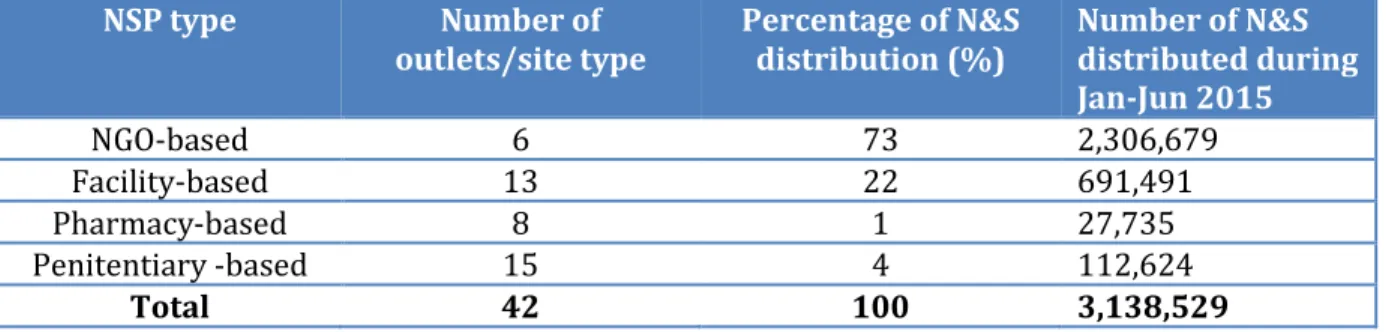
The Kyrgyz Republic employed a range of NSP service delivery models, including NSPs based in Family Medicine Centers4 (FMC), community-level NSP sites run by local NGOs, NSP sites located in penitentiary facilities and NSP sites managed by an NGO, but located in local pharmacies. NSPs located in FMC and NGOs also provided outreach services (distribution of clean needles and syringes in the community). For the pharmacy-based distribution, vouchers were distributed to PWID by outreach workers employed by an NGO “Sotsium”; these vouchers were then redeemed by PWID at participating private pharmacies in exchange for clean needles and syringes. As of October 1, 2015 there were 45 NSP sites, including 12 located at government medical facilities, ten managed by local NGOs, eight implemented by a local NGO through the network of participating pharmacies, and 15 sites located within the correctional system (prisons and jails). A majority (73%) of all syringe distribution during the first six months of 2015 was implemented by NGO-based NSPs (Table 6).
Table 6. NSPs in the Kyrgyz Republic by proportion of needle and syringe (N&S) distribution (Source: UNDP/GFATM PIU 2016)
NSP type Number of
outlets/site type Percentage of N&S distribution (%) Number of N&S distributed during Jan-Jun 2015
NGO-based 6 73 2,306,679
Facility-based 13 22 691,491
Pharmacy-based 8 1 27,735
Penitentiary -based 15 4 112,624
Total 42 100 3,138,529
At the time of the assessment, there were no mobile services or automated vending machines dispensing injecting equipment, and all of the services were provided either through
fixed sites or outreach workers.
In addition to NSP sites where clean injecting equipment was available for free, all regions
(oblasts) and districts (rayons) had pharmacies (mostly privately-owned), where needles and
syringes were available for purchase.
Adherence Status got Standard 2: Partially compliant.
Standard 3: The NSP workforce has received appropriate training and is supervised
NSP staff included paid staff, paid outreach workers, and PWID volunteers. Minimal
requirements for NSP staffing are described in the NSP Standards. According to the Standards, the number of staff depends on the size of the NSP catchment area and NSP coverage in terms of the number of clients. As such, one full-time nurse was recommended for each site that covers between 500-1000 PWID and one outreach worker was recommended for every 50 PWID. Additionally, for NGO-based NSPs, a site manager or coordinator position was also recommended.
The number of paid staff at NSPs assessed varied from four to 18. NSP managers or assistants (mainly nurses) were responsible for daily management of NSP operations, including recruitment and training of outreach workers, supply management and reporting of NSP data to donor organizations. All NSP managers said they received special trainings on PWID-friendly services and NSP management, either funded by GFATM/UNDP or PEPFAR/USAID. Most NSP manager interviewed said they did not have sufficient knowledge and skills to provide HIV care and treatment adherence support to HIV positive clients. Many of them also expressed the need for more trainings for NSP staff and outreach workers on working with sex partners of PWID and couple-based counseling.
for these supplies in the case of pharmacy-based NSPs. Outreach workers were also responsible for collection of used equipment. NSP managers preferred working with outreach workers who were not PWID, as based on their experiences, PWID volunteers were more difficult to monitor and supervise in terms of adherence with the required document completion. Many NSP managers also voiced concerns about high rates of turnover among outreach workers, especially those who were PWID, requiring continuous training of newly recruited outreach workers. Active injecting drug use, low salaries and limited transportation compensation were reported by managers and outreach workers as key reasons for outreach worker attrition at NSPs. NSP sites also had one to two volunteers that worked primarily with outreach workers to supplement distribution and pick-up of needles and syringes to be distributed to other PWID (secondary distribution).
Adherence Status to Standard 3: Partially compliant.
Standard 4: NSPs are located in at least 80% of all cities and regions where PWID are present and are accessible to PWID
The total number of NSPs operating in the country during the past several years varied depending on the availability of funding. At the time of the assessment NSP located outside of prisons were available in three out of seven regions of the Kyrgyzstan Republic. Most NSPs (25 out of 45) were concentrated in the Chui Region and Bishkek City, areas with highest prevalence of drug use according to the latest UNDP/GFATM-funded PWID size estimation survey conducted by the Center for Healthcare Policy Analysis in 2014 (CHPA, 2014). Jalalabad Region, which is also known for high rates of injection drug use, with an estimated 650 PWID residing in the region (CHPA 2014) and is located on drug trafficking routes, at the time of the assessment had no
functioning NSPs. During the assessment, there were also no NSPs noted in Talas, Batken and Naryn Regions which are believed to have very low injecting drug use prevalence, but lack clear evidence to support this perception. Considering the above, the access of PWID to NSP in the Kyrgyz
The minimum requirements for NSP location and working hours were described in the NSP Standards. Based on information from NSP managers, NSPs were not always located close to areas that were reported to have a high prevalence of drug use. This was especially true for facility-based NSPs given that, by definition, these were located within fixed health facilities. Nevertheless, most focus group participants reported NSP locations as being easily accessible.
Hours of operation for most facility and NGO-based NSPs were from 9 am – 6 pm on working days only, though some were open from 8 am - 4 pm and were opened on Saturdays. Pharmacy-based NSPs were open 24/7. Most PWID that participated in the focus group discussions found NSP hours of operation to be appropriate.
Adherence Status got Standard 4: Partially compliant.
Standard 5: The program actively involves PWID in planning and delivery of NSP services and regularly seeks anonymous feedback from clients
NGOs working with PWID are regularly consulted by the GFATM Project Implementation Unit at UNDP and the National Coordination Committee to determine the most appropriate and acceptable equipment for inclusion in GFATM proposals and procurement plans. PWID are routinely involved in NSP implementation as outreach workers and volunteers.
The anonymous feedback from clients on the quality and the range of supplies provided to them is mainly collected through outreach workers on an ad hoc basis and is not routinely
documented or systematically analyzed.
Adherence Status to Standard 5: Partially compliant.
Standard 6: The NSP service is low-threshold and maintains confidentiality
Adherence Status to Standard 6: Fully compliant.
Standard 7: The service provides a range of injecting equipment that is appropriate for local injecting practices and substances and includes low dead space syringes/needles.
According to NSP managers, all NSPs assessed provided a range of needles and syringes to PWID. National NSP Standard of the Kyrgyz Republic requires prioritizing procurement of single-unit low dead-space syringes. Recommendations on Universal Access of PWID to HIV prevention, care and treatment services approved by the Ministry of Health (order №532 from September 22, 2014) of the Kyrgyz Republic also included a recommendation for NSP to provide different size low dead-space syringes with detachable needles. The NSP included in the study had LDSS with
attached needles (1ml single-unit insulin syringes) and detached high dead space syringes (HDSS) disposable needles and syringes. LDSS with detachable needles were not available. Based on PWID and NSP staff feedback, 2 ml and 5 ml syringes are the most commonly used syringe by PWID. Additionally, 10 ml syringes are in high demand, especially by those that use ephedrine and
“hanka”5 as opposed to heroin. Separate needles from 1ml insulin syringes were also in high
demand, especially by people that have damaged or collapsed veins and need to inject into smaller vessels or women who are trying to have less visible injection marks.
According to the focus group participants and NSP managers, most clients considered the range of injecting equipment provided by NSPs as fully appropriate for their injecting practices. NSP staff and PWID who participated in the focus groups also expressed satisfaction with the range of supplies available at NSPs. The only recommendation from both the clients and the NSP staff was to increase the number of alcohol wipes from one to three per each needle/syringe and provide separate small bore (“insulin”) needles.
In addition to needles and syringes, NSP sites provided male condoms and injecting-related paraphernalia, including alcohol wipes, tourniquets, single use acid sachets and naloxone. Alcohol
wipes were in high demand among all PWID, according to the focus group participants and NSP staff. Condoms were mentioned by female PWID as an important commodity distributed by NSP. Naloxone is also in high demand, especially among outreach workers, who often serve as the first aid service for people that have overdosed. None of the sites assessed provided female condoms, filters, sterile water for injections or steel spoons to their clients.
Adherence Status to Standard 7: Partially compliant.
Standard 8: There are no limits on the quantity of injecting equipment provided and return of used injecting equipment is not a prerequisite for clients to receive new injecting equipment.
As per the national NSP Standards, there were no limits on the quantity of needles and syringes provided to one PWID. However, recommendations on the optimal amount of supplies distributed to each PWID from the national NSP Standards described above were sometimes interpreted by NSP staff as upper limits and PWID were only able to receive up to two needles/ syringes per PWID day. The return of used injecting equipment was often a prerequisite for clients to receive new injecting equipment and outreach workers were expected to ensure that their clients return at least 50% of the distributed needles/syringes.
Adherence Status to Standard 8: Partially compliant.
Standard 9: The NSP services provide targeted information, education and communication (EIC), including prevention of HIV transmission during sex and overdose prevention
The range of EIC materials available at NSP sites was limited; many sites did not receive any EIC materials during the past 12 months and only had few brochures left to distribute to clients. Non-injecting sex partners of PWID were rarely involved in NSP activities.
Adherence Status to Standard 9: Partially compliant.
Standard 10: Formalized referral pathways between NSPs and other relevant service providers are established and NSP clients are referred to these services as appropriate
Only one NGO-based NSP site had formalized referral pathways (signed site-level