ABSTRACT
Background: Newborn screening (NBS) for hemoglobinopathies is an effective first step to reduce morbidity and mortality of all affected newborns. The screening allows early detection and
intervention of abnormal hemoglobin disorders. Children with sickle cell disease (SCD) are at increased risk for bacterial infections. Timely initiation of penicillin prophylaxis could reduce the morbidity and mortality of these invasive infections.
Objective: The aim of the study is to determine the incidence rate of SCD in infants born in North Carolina and assess the effectiveness of penicillin prophylaxis within 3 months among these infants as well as evaluate the follow-up process.
Methods: A retrospective analysis of infants with SCD identified through NBS from 2005-2009 was performed to identify penicillin initiation rate within 3 months of age as recommended by the state program guidelines. Age (in days) at time of penicillin initiation was calculated using birth and initiation dates. Incidence and detection rates were also computed. Characteristics were compared using the Kruskal-Wallis test.
Results: In total, 590 North Carolina infants were identified with a hemoglobin disorder. Of the 590 infants, 475 (81%) were diagnosed with SCD. A 5-year incidence of SCD among North Carolina live births was 74.32 per 100,000 or 1 in every 1,346 births. The incidence of SCD in black births was higher than other race/ethnic groups with 1 SCD baby in every 343 births. Based on these data, 457 infants with SCD were analyzed in the initiation of penicillin prophylaxis by 3 months of age. There was a highly significant difference between the time to initiate penicillin within 3 months among the 13 regions in North Carolina during this 5-year period (89.3% vs. 10.7%, p=0.002). However, there was no statistical significance in the incidence of SCD over the 5 years. Seven deaths (1.5%) occurred during this time period, with 1 SCD death (0.2%) related to pneumonia.
counseling, as well as education concerning the role of NBS and the importance of prophylactic
penicillin for infants with SCD. Further studies should be directed toward adherence of penicillin
iv
TABLE OF CONTENTS
LIST OF TABLES AND FIGURES...
LIST OF ABBREVIATIONS ... i
INTRODUCTION ... 1
LITERATURE REVIEW ... 7
METHODS... 9
Data Collection Process ... 9
Detection of hemoglobin disorder by screening ... 10
Follow-Up Process ... 11
RESULTS... 12
DISCUSSION ... 17
RECOMMENDATIONS ... 22
CONCLUSION ... 24
APPENDIX A ... 25
North Carolina Sickle Cell Syndrome Program Coverage Regions & Map ... 25
Program Guidelines for the Administration of Prohylactic Penicillin ... 27
LIST OF TABLES AND FIGURES
TABLE
1. Newborn screening results of hemoglobinopathies in
North Carolina, 2005-2009 ……… 13
2. Sickle cell hemoglobin screening by Race/Ethnicity,
North Carolina, 2005-2009 ……… 14
3. Sickle cell screening follow-up, North Carolina, 2005-2009 ………... 15
FIGURE
1. Average days to initiate penicillin treatment by
i
LIST OF ABBREVIATIONS
AAP American Academy of Pediatrics
AHCPR Agency for Health Care Policy and Research
BDBS Blood Disorders and Blood Safety
CDC Centers for Disease Control and Prevention
DUA Data Use Agreement
FC Fetal hemoglobin and hemoglobin C
FCV Fetal, hemoglobin C and unidentified hemoglobin variant
FE Fetal hemoglobin and hemoglobin E
FF Fetal hemoglobin only
FS Fetal and sickle hemoglobin
FSA Fetal sickle and small amount of adult hemoglobin
FSC Fetal, sickle, and C hemoglobin
FSE Fetal, sickle, and E hemoglobin
FSV Fetal and sickle hemoglobin and an unidentified variant
FV Fetal and unidentified variant hemoglobin
Hb Hemoglobin
Hb A Normal Hemoglobin
Hb C-beta thalassemia Heterozygous hemoglobin C and beta-thalassemia
Hb CC Homozygous hemoglobin CC
HB C-HPFH Heterozygous hemoglobin C and Hereditary Persistence of Fetal Hemoglobin
ii
Hb E-beta thalassemia Heterozygous hemoglobin E and beta-thalassemia
Hb EE Homozygous hemoglobin EE
Hb F Fetal Hemoglobin
Hb S Sickle Hemoglobin
Hb S-beta thalassemia Heterozygous hemoglobin S and beta-thalassemia
Hb SC Heterozygous hemoglobins S and C
Hb SE Heterozygous hemoglobins S and E
Hb S-HPFH Heterozygous hemoglobin S and Hereditary Persistence of Fetal Hemoglobin
Hb SS Homozygous hemoglobin SS or sickle cell anemia
Hb S-Variant Heterozygous hemoglobin S and unidentified variant
Hb Hemoglobin
HP 2020 Healthy People 2020
HPLC High Performance Liquid Chromatography
MeSH Medical Subject Heading
NBS Newborn Screening
NCSCSP North Carolina Sickle Cell Syndrome Program
NIH National Institutes of Health
PROPS Prophylactic Penicillin Study
SAS Statistical Analysis System
SCD Sickle Cell Disease
SIDS Sudden Infant Death Syndrome
1
INTRODUCTION
Sickle cell disease (SCD) is a chronic disorder of the red blood cells associated with a
range of health problems, including an increased risk of sepsis, strokes, acute chest syndrome,
pain crises, and premature death. The presence of abnormal hemoglobin causes the red blood
cells to change from a normal round shape to a crescent/sickle shape. SCD has become an
important public health issue in the United States with an estimated 90,000 to 100,000 people
affected with sickle cell disease (Centers for Disease Control and Prevention [CDC], 2011). It is
estimated that about 2000 babies in the United States are born with sickle cell disease annually
(American Academy of Pediatrics [AAP], 2002). Approximately 100 babies with SCD are born
each year in North Carolina. The disease mostly occurs in about 1 out of every 500
African American births. SCD also affects Hispanic Americans with more than 1 out of every
36,000 births (CDC, 2011). In addition, it is estimated that 35% of children with SCD died as a
result of sickle cell-related complications in the first 3 years of life prior to the introduction of
newborn screening (Gaston, Verter, Woods, Pegelow, Kelleher, Presbury, Lobel, 1986).
Sickle cell disease, characterized by the presence of sickle hemoglobin (Hb S) in the red
blood cell, is a common example of a genetic determinant of health (Sickle Cell Disease
Guideline Panel, 1993). It is a condition that infants inherit when both parents carry the sickle
cell gene. In addition, approximately 2 million Americans have the sickle cell trait (CDC, 2011)
in which an infant can get one copy of the gene from each parent. The gene is most commonly
prevalent in people with families from African countries, Mediterranean countries, South or
Central American countries, Caribbean islands, India, and Saudi Arabia. The most common and
severe genetic type of SCD is sickle cell anemia affecting mostly African Americans, but the
2
Thalassemia is another genetic hemoglobin disorder characterized with only fetal (Hb F)
hemoglobin and no detectable normal hemoglobin (Hb A). Newborns identified through
screening with thalassemia need immediate follow-up for confirmatory testing to determine
hereditary persistence of fetal hemoglobin, or beta-thalassemia major. The most common type of
thalassemia is beta-thalassemia major (Cooley’s Anemia Foundation, 2010). This disorder causes
severe anemia, bone expansion, and failure to thrive in infants. Most newborn screening
programs in the U.S that include testing for non-sickle hemoglobin disorders have systems in
place to ensure affectednewborns are referred to a comprehensive care program for ongoing care
(Hoppe, 2009). Therefore, infants diagnosed with thalassemia in North Carolina are immediately
referred to a comprehensive medical center for clinical care. The most common treatment for the
major forms of thalassemia is red blood cell transfusions. These transfusions are necessary to
provide infants with a temporary supply of healthy red blood cells. Early intervention for infants
identified with thalassemia can improve their health outcome.
Currently in North Carolina, the Sickle Cell Syndrome Program (NCSCSP) does not
provide long-term care coordination for thalassemia disorders. Coordinating all the necessary
care that includes social services, education, public health services, home visits, health care
services, referrals and resources is a small part of general maintenance for infants with these
disorders. Therefore, it should be recommended that the NCSCSP should coordinate long-term
care for thalassemia by ensuring that children receive optimal and appropriate health care.
Helping children with thalassemia and their families manage the daily needs of living with such
a chronic disease is very important. If the NCSCSP embarks on long-term care coordination for
thalassemia, they will have to request additional state funding. Nonetheless, further discussion of
3
Sickle cell hemoglobinopathies and its impact on public health: Sickle cell disease is a
major public health concern because it is an inherited disorder that has a great impact on both
individuals and the general public (CDC, 2011). From a standpoint of cost of care with SCD, the
substantial costs sickle cell patients incur due to large number of hospital admissions, emergency
room visits, and outpatient visits can be burdensome. Studies revealed that a small proportion of
patients tend to account for a majority of the total healthcare costs (Nietert, Silverstein, &
Abboud, 2002). In 2005, as reported by Mvundura and colleagues, annual medical expenditures
for children with SCD in the United States averaged $11,075 for children with Medicaid
coverage and $14,722 for children with employer-sponsored insurance. About 40% of both
groups had at least one hospital stay. Therefore, the total pediatric medical costs from SCD in the
United States were estimated to be at least $335 million per year (Mvundura, Amendah,
Kavanagh, Sprinz, Grosse, 2009).
Importance of newborn screening and follow-up: Early screening and intervention for
newborns diagnosed with SCD and other blood related disorders have reduced childhood
mortality and morbidity (National Institutes of Health [NIH], 1987). Newborn screening (NBS)
for sickle cell hemoglobinopathies was made available to targeted populations in 1972 when the
Sickle Cell Anemia Control Act established the first federal legislation dealing with genetic
diseases (Sickle Cell Disease Association of America, 2011). Although targeted screening for
hemoglobinopathies has been available for years, there was some controversy on whether NBS
should be targeted or universal. Some of the reasoning focused not only on the costs, but that
early diagnosis did not present health benefits and little could be done to improve outcomes once
detected (NIH, 1987). In addition, there was uncertainty about who should be tested. The main
4
screening to specific racial and ethnic backgrounds can miss some affected infants, placing them
at an increased risk for early onset of complications or even death (Sickle Cell Disease Guideline
Panel, 1993).
No matter what the screening outcome; it has been known that infants identified with
SCD have an increased susceptibility to bacterial infection. Therefore,this led to a 1986
landmark randomized-controlled study that demonstrated penicillin prophylaxis noticeably
reduced the incidence of pneumococcal infections among children with sickle cell anemia
(Gaston et al., 1986). This study provided the rationale and influential incentive for the
widespread implementation of universal NBS for SCD. Others found that when NBS was
linked to timely follow-up for treatment before the onset of disease processes, parental education
and counseling, and comprehensive care, NBS notably reduced morbidity and mortality
associated with sickle cell disease in infancy and early childhood (Vichinsky, Hurst, Earles,
Kleman, & Lubin, 1988).
While the survival of children with SCD has improved past 5 years of age, some still
remain at risk of premature death (Quinn, 2010; CDC, 2011). With early detection and use of
public health interventions such as penicillin, education and counseling, along with
comprehensive care, some of these deaths can be prevented. In 1973, the State of North Carolina
passed House Bill 32 (General Statutes 143B-196), which established the statewide NCSCSP to
oversee the provision of NBS and confirmatory testing, follow-up, education, genetic counseling,
psychosocial support, and referral to specialty care services for patients diagnosed with SCD and
other abnormal hemoglobin disorders (NCSCSP, 2010).
To protect newborns from certain disorders and other serious health problems, North
5
screened unless a parent decides to opt-out in writing (Public Health Law, 1983). According to
the law, the attending health care providers are responsible for informing parents about newborn
screening and collecting the sample. Optimally, the sample should be collected between 48-72
hours after birth or prior to leaving the hospital or birthing centers. For home births, all licensed
professionals attending a birth should collect the NBS sample. The screening test is conducted at
the State Laboratory of Public Health (SLPH), as required by state law (North Carolina Division
of Public Health, 2010). In May of 1994, universal NBS for hemoglobinopathies in North
Carolina began for all infants born in the state.
The screening for sickle cell disease and other abnormal hemoglobinopathies is an
effective first step to reduce morbidity and mortality of all affected newborns. The screening
allows early detection and surveillance of hemoglobin disorders as well as the option for early
preventive measures. The follow-up program for sickle cell and other blood related disorders is
located in the Division of Public Health, Sickle Cell Syndrome program. This program oversees
short and long-term follow-up of infants identified through NBS. Follow-up begins with
notification of the infant’s health care provider followed by referring these infants and their
family to an educator counselor and a comprehensive medical center in their areas for
prophylactic penicillin treatment and care services. The program also maintains a follow-up
database for monitoring and evaluating of services provided. Vichinsky et al (1988) noted that
the value of specific follow-up program for SCD, particularly after identification by newborn
screening, impacted mortality rates. Specifically, they found 1.8% died in a group of children
who were identified as having SCD as determined by NBS, compared to an 8% mortality rate in
6
in survival resulted not only from early diagnosis and treatment, but also from parental education
coupled with routine follow-up care.
Healthy People 2020 and hemoglobinopathies: “Healthy People provides science-based,
10-year national objectives for improving the health of all Americans” (healthypeople.gov,
2011). In 2010, the U.S. Department of Health and Human Services released Healthy People
2020 (HP 2020), which contains new 10-year goals and objective. Based on the review process
for Healthy People 2010, several new areas of health were included in HP 2020. One new area is
titled “Blood Disorders and Blood Safety” (BDBS) and relates to hemoglobinopathies. In
particular, objective BDBS-6 is “to increase the proportion of children with sickle cell disease
who receive penicillin prophylaxis from 4 months to 5 years of age” (healthypeople.gov, 2011).
In North Carolina, penicillin prophylaxis is administered as early as age three months continuing
to five years (NCSCSP, 2010). It is generally discontinued at age five unless the child has had a
spleen removal or severe history of pneumococcal infection. The state also collects data on
long-term follow-up of children with confirmed newborn sickle cell conditions. Follow-up of these
children is undertaken to ensure that they receive the full benefits of early identification of sickle
cell disease and other hemoglobin disorder through available intervention and services.
The purpose of this paper is to determine the incidence of sickle cell disease in infants
born during 2005 to 2009, assess the effectiveness of penicillin prophylaxis within 3-months of
age with the goal of improving health outcomes, and evaluate the follow-up process for
newborns with SCD in North Carolina. Tracking the benefits of early identification through
newborn screening is also important for public health, since early identification affects long term
7
LITERATURE REVIEW
In order to better understand the importance of early intervention of penicillin
prophylaxis, it is necessary to conduct a literature review to examine newborn screening for
sickle cell disease and other hemoglobin disorders along with the need for follow-up services.
The PubMed (MEDLINE) and Google Scholar databases were searched systematically from
1986 to 2011 for topics using the medical subject heading (MeSH) terms and key words to
identify relevant articles. The following key words were used in different combinations:
“newborn screening”, “hemoglobin”, “sickle cell anemia/disease”, “diagnosis”,
“therapy/treatment”, “penicillin”, “follow-up”, “clinical management”, and “education”. The
abstracts of these articles were obtained and reviewed to determine relevance to this paper. The
search results were narrowed by eliminating articles that did not provide an overview of newborn
screening practices, penicillin prophylaxis treatment, and comprehensive follow-up care for
sickle cell hemoglobinopathies. Any relevant references were stored in RefWorks, a citation
manager. In addition, reference lists in retrieved articles were also checked to identify additional
articles, books, and websites that would be applicable to this paper, even though some are not
directly related to North Carolina, these literature sources were included to give a sense of what
is happening in other states and countries.
Framework for sickle cell screening:Historically, children born with sickle cell disease
have increased vulnerability to severe bacterial organisms, especially Streptococcus pneumoniae
and Haemophilus influenza that can lead to life-threatening infections (Gaston et al., 1986; Gill,
Sleeper, Weiner, Brown, Bellevue, Grover, Pegelow, & Vichinsky, 1995). Several studies,
particularly the landmark Prophylactic Penicillin Study (PROPS), demonstrated the benefits of
oral penicillin prophylaxis in infants with sickle cell disease (Gaston et al., 1986; Gill et al.,
8
involved 105 infants in the penicillin group and 110 in the placebo group to determine whether if
daily administration of oral penicillin would reduce the risk of pneumococcal septicemia. The
study showed an 84% reduction in the incidence of Streptococcus pneumonia infection in infants
treated with penicillin compared to infants in the placebo group, a statistically significant result
which led to the study to be terminated eight months early (Gaston et al, 1986). Hence, this
drastic reduction demonstrated the need to diagnose babies at birth and initiate penicillin
prophylaxis.
The publication of the findings from the PROPS study convinced the National Institute of
Health (NIH) to convene a 1987 Consensus Conference to address issues related to newborn
screening for sickle cell disease and other hemoglobinopathies. The conference group believed
that the peril to health was so great that they recommended universal newborn screening for
hemoglobinopathies to prevent life-threatening infections and severe complications from sickle
cell disease (NIH, 1987). Early detection of sickle cell disease through newborn screening helps
to reduce deaths and other complications. The screening for sickle cell disease became an
important part in launching this prevention approach for the initiation of penicillin prophylaxis.
According to NIH’s National Heart, Lung, and Blood Institute clinical guideline, The
Management of Sickle Cell Disease, infants identified with sickle cell through newborn
screening should receive oral penicillin prophylaxis from age 2 months until at least age 5 years
in conjunction with standard immunization (NIH, 2002). However it should be noted that the
framework for screening for sickle cell and other hemoglobinopathies was first recommended in
1987 and then in 2002, but that it was only instituted in all states in the United States, Puerto
Rico, and the Virgin Islands as of May 2006 (Benson & Therrell, 2010). Several confirmatory
9
Grindley, Ali, & Reid, 2007; Frempong & Pearson, 2007; Lerner, Platania, & LaBella, 2009).
The mechanism for follow-up activities, if results indicate an abnormal disorder in these NBS
studies, includes informing providers and parents, confirmatory testing, treatment with
prophylaxis, pneumococcal vaccination, parental education and genetic counseling, and referral
to hemoglobinopathy treatment centers. These studies also found a reduction in mortality rate
among children with SCD due to newborn screening and early interventions. Overall, these
studies demonstrated the need for comprehensive follow-up care and services for these infants
and parents to improve their early health maintenance regimen and outcome. The success of a
NBS program for any disease depends not only on the number of infants diagnosed, but on the
timely fashion in which these infants receive appropriate follow-up care.
METHODS
Data Collection Process: In this paper, data were collected from two databases: the North Carolina State Laboratory of Public Health (SLPH) Newborn Screening Program and the
North Carolina Sickle Cell Syndrome Program (NCSCSP). The NCSCSP is a program that offers
comprehensive services for individuals and their families affected by sickle cell disease and
other hemoglobin disorders through its system of nine state regional educator counselors, six
comprehensive medical centers and four community-based organizations. The program uses a
web-based database system that collects and stores data (i.e. blood screening results, diagnosis,
date treatment started, assessment, type of visits, etc.) concerning infants followed by the
program. For this study, the data collection process began with SLPH’s identification of
hemoglobin disorders of infants born in North Carolina via NBS from the time period of January
2005 to December 2009. Following the identification of these infants, the study cohort who
consisted of North Carolina resident births born during this time period was matched to the
10
did not include infants from other states who moved to North Carolina. Once the information
was collected, the data were collated, summarized and de-identified for analysis. North Carolina
vital statistics data were also used to obtain live birth and death information. The Institutional
Review Board of UNC-Chapel Hill approved the secondary analysis of these de-identified data
and determined this study was non-subject research and did not require further review and
approval (UNC IRB determination 11-1430). In addition, a data use agreement (DUA) between
the University of North Carolina at Chapel Hill and North Carolina Division of Public Health
was developed and all parties signed.
Detection of hemoglobin disorder by screening: All newborns born in North Carolina
are screened by collecting a dried blood spot sample that is sent to the SLPH for initial screening.
The test for detecting hemoglobin variants in North Carolina is typically performed using both
isoelectric focusing and high-performance liquid chromatography (HPLC) methodology. Based
on the Agency for Health Care Policy and Research (AHCPR) recommendation, hemoglobin
electrophoresis, isoelectric focusing, and high performance liquid chromatography are accurate
and cost-effective methods for newborn screening (Sickle Cell Disease Guideline Panel, 1993).
These methods have been shown to detect hemoglobin (Hb) F, S, C, E, A, and variants.
All initial newborn screening results indicative of a hemoglobin disorder, usually within 2
weeks, are referred to the statewide program coordinator for notification and additional testing.
A whole blood sample, instead of a blood spot, is obtained to perform a hemoglobin
electrophoresis analysis for confirmation. It is also recommended that a family study be
performed which includes both parents being tested. The presumptive hemoglobin genotype
patterns of both initial and repeat testing for this study were determined by: FS and FSA,
11
indicating Hb SE; FSV, indicating Hb S-Variant (variant can be D-Los Angeles, Lepore,
O-Arab); FC, indicating Hb CC, Hb C-HPFH, or Hb C-beta thalassemia; FE, indicating Hb EE or
Hb E-beta thalassemia; FCV, indicating Hb C-Variant; FV, indicating homogenous variant of
D-Los Angelos, Lepore, O-Arab; and FF, indicating beta thalassemia major or beta thalassemia
minor.
Follow-Up Process: To evaluate the newborn screening and follow-up process, data for this analysis was limited to infants with SCD. Since timely follow-up is important, the NCSCSP
uses a comprehensive system that covers all 100 counties in North Carolina and is divided into
13 regions (Appendix A). Each region has 9 state staff educator counselors and 4 community
based organizations that are responsible for all follow-up activities. The activities consist of
notifying the primary care provider and parents of the infants with a positive initial screening.
The goal is to arrange for confirmatory testing of the infant within four weeks of age and
complete a family study. These infants become part of the regional educator counselor’s caseload
to ensure penicillin prophylaxis is started by 3 months of age based on the NCSCSP guidelines
for administration of prophylactic penicillin (Appendix B). The infant and their family are
referred to a comprehensive medical center, according to recommended state program
guidelines. Parental education and counseling are also offered to the families of the infant with
SCD.
Data Analysis: Data were entered in Microsoft Excel 2010 and analyzed in Statistical
Analysis System (SAS, version 9). Incidence rates were calculated as the number of infants with
hemoglobin disorder per 100,000 live births screened. Descriptive statistics were presented as
percentages and means. A Kruskal-Wallis analysis was performed for comparison to test for
12
the comparison of more than two independent samples and can be applied in samples of unequal
size. It is an appropriate statistical test for data lacking a normal distribution and/or containing
outliers, since this test evaluates the degree to which to group means differ based on ranks rather
than on the raw measures. A p-value of 0.05 or less was considered a statistically significant
result.
RESULTS
From January 2005 to December 2009, 639,115 North Carolina resident live birth infants
were screened for hemoglobinopathies through the North Carolina SLPH. Of the 639,115 infants
tested, 590 were identified with presumptive results of disease and formed the data to be
analyzed. Ten (1.7%) of these infants could not have timely follow-up completed: 7 infants were
not residents of North Carolina and were lost to follow-up; 2 infants were transfused at birth; and
1 had an inconclusive blood test. Therefore, these infants were excluded from further analysis. It
is important to note the impact of the initial screening in each of these 3 cases that remained in
state, as the hemoglobin pattern was later identified as disease. The one case with a “not
definitive” result was repeated in 2 months with a finding of FV and later found to be a benign
condition. The other two cases, where one was reported as FAS- sickle cell trait, received red
blood cell transfusion before the NBS test. It is known, that transfusion can report false-negative
results so repeat testing must be done in 4 months. Confirmatory test of these two transfused
cases later showed results of FS and FSC. The remaining 580 (98.3%) infants identified
consisted of 475 (81.9%) infants with SCD and 105 (18.1%) infants with other
hemoglobinopathies. The 5-year incidence of infants with hemoglobin disorders was 90.75 per
100,000 live births screened in North Carolina, resulting in a detection rate of 1 in 1,102 births
13
Although the detection of non-sickling hemoglobinopathies was less frequently identified
through newborn screening, the incidence of these other hemoglobinopathies was 16.43 per
100,000 infants or 1 in 6,087 newborns screened (Table 1). In the 105 cases, FE (51%) was the
most common pattern identified mainly of Asian descent, followed by FC (40%) in blacks. Most
of these cases were found to be benign conditions. However, a mixture of β-thalassemia zero
with variants such as Hb E, C, and D are typically associated with clinically significant
conditions (American College of Medical Genetics and Genomics, 2012; St. Jude Children's
Research Hospital, 2012). All infants of FF pattern on the NBS are immediately referred for
confirmatory testing to determine probable diagnosis. There were 2 known cases of β
-thalassemia major identified in this cohort.
Table 1: Newborn screening results of hemoglobinopathies in North Carolina, 2005-2009
Hemoglobin Patterns a
No. screened (%) (N = 639,115)
Incidence (per 100,000 screened)
Detection Rate
Sickle cell disease 475 (82%) 74.32 1:1,346
FS 336 (58%) 52.57 1:1,902
FSC 130 (22%) 20.34 1:4,916
FSA 2 (0.3%) 0.31 1:319,558
FSE 2 (0.3%) 0.31 1:319,558
FSV 5 (0.9%) 0.78 1:127,823
Other hemoglobin disease 105 (18%) 16.43 1:6,087
FE 54 (9%) 8.45 1:11,835
FC 42 (7%) 6.57 1:15,217
FCV 1 (0.2%) 0.16 1:639,115
FF 5 (0.9%) 0.78 1:127,823
FV 3 (0.5%) 0.47 1:213,038
Total 580 (100%) 90.75 1:1,102
a Disease interpretation for FS and FSA indicates SS, S/β0-thalassemia, S/HPFH, or S/β+-thalassemia, FE indicates EE or E/β-thalassemia, FC indicates CC or C/β-thalassemia, FF indicate possible beta thalassemia major or beta thalassemia/HPFH, and V indicates variants of D-Los Angeles, Lepore, O-Arab
Sources: North Carolina State Laboratory of Public Health
As shown in Table 1, hemoglobin patterns associated with SCD identified and followed
14
North Carolina births. Of the 475 infants with these sickling conditions detected during this birth
cohort timeframe, 71% had an FS pattern, 27% had FSC, 0.4% had FSA, 0.4% had FSE, and 1%
had FSV. While there was no difference by gender in the incidence of SCD, these data
demonstrated that the occurrence of SCD affects a much higher percentage of black births than
other races and ethnicities combined (92% vs. 8%, p<0.001). Thus in North Carolina, the
incidence of SCD identified in black births, 1 in 343 newborns, was 1.5 times higher than the
national incidence of 1 in 500 African American births (CDC, 2011). The study found that the
rates of SCD are 103.9 times higher among black births, 16.4 times higher among American
Indians births and 6.8 times higher among Hispanic births than among white births. Hispanic
infants (4%) were the second common category of cases identified with SCD (Table 2). Ethnicity
identified through NBS is based on self-reported data by the mother who classified herself as
Hispanic at the time of birth.
Table 2: Sickle cell hemoglobin screening by Race/Ethnicity, North Carolina, 2005-2009
Hemoglobin Patterns a
Race/Ethnicity
Black* White* Am. Indian* Other* Hispanic*
FS 309 (1:484) 3 (1:118,742) 2 (1:4,331) 2 (1:447) 20 (1:5,230) FSC 124 (1:1,207) 5 (1:71,245) 1 (1:8,662) 0 0
FSA 2 (1:74,837) 0 0 0 0
FSE 1 (1:149,674) 0 0 1 (1:893) 0
FSV 1 (1:149,674) 2 (1:178,113) 1 (1:8,662) 1 (1:893) 0 Total 437 (1:343) 10 (1:35,623) 4 (1:2,166) 4 (1:223) 20 (1:5,230) *Based on the number of North Carolina live births screened: Blacks, N=149,674; White, N=356,226; American Indian, N=8,662; Other (more than 1 race), N= 893; Hispanic, N=104,594
Sources: North Carolina State Laboratory of Public Health and North Carolina State Center for Health Statistics
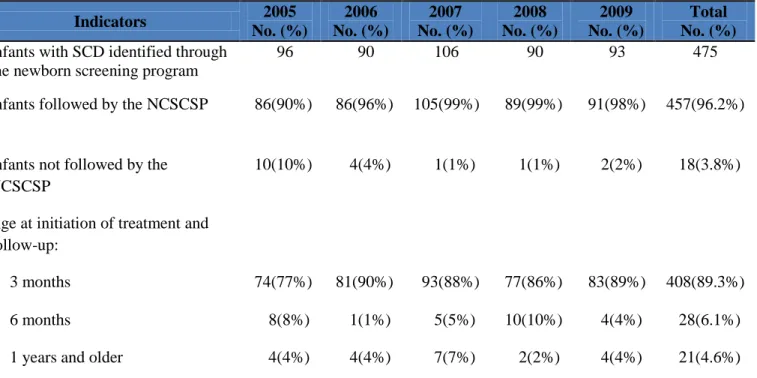
Altogether of the 475 infants with SCD identified by newborn screening, 457 (96.2%)
were analyzed in the initiation of penicillin prophylaxis by 3 months of age. These infants were
followed by the NCSCSP educator counselors and referred to a comprehensive sickle cell clinic
15
3 months of age, and 28 (6.1%) by 6 months of age. There were 21 (4.6%) infants that were
delayed in the initiation of penicillin by the age of one year and older. No documentation was
available for why there was a delay in starting penicillin after diagnosis. These data also
documented that the ages at time of treatment and follow-up ranged from birth to 1.5 years
(median age, 5 weeks). Over the 5 year period, 18 (3.8%) of the infants were not followed by the
NCSCSP, despite numerous efforts by the educator counselors to contact the parents; 13 infants
were “lost to follow-up”, 3 infants’ parents refused, 1 infant died, and 1 infant relocated.
Table 3: Sickle cell screening follow-up, North Carolina, 2005-2009
Indicators 2005
No. (%)
2006 No. (%)
2007 No. (%)
2008 No. (%)
2009 No. (%)
Total No. (%)
Infants with SCD identified through the newborn screening program
96 90 106 90 93 475
Infants followed by the NCSCSP 86(90%) 86(96%) 105(99%) 89(99%) 91(98%) 457(96.2%)
Infants not followed by the NCSCSP
10(10%) 4(4%) 1(1%) 1(1%) 2(2%) 18(3.8%)
Age at initiation of treatment and follow-up:
3 months 74(77%) 81(90%) 93(88%) 77(86%) 83(89%) 408(89.3%)
6 months 8(8%) 1(1%) 5(5%) 10(10%) 4(4%) 28(6.1%)
1 years and older 4(4%) 4(4%) 7(7%) 2(2%) 4(4%) 21(4.6%)
Sources: North Carolina State Laboratory of Public Health and the NCSCSP database system, WCSWeb
Figure 1 demonstrates the average time for initiation of penicillin prophylaxis by regions
served by educator counselors. The routine standard of care in placing these infants on penicillin
was high. The overall average days to treatment was significantly less than the state program
16
follow-up process during this 5-year period of the NCSCSP. There was no significant difference
in the average days to treatment among the 5 years. However, there was a highly significant
difference among the regions when comparing the time to initiate penicillin within 3 months and
not within 3 months (89.3% vs. 10.7%, p=0.002). Further it was found that four regions had
more than 10% of SCD infants that were outside the standard of care to initiate treatment within
3 months. Since initiation of penicillin prophylaxis usually requires referral and enrollment into a
specialty clinic or being seen by a hematologist, the start date of penicillin indirectly indicates
the average time an infant is followed by one of the comprehensive sickle cell centers in North
Carolina.
During this 5 year period, 7 deaths (1.5%) were reported among the 475 infants identified
with SCD in North Carolina. All of the deaths were among blacks and occurred in FS and FSC
infants. The mean age at death for the 7 infants was 10 months and the range was from 1 month
to 2.7 years (median age, 6 months). Six of the deaths were non-sickle cell related. Three of the
0 10 20 30 40 50 60 70 80 90
1 2 3 4 5 6 7 8 9 10 11 12 13
A ve rag e D ay s to Tr e atm e n t Region Coverage
Figure 1: Average days to initiate penicillin treatment by North Carolina Regions, 2005-2009
17
infants died of sudden infant death syndrome (SIDS), 1 died of multiple health conditions, 1 died
of trauma, and 1 died of an unknown virus. Only one of the deaths (0.2%) was likely a
SCD-related mortality, with the cause of death SCD-related to pneumonia. This child who died at 9 months
of age had been administrated penicillin prophylaxis and remained on penicillin until her/his
death.
DISCUSSION
Universal newborn screening for hemoglobinopathies is the first step to detect blood
disorders that are life-threatening to children. While early detection and intervention alone has
proven to significantlyreduce the morbidity and mortality of infants with SCD, ensuring
appropriate follow-up care is of great importance (NIH, 1987; Sickle Cell Disease Guideline
Panel, 1993; AAP, 2002). Mainly, penicillin prophylaxis therapy has been demonstrated to be an
effective prevention measure against pneumococcal infections in children with SCD. Therefore,
there is a need to advocate for increase knowledge and awareness of penicillin treatment as well
as it becomes part of routine parental education as a mechanism for deceasing complication and
improving the health of children with SCD. The NIH clinical guidelines for the management of
sickle cell diseases state,“penicillin prophylaxis should begin by 2 months of age for infants
with suspected sickle cell anemia, whether or not the definitive diagnosis has been established”
(NIH, 2002). Realizing that the incidence of Streptococcus pneumonia infection can occur in
infants as early as 4 months of age, the NCSCSP developed a similar guideline to ensure that the
timely follow-up of all newborns diagnosed with SCD are place on oral prophylaxis by 3 months
of age (Appendix B).
The findings from this study presented information about a recent North Carolina cohort
of infants with SCD and has demonstrated the benefits of newborn screening and early
18
82% of infants with SCD who were residents of North Carolina and of these infants 96.2% were
followed by the NCSCSP. As stated above, the incidence of SCD among North Carolina black
births from 2005 to 2009 was 1 in 343 which is higher than the national incidence of 1 in 500
black births (CDC, 2011). In comparison with another state, a most recent study in the birth
cohorts of Western New York estimated that the incidence of SCD over 27 years among
newborns is 1 in 615 black births (Lerner et al., 2009) which are lower than North Carolina.
There was also no significant change in incidence rate over time in both North Carolina and
Western New York, possibly implying that people are not aware of their carrier status or people
may choose to exercise their reproductive choice.
Mortality due to SCD-related death was 0.2% among this cohort. Despite administration
of penicillin prophylaxis, pneumococcal infection was the cause of one death. However, the
percentage of infants among this North Carolina cohort who died is lower compared to SCD
children during the first three years of life described in the other reported cohort studies (0.2%
vs. 1%) (CDC, 1998; King, et al., 2007; Quinn, Rogers, McCavit, & Buchanan, 2010). The low
mortality found in this North Carolina cohort is suggestive of the importance of preventive
measures such as penicillin prophylaxis by reducing life-threatening complications of SCD in
infancy. At best, universal NBS for hemoglobinopathies with the guidelines for penicillin
therapy provided to PCP and early management of infections may be factors largely attributed to
increase survival and health development of children with SCD in North Carolina.
Although the majority of the infants (89.3%) were placed on penicillin by 3 months of
age, there were still 10.7% of infants who did not received penicillin until after 3months.
According to the current guideline, penicillin prophylaxis should be started by the ages of two to
19
documentation for the delay, there are studies that found some primary care physicians are not
prepared to manage the follow-up care of children with a positive newborn screen of sickle cell
disease (Wurst & Sleath, 2004; Michlitsch, Azimi, Hoppe, Walters, Lubin, Lorey, Vichinsky,
2009). Even if most of these physicians have had an infant with a positive newborn screen,
Wurst & Sleath found that physicians are not well-informed to discuss the conditions, symptoms,
and recommended care. Unfortunately, some parents of infants born with SCD were advised by
their child’s physicians not to initiate the treatment early. The basis for these decisions is not
known at this time. However, there are reasons postulated as to why physicians do not prescribe
treatment, such as physician’s knowledge on up-to-date therapies and/or physician practice
patterns (Wurst & Sleath, 2004).
In addition to starting penicillin after 3 months, 3.8% of these infants were not followed.
Since follow-up of newborns with abnormal hemoglobin disorders must be completed, the
timeliness in which these infants receive appropriate care is very important. There are factors
that may contribute to these infants not being followed. One explanation for the majority of the
infants “lost to follow-up” may be due to lack of correct locating information (Miller, Stilerman,
Rao, Abhyankar, & Brown, 1990) which can make it difficult for regional educator counselors to
refer the children and their family to appropriate medical care. In addition to correct locating
addresses, two North Carolina regions, Regions 10 and 11, cover two large military bases which
could also be problematic for educator counselors working with a population that is young and
more mobile. It should be noted that 10% of these infants lost to follow-up were born during
2005 and that this rate declined in subsequent years. Further studies should be pursued to
20
Another factor that also contributes to not being followed is parent refusal or denial.
Some parents’ health and spiritual beliefs might have an impact on how they perceived and acted
upon the significant of treatment and care. In a study by Meyappan (2001), some mothers seem
to have an unclear view on what SCD actually means to them or their children: “In one situation,
a mother had said that her child was not diagnosed with sickle cell until he was four months old
and in the hospital with complications that arose from the disease”. In spite of knowing about
sickle cell, the mother only understood the effects of the disease after the child exhibited
recurring symptoms (Meyappan, 2001). Hence, the extent to which the parent/family is able to
cope with and adjust to the child’s disease influences when the child receives follow-up care.
Thus, parental education and counseling are important components of the NCSCSP services.
Education and counseling is needed to assure that parents and families understand the
implication of hemoglobin diseases and complications. This service is usually offered by
regional educator counselors and includes the importance of penicillin therapy, vaccinations, and
regular health care visits. In addition, the educator counselors provide parents/families with a
NBS kit that has a variety of printed educational materials; one in particular is a comprehensive
manual from the California Department of Public Health called A Parent’s Handbook for Sickle
Cell Disease, Part 1: Birth to Six Years of Age, to reinforce education and counseling. The
NCSCP found that this handbook is a good teaching and reference tool for parents with SCD
children. The manual is written in clear lay language, covers the essential facts, and illustrates
key points about SCD and its common symptoms. Previous studies showed that the effectiveness
of educational efforts (i.e. materials, manuals, and counseling) in regards to the risk of infection
and the preventive role of penicillin are associated with increased knowledge linked to observed
21
As with any continuous medication regimens, maintaining compliance can be difficult.
To address this issue, the NCSCSP provides services to ensure that these infants actually receive
their prescribed penicillin regimen until age five. In the early months of the infant’s life, the
parents/caregivers are scheduled more regularly for clinic visits. Additionally, the program
requires that each regional educator counselors conduct a minimum of two home visits per year
with children from birth to 18 years of age in order to monitor their health care needs and remind
parents of the benefits of daily penicillin adherence, from 3 months to 5 years of age, at each
visit (Harris & Leather, 1998). Even though the North Carolina regions were found to have an
overall average of 52 days to initiate treatment during the 5 year study period, compliance can be
a complex process to assess by counselors and providers. Obviously, compliance with penicillin
can be problematic if children do not take penicillin as prescribed putting them at an increased
risk for infections. Previous studies have reported that adherence of penicillin prophylaxis
resulting in pneumococcal sepsis and death were often low (Teach, Lillis, & Grossi, 1998;
Berkovith, Papadouris, Shaw, Onuaha, Dias, & Olivieri, 1998; Elliott, Morgan, Day, Mollerup,
&Wang, 2001). Thus with routine six month assessments and educational efforts by the regions,
the NCSCSP hopes that prophylactic penicillin compliance can be achieved.
There are some potential limitations of this study. First, only initial NBS results were
extracted from the SLPH, since I was unable to capture complete information on confirmatory
diagnostic results. Several follow-up NBS tests were completed using the SLPH, private
laboratories, or medical centers laboratories. In this sample of infants, I could not verify if this
service was actually provided and whether it verified the outcome of the initial screening (i.e.
identification of a false positive). Additional studies are needed to evaluate what percentage of
22
which method is the most effective. A second limitation is that penicillin data only reflect an
indicator of early intervention. This approach was chosen to analyze the time penicillin
prophylaxis was initiated, not to convey compliance of treatment. Further studies would be
needed to assess compliance with penicillin prophylaxis for infants identified with SCD in this
cohort. Lastly, the infants not followed by the program represented potential bias of the data. A
relatively small number of these infants (3.8%) were not followed because of lack of locating
information or refusal of treatment. This group might represent an ascertainment bias of the
NCSCSP, suboptimal outcome of penicillin treatment, and an increased risk for infection. Thus,
it is slightly possible a different pattern may have been obtained if these infants were available
for inclusion in the analyses.
RECOMMENDATIONS
The findings in this report reinforce the need to incorporate specific recommendations
based on initiatives already in place by the American Academy of Pediatrics (2002). These
systems have been shown to make measurable differences and are adaptable to the NCSCSP care
coordination model. To embark on improving long-term follow-up care throughout the lifespan
of affected infants with SCD, key features that should facilitate this effort include
multidisciplinary care system, health promotion and awareness, preventive care, and surveillance
and evaluation.
1. Provide a multidisciplinary care system through health care providers, hematologists,
nurses, social workers, and educator counselors to improve and maintain health care of
infants affected with SCD. These infants should have regular health visit every 2-4
months (AAP, 2002) up to age 2 years, then every 6 months thereafter through a medical
home and ensure quality of care. An integrated goal of the entire system should be the
23
2. Increase health promotion and awareness of educational interventions for adherence to
treatments through evidence-based strategies such as reminders and parental education.
Health providers of children with SCD should play an important role in reinforcing
regular administration of penicillin and counseling parents about concerns at home. In
addition, public health efforts are needed to explore parent’s belief, social, and
environmental factors regarding penicillin (Elliott et al, 2001).
3. Penicillin prophylaxis treatment, initiated by NBS, is a recognized standard of preventive
care for children with SCD (Gaston et al, 1986). State health department should adopt
regulations or guidelines to direct preventive services. For instance, the NCSCSP
provides funding to six comprehensive medical centers and requires that penicillin be
given to infants identified with SCD through NBS (NCSCSP, 2010). However, additional
studies are still needed to determine the long-term effects of penicillin prophylaxis
initiated early in infants. A key component that should be considered is the increased risk
of emergence of penicillin-resistant Streptococcus pneumonia which has increased over
time in the U.S. (Cober & Phelps, 2010).
4. Develop integrated public health surveillance and monitoring system to better coordinate
care such as appropriate follow-up, assessments, referrals, and delivery of services
relating to SCD and other hemoglobin disorders. This system would allow continuous
evaluation and improvement of the statewide program as well as support further research.
Currently in North Carolina, there is a link between the NBS and NCSCSP database
systems, and a poor link between medical centers systems where infants are usually
enrolled. Collecting and integrating data will help provide knowledge about these
24
5. Provide opportunities for continuing education credits and units to health care providers
such as primary care physicians, specialty physicians, emergency room physicians,
nurses, nurse practitioners, physician assistants, medical students, social workers, and
others who regularly interact with people (and families) who have SCD to improve these
providers’ knowledge and awareness of up-to-date SCD management. These educational
strategies should be developed to encourage providers to adopt new standards of care for
SCD over the lifespan. The protocols and guidelines for care should also supplement
current practices.
CONCLUSION
Penicillin prophylaxis has been shown to reduce the incidence of life-threatening
infections in young children with SCD. Since SCD is a lifelong chronic disorder, long-term
follow-up is required to improve optimal health outcomes. However, it is worth noting that NBS
to detect hemoglobinopathies remains the cornerstone of public health practice for early
detection and intervention. Timely and sustainable use of penicillin for infants with SCD seems
imperative from both clinical and economical viewpoints. The findings from this study support
the use of universal NBS and early intervention of penicillin prophylaxis within 3 months of age.
A significantly different rate of early intervention was found among the 13 regions in North
Carolina. However, the overall incidence of SCD in North Carolina from 2005 to 2009 has not
changed over time. This information can be of value to the leadership of both the NCSCSP and
the medical centers in developing a greater focus on the importance of trait counseling, as well as
education concerning the role of NBS and the importance of prophylactic penicillin for infants
with SCD. Therefore, these are key steps suggested for state-wide preventive strategies in
25
APPENDIX A:
North Carolina Sickle Cell Syndrome Program Coverage Regions
Regional Public Health Sickle Cell Educator/Counselors & Community-based Organizations with Catchment Areas
Total # of SCD Infants 2005-2009
% Receiving Penicillin after 3 months of age
Region 1 Alexander Avery Buncombe Burke Caldwell Catawba Cherokee Clay Cleveland Gaston Graham Haywood Henderson Jackson Lincoln Macon Madison McDowell Mitchell Polk Rutherford Swain Transylvania Yancey
23 9%
Region 2
Beaufort Bertie Hyde
Martin
Pitt 28 0%
Region3 Alleghany Ashe Cabarrus Davidson Davie Iredell Rowan Stanley Stokes Surry Union Watauga Wilkes Yadkin
23 26%
Region 4 Durham Franklin Granville Person Warren Vance
33 9%
Region 5 Edgecombe Halifax Nash Northampton Wilson
26 4%
Region 6 Anson Johnston Lee Montgomery Moore Richmond Sampson
Scotland 19 0%
Region 7 Bladen Brunswick Columbus Duplin New Hanover
Pender 24 4%
Region 8 Camden Chowan Currituck Dare Gates Hertford Pasquotank Perquimans Tyrrell Washington
11 0%
Region 9
Chatham Orange Wake
26
Regional Public Health Sickle Cell Educator/Counselors & Community-based Organizations with Catchment Areas
Total # of SCD Infants 2005-2009
% Receiving Penicillin after 3 months of age
Region 10
Cumberland Hoke Harnett Robeson
35 0%
Region 11
Carteret Craven Greene Jones
Lenoir Onslow Pamlico Wayne
32 3%
Region12
Alamance Caswell Forsyth Guilford
Randolph Rockingham
68 25%
Region 13 Mecklenburg 74 14%
27
APPENDIX B:
North Carolina Department of Health and Human Services Division of Public Health
1929 Mail Service Center Raleigh, North Carolina 27699-1929
Michael F. Easley, Governor Leah Devlin, DDS, MPH Carmen Hooker Odom, Secretary State Health Director
July 25, 2007
TO: Pediatricians
Family Practitioners Health Directors
The following guidelines for the administration of prophylactic penicillin in treating infants with sickle cell disease have been expanded to include the administration of penici1lin to infants with Hemoglobin SC (FSC), Hemoglobin SD (FSD), Hemoglobin SOArab (FSOArab) etc. and other forms of sickle cell disease. These forms of sickle cell disease are also associated with an increased risk of pneumococcal infections. The guidelines previously recommended the administration of penicillin to infants with an FS pattern only on newborn screening.
PROGRAM GUIDELINES FOR THE ADMINISTRATION OF PROPHYLACTIC PENICILLIN
These guidelines have been developed by the pediatric hematologists at comprehensive sickle cell medical centers in North Carolina. The North Carolina Sickle Cell Program and the Governor’s Council on Sickle Cell strongly encourage compliance with these guidelines by all primary care providers providing care to children with different forms of sickle cell disease. A copy of these guidelines is sent by the State Laboratory of Pub1ic Health to each provider whose name appears on the newborn screening form of infants suspected of having a sickle cell disease or syndrome.
28
One of the major advances in the care of infants with sickle cell disease has been the recognition that oral penicillin given twice a day will significantly reduce morbidity and mortality from pneumococcal infections (Gaston, Verter, Woods and colleagues, 1986). It is therefore imperative that the physician caring for a child with sickle cell disease establish a definitive diagnosis, provide appropriate education and counseling to the child's parents and family, and begin penicillin prophylaxis. Due to time constraints, local physicians frequently refer families to a sickle cell educator/counselor for education and counseling. Please refer to the attached list for geographic areas of coverage, names, and telephone numbers. In instances where the definitive diagnosis cannot be determined, an infant with the FS genotype should be maintained on prophylactic penicillin until a definitive diagnosis is established. The importance of administering the prophylactic antibiotics should be stressed at all visits because parents might become lax or less focused over time in dispensing this essential treatment.
Who should receive penicillin?
Based on guidelines published by the National Institutes of Health, ALL infants identified with sickle cell disease through newborn screening should receive twice daily penicillin prophylaxis. This includes infants with FS genotype (indicating a likely diagnosis of sickle cell anemia (Hemoglobin SS) or Hemoglobin S/β-thalassemia), FSC genotype and other forms of sickle cell disease including Hemoglobin SD, Hemoglobin SOArab, etc. because infants with all forms of sickle cell disease are at an increased risk of infection.
How long should penicillin be administered?
Prophylactic penicillin is recommended for all patients with sickle cell disease beginning at age two to three months. Patients with Hemoglobin SS or Hemoglobin S/βo
-thalassemia can discontinue this medication at age five unless they have had a splenectomy or severe past history of pneumococcal infection. Although final guidelines for the length of time to administer penicillin to patients with Hemoglobin SC and other sickling disorders have not yet been developed, penicillin should be continued for at least three years.
Dosage Requirements
Age Penicillin Prophylaxis Penicillin Alternative
2 month to 3 years 3 years to 5+ years
Penicillin VK 125 mg po bid Penicillin VK 250 mg po bid
Erythromycin (EES)
29
For more information contact:
U.S. Department of Health and Human Services National Institutes of Health National Heart, Lung, and Blood Institute
P.O Box 30105
Bethesda, MD 20824
Phone: (301) 592-8573
Web: http:/www.nhlbi.nih.gov
NC Department of Health and Human Services Division of Public Health
NC Sickle Cell Syndrome Program 1929 Mail Service Center
Raleigh, NC 27699 Phone: (919) 707-5705
Web: http:/www.ncsicklecellprogram.org
Comprehensive Sickle Cell Medical Centers
Mission Hospital, Asheville, NC 828-213-9770
30
REFERENCES
American Academy of Pediatrics (AAP), (2002). Section on Hematology/Oncology, Committee on Genetics. Health supervision for children with sickle cell disease. Pediatrics, 109(3), 526-535.
American College of Medical Genetics and Genomics (ACMG). (2012). Newborn screening ACT Sheet [Fact sheet]. Retrieved June16, 2012, from
http://www.acmg.net/AM/Template.cfm?Section=NBS_ACT_Sheets_and_Algorithms_Tabl e&Template=/CM/HTMLDisplay.cfm&ContentID=5072
Benson, J. M., & Therrell Jr, B. L. (2010). History and current status of newborn screening for hemoglobinopathies. Seminars in Perinatology, 34(2), 134-144.
Berkovitch, M., Papadouris, D., Shaw, D., Onuaha, N., Dias, C., & Olivieri, N. F. (1998). Trying to improve compliance with prophylactic penicillin therapy in children with sickle cell disease. British Journal of Clinical Pharmacology, 45(6), 605-607.
Centers for Disease Control & Prevention (CDC). (2011). Sickle Cell Disease. In Data & Statistics. Retrieved July 6, 2011, from http://www.cdc.gov/ncbddd/sicklecell/data.html
Centers for Disease Control and Prevention (CDC). (2000). Update: Newborn screening for sickle cell disease--California, Illinois, and New York, 1998. MMWR. Morbidity and Mortality Weekly Report, 49(32), 729-731.
Cober, M. P., & Phelps, S. J. (2010). Penicillin prophylaxis in children with sickle cell disease. The Journal of Pediatric Pharmacology and Therapeutics 15(3), 152.
Cooley's Anemia Foundation. (2010). About Thalassemia. In What Is Thalassemia? Retrieved July 6, 2011, from http://www.cooleysanemia.org/
Day, S., Brunson, G., & Wang, W. (1992). A successful education program for parents of infants with newly diagnosed sickle cell disease. Journal of Pediatric Nursing, 7(1), 52-57.
Elliott, V., Morgan, S., Day, S., Mollerup, L. S., & Wang, W. (2001). Parental health beliefs and compliance with prophylactic penicillin administration in children with sickle cell disease. Journal of Pediatric Hematology/Oncology, 23(2), 112.
Frempong, T., & Pearson, H. A. (2007). Newborn screening coupled with comprehensive follow-up reduced early mortality of sickle cell disease in Connecticut. Connecticut Medicine, 71(1), 9-12.
31
Gill, F., Sleeper, L., Weiner, S., Brown, A., Bellevue, R., Grover, R., Pegelow, C.H., &
Vichinsky, E. (1995). Clinical events in the first decade in a cohort of infants with sickle cell disease. Cooperative Study of Sickle Cell Disease. Blood, 86(2), 776-783.
Harris, G., & Leathers, K. (1998). N.C. Sickle Cell Syndrome Program: Annual Report FY 97-98. Raleigh, NC: Division of Public Health, North Carolina Department of Health and Human Services. Retrieved February 10, 2012, from http://wch.dhhs.state.nc.us/annlrpt.pdf
Healthy People.gov. (2011). About Healthy People. In Introducing Healthy People 2020.
Retrieved December 27, 2011, from http://www.healthypeople.gov/2020/about/default.aspx
Hoppe, C. C. (2009). Newborn screening for non-sickling hemoglobinopathies. Hematology, 2009(1), 19-25.
King, L., Fraser, R., Forbes, M., Grindley, M., Ali, S., & Reid, M. (2007). Newborn sickle cell disease screening: The Jamaican Experience (1995–2006). Journal of Medical Screening, 14(3), 117-122.
Lerner, N. B., Platania, B. L., & LaBella, S. (2009). Newborn sickle cell screening in a region of Western New York State. The Journal of Pediatrics, 154(1), 121-125.
Mahat, G., Scoloveno, M. A., & Donnelly, C. B. (2007). Written educational materials for families of chronically ill children. Journal of the American Academy of Nurse Practitioners, 19(9), 471-476.
Meyappan, J. (2001). Redefining sickle cell anemia in African American communities. Lambda Alpha Journal, 31, 2-9.
Michlitsch, J., Azimi, M., Hoppe, C., Walters, M. C., Lubin, B., Lorey, F., & Vichinsky, E. (2009). Newborn screening for hemoglobinopathies in California. Pediatric Blood & Cancer, 52(4), 486-490.
Miller, S. T., Stilerman, T. V., Rao, S. P., Abhyankar, S., & Brown, A. K. (1990). Newborn screening for sickle cell disease. when is an infant 'lost to follow-up'? American Journal of Diseases of Children, 144(12), 1343-1345.
Mvundura, M., Amendah, D., Kavanagh, P. L., Sprinz, P. G., & Grosse, S. D. (2009). Health care utilization and expenditures for privately and publicly insured children with sickle cell disease in the United States. Pediatric Blood & Cancer, 53(4), 642-646.
National Institutes of Health (NIH). (1987). Newborn screening for sickle cell disease and other hemoglobinopothies US Dept. of Health and Human Services, Public Health Service, NIH Consensus Statement Online 6(9):1-22. Retrieved July 6, 2011, from
32
National Institutes of Health (NIH). (2002). The Management of Sickle Cell Disease. 4th Ed. Revised June 2002. NIH, National Heart, Lung and Blood Institute, Division of Blood Disease & Resources. NIH Publication No. 02-2117 Retrieved July 6, 2011, from
http://www.nhlbi.nih.gov/health/prof/blood/sickle/sc_mngt.pdf
Nietert, P. J., Silverstein, M. D., & Abboud, M. R. (2002). Sickle cell anaemia: Epidemiology and cost of illness. PharmacoEconomics, 20(6), 357-366.
North Carolina Division of Public Health, State Laboratory of Public Health. (2010). Newborn Screening. Retrieved March 24, 2012, from http://slph.state.nc.us/newborn/default.asp
North Carolina Sickle Cell Syndrome Program (NCSCSP). (2010). Providing HOPE For A Brighter FUTURE. Retrieved July 6, 2011, from http://www.ncsicklecellprogram.org
Public Health Law of North Carolina (1983), c. 891, s.2. Article 1, General Statutes § 130A-125. Retrieved April 21, 2012, from
http://www.ncga.state.nc.us/enactedlegislation/statutes/html/bychapter/chapter_130a.html
Quinn, C. T., Rogers, Z. R., McCavit, T. L., & Buchanan, G. R. (2010). Improved survival of children and adolescents with sickle cell disease. Blood, 115(17), 3447-3452.
Sickle Cell Disease Association of America, Inc. (2011). About SCDAA. In Sickle Cell Legislative Initiatives. Retrieved July 6, 2011, from
http://www.sicklecelldisease.org/index.cfm?page=legislative-initiatives
Sickle Cell Disease Guideline Panel. (1993). Sickle cell disease: Screening, Diagnosis,
Management and Counseling in Newborns and Infants. Clinical Practice Guideline no. 6. Rockville, Maryland: Agency for Health Care Policy and Research. Public Health Service, US Department of Health and Human Services
St. Jude Children's Research Hospital (2012). Screening for SCD. In Hemoglobin D Trait. Retrieved June16, 2012, from
http://www.stjude.org/stjude/v/index.jsp?vgnextoid=30f0db6324d6f110VgnVCM1000001e 0215acRCRD&vgnextchannel=306fdb6324d6f110VgnVCM1000001e0215acRCRD
Teach, S. J., Lillis, K. A., & Grossi, M. (1998). Compliance with penicillin prophylaxis in patients with sickle cell disease. Archives of Pediatrics and Adolescent Medicine, 152(3), 274.
Vichinsky, E., Hurst, D., Earles, A., Kleman, K., & Lubin, B. (1988). Newborn screening for sickle cell disease: Effect on mortality. Pediatrics, 81(6), 749-755.
Wethers, D. L. (2000). Sickle cell disease in childhood: Part I. Laboratory Diagnosis,
33