Oduenyi et al. Stigmatization and Discrimination among PLWHA in Abuja, Nigeria
ORIGINAL RESEARCH ARTICLE
An Exploratory Study of Stigma and Discrimination among People
Living with HIV/ AIDS in Abuja Municipal Area Council, Nigeria
DOI: 10.29063/ajrh2019/v23i1.9
Chioma Oduenyi
1, 2*, Emmanuel Ugwa
1, Zimako Ojukwu
3and Jachike Ojukwu-Ajasigwe
4Jhpiego, Nigeria-affiliate of Johns Hopkins University1; Staffordshire University, Stoke-on-Trent, United Kingdom2, Abuja Graduate School-Nigeria3; United Nations Population Fund-Nigeria4
*For Correspondence: Email: [email protected]; [email protected]; Phone: +2348033392814
Abstract
This study examined the magnitude of HIV/AIDS stigma and discrimination among people living with HIV/AIDS (PLWHA) in Abuja Municipal Area Council (AMAC). A descriptive cross-sectional study was conducted using both qualitative and quantitative methods to survey 100 PLWHA resident in AMAC-FCT. Participants were selected through a combination of two-stage and systematic random sampling technique using a table of random numbers. A 40-item structured questionnaire adapted from the HIV Stigma Scale and a semi-structured focus group discussion (FGD) guide were used to collect data. Quantitative data were coded and entered SPSS statistical software. Frequency tables were generated, and data subjected to descriptive and inferential statistics. Cross tabulations examined pattern of associations between respondent‘s characteristics while qualitative findings utilized content analysis along five specific themes to demonstrate the way HIV/AIDS stigma manifested among respondents. Participation was 100% and HIV/AIDS stigma prevalence was high at 67%, with mean age 33.01years (SD±5.94years) for respondents. Findings confirmed rejection of PLWHA by sexual partners, family members and friends, dismissal from work, decrease in the quality of health care services and sometimes outright denial of services. A high correlation was found between the scales and subscales of the HIV Stigma Scale with all correlation values reaching statistical significance (p =0.01). Regret for disclosure of status and ending social interaction by PLWHA was reported as consequences of disclosure and potential hindrance for disclosure which will encourage ongoing transmission of the virus. Our study provides evidence on stigma and discrimination of PLWHA in AMAC, FCT-Abuja in the face of limited evidence to drive HIV prevention interventions. Further studies should investigate other predictors and reasons for stigma and discrimination among this population. (Afr J Reprod Health 2019; 23[1]: 88-99).
Keywords: Stigma, Discrimination, PLWHA, HIV/AIDs, AMAC, Abuja-FCT
Résumé
Cette étude a examiné l'ampleur de la stigmatisation et de la discrimination liées au VIH /SIDA parmi les personnes vivant avec le VIH / SIDA (PVVS) au sein du conseil régional municipal d'Abuja (CRMA). Une étude transversale descriptive a été menée à l'aide des méthodes qualitatives et quantitatives pour interroger 100 PVVIH résidant dans le CRMA. Les participants ont été sélectionnés en combinant une technique d'échantillonnage aléatoire à deux degrés et systématique à l'aide d'un tableau de nombres aléatoires. Un questionnaire structuré de 40 questions, adapté de l‘Echelle de stigmatisation du VIH, et un guide de discussion à groupe cible semi-structuré (DGC) ont été utilisés pour collecter des données. Les données quantitatives ont été codées et notées dans le logiciel statistique SPSS. Des tableaux de fréquence ont été générés et les données soumises à des statistiques descriptives et inférentielles. Les tableaux croisés ont examiné la structure des associations entre les caractéristiques des interviewés, tandis que les résultats qualitatifs se sont servis d‘une analyse du contenu selon cinq thèmes spécifiques pour démontrer la façon dont la stigmatisation du VIH / SIDA se manifestait parmi les interviewés. La participation était de 100% et la prévalence de stigmatisation du VIH / SIDA était élevée à 67%, l'âge moyen étant de 33,01 ans (DS ± 5,94 ans) pour les interviewés. Les résultats ont confirmé le rejet des PVVS par les partenaires sexuels, les membres de la famille et les amis, le licenciement au travail, la diminution de la qualité des services de soins de santé et parfois le déni total des services. Une corrélation élevée a été remarquée entre les échelles et les sous-échelles de l'échelle de stigmatisation du VIH, toutes les valeurs
Oduenyi et al. Stigmatization and Discrimination among PLWHA in Abuja, Nigeria
African Journal of Reproductive Health March 2019; 23 (1): 89 divulgation, ce qui encouragerait la transmission continue du virus VIH. Notre étude fournit des preuves sur la stigmatisation et la discrimination des PVVS dans le CRMA-Abuja, face au manque de preuves permettant de conduire des interventions de prévention du VIH. Des études complémentaires devraient examiner d'autres facteurs prédictifs et les raisons de la stigmatisation et de la discrimination au sein de cette population. (Afr J Reprod Health 2019; 23[1]: 88-99).
Mots-clés: Stigmatisation, discrimination, PVVSH, VIH / SIDA, CRMA-Abuja
Introduction
Nigeria is the most populous country in Africa with an estimated population of 160 million1 and HIV/AIDS prevalence of 4.1 percent2. HIV/AIDS prevalence is as high as 12.6% in certain regions and age group3. Poor progress in reducing HIV/AIDS prevalence has been attributed to lack of treatment and care by PLWHA but current thinking has found association between outcomes and HIV/AIDS stigmatization/discrimination4. Stigma is defined as an undesirable or discrediting attribute that an individual possesses, thus reducing that individual‘s status in the eyes of society5. Stigmatization can lead to prejudicial thoughts, behaviors, and actions on the part of governments, communities, employers, health care providers, coworkers, friends, and families6-8. This may include the experiencing of domination, oppression, the exercise of power or control, harassment, categorizing, accusation, punishment, blame, devaluing, prejudice, silence, denial, ignorance, and anger, a sense of inferiority, social inequality, exclusion, ridicule, resentment or confusion. It may sometimes lead to violence against PLWHA9.
Literatures on HIV/AIDs related stigma and discrimination is highly limited. Limited information on stigma and discrimination in Nigeria has been from anecdotal evidence provided by PLWHA and sensational newspaper reporting. This has led to widespread assumptions about its extent and distribution, the validity of which is difficult to establish. Existing studies on AIDS stigmatization have focused on negative attitudes of the people of Nigeria (perpetrators) towards PLWHA (targets), extremely few systematic studies have actually investigated the relationship between stigma and the stigmatized. This study therefore, examined the magnitude of HIV/AIDS Stigma and Discrimination amongst
People Living with HIV/AIDS (PLWHA) in Abuja Municipal Area Council (AMAC), Federal Capital Territory (FCT) –Nigeria and to provide recommendations for improvement.
Methods
Study design
The study was a descriptive cross-sectional urban survey using both qualitative and quantitative methods. For the quantitative method, personal interviews were conducted for 100 PLWHA while four focus group discussions (FGDs) were used to elicit responses for the qualitative survey. This was used to explain the perceptions, knowledge, attitudes, and pattern of HIV/AIDs related stigma and discrimination on PLWHA and to discover reasons for some of the results obtained from the quantitative study.
Study area
The research was carried out in the Abuja Municipal Area Council (AMAC) of the Federal Capital Territory (FCT) Abuja. AMAC is one of the six local councils that make up the FCT and the others are Abaji, Bwari, Gwagwalada, Kuje, and Kwali local councils. AMAC is the headquarters of the FCT and is mostly urban. AMAC is highly cosmopolitan and well planned, with relatively adequate social services and amenities, such as good network of roads, hospitals and schools with adequate representation of all ethnic and religious groups.
Sample size
Oduenyi et al. Stigmatization and Discrimination among PLWHA in Abuja, Nigeria
towards people living with AIDS in Nigeria. The precision or relative error considered acceptable to fall within 10% of the true value (0.1) with the level of confidence (95%) desired, therefore minimum sample size calculation was based on the formula10.
n= Z2 * P (1-P) d2
Where: n = sample size; Z = 1.96 for =0.397; P = the estimated proportion of population with characteristics = 0.603; d= precision= 0.1
n = 1.96 2x 0.603 x 0.397 (0.1) 2
n = 91.96 ≈ 92
The sample size was increased to 100 to address any possible attrition.
Sampling technique
A two- stage sampling technique was used to select the study sample. First, as at the time of study, June 2008 a list of all registered support groups in AMAC, FCT-Abuja with their detailed membership was obtained from (FCT chapter of – NEPWHAN) as the sampling frame. The study was restricted to registered members of the support groups. A random sample was used with a table of random numbers to select the participating support groups then a systematic random sampling technique was used to select each respondent into the study. For the FGDs, a purposive sampling technique was used to select eight (8) respondents for each of the four FGDs from all the support groups in AMAC with a representative sample of male and female irrespective of previous participation in the quantitative survey. A group between the size of four and eight is usually ideal11.
Data collection methods
A 40-item structured questionnaire adapted from the HIV Stigma Scale by Berger, et al12 was used for data collection due to its external validity. The instrument consists of 3 parts. Part 1 consists of a socio-demographic characteristic, Part 2 consists of questions for documenting perceived instances of stigmatization and discriminatory attitudes and Part 3 consists of questions for documenting
AIDS stigma and discrimination on respondents‘ daily lives and social relations.
Semi – structured FGD guide was used for the FGDs. These were pretested for clarity and content validity. Following nearness of residence, the 100 respondents chosen for the study were grouped into four different locations and each of these locations were facilitated by one supervisor and one research assistant. Each location had a total of 25 respondents irrespective of support group affiliations. The questionnaire was completed by respondents under the guidance of the supervisors and research assistants. At the end of the personal interviews with the 25 PLWHA, the 8 respondents chosen for the FGDs per location were organized for the focus group discussions. Four (4) semi-structured FGDs were conducted across the support groups in AMAC, one in each location. With the guidance of a semi-structured FGD guide, the moderator posed open ended questions to explore the views of PLWHA in AMAC regarding stigma and discrimination. Notes were taken, discussions tape recorded, and transcribed and final report generated using Microsoft word package.
Data management and analysis
Each answered questionnaire was coded and entered into a computer using the SPSS statistical software (SPSS Inc. Chicago, Il, USA). Scoring was based on the four subscales of the HIV stigma scale (personalized stigma, disclosure, negative self-image and public attitudes)13. Data analysis included the generation of frequency tables and an initial exploratory analysis. This was to ensure that categorical and numerical values fell within plausible and permissible limits. The output of the exploratory analysis determined the appropriate statistical methods, including multivariate techniques to apply for further analysis. The data collected was subjected to descriptive (i.e. mean) and inferential (i.e. t-test and ANOVA) statistics. Cross tabulations examined pattern of associations between respondents‘ characteristics using χ214
.
Oduenyi et al. Stigmatization and Discrimination among PLWHA in Abuja, Nigeria
Table 1: Description of content analysis categories from focus group discussion (FGDs)
Category Description
General KAP (knowledge, attitude and practice) Information on HIV/AIDS
All verbalizations on KAP (Situation, policies and spread of HIV/AIDS)
Voluntary Counseling and Testing
All verbalizations of VCT (Views, effects and recommendation)
Disclosure of Sero-Status
All verbalizations of Disclosure of status (factors, effects and promotion)
Stigma and Social Interactions (Sexual Partners, Family Members, Friends/Colleagues/Co-workers, Health Care practitioners, Community Members)
All verbalizations of stigma experiences with Sexual Partners, Family Members, Friends/Colleagues/Co-workers, Health Care practitioners, Community Members
Conclusion and Recommendation
All verbalizations of care, treatment, support and measures taken with recommendations
to substantiate verbalizations on each category of the five themes.
Results
Table 2 shows the distribution of the socio demographic characteristics of the respondents. The mean age was 33.01years (SD=5.94) with males higher than females (36.8 vs 31.2) years. The difference in the mean ages between the males and females was statistically significant (p=0.000). There was a female preponderance of 69 (69%) compared to 31(31%) of males among the respondents. The differences in the gender distribution across the various age categories are highly statistically significant (χ2, p=0.000). The age distributions of HIV stigma scale and subscales are presented in Table 3. For the HIV stigma scale, the respondents in the age group 30-34 appeared to face more stigma and discrimination with the highest mean score 110.9±16.3 compared to other age groups. The observed differences in the distribution across the various age groups were not statistically significant (p=0.232). Further analysis did not reveal any influence in the HIV stigma scale and subscales based on gender. Content analysis of the FGDs and direct quotes from respondents revealed difficulties and consequences imposed by HIV/AIDS stigma and discrimination on specific social relations with family members, friends, sexual partners, co-workers, and health professionals.
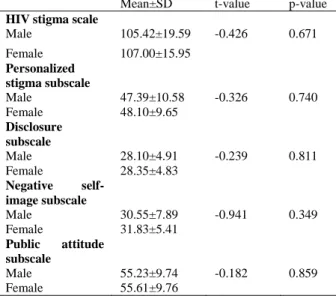
Table 4 shows females with a higher mean score of 107.0±16 compared to the mean score of 105.42±19.6 for the males, indicating that
more females PLWHA faced stigma and discrimination more than their male counterparts although the difference was not statistically significant (p=0.671).
Table 5 shows different magnitude and consequences of HIV/AIDS seropositive disclosure. In 77% of cases respondents stated that ―people find flaws in one‘s character following disclosure of one‘s HIV positive status‘‘. Also 71% reported that ―people don‘t want me around their children‘‘. Various other levels of discriminations were also very common.
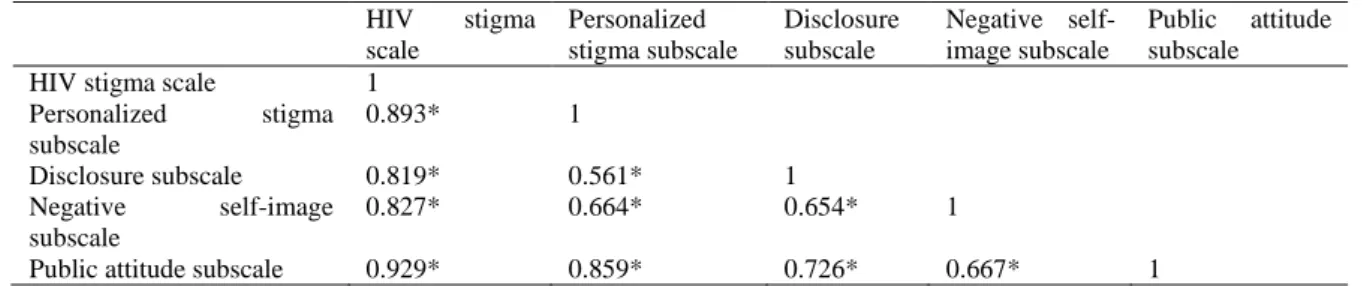
Table 6 shows a high correlation between the scales and subscales of the HIV stigma Scale used was observed with all correlation values reaching statistical significance (p =0.01).
Findings from Qualitative Studies
1. Knowledge, Attitude and Practices (KAP) of HIV/AIDS showed respondents having general knowledge of HIV/AIDS in AMAC as they described the scourge from several perspectives. They opined that HIV prevalence is highest in AMAC compared to other area councils in the FCT because of its urban nature. Furthermore, they complained that despite the high awareness of HIV/AIDS in AMAC, many people still have unprotected sex both young people and adults. They emphasized that the practice of support groups gives PLWHA support and relief. A female respondent said;
Oduenyi et al. Stigmatization and Discrimination among PLWHA in Abuja, Nigeria
Table 2: Socio-demographic characteristics of people living with HIV/AIDS in AMAC FCT-Abuja, Nigeria
Variables Frequency n (%)
Age group(years)
20-24 6(6.0)
25-29 20(20.0)
30-34 33(33.0)
35-39 21(21.0)
40-44 14(14.0)
45+ 2(2.0)
Not Indicated 4(4.0)
Total 100(100.0)
Gender
Male 31(31.0)
Female 69(69.0)
Total 100(100.0)
Marital status
Single 19(19.0)
Married 53(53.0) Living together 6(6.0) Separated/divorced 5(5.0) Widowed 17(17.0)
Total 100(100.0)
Religion
Christianity 96(96.0)
Islam 4(4.0)
Total 100(100.0)
Education
No formal education 4(4.0) Primary 20(20.0) Secondary 44(44.0)
Diploma 21(21)
First degree 6(6.0) Postgraduate 3(3.0) No response 2(2.0)
Total 100(100.0)
Occupation
Student 7(7.0)
Public servant 19(19.0) Trader 17(17.0) Private business 19(19.0) Artisan 16(16.0) Housewife 9(9.0) Unemployed 13(13.0)
Total 100(100.0)
Ethnicity
Yoruba 5(5.0)
Hausa 10(10.0)
Ibo 21(21.0)
Tiv 22(22.0)
Idoma 10(10.0)
Others 22(22.0)
No response 10(10.0)
Total 100(100.0)
are also HIV positive and that makes you happy. This drives away the fear that one will die of HIV/AIDS in fact the way we relate with one another in the support
group gives us so much happiness. We are not happy because we are infected, but we are happy when we see one another and share experiences of hope that life is still normal for us. Unlike in the villages where you lose all hope once you are tested positive. At the support groups, we get medical assistance, take advices and make friends‖.
Another male respondent said;
―The support groups are very good, when I tested positive newly, anxiety wanted to kill me, my family rejected me and I didn‘t know that there were support groups in Abuja but when I started going out at least I was relieved and now I can boldly say that I am better than when I was alone. In my village, once they hear that anyone is positive, that is the end for you so I will like to advise the government or anyone that cares to go to the villages and create awareness on HIV/AIDS so that the rejection will be reduced‖.
a. Legislations/policies on HIV/AIDs in the Nigeria
Respondents showed very little knowledge about existing policies on HIV/AIDS as they opined that these policies have not been widely disseminated and implemented. They complained about the non-implementation of the workplace policy to stop sero-positive persons from losing their jobs. A female respondent said;
―Most members of our support groups got thrown out from their workplace and nobody fights for them in this country. We have graduates who lost their jobs because they tested positive‖.
b. Factors that promote the spread of HIV/AIDs
In exploring these factors, respondents opined that;
1. Poverty: leads to patronage of commercial sex as a trade.
Oduenyi et al. Stigmatization and Discrimination among PLWHA in Abuja, Nigeria
Table 3: HIV Stigma scale and subscales by Age (years)
Mean±SD F-value P-value
HIV stigma scale
20-24 103.17±14.08
25-29 103.25±18.05
30-34 110.91±16.33 1.399 0.232
35-39 108.33±18.52
40-44 99.86±16.96
45+ 91.50±9.19
Personalized stigma subscale
20-24 48.83±4.99
25-29 45.35±9.98
30-34 50.24±10.56 0.876 0.500
35-39 47.95±10.39
40-44 45.21±10.42
45+ 44.00±2.83
Disclosure subscale
20-24 27.00±6.23
25-29 28.60±5.62
30-34 29.18±4.28 1.185 0.323
35-39 28.57±5.21
40-44 26.50±3.95
45+ 23.00±2.83
Negative self-image subscale
20-24 29.33±4.50
25-29 30.05±5.46
30-34 32.39±6.46 1.058 0.389
35-39 32.47±6.66
40-44 29.85±6.77
45+ 26.00±7.07
Public attitude subscale
20-24 53.67±10.76
25-29 54.25±10.62
30-34 57.64±9.42 1.425 0.223
35-39 57.10±8.64
40-44 50.93±10.56
45+ 47.50±3.54
Table 4: HIV Stigma scale and subscales by Gender
Mean±SD t-value p-value
HIV stigma scale
Male 105.42±19.59 -0.426 0.671
Female 107.00±15.95
Personalized stigma subscale
Male 47.39±10.58 -0.326 0.740
Female 48.10±9.65
Disclosure subscale
Male 28.10±4.91 -0.239 0.811
Female 28.35±4.83
Negative self-image subscale
Male 30.55±7.89 -0.941 0.349
Female 31.83±5.41
Public attitude subscale
Male 55.23±9.74 -0.182 0.859
Female 55.61±9.76
3. Unemployment leads to frustration: A female respondent said;
―There was this person, that was going to help me get a job and he insisted that I must have sex with him before he gives me the job, but I refused. Another opportunity came and the person insisted I have sex with him and if I did not control myself and if not for God, I will pass on the virus to the man after the second temptation and he will not know because I don‘t look like I have HIV/AIDS‖.
4. Ignorance leads to denial about the reality of HIV/AIDs: A male respondent said.
―There is also this belief that baffled me as I was discussing about condoms with the person who told me that his father gave him a native medicine assuring him that whatsoever the sickness is, that he cannot contact it from another person and this is highest among the youths‖.
5. Polygamy leads to continuous and new transmissions
6.
Labour migrations/Travellers/Widow inheritance helps to spread HIV.2.
Voluntary
Counseling
and
Testing
(VCT)
Respondents opined that more women come for VCT than men while the less educated show up better than the elite though many people are still afraid to know their status. Most people who test positive to HIV need psychosocial support because some become suicidal and withdraw from people. However, respondents opined that the degree of negative reactions from positive sero-status has reduced compared to what it used to be in the past when people committed suicide at the news of their positive sero-status. With adequate counselling, people look for how to reduce the tension and rejection they feel inside by going to register with a support group where they will be free to join other positive people and not be discriminated against.
3.
Disclosure of Sero-Status
Oduenyi et al. Stigmatization and Discrimination among PLWHA in Abuja, Nigeria
Table 5: Magnitude of HIV/AIDS related stigma and discrimination
Table 6: Correlation of HIV related stigma scales and subscales
HIV stigma scale
Personalized stigma subscale
Disclosure subscale
Negative self-image subscale
Public attitude subscale HIV stigma scale 1
Personalized stigma subscale
0.893* 1
Disclosure subscale 0.819* 0.561* 1 Negative self-image
subscale
0.827* 0.664* 0.654* 1
Public attitude subscale 0.929* 0.859* 0.726* 0.667* 1
*significant at 0.01
discrimination and this has contributed to on-going spread of HIV virus in AMAC, for instance, a female respondent said;
―When I knew my status, I was in the hospital so my younger and older brothers who were with me got to know. Before then I was living with my older brother so when I got back from the hospital my older brother‘s wife became an obstacle and at a point, they asked me to leave their house‖. (FR)
The FGD further revealed that most people disclose their status to access help, encourage others and save lives. Most respondents confirmed that they had only disclosed their status to their family members and health care providers. Three female respondents said respectively;
―I told only my older sister and asked her not to tell anybody and most especially my children so that they will not run away from me‖.
―I didn‘t disclose it to anybody only me and my husband. My husband is not on drugs, but he is my treatment partner‖.
―I disclosed to my husband because he will not understand if I don‘t breast feed the new baby while I had always breast fed my children but my husband did not believe and he said I should go and tell the doctor that it is not my blood‖.
However, respondents implied that disclosure can be promoted by empowerment, awareness and support. Support group helps because some people come out because of the benefits they will get from the groups.
4.
Stigma and Social Interaction
Stigma and sexual partner
Respondents expressed their experiences with stigma in their interactions with sexual partners, particularly on rejection by their sexual partners, following the disclosure of their sero-positive
Serial HIV/AIDS Related Stigma and Discrimination n (%) 1 Hurt by people‘s reaction following disclosure of my HIV positive status 67 (67) 2 People close to me stopped calling me 59 (59)
3
People expressed opinions that respondents deserved what they got because of their life
styles 30(30)
4
People close to me avoid me because of fear of extended stigma and discrimination against
them 65(65)
5 People don‘t want me around their children 71(71)
6 People physically backed away from me 62(62)
Oduenyi et al. Stigmatization and Discrimination among PLWHA in Abuja, Nigeria
status and by other partners they met afterwards. Most people feel bad when they know their partner‘s HIV status, and some go as far as keeping their partners in confinement or even leaving them for the fear of being infected. Others are sympathetic and tend to encourage their partners and even follow them to support groups. A woman said her husband never disclosed his status to her and she only found out after his death. A female respondent said;
―I was dating somebody for 6 years when I discovered my status, when I disclosed my status to him, he ran away from me claiming that he doesn‘t want me to infect him meanwhile I later discovered that he was already taking drugs before I knew my status because I was not inquisitive I didn‘t know what the drugs were for‖.
A male respondent said;
―It was not easy to disclose to my wife because of the fear of breaking up but thank God I was able to disclose it, and nothing happened to my marriage‖.
Stigma and Family
Most respondents stated that they had not disclosed their status to either family members or friends. Some disclosed their status to just their siblings without disclosing to the entire family members. Possible rejection by family members led respondents to practice self-imposed isolation to avoid tense interactions. Also, respondents opined that family members living with HIV/AIDS and of low economic status were more stigmatized than family members living HIV/AIDS with high economic status.
A female respondent said;
―I have disclosed my status to only my family members. My older sister knows but she doesn‘t discriminate against me but when her children got to know they started running away from me and never agreed to visit me anytime my sister suggested. They made me and my sister
separate from each other. I didn‘t tell my children, and nobody told them‖.
Two male respondents said respectively;
―I was abandoned when my older brother learnt that I was HIV positive. When I became better, they were surprised because they were expecting my death‖.
―When I was sick at the hospital and my father got to know about my status at the hospital bed, he disowned me‖.
Stigma and Friends
The responses about friends are both of rejection and encouragement. A female respondent said;
―They will not want to hear about it. Even your calls, they will not pick it, some of them will start going about telling people about your status. Gossiping about your status meanwhile they themselves they don‘t know their own status‖.
―In my own case, some of my friends who were accusing me of bad behaviour that I have AIDS and that I am going to die soon, died before me and I am still living and some others when they got infected they came to me to seek counselling and when I showed them the way and they get healthy along the line, they will run away from me again and start saying that they have been healed; that they went to pastors who prayed for them and they are healed‖.
Stigma and Workplace
Most respondents reported not disclosing their status to their work colleagues because of fear of sack. A female respondent said;
Oduenyi et al. Stigmatization and Discrimination among PLWHA in Abuja, Nigeria
An Engineering company sacked a man because of his status when his brothers disclosed to his boss calling him unclean. A man was sacked from a private transportation firm. A lady was denied employment with Nigeria Navy, Nigeria Army three times due to her status.
A male respondent said;
―I lost my job in Chevron because of my HIV status‖ while another female respondent said, ―My boss encouraged me when I disclosed to him‖.
Stigma and Health Care Providers
Respondents reported that interactions with health care professionals include refusal of health services and lack of effective communication though not all manifestations of stigma resulted in denial of services. Although some stigmatization by health professionals seemed to be blatant most times, in other instances, it was described as subtle and was perceived through body language and the avoidance of interaction. Two female respondents said;
―Even a doctor that gave me my test result said to me; these days you just go and prepare for death‖.
―The laboratory attendant that gave me my result said to me that I have gotten what I was looking for in this world so I should just go and prepare for my death and I told him that he was very stupid and that he will die before me‖.
Stigma and Community
In most cases there is rejection which is usually accompanied by hostility from the community members, but as more people are becoming aware that stigmatization is not the best solution to help the PLWHA, they now tend to pity the person living with HIV and await the news of the victim‘s death. Two male respondents said;
―A woman in the community beats her children anytime they play with my children because of my status‖.
―Community members are the worst, they will just run away from you. They won‘t want to come close to you for anything. They will not share toilet with you even where you spread your cloths, they will not use it again, they don‘t even want anything to do with you‖.
Coping Mechanisms by PLWHAs
Respondents expressed measures they have taken to live positively with HIV/AIDS to include: Living positively, be close to God, strict adherence to antiretroviral ARV prescriptions, eating balanced diet, be hygiene conscious, avoid high risk behaviour, join a support group, share experiences with fellow PLWHA and create awareness by educating others.
Discussion
Stigma and discrimination have been identified as being among the foremost barriers to HIV prevention, treatment, care and support15,16. Findings of this study showed that 67% of PLWHA experienced stigma and discrimination in various forms of social interaction while the narratives of study respondents demonstrated that stigma plays into and reinforces social inequalities as described in the focus groups. At some point or the other in their daily lives, respondents suffered rejection by sexual partners, family members and friends, dismissal from work, decreased quality of health care services and sometimes outright denial of services. The experience of stigma has also been reported in other studies and is nearly universal among a sample of women in Vietnam
17-18
Oduenyi et al. Stigmatization and Discrimination among PLWHA in Abuja, Nigeria
indicating consistency with earlier studies that found HIV prevalence more in younger people. The mean age of the males was higher than that of females (36.8 vs 31.2) years. The difference in the mean ages between the males and females was statistically significant (p=0.000). Although, there was a female preponderance of 69 (69%) compared to 31(31%) of males among the respondents in our study there was no statistically significant association between HIV/AIDS stigma and gender and age of respondents. Previous studies had shown that women experienced more stigma22, but older females, with low perceived stigmatization, but with good HIV cognition were most likely to disclose their status23. A Kenyan study showed that being female may be associated with less stigma as males were always seen as culprit because of multiple sexual partners24,25. With women empowerment and gender equality, stigma is likely going to be un-associated with gender as shown in our study. As shown in table 4, 77% of clients reported that ―people find flaws in one‘s character following disclosure of one‘s HIV positive status‘‘. Also 71% reported that ―people don‘t want me around their children‘‘. Various other levels of discriminations were also very common. Negative consequences included stigma, rejection by sexual partners and others, loss of intimacy, and threats to personal well-being26. The consequences of stigma and discrimination are wide-ranging. Some people are shunned by family, peers and the wider community, while others face poor treatment in healthcare and educational settings, erosion of their rights, and psychological damage. These all limit access to HIV testing, treatment and other HIV services27,28.Positive rewards resulting from disclosure included increased social support and intimacy with partners, reaffirmation of one's sense of self, and the opportunity to share personal experiences and feelings with sexual partners26. Indeed, findings from this study revealed a wide range of issues around stigma and discrimination as experienced by PLWHA in AMAC, FCT-Abuja Nigeria including HIV/AIDS situation in AMAC, legislations/policies on HIV/AIDs in the country, factors that promote the spread of HIV/AIDs, voluntary counselling and testing services, effects of knowing one‘s
sero-status, disclosure of sero-sero-status, factors that have facilitated people to disclose their HIV status, effects of disclosure of sero-status, factors to promote disclosure of sero-status, factors that make people not to disclose their status and social interaction. Policies and legislation to curb these ugly stigma experiences exist in the country but it is not well harnessed and implemented to achieve the desired results.
Conclusion
In conclusion, this study has shown a high but
comparable proportion of stigma and
discrimination among HIV seropositive individual relative to other studies, and age and gender are not significantly associated with stigma and discrimination. The consequences of stigma and discrimination identified in the study such as regret for disclosure of status and ending social interaction by PLWHA hinder disclosure and lead to the continuous spread of the virus thereby frustrating intervention efforts. HIV/AIDs stigma and discrimination in AMAC-FCT is no different from experiences of PLWHA around the world therefore, findings of this study as documented will contribute to the growing literature around stigma and discrimination in AMAC-FCT and Nigeria at large. Lack of documented experiences and evidence has been a major gap in intervention measures in Abuja FCT. Further studies are also necessary to investigate other predictors and reasons for stigma and discrimination in this population.
Ethical Approval
Oduenyi et al. Stigmatization and Discrimination among PLWHA in Abuja, Nigeria
Recommendations by PLWHA
- Empower PLWHAs to be self-dependent so that even when they are discriminated against, they won‘t care so long as they are able to feed themselves.
- Government should pass into law the discrimination bill and this will help HIV/AIDs work place policies to be effective. Anybody caught discriminating against a person living with HIV/AIDS should be penalised.
- Government should establish more health centres in the rural areas for VCT services and create more awareness through campaign on radio and television. The VCT centres should be operated by PLWHA.
- People should be encouraged to join support groups where they will be encouraged and see other PLWHA living healthily and positively.
-
More orientation should be given to the health providers who discourage PLWHA from taking the ARV to stop discouraging people living with HIV from taking their drugs because the drugs are essential.Study Limitations
The major study limitation was sample selectivity because the ethical way to contact PLWHA for a survey is with a request for participation through the networks of PLWHA, service organizations, and health care providers, which precludes the possibility of obtaining a random sample of all PLWHA. Another limitation was the small sample size due to resources (time and financial) constraint. However, this study provides evidence for interventions focusing HIV/AIDs related stigma and discrimination for PLWHA. Also, the study relied completely on PLWHA self-reported stigmatizing and discriminating attitudes of others towards them giving room to possible bias by respondents and no guarantee of absolute truth from the respondents.
Acknowledgment
Special thanks to Professor Tony Stewart who supervised this study as a Master of Public Health
thesis in the Faculty of Health and Sciences, Staffordshire University Stoke on Trent, United Kingdom. We also acknowledge the tireless efforts of Anuli, Peter, Ginika, Patience, David, Ndubuisi and Umar who worked as research assistants. Dr. Shehu Umar, Dr. Ibrahim Yisa, Dr. D. Oyedeji are all well appreciated for their expert
support during the development and
implementation of the research. Mr. Peter Ikifi for his unflinching support throughout the process of preparation and implementation of the study. Finally, we appreciate Dr. Pat Matemilola who facilitated NEPWAN‘s written approval for us to conduct this study in AMAC, FCT-Abuja.
Contributions of Authors
Chioma Oduenyi: Conceptualized the study, collected and analyzed the data and prepared the manuscript
Emmanuel Ugwa: Reviewed the results and the manuscript
Zimako Ojukwu: Collected and analyzed data during the research, and reviewed the manuscript Jachike Ajasigwe: Reviewed results and the manuscript.
*All authors reviewed the final version and approved the manuscript.
References
1. Cervigni R, Dvorak I and Rogers JA. Assessing Low- Carbon Development in Nigeria: An Analysis of Four Sectors. World Bank Publications, 2013, p.359
2. National Population Commission [Nigeria] and ICF International. Nigeria Demographic and Health Survey 2013. Rockville, Maryland, USA: National Population Commission and ICF International. 3. Sule WF, Okonko IO, Yusuf OT, Donbraye E, Fadeyi
A, Udeze AO and Alli JA. HIV-1 and -2 Antibodies among Children in Anyigba, Kogi State, Nigeria. Asian J Med Sci 2(4): 170-176, 2010
4. Monjok E, Smesny A and Essien EJ. HIV/AIDS-Related stigma and discrimination in Nigeria: Review for research studies and future directions for prevention strategies. Afr J Reprod Health. 2009; 13(3): 21–35.
5. Goffman E. Stigma: Notes on the Management of Spoiled Identity. New York: Simon &Shuster Inc.; 1963.
Oduenyi et al. Stigmatization and Discrimination among PLWHA in Abuja, Nigeria
first decade. Report from South Africa AIDS Analysis Afr. 1993;3:3–4.
7. Jayaraman KS. Indian State plans compulsory HIV testing, segregation and branding. Nature Med. 1998;4(4):378.
8. Zierler S, Cunningham WE, Andersen R, Shapiro MF, Nakazono TY, Morton S, Crystal S, Stein M, Turner B, St Clair P and Bozzette SA. Violence victimization after HIV infection in a US probability sample of Adults patients in Primary care. Am J Public Health. 2000;90(2):208–215. 9. Parker R and Aggleton P. HIV and AIDS-related
Stigma and Discrimination: A Conceptual Framework and Implications for Action. Soc Sci Med. 2003;57(1):13-24.
10. Bamgboye EA. Introduction to research methods: University of Ibadan Nigeria; 1995. p.49.
11. Holloway I. Qualitative Research in Health Care: Open University Press; 2005. pg 61
12. Berger BE, Ferrans CE and Lashley FR. Measuring HIV stigma in people with HIV: psychometric assessment of the HIV Stigma Scale. ResearcNurs Health 2001, 24(6), 518–529.
13. Bunn J, Solomon S, Miller C and Forehand R:
Measurement of Stigma in People with HIV: A reexamination of the HIV stigma scale, AIDs Edu Prev,19 (3), 198-208, 2007 retrieved from www.kit.nl/smartsite.shtml?ch=&id=13856. Accessed on 5th September 2017
14. Emlet C, Understanding Stigma and Disclosure among Older Adults Living with HIV/AIDs, University of Washington, Tacoma Annual conference of the Society forSocial Work and Research, San Antonio Texas, 2006 retrieved from http://depts.washington.edu/sswweb/ioe/multigen/ research/docs/sswr_2006_v2-4.pps 286.Accessed on 5th September 2017.
15. Bond V, Chase E and Aggelton P. Stigma, HIV/AIDS prevention, and mother to child transmission in Zambia. Evaluation and Program Planning. 2002;25: 242–356.
16. Kalichman SC and Simbayi L. HIV testing attitudes, AIDS stigma, and voluntary counseling and testing in a Black township in Cape Town, South Africa. Sexually Transmitted Infections. 2003; 79:442– 447.
17. Melchior R, Nemes MIB, Alencar TMD and Buchalla CM. Challenges of treatment adherence by people living with HIV/AIDS in Brazil." Revista De Saude Publica 2007. 41: 7.
18. Brickley DB, Hanh DLD, Nguyet LT, Mandel JS, Giang LT and Sohn AH. Community, Family, and
Partner-Related Stigma Experienced by Pregnant and Postpartum Women with HIV in Ho Chi Minh City, Vietnam. AIDS Behav 2009. 13(6): 1197– 1204.
19. Bogart LM, Cowgill BO, Kennedy D, Ryan G, Murphy DA, Elijah J and Schuster MA HIV-related stigma among people with HIV and their families: A qualitative analysis. AIDS Behav 2008. 12(2): 244-254.
20. Wingood GM., Diclemente RJ, Mikhail I, McCree DH, Davies SL, Hardin JW, Peterson SH, Hook EW and Saag M. HIV Discrimination and the Health of Women Living with HIV." Women & Health 2007; 46(2-3): 99-112.
21. Odindo MA and Mwanthi MA. Role of Governmental and Non- Governmental Organizations in Mitigation of Stigma and Discrimination among HIV/AIDS Persons in Kibera, Kenya. East Afr J Pub Health 2008; 5(1): 1-5.
22. MacQuarrie K, Nyblade L, Philip F, Kwesigabo G and Mbwambo J. Gender Differences and the Experience of Stigma (Abstract No. THPE0618). AIDS 2006, XVI International AIDS Conference, Toronto, Canada 2006.
23. Adejumo AO. Perceived HIV stigmatization, HIV/AIDS cognition and personality as correlates of HIV self-disclosure among people living with HIV in Ibadan, Nigeria. Gender Behav 2011; 2: 3854-3869 24. Yebei VN, Fortenberry J and Ayuku DO. Felt stigma
among people living with HIV/AIDS in rural and urban Kenya. Afr Health Sci. 2008;8 (2):97-102. 25. Undie C, Ziraba A., Madise N, Kebaso J and Kimani-
Murage, E. 'If you start thinking positively, you won't miss sex': Narratives of sexual (in) activity among people living with HIV in Nairobi's informal settlements. Culture, Health & Sexuality 2009; 11(8): 767-782.
26. Parsons JT1, VanOra J, Missildine W, Purcell DWand Gomez CA. Positive and negative consequences of HIV disclosure among seropositive injection drug users. AIDS Educ Prev. 2004; 16(5):459-75. 27. Stangl AL, Lloyd JK, Brady LM, Holland CE and Baral
S. A systematic review of interventions to reduce HIV-related stigma and discrimination from 2002 to 2013: how far have we come?J Int AIDS Soc. 2013; 16(3Suppl 2): 18734