The Financial Crisis and Economic Regime Change:
The Case of the IMF
Abstract
This thesis studies potential change in economic thinking towards Post Keynesianism in the IMF. It offers insights possibly interesting to national governments and economic stakeholders influenced by IMF decisions. A case study is done on the IMF by document analysis of IMF country reports.
Leon Koldijk S1580175
MSc. Public Administration - Governing Markets: Competition and Regulation Master Thesis
13-03-2018
Table of Contents
1. Introduction ... 3
1.1 Research Question ... 4
1.2 Justification ... 5
1.3 Structure of the Thesis ... 5
2. Theoretical framework ... 7
2.1 Ideational regimes ... 7
1.2 Ideational regime change and international organizations ... 9
1.3 Ideational regime change ... 10
2.3 Economic Regimes in History ... 16
2.3.1 The classical liberal order. ... 16
2.3.2 Liberal international economic order. ... 17
2.3.3 The neoliberal order. ... 18
2.3.4 The neoliberal order and neoclassical economics. ... 20
3. Research Methodology ... 22
3.1 Case study design... 22
3.2 Causal mechanism ... 23
3.3 Research method: Content analysis ... 25
3.4 Sampling ... 25
3.5 Coding ... 28
3.6 Method of analysis... 29
3.7 Validity and limitations ... 30
4. Economic Worldviews ... 33
4.1 Neoclassical economics. ... 33
4.2 Post-Keynesian Economics ... 40
5. Case study: The International Monetary Fund ... 50
5.1 Contemporary functioning. ... 52
5.2 IMF report analysis ... 54
6. Anlaysis ... 64
6.1 Case study results & ideational regime change theory ... 66
7. Conclusions ... 68
8. References ... 70
9. Appendices ... 77
Appendix A. Category descriptions ... 77
Appendix B. Results ... 83
3
1.
Introduction
“1929. 1945. 1973. 1989. 2001. One scarcely need identify the events to which these dates refer”. One ‘‘knows them when one sees them’’ as ‘turning points’ when old orders ended and new ones began to emerge” (Widmaier et all, 2007, p. 748). Today it is obvious that 2008, and its corresponding Global Financial Crisis (GFC), completes this list.
Post-Keynesian economists accurately predicted the failure of the U.S. economy as a consequence of the dominant economic regime; i.e. Neoclassical economics (Bezemer, 2009; Keen, 2013). When the financial crisis struck following the collapse of Lehman Brothers in September 2008, the United States and other western governments adopted Keynesian policies in lieu of traditional, free market, neoclassical policies (Kaletsky, 2011, pp. 1, 234-5). This change in economic policy makes for an interesting observation, especially as Neoclassical policies were widely applauded by policy makers and economists in the 1985-2007 period for leading to ‘The Great Moderation’ (of economic volatility) (pp. 68-72). The policy change from Neoclassical to Keynesian measures shows similarity to changes after the Great Depression (1924-1929) and World War II (1939-1945), when Keynesian measures were implemented by western governments to rescue the economic system (Palley, 2009, p. 6). For the student in Public Administration, such a quick pivot in economic policy creates an opportunity to study whether such a change represents a temporary deviation from a standard set of economic policy measures, or a fundamental change in economic thinking.
4
Economic policies are mostly determined at the national level; however, they are influenced by a whole range of institutions such as universities, think tanks and international organizations (IO’s). In particular the International Monetary Fund (IMF), World Bank and Organization for Economic Cooperation and Development (OECD) play an important role in guiding international and national economic policy and expectations. The role such organizations specify for themselves is one of ‘economic guidance’, yet they especially influence countries that require their assistance, as this typically requires confirmation to their views (Bradlow, 2007, p. 7). One of the ways through which IO’s influence national economic policy is through ideas (Verbeek, 1998, p. 14). Ideas are important causal factors in regime change (Block and Somers, 2005, p. 260-1). As such, during crises a window of opportunity may open when ideas may function as important inputs in the policy process (Kingdon, 2014, pp. 16, 20).
For this reason, this thesis wishes to look whether the financial crisis opened a window for ideational regime change to occur. The IMF is a representative case of IO’s that adhere to Neoclassical economic thinking and influences policy making in the national and international arena.
1.1 Research Question
This study aims to investigate whether economic ideational change occurs in economic policy making after major economic crises, such as the financial crisis. Neoclassical economic thinking is regarded to be dominant in economic policy making (Peet, 2009, pp. 16-7, 25), while post-Keynesianism has been tipped as its main contender for future dominance. This results in the following research question:
Does financial crisis lead to economic ideational change?
5
1.2 Justification
The focus of this study is on Neoclassical economics and post-Keynesianism for two reasons: Firstly, Neoclassical economics can be regarded the dominant ideational school in economic policy since the 1980s (Palley, 2009, pp. 7-8). Secondly, post-Keynesianism, mainly in the form of Minsky´s work, has elements that according to a variety of economic reporters seem to diagnose the origins of the 2008 crisis (Bezemer, 2009; Keen, 2013, Palley, 2009). Moreover, in public debates on the crisis– most prominently the austerity vs. stimulus debates– main characters such as Niall Ferguson and Paul Krugman strongly relied on Neoclassical and Keynesian ideas (Skidelsky & Fraccaroli, 2017). These are steps described by Block & Somers (2005, p. 266) that lead up to a potential change in economic ideational regime.
International organizations play an important role in shaping international and national economic policy. Because international organizations see their role as ‘providing economic guidance’, it makes sense to closely study these ´guides´ for any economic ideational changes. For example, Stiglitz (2002, pp. 42-4) notes that countries in need of IMF assistance are required to align their economic policies to IMF policy prescriptions. Inconsistent or erroneous policy advice by international organizations can therefore have aversive effects on individual countries and even the world economy. Since the financial crisis a number of countries were in need of IMF assistance, creating a window of opportunity for influencing economic policies.
As such, this thesis hopes to do three things: (1) it seeks evidence that supports or disavows theories of ideational change in policy making in relation to economic crises. (2) By means of the first point, it secondly hopes resolve the puzzle of whether and in what way neoclassical economics is retaining its position in economic policy making. Finally, it hopes to provide a research structure that can be used as the basis for additional research on ideational change in economic policy making, and more in particular an elegant, yet complete overview to check for neoclassical and a seemingly non-existent overview for post-Keynesian economic policies.
1.3 Structure of the Thesis
6
7
2.
Theoretical framework
2.1 Ideational regimes
Economic policies are typically rooted in economic ideas. According Fred Block and Margaret Somers the importance of ideas in regime change can hardly be overestimated (2005, p. 260-1). In various theories of policy making, ideas have prominent roles- yet each employs them in a different manner. Ideas can be seen as proxies for interests, road maps towards or focal points for goals of cooperation, as strategic constructions to achieve goals, and as narratives shaping the understanding of events, collective memories or traditions (Schmidt, 2008, p. 306).
Central to this thesis is the concept of ideational regime (cf. Somers & Block, 2005). Ideational regimes are deeper worldviews, and can be seen as sets of taken-for-granted assumptions of how the world works (Danielson & Stryker, p. 134). Danielson & Stryker (p. 134) regard them to be comparable to Peter Hall’s (1993) concept of policy paradigms and programmatic beliefs. Yet, the difference between policy paradigms and ideational regimes can be found in their embeddedness; ideas and assumptions are not only known, understood and employed by policy makers, such as with policy paradigms, but ideas and assumptions also become social institutions (Block & Somers, 2005, p. 265). Institutions can be defined as “…facts by human agreement” such as citizenship or money and yet can be regarded ‘objective reality’ (Searle, 1995, p. 1). Individuals first have to internalize ideas into their system of what represents objective truth (p. 138) to make the step from idea to latent- but present belief. When they are broadly held in society, it is possible for social life to practically and cognitively function according to the beliefs: ideas are then embedded in society and become taken-for-granted assumptions.
8
9
1.2 Ideational regime change and international organizations
International organizations are part of international regimes, a concept central to international relations (IR) and a separate concept from ideational regimes. The international regime is discussed here to gain an understanding of the influence of international organizations on policy making. International regimes are defined by Krasner (1983) as “…sets of implicit or explicit norms, rules & decision making procedures around which actors’ expectations converge in a given area of international relations”.
In International Relations controversy remains on why regimes exist (Young, 2012). Yet, Young explains that these entities play significant roles in administrating state provisions or administrating provisions for respective international regimes. Sometimes international organizations are seen not as mere administrators but as an independent influence on the regime as well. The relation between institutions and organization has therefore become an important focus in the analysis of international regimes.
The rationalist theories neorealism and neoliberalism are mainstream in IR and have been dominant particularly in the 1980’s and 1990s. These theories see states as unitary actors pursuing the national interest, which is assumed to be survival of the state in the anarchy of international affairs (Waltz, 1979, p. 10; Keohane, p. 52; Ashley, p. 237). The structure of international affairs is defined by major powers (ibid, p. 93). Theories that deny “… the central role of states will be needed only if non-state actors […such as international organizations…] rival[ing] or surpass[ing] the great powers…” (Waltz 1979, p. 95) (Waltz, 1979, p, 60, Ashley, 1984, p. 239, Keohane, p. 52). Hence states decide themselves whether to cooperate or seek assistance (e.g. in the form of international organizations) from others and in doing so to limit its freedom by making commitments to them (Waltz, 1979; Keohane, 1985, p. 52).
Neorealists see international regimes and hence international organizations as extensions of hegemonic states to serve their interest (Strange 1982). Some neorealist do see some role for regimes; Notably Mearsheimer (1995, p. 95) holds that states cooperate in regimes to have absolute gains as long as they do not suffer relative losses to other states. For Krasner (1982) in this view International Regimes are conceived as intervening variables in between the causal variables as power and interest, and outcomes and actor behaviour. He explains that as such, causality would look as follows:
Basic causal variables → Regimes → Related Behaviour and Outcomes.
10
power, making absolute gains sufficient for cooperation. Hence regimes and international organizations take collaborative form to overcome the obstacles of the anarchic structure of international system (Krasner 1982; Keohane, 1984). Hegemons are prepared to carry most costs of forming and maintaining the regime and have the capabilities or power enabling them to control or constrain actor behaviour (Keohane & Martin, 1984).
While both theories see regimes as vehicles to pursue interests, there is also room for the possibility that ideas and norms can hold back states in the way they pursue them (Finnemore & Sikkink, 2001). Keohane & Nye (1996, p. 280) for example even pose learning in the cooperative setting of regimes. However, rationalist theory does not considers that norms or ideas could define states’ interest itself. This results in an essentially static rationalist world view.
Finnemore & Sikkink (2001): “constitution is causal, since how things are put together makes possible, or even probable, certain kinds of political behaviour and effects…” because they are permissive and probabilistic, however, such explanations are necessarily contingent and partial. Making general claims can only be done by making assumptions which lack foundations. Their different prioritizations and assumptions lead to different approaches and substantive claims. Therefore constructivism makes claims about the nature of social life and social change focusing on the role of ideas, norms, knowledge, culture, and argument in politics (p. 393).
They see international regimes- and hence international organizations- as shaping identity and interest. On the one hand their dynamic world view makes it possible that ideas define state interests and hence the form international regimes and international organizations take. In this sense it acts as a strategic construction. On the other hand constructivists hold that regimes assist actors in defining interests and demonstrate that actors share a common world view- acting as a focal point (p. 296). This last part is especially important in regards to this thesis, as this would mean that cooperation in international regimes- and therefore international organizations- spreads ideation the ideational regime.
1.3 Ideational regime change
11
open windows of opportunity, different approaches to policy change are discussed: the paradigm model by Hall (1993), the theory of institutional change by Blyth (2012), and the mechanism of ideational regime change by Somers & Block (2005).
Policy change
Despite its shortcomings, the paradigm model by Hall (1993) can be used to understand dynamics of policy change. According to Hall (p. 276), policy change equals policy learning, defined as “a deliberate attempt to adjust goals or techniques of policy in response to past experience and new knowledge”. The process of change in policy in his theory works mainly through politicians, and includes a broad array of social actors: the media, outside interests, contending political parties (p. 276). According to Hall, learning does not occur as a result of autonomous action by the state, but in response to an evolving societal debate that quickly becomes bound up with electoral competition. The political proponents of the policy are stripped of their authority when policy failure ensues, and eventually are voted out of office. Hall thus situates paradigmatic policy change, when newly elected politicians take office, as such completing the paradigm shift (p. 288).
In this process Hall sees three variables of change, from specific to general: (1) change of the precise settings of policy instruments, (2) the sort of policy instruments specific: the overarching goals, (Hall 1993, p. 279). At the most basic level, change takes place mostly incrementally (e.g. the increase of an existing benefit). At the second level, change takes form through (strategic) action: e.g. implementing the use of an interest rate tool, to secure an existing primary goal of price-stability. Third would then be a change in the hierarchy of goals itself: e.g. increasing employment through fiscal policies, instead of inflation reductions through interest rate policy. First and second order changes can be regarded ‘normal’ policy making. Change at the third level, will lead to a change in the overarching terms and typically also involves change at normal level (p. 279). When third order goals change, it can be regarded a shift in paradigm (p. 279).
12
Kingdon (2014, p. 19) calls incremental change of policy proposals and change, as contrasted with sudden change. ‘Hall remarks that : “learning is indicated when policy changes as the results of such a process” (p. 278).
Hall’s model is criticized for its treatment of causality. According to Mark Blyth (2012, p. 7) change in elements of a present set of institutions are juxtaposed to the ones of a previous set. A new institutional equilibrium then seems to reconstitute itself automatically, leading to the following model:
Institutional equilibrium → Punctuation → new institutional equilibrium.
As such it follows a post hoc, ergo propter hoc reasoning. New institutions and regimes are determinate functions of the problems of the previous institutions in new conditions. Yet, what comes after cannot automatically be assumed to be caused by what comes before, according to Blyth (2012, p. 7). Uncertainty and agent interests, which influence their actions under this uncertainty, are as such omitted (p. 9). In Hall’s view uncertainty exists in the form of a puzzle: when uncertainty persists it can and will automatically be overcome through by voting in new authority.
In contrast, Blyth holds that what comes after can only be linked to what comes before, when specific causal links can be made between former and latter objects. Therefore Blyth holds that causes such as underlying, non-specified pressures of society, the political system or other useful assumptions do not provide satisfactory explanation (p. 10). The static account of interests scholars like Hall have enables them to find or assume the causes within their own theoretical framework. This is in much the same manner as classical realists found reasons for events in international politics. Blyth holds that interest-based models do not specify these links because agents’ interests are inferred from observed outcomes. As such he concludes that it is a model that is at least underspecified, but circular at worst as it only finds what it looks for (p. 8).
13
ground, who demand obvious solutions. Even though the failure of an institutional order and its regimes is destabilizing, it does not mean that this instability automatically leads to a modified or new order. Therefore institutionalists hold that how agents redesign and rebuild regimes, and the conditions under which such activities take place, needs to be analysed (p. 8).
According to Blyth, in times of crises and specifically the accompanying uncertainty are the moments at which institutional arrangements are opened up for change (Blyth, 2002, p. 8-11). Somers and Block (2005, p. 260-1) emphasize that in regime change, ideas “… exert extraordinary political influence” in a causal way. Blyth (2002, p. 11) remarks that ideas are not the only relevant aspect or that institutional change is solely an ideational matter. This leaves room for existing interests and material aspects such as power. Nonetheless, in times of great uncertainty, such as economic crises, economic ideas become very relevant and instruct agents on the actions to take and the future to construct. This does not happen directly and neither automatically, as this depends on the ideas and a public debate.
Ideas as catalysers for change
To institutionalists such as Blyth, economic ideas provide a diagnosis of what constitutes an economic or financial crisis and what has to be done to solve the situation. This is then a construction that makes the uncertainty perceived by agents explainable, manageable and “actionable” (Blyth, p. 10). Blyth concludes that economic ideas are the interpretive framework for agents: they describe and account for the workings of the economy by defining constitutive elements and proper (and therefore improper) interrelations (p. 11). As such economic ideas do not “simply reflect the world that precedes them” but are causally powerful by themselves as they construct reality and allow agents to define a situation as a crisis. Some institutionalists see the possibility that ideas and the theories even have the capacity to make themselves true by changing reality to reflect their abstract theoretical models (Bourdieu, 1998, p. 95; Somers and Block, 2005, p. 262). Therefore, Blyth (2002, p. 10) concludes that it is essential to know what economic ideas exist with agents in times of economic crisis.
14
privilege”: a comparative advantage of a set of ideas over another set of ideas (p. 266). Here lays the role that Friedman describes for economists: developing and maintaining alternative policies.
The process of ideational regime change typically starts with external factors in the form of a crisis (Block & Somers, p. 266). Blyth (2002, p. 11) suggests an event sequence of three steps where ideas have different effects:
1. reduction of uncertainty 2. specification of causes 3. supply of new institutions
According to Blyth, this sequences make institutional change dynamic, contingent and political. As comparative statistical models exclude these steps they are unable to explain process or contingency (p. 11). When political agents mobilize ideas with adequate internal capacities, they are able to construct the unified experience of a crisis from a multitude of individual agents’ experiences. (p. 10). Blyth (p. 12) notes that political agents must “…argue over, diagnose, proselytize and impose upon others their notion of what the crisis actually is before collective action to resolve the uncertainty facing them can take any meaningful institutional form”. Available ideas therefore interpret the environment, reduce uncertainty and make purposeful collective action possible, which is of essential importance in determining the form of new institutions.
15
of a “public narrative… [retelling]…the story of the nation’s meaning, morality, and place in the flow of history” (p. 266). In short, their process looks as follows:
1. A new set of ideas has to reframe the crisis by changing the very definition of reality (and the crisis) itself.
2. Then, there should be a battle between opposing ideas in the public arena
3. The new ideas have to establish themselves as the only possible solution to the previous regime.
16
2.3 Economic Regimes in History
In international relations, international economic regimes support an international economic order, for example in the way the trade and monetary regimes of Bretton-Woods support and comprise the Liberal International Economic Order. I do not conflate orders with the assumptions of the underlying ideational regime, as the respective orders operate on the second level in the form of a policy program or policy paradigm.1 A number of international economic orders in history can be distinguished from Ruggie (1982) and Maczynska & Pysz (2015):
Classical Liberal Order (Laissez Faire Liberalism).
Liberal International Economic Order (Embedded Liberalism).
The Neoliberal Order (Post 1970s).
I will present these orders in the coming part of this chapter.
2.3.1 The classical liberal order.
The classical liberal order before World War I was established under the hegemony of Great-Britain. It took form in the regimes for free trade and the gold standard and depended on the special position of Great-Britain in the international monetary system (p. 385-6).
By the gold standard mechanism international the balance of payments (BoP) differences were settlement through international gold transactions (p. 389). Domestic money supply would be adjusted via gold movement. Gold receiving countries would have an expansion of credit, while gold loosing countries would have contraction so that domestic prices and income would adjust bringing trade and therefore the BoP back in equilibrium (p. 389). In practice however gold rarely moved; instead small and short term capital movements adjusted the BoP via the principle of the gold standard mechanism.
Nonetheless, it was mainly Great Britain that supported the flow of investment capital in this system, acting as lender of last resort so that the international trade system remained liquid when shortages arose (p. 390). This required other states’ attitudes on how to conduct monetary policy to be aligned with the British position. In monetary policy they believed to “follow the market” essentially meaning following the Bank of England (p. 391). Maczynska & Pysz, (2015, p. 20) trace the origin of the belief in this order to Adam Smith’s 19th century classical economic theory and the market metaphor. It provided ideational coherence for policy to focus on with the goal to facilitate maximum scope to the market. (Ruggie, 1982, p. 386).
17
The maximum scope for the market meant that domestic, adjustments in wages and prices took precedence over the use of currency reserves as cushions for economic shocks (p. 390). Consequential domestic public pressure against free markets together with deep cyclical pressure and monopolistic tendencies in the economy gradually eroded classical liberalism. The Great Depression gave a final push and interventionist ideas spread, most notably with socialist Russia and managed capitalism in Germany (Maczynska & Pysz, 2015, p. 20). The end of the gold standard in 1931 marks the regime’s definite breakup.
2.3.2 Liberal international economic order.
The Great Depression enabled a rapid expansion of Keynesianism (Maczynska & Pysz 2015, p. 20). While the United States (U.S.) as new hegemon sought to establish a liberal order with a free trade regime and the dollar as a reserve currency, other industrialized countries opposed a liberal order (Ruggie, 1982, p. 393). The U.S. aspired a laissez faire market regime with a dominant position for itself in similar fashion to the British position in earlier regimes. Other industrialized countries were divided on the forms and depth of market intervention, but were united in the legitimacy of this objective. Ruggie (1982) concludes that the institutional reconstruction that followed, was one of compromise between the U.S. and other industrialized countries. The resulting order sought to safeguard domestic stability on the one hand, but on the other had multilateral, free trade rules. This system was to be erected through the IMF, which provided the currency exchange framework, and General Agreement on Tariffs and Trade (GATT). The capital controls, overdraft allowances and parity changes proposed by Keynes, who led the British delegation, were implemented. Nonetheless, the U.S. sought and achieved to water down these measures. Ruggie (p. 395) explains that this provides the context leading to the compromise of “embedded liberalism” or the Bretton Woods system. The Keynesian system of balancing the trade account via IMF funds did stabilize trade, yet also left room for private international finance to come up as an alternative adjustment mechanism. This alternative cushioned the BoPs of countries with trade deficits, at least in the short run. As such the system enabled trade deficit and surplus positions to increase making possible to pursue domestic policies centred on full employment (Lucarelli, pp. 12, 114).
18
stagnation: an obvious puzzle for policy makers as Neo-Keynesian theory did not account for it. This led the Federal Reserve to increase interest rates and tight monetary policy; measures not in line with the embedded liberal order (p. 134). Blyth traces the problems at least partially to the Vietnam War and budget deficits, which would mean the measures were targeting the wrong cause (p. 134). At this time Britain faced similar problems although for reasons such as decolonization (Peet, p. 79).
.
2.3.3 The neoliberal order.
When measures were not sufficient, more extreme measures were sought: dollar-gold convertibility was suspended in 1971, to stop the outflow of gold associated with trade deficits. The consequential free-floating currency regime defacto ended the Bretton-woods monetary regime (p. 134). Moreover, the Nixon administration imposed price controls, when such controls were loosened commodity market reacted very volatile (p. 135). As such the policy paradigm was further weekend.
In 1971 unemployment hit 7% and fiscal stimulus was instated by congress, a tool within the Keynesian policy framework, yet not congruent with other measures. To make matters worse, from 1971 to 1973 the Organization for Petroleum Exporting Countries (OPEC) increased the oil price. This lead to more inflation and caused panic buying of oil (Blyth, 137-8). Yet Blyth explains that policy paralysis remain as the slump was also due to various, incoherent policies being put in place (p. 138). The combination of the failure to confront inflation, price-controls, volatile commodity, currency and labour markets violated in Blyth word “… the core underpinnings of American embedded liberalism”.
and the end of the Bretton Woods regime (p. 134).
With the election of Reagan in the U.S. and Thatcher in Britain, neoliberal policies were adopted at the beginning of the 1980s and took over the Keynesian discourse (Peet, p. 13).
This cleared the ground for a new theory to step in. Particularly the Chicago school of economics dismantled the dominance of the neo-Keynesian paradigm in economic theory and policies. This lead to an order typically called ‘neoliberal’ in the 1980s.2 The new order is also named the Washington Consensus by its critics. This refers to the Bretton Woods-institutions situated in Washington, which agreed on the proper economic policy prescription.
However, the origin of this neoliberal order can be found much earlier: in the beginning of the 20th century the turn away from laissez faire policies lead to a counter initiative by liberal
19
thinkers at two conferences: the 1938 Paris colloquium in and 1947 Mont Pèlerin Society’ (MPS). The name neoliberalism was chosen for an alternative to laissez faire liberalism after it exhibited serious flaws (Mirowski & Plehwe, 2009, p. 14). Secondly, and more importantly, in 1947 Friedrich Von Hayek brought together the (MPS) consisting of over twenty liberals (Hampe, 2010). The society discussed ways to fight the rise of the ascendancy of the state and “Marxist or Keynesian planning sweeping the globe” (Hayek in Matthijsen, 2012. P. 101). It was attended by Milton Friedman, Frank Knight, Friedriech von Hayek, Georg Stigler, Karl Popper, Ludwig von Mises, Wilhelm Röpke, Walter Eucken, Alexander Rüstow, and others – names that already indicate later division among liberal thinkers (Maczynska & Pysz, 2011, p. 28). At the Chicago School of Economics, economists Frank Knight and Milton Friedman – but also Austrian economist Von Hayek- developed neoliberal ideas further. Their ideas captured the minds of economists and policy-makers alike. The resulting economic zeitgeist can be found in the policies of Ronald Reagan and Margaret Thatcher (Mirowski & Plehwe 2009, p. 21-2).
Nonetheless, the meaning of neoliberalism remains contested. In their analysis of the word Neoliberalism, Boas & Gans-Morse (2009, pp. 140-3), find that it “… is a term that some, but not all, scholars use to refer to a variety of concepts whose unifying characteristic is the free
market. They find that it refers at least to: (a) a set of economic reform policies, (b) a
development model, (c) a normative ideology, and (d) an academic paradigm. Beside this wide
range of meanings, they establish that it is used asymmetrically across ideological divides, particularly on free market standpoints. Every underlying concept to which neoliberalism can
refer, has a contested normative connotation. The term is found seldom in literature that makes
a positive evaluation of the free markets, but is in used widely by critics of free-market policies.
They argue that terms should not be applied when: (a) the normative connotation of a term is
contested; and (b) such normative connotations also go by other terms (pp. 138, 155). This is
the case with neoliberalism and the argument can be made that its use should be reduced to a
minimum. Unfortunately, the set of policies that can be distinguished after after the fall of the
neo-Keynesian inspired liberal international economic order, commonly goes by the neoliberal
order. I will however focus my attention at the fourth level Neoclassical ideational regime.
Instead a Neoclassical ideational regime exists at the fourth level. Hence the choice for Hence “…neoliberalism has become a conceptual trash heap capable of accommodating
20
2.3.4 The neoliberal order and neoclassical economics.
There is no straightforward overlap between neoliberalism and neoclassical economics. According to Mirowski (2005), conflating neoliberalism with neoclassicism is wrong because neoliberalism is an interdisciplinary exercise including Austrian and Ordoliberal thought which are “…clearly at odds with [the] neoclassical orthodoxy” (p. 1). All these schools accept to marginalist principles: agent decision making in trade or production based on the benefit of gaining or supplying one additional unit of a product. Austrians, however reject models that aggregate such individual marginal decisions in supply and demand and hence equilibrium (p. 122). Ordoliberalism, as school of thought does adhere to the principles of aggregate supply and demand- yet sees a role for the state in ordering capitalism to get optimal market results (p. 123). Lastly, monetarists took the marginalist equilibrium approach a step further and applied it to money where in equilibrium, the marginal benefit (or utility) of holding wealth in money equals the marginal benefit of holding wealth in stock, real estate or any other form (Blyth, 2012, p. 139). Increased money supply would let consumers exchange money for assets and hence prices would rise to the point of equilibrium- explaining inflation.
Nonetheless, as Austrians, Ordoliberals and the Chicago School all adhere to marginalist principles they can all be included in the neoclassical tradition. As such the distinction becomes clear between classical economists such as Adam Smith and Neoclassicals. The former saw pricing as exogenously given: as some undefined natural value of labour. The latter see prices as determined by some form of juxtaposed internal auction, between two or more agents, of the marginal unit’s utility. Their commonality is thus found in their adherence to laissez-faire, but they rely on a different theoretical framework (Verango, 2016).
21
22
3.
Research Methodology
This thesis aims to answer the following research question: Does financial crisis lead to economic ideational change?” Whilst it aims to find evidence for: An increase in post-Keynesian ideas in IMF reports since the financial crisis, implying ideational change.
In order to address the above research question, I have chosen a case study methodology with the IMF as the unit of analysis. The following chapter provides: (1) the rationale for selecting the IMF as unit of analysis, (2) the causal mechanism between the variables of this study, (3) the research methodology in the form of content analysis, (4) the sampling process, (5) the coding process, and finally (6) the analysis.
3.1 Case study design
The subject of this thesis is possible economic regime change in the IMF towards post-Keynesianism in the context of the financial crisis of 2008. It is an exploratory case study seeking to investigate the causal mechanism from the financial crisis to changes in the ideational economic regime.
While there might be a correlation between crises and regime change, as is widely argued in the literature, a causal pathway would not be explained by a correlation only (Blyth, 2002, p. 13). Therefore, a case study design is chosen as it fits the goal of delving deep into this causal mechanism. To enable this deep analysis it uses a small sample size with a textual type of evidence extracted reports. Since there are only a limited amount of international economic organizations an in-depth case study may be particularly relevant.
23
to the 2008 great financial crisis. The IMF is central to the international monetary system of exchange rates and international payments (Peet, 2009, p. 68). Much criticism of the neoliberal order and neoclassical economics is targeted at the IMF. The IMF therefore represents a typical case for a change in economic thinking in the context of an economic and particularly financial crises.
3.2 Causal mechanism
To establish a causal mechanism first the conception and operationalization of the variables needs to be established. From the theoretical framework, I will first establish the conception of the independent variable of the financial crisis. Then I will establish the conception of the independent variable: the ideational economic regime.
The independent variable is the financial crisis represents, providing the external influence which might induce change in ideas. By relying Kingdon (2014, pp. 16, 20) the crisis can be conceptualized as a window of opportunity that may open. According to Blyth (2012, p. 11) a crisis is an external factor that can function as a start-point for change.
The dependent variable of the ideational economic regime (cf. Somers & Block, 2005) is defined as sets of taken-for-granted assumptions of how the world works (Danielson & Stryker, p. 134). Due to their embeddedness in society they come to represent some objective reality. Following Schmidt (2008) such ideas are present as explicit and implicit ideas on four levels of policy making. The first three explicit levels: (1) the policy rules in place, (2) the policy instruments, (3) the paradigm of ideas and theory that inform the first two levels, and the implicit level (4) as the philosophical world view containing latent final assumptions which informs and hence comprises all three explicit lower levels.
Operationalizing the concept of ideational economic regime can be done by breaking it down in the various concepts it entails: assumptions and ideas of an economic school found at the four levels of policy. These can then be listed. The lists state the indicators of the various concepts and hence how to recognize them. Neoclassical economics, the dominant regime makes up one of these lists. The potential alternative regime post-Keynesian economics is listed. The presence of an economic idea can be determined either by explicit statement of an idea, or the impossibility to arrive at a statement or conclusion without a particular idea. When it is likely that an idea found can be accredited to anyone of the two schools, then this accounted for by a different subcategory.
24
ideational regime change into account, which requires (1) time for the definition of the crisis itself, (2) for a discussion in the public arena, and (3) for a new ideational regime to establish itself. According to Blyth it is an external factor that can function as a start-point for change (Blyth, 2012, p. 11). Hence operationalization of a process involves time. Determining the dominance of the alleged dominant ideational regime can hence be done some time before the crisis. As seen from the theoretical framework economic regime change broadly defined may take a decade from the first signs of issues to a coherent new regime. The point of crisis may intensify the amount of policy changes in the search for solutions. These changes may take the form of policy experimentation at the first and second level described by Hall (1993, p. 285). A coherent new policy paradigm, including new assumptions that make it a regime may only come about after the previous regime lost all its legitimacy and new assumptions are used as a starting point. Yet, these changes may indicate the stages of change provided by Hall and Block & Somers.
In the transition from the liberal international order to the neoliberal order, for some time the former Keynesian assumptions were not let loose, although specific new measures and instruments were contradictive to these elements. These contradictive elements can be regarded to damage the authority off a regime. Yet, only when previous assumptions are seen as wrong and therefore new assumptions are used to inform policy, only then one can talk about change on that specific assumption and the informed ideas. Therefore these assumptions need to be explicitly debated first, in the public domain. To operationalize this would then require for core assumptions to first let go, and then be replaced. A dominant ideational economic regime may show incidental variance in policy due to experimentation; yet, overall the core assumptions should be congruent with each other. This requires differentiating between the different policy fields in and the core assumptions. The loss of a dominant ideational regime will show in the different policy fields, for example in trade or labour policy, which could no longer exhibit the rationale of the old regime, or not in all instances show rationale of the old regime.
25
will take a rounded number of 70% per cent to be indicative of a new ideational regime being in place.
3.3 Research method: Content analysis
Empirical evidence is collected through content analysis of IMF publications. By content analysis the meaning of qualitative data can be extracted and described in a systematic manner, while allowing for quantitative elements (Schreier, 2014, p. 170). It involves the following steps: (1) employing a coding frame, (2) generating category definitions, (3) segmenting the material into coding units, and (4) employing a pilot phase (p. 176).
To extract meaning via content analysis a coding frame is used which includes categories that can be applied to the material. These categories assist focussing the selected aspect relevant for answering the research question: for this thesis the variables in the causal mechanism (subchapter 4.2) as deduced from the theoretical framework (chapter 2). By focussing on these aspects it generates and orders the data systematically and makes it manageable. It functions by assigning codes to sequential parts of the material: the unit of analysis. This limits the extracted data to the available code per sequential part. The method is flexible as it enables assigning each code to various slightly different paragraphs (Schreier, 2014, p. 170). Codes in content analysis can be concept and data driven, and often are both (p. 171). In this thesis they are primarily concept driven, as deduced from the theory. Yet, one World Bank report was done in the pilot phase to make sure the categories matches the data. This makes the process of coding partially iterative as one goes through the process multiple times to sharpen the categories yet objective, while sticking to the deductive character of the codes. Moreover, it provides a sequence of steps to be followed to extract data. As such going over every piece of the material is required and every piece is examined that might be relevant to the research question (p. 171). In short, qualitative content analysis is chosen for its capacity to structure the research process, order and reduce the amount of data and enable qualitative and quantitative analysis.
3.4 Sampling
26
contains economic reports. The sampling process took a three step approach consisting of (1) determining the list of search terms (2) periodization, (3) theme span, and (4) country selection.
Firstly, in step one the following search terms were determined to go through the online catalogue: policy, macro-economic policy, macro, micro, economic policy, policy measures, measures, government policy, growth, employment, monetary policy, interest rate, finance, trade, policy, budget, economic forecast, forecast, budgeting, trade. The choice for these terms is informed by the theoretic framework on ideational aspects of economic policy and the way economic theory subdivides the field of economics. The use of these specific terms is for their reference to either general economic policy matters, such as economic policy, or to more particular economic policy fields, such as trade.
The second step was periodization, which was determined around the outbreak of the great financial crisis in 2008. The years 2007 and 2009 come immediately before and after the outbreak of the financial crisis are selected to see possible short time changes. When, following Blyth, change however does not occur in a revolutionary manner but is incremental, two additional time points are required to be able to see such effects. The years 2005 and 2011 are therefore included. Nonetheless, it should be noted that the further a chosen year is away the from the 2008 financial crisis, the more the context changes as well. The year 2008 is left aside because arguably for proper analysis or drawing meaningful conclusions, it was too close to the crisis outbreak.
27
The reports are written by IMF staff teams (see for example IMF, 2005, p. 1). The reports do state that views expressed do not necessarily reflect those of the IMF executive board, but of the staff (p. 1). The title selected issues simply refers to the issues taken up in the report as the staff apparently deems them relevant for the time of publication.
The fourth and last step thus became country selection. Countries were selected that (1) dealt with most themes, and (2) showed issues relevant for the financial crisis– i.e. having a monetary and financialized economy. Specifically the United States showed a lot of themes of interest to the selected themes for both schools and the financial crisis, as the fall of Lehman Brothers in the U.S. and the U.S. subprime mortgage crisis is commonly identified as the onset of the crisis. This process resulted in a set of four IMF country reports on the United States. An overview of the selected publications is provided in Table 1.
Table 1. Document list
Report Authors
Completion date
IMF Country Report No. 05/ 258.
International Monetary fund. Selected Issues. (2005). Washington.
Barrera, N., Celasun, O., Estevão, M., Keim, G., Maechler, A., Mills, P., Vir Bhatia, A.
July 1, 2005
IMF Country Report No. 07/265.
International Monetary fund. Selected Issues. (2007). Washington.
Balakrishnan, R., Bayoumi, T., Mathai, K., Mühleisen, M. Swiston, A., Tulin, V., Bhatia, A. Kiff, . J. Mills, P. Gorter, C., Rial, I.
July 11, 2007
IMF Country Report No. 09/229.
International Monetary fund. Selected Issues. (2009). Washington.
Bayoumi, T. Mühleisen, M., Krajnyák, K., Schnure, C., Ivaschenko, I., Justiniano, Guscina, A., Swiston, A., Muir, D., Botman, D., Kumar, M., Kisinbay, T., Roger, S., Stone, M. Laxton, D., Kumhof, M.
July 13, 2009
IMF Country Report No. 11/202.
International Monetary fund. Selected Issues. (2011). Washington.
Batini, N., Celasun, O., Dowling, T., Estevao., M., Keim, G., Sommer, M., Tsounta, E., Bin Li, G., Kiff, J., Chen, S., Felman, J., Mihet, R., Ratnovski, L.
July 7, 2011
28
3.5 Coding
Evidence collection and initial analysis were conducted at the same time by a process of coding. This study looks for Neoclassical and post-Keynesian ideas and concepts to see whether there is a change of economic reasoning. Since the economic schools are rather broad, themes are used to guide analysis and interpretation. These themes function as a lenses to find commonalities and differences in the various reports. These are established in two steps. First, the two schools provide for a preliminary coding scheme categorized in general, neutral, economic themes applicable to both schools and ensure that results are as comparative as possible. Second, in the process of coding, the reports also were used to shape the structure of the coding scheme. The table of contents and subheadings of the reports were most indicative in this process. When I encountered themes in relation to the economic theory not yet included in the coding scheme, I considered to take them up. This is visualized with the feedback loop of the conceptual framework in figure 1. In the end categories remained such as attitudes on markets, budgets and monetary policy. The full set can be found in table 2.
29
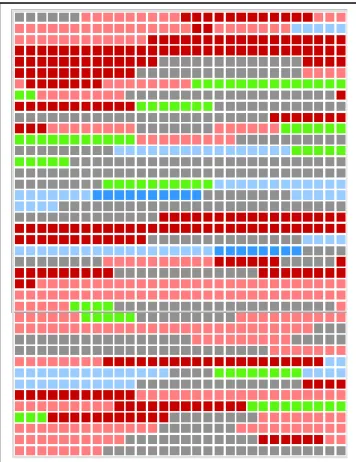
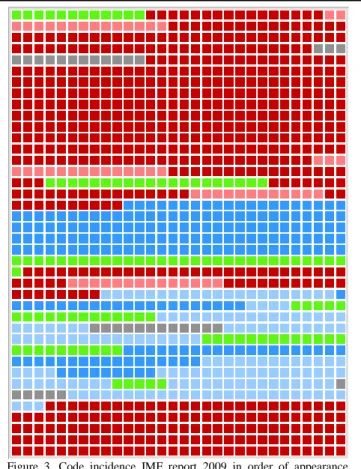
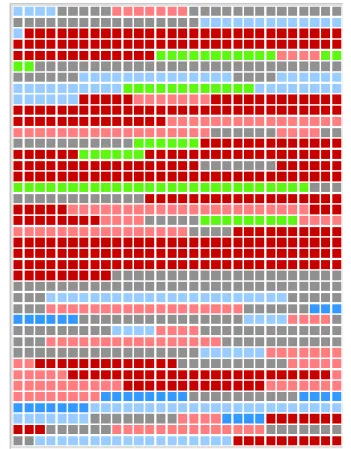
applied together with a sub-code for the main theme it deals with. Previous results in the following codes: N for Neoclassical/New Synthesis, P for post-Keynesian, ST for advice/statement, SG for suggestive and DS for descriptive. The two main categories of Neoclassical/New Synthesis and post-Keynesian economics is coloured from red to pink and from dark blue to light blue respectively. The lighter colours represent suggestive paragraphs, while the darker colours represent the stating and advisory paragraphs. Besides the general coding for schools and the intensity of the present theory, sub codes are used for specific themes. These can be found in table 1. During coding it became apparent that some paragraphs contained significant concepts or ideas from both schools. When such contrasts are found these are labelled C and coloured green. With stronger and weaker opposition being coloured dark and light green respectively. These were also labelled with a number for their respective themes.
Table 2. Coding scheme
Main code Sub-code Thematic sub-code
Explicit (EX) Suggestive (SG) No. Theme
Neoclassical/New Synthesis (N) Dark Red Light Red 1. Agency
Post-Keynesian (P) Dark Blue Light Blue 2. Time
Contrasting (C) Green Green 3. Markets
Descriptieve (D) Gray Gray 4. Business cycle
5. International trade 6. (International) Finance
7. Employment
8. View of money
9. Monetary policy
10. Fiscal policy, budgets and government
11. Growth
3.6 Method of analysis
30
the first tool: the computer program MAXQDA. It assists in processing each selected document and categorize each piece of evidence. This was done by first interpreting the evidence and making a note with the rationalization for the selected category. These aspects mostly cannot be translated clearly to notes, worksheets or figures. Therefore it is necessary to take these aspects into account when analysing and interpreting and include them in the results whenever relevant. In the third step these labelled and weighed pieces of evidence were extracted into a matrix, the second tool, with the respective categories. Lastly, evidence was plotted in time-series graphs to find patterns. When a difference in the relative amount of Neoclassical, post-Keynesian or Contrasting codes (together the ideational codes) passes a certain threshold, then it is ideational change is argued to have occurred. The definitive loss of an ideational regime is regarded to have occurred when the relative amount of a regime formerly making up at least 70 percent of ideational coding in a report is found to be below 50 percent of all ideational codes. Conversely, when an alternative set of economic policy ideas, in this thesis post-Keynesian ideas- is found to be above 70 percent of all ideational codes, then it is regarded to represent a newly established ideational regime. Thus Ideational regime change can involve replacement of the regime, yet can solely involve the loss or gain of a position.
3.7 Validity and limitations
As a case study directed at delving into the causal mechanism of ideational change in context of the crisis, the results mainly seeks internal validity. This depends on the correct measurement of the effects of the independent variable (the crisis) to the manipulated variable (ideas). The accuracy of the measurement depends much on the instrument employed analyse the manipulated variable. Hence the quality depends on the set of ideas and assumptions that are applied. These ideas were researched and written up very precisely and extensively for this study. Subsequently they were inserted in an overview of ideas capturing the core of every idea to efficiently recognize and apply it. For in-depth latent presence the extensive description of an idea was applied. Going back and forward to see if such measurements still made sense and held truth was to corroborate the code application. A cut-off point was established at the point between on the one hand ideas that are likely to belong to a school of thinking depending on the clarity of the statements or reasoning found, and on the other hand statements and reasoning that are merely describing or do not show signs that can be attributed to the beliefs of the authors or the organization.
31
researcher is always a subjective instrument in the analysis. Seeking to be as objective as possible is however imperative to get the best results and for any external evaluation to be favourable. Replication will therefore not be possible, yet- when taking the set of ideas and coding frame narrowly results should not substantially differ.
Credibility of the study is established by including analysis notes in the documents. This is also included in the coding software, making the data accessible and maintaining the chain of evidence. External observers can therefore follow the process of extracting evidence towards conclusions and the other way round.
Externally, this study has very limited validity. This is a logical consequence of doing a single case study. Nonetheless, a representative and critical case was chosen. The IMF, as an international organization is very influential for economic policy and is an embodiment of the international economic system. Additionally, the IMF is widely recognized as an organization applying neoclassical methods and proposing neoclassical informed solutions. The latter might mean that when this organization shows ideational change away from Neoclassical thinking, the effect would be even greater with other organizations. Moreover, there are only a few international economic organizations. Hence, for a population of international organizations it is more representative. Furthermore, the study would be able to show that expectations, at least in this case are or not applicable. This would mean that further research cannot generalize opposite effects it might find.
The greatest threat to the study is arguably selecting convenient documents as sources or having a bias in document analysis. Nonetheless, the selection process can be evaluated by another researcher by taking the chosen economic issues and apply them to the same time-period in the online catalogues and archives of the IMF. The choice for the IMF and this time period has been explained in the research design, also making evaluation possible.
Another limitation would be the coding framework because economists have never fully agreed on who or what is in and out of their respective school of thought. This argument however should not be taken as a great hindrance in my opinion, as that would mean the subject matter cannot, or should not be studied. A study should however provide a well-designed method of studying ideas which as such could also be used by other researchers, even when codes are lightly (or even heavily) adjusted.
32
33
4.
Economic Worldviews
In this chapter a general overview of Neoclassical and post-Keynesian thinking and policy is provided. It is not all inclusive and does not, for reasons of space and time, include all particular deviations or complexities. The central concepts will be described here and will include the connected features where relevant.
4.1 Neoclassical economics.
The neoclassical world view boils down to a certain, calculable world where markets equilibrate and Pareto optimality is a central focus point (Mair & Miller, 1991, p. 13) This framework has been the basis for over a century of neoclassical economics. It is widely regarded as the dominant paradigm in economics, at least until the 2008 financial crisis (Hodgson, 1992, p. 749; Palley, 2009, p. 18). Modern neoclassicism abides to the methodological standpoint that theories should not adhere to realism of assumptions, but to the correctness of the predicted outcomes (Mair and Miller, 2012, p. 136). The elements and features that ultimately inform neoclassical policy prescriptions are 1) its assumption on agent rationality, 2) the automatic equilibration of supply and demand, and 3) the view of money. Current neoclassical thinking is mainly represented by the New Neoclassical Synthesis. This modern variant can bring about significant deviations from the original theory, yet they rely on the same framework. Below I shall provide a description for each element and feature in order to have a proper understanding of the neoclassical framework. In reality, there are vastly more variations, but for reasons of simplicity and space I have selected the essentials.
Rational agents and markets
Neoclassical economics can be seen as a meta-theory with three underlying assumptions identified by Weintraub (1997):
People are rational in their outcome preferences which can be identified and expressed in numbers.
People are utility maximizers and firms are profit maximizers.
People act individually on the basis of full information.
34
process similar to an auction (Mair and Miller, 1991, p. 77). Later these models were refined to find the extra utility agents gain from procuring one additional unit of a product: the marginal utility. Marginal utility can decrease or even increase (exponentially) and thus individual consumer utility functions for various amounts of products were thought up, resulting in marginal exchange values for product consumption. In this sense neoclassical economics can be seen as a theory of barter. Diminishing marginal utility of good consumption defines the characteristics of demand. This leads to graphical representations of diminishing demand for a product as indifference curves (Mair and Miller, 1991, p. 77). As these exchange processes and utility information are assumed to work transparently and efficiently, hence making market outcomes pareto efficient: agents are better off without making anyone worse off. As the theory assumes it to work directly as well, markets are always in the equilibrium position- meaning they are static.
The Neoclassical assumptions of agents with rational expectations and market that clear automatically due to competition leads to an optimistic view of markets (p. 134). Later additions to these models included the possibility monopolistic competition, meaning that prices included a mark-up and hence profits, even when output would be lower. Nonetheless, the price plus the profit (marginal-cost-plus price) would behave float up and down with demand as in competition (Dullien, 2012, p. 29).
Business cycles
Modern neoclassical theory seeks to explain macroeconomic fluctuations, hence why markets are not static but dynamic. Still, the neoclassical microfoundations of atomistic individually acting actors which equilibrate to stasis or stability is used as the basic model. Individual demand/supply curves are aggregated to find the macroeconomic amounts (Lavoie, p. 5). Explaining fluctuations is done through (a) real business cycle (RBC) models and (b) complementary labour and product market frictions and staggered price and wage setting, which will be explained further below.
35
disequilibrium for some time. Currently most models see fluctuation as the movement of equilibrium itself, and always cleared yet fluctuating ((p. 134).
In these models, individuals maximize utility through variations of paths of three elements: (a) their demand for consumption, (b) their supply of labour, and (c) their money holdings. Variation in output is caused by variation of labour supply. This happens when real wage deviates from the steady state value- the state of dynamic equilibrium staying balanced at a certain level- causing individuals maximize utility by changing the hours worked (Dullien, 2012, p. 431).
Firms are understood to know what their own and others possible output plans are and how they affect the general price level in the future based on previous periods. Thus they make corresponding plans to maximize profits. In this light macroeconomic fluctuations are explained. As firms only know their own prices, their estimates of the general price level may be wrong (Mair & Miller, 1991, p. 101). If a shock occurs – e.g. a natural disaster or policy change- and goes unnoticed, firms might adjust assuming it must be their own relative prices that has changed due to changes utility driven demand (p. 101). If the actual general price level has become higher (or lower), firms may perceive a shock as a (un)favourable change of their own relative prices and increase (or decrease) output expecting higher profits in the future. Thus fluctuations occur.
Two types of shocks can be found. A first type of shock that cause fluctuation are “real” shocks: positive or negative changes in productivity. Contemporary mainstream economics regards them more important than monetary shocks.Real shocks are (un)favourable changes in technology, raw materials prices, or the organization of production (Hoover, 2008). The Real Business Cycle (RBC) theory by Prescot and Kidland (1982) describes such up- or down-turns. Runs of price changes may come in waves and explain the persisting character of business cycles (Hoover, p. 2008).
36
government spending is seen as a direct economic and employment stimulant, the negative consequences to the government budget would be known by rational agents. They would understand that taxes would have to finance the budget which would roughly offset the value of government expenditures (p. 273). This also can be seen as the source of contemporary neoclassical thinking that disapproves of government intervention.
Other more recent neoclassical explanations for cycles provided additional explanations for the existence of the business cycle3. These are found in the market rigidities that prevent short-run market clearing in the case of shocks. (Mair & Miller, p. 136;, pp. 425-6). Rigidities are overlapping staggered contracts: contracts that span periods of time and expire at different time points in a year. Thus, when the economic environment changes and new expectations arise, contracts cause nominal fixities in prices or wages or real fixities by real or relative prices or wages (© the price level) (p. 276).This last variant hence does not rely on fully competitive equilibrating markets, but monopolist, imperfect markets at the supply side of the economy (Cornwall, 2012, pp. 425-6).
Time
Eearly neoclassical economics assumed everything to happen simultaneously without any process or sequence of events, and hence allows no place for time. However, pervious paragraphs show later theory understands firms to know what their past and future output plans are, and consumers to know their lifetime income and act upon this information to maximize profits and utility. This provides an account for time. Models using such theory assume perfect information and rely upon the past for decisions about the future. If this was correct, the models would be deterministic with perfect foresight. Hence the possibility of random estimation errors are made unrelated to previous periods (e.g. shocks). This makes the models stochastic (Mair and Miller, p. 1991, p. 135)
As such, to explain features in dynamic systems neoclassical theory employs time-series econometrics. These time-series models are often sequences of observations of the same variable at equal intervals in time, and results on the future are taken as explanations also in the absence of theoretical frameworks. Such models often identify and accredit probabilities to a full range of potential futures in all instances. Hence, Glickman (2012) explains that they see no real distinction between risk and uncertainty- as the latter is seen as intrinsically quantifiable. Risk situations are situations with a numerical probability of possible outcomes of that decision.
37
Yet, to real uncertainty such probabilities cannot be assigned and cannot be treated as ergodic: the principle that values in a random (stochastic) process ultimately coincide. This would mean that variables have stationary means, creating a linear trend as they converge with increased numbers of observations. As time passes, events will repeat themselves and hence market economies tend to equilibrium in the long run (Glickman, 2012, p. 557). Therefore, in the long run things are time and path dependent (Lavoie, 2014, p. 312) As such Neoclassical models present a world of logical time. In this world of automistic, rational acting agents always tends to an equilibrium status. Here, past and future variables have the same probability distribution regarding. Therefore, future prospects at a moment of choice govern future outcomes (Dantas, 2012, p 533-4).
Employment & Output
Considering the previous part employment fluctuations must always be caused by market conditions. Real wage increases cause individuals to work more and have less leisure and a wage decrease leads them to work less. Involuntary unemployment is thus absent. Individuals make work/leisure decisions by taking their lifetime income into account (p. 431). A fundamental assumption of taking lifetime incomes into account is that agents are not only rational, but also that they act as if they have and understand economic models used by economists and policy makers (Mair & Miller (1991, p. 101In such models, markets are expected to continuously clear or be in equilibrium, making it impossible to have persistent excess supply of labour, as wage is expected to equate continuously. Also neoclassical competitive equilibrating markets are assumed, meaning that employment offered automatically adjusts to the appropriate level ratio of work and leisure (p. 134).
38
decreased turnover. She explains demand shocks would not reduce these wages as that would result in lower productivity and increased costs, but result in lay-offs, As nominal wage rigidities prevent wage adaption to shocks, there is the possibility of unwanted idleness and an output gap- the difference between actual output and potential output and hence GDP.
Trade
New classical international economics can be split out between a ‘micro’ part called international trade and ‘macro’ part called international finance. International trade is concerned with exports and imports and effects of trade policies on welfare and income distribution are assessed with ‘real’ or barter models. Free trade – Heckscher-Ohlin model of international trade based on Ricardo’s comparative advantageInternational finance looks at balance-of-payments adjustment mechanisms with aggregative models that focus on monetary and financial factors. In trade systems these monetary and financial systems are presumed to adjust automatically through comparative advantage with full employment and balanced trade (Glickman, 2012, p. 557).
International Finance
Because logical-time series explain stability- the equilibrium position around which markets tend- finance models using econometric techniques essentially assume the stability of financial markets (Altuzarra, 2012, p. 524). Hence it is assuming complete financial markets, which have financial assets completely span the relevant uncertainty faced by agents (Henry, 2012, p. 529). Securitization via econometric models can spread risks and increases stability. Because market competition and international trade are also assumed to lead to efficient allocation. Hence regulation is not necessary, except for activities that are regarded illegal or curbing competition.
Money and monetary policy
39
Other theories include money multiplier theory where central bank reserves control the creation of credit by commercial banks. Lavoie (p. 184) explains that these see the central bank as in control of the creation of credit and money entirely through central bank reserves. Hence bank money is also exogenously controlled by the central bank. Moreover, money is not directly neutral as the original QTM, but ´superneutral´ meaning that in the short run the illusion of money would have real effects on the economy, but not in the long run (the long run QTM). Such views implied that central bank reserves created stable money multiplication, depending on constant velocity of money, as higher rates of money transaction create more consumption (p. 185).
Unlike previous thinking, modern neoclassical economics allows for endogenous money: money supply that is not determined externally by a central authority but instead by agents in the economy (Smithin, 2012, p. 289). This seemingly removes it from the classical dichotomy because money is also created by bank credit. Yet, still savings and investment are regarded to determine interest rates, merely adding endogenous money creation by banks. To add endogenous money it relies on monetary theory in the tradition of Knutt Wicksell. In this theory, the central bank sets the rate of interest at the level where the required investment to achieve potential national output equals the required national saving for potential output. This rate is called the natural rate of interest. It is thought to be determined in the market for real capital and labour. This is influenced by productivity of capital and the time preference of economic agents for the supply of labour (Smithin, 2012, p. 289; Lavoie, 2014, p. 189). Savings amounts are based on utility form future interest returns versus that from current consumption.