Dr Peter Thomond
February, 2013
T
HE
E
NABLING
T
ECHNOLOGIES
OF A
L
OW
-C
ARBON
E
CONOMY
:
Lead Sponsors Microsoft The Global e-Sustainability Initiative Acknowledgements
Thanks to the many experts engaged throughout the duration of this effort for graciously providing their time, insights, and feedback to strengthen the quality of this report.
The authors would like to recognise John Vassallo, of Microsoft Europe, for conceiving the Enabling Technology campaign. And we want to thank Professor David Gann of Imperial College and Microsoft Europe’s, Elena Bonfiglioli for their dynamic support of our research.
This research was funded and supported by the Global e-Sustainability Initiative (GeSI) and Microsoft. We would like to thank Alice Valvodova of GeSI and Ray Pinto of Microsoft, in particular, for their constant source of encouragement, frank feedback and commitment to academic rigour and openness, as well as industrial relevance.
We would also like to thank the following people for their constructive criticism, testing of assumptions, support with accessing and assessing data and general encouragement at varying points of this often challenging project: Dan Hamilton of Johns Hopkins University, Sinan Turner and Ben Greene of SAP, Rob Bernard, and Josh Henretig of Microsoft, James Lovegrove, Simon Pickard of EABIS, Jan Noterdaem of CSR Europe, Sylvie Feindt of Digital Europe, Cal Braunstein and Adam Braunstein of the Greenway Collaborative, Pernilla Bergmark of Ericsson and Stephen Elderkin of the UK’s Department of Energy and Climate Change.
Thanks also to the WWF, Antonio Capone of Politecnico Milano, Lorenz Erdmann of IZT and Arthur Mickoleit of the OECD for their early guidance in the foundation of this project.
Thanks to Jyoti Banerjee of Fronesys Ltd and Chris Tuppen of Advancing Sustainability LLP for their kind and challenging feedback on our modelling over a cup of tea in the 11th hour at the RSA in London.
Independent, blind review
The modelling embedded within this report was subject to a blind academic review process with a panel of four anonymous expert reviewers. This process was not organised by the authors of this report but independently by the organisers of the ICT4S conference.
We’d like to thank the blind review panel for their insightful guidance and for validating our efforts. You have helped us set a new benchmark of independence for such studies. We will enjoy presenting this work at your conference in February 2013.
Disclaimer
The following materials were prepared exclusively for the Global e-Sustainability Initiative (GeSI) and Microsoft by the specialist innovation consultancy the Think Play Do Group (TPDG), a spin-out business from Imperial College London. GeSI, Microsoft nor TPDG make any representations or warranties to any third party with respect to the information contained in this report. While reasonable steps have been taken to ensure that the information in this report is correct, GeSI, Microsoft and TPDG do not give any warranty or make any representation as to its accuracy and nor do they accept any liability for any errors or omissions. The study should not be used or relied upon by anyone without independent investigation and analysis - GeSI Microsoft and TPDG will not assume any liability for any such use or reliance by third parties.
A FOREWORD FROM GeSI
The issue of climate change and energy scarcity is sharpening the minds of government and citizens alike to find solutions.
Current trends predict a massive population growth that will be subject to depleting energy supplies and food shortages caused by the increasing temperature of our planet. Should these trends continue, then all countries will share a burden to maintain a level of safety for their populations. We can also expect that economies will suffer and the increasing lack of resources can lead to political instability and social crisis.
The scientific community, governments and the private sector are racing to develop solutions. The progress has provided the world with some promising results. However, the question that remains unanswered is: will it be enough to make a difference?
The answer is yet to be determined as it has been hard to measure the pace of deterioration of energy supplies and the impact of climate change. Fortunately, the availability of environmental “enabling technologies”- solutions that enable dramatic reductions in energy consumption, greenhouse gas (GHG) emissions and “carbon footprints”- appears to be increasing.
One such technology that’s been investigated for its ”enabling potential” is cloud computing. Cloud vendors enable computing services (software, platforms, infrastructures etc.) that are traditionally provisioned on-site within organisations to be delivered across the internet, on-demand from purpose-built data centres. This study, commissioned by the Global e-Sustainability Initiative (GeSI) and Microsoft, aims to provide stakeholders with credible data on how much GHG emissions reduction can be secured, each year, as a result of enterprises migrating to the cloud. Moreover, it seeks to do so by applying a new methodological benchmark in academic rigour and transparency.
Our deep-dive study has been completed in conjunction with a broader piece of research looking at the potential of ICT to enable the transition to a low-carbon economy entitled “SMARTer 2020: The Role of ICT in Enabling a Low-Carbon Economy”. Commissioned by GeSI, the report illustrates how the ICT sector has matured since 2008 and how new technologies have emerged in key sectors of the economy ranging from transport to energy and agriculture. Critically it demonstrates how the increased use of ICT could in fact cut the projected 2020 global GHG emissions by 16.5%- by 9.1 GtCO2e- and save $1.9 trillion in gross energy and fuel savings.
Still, barriers continue to block the acceleration of mass adoption of cloud services as well as ICT solutions more broadly. With the findings of this study, we strongly encourage policy makers to embrace the enabling potential of ICT across all levels of government.
LuisNeves
Chairman GeSI
A FOREWORD FROM MICROSOFT
When we began study began in 2009, it was surprising that over 200 different internet enabled applications were emerging that could disrupt business models and drive efficiencies, ranging from rural carbon calculators and web conferencing to telematics. We decided to be pragmatic and start small. We looked at CRM, groupware and email for 11 countries- Brazil, Canada, China, Czech Republic, France, Germany, Indonesia, Poland, Portugal, Sweden and UK- and the results have been surprising. The modelling developed by the Enabling Technology research team shows that if 80% of enterprises across the countries under examination adopted cloud-based email, CRM and groupware applications while permanently shutting down their on-site servers, it would lead to an abatement of greenhouse gas (GHG) emissions totalling at least 4.5 Mt of CO2e. This is equivalent to 1.7 million cars permanently off the road or 2% of the ICT sector’s GHG footprint in these countries. It would also release $2.2 billion (USD) in energy savings.
One interesting discovery is, as we look close at the energy needs of data centres, for every tonne of energy created by vendors supplying cloud-based email, CRM and groupware, 20 tonnes is abated for the user.
The messages from the study is that we need to act faster and industry and government must come together to find sharpen policy and overcome resistance points in behaviour. The study signals a deadline of 3 years to cut through the issues otherwise the continued uncertainty to embrace cloud computing will halve absolute benefits from 4.5Mt CO2e to 2.3Mt CO2e.
Looking back through history we see that technologies such as file compression that lead to transmitting music and data took more than 25 years to reach full market adoption. The disruptive nature of such technologies cannot be permanently resisted but confusion and rigid behaviour can often delay their adoption. Cloud computing is dramatically changing our lives, the pace of change is in the hands of industry and policy makers. We hope you enjoy the study and it triggers some internal as well as external debate. We’ve made huge efforts to provide complete transparency in our approach, thinking and data. Please question the findings and don’t hesitate to engage with us or the research team.
We thank you for your time and attention.
Ray Pinto
Government Affairs Director Microsoft
THE ENABLING TECHNOLOGY TEAM
Lead authorDr Peter Thomond
Pete earned his PhD in the subject of Disruptive Innovation, in 2005, from Cranfield University’s School of Applied Sciences. Today, he consults, teaches and publishes to deliver innovation in the fields of environmental technology, health, high-tech and youth development. He does this as an associate to the Think Play Do Group Ltd and as a founding partner of Clever Together LLP, Qingtech Ltd and SportInspired Ltd. He is a contributing author to the International Telecommunication Union’s “Toolkit on Environmental Sustainability for the ICT Sector” and outputs from the Environmental Engineering Group of the European Telecommunications’ Standards Institute. To connect with Peter visit: www.linkedin.com/in/thomond.
Contributing authors
Research strategy:
Dr Ian Mackenzie
Ian is a Senior Lecturer in Strategy at Harvard Business School. Prior to this he was a Fellow at the Imperial College Business School and Chief Executive of The Think Play Do Group, an Imperial College spin-out company that provides consultancy in innovation management.
Greenhouse gas emissions modeling:
Daniel Williams
Dan is as an environmental technologist. He is the environment research manager at Microsoft UK and a founding partner of Qingtech Ltd. He is also working towards a doctorate at the University of Reading in the area of environmental impact modelling and technology enabled GHG abatement.
Alex Velkov
Alex an associate technology analyst at the Think Play Do Group and Director of On-Line Engagement at Clever Together LLP.
Policy and business analysis:
Aliki Kriekouki
Aliki is an MSc Environmental Technology graduate of Imperial College London.
Laure Stein
Laure is an MPA European Public and Economic Policy Graduate of the London School of Economics and Political Science.
Willow Rook
Willow is an MSc Environmental Politics and Regulation graduate of the London School of Economics and Political Science.
Jennifer Winter
Jen is an MSc International Relations graduate of the London School of Economics and Political Science.
Microsoft
Microsoft is a multinational computer technology corporation that develops, manufactures, licenses, and supports a wide range of software products and services for computing devices. We are working to expand the possibilities for computing every day, delivering solutions and transformative technology that contribute to solving important European socio-economic challenges for governments and business alike. Microsoft is a significant long-term investor in European R&D, driving new software products and services, inspiring new ways of using efficient information technology solutions and contributing to long-term sustainable growth of our company, our partners, and Europe’s economy and society. It collaborates closely with governments, NGOs, businesses and academia across Europe on ways to use technology with the aim to resolve environmental challenges such as climate change and energy efficiency, rethink business practices, and research new environmentally friendly solutions. www.microsoft.eu
Global e-Sustainability Initiative
The Global e-Sustainability Initiative (GeSI) is a strategic partnership of the Information and Communication Technology (ICT) sector and organisations committed to creating and promoting technologies and practices that foster economic, environmental and social sustainability. Formed in 2001, GeSI’s vision is a sustainable world through responsible, ICT-enabled transformation. GeSI fosters global and open cooperation, informs the public of its members’ voluntary actions to improve their sustainability performance, and promotes technologies that foster sustainable development. GeSI has 32 members representing leading companies and associations from the ICT sector. GeSI also partners with two UN organizations - the United Nations Environment Program (UNEP) and the International Telecommunications Union (ITU) - as well as a range of international stakeholders committed to ICT sustainability objectives. These partnerships help shape GeSI’s global vision regarding the evolution of the ICT sector, and how it can best meet the challenges of sustainable development. www.gesi.org
Think Play Do Group Ltd.
The Think Play Do Group (TPDG) is a spin-out business from Imperial College London. TPDG has access to a world class network of academics and associate practitioners from the fields of innovation and entrepreneurship. TPDG provides counsel to industry leaders through multi-sector applied research programmes and consulting projects, and commercialises ideas from Imperial College’s Innovation and Entrepreneurship Group. www.thinkplaydo.com
A
F
OCUS ON
C
LOUD
C
OMPUTING
E
XECUTIVE SUMMARY
Cloud computing enables computing services (software, platforms, infrastructures) that are traditionally provisioned on-site within enterprises1 to be delivered across the internet, on-demand from purpose built data centres. It is less a technological innovation and more a business model innovation, which is both transforming how computing services are consumed and enabling the abatement of greenhouse gas (GHG) emissions. This is because data centres are significantly more expansive and energy efficient than distributed on-site servers.
Past studies regarding the GHG abatement potential of cloud have gaps. They fail to clearly present assumptions, data and/or apply scientifically appraised methods. These gaps have fuelled scepticism, which this study seeks to overcome. Our study examines the carbon abatement potential of cloud computing in China as well as Indonesia, Canada, Brazil and 7 European countries. The study was conducted by a team at the Think Play Do Group, a spin out from Imperial College London, with support from the Global e-Sustainability Initiative (GeSI), Microsoft and co-ordination from Johns Hopkins University.
Cloud-based email, customer relationship management (CRM) and groupware applications represent the ‘tip of the iceberg’ in terms of cloud services. Our scientific and open modelling demonstrates that cloud vendors have the potential to offer these three computing services with 20 times more energy efficiency.
Our modelling shows if 80% of enterprises across the countries under examination adopted cloud-based email, CRM and groupware applications they would abate GHG emissions totalling 4.5Mt of CO2e. This is equivalent to 1.7 million cars permanently off the road or 2% of the ICT sector’s GHG footprint in these countries.
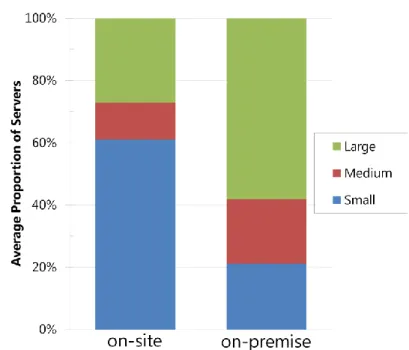
The results of our modelling broadly confirm previous commercial research, that a shift to cloud computing can have a significant impact. However, our open model can now be scrutinised, challenged and improved within the academic and commercial sectors to enhance future modelling, explore other scenarios and create a focus for action to realise the reduction in GHG emissions. Moreover, the inclusion of enterprise size within our model revealed that over 60% of savings were accounted for by small and micro size firms. From the perspective of GHG emission
1 For the purpose of this report, we use the term enterprise to refer to all private, public and non-governmental organisations.
reduction, this highlights that smaller enterprises have more to gain from a switch to cloud computing given their relatively inefficient use of on-site servers.
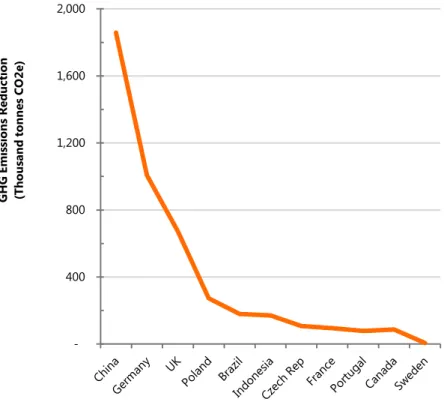
Overall results show that the relative net emission reductions vary greatly for each country. Analyses revealed that this was due to a mixture of the GHG intensity of electricity and the variation in the current adoption of the three technology types analysed for each country. For example France has a low GHG energy intensity thus the reduction in GHG emissions is also low.
We make a uniquecontribution in warning that the full extent of cloud’s GHG abatement potential has three key dependencies (i) enterprises must permanently switch off their old on-site servers; (ii) data are unclear regarding current levels of cloud adoption and numbers of on-site servers being utilised around the world; and (iii) there are commercial behaviours and policy based trends that may slow down the rate at which enterprises switch to cloud services.
Given a lack of a counterpoint, we assume owners of redundant on-site servers will choose to dispose of their old kit.
We hope our research encourages vendors and policy makers to work together to tackle challenges and gaps in data. Indeed, we contribute a first of its kind sensitivity analysis to highlight the possibility of a large variability in GHG reductions caused by the key variable of market penetration.
We recognise that prime responsibility for driving the market adoption of technologies that can abate GHG emissions, such as cloud computing, naturally lies with the ICT industry. To achieve the GHG abatement potential of cloud our three primary recommendations to vendors are:
1. They must present a clearer economic case for cloud.
2. They must avoid one-size-fits-all marketing massages.
3. They must recognise and respond to the challenge of the behaviour change they are requesting of internal IT teams.
We recognise that policy makers can play an enabling role, too, and must avoid unintentionally creating barriers. Of our seven policy-based recommendations, the most critical is probably the need for policy makers to genuinely embrace the potential of the ICT sector. By viewing the ICT sector as part of the low-carbon solution, not just part of the problem, policy makers will find a powerful ally in the realisation of their environmental goals. Positive examples of how policy makers have begun to embrace the ICT sector are seen in Germany and Sweden.
C
ONTENTSBackground: the need for this report and how to use it
...7
Part 1: ...9
1. What is cloud computing and why examine its GHG emissions? ... 10
2. How can we examine the GHG abatement potential of cloud? ... 11
3. The GHG abatement potential of cloud ... 12
4. Understanding barriers to adoption ... 14
Do commercial behaviours create barriers? ... 15
Do public policies create barriers? ... 16
5. Impact of barriers ... 17
6. Recommendations ... 18
Part 2: ... 21
1. Context ... 22
The aim of our study and approach ... 22
2. Scope: methodological and technical ... 23
Research goal and scope of analysis ... 24
Assessing energy consumption and GHG emissions 25 3. Data and results ... 27
4. What are the potential carbon savings? ... 28
5. What are the potential economic savings? ... 30
6. Understanding the barriers to adoption ... 31
Technology barriers ... 31
Barriers created by commercial behaviour ... 31
Survey findings and conclusions ... 32
Barriers created by public policy ... 38
7. The impact of barriers to adoption ... 48
8. Recommendations: opportunities to realise the potential of cloud ... 49
9. Conclusion and limitations ... 53
Appendices ... 56
Appendix 1: How we employ life cycle assessment ... 57
Appendix 2: Analytical scope - further details ... 59
Appendix 3: GHG abatement - the data and how they were used ... 62
Appendix 4: Economic savings – the data and how they were used ... 84
Appendix 5: The path to market transformation ... 89
Appendix 6: The industry survey tool ... 90
Appendix 7: Highlights form our policy analyses ... 92
Contact
If you would like more information on this project, please contact:
Alice Valvodova
Global e-Sustainability Initiative [email protected] Dr Peter Thomond The Think Play Do Group
[email protected] Ray Pinto
Microsoft Europe [email protected]
B
ACKGROUND
:
THE NEED FOR THIS REPORT AND HOW
TO USE IT
In 2008, the Global e-Sustainability Initiative (GeSI) helped deliver a seminal report for the ICT sector –
SMART 2020. It made the case that the ICT sector has a dual opportunity:
(i) to reduce its own environmental impact, and (ii) to enable environmental improvements in other sectors through the application of ICT. In December 2012, GeSI released the much awaited SMARTer 2020 report2. It offered an updated analysis of the ICT landscape and its extraordinary potential for improving energy efficiency and reducing GHG emissions globally.
SMARTer 2020 illustrates how the ICT sector has matured since 2008 and how new technologies have emerged as key components of the ICT landscape. Critically it demonstrates how the increased use of ICT could in fact cut the projected 2020 global GHG emissions by 16.5% (Figure 1) and save $1.9 trillion (US) in gross energy and fuel savings.
Figure 1: Summary of estimated abatement potential by sector in GtCO2e (SMARTer 2020)
Cloud Computing (cloud) is an example of a technology that has emerged and reached mainstream use in some markets during this period. Whilst pioneering efforts have been made to assess the potential of cloud to enable GHG abatement, we assert these fall short in terms of openness of methods and assumptions or in detail or both.3
Moreover, throughout this period industry, government and non-governmental organisations have forged methods, tools and draft standards to further guide the process of estimating the GHG abatement potential of technology. For example:
2 GeSI (2012). SMARTer 2020: The Role of ICT in Driving a Sustainable Future. The Global e-Sustainability Initiative.
3 Indeed, this is a common challenge and criticism with presentations of GHG abatement assessment according to Unhelkar, B. (2011). Green IT Strategies and Applications: Using Environmental Intelligence (Advanced & Emerging Communications Technologies). CRC Press
in 2009, the OECD began developing a framework to analyse ICT and its environmental impact (the aim was to comprehensively model environmental effects of ICT production, use and their application across industry sectors),
in 2010, GeSI and its partners developed an ‘enablement methodology’ – a pragmatic approach to assess the GHG abatement potential of new ICT-based systems;
the International Telecommunications Union in 2012 presented a toolkit on environmental sustainability for the ICT sector;
organisations and groups such as ETSI, IEC, the GHG Protocol and consortia such as PAIA and iNEMI are working on associated initiatives; and academia has continued to produce new
modelling techniques that can be applied to offer yet more scientific rigour to estimates of GHG abatement potential.
Despite the growing array of tools and approaches individuals and organisations face multiple challenges when implementing them in practice. There is often a lack of formal metrics, availability of real-time data, expertise to complete measurements, simple guides to the research process and agreed standards4
Moreover, we observe that contributions and conversations regarding calculating GHG abatement recognise market adoption as key to GHG abatement. Yet only lip service gets paid to the dynamics of technology diffusion and the influence of policy-making; knowledge from these domains remains largely absent or under-utilised in almost all GHG abatement methods.
These factors created the need for this report. To refine and enhance leading methods and apply them to validate the claims made by vendors of technologies with GHG abatement potential.
The Enabling Technology 2020 Project, also known as IT to ET, is a multi-national research project primarily sponsored by Microsoft and co-ordinated by Johns Hopkins University (JHU). It seeks to better understand if and how information technologies (IT) will become the enabling technologies (ET) of economic growth in health and the low-carbon economy.
This report, co-sponsored by GeSI and Microsoft, extends the work undertaken in the IT to ET project to date, and responds to the challenge of offering a more thorough and open investigation of the GHG abatement potential of Cloud Computing - a key enabling technology.
This report is presented in two parts:
Part 1: key findings and recommendations
Objective: to summarise our research approach and the insights generated in a digestible simple format.
Part 1 offers a useful overview for individuals, ICT vendors, academics, NGOs and policy makers interested in cloud computing and/or the potential that technology has to enable GHG abatement. Along with the results and recommendations, it provides a ‘health warning’ about the reliability of some data sources.
Part 2: methods, assumptions, data
– how we generated our findings and
recommendations
Objective: to detail the methods and data sources employed in our research, in order to reassure readers that the conclusions drawn are academically rigorous, whilst also being industrially useful.
Part 2 offers a detailed overview, useful for individuals interested in GHG calculation methods, replicating and extending our approach or keen to feel assured that our results are valid and reliable.
By presenting this level of detail, we overcome the criticisms often levied at prior work in this space and present.
Moreover, we present a process that can be applied by expert teams to understand other enabling technologies.
T
HE
E
NABLING
T
ECHNOLOGIES
O
F
A
L
OW
-C
ARBON
E
CONOMY
:
A
F
OCUS ON
C
LOUD
C
OMPUTING
P
ART
1:
1.
W
HAT IS CLOUD COMPUTING AND WHY EXAMINE ITSGHG
EMISSIONS?
Past examinations of enterprise cloud computing5
have presented how a shift from on-site to cloud offers the prospect of greenhouse gas (GHG) abatement through reduced energy consumption. The primary enabler of such reductions is the provision of computing resources in large centralised data centres which can be considerably more efficient, compared to individual or small groups of servers typical of computing provided by IT teams within enterprises6.
5 See for example:
Accenture (2011) Cloud Computing and Sustainability: The Environmental Benefits of Moving to the Cloud. Accenture & WSP;
Carbon Disclosure Project (2011). Cloud Computing – The IT Solution for the 21st Century. Carbon Disclosure Project & Verdantix, London, UK.
6 For the purpose of this report, we use the term enterprise to refer to all private, public and non-governmental organisations.
However, past studies do not clearly present:
• scientifically appraised analysis methods,
• how and why energy and GHG reductions are likely to vary by country,
• market penetration assumptions.
These issues create limits to their usefulness for decision-making and future model development. Hence there is a need for an open, scientific analysis – a need that this study will satisfy.
By applying this five step process to examine cloud, we team assured to:
a) adopt, integrate and apply leading,
scientifically validated modelling and analysis methods, where practical and available;
b) present clearly how and why energy and GHG reductions vary by country;
c) disclose methods, data, data sources and assumptions so that future research teams can sharpen our findings, our modelling or both. Consequently, the results presented are not only open and clear but academically robust and industrially relevant.
2.
H
OW CAN WE EXAMINE THEGHG
ABATEMENT POTENTIAL OF CLOUD
?
Our research team have developed an open, five-step analytical process to systematically analyse technologies with the potential to abate GHG emissions. It can be applied to generic technology types or specific applications, at a country specific level or to a generic or specific business unit:
3.
T
HEGHG
ABATEMENT POTENTIAL OF CLOUDWe find cloud computing has the potential to enable significant GHG abatement, even when constrained to an analysis of just three cloud-based applications – email, CRM and Groupware. The primary enabling effect of cloud is that the on-site servers made redundant by cloud services can be switched off7:
7 This report refers to GHGs in CO2e - carbon dioxide equivalent. This enables us to discuss GHG emissions collectively and ensures all GHGs are accounted for in our analysis. For example, one ton of the GHG methane would be equivalent to 21 tons CO2. Using CO2e rather than focusing upon CO2 alone ensures we consider all emissions sources.
** GeSI (2012). SMARTer 2020: The Role of ICT in Driving a Sustainable Future. The Global e-Sustainability Initiative.
of the ICT sector’s own footprint in
these countries could be abated
1.7 millions cars
off the road
This is GHG abatement
equivalent to:
Cloud-based email, CRM and groupware
is 95% more energy efficient:
1 tonne of GHG emitted
by a cloud vendor =
20 tonnes abated from
customers
.
On-site
Cloud
2%
if:
•
80% of all
organisations
(public and
private) adopt,
and
•
organisations
switch off their
on-site servers
when they
switch to the
cloud
Potential GHG abatement of
Cloud Computing
4.5Mt CO2e
from the adoption of cloud-based email,
CRM and groupware applications alone.
$2.2+ billion (USD)
economy-wide savings
in energy bills
*
*
to present conservative calculations, we employed a conservative estimate of the ICT’ sector’s share of global GHG emissions - 4% - if we adopt 2.8% for the sector’s footprint, as suggested in the SMARTER 2020 report**, the average abatement of these thee cloud applications would increase 2.8% of the ICT sector’s own footprint.We find:
the GHG abatement potential of cloud varies between countries because:
(i) the carbon intensity of the energy supplies vary, and
(ii) the economic mix of firms is different – some countries have a larger contingent of small sized firms for example.
Micro and small firms account for most of the abatement potential (60%);
energy consumption and the levels of market adoption the primary drivers of the GHG abatement potential;
high levels of confidence regarding cloud’s efficiency at the business level compared to on-site computing;
a lack of reliable data for national variables means there is some uncertainty regarding the overall abatement estimates in each country.
Two key actions in our technical scope ensure we do not over estimate the impact of cloud:
1. We limited our analysis to just three common applications: Email, Customer Relationship Management (CRM) and Groupware: While these clearly represent a sub-set of all applications that businesses and individuals use, they are readily available as cloud based services. Moreover, they likely represent the first wave of potential applications that can shift towards cloud computing in the future.
2. We limited attention to business computing:
This accounts for a majority but not all of computing usage.
4.
U
NDERSTANDING BARRIERS TO ADOPTIONIf the estimated 4.5Mt of CO2e abatement potential depends upon 80% of enterprises adopting of cloud-based email, CRM and groupware, then we must understand its barriers to market adoption.
Are business leaders and policy makers doing enough to create an enabling environment for technologies such as Cloud to flourish?
To answer this question, we turned to knowledge regarding technology diffusion and innovation. We assume there are no major technical barriers to the adoption of readily available cloud-based email, CRM and groupware services. We focused therefore on impact of commercial behaviour and public policy.
Understanding
the barriers to
the adoption of
Cloud
Computing
solutions?
Are ICT vendors’
following behaviours that
will drive the
transformative shift from
on-site services to cloud?
Do policy makers create
an environment that
supports the invention,
development and
diffusion of enabling
technologies, such as
Do commercial behaviours create barriers?
To understand if commercial behaviours are creating barriers to the spread and adoption of cloud computing services, we surveyed industry and trade associations across Europe, the Americas and Asia. Forty-one respondents met the qualifying criteria and answered all 45 questions focused upon how the transformative shift from on-site to cloud computing may be supported by vendor capability and the market context. They represented 12 associations (two thirds from Europe), purporting to collectively understand and represent the views over 2,000 enterprises
We identified four positive insights for cloud vendors: (i) 98% of respondents believe major cloud vendors
have the access, the technology and the brand to deliver market transformation;
(ii) 90% of respondents believe cloud vendors have clear and strong opportunities to grow their businesses;
(iii)75% believe workforces are likely to find cloud-based email, CRM and groupware alternatives more convenient than their current on-site solutions.
(iv)it is dynamic market, 80% of respondents believe cloud solutions are just as likely to come from smaller enterprises as they are large.
However, analysis of respondents’ feedback also revealed four themes as high potential barriers:
Do public policies create barriers?
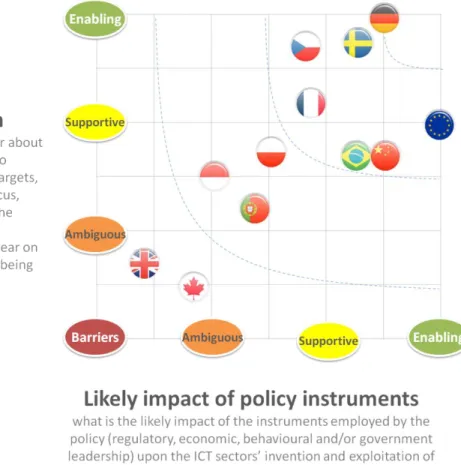
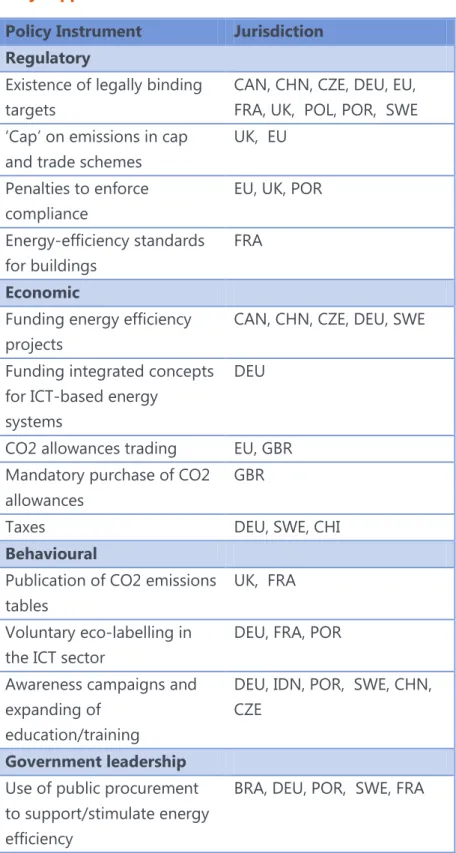
We evaluated 13 policies through two lenses: (i) How was the policy was designed? (ii) What is the likely impact of the specific
instruments employed within the policy?
The aim was not to develop a critique of specific or current policy agendas but to develop insight into common pitfalls or good practices surrounding the design and implementation of public policy. In doing so we hoped to identify how these might create barriers or enablers to the diffusion of enabling technologies, such as cloud services.
5.
I
MPACT OF BARRIERSThe extent to which cloud-based email, CRM and Groupware services will achieve broad penetration (i.e., 80% market adoption8) across all market
sectors remains unclear:
the commercial behaviour observed by our survey respondents presents an uncertain context regarding the ICT sector’s capability to drive widespread adoption, and
commercial uncertainty is compounded by and may in part also result from the uncertain policy environment that cloud vendors appear to face. In a more certain environment we predict it could be possible to drive 80% market adoption by 2016. However, given the presence of such uncertainties, we predict cautious corporate investment and less dynamic customer markets. Indeed, we assert the market adoption is likely to be slowed during this same timeframe, easily compromising GHG abatement by as much as 50%:
Line A presents a scenario with no major commercial or policy-based barriers, where cloud-based email, CRM and groupware achieve 80% market adoption by 2016.
Line B illustrates that a mere 2 year delay in achieving the same level of adoption would reduce the impact in 2016 by half.
8 80% was elected as ‘wide spread adoption’ based upon Rogers, E. M. (2003) Diffusion of innovations (5th ed.). NY:Free Press, New York, USA.
Uncertainty = barriers that might slow adoption.
Slower adoption through to 2016 could half the GHG abatement.
Policy-based uncertainty
Commercial uncertainty
2.3Mt
CO2e
4.5Mt
CO2e
6.
R
ECOMMENDATIONSPrime responsibility for driving the market adoption of technologies that can abate GHG emissions, such as cloud computing, naturally lies with the ICT industry. To accelerate these outcomes, we offer six recommendations to vendors:
Recommendations for vendors
(inferred from our industry survey)
1) Employ smarter approaches to
present a clear economic case
for cloud.
2) Support the economic case of
cloud-services with
clear
impartial evidence of its GHG
abatement credentials
.
3) Acknowledge that adopting
cloud services may require
clients to change deeply
engrained behaviours
(especially
IT directors and their teams).
4) Respond to the challenge of
behaviour change
with evidence
and tools to make it easy for
customers to switch to cloud,
leaving them incentivised to stay
not coerced or worried about
covert lock-in.
5) Avoid one-size-fits all
marketing approaches
; instead
approach specific market niches
with communications that
address the unique unmet needs
and the ‘pain points’ which each
niche feels.
6) Embrace the principles of
disruptive innovation.
By
avoiding a premature rush to
mainstream markets, vendors
can grow to mainstream market
penetration through niche
Likewise, we see how policy makers can play an enabling role in the shift towards a low/zero carbon economy; in the short term they must avoid unintentionally creating barriers. We therefore make four recommendations to policy makers directly from our policy analysis:
The interface between our industry and policy analyses has helped us to infer the need for four additional recommendations for policy makers:
Recommendations for policy makers
(inferred by comparing our industry survey and policy analysis)
1) Move to harmonize privacy
and data protection rules.
Our research revealed most privacy
and data protection issues raised by
industry are driven more from a fear
of change than a legitimate logical
argument regarding weaknesses in
cloud services or regulation. This
said, government action to support
the harmonizing of privacy and data
protection rules could help to instil
more confidence in the transition to
technologies such as cloud.
2) Continue to free government
data.
The spread of enabling technologies
will be easier as it becomes easier for
industry and consumers to
understand why we need
environmental policy and why we
need technologies that can enable
GHG abatement. Governments
around the world have made great
steps to free their data; they should
continue this trend and get creative
with how they can support data
mining to reveal power insights and
smart solutions.
3) Cut red tape where its
constraining small to medium
sized enterprises.
It is likely that the developer
community will be a significant
engine of growth in cloud and other
ICT-based enabling technologies. The
growth of the developer community
could in turn enable more GHG
abatement. Hence, a move to cut
constraining “red tape” could enable
new and smaller developers to thrive.
4) Remove barriers to funding to
help get ideas from labs to the
market faster
.
Given the developer community is
likely to be an engine of growth,
faster, simpler access to finding could
help accelerate the emergence and
growth of high impact developers.
T
HE
E
NABLING
T
ECHNOLOGIES
O
F
A
L
OW
-C
ARBON
E
CONOMY
:
A
F
OCUS ON
C
LOUD
C
OMPUTING
P
ART
2:
methods, assumptions, data
– how we generated our findings
and recommendations
1.
C
ONTEXTPioneering studies by commercial and non-governmental groups9 have presented how a shift from on-site to cloud computing offers the prospect of reduced energy consumption and, therefore, the abatement of GHG emissions. Whilst these studies have made a valuable start in quantifying the GHG abatement potential of cloud computing applications (calculating a 50%-90% abatement of emissions) they leave questions unanswered because:
they do not fully consider how energy and GHG reductions are likely to vary by country,
they do not present scientifically appraised analysis methods, and
they do not fully disclose all assumptions, such as market penetration rates.
These issues not only limit their usefulness for decision-making and future model development but have created the need for an open, rigorous, scientific analysis.
The aim of our study and approach
Our research10 has addressed the gaps of previous studies in three ways – (i) we have conducted country specific analyses, (ii) we openly present the methodology, data used and assumptions and (iii) we consider the prevalence of technical, commercial and policy based barriers to adoption to ascertain a more realistic view on GHG abatement.
This part of the report attempts to offer a full overview of our methodological approach, assumptions and data sets in order to create the fullest possible disclosure and transparency.
9 See for example:
Accenture (2011). Cloud Computing and Sustainability: The Environmental Benefits of Moving to the Cloud. Accenture & WSP;
Carbon Disclosure Project (2011). Cloud Computing – The IT Solution for the 21st Century. Carbon Disclosure Project & Verdantix, London, UK.
10 The core modelling component of our work has been validated and accepted for publication by the peer reviewed ICT4S 2013 conference: William, D., Thomond, P., and Mackenzie, I. “The Greenhouse Gas Abatement Potential of Enterprise Cloud Computing” ICT4S 2013: Proceedings of the First International Conference on Information and Communication Technologies for Sustainability, ETH Zurich, February 14-16, 2013. Edited by Lorenz M. Hilty, Bernard Aebischer, Göran Andersson and Wolfgang Lohmann. DOI: http://dx.doi.org/10.3929/ethz-a-007337628
2.
S
COPE:
METHODOLOGICAL AND TECHNICAL
The GeSI ‘enablement methodology’11 employs a life cycle assessment (LCA) approach12 to guide the assessment of changes to an existing system resulting from the adoption of an alternative ICT solution. The design and scope of our methodology centres upon GeSI’s ‘enablement method’ and extends it in four ways (Figure 2). This created a methodology that leverages the strengths of a ‘process-sum’ LCA and overcomes its weaknesses using economic input-output modelling (Appendix 1 presents a brief explanation of these terms). As such, our method can be used to predict the potential energy and GHG impact of any new information and communications technology, at scale, in three steps (these will be described in the following pages):
11 GeSI (2010) Evaluating the carbon-reducing impacts of ICT - An assessment methodology. Global e-Sustainability Initiative.
12 See for example Guinée, J.B.; Gorrée, M.; Heijungs, R.; Huppes, G.; Kleijn, R.; Koning, A. de; Oers, L. van; Wegener Sleeswijk, A.; Suh, S.; Udo de Haes, H.A.; Bruijn, H. de; Duin, R. van; Huijbregts, M.A.J. (2002). Handbook on life cycle assessment. Operational guide to the ISO standards. I: LCA in perspective. IIa: Guide. IIb: Operational annex. III: Scientific background. Kluwer Academic Publishers,
13 See in particular:
Berl, A., Gelenbe, E., Di Girolamo, M., Giuliani, G., De Meer, H., Dang, M. Q. and Pentikousis, K. (2011) Energy-Efficient Cloud Computing. The Computer Journal, 53:7 September 1, 1045-1051.
Baliga, J., Ayre, R. W. A., Hinton, K. and Tucker, R. S. (2011) Green Cloud Computing: Balancing Energy in Processing, Storage, and Transport. Proceedings of the IEEE, 99:1, 149-167.
Kumar, K. and Yung-Hsiang, L. (2011). Cloud Computing for Mobile Users: Can Offloading Computation Save Energy? Computer, 43, 4, 51-56.
Williams, D. R. and Tang, Y. (2012) Methodology To Model the Energy and Greenhouse Gas Emissions of Electronic Software Distributions. Environmental Science & Technology, 46, 2, 1087-1095.
14 See in particular:
Rogers, E. M. (2003). Diffusion of innovations (5th ed.). NY:Free Press, New York, USA.
Christensen, C.M. The Innovator’s Dilemma: when new technologies cause great firms to fail, Harvard Business School Press, Boston, Massachusetts. 1997
Christensen, C.M. (1997). The Innovator’s Dilemma: Harvard Business School Press, Boston, Massachusetts.
1. State a clear goal - be clear about the objectives of the analysis.
2. Limit the assessment - by
(a) defining a business as usual (BAU) baseline, and (b) identifying those parts of the overall life-cycle which would significantly impact GHG emissions. 3. Rigorously assess - analyse the significant
processes that would be changed and the impact upon GHG emissions through the replacement of the BAU technology with an alternative and carefully interpret the results.
Foster, R. N. (1985) “Timing Technological Transitions”, Technol. Soc. 7, 127–141, 2003
Thomond, P. & Lettice, F. (2007) Allocating Resources to Disruptive Innovation Projects: Challenging Mental Models and Overcoming Management Resistance, Int. Journal of Technology Management. 15 See in particular:
Carbon Disclosure Project. Cloud Computing (2011). The IT Solution for the 21st Century. Carbon Disclosure Project & Verdantix, London, UK,
Accenture (2011). Cloud Computing and Sustainability: The Environmental Benefits of Moving to the Cloud. Accenture & WSP. 16 See in particular:
GHG Protocol (2012) GHG Protocol Product Life Cycle Accounting and Reporting Standard ICT Sector Guidance (source:
http://www.ghgprotocol.org/feature/ghg-protocol-product-life-cycle-accounting-and-reporting-standard-ict-sector-guidance). Accessed July, 2012.
ITU (2012) Toolkit on Environmental Sustainability for the ICT Sector (source: http://www.itu.int/ITU-T/climatechange/ess/index.html). Accessed October 2012 (indeed, the ITU have used included earlier outputs from the Enabling Technology project within the content of this toolkit)
ETSI (2011)
http://portal.etsi.org/portal/server.pt/community/CLOUD/310. Draft documents accessed October, 2011.
13 14 15 16
Research goal and
scope of analysis
The goal of this research is to understand the GHG abatement potential of enterprise cloud computing. We set out to produce conservative, reliable estimates of the impact of cloud computing; this meant creating a tight scope. Our chosen scope follows prior pioneering industry and NGO work17, which is important in two respects:
Firstly, we focus our analysis on three readily available cloud-based applications: email, customer relationship management (CRM) and groupware. While these are clearly a sub-set of all applications that businesses and individuals use, they are readily available as cloud based services and believed to represent a likely first phase in a shift towards cloud computing.
Secondly, we focus attention on business computing which accounts for a majority of computing usage but not all of it, and provides richer data sets.
By limiting the scope of our analysis to three enterprise-level cloud-based applications, we sought to minimise possibility of over-estimating the impact of cloud.
We further limited our scope to modelling the impact of a scenario where the three applications were broadly adopted (i.e., they achieve 80% market penetration) in 11 countries: Canada, China, Brazil, the Czech Republic, France, Germany, Indonesia, Poland, Portugal, Sweden and the UK. These countries were selected as together they represent a broad mix of economies and for their variance in the GHG intensity of their country-level energy supply. Baseline country data was collected for the year 2007 or 2009 (where 2007 was not available). More recent data for all countries and variables was not available at the time the analysis was carried out.
Moreover, we embraced the GeSI 2010 “enablement methodology” to (a) focus us upon the main drivers of GHG emissions and (b) ensure transparency about what was in and out of the scope of our study. Figure 3 illustrates a summary of our scoping choices and
17See for example
Carbon Disclosure Project (2011). Cloud Computing – The IT Solution for the 21st Century. Carbon Disclosure Project & Verdantix, London, UK.
Accenture (2011). Cloud Computing and Sustainability: The Environmental Benefits of Moving to the Cloud. Accenture & WSP
Appendix 2 outlines these choices in more detail, including consideration of secondary enabling effects and rebound effects. In sum, we recognise that cloud and traditional on-site networked data services follow a logical three stage data process involving:
a server (within a data centre), network transmission, and
end user devices (e.g. laptops, mobile devices). As previous research has found the data centre stage of a digital process accounts for the bulk of the energy demand compared to the network or user device stage, we focused our attentions here18. We also assumed the populations and demands for end use devices will remain relatively unchanged by a shift to the three cloud based services. Whilst the importance of the communications networks will be enhanced under a cloud computing scenario, preliminary estimates indicate that energy consumption within the network for the purposes in our scope would not materially impact overall energy consumption because of the small data sizes involved19. So these shifts too were placed out outside our remit.
Hence, as cloud computing offers servers that are utilised more efficiently than standard on-site servers20, we limit our assessment to the impact of on-site servers being switched off in favour of cloud bases services.
18 Williams, D. R. and Tang, Y. (2012) Methodology To Model the Energy and
Greenhouse Gas Emissions of Electronic Software Distributions. Environmental Science & Technology, 46, 2, 1087-1095.
19 Baliga, J., Ayre, R. W. A., Hinton, K. and Tucker, R. S. (2011) Green Cloud
Computing: Balancing Energy in Processing, Storage, and Transport. Proceedings of the IEEE, 99, 1, 149-167.
20 For example:
Berl, A., Gelenbe, E., Di Girolamo, M., Giuliani, G., De Meer, H., Dang, M. Q. and Pentikousis, K. (2010) Energy-Efficient Cloud Computing. The Computer Journal, 53, 7, 1045-1051.
Baliga, J., Ayre, R. W. A., Hinton, K. and Tucker, R. S. Green Cloud Computing: Balancing Energy in Processing, Storage, and Transport. Proceedings of the IEEE, 99, 1 (2011), 149-167.
Kumar, K. and Yung-Hsiang, L. Cloud Computing for Mobile Users: Can Offloading Computation Save Energy? Computer, 43, 4 (2011), 51-56.
Further to this, our analysis focused on the energy usage involved in running servers. The embedded carbon content of the servers, the associated server maintenance and the energy implications of end-of-life decommissioning were all deemed to have small impacts relative to direct energy consumption. Nevertheless, the embedded energy content of servers included in (new) cloud facilities was estimated through a life cycle approach.
Assessing energy consumption and GHG
emissions
In sum, our approach was to calculate the annual emissions of on-site computing and compare it to the energy required to operate the equivalent services in a cloud computing scenario for a specific county assuming an adoption rate of 80%. This ‘high’ penetration rate was selected to highlight a ‘best case scenario’21, one that is likely to take some years to achieve. A sensitivity analysis of this rate was included to highlight the impact of a lower adoption rate. The current (baseline) adoption of cloud computing was also factored into the calculations so as to exclude impact already created by early adopters.
To make the inclusion of enterprise size tractable, we simplified the profile of enterprises in each country into a split between three sizes of small, medium and large (s, m, l), drawing the boundaries from national statistics offices22. Each size was attributed a different on-site server utilisation, a different assumed level of existing adoption of each of the three services under examination and, therefore, different targets to achieve the desired 80% cloud adoption rate.
Only enterprises where most people actively use internet connected computers during their normal work routine were included in the analysis.
A Microsoft Excel based model using the developed methodology was created in order to analyse the energy and related GHG emission impact of a move to cloud computing from on-site computing, at a use case level and then the level of a country. It took the following factors into account:
21 Rogers, E. M. (2003) Diffusion of innovations (5th ed.). NY:Free Press, New York, USA..
22 See specifically,
Statistics Canada. Employment by Enterprise Size 2007. Satistics Canada, Ottawa, http://www40.statcan.ca/l01/cst01/labr75h-eng.htm, 2007.
US Census Bureau. Employment size by Employer and Nonemployer Firms 2007. US Census Bureau, Washington,
http://www.census.gov/econ/smallbus.html 2007.
LABORSTA. Employment General Level Switzerland: International Labour Office., http://laborsta.ilo.org, 2007.
Eurostat. Persons employed using computers connected to the Internet in their normal work routine at least once a week. Eurostat, Luxembourg, http://appsso.eurostat.ec.europa.eu, 2010.
Statistics Canada. Canadian Internet Use Survey. Satistics Canada, Ottawa, http://www.statcan.gc.ca/daily-quotidien/100510/dq100510a-eng.htm, 2009.
the efficiency of on-site computing varies by the size of computing resource used,
the size of computing resource used varies by the size of enterprises;
the mix of enterprise sizes that use computing varies by country; and
the carbon intensity of energy provision varies by country (where coal fired power stations are significant for example, compared to others where renewable energy plays a larger role).
Our modelling23 therefore takes into account the profile of enterprise sizes across the countries being analysed and the national energy mix of each nation. Hence it provides more accurate country specific estimates.
Hence, to estimate the impact of a transition to cloud-based email, CRM and groupware upon GHG emissions, our projections were based on the following basic steps:
1. To calculate the current annual emissions of on-site computing to deliver these email, CRM and groupware services, and to compare it to the full life cycle assessment of energy and materials required to build, operate and dispose of the equivalent services in a cloud computing scenario.
2. To include a market penetration estimate to represent widespread adoption of cloud (we chose 80% to represent wide-spread adoption24).
3. To run the model against the specific enterprise demographics within 11 countries, which represent a broad mix of nations (Brazil, Canada, China, the Czech Republic, France, Germany, Indonesia, Poland, Portugal, Sweden and the UK).
4. To combine these estimates and calculate a conservative estimate for the abatement potential of cloud computing within each country.
23 The core modelling component of our work has been validated and accepted for publication by the peer reviewed ICT4S 2013 conference: William, D., Thomond, P., and Mackenzie, I. (2013) “The Greenhouse Gas Abatement Potential of Enterprise Cloud Computing” ICT4S 2013: Proceedings of the First International Conference on Information and Communication Technologies for Sustainability, ETH Zurich, February 14-16, 2013. Edited by Lorenz M. Hilty, Bernard Aebischer, Göran Andersson and Wolfgang Lohmann. DOI: http://dx.doi.org/10.3929/ethz-a-007337628
24 As suggested in Rogers, E. M. (2003) Diffusion of innovations (5th ed.). NY:Free Press, New York, USA..
This leads us to employ a five-part approach to estimating abatement. In doing so, we hope our research output makes two novel contributions:
Firstly, we aim to highlight the value of a move to cloud computing in a more tangible, scientific manner through the application of our model to create country specific estimates of energy and GHG reductions.
Secondly, we describe our model methodology in detail and explore the sensitivity of our results to changes in key variables where scientifically derived data are not available.
These bespoke and scientific results are aimed at informing decision makers from ICT vendors, users and governments alike. Moreover, by presenting our open methodology in this way we hope to encourage other researchers to enhance our work and embrace open approaches to such studies. Annual energy consumption of on-site computing Target/potential adoption level of cloud (%) Annual energy consumption of cloud (inc embedded GHG) On-site energy and GHG emissions saved form a move to cloud Energy and GHG emissions created by new cloud infrastructure
= total energy savings,
total emissions savings, and
total economic savings
x
x
–
1
2
3
3.
D
ATA AND RESULTSData for each model variable was collected from a variety of sources. Where reliable data could not be found or was commercially sensitive, estimates were generated through a series of five multi-business, expert workshops with senior personnel from the ICT sector. Although a consensus was reached around all such estimated parameters, the most conservative ranges were used. Full model data is not presented here due to size constraints; this is freely available from the authors.
The average session capacity of an on-site server was estimated at a conservative 250 sessions per server for each service. It was recognised that this value was a low estimate but reflected the probable wide range of technical support and knowledge across an entire range of company types and sizes. For cloud servers an estimate of 1000 sessions per server was used. This value was agreed to be at the middle to low end of size estimates especially for email services.
Data for the employed population of a country, percentage of workers in small, medium or large enterprises, and the average number of employees per enterprise by size (s, m, l) for each country were sourced from leading national and international suppliers of such data25. We note for China, Brazil and Indonesia data could not always be sourced and was inferred from a mix of averages.
The percentage of workers using the internet was estimated and inferred from a variety of sources26. This
25 We used the following sources:
Statistics Canada. Employment by Enterprise Size 2007. Satistics Canada, Ottawa, http://www40.statcan.ca/l01/cst01/labr75h-eng.htm, 2007.
US Census Bureau. Employment size by Employer and Nonemployer Firms 2007. US Census Bureau, Washington,
http://www.census.gov/econ/smallbus.html 2007.
LABORSTA. Employment General Level Switzerland: International Labour Office., http://laborsta.ilo.org, 2007.
Eurostat. Enterprises by size class - overview of SMEs in EU., Eurostat, Luxembourg, http://epp.eurostat.ec.europa.eu 2008.
Eurostat. Employment breakdown by enterprise size class, non-financial business economy in 2007. Eurostat, Luxembourg,
http://epp.eurostat.ec.europa.eu/, 2008. 26 Specifically:
[Eurostat. Persons employed using computers connected to the Internet in their normal work routine at least once a week. Eurostat, Luxembourg, http://appsso.eurostat.ec.europa.eu, 2010.
Statistics Canada. Canadian Internet Use Survey. Satistics Canada, Ottawa, http://www.statcan.gc.ca/daily-quotidien/100510/dq100510a-eng.htm, 2009.
China Internet Network Information Center. Statistical Survey Report on The Internet Development in China. China Internet Network Information Center, China., http://www.cnnic.net.cn/, 2007.
DePaul CDM University. Network Society of Brazil. DePaul CDM University, Brazil,
http://facweb.cs.depaul.edu/yele/Course/BrazilDecember08/society.html, 2008.
Designative. Internet in Brazil: 33% of Brazilians have Internet access at home Designative, Brazil, http://designative.info/2012/05/17/internet-in-brazil-33-of-brazilians-have-internet-access-at-home/, 2012.
Coolfounders. A Broader Look at Indonesian Startups and Internet Business Prospects. Coolfounders, Indonesia, http://coolfounders.com/indonesia-now-a-broader-look-at-indonesian-startups-and-internet-business-prospects/, 2009.
JakartaGlobe. Internet Users in Indonesia to Triple by 2015: Report. JakartaGlobe, Jakarta, Indonesia,
variable did not differentiate between internet access for an on-site service or other work and personal related internet access; however, this was the best data available.
Consistent adoption rates to demonstrate the current on-site to cloud ratio could not be sourced; this was estimated for each service by aggregating the estimates collected in a series of four expert workshops and 10 interviews.
The average power consumption of a server and associated networking and storage add on metrics were determined using methods and data from Williams and Tang27. A PUE of 1.3, 1.8 and 2.1 was used for small, medium and large enterprises and conservative PUE of 2.0 was used for cloud services. These PUE values were employed to ensure our estimation remained conservative and in absence of publicly available and validated data. For small and medium size enterprises a mid-range server type was assumed by the model. For large enterprises and all cloud services a volume server type was assumed. The embedded carbon of each server was difficult to source, so we used values from Bottner28. The emissions factors used in this research were sourced from World Resources Institute29.
How these data sources were employed within the five part modelling process and the actual numbers used are openly presented in Appendix 3. We do this to engage the research community in our pursuit for ever more reliable data sources. The last table in this appendix highlights that the major weakness in the conclusions of our modelling resides in our need for more robust data regarding three factors (a) the numbers of people using internet-enabled PCs at work, (b) the precise number of on-site servers across the countries under consideration and (c) the current market penetration of cloud services.
Finally, the energy reduction calculations were used to estimate economic/cash savings that could be released as a result of enterprises using less energy; these are presented in Appendix 4.
http://www.thejakartaglobe.com/business/internet-users-in-indonesia-to-triple-by-2015-report/394066, 2010.
27 Williams, D. R. and Tang, Y. (2012) Methodology To Model the Energy and Greenhouse Gas Emissions of Electronic Software Distributions. Environmental Science & Technology, 46, 2, 1087-1095.
28 Bottner, H. (2012) Product Carbon Footprint Project at Fujitsu Technology Solutions. Fujitsu Corporate Quality, Fujitsu Europe.
29 World Resources Institute. Carbon Intensity of Electricity Production in 2007. . World Resources Institute, Washington, USA, http://cait.wri.org, 2007.