
Selecting medical students: an Australian case study
264
0
0
Full text
(2) Statement by the author. I declare that this thesis is my own account of my research and contains as its main content work which has not previously been submitted for a degree at any tertiary institution.. I would like to thank the Faculty of Medicine, Dentistry and Health Sciences at UWA for permission to use data collected as part of the review of the selection process of students into Medicine and Dentistry, which I undertook in 2005/06 on behalf of the faculty; and Professor Geoff Riley for chairing the committee which oversaw this review. I wish to acknowledge the contribution of Professor Ian Puddey, Dean of the Faculty of Medicine, Dentistry and Health Sciences, in running the regression analyses in SPSS which form part of the predictive validity study presented in this study. I am grateful to Associate Professor Judy Straton, the chair of the faculty Selection Committee in 1997, for asking me to become involved in the selection process.. Very special thanks go to Professor David Andrich and Associate Professor Irene Styles for supervising this study. Their critical comment and the insights they provided both on the substantive work and the process of writing the thesis were invaluable.. Annette Mercer June, 2007. i Selecting Medical Students: an Australian Case Study.
(3) Abstract. The recognition that medical practitioners require more than simply a high level of academic ability to function successfully in their profession, together with a sharp increase in the number of academically qualified applicants to medical courses, has led to new ways of selecting medical students. Consequently the selection of students into the high-stakes course of medicine has become an area of considerable interest and research activity. The issues involved in selection are now prominent in the medical and medical education literature published in the UK, the USA, Australia, New Zealand and Canada, and in some European countries. At the same time as the introduction of new selection procedures, and independently of it, due to advances in pedagogy the nature of the medical curriculum has also changed. Changes have been characterised by the use of problem-based learning, and an emphasis on self-directed learning, as well as an increase in interaction between the students in classes and between students and their teachers. The recognition that problemsolving, communication and interaction skills in the courses, in addition to the requisite intellectual capacity, would enhance performance as practitioners, has reinforced the need for students to be selected on a different set of attributes from those used previously.. In Australia, changes in the way in which medical students are selected were initiated by the University of Newcastle in the early 1990s, with the introduction of some tests of cognitive skills and an interview. Over the following ten years, the other Australian undergraduate medical schools followed suit and a three-component selection process developed in an attempt to differentiate among the high-calibre applicants to medical courses, by identifying additional important skills and attributes. The three components are. ii Selecting Medical Students: an Australian Case Study.
(4) the academic score, results on an aptitude test and results on a selection interview. Two of the nine undergraduate medical schools chose not to use a selection interview.. The focus of this thesis is on evaluating the new selection processes and investigating the consequences of the admission of school-leaver applicants into undergraduate medical courses, where the Tertiary Entrance Rank (TER) is the academic criterion for determining suitability to undertake tertiary studies. Each undergraduate medical school has developed its own unique way to operationalise the selection of its students. However, the use of the Undergraduate Medicine and Health Sciences Admissions Test (UMAT), which developed out of the University of Newcastle’s test of cognitive skills, and the conduct of an interview for a select group of applicants are common to these practices. The implementation of the new selection processes has not been without its critics, mainly from within the medical profession. This thesis studies the issues which underlie the three components of selection (the TER, the UMAT and a selection interview) and uses as a case study the particular process used to select students into the six-year undergraduate medical course at The University of Western Australia (UWA).. The UWA selection process involves applicants passing a threshold score on each of the three components and then being ranked by a mechanism which combines the three scores with equal weight. This is a compensatory system in which applicants can compensate for a score near the threshold on one component by high scores on the other two components. This study showed that the resultant cohort is eclectic in its characteristics, with the full range of scores (above the threshold) in each component being represented.. iii Selecting Medical Students: an Australian Case Study.
(5) Both qualitative and quantitative methods of data collection were used to address the issues surrounding the way in which medical students are selected and the outcomes of such processes. First, semi-structured interviews were held with different groups of stakeholders, including the staff at secondary schools which prepare the students for tertiary entrance; academic and administrative staff at The University of Western Australia (UWA); academic and administrative staff at other Australian universities; and senior staff at the major teaching hospitals in Western Australia. Secondly, quantitative studies on UWA data addressed the predictive validity of the components of selection; inter-rater reliability and the internal consistency of the data sets from the selection interview; and the attrition rate in the course.. Outcomes from the research showed that in general, the reactions from stakeholders have been positive. Importantly, academic levels amongst medical students and recent graduates do not appear to have been eroded by the new process, in which the academic threshold has been lowered. The UMAT is a contentious national test which has had its validity as a selection instrument questioned. A recent construct and content validity study on the UMAT (Mercer and Chiavaroli, 2006) has gone some way towards settling some of these issues, but the question of predictive validity has yet to be addressed adequately. The existence of commercially available preparation courses has been controversial because of the equity issues involved for those applicants who for some reason do not have access to such courses.. The selection interview, one of the three components of selection, conducted by the Faculty of Medicine, Dentistry and Health Sciences at UWA, whilst attracting criticism from some iv Selecting Medical Students: an Australian Case Study.
(6) for appearing stilted and overly prescriptive, was judged to be robust and rigorous by many of those directly involved in its implementation. Furthermore a high proportion of medical students were judged by their teachers to have good communication skills, which is a positive outcome for future members of the profession. A study to quantify reliability indices for the UWA selection interviews indicated high levels of inter-rater reliability and internal consistency of the ratings data produced.. The predictive validity study conducted as part of this study showed the two major predictors of course outcomes at UWA to be the TER and female gender. The TER predicts outcomes in the knowledge-based units across the course and in some clinically-based units in the later years. However, the interview score (in particular the Communication Skills component) and scores on the first section of UMAT (Logical reasoning and problem solving) also predict outcomes in some of the clinically-based units.. The results of these studies are encouraging to those who believe that the new selection process, whilst imperfect, has gone some way towards solving the problems attached to selection based solely on academic merit. The question now becomes how to improve further on the selection of medical students and to do so in an evidence-based way. The characteristics to be included in selection remain controversial. The rigorous assessment of such characteristics needs to be addressed in the longer term and will be an evolving issue, as the medical curriculum and the nature of the profession also continue to change.. v Selecting Medical Students: an Australian Case Study.
(7) Contents Preface................................................................................................................................................................1 Chapter 1 ...........................................................................................................................................................4 Introduction ..................................................................................................................................................4 An historical perspective ...........................................................................................................................9 Selection of school-leaver medical students ............................................................................................10 Effects of the Medicine cut-off score on the schools...............................................................................12 Other secondary school-related issues.....................................................................................................13 Reasons for change ..................................................................................................................................15 Summary of the goals of the new selection process ................................................................................18 The new selection process .......................................................................................................................19 Chapter 2 .........................................................................................................................................................22 Literature Reviews .....................................................................................................................................22 Introduction .............................................................................................................................................22 Part 1 – The context of selection .......................................................................................................24 Issues in the selection of medical students ..............................................................................................24 Clinical reasoning ....................................................................................................................................42 Characteristics of ‘good’ doctors/medical students .................................................................................45 Part 2 – Instruments used in selection ..............................................................................................54 The selection interview............................................................................................................................54 General aptitude tests of reasoning and problem-solving........................................................................61 Instruments under development...............................................................................................................66 Overview .............................................................................................................................................69 Chapter 3 .........................................................................................................................................................71 Contextual factors in the selection of medical students...........................................................................71 Introduction .............................................................................................................................................71 Gender balance in the course...................................................................................................................77 Representation of the schools sectors ......................................................................................................79 The rural quota.........................................................................................................................................83 Bonded Medical Places (BMP) ...............................................................................................................85 Summary..................................................................................................................................................87 Chapter 4 .........................................................................................................................................................90 Selection procedures in Australian undergraduate medical schools......................................................90 Background..............................................................................................................................................90 Part 1 - Selection processes .....................................................................................................................93 Summary..................................................................................................................................................98 Part 2 - The three components ...............................................................................................................101 The Tertiary Entrance Rank..............................................................................................................101 The Undergraduate Medicine and Health Sciences Admissions Test (UMAT).................................102 The selection interview at UWA........................................................................................................115 Part 3 – The ranking of applicants .........................................................................................................120 Overview ...............................................................................................................................................125 Non-Australian Universities ....................................................................................................................127. vi Selecting Medical Students: an Australian Case Study.
(8) Chapter 5 .......................................................................................................................................................129 Methodology: A Case Study ....................................................................................................................129 Qualitative methods .................................................................................................................................135 Introduction ...........................................................................................................................................135 Methods......................................................................................................................................................135 Quantitative methods ...............................................................................................................................143 Commissioned reports and student information from the Institutional Research Unit at UWA .......144 Predictive Validity Study...................................................................................................................144 Interview Reliability Study................................................................................................................150 Initial study of the attrition rate........................................................................................................154 Chapter 6 .......................................................................................................................................................156 Results of qualitative analyses.................................................................................................................156 Interviews with stakeholders .................................................................................................................156 Secondary school personnel .............................................................................................................156 UWA academic staff..........................................................................................................................161 University and faculty administrative staff (both academic and general staff members) .................173 Senior staff from the teaching hospitals in WA.................................................................................179 Staff from other Australian undergraduate medical programmes ....................................................183 Chapter 7 .......................................................................................................................................................187 Results of quantitative analyses...............................................................................................................187 The Interview Reliability Study .........................................................................................................187 Predictive Validity Study...................................................................................................................198 Attrition rate in the first cohort.........................................................................................................213 Chapter 8 .......................................................................................................................................................215 Summary and conclusions..........................................................................................................................215 The main goals of the UWA selection process...........................................................................................216 The three selection components .................................................................................................................218 The effects of contextual factors ................................................................................................................226 The outcomes of the new selection process in the light of changes in the curriculum and the workplace .230 The UWA process in the context of national and international trends .......................................................232 Conclusions ...............................................................................................................................................235. Appendices.....................................................................................................................................................238 Appendix A ................................................................................................................................................238 Appendix B ................................................................................................................................................244 Appendix C………………………………………………………………………………………………...244 Appendix D……………………………………………………………………………...............................247 References ......................................................................................................................................................249. vii Selecting Medical Students: an Australian Case Study.
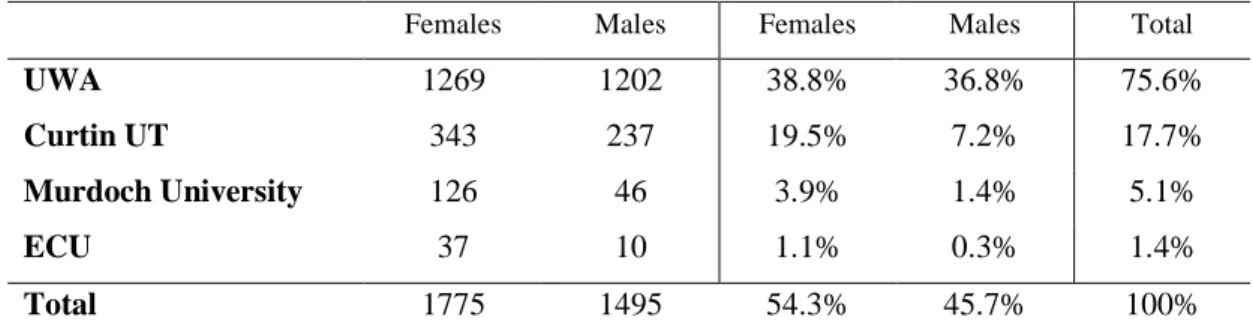
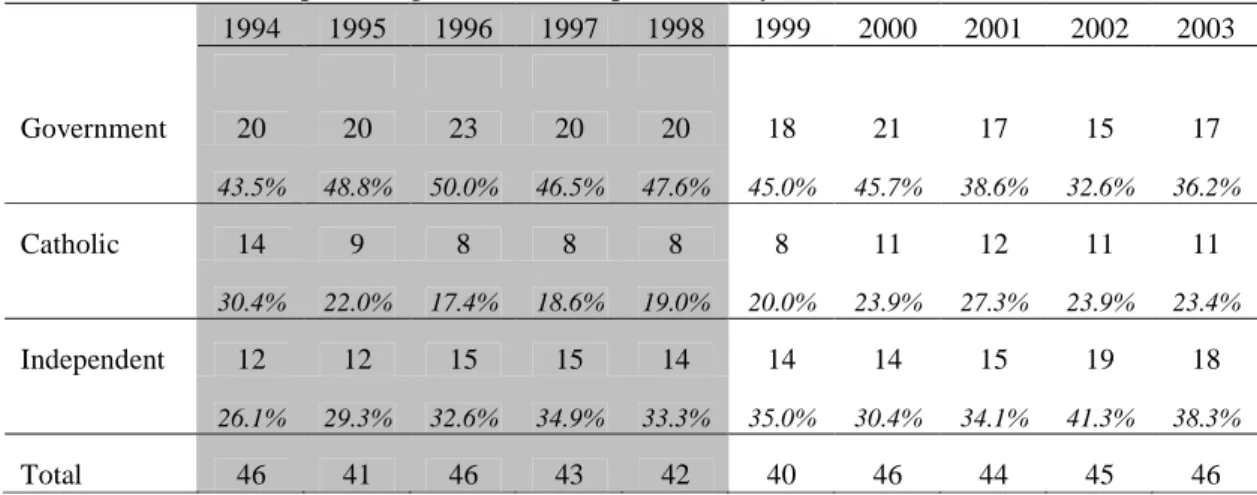
(9) Tables Table 3.1:. Student preferences in WA for 2003-2005 for TER 96+………………………………... 72. Table 3.2:. Trends per annum in female first preferences for the main courses……………………... 73. Table 3.3:. School-leaver enrolments (TER >96) by school type for the public universities, 200305……………………………………………………………………………………….... 76. Table 3.4:. Distribution of enrolments in Medicine in all Year levels in 2005…………………….... 77. Table 3.5:. Total applications for Medicine at UWA, 1995 - 2001………………………………….. 78. Table 3.6:. Proportions of females to males at major stages, 1999 - 2001…………………………... 79. Table 3.7:. Number and percentage of students from each school sector for each year, 1994-2003... 80. Table 3.8:. Number and percentage of schools represented by school sector, 1994-2003………….. 81. Table 4.1:. Summary of selection processes of Australian undergraduate medical schools……….... 100. Table 4.2a:. Component scores of individual students……………………………………………….. 122. Table 4.2b:. Component scores of individual students………………………………………………... 124. Table 5.1:. Research Design…………………………………………………………………………. 131. Table 5.2:. Summary of interviews with stakeholders………………………………………………. 134. Table 5.3:. Variables represented in the predictive validity study…………………………………... 149. Table 7.1:. Descriptive statistics for the ratings of the three students……………………………….. 189. Table 7.2:. Statistics for the individual criteria and the total score………………………………….. 192. Table 7. 3:. Item – total correlations for individual criteria…………………………………………... 193. Table 7.4:. Linear regression analysis with the course weighted average mark as the dependent variable R square for Model 1= 0.138, for Model 2 = 0.210. N=369………………….... Table 7. 5:. 201. Linear regression analysis with the average mark for Foundations of Clinical Practice 112, 212 and 312 as the dependent variable. R square for Model 1= 0.070, for Model 2 = 0.283. N=369………………………………………………………………………….. Table 7.6:. 203. Linear regression analysis with the average mark for General Practice 520 and Rural General Practice 620 as the dependent variable. R square for Model 1 = 0.046, for Model 2 = 0.18, for model 3 = 0.202. N=230…………………………………………... Table 7.7:. 205. Linear regression analysis with the average mark for Clinical Skills 402, 502 and 602 as the dependent variable. R square for Model 1 = 0.063, for Model 2 = 0.145, for Model 3 = 0.160. N=369……………………………………………………………….... Table7.8:. 207. Mean scores for females and males for the course weighted average mark (a) and the weighted average mark for each Year of the course (b) for Standard entry (schoolleaver) MBBS students…………………………………………………………………... Table 7.9:. Mean scores for females and males for the entry components in Standard Medicine (1999 – 2002)…………………………………………………………………………….. Table 7.10:. 208. 209. Completion pattern of the first new cohort of Standard medicine (school-leaver) entrants………………………………………………………………………………….... viii Selecting Medical Students: an Australian Case Study. 214.
(10) Figures Figure 7.1:. Scatterplots of pairs of scores from Interviewer 1 and Interviewer 2………………….... 191. Appendices Appendix A:. Non-Australian universities – an overview of selection processes…………………. 238. Appendix B:. Output from a Rasch analysis of interview scores………………………………….. 243. Appendix C: Table C.1. Summary statistics for Standard entry students by annual cohort 1999-2001. P value is for oneway ANOVA for continuous variables and chi-square statistic for ordinal variables…………………………………………………………………….. Table C.2. Pearson Correlations for TER and Interview score for whole study MBBS cohort 1999-2002………………………………………………………………………….... Table C.3. 244. 245. Linear regression analysis with the average mark for Medicine 430, 530 and 630 as the dependent variable. R square for Model 1 = 0.035, for Model 2 = 0.102,. Appendix D:. N=336……………………………………………………………………………….. 246. People interviewed in the course of this study…………………………………….... 247. ix Selecting Medical Students: an Australian Case Study.
(11) Preface. In 1997, I was approached by the chair of the Faculty Selection Committee of the (then) Faculty of Medicine and Dentistry at UWA and asked to advise this committee on a method of combining the three component scores which were to be used in ranking applicants to both Medicine and Dentistry. At that time I was working at UWA as Director of the Institutional Research Unit, a service unit in Planning Services which provided research services to the wider university community. Plans were in place for the new system of selecting medical and dental students to be operational by 1998, for the intake of students starting in 1999.. I worked with the faculty in developing the ranking process and in the course of this work I became a member of the Faculty Selection Committee by invitation. When work started in 1998 on developing the selection interview I also became involved, based on some previous work I had done at Murdoch University on devising rating scales for performance assessments. As a result I became a member of the inaugural Interview Committee. In 2001 when the UMAT Technical Subcommittee was formed I was nominated as the faculty’s representative on this group. Subsequently in 2005, when I was employed part-time as a Senior Lecturer in the faculty office, I also became the UWA representative on the UMAT Test Management Committee. I have retained membership of all these committees and except for several short periods when I have been away or engaged in the review of the UWA selection process in 2005/06, during which time I stood down from the Interview Committee, I have been a member of the working party which continually updates and develops the selection interview. As a member of the two faculty committees, the Faculty 1 Selecting Medical Students: an Australian Case Study.
(12) Selection Committee and the Interview Committee, I have undertaken relevant statistical work over the years to inform the committees of the outcomes of their policies. My role as a committee member has been to contribute to the implementation and evaluation of policies. Almost all the data collected in relation to the new selection process and its outcomes, in the ten years since its introduction, have been collected and analysed by me. This includes some work undertaken as the Director of the Institutional Research Unit and other work done while working in a part-time capacity for this unit in 2004.. In 2002, in collaboration with personnel from the Australian Council for Educational Research I helped to write a proposal, which developed into a two-stage project, culminating in 2006 in a report published for the UMAT Consortium. This report was known as UMAT: A Validity Study, A review of the underlying constructs and an analysis of the content of the Undergraduate Medicine and Health Sciences Admission Test and was a joint project between UWA and the Australian Council for Educational Research (ACER). Brief summaries from this report are found in Chapter 4 in the section on UMAT. My thanks go to ACER and the UMAT Consortium for permission to include these summaries.. In 2003, I made the decision to undertake doctoral studies in the selection of school-leaver applicants to Medicine, beyond the ongoing research that was required for the Faculty of Medicine, Dentistry and Health Sciences. Subsequently, in 2005 the Vice Chancellor of UWA and Dean of the Faculty of Medicine, Dentistry and Health Sciences together initiated a review of the selection process of students into Medicine and Dentistry at UWA. I was appointed to undertake this review, which dealt with the admission of both Standard 2 Selecting Medical Students: an Australian Case Study.
(13) (school-leaver) and Non-standard (some tertiary study) students into both these courses. The faculty gave me permission to use, in my own research, data which were collected in the course of the review. The study presented here represents a part of the area covered by the review, namely the admission of school-leaver students into Medicine. This aspect was of particular interest to me due to the many factors surrounding it, such as the effects of different types of secondary schooling.. The three projects, the UMAT Validity Study, the review of the selection process at UWA and the study presented in this thesis have different emphases, but of course, much in common. Naturally a good deal of the literature reviewed is relevant to each of them. All three have proved interesting and worthwhile. Ten years later, I remain grateful to the faculty for involving me in this complex and fascinating area.. 3 Selecting Medical Students: an Australian Case Study.
(14) Chapter 1 Introduction. The purpose of this chapter is to provide the background to this study and to document the reasons for changing the process of selecting undergraduate medical students in Australia. The process changed from one which depended entirely on high academic achievement at the secondary level to one in which other criteria became important and in which the required level of academic achievement, whilst still high, was reduced.. Until recently, the selection of students into medical courses has been relatively straightforward in universities in Australia, the United Kingdom (UK), Canada, New Zealand and to a lesser extent the United States of America (USA). Practices in these countries form the context of this study; however, many of the countries in Continental Europe have similar situations and deal with issues in the selection of students in a similar way (Andrich and Mercer, 1997).. In the past, selection has been based on academic merit and, in some cases, a relatively unstructured and informal entry interview. In the last ten years this situation has changed. The reasons for these changes, the nature of the procedures currently employed and the consequences of the changes are explored in this thesis. Methods of selection of students into the undergraduate medical course at The University of Western Australia (UWA) and the contextual issues surrounding this serve as a case study of modern practice in this complex and sometimes controversial area. In particular, the selection of school-leaver 4 Selecting Medical Students: an Australian Case Study.
(15) applicants has been the most problematic and is the major focus of the thesis. Furthermore, school-leavers have formed a high proportion of the intake in any one year. This proportion has decreased with the introduction of a graduate course but school-leavers still form the majority of entrants at UWA in any one year.. In each of the countries cited above, practice in the profession of Medicine has been prestigious and well-paid. However, this is not to imply that the prestige and high remuneration are the main motivators for entry into the profession. The profession is very demanding and is often seen as more of an all-consuming vocation than as merely an occupation. The dedication and altruism demonstrated by many members of the profession are an indication of the personal sacrifice that many have been prepared to make to belong to this elite group and to make a contribution to the society in which they live.. Part of the prestige, no doubt, is connected to the perception that the members of the profession are part of an academic elite, due mainly to the high levels of academic achievement which have been associated with entry to university medical courses. Until the late 1990s, it had also become commonplace for students from the independent school system in Australia (Story and Mercer, 2005) and in the UK (McManus, Powis, Wakeford, Ferguson, James and Richards, 2005), to comprise a high proportion of applicants and entrants to medical courses. This is in part attributed to the high standards set by these schools and the consequent success of their students in gaining tertiary places in highstakes courses such as Medicine and Law. Membership of the profession has also been frequently followed through families, with the children of medical practitioners themselves entering the profession. The circle of events in which doctors are sufficiently highly-paid to 5 Selecting Medical Students: an Australian Case Study.
(16) send their children to independent schools; the independent schools optimise the academic achievement of their students and maximise their chances of entering high stakes courses; and entry to such courses being based purely on academic achievement, has meant that the system has been self-perpetuating (personal communication, Professor L Landau, 2005). It is reasonable to assume that the pressure exerted by families and schools has also been a factor in this situation.. Several relevant significant changes have taken place in the countries cited above in the last twenty years. Firstly, the proportion of any age-level cohort entering tertiary institutions has increased from 5 – 10% to well over 30% (Andrich and Mercer, 1997). Secondly, the community has changed, particularly in Australia and the UK, to be multi-cultural in its nature, through both immigration and people seeking refuge from other countries. A third change is the rate at which factual knowledge in Medicine has increased, giving rise to a need for a different style of learning, in which solely learning by rote is no longer feasible and a different skill set is required for success in university medical courses. Allied to this is the proliferation of technological advances which requires university students and members of professions to be able to access information and communicate in ways which differ from the past. Furthermore, secondary education is no longer seen as a ‘level playing field’, with research showing that students from independent sectors in Australia (Miller, 2004) and the UK (Nicholson, 2005) achieve higher tertiary entrance results than their counterparts from the government sector and hence gain entry to high-level tertiary courses at greater rates; however, their success rate in tertiary education is not as good as that of students from government schools with comparable secondary results (Miller, 2004).. 6 Selecting Medical Students: an Australian Case Study.
(17) Alongside these societal changes have been changes in the medical profession and in medical courses in universities. The way in which medical practice is conducted has changed in the hospitals and in local contexts, in part due to the large numbers of people accessing these services and in part due to a change in the client-oriented way in which the services are currently provided (Smith and Hayling, 1998). One consequence of these changes is a different set of expectations on the part of the clients (Leahy, Cullen and Bury, 2003), in that they require their medical practitioners to have personal qualities such as good communication skills (Wagner, Jester and Moseley, 2001), as well as the medical knowledge to deal with their problems (Hughes, 2002). Paralleling these changes, the nature of the curriculum has changed in universities to deal with the expansion of knowledge and the use of technology. Students are expected to be more self-directed; to interact effectively with their fellow students as well as their teachers; and to engage in a problem-based style of learning which makes use of technologies. These sorts of changes mean that, amongst other things, medical students and young doctors are required to work effectively in a group situation, to communicate well with their peers and their patients, and to relate to people from a diverse range of backgrounds, both culturally and socioeconomically (Caan, 2003). The view that certain groups of medical practitioners will become research scientists and can avoid this level of interaction with others is no longer a credible argument.. Under this complex and diverse set of circumstances, the numbers of secondary students qualifying academically to enter such high-stakes courses as Medicine and Law has increased. At the same time, the number of places in Medicine has not increased at the same rate, resulting in limited access to such places by academically qualified applicants. 7 Selecting Medical Students: an Australian Case Study.
(18) The reasons why the number of available places has not increased proportionally is not investigated in this thesis. However, the consequence of selection being made on academic achievement alone when the number of available places is limited, is that the academic score needed to gain a place is very high. In Australia, the level of this academic score rose to the point at which approximately the top 1 - 2% of secondary students were being selected for medical courses (UWA Academic Council, 1997), which implied a very high level of academic performance at secondary school. This level of academic performance, however, was not actually required to succeed in the tertiary courses. This became apparent in Australia during the 1990s and was one of the main forces for change in the way in which medical students are selected. During the 1990s in Australia, other criteria were added to the selection processes for medical students, in which simultaneously the academic threshold required for entry has been lowered. Most notably the extra criteria included the widespread use of an aptitude test called the Undergraduate Medicine and Health Sciences Admission Test (UMAT), intended to assist in discriminating amongst the increasing numbers of academically qualified applicants; and the use of an interview, intended to assess some of the personal characteristics considered to be desirable in both medical students and members of the profession (Tutton, 1997).. In Australia the limitation on the number of university medical places is strictly controlled by the Federal government. The length of the course (usually 6 years) together with the high-resource nature of medical education makes it very expensive for the universities and for the individuals involved. Such high-stakes selection means that those with the financial means to improve their chances of selection are likely to make use of any form of assistance available to them. In the past this has included attendance at independent schools 8 Selecting Medical Students: an Australian Case Study.
(19) and the use of private tutors. In the current climate in which additional criteria are assessed for entry, coaching clinics for aptitude tests and interviews can be added to this list of strategies.. Against this backdrop of high-stakes selection in Australia and similarly in countries such as New Zealand, Canada, the UK and the USA, this study examines the diverse issues and the very rapid rate of change involved, even in the last ten years, in the advent of new selection processes for medical students; the influence of and the implications for the profession; and possible future trends as these processes become more refined. For the purposes of this study, the experience in the medical faculty at The University of Western Australia serves as one detailed example of the way in which these changes have been operationalised in this multi-faceted situation. Reference is also made in a less detailed way to the development of these processes in other Australian undergraduate medical schools and to a lesser extent the way in which other countries have dealt with these issues. To further establish the context, in the remainder of this first chapter, the recent history of the selection of school-leaver medical students at UWA and the reasons for the changes which occurred in the late 1990s are considered.. An historical perspective The Medical School at The University of Western Australia (UWA) was established in 1956 to ensure an adequate supply of doctors for Western Australia and to provide opportunities for young West Australians to study Medicine without having to travel interstate (Stanley, 1982). The Faculty confers the degrees of Bachelor of Medicine, Bachelor of Surgery (MBBS). A major teaching and learning goal of the (now) Faculty of Medicine, Dentistry and Health Sciences is ‘to produce doctors, dentists, scientists and 9 Selecting Medical Students: an Australian Case Study.
(20) other health practitioners with appropriate knowledge, skills and attitudes to perform to their maximum potential for the requirements of Western Australia and the wider national and international communities’. (Faculty website). Pertinent to the present study, a further goal is ‘to ensure that differences in background, gender, race, religion and any other personal characteristics which are irrelevant to the work of the Faculty and to its ethical concerns do not interfere in any way with the right to study, to work, to be employed, to be promoted, to take responsibility or to achieve positions of influence’. (Faculty website). Selection of school-leaver medical students During the 1960s and 1970s, selection of medical students was made at the end of first year in the Science course at UWA. Students were required to have studied Physics, Chemistry and Mathematics during first year and were selected into Medicine on the basis of these results. Competition was intense within this group and stories abound of the very personal nature of the competition, given that all those competing for the places were attending the same classes. In the late 1970s this system was replaced by direct entry from school into Medicine, based on the results of state-wide examinations known as the Tertiary Admissions Examinations (TAE), which were held at the end of Year 12. This shifted the location of the competition to enter the medical course from the tertiary sector into the secondary schools.. In 1986, the TAE became the Tertiary Entrance Examinations (TEE) and from this time changes were made to the way in which an aggregated score was calculated for admission to all university courses. This aggregated score was known as the Tertiary Entrance Score 10 Selecting Medical Students: an Australian Case Study.
(21) (TES). In the period from 1986 to 1997 (for admission in 1987 to 1998) selection of schoolleaver medical students was based solely on their academic score in the form of the TES. The TES was calculated from a 50:50 combination of the results in the TEE and schoolbased assessments. Various processes of moderation (taking account of differences between schools), scaling (taking account of differences between subject difficulty) and averaging, produced a mark with a maximum value of 500. In addition, 10% of the result of a scaling test, the Australian Scholastic Aptitude Test, was added to this mark giving a final possible maximum score of 510.. In the early years of the TES, the calculation was based on the ‘best’ combination of either 3, 4 or 5 subjects. This was later amended to the best of 4 or 5 subjects (Andrich, 1989). In addition, students had to include at least one subject from each of two groups of subjects known as List 1 (Humanities/Social sciences) and List 2 (Quantitative/Sciences) and UWA had a literacy requirement of a scaled score of at least 50 in either English or English Literature. Certain subject combinations (eg Biology and Human Biology) could not be included in the calculation of the TES.. Admission for Australian residents to courses at all public universities in Australia is based on supply and demand. In the case of Medicine, demand considerably exceeds supply. School-leaver entrants at UWA are referred to as Standard entry students. Until recently, the quota for places in the Standard Medicine course was 99. This quota has increased since the introduction of the new selection process, with the allocation of more places by the Federal government. The calibre of the students applying for the course was very high academically, with the result that each year during the period 1986 to 1997 the TES cut-off 11 Selecting Medical Students: an Australian Case Study.
(22) score was extremely high. In the years immediately preceding the introduction of the new selection process in 1998 the cut-off scores were 432 (1997), 434 (1996), 436 (1995) and 442 (1994). These scores represent an average combined mark of approximately 85% in each of the 4 or 5 subjects used in the calculation of the TES and these scores were minimum requirements. Under this selection process only students in the top 1% of their age group (or less in some years) and the top 2% of the TEE cohort, were eligible to enter the Medicine course as school-leavers.. Effects of the Medicine cut-off score on the schools Because of the very high average score needed in 4 or 5 subjects to achieve a TES in excess of 430, considerable pressure was placed on students in their final year at school if they aspired to study Medicine. This pressure was apparent throughout the year because half of their score for each subject was derived from school assessments. So, as well as the need to study for the TEE in November these students also needed to achieve high marks throughout the year. This pressure was evident on the individual as well as on the group of students with whom they were studying. Teachers and principals were always aware of the need for consistent high achievement both from the student and their peers.. One of the issues related to the calculation of the TES is the moderation of results for a particular school. The standardisation of the school marks for a given subject is dependent on the set of results for that school in the TEE. Schools with a large TEE cohort, particularly those with a group of very able students, will have the advantage of having a relatively good spread of scores and their school marks will be moderated to a relatively high mean score. Hence, larger metropolitan schools with a generally able cohort of students did not suffer any disadvantage in this process. On the other hand these were also 12 Selecting Medical Students: an Australian Case Study.
(23) the schools which were subject to the maximum pressure from their high-achieving students. The schools most likely to be included in this category were the high-profile independent schools and a group of metropolitan government schools which performed consistently well in the TEE.. At the other extreme were the rural schools and some metropolitan schools (for example, some of the outer metropolitan schools) with a small TEE cohort. In this situation one very able student in a small group of not-so-able students may be disadvantaged by the moderation process. It is generally accepted that a group of at least 20 students is needed for effective moderation in a given subject. In some cases, results from two small schools are combined to give a sufficiently large group of students for the process to be effective. While steps are taken to minimise any disadvantage, a student near the cut-off score, who is attempting to access a high-stakes course like Medicine may be adversely affected by the group of students with whom s/he studies. A small variation in one subject mark can result in a student being just above or just below the cut-off score. In the past, students from schools with a small TEE cohort have been subject to this form of disadvantage, when admission to Medicine was made solely on the basis of this score. To some extent, this situation still exists, but under the new system the cut-off score has been reduced from a TES of approximately 430 (average score approximately 85%) to a threshold of approximately 385 (average score approximately 75%).. Other secondary school-related issues Other items noted in the minutes of the Academic Council of UWA on May 7 1997 were: ‘The current system of selection. 13 Selecting Medical Students: an Australian Case Study.
(24) - was elitist and placed too much emphasis on TES which tended to favour particular kinds of schools. The Adelaide experience indicated that the proposed system could be expected to broaden the socio-economic spectrum of students entering the course. - had the effect of forcing potential applicants into particular combinations of TES subjects and thereby having a major distorting effect on the Year 11 and 12 choices and experiences of large numbers of students.’. The latter issue refers to the tendency for students who wished to maximise their TES to study subjects such as Physics, Chemistry and two Mathematics units and to ignore the humanities and biological sciences. As well as opting for a science-oriented course some students restricted the number of TEE subjects studied in order to concentrate on the subjects most likely to be used in the calculation of their TES. The reason that studying such courses gives a higher TES despite the scaling procedures referred to earlier, is that the correlations among these subjects is higher than those among the humanities/social science subjects.. A further issue concerning the use of a high TES as the sole criterion for entry to medical courses was the impact on motivation to study Medicine. The prestige associated with acceptance into the course prompted some students to accept a place when they achieved the required score, in spite of low motivation to study Medicine. Simultaneously, students who were highly motivated to study Medicine were often eliminated from the selection process by achieving a TES just below the high threshold score. A letter received in 1999 by the Faculty of Medicine and Dentistry from the Dean of Studies of an independent school records: 14 Selecting Medical Students: an Australian Case Study.
(25) ‘I have taught quite a number of able students who seemed to have all the interpersonal skills that are really needed for medical doctors and who have not quite achieved the very high TES needed for selection in previous years. At the same time, I have taught many students who have chosen Medicine only because of their very high TES.’ This letter also congratulated the Faculty of Medicine and Dentistry for the introduction of a process perceived to be fairer than the previous one, and for the level of consultation undertaken with the secondary sector during the implementation of the new process.. Reasons for change During 1997 and 1998, the reasons for changing the selection process for medical students were documented for various committees at UWA and in the Faculty of Medicine and Dentistry. The following extracts are taken from the minutes of the Interview Working Party (Faculty) and the Academic Council (UWA) and summarise the issues which were under discussion at the time.. Minutes of UWA Academic Council May 7, 1997: ‘It could not be claimed that only the top 1-2% of students could meet the academic requirements of the MBBS (medical) course. There was evidence that the success rate of students in the top 2% was much the same as that of those in the top 3 – 10% of TES scores.. ‘It was likely that if the University did not introduce the new system, the number of applicants and enrolments from the Eastern States would increase. Already the numbers of applications and acceptances from interstate was increasing as other 15 Selecting Medical Students: an Australian Case Study.
(26) medical schools moved to graduate entry or first year intakes utilising factors other than the TES or equivalent. It was known that a number of schools in the Eastern States were advising their students to apply to UWA because it was still using only the TES for admission.. ‘The current very high dropout rate of 16% from the medical course pointed to the need for a change to a selection policy which would identify the students best fitted for a career in Medicine.’. It should be noted that whilst 16% would not necessarily constitute a high dropout rate from some courses, the costs associated with this level of attrition in the medical course include the high financial cost of participation in the course, as well as the opportunity cost for those applicants excluded from the course and the ultimate cost to the profession of smaller than expected numbers of graduates. The dropout rate from the profession has traditionally been considered to be low, but no figures are available to report here.. Minutes of the first Interview Working Party meeting in May 1998: ‘The goals of the new selection process were articulated for the benefit of the members of the Interview Working Party. They were listed in two broad categories as follows: Benefits of the new selection process for potential candidates: • A broader range of applicants will be eligible for entry to the medical course. • Subject selection may be less restricted at school.. 16 Selecting Medical Students: an Australian Case Study.
(27) • There may be opportunity for increased participation in those activities which will assist students to become ‘well-rounded’ people. • The process wishes to select students with a strong personal desire to participate in the caring professions rather than motivation based on external pressure or academic excellence alone. • Increased enjoyment and success in their chosen career.. ‘Experience with intake interviews (unstructured interviews held after students had been selected for the course) indicates that each year some students were admitted who had chosen Medicine because of their high academic score and other pressure. This led to the admission of poorly motivated students who were more likely to fail or to drop out of the course.. ‘Evidence from other medical schools who had introduced new selection procedures using criteria other than academic achievement suggests that their students enjoy the Medical courses more and perform well. ‘Benefits of the new selection process for the Faculty: • Selection of motivated applicants who are most likely to complete the course and ultimately, to become good doctors. • Equity in the selection of students. • The selection process will be clearly defined, the selection criteria will be well publicised and the process will be applied as objectively as possible. • The comparatively high drop-out rate of either failing students or voluntary withdrawals from the course will decrease. 17 Selecting Medical Students: an Australian Case Study.
(28) • There will be greater congruity between the selection process, the goals of the medical school and the style of teaching.. ‘The Faculty aims to select students who not only have the prerequisite knowledge to begin the course and the intellectual ability to complete the course, but the personal characteristics which are likely to enable them to make successful practitioners. ‘Benefits with respect to the new curriculum: Research has indicated that the most high achieving students favour a structured learning environment. Such students may not perform so well as the (new) courses are revised to include greater emphasis on initiative and self-directed learning. It is therefore important to ensure that the students who are selected are those who are best able to respond to and benefit from this approach. ‘Benefits with respect to equity: The process must be fair and equitable, allowing people from different socioeconomic, geographical and ethnic backgrounds equal opportunity to compete for a place.’. Summary of the goals of the new selection process The following points summarise the main goals of the new selection process. These goals were based on dissatisfaction with the system in place, perceived to be socio-economically elitist, which put pressure on the secondary schools with its reliance on the TES, which tended to favour particular kinds of schools; the high attrition rate within the Faculty; evidence that the success rate of students in the top 3 – 10% of TES scores was similar to that of those in the top 2%; evidence from other medical schools in Australia, particularly 18 Selecting Medical Students: an Australian Case Study.
(29) those in Newcastle and Adelaide, whose students appeared to be motivated, more diverse in their characteristics and performing well in the course. The goals were: •. Increased diversity in the student cohorts.. •. Equity in the selection of students with respect to different socio-economic, geographical and ethnic backgrounds.. •. Selection of students who are motivated to become doctors, which will be reflected in the lowering of the attrition rate in the course.. •. Greater congruity between the selection process, the goals of the medical school and the style of teaching.. •. Selection of students with the intellectual capacity to complete the course and the personal characteristics to assist them in becoming successful practitioners.. The new selection process Based on the precedents set by the University of Newcastle and the University of Adelaide, the new process set in place at UWA in 1998 for entry of students in 1999 involved the use of three components: the Undergraduate Medicine and Health Sciences Admission Test (UMAT), a structured interview and the academic score. The UMAT is a national test, developed by the Australian Council for Educational Research (ACER), originally for use by the University of Newcastle in New South Wales and subsequently used by most undergraduate medical courses in Australia; the structured interview is a local instrument developed within the Faculty of Medicine and Dentistry; and the academic score is the Tertiary Entrance Rank (TER) based on the previously used TES, hence a statewide score with counterparts in the other Australian states. Each of these components is described in detail in Chapter 4. 19 Selecting Medical Students: an Australian Case Study.
(30) There are currently nine undergraduate medical schools in Australia, the most recent having started at the University of Western Sydney in 2007. All these schools (with the exception of James Cook University in Queensland), use the UMAT in the first stage of their selection process. The UMAT is also used by two medical schools in New Zealand and by some other Australian universities for entry to courses such Dentistry and Physiotherapy. With the exception of the University of Melbourne and the University of Tasmania, all the medical schools use a locally developed interview. UWA is the only school using a highly structured interview, with most schools having a semi-structured style of interview based on a set of well-defined criteria, rated on pre-determined and rigorous rating scales. The academic score has different names in the different states, but with the exception of Queensland, the nature of the score is the same as the Tertiary Entrance Rank and such scores are used in an equivalent way to the TER.. There are variations in the way in which these three components are used in the selection processes of the undergraduate medical schools. UWA developed its own method of ranking the applicants in the final stage of the process. This method was developed in consultation with a number of stakeholders, including a Schools Consultative Committee with representatives from each of the three school sectors: government, independent and Catholic. The ranking mechanism utilises in equal weight a combination of the Tertiary Entrance Rank (TER), the total score on the Undergraduate Medicine and Health Sciences Admissions Test (UMAT) and the total score from the selection interview.. 20 Selecting Medical Students: an Australian Case Study.
(31) The implications of this ranking mechanism; an exploration of some of the contextual issues surrounding medical selection at UWA; an overview of the selection procedures of other Australian medical schools; and an investigation of the international context are presented in the following chapters. In addition, the outcomes of both qualitative and quantitative data collected to address these issues are reported and discussed. The effects of the new selection process at UWA, and those in other Australian medical schools, are discussed and implications for future developments in selecting medical students are considered.. Indigenous students enter the medical course at UWA via a special pathway, through the School of Indigenous Studies. They do not sit the UMAT or undertake the selection interview. This study refers only to those students who enter the course using the UMATTER-Interview process and as such does not deal with the entry of indigenous students. Furthermore, UWA does not admit any full-fee paying domestic students so this category of student is not relevant to the study.. 21 Selecting Medical Students: an Australian Case Study.
(32) Chapter 2 Literature Reviews. Introduction The selection of students into the high-stakes course of medicine is currently an area of considerable interest and research activity. Issues in the selection of medical students are prominent in the medical and medical education literature published in the UK, the USA, Australia, New Zealand and Canada, and in some European countries. Indeed selection into several courses, particularly in the area of health sciences, in which the number of academically qualified applicants far exceeds the available tertiary places, focuses on similar issues. At the same time as the introduction of new selection procedures into medical courses, the nature of the curriculum has also changed. These changes have been characterised by the use of problem-based learning and an emphasis on self-directed learning, as well as the increased interaction amongst the students and between the students and their teachers. The need for problem-solving skills, communication skills and interaction skills in the courses, in addition to the requisite intellectual capacity, has reinforced the need for students to be selected on a different set of attributes from those used previously.. Medical schools in the USA all function at the graduate level. In the other countries cited above, both undergraduate and graduate courses are available. Whilst the emphasis in this thesis is on selection of students into undergraduate medical programmes, many of the same principles of selection apply to either type of programme. A number of the 22 Selecting Medical Students: an Australian Case Study.
(33) developments which initiated change in this important area occurred in the USA and are introduced in the following discussion.. Findings from the literature are presented in two parts. Part 1 deals with the context of selection and covers such issues as the rationale for change; models for change and new methodologies; predictive validity; evaluation strategies and equity issues in selection. The pivotal area of clinical reasoning follows and views on the characteristics of so-called ‘good’ doctors and medical students are also articulated. Part 2 deals with the instruments being used to select medical students and some of those currently under development. These include the selection interview; aptitude tests which assess various aspects of reasoning skills; and tests of moral reasoning and moral orientation. Most of the literature dates from the late 1990s and early 2000s, which reflects the emerging nature of this topic in medical education.. Words such as empathy, communication, interpersonal skills are used frequently in the following discussion. No attempt has been made to define these terms or to develop any common understanding of their meaning in this context. They are used as they have been used in the literature because their specific meaning is not relevant to the purpose of this thesis. Rather it is the existence of such constructs in this domain which is relevant at this point. Characteristics such as those formalised in the Five Factor Model from psychology, for example conscientiousness, will be well-defined in their own context. Such definitions have not been provided here. In addition, terms such as qualitative, non-cognitive and humanistic are used to describe personal qualities which cannot be measured by achievement or intelligence tests and which usually refer to either personality factors or 23 Selecting Medical Students: an Australian Case Study.
(34) aptitudes. Similarly to the terms above, they are not defined here and are used as they are in the literature.. Part 1 – The context of selection Issues in the selection of medical students Several developments in recent years have resulted in changes to the basis for selecting medical students. Some of these developments are related to changes within the professions and the medical schools and others are related to changes in society’s norms, values and practices. The shift away from the exclusive use of academic scores has been slow and difficult (Edwards, Elam and Wagoner, 2001). Historically the definition of aptitude for medical education has not been fixed but has been socially constructed (McGaghie, 2002) and this construct has recently undergone considerable change. The issues to be explored here are the rationale for change, models and methodologies for change, predictive validity, evaluation strategies and equity issues in selection.. The rationale for change Monash University (Tutton, 1997) articulated the major reasons for change in its selection policy as follows: •. The Doherty Committee’s (Inquiry into Medical Education and the Medical Workforce) 1998 report which recommended that personal qualities should be considered in the selection of medical students.. •. Survey evidence suggesting that the community believed that academic success alone is not a suitable qualification for a medical student or doctor.. 24 Selecting Medical Students: an Australian Case Study.
(35) •. Despite the high academic cut-off score for entry to the medical course, a significant number of students still failed in the clinical years of the course (traditionally the later years).. •. The new curriculum places more emphasis than previously on humanistic issues, hence it seemed appropriate to modify the selection procedures accordingly.. One of the major prompts for the inclusion of qualitative variables in the selection of medical students has been the emergence of the managed care model of health care delivery (Smith and Hayling 1998; Edwards et al, 2001) . This developed in the 1990s and its emphasis on seeing patients quickly created the dilemma of upholding the values of the profession while responding to the needs and desires of institutions and businesses. This placed, and continues to place, new challenges on medical schools and teaching hospitals. Smith and Hayling (1998) believe that this shift, brought about by market forces, will require doctors of the future to have a range of new skills. As well as requiring new skills, physicians of the future will practice in different settings and under different economic and ethical environments (Smith and Hayling 1998) . As a result of these new directions, they propose that selection processes should become more complex, not more simplistic. The previous method of selecting solely on academic scores was simple and straightforward. However, a return to such a process appears both unlikely and undesirable.. Another development of the 1990s in the US involved a requirement by the National Board of Medical examiners that examinees seeking to be licensed to practice must pass assessments in professionalism, communication, and interpersonal skills. Other boards of registration have followed suit, leading to pressure on the medical schools to ensure that, in 25 Selecting Medical Students: an Australian Case Study.
(36) addition to skills learned in the curriculum, entering students bring some of these humanistic qualities with them (Edwards et al, 2001). That selection policies should consider humanistic, non-cognitive qualities as well as academic success has become widely accepted ( Fones, Kua and Goh, 1998); Reede, 1999; Edwards et al, 2001; Hughes 2002) . The need for diversity in the profession is also acknowledged (Hughes, 2002; Fones et al. 1998; Edwards et al, 2001). One view is that in general, higher education and the professions seem to benefit from admitting a rich diversity of people, including some with ordinary traits, like those of the clientele (Caan, 2003). Agreement on the most important qualities has been difficult to achieve ( Edwards et al, 2001; Lievens, Coetsier, De Fruyt and De Maeseneer, 2002), as well as the means by which to assess them according to the rules of reason, fairness and public scrutiny (Fones et al. 1998).. As it happens, the. inclusion of personal qualities has been found to add to the prediction of success in medical studies (Powis, 1994).. A further question posed in the complex area of medical selection is just what is the ultimate objective of the selection process (Hays, 2005). A worthy endpoint is the selection of more knowledgeable, skilled, honest, reliable and safe doctors of the future. However, it is difficult to predict such a range of attributes so far ahead. Hays (2005) concludes that until there is better evidence, we should really focus on predicting success as a medical student, someone who will then be subject to all the vagaries of life and society in becoming a professional person over several years of life changing events.. Hupp is critical of the over-reliance on academic scores in selection into all professional courses, including Dentistry, Medicine and Law (Hupp, 2004). His proposed solution is for 26 Selecting Medical Students: an Australian Case Study.
(37) admissions committees to focus more on the lives of those people they are assessing. Taking into account factors which reveal a self-less attitude, maturity, ability to overcome adversities and examples of making ethical decisions will make the process harder, but should result in a fairer result to all concerned. His proposed strategy for achieving this is to analyse the backgrounds of exceptional practitioners and to look for common characteristics to predict success and vice versa for predictors of failure. The concepts embodied in this strategy are sound, however such an undertaking is a large-scale and longterm project. Given the rate of change in the nature of society, the results of studying current practitioners may not ultimately prove useful in selecting future practitioners.. A recently-concluded Western Australian study researching, among other things, factors affecting medical course completion concluded that ‘students who have lower admission scores and who are shy and timid are less likely to complete the medical course than those who have higher admission aggregates and who are more thick-skinned and uninhibited’ (Ward, Kamien and Lopez, 2004, p7). These findings confirm the view that both cognitive and personal characteristics are important factors to consider in the selection of medical students. However, there are still those who believe that places in medical schools should be given to the brightest students who have professed a desire to enter ‘the most noble of professions’ and that entrance requirements are becoming ‘ridiculously complicated’ (Watson, 2006). Attitudes such as this are still articulated by a few members of the medical profession.. 27 Selecting Medical Students: an Australian Case Study.
(38) Models and methodologies for change Edwards and others have proposed a five-part model which they believe will facilitate changes in admission processes to accommodate a different emphasis. Their model involves the interaction between the applicant pool, criteria for selection, the admission committee, selection processes and policies, and outcomes. This model is intended to synthesise these elements to provide a framework for reflection by medical schools. They believe that the interplay between the criteria and selection processes is particularly important. For example, if the criteria include such attributes as compassion and respect for others then the processes need to operationalise these and determine a method of including them in the ranking of applicants. The Edwards model includes the use of such qualitative variables, but points out the need for objectivity in the selection processes. They claim that subjective information related to personal characteristics ‘shows little evidence of validity and reliability’ (Edwards et al. 2001, p 1210). They acknowledge problems with the expense in time and resources in including humanistic variables and in defending a process that may contain some elements that are perceived as subjective. This model is useful in the discussion of the implementation of changes in medical school admissions and has been an underlying structure in considering the case study which forms the basis of this thesis.. McManus (2001) suggested that selection should aim at a relatively small number of characteristics which are likely to be predictive of future professional behaviours and which can be reliably assessed at the time of application to medical school. His criteria for assessment of the selection process are validity, reliability, feasibility and acceptability. A number of authors comment on the need for development of a fair and transparent system of selection given the current conditions in which demand far exceeds supply, as well as a 28 Selecting Medical Students: an Australian Case Study.
Figure



+3

Related documents
A Narrative Case Study Examining the Influences of Peer-led A Narrative Case Study Examining the Influences of Peer-led Team Learning on Student Critical Thinking Skill
The single variable beam theories taking into account effect of transverse shear deformation for the buckling, bending and free vibration analysis of the thick beam
؛ نیدنرپ هلا تمحر ناراکمه و .دراد کزار یلکلا هراصع یدازون و ینینج زیوجت لابند هب یروراب رد یسنج غولب هورگ 122 هعلاطم نیا رد .داتفا قافتا رترید یمک یراد ینعم روطب
New and Emerging Applications of Tablet Computers such as ipad in Mathematics and Science Education.
New and Emerging Applications of Tablet Computers such as iPad in Mathematics and Science Education..
Функціонування Са 2+ /н + -обміну залежить від величини градієнта протонів та характеризується зворотністю, а саме в умовах залуження позамітохондріального
Results of the survey are categorized into the following four areas: primary method used to conduct student evaluations, Internet collection of student evaluation data,
Different configurations of hybrid model combining wavelet analysis and artificial neural network for time series forecasting of monthly precipitation have been developed and
Objetivo: Caracterização das espécies de Candida, na flora oral de crianças infectadas pelo HIV-1, identificadas antes e após a introdução da terapêutica com inibidores
