Exploring challenges faced by Grade 4 teachers in the implementation of reading practices in the Mano’mbe Circuit of the Mopani district
by
EVOLINAH MAKHUBELE
Submitted in accordance with the requirements for the degree of
MASTER OF EDUCATION-WITH SPECIALISATION IN CURRICULUM STUDIES
at the
UNIVERSITY OF SOUTH AFRICA
SUPERVISOR: PROF M M VAN WYK
i
DECLARATION
Student number: 30622786
I declare that Exploring challenges faced by Grade 4 teachers in the implementation of reading practices in the Man’ombe Circuit of the Mopani district is my own work and that all the sources that I have used or quoted have been indicated and acknowledge by means of complete references.
___________________ ___________________
SIGNATURE DATE (MISS E MAKHUBELE)
ii
DEDICATION
THIS STUDY IS DEDICATED TO MY WONDERFUL MOTHER, NW’A-JEKE, WHO IS THE PILLAR OF MY STRENGTH AND THE SOURCE OF MY INSPIRATION.
iii
ACKNOWLEDGEMENTS
I want to express my sincere gratitude and appreciation to the following people and organizations for their contributions to this study:
My supervisor for his resilience, professional guidance, support, tolerance and patience during the research period. Thank you so much.
My two beautiful daughters, Tintswalo and Ngalava, my granddaughter, Langavi, for their support and patience during my absence when they needed me. Thank you girls.
I would also like to acknowledge the diligence of the following friends who made this study possible by giving me courage during testing times and assisting financially: R J Chauke, H Shiviti and L Mboweni. Thank you.
I would also like to thank The Limpopo Department of Education, Mopani District, Mano’mbe Circuit, the principals of the primary schools in the Mano’mbe Circuit and their teachers for permitting me to conduct this study in their schools.
I would also like to thank Dr MM Ndlhovu for his guidance and mentorship. May the good Lord richly bless you.
Above all, I thank the Lord my provider for showering me with wisdom and strength to embark on this study. It was not an easy task.
iv
ABSTRACT
This dissertation presents a study exploring the challenges faced by grade 4 teachers in the implementation of effective reading practices in the primary schools of the Mano’mbe Circuit of the Mopani District. The study seeks to investigate the challenges faced by grade 4 teachers in the implementation of reading practices in their classrooms. The aim of the study is to explore the perception of grade 4 teachers about their role in teaching reading to investigate the role of the principals and the heads of department and to recommend strategies that can be implemented to resolve the challenges faced by grade 4 teachers in the teaching of reading.
The mixed method design was adopted for the study. The target population was 20 primary schools in Mano’mbe Circuit. The questionnaires and interview schedules as instruments were used to collect data. Data from the questionnaires was analysed by means of descriptive and inferential statistics. An interview template analysis style was used whereby categories were derived from the research questions. Data was presented in the form of frequency tables, histograms and correlations (structured questionnaires) and themes and subthemes and categories as derived from the research interview questions.
The study revealed various challenges expressed by grade 4 teachers in the implementation of effective reading practices in the Mano’mbe Circuit of the Mopani District. Amongst others, overcrowded of classes, lack of parental involvement, and lack of support from the department, principals and head of departments. In addition, half of the respondents cannot develop a reading lesson and a reading rubric so it is not surprising to find that learners are not able to read and more.
The findings of this study will have important implications for the literacy teachers, heads of departments, principals, curriculum advisors and learners. The discovery and revelation of the causes of the challenges faced by the grade 4 teachers in the implementation of effective reading practices will set in motion a chain of events that can improve teaching and learning in our schools. The study will provide suggestions and a set of principles for teaching about the ideas and practices that promote learners’ academic achievement in reading and literacy in general.
v
KEY WORDS
Key words: reading, instruction, literacy, curriculum, Intermediate Phase, professional development.
ACRONYMS
ANA – Annual National Assessment OBE – Outcome-Based Education DBE – Department of Basic Education FAL – First Additional Language GET – General Education and Training FET – Further Education and Training
CAPS – Curriculum Assessment Policy Statement
NCAPS – National Curriculum Assessment Policy Statement LOLT – Language of Learning and Teaching
SPSS – Statistical Package for Social Sciences NCS – National Curriculum Statement
vi TABLE OF CONTENTS Declaration i Dedication ii Acknowledgements iii Abstract iv
Key words and acronyms v
Table of contents vi
List of tables xiv
vii
CHAPTER ONE
ORIENTATION OF THE STUDY
1.1 Introduction 1
1.2 The rationale of the study 2
1.3 Problem formulation 4
1.4 Research questions 8
1.4.1 Primary question 8
1.4.2 Secondary questions 8
1.5 Aims and objectives of the study 8
1.6 Research design and methodology 9
1.6.1 Research paradigm 9
1.6.2 Research design 9
1.6.3 Research methodology 10
1.7 Ethical clearance 10
1.8 Definition of the concepts 11
1.8.1 Reading 11 1.8.2 Instruction 11 1.8.3 Literacy 11 1.8.4 Curriculum 12 1.8.5 Intermediate Phase 12 1.8.6 Professional development 13
1.9 Demarcation of the study 14
1.10 Limitations of the study 14
1.11 Chapter outline 14 1.12 Conclusion 15 CHAPTER TWO LITERATURE REVIEW 2.1 Introduction 17 2.2 Theoretical framework 17
viii
2.2.2 Social cognitive theory 21
2.3 Effective teaching methods or strategies 23
2.4 The nature, scope and strategies of effective reading 27
2.4.1 The nature of reading 27
2.4.2 The scope of reading 27
2.4.3 Strategies of effective reading 28
2.5 Challenges faced by teachers in the implementation of reading
strategies 33
2.6 Conclusion 36
CHAPTER THREE
RESEARCH DESIGN METHODOLOGY
3.1 Introduction 37
3.2 Research paradigm 38
3.3 Research context 39
3.4 Research design and methodology 40
3.4 1 Research design 40
3.4.1.1 Quantitative approach 41
3.4.1.2 Qualitative approach 42
3.4.1.3 Mixed method approach 43
3.4.2 Research methodology 46
3.4.2.1 Population and sample 46
3.4.2.2 Pilot study 47
3.4.2.3 Access to the sites 47
3.4.2.4 Data collection 48
3.4.2.5 Validity and reliability of the study 50
3.4.2.6 Data analysis 51
3.4.2.7 Adhere to plagiarism requirements: similarity report 52
3.5 Ethical considerations 52
ix
CHAPTER FOUR
DATA PRESENTATION, ANALYSIS AND INTERPRETATION
4.1 Introduction 54
4.2 Analysis of quantitative data 54
4.2.1 SECTION A: Demographic data of participants 54 4.2.1.1 Details on gender representation of respondents 55
4.2.1.2 Age of respondents 55
4.2.1.3 Grade 4 teaching experience of the respondents 56
4.2.1.4 Academic framework of the respondents 57
4.2.1.5 Professional qualifications 58
4.2.1.6 Details of the positions of the respondents in their work places 59
4.2.1.7 Grade 4 learners per classroom 60
4.2.1.8 CAPS Training 61
4.2.2 SECTION B: Implementation of effective reading strategies 61 4.2.2.1 The NCAPS is helpful in introducing mother tongue as the
Medium of instruction in the Intermediate Phase 61 4.2.2.2 My grade 4 learners can read English fluently 63 4.2.2.3 I have difficulty in developing learners’ skills, values and
Attitude 65
4.2.2.4 I have difficulty in differentiating learning outcomes and
assessment standards 67
4.2.2.5 My Grade 4 learners are struggling to read 68 4.2.2.6 I find it easy to use the scope of reading provided by the
Department of Education in the Policy Document 69 4.2.2.7 I use the Policy Document for my day to day teaching 70 4.2.2.8 I find the time frame for the scope to be realistic 71 4.2.2.9 The policy document is helpful in assessing reading 72 4.2.2.10 I find the simplified terminology of the policy document
easily understandable 73
4.2.2.11 I find the teacher-centeredness method easier and applicable
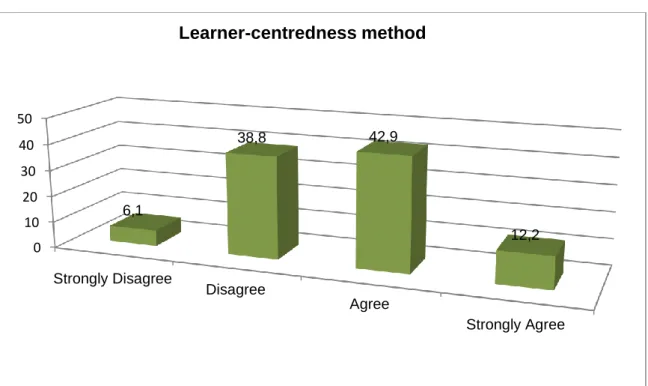
in implementing effective reading strategies in my class 74 4.2.2.12 I find the learner-centeredness method easier and applicable
x
4.2.2.13 I find combining teacher-centeredness and learner-centredness method as effective helping my learners by achieving reading
outcomes 76
4.2.2.14 I find guided reading strategy helpful in achieving reading
specific outcomes in my class 77
4.2.2.15 I have difficulty in implementing guided reading strategy 78 4.2.2.16 I have received support in the implementation of effective reading
strategies in my grade 4 class 79
4.2.2.17 I have received adequate training in NCS on teaching reading
skills in my grade 4 class 80
4.2.2.18 I need further professional development on implementing reading
strategies 81
4.2.2.19 I have been visited and received support by curriculum advisors
in my for monitoring reading competence 82
4.2.2.20 I received teaching and learning support material (LTSM) for
reading (textbooks, storybooks) 84
4.2.2.21 I am not satisfied with the quality of (LTSM) for reading in my class 85 4.2.2.22 The overcrowding of learners in my class is stressful which influence
effective reading in my class 87
4.2.2.23 Parents are not involved in the learning of their children 88 4.2.2.24 I have difficulty in developing good reading lesson 90 4.2.2.25 I find developing a rubric for reading difficult 91 4.2.2.26 I find assessing a reading lesson difficult 92
4.2.3 SECTION C: TEACHER EFFICACY 93
4.2.3.1 I have a positive effect on teacher effort and persistence in the
face of difficulties in teaching effective reading skills 93 4.2.3.2 It enhances teachers’ professional commitment to persevere in
teaching and implementing reading strategies 94 4.2.3.3 It supports learners’ motivation to do self-reading for enjoyment 95 4.2.3.4 Provides openness to new methods in teaching 97
4.2.3.5 It increases positive teacher behaviour 98
4.2.3.6 Teachers with a high sense of efficacy are more likely to use learner-
xi
4.2.3.7 The changes teachers apply to their practices require that they
they have a high sense of efficacy 100
4.2.4 SECTION D: CURRICULUM AND ASSESSMENT POLICY STATEMENT (CAPS) INTERMEDIATE PHASE ADDITIONAL
LANGUAGE 101
4.2.4.1 The training received about CAPS with regards to effective reading
strategies which was implemented in 2013 was successful 101 4.2.4.2 The three days’ time allocated for the training was enough for
master this new curriculum 102
4.2.4.3 The terminology used in CAPS is simplified and understandable 103 4.2.4.4 Teachers will need more CAPS training for effective reading
reading strategies and methods 104
4.2.4.5 Developing a good reading lesson in the training was stressful 105
4.3 QUALITATIVE DATA ANALYSIS 107
4.3.1 Tell me about the highlights of your teaching experience 107 4.3.2 Explain why your learners are not able to read 109 4.3.3 Explain the method that you use for teaching reading in your
grade 4 class 112
4.3.4 Explain how the literacy coaches (curriculum advisors, Principals
and head of department support you in Teaching reading 114 4.3.5 How are parents involved in teaching their children to read at
at home? 117
4.3.6 Which challenges do you experience in teaching reading in
grade 4? 120
4.4 Conclusion 122
CHAPTER FIVE
FINDINGS AND RECOMMENDATIONS OF THE STUDY
5.1 Introduction 124
5.2 Overview of the study 124
5.3 Summary of discussion of findings and recommendations of
xii
5.3.1 Findings with regard to the main research question and the
purpose of the study 125
5.3.2 Findings with regard to the first research question and the purpose
of the study 141
5.3.3 Findings with regard to the second research question and the
purpose of the study 146
5.3.4 Findings with regard to the third research question and the purpose
of the study 148
5.4 Recommendation for further research 155
5.5 Concluding remarks 155
6. Bibliography 157
LIST OF TABLES
Table 1.1
Average national percentage of grade 4 learners achieved in languages 6
Table 1.2
National grade 4 ANA results of 2012-2014 6
Table 4.1
Gender representation of the respondents 55
Table 4.2
Age of the respondents 55
Table 4.3
The teaching experience of the respondents 56
Table 4.4
xiii Table 4.5
Professional qualifications of respondents 58
Table 4.6
Positions of respondents 59
Table 4.7
Grade 4 learners per classroom 60
Table 4.8
CAPS training 61
Table 4.9
Teaching experience 108
Table 4.10
Reason why learners are not able to read 109
Table 4.11
The method used for teaching reading in grade 4 classes 112
Table 4.12
Support by the literacy coaches (curriculum advisors, principal
and head of department) in teaching reading 114
Table 4.13
Parental involvement 118
Table 4.14
xiv
LIST OF FIGURES
Figure 4.1
Reading challenges in grade 4 62
Figure 4.2
Grade 4 learners can read English fluently 64
Figure 4.3
Difficulty in developing learners’ skills, values and attitudes reading 66
Figure 4.4
Difficulty in differentiating learning outcomes and assessment standards 67
Figure 4.5
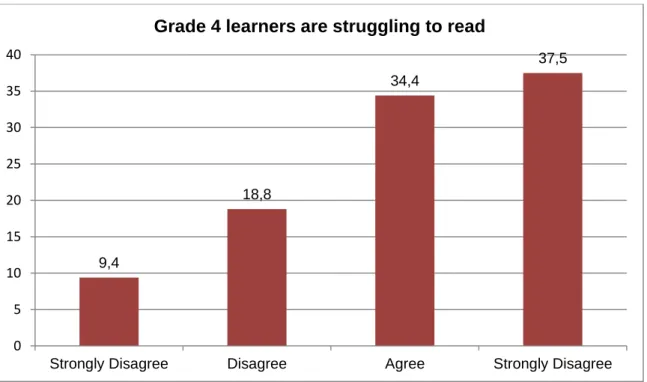
Grade 4 learners are struggling to read 68
Figure 4.6
Scope of reading 69
Figure 4.7
Policy document for my day to day teaching 70
Figure 4.8
Time frame for the scope 71
Figure 4.9
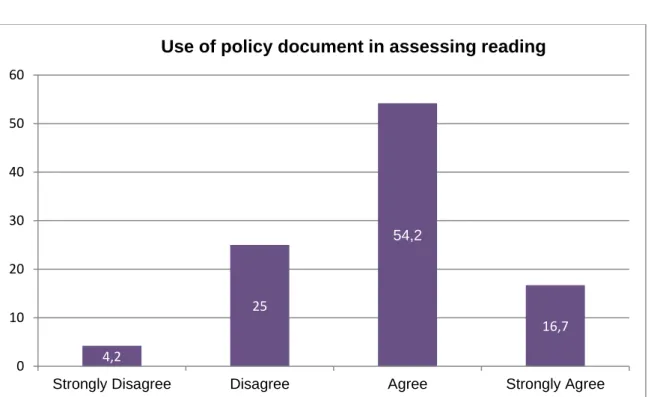
Assessing reading 72
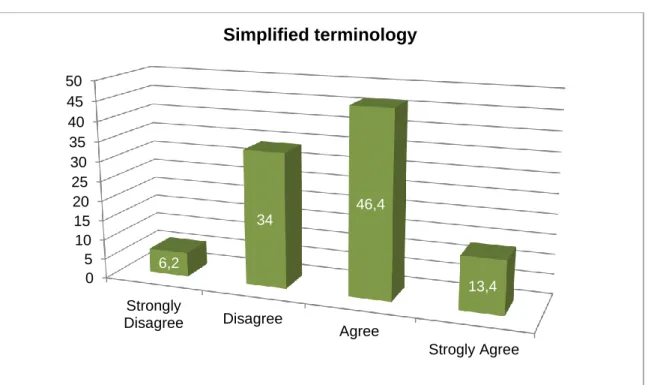
Figure 4.10
xv Figure 4.11 Teacher-centredness methods 74 Figure 4.12 Learner-centredness 75 Figure 4.13
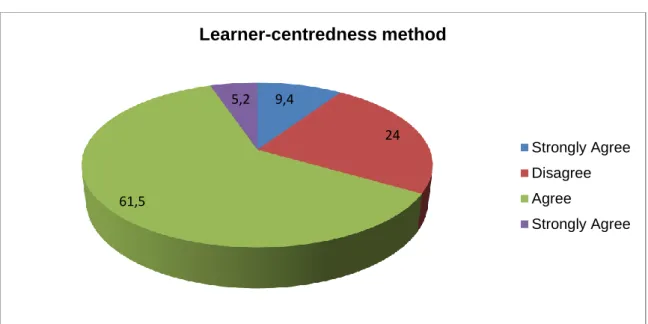
Combining teacher-centredness and learner-centredness 76
Figure 4.14
Guided reading 77
Figure 4.15
Difficulty in implementing guided reading 78
Figure 4.16
Professional support 79
Figure 4.17
NCS training on teaching reading skills 80
Figure 4.18
Professional development 81
Figure 4.19
Visits by curriculum advisors 82
Figure 4.20 Supply of LTSM 84 Figure 4.21 Quality teaching 85 Figure 4.22 Overcrowded of classes 87
xvi Figure 4.23
Parental involvement 89
Figure 4.24
Difficulties in developing lessons 90
Figure 4.25
Difficulties in developing a rubric 91
Figure 4.26
Difficulty in assessing a lesson 92
Figure 4.27
The role of experience and teacher efficacy in teaching reading 93
Figure 4.28
Professional commitment 94
Figure 4.29
Support of student motivation through self-reading 95
Figure 4.30
Openness to new methods 97
Figure 4.31
Positive teacher behaviour 98
Figure 4.32
High sense of efficacy 99
Figure 4.33
xvii Figure 4.34
Effects of English FAL, CAPS training 101
Figure 4.35
Duration of training CAPS 103
Figure 4.36
Terminology used in training in CAPS 104
Figure 4.37
CAPS training 105
Figure 4.38
Useful literacy information 106
ANNEXURES
Annexure A:
Letter to the District Manager asking permission to conduct research 182 Annexure B:
Letter to the principals requesting to conduct research in the schools 183 Annexure C:
Letter to the participants (teachers) 185
Annexure D:
Consent form (teachers) 187
Annexure E:
Teachers’ questionnaire 188
Annexure F:
1
CHAPTER ONE
ORIENTATION TO THE STUDY
1.1 INTRODUCTION
The focus of this study is the challenges experienced by Grade 4 teachers in teaching reading and writing. Reading and understanding written words are fundamental for literacy development and learning in general (Kumar, Reddy & Kam, 2005). However, since the introduction of curriculum 2005 in South Africa in 1997, reading is a challenge for all South African schools (Department of Education, 2006). Literature also reveals that reading and writing is a global challenge and governments throughout the world are implementing new strategies to improve reading and writing. This phenomenon is discussed as background information from a first world view, then from a developing world view and, finally, through an African lens, in particular, the South African education context.
On the international arena, the picture seems gloomy. For example, in the United States of America reading problems in primary schools have been associated with the fact that English is one of the most difficult languages to learn (Programme for International Student Assessment (PISA, 2006). Furthermore, in an international comparison of performance on reading assessment, United States of America 11th
grades performed very close to the bottom, behind students from the Philippines, Indonesia, Brazil and other third world nations, while in Canada researchers estimate that the prevalence of late-emerging reading disability is between 36 and 46%. Meanwhile in Britain a hundred and thirty studies have shown that 88% of below grade-level readers have significant weaknesses in cognitive skills (Lipka, 2006).
Developing countries such as Brazil, Indian and Chile, also have similar problems in reading. For example, in Brazil the level of reading skills is remaining stagnant (Snow, Bunns & Griffin, 1998). Reading scores of high school students, as reported by the National Assessment of Education Progress, have not improved over the last thirty years (Snow, Bunns & Griffin, 1998). While the Mathematics score has improved, reading remains stubbornly flat (Snow, Bunns & Griffin, 1998). The same studies also show that reading by Grade 12 students recently decreased. However, what caused
2
this decrease in reading in Grade 12 is related to poor reading in Grade 4. This study seeks to unravel why this is so.
Reading problems are also prevalent in under developed African countries like Tanzania, Zambia, Zimbabwe and Malawi (Heugh, 2008). According to Heugh (2008), the language policy and education in Southern Africa contribute to poor reading. For example, in Malawi one local language is used as a medium of instruction for only four years of early school (Ogbonnaya & Osiki, 2007). However, political changes in the early 1990s have resulted in a diminished use of African languages for political reasons (Heugh, 2008). Meanwhile, in Zimbabwe poor reading skills have become a reality for an alarming number of people.
With reference to South Africa, several studies and reports have been conducted to uncover the causes of poor reading and writing problems in schools, particularly the reading of English as it is used as the language of teaching and learning in South African schools (Department of Basic Education Report, 2010; Masola A, 2010; Schulze & Steyn, 2007; Setati, 2007; Coleman, 2004; Du Plessis & Naude, 2003). Although the study conducted by Setati (2007) was only concentrating on the poor performance of Mathematics students, it however reveals that poor English proficiency contributes to poor performance in other subjects. This study seeks to explore reading difficulties in selected primary schools in the Man’ombe Circuit, Mopani District of Limpopo Province because of the challenges faced by Grade 4 teachers in teaching reading and writing.
Emanating from the above research studies on reading difficulties and reading assessment reports, both internationally and especially in South African primary schools, the problem of reading difficulties is explained in conjunction with the formulation of the statement of the problem for this investigation.
1.2 THE RATIONALE OF THE STUDY
This study was centred on the challenges encountered by Grade 4 teachers in the teaching of reading and writing in primary schools in Man’ombe Circuit of the Mopani District. This challenge was brought about by the poor reading ability of particular
3
Intermediate Phase learners in the primary schools. This research was significant because it will aid in the development of theory, knowledge and practice. According to Brinkley and Kelly (2003:06), a reader is regarded as actively constructing meaning and as knowing and applying effective reading strategies. Such readers have positive attitudes towards reading and read for the purposes of information acquisition as well as recreation. Meaning is constructed in the interaction between the reader and what is read, confined to a specific reading experience. Reading in itself entails that learners come along with a repertoire of knowledge, skills, cognitive and meta-cognitive strategies which they apply during reading. Of concern are the findings by the Department of Education in 2014 that the competency of South African learners in reading is far below the set milestones with regard to particular age groups (Department of Basic Education, 2014:05). The results showed that only 14% met the required milestones in language competency, 33% were just meeting the requirement slightly below the norm while 63% constituting the bigger percentage were far below the expected standard set for their age group. The time is now ripe for conducting an investigation which will contribute to the improvement of literacy performance of learners in the primary schools; hence impacting on the overall performance in all subjects and all grades.
This research was also significant for the development of this country. Reading and writing is a key to the prosperity of any country and it is generally acknowledged that reading and literacy assessments indicate the success or failure of a country’s education. This study also has important implications for the instructional leaders, learners and literacy teachers. This study will provide suggestive, although not definitive evidence and a set of principles of learning about the ideas and practices that promote students’ academic achievement in reading and writing. Another anticipated value of the study is that it aggregates previous relevant studies on the issues and problems surrounding reading and writing and synthesises the findings of previous studies. The study also has the potential to help the national and provincial officials who are responsible for curriculum development to make informed decisions on the implementation of the new curriculum in South Africa.
The findings and recommended strategies of this study therefore could be used to motivate and empower Grade 4 teachers, Intermediate Phase teachers and heads of
4
department with the best strategies for effective teaching of Literacy. The findings of this study will also enable principals to organize continuous professional development training for Grade 4 teachers and the whole Intermediate Phase in their schools. The professional development training will equip teachers with the necessary skills for promoting effective teaching and learning in their classes.
This research is therefore very important for the schools because it complements the research findings of other studies conducted in this field and also addresses the challenges experienced by Grade 4 teachers in teaching reading and writing. The findings of this study will also assist the national and provincial curriculum planners and developers in making relevant decisions about the implementation of the new curriculum in South Africa.
1.3 PROBLEM FORMULATION
The major problem of this study is centred on the challenges encountered by Grade 4 teachers in the teaching of reading and writing in primary schools in Man’ombe Circuit of the Mopani District. This challenge is brought about by the poor reading ability of particular Intermediate Phase learners in the primary schools. A research conducted by the Department of Education in 2008 reveals that many learners of various ages and grade levels in the primary schools are not able to read and write (Department of Basic Education Report, 2010; Masola, 2010; Department of Education, 2008). The findings of the study revealed that only 14% are competent in reading and writing, 33% are slightly competent while 63% of them who constitute the majority, are completely incompetent in reading and writing. These findings are confirmed by the findings of the Southern and East Africa Consortium for Monitoring Education Quality (SACMEQ) (2011) which revealed that those primary school children are not able to compete with other children from other countries with regard to their competencies in reading.
This problem undermines all the efforts executed by the Department of Basic Education aimed at enhancing the quality of education in South African schools, for example the training of educators and the implementation of the new CAPS curriculum. There is also a concern by educators that the curriculum is very difficult to implement because the teachers were not adequately capacitated to implement it.
5
Research conducted by Bot (2005:02) also revealed that educators have challenges in managing classes, adhering to a set pace and also presenting lessons. Another gloomy picture is painted in a newspaper article entitled Classrooms in South Africa
are failing our children (Masola, 2010) which reported how language becomes a
barrier to learning in the classroom. The article further highlighted the shortage of books, overcrowding and low morale of teachers. The article concluded by commenting on the status of reading and asking why South African learners are the worst performing according to the Progress in International Reading Literacy Study (PIRLS) (2006) report. All these findings indicate that the introduction of the new CAPS curriculum in order to improve the quality of education has not been achieved.
Consequently, an intervention strategy, namely the Annual National Assessment (ANA) was developed and implemented to monitor the reading and writing performance of learners (Department of Basic Education, 2012:02). In 2014 the Department of Basic Education conducted a national Annual National Assessment to evaluate the performance of Grades 1 to 6 learners in reading, writing and numeracy. During the week of 16 to 19 September 2014 more than 7.3 million learners in Grades 1 to 6 and Grade 9 wrote the national assessment tests in Numeracy and Literacy (Department of Basic Education, 2014:07). This was the third successful large scale administration of the Annual National Assessment (ANA), a landmark assessment tool that annually measures progress in learner achievement in Literacy and Numeracy, focusing on the government’s prioritised goal of improving the quality of education. In the summary below, the average national percentages that learners achieved in languages are indicated:
6
Table 1.1: Average national percentages of Grade 4 learners achieved in languages
GRADE HOME LANGUAGE 2012 HOME LANGUAGE 2013 HOME LANGUAGE 2014
1 58 61 63 2 55 57 61 3 52 51 56 4 43 49 57 5 40 46 57 6 43 59 63 9 43 43 48
Overall performance in ANA from 2012 to 2014 shows an upward trend in performance with average percentage scores increasing annually. From the respective tables and figures it can be observed that the highest average mark in Home Language in the Foundation Phase was in Grade 1 (63.2%) and the lowest was in Grade 3 (51%). This pattern of decrease in performance from Grade 1 to Grade 3 was quite similar in three years. The table also reveals an upward trend in Grade 4 from 43% in 2012, 49% in 2013 and 59% in 2014. Grade 5 and 6 also revealed an upward trend from 40% (Grade 5) and 43% (Grade 6) in 2012, to 46% (2013) and 59% (Grade 6) in 2013 and 57 % (Grade 5) and 63% (Grade 6) in 2014. Overall, learner performance of Home Language in the Intermediate Phase and Grade 9 was comparatively lower.
The following National Grade 4 ANA results of 2012 to 2014 indicate that the South African learners still have challenges in reading and writing (Department of Basic Education, 2014):
Table 1.2: National Grade 4 ANA results of 2012 - 2014
Year First Additional language (English)
2012 34
2013 39
7
The results of 2014 bear witness to the collective commitment of the sector to quality education and improvement of performance. The overall performance in 2014 ANA shows an upward trend. The marks for English First Additional language generally stayed at low levels because it is a foreign language to all African learners. The Department of Basic Education believes that the Annual National Assessment will improve reading and writing competence of learners as well as the general quality of education. The Annual National Assessment will, furthermore, expose educators to best practices in Literacy assessment.
Educators who have gone through the educational transition following the democratisation of the Republic of South Africa have also noticed a steady decline in reading and writing standards of primary school learners (Department of Basic Education, 2008). Consequently, many educators believe that the challenges in the teaching of reading and writing in the primary schools are caused by the implementation of the Outcomes-Based Education (OBE) curriculum. In 2003 the Department of Education conducted several brief in-service trainings to familiarize the teachers with the new curriculum, namely the National Curriculum Statement. Teachers received one day of training but heads of department were not trained for their role. A major challenge was that the training was insufficient and the teachers were unsure about the new curriculum. Harley and Wedekind (2004) and Taylor (2006) point out that, during training workshops, teachers (including school management teams) were not familiar with the methods of teaching the curriculum nor were school management teams in possession of specific methods of effective curriculum management. The workshops provided teachers with only a shallow understanding of curriculum principles. Consequently, teachers failed to plan for the new curriculum accordingly. Taylor (2006:08) argues that schools still struggle to teach according to the policy specifications about outcomes-based teaching and integration of learning outcomes within and across learning areas because teachers’ understanding of the curriculum is still vague. What happened is that teachers were not adequately trained to implement the new curriculum effectively. Some teachers are still teaching in the 'old ways', that is, following textbooks rather than the Curriculum Assessment Policy Statement (CAPS) policy documents for each phase as is expected and stipulated in the overarching curriculum policy.
8
1.4 RESEARCH QUESTIONS
This study was guided by the following questions:
1.4.1 Primary question
Which challenges are faced by Grade 4 teachers and how do these challenges influence the implementation of effective reading practices in the Man’ombe Circuit of the Mopani District?
1.4.2 Secondary questions
What are the experiences of teachers in teaching Grade 4 and their roles and responsibilities in teaching reading skills effectively?
What is the current training of Grade 4 teachers and are these teachers adequately trained to teach reading skills in their classes successfully?
What alternative strategies could be identified by teachers for improving practice and the challenges faced by teachers in the teaching of reading skills in the classroom?
1.5 AIMS AND OBJECTIVES OF THE STUDY
In view of the problem statement and questions of this study the following primary aim of this study is to explore the challenges faced by Grade 4 teachers and how these challenges influence the implementation of effective reading practices in the Man’ombe Circuit of the Mopani District.
The study addressed the following specific objectives:
To explore the experience of teaching Grade 4 and their roles and responsibilities in the implementation of effective reading practices in the classroom;
To determine whether Grade 4 teachers are adequately trained to implement reading skills in their classes successfully;
9
To formulate alternative strategies that could be used to empower teachers for improving practice and challenges faced in the teaching of reading skills in the classroom.
1.6 RESEARCH DESIGN AND METHODOLOGY
This section provides a summary of the research design and methodology that were used in this study. The research design and methodology employed in this research are presented and discussed in detail in chapter three. The research design and methodology includes the following:
1.6.1 Research paradigm
Wahyuni (2012:69) defines research paradigm as a set of beliefs about the world and how it should be understood and studied. There are three types of commonly used paradigms, namely: the (a) positivist (objectivist) paradigm, (b) constructivist (interpretive) paradigm and (c) the pragmatist paradigm. I therefore believe that pragmatism is the suitable paradigm for this study because, according to Wahyuni (2012:71), “It is based on the belief that objectivist and subjectivist perspectives are not mutually exclusive”. Furthermore, I also believe that what was considered the best method in a particular study will also be the best method in understanding this research problem.
1.6.2 Research design
Mouton (2002:107) defines research design as “a set of guidelines and instructions that must be followed in addressing the research problem” while De Vos, Strydom, Fouche and Delport (2002:271) define research design as “the entire process of research from conceptualizing a problem to writing a narrative”.
In this study an explanatory sequential mixed methods research design was used to explore the challenges experienced by Grade 4 teachers in teaching reading. In other words, both quantitative and qualitative approaches were employed in this research (cf. 3.3.1 Research design, Diagram 3.1).
10
1.6.3 Research methodology
According to Mouton (2002:35), research methodology refers to the use of various methods in a study in order to discover valid knowledge for solving a particular problem. In this study I used both quantitative and qualitative methods to investigate the challenges experienced by Grade 4 teachers in teaching reading and writing. Quantitative and qualitative samples to be used in the study were first selected. Then the participants of this study were given questionnaires to complete. Thereafter, the questionnaires were complemented by unstructured interviews. Data collection was followed by the analysis of data in which the research findings were analysed. Lastly, recommendations were provided.
As indicated above, more details on research design and methodology, namely: research paradigm, research design and research methodology are provided in chapter three (cf. see 3.3.2.2).
1.7 ETHICAL CLEARANCE
According to Babbie (2001:118) the concept “ethics” is a matter associated with morality. Furthermore, Babbie (2001:118) explains that “ethical guidelines are standards used by researchers to evaluate their conduct”. Ethical standards were also considered in this study. Firstly, before I conducted this research, I applied for ethical clearance from the Ethical Clearance Board of the University of South Africa. Secondly, after receiving the ethical clearance certificate from the university, I made an application to the Mopani District Senior Manager in the Limpopo Province to request permission to conduct the study in the selected schools. Lastly, after getting the permission to conduct the study, I wrote letters to the Circuit Managers and Principals of the selected schools to outline the purpose and procedures of the study and to request permission to conduct the study in their schools. The ethical consideration of the participants is described in chapter three.
11
1.8 DEFINITION OF CONCEPTS
In this section the key concepts of the study are presented and defined in order to clarify their relationship to the study.
1.8.1 Reading
According to Schoenbach, Greenleaf, Cziko and Hurwitz (2004:38), “reading is a complex process of problem-solving in which the reader works to make sense of a text not just from the words and sentences on the page but also from the ideas, memories and knowledge evoked by those words and sentences”.
1.8.2 Instruction
Smith (2002:5) defines instruction as the “use of learning aims and objectives, subject materials, equipment, methodology, evaluation mechanisms and facilities in an instructional plan whose presentation enables learners to make progress towards specified educational goals”. Collins Thesaurus of the English Language- Complete and Unabridged Dictionary (2002) defines instruction as “the act of instructing, teaching or education, knowledge or information imparted or an item of such knowledge or information. In this study the concept ‘instruction’ will be used to refer to literacy teaching in the Foundation Phase.
1.8.3 Literacy
The concept literacy refers to the ability to read and write and the inability to read and write is called illiteracy or un-alphabetism (Soanes, 2002:526). The United Nations Educational, Scientific and Cultural Organisation (UNESO) defines literacy as “the skill to recognise, understand, translate, create, exchange information and compute, use printed word and written materials associated with varying contexts” (UNESCO, 2004). The two definitions imply that Literacy is important in the lives of all people and without it one cannot live a meaningful life.
12
1.8.4 Curriculum
Literature reveals several definitions of the concept of curriculum. According to Billings and Halstead (2012:78), the term ‘curriculum’ is derived from a Latin word “currere”, which means “to run”. Billings and Halstead (2012:78) explain that the concept has been evolving in stages or phases and over the years it been interpreted to mean “course of study” (Billings & Halstead, 2012:78). Tanner and Tanner (1975), on the other hand, define curriculum as a “planned instructional programme designed to help learners develop and extend individual capability” while Grundy (1987) defines it as a cultural and social construction. Furthermore, Marsh and Stafford (1984:2) and Ross (2000:8) define curriculum as “a course of study”, “what is to be learned” (Duminy & Songhe, 1980:04). In this study, curriculum will mean a course of study or what is to be learned.
1.8.5 Intermediate Phase
According to Lemmer and Van Wyk (2010:133), “the IntermediatePhase is part of the educational structure of the South African education system”. Lemmer and Van Wyk (2010:133) further explain that the “National Qualification Framework (NQF), established in terms of SAQA Act of 1995, provided for the scaffolding of a national learning system that integrates learning at all levels. In South Africa, the National Qualifications Framework consists of ten learning levels. The ten qualification levels are further divided into three bands, namely:
General Education and Training Band (GET) (Grades R-9) which consists of three phases, namely; the Foundation Phase (Grades R-3), the Intermediate Phase (Grades 4-6) and the Senior Phase (Grades 7-9).
Further Education and Training Band (Grades 10-12)
Higher Education and Training Band (University degrees and diplomas) (Lemmer & Van Wyk, 2010:133).
The various phases offer various subjects; for example, there are three learning programmes in the Foundation Phase, namely Numeracy, Literacy and Life Skills (Department of Education, 2004:28). The main focus of Literacy in the Foundation
13
Phase is to acquire and develop language. Home Language and a First Additional Language are offered from Grade R. In the Foundation Phase Literacy is also offered in all 11 official languages as both Home Languages and First Additional Languages (Department of Education, 2004:21). Learners are required to learn their Home Language and Additional Language. The advantages of learning two languages are captured by Lemmer and Van Wyk (2010:133) when they assert that “additive multilingualism makes it possible for learners to acquire complex skills such as reading and writing in their strongest language and learners can then transfer these skills to their Additional Language”.
1.8.6 Professional development
According to Trehearn (2010:14), “professional development has been a part of teaching since the early days of formal education and it has evolved throughout time”. Trehearn (2010:14) adds that from the onset of formal public education in the 1970s, teacher training was described by the public as “teacher education” or “in-service” and by the 1980s; it became “staff development”. Trehearn (2010:14) indicates that in the 1990s there was pressure to “professionalize” the teaching careers and this led to the formulation of the concept “professional development”. Various concepts were suggested, for example, Fullan, Hill and Crevola (2006) suggested “professional learning” as a more appropriate concept.
Dall’Alba and Sandberg (2006:384) describe professional development as “the formal courses and programmes in professional education and the formal and informal development of professional skill that occurs in the workplace”. According to Dall’Alba and Sandberg (2006:384), “the formal professional development courses may be directed either towards the people who are inexperienced and seeking to gain entry to a particular profession or toward experienced professionals who seek some form of continuing education outside their usual place of work”. The concept “professional development” is used in this study to refer to the support of educators who are teaching Literacy in the Intermediate Phase in order to improve learner performance in Literacy.
14
1.9 DEMARCATION OF THE STUDY
This study will be conducted in twenty primary schools in the Man’ombe Circuit in the Mopani District of the Limpopo Province. The participants of the study are forty educators from twenty selected schools. The main aim of the study is to investigate the challenges faced by Grade 4 teachers in the teaching of reading. This study also recommends strategies that can be implemented in the effecting teaching of reading in the intermediate phase.
1.10 LIMITATIONS OF THE STUDY
I identified the following limitations of the study during the design of the study:
This study was demarcated to one district of Limpopo Department of Education, namely Mopani District, while there are presently five districts. This demarcation limited the generalisation of the study findings to other districts.
This study was demarcated to one circuit of the Mopani District of the Limpopo Province, namely the Man’ombe Circuit. The Mopani District consists of 24 circuits. It would have been ideal if the study were extended to more circuits.
However, all the above limitations of the study do not jeopardize the significance of the study to the teachers, learners, curriculum advisors and policy makers.
1.11 CHAPTER OUTLINE
Chapter one
In this chapter the background to the study, problem formulation, research questions, aim and objectives of the study, research design and methodology, ethical considerations, rationale of the study, definition of concepts, demarcation of the study, limitation of the study and chapter outline are presented and described.
15
Chapter two
The review of literature will focus on the theoretical framework, effective teaching methods, the nature and scope of effective reading, strategies for effective reading and challenges faced by teachers in teaching reading and writing in Grade 4 classes. Various types of national and international literature will be reviewed, namely articles, journals, books, monographs and dissertations.
Chapter three
Chapter three will focus on research design and methodology of the study. In this chapter, research paradigm and design, research approaches, population and sampling, pilot study, sampling, data collection, validity and reliability, and ethical considerations will be discussed.
Chapter four
In chapter four, the thematic data analysis approach will be used to conduct qualitative analysis and interpretation. Charts and tables will be used to present, elucidate, analyse and interpret quantitative data.
Chapter five
Chapter five concludes the research report. In this chapter, the overview of the study, summary of discussion of findings and the recommendation of the study are presented.
1.12 CONCLUSION
Chapter one focussed on the background to the study, problem formulation, research questions, aim and objectives of the study, research design and methodology, ethical considerations, rationale of the study, definition of concepts, demarcation of the study,
16
limitation of the study and chapter outline. The next chapter will deal with the review of literature related to this study.
17
CHAPTER TWO LITERATURE REVIEW
2.1 INTRODUCTION
In the previous chapter, background of the study, rationale as well as the aims and objectives of the study were formulated. This section of literature review focuses, firstly, on the theoretical framework underpinning the study, with special attention to the teacher efficacy theory, teaching and learning strategies/methods, instructional approaches, and the behavioural approach and constructivist approach. The purpose of the review of the theoretical framework is to explore how various theories will foreground the problem of effective reading at school level for this particular investigation.
Secondly, the literature study explore various research studies conducted so far in respect of the nature, scope and strategies of effective reading, challenges faced by educators in implementing reading strategies and the perception of teachers on learners’ reading comprehension and skills. The purpose of this literature study is to determine “knowledge gaps” and try to uncover inconsistencies in as far as research on the concept of “reading” is concerned. Furthermore, reading is contextualised regarding inconsistencies which contribute to poor reading in the classroom, in particular, for Grade 4 learners in the Man’ombe Circuit.
2.2 THEORETICAL FRAMEWORK
This study is foregrounded in the social constructivist theory developed by Lev Vygotsky and the social cognitive theory developed by Albert Bandura.
2.2.1 The social constructivist theory (social constructivism)
The social constructivist theory was developed by Lev Vygotsky, who shared many of Piaget’s assumptions about how children learn, but he placed more emphasis on the social context of learning. For Vygotsy, culture and social context give the child the cognitive tools needed for development. The constructivist learning theory states that
18
learning is an active continuous process where learners take information from the environment, construct meaning and make interpretations based on their prior knowledge and experience (Killen, 2000). Since 1997, the South African school curriculum has been based on the constructivist theory (Jacobs, Vakalisa & Gawe, 2011). This theory, sometimes referred to as socio-constructivism, is an eclectic theory, which essentially stems from two older theories, namely experiential theory and behaviourist theory. Constructivist teaching practices help learners “to internalise and reshape, or transform new information” (Brooks & Brooks, 1993).
Constructivism is based on the belief that learners should be helped to construct knowledge that is meaningful and useful in their own lives. What is important is not so much what learners learn, but how they learn. The skills they learn are more important than the content (Jacobs et al., 2011). The constructivist approach as stated by Dunham, Well and White (2002) have learning as the key feature to construct meaning. Learning takes place as learners discuss and share problems and solutions in groups or pairs, with authentic tasks given within a meaningful context in order to promote individual learning and encourage learners to be engaged in a task. Learning takes place through collaboration, when learners discuss, share problems and solutions (Dunham, Well & White, 2002; Killen, 2000; Ankiewicz & De Swardt, 2001). The social constructivist theory promotes the learner centred approach to learning while at the same time encourages co-operative teaching. It therefore stands to reason that, through co-operative learning, learners’ poor reading can be alleviated. In South Africa, the new curricula promote this approach to learning. Notwithstanding this, it however appears that the problem of poor reading in the Mano’mbe circuit is not related to this. Furthermore, the researcher could not locate studies which support the social constructivist theory, particularly on how co-operative teaching contributes to meaningful learning in the classroom. This is so because learners in these grades under study are still at the stage where it is difficult for each one of them to teach one another.
According to Wearmouth (2004:55), language cannot be separated from society and is the main instrument through which social interaction takes place. A complex set of attitudes is formed which could have an influence on the language in a teaching situation. People form stereotypes about certain language groups that influence the
19
way in which an individual decodes and interprets information about an individual. Because many teachers form an attitude to language, they may categorise learners as having language disabilities or difficulties, purely because of their accent or pronunciation. Learners feel demotivated because they feel they are underachieving, which may hamper their overall language development. Many experience difficulties in their literacy development, because they come from diverse backgrounds and cultures.
In 1997 the first curriculum of the democratic South Africa, based on Outcomes-Based Education, namely; “Curriculum 2005” was introduced (Lemmer & Van Wyk, 2010:152). The educational philosophy which serves as the foundation for the new national curriculum is known as Outcomes Based Education (OBE). This philosophy is described as an approach in education in which decisions about the curriculum are driven by the outcomes the students should display by the end of the course (Harden, Crosby & Davis, 1999:08). The concept “learning outcomes” is, therefore, described as a statement or description of what (knowledge, skills and values) learners will be able to do, know or demonstrate at the end of the lesson (Department of Education, 2011). In outcomes education, the outcomes agreed for the curriculum guide what is taught and what is assessed. The educational outcomes are clearly specified and decisions about the content and how it is organised, the educational strategies, the teaching methods, the assessment procedures and the educational environment are made in the context of the stated learning outcomes (Harden, Crosby & Davis, 1999:08). The concept “assessment”, on the other hand, is a process of collecting, analysing and interpreting information to assist teachers, parents and other stakeholders in making decisions about the progress of learners (Department of Education, 2011). Assessment standards are, therefore, the criteria that are used to assess whether learners have achieved the learning outcomes.
Jansen (2003:12), tried to explain why many teachers are not able to differentiate between learning outcomes and assessment standards. Jansen indicates that:
Outcomes based education has several problems which contribute to high failure rate in schools. First, the language of innovation associated with outcomes based education is too complex,
20
confusing and at times contradictory. A teacher attempting to make sense of outcomes based education will not only have to come to terms with more than 50 different concepts and labels but also keep track of the changes in meaning and priorities afforded to these different labels over time.
The following is an example of Grade 4 English Reading learning outcomes and assessment standards:
Learning Objective 3: Reading and Viewing: The learner will be able to read and
view for information and enjoyment and respond critically to the aesthetic, cultural and emotional values in texts.
We know this when the learner:
Understands in a simple way some elements of stories: title, characters, plots, role of pictures.
Understands in a simple way, some elements of poetry: rhyme, same sound words and words which imitate their sounds.
Reads for information: Reads simple maps and plans, texts, diagrams, charts and graphs, media texts.
Reads for information and pleasure: fiction and non-fiction, evaluates books and solves puzzles.
Uses reference books and develops vocabulary: dictionary
(National Curriculum and Assessment Policy Statement Grade R-9, 2001).
A careful analysis of the assessment standards reveals that assessment standards are actually the content that should be taught to the learners and assessed.
A few months after implementation of Curriculum 2005, it was appropriately accused of being jargon-ridden and inaccessible in its discourse because its procedures for designing learning programmes were complex and sophisticated. This was partly due to poorly and overhasty introduction of the new curriculum into schools, without teachers being sufficiently prepared for the outcomes-based pedagogy.
21
The view of the researcher is that if the new curricula (CAPS) could give laissez faire to teachers, particularly on planning, organising and carrying out of activities within the classroom situation, poor reading can be alleviated. It is the fervent belief of the researcher that teachers who are given free roles but within the confines of the curricula can utilise their individual abilities to promote reading. Teachers are confined to plan, organise and carry out teaching within the prescribed parameters of the CAPS. The view of the researcher is that teachers are being handicapped by this confinement to provide meaningful teaching and learning in the classroom. Therefore, it is difficult for teachers to use a combination of various approaches for reading as they rush to complete the pace setter within a specified period, thus making it difficult to assist learners who lag behind in reading.
2.2.2 Social cognitive theory
The social cognitive theory was developed by Albert Bandura in 1986. The social cognitive theory posits that learning occurs in a social context with a dynamic and reciprocal interaction of the person, environment and behaviour. The social cognitive theory is based on the construct of self-efficacy. Self-efficacy refers to the level of a person’s confidence in his or her ability to successfully perform behaviour. Self-efficacy is unique to social cognitive theory although other theories have added this construct at later dates. Grounded in social cognitive theory, the construct of efficacy was originally formulated by Bandura (1977) within the context of self-regulatory processes that affect a person’s selection and construction of environments. Self-efficacy beliefs affect one’s cognitive, motivational, affective, and selection processes (Bandura, 1997). Implicit in Bandura’s (1997) work is the assumption that efficacy is a situation-specific attitude changing with circumstances and events. Perceived self-efficacy may be developed by such variables as previously experiencing successes in specific tasks and watching others be successful at similar functions. Bandura (1997) argued that “advantageous self-precepts of efficacy which foster active engagement in activities contribute to the growth of competencies in individuals”. In essence, perceived self-efficacy plays a major role in the amount of effort a person devotes to the accomplishment of a specific outcome because it is related to a person’s inherent beliefs in his or her capabilities to accomplish something, regardless of actual competencies.
22
Emanating from the self-efficacy perspective, teacher efficacy has emerged as an important construct in teacher education over the past two decades. Wheatley (2005) defined the concept as: “teachers’ beliefs in their ability to actualize the desired
outcomes” (p. 748). Therefore, teacher efficacy has been linked to teacher
effectiveness and appears to influence learners in their academic achievement, attitude and affective growth. Scholars have shown that teacher efficacy has positive effects on teacher effort and persistence in the face of difficulties (Dickie 2006; Soodak & Podell 1996), professional commitment (Tschannen-Moran & Hoy, 2001), student
motivation (Wigfield, 1994), and openness to new methods in teaching and positive
teacher behaviour (Ghaith & Shaaban, 1999). Moreover, Ghaith and Yaghi (1997)
mentioned that, in addition, teachers with a high sense of efficacy are more likely to use student-centred teaching strategies, while low-efficacious teachers tend to use teacher-directed strategies, such as didactic lectures and reading from textbooks (Dickie, 2006). Thus, the importance of teacher efficacy is well established and researched. Teachers’ sense of efficacy and reforms in curriculum has many common points (Goddard, Hoy, Woodfolk & Hoy, 2000). The changes teachers apply to their practices and adaptation to innovations require that they have a high sense of efficacy. Nevertheless, while both the implementation of reform in teacher education and teacher efficacy beliefs have been studied in depth over the years, there have been few research studies completed on the possible connection between the two. Furthermore, teacher efficacy has also been defined as “the extent to which the teacher believes he or she has the capacity to affect student performance” (Bernam et al., 1977), or as “teachers belief or conviction that they can influence how well students learn, even those who may be difficult or unmotivated” (Guskey & Passaro, 1994). Bandura (1977) identified teacher efficacy as a type of self-efficacy, a cognitive process in which people construct beliefs about their capacity to perform at a given level of attainment. These beliefs influence how much effort is put forth, how long they will persist in the face of obstacles, how resilient they are in dealing with failures, and how much stress or depression they experience in coping with demanding situations (Bandura, 1997).
In the light of the above definitions of teacher efficacy, it is extremely difficult for the researcher to make a logical judgement on how well prepared are teachers in the Mano’mbe circuit. It is also difficult for the researcher to verify how motivated these
23
teachers are in respect of implementing the CAPS curriculum. However, with the advent of CAPS, there are some efforts to advocate as far possible for teachers to get used to the objectives of curriculum. Therefore the researcher is motivated by these loopholes or “gaps” to investigate the level of teacher efficacy in respect of poor reading by Grade 4 learners in the Mano’mbe Circuit in relation to the implementation of the new curriculum. However, the efficacy of teachers in Mano’mbe Circuit is beset with a number of challenges as it seems teachers are unable to implement effective reading in primary schools. What causes this inability of the teachers to plan, organise and carry out these activities remains elusive. This study seeks to unravel and explore these challenges.
In the next paragraphs, different teaching strategies and methods are discussed in the context of this study.
2.3 EFFECTIVE TEACHING METHODS OR STRATEGIES
Teaching methods are a key to effective teaching and learning and should therefore be appropriately applied. There are two main groups of teaching methods, namely; teacher-centred methods and learner-centred methods.
(a) Teacher-centred methods
A teacher-centred method is one where activity in the class is centred on the teacher, for example, in the classroom, teacher-centred lessons are generally associated with traditional approaches to language learning, but teacher-centred activity can be useful in a variety of ways in teaching. Teacher-centred learning has the teacher at its centre in an active role and students in a passive, receptive role (Motschnig-Pitrik & Holzinger, 2002). Additionally, in the teacher-centred classroom, teachers are the primary source of knowledge, the focus of learning is to gain information as it is monitored to the student and rote learning or memorisation of teacher notes or lectures was the norm a few decades ago (Estes, 2004). According to Halperin (1994), most activities today in the vast majority of classrooms continue to reflect the older teacher-centred model of education wherein “students sit quietly, passively receiving words of wisdom being professed by the lone instructor in front of the class”.
24
Moreover, Bowers and Flinders (1990) describe a teacher centred model, teacher as “classroom manager” in which the learning process is likened to industrial production, within which students become “products”, and behaviours are expressions of “exit skills”, “competences”, and “outcomes”. A teacher-directed approach to learning recognises that children require achievable expectations and that the student must have a solid foundation before learning a new concept. For example, in order to learn multiplication properly, a student must understand repeated addition and grouping. This process cannot be discovered by most students without the direction of a teacher (Pedersen & Williams, 2004).
(b) Learner centredness methods
Student-centred learning, also called child-centred learning, is an approach to education focusing on the needs of the students, rather than those of others involved in the educational process, such as teachers and administrators (Student-centred learning-Wikipedia). Student-centred learning is focused on the student’s needs, abilities, interest, and learning styles with the teacher as a facilitator of learning. This classroom teaching method acknowledges the student voice as central to the learning experience for every learner (Kember, 2009). Student-centred learning allows students to actively participate in discovery learning processes from an autonomous viewpoint. Students consume the entire class constructing a new understanding of learning without being passive, but rather proactive (Douglas & Jaquith, 2009). A variety of hands-on activities are administered in order to promote successful learning. With the use of valuable learning skills, students are capable of achieving lifelong learning goals, which can further enhance student motivation in the classroom (Douglas & Jaquith, 2009).
Learner-centred teaching is related to “participative learning” which is referred to as learner activity, involvement of learners or active participation of learners (Jacobs, Vakalisa & Gawe, 2011). In classrooms where teachers employ a participative teaching approach, the teaching–learning relationships between teachers and learners are dynamic. There are times when the teacher is at the forefront and teacher-talk and teacher-activity predominate, and other times when learners are at forefront
25
and learner-talk and learner-activity predominate (Jacobs, Vakalisa et al., 2011). Gragg (1981) argues that anyone who is to teach another must see to it that his students listen to him in an attitude of creative receptivity. But the teacher will not succeed in leading his students to receive ideas with a lively and formative spirit unless he, himself, shows towards his students a comparable attitude of being willing to learn from them.
In implementing effective reading practices, the teacher should allow for a combination of instructional approaches. The selection of an approach should be linked to what learning outcomes are to be achieved at any given moment. There is no one best approach, but it depends on how learners’ activities are structured and how they will be implemented in the classroom. The view of the researcher is that if all these approaches listed below can be applied, depending on the needs of each individual learner, the problem of poor reading can be alleviated. In South Africa, studies on the best instructional methodology that could ease the problem of reading in schools are scarce. It stands to reason that a study of this nature is necessary if we are to explore the instructional approaches best for enhancing reading in schools.
The teacher-centred and learner-centred approaches are regarded as the two basic approaches to teaching, differing mainly according to what a teacher does, how learners are involved and how the lesson is planned (Killen, 2000). The way teaching is conducted should be such that it allows the learners to learn, therefore, the learning approach should be converted into the teaching approach (Killen, 2000). Instructional approaches also require diversification in order to effectively engage all students. Furthermore, Tomlinson (2001) has written extensively on the subject of differentiated instruction, distinguishing three elements of instruction that can be differentiated, namely; content, process and product. Differentiated instruction is designed to engage all students in learning by altering the process by which students are taught and allowing choices in the content and product (Choate, 2000). Alteration in content allows for learner choice and flexibility in the content being taught and the materials being used (Choate, 2000; Tomlinson, 2001).
Modification in instructional processes allows flexibility in activities that reinforce the learner’s understanding of key concepts (Choate, 2000; Tomlinson, 2001). Choice in