DOI 10.1007/s13174-011-0048-5
S I : F O M E - T H E F U T U R E O F M I D D L E WA R E
Developing highly complex distributed systems: a software
engineering perspective
Marco Autili·Paola Inverardi·Patrizio Pelliccione· Massimo Tivoli
Received: 8 November 2011 / Accepted: 12 November 2011 / Published online: 25 November 2011 © The Brazilian Computer Society 2011
Abstract What is a highly complex distributed system in the future era? What are the needs that may drive the de-velopment of such systems? And what is their life cycle? Is there any new challenge for Software Engineering (SE)? In this paper, we try to provide a partial answer to the above questions by characterizing few application domains that we consider of raising interest in the next years. Our thesis is that there is a need to rethink the whole software process for such systems. The traditional boundaries between static and dynamic activities disappear and development support mingles with run time support thus invading the middleware territory.
Keywords Future Internet·Service-oriented computing· Service-oriented middleware·Cloud computing·
Middleware-based software process
1 Introduction
The near future envisions a pervasive heterogeneous com-puting infrastructure that enables end-user, with different needs and expectations, to provide and access software ser-vices on a variety of deser-vices. This vision leads to the devel-opment of software systems that are more and more
com-M. Autili·P. Inverardi·P. Pelliccione (
)·M. Tivoli Università degli Studi di L’Aquila, L’Aquila, Italy e-mail:[email protected]M. Autili
e-mail:[email protected]
P. Inverardi
e-mail:[email protected]
M. Tivoli
e-mail:[email protected]
plex and large scale, namely Highly Complex Distributed Systems (HCDSs). To ensure that users experience the best Quality of Service (QoS) according to their needs and spe-cific contexts of use, HCDSs need to be context-aware, adaptable, and dependable. Heterogeneity of the underlying communication infrastructure, mobility inducing changes to the availability of resources and continuously evolv-ing requirements also call for adaptiveness and context-awareness.
The development and the execution of HCDSs is a big challenge and it is far to be solved. Indeed, HCDSs can-not rely on the classical desktop-centric assumption that the system execution environment and the networking environ-ment are known a priori at design-time. Rather, HCDSs will need to cope with variability, as software gets deployed on an increasingly large diversity of computing platforms and operates in different networking environments that cannot be statically anticipated. Therefore, context-awareness and adaptiveness become two key aspects to consider while de-veloping and running HCDSs. While providing/consuming services, HCDSs need to be aware of and adaptive to their
context, that is, the combination of user-centric data (e.g., information of interest for users according to their current circumstance, like requested QoS) and resource/computer-centric data (e.g., status of devices and network, like avail-ability of resources).
sys-16 J Internet Serv Appl (2012) 3:15–22 tems [11], etc. There is consensus, however, that the results
obtained so far are inadequate to deal with the challenges that HCDSs will face in the future. HCDSs require a co-ordinated strategy that covers the whole life cycle within one large ambitious action. As firstly stated in [23] and then mentioned in [3,6,24], the software development process life cycle needs to be rethought by breaking the traditional division among development phases. This is achieved by moving some development activities from design-time to deployment- and run-time, hence asking for new and more efficient techniques to support run-time activities. Hence, for HCDSs, the way software will be produced and used radically changes. From an engineering perspective, en-abling user-centrism, context-awareness, and adaptiveness requires the adoption of a dynamic development process that never stabilizes, rather it is permanently under main-tenance.
Software engineering best practices suggest the exploita-tion of a middleware that, through the provision of proper features, supports distributed applications by masking the distribution and heterogeneity of the execution and net-working environment [25]. In this respect, our thesis is that, for HCDSs, the frontier between application and mid-dleware cannot be a priori fixed once the application do-main has been identified, rather it varies as the applica-tion concerns vary. This moves forward the view of pro-posed middleware-based development processes, where an application-domain-specific middleware is selected and em-ployed once and for all, as proposed in [25]. The envisioned dynamic development process includes a perpetual phase in which the run-time-support features, offered by the in-herently dynamic middleware-layer, are selected and cus-tomized, assembled and evolved according to the charac-teristics of: the context, the execution environment, and the user needs.
In this paper, we propose a perpetual development pro-cess model for HCDSs (Sect. 2). We then consider dif-ferent application domains together with their supporting middleware to show how for HCDSs the frontier between application- and middleware-layer is unlikely to be tangible (Sect.3).
2 A perpetual engineering process model for highly complex distributed systems
Our vision is that the engineering of HCDSs needs a dy-namic software process where development-time activities mingle with run-time support, hence invading the middle-ware territory. This means that the dynamic softmiddle-ware pro-cess we envisage asks for an explicit characterization of the properties of the software artifacts and of their assump-tions, by taking into account perpetual evolution of both the application- and middleware-layer.
We recall that HCDSs need to be always in a up-to-date state, that is, they must be able to dynamically evolve in or-der to interact with a continuously changing environment that might affect the system behavior. The changes might be of different nature, e.g., changes of network topology (e.g., due to mobility), where new nodes appear and exist-ing nodes vanish; changes of the set of available compo-nents, that is new components may become available, exist-ing components may disappear, and new connections may be dynamically established; changes in the system require-ments that can happen while the system is providing services to its users.
In general, the process view focuses on the set of activi-ties, which characterize the production and the operation of a software system, and the set of artifacts elaborated/produced by such activities. These are traditionally divided into activ-ities related to the actual production of the software system (i.e., before deployment) and activities that are performed when the system can be executed and goes into operation (i.e., after deployment). Specification, Design, Validation, and Evolution activities vary depending on the organization and the type of system being developed. Each activity works on suitable abstractions (models) of the system and requires its language, methods and tools. Therefore, in the process life cycle, systems are represented (through models) at very different levels of abstraction, from requirements specifica-tion to code.
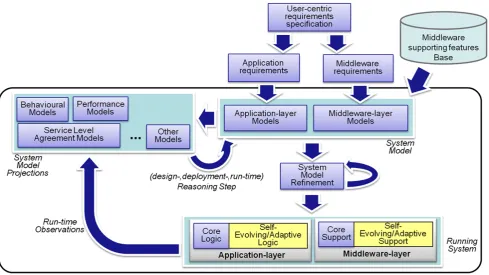
Fig. 1 The perpetual engineering process model
The envisioned process model sketched in Fig. 1 in-tends to support the systematic development of HCDSs from their design to their execution. The process model is based on model transformation techniques that serve the role of (i) refining user-centric requirement specifications to produce system code by accounting for middleware con-cerns, (ii) producing reasoning-technique-specific models (i.e., system model projections) from system models, em-bedding reasoning feedbacks into system models, and keep-ing them synchronized, (iii) propagatkeep-ing the interpretation of run-time observations of the running system to reasoning-technique-specific models, which in turn will enact possible changes to system models.
Referring to the point (i) above, as shown in Fig.1, sys-tem models are obtained by refining user-centric ment specifications into application and middleware require-ments, and then into system models. System models are the starting point for a refinement chain that leads to the code. This approach promotes system’s code synthesis that starts from the (a) application-layer models of the system and from (b) the middleware-layer models. Input (a) ac-counts for functional and nonfunctional concerns. Input (b) comes from the exploitation of amiddleware-layer support-ing features base. Indeed, our process model envisions a scenario in which middleware-layer supporting features are publicly available (e.g., into a registry) and can be discov-ered and selected to satisfy the specified middleware-layer requirements. Then model-to-code transformations are used
to build both the core code and the “generic code” of the system, from the application- down to the middleware-layer. The core code is the frozen unchanging portion of the sys-tem’s code. The generic code is an adaptive code that em-bodies a certain degree of variability (i.e., different ways of implementing a subsystem) making it capable to evolve. This code portion is evolving in the sense that, based on contextual information and possible changes of the user needs, the variability can be solved by considering alterna-tive code.
As discussed in point (ii), model-driven techniques sup-port the integration of different reasoning techniques, by propagating reasoning results into the various models, and by keeping them synchronized. Indeed, changes occurring in a model may have a strong impact on other interoperat-ing models. Therefore, through changes propagation, mod-els are kept in a consistent state. This issue becomes a com-plex task when dealing with multiple model notations. such a task is inevitable and requires to be managed by a dedi-cated approach. Recent development of model-driven tech-niques to bridge among different notations [17] makes this vision feasible.
18 J Internet Serv Appl (2012) 3:15–22 3 Breaking the frontier between application- and
middleware-layer
Middleware abstract the networking and computing environ-ment by providing well-known reusable solutions to recur-rent problems like heterogeneity, interoperability, security, and dependability. In this respect, since all these dimensions match distributed application requirements, middleware fa-cilitate the development of distributed applications.
Depending on the application domain of interest, differ-ent supporting middleware have been developed. As far as evolution of HCDSs is concerned, in the following we con-sider some application domains together with their com-puting paradigms. We then discuss how from software en-gineering perspective the frontier between application- and middleware-layer is unlikely to be distinguishable, once and for all, prior deployment.
3.1 Context-aware adaptable systems
During the last decade, context-awareness and adaptation have been receiving significant attention in many research areas [2,13,21,22]. The need for adapting software appli-cations becomes obvious for new development paradigms, such as mobile and pervasive computing, when dealing with context variations. The main drivers of the pervasive com-puting paradigm are then context-aware and adaptable soft-ware applications for resource-constrained mobile devices. They are characterized by their heterogeneity (e.g., in terms of hardware platform, operating system, and programming language) and limitedness (e.g., limited processor speed, limited battery lifetime, and slow unreliable and intermit-tent connection). Context awareness refers to the capability of observing pieces of information of the surrounding envi-ronment of the system that may influence the system behav-ior, and that are out of the system control (e.g., networks, user needs, resources, device status). Adaptability refers to systems whose behavior can be adjusted in response to the context variations in order to keep requirements satisfied.
The development and execution of context-aware adapt-able applications are big challenges for the research com-munity. The main difficulty is to provide (i) an easy-to-use and powerful programming technique for developers to ac-tually program adaptable applications, and (ii) a context-aware run-time support to properly handle contextual situa-tions. In the literature, many valuable approaches have been proposed to this purpose, e.g., [15,18,20,21,27,28,34– 37]. In particular, the work in [21] points out that current mainstream programming languages and runtime environ-ments provide little help for specifying adaptation and for supporting context awareness. This leads to a system design that is more complex and convoluted than needed; this mo-tivates the authors to discuss the need for a context-oriented
programming approach able to support context-dependent variations.
In general, three different development approaches to-ward adaptable applications can be distinguished: (i) self-contained applications that embed the adaptation logic as a part of the application itself; therefore, they are a priori instructed on how to handle dynamic changes in the en-vironment; (ii) tailored applications that are the result of an adaptation process which has been applied on a generic version of the application, at deployment time at latest; (iii) middleware-based adaptable applications in which the middleware embeds the adaptation logic in the form of met-alevel information on how the applications can be adapted.
Self-contained adaptable applications are inherently dy-namic but suffer the pay-off of the inevitable overhead im-posed by the adaptation logic. On the contrary, tailored adapted applications are suitable also for limited devices, but are dynamic only with respect to the environment at deploy-ment time, while remaining static with respect to the actual execution, i.e., they cannot natively self-adapt to runtime changes in the execution environment. Middleware-based adaptable applications emerge as the result of a line of re-search, started in early 2000, looking for general purposes solutions to externalize adaptation mechanisms from the ap-plication logic implementation [12]. To enable such an ex-ternalization, many middleware-based solutions have been proposed, e.g, [5,10]. While externalizing adaptation mech-anisms, middleware not only virtualize communications but also offer proper supporting features to access and manage the context. However, when tightly coupled to mobile de-vices and ubiquitous computing, context-aware adaptable applications become distributed in nature and intrinsically complex to be engineered and implemented. Engineering middleware-based context-aware adaptable applications for mobile devices is not easy due the limitedness and hetero-geneity of the targeted execution environment. Indeed, it is unfeasible a “one-for-all” and “all-in-one” middleware so-lution that embeds the adaptation logic together with all the needed metalevel information, while fitting the resource constraints imposed by the different mobile devices.
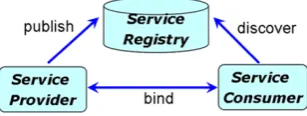
Fig. 2 Service oriented interaction pattern
account the resources status of the devices, its context, and user needs in a given instant), the core logic and the core support may evolve in response to context changes, e.g., some resources degrade or disappear.
3.2 Service-oriented systems
The notion of Service-Oriented Architecture (SOA) has been receiving significant attention within the software en-gineering community. SOA has been largely accepted as a well founded reference architectural style for a wide class of distributed software systems. SOA relies on the Service-Oriented Computing (SOC) paradigm that considers ser-vices as building blocks for developing distributed appli-cations. Networked devices and their hosted applications are then abstracted as autonomous loosely coupled services that are amenable to be integrated into a network of ser-vices to create flexible and dynamic processes, thanks to the service-oriented interaction pattern (depicted in Fig.2). With network connectivity being embedded in most com-puting devices, any networked device may seamlessly con-sume but also provide software applications over the net-work. SOC then introduces natural design abstractions to deal with ubiquitous networking environments [9].
Service-Oriented Middleware (SOM) supports the service-oriented interaction pattern through the provision of proper features for deploying, publishing, discovering, and binding services at run time, as well as, features for supporting extra-functional crosscutting concerns such as service semantics and QoS. Services play a central role in this vision as effective means to achieve interoperability be-tween heterogeneous parties of a business process and in-dependence from the underlying infrastructure. At the same time, they offer an open platform to build new value added service-based systems as a collaboration of available ser-vices. To support this view, the notion ofchoreographyis recently receiving growing interest as a key concept in form-ing HCDSs. Available services are discovered in the net-work and choreographed to fit users’ needs.
By following the SOA loose-coupling principle, services come from different sources, and are developed in different ways and, in general, without any coordination among de-velopers. In this scenario, for a given system, uniformity of the adopted SOC technologies and middleware cannot be as-sumed in general. Thus, an integration solution at the mid-dleware level is strongly required. Targeting the enterprise
domain, Enterprise Application Integration (EAI) and Enter-prise Service Bus (ESB) emerged as integration paradigms. An ESB can play the role of an intermediary among het-erogeneous middleware and offered interaction paradigms through the integration of a set of reusable bridges. Another approach [25] to protocol interoperability relies on reflec-tion, by dynamically plugging-in the most appropriate com-munication protocols according to the protocols sensed in the environment.
However, when engineering choreography-based service-oriented systems, where a large number of heterogeneous services are called to collaborate, it is unfeasible to assume a full knowledge of all the heterogeneity facets, e.g., all the interaction protocols run by these services. In fact, a chore-ography specification predicates on a set of abstract roles that, in the general case, are fulfilled only at run-time. In other words, the binding phase can take place only after concrete services have been discovered as suitable partic-ipants able to fulfill the required roles. Moreover, consid-ering the future Internet1 as the evolution of the current Internet, the service world is evolving at a very fast pace. For instance, up to now, a large amount of RESTful and/or WS* services can be discovered all over the Web (see Ser-viceFinder,2 WebServiceList,3 RemoteMethods,4 WSCE,5 ProgrammableWeb6).
In this scenario, it is likely to have several services pro-viding similar functionalities through different interfaces and/or interaction protocols. This implies that unforeseen communication protocols will emerge, newly coming ser-vices will appear, and running choreographies are required to evolve. This prevents the selection of a specific middle-ware that, in the best case, can support all the bridges that solve interoperability among all the kind of services that are known at selection time. This means that the frontier between a choreography-based service-oriented application and its SOM cannot be a priori established once and for all, rather it varies as the choreography evolves.
Considering mobile devices with limited capabilities that access and provide services makes matters worse. Indeed, mobile computing environments are much more heteroge-neous than conventional ones (see Sect.3.1). This further restricts the possibility of selecting a middleware that pro-vides seamless integration and interoperability through gen-eral purpose service-oriented interaction patterns (Fig. 2). The development of such a general purpose middleware is, per se, challenging since it should have built-in support for
1http://services.future-internet.eu/. 2http://www.service-finder.eu/. 3http://www.webservicelist.com/. 4http://www.remotemethods.com/.
20 J Internet Serv Appl (2012) 3:15–22 as many mobile applications, old and new, as possible. On
the other hand, mobile SOA applications need to rely on a run-time support for service access and provision, and will do so for long time in the future.
Therefore, a future engineering process is required to en-able the development of adapten-able and light-weight SOA-based applications together with SOM solutions capable to simultaneously evolve. When saying “capable to simulta-neously evolve” we mean that both the application logic and the middleware support should be “upgraded or down-graded” to obtain the right balancing that fits the restrictions imposed by different mobile devices and permits to keep the evolution pace of the service world.
3.3 Cloud systems
The general promise of Cloud computing [38], as a more recent paradigm with respect to Grid computing, is to of-fer distributed computing infrastructure together with a set of technologies for elaborating and storing data. CPU power and ready-to-use software are provisioned by sharing and coordinating resources within a virtual organization. The technology behind cloud computing promises cheaper and flexible IT components, that may be rented instead of ac-quired upfront, and quickly scaled up and down according to the end-user’s needs.
Mature virtualization technology is currently allowing the generalization of modern, more flexible service offer-ings ranging from virtualized hardware (Infrastructure as a Service—IaaS) such as Amazon EC2,7to application plat-forms (Platform as a Service—PaaS) such as SalesForce and Google Apps Engine, to complete applications such as Google Apps (Software as a Service—SaaS) [31]. More specifically, IaaS refers to very basic computing capability machines with operating systems and storage. PaaS is be-tween IaaS and SaaS and refers to an environment where to build and run an application platform in the cloud using whatever prebuilt components, and interfaces are provided by that particular PaaS platform. SaaS refers to a software delivery model in which ready-to-use applications and re-lated data are hosted in the cloud and made available over a network.
As it is clear from the discussion above, cloud systems constitute the most representative example of HCDSs. Pro-moting the philosophy of “Everything as a Service,” cloud computing offers the modular and distributed virtualization of a complete system at different levels, with the (promised) high added value of paying only for what is needed when it is needed, by making the used resources vary in accor-dance with user needs. Whether a user decides to make use of SaaS, PaaS, or IaaS or any combination of them for a
7http://aws.amazon.com/ec2.
particular solution depends on a number of factors, includ-ing the availability of a SaaS application that directly suits the needs, the level of expertise in developing custom appli-cations over PaaS, and the amount of required flexibility in many resources notably IaaS ones.
Since many years, SOC middleware are considered to be good candidates to support Grid and Cloud comput-ing [26]. On the one hand, many Grid-oriented middleware have been proposed, e.g., OurGrid [14], InteGrade [33], to enable the execution of computationally-intensive applica-tions on sets of highly distributed clusters of machines. On the other hand, Cloud computing as a more recent paradigm providing virtualization mechanisms specifically calls for a Cloud-oriented middleware for supporting more elastic and on-demand provision of remote networked resources at dif-ferent levels, i.e., at SaaS, PaaS, or IaaS level. Even though at these three levels we can have a uniform representation of services, each level requires specialized means for manag-ing services at run time, as well as, specialized features for supporting extra-functional crosscutting concerns.
In the following, we mention some middleware that sup-port cloud computing at the IaaS, PaaS, and SaaS levels.
Cloud middleware at the IaaS level OpenNebula8 (from the FP7 Reservoir project9) is an open-source platform for the management of virtualized data centers to build any type of IaaS cloud: private, public, virtual private, and hy-brid. OpenNebula aims at providing an open, flexible, ex-tensible, and comprehensive management layer to automate and orchestrate the operation of virtualized data centers by leveraging and integrating existing solutions. Eucalyp-tus10(which is used by Ubuntu for their cloud offering) en-ables the creation of IaaS private clouds, with no require-ments for retooling the organization’s existing IT infrastruc-ture or need to introduce specialized hardware. Eucalyptus promotes a modern infrastructure virtualization software to create elastic pools that can be dynamically scaled up or down depending on applications workloads. Cloud.com11is an open source cloud computing platform for building and managing private and public cloud. It enables simple and cost effective deployment, management, and configuration of cloud computing environments, regardless of where they are deployed.
Cloud middleware at the PaaS level WSO2 Stratos12 is an enterprise-grade and open PaaS, which provides the core
cloud services and essential building blocks required for de-veloping SaaS and cloud applications. Oracle Fusion Mid-dleware [31] identifies in the platform level of PaaS the right balance between flexibility and ease of use for the cloud customers. It proposes a foundation for realizing pri-vate cloud by delivering effective dynamic resourcing. Dy-namic resourcing is complemented by user interaction tech-nologies together with modularity, sharability, and compos-ability, thus providing a powerful self-service platform of reusable components.
Cloud middleware at the SaaS level In [1], it is presented an architecture for achieving multitenancy at the SaaS level. Multitenancy allows a single application to emulate mul-tiple application instances. This enables users to run ser-vices in a multitenant SOA framework and to build mul-titenant applications. This middleware is implemented on top of the WSO2 Carbon platform, already mentioned above when presenting cloud middleware at the PaaS level. Cloud-Pointe13 is a mobile SaaS middleware to enable mobile ac-cess to digital assets and shared documents on the cloud. CloudPointe solves data duplication, privacy, integrity, and security issues.
In line with the cloud computing philosophy, which dis-tinguishes the three computing levels mentioned above, all the efforts toward the realization of cloud middleware adopt a separation-of-concerns approach. To this end, each mid-dleware provides run-time support to the specific level it was born for. The perpetual engineering process model in Fig.1 can be then instantiated at any level spanning from SaaS to IaaS. This calls for a new dimension of flexibility to be taken into account when engineering cloud-based HCDSs; this flexibility somehow subverts the three-levels vision of cloud computing, where middleware at higher levels mask details of lower levels. Thus, as for context-aware adapt-able systems and SOA systems, this means that the frontier between the application and middleware cannot be defined once and for all. Even though the physical division imposed by the layered architecture of cloud computing is still valid, the future development process should provide a logical vi-sion that crosscuts the three levels of middleware. This al-lows us to reach the best tradeoff by suitably selecting the most appropriated supporting features of the different levels in the cloud.
4 Conclusion and final remarks
In this paper, we consider different kind of HCDSs within three application domains, namely, context-aware adaptable systems, service-oriented systems, and cloud systems. Our
13http://www.cloudxy.com.
thesis is that these systems require a futuristic dynamic de-velopment process that breaks the traditional boundaries be-tween static and dynamic activities as well as, the frontier between the application and middleware layer.
This means that, for HCDSs a standard development pro-cess, where an application-domain-specific middleware is selected once and for all and employed [25], is unfeasi-ble. The envisioned dynamic development process includes a perpetual phase in which the run-time-support features of-fered by the middleware-layer are selected and customized, assembled and evolved together with the application logic, the characteristics of the execution context, as well as, user needs. In other words, both the application logic and the middleware support should be capable to simultaneously evolve, meaning that they should be “upgraded or down-graded” to obtain the right balancing that fits the application requirements, the computing, and the networking environ-ment, while satisfying the user expectations.
Acknowledgements This work is supported by the European Com-munity’s Seventh Framework Programme FP7/2007-2013 under grant agreements: number 257178 (project CHOReOS—Large Scale Chore-ographies for the Future Internet—www.choreos.eu), and number 231167 (project CONNECT—Emergent Connectors for Eternal Soft-ware Intensive Networked Systems—http://connect-forever.eu/).
References
1. Azeez A, Perera S, Gamage D, Linton R, Siriwardana P, Lee-laratne D, Weerawarana S, Fremantle P (2010) Multi-tenant SOA middleware for cloud computing. In: Proceedings of CLOUD’2010, pp 458–465
2. Baldauf M, Dustdar S, Rosenberg F (2007) A survey on context-aware systems. Int J Ad Hoc Ubiquitous Comput 2(4):263–277 3. Baresi L, Ghezzi C (2010) The disappearing boundary between
development-time and run-time. In: Proceedings of FoSER’10. ACM, New York, pp 17–22
4. Bencomo N, Blair GS (2009) Using architecture models to support the generation and operation of component-based adaptive sys-tems. In: Software engineering for self-adaptive systems, pp 183– 200
5. Blair GS, Coulson G, Andersen A, Blair L, Clarke M, Costa F, Duran-Limon H, Fitzpatrick T, Johnston L, Moreira R, Parla-vantzas N, Saikoski K (2001) The design and implementation of open ORB 2. IEEE Distrib Syst Online 2:2001
6. Blair G, Bencomo N, France RB (2009) [email protected]. Computer 42:22–27.http://doi.ieeecomputersociety.org/10.1109/ MC.2009.326
7. Bucchiarone A, Pelliccione P, Vattani C, Runge O (2009) Self-Repairing systems modeling and verification using AGG. In: WICSA/ECSA’09, pp 181–190
8. Caporuscio M, Marco AD, Inverardi P (2007) Model-based sys-tem reconfiguration for dynamic performance management. J Syst Softw 80(4)
9. Caporuscio M, Raverdy PG, Issarny V (2011) UbiSOAP: a service oriented middleware for ubiquitous networking. IEEE Trans Serv Comput 99
22 J Internet Serv Appl (2012) 3:15–22 11. Cardellini V, Casalicchio E, Grassi V, Lo Presti F, Mirandola R
(2009) Qos-driven runtime adaptation of service oriented archi-tectures. In: ESEC/FSE ’09. ACM, New York
12. wen Cheng S, cheng Huang A, Garlan D, Schmerl B, Steenkiste P (2004) Rainbow: architecture-based self-adaptation with reusable infrastructure. IEEE Comput 37:46–54
13. Cheng BHC, de Lemos R, Giese H, Inverardi P, Magee J (eds) (2009) Software engineering for self-adaptive systems (outcome of a Dagstuhl Seminar). LNCS, vol 5525. Springer, Berlin 14. Cirne W, Brasileiro F, Andrade N, Costa L, Andrade A, Novaes R,
Mowbray M (2006) Labs of the world, unite!!! J Grid Comput 4 15. Cowan C, Black A, Krasic C, Pu C, Walpole J, Consel C,
Volan-schi E (1996) Specialization classes: an object framework for spe-cialization. In: Proceedings of IWOOOS’96, Seattle, Washington 16. Epifani I, Ghezzi C, Mirandola R, Tamburrelli G (2009) Model evolution by run-time parameter adaptation. In: Proceedings of the 31st ICSE, pp 111–121
17. Eramo R, Malavolta I, Muccini H, Pelliccione P, Pierantonio A (2011) A model-driven approach to automate the propagation of changes among Architecture Description Languages. Softw Syst Model
18. Gamma E, Helm R, Johnson R, Vlissides JM (1995) Design pat-terns: elements of reusable object-oriented software. Addison-Wesley, Reading
19. Garlan D, Cheng SW, Huang AC, Schmerl B, Steenkiste P (2004) Rainbow: architecture-based self-adaptation with reusable infras-tructure. Computer 37(10):46–54
20. Henricksen K, Indulska J (2005) Developing context-aware per-vasive computing applications: models and approach. Perper-vasive Mob Comput 2:2005
21. Hirschfeld R, Costanza P, Nierstrasz O (2008) Context-oriented programming. J Object Technol 7(3):125–151
22. yi Hong J, ho Suh E, Kim SJ (2009) Context-aware systems: a literature review and classification. Expert Syst Appl 36(4): 8509–8522
23. Inverardi P (2007) Software of the future is the future of software. In: Trustworthy global computing. LNCS, vol 4661, pp 69–85 24. Inverardi P, Tivoli M (2009) Software engineering. In: The
fu-ture of software: adaptation and dependability. Springer, Berlin, pp 1–31
25. Issarny V, Caporuscio M, Georgantas N (2007) A perspective on the future of middleware-based software engineering. In: Future of software engineering
26. Issarny V, Georgantas N, Hachem S, Zarras A, Vassiliadist P, Au-tili M, Gerosa M, Hamida A (2011) Service-oriented middleware for the future Internet: state of the art and research directions. J In-ternet Serv Appl 2:23–45
27. Keays R, Rakotonirainy A (2003) Context-oriented programming. In: Proceedings of MobiDe’03. ACM, New York
28. Kochan S (2003) Programming in Objective-C. Sams, Indianapo-lis
29. Liu H, Parashar M, Member S (2005) Accord: a programming framework for autonomic applications. IEEE Trans Syst Man Cy-bern 36:341–352
30. Peper C, Schneider D (2008) Component engineering for adaptive ad-hoc systems. In: SEAMS’08. ACM, New York
31. Piec M (2011) Platform-as-a-service private cloud with oracle fusion middleware.http://www.oracle.com/us/technologies/cloud/ 036500.pdf. Last ac: 28 Oct, 2011
32. Rouvoy R, Barone P, Ding Y, Eliassen F, Hallsteinsen SO, Lorenzo J, Mamelli A, Scholz U (2009) Music: middleware support for self-adaptation in ubiquitous and service-oriented environments. In: Software engineering for self-adaptive systems, pp 164–182 33. da Silva e Silva FJ, Kon F, Goldman A, Finger M, de Camargo RY,
Filho FC, Costa FM (2010) Application execution management on the InteGrade opportunistic grid middleware. J Parallel Distrib Comput 70
34. Tanter É, Gybels K, Denker M, Bergel A (2006) Context-aware aspects. In: Software composition. LNCS, vol 4089, pp 227–242 35. Villazón A, Binder W, Ansaloni D, Moret P (2009) Advanced
run-time adaptation for java. In: Proceedings of GPCE’09. ACM, New York, pp 85–94
36. Villazón A, Binder W, Ansaloni D, Moret P (2009) Hotwave: cre-ating adaptive tools with dynamic aspect-oriented programming in java. In: Proceedings of GPCE’09. ACM, New York, pp 95–98 37. Volanschi EN, Consel C, Muller G, Cowan C (1997) Declarative
specialization of object-oriented programs. In: OOPSLA, pp 286– 300