S T U D Y P R O T O C O L
Open Access
Community-based implementation and
effectiveness in a randomized trial of a risk
reduction intervention for HIV-serodiscordant
couples: study protocol
Alison B Hamilton
1,2*, Brian S Mittman
2, John K Williams
1, Honghu H Liu
3, Alicia M Eccles
1,
Craig S Hutchinson
1and Gail E Wyatt
1Abstract
Background:The HIV/AIDS epidemic continues to disproportionately affect African American communities in the US, particularly those located in urban areas. Despite the fact that HIV is often transmitted from one sexual partner to another, most HIV prevention interventions have focused only on individuals, rather than couples. This five-year study investigates community-based implementation, effectiveness, and sustainability of‘Eban II,’an evidence-based risk reduction intervention for African-American heterosexual, serodiscordant couples.
Methods/design:This hybrid implementation/effectiveness implementation study is guided by organizational change theory as conceptualized in the Texas Christian University Program Change Model (PCM), a model of phased organizational change from exposure to adoption, implementation, and sustainability. The primary implementation aims are to assist 10 community-based organizations (CBOs) to implement and sustain Eban II; specifically, to partner with CBOs to expose providers to the intervention; facilitate its adoption, implementation and sustainment; and to evaluate processes and determinants of implementation, effectiveness, fidelity, and sustainment. The primary effectiveness aim is to evaluate the effect of Eban II on participant (n = 200 couples) outcomes, specifically incidents of protected sex and proportion of condom use. We will also determine the cost-effectiveness of implementation, as measured by implementation costs and potential cost savings. A mixed methods evaluation will examine implementation at the agency level; staff members from the CBOs will complete baseline measures of organizational context and climate, while key stakeholders will be interviewed periodically throughout implementation. Effectiveness of Eban II will be assessed using a randomized delayed enrollment (waitlist) control design to evaluate the impact of treatment on outcomes at posttest and three-month follow-up. Multi-level hierarchical modeling with a multi-level nested structure will be used to evaluate the effects of agency- and couples-level characteristics on couples-level outcomes (e.g., condom use).
Discussion:This study will produce important information regarding the value of the Eban II program and a
theory-guided implementation process and tools designed for use in implementing Eban II and other evidence-based programs in demographically diverse, resource-constrained treatment settings.
Trial registration:NCT00644163
Keywords:Implementation science, Hybrid design, HIV prevention, Serodiscordance, Couples, African Americans, Behavioral intervention, Sustainability
* Correspondence:[email protected] 1
UCLA Department of Psychiatry and Biobehavioral Sciences, 760 Westwood Plaza, 38-240 NPI, Box 175919, 90024-1759 Los Angeles, CA, USA
2
VA Greater Los Angeles Healthcare System, 16111 Plummer Street, 91343 Sepulveda, CA, USA
Full list of author information is available at the end of the article
Background
The HIV/AIDS epidemic continues to disproportionately affect African American communities in the US, particu-larly those located in urban areas [1,2]. Of all racial/eth-nic groups in the United States, African Americans have experienced the greatest burden due to HIV/AIDS, ac-counting for greatest proportion of HIV infections at all stages of the disease. HIV/AIDS remains a health dispar-ity, with Africans Americans representing 44% of all new HIV infections among adults and adolescents (aged 13 years or older) in 2010, while only representing 12% to 14% of the population. In addition, some of the highest rates of sexually transmitted infections (STIs) are found among African Americans, further heightening risk for HIV transmission [3-5].
There is growing evidence that HIV prevention among African American populations is best accomplished within the context of risk for transmission among couples because relationship dynamics and cultural beliefs sometimes contradict HIV prevention messages [6,7]. Research has documented low rates of condom use among some Afri-can AmeriAfri-cans with steady partners [8], among AfriAfri-can American HIV-positive women [9-11], and among the HIV-negative partners of HIV-positive African American women [11,12]. Among heterosexual relationships, African American women’s decisions to negotiate condom use are often influenced by their desire for a partner and a long-term relationship [13]. Risks for HIV infection can be heightened when either partner does not accurately per-ceive their risks for infection, when concurrent partners exist outside of the primary relationship, or when one partner is unable to negotiate gender and power dynamics in a relationship [14]. Therefore, HIV prevention interven-tions need to target sexual behavior change in the context of the relationships where risk for transmission occurs.
Recognizing the importance of relationship dynamics, a small number of couples-based interventions have been developed and found to be efficacious in reducing risky sexual behaviors, increasing condom use, reducing STI/ HIV transmission, and sustaining these outcomes [15,16]. However, these interventions have not focused specifically on heterosexual African Americans and their dispropor-tionate HIV risks. The National Institute of Mental Health (NIMH)-funded Eban risk reduction intervention was designed to fill that gap. Guided by both social cognitive and culturally-grounded theories [17-20], the Eban intervention is delivered by trained male–female dyads in individual, couple-specific, and group sessions. A cluster randomized trial tested the efficacy of Eban with 535 couples in four U.S. cities [21]. Participants in the intervention condition reported significantly reduced rates of unprotected sex and increased rates of condom use at post-test, six- and 12-month follow-ups, com-pared to the control condition [21]. These findings
offered a strong foundation for subsequent clinical effect-iveness and implementation studies to generate additional evidence regarding Eban intervention effectiveness in rou-tine practice settings, and to design and evaluate imple-mentation strategies intended to facilitate adoption of the Eban intervention by community agencies and other ap-propriate service delivery organizations.
The sequence of research activities described above is suggested by prevailing frameworks guiding the design of integrated programs of clinical and health promotion re-search, suggesting a sequence of studies to develop an in-novative clinical program, test and refine the program through clinical efficacy and effectiveness studies, and then facilitate its implementation, sustainment and spread. These frameworks note that clinical efficacy and effective-ness studies should be followed by pre-implementation research to assess barriers and facilitators to program adoption, followed by pilot implementation studies and larger trials to evaluate multi-component programs to facilitate routine program adoption in diverse settings [22,23]. Thus, achieving the long-term goal of facilitating large-scale implementation of Eban in agencies that serve HIV-positive and at-risk African Americans requires a solid foundation of effectiveness evidence, insights into barriers and facilitators to adoption and implementation of Eban with high fidelity, and evidence of the effective-ness of specific strategies to facilitate adoption.
Although traditional ‘phased’ or ‘pipeline’ models of clinical research suggest a sequence of separate re-search activities (clinical efficacy, clinical effectiveness, pre-implementation, implementation, scale-up/spread), researchers are increasingly recognizing the need to combine phases to reduce the time and resources re-quired to develop innovative clinical programs, estab-lish their effectiveness, and facilitate their widespread adoption and benefit [24]. Recognizing the considerable time delays involved in completing each distinct phase in this sequence of research activities, Curranet al. [25] described hybrid effectiveness-implementation study designs that combine multiple research activities into a single study to expedite progress across the research pipeline. With its hybrid design, this project will offer guidance to future researchers interested in moving rapidly but thoughtfully from efficacy and effectiveness research into implementation research, particularly in resource-constrained settings where implementation barriers may differ from those seen in efficacy studies. Specific Aims are as follows:
Primary implementation aims Aim one
specifically, to partner with CBOs to expose providers to the intervention through training, facilitate its adoption and implementation, and sustain practice.
Aim two
To evaluate processes and determinants of Eban imple-mentation and Eban clinical effectiveness to strengthen the clinical intervention and its implementation by:
1. Assessing acceptability of the intervention, and barriers and facilitators to its implementation; 2. Examining key determinants of fidelity;
3. Understanding how the project’s implementation strategies and tools affect adoption, fidelity, and effectiveness; and
4. Examining key determinants of sustainability.
Primary effectiveness aim Aim three
To evaluate the effect of intervention implementation on participant outcomes, specifically incidents of pro-tected sex and proportion of condom use.
Secondary aim
To determine the cost-effectiveness of implementation of Eban II, as measured by implementation costs and potential cost savings associated with a couples-based intervention.
The study incorporates several innovative features. First, planning, governance, and specific implementation activities will be conducted in full partnership between the research team and community stakeholders, to facili-tate sustainability following completion of the grant-funded project. The implementation process will involve the State of California Implementation Network (SCIN), a reciprocal, multidirectional information and technol-ogy exchange between the research team and the collab-orating CBOs, an approach designed to foster effective agency adoption [26]. Second, implementation of Eban II in multiple geographically, culturally, and functionally disparate agencies requires grounding in organizational change theory because participating agencies are being asked to embrace a new evidence-based, couples-focused intervention approach. Like individual behavior change, organizational change is notoriously difficult [27]. Historically, interventions introduced into clinical settings with little attention to the context have generally met with resistance and limited success. Greater atten-tion is now being paid to strategies for supporting organizational change, particularly by focusing on identi-fying barriers and facilitators to implementation and using this information to refine implementation strat-egies [28,29]. For example, organizational ‘readiness for change’[30], as well as staff expectations, perceptions of
their workload, and attitudes toward evidence-based practices may encourage or inhibit adoption of these practices [31], and thus are critical to investigate and ad-dress [32]. In this study, it will also be critical to examine the broader context in which the participating agencies are situated, as the pressures that these agencies face may well impact their unique and collective capacity to deliver and sustain evidence-based practices. Third, this implementation study is organized conceptually around the Texas Christian University (TCU) Program Change Model (PCM) [33], which was developed to guide the process of transferring research into practice [34]. The PCM involves four action phases: training, adoption, im-plementation, and practice improvement. Fourth, the project incorporates a nine-month sustainability period in which time research team involvement in site-level activities will be limited to ‘arms-length’ evaluation, without any intervention or implementation-related ac-tivities. As recently noted in a systematic review, very lit-tle research has examined the extent, nature, or impact of adaptations to interventions that have been imple-mented [35]. This project will serve to fill a gap in our knowledge about sustainability as it unfolds prospect-ively. Finally, this project is unique in its incorporation of a cost-effectiveness analysis during the course of im-plementation. This analysis stands to contribute substan-tially to the ways in which costs affect and are impacted by community-based implementation of evidence-based practices.
Methods/design Overview of study design
Using an effectiveness/implementation hybrid type II re-search design [25], this study will investigate factors as-sociated with successful implementation of Eban in a sample of routine service delivery settings, and real-world clinical effectiveness of the intervention as it is de-livered to 180 couples in these settings.
To achieve our two implementation evaluation aims (aims one and two), a mixed methods evaluation will be conducted throughout each phase of the TCU Program Change Model. To achieve our intervention effectiveness aim (aim three), we will randomly assign couples in a 2:1 design to Eban II (intervention) or to a waitlist compari-son condition in each of the participating CBOs. This design allows us to compare the relative effectiveness of the intervention with couples that receive the interven-tion immediately vs. those who are waitlisted.
and cost effectiveness of the intervention for couples. Staff and organizational characteristics will be assessed at all participating CBOs in the first year, and engage-ment and training will be priorities. Following successful training, implementation of Eban II will commence in two randomly selected CBOs in the first year. The remaining eight CBOs will be phased in randomly with refresher trainings in years two through five. At first glance, it might seem optimal to start all participating agencies at the same ‘baseline,’ but the structure of the funding mechanism makes such a design prohibitive due to the costs associated with implementation in each agency. By limiting training to two to three CBOs per year, we will be able to devote sufficient effort to test whether our implementation approach does in fact contribute to high fidelity implementation. Also, this randomized ‘roll-out’ implementation, or dynamic wait-listed design, has very good statistical properties, includ-ing higher power than traditional wait-listed designs [37] and less vulnerability to external, uncontrolled factors [38]. After each of the collaborating agencies completes three eight-week intervention cycles, sustainability will be studied for nine months, during which time only technical assistance will be provided, as discussed fur-ther below.
Participating agencies and staff
HIV infection rates in California rank third in the U.S.; Los Angeles and Alameda Counties have the largest con-centrations of African Americans in California and, ac-cordingly, the highest proportion of African American HIV/AIDS cases [39]. A recent report indicates that the City of Oakland (Alameda County) has the highest and most rapidly growing incidence rate of diagnosed and undiagnosed HIV in the country and is struggling with what has been referred to in the news as an‘unstoppable epidemic’ [40]. The State of California and local stake-holders have responded to this challenge with active pre-vention programs such as Get Screened Oakland [41,42]. We recruited ten HIV/AIDS CBOs in Los Angeles and Alameda Counties to serve as study sites. All of these agencies are well-established CBOs that serve large numbers of HIV-infected African Americans. In fact, these CBOs expressed particular interest in offering ser-vices to couples because they currently do not provide such services. These agencies were identified as having met seven key elements identified in the literature as im-portant in determining agencies’readiness to implement a new intervention [43]. These include: a respected local community advocate; strong administrative support; for-mal organizational commitments and stability; commit-ment of necessary resources to incorporate the program into existing services; program credibility within the community; adequate facilitators/staff; and potential for
the program to be self-sustaining or willing to seek add-itional funding. In addition, all of the agencies have ad-equate space for conducting private assessment and group sessions.
Approximately 200 staff members from these agencies (~20 per agency) will complete the staff- and organizational-level measures described below. A subset of these individuals (approximately 50‘key stakeholders,’ including agency administrators, site coordinators, and facilitators) who are directly involved in implementation will complete semi-structured interviews.
In addition, in order to support potential scale up and spread of the intervention, each of the agencies will be asked later in the project to identify two to three add-itional agencies that may be interested in learning about Eban II. In the last six months of the study, the Manage-ment Team will meet at a retreat with the key stake-holders and representatives from the agencies that they have identified. Preliminary findings will be discussed, and participating agencies will describe their experiences and engage in dialogue about implementation of Eban II.
Couples-level sample
The study employs multiple community outreach and marketing strategies to recruit and screen 215 to 230 couples, expecting to enroll 180 African American het-erosexual couples. The dropout rate in the Eban ran-domized controlled trial (RCT) was low at 13% in the intervention condition [44]. We conservatively project a 17% to 22% overall attrition rate since this study will be conducted in CBOs rather than in university-based study sites. Eligibility criteria are as follows:
1. Self-identified heterosexuals
2. One partner is HIV-negative, the other is HIV-positive, and partners know each other’s HIV status; serostatus confirmed through written verification from testing facility.
3. At least one partner identifies as African American. 4. Each partner is no younger than 18 and no older
than 60.
5. Couple has been in a relationship for at least six months and intends to remain together.
6. Couple reports having unprotected intercourse at least once in the previous 90 days.
7. Couple has no plans to relocate beyond a reasonable distance from the study site.
8. Members of couple are willing to complete the study even if their relationship ends.
Activities and procedures
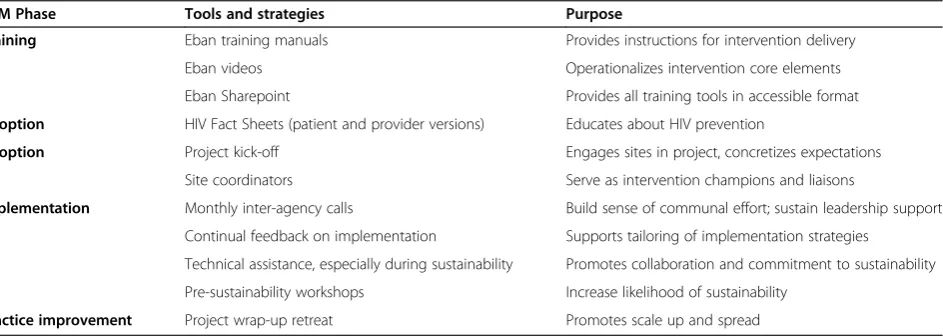
several strategies and tools that support implementation in the participating CBOs (see Table 1).
With these strategies and tools, our goal is to ensure that the intervention and its implementation become sustainable beyond the life of the project, and that par-ticipating agencies will be motivated to share their expe-riences with other agencies that may be interested in serving HIV-serodiscordant couples, i.e., in spreading the intervention across service agencies.
Phase one: training and pre-implementation (year one) Three main activities occur in year one: a project kick-off, training, and baseline (developmental) evaluation of staff and organizational factors. As a key strategy supporting implementation, we will hold an official ‘kick-off,’ i.e., a weeklong orientation and training of the program man-agers, site coordinators, facilitators, agency administrators and staff, and the data collectors. Consistent with the pro-cedures used in the Eban RCT, all facilitators will receive 40 hours of training from certified Eban facilitators. All must demonstrate competency before they are certified as facilitators. In addition, each year, CBO directors and two staff members/agency will have the opportunity to be retrained in order to have fresh skills for the active inter-vention phase and to maximize their potential for sustain-ability. Site coordinators and data collectors will receive 10 hours of training and observed practice in their re-spective region.
Phases two and three: adoption and implementation (years one to five)
These phases involve: developmental evaluation, delivery of the Eban II intervention, couples-level data collection (aim three), implementation-focused evaluation, progress-focused evaluation, and assessment of costs.
Developmental evaluation
Key stakeholders at each CBO will complete pre-implementation interviews regarding motivation, inter-est, receptivity, expectations, capacity to conduct the project, and existing treatment protocols. Following de-livery of each cycle of the intervention, stakeholders will be re-interviewed to inquire about feasibility and bar-riers. Data from these interviews will be used by the re-search team to tailor the implementation approach.
Delivery of the Eban II intervention
Agencies will be activated sequentially as cohorts are completed. The flow of agency participation will be as follows: year one, two agencies; year two, two agencies; year three, three agencies; year four, three agencies. All agencies will be required to complete three Eban cycles (eight weeks/cycle). In year five, three-month follow-up evaluation data collection will continue and sustainabil-ity will be studied at the agencies that complete the ac-tive phase in year four.
Screening and enrollment of couples
Initial phone or in-person contact with project staff will be made by the HIV-positive partners who will be screened to determine their eligibility. If eligible, they will inform their partner who will contact the staff and be screened to confirm their eligibility. Consented cou-ples will be scheduled for the baseline assessment. Socio-demographic information on couples who do not meet criteria or refuse to participate and reasons for non-eligibility or refusal will be collected to permit compari-sons between eligible participants and non-participants. The assessment battery will be repeated at the posttest and three-month follow-up. If couples break up or a partner is incarcerated or dies, the remaining individual will be followed throughout the three-month follow-up. These individuals will receive a ‘break up’ curriculum
Table 1 Implementation strategies and tools by Program Change Model (PCM) phase
PCM Phase Tools and strategies Purpose
Training Eban training manuals Provides instructions for intervention delivery
Eban videos Operationalizes intervention core elements
Eban Sharepoint Provides all training tools in accessible format
Adoption HIV Fact Sheets (patient and provider versions) Educates about HIV prevention
Adoption Project kick-off Engages sites in project, concretizes expectations
Site coordinators Serve as intervention champions and liaisons
Implementation Monthly inter-agency calls Build sense of communal effort; sustain leadership support
Continual feedback on implementation Supports tailoring of implementation strategies
Technical assistance, especially during sustainability Promotes collaboration and commitment to sustainability
Pre-sustainability workshops Increase likelihood of sustainability
individually and will be assessed in order to examine their adherence to safer sex behaviors with new partners. Couples will be randomly assigned in a 2:1 ratio to either Eban II active treatment or to waitlist control (WL), with 2/3 (n = 118) of the couples assigned to Eban II and 1/3 (n = 62) assigned to WL in a cross-over design for group comparisons. At the end of the three-month follow-up, couples assigned to WL will be offered the intervention and their three-month data will serve as their baseline for the treatment analyses. During their time on the waitlist, couples will be called weekly by the site coordinators to ensure that they are receiving standard care.
The Eban II intervention
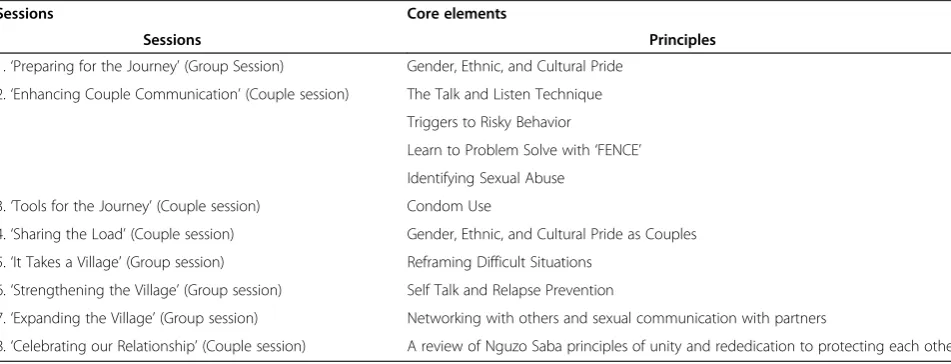
This eight-week, standardized, manualized intervention is facilitated by a male–female team. The intervention (see Table 2) involves: strategies that address the broad array of factors influencing risk behavior among HIV-affected couples; dyadic and group processes that take advantage of relationship and group dynamics; and edu-cational and culturally appropriate sessions [45].
Unlike a traditional RCT, individuals in this study will not be incentivized for attending sessions. However, our experience indicates that incentives enhance attendance and active participation; community agencies frequently provide such incentives to enhance participation in rou-tine programs. Therefore, we will provide minimal partici-pation incentives similar to those often provided routinely by the agencies, such as bus tokens and gift cards at pre-, post-, and three-month follow-up. In addition, usual care, services, and referrals will be available to the WL couples while they wait to enter the risk reduction program. We will learn more about the impact of incentives during sus-tainability, when these incentives are no longer provided.
Couples-level data collection procedures
The self-report assessment developed for Eban and pre-programmed into Audio Computer-Assisted Self-Interview (ACASI) [46] takes about 90 minutes to complete. ACASI provides both audio and video presentation of the ques-tions and response opques-tions on a laptop computer. ACASI has been shown to significantly decrease social desirability bias [21].
Implementation-focused evaluation
Several types of assessments will be used to track implemen-tation processes, specifically with regard to fidelity, dose, and intensity of intervention. Throughout the intervention, we will monitor: session attendance, session completion, and participant satisfaction with sessions. Facilitators will also complete short surveys noting adherence to the cur-riculum, level of participation, specific obstacles that may have arisen, and what components appeared to be most/ least appropriate for the session’s participants. Facilitators will also complete overall ratings of each couple’s engage-ment, competency, and knowledge. To assess fidelity, ses-sions will be digitally recorded. For the first intervention cohort at each site, all recordings will be reviewed and feedback will be provided to facilitators. Subsequently, a random 15% sample of all session recordings will be reviewed and scored for fidelity to core elements, with a criterion of 80% or more of the total elements considered acceptable [47].
Progress-focused evaluation
At the organizational level, this component will involve assessing the monthly SCIN conference calls. Minutes of all calls will be maintained (including attendance ros-ters), as will minutes from all project-related meetings. Regarding progress at the couples-level, this component
Table 2 Core elements of the Eban II intervention
Sessions Core elements
Sessions Principles
1.‘Preparing for the Journey’(Group Session) Gender, Ethnic, and Cultural Pride 2.‘Enhancing Couple Communication’(Couple session) The Talk and Listen Technique
Triggers to Risky Behavior
Learn to Problem Solve with‘FENCE’ Identifying Sexual Abuse
3.‘Tools for the Journey’(Couple session) Condom Use
4.‘Sharing the Load’(Couple session) Gender, Ethnic, and Cultural Pride as Couples 5.‘It Takes a Village’(Group session) Reframing Difficult Situations
6.‘Strengthening the Village’(Group session) Self Talk and Relapse Prevention
7.‘Expanding the Village’(Group session) Networking with others and sexual communication with partners
will involve weekly calls between the regional project managers and the site coordinators. A periodic onsite re-view of procedures at each site will be conducted, and a random selection of 5% of pre- and post-test and follow-up interviews for each site coordinator and data collector will be reviewed to ensure that the protocol is adminis-tered in a standardized fashion.
Cost assessment
The cost of the delivered services will be calculated using a customized cost-analysis spreadsheet which uses state of the art recommendations for cost analysis as ar-ticulated by the US Panel on Cost-Effectiveness in Health and Medicine [48]. The cost analysis data will be collected by the data collectors and sent on a quarterly basis to the management team, and reviewed with the cost consultant in quarterly conference calls to analyze the cost information, identify trends, and solve any prob-lems with data collection.
Phase four: practice improvement
Phase four involves interpretive evaluation, assessment of sustainability, and a project retreat. Because this pro-ject will occur in waves, practice improvement will be examined after each agency completes the active inter-vention phase (delivery of the groups and completion of three-month follow-up). Sustainability will be examined for nine months following the completion of the re-quired three groups and follow-ups.
Interpretive evaluation
Key stakeholders will have completed interviews regarding their satisfaction with Eban II during active implementa-tion, and their expectations regarding sustainability and cost effectiveness. Following sustainability, these stake-holders will be re-interviewed.
Sustainability
We define the sustainability phase as beginning after the active implementation phase is completed at each site (i.e., baseline through the 3-month follow-up). At this point, the reliance on grant funds ends and sites will be encouraged to integrate Eban II into their usual services. At each site, the nine-month sustainability period will be preceded by a pre-sustainability workshop to identify and address any issues that the agencies perceive to be barriers [49]. During sustainability, Eban II will be deliv-ered in the CBOs with trained staff serving as co-facilitators, supported by technical assistance (including quality assurance) from the management team. Tech-nical assistance will include retraining in the interven-tion, sharing resources, offering suggestions on lessons learned, and review of session tapes to assess fidelity. Agencies that discontinue participation during this phase
will be contacted to encourage participation and/or to identify the reasons for discontinuation. Agencies that independently deliver two eight-week cycles of the inter-vention with two to three couples in each cycle and maintain fidelity to the intervention core elements will be considered to have achieved sustainability. Pre-post couples-level measures will also be collected in order to examine outcomes. Sustainability will be assessed by documenting the number of couples that each agency recruited and enrolled in Eban II; the number of couples who completed the intervention; and how much tech-nical assistance they needed and received.
Project retreat
Additional funds will be sought to support a project re-treat for the management and implementation teams to come together with additional representatives from the SCIN to discuss preliminary findings and the future of the intervention. Individuals from interested agencies that were not part of the original 10 CBOs will be invited to at-tend a designated portion of this retreat, and a structured discussion guide will be used to explore likelihood of adoption, perceived need for the intervention, preliminary perceptions of the program, and its trialability.
Measures to be completed by staff
An electronic Staff Survey will capture basic demograph-ics of staff (~20 per agency) including education level and professional experience. The 50-item Evidence-Based Practices Attitudes Scale (EBPAS) [50] will be used to as-sess staff attitudes toward evidence-based practices. The widely used Maslach Burnout Inventory (MBI; Maslach) [51] will be used to assess staff experience of workload. Subscales from the TCU Survey of Organizational Func-tioning (TCU SOF) [52] will be used to assess motiv-ational factors, program resources, staff attributes, and organizational readiness. All subscales of the SOF have demonstrated good internal consistency and validity [53].
In addition to these structured measures, semi-structured interviews will be conducted with a subset of key stakeholders (approximate n = 50; five per agency). Process-focused interviews will include questions about feasibility, satisfaction, perceived fidelity, barriers, desired revisions, perceived cost-effectiveness, and expectations for sustainability. Sustainability-focused interviews will in-clude similar questions, but will refer to the sustainability period and their satisfaction with and future expectations of the utility and cost-effectiveness of Eban II as a long-term option for agencies’usual menu of services.
Cost analysis measures
services. The spreadsheet incorporates key cost analysis principles, calculates the cost per client of HIV/AIDS services delivered, and also conducts threshold analyses to set performance standards for how many HIV infec-tions would have to be averted for Eban II to be consid-ered cost-saving or cost-effective to society.
Measures to be completed by clients
Primary behavioral and physiologic outcomes are as follows:
1. Percentage of condom-protected sexual acts in the past 90 days.
2. Number of episodes of unprotected sexual intercourse.
3. Number of sexual partners.
4. Types of partners (primary, casual, new). 5. Frequency of oral, anal, and vaginal sex. 6. Use of alcohol and other drugs prior to sexual
intercourse.
7. Partners’risk status (e.g., sexual partner has other partners).
We will also track concurrency, seroconversion, and incident STIs. In order to control for response bias, sev-eral steps will be taken, including: assessing sexual be-haviors over a relatively brief period (i.e., past three months at baseline and follow-ups and past seven weeks at post-intervention); providing participants with a cal-endar for benchmarking salient dates; involving only trained data collectors in the data collection; using the ACASI; and administering a five-item measure of social desirability bias [54].
Potential covariates include demographic characteris-tics; mental health status as measured by the 45-item Brief Symptom Inventory (BSI); history of sexual abuse as measured by the Wyatt Sex History Questionnaire (WSHQ) [55]; and history of physical abuse as measured by the 19-item Revised Conflict Tactics Scale (CTS) [56], which assesses both history and recent (i.e.past 90 days) experiences of abuse. Hypothesized mediators [57] in-clude condom use self-efficacy, which has been linked to effective condom use [58,59], as measured by the Con-dom Use Self-Efficacy Scale [60]; conCon-dom communica-tion self-efficacy as measured by a nine-item scale measuring confidence in negotiating the use of a male condom [60]; and couples’ sexual communication skills as measured by a seven-item scale on the level of re-ported comfort on safer sex communication items [61]. Moderators include several variables identified in Eban I as likely to moderate intervention effects [57]: the length of the couple’s relationship, because those in longer relationships are less likely to practice safer sex [45]; re-lationship satisfaction will be assessed with the Dyadic
Adjustment Scale [62], which asks how partners relate to each other about family finances, time spent together, relational factors, and intimacy; substance use/abuse (frequency and amount of alcohol use each day in the past three months and age of first use) as measured by the CAGE [63] to assess dependence on alcohol, and section B of the NIDA Risk Behavior Assessment (RBA) [64] to assess the frequency, modality, and level of use of licit and illicit drugs in the past month.
Data management and analysis procedures Quality control procedures
Quality control procedures include quality controls dur-ing the traindur-ing of the co-facilitator teams; and durdur-ing the running of groups, including checks of a random sample of audiotaped sessions and providing supervision and corrective feedback as needed. Co-facilitator teams will be asked to complete process notes at the end of each session, and couples will complete satisfaction rat-ings at the end of each session. Co-facilitator teams, site coordinators, and couples will also be asked to provide an overall evaluation of perceived effectiveness and their level of overall satisfaction with the intervention at the posttest assessment session.
Sample size calculation and power analyses
Sample size calculation and power analyses were con-ducted at both the agency- and couple-levels to ensure that we have sufficient statistical power for all analyses. At the agency level, the power analysis was based on the comparisons of key measures from providers (e.g., pro-vider attitudes toward evidence-based practices). From the 10 selected agencies, we will collect data from 100 non-clerical staff (10 providers per agency) in order to provide sufficient power to examine the within- and between-agency variation. With a type I of 0.05, type II error of 0.2 (or power of 80%), intra-agency correlation at 0.15 level, 100 raters from the 10 agencies will enable us to detect an effect size as small as 0.9 in standard deviation unit for measures from staff [65,66]. Non-parametric and parsimonious models will be used to ac-commodate the limitation of a relatively small number of agencies.
and waitlist control, a total of 174 couples would allow us to detect an effect size as small as 0.30 in standard deviation unit for number of unprotected sexual inter-course acts [65,67]. Thus, our planned sample of 180 couples provides sufficient power.
Data analysis plan Specific aim one
Qualitative data will document how we assist the 10 CBOs to implement and sustain the intervention. As a broad implementation aim, there are no hypotheses as-sociated with this aim. Instead, the focus will be on de-scribing the process of assisting the CBOs with implementation and sustainability. This description and summary will be generated from interviews and notes from the monthly SCIN calls, along with other qualita-tive data that is gathered throughout the study.
Specific aim two
To document the implementation process and identify barriers and facilitators to adoption, fidelity, and sustain-ability, we will utilize a variety of analytic approaches. First, marginal distributions of each of the measures at the agency level (e.g., intervention cohorts completed, pro-vider attitudes, etc.) will be obtained. For continuous mea-sures (e.g., the number of facilitator teams trained), we will calculate the range, mean, median, quartiles, and standard deviations. For categorical measures (e.g., fidelity to core elements), frequency distributions and mode will be ob-tained. An ordinal measure that reflects the number of intervention groups conducted at each agency will be cre-ated, which will be used to link with the number of inter-vention cycles completed and to test the dose–response of the intervention. For performance measures (e.g., satisfac-tion) obtained from providers at the CBOs, analyses will be conducted, and within and between agency variations will be examined. Non-parametric methods (e.g., Mann Whitney test) will be used to accommodate the relative small sample size of agencies. Rigorous statistical tests will be conducted in three steps: marginal distributions of the number of intervention cycles completed will be obtained; two-way table chi-squares or analysis of variance will be used to evaluate the relationships between the categories of number of intervention cycles completed and the ex-tent of successful implementation, which is measured by an array of variables (e.g., number of couples served, de-gree of fidelity, level of satisfaction with the intervention, etc.); and multivariate analyses will be conducted through regression models to examine the relationships between provider measures and number of intervention cycles completed, controlling for other agency characteristics such as agency size, number of staff, size of budget, etc.
Data regarding acceptability, barriers, and facilitators will be derived from interviews and
implementation-focused evaluation measures. As we are examining im-plementation in 10 large, diverse CBOs, barriers and facilitators will likely vary by agency. The qualitative data will provide the research team with extensive informa-tion about acceptability, barriers, and facilitators. In addition, we will examine the facilitator and couples’ sat-isfaction ratings to characterize acceptability of the inter-vention. These ratings will be compared both within and across agencies. Potential determinants of adoption and fidelity include but are not limited to training factors, competency at delivering the intervention, types of facili-tators (e.g., whether agencies used their own staff as fa-cilitators or used the floating facilitator team), couple ‘mix’in a given cohort, retention, and satisfaction. All of these factors will be examined when characterizing fidel-ity across agencies. In addition, based on interviews with facilitators and clients, we will remain open to other de-terminants that may emerge during implementation. There are several possible determinants of sustainability. We hypothesize that sustainability will be achieved in agencies that have their own trained staff facilitators who deliver the intervention with fidelity and who had positive experiences with the intervention during the im-plementation phase. To test this hypothesis, we will per-form analyses in two levels: (1) Bivariate analyses between sustainability and characteristics of the CBOs and staff. The Pearson Chi-square will be used to test as-sociation. ANOVA will be used to test the means of the continuous measures (e.g.,‘the number of agencies that continue to implement Eban II with fidelity’) across the different levels of a categorical measure (‘Does your agency have specific services for high-risk or HIV-positive couples? Yes/no’) at each time point of data col-lection; (2) Longitudinal analyses for long-term effects. Generalized linear mixed models (GLMM) [67,68] will be used to evaluate the relationship between sustainabil-ity and characteristics of the CBOs. GLMM cannot only model global fixed effects (e.g., the number of full-time staff ), but also can model random variation (e.g., change over time of individual agency), which is particularly useful.
Qualitative data analysis—aims one and two
profiles will be used to tailor implementation at each site. This approach of using baseline data as diagnostic and in-formative for tailored implementation has been employed by the lead author (AH) in a prior implementation study [29]. The codebook will be elaborated upon and ad-justed as each round of interviews is reviewed until the-matic saturation is achieved within and across cycles of interviews. Interviews will be compared within each agency, across agencies, across different types of respon-dents, and over time. Additional sources of qualitative data (i.e. meeting minutes, archival information) will also be included in the data set. We will analyze the data specifically for barriers to and facilitators of implemen-tation, including but not limited to the ways in which the project’s strategies and tools affect adoption, fidelity, and sustainability. In addition to identifying themes and patterns qualitatively, we will examine statistical associ-ations between important process and outcome vari-ables such as satisfaction with the intervention, fidelity, and retention, and improvement in behavioral out-comes. Agency profiles will be revisited and further de-veloped at the end of the active implementation phase, and again after sustainability.
Specific aim three
We will use repeated measures regression models and multi-level hierarchical modeling [70,71] to evaluate the effect of characteristics of agencies, staff, and couples on the behavioral and psychosocial outcomes. For repeated measures regression models, we will directly incorporate measures into models and deal with intra-class correla-tions from agency and staff through covariance matrix. With the multi-level nested structure from individuals, couples, agencies, and staff, the hierarchical models will be fitted in three possible steps: (a) to set the foundation for a class of hierarchical models, first we will construct individual-couple-level models with repeated measure-ments (baseline, post and three-month) within a couple that involves time (and intercept); (b) we will then con-struct across the couples-level models that involve explanatory variables such as couple demographics; health history; history of alcohol and recreational drug use; HIV/AIDS risk reduction knowledge; perceived couple sexual norms; intervention components, and a binary variable indicating immediate active treatment or wait list control; (c) we will model the regression coeffi-cients obtained from step b at the agency level as func-tions of explanatory variables of agency characteristics (e.g., organization size and budget, number of staff, etc.). Finally, we will then combine models from steps a, b, and c to form the complete model, which will be estimated through special procedures and software, such as Win-BUGS and MlwiN [72,73].
Secondary aim
To determine the cost-effectiveness of implementation of Eban II, standard cost-effective analysis will be con-ducted using health economic analysis approaches. Two-staged models (instrumental variable regression) [74,75] will be applied and implementation costs and potential costs saving through the intervention will be estimated.
Trial status
Data collection is underway. Data cleaning and analysis have not commenced.
Discussion
This hybrid implementation/effectiveness study has the potential to illuminate the processes and complexities associated with supporting adoption of an evidence-based program in resource-limited organizations that typically serve underserved, economically disadvantaged individuals. The study’s innovative features include the dynamic wait-listed design [37], the sustainability period (not typically included in implementation trials) [35], the real-world effectiveness conditions under which the intervention is being tested, and the participatory ap-proach to implementation [76]. One of the overarching goals of the study is to‘dive deep’ into the cultures not only of the organizations but also of their surrounding communities, which have been greatly impacted by HIV and by health disparities in general, especially due to shrinking state and national budgets designated for HIV prevention efforts in these communities. In systematic-ally addressing current community-, organizational-, and client-level complexities with an innovative and part-nered design, this study exemplifies the five core values of implementation science: rigor and relevance, effi-ciency, collaboration, improved capacity, and cumulative knowledge [44].
Competing interests
The authors declare that they have no competing interests.
Authors’contributions
AH serves as a Co-Investigator and was involved in conception and design of the manuscript, and drafted the manuscript. BM serves as a Co-Investigator and was involved in conception and design of the manuscript, and critically reviewed the manuscript for important intellectual content. JW serves as a Co-Investigator and was involved in conception and design of the manuscript, and critically reviewed the manuscript for important intellectual content. HL serves as a Co-Investigator and was involved in conception and design of the manuscript, and critically reviewed the manuscript for important intellectual content. AE was involved in conception and design of the manuscript, and critically reviewed the manuscript for important intellectual content. CH was involved in conception and design of the manuscript, and critically reviewed the manuscript for important intellectual content. GW serves as Principal Investigator of the study and was involved in conception and design of the manuscript, and critically reviewed the manuscript for important intellectual content. All authors read and approved the final manuscript.
Acknowledgements
community-based organizations. We also wish to thank Ms. Louise Datu and Ms. Elizabeth Aguilar for their administrative support.
Author details
1UCLA Department of Psychiatry and Biobehavioral Sciences, 760 Westwood
Plaza, 38-240 NPI, Box 175919, 90024-1759 Los Angeles, CA, USA.2VA Greater Los Angeles Healthcare System, 16111 Plummer Street, 91343 Sepulveda, CA, USA.3UCLA Department of Medicine, 760 Westwood Plaza, 90024-1759 Los Angeles, CA, USA.
Received: 19 March 2014 Accepted: 11 June 2014 Published: 20 June 2014
References
1. Hall H, Song R, Rhodes P, Prejean J, An Q, Lee LM, Karon J, Brookmeyer R, Kaplan EH, McKenna MT, Janssen RS, HIV Incidence Surveillance Group: Estimation of HIV incidence in the United States.JAMA2008, 300:520–529.
2. El-Sadr W, Mayer K, Hodder S:AIDS in America–forgotten but not gone. N Engl J Med2010,362(11):967–970.
3. Laga M, Manoka A, Kivuvu M, Malele B, Tuliza M, Nzila N, Goeman J, Behets F, Batter V, Alary M, Heyward WL, Ryder RW, Piot P:Non-ulcerative sexually transmitted disease as risk factors for HIV-1 transmission in women: results from a cohort study.AIDS1993,7(1):95–102.
4. Wasserheit J:Epidemiological synergy. Interrelationships between human immunodeficiency virus infection and other sexually transmitted diseases.Sex Transm Dis1992,19(2):61–77.
5. Centers for Disease Control and Prevention:New HIV infections in the United State.Available from: http://www.cdc.gov/nchhstp/newsroom/docs/ 2012/hiv-infections-2007-2010.pdf.
6. El-Bassel N, Gilbert L, Wu E, Go H, Hill J:Relationship between drug abuse and intimate partner violence: a longitudinal study among women receiving methadone: El-Bassel et al. respond.Am J Public Health2005, 95(9):1493–1494.
7. Wyatt GE, Williams J, Myers H:African American sexuality and HIV/AIDS: recommendations for future research.J Natl Med Assoc2008,100:44–51. 8. Catania JA, Coates TJ, Stall R, Turner H, Peterson J, Hearst N, Dolcini MM,
Hudes E, Gagnon J, Wiley J:Prevalence of AIDS-related risk factors and condom use in the United States.Science1992,258(5085):1101–1106. 9. Overby KJ, Kegeles SM:The impact of AIDS on an urban population of
high-risk female minority adolescents: Implications for intervention. J Adolesc Health1994,15(3):216–227.
10. Wingood GM, DiClemente RJ:Gender-related correlates and predictors of consistent condom use among young adult African-American women: a prospective analysis.Int J STD AIDS1998,9(3):139–145.
11. Hunt WK, Myers HF, Dyche M:Living with risk: male partners of HIV-positive women.Cultur Divers Ethnic Minor Psychol1999,Special Issue: HIV/AIDS and ethnic minority women, families, and communities. 5(3):276–286.
12. Wyatt GE, Moe A, Guthrie D:The gynecological, reproductive, and sexual health of HIV-positive wome.Cultur Divers Ethnic Minor Psychol1999, Special Issue: HIV/AIDS and ethnic minority women, families, and communities. 5(3):183–196.
13. Wyatt GE, Forge NG, Guthrie D:Family constellation and ethnicity: current and lifetime HIV-related risk taking.J Fam Psychol1998,12(1):93–101. 14. El-Bassel N, Witte SS, Gilbert L, Wu E, Chang M, Hill J, Steinglass P:The
efficacy of a relationship-based HIV/STD prevention program for heterosexual couples.Am J Public Health2003,93(6):963–969. 15. Allen S, Tice J, Van de Perre P, Serufilira A, Hudes E, Nsengumuremyi F,
Bogaerts J, Lindan C, Hulley S:Effect of serotesting with counselling on condom use and seroconversion among HIV discordant couples in Africa.BMJ1992,304(6842):1605–1609.
16. Glick P:Scaling up HIV voluntary counseling and testing in Africa. Eval Rev2005,29:331–357.
17. Altman D:Sustaining interventions in community systems: on the relationship between researchers and communities.Health Psychol1995, 14(6):526–536.
18. Bronfenbrenner U:The ecology of human development : experiments by nature and design.Cambridge, Mass: Harvard University Press; 1979:330. xv. 19. Prochaska JO, DiClemente CC:Toward a comprehensive model of change.
InTreating addictive behaviors: processes of change. Applied clinical
psychology.Edited by Miller WR, Heather N. Plenum Press: New York, NY; 1986:3–27.
20. Pennebaker JW, Kiecolt-Glaser JK, Glaser R:Disclosure of traumas and immune function: health implications for psychotherapy.J Consult Clin Psychol1988,56(2):239–245.
21. El-Bassel N, Jemmott JB, Landis JR, Pequegnat W, Wingood GM, Wyatt GE, Bellamy SL, NIMH Multisite HIV/STD Prevention Trial for African American Couples Group:National Institute of Mental Health Multisite Eban HIV/ STD Prevention Intervention for African American HIV Serodiscordant Couples: a cluster randomized trial.Arch Intern Med2010,
170(17):1594–601.
22. Stetler CB, McQueen L, Demakis J, Mittman BS:An organizational framework and strategic implementation for system-level change to enhance research-based practice: QUERI Series.Implement Sci2008, 3:30.
23. Flay BR:Efficacy and effectiveness trials (and other phases of research) in the development of health promotion programs.Prev Med1986, 15(5):451–474.
24. Brown CH, Ten Have TR, Jo B, Dagne G, Wyman PA, Muthén B, Gibbons RD: Adaptive designs for randomized trials in public health.Annu Rev Public Health2009,30:1–25.
25. Curran GM, Bauer M, Mittman B, Pyne JM, Stetler C: Effectiveness-implementation hybrid designs: combining elements of clinical effectiveness and implementation research to enhance public health impact.Med Care2012,50(3):217–26.
26. Kegeles S, Rebchook G, Tebbetts S:Challenges and facilitators to building program evaluation capacity among community-based organizations. AIDS Educ Prev2005,17(4):284–299.
27. Auerbach AD, Landefeld CS, Shojania KG:The tension between needing to improve care and knowing how to do it.N Engl J Med2007,357(6):608–613. 28. Proctor EK, Landsverk J, Aarons G, Chambers D, Glisson C, Mittman B:
Implementation research in mental health services: an emerging science with conceptual, methodological, and training challenges.Adm Policy Ment Health2009,36(1):24–34.
29. Hamilton AB, Cohen AN, Young AS:Organizational readiness in specialty mental health care.J Gen Intern Med2010,25(Suppl 1):27–31.
30. Lehman WE, Greener JM, Simpson DD:Assessing organizational readiness for change.J Subst Abuse Treat2002,22(4):197–209.
31. Glisson C, Landsverk J, Schoenwald S, Kelleher K, Hoagwood KE, Mayberg S, Green P, Research Network on Youth Mental Health:Assessing the organizational social context (OSC) of mental health services: implications for research and practice.Adm Policy Ment Health2008, 35(1–2):98–113.
32. Curran GM, Mukherjee S, Allee E, Owen RR:A process for developing an implementation intervention: QUERI series.Implement Sci2008,3:17. 33. Simpson DD:Organizational readiness for stage-based dynamics of
innovation implementation.Res Soc Work Pract2009,19(Sep):541–551. 34. Simpson DD:A conceptual framework for transferring research to
practice.J Subst Abuse Treat2002,22(4):171–182.
35. Wiltsey Stirman S, Kimberly J, Cook N, Calloway A, Castro F, Charns M: The sustainability of new programs and innovations: a review of the empirical literature and recommendations for future research. Implement Sci2012,7:17.
36. Proctor E, Silmere H, Raghavan R, Hovmand P, Aarons G, Bunger A, Griffey R, Hensley M:Outcomes for implementation research: conceptual distinctions, measurement challenges, and research agenda. Adm Policy Ment Health2011,38(2):65–76.
37. Brown CH, Wyman PA, Guo J, Peña J:Dynamic wait-listed designs for randomized trials: new designs for prevention of youth suicide. Clin Trials2006,3(3):259–271.
38. Chamberlain P, Brown CH, Saldana L, Reid J, Wang W, Marsenich L, Sosna T, Padgett C, Bouwman G:Engaging and recruiting counties in an experiment on implementing evidence-based practice in California. Adm Policy Ment Health2008,35(4):250–260.
39. Report HA:California Department of Public Health, Office of AIDS, HIV/AIDS Case Registry Section; 2008.
40. Gonzalez C:In Oakland, AIDS Is Everyone’s Business; 2010. [cited 2011 Jan. 6]; Available from: http://www.poz.com/articles/get_screened_oakland_ 401_19080.shtml.
42. Woodall A:'Get Screened Oakland' HIV-AIDS Program Unique in Nation;2008. [cited 2014 July. 4]; Available from: http://www.contracostatimes.com/ oakland/ci_11123513.
43. Elliot D, Mihalic S:Issues in disseminating and replicating effective prevention programs.Prev Sci2004,5(1):47–53.
44. Glasgow RE, Vinson C, Chambers D, Khoury MJ, Kaplan RM, Hunter C: National institutes of health approaches to dissemination and implementation science: current and future directions.Am J Public Health 2012,102(7):1274–1281.
45. NIMH Multisite HIV/STD Prevention Trial for African American Couples Group:Methodological overview of an African American couple-based HIV/STD prevention trial.J Acquir Immune Defic Syndr2008,
49(Suppl 1):S3–14.
46. Metzger DS, Koblin B, Turner C, Navaline H, Valenti F, Holte S, Gross M, Sheon A, Miller H, Cooley P, Seage GR 3rd:Randomized controlled trial of audio computer-assisted self-interviewing: utility and acceptability in longitudinal studies.Am J Epidemiol2000,152(2):99–106.
47. Koblin B, Chesney M, Coates T:Effects of a behavioural intervention to reduce acquisition of HIV infection among men who have sex with men: the EXPLORE randomised controlled study.Lancet2004, 364(9428):41–50.
48. Gold MR, Siegel JE, Russell LB:Cost-effectiveness in Health and Medicine. New York: Oxford University Press; 1996.
49. Feinberg ME, Bontempo DE, Greenberg MT:Predictors and level of sustainability of community prevention coalitions.Am J Prev Med2008, 34(6):495–501.
50. Aarons GA, Glisson C, Hoagwood K, Kelleher K, Landsverk J, Cafri G: Psychometric properties and U.S. national norms of the evidence-based practice attitude scale (EBPAS).Psychol Assess2010,22(2):356–365. 51. Maslach C, Jackson SA, Leiter MP:Maslach Burnout Inventory Manual.
Consulting Psychologists Press; 1996.
52. TCU Institute of Behavioral Research:Survey of Organizational Functioning. [cited 2014 July 4]; Available from: http://www.ibr.tcu.edu/pubs/datacoll/ commtrt.html#Form-PTN.
53. TCU Institute of Behavioral Research:Assessment fact sheet.[cited 2009 December 14]; Available from: http://ibr.tcu.edu/forms/organizational-staff-assessments/.
54. Crowne DP, Marlowe D:A new scale of social desirability independent of psychopathology.J Consult Clin Psychol1960,24:349–354.
55. Wyatt GE, Lawrence J, Vodounon A, Mickey MR:The Wyatt sex history questionnaire: a structured interview for female sexual history taking. J Child Sex Abus1992,1(4):51–68.
56. Straus MA:Measuring intrafamily conflict and violence: the conflict tactics (CT) scales.J Marriage Family Vol1979,41(1):75–88.
57. Baron RM, Kenny DA:The moderator-mediator variable distinction in social psychological research: conceptual, strategic, and statistical considerations.J Pers Soc Psychol1986,51(6):1173–1182.
58. O’Leary A, Wingood GM:Interventions for sexually active heterosexual women. InHandbook of HIV prevention. AIDS prevention and mental health. Edited by Peterson JL, DiClemente RJ. Dordrecht, Netherlands: Kluwer Academic Publishers; 2000:179–200.
59. Jemmott JB 3rd, Jemmott LW, Spears H, Hewitt N, Cruz-Collins M: Self-efficacy, hedonistic expectancies, and condom-use intentions among inner-city Black adolescent women: a social cognitive approach to AIDS risk behavior.J Adolesc Health1992,13(6):512–519.
60. DiClemente RJ, Wingood GM, Harrington KF, Lang DL, Davies SL, Hook EW 3rd, Oh MK, Crosby RA, Hertzberg VS, Gordon AB, Hardin JW, Parker S, Robillard A:Efficacy of an HIV prevention intervention for African American adolescent girls a randomized controlled trial.JAMA2004, 292(2):171–179.
61. Gómez CA, Hernández M, Faigeles B:Sex in the New World: an empowerment model for HIV prevention in Latina immigrant women. Health Educ Behav1999,26(2):200–12.
62. Spanier GB, Thompson L:A confirmatory analysis of the dyadic adjustment scale.J Marriage Fam1982,44(3):731–738.
63. Ewing JA:Detecting alcoholism: the CAGE questionnaire.JAMA1984, 252(14):1905–1907.
64. Dowling-Guyer S, Johnson ME, Fisher DG, Needle R, Watters J, Andersen M, Williams M, Kotranski L, Booth R, Rhodes F, Weatherby N, Estrada AL, Fleming D, Deren S, Tortu S:Reliability of drug users’self-reported HIV risk
behaviors and validity of self-reported recent drug use.Assessment1994, 1(4):383–392.
65. Diggle PJ, Liang KY, Zeger SL:The Analysis of Longitudinal Data.Oxford: Oxford University Press; 1994.
66. PASS:Power Analysis and Sample Size for Windows.Kaysville, Utah: NCSS; 2002.
67. McCullagh P, Nelder J:Generalized linear models.New York: ChapmanandHall; 1989.
68. McCulloch C, Searle S:Generalized, linear and mixed models.New York, NY: Wiley; 2001.
69. Strauss A, Corbin J:Basics of Qualitative Research: Grounded Theory Procedures and Techniques.Newbury Park, CA: SAGE Publications Inc; 1990. 70. Bickel R:Multilevel analysis for applied research: It’s just regression.New York,
NY: Guilford Press; 2007.
71. Gelman A, Hill J:Data analysis using regression and multilevel/ hierarchical models.New York, NY: Cambridge University Press; 2006.
72. Raudenbush SW, Bryk AS:Hierarchical Linear Models: Applications and Data Analysis Methods.Newbury Park, CA: SAGE Publications Inc; 2002. 73. Lawson AB, Browne WJ, Rodeiro CLV:Disease Mapping with WinBUGS and
MLwiN.West Sussex, England: John Wiley & Sons Ltd; 2003. 74. Johnston J, Dinardo J:Econometric Methods.4th edition. New York:
McGraw-Hill; 1997.
75. Kmenta J:Elements of Econometrics.Secondth edition. Ann Arbor, MI: University of Michigan Press; 1997.
76. Glasgow RE, Chambers D:Developing robust, sustainable, implementation systems using rigorous, rapid and relevant science. Clin Transl Sci2012,5(1):48–55.
doi:10.1186/1748-5908-9-79
Cite this article as:Hamiltonet al.:Community-based implementation and effectiveness in a randomized trial of a risk reduction intervention for HIV-serodiscordant couples: study protocol.Implementation Science
20149:79.
Submit your next manuscript to BioMed Central and take full advantage of:
• Convenient online submission
• Thorough peer review
• No space constraints or color figure charges
• Immediate publication on acceptance
• Inclusion in PubMed, CAS, Scopus and Google Scholar
• Research which is freely available for redistribution