S Y S T E M A T I C R E V I E W
Open Access
Application of the COM-B model to barriers
and facilitators to chlamydia testing in
general practice for young people and
primary care practitioners: a systematic
review
Lorraine K McDonagh
1,2*, John M Saunders
2,3, Jackie Cassell
2,4, Tyrone Curtis
5, Hamad Bastaki
1,
Thomas Hartney
1,2and Greta Rait
1,2Abstract
Background:Chlamydia is a major public health concern, with high economic and social costs. In 2016, there were
over 200,000 chlamydia diagnoses made in England. The highest prevalence rates are found among young people. Although annual testing for sexually active young people is recommended, many do not receive testing. General practice is one ideal setting for testing, yet attempts to increase testing in this setting have been disappointing. The Capability, Opportunity, and Motivation Model of Behaviour (COM-B model) may help improve understanding of the underpinnings of chlamydia testing. The aim of this systematic review was to (1) identify barriers and facilitators to chlamydia testing for young people and primary care practitioners in general practice and (2) map facilitators and barriers onto the COM-B model.
Methods: Qualitative, quantitative, and mixed methods studies published after 2000 were included. Seven databases
were searched to identify peer-reviewed publications which examined barriers and facilitators to chlamydia testing in general practice. The quality of included studies was assessed using the Critical Appraisal Skills Programme. Data (i.e., participant quotations, theme descriptions, and survey results) regarding study design and key findings were extracted. The data was first analysed using thematic analysis, following this, the resultant factors were mapped onto the COM-B model components. All findings are reported in accordance with the Preferred Reporting Items for Systematic Reviews and Meta-Analyses (PRISMA) guidelines.
Results:Four hundred eleven papers were identified; 39 met the inclusion criteria. Barriers and facilitators were
identified at the patient (e.g., knowledge), provider (e.g., time constraints), and service level (e.g., practice nurses). Factors were categorised into the subcomponents of the model: physical capability (e.g., practice nurse involvement), psychological capability (e.g.: lack of knowledge), reflective motivation (e.g., beliefs regarding perceived risk), automatic motivation (e.g., embarrassment and shame), physical opportunity (e.g., time constraints), social opportunity (e.g., stigma).
(Continued on next page)
* Correspondence:[email protected]
1Research Department of Primary Care and Population Health, University
College London, London NW3 2PF, UK
2National Institute for Health Research, Health Protection Research Unit in
Blood Borne and Sexually Transmitted Infections, University College London, London NW3 2PF, UK
Full list of author information is available at the end of the article
(Continued from previous page)
Conclusions:This systematic review provides a synthesis of the literature which acknowledges factors across multiple
levels and components. The COM-B model provided the framework for understanding the complexity of chlamydia testing behaviour. While we cannot at this juncture state which component represents the most salient influence on chlamydia testing, across all three levels, multiple barriers and facilitators were identified relating psychological capability and physical and social opportunity. Implementation should focus on (1) normalisation, (2) communication, (3) infection-specific information, and (4) mode of testing. In order to increase chlamydia testing in general practice, a multifaceted theory- and evidence-based approach is needed.
Trial registration:PROSPEROCRD42016041786
Keywords:Implementation, Chlamydia, General practice, Primary care, Young people, Systematic review
Introduction
Chlamydia trachomatis (chlamydia) is the most
com-monly diagnosed bacterial sexually transmitted infection (STI) in England with 202,546 diagnoses in 2016, 63% of
which were among 15 to 24-year-olds [1]. Chlamydia is
often asymptomatic; therefore, testing and treatment are essential to prevent transmission and potential negative
reproductive health outcomes [2]. Chlamydia can be
tested for using a genital or vulvo-vaginal swab (self-ad-ministered or health care professional-ad(self-ad-ministered) or a urine sample. Laboratory diagnosis is conducted using nucleic acid amplification tests (NAATs) which allow the use of non-invasive samples (i.e., urine and self-taken vulvo-vaginal swabs). General practice presents an ideal setting for testing. Over 60% of young people visit
gen-eral practice annually [3, 4] and report a preference to
receive testing and results from a general practitioner
(GP) [5–8]. Positivity is higher in general practice than
non-healthcare settings such as universities [9,10], while
regular screening is facilitated by attendance for other
reasons [9].
England’s National Chlamydia Screening Programme
(NCSP) advocates opportunistic testing (i.e., testing regardless of reason for attendance such as those who present with other ailments such as the common cold) across a range of settings (including general practice). The NCSP also recommends testing for sexually active young people annually and on change of sex partner.
In 2016, approximately 25% of 15–24-year-olds in
England were tested for chlamydia but only 19% of
tests were conducted in general practice [11]. A
narra-tive review reported commonly cited barriers to test-ing in general practice (from the perspectives of both primary care practitioners [PCP] and young people) which include stigma, poor knowledge/training, and
time constraints [12]. This review, however, was
con-ducted in 2013, and several new studies in this area have been published since. Furthermore, facilitators to testing are not well investigated, and interventions to increase testing in general practice have been disappointing
[13–17]. One conceivable explanation for these
disappoint-ing results is the lack of input from theories of behaviour. Implementing changes in general practice requires behaviour change in several agents (e.g., PCP, patients,
commissioners) [18] underpinned by a theoretical
un-derstanding of the behaviour [19, 20]. The Capability,
Opportunity, Motivation, Behaviour (COM-B) model is one theory of behaviour which can contribute
in-sights into chlamydia testing behaviour [20]. COM-B
posits behaviour as the result of an interaction
be-tween three components: capability, opportunity, and
motivation (see Fig.1). Capability can be psychological
(knowledge) or physical (skills); opportunity can be so-cial (societal influences) or physical (environmental resources); motivation can be automatic (emotion) or reflective (beliefs, intentions).
The benefit of employing the COM-B Model over a single theory of behaviour is that several distinct ex-planatory components are outlined; thus, additional potential influences on behaviour can be considered. COM-B lies at the centre of the Behaviour Change Wheel (BCW), a tool kit for designing behaviour
change interventions [20]), and is the starting point of
intervention development. COM-B components can be mapped onto the BCW and the Behaviour Change Technique Taxonomy which facilitates the selection of intervention strategies that are likely to be appropriate and effective in addressing the barriers and facilitators for each component. This model has been effectively applied to many health behaviours at both individual
and organisational levels [21–28], but not yet to
chla-mydia testing.
It remains unclear how to meaningfully translate our understanding of barriers and facilitators to test-ing into clinical practice. While the COM-B model has primarily been applied to intervention design, its associated Theoretical Domains Framework (division of
COM-B components into 14 theoretical domains [18])
has recently been applied as a synthesis framework for
COM-B model could also provide a helpful framework for evidence synthesis in a systematic review.
The application of COM-B to factors associated with the implementation of chlamydia testing in general practice will enable us to develop a coherent framework for understanding chlamydia testing, focussed on iden-tifying appropriate behaviour change techniques to im-prove implementation and increase chlamydia testing
[32]. The aim of this systematic review was to (1)
iden-tify barriers and facilitators to chlamydia testing for young people in general practice and (2) map these onto the COM-B model.
Methods
The protocol, published elsewhere [33], is summarised
briefly here. This review was conducted according to
PRISMA guidelines [34] (see Additional file1) and
regis-tered with the International Prospective Register of Sys-tematic Reviews (CRD42016041786).
Eligibility criteria
Eligible studies had to explore facilitators and/or bar-riers to chlamydia testing, views towards testing, and/ or acceptability of testing in general practice. A barrier was defined as a factor that obstructs or prevents chla-mydia testing; a facilitator was defined as a factor that
supports or promotes testing. Table1 summarises the
inclusion and exclusion criteria.
Search strategy
Seven databases (MEDLINE, PubMed, Embase, Informit, Web of Science, PsycINFO, Scopus) were searched from January 2000 to April 2018. Pre-2000 studies excluded as NAATs were introduced around this time, thus
widening testing to non-clinical settings. The search
strategy is presented Additional file 2. Three sets of
search terms were developed relating to the context (general practice), intervention (chlamydia testing), and
outcomes (barriers, facilitators) [33]. Figure 2 illustrates
the selection process.
Data extraction
A standardised framework was devised and used to record the aims, methodological characteristics (e.g., design, data collection, participants), theoretical framework employed (if any), main findings (i.e., participant quotations, themes identified by article authors, and survey results), and con-clusion of each study. Data extraction was undertaken by one reviewer (LMD) and checked by a second reviewer (HB/TH).
Quality assessment
The quality of each paper was independently assessed using the Critical Appraisal Skills Programme (CASP
[35]) by two reviewers (LMD and HB/TH). As per
rec-ommendations for use, the tools were not used to score individual studies as such but used as a broad guide to provide a context in which to interpret findings. Because the aim was to describe and synthesise the literature, this process was not used to exclude papers.
Data synthesis and analysis
Study characteristics and outcomes were summarised in
an evidence table. First, thematic analysis [36] was used
to identify prominent themes. Themes were refined through discussion and the use of constant comparison within and between codes to ensure that they accurately reflected the material.
Second, the identified themes were classified into the six sub-components of the COM-B model described
above (Fig.1). Data classification, following expert
guide-lines [20], was conducted by one reviewer (LMD) in
consultation with members of the review team at mul-tiple data-synthesis meetings (JS, JC, GR). Discrepancies were resolved by consensus.
Results
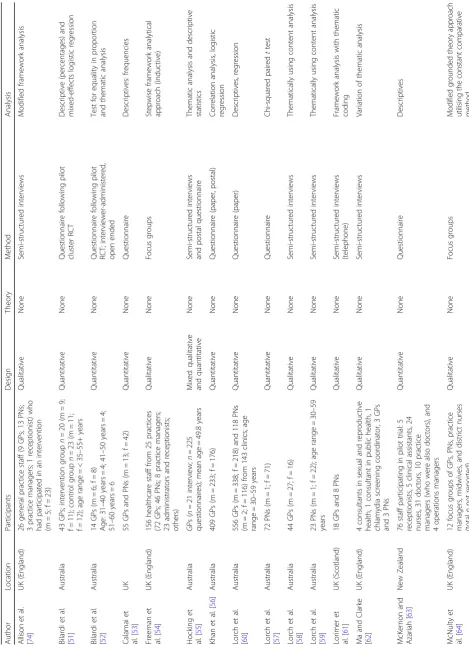
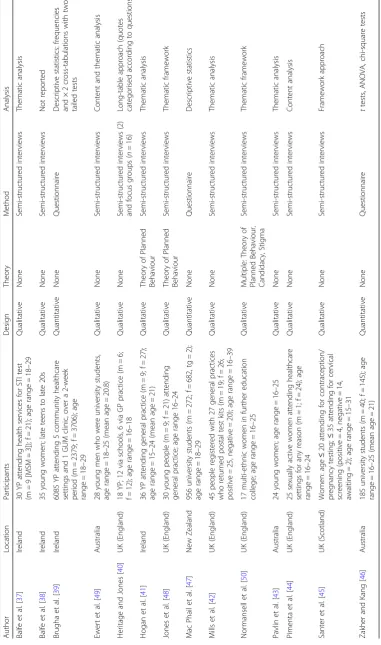
Thirty-nine papers met the inclusion criteria; 14 focused
on patients [37–50] (Table 2) and 25 on providers [51–
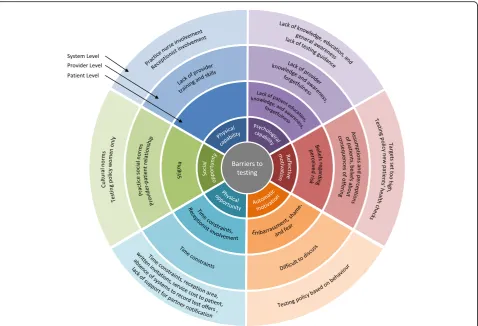
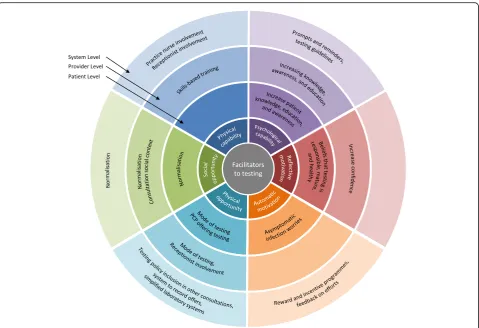
75] (Table 3). Barriers (Fig. 3) and facilitators (Fig. 4)
were identified at patient, provider, and service level (i.e.,
factors stemming from the broader healthcare system), with some factors spanning all three levels. Most studies did not use any theory, only seven studies used any be-havioural theory; six used the Theory of Planned
Behav-iour [41,48,50,66,73,75] and one used Normalisation
Process Theory [70]. Some studies were qualitative
eval-uations of trials that had used theory for intervention
development [48, 70, 75], others used theory to guide
interview questions and questionnaires [41, 66, 73] or
provide a framework for results [50, 70]. When judged
against the CASP criteria, the majority of studies were
methodologically sound, except three [44, 46,71] which
lacked detail on several areas (e.g., recruitment
Fig. 2Flowchart illustrating the process of inclusion and exclusion of papers in the study Table 1List of inclusion/exclusion criteria
Inclusion criteria Exclusion criteria
Population: young people (aged 15–24 years) and primary care providers (PCP; general practitioners, practice nurses, nurse practitioners)
Population: exclusively on commercial sex workers, incarcerated people, people living with HIV, victims of sexual or domestic abuse or violence, intravenous drug users, and individuals with no fixed address
Randomised and non-randomised controlled trials, pre- and post-test designs, non-experiment observational (cross-sectional, case-series, case studies), qualitative (interviews, focus groups), and mixed method paper
Commentary or opinion publications that did not present new data
Conducted in countries where the model of delivering healthcare in general practice is comparable to the UK (Australia, Denmark, Ireland, Netherlands, and New Zealand) where (1) the GP acts as a gatekeeper to access specialist services and (2) general practice services are publicly financed
Conducted in countries where the healthcare system and general practice setting is not comparable to that of the UK (i.e., USA, Canada) because (1) the role of the GP in these countries differs and specialist services are readily accessible without initial GP contact and (2) most healthcare is delivered privately meaning many have to pay out-of-pocket for insurance and care. Consequently, these different systems will have distinct characteristics and influential barriers and facilitators beyond the scope of this review
strategies, rigour of data analysis). The full quality
as-sessment is available upon request. Table 4 provides an
overview of all results. The detailed findings of included
studies are provided in Additional files3(providers) and
4(young people), with illustrative quotes for each theme
presented in Additional file5.
Patient level factors
Barriers
Psychological capability
Lack of patient (and public) education, knowledge, and
awareness[51,55,60,73]. This was reported as a barrier
by PCPs. One study of young people [41] reported lack of
knowledge about chlamydia, its sequelae, and the screen-ing process as barriers.
Forgetfulness [41, 48, 75]. While young people
expressed enthusiasm for self-sampling, forgetting to re-turn samples was reported as a barrier.
Reflective motivation
Beliefs regarding perceived risk [37, 41, 42, 44–46].
Young people who perceived themselves to be at low or no risk were less likely to test. These beliefs originated
from perceived low chlamydia prevalence [45], the
asymptomatic nature of chlamydia [37, 45], personal
sexual history, and the perceived sexual history of a
partner. Despite feeling positive about testing [37],
there was no sense of urgency, so it was easy to avoid or postpone testing.
Automatic motivation
Embarrassment [37, 40–43, 48, 49, 55, 69, 70, 73] and
shame [37, 38, 40, 42, 43]. The terms embarrassment
and shame were used interchangeably. We considered these as distinct constructs (i.e., shame is an emotional
response to something considered morally wrong
whereas embarrassment does not imply wrongdoing [76,
77]) and tried to distinguish between these where
pos-sible. Embarrassment was cited by young people to ex-plain their aversion to reception staff offering testing kits
[40,41] or having to walk through reception with a
sam-ple [48], being offered a test in front of parents [40, 48,
49], and returning self-sampling kits in case they were
seen by someone they knew [41,48,49]. Embarrassment
at having to undress in front of a PCP was also
highlighted, particularly for young women [37]. Shame
was associated with a positive chlamydia diagnosis [42,
43]. Men in one study expressed little embarrassment or
shame at receiving a chlamydia diagnosis and perceived it
as more of an issue for women [42]. Shame and
embar-rassment were experienced in relation to unprotected sex
and a concern that a PCP would judge this behaviour [37,
41]. For some young women, the need to maintain a
cer-tain identity (e.g., “good girl” as opposed to a “bad girl”)
was a barrier to testing [37,38,50] which was threatened
by fear of being viewed as promiscuous or engaging in
risky behaviour by a PCP [37]. Participants in one study
suggested that having to provide a sexual history, particu-larly the number of sexual partners, was a barrier to
test-ing [43].
Fear [38, 41–43, 48, 50]. Fear related to receiving a
positive result [43, 50], having to tell previous partners
[42], parents finding out [41, 48], and being judged by
others [38,41, 42, 50]. Some participants suggested that
being afraid of receiving a positive result might deter
people from testing in the first place [41].
Social opportunity
Stigma [37, 38,40–43,55, 61, 71]. The stigma of having
an STI could outweigh the benefits of engaging in a
healthy activity such as testing [38]. Some young women
had preconceived negative views of the type of woman
who would test for or be infected with chlamydia. Some participants were concerned that a chlamydia diagnosis would make others see them as sexually promiscuous and
“dirty”[37,38,42,43]. Being observed to have STI testing
was similarly stigmatising [37,38]. Participants were
reluc-tant to accept a test in public locations (e.g., reception area) or to return self-sampling kits there, in case they
were seen by someone they knew [39–41,48].
Facilitators
Psychological capability
Increasing knowledge, education, and awareness [37, 41,
43,48,49,51,54,55,61,62,64,67,68,73]. Information
on chlamydia transmission, the testing process, risks of untreated infection, and ease of treatment were enablers of testing. The fear of receiving a positive result (auto-matic motivation barrier) could be outweighed by
in-formation on ease of treatment [43, 45]. Increasing
awareness could be achieved through PCP discussion
with patients [41], sexual health education in schools
[49], public awareness campaigns [43, 49, 51, 55, 61,
62,64,67,68], and promotional materials such as
leaf-lets and posters [41, 54, 73]. PCPs also believed that
Table 4 Overview of results: Summary of barriers and facilitators across levels (patient, provider, and service) and theoretical component COM-B Subcomponent Patient Level Provider Level Service Level Barrier Source Facilitator Source Barrier Source Facilitator Source Barrier Source Facilitator Source Physical capability Lack of training and skills [ 55 , 57 , 60 , 63 , 64 , 66 , 69 , 73 ] Skills-based training [ 56 , 59 , 60 , 62 , 64 , 65 , 67 , 70 , 73 – 75 ] Receptionist involvement [ 38 , 40 , 41 , 44 , 48 , 66 , 67 , 69 , 70 , 74 , 75 ] Receptionist involvement [ 38 , 40 , 41 , 44 , 48 , 66 , 67 , 69 , 70 , 74 , 75 ] Practice nurse involvement [ 58 – 60 , 71 ] Practice nurse involvement [ 55 , 58 , 59 , 63 , 66 , 69 , 71 ] Ps ychol ogi cal capab ili ty Lack of patient education, knowledge, and awareness [ 51 , 55 , 60 , 73 ]
Increase knowledge, education,
and awareness [ 37 , 41 , 43 , 48 , 49 , 51 , 54 , 55 , 61 , 62 , 64 , 67 , 68 , 73 ] Lack of provider knowledge and awareness [ 55 , 60 , 63 – 66 , 71 , 75 ]
Increasing knowledge, awareness,
and education [ 54 – 56 , 59 , 62 , 64 , 65 , 67 , 70 , 73 , 75 ] Lack of testing guidance [ 64 ] Prompts and reminders [ 55 , 66 , 67 , 70 , 75 ] Forgetfulness [ 41 , 48 , 75 ] Forgetfulness [ 51 , 52 , 55 , 60 , 66 , 68 , 70 , 75 ] Lack of knowledge, education, and general awareness [ 55 , 60 , 63 – 66 , 71 ] Testing guidelines [ 55 , 60 ] Reflective motivation Beliefs regarding perceived risk [ 37 , 41 , 42 , 44 – 46 ] Beliefs that testing is responsible, mature, and healthy [ 37 , 38 ]
Assumptions and perceptions
of patients [ 53 – 55 , 61 , 66 , 69 , 70 , 74 , 75 ] Increase confidence [ 59 , 62 , 70 ] Targets set too high [ 70 , 74 ] Beliefs about consequences of offering [ 54 , 66 , 69 , 70 , 73 , 74 ] Testing policy: new patients ’ health checks [ 64 ] Automatic motivation Embarrassment and shame [ 37 , 40 – 43 , 48 , 49 , 55 , 69 , 70 , 73 ] and [ 37 , 38 , 40 , 42 , 43 ] Asymptomatic infection worries [ 37 , 44 , 45 ] D ifficult to di scuss [ 52 , 60 – 62 , 64 , 66 , 68 – 70 , 73 , 75 ] Testing policy: based on behaviour [ 41 , 48 ] Reward and incentive programmes [ 51 , 55 , 61 , 62 , 66 – 69 , 74 , 75 ] Fear [ 38 , 41 – 43 , 48 , 50 ] Feedback on efforts [ 70 , 74 , 75 ] Physical opportunity Time constraints [ 40 , 41 , 48 ] PCP offering testing [ 41 , 47 ] Time constraints [ 51 , 52 , 55 , 57 – 64 , 66 , 68 – 75 ] Mode of testing [ 55 , 62 , 64 , 73 , 75 ] Time constraints [ 40 , 41 , 48 ] and [ 51 , 52 , 55 , 57 – 64 , 66 , 68 – 75 ] Promotional materials [ 54 , 63 , 70 , 74 , 75 ] Receptionist involvement [ 38 , 40 , 41 , 44 , 48 , 66 , 67 , 69 , 70 , 74 , 75 ] Mode of testing [ 39 – 41 , 44 , 48 ] Receptionist involvement [ 38 , 40 , 41 , 44 , 48 , 66 , 67 , 69 , 70 , 74 , 75 ] Reception area [ 38 , 40 , 41 , 44 , 48 , 70 ] and [ 74 , 75 ] Testing policy: inclusion in other consultations [ 48 , 66 , 67 ] Written invitations [ 61 , 67 ] System to record offers [ 66 ] Service cost to patient [ 37 , 39 , 47 , 60 ]
Simplified laboratory systems
Table
4
Overview
of
results:
Summary
of
barriers
and
facilitators
across
levels
(patient,
provider,
and
service)
and
theoretical
component
(Continued)
COM-B Subcomponent
Patient
Level
Provider
Level
Service
Level
Barrier
Source
Facilitator
Source
Barrier
Source
Facilitator
Source
Barrier
Source
Facilitator
Source
Absence
of
systems
to
record
test
offers
[
66
,
69
]
Support
for
partner notification
[
62
,
64
,
69
]
Lack
of
support
for
partner
notification
[
55
,
60
,
62
–
64
,
73
]
Social opportunity
Stigma
[
37
,
38
,
40
–
43
,
55
,
61
,
71
]
Normalisation
[
38
,
41
–
43
,
61
]
Practice
social
norms
[
66
,
73
]
Normalisation
[
54
,
61
,
66
,
67
,
70
,
74
]
Testing
policy:
women
only
[
37
,
38
,
69
]
Normalisation
[
52
,
54
,
55
,
61
,
63
,
66
,
67
,
70
]
Provider-patient relationship
[
48
,
55
,
58
,
59
,
66
,
74
]
Consultation social
context
[
45
,
55
,
56
,
61
,
64
,
67
,
70
,
73
]
Cultural
norms
[
66
,
73
]
Testing
policy:
blanket
testing
[
38
,
48
]
COM-B
capability,
opportunity,
motivation,
increasing patient awareness enable testing, thereby
reducing provider physical capability barriers [67,73].
Reflective motivation
Beliefs that testing is responsible, mature, and healthy
[37,38]. Moral aspects of testing were raised, some saw
testing as a moral practice and viewing it as the “right”
or“good”(links to social opportunity),“mature”thing to
do, and a responsible practice to engage in. Participants anticipated feeling guilty if they transmitted an infection so testing allowed the respondents to feel that they were
protecting their own and partners’ health and bodies
[37,38].
Automatic motivation
Asymptomatic infection worries[37,44,45]. Some young
people expressed concern about the damage an asymp-tomatic infection could have for their reproductive health which reportedly arose from contact with health promotion materials and individuals who had attended for chlamydia testing. As indicated above under the
“Psychological capability” section, informing young
people of the risks of asymptomatic infection can thus facilitate chlamydia testing.
Physical opportunity
PCP offering testing [41, 47]. Young people anticipated
feeling uncomfortable asking for a test and would prefer it to be offered by their PCP.
Mode of testing [39–41,44, 48]. Young people viewed
self-sampling kits positively by young people as they allowed the test to be done in a more convenient and
comfortable location (i.e., at home) [39] with urine
samples preferred to vulval-vaginal swabs [40, 44]. The
need for a discreet location and unsuitability of the re-ception was again highlighted (social opportunity
bar-rier) [41,48]. To minimise forgetting to return samples
(psychological capability barrier), patients should
complete samples prior to leaving the practice [75]—
and many reported a preference for doing so [41, 48].
Self-sampling kits were also viewed positively by staff to reduce workload, time constraints (physical
capabil-ity barrier), and for ease of use (e.g., [55,62,64]).
Provider level factors
Barriers
Physical capability
Lack of training and skills[55,57,60,63,64,66,69,73].
PCPs reported a lack of appropriate training and skills
needed to discuss sexual health [64], take sexual history
[55], offer a test [63], respond to a positive test and
man-age treatment [55], and conduct partner notification [60,
69]. This led to reduced confidence to offer testing
(re-flective motivation) and discuss sexual health with
patients [55, 66]. In one study, young people felt that
GPs lack sexual health expertise and thus preferred to
attend sexual health clinics [50].
Psychological capability
Lack of provider knowledge and awareness [55, 60, 63–
66,71,75]. Lack of knowledge about the epidemiology
and presentation of chlamydia [55, 65], benefits of
testing [64], at-risk populations such as young people
[60], how to take specimens [64, 71, 75], and
treat-ment options [63] were described. Practitioners who
were unaware of the public health importance of test-ing and screentest-ing programmes would be less likely to
find chlamydia testing a priority [66].
Forgetfulness [51, 52, 55, 60, 66, 68, 70, 75]. In some
studies, PCPs only remembered to test when patients attended for other related health issues (e.g.,
contracep-tion) or revealed high-risk behaviours [52]. Other PCPs
re-membered at the start of a trial or screening programme
but forgot over time [51] and lack of a formal
recall/re-minder system to help staff remember was a barrier [55].
Reflective motivation
Assumptions and perceptions of patients [53–55, 61, 66,
69, 70, 74, 75]. PCP perceptions included believing that
patients were at low risk [53, 54, 62, 75] and that
chla-mydia was not a high priority for patients, particularly in
rural areas and areas of high deprivation [61,64,65,70].
Gender-related beliefs included a perception that young
men did not attend general practice often [61,66, 69,74,
75] and that women preferred to see female general
prac-titioners (GPs) for testing which could discourage male
practitioners from offering tests [55]. Some also believed
that patients prefer to access sexual health services from speciality clinics, and if a patient wanted a test, they would
request one [74,75].
Beliefs about consequences of offering [54, 66, 69, 70,
73, 74]. Some PCPs believed offering testing could
of-fend patients by assuming sexual activity or promiscuity. This was consistent with research with young women who felt it important for PCPs to stress that a test offer does not imply their behaviour differs from the norm (relating to social opportunity) but rather was a result of
a blanket testing policy [38,43].
Automatic motivation
Difficult to discuss [52, 60–62, 64, 66, 68–70, 73, 75].
Some, especially older male PCPs [69], found it difficult
to discuss sexual health with patients due to personal
discomfort [52, 60, 64,66,68, 70]. This was particularly
a concern in consultations with male patients [61, 62,
68] and in consultations unrelated to sexual health [64,
67, 68, 70, 73, 75]. This may relate to perceptions that
discussions with PCPs due to reproductive health
ap-pointments (e.g., contraception, cervical screening) [61].
Social opportunity
Practice social norms [66, 73]. Working in a practice
where chlamydia testing or screening was not the
norm [66] and lack of support from colleagues [73]
could discourage PCPs.
Provider-patient relationship [48, 55, 58, 59, 66, 74].
Some PCPs were unwilling to introduce sexual health during new patient checks in case it affected the doctor-patient relationship. PCPs expressed concern about
priv-acy and confidentiality [74, 75], particularly in rural
areas where they will likely know their patients socially
[58, 59]. They were also reluctant to raise testing if a
parent was present in the consultation [66] or if the
patient’s family was known to staff [74]; which is
sup-ported by research with patients [40]. Patient cultural
and religious factors could also act as a barrier to
testing [48, 50, 55, 60].
Facilitators
Physical capability
Skills-based training [56, 59, 60, 62, 64, 65, 67, 70, 73–
75]. PCPs were willing to conduct testing if trained [66]
and GPs with training in STIs were more likely to offer
testing [56,65]. Training and the use of scripts increased
confidence (reflective motivation facilitator) [59, 62,75].
Training should be short but regular and mandatory
[74] and should focus on how to make offers without
in-creasing consultation time [64,70,75], managing testing
and treatment [60, 75], preserving confidentiality [73],
and dealing with patients under 16 years of age [73].
Psychological capability
Increasing knowledge, awareness, and education [54–56,
59, 62, 64, 65, 67, 70, 73, 75]. GPs with postgraduate
education in STIs were more willing to offer testing to men as well as indicating greater knowledge of the need
to offer to both men and women [56]. Education should
focus on the nature of chlamydia infection [64], benefits
of testing [73], who and when to test [64], how to
man-age partners [55, 75], wider sexual health issues [62],
and stress the positive views of patients towards testing
[70]. Older male PCPs may need specific education due
to the age gap and cultural barriers between them and
the target population [67]. Providing education enables
PCPs to answer questions and increases self-confidence
regarding testing [59]. PCP awareness could be increased
through campaigns with posters and leaflets [54] and the
introduction of national target-based reward and incen-tive programmes (such as the Quality and Outcomes
Framework in the UK) [62,66].
Reflective motivation
Increase confidence[59,62,70]. Skills-based training and
increasing psychological knowledge could facilitate testing by increasing confidence in offering tests. This could also help raise self-esteem and feelings of empowerment through helping PCPs (PNs in particular) realise they can
make a difference with their provision of testing [59].
Physical opportunity
Mode of testing [55, 62, 64, 73, 75]. Self-taken and
non-invasive sampling is more acceptable to patients
[40,44] and reduces workload for PCPs [62], thereby
fa-cilitating testing.
Social opportunity
Consultation social context [45, 55, 56, 61, 64, 67, 70,
73]. PCPs found it easier to raise chlamydia testing in
the context of sexual and reproductive health consulta-tions, given the reasons previously discussed. Patients
re-inforced the acceptability of this approach [43,44].
Service level factors
Barriers
Physical capability
Practice nurse involvement[58–60,71]. There were
con-cerns about funding and remuneration for the expansion of PN roles, increases in workload, and time constraints
within consultations [58]. Some PN felt a lack of support
from GPs [58]. Linking to social opportunity and
auto-matic motivation, some PN in rural areas felt that
pa-tients may have privacy concerns [58,59].
Psychological capability
Lack of testing guidance[64]. Many of the barriers faced
by practice staff, such as lack of knowledge and discom-fort in discussing testing with patients, relate to lack of guidance, for example, clarity on when and how to test asymptomatic patients.
Lack of knowledge, education, and general awareness
[55,60, 63–66,71]. Within the practice, knowledge gaps
included the epidemiology and presentation of chla-mydia, evidence for advantages of testing, populations at-risk, specimen collection, and appropriate treatment.
Reflective motivation
Targets set too high[70,74]. Testing targets perceived to
be unachievable can result in a practice disengaging from testing, and realistic targets need to be set, reflect-ing the area (e.g., rural, urban) in which a practice is located.
Testing policy: new patients’ health checks [64]. Some
doctor-patient relationship (social opportunity) and felt patients would not want information about chlamydia on their health record.
Automatic motivation
Testing policy: based on behaviour[41,48]. Testing
pol-icies which are based on sexual behaviour had the po-tential to cause offence to patients, made PCPs feel uncomfortable, and were felt to evoke embarrassment
and shame for the patient [48].
Physical opportunity
Written invitations [61, 67]. Written invitations to test
had disappointing results and could reduce engagement if patients were embarrassed by receiving a letter and the risk of others seeing it. Invitations should highlight that all individuals in their age group are being offered
a test (i.e., blanket testing policy) [61].
Service cost to patient [37, 39, 47, 60]. Young people
and PCP mentioned that the cost of testing for the pa-tient was a barrier to testing.
Absence of systems to record test offers[66, 69]. A lack
of systematic approaches to call and recall for testing made it difficult to audit testing offers and uptake. Implementing a policy of offering a test every time a
young person attends risks offence [69].
Lack of support for partner notification [55,60,62–64,
73]. Many PCPs felt they did not have the necessary
sup-port for partner notification and expressed uncertainty about how it worked, indicating a need for skills-based
training [63,73].
Social opportunity
Testing policy: women only [37, 38, 69].Testing policies
focussing exclusively on women miss the opportunity to
test men and reduce men’s responsibility for sexual
health [69]. This exacerbates stigma as it associates
women with chlamydia and presumed promiscuity [37].
Cultural norms [66, 73]. Cultural norms within a
prac-tice were discussed in two studies and an environment where testing is not a high priority was seen as a deterrent.
Facilitators
Physical capability
Practice nurse involvement [55, 58, 59, 63, 66, 69, 71].
The involvement of PNs was viewed positively by both GPs and PNs. PNs expressed willingness for increased involvement in testing and management. They are often the first PCP to see patients (particularly young people); young people feel more comfortable speaking to a PN; and, PNs have more time to spend with patients. This approach could reduce the time and workload con-straints for GPs and was also viewed favourably by
patients [38, 39]. Training and education would be
re-quired to enable this facilitator [59].
Psychological capability
Prompts and reminders [55, 66, 67, 70, 75]. Computer
prompts/reminders facilitate testing but rely on practices putting systems in place and recognising the risk of
prompt fatigue [66].
Testing guidelines [55, 60]. In one Australian study,
over 90% of GPs indicated that they would be likely to increase testing if national testing guidelines were
introduced and enforced [55]. In some cases,
increas-ing awareness of existincreas-ing guidelines could facilitate
testing [60].
Automatic motivation
Reward and incentive programmes [51, 55, 61, 62, 66–
69, 74, 75]. Evidence on the acceptability and impact of
such programmes was lacking. Some PCPs interviewed suggested that having an incentive programme would help
testing become a priority [66] and other PCPs indicated
that they would increase testing if offered incentive
pay-ments for each test performed [55]. This was consistent
with a drop in testing when previously offered practice
in-centives were removed [61]. In contrast, a small financial
incentive alone did not increase chlamydia testing in
an-other study [51] while PCP elsewhere did not support
fi-nancial incentives as they believed they should be providing testing as part of their clinical governance
ser-vice provision without extra payment [67] and questioned
how incentives could be justified if the testing does not
have to involve a PCP [62]. The need to pair incentives
re-minder and feedback systems was emphasised [51].
How-ever, there remains uncertainty as to how to offer any incentive, for example, how much should it be and should
it be offered to the practice or the PCP [51].
Feedback on efforts [70, 74, 75]. Regular feedback
helped personally motivate PCPs and facilitate the em-bedding of chlamydia testing into general practice.
Feed-back should be sustained [74] and focus on testing rates
and the numbers of tests performed [70,75].
Physical opportunity
Promotional materials [54, 63, 70, 74, 75]. Posters and
leaflets in waiting rooms or handed out by reception were cited as effective tools for encouraging patients to ask for tests. In one chlamydia testing pilot programme, PCPs identified patient-targeted posters and leaflets as
being vital to the pilot’s success. However, it was also
pointed out that promotional materials may lose their
impact if left on display too long [54].
Testing policy: inclusion in other consultations [48, 66,
new patients’health checks, travel vaccination consulta-tions) was considered an enabler to test new patients in the target population and those with who may rarely
visit a GP [66]. This approach could also help normalise
testing (social opportunity).
System to record offers, [66]. The introduction of a
sys-tem which records testing offers and uptake would facili-tate testing, and also prevent multiple offers, which some PCPs feared would lead to offence or irritation.
Simplified laboratory systems [59, 62, 66, 68].
Simpli-fied request forms and processes for data feedback from pathology providers was supported.
Support for partner notification [62, 64, 69]. Having
support and pathways for partner notification may en-courage more PCPs to offer testing. Some believed re-sponsibility for partner notification should lie with sexual
health clinics [69], and any increase in testing should be
accompanied by an increase in staffing [64].
Social opportunity
Testing policy: blanket testing[38,48]. Young people felt
it important for PCPs to stress that a test offer does not signify their behaviour deviates significantly from the norm (relating to social opportunity) but rather was a result of a blanket testing policy.
Cross-cutting factors
Three over-arching factors were identified which tran-scend patient, provider, service levels, and span multiple COM-B subcomponents.
Barriers
Physical opportunity
Time constraints. Patients described consultations as
often “rushed” and were aware of the limited time
that PCPs have [40, 41, 48]. PCPs [51, 52, 55, 57–64,
66, 68–75] reported that consultation length was
in-sufficient to allow testing, in addition to discussing the primary consultation reason and other priority is-sues. Testing requires time to discuss sexual health,
gain permission, and raise partner notification [52,68].
Facilitators
Social opportunity
Normalisation. Normalising chlamydia testing for
pa-tients [38,41–43, 61], PCPs [54,61,66,67,70,74], and
at service level [52,54,55,61,63,66,67,70] was raised
as a way of destigmatising chlamydia infection and fa-cilitating testing. Services in which testing was part of everyday practice (e.g., new patient checks, travel
vacci-nations, or young people’s clinics) reported high levels
of testing [66, 67]. Several strategies were proposed.
First, framing chlamydia as a public health issue would allow more open discussion. Second, avoiding requests
for the patient to provide a detailed sexual history (par-ticularly partner numbers) when testing, which would also counteract the barrier of embarrassment. Third, blanket testing policies in which all young people are offered a test, which could also reduce automatic mo-tivation barriers for patients (fear of judgement, embar-rassment, and shame) and staff should also make this
policy clear when offering tests to patients [70, 74] or
sending reminder letters [61]. Fourth, education
cam-paigns for patients and the general public [38, 43].
Fifth, promotion and discussion of testing at staff
prac-tice meetings [66]. Sixth, fostering a culture of shared
learning by talking with staff about difficulties, team
huddles prior to clinics, and regular reminders [63]. A
flexible approach to testing is also important; practices should adopt a testing policy that suits their patients,
practice layout, staffing, and opening times [67].
Barrier/facilitator
Physical capability and physical opportunity
Receptionist involvement [38, 40, 41, 44, 48, 66, 67, 69,
70, 74, 75]. The involvement of reception staff could
fa-cilitate testing by reducing the barrier of workload and time constraints. In one study, practices offered patients
self-testing kits without a consultation to save time [66].
In another study, it was estimated that testing could add 10 min to a consultation, which could be reduced to 2 or 3 min if patients were provided with the testing form and
leaflet at reception [69]. However, receptionists lack
med-ical training (psychologmed-ical capability) and so may be ill-equipped to answer patient questions regarding testing
[44, 66,67,69,70]. Young people [38,40,41,44, 48, 70]
and PCP [74,75] deemed the reception area to be an
un-acceptable location to offer information about chlamydia due to patient privacy concerns (social opportunity).
Discussion
concerns including the potential stigma of chlamydia testing. The need to normalise test offers as universal, and embed it in routines, was emphasised by both groups as key to minimising the stigma of feeling judged. Concerns about privacy were also emphasised by both groups, particularly where the reception area and staff were involved in implementing testing. This was seen as a place where young people felt exposed, particularly in small town or rural settings. Both groups experienced the allocated time for consultations as a competing pres-sure, and PCPs struggled to reconcile the need to discuss the relevance of testing to young people given the work-load this would create, whatever the model for test offer. While most themes could be categorised with the COM-B Model, some did not fit neatly within one sub-component. This mirrors the hypothesised relationships
between components of the model (Fig. 1); opportunity
and capability can influence motivation, while behaviour can alter capability, motivation, and opportunity. For ex-ample, PCPs who lacked training (physical capability) and knowledge regarding chlamydia testing (psycho-logical capability) were less confident in conducting tests
(beliefs about capability—reflective motivation).
Forget-fulness (psychological capability) related to lack of a
reminder system (physical opportunity). Patient’s
per-ceived risk (reflective motivation) was mediated by psy-chological capability through awareness of chlamydia. Furthermore, we categorised the emotions of embarrass-ment and shame under automatic motivation. However, these closely link to the social opportunity component as these feelings result from the comparison of the self to so-cial standards. The intersections across subcomponents reflect the complexity of chlamydia testing behaviour.
Limitations
PCP views of what young people may feel about chla-mydia testing in the general practice setting provide some clues about barriers and facilitators to implemen-tation. However, these are expressed in a setting and over a period where chlamydia and other STI testing
practices and rates remain highly variable [78]. PCP
comments may be offered to justify or rationalise a
sta-tus quo, and suggested facilitators or barriers may or
may not be correctly identified. Generally, studies did not report the demographic features or testing patterns of the practices in which PCP worked, which would have helped contextualise the comments of staff.
Young people participating in these studies may or may not have experienced an offer of chlamydia testing, and if they have, it may have been in any setting. While indicative, their feelings at interview may or may not represent what would actually happen if offered a test at their GP surgery, and again, the studies available do not allow us to interrogate their actual experience.
Implications for policy and practice
This review has built on previous literature by highlighting the complex determinants of chlamydia testing. Across all three levels, multiple barriers and facilitators were identi-fied relating to psychological capability and physical and social opportunity. Given the nature of the studies in-cluded (mostly cross-sectional), we cannot state which component represents the most important influence on chlamydia testing. To increase testing, we should focus on targeting multiple factors, specifically (1) normalisation, (2) communication, (3) infection-specific information and education, and (4) mode of testing. Normalisation and in-tegration into routine appears to be an influential facilita-tor with testing integrated into everyday practice and could be reinforced by external sources, such as national guidelines and reward and incentive programmes based on outcomes. Second, good communication in the inter-action between the PCP and patient is essential. Offers need to be framed appropriately; emphasising the offer is universal while sexual history taking must be approached with caution since it may undermine testing. Third, edu-cational and awareness interventions for young people should focus on infection-specific information (i.e.,
chla-mydia’s long-term impact on fertility and its asymptomatic
nature). Finally, regarding mode of testing, small modifica-tions (such as the use of urine testing) have the ability to simultaneously reduce multiple barriers such as time, workload, and stigma. It is clear that in order to increase chlamydia testing in primary care and reduce the trans-mission chain in the population, a multifaceted theory-and evidence-based approach is needed.
Conclusions
Unlike previous reviews, we took a multi-level theoret-ically informed approach to synthesise data addressing barriers and facilitators to chlamydia testing in general practice. Through the application of COM-B, a coher-ent framework for explaining chlamydia testing has been developed. This review is only the first step to-wards developing theory- and evidence-based interven-tions to increase chlamydia testing in general practice. Future research should identify the intervention types and behaviour change techniques which would be suit-able to address the factors identified to improve imple-mentation of chlamydia testing in general practice and reduce the transmission chain in the population.
Additional files
Additional file 1:PRISMA Checklist. (PDF 23 kb)
Additional file 2:Search Strategy for MEDLINE. (PDF 65 kb)
Additional file 3:Findings of included studies with primary care
Additional file 4:Findings of included studies with young people. (PDF 221 kb)
Additional file 5:Illustrative quotes for each theme. (PDF 161 kb)
Abbreviations
COM-B model:Capability, Opportunity, Motivation, Behaviour Model; GP: General practitioner; NAATs: Nucleic acid amplification tests; NCSP: National Chlamydia Screening Programme; PCP: Primary care professional; PN: Practice nurse; PRISMA: Preferred Reporting Items for Systematic Reviews and Meta-Analyses; RCT: Randomised controlled trial; STI: Sexually transmitted infection
Acknowledgments
We are grateful to Dr. Jessica Carter, Hannah Harwood, and Liam Robson for their thoughts on categorising themes and factors into the components of the COM-B Model. We are also grateful to the NIHR HPRU in Blood Borne and Sexually Transmitted Infections Steering Committee: Caroline Sabin (Director), Anthony Nardone (PHE Lead), Catherine Mercer, Gwenda Hughes, Greta Rait, Jackie Cassell, Sema Mandal, Tim Rhodes, Samreen Ijaz, Kholoud Porter, William Rosenberg.
Funding
This review is an independent research by the National Institute for Health Research. The research is funded by the National Institute for Health Research Health Protection Research Unit (NIHR HPRU) in Blood Borne and Sexually Transmitted Infections at University College London in partnership with Public Health England and in collaboration with the London School of Hygiene and Tropical Medicine (grant number: HPRU-2012-10023). The views expressed in this publication are those of the authors and not necessarily those of the NHS, the National Institute for Health Research, the Department of Health, or Public Health England.
Authors’contributions
LMD developed and refined the study protocol with contributions from GR, JC, and JS. LMD prepared the manuscript. LMD undertook data collection (literature search, data extraction), analysis, interpretation, and report writing. HB/TH double-screened citations, abstracts, full papers, data extraction, and quality appraisal. TC double-checked all thematic coding and model categorisation. GR, JC, and JS provided methodological guidance and contributed to the coding, data interpretation, data synthesis, and model categorisation. All authors read and approved the final manuscript.
Ethics approval and consent to participate
Not applicable
Consent for publication
Not applicable
Competing interests
All authors declare that they have no competing interests.
Publisher’s Note
Springer Nature remains neutral with regard to jurisdictional claims in published maps and institutional affiliations.
Author details
1Research Department of Primary Care and Population Health, University
College London, London NW3 2PF, UK.2National Institute for Health Research, Health Protection Research Unit in Blood Borne and Sexually Transmitted Infections, University College London, London NW3 2PF, UK.
3National Chlamydia Screening Programme, Public Health England, London
NW9 5EQ, UK.4Department of Primary Care and Public Health, Brighton and Sussex Medical School, University of Brighton, Brighton BN1 9PH, UK.5Centre
for Population Research in Sexual Health and HIV, Institute for Global Health, University College London, London WC1E 6JB, UK.
Received: 18 May 2018 Accepted: 21 September 2018
References
1. Public Health England. Sexually transmitted infections and chlamydia screening in England, 2015, Report HP ed., vol. 10. London: PHE; 2016. 2. Goldenberg S, Shoveller J, Koehoorn M, Ostry A. Barriers to STI testing
among youth in a Canadian oil and gas community. Health Place. 2008;14: 718-29.
3. Hippisley-Cox J, Fenty J, Heaps M. Trends in consultation rates in general practice 1995 to 2006: analysis of the QRESEARCH database. London: QRESEARCH and The Information Centre for health and social care; 2007. 4. Salisbury C, Macleod J, Egger M, McCarthy A, Patel R, Holloway A, Ibrahim F,
Sterne JA, Horner P, Low N. Opportunistic and systematic screening for chlamydia: a study of consultations by young adults in general practice. Br J Gen Pract. 2006;56:99-103.
5. Green R, Kerry SR, Reid F, Hay PE, Kerry SM, Aghaizu A, Oakeshott P. Where do sexually active female London students go to access healthcare? Evidence from the POPI (prevention of pelvic infection) chlamydia screening trial. Sex Transm Infect. 2012;88:382-85.
6. Estcourt C, Sutcliffe L, Mercer CH, Copas A, Saunders J, Roberts TE, Fuller SS, Jackson LJ, Sutton AJ, White PJ, Birger R, Rait G, Johnson A, Hart G, Muniina P, Cassell, J. The Ballseye programme: a mixed-methods programme of research in traditional sexual health and alternative community settings to improve the sexual health of men in the UK. Programme Grants for Applied Research. 2016;4:1-142.
7. Saadatmand HJ, Bernstein KT, McCright J, Gallaread A, Philip SS, Lippman SA. Young men’s preferences for sexually transmitted disease and reproductive health services in San Francisco, California. Sex Transm Dis. 2012;39:421-23. 8. Saunders JM, Mercer CH, Sutcliffe LJ, Hart GJ, Cassell J, Estcourt CS. Where
do young men want to access STI screening? A stratified random probability sample survey of young men in Great Britain. Sex Transm Infect. 2012;88:427-32.
9. Johnson SA, Simms I, Sheringham J, Bickler G, Bennett CM, Hall R, Cassell JA. The implementation of chlamydia screening: a cross-sectional study in the South East of England. Sex Transm Infect. 2010;86:217-21.
10. Public Health England. Information to support the commissioning of chlamydia screening in general practice and community pharmacies, Programme NCS ed. London: PHE; 2014.
11. Public Health England. Sexually transmitted infections and chlamydia screening in England, 2016, Report HP ed., vol. 11. London: PHE; 2017. 12. Yeung A, Temple-Smith M, Fairley C, Hocking J. Narrative review of the
barriers and facilitators to chlamydia testing in general practice. Aust J Prim Health. 2014;21:139-47.
13. Guy RJ, Ali H, Liu B, Hocking J, Donovan B, Kaldor J. Genital chlamydia infection in young people: a review of the evidence. Australia: The Kirby Institute, University of New South Wales; 2011.
14. Taylor MM, Frasure-Williams J, Burnett P, Park IU. Interventions to improve sexually transmitted disease screening in clinic-based settings. Sex Transm Dis. 2016;43;S28-41.
15. Bowden FJ, Currie MJ, Toyne H, McGuiness C, Lim LL, Butler JR, Glasgow NJ. Screening for Chlamydia trachomatis at the time of routine Pap smear in general practice: a cluster randomised controlled trial. Med J Aust. 2008;188:76-80.
16. Miller WC, Nguyen NL. Relative or absolute? A significant intervention for chlamydia screening with small absolute benefit. Sex Transm Infect. 2014;90:172-73.
17. Walker J, Fairley CK, Walker SM, Gurrin LC, Gunn JM, Pirotta MV, Carter R, Hocking JS. Computer reminders for chlamydia screening in general practice: a randomized controlled trial. Sex Transm Dis. 2010;37:445-50. 18. Cane J, O’Connor D, Michie S. Validation of the theoretical domains
framework for use in behaviour change and implementation research. Implement Sci. 2012;7:37.
19. Campbell M, Fitzpatrick R, Haines A, Kinmonth AL. Framework for design and evaluation of complex interventions to improve health. BMJ. 2000;321:694-96.
20. Michie S, Atkins L, West R. The behaviour change wheel: a guide to designing interventions. UK: Silverback Publishing; 2014.
22. Jackson C, Eliasson L, Barber N, Weinman J. Applying COM-B to medication adherence: a suggested framework for research and interventions. Eur Health Psychol. 2014;16:7-17.
23. Barker F, Atkins L, de Lusignan S. Applying the COM-B behaviour model and behaviour change wheel to develop an intervention to improve hearing-aid use in adult auditory rehabilitation. Int J Audiol. 2016;55:S90-8.
24. Rubinstein H, Marcu A, Yardley L, Michie S. Public preferences for vaccination and antiviral medicines under different pandemic flu outbreak scenarios. BMC Public Health. 2015;15:190.
25. Han S, Middleton PF, Bubner TK, Crowther CA. Women’s views on their diagnosis and management for borderline gestational diabetes mellitus. J Diabetes Res. 2015;209215.
26. Bonner C, Jansen J, McKinn S, Irwig L, Doust J, Glasziou P, McCaffery K. Communicating cardiovascular disease risk: an interview study of general practitioners’use of absolute risk within tailored communication strategies. BMC Fam Pract. 2014;15:106.
27. Curtis KE, Lahiri S, Brown KE. Targeting parents for childhood weight management: development of a theory-driven and user-centered healthy eating app. JMIR Mhealth Uhealth. 2015;3:e69.
28. Jones S, Babiker N, Gardner E, Royle J, Curley R, Hoo ZH, Wildman MJ. Promoting adherence to nebulized therapy in cystic fibrosis: poster development and a qualitative exploration of adherence. Patient Prefer Adherence. 2015;9:1109-20.
29. Craig LE, McInnes E, Taylor N, Grimley R, Cadilhac DA, Considine J, Middleton S. Identifying the barriers and enablers for a triage, treatment, and transfer clinical intervention to manage acute stroke patients in the emergency department: a systematic review using the theoretical domains framework (TDF). Implement Sci. 2016;11:157.
30. Graham-Rowe E, Lorencatto F, Lawrenson J, Burr J, Grimshaw J, Ivers N, Presseau J, Vale L, Peto T, Bunce C. Barriers to and enablers of diabetic retinopathy screening attendance: a systematic review of published and grey literature. Diabet Med. 2018;35:1308-19.
31. Heslehurst N, Newham J, Maniatopoulos G, Fleetwood C, Robalino S, Rankin J. Implementation of pregnancy weight management and obesity guidelines: a meta-synthesis of healthcare professionals' barriers and facilitators using the T heoretical D omains F ramework. Obes Rev. 2014;15:462-86.
32. Michie S, van Stralen MM, West R. The behaviour change wheel: a new method for characterising and designing behaviour change interventions. Implement Sci. 2011;6:42.
33. McDonagh LK, Saunders JM, Cassell J, Bastaki H, Hartney T, Rait G. Facilitators and barriers to chlamydia testing in general practice for young people using a theoretical model (COM-B): a systematic review protocol. BMJ Open. 2017;7:e013588.
34. Moher D, Liberati A, Tetzlaff J, Altman DG. Preferred reporting items for systematic reviews and meta-analyses: the PRISMA statement. Ann Intern Med. 2009;151:264-69.
35. Critical Appraisal Skills Programme. CASP Checklists. Oxford: CASP; 2014. 36. Braun V, Clarke V. Using thematic analysis in psychology. Qual Res Psychol.
2006;3:77-101.
37. Balfe M, Brugha R. What prompts young adults in Ireland to attend health services for STI testing? BMC Public Health. 2009;9:10.
38. Balfe M, Brugha R, O'Donovan D, O'Connell E, Vaughan D. Young women's decisions to accept chlamydia screening: influences of stigma and doctor-patient interactions. BMC Public Health. 2010;10:425.
39. Brugha R, Balfe M, Jeffares I, Conroy RM, Clarke E, Fitzgerald M, O'Connell E, Vaughan D, Coleman C, McGee H, et al. Where do young adults want opportunistic chlamydia screening services to be located? J Public Health. 2011;33:571-78.
40. Heritage J, Jones M. A study of young peoples' attitudes to opportunistic chlamydia testing in UK general practice. Reprod Health. 2008;5:11. 41. Hogan AH, Howell-Jones RS, Pottinger E, Wallace LM, McNulty CA. "...they
should be offering it": a qualitative study to investigate young peoples' attitudes towards chlamydia screening in GP surgeries. BMC Public Health. 2010;10:616.
42. Mills N, Daker-White G, Graham A, Campbell R. Population screening for Chlamydia trachomatis infection in the UK: a qualitative study of the experiences of those screened. Fam Pract. 2006;23:550-7.
43. Pavlin NL, Parker R, Fairley CK, Gunn JM, Hocking J. Take the sex out of STI screening! Views of young women on implementing chlamydia screening in general practice. BMC Infect Dis. 2008;8:62.
44. Pimenta JM, Catchpole M, Rogers PA, Perkins E, Jackson N, Carlisle C, Randall S, Hopwood J, Hewitt G, Underhill G, et al. Opportunistic screening for genital chlamydial infection. I: acceptability of urine testing in primary and secondary healthcare settings. Sex Transm Infect. 2003;79:16-21. 45. Santer M, Wyke S, Warner P. Women's experiences of chlamydia screening.
Qualitative interviews with women in primary care. Eur J Gen Pract. 2003;9:56-61. 46. Zakher B, Kang M. Attitudes to chlamydia screening in general practice among
Australian university students: a pilot study. Sex Health. 2008;5:359-63. 47. Macphail C, Dune T, Dillon G, Rahman S, Khanam R, Jenkins L, Britton M,
Green B, Edwards C, Stevenson A. Knowledge and attitudes to sexual health and STI testing for students at an Australian regional university: a cross-sectional study. J Aust N Z Student Serv Assoc. 2017;49:36-48. 48. Jones LF, Ricketts E, Town K, Rugman C, Lecky D, Folkard K, Nardone A,
Hartney TN, McNulty C. Chlamydia and HIV testing, contraception advice, and free condoms offered in general practice: a qualitative interview study of young adults' perceptions of this initiative. Br J Gen Pract. 2017;67:e490-e500. 49. Ewert C, Collyer A, Temple-Smith M. 'Most young men think you have to be
naked in front of the GP': a qualitative study of male university students' views on barriers to sexual health. Sex Health. 2016;13:124-30.
50. Normansell R, Drennan VM, Oakeshott P. Exploring access and attitudes to regular sexually transmitted infection screening: the views of young, multi-ethnic, inner-city, female students. Health Expect. 2016;19:322-30. 51. Bilardi JE, Fairley CK, Temple-Smith MJ, Pirotta MV, McNamee KM, Bourke S,
Gurrin LC, Hellard M, Sanci LA, Wills MJ, et al. Incentive payments to general practitioners aimed at increasing opportunistic testing of young women for chlamydia: a pilot cluster randomised controlled trial. BMC Public Health. 2010;10:70.
52. Bilardi JE, Sanci LA, Fairley CK, Hocking JS, Mazza D, Henning DJ, Sawyer SM, Wills MJ, Wilson DA, Chen MY. The experience of providing young people attending general practice with an online risk assessment tool to assess their own sexual health risk. BMC Infect Dis. 2009;9:29.
53. Calamai A, Howard R, Kelly R, Lambert J. Impact on practice of a British Association for Sexual Health and HIV Sexually Transmitted Infections Foundation (STIF) course: an audit of the first four years in Ireland. Int J STD AIDS. 2013;24:144-8.
54. Freeman E, Howell-Jones R, Oliver I, Randall S, Ford-Young W, Beckwith P, McNulty C. Promoting chlamydia screening with posters and leaflets in general practice: a qualitative study. BMC Public Health. 2009;9:383. 55. Hocking JS, Parker RM, Pavlin N, Fairley CK, Gunn JM. What needs to change
to increase chlamydia screening in general practice in Australia? The views of general practitioners. BMC Public Health. 2008;8:425.
56. Khan A, Hussain R, Plummer D, Minichiello V. Willingness to offer chlamydia testing in general practice in New South Wales. Aust N Z J Public Health. 2006;30:226-30.
57. Lorch R, Guy R, Temple-Smith M, Vaisey A, Wood A, Ford B, Murray C, Bourne C, Tomnay J, Hocking J. The impact of a chlamydia education program on practice nurse's knowledge and attitudes in relation to chlamydia testing: a cross-sectional survey. Sex Health. 2016;13:73-80. 58. Lorch R, Hocking J, Guy R, Vaisey A, Wood A, Donovan B, Fairley C, Gunn J,
Kaldor J, Temple-Smith M, consortium AC. Do Australian general practitioners believe practice nurses can take a role in chlamydia testing? A qualitative study of attitudes and opinions. BMC Infect Dis. 2015a;15:31. 59. Lorch R, Hocking J, Guy R, Vaisey A, Wood A, Lewis D, Temple-Smith
M. Practice nurse chlamydia testing in Australian general practice: a qualitative study of benefits, barriers and facilitators. BMC Fam Pract. 2015b;16:36.
60. Lorch R, Hocking J, Temple-Smith M, Law M, Yeung A, Wood A, Vaisey A, Donovan B, Fairley CK, Kaldor J, Guy R. The chlamydia knowledge, awareness and testing practices of Australian general practitioners and practice nurses: survey findings from the Australian chlamydia control effectiveness pilot (ACCEPt). BMC Fam Pract. 2013;14:169.
61. Lorimer K, Martin S, McDaid LM. The views of general practitioners and practice nurses towards the barriers and facilitators of proactive, internet-based chlamydia screening for reaching young heterosexual men. BMC Fam Pract. 2014;15:127.
62. Ma R, Clarke A. Chlamydia screening in general practice: views of professionals on the key elements of a successful programme. J Fam Plann Reprod Health Care. 2005;31:302-6.
64. McNulty CA, Freeman E, Bowen J, Shefras J, Fenton KA. Barriers to opportunistic chlamydia testing in primary care. Br J Gen Pract. 2004a;54:508-14.
65. McNulty CA, Freeman E, Bowen J, Shefras J, Fenton KA. Diagnosis of genital chlamydia in primary care: an explanation of reasons for variation in chlamydia testing. Sex Transm Infect. 2004b;80:207-11.
66. McNulty CA, Freeman E, Howell-Jones R, Hogan A, Randall S, Ford-Young W, Beckwith P, Oliver I. Overcoming the barriers to chlamydia screening in general practice: a qualitative study. Fam Pract. 2010;27:291-302.
67. McNulty CAM, Freeman E, Oliver I, Ford-Young W, Randall S. Strategies used to increase chlamydia screening in general practice: a qualitative study. Public Health. 2008;122:845-56.
68. Merritt TD, Durrheim DN, Hope K, Byron P. General practice intervention to increase opportunistic screening for chlamydia. Sex Health. 2007;4:249-51. 69. Perkins E, Carlisle C, Jackson N. Opportunistic screening for chlamydia in
general practice: the experience of health professionals. Health Soc Care Commun. 2003;11:314-20.
70. Ricketts EJ, Francischetto EO, Wallace LM, Hogan A, McNulty CA. Tools to overcome potential barriers to chlamydia screening in general practice: qualitative evaluation of the implementation of a complex intervention. BMC Fam Pract. 2016;17:33.
71. Robertson P, Williams OE. Young, male, and infected: the forgotten victims of chlamydia in primary care. Sex Transm Infect. 2005;81:31-3.
72. Senok A, Wilson P, Reid M, Scoular A, Craig N, McConnachie A, Fitzpatrick B, MacDonald A. Can we evaluate population screening strategies in UK general practice? A pilot randomised controlled trial comparing postal and opportunistic screening for genital chlamydial infection. J Epidemiol Community Health. 2005;59:198-204.
73. Wallace L, McNulty C, Hogan A, Bayley J. Exploring attitudes and practices of general practice staff towards offers of opportunistic screening for chlamydia: a UK survey. Prim Health Care Res Dev. 2012;13:255-68. 74. Allison R, Lecky DM, Town K, Rugman C, Ricketts EJ, Ockendon-Powell N,
Folkard KA, Dunbar JK, McNulty CAM. Exploring why a complex intervention piloted in general practices did not result in an increase in chlamydia screening and diagnosis: a qualitative evaluation using the fidelity of implementation model. BMC Fam Pract. 2017;18:43.
75. McNulty C, Ricketts EJ, Fredlund H, Uuskula A, Town K, Rugman C, Tisler-Sala A, Mani A, Dunais B, Folkard K, et al. Qualitative interviews with healthcare staff in four European countries to inform adaptation of an intervention to increase chlamydia testing. BMJ Open. 2017;7:e017528.
76. Miller RS, Tangney JP. Differentiating embarrassment and shame. J Soc Clin Psychol. 1994;13:273-87.
77. Tangney JP, Miller RS, Flicker L, Barlow DH. Are shame, guilt, and embarrassment distinct emotions? J Pers Soc Psychol. 1996;70:1256-69. 78. Sadler KE, Low N, Mercer CH, Sutcliffe LJ, Islam MA, Shafi S, Brook GM,
![Fig. 1 The COM-B Model [15]](https://thumb-us.123doks.com/thumbv2/123dok_us/632362.1559205/3.595.59.541.88.303/fig-the-com-b-model.webp)