An Investigation into the Acquisition of Tacit Knowledge in e-Learning
Environments: An Experimental Study
Annel Ludovic Ketcha Djiffouet
MBA, MSc (Res), MSc, BSc in Computer Science
Supervised by: ProfessorJokull Johannesson, Paul Bocij
Submitted in partial fulfilment for the award of Doctor of Philosophy
University of Wales Trinity Saint David
2
Declaration
I hereby declare that this thesis is the result of my own independent and original work and investigation. I have duly acknowledged all the sources of information that have been used in the thesis.
I further declare that this thesis has not been previously accepted for any degree in any university and is not being concurrently submitted for any other degree.
Finally, I hereby give consent for my thesis, if successful, to be made available for interlibrary loan or photocopying (subject to the law of copyright), and that the title and abstract to be made available to outside organizations.
Signature:
Annel Ludovic Ketcha Djiffouet
3
Abstract
Given its soft nature and the fact that it’s difficult to make explicit, tacit knowledge is certainly the most critical form of knowledge to deal with. Often referred to as know-how, practical experiences and insights; tacit knowledge is known to have a significant impact on one’s quality of work and professional efficacy.
A review of the literature has revealed that many studies address the questions related to the capacity of e-Learning environments to create conditions that are conducive for participants to share, acquire and retain tacit knowledge. Still, there is debate about learners’ ability to gain tacit knowledge in settings that are devoid of face-to-face contact, simply because of the lack of empirical or experimental studies on the subject. Assuming it’s even possible, there is a lack of models and practical guidelines addressing the acquisition of tacit knowledge at the individual level in online education.
4
Table of Contents
DECLARATION... 2ABSTRACT ... 3
TABLE OF CONTENTS ... 4
LIST OF ABBREVIATIONS ... 9
LIST OF FIGURES ... 10
LIST OF TABLES ... 11
DEDICATION... 12
ACKNOWLEDGEMENTS ... 13
CHAPTER 1: INTRODUCTION ... 14
CHAPTER INTRODUCTION ... 14
BACKGROUND OF THE PROBLEM STATEMENT ... 16
Sharing and Acquiring Tacit Knowledge in E-Learning Environment ... 18
Knowledge Objects and CoP Learning and Teaching Strategy ... 21
Tacit Knowledge Measurement... 23
PROBLEM STATEMENT ... 25
RESEARCH AIMS AND QUESTIONS ... 27
CLAIMS EMERGING FROM RESEARCH QUESTIONS ... 29
DELIMITATION AND RESEARCH SCOPE ... 29
OVERVIEW OF THE RESEARCH DESIGN ... 31
RESEARCH RELEVANCE AND SIGNIFICANCE ... 36
DEFINITION OF KEY TERMS ... 37
ORGANIZATION OF THE THESIS ... 38
CHAPTER SUMMARY ... 40
CHAPTER 2: LITERATURE REVIEW ... 41
CHAPTER INTRODUCTION ... 41
LEARNING THEORIES, STYLES AND STAGES ... 41
Learning Theories ... 42
Learning Stages ... 46
Learning Styles ... 47
Conclusion ... 50
ADULT LEARNING THEORY ... 50
ONLINE LEARNING (E-LEARNING) ... 56
Theory and Practice of e-Learning ... 58
5
Challenges of e-Learning ... 63
Knowledge Sharing in e-Learning ... 66
KNOWLEDGE ... 67
TACIT KNOWLEDGE ... 71
2.6.1. Definition of Tacit Knowledge ... 71
2.6.2. Forms of Tacit Knowledge ... 74
2.6.3. Conversion and Sharing of Tacit Knowledge ... 77
2.6.4. Acquisition of Tacit Knowledge ... 82
2.6.5. Sharing and Acquiring Tacit Knowledge over ICT ... 87
SHARING AND ACQUIRING TACIT KNOWLEDGE IN E-LEARNING ... 96
2.7.1. Facilitators for Sharing and Acquiring Tacit Knowledge in e-Learning ... 97
2.7.2. Leveraging Tacit Knowledge Cultivation and Retention in e-Learning ... 99
TESTING FOR TACIT KNOWLEDGE ... 108
2.8.1. Practical Intelligence versus Academic Intelligence ... 110
2.8.2. Approaches of Testing for Tacit Knowledge ... 112
GAPS IN THE LITERATURE ... 122
CHAPTER SUMMARY ... 126
CHAPTER 3: CONCEPTUAL FRAMEWORK ... 128
3.1 CHAPTER INTRODUCTION ... 128
3.2 THEORETICAL FOUNDATION ... 128
3.2.1 Knowledge Management with regard to Tacit Knowledge ... 129
3.2.2 Knowledge Management and E-Learning Synergy ... 135
3.2.3 Tacit Knowledge Sharing and Acquisition Success over ICT ... 137
3.2.4 E-Learning and Tacit Knowledge Sharing Success ... 140
3.3 THEORETICAL FRAMEWORK ... 142
3.4 CONCEPTUAL FRAMEWORK DEVELOPMENT ... 144
3.4.1 Tacit Knowledge Holder or Instructor Factor ... 146
3.4.2 Tacit Knowledge Seeker or Learner Factor ... 147
3.4.3 E-Learning Environment and ICT Factor ... 148
3.4.4 Knowledge Object Factor ... 149
3.4.5 Community of Practice Strategy Factor ... 149
3.4.6 Summary ... 150
3.5 VARIABLES AND MEASUREMENTS ... 151
3.6 CHAPTER SUMMARY ... 152
CHAPTER 4: RESEARCH METHODOLOGY ... 154
CHAPTER INTRODUCTION ... 154
6
GENERAL METHODOLOGICAL OVERVIEW ... 155
PHASE 1: CHOICE OF THE FIELD AND ETHICAL CLEARANCE ... 157
Field of Interest ... 157
Ethics Committee Approval ... 159
PHASE 2: METHODS OF TACIT KNOWLEDGE TESTING ... 161
Method One - The Sternberg-based TKIBP Construct and Validation ... 163
Method Two - Close Monitoring Initiative ... 173
Method Three - Student Experiences and Perspectives Examination ... 174
Combining Methods and Paradigms: Triangulation ... 174
PHASE 3: E-LEARNING SETTINGS ... 175
PHASE 4: EXPERIMENT PROCESSES AND SURVEYS ... 178
PHASE 5: ANALYSIS OF DATA... 181
METHODOLOGICAL RIGOUR ... 181
Reliability ... 182
Validity ... 183
Credibility ... 184
Generalizability ... 184
CHAPTER SUMMARY ... 185
CHAPTER 5: E-LEARNING SET UP AND PARTICIPANTS ... 187
5.1 CHAPTER INTRODUCTION ... 187
5.2 TKIBP DEVELOPMENT AND KEY THEMES OF THE FIELD ... 187
5.2.1. Coding Information ... 188
5.3 E-LEARNING SET UP ... 190
Architecture and ICT Facility ... 190
Knowledge Object Building and Learning and Teaching Activities ... 194
Instructors ... 196
Learners ... 196
5.4 CHAPTER SUMMARY ... 197
CHAPTER 6: RESEARCH FINDINGS AND ANALYSIS ... 198
6.1 CHAPTER INTRODUCTION ... 198
6.2 METHODOLOGY RECAP AND ANALYSIS STEPS ... 198
6.3 LEARNERS’ PROFILES ... 200
6.4 ASSESSING TACIT KNOWLEDGE AND INFLUENCING FACTORS... 201
6.4.1. Learners’ Tacit Knowledge Score ... 202
6.4.2. Knowledge Object with COP Learning and Teaching Strategy Contribution ... 203
6.4.3. Learners’ Factors Influencing Tacit Knowledge Acquisition ... 206
7
6.6 LEARNERS’ PERCEPTIONS AND EXPERIENCES ... 214
6.7 SUMMARY OF ANALYSIS ... 218
6.8 CHAPTER SUMMARY ... 221
CHAPTER 7: DISCUSSION AND RESEARCH SYNTHESIS ... 222
7.1 CHAPTER INTRODUCTION ... 222
7.2 RECAP OF THE OBJECTIVES AND STUDY CLAIMS ... 222
7.3 DISCUSSION OF THE TACIT KNOWLEDGE TESTING TOOLS... 224
7.4 TACIT KNOWLEDGE ACQUISITION IN E-LEARNING ENVIRONMENTS ... 229
7.5 FACILITATING TACIT KNOWLEDGE ACQUISITION IN E-LEARNING ENVIRONMENTS ... 238
7.6 LEARNERS’ FACTORS INFLUENCING TACIT KNOWLEDGE ACQUISITION ... 241
7.7 REVISING THE CONCEPTUAL FRAMEWORK ... 245
7.8 LESSONS LEARNED FROM THE RESEARCH DATA FINDINGS ... 247
7.9 CHAPTER SUMMARY ... 248
CHAPTER 8: CONCLUSION ... 249
8.1 CHAPTER INTRODUCTION ... 249
8.2 SUMMARY OF KEY FINDINGS ... 250
8.3 CONTRIBUTION TO THE KNOWLEDGE ... 255
8.3.1 Contribution to Theory... 255
8.3.2 Contribution to Practice ... 257
8.3.3 Contribution to Methodology... 257
8.4 PRACTICAL IMPLICATIONS ... 258
8.5 LIMITATIONS ... 259
8.6 CHAPTER SUMMARY AND FUTURE RESEARCH ... 261
BIBLIOGRAPHY ... 263
APPENDICES ... 291
APPENDIX A – PARTICIPANTS INVITATION LETTER ... 291
APPENDIX B – INTERVIEW GUIDE FOR TK ELICITATION IN BP ... 292
APPENDIX C – INTERVIEW DATA CODING SHEET ... 294
APPENDIX D – EXAMPLE OF CODING INTERVIEW DATA (NVIVO) ... 295
APPENDIX E – KNOWLEDGE OBJECTS DESIGN ... 296
APPENDIX F – E-LEARNING SET UP AND INTEGRATION ... 298
APPENDIX G – STUDENTS INVITATION FLYER ... 299
APPENDIX H – TKIBP QUESTIONNAIRE ... 300
APPENDIX I – EVALUATION RUBRIC FOR BP BY PANEL OF EXPERTS ... 304
APPENDIX J – STUDENTS FEEDBACK QUESTIONNAIRE ... 305
8 APPENDIX L – DISTRIBUTION OF TKIBP SCORES (HISTOGRAMS) ... 309 APPENDIX M – SCATTERPLOTS FOR ASSOCIATION BETWEEN YEARS OF
EXPERIENCE AND COMPOSITE SCORE WITHIN EACH GROUP OF
PARTICIPANTS. ... 311 APPENDIX N – SAMPLE SIZE CALCULATION FOR EVALUATING TKIBP EXTERNAL
VALIDITY ... 313 APPENDIX O – CORRELATION BETWEEN TKIBP INSTRUMENT SCORE AND
ASSESSMENT SCORE, N = 50 ... 314
9
List of Abbreviations
BP: Business Presentation
CMI: Close Monitoring Initiative
CMS: Course Management System
CoP: Community of Practice
DIKW: Data Information Knowledge Wisdom
EL: E-Learning
EJKM: Electronic Journal of Knowledge Management
ICT: Information and Communication Technology
IS: Information Systems
ISD: Instructional Systems Design
KM: Knowledge Management
KO: Knowledge Object
LO: Learning Object
MOOC: Massive Open Online Course
MOODLE: Modular Object-Oriented Dynamic Learning Environment
NAS: National Apprenticeship Service
NoP: Network of Practice
QDA: Qualitative Data Analysis
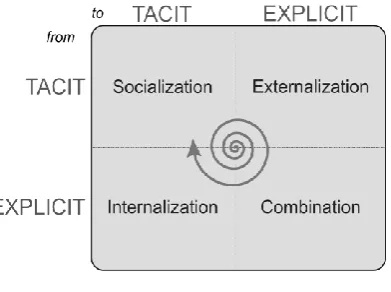
SECI: Socialisation, Externalisation, Combination and Internalisation
SCORM: Sharable Content Object Reference Model
SJT: Situational Judgement Test
SNA: Social Network Analysis
TK: Tacit Knowledge
TKS: Tacit Knowledge Sharing
TKI: Tacit Knowledge Inventory
TKIBP: Tacit Knowledge Inventory for Business Presenters
TKIM: Tacit Knowledge Inventory for Managers
10
List of Figures
Figure 1. 1 Research focus ... 26Figure 2. 1 Kolb's learning cycle ... 46
Figure 2. 2 Progression from pedagogy - andragogy - heutagogy ... 55
Figure 2. 3 E-Learning framework... 60
Figure 2. 4 Personalized online learning model ... 60
Figure 2. 5 The data-information-knowledge-wisdom (DIKW) hierarchy ... 69
Figure 2. 6 Philosophy of Gilbert Ryle and Michael Polanyi ... 70
Figure 2. 7 The tacit explicit knowledge continuum with examples ... 75
Figure 2. 8 SECI model ... 78
Figure 2. 9 Four types of ba ... 80
Figure 2. 10 Opinions in tacit knowledge sharing ... 89
Figure 3. 1 Conceptual model of tacit knowledge sharing in social media space ... 139
Figure 3. 2 Framework of e-Learning, tacit knowledge sharing and motivation ... 141
Figure 3. 3 Theoretical framework... 143
Figure 3. 4 Conceptual framework... 145
Figure 3. 5 A framework for measuring knowledge transfer in e-Learning ... 146
Figure 4. 1 Example of scenario 9 resulting from the interview data ... 168
Figure 4. 2 Histogram of TKIBP score per group ... 171
Figure 4. 3 Research design: control group experimentation ... 179
Figure 5. 1 Knowledge objects into Blackboard Virtual Learning Environment ... 193
Figure 5. 2 Architecture to foster tacit knowledge sharing in the VLE ... 193
Figure 6. 1 Mean TKIBP scores between experimental and control groups ... 203
Figure 6. 2 Change in mean assessment score over time among CMI group students ... 210
Figure 6. 3 Change in distribution of assessment scores over time among CMI group students ... 210
Figure 6. 4 Change over time in the percentage of students that have at least one zero rubric score ... 211
11
List of Tables
Table 1. 1 Thesis structure ... 38Table 2. 1 Diverse educational models by time or space flexibility ... 58
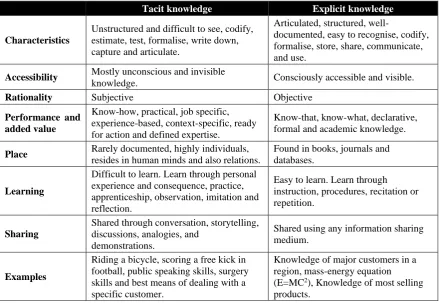
Table 2. 2 Properties of tacit and explicit knowledge ... 71
Table 2. 3 Tacit knowledge from Polanyi's view versus the organization view ... 77
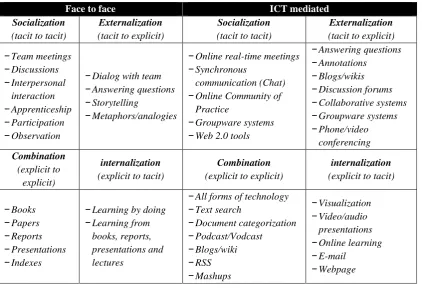
Table 2. 4 Mechanisms and technologies for knowledge creation and sharing ... 92
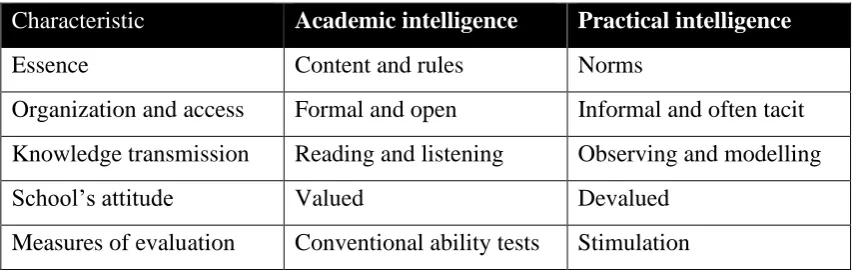
Table 2. 5 Knowledge characteristics of academic and practical intelligence ... 111
Table 2. 6 Examples of the Sternberg-based instrument for tacit knowledge testing ... 118
Table 4. 1 Articulable tacit knowledge properties in a knowledge area ... 156
Table 4. 2 Quantitative, qualitative, and mixed methods ... 162
Table 4. 3 Comparing TKIBP scores between groups ... 170
Table 4. 4 Correlation between TKIBP scores and years of experience ... 171
Table 5. 1 Coding interview summary procedure or template ... 189
Table 5. 2 Composition of a Knowledge Object about delivering with confidence ... 195
Table 5. 3 Demographic information of learners ... 197
Table 6. 1 Demographic information and background of the study participants ... 200
Table 6. 2 Other attributes of the study participants in e-Learning experiment ... 201
Table 6. 3 Overall students' perception of the proposed e-Learning environment ... 201
Table 6. 4 Overall learners' perception and impact of the proposed e-Learning model .... 204
Table 6. 5 Difference in perception and impact of the proposed e-Learning model between learners who improved and did not improve in scenarios ... 205
Table 6. 6 Correlation analysis between TKIBP scenarios improvement and module perception scores ... 206
Table 6. 7 Correlation analysis for TKIBP score improvement and related factors ... 207
Table 6. 8 Post-experiment question ... 208
12
Dedication
This Doctoral dissertation is dedicated to the loving memory of my lovely grandmother, Christine Yougnia. She raised me to love, hope, believe and achieve, but did not live to see this great achievement.
13
Acknowledgements
I thank the Almighty God for having his blessings and guidance that gave me the strength, courage, patience and perseverance to endure this long and challenging research safari. This research was a cascade of challenges. With the help of some people, I was able to stand rock-firm. These people lent various supports to me, encouraging, empowering and enabling me to forge ahead despite the ordeals. I owe a great deal intellectually to my supervisory team made up of Professor Jokull Johannesson and Paul Bocij. Whenever I trekked aimlessly through a wilderness of research, their expertise and experience assisted me to find a direction. Therefore, I would like to express my heartfelt appreciation to them for their constant support, constructive guidance and advice, and valuable feedback and comments at all stages.
I also acknowledge the unique contribution of Dr. Peter Busch. His book on “Tacit Knowledge in Organizational Learning” and prompt responses from my multiple enquiries enhanced my understanding of the (empirical) conduct of tacit knowledge research and helped in the carving of a suitable methodology to investigate the research questions. I am similarly grateful to Mr. Neil Herman, who showed concern by inquiring about my progress at times and gave me comments and feedback on my research. Special thanks also go to Dr. Jill Venus and Ph.D. students in my cohort for all their inputs during monthly seminars and workshops at University of Wales Trinity Saint David London Campus. Many thanks also to all my study participants who shared their experiences and perspectives freely that enabled me to move forward in this study. I am also grateful to Samuel Eding for his assistance during the implementation phase of the study.
I owe a profound gratitude to my wife, Laetitia Gabrielle Njiale, for her love, trust and
encouragement in the finalization of the thesis.
14
Chapter 1: Introduction
CHAPTER INTRODUCTION
The rich discussion of tacit knowledge shows that it is a crucial component of Knowledge Management. According to Abidi et al. (2005), tacit knowledge is the most valuable and significant part of human knowledge. Generally, there are two types of knowledge found in organizations and between individuals: explicit knowledge and tacit knowledge. Explicit knowledge is formal, written down and documented knowledge whereas tacit knowledge is informal knowledge that resides in an individual’s head in the form of mental models, personal experiences, know-hows, rules of thumb, insights and so forth. Tacit knowledge plays a crucial role in improving individual and organizational productivity as well as giving a competitive advantage. It is perceived as an important asset for improving quality of work, decision-making, productivity, competitiveness, accuracy of task performances, and professional effectiveness. It is a major time saver for individuals and organizations (Haldin-Herrgard, 2000; Hisyam, Selamat and Choudrie, 2004). As such, it is vital to harness and facilitate the transfer of tacit knowledge between experts and novices from individuals’ and organizations’ perspectives.
Tacit knowledge originated from Polanyi’s popular dictum: “we know more than we can tell” (Polanyi, 1966) which has led to much research. As noted by Gourlay (2006a, b), Tsoukas (2005) and Oguz and Elif Sengün (2011), the concept of tacit knowledge is largely underspecified and it carries several meanings. Since then, there have been various definitions and perspectives of tacit knowledge, and there have been debates about capturing, codifying, and transferring this sort of knowledge. Although some studies argue about the feasibility to pass on tacit knowledge from one person to another, Nonaka and Takeuchi (1995) are among many researchers who have a different opinion and they even suggested means and mechanisms to convert tacit knowledge to an explicit form and vice versa.
15 increasingly adopting e-Learning as the main delivery method to train employees (Simmons, 2002). Higher education institutions are also moving towards the use of the internet to deliver courses both on campus and at a distance. Although e-Learning grows consistently as a medium for knowledge delivery in many sectors, there are still arguments that its reliance on Information and Communications Technology (ICT) impedes its capacity to support the effective transfer of tacit knowledge among instructors, or subject matter experts, and students due to the lack of face-to-face contact. This is the most cited reason for saying that tacit knowledge cannot be effectively shared and acquired virtually. With the advent of new technologies such as Web 2.0, social media tools, virtual reality, gaming, simulations, 3D worlds, etc; many studies claim that e-Learning environments now have potent tools to provide better opportunities to mitigate the lack of face-to-face contact. They facilitate and enrich interaction, and collaboration among people and add comfort to externalize and share tacit knowledge (Yi, 2006; Falconer, 2006). While some researchers are still discussing the feasibility of ICT-mediated tacit knowledge sharing; others have claimed its effectiveness through concepts and ideas based on the best practices of Knowledge Management, the spirit of the Community of Practice and/or Knowledge Objects for content design. Unfortunately, these claims remain untested and they are purely theoretical claims. This situation freezes the debate and the research related to tacit knowledge in e-Learning. There is no research today that studies the factors that influence the acquisition of tacit knowledge at the individual level in e-Learning environments. Venkitachalam and Busch (2012) and Panahi et al. (2013) noted that there should be a shift of descriptive research to carry out more empirical studies in the subject of tacit knowledge.
The primary goal of this research is to investigate the acquisition of tacit knowledge at the individual level in an e-Learning setting. The research consists of establishing conditions conducive for students to cultivate subject-specific tacit knowledge in an e-Learning environment, using key concepts found in related literature. The research also conducts an experiment over a long period of time; and examines the development of students’ tacit knowledge in the field, and students’ influencing factors that positively impact their ability to capture and retain tacit knowledge in an e-Learning environment.
16 overview of the research design, working terms and definitions used in the study, as well as the structure of the thesis, are provided.
BACKGROUND OF THE PROBLEM STATEMENT
According to Peter Drucker, “knowledge” is a strategic resource that gives sustainable competitive advantage (Drucker, 1993). With this realization, organizations are now attempting to manage knowledge in a more systematic and effective way. organizations use Knowledge Management to encourage the creation and sharing of knowledge that results in improving productivity, innovation, competitiveness and better relationships among people in those organizations (Ubon and Kimble, 2002).
Today, education is subject to the same pressures of the marketplace. According to Duguid and Brown (2000), profound changes in competition have forced institutions of higher education to think like businesses. Educational markets are becoming global as universities attempt to expand their curriculum and offer high quality programs to students, regardless of location. To respond to the rapid changes in technologies and the increasing demands of stakeholders, many universities have turned to e-Learning.
Although e-Learning is a fast-growing means of instruction, there are still unanswered questions about the efficacy of sharing, and the acquisition of both soft and complex skills, on such a channel compared to the traditional face-to-face model of education. The National Apprenticeship Service has reported a 32% increase in demand for apprenticeship programs in the United Kingdom from 2012 to 2013 (NAS, 2014). This suggests that acquiring hands-on skills and practical knowledge is highly valued by students; and therefore it is an important criteria in selecting the best model of instruction for the best possible return on investment.
17 opportunities for people to engage in face-to-face, group or other social activities. It is in such social occasions that people are most likely to talk, discuss and convey their tacit knowledge to others.
18 This study subscribed to the school of thought that claims of successful tacit knowledge sharing and acquisition in online environments. The study also aims to shed light on this untested and unexplored claim by looking at the development of students’ tacit knowledge through an experiment using a method of enquiry that is not offered in literature. In other words, the study aims to explore whether a purposefully designed e-Learning environment can be a viable space for people to share, cultivate and retain tacit knowledge. If so, to identify the conditions or factors at individual level that have a major role in the process of acquiring such knowledge. Therefore, a review of the literature on general learning theory, adult learning theory, Knowledge Management, tacit knowledge and e-Learning was conducted in order to identify concepts, techniques and ICT mechanisms that positively contribute to the cultivation and dissemination of tacit knowledge among participants in an e-Learning environment. An e-Learning system to be used as a research testbed was then designed, using this literature.
Among other aspects, it was found that three convictions underpin the current research: the capacity of ICT tools in supporting tacit knowledge sharing in e-Learning; the importance of Knowledge Objects in designing e-Learning content and, adopting teaching and learning activities based on Community of Practice mechanisms; and the capacity of measuring the tacit knowledge of individuals in a specific subject.
Sharing and Acquiring Tacit Knowledge in E-Learning Environment
E-Learning instruction is the use of Information and Communication Technology to learn and teach. It can be synchronous or asynchronous in terms of the communication among participants. Regardless of the chosen method of communication, e-Learning is characterized by indirect contact and heavily relies on ICTs. It is for this reason that there is division among researchers as to whether e-Learning is an adequate means of sharing tacit knowledge between instructors and students.
19 because they involve face-to-face contact (Alavi and Leidner 1999; Smith 2000; Jacob and Ebrahimpur 2001; Busch, 2008). The argument aligns with the information richness theory (also known as the media richness theory). This theory was pioneered by Daft and Lengel (1986) and it suggests that communication cues, gestures and the tone of the voice can augment interacting and understanding in a face-to-face setting. Moreover, Hansen et al. (1999) stated that the use of ICT can have disruptive effects since it resorts to the use of emails and phone calls which has an absence of body language. Busch (2008) studied tacit knowledge diffusion in three types of small, medium and large organization structures, and he found that employees using phones and emails resulted in less transfer of tacit knowledge.
On the other hand, many researchers such as Yi (2006), Falconer (2006), Hildrum (2009), Tee and Karney (2010), Panahi et al. (2012b) contend that traditional mechanisms are no longer suitable in the current digital era. They argue that the development of technology provides potent tools to reinforce interaction, collaboration and knowledge sharing initiatives among people. In fact, technology comprising of social web tools, game simulators, 3D virtual world, innovative videos, and so on, can better assist experts in the preparation, illustration, explanation and demonstration of a particular skill or concept to novices. This also allows novices to visualize and practice what has been taught in endless ways and scenarios. For instance, IBM Innov8 2.0 is an example of a 3D game simulator that helps students to develop Business Process Management skills that are vital in the real business world (IBM, 2010). Panahi et al. (2012b, p. 882) asserted that: “...traditional mechanism of tacit knowledge sharing, such as apprenticeship/mentoring, face-to-face meetings/chatting, direct observation, etc. is no longer cost effective and feasible in the new fast growing business models.” Similarly, Venkitachalam and Busch (2012) state:
“Advocates and critics suggest the influence of information technology in the Knowledge Management domain support codified knowledge rather tacit knowledge. Yet, there is evidence in the current literature that presents the use of technologies and applications to support the articulation and flow of tacit knowledge between individuals.” (Venkitachalam and Busch, 2012, p. 365).
20 the market. These Virtual Learning Environments are built and they function under some standards and specifications such as SCORM (Sharable Content Object Reference Model) and principles drawn from the instructional design theory that provides guidelines to design and orchestrate e-Learning materials. For instance, there has been a large adoption of the video format in online courses that are perceived to be powerful to elucidate some concepts and to enhance learner retention. Geri (2012) first admitted that imparting new knowledge and skills in a distance learning environment seems harder than conducting the instruction in a face-to-face scheme. She pointed out student retention as being the major concern aligning with other studies like Copley (2007). By investigating video lectures, Geri concluded that videos may be a helpful and suitable solution to increase retention and mitigate the distance learner loneliness (inactivity) which are two factors that influence skills acquisition and application. At this state, video lectures are easy to conduct within the majority of existing Virtual Learning Environments. Additionally, there are many other tools supporting digital workshops in such environments.
Another issue in online learning is interaction that has also been enhanced recently with social networking tools, web conferencing, synchronous chat, wikis, etc. In fact, there are three types of interaction in online learning, learner-content, learner-learner and learner-instructor (Sher, 2009). However, many studies show that only learner and learner-instructor interactions are critical for learning effectiveness and student satisfaction (Sher, 2009; Chao et al., 2011). Furthermore, a study by Davies and Graff (2005) revealed that students who failed in their online program interacted less frequently, as opposed to students who achieved a higher performance. In the same vein, Hrastinski (2009) asserted that improving online learning starts with enhancing online learner participation. Luckily, the majority of Virtual Learning Environments are now well-equipped with collaborative tools and mechanisms to facilitate participants’ interaction and engagement, vital for tacit knowledge sharing. For instance, Hildrum (2009) studied online tacit knowledge sharing within Cisco’s1 e-Learning platform and concluded that e-Learning activities (content
network, chat groups, remote labs) facilitate the sharing of tacit knowledge. Hildrum stated:
1Cisco is a multinational technology company that designs, manufactures, and sells networking equipment.
21 “If ICTs are really inadequate as a means of diffusing tacit knowledge, it is peculiar that Cisco’s extensive network of remote labs continues to exist and grow after eight years of operation. Although the knowledge shared in Cisco’s remote labs represent a very small part of Cisco’s total knowledge base, the experiences from remote labs still represent an important counterexample to the claim that face-to-face interactions are indispensable for interpersonal sharing of tacit knowledge.” (Hildrum, 2009, p. 214).
The discussion above has highlighted the role of ICT in tacit knowledge sharing within virtual spaces and online environments in particular with examples found in the literature. This shows the feasibility and capacity of Information and Communication Technology tools in tacit knowledge sharing; yet another school of thought disapproves it. Nonetheless, admitting that e-Learning suffers from some pitfalls and challenges pertaining to learners’ engagement and interaction, a number of concepts and ideas have emerged to mitigate those issues. Many studies suggest the application of Knowledge Management principles in e-Learning, leading to Knowledge Management and e-Learning synergy. Liebowitz and Frank (2011) developed further interest in Knowledge Objects to first improve e-Learning content, which is the basis of learning activities and discussions.
Knowledge Objects and CoP Learning and Teaching Strategy
22 From an instructional systems design perspective, Learning Objects facilitate participants’ interaction and increase the focus on learning. Learning Objects also improve knowledge retention, which is seen as one of the major challenges in online distance learning (Liebowitz and Frank, 2010, Geri, 2012).
According to the Web-Based Training Information Center (2009), Learning Objects will have the biggest impact on online learning in the coming years. The goals of Learning Objects are: reusability, interoperability, durability and accessibility. In addition, Lytras et al. (2005) and Merrill (1998) alleged that Learning Objects that possess tacit knowledge characteristics have a positive influence on learner development. In the same vein, Longmire (2000) stated that: “Building an entire course of study around these Learning Objects can satisfy both immediate learning needs, as in a knowledge-based or skills-based course, and current and future learning needs that are not course based.” However, all of these studies remain purely theoretical and they have not been suitably tested to better understand the impact on personal tacit knowledge growth.
Remarkably, there are many applications of Learning Objects on the online learning market. For example, the giant tech company, Cisco, has introduced this concept of Learning Objects on its distance learning platforms. It is claimed that by packaging Learning Objects within an online learning environment, learning will become more powerful and agile. Liebowitz and Frank (2011, p. 8) believe that: “If some of these Learning Objects are actually Knowledge Objects whereby a student has access to interactive pools of knowledge, then the e-Learner can augment personal knowledge through these knowledge bases for a deeper understanding of specific knowledge.” Authors see Knowledge Objects as a mechanism to enrich online content with a relevant, deep and interactive knowledge base of the field. Knowledge Objects then adhere to knowledge content considerations of online learning to transfer tacit knowledge as explained by Wild et al. (2002). The authors suggest that those considerations are based on deep knowledge, insight and expertise. This dynamic can be maintained and enriched through the Community of Practice, meaning a group of participants sharing a common interest in a topic that Hildrum (2009) and Busch (2008) say it stimulates and generates relevant knowledge in the subject.
23 ideas, explore and question their understandings, solve challenges, and form common commitments to action for improvement.
Despite cases and features exhibited in the literature to justify effective knowledge sharing in e-Learning, there is still a lack of empirical studies proving or disproving these arguments. There is also no evidence of the role played by Knowledge Objects and Community of Practice in the creation or development of tacit knowledge for individuals in the e-Learning context. Moreover, none of the available studies shows how Knowledge Objects and Community of Practice concepts with the new ICT tools can be organized in e-Learning environments in order to fulfil tacit knowledge sharing and acquisition.
Tacit Knowledge Measurement
To justify the effectiveness of e-Learning and the performance of learners regarding tacit knowledge transfer, some studies use academic or intelligence tests. However, these methods are not meant to measure tacit knowledge (know-how, practical experience or practical intelligence) according to Somech and Bogler (1999) and Sternberg et al. (1995). Researchers argue that academic tests measure academic intelligence (know-how or explicit knowledge). They further contend that measuring tacit knowledge is not an intelligence test in disguise and therefore, another approach should be considered. Sternberg and his colleagues (psychologists from Yale University) postulated an approach for testing tacit knowledge in any professional field or activity from which tacit knowledge measurement for managers or management skills is popular in practice.
24 intelligence theory claiming that the authors misreported data, consistently overstating supportive results, and they ignored evidence that contradicts the theory. McDaniel et al. (2001) argued that Sternberg and his colleagues’ technique has more resemblance to Situational Judgment Tests where there is little research on their validity.
Testing tacit knowledge is challenging and currently, there is no consensus on a method to test that kind of knowledge. In the history of scientific psychological measurement, there are two important quotes from the famous psychologist Thorndike (1918). “Whatever exists at all exists in some amount. To know it thoroughly involves knowing its quantity as well as its quality.” McCal (1939) asserts that: “Anything that exists in amount can be measured.”
With the development of science and technology, we make more accurate measurements about length, weight, temperature and other physical properties, but we can also attempt to use various methods to measure psychological characteristics such as thinking, mood, personality, temperament, etc. Since tacit knowledge is an objective reality and it is relatively stable for the individual, it is possible to conduct a quantitative analysis with special measuring methods. Given its subtle nature, tacit knowledge cannot be measured as easily as physical properties, despite the robustness of methods. We can only speculate the level and characteristics of the individual’s tacit knowledge and enhance it with complementary methods. For instance, Busch et al. (2006) provided a triangulated approach to test tacit knowledge and its diffusion. The Busch’s methodology tests individual tacit knowledge from a quantitative angle (following the Sternberg/psychology approach) and qualitative angle (using formal concept analysis theory) to assess the diffusion of tacit knowledge among people in an organization or learning community (using social networking analysis).
Although tacit knowledge is highly individualized, there are studies that have shown that it can be effectively measured providing methods and opening doors for reflections and improvements. Unfortunately, we noticed that authors who strongly argue that tacit knowledge can be transferred either face-to-face or virtually seldom endeavour to measure the tacit knowledge acquired or transferred at individual level. The literature is left with theoretical arguments and a vague direction for practice.
25 their peers and subject matter experts in an e-Learning platform devoid of face-to-face contact. Engaging in tacit knowledge testing research in e-Learning is then crucial to clarify the adequacy and usefulness of the e-Learning mode as Özdemir (2008) warned that:
“If ‘traditional e-Learning’ environments are insufficient for tacit-knowledge transfer and creation, there is a potential danger for the next generations. While they may gain codified knowledge anywhere and anytime, they will probably be devoid of the knowledge hidden within their master (teacher) or peers” (Özdemir, 2008, p. 554).
The three convictions discussed above established the rationale for the current study and they led the researcher to define the problem as follows.
PROBLEM STATEMENT
A review of relevant literature showed that there are two conflicting schools of thought regarding the use of Information and Communication Technology to share tacit knowledge within a virtual space, including the social media space, virtual learning environment, etc. The first school of thought asserts that externalizing and transferring tacit knowledge in an online environment results in ICT reliance which cannot be as effective as the face-to-face learning model in which participants benefit from social cues, body language, live demonstration, etc, which enables better understanding and retention. On the contrary, the second school of thought provides counterexamples of the adequacy and success of sharing and acquiring tacit knowledge in online environments without face-to-face contact.
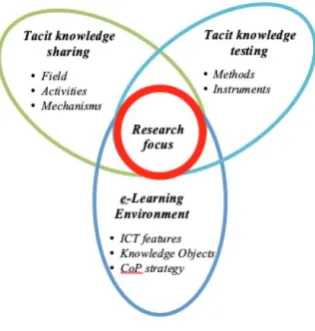
26 examined. Hence, current research aims to bridge these gaps and focus on the acquisition of tacit knowledge at individual in e-Learning. It does this by examining the nature of participants’ exchanges in an e-Learning platform, testing tacit knowledge at the individual level and exploring participants’ influencing factors.
Practically, this study aims to review and consolidate concepts and factors purported to facilitate and increase online tacit knowledge acquisition, in order to propose and design a conducive adult learning environment to promote the development of tacit knowledge of the field in question among participants. Knowledge objects are primarily taken on board to enhance and maximize personal knowledge growth as claimed in the literature. Following that, participants, comprised of students and subject matter experts, are invited to collaboratively learn and exchange ideas and experiences in the business presentation field. Afterwards, students’ tacit knowledge and their perceptions are assessed and examined through three methods that are detailed and justified in the research methodology chapter. Business presentation was chosen as the field for the experiment, since tacit knowledge played a vital role in the game rather than a mere mastering of facts and rules. Being successful in delivering business presentations requires the ability to speak with confidence, professionalism and quality in front of an audience in business (Stowe et al., 2010; McLean, 2011). Wagner and Sternberg (1991, p. 2), the pioneers of tacit knowledge testing, also see the possession of tacit knowledge to be an important ingredient in giving successful oral presentations.
Figure 1. 1 Research focus
27 E-Learning represents the context of the research and the principal unit of investigation. Understanding the role played by ICT features, Knowledge Objects and learning activities in the process of sharing and acquiring tacit knowledge in an e-Learning context constitute another unit of the study. Similarly, understanding methods and instruments to test for tacit knowledge of a subject is also an important unit of the study to achieve its objectives and answer all research enquiries. The scope of the study will be discussed further.
RESEARCH AIMS AND QUESTIONS
The research gaps identified in the literature helped to define the research problem. They also assisted in defining the overall aim, main research question, and set of objectives to answer the question. The overall aim of the study is to shed light on the question related to the ability of students to gain tacit knowledge in e-Learning environments characterized by the use of ICT (without face-to-face contact) to interact and collaborate with peers and instructor(s).
In the context of education, the value of understanding how tacit knowledge is cultivated in online environments can significantly move the field of e-Learning forward. There are some inherent qualities about e-Learning environments that make the learning experience different and more effective than conventional means. Yet, there is little understanding about what makes for an effective or less effective e-Learning environment, particularly from the standpoint of how tacit knowledge is stimulated, transferred or developed. Given the myriad of concepts, techniques and tools in the literature claimed to facilitate students’ acquisition of tacit knowledge in e-Learning, it is crucial to propose a valid model with clear evidence.
This leads to the broad research question: Can e-Learning environments provide conditions that facilitate the acquisition of tacit knowledge? And if so, how?
A number of sub questions emerged out of this broad question. For example, from a process standpoint and conditions of an e-Learning environment:
RQ1: Can tacit knowledge be cultivated and retained in e-Learning environments? And
if so, how?
RQ2: Do the use of Knowledge Objects to design e-Learning content and the
28 The other guiding question relates more to each learner’s individual characteristics and influencing learning factors:
RQ3: Among the following: age, gender, ethnicity, specialty, experience in the field, English as a first language, familiarity with e-Learning environments, self-competence, perceived usefulness, self-directed learning, motivation, perception of the proposed e-Learning model; what are the major factors or characteristics that positively influence learners’ ability to acquire tacit knowledge in an e-Learning environment (based on RQ2)?
To achieve the research aim and answer the research questions, the following research objectives are pursued:
● O1: To critically analyze the literature related to tacit knowledge acquisition and its dissemination in e-Learning, and examine whether people are able to capture and retain tacit knowledge using the e-Learning channel [RQ1] (Chapters Two and Six). ● O2: To review the learning theory, adult learning theory, learning styles, Knowledge
Management and e-Learning literature for an in-depth understanding of the learning process and knowledge development. To identify concepts or ideas concerning e-Learning implementation in order to propose practical guidelines for developing an e-Learning system that promotes the externalization and internalization of tacit knowledge. Finally, to establish core concepts for the experiment [RQ1, RQ2] (Chapters Two and Three);
● O3: To develop a conceptual framework for e-Learning implementation offering an in-depth understanding of the concept of Knowledge Object and learning strategy based on Community of Practice principles, and factors that play a major role in learners’ ability to capture and retain tacit knowledge in an e-Learning environment [RQ2] (Chapters Three);
● O4: To validate the proposed conceptual framework through an experiment followed by an examination of the development of students’ tacit knowledge of the business presentation field at the individual level and influencing factors [RQ3] (Chapter Five and Six);
29 framework, methodology) in order to advance the debate on tacit knowledge related research in e-Learning, and to encourage scholars to seek further experimental and empirical studies in the field (Chapters Seven and Eight).
CLAIMS EMERGING FROM RESEARCH QUESTIONS
According to research questions, the following claims were formulated:
● Claim 1 - Learners can acquire tacit knowledge in a well-prepared e-Learning
environment [RQ 1]. A properly coordinated program in an e-Learning environment creates conditions to support the activities and learning processes necessary for learners to acquire tacit knowledge.
● Claim 2 – A viable model to facilitate the acquisition of tacit knowledge in e-Learning environments consists of preparing content using Knowledge Objects and applying Community of Practice strategy to coordinate learning and teaching activities. This approach promotes collaboration and helps students locate and connect with like-minded peers to exchange ideas and to develop deeper insights and understandings filled with tacit knowledge [RQ 2].
● Claim 3 - Among the following: age, gender, ethnicity, specialty, experience in the
field, English as a first language, familiarity with e-Learning environments, self-competence, perceived usefulness, self-directed learning, motivation, perception of the proposed e-Learning model; there are important influencing factors or characteristics that positively impact the learners’ ability to acquire tacit knowledge in an e-Learning environment [RQ3].
DELIMITATION AND RESEARCH SCOPE
The scope of the study is defined as follows; first, the study adopted an organizational rather than philosophical definition of tacit knowledge. As mentioned in section 1.1, it is debatable as to whether or not tacit knowledge can be articulated, codified, formalised and operationalized. Polanyi viewed tacit knowledge as inexpressible knowledge residing in human minds (Polanyi, 1966). From this perspective, it may not be easily accessible and transferable using ICT (Haldin-Herrgard, 2000; Johannessen et al., 2001; Hislop, 2002; Flanagin, 2002).
30 extent, tacit knowledge is now known to be articulable and expressible in certain situations, and is classified into different types of tacit knowledge based on its degree of tacitness and expressibility (Richards and Busch, 2000; Busch, 2008; Oguz and Elif Sengün, 2011). To meet the research objectives of the study, the organizational definition of tacit knowledge is adopted. In this research, tacit knowledge refers to articulable tacit knowledge possessed by an expert in the field. The term “tacit knowledge” rather than “implicit knowledge” is used, to allow comparison with previous studies conducted by Hedlund et al. (2003), Sternberg et al. (2000), Busch et al. (2003) and Berman et al. (2002). This aspect is further discussed in the literature review chapter (section 2.6.2, pages 63-66). This Organizational Knowledge Management’s view of tacit knowledge also allows a better understanding of the phenomenon of tacit knowledge sharing using ICT than Polanyi’s view, which seemingly does not see a role for ICT in tacit knowledge sharing.
By adopting an organizational definition, the tacit knowledge under examination is mainly based on the types of tacit knowledge that field experts acquired personally in their workplaces, practices and routines. It is based on knowledge that can be shared to some degree through conversation, or knowledge that can be demonstrated. Having chosen ‘business presentation’ as the subject for the experiment, tacit knowledge is related to the practical experience, skills, personal/professional opinions and perspectives; and other job-specific knowledge and experiences exhibited by experienced business presenters. Therefore, the main focus is to assess the amount of that knowledge that could be passed on successfully to a novice using ICT in an online learning environment. Inexpressible and less articulable types of tacit knowledge in the forms of mental models, gut feelings, hunches and intuitions that may not be articulated were not considered.
31 Third, the study was set to investigate tacit knowledge acquisition in an e-Learning environment with adult learners. Hence, the study applied learning theory and adult learning principles to design the e-Learning testbed environment and to conduct learning and teaching activities. Additionally, the study investigated one set of the influencing factors identified in the literature, which may impact the students’ ability to acquire tacit knowledge in e-Learning environments. Other factors are out of the scope of this research. They are presented in the final chapter and also remain major themes for further research. Fourth, the selection and recruitment of experts was based on a set of criteria defined in Chapter Four (page 164). It was not limited to specific geographical locations and it was expected that the results would not be affected by geographical location. The selection of subject matter experts was also based on a set of criteria defined in Chapter Four (page 176). The learners were second year, undergraduate business students. They were invited to work interactively and collaboratively with instructors in the e-Learning environment in order to exchange ideas and experiences in the ‘business presentation’ field of interest. Fifth, it was assumed that honest and candid responses were given by the participants through the interviews and questionnaires; and that and the students relayed their true stories, experiences and perceptions. Weaknesses or limitations identified in the research findings will be discussed in the final chapter of the thesis.
OVERVIEW OF THE RESEARCH DESIGN
32 Busch (2008) proposed a step-to-step guide to conduct empirical research on tacit knowledge that has inspired this study. Hence, the study consists of seven stages at a macro level. They are defined as follows:
Stage 1: Defining the research topic
This stage consists of understanding tacit knowledge and its importance in the context of e-Learning. It consists of defining the research problem, defining the research aim and objectives, deriving the main research question and sub-questions, explaining the significance of the study and defining the scope and limitations of the study.
Stage 2: Conducting literature review
This stage involves critically reviewing the existing and relevant literature, getting a deeper understanding of the topic, determining the research gaps and revising the research question and scope.
Stage 3: Developing a conceptual framework
This stage comprises of developing a theoretical framework based on the literature, identifying and establishing conditions, factors and activities that claim the successful sharing and creation of tacit knowledge in e-Learning environments. It also comprises of defining assumptions and hypotheses, and drawing the conceptual framework. This justifies the adoption of key concepts implemented in the e-Learning environment used as the testbed of the experiment.
Stage 4: Research design
This stage justifies the overall methodology of the study and choice of control group design found appropriate to explore and compare, if any, the development of students’ tacit knowledge in the experimental or treatment group, before and after the exposure to the proposed e-Learning environment, compared to the control group. This implies designing and orchestrating learning within the proposed e-Learning environment derived in stage 3, developing instruments and methods to assess the development of students’ tacit knowledge in the area of business presentation, taking different samples size, recruiting participants, obtaining ethical clearance and collecting data.
33 Step 1: Constructing research instruments and methods to assess tacit knowledge
Capturing, eliciting or assessing tacit knowledge is challenging but not impossible. However, there is not agreement in the ways to assess field-specific tacit knowledge and no instrument deals with our subject of interest. The study opted for a triangulated approach to mitigate weaknesses and criticisms seen in one technique or another by applying both qualitative and quantitative measures.
● The first approach is based on popular techniques from psychologists from The Yale group. They feel that tacit knowledge can be articulated at a certain level of abstraction. They claim that novices and experts differ in the amount and organization of field specific knowledge. Therefore, the more expert-like knowledge a person possesses, the more tacit knowledge the person has. Tacit knowledge is measured through the development of inventories, typically based on a Situational Judgment Test format designed to capture specialized, subject-specific or job-related knowledge acquired from experience. The process of developing a Tacit Knowledge Inventory in this way begins by eliciting experienced-based tacit knowledge from successful practitioners and experts in a particular field and finishing with a validated and revised instrument.
Following the author’s recommended guideline, we defined selection criteria and recruited experts and practitioners in the area of business presentation using snowball sampling. We then developed the Tacit Knowledge Inventory for Business Presenters (TKIBP) instrument by interviewing 12 experts and practitioners in the field using semi-structured interviews. The TKIBP instrument was converted into a questionnaire and issues pertaining to the Situational Judgement Test format were fixed following findings and recommendations of McDaniel and Whetzel (2009) and others detailed in the literature chapter (pages 120-122). The end result was found to have a high reliability and it was validated at three main levels including content validity, internal and external validity using three groups of participants (see pages 149-154).
The validated TKIBP questionnaire was then administered to an experimental group of students (n=231) and a control group (n=212) before and after the e-Learning experiment to compare TKIBP scores.
34 knowledge is “...practical know-how, which is formed in the minds of people in the course of time on the basis of experience and interactions with their surroundings. The individual is not often aware of it because they gain it without conscious attention and use it spontaneously. There is an obvious connection with routines actions...” (p. 4). Pacovský stressed that “…because tacit knowledge is stored in our sub-consciousness and it has a tendency to be activated when an incentive appears.” (cited in Matosková et al., 2013).
Twenty-three (23) students, randomly recruited for the Close Monitoring Initiative, were asked to present a topic in conditions similar to a real-world setup at three stages, beginning, middle and end of the experiment, in which they were recorded acting and dealing with issues and incidents that happened. At the end of their performances, students were asked to explain or justify decisions made and actions taken during their performances; and they were asked their opinions on what they thought they achieved. Facilitators assisted in taking notes of the students’ attitudes and behaviours. A panel of ten (10) then assessed all notes and recordings. A pseudo Delphi method was used. This consisted of evaluating student performances and giving their opinions on the extent to which students are drawing upon their tacit knowledge to deal with critical workplace situations. The experts were also asked to provide their opinion about the students who dealt successfully with critical situations during the Close Monitoring Initiative; and whether or not they differed in their tacit knowledge from students who dealt less successfully with the same situations.
● The third approach consists essentially of examining the experiences and perceptions of participants in-depth for a number of variables, including: the effectiveness of the e-Learning platform, enabling conditions for tacit knowledge cultivation and sharing, and tacit knowledge development. Twenty-four (24) randomly selected students from the experiment group agreed to participate in an in-depth interview. This was meant to better understand conditions, ways or factors that help them acquire new ideas and insights laden with tacit knowledge in the field.
35 Step 2: Conducting the experiment
This step involves setting up the e-Learning venue with Knowledge Objects, establishing activities in the spirit of Community of Practice with related components, and recruiting students to launch the e-Learning process. In line with the research design, the experimental group was made of n=231 students selected randomly to work collaboratively with instructors in the proposed e-Learning platform for 14 weeks. Each student in the experimental group was assessed for their knowledge in the field prior to, and upon completion of the experiment; and it was compared to that of the control group. The control group was made of n=212 students who did not receive any intervention and exposure in the e-Learning program.
Step 3: Collecting data
Before and after the e-Learning experiment, the validated TKIBP questionnaire (Appendix H) was administered to students followed by a survey (Appendix J) including students’ demographic and background information as well as their post-experiment feedback. Students’ video-recordings and notes of their performance during the Close Monitoring Initiative program were consolidated in folders for assessment, scores and comments from the panel of experts.
In-depth interviews related to the students’ experiences and perceptions of the e-Learning system and process were conducted at the end of the experiment, following the guide in Appendix K.
Stage 6: Data analysis
36 proposed e-Learning system were also analyzed qualitatively using thematic analysis. The feedback from the three dimensions provides an in-depth understanding of the phenomenon being investigated.
Stage 7: Reporting data, findings and recommendations
This stage consists of reporting the research results, discussing the findings, revising the conceptual framework, suggesting recommendations and limitations, and making theoretical and practical contributions.
RESEARCH RELEVANCE AND SIGNIFICANCE
Uncovering people’s ability to share and acquire tacit knowledge in e-Learning environments is vital to enhancing and sustaining e-Learning education and research (Özdemir, 2008). Instead, authors employ a multitude of concepts, tools and techniques to argue about the effective transfer and retention of tacit knowledge in virtual environments where there is no face-to-face contact.
Managing and transferring knowledge have captured the attention and interest of both researchers and practitioners (Edgar, 2005; Kumar and Ganesh, 2011; Hung et al., 2011). These topics occupy the top lines of managers’ agendas in organizations that increasingly seek to improve their efficiency and effectiveness (Ringberg and Reihlen, 2008; Luftman and Zadeh, 2011). E-learning environments have been introduced and widely adopted in many organizations to train employees and streamline knowledge flow where stakeholders are not always in the same location. Also, they help to establish close links and build connections with outside business partners in order to transfer new knowledge and skills, and learn from the experiences of the others (Argote and Ingram, 2000; Darr and Kurtzberg, 2000; Hackney et al., 2008).
Skills, expertise and know-how are the most important forces to survive in the current knowledge economy and competitive environment. This puts a strain on online learning institutions to develop strategies that help and promote effective knowledge transfer between instructors and students and students among themselves, in order to challenge negative opinions and critics.
37 Frank (2011) suggested Knowledge Objects in e-Learning environment to enhance knowledge retention. While these studies show significant progress towards tacit knowledge transfer in an online setting, there is still no consistent research on the contribution of those conditions for acquiring and developing tacit knowledge from students’ perspectives. Tee and Karney (2010) argue a ba-like online learning environment referring to Nonaka and Takeuchi’s SECI model to share and cultivate tacit knowledge. This is problematic due to the critics surrounding the SECI model, discussed in the literature chapter (pages 80-82). Also, Tee and Karney’s evidence is not enough to claim that students can acquire and develop further tacit knowledge in such a space.
To clarify how effective sharing and acquiring tacit knowledge within a virtual learning environment is, a more holistic and empirical approach is required. Therefore, this study is considered to be relevant and timely to online education. Based on andragogical and heutagogical principles combined with Knowledge Objects and Community of Practice concepts, the study aims to involve students in a purposefully designed e-Learning platform with subject matter experts as instructors. The instructor’s role is to drive engagement, encourage students, conduct webinars and provide feedback to students. Our hypothesis is that students will be able to share and most importantly capture and retain tacit knowledge that will be tested through validated instruments and methods.
This study contributes to a deeper understanding of the acquisition of tacit knowledge in e-Learning environments, with attention to concepts and techniques that are claimed to facilitate tacit knowledge transfer and dissemination. The value of this research is also realized in its practical contribution to be achieved. For instance, evidence-based information is provided about tacit knowledge acquisition in e-Learning environment to develop a strategy for the enhancement of online education and to guide further empirical studies in the subject.
DEFINITION OF KEY TERMS
Andragogy: art and science of helping adults learn in contrast to pedagogy, the art and science of helping children learn (Knowles, 1980, p. 43).
Business Presentation: process of presenting an idea, a topic or a product to an audience.
38 Community of Practice: group of people who share a concern, a set of problems, or a passion about a topic, and who deepen their knowledge and expertise in this area by interacting on ongoing basis (Wenger et al., 2002, p. 4).
Field Expert: person with a high level of knowledge or skills in a particular area of endeavour; a specialist (Cambridge Dictionary, 2008).
Heutagogy: study of self-determining learning with practices and principles rooted in
andragogy (Blaschke, 2012).
Instructional System Design: practice of creating instructional experiences which make
the acquisition of knowledge and skill more efficient and appealing. Instructional design requires answering two major questions: What to teach and how to teach (Merrill, 1998).
Knowledge Object: Bellenger (2004) states that this is highly structured interrelated set of
data, information, knowledge, and wisdom concerning some organizational, management or leadership situations, which provides a viable approach for dealing with the situation (as cited in Di Maio and Paola, 2013).
Learning Object: learning content decomposed into separate and distinct pieces of
reusable online learning materials such as text, audio, video, graphics and interactive files (Chyung and Swanson, 2009).
Tacit Knowledge: subject-specific knowledge and skills that people usually gain
individually through on-the-job experiences, as opposed to published academic knowledge. It is an aspect of practical intelligence and provides insight into an important factor underlying the successful performance of real-world tasks (Sternberg et al., 1999).
ORGANIZATION OF THE THESIS
This thesis is organized using recommendations from the seminal book “How to Get a PhD” (Phillips and Pugh, 2010). A brief summary is presented in Table 1.1 below.
Table 1. 1 Thesis structure
Background theory Chapter 1 Introduction Chapter 2 Literature Review
Focal theory Chapter 3 Conceptual Framework
Data theory
Chapter 4 Research Methodology
Chapter 5 E-Learning Set Up and Participants
Chapter 6 Research Findings and Analysis
39 Chapter One, Introduction, is an introduction to the research, providing a background and outlining the broad field of study. It aims at orienting the reader and setting the foundations of the thesis. The chapter includes a brief description of the research background and research problem, the aim and objectives of the research, and an overview of the research design. It also justifies the relevance and significance of the research, its values and originality. It ends with a thorough outline of the thesis.
Chapter Two, Literature Review, aims to build a theoretical foundation for the research through a critical review of existing and relevant literature on the topic. It consolidates learning theories and adult learning theories and collates the studies based on mechanisms, factors and ICT potentials to facilitate the transfer of tacit knowledge within virtual spaces and indirect contact. There is a special focus on the e-Learning environment. Examining these studies establishes the boundaries of the research defined by Knowledge Management, e-Learning, Knowledge Objects, Community of Practice and tacit knowledge measurement techniques. The chapter reveals a significant research gap and thus provides direction for the study.
Chapter Three, Conceptual Framework, presents a model with artefacts for successful tacit knowledge acquisition in a Virtual Learning Environment. Based on an extensive review of relevant literature, the model consolidates factors, mechanisms and means that cause the success of tacit knowledge sharing and its acquisition in a Virtual Learning Environment from a theoretical or conceptual perspective. The model is to be implemented in order to verify claims related to learners’ ability to acquire tacit knowledge in e-Learning environments..
Chapter Four, Research Methodology, discusses the research design and it outlines the methodology employed in the study. The chapter presents the research approach and methods used to conduct the empirical investigation, with a detailed explanation of the rationale behind the choice of the field and particular methods. The chapter also explains the data analysis techniques used in this study and it addresses the criteria for judging its methodological rigour.