Dagala et al. World Journal of Engineering Research and Technology
STRUCTURAL EQUATION MODELLING VIA ANALYSIS OF
MOMENT STRUCTURE - PROPELLER SHAFT
V. M. Dagala*1, Z. A. Mshelia1 and A. B. Udin2
1
Department of Mechanical Engineering, University of Maiduguri, Maiduguri, Nigeria.
2
Department of Technical and Engineering Education, Universiti Teknologi Malaysia,
Malaysia.
Article Received on 09/02/2018 Article Revised on 02/03/2018 Article Accepted on 23/03/2018
ABSTRACT
Structural Equation Modelling (SEM) of propeller shaftvia analysis of
moment of structurerepresents a system of the shaft that helps students
to know, understands, or stimulates a particular learning. As an
instructional model, it was developed based on the items that were
considered significant of the shaft items. Four out of nine items of the
shaft were scrutinised through the SEM via the Analysis of Moment Of Structure (AMOS). It
relied absolutely on the concept maps assessment test through which data was gathered and
structured questionnaire developed by the researcher. The duo was believed suitable to
determine students’ academic performance. Four of the propeller shaft items denoted as
(PSH1, 3, 5 and 6) out of ten were considered most significant for the system are: PLS1
(outer shaft connection to the gearbox), PLS3 (Flange assembly), PLS5 (Inner and outer shaft
housing assembly), and PLS6 (functions of yoke shaft). These were verified after thorough
AMOS. The findings discovered that students’ academic performance after introducing the
model for instruction was significantly improved. This article developed a prototype of
propeller shaft for instruction in Automobile Engineering showing the most important items
of the model as illustrated in a pictorial form Fig 1.
KEYWORDS: Structural Equation Modelling, Analysis of Moment of Structure, Academic performance, Concept Maps, Structured Questionnaire.
World Journal of Engineering Research and Technology
WJERT
www.wjert.org
SJIF Impact Factor: 5.218*Corresponding Author V. M. Dagala
Department of Mechanical
Engineering, University of
Maiduguri, Maiduguri,
1.0 INTRODUCTION
Academic performances or knowledge are acquired through successful experimental
practices and is full of learner-centred activities that have direct association with the learner’s
intellectual development. This has been the major focus of Automobile Engineering (AE) as a
discipline. Experimental learning practices have proven to be very important in AE from its
emergence to date. This may suggest why employers of labour are in dare needs of graduates
from tertiary institutions who are well equipped to function effectively in contributing to the
development of the society.
Propeller shaft therefore, as a concept in this context refers to the transmission system used
for the instruction. Today, the world has been transformed into economy nations. That is why
employers of labour need graduates that are well trained for the development of their work
force. This considerable shift has posed serious challenges to educational institutions.
Well-informed based economy workforce implies and requires sound preparation of higher
education graduates to work. In addition, tertiary institutions must reinforce personal and
social responsibility inside and outside of institutions and simultaneously seek opportunity
for students to participate in educational activities that is relevant in the changing world
(Lungu et al., 2012). It is therefore, agreed that it is the capacity and ability of the higher
institutions to generate and transform new ideas, methods and products that can change these
into monetary value or wealth.
Evidence with this development, AE at the forefront of economic, social and technological
development must strive to provide viable opportunities to change the structural systems of
teaching and learning. This will prepare the students to enter into a competitive global
workforce. It is because students’ academic and skill achievements have always been argued
upon among the educators and researchers in order to meet the learning conditions of this
preparation (Nasri and El-Shaarawi, 2006).
2.0 MATERIAL AND METHODS
SEM as a technique was specifically used to analyze the initial measurement models of the
propeller shaft items and was further modified through AMOS. During the analyses, jointly
the number of factors and their indicators were explicitly specified as described by Kline
(2005). The purpose of AMOS was to determine the factor structure within a measurement
via AMOS. The model evaluation started with an evaluation of parameter estimates, such as
square multiple correlations (R2), followed by the examination of model fit as described by
Joreskog and Sorbom (1996). When the model fit was poor, various diagnostic indicators
such as standardized residuals, regression weights, and the modification indices according to
Koufteros (1998) were properly determined. According to the scholar, most standardized
residuals should be less than 2.0 in absolute value for correlation models. Besides, other
indicators also affected the fit performance of the proposed model. This included multivariate
normal distribution and covariances. Multivariate normality of all observed variables was
standard distribution assumptions in the SEM. A sample was considered to be multivariate
when normality distributed at 0.05 level of significance and the critical ratio was smaller than
1.96, indicating that the coefficient of multivariate kurtosis was not significantly different
from zero according to Mardia (1970). However, the multivariate Kurtosis can be large and
multivariate non-normality can be extreme (critical ratio >1.96) even if univariate skewness
and/or Kurtosis range between (-1.00 to +1.00) recommended by Muthen and Kalpan (1985)
was obtained from most of variables in data. Based on the value of critical ratio of 1.96, some
multivariate might be included in the sample, and therefore, should not be used as the
standard value (Gao et al., 2007; and Kline, 2005). Therefore, modified measurement model,
which complied and fit well to the data based on the default indices were considered as an
appropriate answer for specific research question.
2.1 Brief Description of the Study Area
This article was produced based on the data obtained from the North-East geopolitical zone
of Nigeria. The zone comprised of six (6) states namely: Adamawa, Bauchi, Borno, Gombe,
Taraba and Yobe States. It was produced based on the data collected in only three states of
the region, particularly in the institutions that are offering Automobile Engineering (AE)
courses (see Table 1).
Table 1: List of selected Federal Universities offering AE in the North-Eastern Nigeria.
Table 2 below presents the designed questionnaire used to assess the students’ academic
performance at B. Eng and B. Tech. Eng levels in an automobile transmission systems
Abbreviation Name of institution Location
ATBU FUTY UNIMAID
Abubakar Tafawa Balewa University, Bauchi Federal University of Technology, Yola University of Maiduguri, Maiduguri
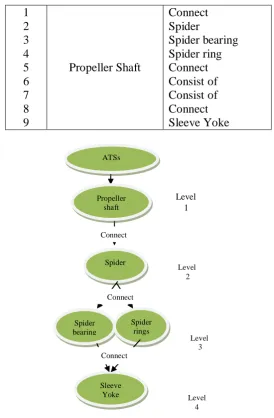
through the propeller shaft, while same students constructed the concept map as presented in
Figure 1 of propeller shaft using randomly arranged propeller shaft items.
Table 2: What do you understand about a propeller shaft as a transmission system?
1 2 3 4 5 6 7 8 9
Propeller Shaft
Connect Spider
Spider bearing Spider ring Connect Consist of Consist of Connect Sleeve Yoke
Figure 1: CMAP Structure of propeller shaft as a Transmission System.
Based on the results in Table 3.0, in accordance to the default model fit indices the model
satisfies goodness of fit. The Table shows the computed values for model fit indices of the
modified model of propeller shaft. The model satisfied the goodness of fit indices with 2.86
for (ᵡ2)/df, GFI (0. 97), TLI (0.91), CFI (0.96), IFI (0.96), RMR (0.02), and RMSEA (0.04) at
P < .05. Therefore, the hypothesis which states that there is no significant relationship
between areas considered important on the topic of propeller shaft for learning ATS in
Nigeria is hereby rejected, and the structural model in Figure 2 was generated.
Spider Connect Propeller
shaft
Spider bearing
Spider rings Connect ATSs
Level 3
Level 4 Level
2 Level
1
Table 3: Modified measurement model fit indices of propeller shaft.
Model Fit Indices Computed
Values
Range Values P
Chi-square (ᵡ2)/df Goodness of Fit (GFI) Tucker-Lewis Index (TLI) Comparative Fit Index (CFI) Incremental Fit Index (IFI)
Root Mean Square Residual (RMR)
Root Mean Square Error of Approximation (RMSEA)
2.86 0.97 0.91 0.96 0.96 0.02 0.04
< 3.00 ≥ 0.90 ≥ 0.90 ≥ 0.90 ≥ 0.90 ≤ 0.05 ≤ 0.05
.000
4.0 RESULT AND DISCUSSION
The findings discovered through the clutch as a topic for learning AE after SLR analyses
were redressed through AMOS for the model developed. This was because all the findings
focused on a specific research questions that targeted the objective for the model developed.
In addition, findings obtained from the research questions were all Propeller shaft as a
transmission system. However, the discussion on the Propeller shaft submerged in the
research question was to develop the conceptual model of clutch prototype for learning in
automobile engineering courses. Table 4 presents the default model fit evaluation parameters
on which model development relies as specified by various researchers.
Table 4: Default model fit evaluation indices (Kenny et al., 2014).
Model Fit Indices Range Values
Chi Square (ᵡ2)/df Goodness of Fit (GFI) Incremental Fit Index (IFI) Tucker-Lewis Index (TLI) Comparative Fit Index (CFI)
Root Mean Square Residual (RMSR)
Root Mean Square Error of Approximation (RMSEA)
˂ 0.30 ≥ 0.90 ≥ 0.90 ≥ 0.90 ≥ 0.90 ≤ 0.05 ≥ 0.05
Base on redressing the SEM analysis through the AMOS, Table 5 shows the computed values
for model fit indices of the modified mode of Propeller shaft. Based on the result, the
modified model satisfied Goodness of Fit (GOF) indices with 2.45 for (ᵡ2)/df, GFI (0.95), TLI
(0.93), CFI (0.95), IFI (0.94), RMR (0.02) and RMSEA (0.04) at P < .05 as specified in the
Table 5: Modified measurement model fit indices of Propeller shaft.
Model Fit Indices Computed
values
Range Values P
Chi-square (ᵡ2)/df Goodness of Fit (GFI) Tucker-Lewis Index (TLI) Comparative Fit Index (CFI) Incremental Fit Index (IFI)
Root Mean Square Residual (RMR)
Root Mean Square Error of Approximation (RMSEA)
2.86 0.97 0.91 0.96 0.96 0.02 0.04
< 3.00 ≥ 0.90 ≥ 0.90 ≥ 0.90 ≥ 0.90 ≤ 0.05 ≤ 0.05
.000
The values presented in Table 6 shows the assessment of univariate normality distribution of
the modified measurement model of Propeller shaft. The skewness and kurtosis of the six
observed factors variables are between the ranges of -1 and +1. This has supported the
application of the observed factors for developing the propeller shaft model for teaching AE
courses.
Table 6: Normality of the modified measurement model of Propeller shaft. Variable Min Max Skew C.R. Kurtosis C.R.
PLS6 1.000 5.000 -.501 -3.007 .725 -.174
PLS5 1.000 5.000 -.925 -5.547 .554 -.662
PLS4 1.000 5.000 -.724 -4.343 .295 -.884
PLS3 1.000 5.000 -.770 -4.621 .055 -.166
PLS2 1.000 5.000 -1.132 -6.794 .811 -.434
PLS1 2.000 5.000 -.772 -4.630 .936 -.808
Multivariate 11.342 8.507
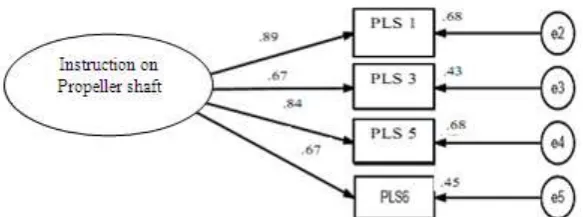
Figure 2 shows a structure of the significant relationship between four areas considered
important using L1 instruction on the topic - propeller shaft for learning in Nigeria. From the
modified model in Figure 2 and the fit indices in Table 4 above, it can be concluded that four
important areas such as PLS1 (outer shaft connection to the gearbox), PLS3 (Flange
assembly), PLS5 (Inner and outer shaft housing assembly), and PLS6 (functions of yoke
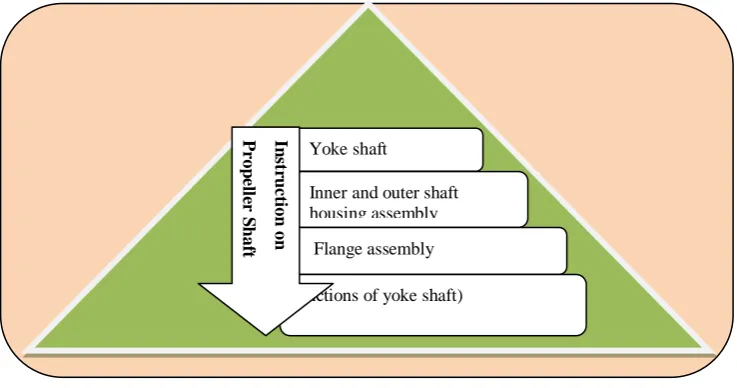
Finally, based on the analysis of the data, after redressing the SEM through AMOS, the
model Figure 3 was developed. The figure shows a conceptual model of the Propeller shaft
areas or items considered most important on the Propeller shaft shown in the figure, the areas
of the findings are presented based on their level of importance. The triangular shape
indicated by the arrow represents top-down hierarchy of the areas after instruction on the
Propeller shaft areas of AE course.
Figure 3: SEM of propeller shaft.
4.0 CONCLUSION
In conclusion, quality education is an essential element for economic and social security of
any nation (Babalola et al., 2007), in which Nigeria is not an exception. If the motives of
provision of excellence teaching and learning and research are to be actualized in the 21st
century, education in tertiary institutions, its important transformation must be considered in
such a way that it attend to real world practices through experimental learning using a
conceptual model for instruction. Concept mapping in engineering through which the data
was collected, has proved to be a successful instructional approach for developing students’
knowledge of understanding (Acharya and Sinha,2015); (Gurupuret al.(2015).
Based on the identified areas of PSH model, it implies that AE has direct benefits to the
faculty, students, community members, automobile engineering service agencies as well as
tertiary institutions. These qualities of AE services are conceivably enunciated in many of the
automobile research studies. In this regard, the concluded results using the developed model
for learning in AE proved that students’ academic performance and skill development
improved. Therefore, the model could serve as a legitimate instrument for steering academic
Yoke shaft
Inner and outer shaft housing assembly
Flange assembly
Functions of yoke shaft)
I
n
st
ru
ct
ion
on
P
rop
el
le
r
S
h
af
performance in tertiary institutions. Implementation of the model could serve in finding a
strong and reliable AE practices in the Nigerian tertiary institutions for developing a holistic
and skilled-minded AE graduates that are needed in the 21stcentury.
REFERENCES
1. Acharya, A. and Sinha., D. Construction of Automated Concept Map of Learning Using
Hashing Technique. Proceedings of the 3rd International Conference on Frontiers of
Intelligent Computing: Theory and Applications (Ficta), 2015; 2014: 567-578.
2. Babalola, J. B., Adedeji, S. O and Erwat. E. A. Revitalizing Quality Higher Education in
Nigeria: Options and Strategies, 2007; 241-253.
3. Bollen, K. A. A New Incremental Fit index for General Structural Equation
Models. Sociological Methods & Research, 1989; 17(3): 303-316.
4. Gao, S., Mokhtarian, P. L. and Johnston, R. A. Exploring the Connections among Job
Accessibility, Employment, Income, and Auto Ownership Using Structural Equation
Modeling. The Annals of Regional Science, 2007; 42(2): 341-356.
5. Gurupur, V. P., Jain, G. P. And Rudraraju, R. Evaluating Student Learning Using
Concept Maps and Markov Chains. Expert Systems with Applications, 2015; 42(7):
3306-3314.
6. Jöreskog, K. G. and Sörbom, D. Lisrel 8: User's Reference Guide. Scientific Software
International, 1996.
7. Kenny, D.A, Kaniskan, B. and Mccoach, D. B. The Performance OfRamsea in Models
with Small Degree of Freedom. Sociological Methods and Research, In Press, 2014.
8. Kline, R. B. Principles and Practice of Structural Equation Modelling (Second Edition
Ed.). New York: Guildford Press, 2005.
9. Koufteros, X. A. Testing a Model of Pull Production: A Paradigm for Manufacturing
Research Using Structural Equation Modelling. Journal of Operations Management,
1998; 17: 467-488.
10.Lungu, C. I., Caraiani, C. and Dascal, C. Intellectual Capital Research through Corporate
Social Responsibility: (RE) Constructing the Agenda. International Journal of Economics
and Management Sciences, 2012; 6(4): 139-146.
11.Mardia, K. V. Measures of Multivariate Skewness and Kurtosis with Applications.
12.Muthern, B. and Kaplan, D. A Comparison of some Methodologies for the Factor
Analysis of Normal Likert Variables. British Journal of Mathematical and Statistical
Psychology, 1985; 38: 171-189.
13.Nasri, H. and El-Shaarawi, A. Factors Affecting Students' Performance. Journal of