Original Research Article
Knowledge and attitude regarding organ donation and transplantation
among undergraduate medical students in
North coastal Andhra Pradesh
Srinivas Rao Ganta
1, Kiran Pamarthi
1*, Lakshmi Prasad K. K.
2INTRODUCTION
Organ transplantation is one of the greatest scientific advances and remains one of the most challenging and complex field of modern medicine. The World Health Organization (WHO) defines organ donation as the gift of an individual’s body parts after their demise for transplantation. Transplantation is a surgical procedure which involves the replacement of a recipient’s diseased and defective organs or tissues with healthy ones from a
donor.1 Approximately 25 different organs and tissues can be transplanted such as heart, kidney, liver, pancreas, cornea, bone marrow, blood, skin, and ligaments.2
Organ transplantation has resulted in many patients getting a new lease of life. It is the most preferred treatment modality for end-stage organ disease and organ failures.3 However, implementation of organ donation program in India has been slow and there is a wide gap between demand and supply of donated organs. In the
ABSTRACT
Background: Organ transplantation is one of the greatest scientific advances and remains one of the most challenging and complex field of modern medicine. In the USA and UK, the organ donation rate is 26 and 14 per million, whereas in India, it is only 0.34 per million population. Healthcare professionals act as the critical link in the organ procurement process because they are the first individuals to establish relationship with the potential donors' family.
Methods: An institution based descriptive cross-sectional study was conducted among first year undergraduate medical students during November 2017. Convenient sampling method was used to obtain the sample size. Out of 150 students in first year, 136 students fulfilling the inclusion and exclusion criteria were studied.
Results: Out of 136 students who participated in the study, 58 (42.6%) were boys and 78 (57.4%) were girls. All the 136 (100%) students had heard about organ donation, but only 24 (17.6%) of them were aware of organ donation associations. Very few students (5, 3.6%) know about any law related to organ donation in India. Mass media like TV, Internet and Newspapers have played a major role in imparting awareness regarding organ donation among students besides relatives and friends. Majority of the students i.e. 104 (76.4%) were ready to donate their organs if need comes and two third of them accepted that they would allow organ donation from a member of their family after Brainstem death.
Conclusions: There is a positive attitude of medical students towards organ donation but there is lack of sufficient knowledge on the topic. Improving their knowledge by including organ donation topic in medical curriculum can help to reduce this gap.
Keywords: Organ donation, Medical students, Knowledge, Attitude
Department of Community Medicine, 1NRI Institute of Medical Sciences, 2Andhra Medical College, Visakhapatnam, Andhra Pradesh, India
Received: 02 January 2018
Accepted: 02 February 2018
*Correspondence:
Dr. Kiran Pamarthi,
E-mail: [email protected]
Copyright: © the author(s), publisher and licensee Medip Academy. This is an open-access article distributed under the terms of the Creative Commons Attribution Non-Commercial License, which permits unrestricted non-commercial use, distribution, and reproduction in any medium, provided the original work is properly cited.
USA and UK, the organ donation rate is 26 and 14 per million, whereas in India, it is only 0.34 per million population.4
The shortage of organs is a worldwide problem. The access of patients to organ transplantation, however, varies according to their national situations, and is partly determined by the cost of health care, the level of technical capacity and, most importantly, the availability of organs.5 The shortage in organ supply is also due to lack of awareness and correct knowledge among public, misconceptions, myths and beliefs surrounding organ donation due to religious and cultural barriers leading to hesitancy in donation of human organs.6 Wig et al. stated that there is a need to educate people regarding various aspects of brain death and its immense importance for organ donation.7
Healthcare professionals act as the critical link in the organ procurement process because they are the first individuals to establish relationship with the potential donors' family. Education of healthcare professionals in various aspects of organ donation is therefore a must as they in turn can propagate this knowledge at the community level.8 Taimur et al stated that doctors can be used as efficient sources of information, to generate a favorable attitude towards organ donation amongst the population.9 Medical students being the future doctors of the country, they should have a positive attitude and high level of knowledge which can create a positive environment and promote organ donation. Hence, this study was undertaken to assess their knowledge and attitudes regarding organ donation which will help to identify the gaps and provide training on organ donation. The objectives of this study were to assess the awareness and knowledge about organ donation and to assess the attitudes toward organ donation.
METHODS
An institution based descriptive cross-sectional study was conducted to assess the knowledge and attitude regarding organ donation among first year undergraduate medical students of NRI Institute of Medical Sciences, Sangivalasa, Andhra Pradesh during November 2017. Convenient sampling method was used to obtain the sample size. All the students who were present on the day when the questionnaire was given were included in the study. Those who were not willing to participate or not giving the consent were excluded. Anonymity and confidentiality of respondents were maintained and participation was voluntary. Out of 150 students, 136 students fulfilling the inclusion and exclusion criteria were the study population.
Ethical clearance was obtained from the respective Institutional Ethical Committee. Students were briefed about the background and purpose of the study and written Informed consent was obtained from all of them after assuring about the confidentiality and ethical principles. A pre tested, semi-structured, self-administered questionnaire was distributed to undergraduate medical students in the classroom. They were instructed to give their own answers and consultation was not permitted. After answering, the answer sheets were collected for evaluation. Data was collected regarding their demographic details, Knowledge and attitude regarding organ donation. Data was entered in Microsoft Excel spread sheet and analysis was done to express the results in frequencies and percentage.
RESULTS
In the present study, knowledge and attitude were assessed by the responses given by the first year undergraduate students to the administered questionnaire. Out of the 150 students in the first year, 14 were absent on the day of data collection and were excluded.
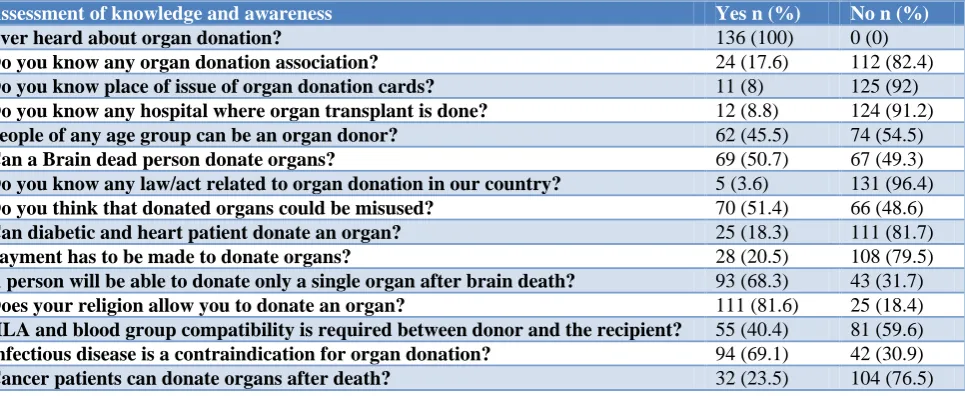
Table 1: Distribution of study participants according to their knowledge and awareness about organ donation.
Assessment of knowledge and awareness Yes n (%) No n (%)
Ever heard about organ donation? 136 (100) 0 (0)
Do you know any organ donation association? 24 (17.6) 112 (82.4)
Do you know place of issue of organ donation cards? 11 (8) 125 (92)
Do you know any hospital where organ transplant is done? 12 (8.8) 124 (91.2)
People of any age group can be an organ donor? 62 (45.5) 74 (54.5)
Can a Brain dead person donate organs? 69 (50.7) 67 (49.3)
Do you know any law/act related to organ donation in our country? 5 (3.6) 131 (96.4)
Do you think that donated organs could be misused? 70 (51.4) 66 (48.6)
Can diabetic and heart patient donate an organ? 25 (18.3) 111 (81.7)
Payment has to be made to donate organs? 28 (20.5) 108 (79.5)
A person will be able to donate only a single organ after brain death? 93 (68.3) 43 (31.7)
Does your religion allow you to donate an organ? 111 (81.6) 25 (18.4)
HLA and blood group compatibility is required between donor and the recipient? 55 (40.4) 81 (59.6)
Infectious disease is a contraindication for organ donation? 94 (69.1) 42 (30.9)
Table 2: Distribution of study participants according to their attitude towards organ donation.
Assessment of attitude Yes
n (%)
No n (%) Do you like to donate your organs if needed? 104 (76.4) 32 (23.6) Do you allow organ donation from your family after Brainstem death? 90 (66.1) 46 (33.9) Will you motivate your family to donate organs? 125 (91.9) 11 (8.1) Do you think donating an organ can cause any harmful effects/complication to you? 86 (63.2) 50 (36.8) Do u have fear of disfigurement of body after organ donation? 78 (57.3) 58 (42.7) Do you feel that organ donation should be made compulsory by law? 54 (39.7) 82 (60.3) Are you comfortable to think or talk about organ donation? 85 (62.5) 51 (37.5) Out of 136 students who participated in the study, 58
(42.6%) were boys and 78 (57.4%) were girls. Majority were Hindus (57.4%) followed by Christians (33.1%) and Muslims (9.5%). Most of the study participants were from urban areas (68.4%).
As shown in the above Table 1, all the 136 (100%) students had heard about Organ donation, but only 24 (17.6%) of them were aware of organ donation associations and only half of them i.e. 12 (8.8%) knew about the hospitals where organ transplantation was done. Only half of the students i.e., 69 (50.7%) agreed that brain dead persons can donate organs. Very few students (5, 3.6%) know about any law related to organ donation in India. More than half of the students (51.4%) had the opinion that donated organs could be misused. Only 40% of students were aware of the importance of HLA and Blood group compatibility between donor and the recipient. More than 80% students opined that their religion would allow for organ donation. However 20.5% students had the misconception that payment has to be made to donate organs.
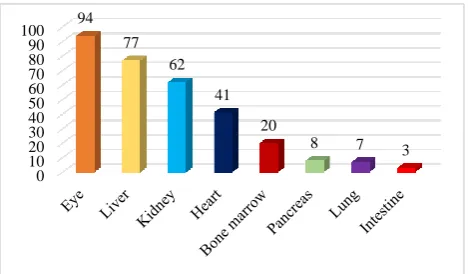
Figure 1: Distribution of study participants responses regarding common organs donated (multiple
responses recorded).
When asked about different body organs which can be donated (multiple responses), majority i.e. 94 of them mentioned about Eye followed by liver (77), Kidney (62) and Heart (41).
As shown in the Figure 2, Mass media like TV, Internet and Newspapers have played a major role in imparting
awareness regarding Organ donation among students besides relatives and friends. However it was observed that doctors contributed very less in providing information in the present study.
Figure 2: Distribution of study participants according to the major source of information about organ
donations.
Figure 3: Ideal candidate for organ donation (multiple responses recorded).
When enquired about ideal candidate for organ donation, most common response was siblings followed by children and friends.
Majority of the students i.e. 104 (76.4%) were ready to donate their organs if need comes and two third of them accepted that they would allow organ donation from a member of their family after Brainstem death. More than 90% students responded that they will motivate their family members to donate organs. However 63.2% had
0 10 20 30 40 50 60 70 80 90
100 94
77 62
41 20
8 7 3
65.40% 18.40%
11% 5.20%
Media Relatives Friends/parents Doctor
0 10 20 30 40 50 60 70 80 90 100
Parents Siblings Spouse Children Friends Anyone 42
94
18 64
the fear that donating organs can cause complications and 57.3% feared body disfigurement after organ donation.
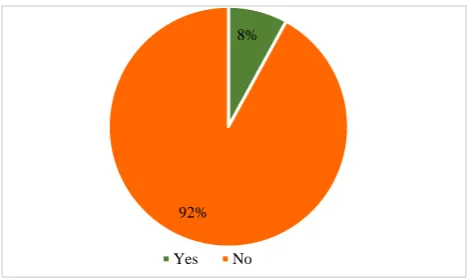
Figure 4: Distribution of study subjects according to status of arrangements being made to donate their
organs after death.
When enquired about their practices towards Organ donation, only about 11 students (8%) said that they have already made some arrangements to donate their organs after death.
DISCUSSION
For many end organ diseases, organ donation and transplantation is the most important treatment modality. But then, the gap between demand and supply is increasing day by day and many patients die while waiting for a transplant. This situation is observed in most of the countries nowadays including India. One of the main reasons for this is lack of knowledge among the people and many myths and misconceptions regarding organ donation.
It is evident from previous studies that health professionals can positively influence the opinions and attitudes of patients and their relatives, as they are the first individuals to establish relationship with the donor’s family leading to higher rates of organ procurement.10,11 Medical students being the future physicians definitely play a crucial role in the success of this programme provided they have adequate knowledge and positive attitude regarding organ donation and transplantation. Hence this study was undertaken to assess knowledge and attitudes of fresh medical undergraduates.
The overall level of knowledge regarding different aspects of organ donation was not satisfactory among medical students in our study. It was great that all the students (100%) knew the term organ donation. But apart from knowing the term, the overall knowledge of medical students on this topic was not high enough regarding other aspects like place of issue of organ donation cards, related law/act, HLA compatibility and contraindications for organ donation. This can be attributed to the lack of inclusion of organ donation and transplantation as a part of the medical curriculum.
Our study findings are comparable to findings of other studies done in different parts of the world by Sucharita et al, Saleem et al, Marques-Lespier et al, Manojan et al and Kaistha et al.6,9,12-14
However Satish et al and Alsaied et al have found out satisfactory level of knowledge towards organ donation among study participants which is contrary to our findings.15,16 This could be due to differences in the study settings, experiences and background of the study participants and differences in the study tools used. In the present study most of students responded that eyes followed by liver, kidney and heart were the most commonly donated organs. However contrary to our findings, In a study conducted by Ali et al and Alex et al, it was found that kidney was the most commonly donated organ, followed by others like heart, blood, cornea and liver.17,18
The most common source of information on organ donation was media in our study followed by relatives and friends. Similar to the findings of our study, Sucharita et al, Saleem et al, Khan et al and Alghanim have found media (Television) as the major source of information among study participants.6,9,19,20
Regarding attitude of study participants towards organ donation in our study, 76% of the participants responded that they would donate their organs if needed and 66% even agreed to donate organs from their family members after brainstem death. Similar findings regarding favorable attitude of participants towards organ donation were reported across the globe in various studies by Sucharita et al, Marques-Lespier et al, Satish et al, Alsaied et al, Alghanim and Ahlawat et al.6,12,15,16,20,21 These observations were different from the study done in Nigeria by Odusanya where only 30% were willing for organ donation.
In the present study, 57.3% feared body disfigurement after organ donation. Contrary to our finding Agarwal study reported that only 7.4% believed that there body may be disfigured after organ donation.23
CONCLUSION
There is a positive attitude of medical students towards organ donation but there is lack of sufficient knowledge on the topic. There exists a gap between knowledge regarding organ donation and willingness to donate among medical students. The study identifies several areas where educational interventions are necessary. Improving their knowledge by including organ donation topic in medical curriculum and allowing medical students to take active part in creating public awareness through periodic health education camps can increase the rate of organ donation and help to lessen the gap between demand and supply.
8%
92%
Funding: No funding sources Conflict of interest: None declared
Ethical approval: The study was approved by the Institutional Ethics Committee
REFERENCES
1. Human Organ Transplantation. Available: at: http://www.who.int/transplantation/organ/en/. Accessed on 15 December 2017.
2. Lifepoint I. What can be donated? 2007. Available at: http://www.lifepoint‑sc.org/ facts_ what.html. Accessed on 5 December 2017.
3. Bapat U, Kedlaya PG, Gokulnath. Organ donation, awareness, attitudes and beliefs among post graduate medical students. Saudi J Kidney Dis Transpl. 2009;20(1):174-80.
4. Foundation M. Cadaver organ transplantation in India. 2014. Available at: http://www.mohan foundation.org/national–deceased‑donor-transplant-ation.asp. Accessed on 15 December 2017.
5. Shimazono Y. The state of the international organ trade: a provisional picture based on integration of available information. Bulletin of the World Health Organization. 2007;85(12):955-62.
6. Sucharita ST, Siriki R, Dugyala RR, Mullai, Priyadarshini, Kaavya, et al. Organ Donation: Awareness, attitudes and beliefs among undergraduate medical students in South India. National J Res Community Med. 2013:2(2):83-8. 7. Wig N, Gupta P, Kailash S. Awareness of Brain
Death and Organ Transplantation among Select Indian Population. JAPI. 2003;51:455-8.
8. Schaeffner ES, Windisch W, Friedel K, Breitenfeldt K, Winkelmayer WC. Knowledge and attitude-organ donation among medical students and physicians. Transplantation 2004;77(11):1714-8. 9. Saleem T, Ishaque S, Habib N, Hussain SS, Jawed
A, Khan AA, et al. Knowledge, attitudes and practices survey on organ donation among a selected adult population of Pakistan. BMC Medical Ethics. 2009;10:5.
10. Boey KW. A cross validation of nurses’ attitudes and commitment to organ donation in Hong Kong, department of social work and social administration, the university of Hong Kong, Pokfulam road. Hong Kong Int J Nurs Stud. 2002;39:95-104.
11. Rumsey S, Hurford DP, Cole AK. Influence of knowledge and religiousness on attitude towards organ donation. Transplant Proc. 2003;35:2845-501. 12. Marques-Lespier JM, Ortiz-Vega NM, Sanchez MC,
Soto-Aviles OE, Torres EA. Knowledge of and Attitudes towards Organ donation: A survey of
Medical students in Puerto Rico. PRHSJ. 2013;32(4):187-93.
13. Manojan KK, Raja AR, Nelson V, Beevi N, Jose R. Knowledge and attitude towards organ donation in Rural Kerala. Am Med J India. 2014;2(1):25-7. 14. 14. Kaistha M, Kaistha S, Mahajan A. A study of
factors influencing decisions on organ donation among patient attendees in a Tertiary Care Hospital in North India. Chrismed J Health Res 2016;3(2):101-5.
15. Satish KV, Chidananda PS, Chetan S. An Assessment of Awareness about Organ Donation among Public. J Evidence Based Med Hlthcare 2014;1(12):1518-28.
16. Alsaied O, Bener A, Al- Mosalamani Y, Nour B. Knowledge and Attitudes of Health Care Professionals toward Organ Donation and Transplantation. Saudi J Kidney Dis Transpl. 2012;23(6):1304-10.
17. Ali N, Qureshi A, Jilani B, Zehra N. Knowledge and ethical perception regarding organ donation among medical students. BMC Medical Ethics. 2013;14(1):38.
18. Alex P, Kiran KG, Baisil S, Badiger S. Knowledge and attitude regarding organ donation and transplantation among medical students of a medical college in South India. Int J Community Med Public Health. 2017;4:3449-54.
19. Khan N, Masood Z, Tufail N, Shoukat H, Ashraf KTA, Ehsan S, et al. Knowledge and Attitude of people towards organ donation. JUMDC. 2011;2(2):15-21.
20. Alghanim SA. Knowledge and Attitudes towards Organ donation: A Community – based study comparing Rural and Urban Populations. Saudi J Kidney Dis Transpl. 2010;21(1):23-30.
21. Ahlawat R, Kumar V, Gupta AK, Sharma RK, Minz M, Jha V. Attitude and knowledge of healthcare workers in critical areas towards deceased organ donation in a public sector hospital in India. The National Med J India 2013;26(6):322-6.
22. Odusanya OO, Ladipo CO. Organ donation: Knowledge, attitudes and practice in Lagos, Nigeria. Artif Organs 2006;30:626-9.
23. Agarwal S. Are medical students having enough knowledge about organ donation. IOSR J Dent Med Sci. 2015;4:29‑34.