Investigation of Cr(VI) Adsorption
by Dried Brown Algae
Sargassum
sp
.
and Its Activated Carbon
Esmaeili, Akbar*+; Ghasemi, Samira
Department of Chemical Engineering, North Tehran Branch, Islamic Azad University, P.O. Box 1969633651 Tehran,, I.R. IRAN
Zamani, Fariba
Department of Chemistry, Science & Research Campus, Islamic Azad University, P.O. Box 14515-775 Tehran, I.R. IRAN
ABSTRACT: In this research, the batch removal of toxic hexavalent chromium ions from wastewater and aqueous solution using dried (BD) Sargassum sp. (brown marine algae) and Activated Carbon (AC) prepared from it was examined. Biomass, pH and the initial concentration of Cr(VI), adsorption models and kinetic studies were investigated.The experiment was performed in a batch system and theeffect of solution pH, initial concentration and contact time on biosorption by both biomasses were investigated and compared. When we used AC and BD as biosorbents, optima conditionswere established at pH=2.0, Cr6+ concentration at 3.69 mg/g BD and 6.877 mg/g AC and equilibrium time of 120 min. The adsorption was in the range of 83.55% and 91.98%, respectively. The experimental adsorption data were fitted to the Langmuir adsorption model. The chromium (VI) uptake by the biosorbents was best described by a pseudo second-order rate model.
KEY WORDS:Sargassum sp., Activated carbon, Adsorption, Algae, Biosorbent.
INTRODUCTION
The presence of the toxic heavy metals in water resulting from rapid industrialization and technological advances is a worldwide environmental problem. Removal of these pollutants from aqueous effluents has conventionally been accomplished through abiotic processes [1]. Chromium has both beneficial and detrimental properties. Two stable oxidation states of chromium persist in the environment, Cr(III) and Cr(VI), which have contrasting toxicities, mobilities and bioavailabilities. Cr(III) is necessary for glucose metabolism in human nutrition, whereas most of the hexavalent compounds are toxic.
While Cr(III) is relatively innocuous and immobile, Cr(VI) moves readily through soils and aquatic environments and is a strong oxidizing agent capable of being absorbed through the skin [2]. Chromium and its compounds are widely used in electroplating, leather tanning, cement, dyeing, metal processing, wood preservatives, paint and pigments, textiles, steel fabrication, and canning. These industries produce large quantities of toxic wastewater effluents [3].
The maximum concentration limit for Cr(VI) for discharging into inland surface waters is 0.002 mmol/L, and
*To whom correspondence should be addressed. +E-mail: [email protected]
its maximum allowable concentration in potable water is 0.001 mmol/L. A wide range of physical and chemical processes are available for the removal of Cr(VI) from wastewater, such as electrochemical precipitation, ultrafiltration, ion exchange, membranes, evaporation, and reverse osmosis [4-6]. A major drawback with precipitation is sludge production. Ion exchange is considered a better alternative technique. However, it is not economically appealing because of high operational costs [34]. Adsorption using Commercially Activated Carbon (CAC) can remove heavy metals such as cadmium [7], chromium [8], copper [9], and nickel [10] from wastewater. However, CAC remains an expensive material, and the higher the quality of the activated carbon, the greater its cost [11]. AC has many applications, one of which is as an adsorbent for the purification of water, air and many other chemical products. AC has been an effective adsorbent for dye removal. Adsorption capacity of certain carbon is known to be a function of porous structure, chemical nature of the surface and pH of the aqueous solutions. Surface functional groups play an important role in deciding the adsorption capacity and removal of the adsorbents [36]. Kindasa Water Services (KWS) currently operates an RO facility at Jeddah Port on the Red Sea in Saudi Arabia, using conventional pre-treatment, to provide a 14 mld output. Due to an increasing requirement for treated water services, a contract has recently been placed with Weir Westgarth for a new desalination facility to expand the capacity of RO treated water from 14 to 40.5 mld (3.7 to 10.7 MGD). The original system has operated well for most of the time since it was brought into supply in 2000. However, occasional poor quality conditions have occurred during storms, or periods of algal bloom, which have resulted in SDI’s to the RO exceeding target levels. Accordingly, an interest was expressed in utilizing UltraFiltration (UF) as an alternative to conventional pre-treatment, to improve RO feed quality, and guarantee on-stream time. The UF trial was highly successful in achieving stable membrane permeability and a consistent filtrate SDI when operated under optimized process conditions. Utilizing ferric chloride dosing, with acidification, the trial has operated at a flux of 95 lmh, and at a transmembrane pressure of 0.15-0.20 bar. The recovery was 94% [37].
Therefore, searching for low-cost activated carbon
and other adsorbent materials is of great important to wastewater treatment [12]. In recent years, development of surface-modified activated carbon has generated a diversity of activated carbon with far superior adsorption capacity. Coconut husk and palm pressed fibers can be used in this way to remove metal and reduce the cost of waste disposal [13]. Filtration is the passive uptake of heavy metals from aqueous solutions by biological materials. Filtration uses the ability of biological materials to accumulate heavy metals from wastewater by either metabolically mediated or purely physicochemical pathways of uptake [22]. The mechanisms by which microorganisms remove metals from solutions are (1) extracellular accumulation/precipitation, (2) cell-surface sorption or complexation, and (3) intracellular accumulation [14]. The physiological state of the organism, the age of the cells, the availability of micronutrients during their growth, and the environmental conditions during the filtration process (such as pH, temperature, and presence of certain co-ions) are important parameters that affect the performance of a living biosorbent. The efficiency of the biosorbent is also influenced by the chemical features of the metal solution [15]. Potent biosorbents are easily available in algae, fungi, and bacteria. A source of low-cost biomass produced in great quantities is marine macroalgae. Recent studies about the filtration of toxic metals by algae are focused on toxicological aspects, metal accumulation, and pollution indicators in relation to filtration by living (metabolically active) biomasses [35]. The objective of the present work is to evaluate the potential of dried and activated carbon forms of Sargassum sp. for chromium uptake.
EXPERIMENTAL SECTION
Dried Biomass
Sargassum sp., was collected from the Persian Gulf on the coast of Queshm, Iran. The biomass of alga was transferred to the laboratory, washed with deionized water to wash out any mineral contaminants, and dried [38,39].
AC and MD preparation
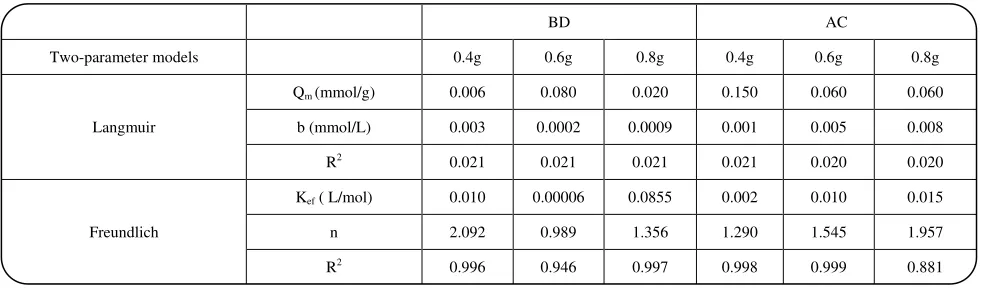
Table 1: Langmuir and Freundlich constants for biosorption of Cr(VI) using BD and AC from Sargassum sp.
BD AC
Two-parameter models 0.4g 0.6g 0.8g 0.4g 0.6g 0.8g
Langmuir
Qm (mmol/g) 0.006 0.080 0.020 0.150 0.060 0.060
b (mmol/L) 0.003 0.0002 0.0009 0.001 0.005 0.008
R2 0.021 0.021 0.021 0.021 0.020 0.020
Freundlich
Kef ( L/mol) 0.010 0.00006 0.0855 0.002 0.010 0.015
n 2.092 0.989 1.356 1.290 1.545 1.957
R2 0.996 0.946 0.997 0.998 0.999 0.881
repeatedly with deionized water and soaked in 2% NaHCO3 solution to remove any remaining acid,
and pH of the activated carbon reached to 7. The solution was then dried in an oven at 150C for 48 h. The powdered materials were then used as adsorbents for study. The powdered materials were then sieved. Materials with particle sizes in the range of 0.3 mm to 1 mm were used in the present study and kept in a glass bottle until used. MD Preparation: The samples were then grounded to an average particle size of 0.5-1 mm.
Preparation of synthetic solution
The stock solution of Cr(VI) (1000 mg / L) was prepared in deionized water with potassium dichromate (K2Cr2O7). All working concentrations were obtained by
diluting the stock solution with deionized water, and pH was adjusted to the desired values according to the following experimental design with 1M HCl and 1M NaOH solutions.
Adsorption experiments
A series of flasks containing dichromate solutions varying in concentration from 0.2 to 1.3 mmol/L were prepared from the stock solution. Adjustment of pH was carried out using 1 N NaOH and 1 N HCl. Batch equilibrium sorption experiments were carried out in 250 mL erlenmeyer for 120 min (0.2–0.8 g of biomass, 30 mL of metal solution) in a rotary shaker. These experiments were done at pH 2.0–9.0. After the sorption equilibrium was reached (120 min), the solution was separated from the biomass by membrane filtration. The initial and equilibrium chromium concentrations in each flask were determined by Atomic Absorption Spectrometry (AAS). To maximize Cr removal by the adsorbent, batch experiments were conducted at a constant temperature
using the optimum conditions of all pertinent factors, such as dose, pH, initial concentration, and contact time. Subsequent adsorption experiments were carried out using only the optimized parameters.
Equilibrium isotherm
Chromium Uptake Capacities and Sorption Isotherm The amount of metal adsorbed by activated carbon was calculated from the difference between the metal quantity added to the biomass and the metal content of the supernatant using the equation
(
)
e 0 e
q = C −C V M (1)
Where qe is the metal uptake (mg metal adsorbed per
g adsorbent), C0 and Ce are the initial and equilibrium
metal concentrations in solution (mmol/L), V is the volume of the solution (mL), and M is the weight of activated carbon (g). To examine the sorbed and aqueous concentration at equilibrium, sorption isotherm models and Langmuir and Freundlich adsorption models were used for the data. These isotherm constants for Cr(VI) are presented in Table 1.
Freundlich adsorption model
The Freundlich model [16] habitually gives a better fit for adsorption from liquids and can be expressed as
1 n
e f e
q =K C (2)
In this model, the rate of adsorption is dependent on of the constants 1/n and Kf (L / g). For a good adsorbent,
Langmuir adsorption model
The most widely used isotherm equation for modeling equilibrium is the Langmuir equation. It is assumed that there is a finite number of binding sites that are homogeneously shared over the adsorbent surface. These binding sites have the same adsorption of a single molecular layer, and there is no interaction between adsorbed molecules. The saturated monolayer isotherm can be represented as
(
)
e max e e
q =bq C 1 bC+ (3)
Where qe is metal ions adsorbed (mg/g), Ce is the
equilibrium concentration (mg/ L), qmax is the maximum
adsorption capacity, and b is an affinity constant; qmax
represents a practical limiting adsorption capacity when the surface is fully covered with metal ions and assists in the comparison of adsorption performance, in cases where the sorbent did not reach its full saturation in experiments and b is constantly related to the affinity of the binding sites [21, 22, 40].
Adsorption kinetic studies
The kinetics of adsorption describes the rate of chromium ion uptake on activated carbon prepared from Sargassum, which controls the equilibrium time. These kinetic models included the first-order and second-order equations.
Pseudo first-order model
The pseudo first-order rate expression is described by the equation
(
)
t t 1 e t
dq d =k q −q (4)
Where qe is chromium sorbed at equilibrium per unit
weight of sorbent (mg/g), qt is chromium sorbed (mg/g),
and k1 is the rate constant (min-1) [22]. The integrated
form of Eq. (4) becomes
(
e t)
( ) (
e 1)
log q −q =log q − k 2.303 t (5)
A plot of log (qe - qt) versus (t) indicates a straight
line of slope (k1/2.303) and an intercept of log (qe).
Pseudo second-order model
The sorption data also analyzed a pseudo second order [22], given by
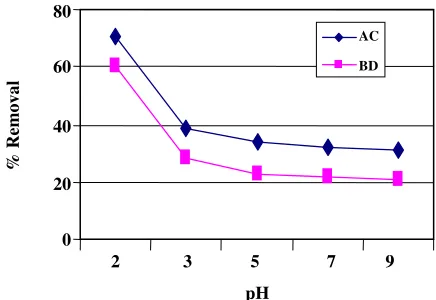
Fig. 1: Effect of pH on sorption of 0.2 mmol/L Cr(VI) after 60 min by AC and BD prepared from Sargassum sp. In the figure removal Cr(VI) firstly decreased and then with increase.
(
)
2t t 2 e t
dq d =K q −q (6)
Where K2 is the equilibrium rate constant (g/mg,min),
and Qe and qt are the sorption capacities at equilibrium
at time t.
The integrated form of Eq. (5) becomes
(
e t)
( )
e 21 q −q =1 q +K t (7)
which has the linear form:
(
)
2
t 2 e e
1 q =1 K q + 1 q t (8)
A plot t/qt versus t shows a straight line of slope (1/qe)
and an intercept of
(
1 K q2 e2)
[22].RESULTS AND DISCUSSION
The present study shows that AC and BD prepared from brown algae Sargassum have an ability to remove Cr(VI) from contaminated water. The data obtained from this work supports the view that the AC is an effective and low-cost adsorbent for the removal of Cr(VI) from aqueous solutions. The adsorption of metal ions is dependent on AC, the concentration of metal ions, retention time, and the pH of the metal solution.
Effect of pH on adsorption
The initial pH of the metal solution is an important parameter affecting adsorption of metal ions [23]. The effect of initial pH on the removal of Cr(VI) using AC and BD prepared from Sargassum were studied (Fig. 1).
2 3 5 7 9
pH 80
60
40
20
0
%
R
em
oval
AC
It is clear that the removal of Cr(VI) decreased with an increase in pH from 1.0 to 9.0, and an optimum pH of about 2.0 was observed. With this test, we appointed pH 2 in all examination. In previous literature, similar observations have been reported for filtration at different pH [24]. In the figure, the removal Cr(VI) firstly decreased with an increase in pH from 1.0 to 9.0, and an optimum pH of about 2.0 was observed; AC (78%), and BD (60%) prepared. Adsorption of Cr(VI) below pH 3.0 suggests that binding of the oxidation state of chromium occurred through electrostatic attraction to the positively charged functional groups on the surface of the sorbent cell wall due to the presence of more functional groups carrying positive charge at pH < 3, while at pH > 3 the sorbent cell wall possesses more groups carrying a net negative charge that repulses the metal anions. There was a removal at pH > 3.0, but the rate of removal was reduced, which could be considered to be due to the presence of physical adsorption on the surface of the sorbent [25].
At low pH, on the other hand, Cr(VI) had a higher redox potential and favored Cr(VI) bioreduction [26]. In addition, reductions in the biomass such as carbohydrate and protein could supply electrons for Cr(VI) bioreduction, with partial release of soluble organics or the final oxidized product [27]. Acidic pH biomass contains the positive oxidation state of chromium due to protonation and Chromium remains in the anionic form (i.e. HCrO4- or Cr2O7 2-), hence sorbed optimally onto
the active sites of the biomass.
Effect of retention time
Results indicate that removal efficiency increased with an increase in contact time before equilibrium was reached. Other parameters such as dose of adsorbent, pH of solution, and initial concentration were kept optimum, while temperature was kept at 25º C. It can be seen that Cr6+ removal efficiency increased when contact time was increased from 15 to 120 min. Optimum contact time for both dried and activated carbon biosorbent was found to be 120 min. In previous research, similar findings have been reported by the evaluation of the marine algae Gracilaria corticata for the adsorption of heavy metals from wastewater in a packed column [28].
Effects of biosorbent dose
The dependence of Cr(VI) sorption on dose was studied
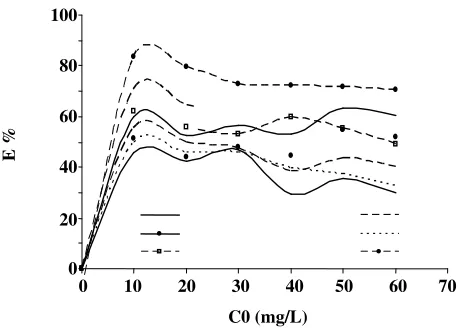
Fig. 2: Effect on Cr(VI) of initial concentration of solution uptake prepared from Sargassum sp. by AC and BD.
by varying the amount of adsorbents from 0.4 to 0.8 g while keeping other parameters (pH, initial concentration, and contact time) constant. From the results it can be observed that removal efficiency of the adsorbent generally improved with increasing dose (in the units of g) [29]. Biosorption rapidly occurred onto the algae biosorbent and 120 min were necessary to reach the sorption equilibrium and 0.6g of biosorbent showed higher uptake.
Effect of metal Ion concentration
The initial concentration of metal ions provides an important driving force to overcome all mass transfer resistances of metal ions between the aqueous and solid phases [30]. Fig. 2 represents the effect of different initial concentrations of Cr(VI) 0.2–1.2 mmol/L on biosorption of Cr(VI) using dried Sargassum and its AC. The maximum adsorption capacity was found to be 3.69 and 6.877 mg/g for BD and the AC developed from it, respectively.
Adsorption isotherm
Adsorption equilibrium isotherms were studied using MD dosages of 0.2, 0.4, 0.7 and 1.0; and AC dosages of 0.2, 0.4, 0.7 and 1.0 per 100mL of aqueous Cr(VI). Solutions of initial concentrations ranged from 0.1 to 1.1 mmol/L for algae and 0.1–5.3 mmol/L for MD and AC using initial pH 5.0. For these experiments, the screw-cap conical flasks were shaken at a speed of 200 rpm and room temperature (25±2 C) for the required contact time. Then, the solution was filtered through a 0.45 m membrane filter. The Ni2+ uptake was calculated by the 0 10 20 30 40 50 60 70
C0 (mg/L) 100
80
60
40
20
0
E
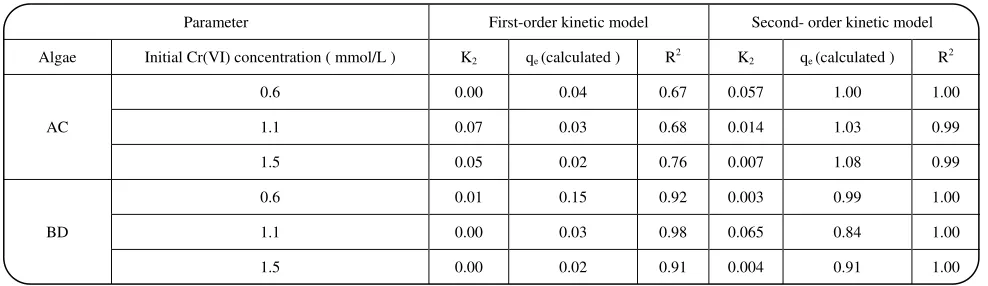
Table 2: Parameters of kinetic models for biosorption of Cr(VI).
Parameter First-order kinetic model Second- order kinetic model
Algae Initial Cr(VI) concentration ( mmol/L ) K2 qe (calculated ) R2 K2 qe (calculated ) R2
AC
0.6 0.00 0.04 0.67 0.057 1.00 1.00
1.1 0.07 0.03 0.68 0.014 1.03 0.99
1.5 0.05 0.02 0.76 0.007 1.08 0.99
BD
0.6 0.01 0.15 0.92 0.003 0.99 1.00
1.1 0.00 0.03 0.98 0.065 0.84 1.00
1.5 0.00 0.02 0.91 0.004 0.91 1.00
simple concentration difference method. Adsorption isotherms are important for describing how an adsorbate will interact with an adsorbent and are critical in the use of adsorbents. Equilibrium studies on adsorption isotherms are characterized by certain constants whose values express the surface properties and affinity of the adsorbent. The equilibrium between adsorbent and adsorbate is described by adsorption isotherms, usually the ratio between the quantity adsorbed and that remaining in the solution at a fixed temperature (23
±
2o C), at equilibrium. To study the adsorption isotherm, two models were analyzed.Langmuir and Freundlich isotherms
The Langmuir adsorption isotherm is the most widely applied adsorption isotherm. A basic assumption of the Langmuir theory is that adsorption takes place at specific homogeneous sites within the adsorbent.
The applicability of the empirical Freundlich isotherm was also analyzed based on the sorption on a heterogeneous surface, using the same set of experimental data of dried brown algae and its activated carbon. The isotherm experimental results showed that the data could be well modeled according to the Langmuir and Freundlich adsorption isotherms. The Langmuir constant (qmax) is dependent on experimental
conditions such as solution pH. Another importance in evaluating sorbent performance is the initial gradient of the adsorption isotherm, since it indicates the sorbent affinity at low metal concentrations. In the Langmuir equation, this initial gradient corresponds to the affinity constant (b). As we can see from Table 1, data could be well modeled according to either the Langmuir or Freundlich adsorption isotherm. In previous investigations,
a similar method using the marine algae Gracilaria for the biosorption of Ni(II) was reported [31].
Kinetic modeling
The Lagergren first-order rate constant (k1,ads) and qe
determined from the model indicated that this model failed to estimate qe since the experimental values of qe
differed from those estimated in Table 2. Subsequently, the rate of uptake of Cr(VI) onto the biomass increased quickly to 120 min, and no further adsorption was observed beyond this period. The Cr(VI) uptake by the biosorbents was best described by the pseudo second-order rate model.
The pseudo second-order model is based on the supposition that adsorption follows a second order, which means the rate of occupation of adsorption sites is proportional to the squares of the number of unoccupied sites [32].
In previous literature for the evaluation of the AC prepared from the algae Gracilaria for the adsorption of Cu(II) the adsorption has been reported to follow the second-order rate expression [33].
This confirms that it is not appropriate to use the Lagergren kinetic model to predict the adsorption kinetics for chromium onto dried green algae and its activated carbon for the entire sorption period. While it gave predicted qe
far from the experimental qe for both dried green algae
and activated carbon, which shows that the pseudo second-order model can be applied but is not appropriate to describe the entire process and to predict the qe.
As a result of failure in applicability of the pseudo second-order, the adsorption kinetics was explained by Ho & McKay. The second order rate constants K2,
the calculated qe values and correlation coefficients
were reported in Table 2. It was observed that the pseudo second-order rate constant (K2) decreased with
increased initial concentration. The calculated qe values
agree very well with the experimental values and the regression coefficients were above 0.99 and 1.0, which shows that the pseudo second-order model can be applied for the entire adsorption process and confirms the adsorption of Cr(VI) onto BD and its AC.
Adsorption equilibrium
The isotherm experimental results showed that the data could be well modeled according to the Langmuir and Freundlich adsorption isotherms. The Langmuir constant (qmax) is dependent on experimental conditions
such as solution pH. Another important factor in evaluating sorbent performance is the initial gradient of the adsorption isotherm, since it indicates the sorbent affinity at low metal concentrations. In the Langmuir equation, this initial gradient corresponds to the affinity constant (b). The Freundlich and Langmuir isotherm constants were obtained and are presented in Table 1.
CONCLUSIONS
The batch removal of toxic hexavalent chromium ions from wastewater and aqueous solution using dried brown algae Sargassum sp. and its activated carbon were examined. Batch equilibrium sorption experiments were carried AC and BD as biosorbent, optima conditionswere established at pH of 2.0, Cr6+ concentration at 3.69 BD and 6.877 mg/g AC and equilibrium time of 120 min. The adsorption was in therange of 83.55% and 91.98%, respectively.
Acknowledgment
The authors wish to thank Dr. Abromand, Department
of Chemistry, Science & Research Campus, Islamic Azad University, P.O. Box 14515-775, Tehran, Iran.
Received : Oct. 4, 2010 ; Accepted : March 6, 2012
REFERENCES
[1] Esmaeili, A., Beirami, P., Ghasemi, S., Evaluation of the Marine Algae Gracilaria and its Activated Carbon for the Adsorption of Ni(ii) from Wastewater, E-Journal of Chem., 8(4), p. 1512 (2011).
[2] Park S., Jung W.Y., Removal of Chromium by Activated Carbon Fibers Plated with Copper Metal, Carbon Sci., 2, p. 15 (2001).
[3] Rengaraj S., Yeon K. H., Moon S.H., Removal of Chromium from Water and Wastewater by Ion Exchange Resins, J. of Hazard. Mat., 87, p. 273 (2001).
[4] Benito Y., Ruiz M.L., Reverse Osmosis Applied to Metal Finishing Wastewater, Desalination., 142, p. 229 (2002).
[5] Raji C., Antrudhan T.S., Chromium (VI) Adsorption by Sawdust: Kinetics and Equilibrium, Indian J. of Chem. Techn., 4, p. 228 (1997).
[6] Yurlova L., Kryvoruchk A., Kornilovich B., Removal of Ni (II) Ions from Wastewater by Micellar-Enhanced Ultrafiltration, Desalination., 144, p.255 (2002). [7] Ramos R.L., Rangel-Mendez J.R., Mendoza-Barron J.,
Fuentes-Rubio L., Guerrero-Coronado M., Adsorption of cadmium (II) from Aqueous Solution Onto Activated Carbon, Water Sci. Techn., 30, p. 191 (1997).
[8] Ouki K., Neufeld R.D., Perry R., Use of Activated Carbon for the Recovery of Chromium from Industrial Wastewaters, J. of Chem. Technol. and Biotech.,70, p. 3 (1997).
[9] Monser L., Adhoum N., Modified Activated Carbon for the Removal of Chromium, Zinc, Chromium, and Cyanide from Wastewater, Sep. and Pur. Tech.,
26, p.137 (2002).
[10] Shim J.W., Park S.J., Ryn S.K., Effect of Modification with HNO3 and NaOH by Pitch-Based
Activated Carbon Fibers, Carbon Sci., 39, p. 1635, (2001).
[12] Sikaily El A., Nemr A., Khaled A., Abdelwehad O. Removal of Toxic Chromium from Wastewater Using Green Alga Ulva Lactuca and its Activated Carbon, J. of Hazard. Mat., 142, p. 219 (2007).
[13] Tan W.T., Ooi S.T., Lee C.K., Removal of Chromium (VI) from Solution by Coconut Husk and Palm Pressed Fibers, Env. Techn., 14, p. 277 (1993).
[14] Muraleedharan R., Iyengar L., Venkobachar C., Biosorption: an Attractive Alternative for Metal Removal and Recovery, Current Sci., 61, p. 379 (1991).
[15] Volesky B., "Biosorption of Heavy Metals", CRC Press, Boston, (1990).
[16] Freundlich H., Uber Die Adsorption in Losungen, Zeitschrift fur Physikalische Chemie., 57, p. 385 (1906).
[17] Padmesh T.V.N., Vijayaraghavan K., Sekaran G., Velan M., Application of Azolla ongpong on Biosorption of Acid Red 88, Acid Green 3, Acid Orange 7 and Acid Blue 15 from Synthetic Solutions, Chem. Eng. J., 122, p. 55 (2006).
[18] Kundu S. Gupta A.K., Arsenic Adsorption Onto Iron Oxide-Coated Cementers and Their Optimization, Chem. Eng. J., 122, p. 93 (2006).
[19] Golder A.K., Samanta A., Ray S., Anionic Reactive Dye Removal from Aaqueous Solution Using a New Adsorbent-Sludge Generated in Removal of Heavy Metal by Electro Coagulation, Chem. Eng. J., 122, p. 107 (2006).
[20] Ho Y.S., Mckay G., Sorption of Dye from Aqueous Solution by Ppeat, Chem. Eng. J., 70, p. 115(1998). [21] Langmuir I., The Constitution and Fundamental
Properties of Solids and Liquids, J. of the American Chem. Soci., 38, p. 2221 (1916).
[22] Ag Y., Aktay Y., Kinetics Studies of Cr(VI) and Cu (II) Ions by Chitin, Chitosan and Rhizopus arrhizus, Biochem. Eng., 12, p. 143 (2002).
[23] Matheickal J.T., Yu Q., Biosorption of Lead from Aqueous Solutions by Marine Algae Ecklonia radiate, Water Sci. andTechn., 34, p. 1 (1996). [24] Matheickal J., T-Yu Q., Woodburn G.M.,
Biosorption of Cadmium from Aqueous Solution by Pretreated Biomass of Marine Alga Durvillaea Potatorum, Water Res., 33, p. 335 (1999).
[25] Gupta V.K., Shrivastava A.K., Neeraj J., Biosorption of Cr(VI) from Aqueous Solutions by Green Algae, Spirogyra Species, Water Res., 3, p. 4079 (2001). [26] Kratochvil D., Pimentel P., Volesky B., Removal of
Trivalent and Hexavalent Chromium by Seaweed Biosorbent, Env. Techn., 32, p. 2693(1998). [27] Park D., Yun Y.S., Park J.M., Reduction of
Hexavalent Chromium with the Brown Seaweed Ecklonia Biomass, Env. Sci. Techn., 38, p. 4860 (2004). [28] Esmaeili A., Beirami P., Rustaiyan A., Rafiei F.,
Ghasemi S., Assadian F., Evaluation of the Marine Alga Gracilaria corticata for the Biosorption of Cu (II) from wWastewater in a Packed Column, J. of Marine Env. Eng., 9, p. 65 (2008).
[29] Ho H.S., Mckay G., Sorption of Dyes and Corer Ions onto Adsorbents. Process Biochem., 3, p. 1047 (2003).
[30] Karthikeyan S., Balasubramanian R., Lyer C.S.P., Evaluation of the Marine alga Ulva fasciata and Sargassum sp. for the Biosorption of Cu (II) from Aqueous Solution, Bioresource Techn., 98, p. 452 (2007).
[31] Esmaeili A., Ghasemi S., Evaluation of the Activated Carbon Prepared of Algae Marine Gracilaria for the Biosorption of Ni (II) from Aqueous Solutions, World Appl. Sci. J., 6 (4), p. 515 (2009).
[32] Ho Y.S., Mckay G., Pseudo-second order model for sorption processes. Process Biochem., 34, p. 451 (1999).
[33] Esmaeili A., Ghasemi S., Rustaiyan A., Evaluation of the Activated Carbon Prepared from the e Gracilaria for the Biosorption of Cu (II) from Aqueous Solutions, African J. of Biotech., 7 (12), p. 2034 (2008).
[34] Nomanbhay S.M., Palanisamy K., Removal of Heavy Metal from Industrial Wastewater Using Chitosan Coated Oil Palm Shell Charcoal, Electronic J. of Biotechnol., 8, p. 462 (2005). [35] Cossich E.S., Tavares C.R.G., Biosorption of
chromium(III) by Sargassum sp. Biomass., 5, p. 334 (2002).
[37] Pearce G.K., Allam J., Chida K., "Ultrafiltration Pre-Treatment to RO: Trials at Kindasa Water Services, Jeddah, Desalination : A National Perspective", p.233 (2008).
[38] Esmaeili A., Ghasemi S., Rustaiyan A., Removal of Hexavalent Chromium Using Activated Carbons Derived from Marine Algae Gracilaria and Sargassum sp, J. of Marine Sci. and Technol., 18(4), p. 587 (2010).
[39] Bhavna A.S., Ajay V.S., Pathik M.S., Selective Sorption of Heavy Metal Ions from Aqueous Solutions Using m-Cresol Based Chelating Resin and its Analytical Applications, Iran. J. Chem. Chem. Eng., 29(2), p. 49 (2010).