From Simple to Complex and Ultra-complex Systems:
A Paradigm Shift Towards Non-Abelian Systems Dynamics
Ion C. Baianu (University of Illinois at Urbana, USA) and Roberto Poli (Trento University and Mitteleuropa Foundation, Italy)
1. Introduction
The development of systems theory has been so far remarkably uneven: phases of tumultuous development arousing vivid expectations have been followed by periods of stagnation if not utter regression. Moreover, within the different sciences, the theory of systems is customarily seen and presented in rather different ways. The differences are often so remarkable that one may ask whether there is in fact anything like “the” theory of systems. Thirdly, it is worth mentioning that more often than not a number of conceptual confusions continue to pester the development of system theory. Remarkably enough, during the past few decades the systems theory has reproduced in its own way the same divide and the same attitude that has characterized recent mainstream philosophy, namely the overwhelming prevalence assigned to the epistemological interpretation to their object as opposed to the ontologically-oriented analysis of their object. According to the epistemological reading, system’s boundaries are in the eye of the observer; it is the observer that literally creates the system by establishing her windowing of attention. On the other hand, the ontological reading claims that the systems under observation are essentially independent from the observer, which eventually discover, or observe, them. Most confusions can be dealt with by
distinguishing two aspects of the interactions between observing and observed systems. The thesis
that knowing a system, as required e.g. by any scientific development, implies appropriate interactions between an observing and an observed system, does not mean that existence or the nature of the observed system depends on the observing system, notwithstanding the significant
perturbations introduced by measurements on microscopic, observed quantum systems.1
A measuring device can be taken as one among the simplest types of observing systems (Rosen,
1968; 1994). The resulting model depends essentially on the device (e.g., on its sensitivity and
discriminatory capacity); on the other hand, the nature of the observed system does not depend on the nature of the measuring device (which obviously shouldn’t exclude the possibility that the very process of measuring may eventually modify the observed system). Furthermore, the ontological interpretation helps in better understanding that some systems essentially depend on other systems
in either a constructive (Baianu and Marinescu, 1973) or an intrinsic, sense (Baianu et al, 2006).
Higher-order systems require first-order systems as their constitutive elements, the basic idea being that higher-order systems result from the couplings among other, lower-order, systems. In this sense, melodies require notes, groups require agents and traffic jams involve cars.
This paper is divided in two main parts. The first part (sections 2-4) serves as an introduction to system theory. Our aim is to present the evolution of system theory from a categorical viewpoint; subsequently we shall study systems from the standpoint of a ‘Universal’ Topos (UT),
logico-mathematical, construction that covers both commutative and non-commutative frameworks. In so
doing, we shall distinguish three major phases in the development of the theory (two already
1 Needless to say, both systems – in the case of a two-systems coupling, can be observing. Furthermore, the
completed and one in front of us). The three phases will be respectively called “The Age of Equilibrium”, “The Age of Complexity” and “The Age of Super-complexity”. The first two may be taken as lasting from approximately 1850 to 1960, and the third being rapidly developed from the
late 1960s.2 Each phase is characterized by reference to distinct concepts of the ‘general’ system,
meant in each case to include all possible cases of specific, actual systems, but clearly unable to do
so as the paradigm shifts from simple to ‘complex’, and then again to extremely complex or
super-complex (previously called ‘ultra-complex’; Baianu, 2006; Baianu et al., 2006) classes of systems. Furthermore, each subsequent phase generalized the previous one, thus addressing previously neglected, major problems and aspects, as well as involving new paradigms. The second part (sections 5-?) deals with the deeper problems of providing a flexible enough mathematical framework that might be suitable for various classes of systems ranging from simple to super-complex. As we shall see, this is something still in wait as mathematics itself is undergoing development from ‘symmetric’ (commutative, or ‘natural’) categories to dynamic ‘asymmetry’, non-Abelian constructs and theories that are more general and less restrictive than any static modelling.
2. The Age of Equilibrium
The first phase in the evolution of the theory of systems depends heavily upon ideas developed
within organic chemistry; ‘homeostasis’ in particular is the guiding idea: A system is a dynamical
whole able to maintain its working conditions. The relevant concept of system is spelt out in detail
by the following, general definition, D1.
D1. A system is given by a bounded, but not necessarily closed, category or super-category of
stable, interacting components with inputs and outputs from the system’s environment.
To define a system we therefore need six items:
(1) components,
(2) mutual interactions or links;
(3) a separation of the selected system by some boundary which distinguishes the system from its
environment;
(4) the specification of system’s environment;
(5) the specification of system’s categorical structure and dynamics;
(6) a super-category will be required when either components or subsystems need be themselves considered as represented by a category , i.e. the system is in fact
a super-system of (sub) systems, as it is the case of emergent super-complex systems.
Point (5) claims that a system characteristics or ‘structure’ should last for a while: thus, a system
that comes into birth and dies off ‘immediately’ has little scientific relevance as a system,3 although
it may have significant effects as in the case of ‘virtual particles’, ‘photons’, etc. in physics (as for example in Quantum Electrodynamics and Quantum Chromodynamics). Note also that there are many other, different mathematical definitions of ‘systems’ ranging from (systems of) coupled
2 The given temporal distinctions are to be taken with a substantial grain of salt: some of the deepest aspects of
equilibriums (as for e.g. structural stability) have been discovered much later than 1960; on the other hand, complex phenomena have been widely discussed well before 1960.
differential equations to operator formulations, semigroups, monoids, topological groupoids and
categories that are sub-summed byX.
Clearly, the more useful system definitions include algebraic and/or topological structures rather
than simple, structureless sets or their categories (Baianu, 1970; Baianu et al, 2006).
The main intuition behind this first understanding of system is well expressed by the following passage:
“The most general and fundamental property of a system is the interdependence of parts or variables. Interdependence consists in the existence of determinate relationships among the parts or variables as contrasted with randomness of variability. In other words, interdependence is order in the relationship among the components which enter into a system. This order must have a tendency to self-maintenance, which is very generally expressed in the concept of equilibrium. It need not, however, be a static self-maintenance or a stable equilibrium. It may be an ordered process of change – a process following a determinate pattern rather than random variability relative to the starting point. This is called a moving equilibrium and is well exemplified by growth” (Parsons 1951, p. 107).
2.1. Boundaries
Boundaries are peculiarly relevant to systems. They serve to distinguish what is internal to the
system from what is external to it. By virtue of possessing boundaries, a system is something on the
basis of which there is an interior and an exterior. The initial datum, therefore, is that of a
difference, of something which enables a difference to be established between system and
environment.
An essential feature of boundaries is that they can be crossed. There are more open boundaries and
less open ones, but they can all be crossed. On the contrary, a horizon is something that we cannot
reach or cross. In other words, a horizon is not a boundary. The difference between horizon and
boundary is useful in distinguishing between system and environment. “Since the environment is
delimited by open horizons, not by boundaries capable of being crossed, it is not a system”
(Luhmann 1984).
As far as systems are concerned, the difference between inside and outside loses its common sense, or ‘spatial’ understanding. As a matter of fact, ‘inside’ doesn’t anymore mean ‘being placed within’, but it means ‘being part of’ the system. One of the earlier forerunners of system theory
clarified the situation in the following way:
“Bacteria in the organism ... represent complexes which are, in the organizational sense, not ‘internal’, but external to it, because they do not belong to the system of its organizational connections. And those parts of the system which go out of its organizational connections, though spatially located inside it, should also be considered as being ... external.” (Bogdanov 1981,1984). In other words, internal and external are first and foremost relative to the system, not to its location within physical space. The situation is, however, less clear-cut in the case of viruses that insert
themselves into the host genome and are expressed by the latter as if the viral genes ‘belonged’ to
the host genome. Even though the host may not recognize the viral genes as ‘foreign’, or ‘external’ to the host, their actions may become incompatible with the host organization as in the case of certain oncogenic viruses that cause the death of their host. This point is further elaborated in the
next paragraphs.4 This problem seems to us of a different nature. What one says pertains to a
4 However, note the interesting and intriguing question: 'Is a virus dead or alive?' which has not yet been
situation of interaction among or between systems, not to the definition of system. The fact that some systems are able to enslave other systems or to exploit them should also be treated further in a subsequent report.
Let us state also that the internal and external aspects can also be taken as features describing the
difference between the world of ‘inanimate’ things or machines and the very different world of
organisms, which runs against the old Cartesian ideas about the world of living animals without
necessarily invoking any so-called ‘vitalism’. In the mechanistic-- automaton-like, or‘linear’ order
of things or processes, the world is regarded as being made, or constituted, of entities which are
outside of each other, in the sense that they exist independently in different regions of space (and time) and interact through forces, either by contact or at a distance. By contrast, in a living organism, each part grows in the context of the whole, so that it does not exist independently, nor can it be said that it merely ‘interacts’ with the others, without itself being essentially affected in this relationship. The parts of an organism grow and develop together. Nevertheless, one could make a similar argument about various regions of the spacetime of General Relativity in our inflationary Universe. Then, the more appropriate, distinguishing feature that remains for all organisms is their ability to reproduce themselves either as single entitities or through sexual reproduction in pairs. Moreover, in spite of physical and chemical changes that take place in a functional, or living, organism, its dynamic organization is maintained for prolonged periods of
time, and it is then propagated to future generations through complex reproduction processes that
are not however merely making exact, perfect copies of the already existing organism; in the
biological reproduction process there is thus an essential “fuzziness” at the molecular, genetic level,
that is only partially translated into the phenotype. This characteristic and intrinsic ‘fuzziness’ (Baianu and Marinescu, 1968) is distinct from the quantum mechanical indeterminacy of all quantum systems as determined quantitatively by the Heisenberg Principle, although as pointed out
by Schrödinger in his widely read book “What is Life?” the latter may also affect organismal
reproduction. Thus, the ‘self-reproduction’ of organisms is quite different in nature from that of
self-reproducing automata, or machines, as it is ‘fuzzy’ only to a certain degree permitted by natural selection and also necessary for organismal evolution. Without going further afield into the details
of biological self-reproduction, and also how it is indeed entailed, one realizes that such an intrinsic
‘fuzziness’ does lead to a logical heterogeneity of classes of organisms- another characteristic
feature of organisms that was pointed out by Elsasser. This realization leads also to necessary
logical adjustments to the ‘general’ type of definition D1 of systems if one intends to apply such a
general concept to organisms and formulate a Complex Systems Biology (CSB); it leads both to the
introduction of an operational logic of an organism which is both many-valued and also
probabilistic (Baianu, 1977). Autopoiesis (Várilly, 1997) without an operational many-valued logic
is not sufficient to understand the function and stability of an organism, ecosystem or society.
again they may be intermediate between these two typical cases, according to how the differentiation is structured.
The usual dynamics is as follows. It begins with vague, random oscillations. These introduce differences among the diverse areas of a region. The formation of borderline phenomena (such as surface tension, pressure, competition) only occurs later, provided that the differences prove to be sufficiently significant. Even later there arises a centre, or a node, whose function is primarily to maintain the boundaries. Generally speaking, a closed boundary generates an internal situation characterized by limited differentiation. The interior is highly homogeneous and it is distinct from whatever lies outside. Hence, it follows that whatever lies externally is inevitably viewed as different, inferior, inimical; in short, as something to be kept at a distance. A second consequence of
closed boundaries is the polarization of the internal space of the system into a centre and a
periphery. The extent of this problem was already noted by Spencer, who accounted for it with his ‘law of the concentration of matter-energy’. Open boundaries allow instead, and indeed encourage, greater internal differentiation, and therefore, a greater degree development of the system than would occur in the presence of closed boundaries. In its turn, a population with marked internal differentiation, that is, with a higher degree of development, in addition to having numerous internal
boundaries is also surrounded by a nebula of functional and non-coincident boundaries. This
non-coincidence is precisely one of the principal reasons for the dynamics of the system. Efforts to harmonize, coordinate or integrate boundaries, whether political, administrative, military, economic, touristic, or otherwise, generate a dynamic which constantly re-equilibrates the boundary situation. The border area becomes highly active, and it is in this sense that we may interpret the
remark by Ludwig von Bertalanffy that “ultimately, all boundaries are dynamic rather than spatial”
(Bertalanffy 1972, p. 37). However, note that in certain, ‘chaotic’ systems organized patterns of spatial boundaries do indeed occur, albeit established as a direct consequence of their ‘chaotic’
dynamics. This non-coincidence is precisely one of the principal reasons for the dynamics of the
system. Efforts to harmonize, coordinate or integrate boundaries, whether political, administrative, military, economic, touristic, or otherwise, generate a dynamic that constantly re-equilibrates the boundary situation. In certain, ‘chaotic’ systems organized patterns of spatial boundaries occur as a direct consequence of their ‘chaotic’ dynamics. In such cases, the border area becomes highly active, and it is in this sense that we may interpret the remark by Ludwig von Bertalanffy that
“ultimately, all boundaries are dynamic rather than spatial”, or merely spatial (Bertalanffy 1972, p.
37).
Corresponding to the ‘logic of boundaries’ is a more or less correlative ‘logic of centers’. If to every boundary there is an associated centre which is responsible for its maintenance, the dynamics of
boundaries reverberates in a corresponding dynamics of centers. The multiplicity of boundaries, and
the dynamics that derive from it, generate interesting phenomena. Campbell was the first to point out that boundaries tend to reinforce one another (Campbell 1958). We quote Platt on this matter:
The following synopsis summarizes the main structural features of system boundaries:
cardinality (as a single boundary or as a border area)
nature (external, internal)
form (open/closed, mobile/static)
structure (gates, filters and overlaps)
dynamic (changes in location, boundary exchange)
maintenance (integrity, growth, destruction) (Poli 2001)
To these features, the so-called law of transposition should be added: a characteristic of all
structures with an emerging structure at a higher level is that its boundaries can be revealed by
transposition. In conclusion, we wish to add a few ontological remarks about boundaries. The analysis set out in this section has been conducted with the deliberate omission of any reference to levels of reality (Poli 2001, 2006a, b; 2007). Boundaries are, however, associated to different levels of an object, or a system. The inclusion of explicit consideration of the problem of stratification into
levels will be shown to significantly increase complexity thus leading to ‘super-complexity’ (see
Section 4).
3. The Age of Complexity, Computers and Chaotic Dynamics
After the Second World War, cybernetics, game theory, information theory, computer science, general systems theory, and other related fields flourished. Subsequently, there was also the first report of a categorical approach to complex biological systems which is Robert Rosen’s seminal
paper on the metabolic-replication, (M,R)-systems and the general, abstract representation of
biological systems in the category of sets (Rosen,1958a,b), in a purely functional, or organizational sense. The main result achieved by the first phase of development of system theory has been the
proof that the system as a whole is defined by properties not pertaining to any of its parts – a
patently non-reductionist view. Equilibrium (stability, etc) are properties of the systems, not of their
parts. However, much more than this is required to understand system dynamics. The simplest way
to see what is lacking runs as follows. According to equilibrium theories, a system is the whole
resulting from the interactions among its elements. There are at least three hidden assumptions embedded in this definition. The first assumption is that all the elements, or components, are given in advance, before the constitution of the system. We shall discuss this problem under the heading of the system’s constitution. The second assumption becomes apparent as soon as one asks what happens when the set of elements changes: What happen when an element goes out of the system? What happen when a new element enters the system? What happen when elements die out? This group of questions can be summarized as the problem of the reproduction of the system, i.e. as the problem of the continuity of the system through time, as distinguished and opposed to the continuity of its elements. The third hidden assumption is that all the changes are placed on the side of the
environment. What about systems that are able to learn and to develop new strategies for better
dealing with survival or other problems they may run into? Systems with this property will be called adaptive.
3.1 The Constitution of Simple and Complex Systems
Two forms of composition should be distinguished: the bottom-up type of composition from
elements to the system (already seen) and the top-down form from (a previous stage of) the system
conditions and the phase space of elements, and (2) as creation of new elements, i.e. as development of a new organizational layer of the system. A more elaborate treatment of composition and constitution of complex systems of lower-level systems and simple system components in terms of level theories is currently under development. Non-decomposability issues for most meta-level systems may provide also an answer as to the question of the limitations of reductionist schemes in studies of the types of complex and super-complex systems considered in this article.
3.2. Adaptive and Autopoietic Systems
3.2.1. Adaptive systems
Adaptive systems require at least two layers of organization: the layer of the rules governing the interactions of the system with its environment and with other systems and the higher-order layer that can change the rules of interaction. These changes may be purely casual, or may follow both pre-established and acquired patterns. In this regards, the hypothesis can be advanced claiming that the main difference between non-living natural systems from one side and living natural systems, psychological systems and social systems on the other side is that the former systems present only one single organizational layer of interactions, while the latter present at least two layers of organization (the one governing interactions and the one capable of modifying the rules of interaction).
3.2.2. Reproducing Systems, Regeneration, Metabolic Repair and Their Logic Entailments
Autopoiesis (or regeneration) was previously defined as the capacity of a complex system to generate the elements of which it is composed. The simplest mathematical models exhibiting such
‘biological’ capabilities are arguably Robert Rosen's (M,R)-systems (Rosen, 1958a,b). Their
categorical construction using natural transformations utilizing the fundamental Yoneda Lemma elicited their implicit algebraic structures (Baianu and Marinescu, 1973), and also showed their
possible extension to more general categories than Rosen’s (M,R)-system categories of sets, such
as, the cartesian categories of generalized, algebraic (M,R)-systems (Baianu, 1974). Complex,
molecular dynamic representations of both (M,R)-systems (Rosen, 1970, 1971, 2004) and
organismic sets have also been constructed in terms of natural transformations of molecular biology systems (Baianu, 1982, 1984, 1987, 1992; Baianu et al, 2005, 2006). Such categorical, multi-level constructs of generalized, algebraic metabolic-repair/regenerating systems (Baianu, 1984, 1987;
Baianu et al., 2005) illustrate the hierarchical strata occurring in super-complexbiological systems
and will be further discussed here in Section 8.
3.3. Complexity as an Intrinsic Organizational Property
The overall outcome of constitution, reproduction and autonomy is complexity. The guiding
connection changes from the system-environment connection to the connection between the system
and its complexity. Not by chance, self-referential phenomena and systems have started to receive
substantial attention. Summing up, complex systems are adaptive systems capable of regeneration
making ‘copies’ of themselves by reproducing the elements they are made of. As far as self-referential systems are concerned, the guiding relation is not more the “system-environment”
opposition, but the “system-system” one.5 Ultimately, the difference between openness and closure
5 Note, however, that in the case of bi-sexual organisms the system self-copying, or reproduction, is always not
acquire a different meaning: now openness means exchange with the environment, whereas closure generates structure, an aspect of the system which provides its identity that organizes the system as
an integral whole, or holon.
S i n g l e e q u i l i b r i u m
H i g h g l o b a l s y m m e t r y
S y m m e t r y g r o u p s
D e g e n e r a c y
S i n g l e a t t r a c t o r s a n d s e n s i t i v i t y t o s m a l l p e r t u r b a t i o n s
M u l t i p l e e q u i l i b r i a
M u l t i p l e , b r o k e n l o c a l s y m m e t r i e s
G r o u p o i d s o r m u l t i - g r o u p s
G e n e r i c i t y & S t r u c t u r a l s t a b i l i t y w i t h , o r w i t h o u t , c h a o t i c d y n a m i c s S y m m e t r y b r e a k i n g
M e t a s t a b l e s t a t e s
M u l t i - s t a b l e s y s t e m s
D o u b l e , o r n - - g r o u p o i d s
H i g h e r - d i m e n s i o n a l a l g e b r a
H i g h e r - h o m o t o p y t o p o l o g y i n v a r i a n t s R e p e a t e d s y m m e t r y b r e a k i n g D y n a m i c m u l t i - ( m e t a ) - s t a b i l i t y
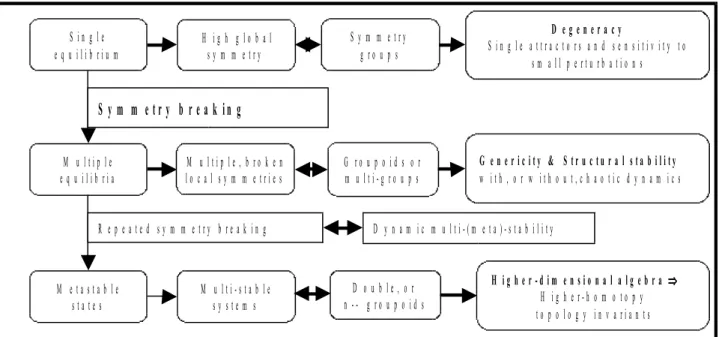
Figure 1. Towards Life: The Emergence of Super-Complex Dynamics.
Single, light arrows indicate the occurrence of a transition; thick arrows are indicating either a logical or sequential implication --``leading to” the concept towards which the thick arrow points. Thick, double arrows signify either conceptual representation or equivalence; for example, systems with high global dynamic symmetry admit canonical (so-called `symmetry’) group representations. Fur-ther details of these processes and mathematical structures/concepts are provided in Baianu (2007a, b).
4. The Age of Super-complexity
Living systems (including among living systems not only biological systems but psychological and social systems as well) present features remarkably different from those characterizing non-living systems. We propose that super-complexity requires at least four different categorical frameworks, namely those provided by the theories of levels of reality, chronotopoids, (generalized) interactions, and anticipation.
4.1. Levels of Reality
Atoms, molecules, organisms distinguish layers of reality because of the causal links that govern
their behavior, both horizontally (atom-atom, molecule-molecule, organism-organism) and vertically (atom-molecule-organism). This is the first intuition of the theory of levels. Even if the further development of the theory will require imposing a number of qualifications to this initial intuition, the idea of a series of entities organized on different levels of complexity will prove correct. Briefly, the difference between levels of reality and levels of interpretation requires
agency (Poli, 2006b, 2007). Most details of the links connecting together the various levels of reality are still unknown, because the various sciences had mainly been working on causal links
internal to their regional phenomena. The lack of a theory of levels of reality has been the major obstruction to the development of the needed theories. Proposal concerning the architecture of levels and their links will improve our understanding of the world and its inter-dependences.
The deepest access to levels of reality is achieved by adopting a categorical viewpoint. In short, a level of reality is represented by a group of (ontological) categories. The next step is to distinguish
universal categories, those that pertain to the whole of reality, from level categories, those that pertain to one or more levels, but not to all of them. The distinction is widespread among four basic strata of reality. Even if the boundaries between them are differently placed, the distinction among the four strata of inanimate, biological, mental and social phenomena is essentially accepted by most scholars. The question now arises as to how the biological, psychological and social strata are connected together. We shall defend the option according to which biological phenomena act as
bearers of both psychological and social phenomena. In their turn, psychological and social
phenomena determine each other reciprocally. Psychological and social systems are formed through co-evolution, meaning that the one is the environmental prerequisite for the other. Both present a double existential dependence: firstly they both depend on their material bearer; secondly, each depends of the twin stratum: psyches require societies and societies require psyches. The next step is to articulate the internal organization of each stratum. Each stratum of reality has its specific structure. Compared to the lower strata, the psychological and social ones are characterized by an interruption in the categorical series and by the onset of new ones (relative to the psychological and social items).
4.2. Chronotopoids
The theory of levels paves the way towards the claim that there could be different families of times
and spaces, each with its own structure. We shall argue that there are numerous types of real times and spaces endowed with structures that may differ greatly from each other. The qualifier “real” is mandatory, since the problem is not the trivial one that different abstract theories of space and time can eventually be and have been constructed (Poli 2007a, b). Drawing on Brentano, we shall treat
the general problem of space and time as a problem of chrono-topoids (understood jointly, or
separated into chronoids and topoids).6 The guiding intuition is that each stratum of reality comes
equipped with its own family of chronotopoids (see Poli 2006 for further details).
4.3. Interactions
The theory of levels of reality provides as well the natural framework for developing a full-fledged theory of causal dependences (interactions). As for the case of chrono-topoids, levels support the hypothesis that any level has its own form of causality/interaction (or family of forms of causality/interaction). Material, psychological and social forms of causality/interaction could therefore be distinguished (and compared) in a principled way. Beside the usual kinds of basic causality between phenomena of the same nature, the theory of levels enables us to distinguish upward and downward forms of causality/interaction (from the lower level to the upper one and vice versa). This acknowledgement provides the needed context for distinguishing material, psychological and social types of interactions.
6 See Poli 2004a and Albertazzi 2005. Bell 2000 and 2005 provide an intuitionistically-based reconstruction of
4.4. Anticipation
Finally, as far as the distinction is concerned between living and non-living systems, the claim is
defended that anticipation is the single most relevant feature distinguishing them. Intuitively, the
choice of the action to perform depends from the system’s anticipations of the evolution of itself and/or the environment in which it is placed (Rosen 1985). Non-living systems, on the contrary, are reactive systems where subsequent states depends entirely from preceding states (usually, according to some law or rule). Anticipation comes in different guises: the simplest distinction is between strong and weak types of anticipation, where the former (the strong one) is meant as coupling between the system and its environment, while the latter (the weak one) is understood in the form of a (cognitive) model developed by the anticipatory system itself. As a straightforward consequence, evolutionary survival implies that all living systems are characterized by some form of another of strong anticipation, while some among the most evolved species may enjoy weak types of anticipation as well. Anticipation can therefore lie low and work below the threshold of consciousness or it may emerge into conscious purpose. In the latter form it constitutes the distinctive quality of causation within the psychological and the social realms. On the other hand, biological systems are better characterized by non-representative (model-based) types of anticipation.
Complexity, as usually—and most likely incorrectly understood—is entirely past-governed and apparently does seem to be unable to include anticipatory behaviour. In order to distinguish anticipatory systems from entirely past-governed systems, the concept of super-complexity has been
recently introduced (see Baianu, 2006: Axiomathes, 16, 1-2, special issue dedicated to Robert
Rosen). A different but not opposite way to understand anticipation is to see the theory of anticipatory systems as providing a phenomenological, or first-person, type of description, while most of complexity theory is usually based on third-person descriptions. The theory of anticipatory systems can therefore be seen as comprising both first- and third-person information. The interactions between the two types of descriptions may result in a substantial reduction of the state space characterizing the dynamics of anticipatory systems.
Besides anticipation, living systems require the capacity of coordinating (again, intentionally or “automatically”) the rhythm of the system with those of its parts. In this respect, the anticipation of the system as a whole may diverge from those of its parts. Furthermore, functional organisms are
multi-strata, multi-stable ‘variable systems’, composed by different types of components interacting at different levels of organization. Analysis is required of both their material and functional components.
The interaction among the three mentioned aspects: anticipation, part--whole structure relationships and levels of organization provides a basis for a better understanding of organisms regarded as highly-complex systems.
5. Ontological and Mathematical Categories
Systems analysis or theory also requires framing ontology in the form of a theory of categories (Poli 2007). We shall therefore adopt here a categorical viewpoint, meaning that we are looking for
philosophical, or categorial meaning of classical, such as Aristotelian categories- for example- in Ontology, even though some encyclopedias blur the distinction between categorical and categorical. In the categorical view, the most universal feature of reality is that it is temporal, i.e. it changes, and it is subject to countless transformations, movements, alterations; mathematically this corresponds
to true variable forms, rather than fixed ones. From the point of view of mathematical modelling,
the mathematical theory of categories models the dynamical nature of reality by resorting to
variable categories (i.e., toposes). The claim advanced by this paper is that mainstream topos theory suits perfectly the needs of complex systems. However, as soon as one passes from complex systems to super-complex systems, the theory of toposes requires suitable generalizations. Our proposal is then to adopt the framework provided by (a suitably generalized) topos theory for modelling super-complex systems.
We have seen that the difference between complex and super-complex systems in based on at least four main issues: levels of reality, chronotopoids, (generalized) interactions, and anticipation. So far, none of them has been adequately formalized. However, considering that chronotopoids and interactions require (and therefore depend on) the theory of levels, and that the issue of anticipation has been advanced by Rosen 1985, subsequent sections will make reference to the issue of levels only. Furthermore, it is apparent that any step towards a proper formalization of the theory of levels (or any other of the mentioned theories) seems to require the development of a non-Abelian framework. Whichever further mathematical property will be required, the first mandatory move is therefore to pass from an Abelian or commutative or natural framework to a non-Abelian one.
6. Organisms Represented as Variable Categories:
Many-Valued LM-logic Algebraic Categories of Functional Biosystems
One of the major road blocks to any successful dynamical theory of complex systems, and also of
developing organisms, has been the lack of a flexible enough mathematical structure which could represent the immensely variable and heterogeneous classes of biological and social organisms. In the following subsection we propose to re-examine the representation of organisms in terms of such flexible mathematical structures that can vary in time and/or space, thus providing a natural framework for relational/ theoretical biology, psychology, sociology or global theoretical constructs addressing environmental problems.
We have already mentioned that the problem of time, i.e. the problem of the dynamical nature of
reality, is the main problem underling the philosophical theory of categories as reviewed by Poli (2007). This same problem has also been at the center of the mathematical theory of categories over
the last six decades, and found a first outcome in the idea of variable category (be it in the form of
variable sets, variable classes, etc), albeit in a formal and precise setting. Furthermore, dealing with
varying, or variable, objects such as those formalized by the concepts variable sets, variable classes, etc. leads to a further generalization of this categorical approach which is founded in Logic, be it Boolean (as in the Category of Sets), Heyting-intuitionistic (as in “standard” Topos theory; Moerdijk and MacLane, 1994, 2004), or Many-Valued (MV or Łukasiewicz-Moisil (see Georgescu,
2006 for a review of N-valued logics), as in the new theory of Generalized Topoi (Baianu, Brown,
Glazebrook and Georgescu, 2005, 2006, 2011). It is worth mentioning that some of the methodological pitfalls of the categorical approach in specific, logical or mathematical, contexts, as for in example in certain areas of Algebraic Topology or Algebraic Logic, were recognized early by
facilitate and be widely employed in the proof of general theorems. Such an objection lies in the fact that the “universal” may, and does, have specific, subtle exceptions and counter-examples as
one might, of course, expect it. Things that may appear to be globally “the same”, or “categorically
equivalent”, may still differ quite significantly in their specific, local contexts. Such problems with
defining different kinds of equivalence arise not only in the modern theories of Algebraic Topology and Groupoids, Abelian categories, Algebraic Geometry, and so on, but also when attempting to
define in precise terms the similarity or analogies between systems that appear physically
distinguishable but mathematically equivalent in some selected, specific sense. We are considering in the next section this problem in further detail.
7. Analogous Systems and Dynamic Equivalence
A scientific and/or engineering strategy for dealing with complex systems has long been the
analysis of simpler, more readily accessible ‘models’ of a complex system. One often attempts to
arrive at computable models with similar dynamic behavior(s) to that of the original, complex
system. Computability of such simple models may often involve the use of a super-fast digital computer, and the models can be made indefinitely more and more complicated through iterated attempts at improved computer simulation.
A formal, categorical approach to analogous systems and dynamic equivalence of systems was first reported by Rosen (1968) from a classical standpoint that is, excluding quantum dynamics; subsequently his approach was extended to the development of biological systems and embryology
(Baianu and Scripcariu, 1973: BMB, “On Adjoint Dynamical Systems”).
Returning now to the issue of computer simulation, one finds upon careful consideration that there is no recursively computable (either simple or complicated) model of both super-complex biological systems and simpler ‘chaotic’ systems (see for example, Baianu, 1987 and the relevant references cited therein). Therefore, Complex Systems Biology (CSB) cannot be reduced to any finite number of simple(r) mechanistic models that are recursively computable, or accessible to digital computation or numerical simulation. This basic result does not seem, however, to deter the computationally-oriented scientists from publishing a rapidly increasing number of reports on computer simulation of complex biological systems. There is surprising enthusiasm and optimism, not to mention popularity, funding, etc., for computer simulations in both biology and medicine.
Such ‘mechanistic’ approaches to understanding how parts or subsystems of a complex organism
work are necessary but insufficient steps towards developing a CSB theory that takes into account
what the over-simplified ‘mechanistic’ models have left out—those irreducible interactions that
pertain to the essence of an organism’s existence and its integrated physiological functions. Heuristic results are both attractive and stimulating, culminating with the aroused expectation of ‘final answers’ to either biological or medical problems by means of digital super-computers. It seems, however, that even the fastest and best-programmed super-computers are no match for the super-complexity of organisms, or even for the simpler, ‘chaotic’ dynamics, a result which is also widely recognized by many chaotic dynamic theorists.
Fundamentally, the limitations of digital computers that rely upon finite/recursive computations are
neural ones Baianu et al, 2006, 2011). Such an MV-logic is both non-commutative (unlike the
Boolean or the Heyting- intuitionistic logic of standard toposes) and irreducible to Boolean and/or
intuitionistic logic (of course, with the exception of the special cases of the category of centred
Łukasiewicz-Moisil logic algebras that can be mapped isomorphically onto Boolean Logic algebras
(Georgescu, 1974, 2006). Unlike the well known result of von Neumann's for the Universal
Automaton, super-complex biological ‘systems’ are not recursively, or numerically computable. Although this limits severely the usefulness of all digital computers in Complex Systems Biology and Mathematical Medicine, it does not render them completely useless for experimentation, data collection and analysis or graphics and graphical presentation/representation of numerical results. Both the limitations and the advantages of using computers become evident in the final analysis where computer simulations of super-complex ‘system’ dynamics cannot claim a full, or complete, dynamical modelling of organisms as such a result has been formally proven to be unobtainable, in
general, through recursive computation with algorithms, universal Turing machines, etc. (Baianu,
1986; Rosen, 1987; Penrose, 1994).
Algebraic computation is still possible, of course, for living systems and their essential subsystems,
such as genetic networks, by employing instead non-commutative, irreducible MV-logics, either in
a general context (Georgescu,1974,2006) or in more specific contexts, such as the controlled dynamics of genetic networks in biological organisms (Baianu,1977, 2004a,b, 2005a,b; Baianu et al, 2006). Non-commutative super-complex dynamic modelling has just begun in Biology and
Medicine, including diagnostics. A Biostatistics formulation based on LM-logic algebras, but
independent of current probability theory, has also become a strong possibility (Georgescu, 2006).
Such recent developments also suggest a paradigm shift occurring now in system theories – from
Abelian to non-Abelian/ non-commutative theories. This new paradigm has perhaps already began
with the earlier introduction of noncommutative geometric spaces obtained through deformation as models of quantum spaces in attempts by A. Connes et al. (1992, 2004, 2006, and references cited therein) at formalizing a Noncommutative Geometry theory of Quantum Gravity 8. Non-Abelian Systems Theory.
One can formalize the hierarchy of multiple-level relations and structures that are present in
super-complex ‘systems’ and meta-systems in terms of the mathematical Theory of Categories,
Functors and Natural Transformations (TC-FNT). On the first level of such a hierarchy are the links
between the system components represented as morphisms of a structured category which are
subject to the axioms/restrictions of Category Theory. Then, on the next, second level of the
hierarchy one considers functors or links between such first level categories that compare categories
without 'looking inside' their objects/system components. On the third level, one compares, or links,
functors using natural transformations in a 2-category (meta-category) of categories. At this level, natural transformations not only compare functors but also look inside the first level objects (system components) thus 'closing' the structure and establishing 'the universal links' between items as an integration of both first and second level links between items. The advantages of this constructive approach in the mathematical theory of categories, functors and natural transformations have been recognized since the beginnings of this mathematical theory in the seminal paper of Mac Lane and Eilenberg (1945). A relevant example from the natural sciences, e.g., neurosciences, would be the
This type of global, natural hierarchy of items inspired by the mathematical TC-FNT has a kind of
internal symmetry because at all levels, the link compositions are natural, that is the all link
compositions that exist are transitive, i.e., x < y and y < z ==> x < z, or f: x --> y and g: y --> z ==>
h: x --> z, and also h = g o f. The general property of such link composition chains or diagrams
involving any number of sequential links is called commutativity, or the naturality condition. This
key mathematical property also includes the mirror-like symmetry x * y = y * x; when x and y are operators and the '* ' represents the operator multiplication. Then, the equality of x * y with y * x
implies that the x and y operators 'commute'; in the case of an eigenvalue problem involving such
commuting operators, the two operators would share the same system of eigenvalues, thus leading to 'equivalent' numerical results. This is very convenient for both mathematical and physical applications (such as those encountered in quantum mechanics). Unfortunately, not all operators
'commute', and not all mathematical structures are commutative. The more general case is the
non-commutative one. An example of a non-commutative structure relevant to Quantum Theory is that of the Clifford algebra of quantum observable operators (Dirac, 1962; see also the Appendix); yet
another, more recent and popular, example is that of C*-algebras of (quantum) Hilbert spaces. Last
but-not least, are the interesting mathematical constructions of non-commutative 'geometric spaces' obtained by 'deformation' introduced by Allan Connes (1990) as possible models for the physical,
quantum space-time. Thus, the microscopic, or quantum, 'first' level of physical reality does not
appear to be subject to the categorical naturality conditions of Abelian TC-FNT—the 'standard' mathematical theory of categories (functors and natural transformations). It would seem therefore that the commutative hierarchy discussed above is not sufficient for the purpose of a General, Categorical Ontology which considers all items, at all levels of reality, including those on the 'first',
quantum level, which is not commutative. On the other hand, the mathematical, Non-Abelian
Algebraic Topology (Brown and Safiro, 2005, 2006), the Non-Abelian Quantum Algebraic Topology (NA-QAT; Baianu et al., 2005-2006), and the physical, non-Abelian gauge theories may provide the ingredients for a proper foundation for non-Abelian, hierarchical multi-level theories of super-complex system dynamics. Furthermore, it was recently pointed out (Baianu et al, 2005, 2006) that the current and future development of both NA-QAT and of Complex Systems Biology
theories involve a fortiori non-commutative, many-valued logics of quantum events, such as the
Lukasiewicz-Moisil (LM) logic algebra (Georgescu, 2006a), complete with a fully-developed, novel probability/measure theory grounded in the LM-logic algebra (Georgescu, 2006a,b). The latter paves the way to a new projection operator theory founded upon the (non-commutative) quantum logic of events, or dynamic processes, thus opening the possibility of a complete, Non-Abelian Quantum Theory. Furthermore, such recent theoretical developments point towards a
References
Albertazzi, L. 2005. Immanent Realism. Introduction to Franz Brentano, Springer, Dordrecht.
Andersen, P. B., Emmeche, C., Finnemann, N.O. and Christiansen, P.V., eds.: 2000. Downward
Causation. Minds, Bodies and Matter, Aarhus University Press, Aarhus.
Bertalanffy 1972. The history and status of general systems theory, in G.J. Klir (ed.), Trends in
general systems theory, NY, Wiley, 1972, pp. 21-41.
Baianu 1977. Baianu, I.C. A Logical Model of Genetic Activities in Lukasiewicz Algebras: The
Non-linear Theory. Bulletin of Mathematical Biophysics, 1977, 39, pp. 249-258.
Atlan, H.: 1972. L'Organisation biologique et la theorie de l'information, Hermann, Paris.
Austin, J. H.: 1998. Zen and the Brain, MIT Press.
Baars, B.: 1988. A Cognitive Theory of Consciousness, Cambridge University Press.
Baars B. and J. Newman: 1994, A neurobiological interpretation of
the Global Workspace theory of consciousness, in “Consciousness in Philosophy and Cognitive
Neuroscience”, Erlbaum, Hildale NJ.
Baars B. and S. Franklin: 2003, How conscious experience and working memory interact.Trends in
Cognitive Science .7, 166--172.
Baianu, I.C. and M. Marinescu: 1968, Organismic Supercategories: Towards a Unified Theory of
Systems. Bulletin of Mathematical Biophysics .30: 148.
Baianu, I.C.: 1970, Organismic Supercategories: II. On Multistable Systems. Bulletin of
Mathematical Biophysics .32: 539-561.
Baianu, I.C.: 1971a, Organismic Supercategories and Qualitative Dynamics of Systems. .Ibid.33
(3), 339--354.
Baianu, I.C.: 1971b, Categories, Functors and Quantum Algebraic Computations, in P. Suppes (ed.).Proceed. Fourth Intl. Congress Logic-Mathematics-Philosophy of Science, September 1--4, 1971, Bucharest.
Baianu, I.C. and D. Scripcariu: 1973, On Adjoint Dynamical Systems. Bulletin of Mathematical
Biophysics, .35 (4), 475--486.
Baianu, I.C.: 1973. Some Algebraic Properties of (M,R) -- Systems. Bulletin of Mathematical
Biophysics.35, 213-217.
Baianu, I.C. and M. Marinescu: 1974. A Functorial Construction of (M,R)-- Systems. Revue
Roumaine de Mathematiques Pures et Appliquees .19 : 388-391.
The Non-linear Theory. Bulletin of Mathematical Biophysics .39, 249-258
Baianu, I.C.: 1980. Natural Transformations of Organismic Structures. Bulletin of Mathematical
Biophysics .42: 431-446.
Baianu, I. C.: 1983, Natural Transformation Models in Molecular Biology., in Proceedings of the
SIAM Natl. Meet., Denver, CO.; Eprint: http://cogprints.org/3675/
; http://cogprints.org/3675/0l/Naturaltransfmolbionu6.pd
Baianu, I.C. 1984. Baianu, I.C. A Molecular-Set-Variable Model of Structural and Regulatory
Activities in Metabolic and Genetic Networks. 1984, FASEB Proceedings, 43, 917.
Baianu, I. C.: 1987a. Computer Models and Automata Theory in Biology and Medicine., in M. Witten (ed.).Mathematical Models in Medicine, vol. 7., Pergamon Press, New York, 1513--1577; CERN Preprint No. EXT-2004-072:
http://doe.cern.ch//archive/electronic/other/ext/ext-2004-072.pdf
Baianu, I. C.: 1987b. Molecular Models of Genetic and Organismic Structures, in Proceed. Relational Biology Symp. Argentina; \emph.CERN Preprint No.EXT-2004-067
http://doc.cern.ch/archive/electronic/other/ext/extû2004-67/MolecularModels-ICB3.doc
Baianu, I.C.: 2004a. Quantum Nano--Automata (QNA): Microphysical Measurements with Microphysical QNA Instruments.CERN Preprint EXT--2004--125.
Baianu, I. C.: 2004b. Quantum Interactomics and Cancer Mechanisms.Preprint No. 00001978}
û- http:bioline.utsc.utoronto.ca/archive/00001978/01/QuantumInteractomicsInCancer--Sept13k4E--cuteprt.pdf. ; http://bioline.utsc.utoronto.ca/archive/00001978/
Baianu, I.C, ed.. 2006. Robert Rosen's Work and Complex Systems Biology. Axiomathes, 16:1-2.
Baianu et al, 2006. Baianu I. C., Brown R., Georgescu G. and J. F. Glazebrook, Complex Nonlinear Biodynamics in Categories, Higher Dimensional Algebra and Lukasiewicz--Moisil Topos:
Transformations of Neuronal, Genetic and Neoplastic networks, Axiomathes, 16: 1--2, pp. 65-122.
Baianu, I. C., Glazebrook, J. F. and G. Georgescu: 2004. Categories of Quantum Automata and N-Valued \L ukasiewicz Algebras in Relation to Dynamic Bionetworks, .(M,R)--Systems andTheir Higher Dimensional Algebra.Abstract and Preprint of Report:
http://www.medicalupapers.com/quantum+automata+math+categories+baianu/
Baianu, I. C., Brown, R. and J. F. Glazebrook: 2006. “Quantum Algebraic Topology and Field
Theories”. (manuscript in preparation)
Baianu, I.C., Glazebrook J. F., Georgescu G. and R. Brown: 2007. Non-Abelian Algebraic Topology Representations of Quantum Space--Time in a Generalized `Topos' with a Quantum N— Valued Logic Classifier. (in preparation).
Baianu, I.C.: 2011, Translational Genomics and Human Cancer Interactomics,
Beck F. and J. C. Eccles: 1992, Quantum aspects of brain activity and the role of consciousness. Proceedings of The National Academy of Science USA 89: 11357--11361.
Bendall, D.: 1982. Evolution from Molecules to Men. Cambridge, UK.
Bennett, M. and P. Hacker: 2003. Philosophical Foundations of Neuroscience, Blackwell
Publishing, London.
Birkhoff, G. and J. von Neumann: 1936, The logic of quantum mechanics.Annals of Math. .37},
823--843.
Blitz, D.: 1992.Emergent Evolution. Kluwer, Dordrecht.
Bogdanov 1984. A. Bogdanov, Essays in tektology. The General science of organization, Seaside
CA, Intersystems Publications, 1984 (1st 1980).
Bogen, J. E.: 1995, On the neurophysiology of consciousness. Part 2: Constraining the semantic
problem.Consciousness and Cognition .4, 137--158.
Bohm, D.: 1990. A new theory of the relationship of mind and matter. Philosophical Psychology
.3}, 271—286.
Borceux, F.: 1994. Handbook of Categorical Algebra 1 and 2-- Encyclopedia of Mathematics and
its Applications .50 and .51, Cambridge University Press.
Brown, R.: 2004, Crossed complexes and homotopy groupoids as non commutative tools for higher
dimensional local-to-global problems., Proceedings of the Fields Institute Workshop on Categorical
Structures for Descent and Galois Theory, Hopf Algebras and Semiabelian Categories, September
23-28, Fields Institute Communications 43: 101-130.
Brown, R. and Sivera, S. 2006. Non--Abelian Algebraic Topology: Part I.;
http://www.bangor.ac.uk/~mas010/nonab-a-t.html
http://www.bangor.ac.uk/~mas010/nonab-t/partI010604.pdf
Brown, R., Paton, R. and T. Porter.: 2004. Categorical language and hierarchical models for cell systems, in \emph.Computation in Cells and Tissues - Perspectives and Tools of Thought, Paton, R.
Brown R. and T. Porter: 2003, `Category theory and higher dimensional algebra: potential descriptive tools in neuroscience', Proceedings of the International Conference on Theoretical
Neurobiology, Delhi, February 2003, edited by Nandini Singh, National Brain Research Centre,
Conference Proceedings 1, 80-92.
Brown, R. and Porter. T.: 2006, Category Theory: an abstract setting for analogy and comparison},
In: What is Category Theory? , Advanced Studies in Mathematics and Logic, Polimetrica
Publisher.}, Italy, (2006) 257-274.
Bucur, I and A. Deleanu.: 1968. Introduction to the theory of categories and functors. London-New York-Sydney: John Wiley and Sons.
Bolouri, H.; Holcombe, M.; Parish, J.H.; Tateson, R. (Eds.) Natural Computing Series, Springer Verlag, 289-303.
Campbell, D.T. 1958. “Common fate, similarity, and other indices of the status of aggregates of
persons as social entitites”, Behavioral science 1958, 14-25.
Chalmers, D. J.: 1996.The Conscious Mind--In search of a fundamental theory, Oxford University
Press.
Changeux J.--P.: 1985. Neuronal Man--The Biology of Mind, Princeton University Press.
Chodos, A. and S. Detweiler: 1980, Where has the fifth diemsion gone?.Phys. Rev. D} .21, 2167--2170.
Comoroshan, S. and Baianu, I.C. 1969. Abstract Representations of Biological
Systems in Organismic Supercategories: II. Limits and Colimits. Bulletin of Mathematical
Biophysics .31, 84.
Connes, A.: 1994. Noncommutative Geometry, Academic Press.
Cramer, J.G.: 1980, The transactional interpretation of quantum mechanics.Phys. Rev. D} \ textbf .22}, 362.
Crick, F. and C. Koch: 1990, Toward a neurobiological theory of consciousness. The
Neurosciences. .2, 263--275.
Csikzentmihalyi, M.: 1990.The Evolving Self: A Pscychology for the Third Millenium, Harper and Row, New York.
Dalla Chiara, M., Giuntini R. and R. Greechie: 2004. Reasoning in Quantum Theory, Trends in
Logic--Studia Logica Library Vol. 22, Kluwer, Dordrecht--Boston--London.
Dawkins, R.: 1982. The Extended Phenotype, Oxford University Press.
Eccles, J. C.: 1986, Do mental events cause neural events analogously to the probability fields of
quantum mechanics? Proceedings of the Royal Society .B277}, 411--428.
Edelman, G.: 1992. Brilliant Air, Brilliant Fire -- On the Matter of the Mind, Basic Books, New
York.
Edelman, G.: 1989. The Remembered Present, Basic Books, New York.
Edelman, G. and G. Tononi: 2000.A Universe of Consiousness, Basic Books, New York.
Ehresmann, C.: 1965. Cate'gories et Structures, Dunod, Paris
Ehresmann, C.: 1966, Trends Toward Unity in Mathematics., Cahiers de Topologie et Geometrie
Ehresmann, C.: 1959, Cate'gories topologiques et cate'gories diffe'rentiables. Coll. Ge'om. Diff.
Glob., Bruxelles, 1959, 137-150.
Ehresmann, C.: 2005. Oeuvres compl`etes et comment'ees: Amiens, 1980-84., edited and commented by Andree Ehresmann.
Ehresmann, A. C. and J.-P. Vanbremersch: 1987. Hierarchical Evolutive Systems: A mathematical
model for complex systems.Bull.of Math. Biol. .49(1), 13-50.
Ehresmann, A. C. and J.-P. Vanbremersch: 2006, The Memory Evolutive Systems as a model of
Rosen's Organisms.Axiomathes .16 (1--2), 13-50.
Eilenberg, S. and Mac Lane, S.: 1942. Natural Isomorphisms in Group Theory.American
Mathematical Society 43: 757-831.
Eilenberg, S. and Mac Lane, S.: 1945, The General Theory of Natural Equivalences. Transactions
of the American Mathematical Society 58: 231-294
Elsasser, M.W.: 1981, A Form of Logic Suited for Biology., In: Robert, Rosen, ed. Progress in
Theoretical Biology, Volume 6, Academic Press, New York and London, pp 23-62
Freeman, W. J.: 1999, Consciousnness, intentionality and causality.J. Consciousness Studies.11, 143--172.
Freeman, W. J.: 1997, Nonlinear neurodynamics of intentionality, J. of Mind and Behavior .18,
143--172.
Gabor, D.: 1946, Theory of communication J. IEE (London)}.93} (III), 429--457.
Gabriel, P.: 1962. Des cate'gories abe'liennes. Bull. Soc. Math. France,.90: 323-448.
Georgescu, G. and D. Popescu: 1968, On Algebraic Categories, Revue Roumaine de Mathematiques
Pures et Applique'es 13:337-342.
Georgescu, G. 2006a. N-valued Logics and Lukasiewicz—Moisil Algebras, Axiomathes, 16: 1—2,
pp. 123—136.
Gnoli, C. and Poli, R. 2004,"Levels of Reality and Levels of Representation", Knowledge
organization, 32, 3.
Golubitsky, M. and I. Stewart: 2006, Nonlinear dymanics of networks: the groupoid formalism.
Bull. Amer. Math. Soc. 43, No. 3,305—364.
Goodman, N., 1956, ‘A World of Individuals’, in J. M. Bochenski, A. Church, and N. Goodman,
The Problem of Universals. A Symposium, Notre Dame: University of Notre Dame Press, pp. 13-31.
Goubault, E.: 2003, Some geometric perspectives in concurrency theory.Homology, Homotopy and Applications} .5} (2), 95--136.
Gould, S.J.: 1977. Ever since Darwin. New York and Hammondsworth
Gregory, R.L. (ed.)-assist. O.L. Zangwill.: 1987. The Oxford Companion to The Mind.
Oxford University Press, Oxford and New York.
Grossberg, S.: 1999, The link between brain learning, attention and consciousness. Consciousness
and Cognition 8,1—44.
Grothendieck, A.: 1971, Revetements Etales et Groupe Fondamental (SGA1), chapter VI:
Catégories fibrées et descente. Lecture Notes in Math. .224, Springer-Verlag, Berlin.
Hartmann, N.: 1935. Zur Grundlegung der Ontologie, Berlin, W. de Gruyter.
Hartmann, N.: 1952 .The new ways of ontology, Chicago.
Hawking, S.W. and G.F.R. Ellis: 1973.The Large Scale Structure of Space--Time, Cambridge
University Press.
Hebb D. O.: 1949.The Organization of Behavior, Wiley New York.
Healy M. J. and T. P. Caudell: 2006, Ontologies and worlds in category theory: Implications for
neural systems, Axiomathes .16} Nos. 1--2, 165--214.
Higgins P. J. and K. C. H. Mackenzie:1990, Fibrations and quotients of differentiable groupoids.
J. London . Math. Soc. .42, no. 1, 101--110.
Higgins, P. J.: 1964. Presentations of groupoids, with applications to groups, Proc. Cambridge
Philos. Soc., 60: 7--20.
Higgins, P. J.: 2005.Categories and groupoids, Van Nostrand Mathematical Studies: 32, (1971);
Reprints in Theory and Applications of Categories, No. 7 (2005) pp 1--195.
Hurewicz, E.: 1955, On the concept of fiber spaces. Proc. Nat. Acad. Sci USA .41}, 956--961.
James, W.: 1890. The Principles of Psychology, Henry Hold and Co: New York.
James, W.: 1958. Talks to Teachers on Psychology., Norton: New York.
Jerne, N. K.: 1974, Towards a network theory of the immune system, Ann. Imunology (Inst.
Pasteur)}, 125C}, 373—389.
de Jong, H. and M. Page.2000 : Qualitative simulation of large and complex genetic regulatory
systems, in Proc. of Fourteenth European Conference on Artifical Intelligence, ECAI 2000, W.
van Kampen, E. H.: 1933, On the Connection Between the Fundamental Groups of some Related
Spaces .Amer. J. Math..55, 261--267.
Kimura, M.: 1968. Evolutionary rate at the molecular level. Nature .217: 624-626. [1]
Kimura, M.: 1983. The Neutral Theory of Molecular Evolution.Cambridge:Cambridge Univ. Press.
Kozma R., Puljic M., Balister P., Bollobas, B. and W. J. Freeman: 2004, Neuropercolation a
random cellular automata approach to spatio--temporal neurodynamics. Lecture notes in Computer
Science .3305, 435—443.
Landsman, N. P.: 1998. Mathematical Topics between Classical and Quantum Mechanics. Springer
Verlag, New York.
Leonard, H. S. and Goodman, N., 1940, ‘The Calculus of Individuals and Its Uses’, Journal of
Symbolic Logic 5: 45-55
Lofgren,L.:1968, An Axiomatic Explanation of Complete Self-Reproduction. Bulletin of
Mathematical Biophysics 30: 317-348.
Lowe, V., 1953, ‘Professor Goodman's Concept of an Individual’, Philosophical Review 62:
117-126.
Luhmann, N. 1995. Social Systems, Stanford, Stanford University Press.
Łukasiewicz, J., 1920, ‘O logice trojwartosciowej’, Ruch Filozoficny 5: 169-171 (English trans. by
S. McCall: ‘On Three-Valued Logic’, in Polish Logic 1920-1939, ed. by S. McCall, Oxford:
Oxford University Press, 1967, pp. 15-18).
Mac Lane, S.: 2000. Categories for the Working Mathematician. Springer:New York, Berlin and
Heidelberg.
Mac Lane, S. and I. Moerdijk.:1992. Sheaves in Geometry and Logic. A first introduction
in topos theory. New York: Springer-Verlag
Manders, K.L.: 1982. On the space-time ontology of physical theories. Philosophy of Science .49
no. 4, 575--590.
Maturana, H. R. and F. J. Varela: 1980. Autopoiesis and Cognition--The Realization of the Living,
Boston Studies in the Philosophy of Science Vol. 42, Reidel Pub. Co. Dordrecht.
Mayr, E.: 1970. Populations, Species, and Evolution. Harvard University Press: Cambridge.
Mayr, E and Provine, W.B. (eds.).: 1986. The Evolutionary Synthesis: Perspectives on
the Unification of Biology. Cambridge, Massachusetts.
McGinn, C: 1995.Consciousness and Space, in T. Metzinger (ed.) Conscious Experience,
McKenna, MC and Bell, SK (1997) Classification of Mammals above the Species Level. Columbia University Press: New York.
Mitchell, B.: 1965. Theory of Categories, Academic Press, London.
Penrose, R: 1994. Shadows of the Mind, Oxford University Press, Oxford.
Pickering, J. and Skinner, M: 1990. From Sentience to Symbols. University of Toronto Press:
Toronto.
Platt, J. 1969. “Theorems on boundaries in hierarchical systems”, in L.L. Whyte, A.G. Wilson, D.
Wilson, Hierarchical structures, Elsevier, New York 1969, pp. 201-213.
Poli, R.: 1998, Levels, Axiomathes, 9, 1-2, pp. 197-211.
Poli,R.: 2001a. The Basic Problem of the Theory of Levels of Reality, Axiomathes, 12: 3-4, pp.
261-283.
Poli,R: 2001b. Alwis. Ontology for Knowledge Engineers. PhD Thesis, Utrecht.
Poli, R: 2006a. Levels of Reality and the Psychological Stratum, Revue Internationale de
Philosophie, 61: 2, pp. 163-180.
Poli, R. 2006b. Steps Towards a Synthetic Methodology, in Proceed. Conf. Continuity and
Change: Perspectives on Science and Religion, Metanexus Institute, June 2006, Philadelphia, PA.
http://www.metanexus.net/conferences/pdf/conference2006/Poli.pdf
Poli, R. 2007. Ontology: The Categorical Stance, (TAO) vol.1.
Pollard, J.W.(ed).: 1984. Evolutionary theory: paths into the future. Chichester.
Popescu, N.: 1973. Abelian Categories with Applications to Rings and Modules. New York and
London: Academic Press. 2nd edn. 1975. (English translation by I.C. Baianu)
Pribram, K. H.: 1991.Brain and Perception: Holonomy and Structure in Figural processing,
Lawrence Erlbaum Assoc. Hillsdale.
Pribram, K. H.: 2000, Proposal for a quantum physical basis for selective learning, in (Farre, ed.)
Proceedings ECHO IV,1--4.
Rashevsky, N.: 1965, The Representation of Organisms in Terms of Predicates. Bulletin of
Mathematical Biophysics 27: 477-491.
Rashevsky, N.: 1969, Outline of a Unified Approach to Physics, Biology and Sociology. Bulletin of
Mathematical Biophysics .31: 159-198
Rosen, 1958a. Rosen, R. A Relational Theory of Biological Systems, Bulletin of Mathematical