Durham E-Theses
A Critical Analysis of Asset-Backed Sukuk from Sharia
Perspective and Observed Risk Mitigation Process in
Sukuk Structure: A Case Study in Saudi Arabia
ALESHAIKH, NOURAH,MOHAMMADHow to cite:
ALESHAIKH, NOURAH,MOHAMMAD (2016) A Critical Analysis of Asset-Backed Sukuk from Sharia Perspective and Observed Risk Mitigation Process in Sukuk Structure: A Case Study in Saudi Arabia, Durham theses, Durham University. Available at Durham E-Theses Online:
http://etheses.dur.ac.uk/12297/ Use policy
The full-text may be used and/or reproduced, and given to third parties in any format or medium, without prior permission or charge, for personal research or study, educational, or not-for-prot purposes provided that:
• a full bibliographic reference is made to the original source
• alinkis made to the metadata record in Durham E-Theses
• the full-text is not changed in any way
The full-text must not be sold in any format or medium without the formal permission of the copyright holders. Please consult thefull Durham E-Theses policyfor further details.
Academic Support Oce, Durham University, University Oce, Old Elvet, Durham DH1 3HP e-mail: [email protected] Tel: +44 0191 334 6107
http://etheses.dur.ac.uk
A Critical Analysis of Asset-Backed
Sukuk
from Sharia
Perspective and Observed Risk Mitigation Process in
Sukuk
Structure: A Case Study in Saudi Arabia
By
Nourah Mohammad Aleshaikh
A thesis submitted for the Degree of Ph.D
Durham University Business School Durham University
2016
Table of Contents
Chapter 1: Introduction ... 13
1.1 Background ... 13
1.2 Statement of the Research Problem ... 14
1.3 Research Aims and Objectives ... 16
1.4 Research Questions ... 16
1.6 Research Methodology ... 17
1.7 Research Motivation and Scope of the Research ... 18
1.8 The Research Contributions and Key Findings ... 21
1.9 Structure of the Dissertation ... 23
Chapter 2: Securities as Financing Instruments: Risks and Agency Conflicts ... 25
2.1 Introduction ... 25
2.2 An Overview of Securitization ... 26
2.2.1 Bonds ... 28
2.2.2 Asset‐backed Securities (ABS) ... 30
2.3 The Structure of Asset Securitization ... 32
2.4 Major Risks in Securitization ... 38
2.5 Securitization and Agency issues ... 45
2.6 Summary ... 51
Chapter 3: The Basis in Islamic Jurisprudence of Asset‐backed Sukuk ... 53
3.1 Introduction ... 53
3.2 Overview of Asset‐backed Sukuk ... 53
3.3 The Ijara Sukuk Industry ... 56
3.4 Critical Issues of Asset‐backed Sukuk ... 57
3.5 Sharia Framework of Asset‐backed Sukuk ... 61
3.5.1 Critical Rules of Leasing ... 61
3.5.2 Standards for a Valid Issuance of Sukuk ... 63
3.5.3 Prohibited Transactions ... 65
3.5.4 Sale and Leaseback ... 69
3.6 Summary ... 70
Chapter 4: Asset‐based Sukuk: Structures and Assessment ... 72
4.1 Introduction ... 72
4.3 Analysis of Sukuk Risks ... 79 4.3.1 Credit Risk ... 80 4.3.2 Market Risk ... 82 4.3.3 Liquidity Risk ... 84 4.3.4 Operational Risks ... 85 4.3.5 Sharia Risk ... 88
4.4 Risk/Return of SBS and Bonds ... 89
4.5 Sukuk and Agency issues ... 91
4.6 Summary ... 96
Chapter 5: An Overview of the Sukuk Market in Saudi Arabia ... 98
5.1 Introduction ... 98
5.2 Primary Sukuk Market ... 99
5.3 Secondary Sukuk Market ... 102
5.4 Legal and Regulatory Framework for Sukuk Market ... 104
5.4.1 Saudi Courts and Sukuk Disputes ... 106
5.4.2 The Intifa’ Sukuk System in Saudi Arabia ... 107
5.5 Saudi sukuk market and low oil income ... 108
5.6 Recent Developments and the Way Forward ... 109
5.7 Summary ... 112
Chapter 6: Research Design and Methodology ... 114
6.1 Introduction ... 114
6.2 Research Philosophy ... 114
6.3 Research Design ... 115
6.4 Research Approaches ... 119
6.5 Data Collection Method ... 120
6.5.1 Interviewing ... 122
6.6 Data Analysis Method ... 128
6.6.1 Content Analysis ... 129
6.6.2 Critical Analysis ... 131
6.6.3 Secondary Analysis ... 131
6.7 Criteria of the Research ... 133
6.8 Summary ... 138
Chapter 7: Saudi Electricity Company Sukuk ... 139
7.2 SEC Sukuk in 2012 ... 139
7.3 Structure of 2012 Sukuk ... 141
7.4 SEC Sukuk Rating ... 143
7.5 Sharia Perspective Analysis ... 144
7.5.1 Critical Analysis of the Content ... 145
7.5.2 Analysing the Structure ... 152
7.5.3 Overall Rating ... 154
7.6 Observed Risk Mitigation Process ... 155
7.6.1 Risk Factors ... 156
7.6.2 SEC sukuk and Agency issues ... 159
7.6 Summary ... 162
Chapter 8: Sadara Chemical Company Sukuk ... 163
8.1 Introduction ... 163
8.2 Public Offering of Sadara Sukuk ... 163
8.3 Structure of Sadara Sukuk... 164
8.4 Critical Analysis from Sharia Perspective ... 167
8.4.1 Critical Analysis of the Content ... 168
8.4.2 Critical Analysis of the Structure ... 175
8.4.3 Overall Rating ... 177
8.5 Observed Risk Mitigation Process ... 179
8.5.1 Risk Factors ... 179
8.5.2 Sadara sukuk and agency issues ... 184
8.6 Summary ... 186
Chapter 9: Zamzam Towers Sukuk as a Case Study ... 188
9.1 Introduction ... 188
9.2 Origin and Process of the Zamzam sukuk Structure ... 189
9.3 Sharia Perspective Analysis ... 191
9.3.1 Critical Analysis of the Content ... 192
9.3.2 Critical Analysis of the Structure ... 197
9.3.3 Overall Rating ... 199
9.4 Observed Risk Mitigation Process ... 201
9.4.1 Risk Factors ... 201
9.4.2 Zamzam sukuk and agency issues ... 211
Chapter 10: Qualitative Analysis of the Struggle for Sharia Compliance within the Sukuk Market .... 216
10.1 Introduction ... 216
10.2 Critical Issues Related to the Sukuk Industry ... 217
10.2.1 Issues Related to the Guarantee ... 217
10.2.2 Issues Related to Ownership ... 227
10.2.3 Issues Related to the Structure ... 232
10.2.4 Issues Related to Regulation ... 236
10.2.5 Issues Related to the Current Sukuk Industry ... 243
Chapter 11: Summary of the Findings and Conclusion ... 248
11.1 Introduction ... 248
11.2 Summary of the Results ... 248
11.2.1 Issues Related to Risks ... 248
11.2.2 Issues Related to Agency Problems ... 254
11.2.3 Issues Related to Sharia Compliance ... 258
11.3 Concluding Remarks ... 262
Appendix I: English version of the Interview questions ... 264
Appendix II: Arabic version of the Interview questions ... 266
List of Figures
Figure 2-1 Securitization of Non-mortgage Asset Classes, 2001-15 (billions of dollars) ... 27
Figure 3-1 Structural Break-up of the Global Sukuk Issuance, 2001-15 ... 57
Figure 4-1 Global Sukuk Issuances, 2001-15... 73
Figure 7-1 SEC Sukuk Structure ... 141
Figure 8-1 Sadara Sukuk Structre ... 164
Figure 9-1 Zamzam Sukuk Structure ... 190
List of Tables
Table 1-1 the Research Aims, Objectives and Questions ... 17Table 4-1 SBS Risks vs. Bond Risks ... 89
Table 5-1 Saudi Sukuk Issuance, 2009–2013... 99
Table 5-2 Comparison between Saudi and Malaysia Sukuk Markets, (Jan 2001 – Dec 2015) ... 101
Table 6-1 Case Study vs. Experiment and Survey... 116
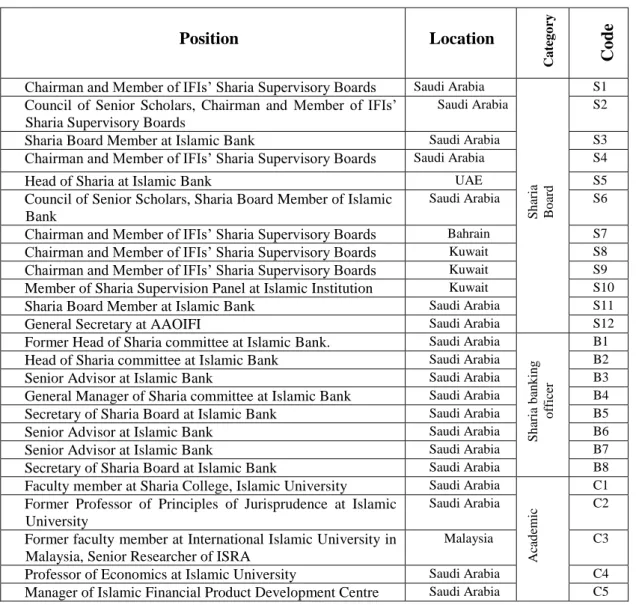
Table 6-2 Features of Interviewees ... 127
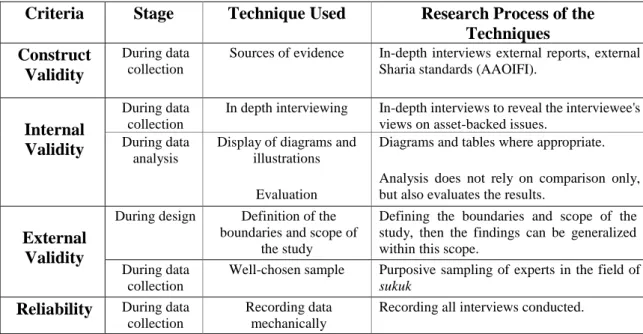
Table 6-3 Different Criteria for Case Study Research ... 137
Table 7-1 SEC First Tranche ... 142
Table 7-2 SEC Second Tranche ... 142
Table 7-3 SEC Sukuk Documents ... 143
Table 7-4 Results of SEC Sukuk According to Standard no.9 ... 154
Table 7-5 Results of SEC Sukuk According to Standard nos.17-18 ... 154
Table 7-6 Results of SEC Sukuk According to Standard no.23 ... 155
Table 8-1 Sadara Sukuk Offering ... 166
Table 8-2 Sadara Sukuk Documents ... 167
Table 8-3 Results of Sadara Sukuk According to Standard no.9 ... 177
Table 8-4 Results of Sadara Sukuk According to Standard nos.17-18 ... 178
Table 8-5 Results of Sadara Sukuk According to Standard no.23 ... 178
Table 9-1 Zamzam Sukuk Documents ... 191
Table 9-2 Results of Zamzam Sukuk According to Standard no.9 ... 199
Table 9-3 Results of Zamzam Sukuk According to Standard nos.17-18 ... 200
Table 11-1 The Aggregate Percentage Compliance of SEC, Sadara and Zamzam Sukuk ... 258
List
of
Abbreviations
AAOIFI Accounting and Auditing Organisation for Islamic Financial Institutions
ABS Asset-backed Securities
CBO Collateralized Bond Obligations CDO Collateralized Debt Obligations CLO Collateralized Loan Obligations CMA Capital Market Authority
CMBS Commercial Mortgage-backed Securities
DAAR Dar Al-Arkan Real Estate Development Company FLP First Loss Position
ICMA International Capital Market Association IFSB International Islamic Financial Services Board IIFM International Islamic Financial Market
MBS Mortgage-backed Securities
OC Offering Circular
PLS Profit Loss Sharing RMBS Residential MBS
SABIC Saudi Basic Industries Corporation
SAC Sharia Advisory Council
SAMA Saudi Arabian Monetary Agency
SAMA Capital Market Authority SAR Saudi Arabia Riyal SBS Sharia-based sukuk SCS Sharia-compliant sukuk SEC Saudi Electricity Company
SPV Special Purpose Vehicle
UK United Kingdom
USD United State Dollars
VaR Value-at-risk
Glossary
Amanah A form of trust Fatwa Islamic legal opinion
Fiqh Islamic jurisprudence covering all aspects of life including economics
Gharar Ambiguity and uncertainty in transactions
Hadith Synonym of Sunnah
Hiyal Stratagem
Ijara Contract of hiring or leasing
Ijara muntahia bittamleek
Lease to own
Ijma Consensus of opinion among Sharia scholars on a specific matter
Ijtihad Scholarly reasoning through which a jurist derives Islamic rule
Inah sale Contract of sale with immediate repurchase.
Intifa’ sukuk Time-share sukuk
Istisna Object-deferred sale of manufactured goods
Istisna’ Requesting to construct, build or manufacture an asset. Jahala Ignorance
Mudharib The entrepreneur who solely manages the business of mudharaba Murabaha Cost-plus sales
Musharaka Partnership contract
rahn Mortgage, collateral Riba Usury or interest
Salam Pre-payment of an asset for future delivery Sukuk Participation security or investment certificate
Sunnah The way of the Prophet Mohammed (PBUH) including his sayings, deeds, approvals and disapprovals
Takaful A system of insurance based on the principle of mutual support
Urf Customary laws Wa’d A unilateral promise
Wafa Sale with a right of the seller to repurchase the property
Wakala An agency contract
Statement of Copyright
‘The copyright of this dissertation rests with the author. No quotation from it should be published without the author's prior written consent and any information derived from it should be acknowledged’.
Acknowledgements
First and foremost, I thank Almighty Allah for all his endless blessings. Then, I would like to express my deep and sincere gratitude to my supervisor, Professor Habib Ahmed for his constructive comments, his valuable advice, and for his efforts and expertise on providing relevant references. Also, I would like to thank the Business school and library staff at the University of Durham for their assistance and tireless efforts.
Words cannot express how grateful I am to my Father and Mather for their encouragement and support. They have been the light leading me throughout my life. Also, I would like to express my gratitude to everyone who supported me throughout the course of this thesis. A special appreciation goes to my father-in-law for his help and support.
Last but not least, I am deeply indebted to my Husband Osama Alsulaiman for his love, help and constant support during my study. His knowledge and experience have also been an indispensable resource for my thesis. Traveling abroad to study would not have been possible without the help and support from him. Loving thanks goes to my daughter Reema and my Son Ibrahim for being a source of happiness in my life.
Abstract
Recent issuances of sukuk were confronted with wide criticism from, both by Islamic scholars and investors. The part of the problems arise due to the agency relations in sukuk structures that have a distinctive nature with great complexity and various features. Due to the higher complexity of the responsibilities undertaken by the agent, greater exposure to agency costs results. This research aims to examine sukuk associated risks, agency costs and Sharia issues. Specifically, it analyses asset-backed sukuk structures from financial and Sharia viewpoints. This is achieved by adopting a case study strategy and inductive approach to examine the legal and financial issues arising in three different types of asset linked sukuk structures. The data is collected using content analyses of sukuk prospectuses, AAOIFI Sharia standards and publications issued by international agencies with the aim of enabling the study to achieve insights into the market. Furthermore, information is gathered from Sharia scholars using semi structured interviews to generate some specific information on the issues involved.
The objectives of this study are to analyse three key issues: based on theoretical discussions identify therisks arising in securities in general and sukuk in particular; to carry out a comparative analysis of the principle/agent conflicts which arise in different cases of sukuk investment; and to determine the extent of adherence to Sharia rules. The dissertation discusses in depth the agency costs that arise in asset-backed sukuk structures. It determines how these costs are minimized and conflicts managed in the applications. Among the strategies and tools used to reduce agency costs is to apply the concept of co-ownership. Under this type of agreement between the originator and investors, the sukuk structure becomes more competitive and shows a better allocation of the risks.
Although the issuance of sukuk are reviewed and approved by eminent scholars, they show different levels of contradictions with AAOIFI Sharia standards. The study identifies the status of different stipulations of different contracts in terms of Sharia requirements. The research then shows the extent to which the compatibility of the sukuk cases differ with key Sharia principles. The analysis found that the key requirements are mostly related to the guarantee, ownership, principle, return and maintenance costs. It found out that SEC sukuk are far away from the spirit of Sharia as most of the essential requirements are not fulfilled.
Sadara sukuk show better harmonious with AAOIFI requirements because of their unprecedented feature involved in their structure, which highlighted some of the distinctive nature of sukuk. Zamzam sukuk achieved the best harmonious with Sharia among the three applications. This positive result is attributed to the real ownership to the investment, meaning that there is no guarantee for the principle or the return.
The results show that there is a higher exposure to risks related to liquidity legality in sukuk cases than in conventional bonds. More importantly is that the credit risk in sukuk cases are higher than in bond investments. The three cases were more exposed to the credit risks since any loss in the assets has to influence both the distribution amounts and the purchase undertaking. The critical point found is that despite SEC and Sadara sukuk cases involve higher exposure to credit risk as required in Islamic finance, they do not provide in turn a recourse to the assets according to the concept of sukuk. The cases also show that the purchase undertaking solves the agency conflicts, caused by the originator being the servicer. The undertaking device has reduced the incentive asymmetries from different perspectives.
13 | P a g e
Chapter 1:
Introduction
1.1 Background
Starting in the 1970s, Islamic finance has grown rapidly and has now become a global phenomenon. While the bulk of the growth in Islamic finance in the earlier period was in the banking sector, Islamic capital markets have also been expanding recently. The expansion of Islamic capital markets has led to a resurgence of Sharia-compliant financial securities called sukuk. The global sukuk market has, since its recovery after the 2008 crisis, grown with issuances reaching more than $116 billion in 2014. Therefore, this market is deemed as an important source of funds and wealth for many sovereigns, companies and institutions in the North Africa, Southeast Asia and Middle East regions (Latham & Watkins, 2015). While sukuk1 are sometimes termed Islamic bonds, they differ from them significantly since instead of
supplying interest to investors, the originator provides profit or rent to them.
Sukuk have recently been considered to be one of the fastest growing products in the international financial landscape, as well as the most successful instrument in the Islamic financial landscape. The global volume of sukuk in 2011 was $76 billion, which was five times more than in 2005 (Nagano, 2013). During the first half of 2014, the sukuk volume in the secondary market reached $286.41 billion with growth of 16.8% year on year and 5% quarter-on-quarter (Rasameel, 2014). Statistically, a study named ‘Sukuk Perceptions and Forecast’ indicated that sukuk are expected to grow to $907 billion by 2020 while the outstanding sukuk issuance in 2014 was only about $175 billion2. Furthermore, in 2014, 19 jurisdictions tapped the sukuk market, which is regarded as the highest number yet in the sukuk market. Thus, sukuk products have received an estimable position in the financial market due to their high volume and demand (Ahmed, et al., 2015). This study develops
1 This research applies the word ‘sukuk’ to refer to Islamic bonds and this is plural term. The singular form of
sukuk is ‘sak’.
2 The study was conducted by Thomson Reuters at the 21st Annual World Islamic Banking Conference in
Bahrain 2014. It is based on 44 sukuk lead arrangers, 106 investors and other key market players such as regulators, legal advisors, and rating agencies predominantly based in Islamic markets in the Middle East and Southeast Asia.
14 | P a g e
from the rapid expansion of sukuk as an alternative tool of financing3 and more importantly as a better structure in resisting financial crisis. (Wicaksono, 2015) confirms that the market of sukuk shows better resistance to the 2008 crisis in comparison to their counterparts in conventional finance. This status gives the sukuk market a competitive position in the financial sector.
In the market, there exist differences of opinion pertaining to the Sharia compliance of sukuk. This means that different Sharia rules are applied in the sukuk sector by different financial institutions, which has caused chaos in the market. In this regard, an international autonomous non-for-profit corporate body Accounting and Auditing Organisation for Islamic Financial Institutions (AAOIFI), was established in 1990 to promote and maintain Sharia standards for Islamic financial organisations, participants, institutions and the entire industry of Islamic finance as well as to play a key role in harmonizing Sharia standards related to finance in the market (Lahsasna, 2008). The AAOIFI consists of a number of scholars that represent several Muslim countries and it is thus deemed as an industry-level representative body of Sharia jurists (Latham & Watkins, 2015). It identifies 14 types of sukuk that can be classified based on debt, assets, services and equity. The asset-backed sukuk are issued with an entire reliance on the existence of tangible assets in order to generate returns for investors (IFSB, 2009).
1.2 Statement
of
the
Research
Problem
Sukuk are securities that must comply with the principles of Sharia. Thus, adherence to the rules of Islamic financial jurisprudence is a cornerstone of these instruments. Despite the global acceptance of AAOIFI standards, the structure of sukuk does, in fact, reflect the interpretation and decision of the Sharia boards embedded in different financial institutions. In the absence of any regulatory oversight, Sharia boards for Islamic financial institutions are able to issue fatwa (religious edict) which contradict AAOIFI standards. These edicts would be incompatible with Sharia-sensitive investors’ demands and do not have transparency with regards to the basis in Sharia. Although the size of the Islamic finance
15 | P a g e
industry has reached $1.7 trillion, its development has exposed a critical flaw in terms of the lack of a clear consensus on the acceptability of the issuances of Sharia pronouncements (Zawya, 2014). This problem becomes serious when investors with high sensitivity to Sharia-compliance drift away from the market due to the lack of transparency on compatibility.
Most financial institutions attempt to confer legitimacy upon their specific issuance of sukuk in the market in order to achieve more acceptances among investors, especially Sharia-sensitive investors. They commonly provide a section in the prospectus that confirms the product’s compatibility with Sharia. However, a number of reliable scholars in this field confirm the illegality of most of the asset-based sukuk applications. For instance, Usmani, a renowned scholar, asserted that 85% of partnership-based sukuk in the market are illegal according to Sharia (Usmani, 2008). These opposing attitudes regarding sukuk applications indicate the gap which exists between Islamic financial rules and the current market. Thus, this research attempts to investigate sukuk practices by screening, analysing and examining the content and structure of sukuk to determine the extent of their adherence to Sharia rules.
From a financial perspective, sukuk, as with any contractual relationship, are potentially subject to the agency problem. In fact, principal/agent relations in sukuk have a distinctive nature with greater complexity and various features. In agency relations, the higher complexity of the responsibilities undertaken by the agent lead to a higher discretion for the agent, resulting in greater possibilities of agency costs. In addition, due to the unique nature of sukuk risks, the concerns raised are indicated by Ahmed et al. (2015) as that ‘the problem for financial institutions is that they pursue to convey the belief of investors to regard the sukuk as similar to conventional assets rather than being distinctive from a financial viewpoint, as this is simply risk valuation. Investors are more comfortable when a security has a common structure than being unknown’. In fact, the novelty of sukuk involves a higher exposure to risks that have been systematically altered in the market, as the risk exposure for investors is minimized to a level that contradicts Sharia rules. Thus, as a result, a gap exists between the financial risks of sukuk in theory as compared to current operations. Hence, this study focuses on investigating sukuk cases from different perspectives.
16 | P a g e
1.3 Research Aims and Objectives
This dissertation aims to explore the financial and Sharia perspectives concerning sukuk by firstly describing the theoretical viewpoint and then assessing practice by examining three sukuk case studies. Theoretically, sukuk are discussed from two perspectives: the financial framework and the Sharia background. The research then analyses and evaluates the cases based on the standards derived from the theoretical framework. Given the above, the dissertation has two broad objectives that have been further classified into the following sub-objectives.
The first objective is to explore the financial features of asset-backed sukuk, which involves the following sub-objectives:
i. To compare the risk/return allocation of bonds with asset-backed sukuk to determine the financial position of risk allocation in sukuk investment. ii. To discuss the problems of agency involved in the structure of asset-backed
sukuk by identifying the principle/agent relations, conflicts and problems. The second objective is to examine the Sharia basis of asset-backed sukuk, and it includes the following sub-objectives:
i. To assess three sukuk cases issued in Saudi Arabia according to the AAOIFI standards in order to provide a precise measurement with respect to their compliance and to raise the transparency of their permissibility.
ii. To identify critical issues faced in the applications in order to investigate the points of view of experts, experience and some solutions.
1.4 Research
Questions
This study focuses on asset-backed sukuk and asks the following three main questions.
i. What are the differences between risk allocation in bonds and in asset-backed sukuk? To what extent do sukuk cases differ from the theoretical framework of sukuk risks?
17 | P a g e
ii. What are the agency problems embedded in asset-backed sukuk investment? What are the principle/agent conflicts that appear in different cases of sukuk investment?
iii. To what extent do the three practices of sukuk comply with Sharia rules? What are the critical Sharia issues that face asset-backed sukuk? How would they be dealt with practically?
1.6 Research
Methodology
The research methodology will help to respond to the research aims, objectives and questions:
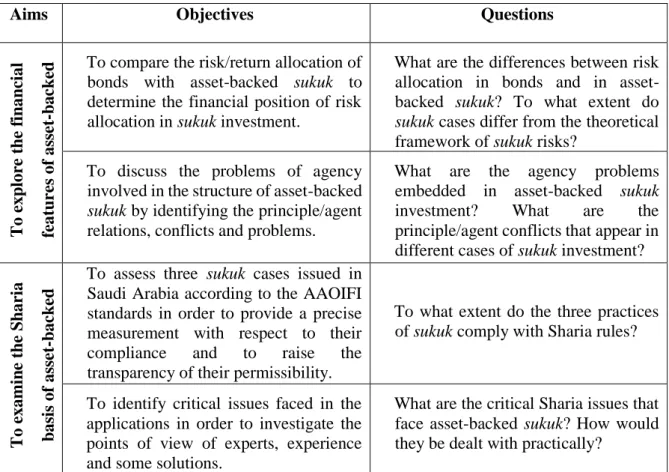
Table 1-1 the Research Aims, Objectives and Questions
Aims Objectives Questions
T o exp lor e th e f in an ci al fe atu re s of as se t-b a ck ed su ku k
To compare the risk/return allocation of bonds with asset-backed sukuk to determine the financial position of risk allocation in sukuk investment.
What are the differences between risk allocation in bonds and in asset-backed sukuk? To what extent do sukuk cases differ from the theoretical framework of sukuk risks?
To discuss the problems of agency involved in the structure of asset-backed sukuk by identifying the principle/agent relations, conflicts and problems.
What are the agency problems embedded in asset-backed sukuk investment? What are the principle/agent conflicts that appear in different cases of sukuk investment?
To e xami n e th e S h ar ia b as is of as se t-b ac k ed su ku k
To assess three sukuk cases issued in Saudi Arabia according to the AAOIFI standards in order to provide a precise measurement with respect to their compliance and to raise the transparency of their permissibility.
To what extent do the three practices of sukuk comply with Sharia rules?
To identify critical issues faced in the applications in order to investigate the points of view of experts, experience and some solutions.
What are the critical Sharia issues that face asset-backed sukuk? How would they be dealt with practically?
To fulfill the requirements of these aims, objectives and questions, the research uses qualitative method since it is based on understanding asset-backed sukuk in depth and observing the process of specific applications in order to assess the research in exploring the
18 | P a g e
financial and Sharia features. The dissertation adopts a case study strategy using an inductive approach to examine cases in terms of legal and financial issues. This provides the research with an opportunity to gather evidence from different sources and to support the analysis in ways that cannot be achieved using other strategies (Bryman, 2012, p. 66). In fact, this strategy allows for a systematic method and links the data to be collected and the conclusions to be drawn with better coherence.
The data are primarily based on library-collected information, such as textbooks and journal articles, and are also based on regulations issued by the internationally recognized Islamic financial authorities and institutions such as the AAOIFI. The majority of these resources can be accessed via libraries and online material which includes the most relevant books, articles and other materials that are relevant to Islamic finance and provide the background to the Saudi market. Data is collected using content analyses of sukuk prospectuses, AAOIFI Sharia standards and publications issued by international agencies with the aim of enabling the study to achieve insights into the market rather than depending just on the literature. Furthermore, information is gathered from Sharia scholars using semi-structured interviews to generate some specific information on the issues involved. These various sources and methods of treatment help in investigating the discrepancies that arise from contradictions between the existing literature and operation in the real world.
1.7 Research
Motivation
and
Scope
of
the
Research
The initial significance of this research is derived from dealing with sukuk as a source of finance that is a relatively new phenomenon. In the sukuk market, there is a split between Sharia-sensitive investors and others with less sensitivity. Sukuk that adhere to Sharia principles will receive a better access to the former investors who tend to be more focused, disciplined, and sensitive to the risk of breaking Sharia law. Thus, if one issuance contravenes some of the AAOIFI standards, their reliability becomes tenuous. The issuance might be called into question by an individual judge, even if it is compliant with other standards that have been passed with a narrow majority, regarding who can invest and subscribe with stronger majority standards (Majid, et al., 2011). Meanwhile, actual adherence to Sharia rules can attract even more of non-sensitive investors, if the structure is
19 | P a g e
financially well-formulated. Thus, satisfying Sharia-sensitive investors does not mean losing other investors.
For these reasons, the present study will put a number of applications on a more transparent level related to their Sharia compliance based on AAOIFI standards4. Being more transparent will attract new investors who have avoided the sukuk market due to losing confidence on product permissibility. This method helps in deciding to what extent each issuance complies with Sharia rules. Furthermore, the research discusses the legal issues found in the cases with some eminent scholars in an attempt to bring to light other views and options which can reduce both the time and costs of due diligence in each issuance.
In addition to high Sharia compatibility, adverse risks affect the competitiveness of the sukuk market. This is because the novelty of sukuk inherently involves a higher exposure to certain agency and financial risks. In this respect, Abdul-Rauf and Ibrahim (2014, p. 66) have recently confirmed the importance of this sort of study: ‘identifying the risks related with sukuk is largely considered as vital for the future development of that particular market. It is also most important for managing such markets in a better way’. However, sukuk risks vary according to the specific structure applied. Muhamed and Radzi (2014) emphasize that sukuk risks differ depending on the structure of the sukuk. Unlike traditional bonds, sukuk applications cannot be judged or assessed according to their cover or contract type. For example, ijara sukuk can be asset-based or asset-backed, yielding entirely different profiles of risks and returns in the event of liquidation and default. This is in addition to the agency risks, where each case has distinctive agency relationships yielding considerable differences in agency costs. Thus, more attention to the development of sukuk is required in order to ensure that their applications are financially attractive. This research comparatively discusses their embedded risks, as there is still a requirement to understand and explain to the complicated sukuk, as much as the crucial need to interpret their current applications to identify the challenges and risks. This dissertation aims to provide a clear and in-depth summary of the complexities of the current situation with sukuk. This study will provide a
4 The AAOIFI continuously attempts to standardize sukuk and establishes standard-setting bodies in order to
20 | P a g e
useful test to show to what extent the relevant theories and Sharia principles have been utilized in the cases. Equally important, this will shed light on and make recommendations concerning the financial issues in the asset-backed sukuk market.
The originality of this study is identified in three areas. This research establishes a theoretical basis based on AAOIFI standards and agency theory that helps the analytical study to achieve meaningful conclusions. The discussion of agency lends additional originality to the thesis because it seems that no previous study has analysed the agency relationships in asset-backed sukuk structures5. Also, the critical legal and financial issues that may face AAOIFI6 applications have not yet been discussed, at least to the extent that this research covers7. The analysis looks at the SEC sukuk, the first Saudi International sukuk, and a basic plain structure of ijara sukuk. Then, the study examines Sadara sukuk the complex structure titled with forwarded ijara sukuk and then at first application for intifa’ sukuk (Zamzam sukuk). While intifa’ sukuk seem to be in practice the type most compatible with Sharia, there is a shortage found on discussing them, especially in relation to their financial risks which the present research attempts to cover. The study aims to fill some gaps by providing legal and financial discussions of asset backed sukuk according to well-built theories.
The analytical discussion in this dissertation has two main boundaries. The first is the assessment process using mainly the AAOIFI standards. This is because these standards have been formulated in consultation with leading Sharia scholars and have introduced a great harmonization of Islamic finance practices across the world. The choice a well-developed standard enables the analysis to focus on assessment rather than on deeper juridical discussion. This focus in the assessment helps the study to draw some important
5 Research Samadzadeh & Melander (2012) discusses the implications of agency theory on mudarabah and
musharakah agreements. However, this current study is different as it looks at the implications of agency theory on asset-backed sukuk.
6 The importance is derived from the standards that have been used. AAOIFI has gained support for
implementing its clarified standards. It has a board of 20 members of Sharia scholars that are additionally members of other Sharia boards in most of the largest financial organisations and institutions in the world. The AAOIFI is also supported by 200 other institutional members, coming from 40 different countries, who belong to Islamic financial organisations, central banks and the international Islamic financial and banking industry, globally (AAOIFI, 2006).
21 | P a g e
conclusions in the financial field. Secondly, the chosen applications are limited to cases linked to assets and applied in Saudi Arabia, whether in the domestic or international markets. The Saudi market was chosen because it is still nascent that requires more attention and effort. Also, this market is a relatively conservative market compared to other sukuk markets, meaning that it is more likely for such a market to be interact with AAOIFI standards.
1.8 The Research Contributions and Key Findings
This research has examined financial and Sharia issues identified in the applications. It attempted to contribute to the existing literature by first, exploring how the Basel types of risks interact with Sharia-based sukuk (SBS). It also attempted to compare the risks of SBS with those of conventional bonds in order to highlight why SBS are considered as alternative investment tools. The research then examined how SBS risks qualitatively differ in the applications and emphasize the extent of these differences. Second, the study analysed the agency relations in SBS structures that haven’t formerly discussed in such a way that identifies hidden actions, incentives and information asymmetries. The discussion indicated the agency problems that arise in SBS structures, how these problems are minimized and how the conflicts are managed in the applications. Finally, the study has evaluated Sharia issues in the applications by adopting the AAOIFI standards as a benchmark. It tested the cases and showed some evidence of harmoniousness and contradiction with Sharia according to those standards in order to improve the transparency of the applications with Sharia rules.
The key Results found are related to risks allocation, agency problems and Sharia compliance issue. This research analysed the differences between SBS and conventional bonds and found a number of fundamental differences, proving that these two types of securities provide different solutions in the market. In the applications of SEC and Sadara sukuk, they do not offer a guaranteed return. The research found in their prospectus that if the originator fails to generate rental payments, investors will face a loss without any type of guarantee for the distribution. This is a key difference between these applications and bonds were the distributions are guaranteed in any cases. Thus, sukuk investors have higher
22 | P a g e
exposure to the credit risk; however, they do not receive an actual relationship to the assets. Investors are supposed to have the advantage of the recourse to their assets, while the cases only offer beneficial ownership without any actual relationship. This research asserted that sukuk-holders should not be treated equally as bondholders without taking into account the variation in their risk profiles.
Each structure is embedded with a variety of different agency relationships depending on the positions taken by the originator, such as being as a manager, a lessee, an issuer, a servicer, and a contractor, leading to different levels of exposure to agency problems. In fact, the higher level of the responsibility undertaken by the originator, the greater the possibility of agency costs. The research shows some hedging procedures that have been used in the cases to reduce the adverse selection and the moral hazard. For instance, the cases precisely determine the incomes as a rental payment and hence the cash flow generated from the assets becomes more specified. Another instance is that SEC and Sadara sukuk managed the agency conflicts by the purchase undertaking. The repurchase agreement shows a dimension of sharing between the originator and investors, resulting in a better managing for the agency problems. The study also found that Sadara sukuk use a further device to manage these conflicts by applying the concept of co-ownership. The originator and the investors become co-owners of the assets. This particular device increases the investors’ confidence that the originator, as co-owner, will maintain a high quality of performance.
Although the three cases considered have been reviewed and approved by renowned scholars, the issuances show a different level of contradictions with AAOIFI standards. The aggregate percentage compliance of SEC sukuk was only 11.5%, Sadara sukuk reached 81.7% and Zamzam sukuk achieved 90%. The prospectus of the cases shows their approving fatwa without any evidence or explanation. However, the best financial practice requires greater transparency in order to protect the reputation of the issuance and also to maintain the investors' confidence.
23 | P a g e
1.9 Structure
of
the
Dissertation
To answer the research questions of the present study, this dissertation is divided into 11 chapters. It begins with a brief introduction and then presents a literature review explaining the concepts, structures, principles and risks of securitization, conventional bonds and asset-backed sukuk. Then, the methodology and rationale for conducting this study are explained. Critical analyses and discussions of sukuk cases are treated in the subsequent chapters before describing the interviews conducted and drawing conclusions.
Chapter 1 provides the background of the study. It introduces the research problems and objectives with the aim of analytically and critically dealing with the theoretical and practical components that make this study important.
Chapter 2 discusses the characteristic features of securitization and the background of the research work. This chapter aims to give a foundation to the study where different types of financial structures are presented before examining the risks associated with bond investment.
Chapter 3 deals primarily with the jurisprudence of asset-backed sukuk. Sukuk are discussed from the Sharia perspective and based on AAOIFI standards. Sharia issues which are the subject of arguments among scholars are examined according to the concepts presented in this study. A framework is established to evaluate the applications.
In chapter 4 an analytical study of sukuk is presented as an Islamic product in the financial sector. The chapter mainly considers the specific risks of sukuk in order to distinguish this investment from conventional bonds before moving to the agency theory.
Chapter 5 discusses the financial sector in Saudi Arabia and its capital market. More specifically, the research attempts to identify the important issues facing the Saudi sukuk market in particular. The rationale for this chapter is to clarify Saudi financial regulations related to the sukuk market.
Chapter 6 explains the methodology employed and the analysis used in the study. The chapter introduces the research methodology and methods applied in this research and how it has guided data collection and analysis.
24 | P a g e
Chapter 7 examines ijara sukuk that has been applied to the Saudi Electricity company sukuk. This case is evaluated in order to highlight the financial issues, challenges and also risks involved. The chapter also assesses the level of Sharia compliance in applying these sukuk in order to draw conclusions as to what extent they adhere to Sharia standards.
Chapter 8 presents insights in the case of forward ijara that have been applied in Sadara sukuk. This chapter uses the same framework as in the previous chapter to conclude with financial and Sharia assessments.
Chapter 9 analyses Zamzam sukuk as a case study for intifia’ sukuk. The discussion is based on financial and Sharia perspectives and uses the same framework that has been used in the two previous chapters.
Chapter 10 provides the results from an interview-based survey on the critical issues found in the cases.
Chapter 11 provides the conclusions and recommendations for the thesis. It presents a summary of the analysis and concluding remarks.
25 | P a g e
Chapter 2:
Securities as Financing Instruments:
Risks and Agency Conflicts
2.1 Introduction
Securitization represents an established and substantial part of US and global capital markets; however, the process of asset securitization has evolved over the last few decades for funding and risk management purposes (Skarabot, 2001). The conventional view prior to the financial crisis tended to highlight the positive role of securitization in increasing the resilience of the financial system (Alper, et al., 2015). It was characterized as ‘one of the most important financing vehicles in the United States’ (Shenker & Colletta, 1991). Some researchers have even referred to asset securitization as ‘alchemy’, since it purportedly generates value where none existed earlier (Schwarcz, 1994). Now, securitization is often characterized as one of the main contributing causes to the 20072009 global financial crises (Alper, et al., 2015). The increasing dependence on asset securitization, particularly by financial organisations, has been singled out as a major catalyst to the financial crisis. While shifting the credit risk off of bank balance sheets is not a recent phenomenon, the securitization wave differs from earlier ones due to the widespread use of sophisticated mechanisms enabling banks to shift the credit risk of more opaque assets to different market participants. Information related to structured securities is considerably more ambiguous than that for traditional securities (Guoa & Wub, 2014).
This chapter aims to provide background information on securitization as a mode of finance, to explain securitization and to gain a broader understanding of the fundamentals of securitization process. It begins with an overview of the securitization, and then defines different types of structures in order to offer a basis for the analysis. The chapter then moves on to discuss the major risks which investors are exposed to. It outlines the major risks and shows their negative impact on securitization investment. This discussion paves the way for
26 | P a g e
an analysis the agency conflict which arises in investment, highlighting the influence of shifting the risks.
2.2
An Overview of Securitization
No uniform definition of securitization exists. Nevertheless, a number of commentators have endeavoured to provide a working definition. Mwoungang and Grosen (2003, p. 35) have broadly described asset securitization as ‘the matching up of borrowers and savers wholly and partly by way of the financial market’. This broad definition covers all issuance of securities such as bonds, commercial papers8, sales of mortgage backed and other asset-backed securities as they depend on financial intermediation to create loans through financial markets. Securitization links the sellers and buyers of capital more effectively than traditional methods of funding, including issuing shares of stock or bank lending (Lipson, 2012). On the other hand, Kothari (2006, p. 9) provides a more precise definition of securitization as ‘the process by which homogeneous, but illiquid, assets are pooled and repackaged, with security interests representing claims to the pool sold as security to third-party investors’. This definition is limited to asset-backed securities; however, the more appropriate definition for securitization that is commonly cited is: ‘(1) a contract, transaction, or; (2) scheme whereby a person invests his or her money in a common enterprise with the expectation of profits; (3) solely from the efforts of the promoter’s or any third party’ (Deacon & Prendergast, 1979, p. 215). This definition includes any stock, note, security future, treasury stock, security based swap, debenture, bond, evidence of indebtedness, collateral-trust certificate, certificate of interest or participation in any profit-sharing agreement or generally any interest or instrument that is commonly considered to be a ‘security’ (Girasa, 2013, pp. 139-140).
Over the last decades, the development of securitization markets has had several beneficial effects on capital markets. Securitization allows more participants, such as corporate and others, to be involved as a result of introducing a further class of debt instruments. This has deepened the market. In addition, securitization permits originators to
8 Commercial paper is a short term unsecured promissory note that is issued via a high credit quality institution
27 | P a g e
dispose of assets efficiently with a more beneficial funding profile and better financing terms. Securitization also allows investors to invest in assets that they otherwise would not have access to. Thus, securitization has contributed to the accessibility of highly rated securities to investors and has become a major effective tool for diversification for both originators and investors alike (IFC, 2004).
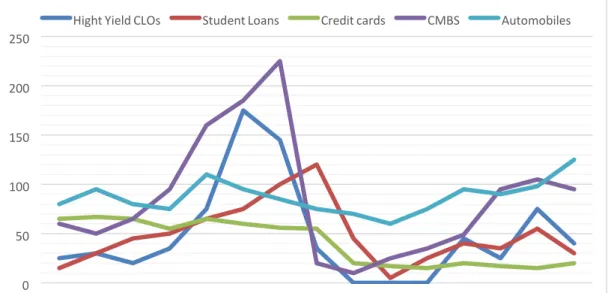
The market for new securitizations in 2015 decreased by 6% from 2014, to only $436 billion from $462 billion (Business Standard, 2016). In January 2016, US securitizations issuance also decreased by $2 billion from December 2015 (S&P, 2016). Figure 2-1 below demonstrates the experience of the main classes of assets in securitization from 2001 until the first half of 2015. Issuance of all these securitized assets increased dramatically between 2005 and 2007, decreased during the housing crisis, and then has recovered. Both high-yield collateralized loan obligations (CLOs) and automobile securities reached to a level higher than in 2001. Figure 2-1 shows how all classes of assets fell sharply after 2007. From 2001 to 2014, automobile securitizations rose by 14%, high-yield CLOs by 156%, CMBS by 58%, and for credit cards and student loans decreased by 23% and 5% respectively (Goodman, 2015).
Figure 2-1 Securitization of Non-mortgage Asset Classes, 2001-15 (billions of dollars)
Source: Securities Industry and Financial Markets Association and Urban Institute.
0 50 100 150 200 250 2006 2001 2002 2003 2004 2005 2007 2008 2009 2010 2011 2012 2013 2014 2015 Hight Yield CLOs Student Loans Credit cards CMBS Automobiles
28 | P a g e
2.2.1 Bonds
Over the past 40 years, the Saudi government's issuance of debt instruments has been intermittent. For the first time, the government issued its own borrowing instrument (Government Development Bonds) in 1988. In 1991, the government started to issue Treasury bills in order to finance its fiscal deficit. However, the issuance of these debt securities was paused when the fiscal situation improved (Alhumaidah, et al., 2016). Recently, the two-year decrease in oil prices has left the country with huge budget deficits: $98 billion in 2015 and round $87 billion in 2016. Saudi Arabia has raised $17.5 billion through issuing global bonds in order to repair the damage caused by the collapse in the oil price since 2014 (Elaine & Kerr, 2016 ).
Bonds' issuers have a number of different types of collateral and structuring, which can be either unsecured, subordinated (junior) and senior securities. In secured senior bonds, bonds are backed by a legal claim on an identified property that belongs to the obligor in a default case (Reilly & Brown, 2006, p. 651). For instance, mortgage bonds are secured by tangible assets, and in the case of financial distress, the assets can be sold to fulfil the bondholders’ obligations (Sundaresan, 2009, p. 8). However, junior debentures have a claim on the securitized assets and their cash flow is subordinated to other debentures (Reilly & Brown, 2006, p. 650). These bonds can be described as convertible bonds which mean that they can be converted into a more junior grade of securities in certain circumstances (Hirschey & Nofsinger, 2010, p. 483). Additionally, one of the most popular bond types is called zero coupon bonds, which are a discount bond that does not make any regular payment of interest (Bomfim, 2005, p. 305). The investors in a zero coupon bond realize interest by purchasing the bond considerably below its principal value. The interest will be paid at the date of maturity with the exact amount being the difference between the paid price and the principal value of the bonds (Fabozzi, 2004, p. 4). Therefore, instead of receiving periodic payments of interest, the bondholder obtains a single payment at maturity that equals the entire interest gained along with the principal amount (Hirschey & Nofsinger, 2010, pp. 465-466).
Debenture bonds, which are unsecured obligations, secure only the obligor’s credit since they rely on the corporation’s credit strength (Reilly & Brown, 2006, p. 651). As a
29 | P a g e
result of relying on a high credit company, these bonds are offered at a low rate of interest along with no particular pledge for the property involved (Melicher & Norton, 2014, p. 239). On the other hand, if these bonds are issued by companies that are not financially strong, this will be compensated for by higher interest rates (Qais, 2006). Although, fixed rate bonds are common, in some situations bond market participants prefer adjustable interest rates on a daily, monthly or annual basis. This allows the interest rate payment on a given bond to carefully track the interest rates in the market. The floating rates of bonds are changed periodically according to changes in an underlying interest rate standard (Hirschey & Nofsinger, 2010, p. 465).
Moreover, public bonds are a typically fixed obligation with a long-term debt securities package in affordable and convenient denominations for sale to financial institutions and individuals. They differ from other debt, such as privately placed debt obligations and individual mortgages, as they are sold to the public instead of channeled directly to a particular lender. The public debt market is mainly divided into three time segments depending on the issue’s original maturity. The first segment is short-term, which is known as the money market, the intermediate segment is commonly known as (notes), and finally long-term obligations with maturities exceeding 10 years are called bonds (Reilly & Brown, 2006, p. 650).
In the bond market, there is a wide range of debt that can meet borrowers’ desires in terms of the duration of issuance. Although it is common for bond securities to be mature over one year, a maturity of less than a year is considered to be a money market debt (Choudhry, 2001, p. 3). In general, bonds with a maturity of between one and five years are viewed as short-term bonds, while bonds with a maturity between 5 to 10 years are intermediate-term bonds, and long-term bonds have a maturity of more than 10 years (Hirschey & Nofsinger, 2010, p. 469). The importance of the period to maturity is because the yield on bonds is influenced by the duration of the issuance. Also, the volatility of a bond’s price relies on its maturity, since a longer maturity results in a greater risk of price volatility which causes changes in market yields (Fabozzi, 2004, p. 4). However, involving a call feature in the structure can influence the bond’s maturity (Sundaresan, 2009, p. 9). An embedded feature of a call option permits the obligor to modify the maturity of a bond, as it
30 | P a g e
serves the obligors to replace the current issue with a lower-interest cost issue in cases where the interest rates in the market decline. Due to this advantage, most loans are embedded with the right to call an obligation (Fabozzi, 2004, p. 5). Therefore, it can be seen that there are different approaches to bonds depending on the type of call. One extreme call option is a freely callable provision which allows the bonds to be retired by the obligor at any period, with the typical notification time being between 30 and 60 days. The other extreme is non-callable provision where bonds cannot be retired by the obligor before their maturity. An intermediate call option is the deferred call provision, when the obligor cannot call the bond for a specific time after the issue date, such as 5 to 10 years (Reilly & Brown, 2006, p. 651).
2.2.2 Asset‐backed Securities (ABS)
There is no uniform definition of an ABS; however, different definitions are found in the literature (Klee & Butler, 2002). Shenker and Colletta (1991, p. 1374) defined asset securitization narrowly as ‘the sale of equity or debt instruments, representing ownership interests in, or secured by, a segregated, income-producing asset or pool of assets, in a transaction structured to reduce or reallocate certain risks inherent in owning or lending against underlying assets and to ensure that such interests are more readily marketable and, thus, more liquid than ownership interests in and loans against the underlying assets’. Meanwhile the broader view describes them as ‘securities that are backed by a discrete pool of self-liquidating financial assets. Asset-backed securitization is a financing technique in which financial assets, in many cases themselves less liquid, are pooled and converted into instruments that may be offered and sold in the capital markets’ (SEC, 1999). According to this broad definition, ABSs have different asset classes which are attributed to collateralized debt obligations (CDO), mortgage backed securities (MBSs) and asset backed securities in its narrower sense (Vink & Thibeault, 2008). These asset classes have been sub-divided into further sub-asset classes which are CLOs, collateralized loan obligations (CBOs), commercial MBSs (CMBSs), residential MBSs (RMBSs), and other sorts of ABSs that are backed by a variety of different assets as shown below (Breidenbach, 2003). The universe of asset classes can be additionally expanded resulting from the innovation of new types of asset securitization in the market.
31 | P a g e
2.2.2.1ABSs: Different Terminologies
For the purpose of more precise understanding, the differences between ABSs and other similar terminologies will be clarified. Firstly, the principal difference between ABSs and bonds relates to risk exposure. Investors in bonds are exposed to all risks related to the obligors’ business, while in the case of ABSs, investors bear only risks related to the assets in the pool, not to the obligor’s business. This is a beneficial feature for investing in ABSs since investors will be unaffected if the obligor becomes insolvent, which is not the situation with bonds. The only influence on the entire ABS process will be through the servicing agency if the obligor is the servicer, but this can be simply resolved by appointing another company to perform this role. In any situation, the cash will remain to flow to the ABS holders (Lapanan & Anchev, 2011, p. 16). What is important to highlight is that ABS holders are only exposed to the risks of the securitized assets, which include defaults on loans, prepayments, delays and some legal risks. This exposure to the assets’ risks means that the ABS is to be claimed only on the securitized assets, but not on the entire originating company (Fabozzi & Kothari, 2008, p. 93).
Secured lending is asset-based lending (traditional asset lending), which means that the borrower specifies an asset as collateral for the lending arrangement. The specified asset can be long-term such as equipment or short-term such as receivable accounts (Fabozzi & Kothari, 2008, p. 25). The key difference is that asset securitization is sold or assigned to a third party that is a special-purpose company and can also be a trust (Giddy, 2000). Another distinguishing factor is that securitization has a lower borrowing cost than in secured lending. The lower cost in securitization is attributed to the transfer of the assets, resulting in a better quality of credit for the receivables than the originator’s creditworthiness. Secured lending, by contrast, is based on the originator’s own creditworthiness (Slaughter & May, 2010). In other words, the liabilities and asset can be separated from the originator’s balance sheet through true sale in assets securities; whereas, in a secured financing, the originator maintains the assets on its own balance sheet plus the extra liability in an amount equal to the secured funding (Klee & Butler, 2002). Therefore, the securitization will incur a higher credit quality than in secured lending.
32 | P a g e
CDOs, MBSs and ABSs are classes of ABS in its general sense. Each one of the classes has a distinct structure in the capital market. The class of security is determined by what the securities are backed. For example, securitizations backed by debt obligations, pools of bonds or loans are called CDOs; whereas securitizations backed by consumer-backed assets are called ABSs. Finally, MBSs are securities consumer-backed by mortgages (Vink & Thibeault, 2008). It can be seen that the key dividing line between CDOs and MBSs is that the former are securitizations of unsecured loans whereas the latter are securitizations of secured loans. Unsecured loans function as security for the investors, while in secured loans there is additional collateral security for investors such as a mortgage (Breidenbach, 2003). Although the majority of securitizations are designed for MBSs, there has been an increase in the number of real estate securitization (RES) transactions. Commonly, the RES concept is confused with mortgage-backed securitization. MBSs are securities originated by a bank which are backed by either residential or commercial mortgage loans. These securities involve payment claims against an SPV which are backed by secured loans that involve cash flows from real estate loans such as mortgages. Basically, MBSs are securities that represent derivative real estate cash flows (Breidenbach, 2003). RES refer to the securities that involve claims against the SPV which holds the real estate assets. This means that the cash flows from actual real estate are being securitized and not the cash flows from the real estate loans. Another distinguishing point, depending on the originator’s type and the assets involved, is that MBSs are backed by real estate loans that are originated by banks, whereas RES represents securities that are originated by corporates or governments and that are backed by real estate cash flows or real property (Breidenbach, 2003). To summarize the differences, it can be seen that there are two categories of assets: receivable and non-receivable assets. CDOs and ABSs represent receivable or loan securitizations, and MBSs and RESs stand for real estate assets which are non-receivable.
2.3
The Structure of Asset
Securitization
The structures of ABSs depend on the establishment of special purpose vehicle (SPVs). Establishing an SPV is done mainly for three purposes, firstly for converting non-standardized, illiquid and unique assets into marketable, liquid and standardized financial
33 | P a g e
assets. The second purpose is to lower the cost, as despite the fact that transferring assets to the SPV includes some expenditure such as taxes, the net income will be low as the investors will accept lower returns. Another purpose is to protect the originator from the claims of investors in the case of insolvency and to reduce the investors risk from originator’s bankruptcy (Frankel, 1999). The basic process of cash flow in asset securities is as follows. The originator sells a portfolio of loans to the SPV. In order to purchase the portfolio of loans, the SPV raises funds by means of selling securitizations to investors. The borrowers are often unaware that their loans have been securitized because the originator continues to service the loans such as by collecting loan repayments and enforcing delinquent loans. The cash flow from the loan repayments is passed from the originator to the SPV. Then, the SPV utilizes the liquidity to pay ongoing costs such as trustee and management fees as well as meeting the debt-servicing obligations on the securities (principal and interest repayments) (Bailey, et al., 2004). To conclude, when all principals are paid and the securities have matured, the SPV will be extinguished and all remaining assets and income will be returned to the originator by extracting them from the SPV.
In structuring ABSs, there is an ultimate flexibility of priorities, maturities, and rates of return that can be conferred on the investors. For instance, asset securitizations are traded in different classes. Each class has a different priority on the cash flow from the assets such as in senior and subordinate tranches (Klee & Butler, 2002). Also, there may be single or multiple originators, such as multi-SPVs, and differences in the nature of the sale, the existence of the assets, tranche types and other structured features that affect the securitization and allow it to move to more sophisticated levels. These different structures are discussed and compared sections in the following.
2.3.1 One‐off Securitization vs. Multi‐seller Securitization
These two opposite structures rely on two different types of SPV. In one-off securities, the SPV is especially invented for a specific originator and more precisely for only a specific transaction, which is also known as a stand alone transaction (IFC, 2004). In this structure, significant flexibility is required to customize the securitization in order meet the investors’ desires and needs. However, the cost of the transaction will be relatively higher as a minimum of stated capital is needed, commonly one to three per cent of the amount of
34 | P a g e
the security issued, in order to prevent the SPV from being the alter ego of the originator (Arnold, et al., 1992). One-off securitization is commonly structured for assets that are residential mortgages and the individual SPV is financed by issuing the security (Bailey, et al., 2004). Also, in most cases, one-off securitization is utilized in private placements when the investors are institutional, in order to design an SPV that suits their conditions and requirements (Wang, 2004, p. 20). Depending on the creativity of the experts involved, there is an abundance of ways to structure the one-off securitization as each structure of the security represents a specific transaction (Schwarcz, 1994).
Moving to the opposite structure, multi-seller securitization is also known as a conduit transaction (IFC, 2004). Multi-seller securitization is when more than one originator is utilizing a specific SPV. As a result, the conduit SPV holds a broader range of assets that includes both asset-backed and non-asset-backed securities as well as individual loans (Bailey, et al., 2004). Most pre-existing SPVs are administered and sponsored by main investment banks or commercial banks and the seller commonly is a client of such a bank (Dorris & Panayotou, 2004). Allowing multiple originators to employ a pre-existing SPV will minimize the cost of the transaction as only a nominal amount of capital is required because the multitude of originators reduces the risk of the SPV being an alter ego of any single originator (Schwarcz, 1994). However, the exposure to bankruptcy claims is higher when a single originator is bankrupted (Gurulkan, 2010). The prospective risk caused by the originator’s insolvency can often be mitigated by accommodating only investment-grade originators as they are less likely to become bankrupted (Wang, 2004, p. 20). The distinction discussed above between one-off securitization and multi-seller securitization cannot be decisive in all cases; however, case by case analysis of cost arbitrage, incentives and motivations can provide conclusions as to whether one-off securitization and multi-seller securitization is a more adequate description of particular originator (Schwarcz, 1994). 2.3.2 Multi‐seller Securitization vs. Multi‐tier Securitization
Having more than one originator in asset securities is called multi-seller securitization, as previously discussed. A multi-tier securitization is when the asset securities have more than one SPV, which is considered to be a means of reducing the role associated with bankruptcy risk (Telpner, 2003). In a multi-tier securitization, the originator transfers