A CAUSAL COMPARATIVE STUDY OF TEACHER AND ADMINISTRATOR PERCEPTIONS OF SCHOOL CLIMATE WITHIN ELEMENTARY
SCHOOLS IN A SCHOOL DISTRICT by
Clyde Reginald Alston Liberty University
A Dissertation Presented in Partial Fulfillment Of the Requirements for the Degree
Doctor of Education
Liberty University 2017
A CAUSAL COMPARATIVE STUDY OF TEACHER AND ADMINISTRATOR PERCEPTIONS OF SCHOOL CLIMATE WITHIN ELEMENTARY
SCHOOLS IN A SCHOOL DISTRICT by Clyde Reginald Alston
A Dissertation Presented in Partial Fulfillment Of the Requirements for the Degree
Doctor of Education
Liberty University Lynchburg, VA
2017
APPROVED BY:
Kenneth Gossett, Ph.D., Committee Chair
Lisa Schlabra, Ed.D., Committee Member
ABSTRACT
A school’s climate either positively or negatively affects teaching and learning within the school. School administrators have the responsibility to ensure the school climate supports both. This responsibility can only be met when school leaders have an accurate understanding of climate in the schools they serve. This causal-comparative study examines administrators’ and teachers’ perceptions of school climate among the academic, social, affective, and physical domains of school climate, as measured by the revised School Level Environment Questionnaire (r-SLEQ). Data were examined using an independent samples t-test to determine whether statistically significant differences in school climate perceptions exist between administrators and teachers on school climate overall and also uses an independent samples t-test to determine if differences exist on individual climate domains. Independent samples t-tests indicated significant
differences (p<.05) in perceptions of school climate between administrators and teachers in the academic, social, and affective domains. This study is important because it helps bridge the gap between previous school climate research and school leadership practice by examining why this gap exists, by exploring differences in school climate perceptions between teachers and
administrators. Findings are presented and discussed with potential implications for school administrator training and development programs, and further research. The setting for this study is twenty-three elementary schools in a Virginia school district, each served by a
principal/assistant principal administrative leadership team, and 25 – 40 classroom teachers per school.
Keywords: school climate, teacher-principal perceptions, revised School Level
Dedication
This dissertation is dedicated to my wife, Charisse Lonette Alston. Also to my children Amber, Jonathan and Reyna.
Acknowledgments
To the Peppers of Wilson, NC and the Alstons of Warren County, NC for being my backbone, upon whose shoulders I stand. To my grandmother, Mary H. Peppers, entrepreneur, matriarch, and the strongest advocate for education I have ever known. To my grandfather, Charlie G. Alston, the grandson of slaves; known for never missing a teacher conference or parent meeting for his children, including my father.
To my in-laws, the Smith’s and Deavers of Richlands, NC.
To my late uncle, Dr. Wallace Ray Peppers, Professor of American Literature at the University of North Carolina, Chapel Hill. Because of him this work has always seemed to me achievable, and to my family expected.
To my chair, Dr. Kenneth Gossett, who patience and guidance have made the difference. I am proud to join you in the academy. To my committee members Dr. Lisa Schlabra and Dr. Charles Smith, thank you for your confidence, advice, and trust in my abilities.
To my church family at Ivy Baptist Church.
To my fellow educators, I am proud to share membership in the greatest profession. And to my students for inspiring me to work each day with passion, pride and purpose.
To my parents, Clyde Perry Alston and Martha Ann Alston, for the love, values, and work ethic you have instilled in me - the two best people I have ever known.
To my fellow classmates and professors at the University of Virginia, Hampton
University, George Washington University, Liberty University and Troy State University. Thank you for helping me along the way to develop the habits, skills, and knowledge necessary for any assignment.
To my teachers Mrs. Brown, Mrs. Jeter, Mrs. Woods, Mrs. Pearce, Mrs. West, Mr. Morgan, Ms. Price, Mr. Surry, Ms. Anderson, Ms. Shepard, and Coach Lyons. To all my coaches and teammates at Warwick High School, Doris Miller Community Center, and Anderson Park Youth Baseball League.
To Mildred and Marion Bowers. To my late aunts Sarah and Mary. To my Aunts Wanda, Helen, Eunice and Uncles Roosevelt, Richard, Thurston, Waverly, and Willis, and to all my cousins, nieces, and nephews.
To my big brother Joseph R. Bynum. To my queen, Charisse L. Alston.
Table of Contents ABSTRACT ...3 List of Tables……….11 List of Figures………..…..12 List of Abbreviations ...13
CHAPTER ONE: INTRODUCTION ...14
Background ...14
Problem Statement……….16
Purpose Statement ...17
Significance of the Study ...18
Research Question ...19
Null Hypotheses ...19
Definitions………..20
CHAPTER TWO: LITERATURE REVIEW ...22
Overview………22 Theoretical Framework ...22 Related Literature………...26 Organizational Climate……….………...26 School Climate……….27 Academic Domain………...30 Social Domain……….34 Affective Domain………38
Physical Domain………..43
Climate and Achievement………...……….45
Gap in the Literature………49
Summary………50
CHAPTER THREE: METHODS ...52
Design ...52
Research Question ...52
Null Hypotheses……….53
Participants and Setting...54
Instrumentation ...56
Procedures………..58
Analysis...59
CHAPTER FOUR: FINDINGS ...61
Research Question ...61
Null Hypotheses ...61
Descriptive Statistics………..62
Data Screening………...65
Null Hypothesis One………65
Null Hypothesis Two………...67
Null Hypothesis Three……….70
Null Hypothesis Four………...73
Results………79
Null Hypothesis One………79
Null Hypothesis Two………...79
Null Hypothesis Three……….80
Null Hypothesis Four………...80
Null Hypothesis Five………...81
Summary………81
CHAPTER FIVE: DISCUSSION, CONCLUSIONS, AND RECOMMENDATIONS ...82
Discussion ...82
Research Questions………82
Null Hypothesis One………83
Null Hypothesis Two………...83
Null Hypothesis Three……….84
Null Hypothesis Four………...85
Null Hypothesis Five………...85
Conclusions ...86
Implications...88
Limitations ...90
Recommendations for Future Research ...91
REFERENCES………...93
APPENDICES ...104
B. Permission to Use r-SLEQ ...105
C. Consent Form ...106
D. Recruitment Email ...108
E. Principal Email………..109
F. Online Survey Screen Shots………...110
List of Tables
Table Page
1. Descriptive Demographic Statistics for Participants on r-SLEQ……… 55
2. Reliability of Survey Questions by School Climate Domains……… 63
3. Mean Responses on the r-SLEQ for Items in the Academic Domain ……… 63
4. Mean Responses on the r-SLEQ for Items in the Social Domain ……….. 64
5. Mean Responses on the r-SLEQ for Items in the Affective Domain……….. 64
6. Mean Responses on the r-SLEQ for Items in the Physical Domain………... 65
7. Test of Normality (Overall)……….……….….. 66
8. Test of Normality (Academic Domain)……….………..…69
9. Test of Normality (Social Domain)……….69
10.Test of Normality (Affective Domain)………71
11.Test of Normality (Physical Domain)……….77
List of Figures
Figure Page
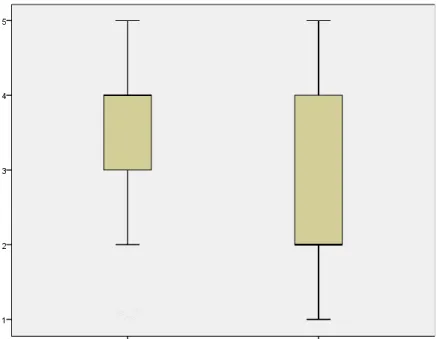
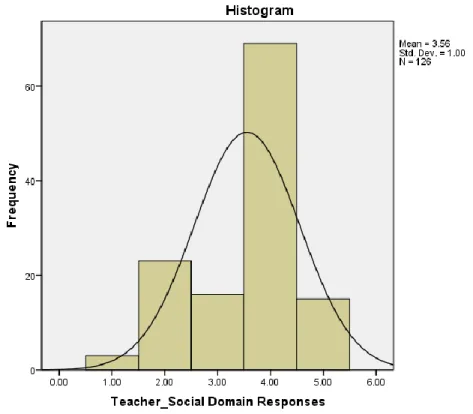
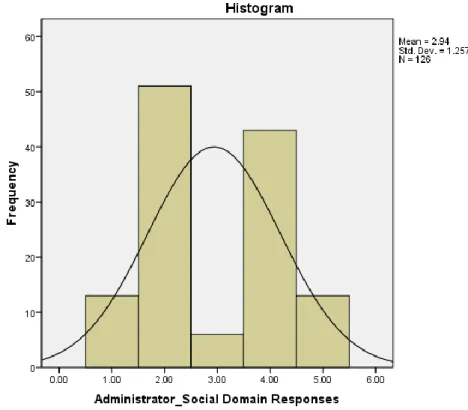
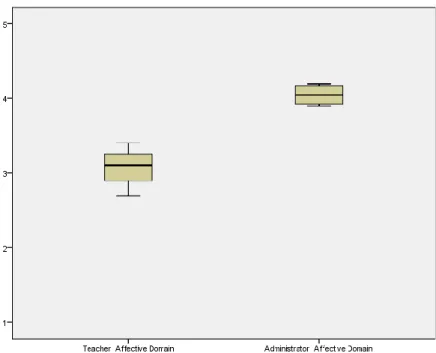
1. Box and Whisker Plot for r-SLEQ Survey Ratings by Group……….65 2. Histogram of Teacher Survey Responses (Null Hypothesis One)………..66 3. Histogram of Administrator Survey Responses (Null Hypothesis One)………….67 4. Box and Whisker Plot for r-SLEQ Survey Ratings (Null Hypothesis Two)……...68 5. Histogram of Teacher Survey Responses (Null Hypothesis Two)………..69 6. Histogram of Administrator Survey Responses (Null Hypothesis Two)………….70 7. Box and Whisker Plot for r-SLEQ Survey Ratings (Null Hypothesis Three)…….71 8. Histogram of Teacher Survey Responses (Null Hypothesis Three)………72 9. Histogram of Administrator Survey Responses (Null Hypothesis Three)………...73 10. Box and Whisker Plot for r-SLEQ Survey Ratings (Null Hypothesis Four)……...74 11. Histogram of Teacher Survey Responses (Null Hypothesis Four)…………...…...75 12. Histogram of Administrator Survey Responses (Null Hypothesis Four)……...…..76 13. Box and Whisker Plot for r-SLEQ Survey Ratings (Null Hypothesis Five)……....77 14. Histogram of Teacher Survey Responses (Null Hypothesis Five)…………...……78 15. Histogram of Administrator Survey Responses (Null Hypothesis Five)……...…...79
List of Abbreviations Institutional Review Board (IRB)
Mean (M)
Null Hypotheses (H) Research Question (RQ)
CHAPTER ONE: INTRODUCTION
Background
In the field of education, everything rises and falls on leadership. In schools, this includes the school’s climate, the environmental and contextual conditions for teaching and learning (Tableman & Herron, 2004). The research on school climate supports its relevance as a factor in student achievement (Thapa & Cohen, 2012). As such, understanding, shaping, and responding to school climate is an important aspect of the principal’s and assistant principal’s role as the instructional leadership team within their school buildings, precisely because of the critical role school climate plays in student achievement. If, according to Kelly, Thornton, and Daughtery (2005), educational leadership is the most important single determinant of an
effective learning environment, administrators must demonstrate both awareness of and dexterity with school climate.
The climate for teaching and learning within schools is not a new phenomenon.
Educators have recognized its importance for over 100 years, and scholars have studied school climate for at least 50 years (Cohen & McCabe, 2009). Since the publication of Anderson’s seminal work, “The Search for School Climate” in 1982, educators have continued to recognize school climate as an influential factor in student achievement. More recently, a survey of principal and superintendents from across the United States indicates school climate remains an area of high interest, with 82% indicating that school climate was either extremely important or very important (Cohen & McCabe, 2009).
However, the fact that educators have recognized school climate as important does not seem consistent with the some of the realities facing today’s schools. Retention of highly
qualified teachers is a major problem in schools, especially urban ones (Mitchell, Bradshaw, & Leaf, 2010). According to the National Commission on Teaching and America’s Future, within ten years of starting careers, approximately 50% of teachers leave the profession. These teachers who leave the profession often cite climate conditions such as poor working environments, lack of support, and lack of resources (Wallace Foundation, 2011). In a study of 50 first and second year teachers, Kardos and Johnson (2001) found that many teachers, especially new ones, are provided with little professional support or feedback from administrators, thus leading to feelings of disillusionment.
Teachers require supportive academic, social, affective, and physical environments to successfully implement the teaching strategies necessary to educate children and to meet increasing standards (Tableman & Herron, 2004). If indeed everything rises and falls on leadership, it is up to the building administrators to ensure the school’s climate is conducive to student learning. Urick and Bowers (2011) note that administrators influence teachers and teaching practice because of the organizational climate they create, not through specific interactions or interventions. MacNeil, Prater, and Busch (2009) report the principal’s impact on student learning mediates indirectly through the climate of the school. According to Berson (2015) the “cognitive, motivational, and affective state” of the school is mediated through the school’s administrative leadership (Berson & Waldman, 2015, p. 83). If principals must demonstrate awareness of and dexterity with school climate, then the former necessarily precedes the latter.
Maslow’s hierarchy of needs and Herzberg’s theory of motivation are the theoretical underpinnings for this study. Both theorists describe human motivation; Maslow describes the
phenomenon generally and Herzberg within the context of work (school) (Stello, 2012). School climate is framed as a motivational factor impacting work behavior and effectiveness. The decisions of school leaders impact school climate and also impact the work environment for teachers (Jain & Cohen, 2015). Both Maslow and Herzberg have theorized that these work environments impact teacher motivation and ultimately teacher success at teaching and learning (Huitt, 2007). This study investigates the principal’s effectiveness at recognizing school climate as perceived by teachers. The capacity to accurately assess school climate is the first step towards equipping school leaders to act to promote teacher motivation, effectiveness, and ultimately student learning, by maximizing school climate (Alridge & Fraser, 2016). Each research question examines the capacity of school leaders to accurately assess school climate, within the context of teachers’ perceptions, in the schools they share.
Problem Statement
Although, school climate has been studied for many years, there is a gap between school climate research findings and school improvement practice (Cohen & McCabe, 2009).
Keiser and Schulte (2010) state that it is not enough for school leaders to informally assess school climate; assumptions lead to a distorted sense of the school community and impact organizational effectiveness. According to MacNeil et al. (2009), “when the complex patterns of beliefs, values, attitudes, expectations, ideas and behaviors in an organization are
inappropriate or incongruent” the school is unsuccessful at impacting learning (p.74). This study is intended to bridge the gap between two persistent themes in school climate and school
improvement research literature, from which this problem is identified. The first theme is that school climate is correlated to student achievement (MacNeil, 2009; Ding, 2011; Urick, 2011;
Thapa & Cohen, 2012). The second theme is that the single most important determinant of school success is leadership (Black, 2010; Berson & Waldman, 2015). However, poor school climates render these two themes irreconcilable, since effective leadership is responsive to changing circumstances (Velasco, Edmonson, & Slate, 2013; Bernhardt, 2016), and thus
illustrates the problem and justifies the research question. A gap exists between previous school climate research and school improvement practice. The problem is that despite previous
education research about maximizing school climates, negative school climates persist in schools, with differences between teacher - administrator perceptions overlooked as a contributing factor.
Purpose Statement
The purpose of this causal-comparative study is to examine the differences between teacher and administrator perceptions of school climate, to determine if differences are an explanatory factor preventing school leadership from taking action to maximize school climate. Framing school climate as a motivational or hygiene factor, this study measures whether or not teachers and administrators differ in their perceptions of school climate, defined as the
environmental and contextual conditions for teaching and learning within their schools (Tableman & Herron, 2004). Group assignment (teacher or administrator) is the independent variable and r-SLEQ survey responses are the dependent variables. The discussion of findings discusses discrepancies between teacher and principal perceptions of climate overall and within specific components of school climate. Teachers and administrators (principals and assistant principals) at 23 elementary schools in a Virginia school district were surveyed using the revised School Learning Environment (r-SLEQ) (Johnson & Stevens, 2007). Their responses were
analyzed to determine if they differ significantly on school climate perceptions overall, and along school climate domains: academic, social, affective, and physical, or if differences are
attributable to statistical sampling error.
Significance of the Study
Ding (2011) as well as various other researchers make a strong empirical case connecting school climate to student achievement. If school leaders are interested in maximizing
achievement, understanding and responding to school climate is essential. This study is significant because it will help close the “glaring gap between school climate research findings and policy, school improvement practice and teacher educator efforts” (Center for Social and Emotional Education, 2011, p. 7). This gap persists as evidenced by the ongoing efforts to improve the capacity for data-driven decision-making and evidenced-based processes to inform school leaders to improve school climate (Zullig, Colllins, Ghani, & Hunter, 2015). The
research literature acknowledges that we are still in the process of understanding the relationship between leadership and school climate. There are multiple complex forces at work in this
relationship, but principal attunement to the viewpoints and perspectives of school community members is recognized as a variable that needs to be understood specifically (Cohen & McCabe, 2009). This study seeks to provide knowledge aimed at closing this identified gap between school climate research and school improvement practice, by using a quantitative methodology to describe perceptual discrepancies between teachers and administrators. If indeed paying attention to school climate conditions is the most important action that a leader can perform, this study could provide some additional justification for professional development at the school and district levels for administrative leadership training on recognizing and influencing school
climate to maximize student learning, (MacNeil, Prater, & Busch, 2009; Zullig, Colllins, Ghani, & Hunter, 2015). If lack of administrative attunement to teachers’ perceptions of school climate restricts the effectiveness of school leadership, and is also explanatory of the gap between school climate research and practice, then professional development must begin with accurate
recognition of the school climate teachers experience (Berson & Waldman, 2015). Research Question
This study is designed to answer the following research question (RQ):
RQ1. Is there is a statistically significant difference between teacher and administrator perceptions of school climate (e.g. academic environment, social environment, physical
environment, and affective environment), as measured by the revised School-Level Environment Questionnaire (r-SLEQ)?
Null Hypotheses
This study is designed to test the following five null research hypotheses:
H01: There is no statistically significant difference between teacher and administrator perceptions of overall school climate as measured by the revised School-Level Environment Questionnaire (r-SLEQ).
H02: There is no statistically significant difference between teacher and administrator perceptions of the academic environment as measured by the revised School-Level Environment Questionnaire (r-SLEQ).
H03: There is no statistically significant difference between teacher and administrator perceptions of the social environment as measured by the revised School-Level Environment Questionnaire (r-SLEQ).
H04: There is no statistically significant difference between teacher and administrator perceptions of the affective environment as measured by the revised School-Level Environment Questionnaire (r-SLEQ).
H05: There is no statistically significant difference between teacher and administrator perceptions of the physical environment as measured by the revised School-Level Environment Questionnaire (r-SLEQ).
Definitions
1. Administrator – State-licensed administrator serving in a public school as principal or assistant principal (Virginia Department of Education, 2013)
2. Hygiene factors - External working conditions, quality of supervision, salary, status, safety, job, company policies and administration, interpersonal relations (Yusoff & Kian, 2013)
3. Motivation factors - Intrinsic work factors including achievement, recognition for
achievement, responsibility for task, advancement to higher level tasks, professional growth opportunities (Yusoff & Kian, 2013)
4. School Climate – Summary of perceptions of the school environment (Tableman &
5. Teacher – Any individual licensed by the state to provide instruction in the public school setting and serving in this capacity in a school (Virginia Department of Education, 2013)
CHAPTER TWO: LITERATURE REVIEW Overview
This review of the literature indicates that school climate affects teacher motivation, effectiveness, and in turn, the capacity to positively impact student learning and achievement. For schools to maximize their effectiveness, educators must understand the nature and
complexity of the school’s climate and possess the ability to effectively respond to it at both the school and district level. This literature review presents the findings of studies investigating school climate. After discussing a theoretical framework, the review of the literature identifies themes and findings from previous studies, and describes an under-researched gap in the research literature, this study is designed to help close.
Theoretical Framework
Maslow’s hierarchy of needs and Herzberg’s two-factor theory provide the theoretical basis for this study. Maslow posits that motivation can be organized into five levels:
physiological needs, safety needs, love and belonging needs, self-esteem needs, and ultimately, the need for self-actualization (Maslow, 1943). Lower levels must be satisfied before higher level needs can be met. For example, basic survival needs such as safety and shelter are met before self-esteem (Bowditch & Buono, 2001). According to Maslow’s theory, when lower-level needs are satisfied, people ultimately seek self-actualization, a state characterized by realizing one’s inner potential, creativity and meaning (Maslow, 1943). The idea that schools that are safe, orderly, and promote collegiality are more successful at educating students runs
parallel to this theory. In such an environment or climate, the conditions that promote teacher effectiveness are present.
According to Latham and Pinder (2005), motivation is a psychological process resulting from the interaction between the individual and the environment. Therefore, the circumstances of the workplace has an impact on one’s perception that their needs, as articulated by Maslow, are met, thus impacting motivation towards achieving learning goals for students (Bowditch & Buono, 2001). Also, physiological needs are reflected in factors like space, lighting, and overall working conditions; safety in terms of work practices; love in regard to forming cohesive work teams; esteem through responsibility and recognition; and self-actualization in terms of
opportunities for creative and challenging jobs and tasks (Latham & Pinder, 2005). Maslow’s higher level needs are aligned with the characteristics displayed by effective teachers, including confidence, respect, and creativity (Huitt, 2007).
The health of the school’s climate is predictive of the health of the school, as measured by student achievement (Sherblom, Marshall, & Sherblom, 2006). Sherblom et. al (2006) study correlated school climate indices such as feelings of belonging and school expectations to reading and or math achievement, at significance levels p<.05 in 44 of 54 instances (Sherblom, Marshall, & Sherblom, 2006). Previous studies on school climate have also described the connection empirically between perceptions of school climate and student achievement (Thapa & Cohen, 2012). However, the failure of school reform efforts has been attributed to a lack of understanding of school climate (MacNeil, Prater, & Busch, 2009). This study seeks to better understand one variable at work in the climate - achievement relationship; the relationships between administrator and teacher perceptions.
Anderson (1982) asserts that climate is perceived relatively the same way by all members of the school community, but if teachers and administrators perceive the school’s climate
differently, this could be related to teachers’ negative perceptions of the overall school climate. This could be problematic, especially to the extent discordant perceptions are indicative of unresponsive or ineffectual leadership in the school. Conversely, in schools where the administrative leadership is attuned to teacher perceptions of climate, this could facilitate
responsiveness, and ultimately a more conducive climate for teaching and learning. According to Sanzo (2011) “there is not a single documented case of a school successfully turning around its pupil achievement trajectory in the absence of talented leadership” (p. 32). This study is designed to advance knowledge in the field of educational leadership by helping to define this talent, specifically related to awareness and responsiveness to school climate.
Herzberg’s two-factor theory expounds upon Maslow by describing motivation within the parameters of the work environment, or school. Like Maslow, Herzberg relates human
motivational factors to both physiological and psychological needs that are systematically connected. After physiological needs are met, such as salary and safety, higher order
psychological needs can then also be met, such as the need to achieve and find purpose in one’s work. Herzberg relates this motivational framework to the work (school) environment by identifying specific motivational and hygiene factors, within the school, that lead to either satisfaction or dissatisfaction (Lazenby, 2008).
Among the factors leading to dissatisfaction are company policies, work conditions, salary, and peer relationships (Lazenby, 2008). Factors leading to satisfaction include intrinsic reward provided by the work itself, responsibility, advancement, growth, and recognition. These
factors do not exist on a continuum, where an increase in dissatisfaction results in increased satisfaction, or vice versa (Lazenby, 2008). To effectively manage the school’s climate, school administrators must both recognize and attend to both sets of Herzberg’s factors.
The factors identified by Herzberg (leading to dissatisfaction and satisfaction) are imbued throughout the various elements of the school’s climate. Also, the capacity of principals to address both the content and context of the work in schools is directly tied to their assessment of the school’s climate (they must recognize before they can attend to it) (Chenowith & Theokas, 2013). To align with Herzberg’s theory of motivation, management (administrators) must manage to avoid dissatisfaction, but also provide teachers opportunities to achieve satisfaction in their work with students (Buckingham & Coffman, 1999). Although some critics of Herzberg state that job satisfaction does not necessarily imply a high level of motivation or productivity, the nexus between positive school climate and student achievement is supported by the research literature in education (Thapa & Cohen, 2012). The principal who “listens to, supports, and empowers faculty is likely to lead teachers with lower levels of isolation, higher job satisfaction, and a greater likelihood of staying in the field”(Sass, Seal, & Martin, 2011, p. 212).
However, this study must acknowledge that Herzberg first presented his theory of
motivation in 1959, over 50 years ago. The passing of time has afforded scholars the opportunity to test the theory and its value as a theoretical framework, with both supporters and detractors. Recently, Stello (2012) sought to determine if two-factor theory had been validated by the literature, and if it was “still relevant in the more complex and diverse workplace of today (Stello, 2012, p. 18).” While finding the theory could be questioned empirically, she concluded
Herzberg’s two-factor theory should not be dismissed, deriving value from “standing the tests of time, and also integrating itself into managerial practice” (Stello, 2012, p. 25).
Yusoff and Kian (2013), also examined the applicability of Herzberg’s theory and its relevance for the contemporary work environment. Researchers examined supervision (as a hygiene factor) and its relationship to job satisfaction. Their study cited strong job satisfaction was linked to positive interactions with superiors. Trust, confidence, and respect between leaders and followers lead to strong relationships and productive working environments (Yusoff & Kian, 2013). Effective school principals in particular, are described as having “an assured ability to accurately perceive the strain experienced by their colleagues” (Harazd, 2012, p. 65). When it comes to organizational (school) climate, this study seeks to better understand these supervisor-subordinate relationships by examining the views of each and their respective perceptions of the school’s climate. The discussion of findings will discuss these hypotheses; where relationships are positive between teachers and principals, their perceptions of school climate are more closely matched, which could be correlated to higher school achievement. Where the relationships are strained, perceptions of school climate might also be incongruent, and indicative of lower student achievement.
Related Literature Organizational Climate
Organizational theorists define organizational climate as the summary of perceptions of the organization’s “atmosphere and environment,” with implications for organizational and job satisfaction, performance, group interaction, and withdrawal behaviors (e.g. absenteeism and turnover) (Bowditch and Buono, 2001). Schools in particular, are complex organizations with
teachers, students, parents, administrators, and other stakeholders working collaboratively toward achieving the mission of student learning. Within this collaborative milieu, there are numerous factors influencing the perceptual assessment of the school’s climate. Parker, Grenville, and Flessa (2011) describe school climate as being the heart of a successful school, characterized by “excellent teaching, high-quality leadership, motivated staff and students, and a sense of community” (Parker, Grenville, & Flessa, 2011, p. 130)
Perceptions of organizational climate influence the performance of the organization and affect the bottom line, whether it is a Fortune 500 company, a start-up, a not-for profit, or a school. The following discusses research investigating the connection between school climate and achievement from previous research.
School Climate
School climate is the summary of perceptions of the school’s environment and refers to the “physical and psychological preconditions necessary for learning to take place” (Tableman & Herron, 2004, p. 36). Although school climate and culture are often used interchangeably, there are important differences (Bowditch & Buono, 2001). School culture refers to the distinct
identity of the school, its shared ideas, values, and beliefs. School climate, on the other hand, describes how the school experience is internalized or perceived by its community members; their feelings and attitudes about the school (Sherblom, Marshall, & Sherblom, 2006). School climate is the school’s tone and atmosphere. Rafferty (2003) depicts the social climate as “concealed within and throughout the observable measurable barriers to educational
statistically significant relationships between school climate and perceptions of principal communication, suggesting a relationship (Rafferty, 2003) .
Schools are complex organizations where climate impacts the capacity to achieve the mission of teaching and learning. According to MacNeil, Prater, and Busch’s (2009), school climate is cited as among the top influencers on student achievement. The administrative
leadership teams within schools must demonstrate competency with school climate to realize the goals of teaching and learning. A review of the recent research literature comprises studies that discuss the administrative leadership’s role in fostering positive and productive academic, social, affective, and physical climates in schools. Divergence between the perceptions of
administrators and teachers create gaps and these gaps, left unchecked, stifle the school’s capacity to achieve the mission of teaching and learning in different ways. In fact, successful school leaders are responsive to and shape the school’s climate.
Parker, et. al (2011) utilized a qualitative methodology to explore stories of success of schools affected by poverty. Of interest to the researchers was how programs were implemented and why the school’s programmatic direction was selected. Several themes reflective of school climate emerged from their inquiry including a commitment to high-quality collaboration, and administrative leadership or culture of leading. According to Parker et. al., (2011), principals who lead successfully do so because they are engaged with the work of teaching and learning and, as one principal stated, “I can relate. I hear them.” (Parker, Grenville, & Flessa, 2011, p. 144).
Black’s (2010) analysis correlated leadership practices and perceptions of school climate. Findings indicated a strong association between leadership traits and positive school climates.
Specifically, the traits with the highest correlation were values people and supportive (.66), followed by builds people and collegial (.54) (Black, 2010). Black suggests that principals wanting to improve their school climates should utilize servant leadership. These findings underscore the importance of principal responsiveness to the needs of teachers.
Conversely, unresponsive school climates have negative effects, for example, on teacher turnover, and ultimately student learning. Ronfeldt’s (2013) study of teacher turnover of over 850,000 fourth and fifth grade students in New York City indicated that students in grade-levels with higher turnovers experienced lower achievement in both language arts and math.
Ronfeldt’s study also reported that these results are particularly strong in schools with more low-performing, at-risk students.
The nexus between climate and achievement is widely accepted, however, there is lack of agreement over what constitutes school climate, and further, the interplay among climate
variables (Johnson & Stevens, 2006). Cohen (2009) stated “there is not one universally agreed-upon definition of school climate,” and scholars and theorists have defined school climates using various constructs (p. 182). Black (2010) agrees, stating that “like all constructs in social science,” definitions are arbitrary and subjective (p. 438). However, there are at least four dimensions of school climate that organize various definitions into four main categories for this study: the academic climate, the social climate, the affective climate, and the physical climate (Tableman & Herron, 2004). These dimensions of school climate correspond to the four pathways through which school leaders influence student learning and achievement outcomes. Nir and Hamieri (2014) described the following pathways: teachers’ pedagogical proficiency influenced through school principals’ problem-solving capacities and knowledge of relevant
leadership and pedagogical practices (academic climate); the emotional path, referring to
teachers’ perceived emotional state influenced through the extent to which the principal inspires and supports teachers (affective climate), and the organizational path, referring to the “formal structure of the school and the organization of work processes and procedures” (social/physical climates) (p. 211). The four components of school climate (academic, social, affective, and physical) are interrelated and interact with one another (Tableman & Herron, 2004), as the following discussion of each addresses.
Academic domain
The academic climate is oriented around teaching and learning. Productive academic climates are student-centered; expectations are high for all students to succeed. Interventions are in place to help students who are struggling. In positive academic climates, teaching methods reflect the belief that all students can and will learn (Tableman & Herron, 2004). For example, supportive teaching practices are in place promoting persistence, constructive feedback, and rigor. Students are provided individual feedback, and administrators and teachers are held accountable for the learning of individual students. Also, students are afforded an opportunity to demonstrate their knowledge and skills in a variety of ways. Technologies, such as mobile phones, are used to make learning more efficient through the use of instructional applications, or administrative tasks in support of teaching and learning, including assessment, research, and collection of data (Thomas & O'Bannon, 2014).
Within positive academic climates, academic achievements of the school and classrooms are supported and recognized. In addition, student progress is promptly reported to students and parents. Pockets of achievements, whether among classrooms, or within classrooms are studied
and replicated. Also, the academic climate has been identified as an influential factor on climate perceptions overall. Benbenisty and Astor’s (2016) study of the link between school climate, school violence, and the school’s general academic performance over time, using a survey instrument (California Healthy Kids Survey), found “credible evidence” that a school’s overall academic climate was a causal factor in reduction of school violence and improved overall climate perceptions.
Current research literature provides examples of studies that support the academic
environment – achievement connection, as well as the impact of school leadership on shaping it. Kraft and Papay’s (2014) study of the variation in teacher effectiveness and improvement over time indicated that teachers working in supportive professional environments improve their effectiveness, compared to less supportive environments. The results of this study also highlight some of the areas where a supportive academic climate, facilitated by the administrative
leadership team, facilitates student achievement. For example, a supportive academic
environment, as described in this study, facilitates a focus on learning. This is embodied by an exchange of ideas and collaboration about teaching and learning, as the core of the school’s academic environment. Teachers’ perceptions of administrative support of the academic climate are directly linked to the visible actions of school leaders, and whether or not these actions are perceived to be positive or negative. For example, teachers’ perceptions of school climate influenced their ability to implement school-based character and development programs (Thapa & Cohen, 2012).
In supportive academic environments, teachers share their instructional expertise with their colleagues through avenues such as collaborative planning, novice teacher mentorships, and
professional development. According to Moore-Johnson, “at any one time, in any school some teachers are more knowledgeable, experienced and skilled than others” and “schools function best when they continuously leverage teachers expertise so that all students in all classrooms are well–served ” (Moore-Johnson, 2015, p. 117). To achieve this, first the school leadership must communicate that high academic standards are the expectation. Second, the school’s
administrative leadership must institute organizational procedures and structures that foster collaboration and collegiality. Leaders must have familiarity with the academic climate, so that adjustments can be made to ultimately achieve the goal of productive teacher collaboration.
Also, new and evolving standards for what students should know and be able to do at each grade level, embodied by national initiatives such as Common Core (currently adopted by 43 states) have re-ignited the focus on the school’s academic environment (Common Core State Standards Initiative, 2015). The shifts in standards and the commensurate shifts in paradigms as schools acclimate, require leadership that is responsive. Allen and Penuel’s (2015) research on this topic concluded the following. First, the process of teachers wrestling with new standards, making sense of what they require, and translating them into best instructional practices is a complex task. Second, the successful integration of new knowledge about academic standards is dependent upon professional development and school leadership. Awareness of and dexterity with the new academic standards is a key element of understanding the school’s academic climate, that is incumbent upon the school’s administrative leadership team.
Also, a healthy academic climate requires principals to develop teacher leadership and an opportunity to practice it. Ghamrawi’s study of teacher leadership in private schools in Lebanon indicates this. In a study conducted in 60% of Beirut’s schools, the researcher utilized a survey
based on Harrison and Killion’s ten teacher roles that asked teachers to identify the most
important elements to develop teacher leadership. This is important, as Ghamrawi (2013) notes, since teachers have daily contact with learners, they are in “the best positions to make critical decisions” about learning, standards, and identifying on-going professional development needs (Ghamrawi, 2013). Also, the role emerging from this study as the most dominant for teachers is that of learners (Ghamrawi, 2013). Principals are positioned to guide teachers’ learning through professional development in support the goals of the school, the learning goals of individual students, and professional growth.
Research also supports the notion that principal efficacy towards addressing the school’s academic climate can be impacted by professional development. Jacob and Goddard’s (2014) study of a principal leadership development program found that principals reported upon
completion, feeling more efficacious and having a better instructional climate upon utilizing the strategies learned. However, teachers in their schools did not report a change in the academic or instructional climate. Even though principals can report that they feel like they are impacting the school’s climate, the true test lies in whether or not the faculty agrees. The gap between
principals and teachers in their assessment of the academic climate might also be explanatory of another finding of this study, no impact of this professional development program on student achievement. This study is designed to provide more knowledge about school climate perception gaps, like the one highlighted by Jacob, Goddard, and others, in their study, to help close the knowledge gap between principal efficacy and effectiveness related to school climate leadership.
Social domain
The school’s social climate involves communication and collaboration among the school’s faculty and staff, and supports the academic environment. Positive social climates are characterized by staff members who regularly interact and are collegial, sharing ideas about instruction and operations. School staff members have clearly defined roles in the decision-making process regarding school initiatives (Marzano, 2012). Also, productive social climates feature on-site decision-making and teacher input and buy-in. Common issues regarding curriculum, assessment, instruction, and the achievement of all students, are the focus of collaborative teacher teams. Teacher empowerment is a component of the school’s social climate, synonymous with participatory decision-making. In practice, teacher empowerment is the authorization on instructional and other school matters by those working most closely with the students, the teachers. Previous research supports this. Sarafidou and Chatziioannidis (2012) assessed 143 teachers’ actual and perceived participation in different levels of decision-making within the school. Findings indicated high participation in student and teacher issues and less participation in managerial issues resulted in higher levels of teacher satisfaction.
Participation inteacher and student issues was associated with teachers’ perceptions of better leadership and higher collegiality in schools (Sarafidou & Chatziioannidis, 2013).
Perceptions of the social climate also affect teacher efficacy towards effective teaching and learning. Horsford and O’Sullivan’ (2016) investigated the relationships between teacher perceptions of school climate and efficacy towards inclusion practices. Findings revealed that teachers’ perceptions of a supportive social climate related positively to their efficacy with
inclusion teaching practices, such as managing commonly experienced challenging behaviors in inclusive classrooms, and demonstrating competence on academic standards.
As with the school climate in general, school administrators play an important role in shaping the social climate. Shref (2006) reported that teacher perceptions of the school’s social climate was a critical factor defining school climate overall. Studies have indicated that when teachers feel supported by their principal and their colleagues, they are more committed to the profession and thus more likely to meet the educational needs of their students. Lloyd and Sullivan (2012) describe good working relationships as being paramount to teacher success. These relationships are forged when school leaders are “supportive and interactive” and when “teacher voices are heard, not marginalized in decisions regarding teaching and learning (Lloyd & Sullivan, 2012, p. 141). Their qualitative inquiry into the experience of novice teachers revealed that the demand of administrative tasks, under the principals control, take away from time with and preparing for students, leading ultimately to disillusionment and dissatisfaction.
Teachers who feel they are authorized to make decisions in the best interest of their students, without micromanagement, contribute to their sense of empowerment, and also a positive view of the school’s social climate. Furthermore, researchers have found that school climate enhances or minimizes teacher/staff emotional exhaustion, depersonalization, and feelings of low personal accomplishment, as well as attrition (Thapa & Cohen, 2013).
Terry (2008) states it is essential that a principal create an environment conducive to teacher empowerment. Rhodes and Camic (2009), reported that teacher perceptions of principal support have been linked to teacher commitment, collegiality, and retention, and conversely with job-stress and burnout. Their study of 180 teachers and 2631 students together, suggest that a
principal-led strategy of encouraging and supporting teacher-led interventions, can successfully revitalize school settings, “leading to improvements not only in school’s climate, but also in the quality of interactions within the settings” (Rhodes & Camic, 2009, p. 713).
Other factors influencing the perception of teacher empowerment would include teacher participation in school-wide decision-making and opportunities to collaborate with peers. A study of the implementation of a collaborative, school-based intervention found that increased collaboration, characterized by participatory decision-making, improved perceptions of school climate, and improved achievement (Cohen & McCabe, 2009). This suggests that the inverse could also be true, where teachers are not empowered to collaborate and participate in decision-making, perceptions of school’s social climate could suffer and ultimately correlate negatively to student achievement (Rhodes & Camic, 2009). Also, communication is a factor in the
principal’s responsiveness about school climate. A healthy and productive social environment is characterized by an open flow of communication within the principal teacher dyad. (Rafferty, 2003).
Trust in relationships is another aspect of a productive school social climate. Positive social relationships among members of the school community correlate to increased likelihood of making changes in the school to improve student achievement (Bryk & Schneider, 2002). A common manifestation of fear or distrust is a reluctance of organizational members to speak out about problems, needed changes/improvements, or other work-related issues (Ryan &
Ostreich, 1991). Trust in relationships, particularly in the teacher-principal dyad, positively affects teachers’ willingness to speak out about important work-related issues, and thus impacts the capacity of the school to make adjustments to improve teaching and learning.
A review of the current literature reveals more about the impact of the social environment on achievement, as well as the impact of school leadership (principals and assistant principals) on shaping it. Szczesiul and Huizenga’s (2014) study on principal leadership practice and its effect on meaningful collegial interactions during teacher collaboration, found that principal’s use of leadership practices influenced the teacher’s sense of efficacy and motivation. Principals being perceived as having an open door policy, encouraging of teacher collaboration, and
demonstrating responsiveness to teacher concerns are leadership practices that foster teacher motivation as well as a positive social climate. In addition to these, being viewed as modeling the way, providing support, and encouragement are cited examples of direct action that contribute to teachers’ sense of motivation and efficacy.
Administrative leadership actions also impact the social climate through the
establishment of procedures and protocols necessary for teacher collaboration. Similar to the academic climate, examples of these include common planning schedules, facilitation of teacher-to-teacher walk-throughs, connections between new teachers and mentors, and staff development that capitalizes on the teachers’ relative strengths. A mismatch in the perceptions of the
adequacy of these resources between teachers and school leaders could prevent the school from maximizing its potential in these areas.
Szczesiul and Huizenga’s findings are supported by Moller’s (2013) research on the social climate, termed “collective pedagogical teacher culture.” Moller concluded that in elementary schools where teachers perceive the presence of professional communities and teacher collaboration, greater mathematics achievement is realized. In addition, this researcher found that achievement gaps between groups of students by race, economic background, etc. are
closed where the teacher’s social climate is characterized by collaboration and professional growth. Also, as it relates to new teacher recruitment and retention, the social climate facilitated by school leadership plays a critical role, according to Szczesiul and Huizenga. Correlation analysis by Whipp and Geronime (2015) support this finding. Examining the factors that
predicted first job location and the retention of teachers, researchers found that among the factors influencing teacher commitment in high-poverty, urban schools, was previous student teaching in such a school (Whipp & Geronime, 2015). Experience with challenging school climates fosters resiliency. The placement of teachers in high-poverty schools without the benefit of experience with their unique social challenges, leads to teacher dissatisfaction and ultimately turnover. Principals without a clear sense of the social environment within their schools are more likely to select candidates who are not the right fit, thus feeding the cycle of lack of
retention, rehiring, and on-boarding new candidates. As such, a less than clear perception of the social climate that teachers encounter, or an inability to make the right decisions in light of it, impacts the school’s stability, and ultimate capacity for teaching and learning.
Affective domain
The affective climate supports emotional well-being, belonging, and self-esteem. As previous studies demonstrate, the affective environment supports teaching and learning.
Brackett, et. als (2011) study of 90 fifth and sixth grade classrooms (n=2000 students) examined the link between the affective domain of the classroom and student conduct, with student
perceptions of their relationships with teachers as a mediating variable. This study affirmed the researchers’ hypothesis, that emotionally supportive classroom environments had a positive impact on student conduct, suggesting that in these positive affective environments, students
liked and respected their teachers more and ultimately displayed improved behavior. (Brackett, Reyes, & Rivers, 2011). The affective environment also has implications for teacher conduct. Shapira-Lishchinsky and Rosenblatt’s (2010) study of over 1,000 teachers in 35 high schools in Israel indicated, through regression analysis, that the school’s affective environment is related to the frequency of teachers’ voluntary absence. Their study also highlighted the role school principals play in facilitating a positive affective environment, stating as a practical implication that principals can reduce voluntary absence by creating an environment focused on caring, clarity and just procedures (Shapira-Lishchinsky & Rosenblatt, 2010).
These studies support the finding that the academic objectives of schools cannot be met unless teachers provide students with a socially and emotionally healthy affective climate (Brackett, Reyes, & Rivers, 2011). Both researchersand educators have cited the school’s emotional health as essential to learning and to student outcomes within the school. As such, professional development for teachers and administrators should include the social and emotional aspects of the learning environment (Brackett, Reyes, & Rivers, 2011).
Supportive affective climates are also characterized by teachers and students who feel respected and whose morale is high (Thapa & Cohen, 2012). According to Sass et. al., (2011) teachers with lower levels of stress are more likely to be effective in the classroom. Also, regarding students, bullying, nor abuse of any kind, is tolerated. Ferráns and Selman’s (2016) qualitative inquiry into bullying identified school level climate factors that impacted students’ decisions to by stand, upstand, or participate in bullying. School climate affects bullying as much as bullying is an indicator of school climate.
Teachers and staff who feel emotional support are more likely to contribute to the success of the school. Sanzo, Myran, and Caggiano (2015) described the cultivation of the affective climate as a leadership imperative, “creating a climate of psychological safety and innovation” (p. 50). Effective administrators create the sense among teachers that risk (and innovation) are welcomed, not discouraged. School improvement efforts, such as data-based decision making, are fostered by school climates that provide the psychological safety necessary to take risks and collaboratively confront data (Sanzo, et. al, 2015). As Collins (2001) suggested, facing the brutal facts about organizational effectiveness can be either a positive or negative, depending upon the climate cultivated by leadership.
Principal – teacher affective relationships have implications for the entire school. Shref (2012) stated the extent to which teacher-principal interactions are generally supportive and trusting or adversarial and suspicious, is reflected in most other relationships in the school. Latham and Pinder (2005) reported that school staff members with higher levels of positive affect exhibit higher levels of persistence, effort, self-reported motivation, and performance on different tasks.
A review of the recent research literature provides some relevant examples of the how the affective climate impacts teaching and learning. Emotions and feelings are important aspects of both teachers and students as members of the school community. Chang and Leach’s (2013) regression analysis of over 1,500 principals across the country concluded that principals are more likely to be affectively committed to their school districts and to experience satisfaction in their jobs when they perceive their superintendents as encouraging, understanding, and autonomy supportive. This is particularly important in light of increasing accountability measures for
educators that increase the stress and demands of the job, and can lead to decreased autonomy. Within the theoretical context of self-determination theory, Change and Leach (2013) describe this conflict as between the need to achieve autonomy in work and top-down educational mandates and policies. The superintendent and principal relationship is analogous to the principal/assistant principal and teacher relationship. The stress generated by increased accountability policies also affects teachers in the classroom. In fact, according to Sass, Seal, and Martin (2011), teachers who perceived greater administrative support were more inclined to believe they could meet the challenge of teaching even the most challenging students. To be effective, school administrative leadership must recognize the emotional stresses teachers are under, whether academic or behavioral, and lead accordingly.
Further, at the school level, interactions and relationships between students and teachers that form within the classroom undergird the teaching and learning process. Griffith (2006) indicated that relationships in the classroom directly affect the learning environment. According to Griffith, “learning is essential for students to master skills but if the affective domain is ignored, the cognitive areas are greatly affected” (Griffith, 2006, p.2). When a member of the classroom community feels threatened, sad, stressed, bullied, etc., the learning process is negatively impacted. Following is an example from the literature. Lloyd and Sullivan (2012) qualitatively recounted the story of a novice teacher displaying depersonalization and exhaustion who stated “I spend all my free time chasing kids around who don’t care, who never change, and who give me attitude. And then I’m so exhausted at the end of the day” (Lloyd & Sullivan, 2012, p. 159).
Respect for individual members of the school community is also an important characteristic of a healthy classroom environment that supports learning. Administrative leadership, in order to foster a productive, inclusive affective climate, must lead the way in this regard. An inaccurate assessment precludes school leadership from taking (or ceasing) action that affects it. Because the dimensions of school climate overlap and impact the others, effective leadership cannot overlook the affective climate because attention is diverted towards the
directly academic aspects of school operations.
Where teachers and students work in positive affective environments, students have better outcomes. For example, the school’s approach to student discipline, whether it is positive or punitive, or viewed as effective or not, illustrates this. Kupchik’s (2015) longitudinal study of suspension data indicated that punitive disciplinary practices that focus on exclusion, such as suspension from school, inhibit the development of civic skills, and other positive outcomes later in life. Cornell’s (2011) multivariate analyses of over 5000 ninth grade students in 200 schools found that the perception of authoritative schools, those having both high structure and high affective support, lead to better disciplinary and academic outcomes for students. Schools that were not perceived as demonstrating this support experienced higher suspension rates, and larger disparities between white and black students, indicating another impact perception has on
teaching and learning.
Similar to the school’s social environment, the school’s affective climate also has a particular impact on teachers early in the profession. Beaton’s (2014) study of perceived professional risk found that novice teachers have “contextually-based and emotionally charged stories of perceived and actual professional risk in the early years of teaching” (Beaton, 2014, p.
1033). School leaders who are blind to this reality are also incapable of providing the leadership necessary to assuage the “pressure cooker environments of today’s schools as a young teacher” (Beaton, 2014, p. 1035). To maximize student learning, school leaders must be adept enough to proactively promote a positive affective climate, as well as be able to recognize where it stands, and where it needs to improve.
Physical domain
The physical environment of the school contributes to the overall climate to the extent it is safe, welcoming, and conducive to student learning. This domain includes the school
building; sufficient space and its cleanliness, as well as the availability of sufficient resources like books, desks, audio-visual equipment and technology. The noise level and the building’s lighting affect the perception of the physical climate. The physical climate is also characterized by order and organization within the classrooms and ample space for hallway passing, as well as for specialized activities such as band performances and athletic practices. Marzano (2012) cites a safe and orderly environment, perceived that way by faculty and staff, as a leading indicator of school effectiveness. According to Buckley, Schneider, and Shang (2004), the quality of teacher life and educational outcomes are affected by the quality of the school building.
Uline and Tschannen-Moran (2008) report that the “nature and quality of the built environment has been shown to affect teacher attitudes, behavior, and performance” (p.59). These findings are based on their study of 80 Virginia middle schools, using correlational analysis to explore the relationships between school climate, quality of facilities, and student achievement. The quality of school facilities was related to the school climate survey measure (r=.52; p< .01), and the school climate survey was also related to student achievement (r=.61; p<
.01) (Uline & Tschannen-Moran, 2008). Also, Sherblom’s (2006) study states the physical environment is “strongly correlated” with achievement, including the availability of resources. Regarding class size, Gershenson’s 2015 study of fourth and fifth grade students found that a 10 percent student increase in grade size resulted in approximately .015 standard deviation decrease in reading and math achievement among socioeconomically disadvantaged students and also students with learning disabilities. Stankovic’s (2006) study also concluded that the “quality of the organization and materialization of the designed physical environment of the pre-school premises correlates with the positive developmental results of the children” (p. 51). Factors such as sound, climate control, illumination, and warm colors, positively affect the cognitive process of pre-school age children.
Tanner (2009) examined three components of the physical climate, movement, and circulation, lighting, and views, using regression analysis to describe the impact of each on student achievement, specifically performance on the Iowa Test of Basic Skills. Significant effects of these were found in the areas of reading comprehension, language arts, mathematics, and science achievement. Tanner also notes that these findings are especially important to school leaders, who are tasked with planning and managing the school’s physical climate, to maximize learning. Lemasters (1997) concurred, stating that school leaders should consider the condition of the school building and the relationship to teacher satisfaction and effectiveness. Gislason’s (2009) qualitative study of a school featuring an open architecture design found it positively contributed to school climate and also that school community members felt more socially accepted as a result of the school’s physical design.
Buckley, Schneider, and Shang (2004), highlighted another area school leaders should demonstrate awareness of, due to its impact on teacher performance – thermal comfort. Their study indicated that teachers cited the ability to control classroom temperature as central to teacher and student performance and teacher retention. Using a quantitative approach, Buckley, Schneider and Shang (2004) used regression analysis to compare teachers’ dichotomous
responses to the question - do you plan to remain another year in your current school with their ratings of the physical school environment (A-F). Findings were significant. Improved
perceptions of school facilities resulted in increased probability that a teacher would remain at their current school, controlling for other factors, and quantified as two-thirds the effect of another important variable affecting retention - teacher pay (Buckley, Schneider, & Shang, 2004).
Climate and Achievement
The dimensions of school climate (academic, social, affective, and physical) interact to comprise the overall school climate. Correlational studies affirm that school climate is directly related to student achievement (School Climate, 2010). Sherlund’s (2006) research frames the relationship between school climate and student achievement as one between an independent and dependent variable, respectively. Lindahl (2014) concluded that teachers’ perception of the school’s climate is a significant predictor of student performance on standardized exams, second only to the percentage of students who qualified for free and reduced price lunch. with
implications for school principals. Also, regression analyses indicated that as climate
assessments improved, so did mathematics scores on the NAEP (Greenberg 2004). Ding (2011) also affirms this relationship, finding that school climate is “consistently and strongly”
associated with academic achievement (Ding, 2011, p. 242). This is also supported by Cornell’s 2010 study, finding “the quality of school climate has important implications for student
achievement” (Cornell, 2010, p.339). According to Sherblom (2006) “a growing body of evidence suggests that a positive school climate may enhance student academic performance in significant ways” (Sherblom, 2006, p. 29).
Teacher retention is a factor that mediates the climate – achievement relationship. The continual process of acclimating new teachers to schools delays the process of gaining
familiarity with the school community, making teaching and learning less efficient. Functional teams and organizations require stability and continuity, and schools are no different. Aldridge and Fraser (2016) examined the relationship between teacher self-efficacy, job satisfaction (as antecedent to teacher retention) and school climate, framing school climate as the independent variable. The researchers found significant relationships between teacher self-efficacy, teacher job satisfaction and teacher retention, correlating findings about climate perceptions and retention, (based on a study of 781 Australian teachers in 29 schools). According to Aldridge and Fraser (2016), their findings should encourage principals to promote retention by
considering school climate and specific opportunities to enhance it.
Student attendance is another factor that illustrates the relationship between school climate and academic achievement in the school. Henderson and Kearney’s (2016) study of whether student perceptions of school climate are directly and inversely related to attendance and other factor related to poor attendance were significant. Their study of 398 secondary students’ responses to surveys, using structural equation models indicated an inverse relationship between school climate variables and absenteeism (as well as anxiety, depression, and oppositional
behaviors). If students are not in school, the academic objectives of the school cannot be met. If school administrators are not in position to understand the school climate, or in sufficient communication with teachers to see what they see in classrooms on a daily basis, the requisite adjustments cannot be made.
Jain and Cohen’s (2015) study of school climate in California schools found that school climate disparities may have implications for academic disparities: schools with a more positive school climate had less pronounced achievement gaps. Additionally they found that some dimensions of school climate may be more relevant for certain subgroups. Their study suggests that any school initiative focused on addressing the achievement gaps between racial or
socioeconomic subgroups, should not ignore the school level factors contributing to
discrepancies in school climate. These findings are supported by research pointing to school climate overcoming some of the socioeconomic indicators of difficulty in school, such as poverty (Davis and Warner, 2016). Davis and Warner’s regression analysis of recent data sets from the New York City Department of Education, including demographic, survey, and achievement data, found that school climate domains of safety and respect, communication, engagement, and academic expectations all proved to be important factors that were associated with student achievement, especially with students in poverty.
School climate is an essential element of student achievement and success. The principal and assistant principal set the tone for their building, and thus its climate. Urick and Bowers (2011) concluded that the principal “creates academic climate through vision, mission, goals, purposes, and leadership tasks” (Urick & Bowers, 2011, p. 326). The principal must be able to understand his or her organization and the inter-relationships among its parts, and the impact that