Walden Dissertations and Doctoral Studies Walden Dissertations and Doctoral Studies Collection
2018
Teacher and Administrator Perceptions on the
Fidelity of Implementing the Response to
Intervention Framework
Denisha BrownWalden University
Follow this and additional works at:https://scholarworks.waldenu.edu/dissertations Part of theCurriculum and Instruction Commons
This Dissertation is brought to you for free and open access by the Walden Dissertations and Doctoral Studies Collection at ScholarWorks. It has been accepted for inclusion in Walden Dissertations and Doctoral Studies by an authorized administrator of ScholarWorks. For more information, please [email protected].
Walden University
College of Education
This is to certify that the doctoral study by Denisha Brown
has been found to be complete and satisfactory in all respects, and that any and all revisions required by
the review committee have been made. Review Committee
Dr. Michael Vinella, Committee Chairperson, Education Faculty Dr. Cathryn Walker White, Committee Member, Education Faculty
Dr. Karen Hunt, University Reviewer, Education Faculty
Chief Academic Officer Eric Riedel, Ph.D.
Walden University 2018
Teacher and Administrator Perceptions on the Fidelity of Implementing the Response to Intervention Framework
by
Denisha Brown
MA, Cambridge College, 2011 BS, Clark Atlanta University, 2008
Doctoral Study Submitted in Partial Fulfillment of the Requirements for the Degree of
Doctor of Education
Walden University February 2018
There is a problem with fidelity of implementation (FOI) of the Response to Intervention (RTI) framework in an elementary school in the southeastern United States. Both
teachers and administrators have observed inconsistent implementation of RTI and teachers’ reported lack of motivation to implement RTI as designed. The purpose of this qualitative case study was to gather teacher and administrator perceptions of the FOI of RTI model using interviews, surveys, and review of archived documents. The
implementation of science framework formed the conceptual foundation of this
qualitative project study. The research question focused on the FOI of the RTI model as it related to effective interventions, implementation methods, enabling contexts, and intended outcomes. The purposeful sample included 9 participants using the selection criteria for educators who were employed as Kindergarten to 3rd grade elementary teachers or as administrative/support staff and actively participated in the process and procedures of the implementation of the RTI model at the target site. Data were coded and analyzed using inductive analyses. Findings included common themes related to the need for professional development (PD) on interventions, progress monitoring,
expectations, differentiation, and the value of RTI. Based on the findings, a project was constructed to include collaborative learning within ongoing PD sessions and
development of professional learning communities (PLCs) to refine implementation of RTI. The findings from this study may lead to positive social change by allowing educators to implement RTI with a greater fidelity to accommodate the needs of diverse learners.
Teacher and Administrator Perceptions on the Fidelity of Implementing the Response to Intervention Framework
by Denisha Brown
MA, Cambridge College, 2011 BS, Clark Atlanta University, 2008
Doctoral Study Submitted in Partial Fulfillment of the Requirements for the Degree of
Doctor of Education
Walden University February 2018
This doctoral project study is dedicated to my parents, for their love and support, especially my mother for giving up her doctoral dream to raise my siblings and me. To my siblings, my nieces, nephews, friends, extended loved ones, students, and professional colleagues I charge you complete the highest education possible or follow your dreams, because you can achieve whatever you put your mind to. Your love and support has uplifted me and constantly encouraged me during this challenging journey to obtain a vision, a goal, and a dream that I could not have imagined in my wildest dream. When I reflect back over my life, I was a child who was a former introvert, but filled with an inquisitive mind, but with your support you have inspired me to let my light shine. I have achieved many milestones in my life and without a doubt each of you have made lasting impressions on my heart that have allowed me to make necessary noise for myself and others as change agent and leader within today’s society. I thoughtfully dedicate this work to my loved ones who have shown everlasting and eternal love, from watching over me as my guardian angels, to whispering in my ear during late nights of writing, saying “Baby, you got this! Keep pushing you can finish this, it is just a test of your faith.” My guardian angels, Fannie, Grady, Jesse, Big Mama Rebecca, Ralph, LaVerne, Treoen, and many other loved ones, I heard your cry for me to stay acourse on this road. Each of you have truly instilled in me values that have clearly revealed that, “I can do all things through him who strengthens me.”(Philippians 4:13) Without each of you I am nothing, with you I am everything. That is why I humbly present this life work as a symbol of my blood, sweat, and tears of agape love in your honor with forever appreciation and
The highest praise is given to my Lord and Savior Jesus Christ for taking steps for me when my feet could not move and being the guiding pilot of this journey for me. I am blessed beyond measure knowing that I am your child as you continuously show me daily that you will never leave me or forsake me. Thank you, Father, for providing me another day to do your will and achieve what you have planned for my life. I thank my loving and supportive parents, Evarn and George, and my winds beneath my wings, my “Real Sisters” and “ATL Falcon Lover”, Deidre, DeVonya, DeAndra, and DeMario for your overwhelming love, faith in me, and encouraging words. Thank you to Jayce, McKenize, Charis, Vitalia, Olivia, Chandler, De’Lisa, Kia, Courtney, Kandis, Ben, Shay, Paula, my cousins, aunts, uncles, and extended loved ones for your laughter and cheers to persevere through this degree when I thought it was more than I could bear. My professional colleagues and accountability partners; thank you for inspiring me and being a confidant. Your prayers and support have definitely ensured this journey was successful. My doctoral committee has been patient, understanding, encouraging. Thank you to Dr. Michael Vinella, Dr. Cathryn White, and Dr. Karen Hunt for your mentorship and inspiring me to extend beyond normalcy and challenged me to be an astute researcher. A doctoral degree is a journey that takes more than one. I consider each of you as my mentors, my coaches, my support system, and my invaluable leaders who have ensured I fly above the chickens and mount up like an eagle. As I reflect on my gratitude in obtaining this goal, I am reminded of Isaiah 40:31, Psalm 23, Proverbs 3:6, and Mark 10:27. We did it! With deepest sincerity, I thank each of you for your endless
i Table of Contents
List of Tables ... v
List of Figures ... vi
Section 1: The Problem ... 1
Introduction ... 1
The Local Problem ... 4
Rationale ... 7
Evidence of the Problem at the Local Level ... 8
Evidence of the Problem from the Professional Literature ... 11
Definitions ... 15
Significance ... 18
Guiding/Research Question ... 20
Research Question ... 21
Review of the Literature ... 21
Conceptual Framework ... 23
Literature on the Broader Problem Associated with the Local Problem ... 25
Implications ... 43
Summary ... 44
Section 2: The Methodology ... 46
Introduction ... 46
Research Design and Approach ... 48
Description of the Qualitative Tradition ... 48
ii
Rationale for Not Selecting Other Qualitative Research Tradition ... 50
Participants ... 51
Population and Sampling Procedures ... 51
Criteria for Selecting Participants ... 53
Justification for Number of Participants ... 54
Procedures for Gaining Access to Participants ... 56
Methods of Establishing a Researcher-Participant Working Relationship ... 58
Ethical Protection of Participants ... 60
Data Collection ... 62
Justification for Data Collection Methods ... 62
Survey ... 66
Systems for Keeping Track of Data ... 70
Role of the Researcher ... 71
Data Analysis ... 73
Data Analysis Methods ... 75
Accuracy and Credibility of Findings ... 78
Discrepant Cases ... 79
Section 3: The Project ... 107
Introduction ... 107
Description and Goals ... 109
Rationale ... 110
Review of the Literature ... 114
iii
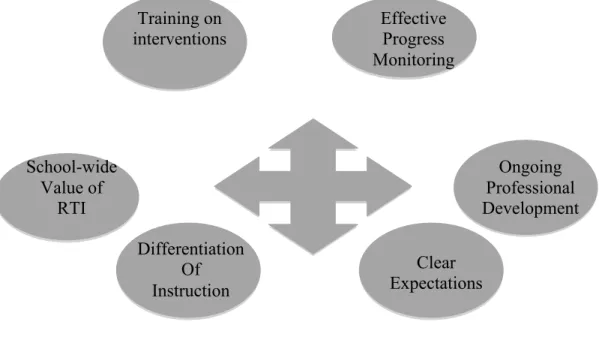
Ongoing Professional Development ... 122
Training on Interventions ... 127
Effective Progress Monitoring ... 128
Clear Expectations ... 129
Differentiation of Instruction ... 130
School Wide Value of RTI ... 132
Summary ... 133
Project Description ... 134
Potential Resources and Existing Supports ... 135
Solutions to Potential Barriers ... 140
Proposal for Implementation and Timetable ... 141
Roles and Responsibilities ... 142
Project Evaluation Plan ... 142
Project Implications Including Social Change ... 144
Local Community ... 144
Far-Reaching ... 145
Conclusion ... 146
Section 4: Reflections and Conclusions ... 149
Introduction ... 149
Project Strengths ... 150
Project Limitations ... 152
Recommendations for Alternative Approaches ... 153
iv
Project Development and Evaluation ... 158
Leadership and Change ... 159
Reflective Analysis ... 160
Reflection on the Importance of the Work ... 164
Potential Impact on Social Change ... 166
Implications, Applications, and Directions for Future Research ... 167
Conclusion ... 168
References ... 169
Appendix A: The Project ... 205
Appendix B: Interview Questions ... 236
v List of Tables
Table 1. Participants' Demographic Information ... 54
Table 2. Themes and Descriptions ... 83
Table 3. Timeline for PD ... 141
vi List of Figures
Figure 1. Georgia Four Tiered RTI Model ... 3
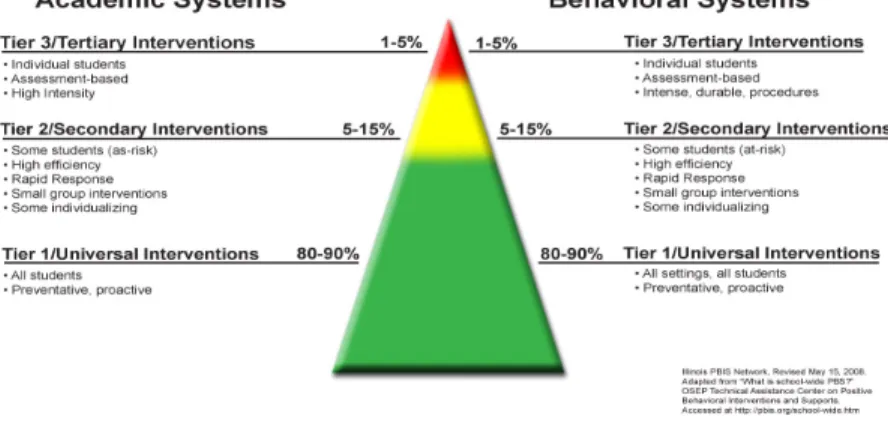
Figure 2. Three Tiered RTI Model ... 8
Figure 3. Formula of Success ... 24
Figure 4. Cyclical relationship between themes ... 84
Section 1: The Problem
Introduction
The Response to Intervention (RTI) framework was mandated due to the reauthorization of the federal Individuals with Disabilities Education
Improvement Act (IDEA, 2004) and the No Child Left Behind Act (NCLB, 2002), which addressed general and special education needs of students (Castro-Villarreal, Rodriguez, & Moore, 2014; Fuchs, Fuchs, & Compton, 2012). One of the goals of IDEA (2004) and NCLB (2002) laws were to improve the process of labeling students who may have a disability. These laws aimed to create an efficient process for screening, intervening, and monitoring to determine a child’s response to scientific, researched-based interventions and reduce the
disproportionate rate of students who received special education (Castro-Villarrel et al., 2014; Mikutis, 2013; Swanson, Solis, Ciullo, & McKenna, 2012).
More recently, the Every Student Succeed Act (ESSA, 2015) replaced the NCLB (2002) as the nation’s education law and commitment to equal opportunity for all students (National Education Association, 2015). The ESSA (2015)
included provisions that all students will be provided with support to help identify, and began closing, achievement gaps by ensuring local educators, parents, and communities focus on students most in need, and in turn will allow students more time to learn and teachers more time to teach (National Education Association, 2015). As a result, the ESSA (2015) and the RTI model were adopted by school districts, and required school district leaders, staff, and personnel to focus on best practices for instruction to ensure every student
succeeds through a data-driven and prevention-based framework for enhancing learning outcomes (Harrington, Griffith, Gray, & Greenspan, 2016; Sanger, Brunken, Friedli, Ritzman, & Snow, 2012).
Although schools nationwide have implemented the RTI model, which addresses using research-based instructional strategies and evidence-based interventions to meet struggling learners’ needs, schools’ implementation processes have varied across the nation (Fisher & Frey, 2012; Little, 2012; Moore, 2014). There are only 28 states that have officially mandated RTI to be used as a method to decide if students have a specific learning disability (Björn, Aro, Koponen, Fuchs, & Fuchs, 2015). Georgia is a state that mandated RTI for all schools; however, Georgia did not provide consistent guidance to implement RTI models process and procedures (GADOE, 2012).
Georgia has developed the RTI framework as a four-tiered prevention model, which includes Tier 1 as standard-based instruction, Tier 2 as needs-based learning, Tier 3 as Student Support Team (SST)-driven learning, and Tier 4 addresses individually designed learning for a student referred for consideration of placement in an suitable educational setting such as special education, gifted, speech, or English to speakers of other languages shown in Figure 1 (GADOE, 2012). The purpose of Georgia having a four-tiered RTI model is that Georgia schools used the four-tiered model as the process and procedure for identifying students with special academic or behavior concerns who may qualify for an Individual Educational Program, unlike other states that may have a separate
model for special academic or behavior programs for students who may qualify for an Individual Educational Program (GADOE, 2012).
Figure 1. Georgia four tiered RTI model.
Adapted from: Georgia Department of Education (2011). Response to
Intervention: Georgia Student Achievement Pyramid of Interventions, September
19, 2011, retrieved from http://www.gadoe.org/Curriculum-Instruction-and-Assessment.
The Georgia Department of Education (GADOE) allowed school districts to develop their own practices and implementation of the RTI model, but all Georgia school districts were required to incorporate a Student Support Team (SST) within each local school (GADOE, 2012). With Georgia allowing school districts to choose how they implemented and trained teachers regarding RTI, teachers received little guidance on how RTI should be implemented effectively, based upon the limited professional development offered according to the
Jaffe, 2013). As a result, teachers may lack sufficient knowledge to implement RTI with fidelity, which may lead to ineffective RTI implementation in their classroom. Therefore, the purpose of this qualitative case study was to assess teacher and administrator perceptions of the fidelity of implementing the Georgia RTI model. I investigated this problem within one campus, using teacher and administrator interviews, surveys, and review of archived documents.
In Section 1 of this project study, I discuss the problem, rationale of the problem, and significance of the problem, from both local and national
perspectives. In addition, I define special terms, present research questions, review current literature, and explore the conceptual framework associated with the problem. Furthermore, the implications for possible projects based on the likely findings from the data collection and analysis are discussed. Finally, I present a summary of the key points in Section 1.
The Local Problem
In this study, I addressed the teachers’ and administrators’ perceived issues and concerns with the fidelity of implementing the RTI framework. The teachers and administrators expressed implementation issues with the new RTI model continuously and displayed a lack of motivation to implement RTI at the selected school of study (personal communication, March 25, 2015). In an effort to eliminate implementation issues, the concepts of fidelity of implementing the Georgia RTI model processes were explored. This will determine if the delivery of RTI is the way it was designed to be according to the state guidelines
implementation determines and monitors components of an intervention plan that were implemented as initially intended according to the research-based guidelines and best practices (Keller-Margulis, 2012; McKenna, Flower, & Ciullo, 2014). When implementing a new school program, such as RTI, the importance of fidelity of implementation can determine if teacher and administrator practices are consistent with the state RTI process to make a positive influence on student outcomes or if changes are needed to the state RTI process of implementation (McKenna, Flower, & Ciullo, 2014).
At Elementary School C, teachers reported from 2014 through 2015 a lack of understanding the process of RTI implementation (personal communication, March 30, 2015). The RTI chair of Elementary School C redelivered the professional development training provided by the district to the 32 elementary teachers at the selected school of study. However, a majority of the 32 teachers expressed that the RTI identification and documentation process was time consuming and tedious to complete which impacted their desire to comply (personal communication, March 25, 2015). Additionally, another teacher expressed that she was not knowledgeable of the RTI model and frustrated with understanding how to implement the RTI model with fidelity according the state of Georgia RTI model (personal communication, October 3, 2015). When teachers have a lack of knowledge or low motivation towards implementing RTI, the RTI processes and procedures are not implemented as intended, based upon teachers’ confusion about RTI processes and procedures (Castro-Villarreal et al., 2014; Werts, Carpenter, & Fewell, 2014).
The students who received interventions and instruction as intended according to the Georgia RTI model may have a positive influence on the state standardized assessment scores by decreasing the amount of students labeled as beginning learners. According to the state standardized test scores between 2014 and 2015, 57% of third grade students were beginning learners in English
Language Arts and 46% of third grade students are beginning learners in
Mathematics (Georgia Department of Education, 2015). Test results of the third grade students indicated that a majority of third graders were struggling to meet the state requirements according to the Georgia Common Core Standards
(Georgia Department of Education, 2015). Because of this concern, I specifically assessed teachers and administrators’ perceptions on the fidelity of implementing the Georgia RTI model at Elementary School C.
Teachers who taught Kindergarten through third grade were targeted as participants for this study, because K-3rd grade students are more commonly identified to have academic and behavior challenges (Lipsey, Farran, & Hofer, 2015). Additionally, the teachers who teach K-3rd grade may decrease the 57% of beginning learners in English Language Arts and 46 % of beginning learners in Mathematics on state standardized assessments, and increase the amount of proficient leaners in both English Language Arts and Mathematics on state standardized assessments, if equipped with best practices through the RTI model to support teaching and learning for all learners. Therefore, I investigated this problem using a qualitative case study to understand Kindergarten through third
grade teacher and administrator perceptions of the Georgia RTI model related to fidelity of implementing the RTI model as presented in the training.
Rationale
One of the primary roles of teachers is to provide differentiated instruction for all learners to be successful, which may be addressed through the four tiers of RTI (Castro-Villareal et al., 2014; O’Connor & Freeman, 2012). The selected school of study implemented the Georgia RTI model, which consisted of four tiers, but teachers were showing a lack of motivation to implement with fidelity. Schools located in other states commonly implement a three-tiered RTI model to address students’ needs as shown in Figure 2 (NCRTI, 2012). According to the National Center on Response to Intervention (NCRTI 2012), “RTI is a multi-level prevention system intended to provide evidence-based support to students with academic challenges, and to identify appropriate instruction and related supports to produce successful student outcomes” (pp. 1-2).
As a result, there has been a considerable amount of interest in RTI being implemented into existing schools’ practices, which means teachers,
administrators, and school leaders must implement this initiative within the school’s curriculum practices and procedures (Burns, Egan, Kunkel, McComas, Peterson, Rahn, & Wilson, 2013; Fisher & Frey, 2012). Furthermore, Castro-Villarreal et al., (2014) indicated that effective RTI models require supportive leadership from administrators, ongoing RTI professional development (PD) and support, and resources to enhance the fidelity of implementing the RTI process. Teacher and administrator perceptions in relation to the fidelity of implementing
the RTI model should be examined based upon the delivery of RTI instructional strategies and interventions (McKenna et al., 2014). This examination can affect the effectiveness of implementing a RTI model (McKenna et al., 2014).
Researchers have suggested that inappropriate implementation of any RTI model could impact the fidelity of implementing the RTI model, therefore investigating the fidelity of implementing the Georgia RTI model by assessing teacher and administrator perception should be explored (Castro-Villareal et al., 2014; McKenna et al., 2014; O’Connor & Freeman, 2012).
Figure 2. Three tiered RTI model.
Adapted from: “What is school-wide PBIS?” CSEP Technical Assistance Center on Positive Behavior Interventions and Supports, by Illinois PBIS Network, May 15, 2008, retrieved from http://pbis.org/school-wide.htm
Evidence of the Problem at the Local Level
According to the RTI chair of the local urban school of study, teachers have shown a lack of motivation and understanding of how to effectively
implement RTI (personal communication, March 31, 2015). More specifically, a school based leader expressed that teachers have shared they are uncomfortable with using the RTI model because the process is time consuming, tedious, and there is a lack of resources provided to support teachers (personal communication, March 25, 2015). Additionally, the school based RTI chair conducted teacher conferences prior to implementation to provide one-on-one training and support to teachers regarding the proper implementation of Georgia RTI model and
processes (personal communication, March 31, 2015). Despite RTI PD the implementation of the RTI process is perceived to be a problem by both teachers and school-based leaders. By investigating teacher and administrator perceptions regarding the fidelity of implementing the Georgia RTI model, teachers’ and administrators’ abilities to implement RTI may be enhanced and may produce an RTI model implemented as designed.
RTI professional development was provided initially by the school system administrators twice a school year; at the start of the new RTI model
implementation process for reading specialists, math specialists, curriculum specialists, data specialists, counselors, administrators, RTI school chairs, and RTI coordinators (Jaffe, 2013; personal communication, March 31, 2015). Collaboratively, the RTI chair, data specialist, and curriculum specialist were responsible for facilitating the RTI PD for the process and procedures for
implementing the Georgia RTI model at their respective school sites (Jaffe, 2013; personal communication, March 31, 2015). However, the school RTI chair of the selected school of study led and facilitated the RTI PD, which was very intense
due to the tedious steps, and new learning concepts teachers were required to know within the four tiers of the RTI model (personal communication, March 31, 2015).
According to the curriculum specialist, it was suggested that to increase student success on state standardized assessments, RTI implementation from each tier is required (personal communication, April 14, 2015). Additionally, state standardized test scores between 2014 and 2015 reflected 57% of third grade students were beginning learners in English Language Arts and 46% of third grade students were beginning learners in Mathematics (Georgia Department of Education, 2015). Test results of the third grade students indicated that a majority of third graders were struggling to meet the state requirements according to the state Common Core Standards (Georgia Department of Education, 2015). The results of the high percentage rate of students identified as beginner learners indicates that these students were Tier 2 or Tier 3 students according to the Georgia RTI model. This may suggest that implementation of Georgia RTI model is important to changing the results of students meeting the Common Core
Standards on upcoming assessments to decrease the amount of Beginner learners (Georgia Department of Education, 2015). Based upon key school personnel responsible for delivering the RTI professional development and state assessment results, it is evident there was a problem with teachers and the implementation of RTI (personal communication, March 31, 2015).
There was one job-embedded professional development session at the beginning of the 2014-2015 school year for the Georgia RTI model. This session
lasted for an hour for teachers responsible for implementing the Georgia RTI model within the local school; however, after the one-hour RTI PD took place, many local campus administrators and teachers expressed that the implementation of RTI may be ineffective due to the lack of ongoing job-embedded professional development (personal communication, March 31, 2015). According to a post evaluation of the RTI PD, concerns were reported that RTI PD contained
excessive literature, limited resource suggestions, and did not meet the teachers’ specific needs including the fact the RTI PD only occurred once (personal communication, March 30, 2015).
When PD for RTI implementation was provided in an unclear or
ineffective manner, teachers lack the responsibility and/or motivation to use the system with fidelity (Isbell & Szaboo, 2014). Effective PD can lead to effective implementation of RTI; whereas ineffective PD leads to poor implementation (Kuo, 2014). Therefore, in effort to develop and implement an effective RTI model, school administrators must identify challenges, supports, implementation considerations, and teachers’ perceptions (Marsh, 2012; Sanger et al., 2012). The purpose of this study was to assess teacher and administrator perceptions of the fidelity of implementing the Georgia RTI model at one campus using teacher and administrator interviews, surveys, and review of archived documents.
Evidence of the Problem from the Professional Literature
The most common challenges and barriers to implementing an effective RTI model are inconsistency, poorly suggested interventions, and the lack of evaluating the RTI model for fidelity of implementation (Cowan & Maxwell,
2015; Sanger et al., 2012). Additionally, there are similar influences that impact the effectiveness of RTI, which could be the intensity of interventions, leadership support initiatives, and teachers’ beliefs and knowledge of RTI (Marsh, 2012). To successfully implement the RTI model with fidelity, school administrators need to analyze current implementation of the RTI model by surveying teachers who are implementing interventions, and by providing continuous administrative support in the form of PD and effective resources for instruction (Cowan & Maxwell, 2015).
With this analysis, I created a training program to help administrators address the four factors that affect fidelity of implementation (FOI), which are: complexity, material and resources required, perceived and actual effectiveness, and interventions (NCLRD, 2006; Harlacher et al., 2014). These four factors address the issues of time needed for instruction and intervention, accessible resources, teachers’ perceptions of the efficiency of implementing practices, and teachers’ motivation level to deliver interventions with fidelity (McKenna et al., 2014). To guarantee the FOI of the RTI model and its effectiveness,
administrators must consider assessing processes and procedures regarding RTI implementation. This can be done by conducting observations, self-assessments, and analyzing student achievement outcomes by monitoring the frequency, method, and procedures used with the RTI model (Keller-Margulis, 2012; McKenna et al., 2014;). Without school administrators or school leaders
do not have adequate skills and knowledge to implement an RTI model with fidelity (Marsh, 2012).
With teachers playing a pivotal role in RTI implementation, their perceptions, understanding, and attitudes regarding RTI are beneficial to addressing teacher buy in, fidelity concerns, emphasis for professional
development, and barriers to the implementation process (Castro-Villarreal et al., 2014). School administrators could measure the FOI RTI by observing teachers to determine the frequency and the appropriateness of the delivery of instruction and interventions. They can provide immediate feedback and support to teachers to guarantee that the implementation of instruction and interventions are done with accuracy. This will help to guarantee fidelity of RTI implementation (Gerstner & Finney, 2013). When teachers are provided with resources and supports, they tend to make corrections where needed to assure success (Harn, Parisi, & Stoolmiller, 2013). Furthermore, teachers’ training, motivation, knowledge, efficacy, resources, supports, and willingness to participate in the process may have an important significance related to the FOI RTI with success (Castro-Villareal et al., 2014; O’Connor & Freeman, 2012). Without effective training for teachers, an understanding of the RTI model processes and procedures may not be achieved which may lead to teachers implementing the RTI model inadequately (O’Connor & Freeman, 2012).
Effective PD is necessary to accomplish the goal of implementing the RTI model with fidelity (Castro-Villarreal et al., 2014; O’Connor & Freeman, 2012; Werts, et al., 2014). Ineffective PD will hinder this goal (Gulamhussein, 2013;
O’Connor & Freeman, 2012; Werts, et al., 2014). Ineffective PD takes place when there is a lack of finances, knowledge of content, and continuous support for teachers after PD has been provided (Gulamhussein, 2013). When there is a lack of support teachers are not equipped with appropriate skills to sustain and to implement new practices with fidelity (Finch, 2012). Continual support is needed when implementing new skills, such as RTI interventions and practices (Butler & Schnellert, 2012). When teachers do not have support from leadership teams or collaborative learning teams, inconsistent implementation practices may take place leading to unclear procedures, decisions, and poor documentation of students’ data from interventions implemented (Butler & Schnellert, 2012). Therefore, developing leadership and collaborative teams to support teachers with implementation of RTI may lead to consistent implementation practices and procedures of RTI as intended (Nellis, 2012).
Researchers have documented that 80% of students’ academic needs are met when there is effective RTI implementation (Allain, 2013). Without effective RTI implementation, approximately 65% of students are promoted without
achieving the necessary knowledge and skills to be prosperous in the next grade or to graduate from high school (Callender, 2014). Furthermore, the U. S. Department of Education reported that students from 2011-2012 who received appropriate support through RTI implementation yielded appropriate referrals to special education (2015). In an effort to seek growth in student achievement before promoting students to the next grade level, implementing a consistent RTI model with understanding and fidelity is beneficial for students and teachers
(Gulamhussein, 2013; Nellis, 2012). The purpose of this study was to assess teacher and administrator perceptions of the fidelity of implementing the Georgia RTI model at one campus using teacher and administrator interviews, surveys, and review of archived documents.
Definitions
Many terms used in this study are often used in educational settings and educational literature. The terms listed below define the educational terms used throughout this study.
At-Risk Students:Students who academically or behaviorally perform below grade level of their counterparts (Vaughn & Fletcher, 2012).
Differentiated Instruction: Providing a group of students or individual students with a customized curriculum or tailored instruction to meet each student’s learning needs (Darrow, 2015; Tomlinson, 2014).
Disproportionate Representation: The overrepresentation and
underrepresentation of minorities in a special education program (Mikutis, 2013). Fidelity: The degree interventions or treatments are implemented as designed and planned (Ehlers-Zavala, Obiakor, Bakken, & Rotatori, 2010).
Fidelity of Implementation (FOI): The process of monitoring interventions as suggested and executed based upon research best practices, strategies, and evidences. (Keller-Margulis, 2012, p. 343; McKenna, Flower, & Ciullo, 2014, p. 16).
Formula for Success: A framework of understanding for implementing an
implementation of science indicates it is important to consider this formula to guarantee implementation takes places as intended by measuring implementation practices, intervention practices, and fidelity of implementation when school leaders implement RTI programs (Dunst, Trivette, & Raab, 2013; Gagnon & Bumpus, 2016).
Georgia RTI model: The levels of instructional intensity within a multi-tiered prevention system used to identify and support students with learning behavioral needs which includes four tiers: Tier 1: Research-based or standard-based instruction provided to all students. Tier 2: Consists of needs-based learning by providing small group academic instruction or behavior support, utilizing scientific research-based instruction considered effective for the students. Tier 3: Provides more intensive driven individualized instruction within the
Student Support Team (SST); practices or behavioral support for students who were assessed at Tier 2 and data indicates inadequate progress. Tier 4:
Individually designed learning for students who are eligible for special academic services are placed in Tier 4 and receive individualized instruction to meet their needs based upon the referral made from Tier 2 (GADOE, 2012; RTI Action Network, 2012).
Individual Educational Program (IEP): A written statement for students who are placed in special education that describes the students current
performance level, yearly goals, particular services needed, dates for the beginning and period of services, and in what way the IEP will be evaluated (Shifrer, 2013).
Intervention: A research based skill or strategy implemented and monitored to improve academic or behavioral skills (Wanzek & Cavanaugh, 2012).
Progress Monitoring: Measurement of change or student’s skill level of learning over a period of time to address instructional needs, which determines what evidence-based interventions are effective (Brown, 2012; Fuchs & Vaughn, 2012).
Research Based: Programs and studies that incorporate suggested
strategies or recommendations that have been researched generally and proven to make change (Keller-Margulis, 2012).
Response to Intervention (RTI): “A systematic data-based method for identifying, defining, and determining students’ academic or behavioral difficulties by monitoring student progresses and making decisions about the necessary instructional modifications or intervention intensity, which is based on a three-tiered model” (Little, 2012, pp. 69-70; Pool, Carter, & Johnson, 2012, pp. 232-233).
Self-efficacy: “An individual’s belief in his or her capacity to execute behaviors essential to produce a given level of achievement or a particular task. For the purpose of this study, self-efficacy is used for understanding teachers’ confidence in their ability to exert control over their own motivation, behavior, and social environment.” (Bandura, 1997, pp. 11-13; Denler, Wolters, & Benzon, 2014, pp. 1-3).
Special Education: A program designed to provide students with disabilities with a free appropriate education, which meets their individualized needs and offer students appropriate services (Hoover, 2012).
Significance
School district leaders and school administrators should be aware of the concerns teachers may have with implementing RTI and how teachers’ concerns may impact school initiatives (Israel, Pearson, Tapia, Wherfel, & Reese, 2015; Little, 2012). While school leaders and administrators are placing emphasis on teachers fully understanding RTI (Bailey, 2014; White, Polly, & Audette, 2012), teachers are struggling with the implementation of RTI and leaders should understand that the success of any RTI implementation depends on the teachers’ abilities to implement RTI with fidelity (Wilcox, Murakami-Ramalho, & Urick, 2013). FOI requires teachers and administrators to collaborate to ensure RTI is implemented as intended and frequently monitored for effectiveness (Abry, Rimm-Kaufman, Larsen, & Brewer, 2013; Castro-Villarreal et al., 2014). Currently, at the selected school of study, approximately 85% of teachers of grades Kindergarten through third grade are lacking the knowledge to implement RTI with fidelity (personal communication, March 30, 2015). Additionally, according to a teacher within the selected school, approximately one initial RTI professional development was provided for teachers and an additional
professional development was provided for make-up training for teachers who missed the initial professional development (personal communication, March 31, 2015). A teacher shared that, due to limited professional development and lack of
understanding, she was not motivated to implement the processes and procedures of the RTI model (personal communication, September 28, 2015).
The results of this study allowed me to address existing gaps in practice by assessing teacher and administrator perceptions on the fidelity of implementing the Georgia RTI model. Gaining a deeper understanding of teacher and
administrator perceptions may allow administrators in the local school district to reform the RTI model to support teachers in their understanding and teaching approaches related to RTI implementation. This project study may help with the school RTI implementation processes and procedures. Teachers and
administrators may gain a deeper understanding of RTI by participating in RTI PD to obtain strategies to meet their students’ needs and identify where gaps in practice exist in relation to RTI implementation. The potential positive social change at the local level would allow educators to implement RTI with a greater fidelity to accommodate the needs of diverse learners.
Therefore, the purpose of this project study was to assess teacher and administrator perceptions of the fidelity of implementing the Georgia RTI model at one campus using teacher and administrator interviews, surveys, and review of archived documents. A qualitative case study to investigate teacher and
administrator perceptions as related to the FOI the Georgia RTI model produced recommendations to address current barriers of teachers’ perceptions for RTI implementation and RTI PD, improve the effectiveness of the RTI model, and suggest relevant support, or RTI PD remedies, to enhance the fidelity of
fidelity of implementing Georgia RTI model, a school administrator may review my findings that are outlined in a white paper; the white paper includes policy recommendations and suggestions that may prompt collaborative discussions and lead to a more effective RTI implementation process.
Guiding/Research Question
The purpose of this qualitative case study was to assess teacher and administrator perceptions of the fidelity of implementing the Georgia RTI model at one campus using teacher and administrator interviews, surveys, and review of archived documents. Teachers have expressed that they would like to have further understanding of RTI to become more knowledgeable of how to incorporate RTI within daily instructional practices (personal communication, April 29, 2015). Hoover and Love (2011) noted that understanding teachers’ knowledge and perceptions of programs they are required to implement helped them make informed instructional practices school-wide. By conducting interviews, surveys, and review of archived documents to determine the teacher and administrator perceptions of RTI as related to the fidelity of implementing the Georgia RTI model, a deeper understanding helps shed light on where the local gap in practice exist related to RTI implementation.
The following research question was aligned with the research problem and purpose. This was an open-ended, general question that helped narrow the purpose of this study and further to reflect the participants’ views of the central phenomenon and gain deeper understanding of it (Creswell, 2012). The
Research Question
How do teachers and administrators perceive the fidelity of implementing the four-tiered RTI model as related to effective interventions, implementation methods, enabling contexts, and intended outcomes at the study site?
Review of the Literature
The Georgia RTI model could be ineffective due to poor implementation; however the implementation process could be improved if RTI is implemented with fidelity as intended (McKenna et al., 2014). When schools implement RTI with fidelity, best practices are implemented to improve student achievement (Keller-Margulis, 2012). According to the National Center on Response to Intervention (NCRTI 2012), “RTI is a multi-level prevention system intended to offer evidence-based support to students with learning problems, and to identify appropriate instruction and related supports to produce successful student outcomes” (pp. 5-6). With RTI being the leading school reform practice in Georgia, it is essential that schools implement RTI into existing schools’ practices with fidelity, which means teachers and administrators must learn and support the RTI model (Burns & Gibbons, 2013; Fisher & Frey, 2012; O’Connor et al., 2012). Therefore, it is evident that teachers and administrators must ensure the fidelity of implementing the Georgia RTI model takes place to guarantee appropriate
implementation aligns with the goals of RTI and the instructional goals of the school (King, Lemons, & Hill, 2012).
The FOI is important because it measures whether teachers’ practices are influencing student outcomes or if changes are needed (McKenna et al., 2014).
The RTI implementation process is based on using proper methods of instruction for research-based practices to help students improve. The school administrators and support staff members may only certify students improve by monitoring the FOI of RTI (Swanson, Solis, Haring, Ciullo, & McCulley, 2012; McKenna, 2014). Furthermore, using the RTI framework without determining the degree to which students are provided instruction makes it difficult to determine its
effectiveness (Keller-Margulis, 2012). Therefore, teacher and administrator perceptions in relation to the fidelity of implementing the Georgia RTI model were examined based upon how the delivery of RTI can impact the effectiveness (Gerstner et al., 2013; McKenna et al., 2014).
To ensure literature saturation for this research regarding teacher and administrator perceptions on the fidelity of implementing the Georgia RTI model, several steps were conducted to find related, relevant, and current research. First, a search using the following Booleans: Response to Intervention, teachers’ perceptions, disproportion rate of students, fidelity of implementation, progress monitoring, professional development, implementation of science framework, and RTI implementation within elementary settings. Then, I discussed my topic with colleagues to generate their suggestions pertaining to the problem of this project study.
I began the web search by using Walden University library online
databases with the initial Booleans and suggestions from colleagues with a search using significant terms in peer-reviewed journal articles, on-line journals,
used for the search included the following: Education Research Complete, ERIC, Google Scholar, ProQuest Central, and SAGE Journals Online. There were 233 peer-reviewed journal articles reviewed and used, published within the past 5 years. By searching scholarly databases, I was able to limit my focus on relevant terms on current and past research and theories. Finally, I organized my findings by common themes that addressed teacher and administrator perceptions on the fidelity of implementing the Georgia RTI model within the literature review of this study until saturation was reached.
Conceptual Framework
In an effort to examine how teachers and administrators perceive the fidelity of implementing the Georgia RTI model, I selected the implementation science framework for the conceptual framework, which will provide the context and serve to guide the development of this study. “The implementation of science framework focuses on the differentiation of implementation and intervention, these important practices describes how incorporating both practices with fidelity are interrelated and how each influence the outcomes of implementing a program” such as, RTI (Dunst et al., 2013, pp. 85-86). Fidelity is based upon “the process of monitoring whether all components of an intervention or plan are implemented as initially intended to guarantee the effectiveness of the program”, such as RTI (Keller-Margulis, 2012, pp. 343-345; McKenna et al., 2014, pp. 16-18). Based upon the implementation of science framework, teachers and administrators may need to adopt this concept to guarantee fidelity of Georgia RTI model is
Effective Intervention Intended Outcomes Enabling Contexts Effective Implementation Methods
The implementation of science framework provides insight into the elements of effective implementation processes that lead to the adoption of new policies, programs, evidence-based methods, or intervention practices in the manner that is intended (Duda & Wilson, 2015; Dunst et al., 2013). Eccles and Mittman (2006) defined the implementation of science framework as “the scientific study of methods to support the systematic acceptance of research findings and other evidence-based practices into regular practice” (p. 1). The implementation of science framework indicates it is important to consider implementation practices, intervention practices, and FOI when school leaders implement RTI programs (Dunst et al., 2013; Gagnon & Bumpus, 2016). To ensure the Georgia RTI model is implemented with fidelity and successfully on student outcomes, school administrators, support staff, and teachers should support the following: (a.) effective interventions, (b.) effective implementation methods, (c.) enabling contexts, and (d.) intended outcomes, known as the formula for success (Duda et al., 2015). Figure 3 identifies the Formula for Success.
× × =
Figure 3. Formula of success.
Adapted from: Duda, M. & Wilson, B. (2015). Using Implementation Science to Close the Policy to Practice Gap. A Literate Nation White Paper, Science Panel. Vol. Spring (2015). San Francisco, CA.
The process of using the implementation of science framework suggests that teachers, school administrators, and support staff can sustain an RTI model with fidelity if the implementation science structure is successfully managed so teachers, administrators and students can experience the expected benefits (Duda et al., 2015). Essentially, the goal of inquiry in the implementation of science framework is to research and understand how newly adopted initiatives are put into practice and maintained as the intended purpose (Cook & Odom, 2013). Therefore, to improve academic outcomes for students by adopting the RTI framework, teachers and administrators need to consider the implementation of science framework as part of the process (Duda et al., 2015; Dunst et al., 2013, & Gagnon et al., 2016). Within the context of the implementation of science
framework, I investigated teacher and administrator perceptions on the fidelity of implementing the Georgia RTI model at the study site using teacher and
administrator interviews, surveys, and review of archived documents. By investigating teacher and administrator perceptions on the fidelity of
implementing Georgia RTI model, participants, school district leaders, and school administrators may review my findings outlined in a white paper. The white paper includes policy recommendations and suggestions designed to prompt collaborative discussions and lead to a more effective RTI implementation process.
Literature on the Broader Problem Associated with the Local Problem Response to Intervention framework. The Response to Intervention (RTI) framework was developed to determine “early identification of students
with disabilities and to provide preventative interventions to reduce inaccurate referrals of students to special education due to lack of best instructional practices of teaching and learning” (Ciullo, McKenna, Solis, & Swanson, 2012, p.115). As a proactive and preventative approach, “RTI encouraged teachers and other educational leaders to develop instructional plans for teaching to improve the academic or behavioral performance of their students” (Little, 2012, pp. 69-71). “This multi-tiered framework was a system-wide problem-solving and data-driven process in which students were examined on specific skills and provided
instructional support to each individual students’ needs in an effort to improve their abilities academically or behaviorally” (Castro-Villarreal et al., 2014, p. 104). There were several tiers school systems developed to address concerns of at-risk students; however, it is a more common practice for schools to utilize the three-tiered levels of the RTI model than the four-tiered levels of the Georgia RTI model (Fuchs et al, 2012; Fuchs &Vaughn, 2012). Tier 1 is designed as scientific, evidence-based core instructional and behavioral approaches for all students within the proposed general curriculum (Fuchs et al., 2012; Little, 2012). At Tier 2, specific instruction and interventions provided along with required instruction is used to increase the student achievement and progress monitoring progress (Little, 2012; Pool, Carter, & Johnson, 2012). Tier 3 was designed to provide intensive instructional interventions in a collaborative manner of core instruction with the goal to increase students’ academic progress (Fuchs & Vaughn, 2012; Little, 2012). Tier 4 is targeted and specialized design instruction for students who have met eligibility criteria for placement in special programs, such as
special education, English speaking, and gifted education (GADOE, 2012; RTI Action Network, 2012).
The RTI tiered model is vital to the educational processes due to the reauthorization of IDEA (2004) and goals established in the NCLB (2002), which permitted the use of RTI to determine whether students make adequate
improvement and what interventions should be specified for them (Hall & Mahoney, 2013; Kuo, 2014). Previously, the Elementary and Secondary Education Act (ESEA) of 1965 served as the federal accountability law that focused attention on low-performing students, aiming to close the achievement gap (Darling-Hammond & Hill, 2015). However, the legislation of NCLB (2002) was the revision of ESSA (2015) that challenged state leaders and school district leaders to increase efforts to improve student achievement for all learners, which is the key initiative for the RTI framework (Darling-Hammond et al., 2015). “The usage of incoporting the RTI model in educational settings has emphasized
general and special education teachers’ responsibility to meet the needs of all learners by ensuring students make academic progress” (Hall & Mahoney, 2013, p. 273). Additionally, RTI led to early identification of students with academic or behavioral disabilities and remediation for students who are at risk of failing a particular subject or grade level (Hoover, 2012; Mikutis, 2013). Furthermore, researchers suggested “teachers who implement RTI with fidelity could prevent students for making choices that could lead to school dropouts, unemployment, imprisonment, poor health, and other limiting experiences of inadequate academic performance” (Fuchs, Fuchs, & Compton, 2012, pp. 263-267). Response to
Intervention is important and the process should be repeatedly used for improving student achievement and learning goals, which is the overall purpose of
implementing RTI (Little, 2012).
Impact of RTI implementation. RTI models are currently being implemented in about 94% of schools nationwide (O’Connor et al., 2012; Robinson, Bursuck, & Sinclair, 2013). The purpose for the RTI process is to provide all students with differentiated or intensified instruction and intervention to prevent student academic failure, before being referred for additional services such as special education (Fisher & Frey, 2012; Murakami-Ramalho & Wilcox, 2012). Further researchers have suggested that by implementing RTI the needs of struggling learners, prevention of labeling, and avoiding a history of school failure could be addressed (Sanger et al., 2012). Although, the purpose of implementing RTI is clearly defined, schools need to make basic decisions for RTI implementation (Wanzek & Cavanaugh, 2012). O’Connor and Freeman (2012) suggested that RTI implementation requires school administrators to change their view and practices of educational reform.
The views and practices of educational reform could be changed only if school administrators are willing to understand the need for change, accept the purpose for change, and support the change for all stakeholders (Castro-Villarreal et al., 2014). Therefore, school administrators need to implement RTI with purpose and understanding of their roles, and support from school personnel who believe using the prevention model of RTI could impact positive change in all students (Sylvester, Lewis, & Severance, 2012). Teachers’ understanding of RTI
should be fostered from the school district administrators and school-based leaders, such as the principal and RTI specialist by offering ongoing professional development and engaging in collaborative discussion with teachers regarding implementation and components of RTI, which could have a significant influence on the successful implementation of the RTI model (Hoover & Love, 2011; O’Connor & Freeman, 2012). Furthermore, Swanson et al. (2012) suggested that teachers and educational leaders believed a key advantage and purpose of
implementing RTI is assisting students as soon as they display academic or behavioral problems. Subsequently, Fisher and Frey (2011) and Swanson et al. (2012) believed successful implementation of RTI requires support efforts from all staff and leaders within the school by participating in open dialogue through problem-solving and data review meetings that support RTI efforts for students. Researchers have suggested that there are various RTI implementation
components that are essential to ensuring the fidelity of implementing the RTI model (Fisher et al., 2011; O’Connor et al., 2012; Swanson et al., 2012).
Implementation components. School administrators and leaders are implementing RTI to meet the needs of struggling learners and models are being implemented with different implementation components across the country in schools and school systems (Mclerney, Zumeta, Gandhi, & Gersten, 2014). Although RTI is found to be a multi-tiered approach many educators address RTI in different manners for general and special education students and teachers (Sanger et al., 2012). Researchers have suggested that the teachers and school administrators should collaborate with one another to discuss what essential
components are required in the implementation of the RTI model (Slyvester, Lewis, & Severance, 2012). As a result of school leaders and teachers collaborating, Hoover and Love (2011) found the key components of
implementing RTI included a clear understanding of the RTI framework, school and district-wide professional development that is ongoing, Tier 1 and Tier 2 understanding of instruction between general education teachers and other teachers providing Tier 2 support (Broemmel, Jordan, &Whitsett, 2015).
In comparison, White, Polly and Audette (2012) and Bailey (2014) discovered there are essential components of RTI, which include organization of student supports and services from the onset of the process, data-based
instructional plans, alignment of research-based interventions, and consistent progress monitoring and data collection. Additionally, it is important to approach RTI as a multi-tiered system composed of screening, progress monitoring,
instruction, and identification of appropriate intervention for students (Sanger et al., 2012). School administrators who can identify key components for an RTI model may develop an implementation process that is consistent and effective for teachers to understand to improve student outcomes (McDaniel, Albritten, Roach, 2013). When an RTI model does not have key components identified in the process, student outcomes may be affected in a negative manner (Sharp, Sanders, Noltemeyer, Hoffman, & Boone, 2015). Identifying key components necessary for RTI implementation can provide an outline for school administrators and leaders when designing an RTI model (McDaniel et al., 2013).
White et al. (2012) and Bailey (2014) suggested there are key RTI initiatives for implementing any RTI model effectively. First, the creation of district level and school level resources should support general education and special education (White et al., 2012; Bailey, 2014; Mclnerney et al., 2014). Next, there needs to be commitment and support from the principal and school-wide leadership team (White, 2012; Bailey, 2014; Mclnerney et al., 2014). Then, an RTI committee should be established to provide professional learning and discuss the importance of the RTI process (White, 2012; Bailey, 2014; Mclnerney et al., 2014). Additionally, an RTI implementation plan to increase knowledge, process, and resources to provide manageability of the program should be established (White et al., 2012; Bailey, 2014). In comparison, an action plan to involve family members and parents is necessary to help them understand and participate in the RTI process (White et al., 2012; Broemmel et al., 2015). Based upon these recommendations, one may suggest that all stakeholders within the school setting should be involved in the process to ensure the fidelity of implementing RTI initiatives.
The findings of the researchers suggested that educators should collaborative work to achieve best evidence-based practices to develop key
components of an effective RTI model (McDaniel et al., 2013; White et al., 2012). By having key RTI initiatives, definitions, and understandings of RTI, teachers and leaders receive insight into their roles in providing interventions for all students (Slyvester et al., 2012). Although collaborative efforts are important to achieve best results for implementing RTI, challenges may still arise with
implementation if school administrators develop an RTI model without the essential components.
Implementation challenges. There are numerous reports of school teachers who have explained challenges with the implementation of RTI, which impacts school administrators’ capability with implementing a successful RTI model for their school (Bailey, 2014; Muakami-Ramalho et al., 2012). Bailey (2014) found that “many rural schools struggle with implementing RTI because the lack of efficient funds for personnel or resources, time within their schedule for professional development, administrative support of the process, instructional teachers and staff buy-in, and actively engaged students, parents, and community leaders in the process” (pp. 34-35). These critical challenges were found to be occurring in many rural schools across the country regardless of schools that may receive federal and state funding (Bailey, 2014;O’Connor & Freeman, 2012; Robinson, Bursuck, & Sinclair, 2013). Similarly, Robinson et al. (2013) explored RTI implementation in two rural southeastern elementary schools that identified challenged components for implementation of RTI, which could be due to cost, time, professional development, limited resources, and support. The results identified that the cost to purchase items to start RTI intervention programs and professional developments and cost for substitutes were not feasible to the schools’ budget due to the lack of funds (Bailey, 2014; Robinson et al., 2013).
Additionally, teacher turnover rates affect how the momentum of teachers responding to RTI procedures, especially if one teacher or school leader guides the entire faculty of teachers during RTI model procedures (Burns et al., 2013).
Surprisingly, school leaders and teachers reported reluctance to share data of students in Tier 2 or Tier 3 of the RTI model that indicates an academic issue or behavior issues of a student that may need further testing, due to parents who are well-known community members of the school (Bailey, 2014). Other challenges were related to the recruitment and retention of highly effective teachers in rural schools to implement scientifically based strategies with at-risk students (Ehren & Hatch, 2013; Keller-Margulis, 2012). Robinson et al. (2013) determined that for “rural elementary schools to implement RTI with fidelity, teachers will need to buy-in to the process and procedures and administrators will need to provide effective ongoing professional development” (pp. 1-2). Furthermore, “rural schools will need to acquire financial support for employing and retaining highly qualified teachers that will incorporate scientific-based instructional practices for teaching and learning, as well as, monitor students’ progress for making informed decisions to support student achievement” (Robinson et al., 2013, pp. 7-8).
A primary challenge with implementation of RTI could be principal leadership. When principals implement the RTI process by collaborating with teachers and other instructional leaders, they form their own understanding of the direction their school should be moving toward in efforts to increase student achievement (Printy & Williams, 2015). Murakami-Ramalho and Wilcox (2012) examined elementary school principals implementing the RTI process by
conducting a collaborative RTI professional development with teachers. As a result, teachers expressed they felt the principal truly listened to their concerns about RTI and how to help struggling students. Consequently, the principals
explained that for RTI implementation to be successful listening to the teachers and valuing their concerns and opinions could lead to the development of the school-wide approach toward RTI.
Primarily, through principals’ leadership and collaboration with teachers, a school-wide plan for RTI should be developed with cost and time taken in
consideration (Murakami-Ramalho et al., 2012). Therefore, the approach to RTI could result to all students being served based upon their needs, teachers
improving small group instruction and collaboration initiatives amongst their colleagues, and the principal sharing students’ improvements based upon data (Murakami-Ramalho et al., 2012; Printy et al., 2015). In regards to
implementation challenges, researchers suggested school principals should review whether their school’s mission and goals are associated with the goal of RTI to achieve positive and measurable school goals that support the implementation of RTI (King, Lemons, & Hill, 2012). “Principals could refrain from experiencing implementation challenges of RTI by informing teachers of expectations,
encouraging new researched methods, using data to measure the effectiveness of instructional practices, and using a well-developed protocol to improve RTI implementation and student achievement” (King et al., 2012, pp. 12-13). Therefore, schools that face RTI implementation challenges could consider practices to support effective RTI implementation.
School leaders who strive to lead effective RTI implementation initiatives with teachers may rely on their professional and personal characteristics when dealing with implementing new initiatives. Fullan (2014) suggested school
leaders who have a moral purpose realize necessary strategies to energize teachers to make a difference in the lives of diverse learners. Fullan (2014) further
recommended that school administrators who understand the process of change are essential when implementing new initiatives. The process of change may be difficult initially and may require collaboration daily to include relationship building and knowledge building. The researcher indicated that many school leaders and teachers who participate in relationship and knowledge building may collaborate with one another (Fullan, 2014). This is in an effort to share and develop best practices that reduce barriers and strengthen procedures by engaging in professional learning (Fullan, 2014). Furthermore, he suggested that school leaders who establish coherence with teachers understand the process of change when implementing new initiatives that lead to the development of new best practices and patterns for teachers and students (Fullan, 2014). Therefore, to implement effective RTI implementation, schools need effective leaders who are committed to creating a positive, energized, and enthusiastic environment for teachers to implement RTI with fidelity to improve student achievement. With great emphasis being placed on effective leadership, researchers have continued to suggest that teachers who attend and engage in RTI professional development increase their self-efficacy of RTI and improve their instructional practices (Fullan, 2014; Gumus & Kemal, 2013; King et al., 2012).
Teacher perceptions of RTI. Teachers’ perceptions, attitudes, and beliefs about the Response to Intervention framework impact how teachers implement the RTI process within their daily instruction (Castro-Villarreal et al.,
2014). Research conducted by Frank and Vaden (2013) examined the influence of teachers’ skills and beliefs regarding RTI on their level of motivation.
Consequently, the findings of the study discovered there is significant correlation between teachers’ RTI skills and RTI beliefs and teacher perceptions based upon the years of experience (Frank et al., 2013). The researchers concluded teachers with fewer years of experience were more receptive of implementing RTI due to familiarity and comfort level with training of RTI, whereas teachers with more years of experience were unfamiliar and not comfortable with RTI skills and beliefs (Frank et al., 2013). These findings suggested that in order to guarantee teachers’ motivation is high with implementing RTI teachers must be provided with clear and knowledgeable facts about RTI, teachers must be aware of RTI components and challenges that may occur, and professional development must be offered to ensure teachers collaborate and establish a successful plan for implementing an effective RTI process with fidelity (Hall & Mahoney, 2013; LaChausse, Clark, & Chapple, 2014; Lee, Cawthon, & Dawson, 2013).
RTI fidelity of implementation. Fidelity is important in the instructional, assessment and delivery of any RTI framework (Gagnon et al., 2016). “When implementing RTI it is vital to monitor the fidelity of RTI processes and procedures, to distinguish between students who may be risk of failing or at-risk of being identified as a student with disabilities” (Keller-Margulis, 2012, pp. 342-343). Fidelity of implementation is when interventions are delivered to students during instruction in which the interventions were designed (Gagnon et al., 2016; Keller-Margulis, 2012; McKenna et al., 2014). The fidelity of
implementation should be evaluated by the procedure of screening and progress monitoring and a decision-making procedure should follow (Fox, Veguilla, & Binder, 2014). When monitoring the fidelity of RTI it is important the school-level administrators and teachers are involved in the process (Eagle, Dowd-Eagle, Snyder, & Holtzman, 2015). Teacher and school administrator perceptions of RTI affect the level of fidelity of RTI and the success of implementing RTI (Castro-Villarreal et al., 2014; Cowan et al., 2015; Eagle et al., 2015;). Without monitoring the fidelity of implementing an RTI model and processes as intended, the RTI model implementation process could be ineffective. This may affect school initiatives not being met and students’ needs not being met, and student achievement initiatives could have poor results (McKenna et al., 2014). The benefits of implementing an RTI model with fidelity could influence students’ academic and behavioral performance if implementing with effective and appropriate instructional strategies and best practices (Marston, Lau, Muyskens, & Wilson, 2016; McKenna et al., 2014).
Fidelity of implementation of RTI process as it was intended occurs when interventions and best practices are implemented directly and consistently with students, which makes RTI an effective practice (O’Connor et al., 2012). The key components to measuring the fidelity of implementing an RTI model includes documenting and monitoring the type of interventions conducted, the days and weeks in which interventions were conducted, the durations of interventions, and the intensity of individuals and deviations from a set intervention plan for a specific student (Denton, Tolar, Fletcher, Barth, Vaughn, & Francis, 2013).