KOLOFON
Titel: Bæredygtigt byggeri - Bilagsrapport
Undertitel: Afprøvning af certificeringsordninger til måling af bæredygtighed i byggeri
Udgivet år: 2010
Forfatter (-e): Fremgår af de enkelte bilag Design og redigering: Simon Mortensen
Produktion: Vesterkopi
Format: Elektronisk og trykt.
ISBN: 87-91363-30
Udgiver: Byggeriets Evaluerings Center Strandgade 27B, plan 5 DK-1401 København K Tel. +45 3264 1440
E-mail: [email protected] www.byggeevaluering.dk
Byggeriets Evaluerings Center har ophavsret til denne rapport. Eftertryk i ud-drag er tilladt, såfremt tydelig kildeangivelse fremgår.
LEED: Konsulentrapport
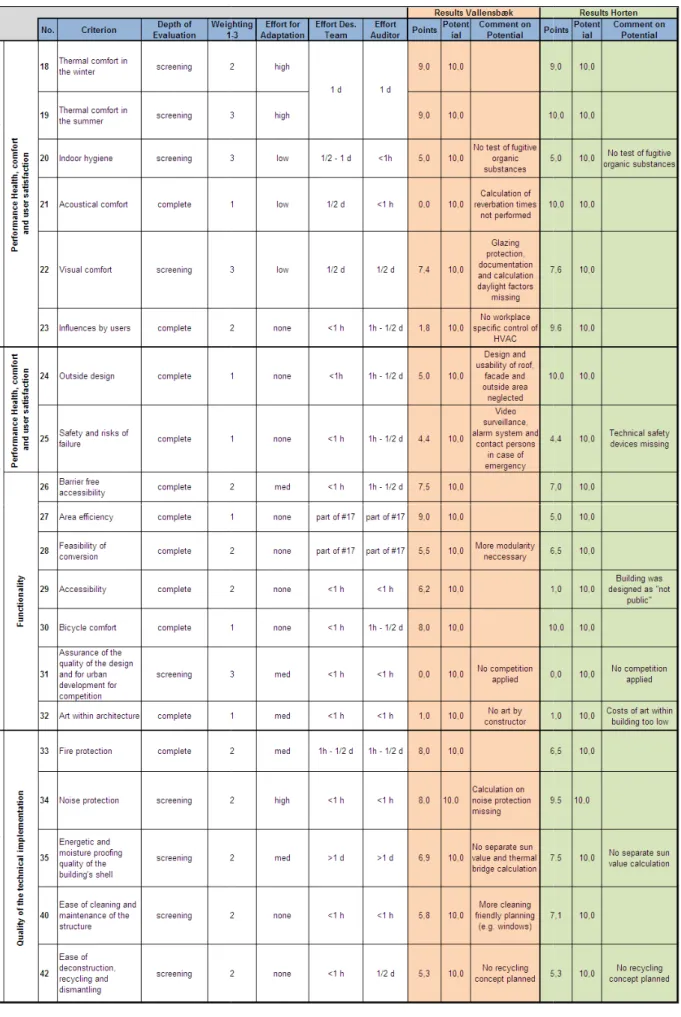
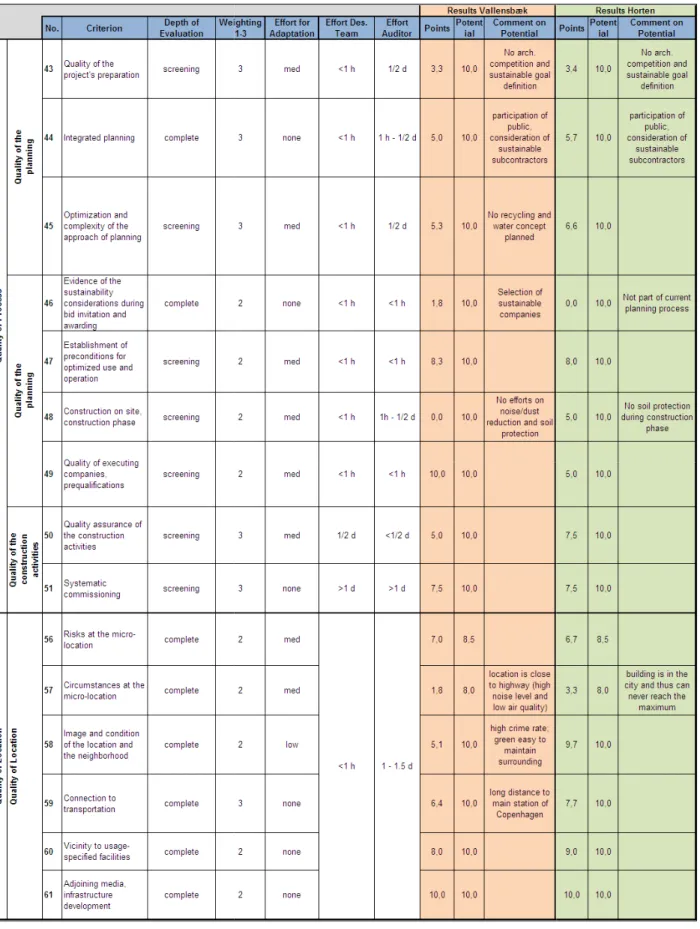
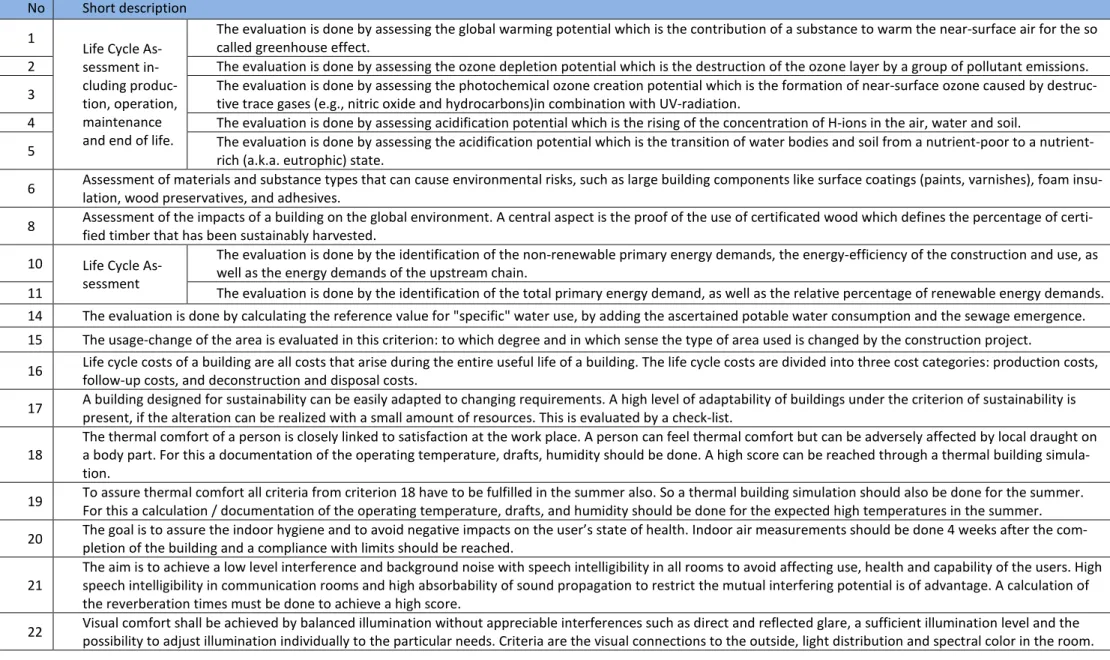
LEED: Kriterieoversigt
BREEAM: Konsulentrapport
BREEAM: Kriterieoversigt
DGNB: Konsulentrapport
DGNB: Kriterieoversigt
HQE: Konsulentrapport
HQE: Kriterieoversigt
Designteams notater om certificeringsordningerne
Faneblad
1
LEED
®Assessment Report
Benchmark Center for the Danish Construction SectorDanish Building Research Institute 06 April 2010
Author:
John A. Boecker, AIA, Hon. FIGP [email protected]
1. Introduction
LEED Assessment Workshops were convened on 18-19 January 2010 and 20-21 January 2010 at the project building sites for the Vallensbaek Company House and at the Horten Office Building, respectively. Each workshop consisted of a one-and-one-half-day review of the subject project with the project design/construction team – along with representatives from the Benchmark Center for the Danish Construction Sector (BEC) and the Danish Building Research Institute (SBi) – for the purpose of attempting to determine the project’s performance relative to the LEED-NC 2009 Green Building Rating System and to generate a dialogue with team members regarding the applicability of LEED criteria within the Danish context. These workshops included:
• An educational presentation by the facilitator (John Boecker) regarding the structure and content of LEED, interjected with discussion and an overview of project parameters.
• A comprehensive review of the project and how it related to each prerequisite and credit of the LEED-NC 2009 Green Building Rating System, including dialogue with the project team on a “credit-by-credit” basis, to assess whether or not compliance was (or could have been) achieved. This constituted the core of each workshop.
• A comprehensive preliminary LEED checklist was utilized during each workshop to record the results, including a list of items and comments pertaining to all applicable LEED “prerequisites” and “credits”, along with an assessment of the number of points might be achieved for each credit.
The LEED-NC 2009 Green Building Rating System is divided into five core categories of
assessment criteria, or credits, each with a maximum number of associated points that projects can earn, up to a total of 100 core points, as follows:
• Sustainable Sites (SS) 26 possible points
• Water Efficiency (WE) 10 possible points
• Energy & Atmosphere (EA) 35 possible points
• Materials & Resources (MR) 14 possible points
• Indoor Environmental Quality (IEQ) 15 possible points 100 total core points
Each category consists of a series of criteria, called “credits” that establish benchmarks for building performance; generally, these baseline levels of performance are established by referenced
standards, primarily U.S.-based documents. For some credits, points can be earned if the benchmark is achieved, while in other cases, additional points can be earned by demonstrating incrementally higher levels of performance relative to the benchmark threshold. In this way, LEED serves as a performance-based system (or tool), and as such, it is not intended to be prescriptive; rather, project teams can choose which credits to pursue or not, and in some cases, certain credits may not be applicable to project conditions. Hence, all credits are optional. With that said, there also are eight “prerequisites”, or mandatory provisions, distributed throughout the above five categories; the criteria (performance level) for all eight of these prerequisites must be met before projects can qualify for LEED certification.
LEED Assessment Report for BEC and SBi 06 April 2010
2
Basic Certification is achieved by earning a minimum number of points; however, there are three additional levels of certification that projects can achieve by earning more points, as follows:
• LEED Certified - 40-49 points
• LEED Silver - 50-59 points
• LEED Gold - 60-69 points
• LEED Platinum - 80+ points
Points available for each credit are based upon “weighting” their role in addressing 13 different environmental impact indicators; global climate change is the environmental impact “weighted” the highest in LEED. In addition to the 100 points available within the above-referenced five core
tegories, 10 “bonus” points are available within two additional categories, as follows: ca
• Innovation & Design Process (ID) 6 possible “bonus” points
• Regional Priority (RP) 4 possible “bonus” points
The Innovation & Design category reserves five credits to encourage innovation. These “wild
card” credits do not have defined criteria; rather, project teams can create their own criteria and
earn up to 5 such innovation points if they can demonstrate that they have achieved anenvironmental or human health benefit not currently addressed by LEED via means that are measurable, quantifiable, documentable, and verifiable. Four additional Regional Priority points are available as “bonus points” for achieving credits from the above-categories that are deemed particularly important for each specific location.
It also should be noted that LEED was designed to recognize that each credit should not be
perceived as a separate and independent issue; rather, many of the credits are deeply interrelated. Accordingly, the education component of LEED constantly stresses that project teams understand synergies between credits by encouraging an integrative design process that optimizes these reciprocal interrelationships, thereby discouraging project teams from conceiving each credit as an independent piece, or superimposed fragment. In other words, the point is not the “points”.
Of utmost importance, though, is the realization that LEED was created to serve as a market transformation tool. In other words, the raison d’être of LEED, simply stated, is to transform the marketplace. To accomplish this, the development of LEED continues to be aimed at constantly staying one or two steps ahead of the marketplace. In other words, if a position too far ahead of the market is targeted, the system likely will be perceived as too difficult, and nobody will use it; on the other hand, if the system’s criteria are positioned within the mainstream, the system is not transforming anything. So, as the market responds to LEED’s influence and shifts in the direction of its choosing – in this case, towards green building practices – LEED criteria and performance levels also must constantly evolve in order to stay ahead of the marketplace . . . and LEED was designed to do exactly that. Therefore, LEED has been explicitly created to evolve and change on an established 3-year cycle; hence, the next updated version of LEED will be published in 2012, then 2015, and so on.
One last issue bears mentioning: LEED does not currently utilize assessors to determine credit achievement and award certification; rather, project teams complete submission forms
electronically within a web-based shared workspace reserved for the project in LEED Online, the web-based tool created for documenting LEED projects. The Green Building Certification Institute (GBCI), an entity separate from the USGBC, utilizes independent third-party reviewers to assess LEED compliance and award certification, based upon these electronically-submitted documents that project teams complete via a four-step process of preliminary and final submissions/reviews. Finally, several potential conflicts were observed between some of the U.S.-based referenced standards in LEED and Danish legal requirements and/or/construction traditions; these are identified and organized by credit category in Section 4 below.
LEED Assessment Report for BEC and SBi 06 April 2010
3
2. Vallensbæk Company House
This speculative office building appears to be aimed at the upper-mid level of the market for potential tenants looking for office space in a suburb of Copenhagen. The project’s construction delivery methodology was developer driven – essentially design-build – so the developer/owner had significant control over design decisions and hence, the building’s ultimate performance, and it is clear that this particular developer was aiming to produce a high-performance green building from the outset. Consequently, it also is clear that significant effort was exerted to achieve high levels of energy performance, targeting both reduced loads and energy efficiency measures well in excess of already-relatively-stringent Danish codes and common practice. Accordingly, less effort appears to have been focused on aesthetics, but the resulting building is simple, clean, efficient, effective, and economically successful from the standpoint of attracting and retaining tenants.
The developer’s detailed knowledge of the building and its systems was extremely helpful during the LEED assessment workshop, as was the familiarity with the project’s design and its components expressed by the engineers present at the workshop. As a result, the project’s potential LEED certification level could be evaluated with a reasonably high level of
confidence. The chart to the right indicates that in its current state, the project likely could achieve LEED Silver certification at 57 points; however, with additional efforts, either in the form of rather easily implemented strategies and documentation at presentor during design (had the design team been aware of the criteria), it is likely that another 15 points might be achieved, qualifying for LEED Gold level certification with 72 total points. The number of points by credit category that the team
assessed as likely achievable is summarized in the chart below. More detailed explanations of the project’s strengths and weaknesses in each category follow. Further, a detailed checklist documenting the team’s assessment on a credit-by-credit basis is included in the Appendix of this report.
0 10 20 30 40 50 60 70 80 90 100 110 Total
Vallensbaek
LEED
Performance
Could be Added Likely Achieved 0 5 10 15 20 25 30 35 SS WE EA MR IEQ ID RPVallensbaek
LEED
Performance
by
Credit
Category
Not Achieved Could be Added Likely Achieved
LEED Assessment Report for BEC and SBi 06 April 2010
4
The project, in its current state, appears to have met the criteria of the Energy & Atmosphere category best – and to a relatively high degree – and performed least effectively in the Materials & Resources category, based upon the percentage of available points likely achieved in each core
ategory as follows: c
• Energy & Atmosphere (EA) 23 of 35 possible points = 65.71%
• Water Efficiency (WE) 6 of 10 possible points = 60.00%
• Sustainable Sites (SS) 15 of 26 possible points = 57.69%
• Indoor Environmental Quality (IEQ) 5 of 15 possible points = 33.33%
• Materials & Resources (MR) 3 of 14 possible points = 21.43%
However, the project relative success by credit category changes – and performance in the Sustainable Sites category appears best – when taking into consideration how many additional points likely could have been earned had the team known about the LEED criteria during the design phase, or could be achieved now with minimal effort, should the team choose to pursue
ertification, as follows: c
• Sustainable Sites (SS) 19 of 26 possible points = 73.01%
• Energy & Atmosphere (EA) 23 of 35 possible points = 65.71%
• Water Efficiency (WE) 6 of 10 possible points = 60.00%
• Indoor Environmental Quality (IEQ) 9 of 15 possible points = 60.00%
• Materials & Resources (MR) 6 of 14 possible points = 42.86%
2.1 Sustainable Sites (SS)
The SS category can be seen as being comprised of credits associated with two primary concepts: Credits 1 through 5 address issues primarily associated with site location and planning, while EAp1 and Credits 6 through 8 focus more on site design and management decisions. The project
appears to have done significantly better with the former, given the project’s location in a relatively dense area with existing infrastructure, as indicated in the following list of likely earned credits (including 4 additional points that easily could have been earned with some minor adjustment and/or knowledge of credit criteria during design):
Site location and planning:
• SSc1: Site Selection 1 point
• SSc2: Development Density & Community Connectivity 5 points
• SSc4.1: Alternative Transportation, Public Transport. Access 6 points
• SSc4.2: Alternative Transportation, Bike Storage/Changing Rms. 1 point
• SSc4.3: Alternative Transportation, Low-Emit’g/Efficient Vehicles 3 points (could be added) Site design and management:
• SSc5.2: Site Development, Maximize Open Space 1 point
• SSc6.2: Stormwater Design, Quality Control 1 point
• SSc8: Light Pollution Reduction 1 point (could be added) The main reasons for the remaining credits not being assessed as earned include the following:
• Context – the site was not contaminated (SSc2)
• Site Constraints – limited site area for habitat protection/restoration and stormwater infiltration (SSc5.1 and SSc6.1)
• Project Type – minimizing parking capacity is challenging for speculative tenant buildings, and asphalt paving is common/economical (SSc4.3 and SSc7.1)
• Chosen solutions – black roofing (SSc7.2)
• Lack of documentation – need to create simulated photometric site plan (SSc8)
LEED Assessment Report for BEC and SBi 06 April 2010
5
2.2 Water Efficiency (WE)
The WE category can be seen as being comprised of credits associated with two primary concepts: Credit 1 addresses outdoor water use, while WEp1 and Credits 2 through 3.3 focus more on indoor water use. The project better addressed the former, given the project’s lack or landscaping irrigation, as indicated in the following list of likely earned credits:
Outdoor water:
• WEc1: Water efficient Landscaping 4 points Indoor water:
• WEc3.1: Water Use Reduction, 30% Reduction 2 points
The main reasons for the remaining credits not being assessed as earned include the following:
• Chosen solutions – the project includes no rainwater or greywater harvesting systems and there was no focus on water use reductions or efficient plumbing fixture selection (WEc2, WEc3.2, and WEc3.3).
2.3 Energy & Atmosphere (EA)
The EA category can be seen as being comprised of credits associated with three primary
concepts: The first two prerequisites and Credits 1, 3 & 5 address issues primarily associated with energy demand/ efficiency/ performance, while Credit 2 and 6 focus more on energy supply, and EAp3/EAc4 target refrigerant management. The project appears to have done extremely well with the first set of issues, given the developer’s and project team’s design focus on energy
performance, while energy supply was not addressed at all, as indicated in the following list of likely earned credits:
Energy demand, efficiency, and performance:
• EAc1: Optimize Energy Performance 19 points
• Ac3: E Enhanced Commissioning 2 points Refrigerant management:
• EAc4: Enhanced Refrigerant Management 2 points T
he main reasons for the remaining credits not being assessed as earned include the following:
• Chosen solutions – the cost of renewable energy generation and green power purchasing served to deter the pursuit of EAc2 and EAc6, while the lack of creating and implementing a robust Measurement & Verification plan, along with the associated measurement devices in the control system precluded achievement of EAc5.
2.4 Materials & Resources (MR)
The MR category can be seen as being comprised of credits associated with two primary
concepts: MRp1 and Credits 1-2 address issues primarily associated with waste reduction, while Credits 3 through 7 focus more on materials impacts. The project was not assessed particularly strongly with either, since it appears that these were not areas of focus by the design team during construction, but it appears that 3 additional points could be included in the list of likely earned credits, as follows, if efforts are made to document compliance:
Waste reduction:
• MRc2.1-2: Construction Waste Management, Divert 75% 2 points (could be added) Materials impacts:
• MRc4.1: Recycled Content, 10% combined pre/post-consumer 1 point
• MRc4.2: Recycled Content, 20% combined pre/post-consumer 1 point (could be added)
LEED Assessment Report for BEC and SBi 06 April 2010
6 T
he main reasons for the remaining credits not being assessed as earned include the following:
• Context – the project did not reuse an existing building (MRc1)
• Chosen solutions – no FSC certified wood or salvaged materials were selected (MRc3 and MRc7), and only a small amount of rapidly renewable materials were specified (MRc6).
2.5 Indoor Environmental Quality (IEQ)
The IEQ category can be seen as being comprised of credits associated with two primary
concepts: The two prerequisites and Credits 1 through 5 address issues primarily associated with indoor air quality (IAQ), while Credits 6 through 8 focus more on occupant comfort and productivity. The project appears to have done significantly better with the latter, but it appears that 4 additional points could be included in the list of likely earned credits, as follows, had design decisions and efforts to document compliance been made:
Indoor air quality:
• EQc1: Outdoor Air delivery Monitoring 1 point (could be added)
• EQc4.1: Low-Emitting Materials, Adhesives & Sealants 1 point (could be added)
• EQc4.2: Low-Emitting Materials, Paints & Coatings 1 point (could be added)
• EQc5: Indoor Chemical & Pollutant Source Control 1 point (could be added) Occupant comfort and productivity:
• EQc6.2: Controllability of Systems, Thermal Comfort 1 point
• EQc7.1: Thermal Comfort, Design 1 point
• EQc7.2: Thermal Comfort, Verification 1 point
• EQc8.1: Daylight & Views, Daylight 75% of Spaces 1 point
• EQc8.2: Daylight & Views, Views for 90% of Spaces 1 point T
he main reasons for the remaining credits not being assessed as earned include the following:
• Chosen solutions – Increased ventilation and capabilities for individual lighting controls were not part of the design criteria (EQc2 and EQc6.1), and a Construction IAQ
Management Plan was not implemented (EQc3.1 -3.2); additionally low-emitting flooring and composite woods were not specified throughout (ERQc4.3-4.4).
2.6 Innovation & Design Process (ID) and Regional Priority (RP)
It is likely that the project can achieve the following 5 innovation credits, each earning one “bonus” point, in addition to the credits and points outlined above for the five core credit:
• Exemplary performance relative to SSc4.1 by providing double transit ridership
• Exemplary performance relative to MRc5 by achieving 30% regional materials
• Implementing an active public education program regarding green building strategies
• Implementing a green housekeeping program
It also is likely that at least two of the four available remaining “bonus” points can be earned by achieving the requirements for credits identified by a regional green building council in Denmark as having particular environmental importance for the project’s region. Candidates that might be considered for qualifying as regional priorities for Denmark might include SSc2, SSc4.1, EAc1, and others to be determined.
LEED Assessment Report for BEC and SBi 06 April 2010
7
3. Horten Office Building
This office building clearly implemented a strong design concept associated with achieving a high level of aesthetic quality tied to the building’s performance. Unlike Vallensbaek, it appears that the construction team had far less involvement during the design phases and that design solutions were strongly driven by the tenant’s programmatic needs in order to accommodate a specific professional firm. The design team was aiming to produce a green building, but perhaps without identified criteria. Consequently, although it is clear that significant effort was exerted to achieve energy savings, it does not appear as if design decisions were informed by energy modelling simulations of various parameters. Accordingly, significant effort appears to have been focused on integrating aesthetic quality with a number of innovative technologies to augment energy
performance, particularly with regard to the building’s facade and envelope components.
The architect’s detailed knowledge of the building was
extremely helpful during the LEED assessment workshop, but since hands-on design engineers were not present, a lack of familiarity with the project’s specific components (and design parameters) resulted in only a modicum level of confidence in the level of LEED certification achievable by the project. The chart to the right indicates that in its current state, it likely could achieve LEED Certification at 49 points, one point short of Silver; however, with additional efforts, either in the form of rather easily implemented strategies and documentation at presentor during design (had the design team been aware of the criteria), it is likely that another 22 points might be achieved, qualifying for LEED Gold level certification with 71 total points. The number of points by credit category that the team
assessed as likely achievable is summarized in the chart below. More detailed explanations of the project’s strengths and weaknesses in each category follow. Further, a detailed checklist documenting the team’s assessment on a credit-by-credit basis is included in the Appendix of this report.
0 10 20 30 40 50 60 70 80 90 100 110 Total
Horten
LEED
Performance
Could be Added Likely Achieved 0 5 10 15 20 25 30 35 SS WE EA MR IEQ ID RPHorten
LEED
Performance
by
Credit
Category
Not Achieved Could be Added Likely Achieved
LEED Assessment Report for BEC and SBi 06 April 2010
8
The project, in its current state, appears to have met the criteria of the Sustainable Site category best – and to a relatively high degree – and performed least effectively in the Materials &
Resources category, based upon the percentage of available points likely achieved in each core ategory as follows:
c
• Sustainable Sites (SS) 16 of 26 possible points = 61.54%
• Indoor Environmental Quality (IEQ) 7 of 15 possible points = 46.67%
• Water Efficiency (WE) 4 of 10 possible points = 40.00%
• Energy & Atmosphere (EA) 13 of 35 possible points = 37.14%
• Materials & Resources (MR) 3 of 14 possible points = 21.43%
However, the project relative success by credit category changes – and performance in the Indoor Environmental Quality category appears best – when taking into consideration how many
additional points likely could have been earned had the team known about the LEED criteria during the design phase, or could be achieved now with minimal effort, should the team choose to pursue certification, as follows:
• Indoor Environmental Quality (IEQ) 13 of 15 possible points = 86.67%
• Sustainable Sites (SS) 21 of 26 possible points = 80.77%
• Energy & Atmosphere (EA) 17 of 35 possible points = 48.57%
• Materials & Resources (MR) 7 of 14 possible points = 50.00%
• Water Efficiency (WE) 4 of 10 possible points = 40.00%
3.1 Sustainable Sites (SS)
The SS category can be seen as being comprised of credits associated with two primary concepts: Credits 1 through 5 address issues primarily associated with site location and planning, while EAp1 and Credits 6 through 8 focus more on site design and management decisions. The project
appears to have done significantly better with the former, given the project’s location in a relatively dense area with existing infrastructure, as indicated in the following list of likely earned credits (including 5 additional points that easily could have been earned with some minor adjustment and/or knowledge of credit criteria during design):
Site location and planning:
• SSc1: Site Selection 1 point
• SSc2: Development Density & Community Connectivity 5 points
• SSc4.1: Alternative Transportation, Public Transport. Access 6 points
• SSc4.2: Alternative Transportation, Bike Storage/Changing Rms. 1 point
• SSc4.3: Alternative Transportation, Low-Emit’g/Efficient Vehicles 3 points (could be added)
• SSc4.4: Alternative Transportation, Parking Capacity 2 points (could be added) Site design and management:
• SSc5.2: Site Development, Maximize Open Space 1 point
• SSc6.2: Stormwater Design, Quality Control 1 point
• SSc7.1: Heat Island effect, Non-Roof 1 point T
he main reasons for the remaining credits not being assessed as earned include the following:
• Context – the site was not contaminated (SSc2)
• Site Constraints – limited site area for habitat protection/restoration and stormwater infiltration (SSc5.1 and SSc6.1)
• Chosen solutions – black roofing (SSc7.2)
• Lack of documentation – need to create simulated photometric site plan (SSc8); it also appears that exterior uplighting at the entrance would preclude credit achievement
LEED Assessment Report for BEC and SBi 06 April 2010
9
3.2 Water Efficiency (WE)
The WE category can be seen as being comprised of credits associated with two primary concepts: Credit 1 addresses outdoor water use, while WEp1 and Credits 2 through 3.3 focus more on indoor water use. The project better addressed the former, given the project’s lack or landscaping irrigation, as indicated in the following list of likely earned credits:
Outdoor water:
• WEc1: Water efficient Landscaping 4 points Indoor water:
• WEp1: Water Use Reduction, 20% Reduction 0 points T
he main reasons for the remaining credits not being assessed as earned include the following:
• Chosen solutions – the project includes no rainwater or greywater harvesting systems and there was no focus on water use reductions or efficient plumbing fixture selection (WEc2, WEc3.1 - WEc3.3).
3.3 Energy & Atmosphere (EA)
The EA category can be seen as being comprised of credits associated with three primary
concepts: The first two prerequisites and Credits 1, 3 & 5 address issues primarily associated with energy demand/ efficiency/ performance, while Credit 2 and 6 focus more on energy supply, and EAp3/EAc4 target refrigerant management. The project appears to have done reasonably well with the first set of issues, given the project team’s design intent for achieving energy savings, while energy supply could be addressed, as indicated in the following list of likely earned credits
(including 4 additional points that perhaps could be earned with some minor adjustment, along with knowledge of credit criteria during design and Owner involvement in power purchasing):
Energy demand, efficiency, and performance:
• EAc1: Optimize Energy Performance 11 points
• Ac3: E Enhanced Commissioning 2 points Energy supply:
• EAc6: Green Power 2 points (could be added) Refrigerant management:
• EAc4: Enhanced Refrigerant Management 2 points (could be added) T
he main reasons for the remaining credits not being assessed as earned include the following:
• Chosen solutions – the cost of renewable energy generation served to deter the pursuit of EAc2, while the lack of creating and implementing a robust Measurement & Verification plan, along with the associated measurement devices in the control system precluded achievement of EAc5.
3.4 Materials & Resources (MR)
The MR category can be seen as being comprised of credits associated with two primary
concepts: MRp1 and Credits 1-2 address issues primarily associated with waste reduction, while Credits 3 through 7 focus more on materials impacts. The project was not assessed particularly strongly with either, since it appears that these were not areas of focus by the design team during construction, but it appears that 4 additional points could be included in the list of likely earned credits, as follows, if efforts are made to document compliance:
Waste reduction:
• MRc2.1-2: Construction Waste Management, Divert 75% 2 points (could be added) Materials impacts:
• MRc4.1: Recycled Content, 10% combined pre/post-consumer 1 point
LEED Assessment Report for BEC and SBi 06 April 2010
10
• MRc5.1-2: Regional Materials, 20% (by cost) 2 points
• MRc7: Certified Wood 1 point (could be added) T
he main reasons for the remaining credits not being assessed as earned include the following:
• Context – the project did not reuse an existing building (MRc1)
• Chosen solutions – no salvaged or rapidly renewable materials were selected or specified (MRc3 and MRc6).
3.5 Indoor Environmental Quality (IEQ)
The IEQ category can be seen as being comprised of credits associated with two primary
concepts: The two prerequisites and Credits 1 through 5 address issues primarily associated with indoor air quality (IAQ), while Credits 6 through 8 focus more on occupant comfort and productivity. The project appears to have done significantly better with the latter, but it appears that 6 additional points could be included in the list of likely earned credits, as follows, had design decisions and efforts to document compliance been made, thereby resulting in both sets of issues being addressed quite strongly:
Indoor air quality:
• EQc3.1: Construction IAQ Mgmt. Plan, During Construction 1 point
• EQc3.2: Construction IAQ Mgmt. Plan, Before Occupancy 1 point (could be added)
• EQc4.1: Low-Emitting Materials, Adhesives & Sealants 1 point (could be added)
• EQc4.2: Low-Emitting Materials, Paints & Coatings 1 point (could be added)
• EQc4.3: Low-Emitting Materials, Flooring Systems 1 point (could be added)
• EQc4.4: Low-Emitting Materials, Composite Wood & Agrifiber 1 point (could be added)
• EQc5: Indoor Chemical & Pollutant Source Control 1 point (could be added) Occupant comfort and productivity:
• EQc6.1: Controllability of Systems, Lighting 1 point
• EQc6.2: Controllability of Systems, Thermal Comfort 1 point
• EQc7.1: Thermal Comfort, Design 1 point
• EQc7.2: Thermal Comfort, Verification 1 point
• EQc8.1: Daylight & Views, Daylight 75% of Spaces 1 point
• EQc8.2: Daylight & Views, Views for 90% of Spaces 1 point T
he main reasons for the remaining credits not being assessed as earned include the following:
• Chosen solutions – Outdoor air delivery monitoring with CO2 sensors and increased ventilation were not part of the design criteria (EQc1 and EQc2.
3.6 Innovation & Design Process (ID) and Regional Priority (RP)
It is likely that the project can achieve the following 5 innovation credits, each earning one “bonus” oint, in addition to the credits and points outlined above for the five core credit:
p
• Exemplary performance relative to SSc4.1 by providing double transit ridership
• Exemplary performance relative to MRc5 by achieving 30% regional materials
• A significant and detailed acoustical analysis was conducted
• Implementing an active public education program regarding green building strategies It also is likely that at least two of the four available remaining “bonus” points can be earned by achieving the requirements for credits identified by a regional green building council in Denmark as having particular environmental importance for the project’s region. Candidates that might be considered for qualifying as regional priorities for Denmark might include SSc2, SSc4.1, EAc1, and others to be determined.
LEED Assessment Report for BEC and SBi 06 April 2010
11
4. Overall Conclusions
The Vallensbaek Company House excelled in the Energy & Atmosphere category, while the Horten Office Building excelled in the Indoor Environmental Quality category. This makes sense for both projects, given the Vallensbaek team’s design phase focus on energy issues, while the Horten team focused on indoor air quality and human comfort/productivity issues, since they were designing for a specific high-end tenant.
Both projects also performed quite well in the Sustainable Sites category, which makes sense as well, given the relatively dense urban and semi-urban locations of these projects, including high levels of access to public transportation and existing infrastructure. On the other hand, neither project performed very well in the Water Efficiency and Materials & Resources categories, primarily due to a lack of focus on these issues during the design phase.
As currently constructed, it is likely that the Vallensbaek project could achieve 57 points or LEED Silver certification (at a high level, only three points shy of Gold), while the Horten project likely could achieve 49 points, or LEED Certified (also at a high level, only one point shy of Silver). However, both projects could be assessed a full level higher had their design and construction teams been afforded access to the rating system (and its criteria) during the design phase, since design decisions could have been based on specific performance targets. Accordingly, the
Vallensbaek project likely could achieve 72 points, while the Horten project likely could achieve 71 points, which would result in both projects achieving LEED Gold.
Consequently, it can be concluded from these assessments that the primary reason for not achieving credit compliance, by far, can be attributed to design decisions being made without identified performance targets, therefore alignment with the associated credit criteria and requirements often could not be achieved. It also might be worth noting that, as a result, associated environmental benefits were similarly limited.
Lastly, the applicability of LEED criteria (the credit intents) appears in no way to conflict with Danish building design and construction practices. However, since the credit requirements in LEED currently are based on demonstrating performance levels relative to benchmarks
established primarily by U.S.-based referenced standards, adapting LEED to the Danish context would benefit from substituting different referenced standards for a number of credits, and in some cases, revising metrics and/or performance thresholds. In this regard, the primary conflicts or problems observed between the LEED requirements (based on U.S referenced standards) and Danish legal requirements/construction traditions include the following:
Sustainable Sites (SS):
• SSp1: The current requirements for Erosion and Sedimentation Control, based upon U.S. EPA’s BMPs, likely should be aligned with Danish regulations and practices.
• SSc2: Given the generally higher level of density in Denmark, the density requirements may need to be adjusted for closer alignment with the Danish context.
• SSc3: The current requirements for determining brownfield status, based upon U.S. ASTM Environmental Site Assessment criteria, likely should be aligned with Danish regulations and practices.
• SSc4.3: Given the generally higher fuel-efficiency of automobiles in Denmark, the U.S. referenced standard for compliant vehicles may need to be adjusted for stronger applicability to the Danish context.
• SSc6.2: The current requirements for determining stormwater quality, based upon U.S. BMP’s, likely should be aligned with Danish regulations and practices.
Water Efficiency (WE):
• WEc2 and WEc3: The current benchmark requirements for water efficiency, based upon U.S. EPACT regulations, likely should be aligned with EU/Danish regulations and practices.
LEED Assessment Report for BEC and SBi 06 April 2010
12 Energy & Atmosphere (EA):
• EAp1 and EAc3: Commissioning (Cx): The primary difference in Denmark is that
documentation related to Cx activities consists of a set of separate documents, so creating a single consolidated Cx methodology needs to be developed for the Danish context to define a more formalized process that can be specified in the bidding documents to clarify the roles of the Cx Authority and Contractors. It should be noted that apparently, Danish practice often consists of hiring a consulting engineer (not as part of design team) to review project CDs and provide field observations, a process that closely approximates Cx as defined in LEED; the OPR is somewhat different as a brief, but the BOD is quite similar, and it is fairly common for Danish "Quality Assurance" contracts and activities to closely align with LEED Cx requirements, except that often, these services are provided by the design team.
• EAc1: The U.S.-based referenced standard and modeling protocols for demonstrating energy savings, as defined by ASHRAE 90.1 Appendix G, likely should be modified to more closely align with Danish regulations and practices. Also, assuming a .77 conversion factor for Danish energy consumption relative to North America, it is likely that the performance thresholds should be revised for Danish standards. Additionally, Danish practice usually includes the provision of hot water supply from a district central plant, so the District energy System (DES) protocols for demonstrating compliance would need to be implemented and/or integrated into credit requirements and performance thresholds.
• EAc6: Since currently there is no equivalent for Green-e internationally, a Danish (or
international) standard should be developed to define what would be equivalent to Green-e. Materials & Resources (MR):
• MRc5: Perhaps include additional distance limits that expand the 500-mile (800 km) limit for materials shipped by various modes of transportation, such as trains and ships, etc.
Indoor Environmental Quality (IEQ):
• IEQp1 and IEQp2: The current requirements for ventilation, based upon U.S. ASHRAE 62, likely should be aligned with Danish regulations and practices. Additionally, natural
ventilation likely should be addressed with provisions other than those in ASHRAE 62.
• EQc4: The U.S.-based LEED referenced standards that define emissions limits for adhesives, sealants, paints, coatings, and flooring likely should be aligned with EU or Danish regulations and practices.
• EQc7.1: The current thermal comfort ranges and criteria, based upon U.S. ASHRAE 55, likely should be aligned with Danish regulations and practices.
Innovation & Design Process (ID) / Regional Priority (RP):
•
Regional priority: The Danish Green Building Council should identify which credits should qualify by virtue of their particular environmental importance for the region.
Faneblad
2
LEED: Kriterieoversigt
Kategori/Kriterie
Point
Sustainable Sites 26
Prerequisite 1 Construction Activity Pollution Prevention Required krav
Credit 1 Site Selection 1
Credit 2 Development Density and Community Connectivity 5
Credit 3 Brownfield Redevelopment 1
Credit 4.1 Alternative Transportation—Public Transportation Access 6 Credit 4.2 Alternative Transportation—Bicycle Storage and Changing Rooms 1 Credit 4.3 Alternative Transportation—Low-Emitting and Fuel-Efficient Vehicles 3 Credit 4.4 Alternative Transportation—Parking Capacity 2 Credit 5.1 Site Development—Protect or Restore Habitat 1
Credit 5.2 Site Development—Maximize Open Space 1
Credit 6.1 Stormwater Design—Quantity Control 1
Credit 6.2 Stormwater Design—Quality Control 1
Credit 7.1 Heat Island Effect—Nonroof 1
Credit 7.2 Heat Island Effect—Roof 1
Credit 8 Light Pollution Reduction 1
Water Efficiency 10
Prerequisite 1 Water Use Reduction Required krav
Credit 1 Water Efficient Landscaping 4
Credit 2 Innovative Wastewater Technologies 2
Credit 3 Water Use Reduction 4
Energy and Atmosphere 35
Prerequisite 1 Fundamental Commissioning of Building Energy Systems R equired krav Prerequisite 2 Minimum Energy Performance Required krav Prerequisite 3 Fundamental Refrigerant Management Required krav
Credit 1 Optimize Energy Performance 19
Credit 2 On-site Renewable Energy 7
Credit 3 Enhanced Commissioning 2
Credit 4 Enhanced Refrigerant Management 2
Credit 5 Measurement and Verification 3
Credit 6 Green Power 2
Materials and Resources 14 Possible Points 14
Prerequisite 1 Storage and Collection of Recyclables R equired krav Credit 1.1 Building Reuse—Maintain Existing Walls, Floors and Roof 3 Credit 1.2 Building Reuse—Maintain Existing Interior Nonstructural Elements 1
Credit 2 Construction Waste Management 2
Credit 3 Materials Reuse 2
Credit 4 Recycled Content 2
Credit 5 Regional Materials 2
Credit 6 Rapidly Renewable Materials 1
Credit 7 Certified Wood 1
LEED: Kriterieoversigt
Kategori/Kriterie
Point
Prerequisite 1 Minimum Indoor Air Quality Performance Required krav Prerequisite 2 Environmental Tobacco Smoke (ETS) Control Required krav
Credit 1 Outdoor Air Delivery Monitoring 1
Credit 2 Increased Ventilation 1
Credit 3.1 Construction Indoor Air Quality Management Plan—During Construction 1 Credit 3.2 Construction Indoor Air Quality Management Plan—Before Occupancy 1 Credit 4.1 Low-Emitting Materials—Adhesives and Sealants 1 Credit 4.2 Low-Emitting Materials—Paints and Coatings 1
Credit 4.3 Low-Emitting Materials—Flooring Systems 1
Credit 4.4 Low-Emitting Materials—Composite Wood and Agrifiber Products 1 Credit 5 Indoor Chemical and Pollutant Source Control 1
Credit 6.1 Controllability of Systems—Lighting 1
Credit 6.2 Controllability of Systems—Thermal Comfort 1
Credit 7.1 Thermal Comfort—Design 1
Credit 7.2 Thermal Comfort—Verification 1
Credit 8.1 Daylight and Views—Daylight 1
Credit 8.2 Daylight and Views—Views 1
Totalt antal “kernepoint” 100
Innovation in Design 6 Possible Points 6
Credit 1 Innovation in Design 5
Credit 2 LEED Accredited Professional 1
Regional Priority 4 Possible Points 4
Faneblad 3
The Benchmark Centre
for the Danish
Construction Sector
Testing Sustainability
Evaluation Systems in
Denmark
BREEAM
BlackThe Benchmark Centre
for the Danish
Construction Sector
Testing Sustainability
Evaluation Systems in
Denmark
BREEAM
Vallensbæk Company
House & Horten
Headquarters
March 2010
This report takes into account the particular instructions and requirements of our client.
It is not intended for and should not be relied upon by any third party and no responsibility is undertaken to any third party
Ove Arup & Partners Ltd
4 Pierhead Street, Capital Waterside, Cardiff CF10 4QP Tel +44 (0)29 2047 3727 Fax +44 (0)29 2047 2277
J:\211000\211998-00\4 INTERNAL PROJECT DATA\4-50 REPORTS\0005TESTING SUSTAINABILITY EVALUATION SYSTEMS IN DENMARK REPORT.DOCX
Ove Arup & Partners Ltd Issue 26 March 2010
Document Verification
Page 1 of 1Job title Testing Sustainability Evaluation Systems in Denmark Job number
211998-00
Document title BREEAM File reference
Document ref
Revision Date Filename 0004Testing Sustainability Evaluation Systems in Denmark Report.docx
Draft 1 20/03/10 Description First draft
Prepared by Checked by Approved by
Name JC EH PW
Signature
Issue 26/03/10 Filename 0005Testing Sustainability Evaluation Systems in Denmark Report.docx
Description
Prepared by Checked by Approved by
Name JC EH MC
Signature
Filename Description
Prepared by Checked by Approved by
Name
Signature
Filename Description
Prepared by Checked by Approved by
Name
Signature
The Benchmark Centre for the Danish Construction Sector Testing Sustainability Evaluation Systems in Denmark BREEAM
J:\211000\211998-00\4 INTERNAL PROJECT DATA\4-50 REPORTS\0005TESTING SUSTAINABILITY EVALUATION SYSTEMS IN DENMARK REPORT.DOCX
Ove Arup & Partners Ltd Issue 26 March 2010
Contents
Page
1 Introduction 1
2 Vallensbæk 2
2.1 Summary of Building’s Assessment Performance 2
2.2 Management 2
2.3 Health & Wellbeing 2
2.4 Energy 3
2.5 Transport 3
2.6 Water 3
2.7 Materials 3
2.8 Waste 4
2.9 Land Use & Ecology 4
2.10 Pollution 4
2.11 Innovation 4
3 Horten 5
3.1 Summary of Building’s Assessment Performance 5
3.2 Management 5
3.3 Health & Wellbeing 5
3.4 Energy 6
3.5 Transport 6
3.6 Water 6
3.7 Materials 6
3.8 Waste 7
3.9 Land Use & Ecology 7
3.10 Pollution 7 3.11 Innovation 7 4 Conclusions 8
Appendices
Appendix A Vallensbæk Results Appendix B Horten ResultsThe Benchmark Centre for the Danish Construction Sector Testing Sustainability Evaluation Systems in Denmark BREEAM
J:\211000\211998-00\4 INTERNAL PROJECT DATA\4-50
REPORTS\0005TESTING SUSTAINABILITY EVALUATION SYSTEMS IN DENMARK REPORT.DOCX
Page 1 Ove Arup & Partners Ltd
Issue 26 March 2010
1
Introduction
Arup have been asked by The Benchmark Centre for the Danish Construction Sector to review Vallensbæk Company House and Horten Headquaters in Copenhagen, Denmark against the BREEAM Europe Commercial 2009 Offices assessment guidelines using the post construction evidence requirements.
Vallensbæk Company House is a four story office block with two main wings totalling 6,000m2. The building contains a common foyer, canteen with a capacity of 120, 30 person auditorium along with one 18 person and two 12 person meeting rooms. The low-energy building has a high level of insulation, energy efficient windows, and improved air
permeability. The building is heated with district heating combined with a ventilation system with heat recovery.
Horten Headquaters is a six story office block with 10,000m2 floor area. The building is occupied by the law firm Horten who were involved in the design from early in the project. All office spaces are on the perimeter of the building taking advantage of natural light. The energy efficient building has high quality insulation and glazing with user controlled shading. The building is heated via the district heating system.
The BREEAM assessment is grouped into 10 sectors which each have specific credit requirements and contribute to a weighted percentage of the final score as illustrated below. The regulations can be downloaded from http://www.breeam.org/login.jsp ;
It is not the brief of this study to carry out a formal certified BREEAM assessment, rather to perform a post construction review to measure the potential current rating of the building and to outline the potential achievable credits.
Copies of the assessment documentation have been included as appendices. Key
assumptions that require confirmation are highlighted within the report together with tables of credits which outlines the potential achievable credits.
It must be noted that this will not be reviewed by the BRE and no final certification will be awarded for the BREEAM assessment.
The Benchmark Centre for the Danish Construction Sector Testing Sustainability Evaluation Systems in Denmark BREEAM
J:\211000\211998-00\4 INTERNAL PROJECT DATA\4-50
REPORTS\0005TESTING SUSTAINABILITY EVALUATION SYSTEMS IN DENMARK REPORT.DOCX
Page 2 Ove Arup & Partners Ltd
Issue 26 March 2010
2
Vallensbæk
2.1 Summary of Building’s Assessment Performance
Vallensbæk Company House would achieve 34.65% giving a PASS rating and could possibly achieve a final score of 52.41%. This translates into a final BREEAM rating of
GOOD.
2.2 Management
3 credits were achieved which equates to 3.27% and 6 credits could have been achieved which equates to 6.55% credits. 5 of 11 credits were considered not achievable.
Three credits were not initially achieved as the evidence requirements were outside standard practise. Several were thought achievable if considered from the initial stages of the project and would have little financial impact on the project.
The majority of construction site impacts were met however transport monitoring and timber sourcing ruled out two credits. These along with the development of a tenant oriented building user guide and a life cycle cost analysis were not produced as it was not considered standard practise in the region.
2.3 Health & Wellbeing
7 credits were achieved which equates to 7.5% and 10 credits could have been achieved which equates to 10.71% credits. 4 of 14 credits were considered not achievable.
Four credits were not initially achieved as the evidence requirements were outside standard practise. Three of these credits were considered achievable if reports and modelling was produced from the initial stages of the project. These would have little financial impact. Lighting zones and controls credit was not achieved as they are outside local regulations. Credit Hea 3 relating to glare control was not achieved and responsibility of this would have to be considered from the initial stages.
It was felt that the building acoustics would not meet the requirements.
The thermal comfort and thermal zoning credits have been achieved through mechanical ventilation system.
The Benchmark Centre for the Danish Construction Sector Testing Sustainability Evaluation Systems in Denmark BREEAM
J:\211000\211998-00\4 INTERNAL PROJECT DATA\4-50
REPORTS\0005TESTING SUSTAINABILITY EVALUATION SYSTEMS IN DENMARK REPORT.DOCX
Page 3 Ove Arup & Partners Ltd
Issue 26 March 2010
Credits relating to lighting levels, indoor air quality and contamination were all met under Danish regulations.
2.4 Energy
10 credits were achieved which equates to 8.26% and 13 credit could have been achieved which equates to 10.74% credits. 10 of 23 credits were considered not achievable.
Credit Ene 4 regarding external lighting could be achieved if changes were now made or it was considered from early in the project. The financial impact on the project would be dependable on the project stage that it was considered and the lighting requirements. If a LZC (Low and zero carbon) report was produced at the outset of the project one credit could be achieved. As no onsite electricity is produced no more credits can be achieved. The report would have little financial impact on the project.
The building electrical sub-metering system met the requirements to achieve all of the available credits.
Eight of the available fifteen credits regarding Ene 1 energy efficiency have been met through the local assessment methods. To achieve more credits could have large financial impacts and must be considered from the initial start of the project.
2.5 Transport
3 credits were achieved which equates to 2.67% and 5 credits could have been achieved which equates to 4.44% credits. 4 of 9 credits were considered not achievable.
Proximity to public transport ruled out a possible two credits however the proximity to amenities such as doctors, postal facilities and bank/cash machine met the requirements. The safety for both cyclist and pedestrians met the local regulations.
The local bus service has achieved one of the requirements for modes of transport. Development of a travel plan could achieve one additional credit with little financial impact. Additional car parking spaces would have to be provided to meet the requirements. This was affected by the office uses and occupancy levels. As this would be a large financial investment and use of land this credit would not be aimed to be achieved.
2.6 Water
3 credits were achieved which equates to 2.0% and 5 credits could have been achieved which equates to 3.33% credits. 4 of 9 credits were considered not achievable.
Through the Wat 1 water consumption spreadsheet regarding flow rates one credit was achieved. The calculations do not include kitchens and as the majority of office buildings in the country have complete kitchens true consumptions figures cannot be shown.
The use of sub-metering and manual water for the local plans achieves two credits. Major leak detection and sanitary supply shutoff credits were considered achievable however may have a big financial impact on the project and would have to be considered from the outset.
As a feasibility study into onsite water treatment systems was not completed no credits could be awarded for Wat 8. It was considered that this could be taken from a municipality approach from the initial stages of developments.
2.7 Materials
0 credits were achieved which equates to 0.0% and 4 credits could have been achieved which equates to 3.85% credits. 9 of 13 credits were considered not achievable.
The Benchmark Centre for the Danish Construction Sector Testing Sustainability Evaluation Systems in Denmark BREEAM
J:\211000\211998-00\4 INTERNAL PROJECT DATA\4-50
REPORTS\0005TESTING SUSTAINABILITY EVALUATION SYSTEMS IN DENMARK REPORT.DOCX
Page 4 Ove Arup & Partners Ltd
Issue 26 March 2010
No credits were achieved as the majority of the credits were considered outside standard practise in the region. As it is new build two of the credits were automatically ruled out. Responsible sourcing of materials is not part of the industry in the region and would be extremely difficult to achieve. This may also have a large financial impact on the project. This also links to insulation selection which had one credit thought achievable if considered from the early stages.
It was felt that the approach to robustness is different in the region to that of the BREEAM however if considered from early stages was felt that it may be achievable.
2.8 Waste
4 credits were achieved which equates to 4.29% and 4 credits could have been achieved which equates to 4.29% credits. 3 of 7 credits were considered not achievable.
As the use of recycled aggregates with a clear % is not standard practise in the region and industry it was considered extremely difficult to achieve.
Waste management requirements both onsite and for building occupants have been met. The local recycling and waste management procedures exceed the requirements.
2.9 Land Use & Ecology
0 credits were achieved which equates to 0.0% and no additional credits were considered achievable. 10 of 10 credits were considered not achievable.
None of the land footprint is on an area of land which had previously been developed in the last 50 years and was not considered contaminated which ruled out two credits.
As no ecological report has been produced no credit can be awarded.
If an ecology assessment was produced at the start of the project these credits man have been achieved. As this is not standard practise the cost may vary compared to the uk market from which the regulations were developed.
2.10 Pollution
8 credits were achieved which equates to 6.67% and 9 credits could have been achieved which equates to 7.5% credits. 3 of 12 credits considered not achievable.
Refrigeration selection and leak detection system met all of the requirements however depending on regional suppliers can have financial impact. The leak detection system is standard practise in the region.
As the building runs on district heating and 8 credits have been achieved in Ene 1 energy efficiency one of three available credit have been awarded for the reduced NOx emissions. The noise attenuation credit requirements have been exceed while working with the municipality. It was considered that it would be worth applying for an innovation credit. Night time light pollution could easily be achieved at a low cost.
Two credits regarding flood risk were achieved however to achieve the third credit regarding surface water run-off attenuation would be at a high cost and was not considered
appropriate.
2.11 Innovation
0 credits were achieved which equates to 0.0% and 1 credit regarding noise pollution could have been achieved which equates to 1.0% credits. 9 of 10 credits were considered not achievable.
The Benchmark Centre for the Danish Construction Sector Testing Sustainability Evaluation Systems in Denmark BREEAM
J:\211000\211998-00\4 INTERNAL PROJECT DATA\4-50
REPORTS\0005TESTING SUSTAINABILITY EVALUATION SYSTEMS IN DENMARK REPORT.DOCX
Page 5 Ove Arup & Partners Ltd
Issue 26 March 2010
3
Horten
3.1 Summary of Building’s Assessment Performance
Horten Headquaters would achieve 33.75% giving a PASS rating against the BREEAM Europe Commercial 2009 Environmental and Sustainability Standard. From the review we feel that the building could possibly achieve a final score of 55.78%. This translates into a final BREEAM rating of VERY GOOD.
3.2 Management
3 credit were achieved which equates to 3.27% and 7 credits could have been achieved which equates to 7.64% credits. 4 of 11 credits were considered not achievable.
Three credits were not initially achieved as the evidence requirements were outside standard practise. Several were thought achievable if considered from the initial stages of the project and would have little financial impact on the project.
The majority of construction site impacts were met however a CO2 report and timber sourcing ruled out two credits. These along with the building user guide and a life cycle cost analysis were not considered standard practise in the region however were felt achievable.
3.3 Health & Wellbeing
10 credits were achieved which equates to 10.71% and 12 credits could have been
achieved which equates to 12.86% credits. 2 of 14 credits were considered not achievable. Potential for natural ventilation was ruled out as none of the windows are can be opened. Credits relating to view out, glare control and lighting were all achieved.
The buildings acoustics were considered from the initial stages of the project and it was felt that if an acoustician was involved this credit could be achieved.
Thermal comfort credits have been achieved through the mechanical ventilation system however thermal zoning credits were ruled out by the veranda workstations.
Credits relating to lighting levels, indoor air quality and contamination were all met under Danish regulations.
The Benchmark Centre for the Danish Construction Sector Testing Sustainability Evaluation Systems in Denmark BREEAM
J:\211000\211998-00\4 INTERNAL PROJECT DATA\4-50
REPORTS\0005TESTING SUSTAINABILITY EVALUATION SYSTEMS IN DENMARK REPORT.DOCX
Page 6 Ove Arup & Partners Ltd
Issue 26 March 2010
3.4 Energy
5 credits were achieved which equates to 4.13% and 9 credits could have been achieved which equates to 7.43% credits. 14 of 23 credits were considered not achievable.
If a LZC (Low and zero carbon) report was produced at the outset of the project one credit could be achieved. As no onsite electricity is produced no more credits can be achieved. The report would have little financial impact on the project.
The building electrical sub-metering system met the requirements to achieve one credit and the second credit was felt to be achievable if considered at the start of the project. This would have a minimal financial impact on the project.
Credit Ene 4 relating to external lighting could not be achieved due to client requirements. Four of the available fifteen credits regarding Ene 1 energy efficiency have been met through the local assessment methods. To achieve more credits could have large financial impacts and be considered from the initial start of the project.
3.5 Transport
5 credits were achieved which equates to 4.44% and 7 credits could have been achieved which equates to 6.22% credits. 2 of 9 credits were considered not achievable.
Proximity to public transport, doctors, postal facilities and bank/cash machine has met the requirements.
The safety for both cyclist and pedestrians met the local regulations for lighting however access to the bike racks rules this credit unachievable.
The local bus service location meets one the requirements and the addition of car sharing and marketing/notice board would achieve the second credit at little additional cost.
Development of a travel plan would achieve one additional credit with little financial impact. One credit can be awarded for car parking however the second cannot due to no
limitations/controls on parking spaces in undercover parking.
3.6 Water
2 credits were achieved which equates to 1.33% and 7 credits could have been achieved which equates to 3.33% credits. 4 of 9 credits were considered not achievable.
Through the Wat 1 water consumption spreadsheet regarding flow rates one credit was achieved. The calculations do not include kitchens and as the majority of office buildings in the country have complete kitchens true consumptions figures cannot be shown.
The use of sub-metering was considered achievable at a minimal additional cost. Major leak detection and sanitary supply shutoff credits were considered achievable however may have a financial impact on the project and would have to be considered from the outset.
As a feasibility study into onsite water treatment systems was not completed no credits could be awarded for Wat 8. It was considered that this could be taken from a municipality approach from the initial stages of developments.
As there are no watering system the irrigation system credit has been achieved.
3.7 Materials
0 credits were achieved which equates to 0.00% and 6 credits could have been achieved which equates to 6.77% credits. 7 of 13 credits were considered not achievable.
The Benchmark Centre for the Danish Construction Sector Testing Sustainability Evaluation Systems in Denmark BREEAM
J:\211000\211998-00\4 INTERNAL PROJECT DATA\4-50
REPORTS\0005TESTING SUSTAINABILITY EVALUATION SYSTEMS IN DENMARK REPORT.DOCX
Page 7 Ove Arup & Partners Ltd
Issue 26 March 2010
After discussing the hard landscaping and boundary protection credit was felt achievable and documentation would produced if considered from the initial stages of the project. Responsible sourcing of materials is not part of the industry in the region however it was felt that one credit would be achieve. This may also have a large financial impact on the project. Being a new build the re-use of building facade and structure credits were not achieved. It was felt that the approach to robustness is different in the region to that of the BREEAM however if considered from early stages was felt that it may be achievable.
3.8 Waste
5 credits were achieve which equates to 5.36% and 5 credits could have been achieved which equates to 5.36% credits. 2 of 7 credits were considered not achievable.
As the use of recycled aggregates with a clear % is not standard practise in the region and industry it was considered extremely difficult to achieve.
Waste management requirements both onsite and for building occupants have been met. The local recycling and waste management procedures exceed the requirements.
3.9 Land Use & Ecology
2 credits were achieved which equates to 2.00% and no aditional credits were considered achievable. 8 of 10 credits were considered not achievable.
The building is on re-used land that was not considered contaminated so one of the two available credits was achieved.
As no ecological report has been produced no credit can be awarded and therefore the impact on site ecology and biodiversity cannot be monitored for improvement.
An ecology assessment was produced at the start of the project and it was believed that Checklist A4 would meet the requirements. As this is not standard practise the cost may vary compared the uk market from which the regulations were developed.
3.10 Pollution
3 credits were achieve which equates to 2.50% and 5 credits could have been achieved which equates to 4.17% credits. 7 of 12 credits were considered not achievable.
Refrigeration selection and leak detection system met all of the requirements however depending on regional suppliers can have financial impact. It was said that the leak detection system is standard practise in the region.
As the building runs on district heating and only 4 credits have been achieved in Ene 1 energy efficiency no credits have been awarded for the reduced NOx emissions.
Noise attenuation was considered from early in the project and from discussions was felt to meet the credit requirements even though an assessment did not take place.
Night time light pollution does not meet the requirements.
No credits were achieved regarding flood risk due to the site location and flooding information provided.
3.11 Innovation
0 credits were achieved which equates to 0.00% and 1 credits could have been achieved which equates to 1.00% credits. 9 of 10 credits were considered not achievable.
Credit Wat 2 - The water metering system with pulsed output was thought to meet the credit requirements.
The Benchmark Centre for the Danish Construction Sector Testing Sustainability Evaluation Systems in Denmark BREEAM
J:\211000\211998-00\4 INTERNAL PROJECT DATA\4-50
REPORTS\0005TESTING SUSTAINABILITY EVALUATION SYSTEMS IN DENMARK REPORT.DOCX
Page 8 Ove Arup & Partners Ltd
Issue 26 March 2010
4
Conclusions
In order to improve the score and achieve several of the unachieved credits the projects would require significant improvements in materials and land use and ecology credit areas from the initial stages of the project. Had these requirements been known and considered at the time of development we are confident that these additional credits could be achieved. In the Management credit group several credits would not be achieved in most projects in the region as the evidence requirements are outside standard practise, however these would be achievable if considered from the initial stages of the project. They would have little financial impact.
The credit groups with a large positive impact were Health & Wellbeing and Energy & Pollution. The most negative impact was for the Land Use and Ecology credit group where few credits were achieved. This credit group is also impacted by the local regional approach to town and site development.
As with projects in the UK the ability to achieve many of the Health and Wellbeing credits will vary from project to project. Credits relating to lighting levels, indoor air quality and contamination generally have to meet local regulations however credits relating to view out and thermal comfort are project dependant.
The energy credit group has a large influence on the project and can be affected by many other credit groups such as Materials and Health & Wellbeing. This credit group should be considered early in the project and it is recommended that work between the architects and mechanical and electrical engineers begins at the initial stages.
There were several credits considered as conflicting with the Danish Regulations and construction traditions. The majority of these centred on community heating, waste management, material supply/re-use and regional development. It was also found that several credits were considered standard practise. These generally related to the pollution. Transport credits are mostly influenced by the site location and layout. Several credits such as parking and cyclist and pedestrian safety can be easily achieved if considered early in the project.
It was felt that site feasibility studies done by the municipality impact on several credits including the Water and Land Use & Ecology credit groups and that BREEAM’s credit requirements may need to be reviewed.
Several of the credits were considered standard practise in the region relating to local regulations and building practise. These included lighting levels, indoor air quality and contamination along with waste management.
Overall it can be seen that several credits can be achieved with little additional work if considered from the initial stages. However there are several credits that would have a high financial impact on the project and would be ruled out if the project were attempting to achieve a high rating.