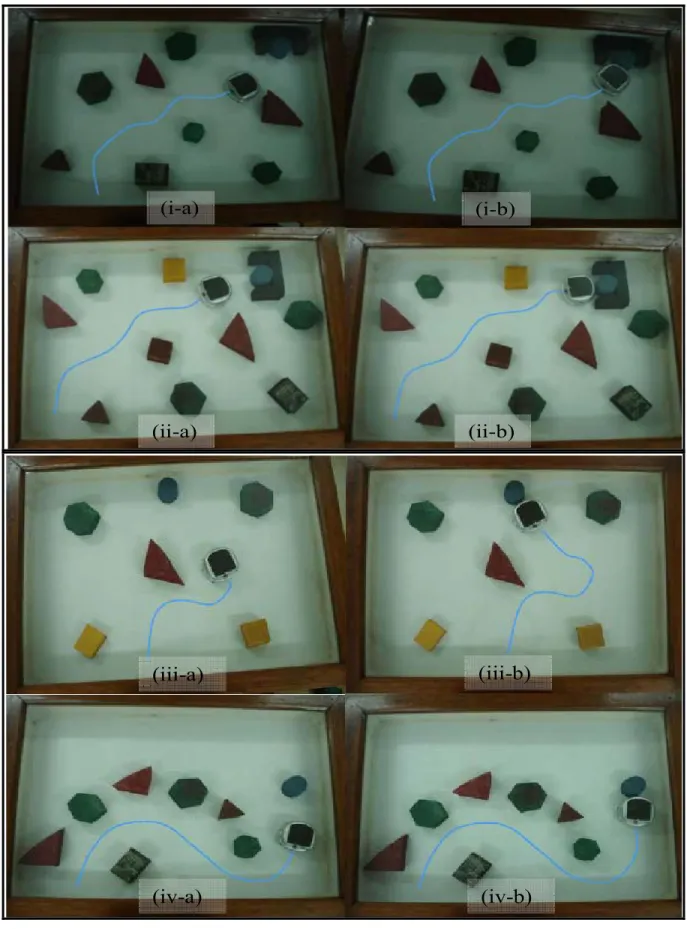
ROB
BOT IN
N VAR
RIOUS E
ENVIR
Muk
RONME
kesh Kum
ENTS
mar Sing
gh
N
V
Depa
Nation
Departm
National
Various
Thesi
artment of
nal Institu
For aw
Docto
Mukes
Unde
Prof.
ment of
l Institut
Orissa
No
s Envir
is Submitt
f Mechan
ute of Tec
ward of th
of
or of Phi
by
sh Kum
er the guid
Dayal R
Mechan
te of Te
a (India)
vember
ronme
ted to the
nical Engi
chnology,
he degree
ilosophy
mar Singh
dance of
R. Parhi
nical En
chnolog
)-769008
r 2009
ents
ineering
Rourkela
y
h
i
ngineeri
gy Rourk
8
a
ng
kela
I hereby declare that this submission is my own work and that, to the best of my knowledge and belief, it contains no material previously published or written by another person nor material which to a substantial extent has been accepted for the award of any other degree or diploma of the university or other institute of higher learning, except where due acknowledgement has been made in the text.
(Mukesh Kumar Singh)
vario Mec of aw out b Philo resu the a Date
---N
This is to ce ous Environ hanical Eng ward of the by him under This thesis i osophy in ac lts embodied award of any e: 16/11/200 ---Web: http/ATION
ROUR
ertify that th nment”, bei gineering, Na degree Doc r my supervi in my opinio ccordance w d in this thes y degree or d 9 ---//www.nitrkl.ac.NAL IN
RKELA
he thesis ent ing submitte ational Insti ctor of Philo ision and gu on, is worthy with the regu sis have not diploma. ---in, Phone: 0661NSTITU
A -76900
Certifica
titled, “Navi ed by Mr. M itute of Tech osophy, is a uidance. y of consider ulation of the t been submi ---2462031, 2462UE OF
08, OR
ate
igational Pa Mukesh Kum hnology, Rou record of b ration for aw e institute. T itted to any N R ---021, 2472050, FTECH
RISSA, I
ath Analysis mar Singh to urkela, for th bona fide resward of the To the best of other Unive Mec National Inst Rourkela, Or ---Fax:91-661-246
HNOLO
INDIA
s of Mobile o the Depart he partial fu search work degree of D f my knowle ersity or Inst Sup (Dayal R Pr Depart chanical Eng titute of Tec rissa, India- 7 ---2039, 2462999.OGY
.
robot in tment of lfillment k carried Doctor of edge, the titute for pervisor R. Parhi) rofessor, tment of gineering chnology 769008. ---Acknowledgements
I extend my deep sense of indebtedness and gratitude to Prof. Dayal R. Parhi for his kindness in providing me an opportunity to work under his supervision and guidance. He played a crucial role in the process of my research work. First of all, he allowed me to join his research group, even three scholars were working under him. His advice to harmonize theory and applications help me a lot in my research. He showed me different ways to approach a research problem and the need to be persistent to accomplish my goal. His keen interest, invaluable guidance and immense help have helped me for the successful completion of the thesis.
I am thankful to Prof. Sunil Kumar Sarangi, Director of National Institute of Technology, for giving me an opportunity to work under the supervision of Prof. Parhi. Special thank goes to him, without his support it was not possible to choose such a sincere guide. I am thankful to Prof. R.K. Sahoo, Head of the Department, Mechanical Engineering, for his moral support and valuable suggestions regarding the research work.
Besides my advisors, I would like to thank Mr. Maheshwar Das, for helping me to complete the robot controller circuit for experimental validation as well as the challenging research that lie behind it. I am also thankful of all lab mates Mr. Jayata Kumar Pothal, Mr. B. Mohan, Soumitri Rai Jagdev and Miss Subhshri Kundu for their valuable support and maintaining a nice research environment in the laboratory.
I wish to extend special thanks to Prof. P. Rath, Prof. B.K. Singh, Prof. S. Bhowmik and Scientist S.K. Kashyap, for their valuable suggestions and cordial environment in NIT Campus. Special thanks go to Prof. S.K. Mahapatra who shared tennis with me throughout the semester to make life enjoyable apart from academics. The beautiful weather of NIT Campus, kept me in good health and high spirits throughout the research period.
Special thanks go to my wife, ‘Karuna’ for all her support at every stage of this research. I hope she knows that there is no one in the world as beautiful and inspiring as she is. During this
Synopsis
This dissertation describes work in the area of an autonomous mobile robot. The objective is navigation of mobile robot in a real world dynamic environment avoiding structured and unstructured obstacles either they are static or dynamic. The shapes and position of obstacles are not known to robot prior to navigation. The mobile robot has sensory recognition of specific objects in the environments. This sensory-information provides local information of robots immediate surroundings to its controllers. The information is dealt intelligently by the robot to reach the global objective (the target). Navigational paths as well as time taken during navigation by the mobile robot can be expressed as an optimisation problem and thus can be analyzed and solved using AI techniques. The optimisation of path as well as time taken is based on the kinematic stability and the intelligence of the robot controller. A successful way of structuring the navigation task deals with the issues of individual behaviour design and action coordination of the behaviours. The navigation objective is addressed using fuzzy logic, neural network, adaptive neuro-fuzzy inference system and different other AI technique. The research also addresses distributed autonomous systems using multiple robots.
The proposed research work aims to broaden the development in the area of navigational path analysis of mobile robot in various (known and unknown) environments by avoiding static as well as dynamic obstacles. This research also addresses distributed autonomous systems using multiple robots which are superior in control strategy to single mobile robots in terms of reliability, expandability, and flexibility. In contrast to a single robot system; they provide increased robustness by taking advantage of inherent parallelism and redundancy. Research in autonomous multi-robot systems often focuses on mechanisms to enhance the efficiency of the group through some form of cooperation among the individual agents. An intelligent controller enables the robot to cope with its real world environment. This research is related to design of an intelligent controller for single as well as multiple mobile robots using AI techniques (i.e. Fuzzy, neural, adaptive neuro-fuzzy, heuristic rule base network) so that mobile robot able to navigate in real word dynamic environments. The current investigation focuses on optimisation of robot path as well as time taken during navigation to reach the specified targets by avoiding static as well as dynamic obstacles.
Table of Contents
Declaration ... i Certificate ... ii Acknowledgements ... iii Synopsis ... iv Contents ... v List of Tables ... ix List of Figures ... xList of Symbols ... xxiv
1 Introduction ... 1
1.1 Background and Motivation ... 1
1.2 Aims and Objectives of this Research ... 4
1.3 Outline of the Research Work ... 6
2 Literature Review ... 7
2.1 Introduction ... 7
2.2 Navigation of Mobile Robots ... 8
2.2.1 Indoor Navigation ... 8
2.2.2 Outdoor Navigation ... 9
2.3 Kinematics of Mobile Robot ... 11
2.4 Fuzzy Logic Controller for Mobile Robot ... 15
2.5 Neural Controller for Mobile Robot ... 20
2.6 Adaptive Neuro-Fuzzy Controller for Mobile Robot ... 25
2.7 Heuristic Rule Base Neural Controller for Mobile Robot ... 28
2.8 Summary ... 31
3 Kinematic Analysis of Mobile Robots ... 32
3.1 Introduction ... 32
3.2 Type of Wheels used in Mobile Robot ... 33
3.3 Analysis of Wheel Kinematic Constraints ... 35
3.4 Motion Control ... 37
3.4.1 Open Loop Control ... 37
3.5 Problem Statement ... 38
3.6 Kinematic Analysis of Mobile Robot ... 39
3.7 Dynamic Analysis of Mobile Robot ... 42
3.8 Motion Control of Mobile Robot ... 44
3.8.1 The control Law ... 45
3.8.2 Local Stability Issue ... 47
3.9 Summary ... 48
4 Analysis of Fuzzy Logic Controller for Mobile Robot ... 49
4.1 Introduction ... 49
4.2 Fuzzy Logic Behaviour for Control Technique ... 51
4.3 Behavioural Architecture ... 54
4.3.1 Obstacle Avoidance ... 55
4.3.2 Wall Following Behaviour ... 58
4.3.3 Target seeking Behaviour ... 60
4.4 Simulation Results and Discussion ... 62
4.5 Experimental results ... 64
4.6 Summary ... 66
5 Analysis of Neural Controller for Mobile Robot ... 68
5.1 Introduction ... 68
5.2 Analysis of Neural Network for Navigation ... 69
5.3 Simulation Results and Discussions ... 75
5.4 Experimental results ... 80
5.5 Summary ... 84
6 Adaptive Neuro-Fuzzy Controller for Navigation of Mobile Robots ... 85
6.1 Introduction ... 85
6.2 Analysis of ANFIS ... 87
6.3 Simulation Results ... 91
6.4 Experimental Results ... 95
6.5 Summary ... 97
7 Heuristic Rule Base Neural Controller for Mobile Robot ... 99
7.1 Introduction ... 99
7.2 Perception Based Heuristic Rule ... 100
7.3 Back Propagation Algorithms (BPA) ... 108
7.4 Petri Net Model (PNM) ... 108
7.6 Experimental Results with Real Mobile Robot ... 114
7.6.1 Implementation of HRBN Controller on Khepera robot ... 114
7.6.2 Implementation of HRBN Controller on Koala robot ... 116
7.7 Summary ... 119
8 Results and Discussion ... 120
8.1 Kinematics and Dynamic Stability of Mobile Robot ... 120
8.2 Intelligent Controller of Mobile Robots ... 121
9 Conclusions and Future Works ... 126
9.1 Conclusions ... 126 9.2 Future Works ... 127 Appendix-A ... 128 Appendix-B ... 130 Appendix-C ... 134 References ... 138
Published and Accepted Papers ... 156
List of Tables
Table 4.1. Parameter for variables ... 52
Table 4.2. List of rules for obstacle avoidance ... 56
Table 4.3. List of rules for wall following behaviour ... 59
Table 4.4. List of rules for target seeking and map localisation ... 61
Table 4.5. Time taken by robots in simulation and experiment to reach targets ... 66
Table 5.1. Some of the training pattern of neural controller ... 72
Table 5.2. Reactive behaviours adopted by mobile robot during navigation ... 74
Table 5.3 Time taken by robots in simulation and experiment to reach targets ... 81
Table 5.4. Simulation results comparison between the fuzzy controllers developed by Pradhan et al. [213] and the current developed neural controller ... 83
Table 6.1 Time taken by robots in simulation and experiment to reach targets. ... 95
Table 7.1. Heuristic rule formulation for obstacle and target located in the left side of the robot. ... 102
Table 7.2 Heuristic rule formulation for obstacle and target located in the right side of the robot. ... 103
Table 7.3. Heuristic rule formation for obstacle present front of the robot and target located in right side of the robot. ... 103
Table 7.4. Perception based heuristic rule formation for obstacle avoidance Fig. 7.3(a) ... 104
Table 7.5. Perception based heuristic rule formation for obstacle avoidance (Fig.7.3(b)) ... 105
Table 7.6. Human perception based heuristic rule formation for wall following Fig. 7.4(a) ... 106
Table 7.7. Perception based heuristic rule formation for wall following (Fig. 7.4 (b)) ... 107
Table 7.8 Total path traveled and time taken by robots during simulation and experimental environment by proposed method. ... 116
Table 7.9. Total path traveled and time taken by robots during simulation and experimental environment by proposed method ... 118
Table 8.1. Results deviation of travelled path and time taken during simulation and experimental mode ... 124
List of Figures
Figure 1.1. General control scheme of autonomous mobile robot system. ... 3
Figure 2.1. Flow diagram of the horizontal decomposition method for robot navigation. ... 10
Figure 2.2. Flow diagram of the vertical decomposition method for robot navigation. ... 11
Figure 2.3. Schematic diagram of the fuzzy logic controller for mobile robot. ... 17
Figure 2.4. Schematic view of the neural networks used for the navigation of mobile robots, the output of the Kohonen network is fed into the feed forward network as a regression. ... 24
Figure 3.1. (a) Schematic view of conventional wheel and (b) Ball wheel used in mobile robots. ... 34
Figure 3.2. Kinematic parameters of (a) Standard wheel (b) Ball wheel. ... 35
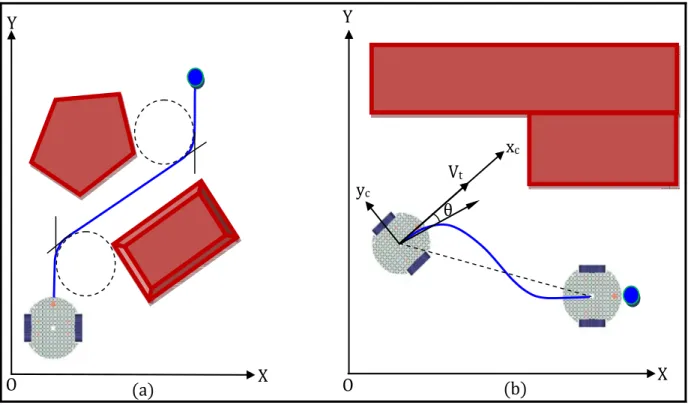
Figure 3.3. Kinematic control of a mobile robot, (a) Open-loop control based on straight lines and circular trajectory segments, (b) Typical situation for feedback control of a mobile robot. ... 38
Figure 3.4. Kinematic analysis of mobile robot ... 39
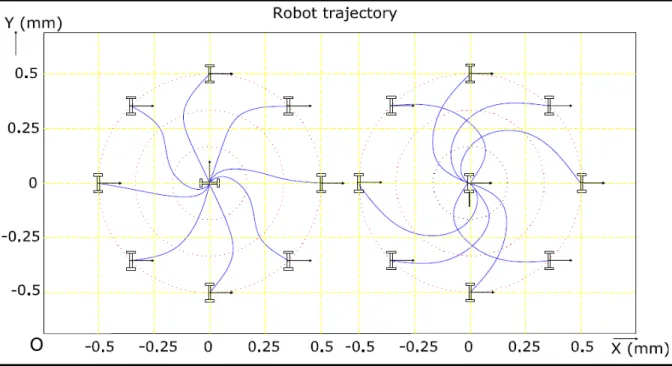
Figure 3.5. Resulting paths of the robot at initially on the unit circle in X-Y plane. ... 46
Figure 4.1. Simulation resulting paths of mobile robot. ... 52
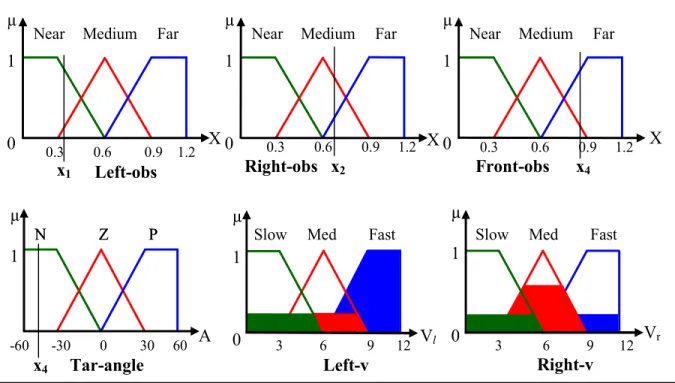
Figure 4.2. Fuzzy membership functions used to design fuzzy logic controller. ... 55
Figure 4.3. Schematic diagram of the fuzzy logic for navigation of mobile robots. ... 57
Figure 4.4. The surface view of the fuzzy logic for navigation of mobile robots. ... 57
Figure 4.5. (a) Static as well as dynamic obstacle avoidance (b) Obstacle avoidance and motion control behaviour. ... 58
Figure 4.6. (a) Robot in indefinite loop in concave trap (b) Wall following behaviour. ... 60
Figure 4.7. (a) Escape from dead ends and find the target (b) Target seeking behaviour. ... 61
Figure 4.8. (a) Mobile robot reference trajectories by Das et al. [86] (b) Mobile robot reference trajectories by proposed controller. ... 62
Figure 4.9. (a) Mobile robot trajectories with different number by Zhu et al. [154] (b) Mobile robot trajectories with different number by purposed method. ... 63
Figure 5.1. Four-layer neural network for robot navigation. ... 71
Figure 5.2. Example of training patterns. ... 71
Figure 5.3. Hyperbolic tangent function used for activation function. ... 72
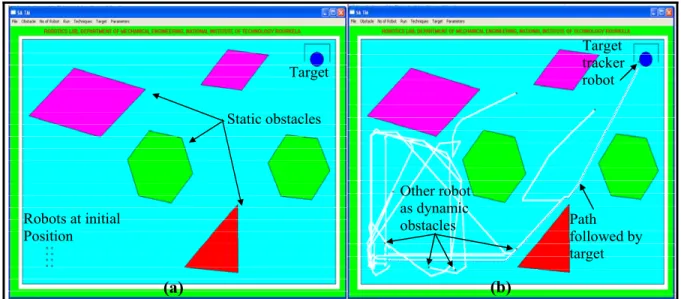
Figure 5.4. Static as well as dynamic obstacle avoidance behaviour (a) At initial position before simulation (b) Navigational path during simulation. ... 76
Figure 5.5. Robot with wall following behaviour (b) Robot escaping from dead end obstacles. ... 76
Figure 5.6. (a) Navigation of a mobile robot in unknown environment by Ray et al. [216] (b) Navigation of a mobile robot in unknown environment using a developed controller. ... 77
Figure 5.7. (a) Experimental result of planned path by Hamel et al. [194] (b) Navigation of mobile robot using developed controller. ... 78
Figure 5.8. (a) Static and dynamic experimental result by Sanchis et al. [214] (b) Static and dynamic simulation result by developed neural controller. ... 79
Figure 5.9. The chassis of the KHEPERA-III robot. ... 80
Figure 5.10. Experimental results during target seeking by the mobile robot in various environments ... 82
Figure 5.11. Comparison of experimental results with simulation results. ... 83
Figure 6.1. Six-layers ANFIS architecture for robot navigation. ... 88
Figure 6.2. Bell shaped membership function used for fuzzy inference system. ... 88
Figure 6.3. (a) Static as well as dynamic obstacle avoidance behaviour (b) Target seeking behaviour of mobile robot. ... 91
Figure 6.4. (a) Navigation path of mobile robot by purposed ANFIS (b) Escaping from dead end by purposed ANFIS methodology. ... 92
Figure 6.5. (a) Results of Abdessemed et al. [90] during vehicle controlled motion with a cluttered obstacle environment from two different starting points. (b) Results of proposed ANFIS approach during vehicle controlled motion with a cluttered obstacle environment from two different goal and starting points. ... 93
Figure 6.6. (a) Path traced by the robot embedded with Arkin’s[211] controller, (b) Path traced by the robot embedded with proposed ANFIS controller. ... 93 Figure 6.7. Comparison results of Camilo et al. [221] proposed approach (i) in a double
Results of proposed ANFIS approach (i) in a double U shape environment
(ii) in a large and recursive U-shape environment. ... 94
Figure 6.8. Experimental results of purposed ANFIS method. ... 96
Figure 6.9. Paths followed by mobile robots using ANFIS method. ... 96
Figure 6.10. Experimental results validation in simulation mode. ... 97
Figure 7.1. Position of wheels and sensors in Khepera-III mobile robot, infrared (1-11) and ultrasonic sensors (U1-U5). ... 101
Figure 7.2. Position of wheels and sensors in koala mobile robot. ... 101
Figure 7.3. Perception based rule formation for obstacle avoidance in different environments. ... 104
Figure 7.4. Perception based rule formation for wall following behaviour in different environments ... 106
Figure 7.5. Four-layer heuristic rule neural network for robot navigation. ... 109
Figure 7.6. Petri net model to avoid inter collision among robots during navigation. ... 109
Figure 7.7. Simulation result of inter robot collision avoidance among robots via petri net model (a) Initial position of mobile robots (b) After simulation result. ... 111
Figure 7.8. Simulation result of wall following behaviour in different environments. ... 111
Figure 7.9. (a) Simulation result of target searching behaviour of mobile robots (b) target searching behaviour. ... 111
Figure 7.10. (a) Simulation results of Ayari et al. [220] collision free goal reaching in learned environment (b) Simulation results of proposed method collision free goal reaching. ... 112
Figure 7.11. (a) Simulation results comparisons with Yang et al. [88] (b) Simulation results of proposed method. ... 113
Figure 7.12. Experimental validation of simulation result on Khepera robots ... 115
Figure 7.13. Traced paths of mobile robots during experiment ... 115
Figure 7.14. Path optimization of target tracker robot (TR) avoiding static as well as dynamic obstacle with experimental validation. ... 116
Figure 7.15. (a) Experimental result with Koala mobile robot to start moving towards target and (b) Finally robot tracks the target following optimal path. ... 117
Figure 8.1. Comparison of results between Fuzzy, Neural, ANFIS and HRBN
controller. ... 125
Figure A.1. The Typical Screen of ROBNAV Software used for Navigation of Mobile Robots. ... 128
Figure A.2. The obstacles into the software. ... 129
Figure A.3. (i) The number of robot into the software (ii) The target into the software. ... 129
Figure B.1. A Simple Petri Net Model. ... 130
Figure B.2. The Input and Output arcs. ... 132
Figure B.3. Firing of Petri Net Model. ... 132
Figure C.1. (a) Chassis of the robot (b) Working model of NITR Mobile Robot. ... 134
Figure C.2. KHEPERA-II mobile robot. ... 135
Figure C.3. KHEPERA-III mobile robot. ... 136
List of Symbols
Left-obs = Left obstacle distance Right-obs = Right obstacle distance Front-obs = Front obstacle distance Head-ang = Heading angle
Tar-ang = Target angle
Left-v = Velocity of left wheel Right-v = Velocity of right wheel
= Angle between local coordinate x-axis to robot reference frame = Angle of the wheel plane relative to the chassis
= Angle of rotation w.r.t. global coordinate P = Position in polar coordinates
R = Radius of the wheel
V = Linear velocity
ω = Angular velocity
t = Time taken by a robot to move from a distance
K = Control matrix
w = Axel length (left and right driving wheels distance) C = Center of gravity point of the mobile robot
V = Linear tangential velocity V = Linear velocity of right wheel V = Linear velocity of left wheel ω = Angular tangential velocity
q = The position of global coordinate frame SA = Steering angle of the robot
M(q) = A symmetric, positive definite inertia matrix R3nx3n = Torque of right wheel
= Torque of left wheel
λ = Vector of Lagrange multipliers µ = Fuzzy membership function
z = Centroid distance of the firing area
Med = Medium
y = Left obstacle distance from the robot y = Front obstacle distance from the robot y = Right obstacle distance from the robot y = Target bearing of the robot
θ = Desired output from the neural network θ = Actual output from the neural network f(.) = Activation function
= Weight of the neuron connection from i in layer j
= Error gradient
a , b , and c = The parameters for the fuzzy membership function
L = Layer of the network PN = Petri net structure
= Distance between the center of the robot’s wheel axel and the target position
1
Introduction
The work described in this thesis has been carried out in the context of the navigation of various environments with mobile robots. This chapter introduces the basic concept and an overview of the research areas concerning the work carried out in this thesis. In the first part background information and motivation of research has been discussed and the aims and objective of the research have been discussed in the second part. An outline of current research work has been explained in the third part of this chapter.
1.1
Background and Motivation
Current research and development of mobile robot have attracted the attention of researchers in the areas of engineering, computer science, biology, mining and others. Mobile robots have a high potential in several applications. These include automatic freeway driving, guidance of the blind and disabled, explorations of dangerous regions and mechanical parts transfer in flexible assembly system. Progress in the field of mobile robot navigation has been slower than might have been expected from the excitement and relatively rapid advances of the early days of research. Systems where a robot is acting independently in complicated surroundings have often been proven only in very limited trials, or have not produced actions which could be thought of as particularly.
Autonomous mobile robots are intelligent agents which can perform desired tasks in various (known and unknown) environments without continuous human guidance. Many kinds of robots are autonomous to some degree. One important area of robotics research is to enable the robot to cope with its environment whether this is on land, underwater, in the air, underground or in space. A fully autonomous robot in the real world has the ability to:
¾ Gain information about the environment.
¾ Travel from one point to another point, without human navigation assistance. ¾ Avoid situations that are harmful to people, property or itself.
A robot may also be able to learn autonomously. Autonomous learning includes the ability to: ¾ Learn or gain new capabilities without outside assistance.
¾ Adjust strategies based on the surroundings. ¾ Adapt to surroundings without outside assistance.
Autonomous mobile robotics is a challenging research topic for several reasons. First, a mobile robot should able to identify features, detect obstacles, patterns and target, learn from experience, find a path and build maps, and navigate. These abilities of mobile robot require the simultaneous application of many research disciplines (e.g. Engineering and computer science). Secondly, autonomous mobile robots are the closest approximation of intelligent agents. For centuries people have been interested in building machines that can think and make decisions based on the environment around them. To satisfy this goal mobile robotics research has increasingly incorporated artificial intelligence enabling the machines to mimic living beings.
Thirdly, there are many applications for mobile robots. Transportation, surveillance, inspection, cleaning and entertainment, military operations in complex hazardous environments, hostile environments such as Mars trigger even more unusual locomotion mechanisms, are just some examples. Other commercial robots operate not where humans cannot go, but rather share space with humans in human environments. These robots are compelling not for reasons of mobility but because of their autonomy, and so their ability to maintain a sense of position and to navigate without human intervention is paramount.
The design of mobile robots involves the integration of many different bodies of knowledge. To solve locomotion problems, the mobile robot must understand mechanism and kinematics, dynamics and control theory. Localization and navigation demand knowledge of computer algorithms, information theory, artificial intelligence, and probability theory. A general control scheme of autonomous mobile robot system has been illustrated in Fig.1.1.
To be sure, some form of high-level control is required to ensure that the robots do not harm any humans being or equipment or other robots. In effect, this high level of control implies an implementation of Asimov’s laws (1950).
Localization Map Building Cognition Path planning Position global map Environment model local map
Information extraction Sensors Path Path Execution Actuator Action Goal command Raw data Real World Environment Per cept ion Mo ti on c on tr ol K n ow le dge bas e
Figure 1.1. General control scheme of autonomous mobile robot system.
After introducing the original three laws, Asimov detected as early as 1950, a need to extend the first law, which protected individual humans, so that it would protect humanity as a whole. Thus, his calculating machines “have the good of humanity at heart through the overwhelming force of the First Law of Robotics. The revised set of laws is shown in the sidebar. There is a law that is greater than the First Law: “A robot may not injure humanity, or through inaction, allow humanity to come to harm”.
Path analysis and planning is another exciting challenge in building autonomous mobile robots. An autonomous robot must be able to learn its environment and programming itself without assistance. It consists on finding a route from the origin of the robot to its target destination. Path analysis and planning becomes more difficult when some static as well as dynamic obstacles are added to the environment. When this occurs, it is necessary to find an alternative route. This implies a process of adaptation to the environment. In addition to avoiding collision, the other requirements are smoother motion, shorter traveling time, or more clearance from the obstacle. Therefore, the path analysis and planning involves optimization
1.2
Aims and Objectives of this Research
The goal of autonomous mobile robotics is to build and control physical systems which can move purposefully and without human intervention in real-world environments which have not been specifically engineered for the robot. The development of techniques for autonomous mobile robot operation constitutes one of the major trends in the current research and practice in modern robotics. When we visit an unfamiliar place, like a new building, shopping mall or theme park, we look for guiding information to guide us to our destinations in mind. This thesis contributes towards design and development of control techniques those enables the robot to navigate in a real world environment, avoiding static and dynamic obstacles especially in crowded and unpredictably changing environment. The robot explores in the environments and identifies human understandable guiding clues to find a way to the assigned destination. The aim of this research is to idealize an existing autonomous mobile robot, on all levels. This includes the kinematics, perception, cognition, sensor fusion, path analysis, path planning and navigation. The following reactive behaviours are required to train the mobile robots to make them capable of intelligent motion. The following behaviours are required during navigation of mobile robots.
1. Obstacle avoidance behaviour, so that the mobile robot able to avoid collisions with both static obstacles and dynamic obstacles in various environments.
2. Wall following behaviour, so that mobile robot cannot trap in loop as the mobile robot detects an obstacle in the front while the target tracking control mode is on operation. 3. Target searching behaviour, so that mobile robot quickly moves towards the target if there
are no obstacles around the robot.
Another objective is to determine the shortest path from the origin of the robot to its target destination. Methods for finding the shortest path, even through obstacles, have traditionally been based on one of several models, including static obstacles and moving obstacles. This thesis purposes alternative ways for determining the best route a mobile robot can follow in any environment from its origin to its target destination with the aim to reach a specified target. The objective of a kinematic controller is to follow a trajectory described by its position and velocity profiles as function of time. Many researchers have studied kinematic behaviour and
provided some adequate solutions for (kinematic) motion control of a mobile robot system. Most of controllers of mobile robot are not considering the dynamics of the system.
If the robot is kinematical stable then another challenge is to design an intelligent controller which may provide a general, robust, safe and optimised path so that mobile robot navigate in real world dynamic environment. To design an intelligent controller fuzzy logic and neural network play vital role. This is due to the fact that fuzzy if-then rules are well suited for capturing the imprecise nature of human knowledge and reasoning processes. Fuzzy logic modeling is primarily based on fuzzy sets and fuzzy if-then rules proposed by Zadeh (1965) [55] which are closely related to perception and cognitive science. On the other hand the neural networks tackle the same problems with a different strategy. The neural network is equipped with a remarkable learning capability such that a desired input output mapping can be discovered through learning by examples. These two innovative modeling approaches share some common characteristics such as i) they assume parallel operations, ii) they are well known for their fault tolerance capabilities and iii) they are often called model free modeling approaches. As a result many researchers are trying to integrate these two schemes to generate hybrid models that can take advantage of the strong points of both. This is also the motivation for proposed research which aims at providing an integrate framework capable of using both neural networks and fuzzy inference systems. This thesis also proposes two integrated models Adaptive Neuro-Fuzzy Inference System (ANFIS) and Human Perception Based Heuristic Rule Base Neural Network (HRBN). These purposed approaches are appropriate for designing of intelligent controller. Petri nets model has been used to avoid inter collision among multiple robots in purposed thesis.
A ROBNAV software using C++ has been developed to demonstrate the simulation test (Appendix-A). NITR (Appendix-C.1) (developed and design in the laboratory), Khepera-II (Appendix-C.2), Khepera-III (Appendix-C.3), and Koala (Appendix-C.4) mobile robots has been used to obtained experimental results. A series of simulations and experimental results shows the effectiveness of the proposed control scheme and the robustness of the fuzzy, neural, ANFIS (Adaptive Neuro Fuzzy Inference System) and HRBN (Heuristic Rule Base Neural network) controllers. This research is devoted to the design and development of some control techniques for navigational path analysis of mobile robot in various environments.
1.3
Outline of the Research Work
The processes as outlined in this thesis are broadly divided into eight chapters. Following the introduction, Chapter 2 provides a state of the art review of navigation, kinematics analysis, fuzzy logic controller, neural controller, adaptive neuro-fuzzy controller and heuristic rule base neural controller of mobile robot.
In Chapter 3 analyses the kinematics of mobile robots. A wheeled mobile robot is considered for the kinematic analysis. It explains how a desired trajectory can be obtained using kinematic stability during navigation.
Chapter 4 defines the concept of the fuzzy logic and outlines the methodology used to design an intelligent fuzzy logic controller which enables the mobile robot to navigate successfully in real world environment.
Chapter 5 discusses the neural network technique being used for navigation of mobile robots. In Chapter 6 Navigation of mobile robots using Adaptive Network based Fuzzy Inference System (ANFIS) has been described.
In Chapter 7 Human Perception Based Navigation control of Heuristic Rule Base Neural network (HRBN) controller for mobile robot has been discussed. In Chapter 8 a detailed report of results and discussion has been given. This chapter summarises the findings of all chapters discussed before.
Finally in Chapter 9 conclusions of this research and future directions for further investigation has been discussed.
2
Literature Review
This chapter reviews the work related to the development of navigational path analysis and planning of mobile robot in various environments. The progress made in past decades in the field of navigational path analysis of mobile robot and techniques used to design the intelligent controller has been described. This chapter presents a literature review of past and recent developments in area of kinematics analysis and artificial intelligence techniques used for navigation of mobile robots.
2.1
Introduction
A significant amount of research has been published in many aspects related to mobile robots. A literature review cannot simply be a catalog of all the articles published on a subject, the list would be much too long and could not be include each contribution. The alternative is to include in this chapter only those contributions that cover to kinematics stability of mobile robots which provides desired trajectory and artificial intelligence technique that helps to design an intelligent controller for robot. A large number of researchers have used kinematic models to develop motion control strategy for mobile robots. The ultimate goal of mobile robotics research is to endow the robots with high intellectual ability, of which navigation in an unknown environment is achieved by using on line sensory information. It summarizes the past work, mostly in computational geometry and robotics, and discusses possible directions for research.
Another challenge in literature review is that even the perception of what constitutes progress varies widely in the research community. The representations would be difficult to extend other scenarios where a robot may need to seek out optimal path and track the target in the competing clutter environment on the basis of their semantic significance. Despite these challenges, the next sections review in this article and highlights some of the more interesting, important and experimental milestones. This chapter provides details survey report within important aspects of what the researchers have worked in the area of navigational path analysis and planning for mobile robot using fuzzy logic, neural network, adaptive neuro-fuzzy and heuristic rule base neural network technique.
2.2
Navigation of Mobile Robots
The development of techniques for autonomous navigation in real-world environments constitutes one of the major trends in the current research on robotics. One of the main problems in mobile robot navigation is the determination of the robot position [1]. An important problem in autonomous navigation is the need to cope with the large amount of uncertainty that is inherent of natural environments [2]. Navigation of mobile robot is an active area of research with many potential military and civilian applications. Yet, there are many unsolved problems which probably either need a breakthrough in the current theories or a completely new approach for the solution. Extraordinary abilities of humans in doing these tasks without any measurement have inspired many researchers [3]. Navigation for mobile robots can be well-defined in mathematical (geometrical) terms. It also involves many distinct sensory inputs and computational processes. Elementary decisions like turn left, or turn right, or run or stop is made on the basis of thousands of incoming signals [3-6]. Thus it is necessary to define what navigation is and what the function of a navigation system? Navigation is traditionally defined as the process of determining and maintaining a trajectory to a goal location [5]. Biological navigation behaviours have been an important source of inspiration for robotics in the past decade. According to Levitt and Lawton [7], navigation consists of answering three questions: (a) “Where am I?” (b) “Where are other places with respect to me?” and (c) “How do I get to other places from here?” However, biological systems do not necessarily require all that knowledge to navigate, but they usually work on a “how do I reach the goal?” basis. Most systems typically deal with different degrees of knowledge depending on the circumstances. Navigation can be classified as two broad group indoor and outdoor navigations.
2.2.1
Indoor Navigation
From the pioneering robotic vehicle work by Giralt et al. [8] in 1979, and later by Moravec [9] in 1983, and Nilsson [10] in 1984, it became clear that, implicitly or explicitly, meant for navigation to incorporate within it some knowledge of what the computer was supposed to see. When sequences of images were used to represent space, the images taken
during navigation were submitted to some kind of appearance-based matching between the perception and expectation. All of these and subsequent efforts fall into three broad groups. ¾ Map-Based Navigation: Map-Based Navigation is the systems that depend on user-created geometric models or topological maps of the environment. In this method information acquired from the robot's onboard sensors is compared to a map or world model of the environment [11]. If features from the sensor-based map and the world model map match, then the vehicle's absolute location can be estimated [12].
¾ Map-Building-Based Navigation: Map-Building-Based Navigation is the systems that use sensors to construct their own geometric or topological models of the environment and then use these models for navigation [13].
¾ Map less Navigation: Map less Navigation is the systems that use no explicit representation at all about the space in which navigation is to take place, but rather resort to recognizing objects found in the environment or to tracking those objects by generating motions based on visual observations [14].
2.2.2
Outdoor Navigation
Outdoor Navigation usually involves obstacle-avoidance, landmark detection, map building updating, and position estimation. Outdoor navigation can still be divided into two classes according to their level of structure of the environment.
¾ Structured environment: Structured environment first reported in the literature is by Tsugawa et al. [15] for a car that could drive autonomously. The navigation relied mostly on obstacle avoidance. In general, outdoor navigation in structured environments requires some sort of road-following. Road-following means an ability to recognise the lines that separate the lanes or separate the road from the berm, the texture of the road surface, and the adjoining surfaces etc. [16].
¾ Unstructured environment: An outdoor environment with no regular properties that could be perceived and tracked for navigation may be referred to as unstructured environment [17]. In such a situation the vision system can make use of at most a generic characterization of the possible obstacles in the environment.
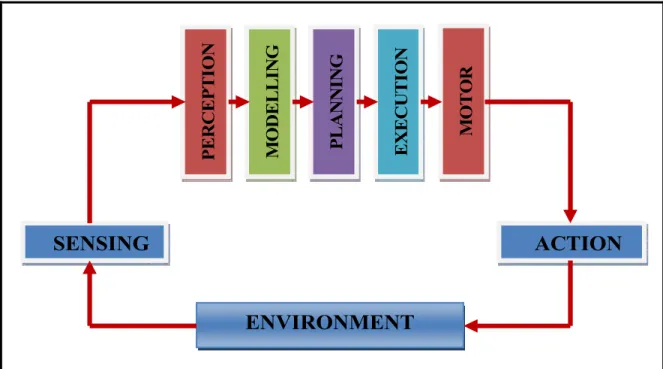
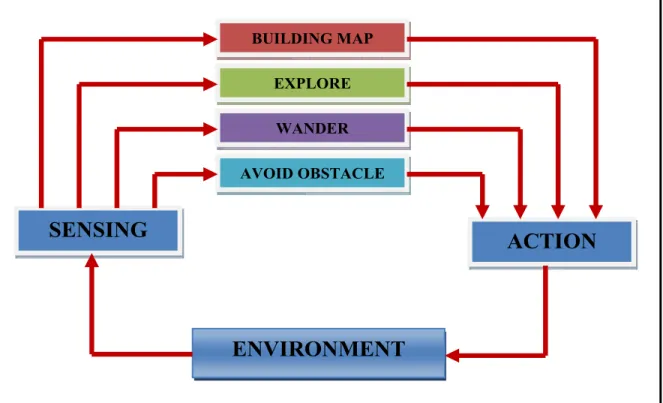
Reactive-based approaches are widely used in autonomous navigation. However, in complex unknown environments, pure reactive-based navigation still poses a few challenges since it can be easily trapped by a local minimum and may produce some extra maneuvers [18]. During the last decade, the research communities in mobile robotics have paid lot of attentions, to the development of different control architectures for navigation of mobile robots. For this, mainly two principle designs have been adopted. One is called the functional or horizontal decomposition, Fig. 2.1; the other is the behavioural or vertical decomposition, Fig. 2.2. It is found that the research for navigation of mobile robot has to be modified in many terms. Robot localization with multiple sensors using interval analysis deals with the robot localization problem in a nonlinear and global way and bypasses the data association step [19]. Research may be done in finding out the optimal navigation technique for several mobile robots. Technical details may be found out to achieve various interactive perceptions (e.g. communications) between the robots and to recognise the obstacle ahead. Using the environment information obtained at each instant of time‘t’, a strategy may be adopted permitting the robot to reach the target position. At the same time, the robot should avoid the different obstacles situated in the robot work place. The intelligent control provides conflict-free shortest path, minimum time motion planning and deadlock avoidance [20].
PERC EPTI O N EX E CU TI ON P L ANNI NG M O D ELLI N G MO T O R
ENVIRONMENT
ACTION
SENSING
BUILDING MAP EXPLORE WANDER AVOID OBSTACLE
ENVIRONMENT
SENSING
ACTION
Figure 2.2.Flow diagram of the vertical decomposition method for robot navigation. Keeping in view of the various research publications in the recent years in this field, attempt has been made to summarise the various navigation techniques for mobile robots. For reviewing the approaches for navigation of mobile robots, the investigation has been divided into five main segments. In the first part effort has been made to find out the kinematic stability of mobile robot. The next part mainly deals with various controllers being used for navigation of mobile robot. These controllers are classified into four divisions as Fuzzy Logic Controller (FLC), Neural Controller (NC), Adaptive Neuro Fuzzy Controller (ANFC) and Heuristic Rule Base Network (HRBN) controller. The next section review the published paper in the area of kinematics of mobile robot as well as techniques used in this thesis for navigation of mobile robots.
2.3
Kinematics of Mobile Robot
This section provides a detailed survey report of kinematics of mobile robot. With reference to the unicycle kinematics, this part review several control strategies for trajectory tracking and posture stabilization in an environment free of obstacles. A kinematic methodology is the first step towards achieving these goals.
Mobile robots are more energy efficient than legged or treaded robots on hard, smooth surfaces, and will potentially be the fist to find widespread application in industry, because of the hard, smooth plant floors in existing industrial environments [21]. Several mobility configurations can be found in the applications as mentioned by Jones et al. [22]. The most common for single-body robots are differential drive and synchro drive tricycle or car-like drive, and omnidirectional steering [23]. Beyond the relevance in applications, the problem of autonomous motion planning and control of mobile robot has attracted the interest of researchers in view of its theoretical challenges [24]. The motion control of wheeled mobile robots has drawn considerable attention over the past few years. The nonholonomic behaviour in robotic systems is particularly interesting, because it implies that the mechanism can be completely controlled with a reduced number of actuators. In particular, these systems are a typical example of nonholonomic mechanisms due to the perfect rolling constraints on the wheel motion [25]. Several controllers were proposed for mobile robots with nonholonomic constraints, where the two main approaches to controlling mobile robots are posture stabilization and trajectory tracking.
The aim of posture stabilization is to stabilize the robot to a reference point, while the aim of trajectory tracking is to have the robot follow a reference trajectory. For mobile robots trajectory tracking is easier to achieve than posture stabilization [26]. Path planning and motion-planning involve finding a continuous path and trajectory, respectively, from the initial position to the final position that avoids obstacles in the environment. The feedback stabilization at a given posture cannot be achieved via smooth time-invariant control [27]. This indicates that the problem is truly nonlinear; linear control is ineffective, even locally, and innovative design techniques are needed. The motion control problem of wheeled mobile robots in environments without obstacles with reference to the popular unicycle kinematics, the dynamic feedback linearization is an efficient design tool leading to a solution simultaneously valid for both trajectory tracking and set point regulation problems [28]. After a preliminary attempt at designing local controllers, the trajectory tracking problem was globally solved in by using a nonlinear feedback action [29]. A recursive technique for trajectory tracking of nonholonomic systems in chained form can also be derived from the back stepping paradigm [30]. As for posture stabilization, both discontinuous and time-varying feedback controllers can be used. Smooth time-varying stabilization was pioneered by Samson [31], while discontinuous
control has been used in various forms [32] where dynamic feedback linearization has been extended to the posture stabilization problem. Dynamics of wheeled mobile robots are nonholonomic and pose is challenging problems for control design and stability analysis [33]. Under output-tracking control laws the dynamics can be formulated in terms of full-state tracking errors which offers some properties that allow better understanding of the internal and zero dynamics of the tracking-error system and more insights to the trajectory tracking stability [34]. An ideal automatic driving control system should be able to comply with changes in slip conditions so as to optimise the control performance.
Trajectory tracking is more natural for mobile robots. Usually, the reference trajectory is obtained by using a reference robot; therefore, all the kinematic constraints are implicitly considered by the reference trajectory [35]. A generic kinematic control, which is directly applicable to any type of wheeled mobile robot, proposed by Gracia et al. [36]. The neural kinematic controller is applied to compensate the uncertainties in the kinematic parameters of the mobile robot. To analyze the stability of a general class of mobile robot path-tracking algorithms taking into account explicitly the computation and communication delays in the control loop. The delay problem can be solve directly the transcendental characteristic equation that appears when the time delay is considered. This is applicable for straight paths and paths of constant curvature [37]. The global stability of the neural network is guaranteed by qualitative analysis and the Lyapunov stability theory [38]. Fierro and Lewis [24] developed an artificial neural network-based controller by combining the feedback velocity control technique and torque controller, using a multilayer feed forward neural network. But the controller structure and the neural network-learning algorithm are very complicated and it is computationally expensive [39]. The control approach for the mobile robot has the properties to quickly drive the position error to zero and to indicate better smooth movement in the tracking control process. These features are due to continuous online learning and adaptive capability of analog neural networks [40]. The dynamic wave expansion neural network for path generation in a dynamic environment for mobile robots is parameter-free, computationally efficient, and its complexity does not explicitly depend on the dimensionality of the configuration space [41].
The autonomous navigation wheeled robots requires integrated kinematic and dynamic control to perform trajectory tracking, path following and stabilization. The coupling effect
between linear and angular motion dynamics is considered in the fuzzy steering by building appropriate linguistic rules [42]. A fuzzy logic approach can be used in order to minimise the position and orientation errors caused by odometric problems. The fuzzy logic maps the inputs heading and distance errors determined by the odometry readings to the outputs of translational and rotational speed of the mobile robot [43]. Fuzzy inference mechanism extended that compensation for environmental perturbations as variable friction. A fuzzy-neural control algorithm realizes the obstacle avoidance of the mobile robot. Using the self location function, the mobile robot could locate itself in a world coordinate system [44]. This indicates that the problem is truly nonlinear; linear control is ineffective, even locally, and innovative design techniques are needed. The existing approaches of sensor-based motion planning tend to deal solely with kinematic and geometric issues, and ignore the system dynamics. Any nonlinear optimal control requires a solution to a two-point-boundary-value problem that is salvable only by numerical iteration. Consequently, an improved control can he obtained by modifying the suboptimal control in such a way that the distance aforementioned is minimised as much as possible in closed form [45]. The sensor with classical rangefinders allows the use of practically unmodified Monte Carlo algorithms, with the additional advantage of being able to easily detect occlusions caused by moving obstacles [46]. An iterative learning rule with both predictive and current learning terms is used to overcome uncertainties and the disturbances in the system [47].
The problem of terrain acquisition presents a special case of robot motion planning. The harmonic drive system for non-linear controller to compensate for kinematic error in the presence of flexibility in high-speed regulation and trajectory tracking application has been proposed by Gandhi et al. [48]. In it, a robot that operates in an unfamiliar scene populated with a finite number of objects of unknown shapes and dimensions is asked to cover the scene and build its complete map using some sort of sensory feedback and generating as short a path during operation as possible [49]. The behaviour of space robots with torque and attitude controller has been discussed by Pathak et al. [50]. A dynamical local path-planning algorithm of an autonomous mobile robot available for moving obstacle avoidance as well as stationary obstacle avoidance using artificial pressure and nonlinear friction [51]. A receding horizon controller is may used for tracking control of wheeled mobile robots subject to nonholonomic constraint in the environments without obstacles. The control policy is derived from the
optimization of a quadratic cost function, which penalizes the tracking error and control variables in each sampling time [52]. This methods, improve the domain of applicability of a wide range of obstacle avoidance methods [53]. Basically, both trajectory tracking and posture stabilization controllers can be implemented with on-board computing power.
2.4
Fuzzy Logic Controller for Mobile Robot
Fuzzy Logic technique plays an important role to design the intelligent controller for mobile robot. This technique can be used for navigation of mobile robots. Fuzzy set theory provides a mathematical framework for representing and treating uncertainty in the sense of vagueness, imprecision, lack of information and partial truth. Fuzzy control systems employ a mode of approximate reasoning that resembles the decision-making process of humans. A fuzzy system is usually designed by interviewing an expert and formulating the implicit knowledge of the underlying process into a set of linguistic variables and fuzzy rules. In particular for complex control tasks, obtaining the fuzzy knowledge base from an expert is often based on a tedious and unreliable trial and error approach [54]. Fuzzy set theory was introduced by Lofti Zadeh in the mid sixties. In 1965 Lotfi Zadeh proposed fuzzy set theory, and published a paper [55]. Fuzzy logic has been applied to diverse fields, from control theory to artificial intelligence. This section presents a variety of fuzzy logic techniques which address the challenges posed by autonomous robot navigation.
Autonomous mobile robot navigation in uncertain and dynamic environments demands adaptation and perception capabilities. Reactive control strategies imply a strong dependency on sensed information about the robot’s environment. Thus, imprecision and uncertainties in perception from sensors have to be considered [56]. While the rules are based on qualitative knowledge, the membership functions defining the linguistic terms provide a smooth interface to the numerical process variables and the set-points [57]. Stability analysis of fuzzy systems is a very important research field in fuzzy systems practically from the pioneer work of E.H. Mamdani on fuzzy control applications [58]. A Mamdani controller is usually used as a feedback controller. Since the rule base represents a static mapping between the antecedent and the consequent variables, external dynamic filters must be used to obtain the desired dynamic behaviour of the controller [59]. The control protocol is stored in the form of if-then rules in a
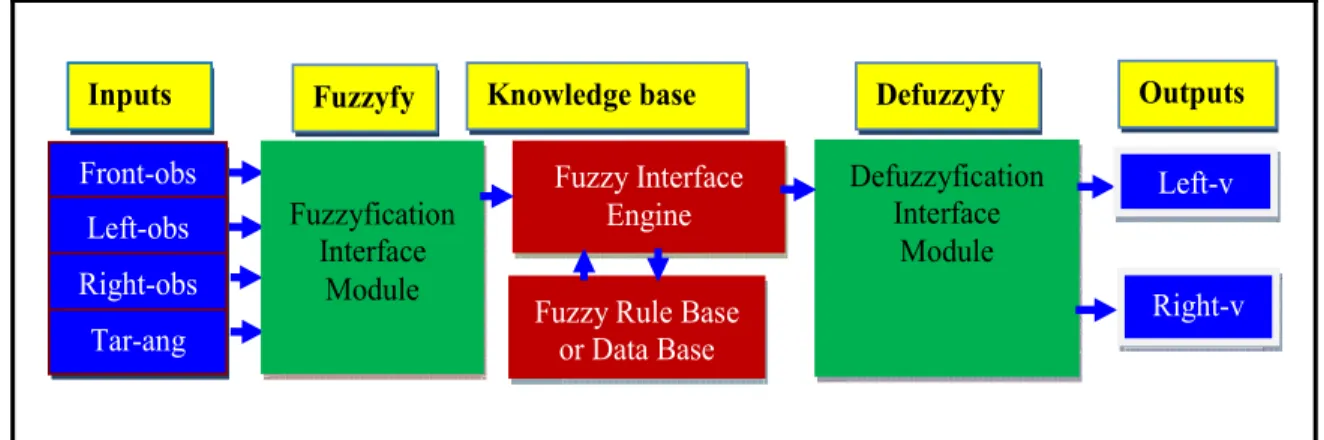
knowledge, the membership functions defining the linguistic terms provide a smooth interface to the numerical process variables and the set-points [60]. Intelligent control plays an important role when employing mobile robots in unstructured, unknown, and dynamic environments. The task complexity of intelligent control is greatly reduced by dividing the overall task into subtasks. These subtasks are modeled as perception-action units, called behaviours. The reduced task complexity in a behaviour-based approach increases responsiveness to environmental dynamics [61]. Systems equipped with fuzzy logic controllers give rise to nonlinear dynamic systems. This theory provides an overall perspective on the behaviour modes of the system, which can be used as a guide for the search of concrete behaviours [62]. Fuzzy systems belong to the family of nonlinear systems and they can have, in general, a complex analytical description [63]. It is not easy and time consuming for human experts to examine all the input-output data from a mobile robot to find a number of proper rules for a fuzzy controller. To copy with this difficulty, an intelligent mobile robot with automatic fuzzy controller design approaches is necessary [64]. It should also be noticed that although the operating range of the input is restricted by the saturation, the range of the other system variables cannot be bounded. This is in fact the cause of the troubles with the nonlinear nature of the saturation [65]. In this context, fuzzy logic is often adopted to overcome the difficulties of modeling the unstructured, dynamically changing environment, which is difficult to express using mathematical equation [66]. A class of fuzzy control laws can be formulated using the Lyapunov’s direct method, which can guarantee the convergence of the steering errors [67]. The fuzzy controller can be optimised by using the schema co-evolutionary algorithm, which finds an optimal solution [68]. The main problem in fuzzy control involves the design of the fuzzy knowledge base. Various approaches to this problem have been proposed, including trial and error. For a mobile robot to intermesh navigation in various environments using fuzzy logic controller shown in Fig.2.3 represents significant progress for the entire research community. In Fig.2.3,
Left-obs = Left obstacle distance, Right-obs = Right obstacle distance, Front-obs = Front obstacle distance, Tar-ang= Target angle, Left-v = velocity of left wheel, Right-v = velocity of right wheel and Med= Medium.
Fuzzyfication Interface
Module
Fuzzy Interface Engine Fuzzy Rule Base
or Data Base Defuzzyfication Interface Module Front-obs Left-obs Right-obs Tar-ang Left-v Right-v
Inputs Fuzzyfy Knowledge base Defuzzyfy Outputs
Figure 2.3. Schematic diagram of the fuzzy logic controller for mobile robot.
An adaptive-resonance theory based fuzzy controller, including an adaptive-resonance theory based environment recogniser, a comparer, combined rule bases, and a fuzzy inferring mechanism, is introduced for the purpose of the adaptive navigation of the quadruped robot [69]. The adaptive fuzzy logic control based on physical properties of wheeled inverted pendulums makes use of a fuzzy logic engine and a systematic online adaptation mechanism to approximate the unknown dynamics [70]. Fuzzy adaptive extended information filtering is to improve estimation accuracy and robustness for the localization system, while the system lacks sufficient information of complete models or the process and measurement noise varies with time [71]. The unmanned control of the steering wheel is, at present, one of the most important challenges facing researchers in autonomous vehicles within the field of intelligent transportation systems [72]. Once this control architecture has been implemented, installed, and tuned, the resulting steering maneuvering is very similar to human driving, and the trajectory errors from the reference route are reduced to a minimum. In the controller a rule base of positive rules can be specified by an expert for directing the vehicle to the target in the absence of obstacles, while a rule base of negative rules can be experimentally determined from expert operation of the vehicle in the presence of obstacles [73].
Fuzzy logic system promises an efficient way for obstacle avoidance. However, it is difficult to maintain the correctness, consistency, and completeness of a fuzzy rule base constructed and tuned by a human expert. Reinforcement learning method is capable of learning the fuzzy rules automatically [74]. Martinez et al. [75] have considered a problem which is consisted of achieving sensor based motion control of mobile robot among obstacles
in structured and unstructured environments with collision-free motion. Sensor-based navigation method, which utilised fuzzy logic and reinforcement learning for navigation of mobile robot in uncertain environments, has been proposed by Boem et al. [76] they have discussed about the navigation of mobile robot using fuzzy logic.
The concepts of car maneuvers, fuzzy logic control, and sensor-based behaviours are merged to implement the human-like driving skills by an autonomous car-like mobile robot. Four kinds of Fuzzy logic controller, fuzzy wall-following control, fuzzy corner control, fuzzy garage-parking control, and fuzzy parallel-parking control, are synthesized to accomplish the autonomous fuzzy behaviour control [77]. The architecture for the fuzzy controller is a hierarchical scheme which combines seven modules working in series and in parallel [78]. The scaling factors and the coefficients of the sliding surface for the control of the steering angle and forward–backward velocity of a car-like mobile robot are adopted by that for the control of two motors [79]. Wang [80] has used fuzzy systems to model higher levels of hierarchical systems and design controllers for the hierarchical systems. Seraji’s [81] paper presents a new strategy for behaviour- based navigation of field mobile robots on challenging terrain. Outdoor environments are particularly challenging for mobile robots as they offer dynamic, unstructured, and highly variable situations where the inconsistency of the terrain, the irregularity of the product, and the open nature of the working environment result in complex problems of identification, modeling, sensing, and control [82].
One important problem in autonomous robot navigation is the effective following of an unknown path traced in the environment in compliance with the kinematic limits of the vehicle, i.e., bounded linear and angular velocities and accelerations. In this case, the motion planning must be implemented in real time and must be robust with respect to the geometric characteristics of the unknown path, namely curvature and sharpness [83]. The stabilizing controller is designed as a state optimal controller and second application is the optimization method applied to the design of a fuzzy controller for vision-based mobile robot navigation [84]. The fuzzy error correction control system can be used to navigate a robot along an easily modifiable path in a well-structured environment. The fuzzy engine gives outputs commands for the robot wheels. These commands determine the necessary angle of rotation to correct the direction of travel in order for the robot to remain on the path [85]. Das et al. [86] have
assumed a control structure that makes possible the integration of a kinematic controller and an adaptive fuzzy controller for trajectory tracking for nonholonomic mobile robots. The hybrid controller is able to choose a better position according to the circumstances encountered [87]. The information about the global goal and the long-range sensory data are used by the first layer of the planner to produce an intermediate goal, referred to as the way-point that gives a favorable direction in terms of seeking the goal within the detected area. The second layer of the planner takes this way-point as a sub goal and, using short-range sensory data, guides the robot to reach the sub goal while avoiding collisions [88]. Designing the controller on account of nonholonomic constraints gain more accurate position and velocity control, a self-organized fuzzy controller can be used to find solutions of optimal fuzzy input and output membership functions [89] and to determine a rule base process.
The fuzzy multi sensor data fusion scheme provides a novel mechanism to efficiently integrate task scheduling, action planning and motion control in a unified framework. The theoretical development of a complete navigation problem of an autonomous mobile robot is the situation for which the vehicle tries to reach the endpoint is treated using a fuzzy logic controller [90]. An efficient design methodology that allows starting with any kind of fuzzy controller and subsequently transforming it until a system suitable for easy digital signal processing implementation is obtained [91]. Navigation based on processing some analog features of Radio Frequency Identification signal is a promising alternative to different types of navigation methods in the state of the art. The main idea is to exploit the ability of a mobile robot to navigate a priori unknown environments without a vision system and without building an approximate map of the robot workspace, as is the case in most other navigation algorithms [92]. In the soccer game strategy Radio Frequency data transmitter is used to communicate among robot [93]. The development of the controllers is carried out by means of a reconfigurable platform based on field-programmable gate arrays. This platform combines specific hardware to implement fuzzy inference modules with a general-purpose processor, thus allowing the realization of hybrid hardware/software solutions [94]. The merger method is applied to fuzzy rule base simplification by automatically replacing the fuzzy sets corresponding to a given cluster with that pertaining to cluster prototype [95]. Target tracking requires team coordination to maintain a desired formation and to keep team-mates and target together. Generally, distributed autonomous systems using multiple robots are considered
superior to others in terms of reliability, expandability, and flexibility. In contrast to a single robot system; they provide increased robustness by taking advantage of inherent parallelism and redundancy. Moreover, the versatility of a multi-robot system can provide the heterogeneity of structures and functions required to undertake different missions in unknown environmental conditions [96]. Research in autonomous multi-robot systems often focuses on mechanisms to enhance the efficiency of the group through some form of cooperation among the individual agents. One of the greatest challenges in robotics is to create machines that are able to interact with unpredictable environments in real time [97]. Intriguingly, a similar relationship between group size and efficiency has been documented in social robots.
2.5
Neural Controller for Mobile Robot
The human brain is very complex, nonlinear and parallel computer. There are billions of neurons and trillions of connections between them. The interest in neural network stems from the wish of understanding principles leading in some manner to the comprehension of the basic human brain functions, and to building the machines that are able to perform complex tasks. Neural network theory revolves around the idea that certain key properties of biological neurons can be extracted and applied to simulations, thus creating a simulated brain. There is a significant interest in autonomous mobile robots which may be defined as vehicles that are capable of intelligent autonomous navigation.
Robots must be able to understand the structure of the environment [98]. To reach their targets without collisions, the robots must be endowed with perception, data processing, recognition, learning, reasoning, interpreting, and decision-making and action capacities. A first wave of interest in neural networks emerged after the introduction of simplified neurons by McCulloch and Pitts in 1943 [99]. In 1949 Hebb [100] formed the basis of ‘Hebbian learning’ which is now regarded as an important part of neural networks theory [101]. About this time of neural network development, the digital computer became more widely available and its availability proved to be of great practical value in the further investigation of neural networks performance. Rosenblatt [102] constructed neuron models in hardware during 1957. These models ultimately resulted in the concept of the Perceptron. This was an important development and the underlying concept is still in wide use today. Widrow and Hoff [103] were responsible for simplified artificial neuron development. When Minsky and Papert
published their book Perceptrons in 1969 [104] in which they showed the deficiencies of perceptron models, most neural network funding was redirected and researchers left the field.
If human understand how an animal controls its behaviour, and comparable technology is available, it should be possible to build a robot that behaves the same way. Recent advances in both knowledge and technology have begun to make this possibility a realistic aim in invertebrate neuroscience [105-107]. Neural circuit are capable of producing coordinated patterns of high-dimensional rhythmic output signals while receiving only simple, low-dimensional, input signals [105]. There are now a growing number of studies in which hypotheses for the behavioural function of neural circuits are tested by implementing them as controllers for robots and evaluating the robot behaviour [108]. An artificial neural network is a mathematical model or computational model that tries to simulate the structure and/or functional aspects of biological neural networks [109]. It consists of an interconnected group of artificial neurons and processes information using a connectionist approach to computation [110]. They can be used to model complex relationships between inputs and outputs or to find patterns in data [111]. However, generally, the evolved neural controllers could be fragile in inexperienced environments, especially in real worlds, because the evolutionary optimization processes would be executed in idealized simulators. This is known as the gap problem between the simulated and real worlds. To overcome this, Kondo [112] has focused on an evolving on-line learning ability instead of weight parameters in a simulated environment. Basically, the control of a robot arm and the control of a mobile robot is similar the controller [113]. First plans a path, the path is transformed from Cartesian domain to the joint or wheel domain using the inverse kinematics of the system and finally a dynamic controller takes care of the mapping from set points in this domain to actuator signals. However, in practice the problems with mobile robots occur more with path-planning and navigation than with the dynamics of the system. Recently, a new paradigm of cognitive science has been emerged [114]. The hallmark of this new approach is the focus on the situated and embodied nature of intelligence. Research in so-called behaviour-based artificial intelligence [115], embodied neurobiology, and embodied cognitive science [116] has challenged the traditional view according to which intelligence is an abstract, symbolic process independent of physical implementation. The artificial life approach to evolutionary robotics is used as a fundamental framework for the development of a modular neural control of autonomous mobile robots

![Figure 5.6. (a) Navigation of a mobile robot in unknown environment by Ray et al. [216] (b) Navigation of a mobile robot in unknown environment using a developed controller](https://thumb-us.123doks.com/thumbv2/123dok_us/9934004.2486262/93.918.159.817.105.1030/figure-navigation-unknown-environment-navigation-environment-developed-controller.webp)