Copyright By Deepa Mani August 2008
The Dissertation Committee for Deepa Mani certifies that this is the approved version of the following dissertation:
ESSAYS ON THE ORGANIZATION AND VALUE OF OUTSOURCING RELATIONSHIPS
Committee
Anitesh Barua, Supervisor
Andrew B. Whinston
Cynthia Beath
Prabhudev Konana
Essays on the Organization and Value of Outsourcing Relationships
by
Deepa Mani, B.A.; M.B.A.; M.S.
Dissertation
Presented to the Faculty of the Graduate School of The University of Texas at Austin
in Partial Fulfillment of the Requirements
for the Degree of
Doctor of Philosophy
The University of Texas at Austin August 2008
Essays on the Organization and Value of Outsourcing Relationships
Publication No. _______________
Deepa Mani, PhD.
The University of Texas at Austin, 2008
Supervisor: Anitesh Barua
Over the past decade, outsourcing has emerged as an imperative for competitive success in modern organizations. Yet, the high failure rate of outsourcing initiatives suggests that despite the significant opportunities available through outsourcing, several organizations remain unprepared for the transformation that it brings. My dissertation, “Essays on the Organization and Value of Outsourcing Relationships,” identifies governance strategies that maximize the strategic value of outsourcing investments and estimates the size of governance effects by analyzing the contribution of efficient governance to an increase in shareholder value of the outsourcing firm. The first two essays, “An Empirical Analysis of the Impact of Information Capabilities Design on Business Process Outsourcing (BPO) Performance” and “An Empirical Analysis of the Contractual and Information Structures of Business Process Outsourcing (BPO) Relationships,” focus on business process outsourcing (BPO), the fastest growing segment of the outsourcing market. In particular, the first essay emphasizes the information intensive nature of BPO to posit that
performance heterogeneity across BPO relationships is a function of the fit between the information requirements and information capabilities of the relationship. The design of information capabilities extends contract design that addresses incentive conflicts to include design of the information structure comprising relational processes and technologies that address cognitive conflict between the participant firms. The second essay demonstrates complementarities between the contractual and information structures to emphasize that their joint assessment is necessary to enhance the explanatory power of extant theories of organization. These results have important implications for how BPO relationships must be designed and managed to realize strategic value. The third essay in my dissertation, “Outsourcing Discount or Paradox? A Comparative Analysis of the Long-Term Abnormal Stock Returns and Operational Performance Gains across Outsourcing Contracts,” estimates the extent of this strategic value by assessing the long-term abnormal stock returns to the hundred largest outsourcing initiatives implemented between 1996 and 2005. I find that transaction cost economizing outsourcing decisions yield significantly higher abnormal returns. The results imply the need to exercise caution in initiating outsourcing initiatives and emphasize that value chain scoping and management are important sources of comparative advantage in the modern firm.
TABLE OF CONTENTS
List of Tables ... viii
List of Figures ... ix
Introduction... 1
Chapter 1 - An Empirical Analysis of the Impact of Information Capabilities Design on Business Process Outsourcing Performance ... 4
1.1 Introduction... 4
1.2 A Model of BPO Performance... 10
1.2.1 IR of the BPO Relationship ... 10
1.2.2 IC of the BPO Relationship ... 14
1.2.3 The Conceptualization of Fit between IR and IC ... 21
1.2.4 Configurations of Fit – Transactional and Transformational BPO... 24
1.2.5 Comparative Analysis of BPO Performance across Configurations of Fit ... 27 1.3 Empirical Analysis... 29 1.3.1. Data Collection ... 29 1.3.2 Measures ... 31 1.3.4 Descriptive Statistics... 35 1.3.5 Data Analysis ... 35 1.3.6 Results... 36 1.4 Discussion of Results... 43 1.5 Conclusion ... 52
Chapter 2 - An Empirical Analysis of the Contractual and Information Structures of Business Process Outsourcing Relationships... 54
2.1 Introduction... 54
2.2 Theory and Hypotheses... 60
2.2.1 The Contractual Structure of the BPO Relationship... 60
2.2.2 The Information Structure of the BPO Relationship ... 64
2.2.3 The Relationship between Contractual and Information Structures ... 66
2.2.4 The Joint Impact of Contractual and Information Structures on Performance ... 70 2.3 Empirical Analysis... 73 2.3.1 Data Collection ... 73 2.3.2 Measures ... 76 2.3.3 Data Analysis ... 79 2.4 Results... 80
2.5 Discussion and Conclusion ... 85
Chapter 3 - Transaction Costs and Equity Prices... 90
3.1. Introduction... 90
3.3 Data ... 96
3.3.1 Data Collection ... 96
3.3.2 Measurement of Variables ... 98
3.4 Governance and Abnormal Returns: Empirical Relationships ... 105
3.4.1 Summary Statistics... 105
3.4.2 Evidence on Hypothesis I ... 107
3.4.3 Evidence on Hypothesis II ... 110
3.4.4 Cross Sectional Patterns in Long-term Returns ... 115
3.5 Concluding Discussion ... 117
FIGURES FOR CHAPTER 1... 122
FIGURES FOR CHAPTER 2... 124
FIGURES FOR CHAPTER 3... 125
TABLES FOR CHAPTER 1 ... 126
TABLES FOR CHAPTER 2 ... 132
TABLES FOR CHAPTER 3 ... 135
REFERENCES ... 144
List of Tables
Table 1.1: Comparison of Alternate Perspectives of Fit - Adapted from Venkatraman
(1989)……….…...126
Table 1.2: Comparison of Transactional and Transformational BPO Initiatives ... 126
Table 1.3: Measurement of Key Constructs ... 126
Table 1.4: Descriptive Statistics ... 128
Table 1.5: Estimates for the Second-Order IC Construct ... 129
Table 1.6: Estimates for the First-Order IC Sub-Constructs... 129
Table 1.7: Probit estimates for first-stage IC choice model... 129
Table 1.8: Estimates for second stage models of satisfaction with service reliability.... 129
Table 1.9: Estimates for second stage models of satisfaction with service responsiveness ... 130
Table 1.10: Estimates for second stage models of satisfaction with service systematization... 130
Table 1.11: Estimates for second stage models of satisfaction with service innovation 131 Table 1.12: Summary of support for hypotheses ... 131
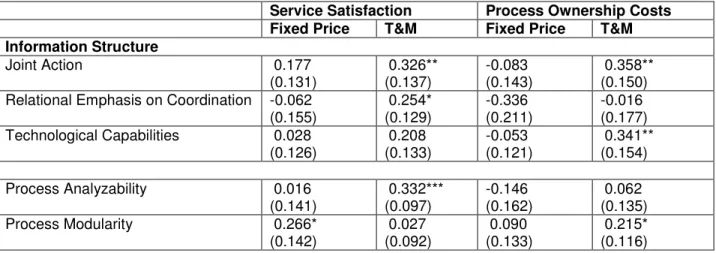
Table 2.1: Estimates for the Model of Information Structure of the BPO Relationship 132 Table 2.2: Probit Estimates for Choice of Contractual Structure ... 132
Table 2.3: Estimates for the overall Information Structure and Joint Action, Coordination, and Technological Capabilities across Contractual Structures... 133
Table 2.4: Performance Effect of Joint Action, Coordination and Technological Capabilities across Contracts ... 133
Table 2.5: Performance Effect of Overall Information Structure across Contractual Structures ... 134
Table 3.1: Measurement of Variables... 135
Table 3.2: Sample Characteristics of Outsourcing Announcements, 1996 – 2005 ... 137
Table 3.3: Summary Statistics ... 138
Table 3.4: Long-Run Returns following Outsourcing Announcements ... 139
Table 3.5: Changes in median industry-adjusted operating performance of user firms . 140 Table 3.6: Model of Choice of Contractual Structure... 140
Table 3.7: Model of Decision to Outsource... 141
Table 3.8: Model of buy-and-hold abnormal returns (BHAR) ... 142
Table 3.9: The Moderating Effect of Contextual Characteristics on Contractual Completeness ... 143
List of Figures
Figure 1.1: Conceptual Model of Fit between IR and IC………122
Figure 1.2: Process Complexity, Interdependence, and IR of the BPO Relationship….122 Figure 1.3: Continuum of IR of the BPO Relationship ... 122
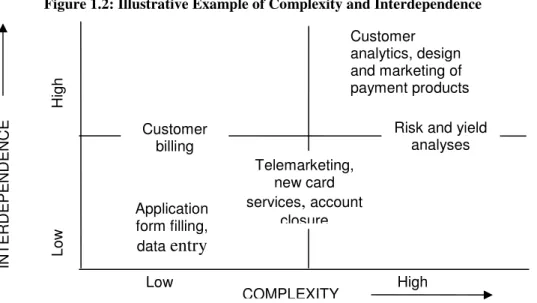
Figure 1.4: Illustrative Example of Complexity and Interdependence ... 122
Figure 1.5: Second-order construct of IC of the BPO Relationship ... 123
Figure 1.6: Alternative conceptualizations of fit between IR and IC ... 123
Figure 1.7: Fit as a match between IR and IC of the BPO Relationship ... 123
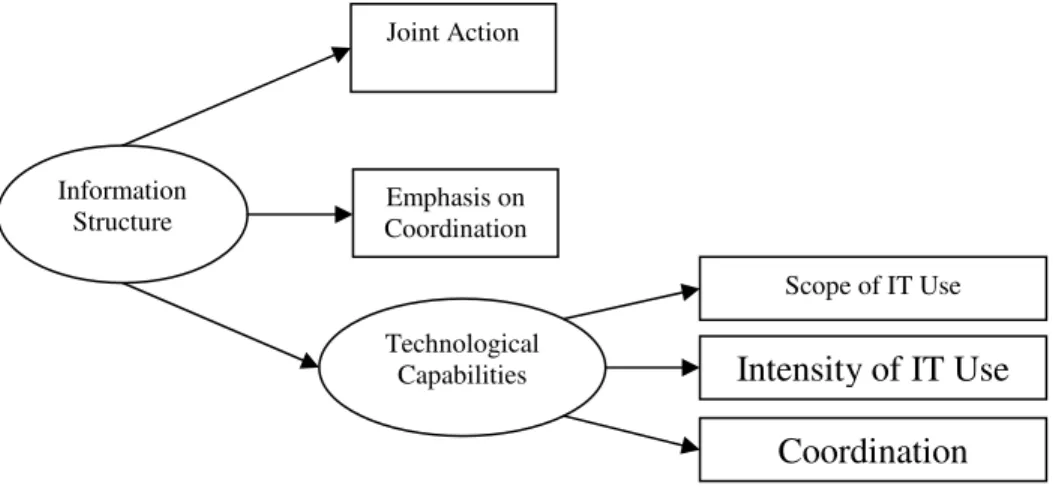
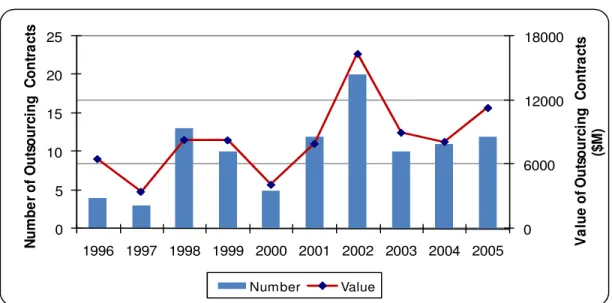
Figure 2.1: Second-order Construct of Information Structure of the BPO Relationship 124 Figure 3.1: Number and Value of Sample Contracts across Time ... 125
Introduction
Over the past decade, outsourcing has emerged as an imperative for competitive success in modern businesses. It is estimated that by 2008, outsourcing will constitute 58 percent of the average firm’s technology budget. Moreover, core business functions such as R&D, product development and marketing are being externalized across a wide spectrum of industries to achieve diverse strategic objectives that shape firms’ competitive
positions. Despite this extended reach of outsourcing, several researchers and
practitioners have highlighted the complexity and high failure rate of outsourcing1. In my dissertation, I draw on institutional economics and organizational theories to take a closer look at the performance implications of outsourcing and the factors that drive
heterogeneity in outsourcing performance.
The first two chapters in my dissertation focus on business process outsourcing (BPO) that is the fastest growing segment of the outsourcing market. As the information technology outsourcing (ITO) market matures, ITO is increasingly being bundled with BPO offerings and subsumed into a broader business process decision. According to Singh et al. (2007), the delivery of such converged ITO/ BPO services is expected to account for over 40 percent of the total deals by revenue by 2010. They emphasize that moving forward, an understanding of the issues unique to BPO management is essential for the IT organization. The academic literature in IS recognizes this trend: “as such the IS outsourcing phenomenon has moved beyond the boundaries of the IS function to
1
70% of the respondents in a 2005 survey by Deloitte Consulting expressed significant dissatisfaction with their outsourcing projects. Similarly, a survey conducted by Bain Consulting found that although 82% of large firms in North America engage in BPO, almost half of the respondents say their outsourcing programs fall short of expectations. According to SAP INFO Solutions, four out of five BPO contracts inked today will be renegotiated within two years. Further, 20% of all such contracts will collapse (SMR Intelligence 2006).
include entire information technology (IT)-supported business processes…” (Hirschheim, Dibbern and Heinzi, 2008).
The first chapter in my dissertation builds on the information processing view of the firm to propose that performance heterogeneity across BPO exchanges is a function of the fit between the information requirements (IR) and information capabilities (IC) of the exchange. The design of IC comprises both choice of the contract that addresses incentive conflict and the choice of relational processes and technologies that address cognitive conflict between the outsourcing firm and the service provider. I compare performance effects of the fit between IR and IC across dominant categories of BPO relationships to provide insights into the relative benefits of enacting such fit between the constructs. Empirical analysis of survey data on 128 active BPO relationships supports my hypotheses. The results have important implications for how BPO relationships must be designed and managed to realize strategic value.
While the first chapter establishes the contractual and information structures of BPO relationships as important dimensions of BPO governance, the second chapter explores the interrelationships between these dimensions. I integrate perspectives in neo-institutional economics and information processing to develop and test the theoretical argument that the extent of use of the information structure of the BPO relationship varies with the underlying contractual choice. I find that the performance effects of the
information structure are stronger in time and materials BPO contracts, marked by low powered incentives, than in fixed price BPO contracts, marked by high powered incentives. Survey data on 134 BPO relationships provide empirical support for my hypotheses. The synergistic impact of incentives and information on BPO performance
emphasizes that their joint assessment is necessary to enhance the explanatory power of extant theories of organization.
If heterogeneity in outsourcing performance is linked to the outsourcing decision and the financial ramifications are shown to be economically significant, it would imply the need to exercise caution in initiating outsourcing initiatives and emphasize that value chain scoping and management are important sources of comparative advantage in the modern firm. This is the motivation behind the third chapter of my dissertation. I assess the long-term abnormal returns to the hundred largest outsourcing initiatives implemented between 1996 and 2005. Relative to a size-and book-to-market matched sample of control firms in the industry, the mean three year buy-and-hold abnormal return for fixed price contracts is 17.5 percent (p<0.05) while that for relatively incomplete variable price contracts is -21.2 percent (p<0.10). However, after conditioning on the factors that drive the outsourcing and contract choices, I find that significantly lower returns to relatively incomplete variable price contracts are the outcome of an adverse selection process - fast business requirements, high specificity of relational investments, lack of prior cooperative association between participant firms, and lack of experience of the outsourcing firm that increase the likelihood of choice of a variable price contract also result in lower abnormal returns. The three year returns are consistent with changes in income efficiency of the outsourcing firm. My findings point to the benefits of transaction cost economizing, and emphasize that financial markets are slow to recognize the extent of such benefit.
Chapter 1 - An Empirical Analysis of the Impact of Information Capabilities Design on Business Process Outsourcing Performance
1.1 Introduction
Business process outsourcing (BPO) refers to “the delegation of one, or more,
information and communication technology intensive business processes to an external service provider” (Tornbohm and Andrault 2005). The role of IT in the outsourced process ranges from ‘automating’ process tasks to ‘infomating’ or delivering the right information to the right process worker at the right time. Prior research (e.g., Whitaker et al. 2006) argues that BPO has its origin in ITO. As the ITO market began to mature and providers acquired experience in the management of IT services for diverse business processes and knowledge of specific functional areas that built on the IT, organizations began to outsource the business processes enabled and supported by the IT services (Pfannenstein and Tsai 2004). Further, advances in the underlying IT, through reduction in the costs of coordination and control across firm boundaries (Hitt 1999), have rendered business capabilities much more portable so that even core processes like R&D,
marketing and financial planning are moving outside the firm and changing the way firms’ value chain decisions shape their competitive position (Gottfredson et al. 2005).
BPO is the fastest growing segment of the outsourcing market and is rapidly emerging as an imperative for competitive success2. Yet, best practices have rarely emerged in the field (Tornbohm 2006), and a large number of firms cite significant
2 According to IDC, the worldwide BPO market is expected to grow to $682.5 billion in 2008. Forecast
growth rates for BPO are 10-15% per annum (in contrast to 7.1% for technology infrastructure and application outsourcing).
negative experiences with their BPO initiatives3. Further, there exists limited outsourcing research on the unique managerial challenges in BPO relationships, the performance implications of BPO or the drivers of such performance (Rouse and Corbitt 2006; Whitaker et al. 2006). Research on outsourcing performance is “heavily tied to
information systems” (Dibbern et al. 2004) and has yet to apply the learning from ITO to emergent outsourcing forms such as BPO.
Prior theoretical and empirical work on the management of ITO relationships has largely focused on the appropriation concerns that arise from behavioral uncertainty perceived by the user firm in its relationship with the service provider and contracting problems (Dibbern et al. 2004). These appropriation concerns are addressed through incentive alignment (Kern 1997; Willcocks and Kern 1998) or social exchange aspects of the relationship such as trust and its underlying normative behaviors that act as self-enforcing safeguards (Marcolin and McLellan 1998; Grover et al. 1996)4. These studies largely draw on transaction cost economics, agency theory or social exchange theory to develop their arguments (Dibbern et al. 2004).
The extant ITO literature provides a rich starting point to develop a model of BPO performance. However, an important limitation inherent to this body of research must be addressed to advance our understanding of BPO. Due to their focus on the uncertainty perceived by the user firm about its relationship with the provider, “nearly all of these
3 70% of the respondents in a 2005 survey by Deloitte Consulting expressed significant dissatisfaction with
their outsourcing projects. Similarly, a survey by Bain Consulting found that although 82% of large firms in North America engage in BPO, almost half of the respondents say their outsourcing programs fall short of expectations. According to SAP INFO Solutions, four out of five BPO contracts inked today will need to be renegotiated within two years. Further, 20% of all such contracts will collapse (SMR Intelligence 2006).
4 Dibbern et al. (2004) find that the emphasis on these relational aspects is often to the exclusion of the
contract. This is likely because relationship theories that form the basis for some of these studies contend that formal contracts may signal distrust of the exchange partner, and by undermining trust, encourage, rather than discourage, opportunistic behavior (Ghoshal and Moran 1996; Fehr and Gachter 2000).
studies (on ITO management and performance) take place at an overall firm level, abstracting from the IS level” (Dibbern et al. 2004) so that the specific nature of the outsourced IT receives little attention.
Yet, the nature of the outsourced process requires attention in BPO. In an age of information intensive firms, products and services (Glazer 1999), business processes may be described as a series of interrelated information processing activities that exchange, manipulate or transform input information to create value. The amount and frequency of information processed by process workers varies significantly with process attributes such as analyzability (contrast tax management with customer experience management), dynamism (payroll processing versus product development), or interdependence with other organizational processes (new credit card issuance versus financial forecasting and planning). These attributes determine the responsiveness of a process to changes in the firm’s value chain and business context, and in turn, the rate of information change in the process that must be managed on an ongoing basis.
Bounded rationality, in addition to limiting the user firm’s capacity to predict provider intent, also limits its ability to anticipate information changes in the outsourced task environment or formalize actions to respond to such change. The difference between adaptation problems engendered by relational and process uncertainty is understood in strategy and organization in terms of the difference between aligning interests
(cooperation) and aligning actions (coordination) (Gulati et al. 2005; Heath and
Staudenmayer 2000; Jacobides 2005)5. Attention to uncertainty and ensuing information
5
These studies explain that problems of cooperation arise from incentive conflicts so that firms are not motivated to generate collectively beneficial outcomes. On the other hand, problems of coordination arise due to the lack of shared knowledge about the “decision rules that others are likely to use” (Gulati et al. 2005) and mutual interdependencies. Thus, the latter have their origin in cognitive conflict.
needs that are unique to an outsourced process is critical in extending our body of understanding of ITO management to BPO6.
Our study addresses this issue by exploring the management and performance of BPO relationships through the lens of information processing. We conceptualize BPO relationships as information processing networks whose unique information requirements (IR) are determined by the nature of the outsourced process. At one end of the spectrum are ‘transactional BPO’ relationships involving relatively simple and modular processes characterized by low uncertainty and IR while at the other end are ‘transformational BPO’ relationships involving complex interdependent processes characterized by high uncertainty and IR. We build on research (Galbraith 1973; Tushman and Nadler 1978) in the tradition of the information processing view of the firm (IPV) to theorize that managerial effort in BPO is largely concerned with the design of information capabilities that manage uncertainty in the task environment7 and are idiosyncratic to the IR of the process. Consequently, we expect two theoretical outcomes. First, user firms will design information capabilities (IC) that fit or match the IR of the BPO relationship. Second, we expect significant performance gains from such effort.
We test our hypotheses using a switching regression model that is estimated with survey data on 128 BPO relationships. Our results confirm that performance differences
6 The limited attention to the outsourced task in ITO may be due to relatively lower levels of uncertainty in
the task environment. Business processes must adapt to changes in the business environment, which may necessitate changes in the underlying IT applications and infrastructure. However, the underlying IT infrastructure and applications are largely influenced by fundamental changes in the technological environment. For instance, consider the outsourcing of an outbound marketing campaign of a bank in our sample, designed to promote a payment protection product. The key process outputs, customer leads and product information, were continually updated to reflect changing customer preferences, new competitor product info, and inputs from other business processes such as product development and yield analyses. On the other hand, the underlying technology - data mining and analytics applications, and enterprise integration tools - was marked by relatively little change through the process cycle.
7 Prior research on strategic alliances (Gulati et al. 1998) finds it difficult to distinguish between
across BPO relationships arise as a function of the fit between the IR and IC of the exchange. The result is robust to both transactional and transformational BPO initiatives.
Our research is an early attempt to empirically study the drivers of BPO
performance. Several IS studies argue that “outsourcing research appears to be heavily tied to IS” (Dibbern et al. 2004) and that “the field (of BPO) appears somewhat neglected compared to ITO” (Borman 2006) with “little rigorous empirical work that examines (BPO) performance outcomes” (Whitaker et al. 2006). Yet, the study of BPO is salient to the IS field for three important reasons.
First, emergent industry and academic research (Singh et al. 2007; Borman 2006,) suggests that with the growing maturity of the ITO market, ITO is increasingly being bundled with BPO offerings and subsumed into a broader business process decision. According to Singh et al. (2007), the delivery of such converged ITO/ BPO services is expected to account for over 40 percent of the total ITO deals by revenue by 2010. They emphasize that moving forward, an understanding of the issues unique to BPO
management is essential for the IT organization.
Second, as illustrated in our study, IT is integral to process execution and management in BPO – as an enabler, delivery or coordination mechanism, or even a driver for innovation. This is true of transactional processes such as administration or processing services, where IT performs simple automation or process updates, as well as transformational processes such as customer analytics or financial planning, where IT facilitates linkages with other processes and delivers the right information to the right process worker at the right time. Thus, we offer that the IS field is best positioned to leverage its understanding of ITO to analyze various aspects of BPO performance. This
argument is consistent with the view that evolving forms of outsourcing offer an “ all-encompassing opportunity to the entire IS field” to establish the latter as “the reference discipline for other fields” (Dibbern et al. 2004) that conduct their own investigations of outsourcing. As efficiency gains from BPO initiatives become increasingly driven by process automation and sophisticated delivery models rather than by labor arbitrage, we expect this linkage between IT and BPO to only become more pronounced.
Most important, BPO is an example of how advances in technology are rendering business capabilities much more portable so that even core processes like R&D,
marketing and financial planning are moving outside the firm and changing the way firms’ value chain decisions shape their competitive position. IS scholars (Agarwal et al. 2004; Whinston et al. 2003) have opined that the future of the IS field depends on a significant number of researchers undertaking research on topics that represent the powerful transformational impact of IT. As BPO grows in its impact, we believe that research in this area has positive effects on the relevant nature of IS research.
Our study also contributes to theories of inter-firm cooperation and coordination. We demonstrate the salience of the IPV to the inter-firm context; however, as IR of the relationship have to be managed without the structures and systems available in
organizational hierarchies, we draw from prior research to identify structural, process and technological mechanisms that constitute the IC of the relationship. We also extend transaction cost analyses beyond considerations of incentive conflict. Our results emphasize that hierarchical control is just as important an element of IC of the BPO relationship that responds to the IR of the outsourced process as it is a contractual mechanism that responds to incentive conflict.
1.2 A Model of BPO Performance
The key constructs in our theoretical model of BPO performance, IR and IC, map to the information processing view of the firm (IPV) (Galbraith 1973). The IPV describes IR as an important basis for explaining and predicting structures apposite for
intra-organizational coordination and adaptation. IR is a function of task uncertainty and the allied need to coordinate interdependent subtasks among organizational actors (Daft and Macintosh 1981; Tushman and Nadler 1978). Effective coordination within the firm is achieved through information exchange mechanisms that either decrease the IR of the firm or enhance its capacity to process such IR.
The IPV provides the foundation for our expectation that BPO performance is shaped by the design of IC that provide the optimal capacity to process the IR of the BPO relationship. Thus, dissatisfaction in BPO likely stems from the lack of fit between homogeneity in IC design and heterogeneous BPO task and relational environments that shape the IR of the BPO relationship. Our theoretical model of BPO performance is outlined in Figure 1.1.
1.2.1 IR of the BPO Relationship
Information reduces uncertainty or changes an actor’s understanding of the world (Tushman and Nadler 1978). Given the difficulty in assessing the amount of change in organizational understanding, research in the information processing tradition largely defines the IR of a firm in terms of “the volume or quantity of data about organizational activities that is gathered and interpreted by organization participants” (Daft and
turn, has its origin in task analyzability, variety and interdependence (Galbraith 1973; Daft and Lengel 1986; Tushman and Nadler 1978).
In extending this view to the BPO context, we define the IR of the BPO relationship in terms of the amount of information that must be collected, processed and disseminated across firm boundaries to address uncertainty in the outsourced task environment. Such uncertainty, in turn, is a function of two attributes of the outsourced process – complexity and interdependence. Complexity of the outsourced process is defined in terms of low levels of analyzability and high levels of variety (Daft and Macintosh, 1981; Withey et al. 1983). An analyzable process consists of events that are “hard, measurable and determinant” (Daft and Weick 1984). When a process is analyzable, outcomes are well understood, and process administrators follow an objective, computational procedure to resolve problems (Daft and Macintosh 1981). Process variety is defined as the frequency of occurrence of process events that deviate from mean values of stability or uniformity of inputs/ outputs, requiring different work processes than is the norm for completion of process objectives (Perrow 1967; Van de Ven and Delbecq 1974; Pentland 2003).
Low levels of analyzability imply that it is relatively difficult to establish rules, procedures and predetermined responses to potential problems during process execution and management. Fewer information cues require greater information processing to identify the type of information needed and the utility of that information for the outsourced process (Daft and Macintosh 1981), thereby increasing IR of the BPO relationship. Similarly, high levels of process variety result in greater levels of
information change in the outsourced task environment, including process exceptions and deviations, thereby increasing IR of the BPO relationship.
The interdependence between the outsourced process and the user firm’s value chain also increase the IR of the BPO relationship. This is because changes to
interdependent functions or processes in the value chain can create unexpected and forced adaptations in the BPO task environment. The greater the interdependence, the more frequent are such adaptations in the BPO relationship and the greater are its IR (Daft and Lengel 1986). Further, the greater the interdependence between the outsourced process and the user firm’s value chain, the greater is the number of process owners and the wider is the extent of impact assessment, bargaining and reconciliation of disjunctive objectives among these owners (Hirschheim & Lacity 2000). Process interdependence also
necessitates variety in coordination efforts required to transfer value back to the user firm, thereby increasing IR. When the outsourced process is relatively modular and can be analyzed, modified, and enhanced, independent of other organizational processes, the BPO relationship is characterized by greater stability and lower levels of IR.
The relationships between process complexity, interdependence and IR of the BPO relationship are illustrated in Figure 1.2.
Consonant with exploratory studies (Aron and Singh 2003; Aundhe 2003) and the above theoretical arguments, we suggest that it is useful to think of outsourced business processes along a continuum of IR, levels of which represent the amount of information that must be processed in the relationship to respond to complexity and interdependencies of the process. On one end, we have routine, modular business processes that are
Next along the continuum are processes that involve rule-based processing of information changes in the task environment. At yet another point along the continuum are processes that involve the design of information solutions and are less amenable to rule-based execution. These processes draw on and contribute critical information to the user firm’s value chain and in turn, require unstructured information intervention from the user firm. Finally, we have processes that are highly information intensive, and involve significant, often real-time, information support from the user firm during their execution.
These different points on the continuum are illustrated in Figure 1.3 in the context of a credit card processing function. Functions like application form filling or other data entry are examples of modular information processing. Often, in such cases, information exchange between the firms is limited to batch transfer of process output. Customer interface functions like new credit card issuance access and record basic customer information, but the structured nature of the information allows much of the business logic to be implemented through rule-based information processing. On the other hand, unstructured informational functions like customer analytics involve access to multiple customer databases, the integration of these databases with data mining tools of the provider, and design of information solutions that link to multiple departments such as marketing and new product development. Expert information services such as the design or marketing of payment products are supported by information solutions such as customer analytics or financial analysis and often, real-time information linkages to directly deliver critical business outcomes. The relative complexity and interdependence of the above functions are mapped in Figure 1.4. As illustrated, the combination of
complexity and interdependence of the outsourced process determines the IR of the BPO relationship.
1.2.2 IC of the BPO Relationship
Each BPO relationship is embedded in a unique process context, and therefore, differs in its IR. The information processing view of the BPO relationship suggests that observed variations in BPO forms represent variations in strategies to increase participant firms’ ability to reduce IR, or increase their capacity to adapt to their inability to reduce IR, or decrease the performance required for continued viability (Galbraith 1973). Therefore, the IC design problem is to create mechanisms through which the user firm and the service provider can coordinate their behaviors and actions to address the IR of the BPO relationship and significantly enhance performance.
Our conceptualization of IC design, in the context of BPO, encompasses design of both structural mechanisms that provide a framework for cooperation as well as process mechanisms that help enact this cooperative framework to coordinate actions between the firms. In particular, we identify three mutually reinforcing dimensions of IC of the BPO relationship – governance structure, relational processes and information technologies. While each of these dimensions has been investigated separately under different research paradigms, their joint impact has received little empirical attention. Each of these
dimensions of IC is described below.
1.2.2.1 Governance Structure
Consistent with prior research (Pisano 1990; Gulati and Singh 1998; Bharadwaj 2005), we define the BPO governance structure as the contractual structure used to formalize the relationship, and distinguish among these contractual structures by the level of
hierarchical control present in the structure, contract length, and degree of formalization or relational emphasis on coordination.
Some of the hierarchical elements (Stinchcombe 1985) embedded in vertical relationships include command structures and authority systems, incentive systems, standard operating procedures and control mechanisms, change management procedures and private ordering mechanisms that bypass courts and markets, and non-market pricing systems that enable accurate compensation for changes in project specifications. A governance structure is hierarchical to the extent that the hierarchical elements it incorporates “replicate the control and coordination features associated with organizations, which are considered to be at the hierarchical end of the spectrum” (Gulati and Singh 1998). Thus, BPO governance structures in decreasing order of hierarchical control range from equity sharing structures such as joint ventures to arm’s length contracts marked by competitive bidding that have few hierarchical controls.
The IPV theorizes that the clear specification of boundaries on organizational decisions and activities through hierarchical control makes division of labor and interactions between interdependent organizational actors more predictable, thereby, providing superior coordination (Galbraith 1973, Chandler 1977). This is pertinent to the inter-firm context of BPO as well. Hierarchical elements such as incentive systems and non-market pricing systems pertain to agency features and address exchange hazards. Yet, others such as command systems or operating procedures pertain to coordination features that preempt conflicts and limit the scope of dispute. These elements render interactions between the firms more predictable and allow joint decisions to be made more by mutually agreeable rules than by exception (Gulati and Singh 1998; Pondy
1977). Similarly, incentive alignment elements of hierarchical control aid coordination by reducing the need for continual bargaining and renegotiation. Thus, hierarchical controls reduce the number of information signals that impinge on participant firms, enabling a coordinated response to changes in the BPO task environment.
The BPO governance structure also represents codification of the parties’
knowledge about efficient ways to collaborate. For instance, Mayer and Argyres (2004), in a qualitative study of contractual structures in the personal computer industry, find that the contract plays the important role of a knowledge repository that guides collaboration between the firms:
“…it is well-established that transferring knowledge within or between organizations often requires at least some codification (e.g., Nonaka and Takeuchi 1995). By providing a means for this to occur, contracting processes could facilitate the development of such relational capital, in the form of a collaboration capability...” (Mayer and Argyres 2004)
Long-term contracts that provide more opportunity for mutual adjustments in behavior and learning effects (Anand and Khanna 2000) particularly support the development of such collaboration capabilities. The expectation of continuity is also higher in long-term contracts, in which case, firms are better predisposed to information and knowledge sharing (Bensaou 1997). Thus, we expect that long-term BPO contracts will be characterized by relatively greater IC. On the other hand, greater levels of formalization in the BPO relationship that emphasize control versus coordination lower the IC of the relationship through signaling a lack of trust (Ghoshal and Moran 1996) and shifting the focus and resources of the provider from information exchange aimed at problem solving to defending actions and choices (Sundaramurthy and Lewis 2003).
While the function of the governance structure in mitigating exchange hazards is well developed in the transaction cost tradition, its abovementioned role in enabling
information coordination between the user firm and provider remains largely untested. In order to better understand this role, consider the example of a metals manufacturing firm in our sample that decided to outsource its human resources (HR) process in order to reduce total costs of process ownership. Prior association between the firms resulted in minimal appropriation concerns. However, the HR process was characterized by a set of complex and unique information flows that would not readily scale to standard service offerings. For example, the dominant category of the manufacturer’s workforce was stratified unionized labor. Payroll calculations and retirement timing and benefits differed for each stratum and incorporated important information on exposure to specific metals and associated hazardous materials. The labor agreements implicit in these calculations also needed to be frequently updated to reflect changing regulations and market
conditions. Finally, the HR system provided important inputs to cost and pricing modules that generated the final price for quantities of different metals. All of the above created large volumes of information that needed to be processed and translated into decisions.
Given the demanding IR of the task environment, the provider could not easily assume sole ownership of the HR process. Thus, the manufacturer took an equity stake in the provider, emphasizing that governance choice is motivated more by information processing concerns than by exchange hazards alone. This example also emphasizes that IC design in the BPO relationship comprises the design of appropriate levels of
hierarchical control, formalization and continuity that address IR of the relationship.
1.2.2.2 Relational Processes
Economic sociologists (Granovetter 1985; Uzzi 1997) focus on and relate exchange performance to the pattern of interactions between organizations rather than the formal
contract that links them. We argue that these interactions reflect how the contract is actually implemented in the BPO relationship to help participant firms adjust their cognitive frameworks and develop shared meanings of outsourced tasks and mutual interdependencies. Following prior research (Bensaou and Venkatraman 1992), we characterize relational interactions between the user firm and provider in terms of three dimensions – joint action, commitment and conflict resolution - along a “conflictual-cooperative” continuum. Increasing values of these dimensions represent greater “embeddedness” or tighter relational processes that directly affect the extent to which information is freely exchanged between the firms (Benaou and Venkatraman 1992).
Relational processes have an especially important influence on exchange
performance in relational contexts such as BPO where information is tacit and localized (von Hippel 1994; Uzzi and Lancaster 2003). For example, the user firm has domain knowledge in the business context in which the process is situated while the service provider has expertise in executing and managing the outsourced process at reduced cost of ownership. These different information sets must be sequenced, scheduled and
synchronized for efficient work design. Further, critical contextual information that cannot be easily transferred through the contract must be made available to the provider for effective process execution and management. In such case, greater levels of joint action, commitment and collaborative conflict resolution complement the adaptive limits of the contract to facilitate process execution and management.
For example, when TiVo, a start-up manufacturer of the digital video recorder, outsourced customer support to develop distinctive capabilities at speed, it realized that success of the function was contingent on helping customers install, understand, and use
the new product in a way that specifically suited them. The provider’s extant scripts would not scale easily to the job. TiVo worked closely with its provider to jointly develop processes and training materials that enabled customer agents to “think like a TiVo” (Linder 2003) customer. The agents used the product in their own homes, observed open-ended dialogues by TiVo employees and mastered investigative problem solving
techniques needed to provide superior customer solutions. In turn, the agents provided rich descriptions of customer problems back to TiVo’s product development and
marketing divisions. The example illustrates how relational processes enhance participant firms’ IC. They facilitate access to strategic information and tacit know-how, enable information credentialing in the context of the task environment, and are central to timely sharing of expertise and clarification of outputs that are integrated back into the user firm.
The IPV posits that in order to develop a shared understanding of task
management and execution, as the rate of information change in the task environment increases, the information network between organizational actors must shift from being mechanistic or autonomous to being organismic or highly connected (Galbraith 1973; Tushman and Nadler 1977). Thus, as IR of the BPO relationship increases, participant firms should promote a tightly linked social structure of relational interactions that increase the opportunity for feedback, synthesis of different points of view, and joint decision making to complement the limits to adaptability of the governance structure.
1.2.2.3 Information Technology
This study includes IT as an important dimension of IC that addresses the IR of the BPO relationship. Prior research on information processing (Mendelsona and Pillai 1998; Zuboff 1988) suggests that two primary functions of organizational technologies are
“automating” and “informating”. The former enables an increase in the amount of information processed per unit of time while the latter facilitates proper routing of available information among organizational actors within the firm and between firms to assist them in acting on it quickly and effectively.
These functions of technology extend to the context of BPO as well. The use of IT in the outsourced business process helps participant firms sense and respond to important business changes that impact process execution and management. Further, the participant firms use a portfolio of technologies that address the IR of the relationship at various stages of the outsourcing life cycle. For instance, databases, expert systems and decision tools help in the effective representation of information flows in both the outsourced process and task environment and help commit to memory a variety of processes required for sound managerial decision making, thereby enhancing responsiveness (Glazer 1993). Enterprise integration tools help in the timely exchange and accurate interpretation of messages required for efficient work design. Performance and coordination systems help monitor and manage the performance of the provider and transfer value from the
outsourced task environment back to the user firm.
1.2.2.4 Interrelationship between governance structure, relational processes and technologies
Emergent research (Poppo and Zenger 2002; Puranam and Gulati 2005) points to strong complementarities between contractual and relational structures in outsourcing
relationships that foster cooperation. We posit that such complementarity also enhances coordination between participant firms. Hierarchical governance structures promote relational linkages between firms by formally specifying a long-term commitment to
exchange and promoting the expectation that firms will behave cooperatively. This complements the informal limits of relational processes and aligns incentives for
investment in relational processes. Moreover, the design of complex hierarchical controls requires participant firms to mutually determine and commit to processes for dealing with potential contingencies, thereby, influencing the development of social relations.
Similarly, the development and sustenance of relational processes enables the refinement of hierarchical controls to better reflect participant firms’ behavior and learning. Relational processes also complement the adaptive limits of complex
governance structures to provide stability in the relationship. Hierarchical governance structures limit the flexibility of the firms to respond and adjust to unforeseen
contingencies (Argyres and Liebeskind 1999; Williamson 1991) and do not guarantee a bilateral resolution of such contingencies. In this case, relational processes foster bilateralism and mutual adjustments in behavior required for adaptation.
The improved information processing that IT affords is also synergistic with hierarchical governance structures and tight relational processes. Technology investments are necessary for the implementation of complex hierarchical controls and allied processes. Given this covariance and complementarity among the three dimensions of IC, we use an integrated representation of IC that underlies choice of contract, processes and technologies in the relationship. The second-order construct of IC of the BPO relationship is depicted in Figure 1.5.
1.2.3 The Conceptualization of Fit between IR and IC
The IPV posits that “organizations will be more effective when there is a match between information processing requirements facing the organization and information processing
capacity of the organization’s structure” (Tushman and Nadler 1978). In extending this view to the inter-firm context of BPO, we posit that the IC of the BPO relationship must “fit” the IR of the relationship to maximize performance. Venkatraman (1989) identifies six different types of fit – moderation, mediation, matching, gestalts, profile deviation and covariation – each with a distinct theoretical implication and requiring the use of specific analytical methods. A summary of the underlying functional relationship in each of perspectives is outlined in Table 1.1.
The use of a specific perspective is contingent on the functional form of the relationship between the underlying variables and its anchoring to a particular criterion (such as effectiveness). In the current study, there are two key constructs of interest – IR and IC. Venkatraman (1989) notes that “in situations involving the fit between only two concepts, only moderation, mediation and matching could be considered”. Each of these conceptualizations is depicted in Figure 1.6.
The moderation perspective is invoked when the theory specifies that the relationship between the predictor and outcome variable is different at different levels of the moderating variable. In our study, since IC responds to IR of the BPO relationship, the latter is assumed to be the moderator variable. However, the baseline effect of IC on performance, which forms the basis for development of a moderated effect, is not theorized in this study; rather, the level of IC interacts with the level of IR to impact performance. Thus, fit as moderation is not supported. Similarly, the mediation perspective specifies the existence of a significant intervention between antecedent and consequent variables. Whether or not a mediation effect has occurred is determined by the extent to which the direct effect changes when the mediator variable is added to the
model. This too is not applicable to our study since IR is not theorized as an antecedent of performance, thus, ruling out a comparison of its direct effect on performance with its mediated effect through IC. Thus, our study rules out fit as mediation or moderation.
Following this literature, we conceptualize “fit” as a theoretically defined “match” (Venkatraman 1989) between levels of IR and IC, and theorize about the effect of such fit between IR and IC on BPO performance. We posit that in order to be effective, BPO relationships, which differ in their IR, must be governed by aligned IC, reflected in the endogenous choice of structural, process and technological mechanisms in the relationship. Patterns of fit and misfit between IR and IC are shown in Figure 1.7.
The IPV states that if the organization does not consciously match IR and IC, reduced performance standards will automatically ensue in configurations of misfit (Tushman and Nadler 1978). For example, in configuration C4 in Figure 1.7, IC of the BPO relationship are inadequate to deal with uncertainty in the outsourced task
environment, and less than optimal amount of information will render decision making ineffective. On the other hand, the IC in configuration C1 is in excess of IR. Such redundancy is costly in terms of organizational resources, rendering management of the BPO relationship relatively inefficient. Consequently, performance of configurations C2 and C3, where IC fit the IR of the relationship, is relatively higher than that of cells C1 and C4, where there is a misfit. Thus, we posit:
Hypothesis 1:The performance of BPO relationships that achieve a fit between IR and IC will be higher than that of incongruent relationships whose IC do not fit their IR.
1.2.4 Configurations of Fit – Transactional and Transformational BPO
IR may be minimal or extensive, as shown in Figure 1.7, reflecting two dominant classes of BPO initiatives that we characterize as transactional BPO and transformational BPO respectively (Linder 2004). Given that IR of the relationship is determined by outsourced process complexity and interdependence, transactional and transformational BPO are characterized by variance in complexity and interdependence of the outsourced process. The difference between these two classes of BPO relationships is consistent with emergent research on BPO (Linder 2004; Gottfredson et al. 2005), which finds that outsourcing may involve externalizing non-core business processes to increase process efficiency as well as partnering with another company to achieve rapid and substantial improvement in enterprise-level performance.
Low IR of transactional BPO exchanges reflect high levels of process analyzability, and low levels of process variety and interdependence. These process attributes enable a relatively complete specification of contingent obligations and establishment of property rights in an arm’s length contract with little hierarchical control (Baker 1990; Lee et al. 2004; Uzzi 1997). Such a contract generates relational rents by lowering transaction costs (Dyer and Singh 1998), is short-term, and largely emphasizes formalization or relational control over coordination. Ease in process transferability and ownership also renders the BPO relationship mechanistic with lower need for rich information exchange processes or technologies that emphasize extensive joint action and collaboration between firms. Thus, modular or limited information processing in transactional BPO relationships requires low levels of matching IC or structural, process and technological mechanisms, to coordinate activities between participant firms.
For instance, consider search engine AltaVista’s outsourcing of email customer support (Linder et al. 2003). The outsourced process was simple and involved limited interdependencies with the user firm’s value chain. Thus, it was amenable to modular information processing. Consequently, the matching IC involved minimal interaction with the provider to manage the relationship, with responsibilities, service levels, and pricing structures clearly spelled out in an arm’s length contract. Further, the relationship comprised limited investment in technological capabilities. AltaVista was able to disseminate training materials, monitor service, and negotiate new pricing structures via the web and telephone. This fit between IR and IC was instrumental in reducing costs of the support division by nearly 40 percent (Linder et al. 2003).
On the other hand, the high IR of transformational BPO initiatives reflects high levels of process complexity and interdependencies. The governing contract is largely incomplete, rendering it difficult to establish property rights. Prior research (Anand and Khanna 2000) finds that such organizational tasks are more likely to be governed by hierarchical contracts since it is easier to monitor activities of partners in such
arrangements than via arms length contracts. Hierarchical contracts generate relational rents by providing incentives for value creation (Dyer and Singh 1998), are long-term, and emphasize coordination over control. The nature of information processing inherent to these relationships is also enabled by tight relational linkages and sophisticated coordination technologies. This is similar to partnership-like arrangements described in the IT outsourcing literature (Kern 1997). The user firm and provider are committed to creating value, and engage in high levels of joint action, information exchange and knowledge transfer (Baker 1990; Ring and Van de Ven 1992). Thus, high levels of
information processing in transformational BPO relationships require high levels of matching IC or structural, process and technological mechanisms, to coordinate activities between participant firms.
For instance, Alcatel, Europe’s largest provider of business voice and data networking solutions, outsourced supply chain management for its European operations to UPS Logistics with the objective of boosting service levels while reducing costs (Cohen and Roussel 2004, UPS Supply Chain Solutions case study8). As a fourth-party logistics provider, UPS was the sole management interface between Alcatel and its third-party logistics providers, and was responsible for diverse functions such as storage, inspection, testing and packing, inbound and outbound transportation, and fulfillment and customer delivery for a range of products. The management of the supply chain also involved interactions with Alcatel’s manufacturing, sourcing, sales, finance, and technology departments. We argue that such complexity and interdependence of the outsourced function results in high IR of the BPO relationship, thereby, necessitating investment in high levels of IC. A long-term partnership, marked by minimal control of the user firm over process execution enabled optimization of supply chain processes. Further, the two firms worked in close association to enhance service efficiency. For example, instead of producing to stock based on forecasts, the firms jointly designed processes that used demand frequency, volume, and item value, contingent on product category, to fulfill customer requests – configure to order applied to telephones, build to customer order applied to end-to-end systems, pick-to-order applied to high-volume printed circuit boards, and purchase to consumer order applied to high-value peripherals. UPS also worked with Alcatel to coordinate its own logistics organization’s resources
8
and information technologies with those of complementary service partners. Finally, integration of technological resources of the two firms was central to coordination of mutual interdependencies in process execution and management. In a recent press statement9, Alcatel stated that the outsourcing initiative has helped increase its inventory turnover rate by 75 percent and its productivity rates to a significant degree.
The above examples demonstrate the difference between transformational and transactional BPO in terms of process attributes, IR, aligned IC and impact (Table 1.2).
1.2.5 Comparative Analysis of BPO Performance across Configurations of Fit
In this section, we examine performance differences between transactional and transformational BPO. Relative to transactional BPO, the outsourced process in
transformational BPO is marked by greater interdependence with other processes in the user firm’s value chain. Consequently, the output of transformational BPO initiatives has a more pervasive impact in the user firm, often forming critical input to other business processes. Thus, in contrast to modular processes in transactional BPO that may independently contribute to performance, interdependent processes in transformational BPO enable creation of enterprise-level competences through firm wide integration of process output, thereby directly impacting competitiveness.
This difference between the impact of transactional and transformational BPO may also be understood in terms of the difference in development of two key competences of firms – “component competence” or the expertise in localized activities and “architectural competence” or the ability of a firm to integrate competencies to develop new ones (Henderson and Cockburn 1994). Aligned IC in transformational BPO, through coordinated execution of the outsourced process and deployment of process
9
output across the organization, likely facilitates development of architectural competences in the user firm. However, the main function of aligned IC in transactional BPO is to transfer localized process expertise and contextual knowledge to the provider who manages the process relatively independently. This likely develops component competences in the user firm. Prior research (Henderson and Cockburn 1994) finds that architectural competencies explain a significant portion of the variance in productivity across firms since they facilitate development of new competences.
The outsourced process in transformational BPO is also marked by relatively greater levels of complexity, including lower analyzability and higher variety. This, in turn, renders it more difficult and/or costly to ex ante specify contingencies that arise in process management. Prior research (Khanna and Anand 2000) finds that the complexity of contingencies facing inter-firm alliances positively influences the extent of learning of participant firms. They argue that such learning, which stems from anticipating and effectively responding to unspecified contingencies, is an important source of alliance value. Thus, we expect transformational BPO relationships with stronger learning effects will be characterized by greater performance than transactional BPO initiatives with weaker learning effects. The above arguments suggest that:
Hypothesis 2: The positive impact of fit on exchange performance is relatively higher in the case of transformational BPO arrangements (marked by high IR) than in the case of transactional BPO arrangements (marked by low IR).
1.3 Empirical Analysis 1.3.1. Data Collection
The data for this study were obtained through a survey of senior executives responsible for the management and review of outsourced business processes. A structured
questionnaire was developed based on comprehensive reviews of the literature and initial interviews with 20 BPO experts10. These exploratory interviews were conducted with the underlying objective of assessing applicability of the information processing model to inter-firm BPO relationships, assessing the validity of distinguishing characteristics of our conceptual model, validating logical linkages between the constructs, and obtaining more clarity of perspective on desirable sample characteristics. They also influenced questionnaire design and component items, especially those that were being adapted to the BPO context. Consequent to these exploratory interviews, we developed a structured questionnaire that was pre-tested with a total of 30 medium to large organizations, market research firms, and academicians. The instrument was tested for clarity of content, scope and purpose (or content validity). A seven point Likert scale was used for most questions; however, some questions involved binary choices.
The desired sample included small to large organizations across diverse industries that had outsourced one or more business processes. Our list of respondents came from several active compilations of outsourcing firms, industry association referrals and outsourcing advisory referrals. A technique deployed in related research on ITO in
surveying executives is “to define populations and response rates based on those who will pre-commit to respond” (Poppo and Zenger 2002). The normative response rates based
10
The subject experts comprised directors of strategic outsourcing practices in Fortune 100 firms (in financial services, healthcare, retail, and high-tech), outsourcing advisory consultants, leading service providers, and academicians.
on pre-committed samples are as high as 40 percent (Anderson and Narus 1990). Six hundred pre-committed surveys were mailed, with follow-up letters five weeks later. We received a total of 145 valid responses of which 128 were complete in all respects. This response rate of approximately 24% was slightly lower than expected, and was likely due to the lengthy and extensive nature of the questionnaire. However, it is consistent with the rate found in similar survey research in IS (Poppo and Zenger 2002; Pavlou et al. 2007). The final sample was representative of a range of outsourcing objectives for which there was sufficient variance in exchange and task attributes.
All respondents were assured that their responses would remain confidential and that results would be reported only in aggregate, thereby addressing privacy concerns and minimizing potential bias in self-reported data. We also distributed the questions
measuring each construct across the survey to minimize response bias. To test for
potential response bias, we compared the firm size in the sample to the larger population. The sample and population did not appear to differ in terms of firm size. We also
compared questionnaires turned in early with questionnaires turned in later along a number of variables – firm size, industry, respondent position, exchange attributes and service satisfaction – to check for non-response bias (Armstrong and Overton 1970; Poppo and Zenger 2002). This procedure assumes that late respondents share similar attributes and biases with non-respondents. No significant differences were found between early and late respondents. We also checked for the presence of common-method bias through Harman’s single-factor test (Podsakoff & Organ, 1986). All of the variables in our study were simultaneously subject to an exploratory factor analysis, and the results of the unrotated factor solution were examined. The absence of a single factor
that explained a significant amount of variance in the data suggested that common method bias did not likely impact survey responses.
Finally, a section of the raw data was also randomly subject to independent cross validation exercises. For a random sample of 25 firms, we requested the respondent firm to identify the vendor for the outsourced process for the purpose of a brief interview. 10 firms obliged, and we interviewed the vendors for the outsourced process to obtain relevant process information. The two information sets in the user firm-provider dyad were mutually consistent.
1.3.2 Measures
1.3.2.1 Exchange Performance
Our use of service satisfaction as a key performance metric is consistent with prior measures of outsourcing performance found in the information systems literature (e.g., Grover et al. 1996; Saunder et al. 1997; Marcolin and McLellan 1998; Lee and Kim 1999). Satisfaction is a proxy for perceived effectiveness in working partnerships like BPO (Barber and Venkatraman 1986; Poppo and Zenger 2002). It is also a significant determinant of future actions, including repeat business, positive word-of-mouth, and loyalty (Barber and Venkatraman 1986). Its use as a performance metric is also supported by the argument that satisfaction is driven by the realization of pre-established
performance expectations (Dibbern et al. 2004): high levels of satisfaction represent realized performance expectations. However, since performance goals often relate to the overall cost and quality of service, prior research (Lee and Kim 1999; Poppo and Zenger
2002) has largely emphasized satisfaction with service quality, where measures of the latter are based on the SERVQUAL instrument (Parasuraman et al. 1988).
In this study, we measure the user firm’s level of satisfaction with four dimensions of service - reliability, responsiveness, systematization and innovation (Sureshchandar et al. 2002). Reliability refers to the ability to perform contracted services dependably and accurately. Responsiveness reflects willingness to help customers and provide prompt service. Systematization refers to the processes, procedures, systems and technology that make a service a seamless one. Innovation refers to the ability to leverage process knowledge to deliver a range of process enhancements that go beyond performance expectations of the user firm and contracted service level agreements. Measures of these four dimensions are adapted from Sureshchandar et al. (2002). Our measure of innovation is also consistent with the literature on service innovation and delight (Hipp and Grupp 2005; Oliver et al. 1997). The use of these four dimensions of satisfaction is consistent with recent research, which finds that there is a need to study performance outcomes in BPO “beyond the traditional outcomes of quality and cost” (Whitaker et al. 2003). We measure satisfaction on a 7 point scale where ‘1’ represents ‘highly dissatisfied’ and ‘7’ represents ‘highly satisfied’.
1.3.2.2 Explanatory Variables
In order to perform a comparative analysis of performance across the identified categories of BPO relationships, we define the variable IC to be equal to one for cases where a firm employs high levels of IC, and equal to zero for cases where a firm uses low levels of IC. We define the threshold value for high IC as the median value of 411. To
11 Cluster analysis on the IR and IC variables found a two-cluster solution for each variable reflecting four