2010‐2011
A
NNUAL
REPORT
http://em.uoregon.edu
Emergency Management Program 2010-2011 Annual Report
Page 1
Purpose
This report contains the 2010-2011 Emergency Management Program Annual Report and reports on the tasks and products completed in the last academic year.
Overview
The Emergency Management Program is an integrated program that addresses the four major
elements of emergency management: preparedness, response, recovery, and mitigation. The program has established objectives that provide a comprehensive, cost-effective, and integrated approach to enhance disaster safety and establish long-term risk and loss reduction strategies. These objectives are based on standards established by the National Fire Protection Association (NFPA) in NFPA 1600 and the Emergency Management Accreditation Program (EMAP).
In the past year, the University of Oregon Emergency Management Program has actively worked to improve and expand its enterprise-wide approach to increase the university’s overall disaster
resilience. Efforts the Emergency Management Program completed include forward progress on UOEM’s Emergency Management for Higher Education grant tasks and projects.
This annual report provides an overview of the UO Emergency Management Program, and a summary report of all emergency management activities completed for the 2010-11 academic year.
Definitions
Preparedness, response, continuity, recovery and mitigation are mentioned frequently throughout the Annual Report. These terms are defined below as used by the Emergency Management Program.
Preparedness: Preparedness refers to activities, programs, and systems developed in advance and designed to build and enhance capabilities to support response to, and recovery from, disasters. Example strategies might include developing awareness and outreach campaigns targeted to students, faculty, staff, and visitors, or reviewing and improving current emergency procedures.
Response: Response begins as soon as a disaster event occurs. Response is the provision of search and rescue, medical services, access control, and repairing and restoring communication and data systems during a crisis. A coordinated response plan can help reduce casualties and damage as well as recovery time. Plans associated with response include emergency operations plans and business continuity plans. To be effective at the UO, these plans will also coordinate closely with the Standard Operating Procedures (SOPs) of different campus departments.
Continuity: Continuity of Operations Planning or business continuity planning can be defined as an interdisciplinary systematic approach to planning how an organization will continue critical operations and business during and after a crisis or disaster. Recovery: Recovery operations provide for basic needs and restore the organization.
There are two phases in the recovery phase. During the first phase, infrastructure is examined, and repairs are conducted to restore water, power, communication and other utilities. The second phase includes returning to normal functions and addressing future disasters.
Emergency Management Program 2010-2011 Annual Report
Page 2
Mitigation: Hazard mitigation is defined as a method to reduce or eliminate loss of life and/or property and injuries resulting from natural hazards through short- and long-term activities. Effective mitigation activities have the potential to reduce the
vulnerability and/or exposure to risk and impact of natural disasters. Example strategies include projects such as seismic retrofits of a building or non-structural retrofits of museum contents.
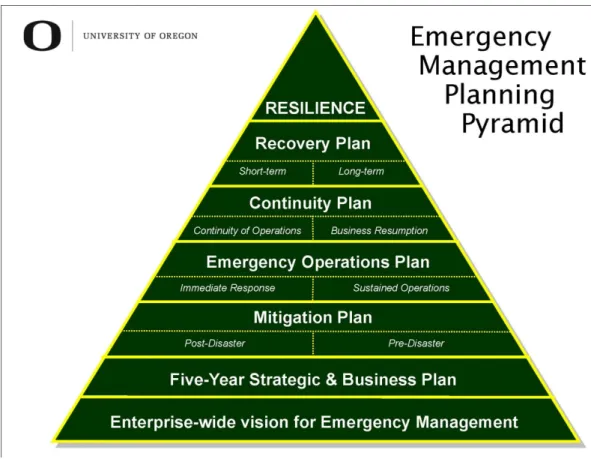
Figure 1 provides a graphic representation of the plans and policies associated with the various phases.
Figure 1: Planning Pyramid
An Integrated Approach
The UO Emergency Management Program goes beyond conventional emergency planning by taking an integrated systems approach. An integrated systems approach means that emergency
management practices—i.e., those involving the four phases of the disaster cycle—are integrated into current and future campus plans and policies, as well as the decision-making processes of the
university. This approach can also be thought of as a simple equation. The more risk or
vulnerability the university mitigates today through plans or policies, the less overall exposure that will have to be dealt with during emergencies, decreasing the pressure on the response side and lowering recovery costs from future events. To effectively integrate emergency management activities into resources and departments, coordination across the entire university is needed. This involves coordinating efforts with students, faculty/researchers, and staff, as well as university partners—city, county, and state government, neighboring citizens, and the private and non-profit
Emergency Management Program 2010-2011 Annual Report
Page 3
sectors. Only by working emergency management into everyday UO processes can all elements of the disaster cycle be properly addressed.
In 2009, UO Emergency Management submitted and was awarded one of twenty-six Department of Education – Emergency Management for Higher Education grants. The grant provided funds to develop, improve, and integrate campus based all hazard emergency planning efforts. The priority areas of the grant align well with UOEM’s existing Strategic & Business Plan as well as the concept of an integrated approach to emergency management. The grant priority areas are:
Improve, and fully integrate a campus-wide all-hazards emergency management plan. Training for campus faculty, staff, and students in emergency management procedures. Coordination of planning and communication across all relevant components of campus. Coordination with local and State government emergency management efforts.
Develop a written plan with emergency protocols that include the medical, mental health, communication, and transportation needs of persons with disabilities, temporary special needs of individuals, and other unique needs of individuals.
A written plan that prepares the campus for infectious disease outbreaks with both short-term and long-short-term implications for planning.
A written plan for preventing violence on campus by assessing and addressing the mental health needs of students who may be at risk of causing campus violence by harming themselves or others.
Another defining feature of the UO Emergency Management Program is that it is based on the standards set forth by the National Fire Protection Association (NFPA) in NFPA 1600 and the Emergency Management Accreditation Program (EMAP). NFPA 1600 standards provide a
“standardized basis for disaster/emergency management planning and business continuity programs in private and public sectors…” (NFPA 1600). NFPA accomplishes this through common program elements, techniques, and processes. EMAP is a standard-based voluntary assessment and
accreditation process for government programs responsible for coordinating activities for natural and human-caused disasters. These standardized programs, together with the integrated approach, will increase the university’s capacity to prepare for, respond to, recover from, and mitigate against future disasters.
An integrated and coordinated emergency management program provides the campus with a number of benefits including:
Reduced vulnerability and exposure to future crisis and disaster incidents
Protection of life, property, research enterprise, essential services, and critical facilities Diminished post-disaster economic hardship for the campus and community
Reduced short-term and long-term recovery and reconstruction costs
Quicker resumption of university functions, including education, research, and business systems
Increased cooperation and communication within the community through the planning process, training, and exercising
Emergency Management Program 2010-2011 Annual Report
Page 4
Assessing Enterprise-wide Vulnerability
An important component of the five-year Emergency Management strategic and business plan is to conduct regular campus hazard identification vulnerability and risk analysis (CHIVRA) to determine vulnerable areas on the UO campus. Awareness of campus vulnerabilities allows departments and university leaders to focus cost-effective mitigation, response, and recovery efforts to improve the campus’ overall resilience. The functions of CHIVRA include:
Review and update the CHIVRA (Geographic Information Systems) GIS model developed in part for the mitigation plan into the current campus GIS system. Continue to work with the University of Oregon InfoGraphics Lab to maintain,
update, and improve campus GIS data for risk assessments as it relates to the
vulnerability, sensitivity, and exposure of campus assets, mitigation, response, recovery, and preparedness.
When possible, utilize real-time Campus GIS data to design tabletop, functional, and full-scale exercises to prepare the UO.
Develop CHIVRA models, methodologies, and best practices to be used in all phases (mitigation, response, recovery, and preparedness) of disaster resilient planning and training.
Develop strategies and seek funding to build capacity to assist other OUS campuses in developing Hazard Identification and Vulnerability/Risk Assessments.
Implementation of the CHIVRA system will allow the campus to become more resilient to natural hazards and other potential emergencies, and is a necessary component of any effective integrated emergency management system. The CHIVRA has been supported by Institutional Graduate
Teaching Fellows (GTFs) from the office of the Vice President for Research for the past three years. This GTF position is shared between UO Emergency Management and the InfoGraphics Lab.
Assessing Department Level Vulnerability: Safety, Security Risk and Vulnerability Assessments
UOEM works toward enterprise-wide resiliency. However, the university is perhaps most accurately described as a collection of interconnected and guiding organizations. Therefore, UOEM has begun the process of guiding department, division, or functional groups through a series of planning phases to assess the vulnerability, risk, and resiliency unique to each.
The UOEM comprehensive planning process begins with an all hazards risk assessment conducted by the inter-disciplinary Safety, Security, Risk and Vulnerability Assessment (SSRVA) Team. The Assessment Team is a collaborative interdisciplinary effort that is lead by UOEM and includes representatives from Environmental Health and Safety, Geography’s InfoGraphics Lab, Public Safety and Risk Management. The Team conducts site specific assessments to identify hazards and risks, and to assess the vulnerability of people, property, operations and the environment. These site specific risk assessments are used to develop risk reduction plans and strategies tailored to the specific participating group.
Emergency Management Program 2010-2011 Annual Report
Page 5
The SSRVA process entails:
Internal review and evaluation of existing procedures, protocol
Defining how department / division vulnerability and risk varies from overall campus vulnerability and risk.
The identification of issues, threats, vulnerabilities, and opportunities in: Safety (e.g., fire, life safety, evacuation)
Security (e.g., personnel, property & IT, facilities) Vulnerability (e.g., structural, utility, content)
The outputs of the SSRVA are suggested actions to be included in plans, policies and procedures that support changes to operations, equipment, facilities, staffing, and training.
Oversight Structure
To facilitate emergency management on the UO campus, the UO Emergency Management Program has developed an oversight structure. Any oversight model must involve not only the emergency management staff, but must also actively engage partners throughout the UO Campus and the surrounding community. Through active partnership, the university will be able to enhance disaster resilience and improve campus safety.
The oversight structure is shown in the diagrams below. Ultimately responsible for the Emergency Management Program is the Policy Group, which provides executive leadership on all high level emergency management decisions.
The next oversight group, the Emergency Management Advisory Committee (EMAC), is a representative group of administrative and auxiliary units that provide oversight on all emergency management plans, policies, procedures, trainings, and exercising. The EMAC reports directly to the Vice President for Finance and Administration and the Policy Group. See Figure on page 7.
In the event of an emergency incident, the Campus Incident Management Team (CIMT) is activated. The CIMT provides the command and control infrastructure that is required to manage the logistical, fiscal, planning, operational, safety and campus issues related to any and all incidents/emergencies.
See Figure on page 8.
Emergency Management Program Objectives
The Emergency Management Program has five main objectives that guided the tasks and programs of the past year. These objectives are:
Oversight – The Emergency Management Program held numerous oversight meetings with the Emergency Management Advisory Committee (EMAC) and the Campus Incident Management Team (CIMT), as well as produced this Annual Report.
Emergency Communications – The emergency management capabilities and the policy framework around them were further improved upon through testing of the UOAlert! text messaging system as well as the creation of emergency notification plans and policies. Business Continuity– During this fiscal year, UOEM began a series of business continuity
Emergency Management Program 2010-2011 Annual Report
Page 6
Incident Command System Integration – A widely accepted best practice within emergency management states that the Incident Command System (ICS) is the most modular, flexible and effective way to deal with an emergency situation. That is why the Emergency Management Program tries to integrate ICS protocols more broadly and deeply into university operations. Recently, these efforts took the form of ICS-prescribed
development of Incident Action Plans (IAPs) for Halloween, BCS Championship Watch Party, the Parade of Champions, and Mallard Madness.
Service Learning –The InfoGraphics Lab partnered with the Emergency Management Program to foster service learning. Both units have shared a Graduate Research Fellow for the past three years. The student helped in maintaining and improving the campus risk assessment for the university.
Emergency Management Advisory Committee
EMAC:
Emergency Management
Advisory Committee
Purpose: To advise on
Emergency Management
related issues and protect
the University by
facilitating the integration
of all activities to build,
sustain and improve the
capability to mitigate
against, prepare for,
respond to, continue
operations during and
recover from disasters.
Contact:
André Le Duc
Emergency Management
[email protected]
(541) 346-5833
UNIVERSITY OF OREGON
Membership Diagrams of Standing Crisis / Emergency Management Groups
Emergency Management
Campus
Planning
Government & Community RelationsCounseling & Testing Center Budget & Resource Planning Human Resources Health Center Office of Communications Campus Operations Academic Affairs Ken Doxsee [email protected] Athletics Bob Beals [email protected] Vicki Strand [email protected]
Budget & Resource Planning
Laura Hubbard
Campus Planning
Chris Ramey
Counseling & Testing Center
Shelly Kerr [email protected] Emergency Management Andre Le Duc [email protected] Krista Dillon [email protected] Emma Stocker [email protected]
Environ. Health & Safety
Kay Coots [email protected] Campus Operations George Hecht [email protected] Health Center Dana Mills [email protected] Housing Brad Black [email protected] Human Resources Linda King [email protected] InfoGraphics Lab Ken Kato [email protected] Information Services Joe Mailander [email protected] Noreen Hogan [email protected] Libraries Normandy Helmer [email protected]
Senior VP & Provost
Beverlee Stilwell [email protected]
Finance & Administration
Brian Smith [email protected] Student University Relations Finance & Administration Environmental
Health & Safety Public Safety Research Senior VP & Provost
Risk
Management
HousingPhysical Ed. & Recreation
Physical Education & Recreation
Bryan Haunert [email protected] Communications, Office of Phil Weiler [email protected] Public Safety Carolyn McDermed [email protected] Doug Tripp [email protected] Risk Management TBD Student Affairs Paul Shang [email protected] Mike Eyster [email protected] College of Arts & Sciences Athletics Information Services Responsible Conduct of Research InfoGraphics Lab Disability Services Hilary Gerdes [email protected]
Office of the Registrar
Meg Rowles
Responsible Conduct of Research, Office for
Sue Eveland
Registrar, Office of the Gov’t & Community Relations
Greg Rikhoff
Last Revised: 8/1/2011
Academic Affairs
Campus
Incident
Management
Team
CIMT:
Campus Incident
Management Team
Purpose: To provide
the command and
control infrastructure
that is required to
manage the logistical,
operational, safety and
campus issues related
to any and all
incidents/emergencies.
Meeting Frequency:
Once per month
Meeting Time:
12 - 1 p.m.
Meeting Location:
Rotates
Team Contact:
André Le Duc
Emergency
Management
[email protected]
(541) 346-5833
UNIVERSITY OF OREGON
Membership Diagrams of Standing Crisis / Emergency Management Groups
Emergency
Management
Government &
Community
Relations
Budget &
Resource Planning
Health
Center
Housing
Office of
Communications
Campus
Operations
Athletics: Vicki Strand [email protected]Budget & Resource Planning:
Laura Hubbard
Emergency Management:
Andre Le Duc [email protected] Krista Dillon [email protected] Emma Stocker [email protected]
Environmental Health & Safety:
Kay Coots
Campus Operations:
George Hecht
Finance & Administration:
Brian Smith [email protected] Health Center: Dana Mills [email protected] Housing: Brad Black [email protected]
Communications, Office of:
Phil Weiler [email protected] Julie Brown [email protected] Public Safety: Ed Rinne [email protected]
Student
Senior VP &
Provost
Athletics
University
Relations
Finance &
Administration
Environmenal
Health &
Safety
Dept. of
Public Safety
Claims & Risk
Management
President
Research: Lynette Schenkel [email protected] Meg Rowles [email protected] Risk Management: TBD Student Affairs: Paul Shang [email protected] Mike Eyster [email protected]President, Office of:
Tim Black
Human Resources:
Linda King
Government & Community Relations:
Beverlee Stilwell [email protected]
Senior VP & Provost:
Human
Resources
Registrar, Office of:
Sue Eveland [email protected]
Research
Office of the
Registrar
Last Revised: 8/1/2011Emergency Management Program 2010-2011 Annual Report
Page 9
2010-2011 Task and Products Summary
Below is a summary of the tasks and products completed in the past year. They are organized by Emergency Management Program objective.
Objective 1: Provide oversight, communication, and coordination of a broad and diverse group of campus partners
Created Annual Report
This annual report provides an overview of emergency management activities completed during the 2010-2011 academic year.
Products: Developed an annual report for the 2010-2011 academic year.
Held Emergency Management Advisory Committee (EMAC) Meetings
The EMAC met two times during the academic year1 and discussed a number of topics
including:
Implications for the Cascadia Region Earthquake (Red Cross presentation) Department Specific Individual Preparedness Training
Internal Incident Notification General ICS Training Opportunities UOEM Proposed Work Plan Halloween Weekend
Campus Incident Management Team: Hazard Annexes for Emergency Operations Plan
Campus Mitigation Plan
Safety, Security and Vulnerability Assessment (SSRVA) Team Oregon ShakeOut: Drop, Cover, Hold
UO Alert! Testing
Internal Incident Notification Policy Update ICS Type III Team Update
UO Emergency Management Policy Track Town 2012
Special Events Operations Plan Opt-in 911 System
Products: Meetings held on October 28, 2010 and January 20, 2011
1
In July 2010 the EMAC meeting was cancelled due to a lack of adequate meeting space; in April 2011 the meeting was cancelled due to CIMT activation for Officer Kilcullen’s Memorial.
Emergency Management Program 2010-2011 Annual Report
Page 10
Held Campus Incident Management Team (CIMT) Meetings
The CIMT met seven times during the academic year and discussed a number of topics including:
WHO Pandemic Stand Down On-Call Shared Calendar
Gerlinger Fire Update: Claims and AAR
Earthquake and Civil Disturbance Annex Review Internal Incident Notification Protocol
UO Alert! Outreach
Halloween Weekend Planning ShakeOut Drill
Annual Exercise Calendar FireMed Program
ICS Training
10/14/10 Suspicious Package Debrief Winter Weather Tracking
Type 3 Incident Management Team 11/24/10 Bomb Threat AAR
Review of Bomb Threat / Suspicious Package EOP Hazard Annex BCS Championship Planning
Business Continuity Planning Earthquake Awareness Month
Trainings: Violence in the Workplace, Situational Awareness 4/29/11 Officer Kilcullen Memorial
April 30-May 7 Mallard Madness Large Event Planning
Products:
Meetings held on August 25, 2010; September 20, 2010; November 15, 2010; December 20, 2010; March 21, 2011; May 17, 2010, and June 20, 2011.
Objective 2: Employ an integrated all-hazards risk based approach for mitigation, response, business continuity, recovery, and preparedness planning for campus.
Re-Convened Campus Natural Hazard Mitigation Committee
The UO’s Natural Hazard Mitigation Plan (UONHMP) was due for an update in 2011. UOEM staff re-convened the plan’s steering committee to guide the plan update process. The 2011 update will result in the UONHMP becoming an annex to the state of Oregon NHMP. The final plan was sent to FEMA for review in June 2011.
Products:
Emergency Management Program 2010-2011 Annual Report
Page 11
Business Continuity Pilot Projects
In February 2010, UOEM kicked off a business continuity planning (BCP) pilot project with six research units. By the end of the 2010-2011 academic year, all but one unit’s plans had been finalized. UOEM also began a BCP process for the Business Affairs Office (BAO), based on lessons learned from the research pilots. The BAO plan was completed in May 2011. This effort was funded through the Emergency Management for Higher Education grant.
Products:
Final BCP plans for Zebrafish International Research Center (ZIRC), Office of Veterinary Services and Animal Care (OVSAC), Center for Advanced Material Center at Oregon (CAMCOR), and Office of Business Affairs.
Draft Continuity of Operations Plan for Oregon Institute for Marine Biology (OIMB) Safety, Security, Risk and Vulnerability Assessments
The Safety, Security, Risk and Vulnerability Assessment (SSRVA) Team continued to work with staff from the HEDCO clinic to finalize the SSRVA report. An SSRVA process kicked off for the Health Center in Spring 2011. This effort was funded through the Emergency Management for Higher Education grant.
Products:
Revised SSRVA process and report template Final SSRVA report for HEDCO. Draft SSRVA report for the Health Center
Developed standing work sessions for SSRVA team members
Wrote an article for International Association of Emergency Manager’s May2011 Bulletin Emergency Operations Plan Updates
UOEM staff began work on annual updates to the Basic Plan of the EOP. Additional work is being done to update the hazard annex templates. This effort was partially funded through the Emergency Management for Higher Education grant.
Products:
2011 EOP Updates
Draft Hazard Annex Templates
Objective 3: Build local, higher education, state, and national partnerships and coalitions.
Received grant money to assist other Oregon University System campuses to develop Natural Hazard Mitigation Plans (NHMPs).
On behalf of the Oregon University System, UO Emergency Management wrote a proposal through FEMA’s Hazard Mitigation Grant Program to fund the development of natural hazard mitigation plans for OUS institutions. In August 2009, that funding was approved and awarded. Universities involved: Oregon State University, Oregon Institute of Technology, Eastern Oregon University, Southern Oregon University, Western Oregon University, and Mount Hood Community College. UOEM has been supporting the development of NHMPs
Emergency Management Program 2010-2011 Annual Report
Page 12
on these campuses by providing templates and other material, providing two day long training sessions, and technical assistance via 1-on-1 meetings in person and over the phone.
Products:
Kickoff training held September 14, 2011
Risk Assessment training held February 22, 2011.
Individual meetings: Southern Oregon University, June 17, 2011; Mount Hood Community College, June 22; Oregon State University, scheduled for week of July 18, 2011.
Local, State and National Partnership and Coalitions
Lane Preparedness Coalition
UOEM sits on the Lane Preparedness Coalition Steering Committee. The Coalition is a group of public and private entities in Lane County who are interested in working together to increase emergency preparedness county-wide. Participating agencies include local public safety agencies, the hospitals, schools, universities, utility providers, and private businesses.
State Interagency Hazard Mitigation Team (SIHMT)
UO Emergency Management serves as the postsecondary representative on the State Interagency Hazard Mitigation Team. SIHMT oversees the State of Oregon’s Natural Hazard Mitigation Plan and monitors statewide progress in mitigating the effects of natural hazards.
Cascadia Region Earthquake Workgroup (CREW)
The Cascadia Region Earthquake Workgroup (CREW) is a coalition of private and public representatives working together to improve the ability of communities throughout the Cascadia Region to reduce the effects of earthquakes and related hazards, such as tsunami. The University of Oregon is a postsecondary institution member of CREW and the UO Emergency Management Director currently serves as the past-president of the board of directors.
International Association of Emergency Managers Universities & Colleges Caucus (IAEM-UCC)
The mission of the International Association of Emergency Managers Universities & Colleges Caucus (IAEM-UCC) is to represent the emergency management issues surrounding college and university campuses. The purpose of this caucus is to provide emergency managers from higher education institutions a voice on a national and international scale to ensure their needs are also being addressed by government and industry officials. The UO Emergency Management Director serves as the vice-chair and the Senior Planner serves as the Region 10
representative for the IAEM-UCC. Disaster Resilient University listserv
The mission of the Disaster Resilient University (DRU) listserv is to facilitate open communication, discussion, and resource sharing between university/college
Emergency Management Program 2010-2011 Annual Report
Page 13
emergency management practitioners charged with making our campuses more disaster resilient. The DRU Listserv was founded by and is hosted by the University of Oregon Emergency Management Program.
Disaster Resilient University-Communities of Practice (CoP)
DRU (CoP) is a professional networking, collaboration and communication platform. Created by the U.S. Department of Homeland Security Science & Technology Directorate the site serves as a vetted community of members focused on emergency preparedness, response, recovery and other homeland security issues. The DRU-CoP has been established for university and/or college emergency management professionals to share information, technical resources (such as templates or examples, After Action reports, lessons learned, and best practices or case studies) and engage in discussions and dialogues related to the profession and emerging issues around campus emergency management. The DRU-CoP was developed through a collaborative between U.S. Department of Homeland Security Science & Technology Directorate, International Association of Emergency Managers-Universities & Colleges Caucus and University of Oregon Emergency Management Program.
Products:
Lane Preparedness Coalition (LPC) Member State Natural Hazard Mitigation IHMT
Cascadia Region Earthquake Workgroup (CREW) membership
Representation and leadership in the International Association of Emergency Managers Universities & Colleges Caucus
Hosting and management of the Disaster Resilient University Listserv with 800 institutional members
Development of National Disaster Resilient University Communities of Practice UO CIMT partnered with the City of Eugene for the Officer Kilcullen Memorial
planning
On Friday, April 23rd an officer of the Eugene Police Department (EPD) was killed in the line of duty. On Saturday April 24th UO leadership and CIMT members met with City officials to offer assistance. From April 25th – 29th the Oregon Fire Marshall’s IMT Blue Team, City of Eugene’s Disaster Operations Team and University of Oregon’s Campus Incident Management Team (CIMT) operated in a unified Incident Command Structure (ICS). ICS was used to assist with the planning and running memorial service activities within the City and at Matthew Knight Arena on Friday April 29th at 2 PM.
Products:
“Warm” ICS training experience for UO CIMT
Emergency Management Program 2010-2011 Annual Report
Page 14
Federal Medical Station Planning
The Department of Health and Human Services (DHHS) and the Centers for Disease Control and Prevention are developing Federal Medical Stations (FMS) to meet public health needs during a national emergency. Federal Medical Stations have the ability to increase local healthcare in mass casualty incidents or potential public health threats. When operational, a FMS supports 250 non-acute patients for three days. UOEM staff assisted Lane County Public Health in the identification of potential Federal Medical Station sites on campus and are working to develop a formal memorandum of understanding for an FMS on campus.
Products:
Site evaluation for Federal Medical Stations Development of a draft MOU
Track Town 12 – Olympic Trials Planning
The University of Oregon will host the Olympic Track and Field Trials in June/July of 2012. UOEM staff serve on the Security Committee and are tasked with the development of operations and incident action plans for the Trials. The Committee is utilizing ICS to plan for the Trials and UOEM staff are filling the following roles: Planning Section Chief, Resource Unit Leader, and Situation Status Unit Leader.
Products:
Resource ordering and tracking process
FOOD for Lane County Agency Conference 7/14/2010
Provided Emergency Management preparation training.
Products:
Emergency Preparedness Presentation
Objective 4: Support campus understanding and utilization of the Incident Command System/National Incident Management System principles.
Analyzed Incident Management Tools and Software
Over the past year UO Emergency Management has been analyzing software and new work solutions for incident management, risk assessments and planning.
Products:
Purchase of Incident Action Planning Software
Further development and maintained the Basecamp® site as the Virtual Emergency Coordination Center
Emergency Management Program 2010-2011 Annual Report
Page 15
Developed Incident Action Plans (IAPs) or Operations Plans for Halloween, BCS Championship Watch Party, the Parade of Champions, and Mallard Madness
Numerous events on campus provided the opportunity to develop Incident Action Plans and Operations Plans. In addition, these events provided an opportunity to utilize ICS for event planning.
Products:
Numerous IAPs and Operations Plans
Developed After Action Report (AAR) for October 2010 Suspicious Package
In October a suspicious package was found in Chapman Hall. UOEM identified call down lists as a barrier in the response: no lists exist for departments or buildings for after-hours contacts. After this incident, UOEM began to develop these lists. A new internal incident notification system has been developed and is being implemented.
Products:
October 2010 Suspicious Package AAR Internal Incident Notification system
Developed After Action Report (AAR) for November 2010 Bomb Threat
UOEM assisted in developing an AAR report for a bomb threat on campus. The AAR includes a summary of the direct and indirect costs associated with the response needed for the incident.
Products:
November 2010 Bomb Threat AAR
Revision of the UO Emergency Operations Plan Bomb Threat / Suspicious Hazard Annex. Held Incident Command System (ICS) Trainings
UOEM provided basic and advanced Incident Command System training for staff from Information Services and Campus Operations. This effort was funded through the Emergency Management for Higher Education grant.
Products:
Held ICS 300/400 courses in December 2010. Held ICS 100/200 courses in January 2011. Held ICS Refresher course in January 2011.
Emergency Management Program 2010-2011 Annual Report
Page 16
Objective 5: Enhance disaster preparedness capabilities through preparing, training, and exercising.
Conducted Football Tabletop Exercise in August 2010
On August 20, 2010, the University of Oregon, City of Eugene, American Red Cross, and Crowd Management Services (CMS) staff participated in a multijurisdictional tabletop exercise to evaluate the ability of participating agency operations plans to guide key decision-making and to coordinate their communications in response to an incident during a football game. The scenario involved three moves in which a fight occurred in the stands and developed into a 30-person situation that spilled onto the field. Participants were asked to respond to a variety of prompts at each step of the exercise.
Products:
Completed Football Tabletop Exercise and After-Action Report
Conducted Hazardous Materials Spill Functional Exercise in March 2011
In March 2011, UOEM staff worked with Environmental Health and Safety staff to develop a functional hazardous materials spill response exercise to test response procedures and communication. UOEM evaluated the exercise and developed an after action report that included the identification of the need for an additional exercise to link Incident Command System principles with existing response procedures.
Products:
Completed HazMat Functional Exercise and After-Action Report
Maintained a Campus Community Emergency Response Team (C-CERT)
Since the development of the C-CERT program, approximately 50 staff members completed the training. The C-CERT team has a regular meeting schedule and meets quarterly. UOEM staff is working with C-CERT members to identify ways to incorporate the team into emergency plans as well as future trainings and exercises. This effort was funded through the Emergency Management for Higher Education grant.
Products:
C-CERT Team success—50 trained members on campus
Developed and Implemented Personal Preparedness Training
UOEM staff developed and implemented a personal preparedness training that covers: 1) the university’s emergency planning efforts, 2) family emergency planning that staff can do at home, 3) how to build an emergency kit, and 4) how to mitigate common hazards at home.
Products:
11/11/10 – Office of Responsible Conduct of Research 11/17/10 – Office of the President
1/21/11 – Enrollment Mgmt staff 3/28/11 – General faculty/staff audience
4/12/11 – Business preparedness for Roseburg Chamber of Commerce 6/8/11 – Business Preparedness Lane Preparedness Coalition
Emergency Management Program 2010-2011 Annual Report
Page 17
Objective 6: Strive for multi-dimensional communications (e.g. redundancy to ensure multiple modes of communications) and enhance education, awareness, and understanding of what to do before, during, and after crisis and disaster events among students, staff, and faculty
Maintained and tested UO Alert! text notification system
The system, implemented in the 2009-2010 academic year, was tested in January 2011 and was launched twice for incident notification.
Products:
Maintenance of the text notification system; successful test and use of system. Presentation on UO Alert! during new faculty orientation
Alerts Website
The ALERTS page is part of the University of Oregon’s Crisis and Emergency Notification System. The ALERTS page is used to provide emergency related information to the campus community. The main webpage can be altered to provide incident specific information or simple alerts. The ALERTS page allows the university to disseminate information beyond those directly associated with the university.
Information on the page is broken down into three categories:
Information only – information about a situation that does not present an imminent threat but where the campus community may be concerned about safety or security. Urgent Information – an incident or condition that does not pose an imminent threat
to life or safety, but that is of a nature where timely receipt of information or instructions may directly affect the well-being of the recipient.
Emergency – an event, expected or unexpected, that poses an imminent threat to the health and safety of students, faculty and staff and requires immediate action.
Products:
Alerts Blog – http://alerts.uoregon.edu UOEM webpage update
UOEM has updated its website to include up-to-date information on trainings, schedules of events, alert systems, and more. The new interface is simpler and user-friendly.
Products:
Emergency Management Program 2010-2011 Annual Report
Page 18
Objective 7: Address sustainability considerations in all endeavors and ensure that strategies are measurable
Five-Year Strategic and Business Plan Updates
The five-year business plan has undergone multiple edits and revisions but remains the foundation of the organization’s mission, objectives, and core actions. The department compares its core actions against its mission and objectives on a quarterly basis via cost-versus-budget reviews, performance evaluation, and interdepartmental assessments.
Products:
Updates to the University of Oregon Emergency Management Five-Year Strategic Plan and Business Plan Development of program benchmarks
Using the balanced scorecard technique UO Emergency Management developed a set of performance metrics. The balanced scorecard will serve a UO Emergency Management
updated strategic planning and management system used to align program activities to the vision and strategy of the organization, improve internal and external communications, and monitor organization performance against strategic goals.
Products:
UOEM balanced scorecard
UOEM Staff Professional Development
Enhancing the capability of the UOEM staff to plan for and respond to incidents ensures that the UOEM remains proactive in anticipating hazards as well as mitigation and preparedness opportunities.
Products:
Participated in the following trainings: FEMA Public Assistance
FEMA 74 – Earthquake Hazard Mitigation for Nonstructural Elements Emergency Management in Higher Education (EMHE) participant workshop Disaster Resilient University workshop
L-950 ICS All-Hazard Incident Commander Training L-952 ICS All-Hazard Planning Section Chief Training