Educational Policy Studies Dissertations Department of Educational Policy Studies
12-21-2018
The Practice and Challenges of Social Justice
Instructional Leadership In International
Baccalaureate Primary Years Programme Schools
Ovura Murphy
Follow this and additional works at:https://scholarworks.gsu.edu/eps_diss
This Dissertation is brought to you for free and open access by the Department of Educational Policy Studies at ScholarWorks @ Georgia State University. It has been accepted for inclusion in Educational Policy Studies Dissertations by an authorized administrator of ScholarWorks @ Georgia State University. For more information, please [email protected].
Recommended Citation
Murphy, Ovura, "The Practice and Challenges of Social Justice Instructional Leadership In International Baccalaureate Primary Years Programme Schools." Dissertation, Georgia State University, 2018.
This dissertation, THE PRACTICE AND CHALLENGES OF SOCIAL JUSTICE
INSTRUCTIONAL LEADERSHIP IN INTERNATIONAL BACCALAUREATE PRIMARY YEARS PROGRAMME SCHOOLS, by OVURA THEANITA CROSBY MURPHY, was prepared under the direction of the candidate’s Dissertation Advisory Committee. It is accepted by the committee members in partial fulfillment of the requirements for the degree, Doctor of Philosophy, in the College of Education & Human Development, Georgia State University.
The Dissertation Advisory Committee and the student’s Department Chairperson, as
representatives of the faculty, certify that this dissertation has met all standards of excellence and scholarship as determined by the faculty.
_________________________________
Yinying Wang, Ed.D. Committee Chair
______________________________ Richard Lakes, Ph.D.
Committee Member
______________________________ Susan Ogletree, Ph.D.
Committee Member
______________________________ Date
______________________________ William Curlette, Ph.D.
Chairperson, Department of Educational Policy Studies
______________________________ Paul A. Alberto, Ph.D.
By presenting this dissertation as a partial fulfillment of the requirements for the advanced degree from Georgia State University, I agree that the library of Georgia State University shall make it available for inspection and circulation in accordance with its regulations governing materials of this type. I agree that permission to quote, to copy from, or to publish this dissertation may be granted by the professor under whose direction it was written, by the College of Education & Human Development’s Director of Graduate Studies, or by me. Such quoting, copying, or
publishing must be solely for scholarly purposes and will not involve potential financial gain. It is understood that any copying from or publication of this dissertation which involves potential financial gain will not be allowed without my written permission.
All dissertations deposited in the Georgia State University library must be used in accordance with the stipulations prescribed by the author in the preceding statement. The author of this dissertation is:
Ovura Theanita Crosby Murphy 1942 Smithfield Avenue Ellenwood, GA 303294-1635
The director of this dissertation is:
Yinying Wang
Department of Educational Policy Studies College of Education & Human Development
Ovura Theanita Crosby Murphy
ADDRESS: 1942 Smithfield Avenue Ellenwood, GA 30294
EDUCATION:
PROFESSIONAL EXPERIENCE:
2017-present College and Career Readiness Coordinator District IB Coordinator
Department of Career, Technical and Agricultural Education Atlanta Public Schools
2012-2017 Assistant Principal Beecher Hills Elementary Atlanta Public Schools
2008-2011 IB Primary Years Programme Coordinator Beecher Hills Elementary
Atlanta Public Schools
2005-2008 IB Primary Years Programme Coordinator Bolton Academy
Atlanta Public Schools 1996-2004 Elementary Teacher
Atlanta Public Schools
Ed.D. 2018 Georgia State University Educational Leadership M.S. 2001 Georgia State University
Instructional Technology B.S 1996 Morris Brown College
Crosby, O. T. (June, 2008). Bulletin Boards: A Window into Your Classroom. Al Abraq Cycle 1 Girls School for Basic Education, Umm Al Quwain, United Arab Emirates.
Crosby, O. T. (June, 2008). Using Rubrics to Increase Student Achievement. Al Abraq Cycle 1 Girls School for Basic Education, Umm Al Quwain, United Arab Emirates.
Crosby, O. T. (June, 2008). ABCDs of Instructional Objectives. Al Abraq Cycle 1 Girls School for Basic Education, Umm Al Quwain, United Arab Emirates.
Crosby, O. T. (June, 2008). Bulletin Boards: A Window into Your Classroom. Al Zawra Cycle 2 Girls School for Basic Education, Ajman, United Arab Emirates.
Crosby, O. T. (June, 2008). Using Rubrics to Increase Student Achievement. Al Zawra Cycle 2 Girls School for Basic Education, Ajman, United Arab Emirates.
Crosby, O. T. (June, 2008). ABCDs of Instructional Objectives. Al Zawra Cycle 2 Girls School for Basic Education, Ajman, United Arab Emirates.
Crosby, O. T. (April, 2004). From Underperforming to High Achieving. (Co-Presenter) National Association of Elementary School Principals Conference, San Francisco, California.
PROFESSIONAL SOCIETIES AND ORGANIZATIONS
1996 Georgia Association of Educators 1996 National Education Association
2017 Georgia Association of Educational Leaders
LEADERSHIP IN INTERNATIONAL BACCALAUREATE
PRIMARY YEARS PROGRAMME SCHOOLS
by
OVURA THEANITA CROSBY MURPHY
Under the Direction of Yinying Wang
ABSTRACT
Purpose: The purpose of this study is to examine the effective social justice instructional
leadership practices of leaders in schools implementing the International Baccalaureate (IB)
Primary Years Programme (PYP) and identify challenges and barriers these leaders experience
when implementing social justice instructional leadership. Framework: Social justice
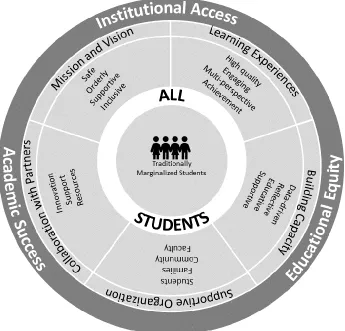
instructional leadership (SJIL) includes: (a) establishing vision to promote a safe and inclusive
environment, (b) facilitating high-quality learning experiences with an engaging curriculum that
includes multiple perspectives, (c) building capacity of the entire school community to positively
qualitative case study employed interviews and examination of documents to identify the
effective SJIL actions of school leaders and the challenges these leaders experienced in IB PYP
schools in one urban, southeastern school district. Deductive and inductive analysis techniques
helped categorize emergent themes related to effective practices and challenges. Findings: The
findings of this study present actions that PYP leaders identified as having a positive impact on
the social-emotional and academic growth of students in traditionally marginalized groups
including developing a culturally responsive environment, providing access to learning in
inclusive and diverse settings, building a data driven culture, fostering relationships, and
educating stakeholders. The findings also provide suggested strategies for overcoming
roadblocks to SJIL including providing intensive teacher support, implementing targeted
professional learning, educating parents, soliciting support through outreach, and partnering with
organizations for wrap-around services. Implications: The findings of this inquiry suggest that
to develop school cultures that promote institutional access, educational equity, and academic
success for all students, school leaders must be deliberate when: hiring and developing teachers,
budgeting, and implementing resources, practices, and protocols. This study also reinforces the
need for providers of educational leadership training to include SJIL practices, methodologies,
and competencies in leadership programs. Finally, the results of this study support the need for
states and districts to change education funding formulas based on the needs of students to
enable districts and schools to serve their neediest children with fewer barriers.
INDEX WORDS: instructional leadership, International Baccalaureate, Primary Years
PRIMARY YEARS PROGRAMME SCHOOLS
by
OVURA THEANITA CROSBY MURPHY
A Dissertation
Presented in Partial Fulfillment of Requirements for the
Degree of
Doctor of Education in
Educational Leadership in
Educational Policy Studies in
the College of Education & Human Development
Georgia State University
Copyright by
I dedicate this dissertation to the people in my life who developed my love of education,
thirst for knowledge, supported my personal and professional growth and encouraged me
throughout this journey. First, to my mother, Anita Crosby, your boundless love and support
enabled me to grow into the inquisitive woman I am today. Your love of reading and learning
fostered those loves in me, which facilitated my success throughout this process. Your constant
encouragement and supportive prodding kept me focused and headed towards graduation. One of
my goals was to make you proud, and I know that you are. I love you! To my father, Eddie
Crosby, you modeled that it was never too late to pursue your dream or earn a degree. Although
you were not here to experience this journey, your love, words of encouragement, and life
lessons propelled me to the end. I know that you are in heaven beaming with pride!
To my mentors turned friends, Drs. Marilyn Taylor and Angela Bolin and my mentee
turned mentor and friend Dr. Qualyn McIntyre. Thank you for support, encouragement, and
friendship. You are great educators, mentors, and friends. You inspired, encouraged, and guided
me as I developed as an instructional and social justice leader. Thank you for the priceless
support and friendship you provided me throughout my doctoral journey. I love you all, and our
bond is irreplaceable!
Finally, to my loving and supportive husband and best friend, Jamie. Thank you for your
care and sacrifice during this ride. My doctoral journey and our marriage began at the same time,
and you were supportive from the very beginning. Thank you for keeping the house together,
helping me find work, school, life balance, eating so much fast food, and loving me every day.
You lifted me up when I was discouraged and pushed me to the end. I love and appreciate you
ii
ACKNOWLEDGMENTS
I must first acknowledge my family and friends for their support and patience throughout
my doctoral adventure. I always believed in the adage, it takes a village to raise a child, but I
now know it also takes a village to complete a doctoral program. You are my village, and your
unwavering support was crucial to my successful completion of this process. I thank you all for
being there for me, even when I could not be there for you. I thank you all for your words of
encouragement, praise breaks, and interludes of fun. I am still sane because of you, my village.
My mother-in-law Wanda Mosley deserves a special thank you. You welcomed me into your
family with open arms and willingly read and edited my assignments throughout my time in this
program. There was not paper too long or too late for you, and I appreciate your assistance.
Secondly, I acknowledge the inspirational, educational leaders who participated in my
study. Thank you for taking time out of your hectic schedules to share your leadership practices
and experiences with me and for allowing me to share them with the world. You each inspired
me with your dedication to the children and families you serve. This dissertation would not have
been possible without your assistance.
Next, I would like to acknowledge the members of Cohort IV. I have been enriched by
our time together and am a better thinker, scholar, educator, leader, and writer because of you. I
must make a special tribute to Dr. David Curlette. You started this process as my editing partner
and ended it as a friend. Your thoughtful feedback helped improve my work, your consistent
encouragement helped build my confidence, and your persistent reminders helped me make it to
the end.
Lastly, I must acknowledge and thank my program professors and doctoral committee.
iii
leader. Thank you to Drs. Richard Lakes and Susan Ogletree for serving on my committee. Your
feedback and support were invaluable during this journey. Finally, I must acknowledge my
committee chair Dr. Yinying Wang, whose classes pushed my thinking, improved my writing,
and changed my perspective on leadership. I am a better student, researcher, writer, and leader
because of my work with you. Your feedback, patience, and support not only helped me
iv
TABLE OF CONTENTS
LIST OF TABLES ... v
LIST OF FIGURES ... vi
EXPLANATION OF TERMINOLOGY ... vii
ABBREVIATIONS ... viii
1 THE PRIMARY YEARS PROGRAMME, SOCIAL JUSTICE INSTRUCTIONAL LEADERSHIP AND CHALLENGES ... 1
Purpose of the Study ... 2
Literature Review ... 3
Need for the Study ... 32
Conceptual Framework ... 33
References ... 40
2 THE PRACTICE AND CHALLENGES OF SOCIAL JUSTICE INSTRUCTIONAL LEADERSHIP IN INTERNATIONAL BACCALAUREATE PRIMARY YEARS PROGRAMME SCHOOLS ... 49
Purpose ... 51
Significance of Study ... 51
Methodology ... 53
Findings ... 69
Discussion ... 93
References ... 109
v
LIST OF TABLES
Table 1. Basic PYP School Information ... 58
Table 2. PYP School Demographic Information ... 60
Table 3. Participant Demographic Information ... 61
Table 4. Most Effective Social Justice Instructional Leadership Practices ... 70
Table 5. Most Effective Social Justice Instructional Leadership Practices Themes ... 71
Table 6. Comparison of Effective Social Justice Instructional Leadership Practices by Leader Group ... 78
Table 7. Challenges to Social Justice Leadership Practices and Mitigating Strategies ... 80
vi
LIST OF FIGURES
vii
EXPLANATION OF TERMINOLOGY
Several study specific terms are consistent throughout the written report for the study.
Throughout the written report, abbreviations of International Baccalaureate specific programs
appear to limit the amount of repetition. This section provides a definition of those terms and a
list of the abbreviations and their meaning.
When referring to a program offered by the International Baccalaureate Organization
(IBO), the researcher uses the British spelling of the word “program”, as that is how the IBO
spells it in all its documentation (Kobylinski-Fehrman, 2013). Throughout the report, the term
transdisciplinary applies to concepts, skills, and themes that support learners with making
meaning of and drawing connections between any content areas. The term leaders in this study
will refer to principals, assistant principals, and IB PYP coordinators, which is consistent with
the IB description of the pedagogical leadership team of a PYP school (IBO, 2009b). Used
interchangeable throughout this report, the terms traditionally marginalized groups and
historically marginalized groups refer to groups of students who identify as Black, Hispanic,
viii
ABBREVIATIONS
CP: Career-related Programme
DP: Diploma Programme
ESEA: Elementary and Secondary Education Act
IB: International Baccalaureate
IBCC: International Baccalaureate Career-related Certificate
IBO: International Baccalaureate Organization
MYP: Middle Years Programme
PYP: Primary Years Programme
1 THE PRIMARY YEARS PROGRAMME, SOCIAL JUSTICE INSTRUCTIONAL
LEADERSHIP AND CHALLENGES
International education has experienced tremendous growth as an educational trend
(Dolby & Rahman, 2008; Hallinger & Lee, 2012; Hayden & Thompson, 2008; Walker &
Cheong, 2009). The International Baccalaureate Organization (IBO), through its curriculum
frameworks, has positioned itself as a leader in this movement (Hallinger & Lee, 2012). One
specific IBO framework, the International Baccalaureate (IB) Primary Years Programme (PYP),
developed in 1997 for students between the ages of 3-12, has been implemented in thousands of
schools in the U.S. and abroad (Singh, 2002). A PYP school endeavors to develop students who
are aware of global issues, socially responsible, multilingual, and internationally minded
(Hallinger & Lee, 2012; IBO, 2009a; Singh, 2002). Since its inception in 1997, the number of
schools seeking authorization as IB World Schools offering the PYP has grown steadily.
Between 2012 and 2017, the number of PYP programmes increased approximately 48 percent
(IBO, 2018).
The goal of this qualitative case study is to investigate the social justice instructional
leadership practices of leaders in IB PYP schools and the obstacles leaders face when working to
improve the achievement of students in traditionally marginalized groups. Hallinger and Heck
(1996) stress the importance of investigating leadership within the exercised context. Several
components of the IB frameworks and features of IB schools make PYP schools ideal settings
for studying social justice instructional leadership. First, the IB philosophy about teaching and
learning centers on the academic, cultural, social, emotional, physical, and mental development
of children and developing international-minded students is central to each of the IB programs
Second, the IBO requires schools to foster the learning of each student and support
students with diverse needs to increase learning (Hill, 2012; IBO, 2009c). PYP schools are
expected to serve students in settings that are inclusive as possible and eliminate the practice of
tracking or ability grouping of students on a continuous basis (IBO, 2017). In addition, IB
schools must develop policies around language, assessment, and students with disabilities (IBO,
2016).
Finally, initially launched in Geneva to meet the needs of globally transient students, IB
programs are now available in a variety of educational contexts (Hill, 2012; Hersey, 2012;
Stillisano et al., 2011). Currently, there are over 4949 schools worldwide offering IB
programmes serving students from a variety of countries, linguistic and socioeconomic
backgrounds, religious backgrounds, and cultures (IBO, 2009a, IBO, 2018; Stillisano et al.,
2011). Many IB students often attend schools where the culture and language of instruction are
different from their home language and culture (IBO, 2009a; Stillisano et al., 2011).
Purpose of the Study
The goal of this qualitative case study is to examine the effective social justice
instructional leadership practices that leaders in schools implementing the International
Baccalaureate Primary Years Programme enact and identify the challenges and barriers these
leaders face. The following questions will guide this research.
(1) What are the effective social justice instructional leadership behaviors of school
leaders in International Baccalaureate Primary Years Programme schools?
(2) What are challenges and barriers leaders in PYP schools encounter when
The investigator will analyze qualitative data from interviews to answer the research questions.
An analysis of documents will serve as an additional data source to corroborate findings.
The literature review that follows will situate this study within the literature, help acquire
a sound understanding of topics and theories embedded within the research questions and
identify potential gaps in the literature. The literature review will explore the growth of
international education and the history of the International Baccalaureate. Furthermore, the
review will analyze the PYP, social justice and instructional leadership practices, and outline
challenges and barriers leaders face as social justice and instructional leaders. Finally, the review
of literature includes a discussion of the relationship between leadership and student
achievement.
Literature Review
The purpose of this literature review is to summarize the literature related to justice,
social justice and instructional leadership, identify the challenges and barriers leaders face as
social justice and instructional leaders, give a brief history of the IBO, present an overview of the
PYP, and outline the characteristics of leadership within the PYP. This literature review will also
highlight the key literature on how leadership influences student achievement. A final goal of
this review of relevant literature is to position this study within the literature and identify
potential gaps in the literature.
Justice
Philosophers, scholars, and theorists across time have sought to conceptualize and define
justice (Goldman & Cropanzano, 2015; Hamedi, 2014; Obioha, 2011; Sandel, 2009). Justice is a
concept found in ancient texts, Greek philosophies, legal writings, and organizational theories.
philosophy and believe its importance has experienced a resurgence in the modern philosophical
discussion (Hamedi, 2014; Kirk, 1993; Obioha, 2011). Scholars throughout time have tried to
conceptualize and define justice, yet, there is still no one agreed upon conception or definition of
the term, although the imprint of various philosophies, cultures, individuals, and disciplines have
influenced how justice is perceived. Obioha (2011) offers one idea why so many concepts of
justice may exist. According to Obioha, justice is contextual; thus, context determines how one
interprets justice. The writings of Kirk (1993) reinforce Obioha's thoughts on how individuals
define justice. Kirk writes that people derived their definitions of justice from established family
and community customs, habits and beliefs.
Classical Concepts of Justice.
The classical definitions of justice come from the writings of philosophers such
Thrasymachus, Plato, Saint Thomas Aquinas, Aristotle, and Cephalus (Bhandari, 1998; Kirk,
1993; Obioha, 2011). Many of the classical philosophers had different concepts of justice,
although some of the classic theories support or build upon each other.
Thrasymachus' and Plato's ideas are one example of dichotomous philosophies of justice.
Thrasymachus argued that interest of those in power was right and constituted justice (Bhandari,
1998; Obioha, 2011). Conversely, Plato contended that justice was not about the interests of the
those in power, but the effective harmony of the whole (Bhandari, 1998; Obioha, 2011). Saint
Thomas Aquinas’ view of justice is different from Thrasymachus and comparable to Plato's in
that Aquinas considered justice a virtue and at its core involved considering the welfare of others
(Obioha, 2011). Aristotle and Plato also held differing notions of justice. Aristotle espoused
justice as giving individuals what they deserve, thus believing that injustice is treating unequal
considering the most desirable way of life was necessary to determine the meaning of justice
(Sandel, 2009). Plato, on the other hand, believed that it was necessary to rise above the desire to
experience every pleasure, overcome the need for selfish satisfaction, and move past the
prejudices and routines of ordinary life to understand the meaning of justice (Bhandari, 1998;
Hamedi, 2014; Sandel, 2009). Another difference in Aristotelian and Platonic justice is the fact
that Aristotle emphasized rights, while Plato gave importance to duties (Hamedi, 2014).
Cephalus' view of justice also involved duties. Cephalus viewed telling the truth and paying one's
debt as justice (Bhandari, 1998). The ideas of power, the common welfare, virtue, duties, rights,
and integrity that are the components of the classical concepts of justice serve as the foundational
core of the modern theories of justice.
Modern Concepts of Justice.
Contemporary views of justice are just as varied as traditional views of justice. While
modern and classical theories of justice have a different contextual beginning, many modern
definitions of justice incorporate ideas from classical theories of justice such as virtue, the
common good, rights, and duties. Rawls (1957) views justice as an amalgamation of liberty,
equality, and reward for contributions to the universal benefit. While Sandel (2009) believes
there are distinctive lenses through which to think about justice, which include improving
welfare, valuing freedom, and stimulating virtue. Obioha (2011) offers a succinct summation of
the current discourse on justice. Obioha writes, "whatever differences there may be in the
definition of justice by scholars, broadly speaking, the concept pictures integrity, impartiality,
rightness and fairness as constituting the notion of justice" (p. 183).
Justice scholars have used various terms to classify justice based on the context and
legal, normative, commutative, distributive, and social justice (Obioha, 2011). Vindictive or
retributive justice encompasses the belief that wrongdoers should receive punishment
proportionate to the offense (Goldman & Cropanzano, 2015; Obioha, 2011). A classic reference
to justice that includes the notion of retribution is the Code of Hammurabi. The Code of
Hammurabi speaks of bringing justice to the land to protecting the weak from the strong through
destroying the evil and the wicked (Goldman & Cropanzano, 2015). Contributive or legal justice
centers on the common welfare of the community. Legal justice focuses on adherence to the law
(Goldman & Cropanzano, 2015; Obioha, 2011). Contributive or legal justice maintains that the
good of the individual should not prevail over the good of the whole (Obioha, 2011). Distributive
justice relates to the relationship between a community and its members. Supporters of this
concept of justice propose that proportionate equality drive the distribution of advantages and
burdens in a community (Obioha, 2011). Aristotle is one of the proponents of distributive justice
(Bhandari, 1998; Goldman & Cropanzano, 2015; Hamedi, 2014). Social justice centers on social
institutions, social groups, rights, and relationships. Rawls (1999) views justice as the primary
goal of social institutions. The manner that major social institutions distribute fundamental rights
and duties and decide the division of benefits is the main idea of justice (Rawls, 1957; Rawls,
1999). In their writings, Sandel (2009) and Obioha (2011) discuss the work of Immanuel Kant
and his belief that all people are worthy of respect, because of their humanity, which a belief
echoed by social justice advocates today. Many justice scholars view justice as a fundamental
quality and the bedrock of societal structure. The writings of Kirk (1993) and Obioha (2011)
Social Justice Leadership
Just as there are many definitions of social justice, there are an equal number of
definitions for social justice leadership. Although the definition of social justice leadership varies
among scholars, there is a consensus that social justice leadership involves behaviors that serve
to remove barriers and inequities and improve outcomes for marginalized groups (Bogotch,
2000; DeMatthews & Mawhinney, 2014; Furman, 2012; Gerwitz, 1998; Theoharis, 2007). While
there are numerous studies on social justice leadership, few link social justice leadership
practices and student achievement or that connects social justice and instructional leadership.
Advocating for the educational needs of students in historically marginalized groups is
one of the guiding forces behind the increasing demand for social justice leadership (Theoharis,
2007). The definition of social justice leadership varies among researchers, but most agree that
social justice leadership involves behaviors that serve to eliminate inequities for marginalized
groups (Bogotch, 2000; DeMatthews & Mawhinney, 2014; Furman, 2012; Gerwitz, 1998;
Theoharis, 2007). Blackmore (2002) characterized education as a social, ethical, and political
practice and argued that practices of responsibility, recognition, reciprocity ground social justice
leadership. Bogotch (2000) wrote that social justice is a continuous effort to share power,
knowledge, and resources equitably and that leaders should be able to communicate how their
educational leadership actions relate to social justice inside and out of schools. According to
Furman (2012), social justice leadership is action oriented, transformative in nature, involves
commitment, persistence, and relationship building, and requires a belief in inclusion and
democracy. Furman concluded that social justice leadership requires both action and reflection.
DeMatthews and Mawhinney (2014) offered that social justice leadership entails identifying
described social justice leaders as leaders whose advocacy, leader behaviors and vision include a
focus on issues related to marginalizing conditions including race, class, gender, disability, and
sexual orientation. Theoharis (2009) describes social justice leaders as those who (a) promote
inclusion, access, and opportunity for all; (b) improve the teaching, curriculum, and learning
environment; (c) create a climate of belonging; and (d) raise student achievement. Theoharis
believes the social justice leaders also possess essential leadership traits, work to develop a
comprehensive knowledge and skill set, and sustain themselves professionally and personally. In
addition to defining social justice leadership, research in this field has also focused on
developing frameworks for both enacting social justice and leader preparation programs. A
social justice leader works to make his or her school a place where all groups are valued,
honored, and recognized for their contribution to the school community. Currently, some
educators question whether pre-service leaders are sufficiently prepared to combat political,
economic, cultural, and social pressures so that they can advocate for students to create schools
that support the achievement of all children (Jean-Marie, Normore, & Brooks, 2009). Leader
preparation programs should work to provide pre-service leaders with the knowledge and skills
needed to lead through social justice. Capper, Theoharis, and Sebastian (2006) reviewed 72
studies to develop a framework to prepare leaders to enact social justice leadership. From their
review, they developed a seven-dimension framework. One dimension, curriculum about
knowledge, stresses the importance of preparation programs including courses that focus on
social justice related theories, areas such as special education law (Capper, Theoharis, &
Sebastian, 2006). Leader preparation programs should also expose developing leaders to
evidenced-based practices associated with second language acquisition, reallocation of resources
framework developed by Capper et al. (2006) also includes other social justice focused
dimensions that leader preparation programs should encompass including critical consciousness,
knowledge, pedagogy, social justice focused practical skills, and finally, assessment-oriented
toward social justice. Capper et al. also emphasized that leader development programs must
create emotionally safe environments that encourage risk-taking. Jean-Marie, Normore, and
Brooks (2009) acknowledged the need for more comparative research to investigate leaders in
the context of their leadership and diverse settings. Jean-Marie et al. (2009) recommend
additional research on the practices and experiences of school administrators.
Social justice leaders advocate for historically and currently marginalized groups and
make issues related to these groups central to their work (Brooks et al., 2008; DeMatthews &
Mawhinney, 2014; Furman, 2012; Theoharis, 2007). Currently, the literature on social justice
leadership focuses on developing a concise definition and developing frameworks for
implementation and leader preparation. DeMatthews and Mawhinney (2014) recommend that
researchers further develop the literature related to social justice leadership by investigating the
personal commitments and practices of leaders with social justice tendencies as well as how
those practices establish socially just schools. Brooks et al. (2008) reinforced the
recommendation from other research that researchers explore social justice in educational
settings and develop, analyze, and hone theories that may lay a foundation for future research on
social justice.
Finally, scholars recognized that social justice theory and instructional leadership theory
intersect on matters of marginalized groups. The primary objective of administrators is to
implement processes and procedures that promote a safe, inclusive environment and ensure that
to achieve at a rate equal to their peers (Rigby, 2014; Rigby, 2016; Ylimaki, 2012). Although
studies on social justice leadership are prevalent in the literature, few link social justice
leadership practices and achievement or connect social justice and instructional leadership.
Instructional Leadership
With the rise of the accountability movement, instructional leadership of schools has
increased in importance. Robinson, Lloyd, and Rowe (2008) found that instructional leadership
had a more significant impact on learner outcomes than other leadership styles but stressed that
abstract leadership theories offer limited examples of specific leadership behaviors that generate
considerable effects on student outcomes. Although instructional leadership is crucial to student
achievement, researchers have yet to develop one agreed upon definition or conceptual
framework (Hitt & Tucker, 2016; Rigby, 2014; Robinson, Lloyd, & Rowe, 2008). Ylimaki
(2012) identified an additional gap in the research by noting that instructional leadership theory
does not do enough to address how principals use curriculum as a tool to increase learning and
achievement for students or to guide their teachers and students towards critical consciousness.
Instructional leadership centers on the responsibility of the principal in setting the school
mission, managing the instructional program and fostering a positive learning climate (Hallinger,
2003). Through this work, principals influence student achievement. Social networks are
invaluable to instructional leaders as they rely on these networks to clarify and communicate the
mission to all stakeholders and to understand and navigate the gap between policy and teacher
implementation (Hallinger, 2003; Rigby, 2016). Principals and other instructional leaders must
create a climate of high expectations, use various data sources, especially data from standardized
assessments, and monitor implementation of the curriculum through observations to lead their
found five leadership practices associated with instructional leadership but identified promoting
and engaging in teacher learning and development, goal setting and planning, coordinating, and
evaluating teaching and the curriculum as having a positive correlation with improved student
outcomes.
Rigby (2014) classified the beliefs and associated practices of instructional leadership
into three categories: prevailing logic, entrepreneurial logic, and social justice logic. The
prevailing logic includes the idea that the principal is to be both an instructional leader and
manager of the school. Innovation and collaboration with the private sector are the dominant
beliefs behind the entrepreneurial logic. Lastly, the social justice logic focuses on the
experiences and unbalanced outcomes of marginalized students. Clear targets guide the work and
enable organizations and organizational members to utilize feedback to improve their
performance (Robinson et al., 2008).
The reflection-growth model is a framework for instructional leadership developed by
Blase and Blase in 1999. In their inquiry into teachers’ perceptions of the impact of principals’
instructional leadership on teacher development, Blase and Blase (1999) identified conferencing
with teachers to promote reflection and encouraging professional growth as key themes of the
reflection-growth model of instructional leadership. Specific strategies related to promoting
reflective practices and supporting professional growth are collaboration, peer coaching, inquiry,
collegial study groups, discussion based on reflection, and action research (Blase & Blase, 1999).
Also, Hitt and Tucker (2016) developed a more recent conceptualization of instructional
leadership that includes establishing and communicating the vision, facilitating a quality
educational experience for students, building capacity, fostering a supportive learning
Multiple models of instructional leadership populate the literature (Blase & Blase, 1999;
Hallinger, 2003; Hitt & Tucker, 2016; Rigby, 2014). An examination of the literature revealed
common themes among the instructional leadership models including setting the school mission,
fostering a positive school learning climate, ensuring students have quality learning experiences,
and promoting and participating in teacher learning and development (Blase & Blase, 1999;
Hallinger, 2003; Hitt & Tucker, 2016). While there is a wealth of scholarly inquiries on
instructional leadership, gaps in the literature still exist. Robinson, Lloyd, and Rowe (2008)
considers the limited number of scholarly inquiries that link leadership and learner outcomes as
evidence that teaching and learning, which is the primary task of schools and leadership research
are disconnected. Scholarly writers have provided various recommendations to guide future
instructional leadership research (Blase & Blase, 1999; Rigby, 2016). Blase and Blase (1999)
recommends that further research on instructional leadership include an investigation of the
methods that principals use to influence the effective teaching strategies used by educators.
Rigby (2016) contends that the unique backgrounds, experiences, values and social networks of
principals will always influence their work as instructional leaders. Consequently, Rigby argues
that future studies on instructional leadership must address how the context, experiences, and
beliefs of principals influence their instructional leadership actions.
Challenges to Social Justice and Instructional Leadership
While there is an increasing amount of literature dedicated to defining social justice and
instructional leadership and identifying practices for both, a limited amount of literature
discusses the challenges and barriers that leaders encounter when attempting to act as social
justice (DeMatthews, 2016) or instructional leaders. Jean-Marie, Normore, and Brooks (2009)
economic, cultural, and social pressures they will encounter when working to create schools that
support the achievement of all children. Hallinger (2005) believes that the factors working
against principals serving as instructional leaders are numerous, diverse, and challenging to
overcome.
Challenges to social justice leadership.
There are many challenges that leaders must overcome when leading with a social justice
perspective including issues associated with the laws and regulations, politics and bureaucracy,
beliefs of parents and staff, insufficient support, social pressures, as well as a lack of time,
resources and capacity (DeMatthews, 2016; Theoharis, 2007). School leaders face considerable
challenges as states control education through policy and accountability frameworks that are
often uncoordinated and contradictory (Blackmore, 2002; Capper & Young, 2014). A U.S.
principal in a 2015 study conducted by Angelle, Arlestig and Norberg, shared that he often felt as
if state and district policies and mandates limited his social justice leadership decision-making.
He also felt as if the policies and mandates forced them to focus on results rather than the whole
child. In this same study, another U.S. principal revealed that he felt that state mandates cause
issues by not allowing them to meet the individual needs of their students. Slater, Potter, Torres
and Briceno (2014) believe that the ways people have learned to think is the major impediment
to social justice. Slater and colleagues (2014) emphasize that some educators have developed
low expectations and operate under a deficit mindset, which impedes the implementation of
social justice practices in schools. The work of Theoharis (2007) supports the findings of Slater
et al. (2014). Theoharis interviewed principals who lead through social justice and they listed the
power of the status quo, obstructive staff attitudes and beliefs, and narrow-minded and privileged
shared interactions with teachers and parents who want to maintain the status quo by keeping
things as they are, or who are against supportive programs like inclusion for students with
disabilities due to deficit thinking, low expectations, or fear. In a 2016 study, DeMatthews
reported similar results. Ms. Uribe, the focus of the study conducted by DeMatthews (2016),
described the resistance she faced from parents when implementing a more inclusive program for
language learners as coming from multiple fronts. Some parents were concerned that having
language learners in classes with their children would lessen the rigor of instruction, while others
expressed concerns about possible bullying of their child, and still others were reluctant to have
their children comingle in classes with certain types of immigrants. Principal Uribe overcame
this challenge by using a blended model for language instruction based on data.
Social justice researchers have also found a lack of support to be a challenge for social
justice leaders to overcome. Lack of district support in the form of inadequate district provided
professional development is a problem for social justice leaders (DeMatthews, 2016). The
principals in the Theoharis study discussed how unsupportive central office administrators acted
as barriers to their social justice leadership (Theoharis, 2007). Schools where principals lead for
social justice face many obstacles that require resources and capacity that may not be available
(DeMatthews, 2016). Angelle et al. (2015) interviewed RP, a U.S. principal, who perceived the
greatest obstacle to his social justice leadership was time. Part of social justice leadership for RP
centers on caring for and the meeting needs for both students and teachers, which required time,
that he sometimes did not have. Principals in the 2007 Theoharis study discussed a lack of
resources as barrier to their social justice leadership. Principals in this same study reported that
their administrator preparation programs did not give them the capacity to face the challenges of
Challenges to instructional leadership.
Researchers have identified challenges and barriers that leaders must overcome while
serving as instructional leaders including unclear definitions of role (Costello, 2015; Fink &
Silverman, 2014), inadequate pedagogy and content knowledge (Costello, 2015; Hallinger,
2005), lack of central office support (Fink & Silverman, 2014; Louis & Robinson, 2012),
increased job responsibilities, and time constraints (Costello, 2015; Fink & Silverman, 2014). A
vague conceptualization of the instructional role is one challenge to instructional leadership for
many leaders. Research suggests that a lack of a universal definition of instructional leadership
in the literature and at the district level causes many principals to be uncertain of what
instructional leadership should look like in their schools, and they are unsure of how to
implement this type of leadership effectively (Costello, 2005; Fink & Silverman, 2014).
Researchers have found that instructional leaders’ feelings of inadequacy related to curriculum
content and pedagogical expertise practices is another challenge to the implementation of
instructional leadership (Costello, 2015; Hallinger, 2005). Costello (2015) found that some
principals believe that they must be curriculum experts because they view instructional
leadership as exclusively their responsibility. Hallinger (2005) recognized that more principals
now consider themselves accountable for instructional leadership, regardless of whether they feel
knowledgeable enough to lead such work. Costello found that many principals’ feelings of
inadequacy and uncomfortableness in viewing themselves as curriculum experts stem from their
time away from the classroom or the belief that the teachers have more content-based
knowledge. Lack of central office support in the form of district provided professional
development and collaboration is another challenge to instructional leadership in schools. Fink
targeted, job embedded, concentrated professional learning needed to improve their skill. In a
study conducted in 2012, Louis and Robinson found a positive correlation between a
collaborative instructional focus from central office and the effective instructional leadership
from principals. In this same study, Louis and Robinson (2012) found that of the seven principals
studied, only two reported participating in formal professional development coordinated by
central office. Louis and Robinson wrote that collaboration between central offices and schools
is critical to ensuring that instructional leaders experience support that is appropriate for their
school. Increasingly, the daily responsibilities of instructional leaders have multiplied, which
results in more work, but not more time in the day (Costello, 2015; Fink & Silverman, 2014). In
addition to serving as instructional leaders, principals must manage administrative tasks, student
and parent concerns, personnel, partnerships, conflicts, and resources (Costello, 2015). Goldring,
Huff, May and Camburn (2008) believe that a major challenge principals face is how to divide
their time between numerous, competing demands and responsibilities. Fink and Silverman
believe that districts do not provide principals the daily time they need to engage with teachers
and students to improve teaching and learning. These increased demands often limit the time that
school leaders spend on instructional leadership. The added responsibilities have also made it
difficult to share instructional leadership roles because principals often handle extra duties after
hours (Costello, 2015). In a 2005 review of literature, Hallinger categorized leaders attempting to
carry the instructional leadership burden alone as one of the foremost obstacles to effective
school leadership.
Few empirical studies focus on the possible dilemmas inherent with social justice
leadership (DeMatthews, 2016) or instructional leadership. The accountability movement and
Challenges in the form of budget cuts, lack of resources, time and capacity also limit social
justice and instructional leaders from implementing practices to improve school for marginalized
students (Costello, 2015; DeMatthews, 2016). Finally, lack of district support can be a major
challenge for both social justice and instructional leaders to overcome (Louis & Robinson, 2012;
Theoharis, 2007).
International Baccalaureate
The IB and schools offering its programs have been important contributors in the global
arena of international education for several decades, and IB has established itself as a leader in
this arena (Bunnell, 2011; Hallinger & Lee, 2012; Lee et al., 2012b). The IB is a non-profit
association founded over 45 years ago with the aim of creating a better, more peaceful world
through high quality, international education (Hill, 2012). According to the IBO Facts and
Figures (2015), there are 5,308 programs offered in 4,162 schools worldwide. Schools in the
Americas represent 61.3 percent of schools offering IB. African, European, and the Middle
Eastern schools represent 22.9 percent, and schools in Asia-Pacific round out the total
representing 15.8 percent of the schools.
The mission of the IBO is to create caring young people who are inquiring, and
knowledgeable, who use intercultural understanding and respect to an improved more peaceful
world (IBO, 2013). The IBO offers four programs for international education, the: Diploma
Programme, Middle Years Programme, Primary Years Programme, and Career-related
Programme (Stillisano et al., 2011). Each program is stand-alone and developed as a realization
of the IB’s educational approach (IBO, 2013). The goal of each IB program is to cultivate
internationally minded individuals who, recognizing their shared humanity and mutual
Learner Profile provides common ground for all the programs and is the tangible manifestation
of the IB mission (IBO, 2013). The IB learner profile encompasses the characteristics and
outcomes correlated with teaching international-mindedness (IBO, 2013). The programs share a
common educational framework grounded by a consistent philosophy about teaching and
learning that centers on the academic, social, emotional, physical, and mental development of
children. The process of developing international-minded students is central to each of the
programs. Each curriculum connects the traditions of learning in languages, humanities,
sciences, mathematics and the arts (IBO, 2009b). The authorization journey as an International
Baccalaureate World School is rigorous and can take a school three to five years to complete.
The authorization process includes school personnel completing application documents, creating
strategic implementation plans, participating in extensive IB sponsored training, and undergoing
a visit from a panel of IB trained evaluators (Stillisano et al., 2011).
The Diploma Programme (DP) originated at the International School of Geneva and was
the first program established by the IBO. Developed in the 1960s, the DP serves students during
the last two years of their secondary education. In 2012, Hill identified three principle reasons
for the establishment of the DP as being pedagogical, idealistic and pragmatic. The first reason
was to educate children with an emphasis on critical thinking skills (Hill, 2012). Secondly, the
founders intended for the DP to encourage intercultural understanding and providing students
with an international perspective. The final goal that guided the development of the DP was to
endow graduates with a diploma that would ensure entry to higher education worldwide (Hill,
2012). Students in the DP encounter disciplinary and interdisciplinary study. The core of the DP
is the extended essay, Theory of Knowledge, and Creativity, Action, Service (CAS) (Hill 2012;
an in-depth examination of an inquiry relating to one of the DP subjects of study (Hill, 2012).
Theory of knowledge develops a coherent approach to learning that unifies the academic
disciplines. CAS involves students in a variety of activities besides their academic studies
throughout the DP (IBO, 2012a). The IB introduced its newest program, the Career-related
Programme (CP), in 2012. The CP offers students the IB Career-related Certificate (IBCC). This
program allows for students on vocational and career pathways to benefit from elements of the
IB DP (Hill, 2012; IBO, 2014a). Personal and trade skills, service learning, language
development, and the reflective project are the core components of the CP (IBO, 2014a). The
purpose of the personal and professional skills course is to develop skills students need to
navigate higher education, the workplace, and society (IBO, 2014a). Service learning is the
practical application of information and expertise toward meeting an identified need in the
community (IBO, 2014a). Language development ensures that all CP students develop oral,
visual, and written communication skills in another language. Students produce an in-depth body
of work over an extended period through the reflective project. During the reflective project,
students analyze, discuss and evaluate an ethical dilemma associated with an issue from their
career-related studies (IBO, 2014a).
Launched in 1994, The Middle Years Programme (MYP) is a school-wide program that
serves students ages 11 to 16. The MYP typically spans grades 6 through 10, but not all schools
offer the entire span. In the United States, middle schools usually offer the first three years, with
the final two completed during the first two years of secondary school (Kobylinski-Fehrman,
2013). The MYP was established around the concept of holistic learning and focuses on making
real world connections and discovering interdisciplinary relationships (Hill, 2012; IBO, 2014b).
need to manage difficulties and take responsible action for the future (IBO, 2014b). The MYP
ensures breadth and depth of understanding through learning in eight subject clusters. Students
study the language of instruction and an additional language of choice. Participation in service
activities within the community is a requirement of the MYP (IBO, 2014b).
The PYP is one of the frameworks for international education offered by the IBO. The
PYP has been implemented in thousands of schools in the U.S. and abroad (Bunnell, 2011;
Singh, 2002; Tan, 2013). Since its inception, the number of schools seeking authorization as PYP
IB World Schools has grown steadily. The number of schools authorized to implement the PYP
increased from 989 in 2012 to 1468 in 2017 (IBO, 2018). A PYP school endeavors to develop
students who are aware of global issues, socially responsible, multilingual, and internationally
minded (Hallinger & Lee, 2012; IBO, 2009a; Singh, 2002).
With its 45-year history and implementation in over 4,000 schools worldwide, the IB is a
leader in the international education movement (Bunnell, 2011; Hallinger & Lee, 2012; Hayden
& Thompson, 2008). The International Baccalaureate strives to use quality international
education programs as a tool to create a better, more peaceful world (Hill, 2012). The IB offers
four curriculum frameworks for schools, which spans ages 3-18. Each model operates
independently, but there are core elements encompassed in each program that makes it possible
for schools to offer one or more of the curricula frameworks depending on the organizational
structure of the school (Hill, 2012; Stillisano et al., 2011). The DP serves students during the last
two years of their secondary education and includes the extended essay, Theory of Knowledge,
and CAS (IBO, 2012a). The CP involves vocational and career pathways and serves students
during the last two years of their secondary education offering students the ability to develop
2012; IBO, 2014a). The MYP is a school-wide program that serves students ages 11 to 16 and
focuses on learners making real world connections and discovering interdisciplinary
relationships (IBO, 2014b). The PYP, based on structured inquiry and concept-based teaching, is
a school-wide program that serves students between the ages of 3-12. (Hill, 2012; IBO, 2012b).
Thousands of schools in the U.S. and abroad have sought authorization as PYP schools with
approximately 1,468 schools currently recognized by the IB as PYP schools in 2017 (Bunnell,
2011; IBO, 2018; Singh, 2002).
Primary Years Programme
The PYP is the third framework for international education implemented by the IBO. The
PYP was designed to be transdisciplinary in nature, inquiry-driven, and taught through various
conceptual lenses. Schools implementing the PYP are required to develop
international-mindedness in students, offer second language development, and encourage student action (IBO,
2012b; Singh, 2002; Stillisano et al., 2011). Though offered in over 1,400 schools worldwide,
research on the PYP is limited (Bunnell, 2011; IBO, 2018; Lester, Lochmiller, Williamson, &
Germain, 2014; Singh, 2002; Nichols, 2010).
Established in 1997, the Primary Years Programme (PYP) provides an option for
international education for students between the ages of 3-12. The PYP developed because of the
work of a group of international school leaders and teachers formerly known as the International
Schools Curriculum Project (IBO, 2009d). The goals of the International Schools Curriculum
Project were to develop a common curriculum for international elementary education that would
be acceptable to all the communities represented within the group and cultivate
international-minded learners. There was a collective belief that substantive teaching serves as a tool to
since 1997, with public, private, and national schools offering the program (IBO, 2009c). As of
2017, there were approximately 1,468 IB World Schools offering the Primary Years Programme
(IBO, 2018).
At the core of all IB programs, is the IB Leaner Profile. The IBO (2009a) defines a PYP
school as a school that strives towards developing an internationally minded person, which is,
one who demonstrates the attributes of the IB Learner Profile. The attributes of the IB Learner
Profile are inquirers, knowledgeable, thinkers, communicators, principled, open-minded, caring,
risk-takers, balanced, and reflective (IBO, 2009a).
Based on the work of educational theorists such as Vygotsky, Piaget, Dewey, Bruner and
Gardner, the PYP curriculum framework helps schools construct their curriculum around
structured inquiry and concept-based learning. The PYP includes five fundamental components
including knowledge, concepts, skills, attitudes, and action (Hill, 2012; IBO, 2009a, 2009c,
2010a). Exploration of knowledge in the PYP occurs under six transdisciplinary themes that IB
believes are globally significant. The transdisciplinary nature of teaching in the PYP requires
teachers to be able to teach concepts across content areas while using structured inquiry to drive
students’ learning. PYP classrooms incorporate the characteristics of inquiry-based learning
including real-life problems in the context of the curriculum. Students in a PYP classroom take
responsibility for their learning, rely on resources, and support from the media center and
technology to carry out inquiries (IBO, 2009a). Teachers and students consider the
characteristics of certain things (form), how things work (function), and why things are the way
they are (causation). Teachers and students also explore how things change (change) and how
(perspective), ask about responsibility (responsibility), and answer how we know (reflection)
(Hill, 2012; IBO, 2009a; Singh, 2002).
Educators create PYP units of inquiry using the PYP planning document called a planner.
IB requires teachers to plan by first considering what they want students to know. Beginning
with the desired outcomes is a fundamental component of planning in the PYP and critical to the
implementation of an effective standards-based curriculum (IBO, 2009a; Wiggins & McTighe,
1998). After identifying the desired outcomes, IB educators determine evidence that students will
provide to demonstrate learning. Assessment is the next section of the PYP planner and is the
second phase of the planning process outlined by Wiggins and McTighe (1998). Teachers then
plan the learning experiences (IBO, 2009; Wiggins & McTighe, 1998). The learning experiences
section is where educators and students suggest learning experiences that will drive the inquiry
and address the unit questions. The resources section is the last portion of planning that occurs
before instruction begins. In this section, teachers list tools, people, places, literature, and
materials that are essential to the unit. Completion of the remainder of the planner sections
occurs as the unit progresses. Throughout the unit, teachers reflect and plan how they will
improve the unit for the next year. Questions such as, to what degree did we accomplish our
purpose, at what level did we include the elements of the PYP, and what student-led inquiries
and action happened during the learning, guide PYP teachers’ reflections (IBO, 2009a).
Embedded throughout the essential elements of the PYP are assessment processes.
Students assess their growth related to the attributes of the Learner Profile and the attitudes.
Teachers and students use reflection as assessment. Teachers reflect on their units and evaluate
how well the units of inquiry fostered inquiry, taught the concepts, and met the needs of the
exemplified the Learner Profile traits and attitudes, how they used the skills, and if their learning
resulted in action (IBO, 2009a). PYP teachers utilize a variety of assessment tools and strategies.
In the culminating year of the PYP, students participate in Exhibition, which is a culminating test
that requires students to utilize the skills and knowledge they have gained throughout
participation in the PYP. Hill (2012) characterized the exhibition as an assessment that requires
students to collaborate to select a global real-world issue to investigate and propose solutions.
Exhibition products include a research paper, a technology component, oral presentations, and
the incorporation of the arts.
The final element of the PYP is action. Student initiated action should occur because of
inquiry-based teaching and learning. Teachers are to provide students with the power to engage
in a cycle of choosing to act, acting because of learning, and reflecting on the impact of their
action (IBO, 2009a).
Global awareness and skills are the new core competencies of our society (Stewart,
2010). The present demand is for schools to graduate students who are ready for career and
college, critical thinkers, problem solvers, globally competent, and prepared to communicate,
cooperate, and compete with others around the world (Stewart, 2010; Walker & Cheong, 2009).
The IB PYP fulfills this demand by requiring schools to develop internationally minded students
who can communicate in a second language and understand issues from a global perspective.
There also continues to be an educational push to improve student achievement. Stewart (2012)
suggests that disadvantaged students are most at risk for being unprepared for the demands and
opportunities of this global age. As a result, many school administrators, especially those in Title
I schools, have turned to the PYP to promote achievement in their schools. The IB research brief,
percent of IB candidate schools offering the PYP in the United States have the school-wide Title
I designation (IBO, 2012).
The literature is limited on leadership in schools implementing IB programs and more
specifically, the Primary Years Program (Dabrowski, 2016; Lester et al., 2014; Nichols, 2010).
There are no empirical studies on leadership in IB schools focused on social justice instructional
leadership and its link to student achievement. Finally, despite rapid growth in the number of
schools implementing the IB, the literature on leadership in IB schools is meager (Lee et al.,
2012b).
Leadership in the PYP
Research on leadership in international schools is sparse; nonetheless, this field of study
requires more inquiry because the number of international educational institutions continues to
swell (Dolby & Rahman 2008; Hallinger, Lee, & Walker, 2011; Hayden & Thompson, 2008;
Riesbeck, 2008; Walker & Cheng, 2009). The importance of international education is
expanding, but leadership research in international schools is an underdeveloped field of inquiry
(Hallinger et al., 2011; Lee, Hallinger, & Walker, 2012b; Walker & Cheong, 2009). Considering
the growing importance of this field of education, there are a comparatively small number of
published empirical studies (Hallinger et al., 2011; Lee et al., 2012b). Although there are few
published empirical studies, researchers agree that leadership in international schools is critical
(Hallinger et al., 2011; Lee et al., 2012b). Research on leadership in IB schools includes
transformational leadership (e.g. Pushpanadham, 2013), distributed instructional leadership (e.g.
Lee, Hallinger, Walker, & 2012a; Lee et al., 2012b), and distributed social justice leadership
(e.g. Brooks, Jean-Marie, Normore, & Hodgins, 2008). Studies on IB that focused specifically on
and responsibilities outlined by IB relate directly to constructs of both social justice and
instructional leadership.
According to the IB, effective school leaders must consider their primary roles as
pedagogical leaders (IBO, 2009b). The IB defines pedagogical leadership as the management of
human, time, and fiscal resources to ensure the improvement of the teaching and learning and to
achieve the overarching mission of the school, which should be in alignment with the IB mission
(IBO, 2009b). The long-term responsibility of the pedagogical leadership team of an IB PYP
school is to cultivate a pervasive understanding of the PYP so that it implemented confidently,
considered successful, and becomes entrenched in the school culture (IBO, 2009b). In 2012,
Hallinger and Lee studied distributed instructional leadership in IB schools and found a link
between leadership and the perceived quality of IB program implementation. Findings from a
2009 study conducted by Hall, Elder, Thompson, and Pollack that examined the implementation
of PYP in 16 U.S. schools using data from administrators and teachers offer that strong
leadership was a key factor that enabled thriving implementation of PYP. Pushpanadham (2013)
substantiates the findings of Hall, Elder, Thompson, and Pollack with results that suggest that
effective leadership is possibly the chief reason for the success of IB PYP in India. The strategic
work of articulating a vision for the school, supporting teachers, and staff recruitment is perhaps
the principals’ most significant contribution to the PYP because it affects the school culture and
the implementation of the PYP (Day, Townsend, Knight, & Richardson, 2016). Day, Townsend,
Knight, and Richardson (2016) studied leadership in the Primary Years Programme and
discovered that the PYP Coordinator is a key player in the success of the PYP in a school, and
accordingly must be part of the leadership team. Pushpanadham (2013) also found that the PYP
building a culture of learning, promoting creativity, facilitating vertical communication,
gathering resources, and observing and reflecting with teachers to improve implementation.
School leaders play a major role in student achievement because they set the school mission,
manage the instructional program, and foster a positive learning environment as instructional
leaders (Hallinger, 2003).
The administrators, coordinators, and teachers should engage in school level professional
development and out-of-school professional development provided by IB (IBO, 2009b). It is
critical for PYP principals to understand the philosophy, ideals, and practices of PYP (Day et al.,
2016). Principals can gain this understanding through continuous professional learning dedicated
to IB. Principals play a fundamental role in supporting and encouraging teachers' professional
development needs (Yager, Pedersen, Yager, and Noppe, 2011). It is also vital for the principal
of PYP schools to ensure that leaders and teachers receive annual professional and
implementation support because modeling the values and practices of PYP is a core purpose of
practitioners of PYP (Day et al., 2016; IBO, 2009b). According to Day et al. (2016), this
professional learning and support include induction training for new staff, on-going professional
development support, and intervention for all PYP teachers. Day et al. also found that improved
implementation of PYP occurs when the PYP coordinator has adequate time to lead training on
classroom practices and continuous professional development of PYP teachers. Learning about
the philosophy, beliefs, and practices are not solely the purview of leaders and educators. IB
recommends leaders arrange regularly occurring informational sessions about the PYP for the
entire school community (IBO, 2009b). Findings from research conducted by Day and
colleagues (2012) show that IB schools benefit when there is a plan for the orientation of new