Gross motor function is an important
predictor of daily physical activity in
young people with bilateral spastic
cerebral palsy
Bania, TA, Taylor, NF, Baker, RJ, Graham, HK, Karimi, L and Dodd, KJ
http://dx.doi.org/10.1111/dmcn.12548
Title Gross motor function is an important predictor of daily physical activity in young people with bilateral spastic cerebral palsy
Authors Bania, TA, Taylor, NF, Baker, RJ, Graham, HK, Karimi, L and Dodd, KJ
Type Article
URL This version is available at: http://usir.salford.ac.uk/35282/
Published Date 2014
USIR is a digital collection of the research output of the University of Salford. Where copyright permits, full text material held in the repository is made freely available online and can be read, downloaded and copied for noncommercial private study or research purposes. Please check the manuscript for any further copyright restrictions.
1 Title:
The effects of progressive resistance training on daily physical activity in young
people with cerebral palsy: a randomised controlled trial
Authors:
Theofani A Bania
Faculty of Health Sciences, La Trobe University, Australia; e-mail: [email protected]
Karen J Dodd
Faculty of Health Sciences, La Trobe University, Australia; [email protected]
Richard J Baker
Clinical Gait Analysis, University of Salford, UK; e-mail: [email protected]
H Kerr Graham
Department Orthopaedic Surgery, Royal Children’s Hospital, Australia
e-mail: [email protected]
Nicholas F Taylorᵃ
Faculty of Health Sciences, La Trobe University, Australia; [email protected]
2
e-mail: [email protected], fax: +61 3 94795768
3 Abstract
Objective: To examine if individualised resistance training increases the daily physical activity of adolescents and young adults with bilateral spastic cerebral palsy
(CP).
Design: A single-blinded randomised controlled trial Setting: Community gymnasiums
Participants: Young people with bilateral spastic CP classified as Gross Motor Function Classification System levels II or III were randomly assigned to
intervention (mean age: 18.2y, SD: 1.9y) or to usual care (mean age: 18.6y, SD:
2.9y).
Interventions: The intervention group completed an individualised lower limb progressive resistance training programme twice a week for 12 weeks.
Main outcome measures: The primary outcome was daily physical activity (energy expenditure, number of steps, and time sitting and lying). Secondary outcomes
included muscle strength measured with a one-repetition maximum (1RM) leg press
and reverse leg press. Outcomes were measured at baseline, 12 weeks, and 24 weeks
by examiners blinded to group.
Results: From the 36 participants with complete data at 12 weeks there were no between-group differences for any measure of daily physical activity. There was a
likely increase in leg press strength in favour of the intervention group (mean
difference 11.8 kg; 95%CI: -1.4 to 25.0) but not for reverse leg press strength. No
significant adverse events occurred during training.
4
strategies are needed to address the low daily physical activity levels of young people
with bilateral spastic CP.
Clinical Trial Registration number: ACTRN12607000553471
5 Introduction
Daily physical activity levels of people with cerebral palsy (CP) are low [1,2]. Like
the rest of the population, low levels of physical activity increases the risk of people
with CP developing secondary health problems such as cardiovascular diseases,
obesity or osteoporosis [3]. Low physical activity can also exacerbate some of the
problems commonly associated with CP such as muscle weakness, stiffness and
decreased mobility [4,5]. Therefore, it is important to know how to increase daily
physical activity levels of people with CP.
Physical activity has been defined as “any bodily movement produced by contraction
of skeletal muscles that results in energy expenditure” [6]. When investigating the
relationship between physical activity and health it is necessary to measure daily
physical activity [7]. Accelerometers have been widely accepted as useful objective
measurement tools of daily physical activity [8]. Daily physical activity outcomes
measured using accelerometer-based activity monitors include steps per day and time
spent standing and from these energy expenditure can be estimated. Outcomes
derived from activity monitors such as time sitting/lying are representative of a lack
of daily physical activity or sedentary behaviours.
Evidence from a systematic review we conducted suggested that participating in
exercise programmes such as aerobic training can increase the daily physical activity
of people with CP [9,10].Currently, however, there are no studies measuring the
effects of resistance training on the daily physical activity of people with CP using
objective outcome measures. Despite that, there is a rationale that exercise that
6
potentially be a useful intervention for increasing the low physical activity levels of
young people with CP. For example, lower limb flexor muscle strength has been
found to be an important predictor of daily physical activity in young people with
bilateral spastic CP [11].
Considering the above, the aim of this study was to determine whether a 12-week
progressive resistance training programme for the lower limbs increased the daily
physical activity levels of adolescents and young adults with CP who had difficulty
walking.
Method
Study design
The research design was a single-blind randomised controlled trial of progressive
resistance training compared with usual care. The results of the trial on outcomes of
walking performance, functional mobility, gait characteristics and muscle
performance outcomes have been reported [12].The current paper reports the results
of the intervention of progressive resistance training on daily physical activity.
Sampling and recruitment
Participants had to have bilateral spastic CP, be 14-22 years old and be classified as
Gross Motor Function Classification System (GMFCS) level II or III. Volunteers
were excluded if they had undergone single or multi-level orthopaedic surgery within
the previous 2 years, if they had participated in progressive resistance training within
6 months prior to the start of the trial and if they had contractures of more than 20º at
the hip and knee [13]. The trial was registered (ACTRN12607000553471), was
7
participants provided written informed consent. Participants were randomly
allocated to the intervention or to the control group receiving usual care using a
concealed method.
Intervention
Participants allocated to the intervention group completed a 12-week progressive
resistance training programme with weight machines in community gymnasiums
under the supervision of a physiotherapist, either individually or in pairs. Participants
completed 2 to 3 sets of 10 to 12 repetitions of each prescribed exercise twice weekly
[14]. The load was the weight that participants could lift for 10 to 12 repetitions
before they reached muscle fatigue [14]. When participants could complete 3 sets of
12 repetitions of an exercise without reaching muscle fatigue, the amount of weight
lifted was increased at the next session. At the end of each training session,
participants and their physiotherapist filled in a log book describing details of each
exercise they had completed, as well as any adverse events such as pain due to
training. Participants also completed a rating of perceived exertion at the end of each
session to ensure they were training at sufficient intensity [15].
The exercises prescribed to each participant were based on instrumented 3-D
kinematic and kinetic gait analysis, supplemented by a lower limb joint range of
motion and a muscle strength clinical assessment. A median of 5 (range 4-6)
exercises were prescribed for each participant and a median of 4 (range 2-5) muscle
groups were targeted. A description of typical exercises prescribed is provided in
Table 1. Intervention group participants were advised to stop training after the
12-week training period but to continue with their usual activities until the final testing
8
Participants assigned to the control group continued their usual care during the
12-week intervention period. In that time they could continue with their usual recreation
and physiotherapy provided these did not include progressive resistance training.
Outcome measures
Activity monitor (ActivPAL™) data were collected at baseline, immediately after the
intervention (week 12), and again 12 weeks later (week 24). ActivPAL does not need
individual calibration and uses an accelerometer to sense limb position and activity
[16]. ActivPAL has demonstrated evidence of criterion validity in children,
adolescents and young adults with cerebral palsy [17,18,19]. In our laboratory, the
monitor predicted video observation measurements for physical activity outcomes
(R²≥ 0.96) providing evidence of criterion validity in a group of 10 adolescents and
young adults with bilateral spastic CP [19]. Retest reliability of the activity
monitor was also tested in our laboratory on a group of 21 adolescents and young
adults with bilateral spastic CP over 12 weeks and was found to be high for energy
expenditure and number of steps (Intraclass Correlation Coefficient (ICC) ≥ 0.85),
and moderate for daily time spent in sitting and lying (ICC= 0.60 - 0.66) [19].
Participants had an activity monitor attached on their thigh at a gait laboratory at all
three assessments by research assistants blind to group allocation. Participants were
instructed to wear the activity monitor for 7 consecutive days at each data collection
period. They were advised to keep the monitor on all the time except during bathing,
and swimming and were asked to continue with their usual activities during the
recording period. They were also given a daily logbook to record when the monitor
was taken off. The primary outcome measures (daily physical activity) comprised an
9
lying (including sleeping). To estimate energy expenditure from activity monitor
data, a metabolic equivalent value (MET) is assigned to sitting, lying and standing
while the value for stepping increases with increased cadence [16].
Secondary outcome measures were one repetition maximum (1RM) of a leg press
(combined hip extension, knee extension and ankle plantarflexion), and a reverse leg
press (combined hip flexion, knee flexion and ankle dorsiflexion) as composite
measures of lower limb strength. One repetition maximum can be measured with
high levels of association (r= 0.89) and responsiveness in people with CP [20].
Data analysis
For the current study, based on an observed effect size of d=1.05 of daily physical
activity measured as energy expenditure after an aerobic exercise programme in
young people with CP [9], a significance level of 0.05, and a power of 0.80 [21], it
was determined that 15 participants would be required in each group. Effect size d is
the difference between the experimental and control group post-intervention means
divided by the pooled standard deviation.
Participant physical activity data were included for analysis if at least 2 full days (24
hours each day) of data were available. Periods as short as two days of monitoring
have been used successfully to describe daily physical activity in people with CP
[22,23]. Also, physical activity data collected for at least 2 full days with the
ActivPAL monitor provided valid and reliable measurements in groups of young
people with bilateral spastic CP [19].
The interaction effect of the two-way analysis of variance with one repeated factor
10
from baseline to 12 weeks and 24 weeks. Normality of distribution of the data was
tested for each group. If data did not fulfil the assumption of normality, these data
were transformed with natural log transformation and analysis was performed with
both raw and log transformed data. Spearman’s rho (rs) was used to explore the
associations between physical activity outcomes (baseline to 12 week differences)
and lower limb strength (baseline to 12 week differences) for the intervention group
(n=15).
Results
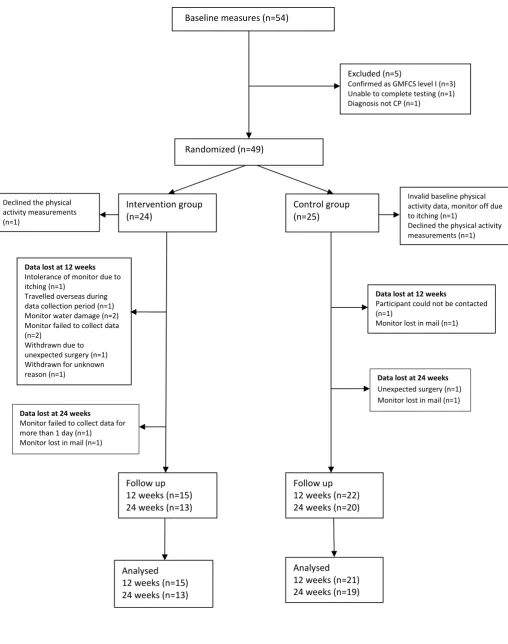
Figure 1 summarises participant flow through the study and reasons for missing data
at 12 week and 24 week assessments. Forty-nine participants (intervention group:
24, control group: 25) were randomised. One participant withdrew from the
intervention group after allocation but before the start of the training because surgery
was scheduled unexpectedly. Daily physical activity data were collected on 15
participants in the intervention group and 21 participants in the control group at 12
weeks, and on 13 participants in the intervention group and 20 participants in the
control group at 24 weeks. Main reasons for missing data were failure of the monitor
to collect data (n=3), loss of the monitor when returning by mail (n=3), water damage
of the monitor (n=2), taking off the monitor due to itching (n=2) and participant
withdrawal from the trial due to surgery (n=2). At 12 weeks, physical activity data
were available for at least 5 full days for 31 participants and for at least 3 full days
for 35 participants.
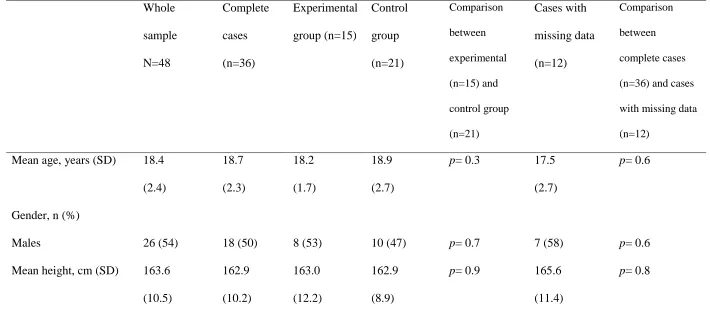
At baseline the groups were relatively well-matched apart from weight where the
control group was, on average, 9.9 kg (18%) heavier (Table 2). However, as weight
11
people with bilateral cerebral palsy in a previous study [11], weight was not included
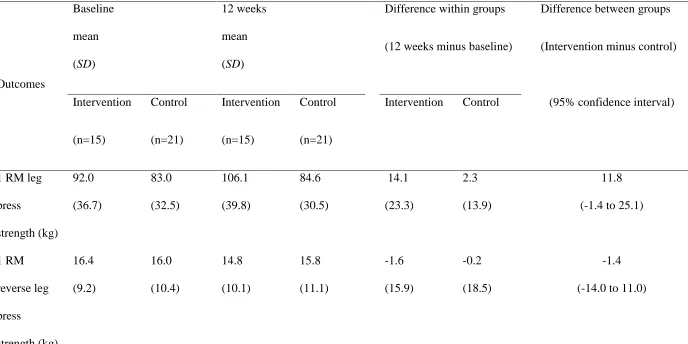
as a covariate in the main analysis (Table 2). At baseline, on average, participants in
the intervention group expended 32.8 METs/day, took 5,808 steps/day and spent 19.4
hours/day in sitting/lying, while participants of the control group expended 32.2
METs/day, took 4,589 steps/day and spent 20.1 hours sitting/lying (Table 3).
Initially, an intention to treat analysis was planned for the main analysis of the
outcomes [24]. However, because more than 10% of the data were missing in the
intervention group at both post-intervention and follow-up assessments and cases
with complete physical activity data were not different from cases with missing data
regarding baseline characteristics (p ≥0.3, Table 2), analysis was carried out using
complete cases [25].
From baseline to 12 weeks, there was no difference between the intervention and
control groups for any measure of daily physical activity or 1 RM leg press and
reverse leg press strength (Table 3). However, there was an observed increase in 1
RM leg press strength in the intervention group compared to the control group (11.8
kg; 95%CI: -1.4 to 25.0) (Table 3). Data analysis for number of steps with log
transformed data also did not find any difference between groups (p= 0.20). A per
protocol sensitivity analysis was performed excluding two participants from the
analysis who completed less than 80% of the 24 scheduled sessions during the
12-week intervention period. These results also did not show any between group
differences for any of the daily physical activity measures (p≥ 0.23). No significant
associations were observed between changes in physical activity and changes in
lower limb muscle strength for the intervention group (rs ranged in magnitude from
12
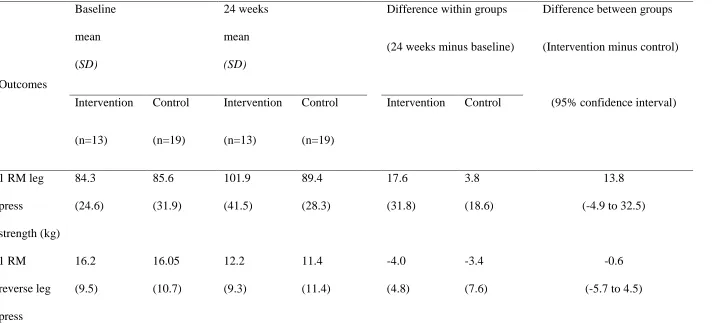
At 24 week follow-up, there were no significant differences between the intervention
and control groups for measures of daily physical activity or for 1 RM leg press and
reverse leg press (Table 4).
There were no serious adverse events during the resistance training programme apart
from minor musculoskeletal aches. No sessions were missed due to injury related to
the training.
Discussion
The results of this trial suggest that participating in a 12-week progressive resistance
training programme held in a community gymnasium might increase lower limb
muscle strength, but does not increase the daily physical activity of adolescents and
young adults with bilateral spastic CP and mild to moderate walking disabilities.
The results of the current study appear inconsistent with qualitative and subjective
reports of improved activity after progressive resistance training. Improvements
attaining statistical significance at 5% in self-reported functional mobility were
reported in the young people with bilateral CP after the same 12-week resistance
training programme (Functional Assessment Questionnaire mean difference: 0.8 units
(95%CI 0.1-1.6); Functional Mobility Scale at 5 m mean difference: 0.6 units
(95%CI 0.1-1.1) [12]. Also, increases in walking distance and the ability to perform
physical activities such as jumping up or doing squats after progressive resistance
training have been reported by people with CP in previous qualitative studies [26,27].
Although participants have reported improved functional mobility and this might be
13
measured objectively with an activity monitor these improvements were not
observed. To explain this discrepancy, it is possible that participants believed their
functional mobility and therefore perhaps their daily physical activity had improved
because they expected that doing such a strenuous programme should improve this
aspect of their performance. It is also possible that when participants of the
qualitative studies reported increased physical activity they actually commented on
improved functional ability/mobility and not on aspects of daily physical activity that
were measured in the current study. For example, although their amount or intensity
of daily physical activity had not changed, they may have been highlighting that they
felt more confident to perform physical activities (e.g. “I could just walk easier, it
was more flowing ... I think everything was easier”) [27].
Significant increases in the daily physical activity of young people with CP have been
reported in two previous quantitative studies that did not implement progressive
resistance training as an intervention [9,28]. One of these studies reported there was a
significant increase in daily energy expenditure in children with CP after a 9-month
aerobics exercise programme (effect size d=1.1; 95%CI 0.12-1.99) [9,10]. A possible
reason for finding a significant increase in daily expenditure after an aerobics exercise
programme may be that the programme was three times as long as the programme
investigated in the current study. Maybe a long term programme is needed to embed
changes in daily physical activity. Also, an aerobic intervention that involves more
daily energy expenditure may be closer to the phenomenon being measured in daily
physical activity so it is possible that such a programme could result in greater
improvement in daily physical activity than resistance training.
Another quantitative study demonstrated significant increases in weekly step counts
14
vigorous physical activity (effect size d=0.81; 95%CI0.17-1.45) after an on-line
behavioural programme [28,10]. Daily physical activity is complex and related to
psychological, social or environmental factors [29,30,31] as well as physical factors.
It is, therefore, possible that a behavioural programme providing tailored activity
feedback and specific activity goals [28] may be more effective in increasing daily
physical activity in young people with CP than a resistance training programme.
Addressing lower limb muscle strength alone without addressing psychological,
social or environmental factors, may not have been sufficient to bring about increases
in daily physical activity.
Another explanation for our results may be that our programme mainly focused on
strengthening the lower limb extensors while strengthening of the lower limb flexors
was prescribed for very few participants (n=4). Lower limb flexors strength has been
found to be an important predictor of daily physical activity in young people with
bilateral spastic CP and not lower limb extensors strength [11]. A further
consideration is the observed phenomenon of resting after a bout of exercise [32]. It
is possible that participants in the intervention group may have felt they had worked
hard during the 12-week training period and that once this was completed they
deserved or needed a rest. Hence, the reduction observed in daily physical activity
immediately after finishing the 12-week training programme.
In the current study, no significant difference between the two groups was found for
1 RM leg press at post-intervention, although there was an observed increase in 1 RM
leg press strength in the intervention group compared to the control group (11.8 kg;
95%CI: -1.4 to 25.1). The increase in 1RM leg press in the intervention group was
20% larger than in the control group. A significant difference in leg press strength
15
(14.8 kg; 95%CI: 4.3 to 25.3) [12], suggesting the current trial may have lacked
power due to its smaller sample size.
A limitation of this study is that physical activity data were missing at 12 weeks and
24 weeks raising issues about the practicality of the activity monitor and methods
used. However, the baseline characteristics of participants with missing data were
not different to the baseline characteristics of participants with daily activity data.
Therefore, the missing data were unlikely to have biased the conclusion that there
was no difference in daily physical activity between the groups after 12 weeks. Also,
estimates of energy expenditure expressed in METs were derived indirectly from the
activity monitor, based on proprietary equations, so the accuracy of this measure is
uncertain. However, from our laboratory data we know that METs can be measured
with high retest reliability in young people with bilateral spastic CP (ICC=0.85), and
the estimated values are consistent with other representations of physical activity
derived from the activity monitor.
In conclusion, although increased muscle strength in targeted muscles was observed
in the intervention group, this clinical trial did not provide evidence that a
progressive resistance training programme can increase daily physical activity in
adolescents and young adults with bilateral spastic CP.
Ethical approval
This study was reviewed and approved by the La Trobe University and Royal
Children’s Hospital Ethics committees (ref: 08-012 and 28006C)
16
The study was supported financially by a grant from the National Health and Medical
Research Council of Australia (ID487321). The funder had no involvement in the
study design, data collection/analysis/interpretation or decision to submit the
manuscript for publication.
Acknowledgements
The authors wish to thank the staff of the Hugh Williamson gait laboratory (Royal
Children’s Hospital, Victoria) for their assistance with data collection.
17 References
[1] Carlon SL, Taylor NF, Dodd KJ, Shields N. Differences in habitual physical
activity levels of young people with cerebral palsy and their typically developing
peers: A systematic review. Disabil Rehabil 2013; 35(8): 647-655
[2] Van Wely LV, Becher J, Balemans A, Dallmeijer AJ. Ambulatory activity of
children with cerebral palsy: which characteristics are important? Dev Med Child
Neurol 2012; 54: 436-42.
[3] Warburton, D., Charlesworth, S., Ivey, A., Nettlefold, L., & Bredin, S. A
systematic review of the evidence for Canada’s physical activity guidelines for adults.
Int J Behav Nutr Phys Act 2010;7(39).
[4] Thompson, N., Stebbins, J., Seniorou, M., & Newham, D. Muscle strength and
walking ability in diplegic cerebral palsy: Implications for assessment and
management. Gait Posture 2011;33: 321-325.
[5] Kerr, C., McDowell, B., Parkes, J., Stevenson, M., & Cosgrove, A. Age-related
changes in energy efficiency of gait, activity, and participation in children with
cerebral palsy. Dev Med Child Neurol 2011; 53, 61-67.
[6] Caspersen CJ, Powell KE, Christenson GM. Physical activity, exercise, and
physical fitness: definitions and distinctions for health-related research. Public Health
Rep 1985; 100: 126-31.
[7] Clanchy KM, Tweedy SM, Boyd R. Measurement of habitual physical activity
performance in adolescents with cerebral palsy: a systematic review. Dev Med Child
Neurol2011; 53: 499–505.
[8] Yang CC & Hsu YL. A review of accelerometry-based wearable motion detectors
18
[9] Van den Berg-Emons HJ, Van Baak MA, Speth L, Saris WH. Physical training of
school children with spastic cerebral palsy: effects on daily activity, fat mass and
fitness. Int J Rehabil Res 1998; 21: 179-194.
[10] Bania T, Dodd KJ, Taylor NF. Habitual physical activity can be increased in
people with cerebral palsy: a systematic review. Clin Rehabil 2011; 4: 303-315.
[11] Bania T, Taylor N, Graham K, Baker R, Karimi L, Dodd K. Gross motor function
is an important predictor of daily physical activity in young people with bilateral
spastic cerebral palsy. Dev Med Child Neurol 2014; Doi: 10.1111/dmcn.12548
[12] Taylor N, Dodd K, Baker RJ, Willoughby K, Thomason P, Graham K.
Progressive resistance training and mobility-related function in young people with
cerebral palsy: a randomized controlled trial. Dev Med Child Neurol 2013; Doi:
10.1111/dmcn.12190
[13] Rodda J, Graham HK, Nattrass GR, Galea MP, Baker R, Wolfe R. Correction of
severe crouch gait in patients with spastic diplegia with use of multilevel orthopaedic
surgery. J Bone Joint Surg 2006; 88A: 2653-2664.
[14] ACSM. Progression models in resistance training for healthy adults. Med Sci
Sports Exerc 2009; 41: 687-708.
[15] Foster C, Florhaug J, Franklin J, et al. A new approach to monitoring exercise
training. J Strength Conditioning Res 2001; 15: 109-115.
[16] ActivPAL operating guide, PAL Technologies, Glascow, UK 200622.
[17] Tang KT, Richardson AM, Maxwell D, Spence WD, Stansfield BW. Evaluation
of an activity monitor for the objective measurement of free-living physical activity in
children with cerebral palsy. Arch Phys Med Rehabil2013; 94: 2549-58.
[18] McAloon MT, Hutchins S, Twiste M, Jones R, Forchtner S. Validation of the
19
cerebral palsy. Prosthet Orthot Int2013; [Ahead of print]
[19] Bania T. Measuring physical activity: validity and reliability of the ActivPA
monitor. Physiother Res Int 2014; Doi: 10.1002/pri.1584
[20] Taylor NF, Dodd KJ, Larkin H. Adults with cerebral palsy benefit from
participating in a strength training programme at a community gymnasium. Disabil
Rehabil 2004; 26: 1128-1134.
[21] Howell DC. Statistical methods for psychology (3rd ed.). Boston: PWS-Kent
Publishing Company; 1992.
[22] Nooijen C, Slaman J, Stam H, Roebroeck M, van den Berg-Emons R &
Learn2Move research group. Inactive and sedentary lifestyles amongst ambulatory
adolescents and young adults with cerebral palsy. J NeuroEngineer Rehabil 2014;
11:49
[23] Slaman J, Bussmann J, van der Slot WM, Stam HJ, Roebroeck ME, van den
Berg-Emons RJ. Physical strain of walking relates to activity level in adults with
cerebral palsy. Arch Phys Med Rehabil 2013; 94: 896-901.
[24] White I, Carpenter J, Horton N. Including all individuals is not enough: lessons
for intention-to-treat analysis. Clin Trails 2012; 9: 396-407
[25] Allison P. Missing data. Thousand Oaks, CA: Sage Publications; 2001.
[26] Allen J, Dodd K, Taylor N, McBurney H, Larkin H. Strength training can be
enjoyable and beneficial for adults with cerebral palsy. Disabil Rehabil 2004; 26:
1121-1127.
[27] McBurney H, Taylor N F, Dodd K J, Graham HK. A qualitative analysis of the
benefits of strength training for young people with cerebral palsy. Dev Med Child
Neurol 2003; 45: 658-663.
20
intervention for adolescents with cerebral palsy: a randomized controlled trial. Dev
Med Child Neurol 2010; 52: 448-455.
[29] Palisano R, Orlin M, Chiarello L et al. Determinants of intensity of participation
in leisure and recreational activities by youth with cerebral palsy. Arch Phys Med
Rehabil 2011; 92: 1468-76
[30] Anderson-Bill E, Winett R, Wojcik J. Social cognitive determinants of nutrition
and physical activity among web-health users enrolling in an online intervention: the
influence of social support, self-efficacy, outcome expectations, and self-regulation. J
Med Internet Res 2011; 13: e28.
[31] Conchar L, Bantjes J, Swartz L, Derman W. Barriers and facilitators to
participation in physical activity: the experiences of a group of South African
adolescents with cerebral palsy. Journal of Health Psychology 2014; doi:
10.1177/1359105314523305
[32] Rowland TW. The biological basis of physical activity. Med Sci Sports Exerc
21
[image:22.595.47.556.61.706.2]
Figure 1: Participant flow through the stages of the randomized controlled trial. Randomized (n=49)
Baseline measures (n=54)
Intervention group (n=24)
Control group (n=25)
Follow up 12 weeks (n=15) 24 weeks (n=13)
Follow up 12 weeks (n=22) 24 weeks (n=20)
Analysed 12 weeks (n=15) 24 weeks (n=13)
Data lost at 12 weeks
Intolerance of monitor due to itching (n=1)
Travelled overseas during data collection period (n=1) Monitor water damage (n=2) Monitor failed to collect data (n=2)
Withdrawn due to unexpected surgery (n=1) Withdrawn for unknown reason (n=1)
Excluded (n=5)
Confirmed as GMFCS level I (n=3) Unable to complete testing (n=1) Diagnosis not CP (n=1)
Data lost at 12 weeks
Participant could not be contacted (n=1)
Monitor lost in mail (n=1) Invalid baseline physical activity data, monitor off due to itching (n=1) Declined the physical activity measurements (n=1)
Data lost at 24 weeks
Unexpected surgery (n=1) Monitor lost in mail (n=1)
Analysed 12 weeks (n=21) 24 weeks (n=19)
Data lost at 24 weeks
22 1
2
Table 1 Description of an example of progressive resistance training programme
Exercise name Exercise description
1. Leg press Sitting, hips and knees at an angle of at least 90 degrees, slowly push both
feet against resistance plate to fully extend the knees
2. Seated knee
extension
Sitting, knees flexed 90 degrees, resistance bar positioned over distal
anterior shin, extend both knees against resistance to full extension
3. Calf raise in
standing
Standing with feet over edge of support with the ankle in plantigrade.
Shoulders placed under resistance bar. Maintaining knees close to
extension, slowly rise onto the balls of the feet.
4. Hip
abduction in
standing
Standing, resistance bar at outer side of the distal thigh, abduct thigh about
20 to 30 degrees against resistance, maintaining neutral posture of the stance
leg.
5. Hip
extension in
standing
Standing, with strap attached to ankle from pulley. Slowly flex non-stance
hip about 20 to 30 degrees, with the stance leg using extensor muscles to
maintain posture.
6. Reverse leg
press
Sitting with strap attached to front of ankle from pulley, hips and knees at
full extension. Slowly pull foot up against resistance to a position of hip
23 Table 2 Participants characteristics at baseline
Whole sample N=48 Complete cases (n=36) Experimental group (n=15) Control group (n=21) Comparison between experimental (n=15) and control group (n=21) Cases with missing data (n=12) Comparison between complete cases (n=36) and cases with missing data (n=12)
Mean age, years (SD) 18.4
(2.4) 18.7 (2.3) 18.2 (1.7) 18.9 (2.7)
p= 0.3 17.5
(2.7)
p= 0.6
Gender, n (%)
Males 26 (54) 18 (50) 8 (53) 10 (47)
p= 0.7
7 (58)
p= 0.6
Mean height, cm (SD) 163.6
(10.5) 162.9 (10.2) 163.0 (12.2) 162.9 (8.9)
p= 0.9 165.6
(11.4)
24
Mean weight, kg (SD) 58.9
(14.5) 60.2 (14.6) 54.4 (12.9) 64.3 (14.6)
p= .04 55.5
(14.1)
p= 0.9
GMFCS level, n (%)
II III 29 (60) 19 (40) 23 (64) 13 (36) 10 (67)
5 (33)
13(62)
8 (38)
p= 0.8 7 (58)
5 (42)
p= 0.7
Orthotics, n (%) Yes 19 (40) 13 (36) 6 (40) 7 (33) p= 0.7 6 (50) p= 0.4
Gait aid use, n (%)
No gait aid
Sticks Crutches Walker 28 (58) 10 (21)
4 (8)
6 (13)
22 (61)
7 (19.5)
2 (5.5)
5 (14)
9 (60) 3 (20) 0 (0) 3 (20) 13 (62)
4 (19)
2 (9.5)
2 (9.5)
p= 0.5
6 (50) 3 (25) 2 (17) 1 (8)
25 3
Previous single-event
multi-level surgery,
n (%) Yes
Mean time surgery
(SD) 22 (46) 7.3 (3.0) 15 (42) 7.4 3.0 5 (33) 5.4 (2.6) 10 (47) 8.4 (2.9)
p= 0.4
p= 0.8
7 (58)
7.0
(3.2) p= 0.3
p= 0.7
Hip morphology,
n of hips (%)
Grade I, normal hip
Grade II, near normal
Grade III, dysplastic hip
Grade IV, subluxated
hip
4 (4.5)
50 (55.5)
35 (39)
1 (1)
3 (4.5)
33 (50)
29 (44)
1 (1.5)
0 (0)
12 (43)
15 (53.5)
1 (3.5)
3 (8)
21 (55)
14 (37)
0 (0)
p= 0.2 1 (4)
17 (71)
6 (25)
0 (0)
27 Table 3 Results after the intervention (12 weeks)
Outcomes
Baseline
mean
(SD)
12 weeks
mean
(SD)
Difference within groups
(12 weeks minus baseline)
Difference between groups
(Intervention minus control)
Intervention (n=15) Control (n=21) Intervention (n=15) Control (n=21)
Intervention Control (95% confidence interval)
1 RM leg
press strength (kg) 92.0 (36.7) 83.0 (32.5) 106.1 (39.8) 84.6 (30.5) 14.1 (23.3) 2.3 (13.9) 11.8
(-1.4 to 25.1)
1 RM reverse leg press strength (kg) 16.4 (9.2) 16.0 (10.4) 14.8 (10.1) 15.8 (11.1) -1.6 (15.9) -0.2 (18.5) -1.4
28 Energy Expenditure (METs/day) 32.8 (1.5) 32.2 (1.2) 32.6 (1.5) 32.0 (1.0) -0.18 (1.2) -0.20 (0.61) 0.02
(-0.6 to 0.6)
Number of steps/day 5,808 (3,627) 4,589 (2,851) 5,368 (3,735) 4,178 (2,401) -440 (2,625) -411 (1,301) -28
(-1373 to 1317)
Time spent
in sitting and
lying (h/day) 19.4 (1.3) 20.1 (1.6) 19.7 (1.5) 20.5 (1.6) 0.31 (1.4) 0.37 (1.3) -0.06
(-0.9 to 0.8)
29 Table 4 Results at follow-up (24 weeks)
Outcomes Baseline mean (SD) 24 weeks mean (SD)
Difference within groups
(24 weeks minus baseline)
Difference between groups
(Intervention minus control)
Intervention (n=13) Control (n=19) Intervention (n=13) Control (n=19)
Intervention Control (95% confidence interval)
1 RM leg
press strength (kg) 84.3 (24.6) 85.6 (31.9) 101.9 (41.5) 89.4 (28.3) 17.6 (31.8) 3.8 (18.6) 13.8
(-4.9 to 32.5)
1 RM reverse leg press 16.2 (9.5) 16.05 (10.7) 12.2 (9.3) 11.4 (11.4) -4.0 (4.8) -3.4 (7.6) -0.6
30
kg= kilograms, METs metabolic equivalents, n= group size; raw data are presented for steps, RM=repetition maximum; leg press and reverse leg press data were available 4
for 12 participants (intervention group) and 18 participants (control group) 5 6 7 strength (kg) Energy Expenditure (METs/day) 32.9 (1.6) 32.2 (1.3) 32.4 (1.2) 32.2 (1.3) -0.51 (0.70) -0.02 (0.67) -0.49
(-0.9 to 0.006)
Number of steps/day 6,071 (3,906) 4,551 (2,979) 5,119 (2,772) 4,693 (3,205) -952 (1,692) 141 (1,644) -1093
(-2316 to 130)
Time spent
in sitting and
lying (h/day) 19.3 (1.4) 20.2 (1.6) 20.0 (1.1) 20.6 (1.4) 0.69 (0.96) 0.44 (0.79) 0.31