Munich Personal RePEc Archive
Using Artificial intelligence to select the
optimal E-CRM Based business needs
Amroush, Fadi and Baderddeen, Alkhoder and Yusef, Talal
Universit of Aleppo, University of Southern Queensland
2 November 2008
Using Artificial intelligence to select the optimal E-CRM
Based business needs
Fadi Amroush 1, A.Baderddeen Alkhoder 1, Talal Yusef 2
1 Faculty of electrical engineering, Dpt of Computer Engineering, Aleppo University
{[email protected] | [email protected]}
2 Faculty of Engineering and Surveying, University of Southern Queensland, Australia
Abstract
CRM has become one of the most leading business strategies in the new millennium. There is a verity of software solutions that impalement CRM principles including free and property ones. The aim of this research is to design and implement an evaluation model to help companies in choosing the best CRM based on their business needs using artificial intelligence techniques. The evaluation model uses an AI system that can help to specify the workflows and needs of the people, who want to buy a CRM-system, e.g. to support the RFP-process, in addition to determine a model for evaluation, and after building it he can send it to vendors to get their feedback and may be will do so matching algorithm to choose the best match.
Decision making system choose the optimal solution based on business needs which is provided by RFP templates.
1. Introduction
These days, business circumstances are changing rapidly because of information technology development and the spread of the Internet. Thus, it is important to develop Customer Relationship Management (CRM). CRM can satisfy customer needs that are becoming more complex. In addition, companies prefer existing customers to new customers because acquiring new customers induce them to bear more expenture. They
want to maintain existing customer relationships and generate more profits with customers through long-term relationships [1]. There is an increase in companies that introduce CRM software packages for efficiency and to develop strong customer relationships. From the late 1990’s, CRM packages have been introduced in earnest to the domestic market. CRM is a new management process developed to get excellent results in business and to maintain long relationships with customers by integrating and managing customer information [2].
There is a verity of software solutions that impalement CRM principles including free and property ones. The aim of this research is to design and implement an evaluation model to help companies in choosing the best CRM based on their business needs using artificial intelligence techniques.
1.1. The state of Art
requirements must be translated into technical requirements with the complete participation of multiple departments. We will also look at tools that will enable us to evaluate software alternatives as well as select the proper software vendor.
Although CRM has emerged as a major business strategy for companies, there has been little research conducted on evaluation the CRM technology solutions. There are some evaluation centers that provide companies with RFP templates defining the fetchers of a vendor. A company with specific needs can't choose the best software based on its needs automatically, a company can only build their RFP template and then ask the software vendors to supply their Software fetchers and a company can choose the best suitable one by using spread sheets like excel to make a check on its RFP.
1.2. Paper outline
In the following section we provide more details on Literature Review containing the criteria for selection software and a Request for Proposal (RFP), what is and how to do it, to reach to A CRM RFP template and its content. Section 3 depicts Gartner’s vendor evaluation model which stresses six primary evaluation criteria: functionality, viability, service and support, technology, cost and vision. Section 4 will discuss the problem of selecting the optimal E-CRM, the difficulties and disadvantages. Section 5 will introduce our view of about the evaluation approach, we will introduce the evaluation system overview and p resent a RFP template
2. Literature Review
2.1. A Selection of Software
The criteria for selection software are numerous. Because each user has different criteria, software must take purpose into consideration and requires relativity. Valacich [3] refers to cost, function, vendor, quality, and support as the factors in general software selection criteria. Macro [4]
suggests that a vendor’s reputation, stability, cost, terms of contract, satisfaction of demands, quality, and after services should be considered in selection software. ISO/IEC 9126 [5] regards functionality, reliability, usability, efficiency, maintenance and portability as characteristic of software quality. CRM is one of the popular software packages.Thus; a CRM package has the following functions. It involves customer analysis through customer segmentation, as well as operations such as campaign management, customer response, and system integrating [6]. The Gartner Group introduced five criteria for the evaluation of CRM packages. They are vendor viability, service and support, technical, functionality, and cost [7]. The suitable solution, considering the characteristics of a company and industry, is to use a CRM package.
2.2. Request for Proposal (RFP)
A request for proposal (RFP) is basically a publication of detailed requirements by a prospective buyer in order to receive vendor offerings. In order for the requester to evaluate and compare all offers in a fair, easier, and faster manner, this publication is usually a formal document advising and guiding the prospective contractor through the whole procurement process (solicitation, selection, and award). To do so, the RFP document describes all the information surrounding the project, among other things:
• What is the solicitation process (mandatory or optional bidders' conference, due dates for proposal submission or withdrawal).
• What is the selection process (timeline, proposal format, evaluation method, criteria, and weights).
• Who to contact regarding the project itself, the contract, the solicitation process, the selection process, and the award process.
2.3 CRM RFP template
A CRM RFP template is a comprehensive list of features and functions, or criteria, which you can use as a guide as you decide what you will need from your CRM solution.
Thousands of criteria can be listed on an RFP template, covering the features and functions of various customer relationship management modules, including:
• Sales force automation (SFA).
• Enterprise marketing management (EMM).
• Customer service and support.
• Partner management.
• Contract management and creation.
• Project and team management.
• Technical functionality.
The criteria are often accompanied by annotated explanations that make the CRM RFP templates even clearer and easier to use
We have deepened on Technology Evaluation Centers (TEC) to provide a CRM RFP template [8]. TEC has a library of resources, from CRM RFP templates, to articles, white papers, and comparison reports. TEC's method of software evaluation, including CRM consulting services, enables decision makers to mitigate the risks associated with enterprise software selection.
3. Gartner Model for the Selection
of CRM
Gartner’s vendor evaluation model [9] stresses six primary evaluation criteria: functionality, viability, service and support, technology, cost and vision. We recommend certain weightings to the criteria for SMBs
to use when evaluating CRM products (see Figure 1).
Figure 1 - Gartner’s vendor evaluation model
3.1 Vendor Evaluation: Functionality
[image:4.612.314.568.450.665.2]Before SMBs scour the CRM provider landscape for the right vendor, they must determine what functionality is crucial to their business operations (see Figure 2). A CRM application suite should enable SMBs to have greater insight into their customers, increase their customers’ access to the enterprise, enable more-effective customer interactions, and integrate all their customer channels and key back office functions.
3.2 Vendor Evaluation: Viability
Strong financials and good management. Vendors that rate high in viability have plenty of cash to spend on R&D and sales and marketing, a seasoned management team that can articulate a compelling SMB.CRM application vision and execution strategy, a satisfied and committed installed user base and alliances with complimentary vendors.
SMB user references. SMB-oriented vendors will have many excellent SMB references that can verify the quality of their relationships with the vendor, in addition to the quality of the products and services.
3.3 Vendor Evaluation: Service and Support
SMBs should favor vendors that provide superior post-purchase user services such as responsive phone support, quality documentation (online and printed), online user-group discussions and Web sites with diagnostic applications. Low-hassle life cycle management. SMBs should choose vendors with a track record of providing timely, easy-to-install upgrades with reasonable additions of new functionality and few “bugs.” As an SMB grows, its CRM vendor should charge only for additional users, not for incidentals (e.g., site location changes, operating system changes).
3.4 Vendor Evaluation: Technology
Easy to use, simple to maintain. More-complex technology adds time and expense to the implementation and ongoing support of a CRM product. Technology that is easy to use and simple to maintain reduces not only the time and expense, but also the frustration and disruption that comes with new-product implementations. Products with well-designed user interfaces will enhance a user’s productivity and minimize the often-costly dependence on training and phone support from the vendor.
3.5 Vendor Evaluation: Cost
According to a Gartner Dataquest survey of U.S. enterprises during 2Q00, SMBs expect to invest 0.8 percent to 1.2 percent of their revenue on CRM through 200.
In planning CRM spending, SMBs should factor in the initial costs and the total cost of ownership (TCO) : Initial costs and Ongoing costs .
3.6 Vendor Evaluation: Vision
Future market focus. Vendors that lose their SMB focus will be less responsive to SMB needs and unable to provide the appropriate service and support. As smaller vendors become more successful, some will likely refocus their efforts on larger customers. Larger vendors will seek to grow by moving into the middle and lower realms of the market. Sales.oracle.com. what will be the cost once.
4. Selecting the optimal E-CRM
4.1 Overview
The selection of right CRM system has to be done via two stages, the first is to have a look at the Internet offers and then to choose 3 or 4 CRM systems to know deeper about them, the second one is studying each one and trying to know which one id the best suitable for our work and we can use workshops and many meeting to detrain that is the best suitable –which can be affected by human factor in decision-.
4.2 Discussion
money to add new attribute for example, so we will move to use a RFP for our needs which determine exactly what we want and send them to vendors instead of meeting them now vendors will answer theses RFPs and determine the current state of each criteria of RFP by one of following states “supported – supported via third party – future release - supported on demand – un supported ”. it is noted that each RFP has more than 1000 criteria to be discussed and theses RFPs can be purchased or written after studding. Now we have a complex matrix containing all these information and we want to select the best one via some algorithms like K-nearest algorithm- or via data mining, So to do that we have a knowledge base contains main two parts : the first one is the comparison between theses systems which is internally done by the administrator about for example support – cost – domain of work – size of work – reviews etc , and the second part is the RFP templates which will be filled by the user by either questions or directly and he will give the priority to each one. On the other hand we have other input to system which is Vendors response to RFP as found in there documents or after studying it.
4.3 Disadvantages
Now we will discuss disadvantages “Consider, you have successfully developed your system, you have to do a permanent research on all CRMs, you have in your database on every new release, and, you have also to look for new ones. This is a big task! Who will do this job?”, So it is not an effective system so we have to change the problem from matching problem to gathering requirements problem.
5. Evaluation System:
5.1 Overview
Depending on last Section it is better to make an AI system that can help to specify the workflows and needs of the people, who want to buy a CRM-system, e.g. to support
the RFP-process. So there will a study of the RFP template of CRM to built an expert system helps the user to write his RFP by asking him the right questions ,and after building it he can send it to vendors to get their feedback and may be will do so matching algorithm to choose the best match.
5.2 RFP template
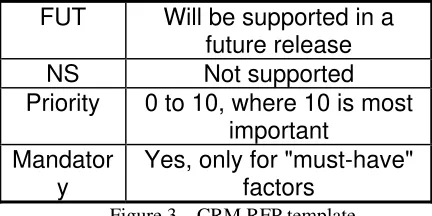
[image:6.612.329.568.275.436.2]TEC analysts developed the RFI based on past experience and research into the widest and deepest range of possible requirements, which is illustrated by figure3.
Figure 3 – CRM RFP template.
The top of the RFI tab contains six response columns, Priorities are as follows: Must Have = 10 Very Important = 8 -Important = 6 - Nice to Have = 4 -Not Important = 2 - No Need = 0, Rating Legend is as follows figure 4.
SUP Supported as delivered
"out-of-the-box"
MOD Supported via
modifications (screen configurations, reports,
GUI tailoring, etc)
3RD Supported via a third party
solution
CST Supported via
customization (changes to source code)
Criterion
Priority (0-10)
Mandator y (Y/N)
SU P
MO D
3R D
CS T
FU T
N S
Module 1 8 N
Category of
Module 1 4 N
Subcateg ory of Category
1 10 N
Criterion 1 1 N X
Criterion 2 6 Y X
Criterion 3 4 N X
Criterion 4 10 N X
Criterion 5 8 N X
FUT Will be supported in a future release
NS Not supported
Priority 0 to 10, where 10 is most
important Mandator
y
[image:7.612.71.287.71.179.2]Yes, only for "must-have" factors
Figure 3 – CRM RFP template.
5. Conclusion
There is a verity of software solutions that impalement CRM principles including free and property ones. A company with specific needs can't choose the best software based on its needs automatically, a company can only build their RFP template and then ask the software vendors to supply their Software fetchers and a company can choose the best suitable one by using spread sheets like excel to make a check on its RFP.
We suggest an AI system that can help to specify the workflows and needs of the people, who want to buy a CRM-system, to support the RFP-process by asking him the right questions ,and after building it he can send it to vendors to get their feedback and may be will do so matching algorithm to choose the best match.
Reference:
[1] K.M. Yang, D.J. Oh, and K.S. Kang, “A Study on Application of AHP on Problems of CRM”, Society of Korea Industrial and Systems Engineering, 2002, pp. 356-361. [2] J.J. Kang and T.S. Moon, “The Structural Relationship of Customer Data Integration and CRM Performances”, The Journal of Information Systems, Vol.15, No.3, 2006, pp. 87-106.
[3] J.S. Valacich, J.F. George, and J.A. Hoffer, Essentials of Systems Analysis And Design, Prentice Hall, 2004
[4] A. Macro, software engineering: concepts & management, Englewood cliffs, N.J., Prentice-Hall, 1990.
[5] ISO/IEC 9126, Information Technology-Software Product Evaluation-Quality Characteristics and Guidelines for Their Use, ISO, 1991.
[6] Gartner Group, “CRM Software Requests for Information and Requests for Proposals”, 2001.
[7] ISO/IEC 9126, Information Technology-Software Product Evaluation-Quality Characteristics and Guidelines for Their Use, ISO, 1991.
[8] © Technology Evaluation Centers Inc. 2007. This document may only be used for internal purposes. Reproduction and redistribution are strictly prohibited.
[9] The Complete SMB Guide to CRM Vendor Evaluation - COM-14-2171 - 10 August 2001 - e contents © 2001 Gartner, Inc.
[10] Gartner Group, “CRM Software Requests for Information and Requests for Proposals”, 2001.
[11] J.J. Kang and T.S. Moon, “The Structural Relationship of Customer Data Integration and CRM Performances”, The Journal of Information Systems, Vol.15, No.3, 2006, pp. 87-106.
[12] B.R. Kim and J.H. Lee, “Technology Evaluation Models for Software Acquisition”, Journal of the Korean Operations Research and Management Science Society, Vol.19, No.2, 1994, pp. 21-43.
[13] Boulding, W., Staelin, R., Ehret, M., Johnston, W.J., 2005. A customer relationship management roadmap: what is known, potential pitfalls, and where to go. Journal of Marketing 69 (4), 155–166.