Executive Summary 4
Introduction 6
Methodology and Limitations 10
Characteristics Of An Urban Response 11
Context Specific Knowledge 13
Urban Specific Soft Skills 19
Urban Specific Hard Skills 22
Further Technical Competencies 28
Developing Knowledge, Skills & Attitudes Into Competencies 29
Process Of Developing The UCF 31
Bibliography 32
Annexes
Annex 1: Training Courses Consulted During The Research 33 Annex 2: Competency Frameworks Consulted During The Research 33
Annex 3: UCF Advisory Panel 34
Annex 4: UCF Team 34
Acronyms
CHCF Core Humanitarian Competency Framework ECHO European Commission for Humanitarian Aid GAUC Global Alliance for Urban Crises
M&E Monitoring and Evaluation
UCF Urban Competency Framework for Humanitarian Action
4
Executive Summary
This report was commissioned to inform the creation of the Urban Competency Framework for Humanitarian Action (UCF). It is part of a wider body of work for the Global Alliance for Urban Crises (GAUC) entitled ‘Developing the skills to meet the needs of urban populations in crises through the alliance of urban responders’. The UCF and affiliated activities were produced through funding provided to the International Rescue Committee from EU Humanitarian Aid (ECHO).
Humanitarian response in urban settings poses unique challenges and opportunities which require distinctly different skills sets and approaches to that of a rural crisis, for which most humanitarian frameworks, tools and research has been focused. For this reason, the UCF is intended to be used as a tool to support people working in humanitarian urban emergency response by listing distinct competencies and behaviours required for all individuals regardless of the typology of the emergency, the location of the urban setting and the body for whom they work. It also acknowledges that an urban setting is on a spectrum of urban, semi-urban, peri-urban, etc. and that it includes formal and informal (often unrecognised) settlements. This report investigates these distinct areas of knowledge, skills and attitudes required by all, in order to support the creation of the first draft of the UCF. It does not focus on specialist expertise that may be required for certain roles. For example, a Shelter expert may need specific structural skills for an urban emergency that someone working in education may not need; this is then outside the scope of the UCF and therefore outside the scope of this report.
This report reviews various lessons learnt, tools, guidelines and research reports (see bibliography) along with urban specific courses for Humanitarians (see Annex 1). It identifies the commonalities in knowledge, skills and attitudes required by people working in a humanitarian capacity in urban settings in order to inform the creation of competencies and behaviours required for
the framework.
The most common requirements were found to fall into three broad categories and further sub categories as follows:
▪
Context Specific Knowledge▪
Soft skills▪
Hard skillsinterrelated and would need to be weaved into competencies. It would then be necessary to ensure that the competencies created for UCF are needed by all people working in urban humanitarian action and do not only apply to certain roles.
Within the three categories above, some overlapping themes became apparent: the diversity of types of work and stakeholders; the interconnectedness of cities and their dynamic nature; the need for more flexible and integrated humanitarian action.
Firstly, the importance of working with a large diversity of stakeholders became apparent (e.g. complex government structures, public and private partners, informal and formal regulating bodies), which also vary between specific
urban areas within a city. Identity is another a factor to be considered in an urban setting, where the population residing in both formal and informal settlements are connected to each other through multiple identities and multi-layered groups. The density of cities and the interconnectedness between people, services, infrastructure and lives means that the consequences of humanitarian action and programmes can rapidly shift to have a ripple effect (often unintended) to other neighbouring or connected groups of people. Furthermore, at-risk individuals and groups are harder to identify due to the dynamics of cities and physical environments. People have more possibilities to turn to highly dangerous and exploitative coping mechanisms.
Another key finding that filtered through all these categories was the distinct shift required in humanitarian action, from what has traditionally focused on providing aid to beneficiaries, to one of support and facilitation within urban infrastructures, services and city plans. This necessitates more flexibility and adaptability in attitudes and approaches to coordination mechanisms and humanitarian tools and programming. It also demands a greater need for
negotiating and influencing skills to diffuse tensions that frequently occur when
6
not directly represent the research contained in this report.As part of the work being undertaken by the Global Alliance for Urban Crises (GAUC), RedR UK was commissioned to develop a competency framework that outlines the competencies required by those engaged in humanitarian action in urban settings. This report was written to help inform the competency framework being developed by RedR and led by the consultant Emily Fereday.
The intention of the framework is that it will be relevant to employees and
volunteers who are working in a wide range of national organisations, community-based organisations, civil society organisations, private sector, humanitarian or international development agencies, multilateral agencies or government. It is also intended to be applicable at all stages of the disaster cycle (preparedness, response, mitigation, recovery) and in all urban emergency typologies.
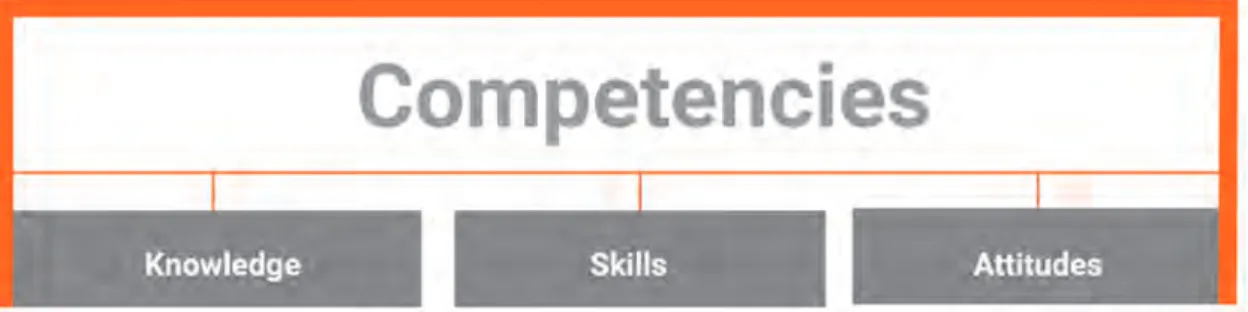
Competencies are comprised of a combination of knowledge, skills and attitudes.
These are often collated into competency domains which then form a framework. This is often accompanied by a list of the behaviours required by an individual to demonstrate each competency. The distinct difference of the UCF from existing humanitarian competency frameworks is that it intends to identify the competencies and behaviours that are specifically required for urban response as opposed to rural.
To encompass the range of people that this report hopes to address the term those engaged in humanitarian action will be used to address all people working in a humanitarian capacity.
Introduction
This report first outlines the methodology of the research, and the key characteristics of urban response. The overarching findings seem to be well
documented and newer reports often echo those from 10 years prior. The following quote summarises the key functional differences in an urban response well: “… responding effectively to disasters in cities requires greater investments in preparedness and capacity building; massively increased engagement with civil society; a recalibration, in many contexts, of the de facto relationships between international actors and
sovereign states; and radically improved coordination.” (Ramalingam and Knox Clarke, 2012) This report then goes on to extrapolate the knowledge, skills and attitudes
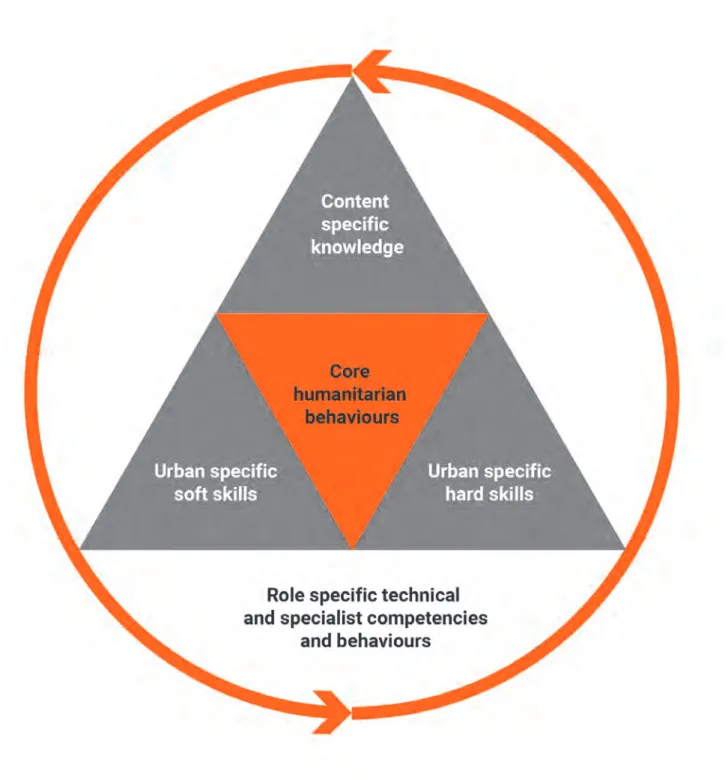
required to achieve more effective humanitarian action (to later be distilled into the UCF competencies). The knowledge, skills and attitudes are broken down into three overarching categories: context specific knowledge, urban specific soft skills and urban specific hard skills. All three have interrelated elements and should not be viewed in isolation. UCF is intended to complement the Core Humanitarian Competency Framework (CHCF), which is widely accepted in the humanitarian sector and provides the core competencies and behaviours applicable to all humanitarian action. However, as responses in urban emergencies require further urban specific behaviours, the UCF intends to work alongside the CHCF to build those specific competencies needed in urban action. In addition to the core humanitarian behaviours, there are also technical and role specific behaviours, for example, the competencies required by a protection or shelter specialist. Such role specific competencies would need to consult an additional competency framework that would build on both the humanitarian and the urban humanitarian competencies. This is explored further in the section ‘further technical competencies’.
This relationship between the various humanitarian competencies, urban skills being investigated in the report and technical areas is depicted in Figure 2 below. At the very centre of the figure lies humanitarian behaviours which have been identified by CHCF and other sector specific frameworks. Surrounding it are a
8
Figure 2 Interaction between this report and other competency frameworks
The three areas identified in the triangles in Figure 2 have been further divided into more detailed subheadings of the most prominent areas found in the research. These are shown in Figure 3 below.
This report goes on to outline the process of translating this research into a usable competency framework; in particular how these areas of knowledge, skills and behaviours feed into the active competencies mapped in the UCF (section 8). Finally, it gives an overview of the entire drafting and refining process of the UCF, through consultation with sector-wide experts (section 9).
Figure 3 Breakdown of report focus areas
CONTEXT
SPECIFIC KNOWLEDGE
▪
Political/ stakeholder analysis▪
Markets & services▪
Technology▪
Legal▪
Space & settlement▪
Social & culturalSOFT SKILLS
▪
People & relationships▪
Negotiating & influencing▪
Flexibility & adaptability▪
Communication▪
CoordinationHARD SKILLS
▪
Gender & protection▪
Resilience & capacity building▪
Monitoring & evaluation▪
Varying approaches▪
Adapting toolsThis research included an analysis of sixteen urban specific reports and guidance documents (see bibliography) and ten humanitarian urban courses from five different organisations (see Annex 1). All courses and reports were reviewed and collated to form a list of commonalities between sources. The distinct areas of knowledge, skills and attitudes that were commonly found in four or more different sources, have been incorporated into this report. Job descriptions were also
explored for this report; however, at the time of writing, there was little success in finding job descriptions that included urban specific competencies for people working in humanitarian action. Due to this, job descriptions did not contribute to the analysis of the research.
This report is not intended as an exhaustive list of knowledge, skills and attitudes required for those working in urban humanitarian action. It is intended to draw out the key areas that can be further developed and enhanced during various development stages of the UCF. It does not intend to be directly transformed into the UCF but serve as a base from where to begin developing competences that will require further expertise and consultation. It does not include a review of the role specific competencies or behaviours; instead it focuses only on aspects deemed necessary by all those working in urban humanitarian action. Neither does it include core humanitarian behaviours, which are also required by all but have already been identified in sector specific frameworks such as the CHCF. All information is taken from secondary data.
Methodology and Limitations
The characteristics of an urban setting are extremely varied, both within and between urban areas. This research considers urban areas on a spectrum
whereby some urban settings have less defined boundaries. This includes informal settlements and slums as well as prosperous suburbs, which may have lower population density, and peri-urban areas on the edges of town. Broadly speaking urban settings should take the following criteria into consideration (ALNAP, 2017):
▪
High population density▪
Concentration of administrative structures, i.e. government, hospitals, schools▪
Presence of essential services and infrastructure▪
Cash-based economy▪
Higher proportion of built-up areas▪
Diverse livelihoods and income opportunities (not only/mostly agriculture)▪
Complex, interdependent social pressures▪
Defined municipal/administrative boundaries.It is important to recognise that humanitarian responses will also need to view and respond appropriately to urbanising areas; these areas may have previously been considered rural. However, as populations move areas’ characteristics and functioning can change to become more urban, thus needing an adapted response. This may also mean a combination of urban and rural responses might be necessary for some areas that are on the periphery of what is considered urban
(International Rescue Committee, 2015a).
Characteristics Of An Urban Response
Context Specific Knowledge
The first theme highlighted as crucial to any effective urban emergency response is the need for a robust and comprehensive context analysis before any humanitarian intervention.. This is consistent in all documents reviewed as part of this research. It is recognised that this is also required for any rural response; however, the extent and complexity of the analysis is much greater in an urban situation and therefore a wider skill set is required. Toolkits have already been developed by the Stronger Cities Consortium to help guide the process and enable response teams to better analyse and interpret stakeholders, existing power relations, resource distribution, governance and legal frameworks, sources of livelihoods, social networks, and access to services
(International Rescue Committee, 2017).
Research and analytical skills are the base requirements to conduct or manage a quality context analysis. In addition, the team or consultants will require experience and skills in:
▪
Leading qualitative studies, e.g. evaluations, assessments, context analysis, etc.▪
Knowledge of local context including language(s)▪
Experience in planning in fast-shifting environments▪
Local language competencies▪
Note-taking capacities (International Rescue Committee, 2017)Conducting a context analysis necessitates a significant investment of time and resources for organisations and staff to prioritise (Carpenter, 2013). The needs assessment, design and implementation of any project will need to utilise and learn from the analysis for it to be effective. The context analysis will also need to be updated as frequently as the situation dictates to ensure relevance.
The following section outlines the contextual key areas of knowledge that need to be considered in the UCF and which vary immensely from that of a rural context. In a sudden onset emergency, it may be necessary to ensure the team working in the response already has knowledge and experience in the selected areas.
14
(The Sphere Project, 2016).
Competencies and behaviours in the UCF will need to make explicit the ability for someone working in urban humanitarian action to navigate and interact with these power relations. Essentially, understanding who holds power, influence and decision-making authority in a specific urban area and whether the reality of these dynamics corresponds to official policies, regulations and laws is crucial
(International Rescue Committee, 2017). This understanding will inform how to approach both formal and informal settlements. These power relations and dynamics will also vary across different areas of a cityscape.
For this support to occur, those engaged in humanitarian action must have in-depth knowledge of the political landscape and the interplay of private sector and national bodies in the urban area.
Markets and services
A strong market and service analysis is more significant in urban areas because of the extent to which populations rely on markets (for both their income and access to goods) and services (for water, electricity, schools, health, etc.). This creates a complex interdependence between civil society and market and service infrastructures and their quality. Addressing the full scale of urban services and systems challenges traditional humanitarian programming which has
historically been the provider. By contrast, urban programming may need to assess and monitor the quality of services for end-users or consumers for city-wide
infrastructures to support the restoration of and/or construction of said services
(ECHO, 2018). A humanitarian response should seek to support markets and services to ensure they are maintained, resumed and even improved.
In addition, an examination of issues such as income-generating opportunities, wage rates and commodity prices is needed, as these have a close connection to opportunities and vulnerabilities of affected population(s) (International
Rescue Committee, 2017). The opportunities and costs are likely to vary between neighbourhoods within a city and therefore a blanket approach to analysis or intervention for any city should be avoided. The monetised economy will affect the design of the response, specifically a response using cash transfer programmes, which are often the preferred approach in urban contexts.
To analyse these aspects, those engaged in urban humanitarian action must have knowledge of the infrastructure regarding markets and services in the area and be able to assess populations’ access and reliance to said markets and services
This is required before any intervention and ‘do no harm’ practice can be
applied and will support the identification and framing of different private sector collaboration and programme approaches.
Technology
In urban areas people often have more access to technology; therefore,
understanding available technology and the competence level of the population, in order to use the most effective mediums in the response, is required. Collaborating with tech companies will enable the response to leverage technology platforms to facilitate low-cost, two-way communication in assessment, implementation and monitoring (International Rescue Committee, 2017).. This will require the response team to collaborate with private sector firms.
People engaged in urban humanitarian action must have knowledge of commonly used information technology for telecommunication and financial transactions and an open attitude to using, what may be considered less conventional, more innovative technical solutions.
Legal
It is necessary to understand and appreciate law in any context; however, in urban settings, national and local laws will have more complexity and more potential for law enforcement. There may also be illegal or informal law which may not be recognised by the authorities, but which could have unofficial legal frameworks which the response will have to navigate. Examples of this are gang turfs and gang law, community and social structures, self- ‘governed’ slums or other self- ‘governed’ areas (ECHO, 2018). In addition, official laws such as land tenure need to be recognised and possibly negotiated, housing rights and property ownership challenges become more prevalent, and legal and illegal water connections and systems need to be understood (RedR UK, e-WASH and e-Shelter). Understanding and navigating the various laws and regulations is often a key part of the success of any project.
16
needs and community well-being. Open public spaces are often inhabited by the disenfranchised (The Sphere Project, 2016). These groups are likely to be extremely vulnerable and therefore need to be brought into the response and protected from further risk (this is also referred to in the vulnerability-based approach section). The interconnectedness of a city (block, community, municipality, city, state, etc.) must also be understood and considered at each stage of the intervention. Taking this approach may mean that multiple outcomes can be achieved for projects, creating opportunities for a wider reaching impact (International Rescue Committee, 2017).
In addition, humanitarian responses will need to consider and facilitate access to the existing housing market; this may require incentives to host communities, the provision of legal aid and translation of rental contracts (ECHO, 2018).
Notwithstanding that working within host community space will also require integration and peace building actions.
Those engaged in urban humanitarian action must have knowledge and appreciation of the interaction between public and private spaces, how public spaces are used, and by whom, in urban areas and housing markets and rental agreements.
Social and cultural
The predominant theme in this area of the analysis is diversity –in areas such as the populations’ multiple identities, prevalence of inequalities, behaviours and settlement patterns (Cosgrave, 2013) (Ramalingam and Knox Clarke, 2012).
This means that deeper analysis of gender (refer to gender analysis IASC Gender Handbook), family, household dynamics, social structures, identities (e.g. language, ethnicity or religion) and individual factors are necessary. Analysing how these elements support or hinder social relationships and cohesion is required before a response is formed (International Rescue Committee, 2017).
It is important to be aware that marginalisation may be harder to identify as a result of the diverse groups and multiple overlapping ‘communities’. In urban settings, it is easier for people to be anonymous and unregistered whilst moving within various social networks; this creates further challenges in reaching the most vulnerable (The Sphere Project, 2016). In depth social and cultural analysis must be performed before a response is devised; this will affect the targeting and selected approach a programme uses. These social and cultural aspects of a specific urban area will affect all areas of a response. Moreover, the analysis will identify entry points for a programme to begin working with hard to reach communities.
People engaged in urban humanitarian action must have in-depth knowledge, sensitivity of the social, cultural and socio-economic factors in the area, both within and between communities.
The table below lists urban context analysis themes taken from A Review of Context Analysis Tools for Urban Humanitarian Response (Meaux, 2016). These themes are amalgamated from a variety of different tools and need to be considered in the development of the UCF.
THEMES STRENGTHS
Political
Governance and power
Stakeholder analysis (actors and institutions)
▪
Urban actor mapping▪
Incentives/interests of stakeholders▪
Capacity to respond to urban displacement▪
Accountability to whom▪
Legal frameworks▪
Policy and decision-making processesSocial
Vulnerability, conflict and society
Social analysis (relationships and networks
▪
Risks/do no harm▪
Protection risks▪
Gender dynamics▪
Social structure/identities in the area▪
Social capital/trust among and between groups▪
Collaborations/partnerships/civil societyEconomic
Economic systems and livelihoods
Livelihoods analysis
▪
Jobs and characteristics of labour market▪
Mapping key market actors and networks▪
Mapping people’s access to markets▪
The next overarching category and area of focus of this report is the urban specific soft skills that are needed for effective humanitarian response. In urban landscapes the humanitarian sector must shift its perception of ‘self’ from that of provider to that of facilitator. The facilitator approach enables the response to support the preparedness and strengthen capacity and self-recovery of authorities and communities at a local level (ECHO, 2018). As the role moves towards more of a facilitation of services and networks rather than implementer of programmes, the competencies also shift to that of negotiation, people and relationship management with a vast array of diverse stakeholders. These softer skills have notoriously
been documented as weak areas in the humanitarian sector. The current CHCF competency of: “developing and maintaining collaborative relationships” becomes more complex and dominant as a skill set.
There is simply a higher demand on relationship and partnership management across a more diverse and larger number of stakeholders and networks in urban response (The Sphere Project, 2016) (GAUC, 2015) (ECHO, 2018). One challenge that affects all the elements listed in this soft skills area is that not everyone involved in the networks/response will necessarily be following the same set of guiding principles due to the larger diversity of stakeholders. This means that coordination and collaboration can become challenging in urban areas. To achieve effective networks and partnerships, those engaged in urban humanitarian action must be willing to focus more on their shared goals and set aside areas of conflict or disagreement (International Rescue Committee, 2016). Fostering alliances between city, private sector, humanitarian and development actors so that all are contributing to assessments and strategic frameworks for recovery (GAUC, 2015)
will require leadership and effective relationship management.
The following section presents each dominant area of the soft skills required and lists the interconnected skill set at the end of the section.
People and relationship management
20
Negotiating and influencing
Negotiating and influencing involves mediating and compromising between two or more stakeholders. The wide range of stakeholders in urban contexts invariably means having more variation between groups’ positions, interests and needs, making negotiation ever more challenging. In addition to government departments, private sector and state-owned utility companies, it may be necessary to negotiate with informal groups or other non-state armed actors that may arise in highly populated and unregulated areas (The Sphere Project, 2016). Good negotiation will promote access, mitigate tensions, reduce risk and ensure sustainable and inclusive interventions through local partners. Such negotiation is also likely to include conflict resolution across multiple partners/stakeholders with different interests.
Flexibility and adaptability
The complexity and diversity of urban settings means that operationally, people engaged in urban humanitarian action are required to increase their capacity to adapt (ECHO, 2018). This refers to how the tools are used (both urban specific tools and more traditional humanitarian tools) as well as how the sector responds. For example, willingness to move from provider to facilitator as local actors
and governments take more prominence in the response, willingness to adapt programmes so that plans fit into current and future planning of the city and willingness to adapt communication and coordination to one that best suits the particular urban setting. In addition, conflict in cities, which can be the direct cause of crisis or intensified as a consequence of the crisis, can lead to a large fluctuation of population typology. This means that effective programme targeting can become even more challenging and the programme can quickly become irrelevant or ill programmed in a very short period of time (ECHO, 2018). (This skill is also referred to in the Adapting standards and tools appropriately section).
Communication
The broader range of actors and potential partners also brings more opportunities if well utilised. As already mentioned, those engaged in urban humanitarian action must be willing and able to engage such diverse stakeholders including working with a range of unofficial actors in areas controlled by gangs or where rule-of-law is limited. All stakeholders will need targeted communication that is adapted to each sub culture and style in order to be effective. For example, if developing relationships with informal organisations or gangs, those working in humanitarian action may need to leverage social capital of non-violent beneficiaries to promote
peace and accountability in these areas (The Sphere Project, 2016).
Coordination
“The existence of multiple stakeholders implies the need for increased and more effective coordination, as well as clarity about the leadership of the coordination function” (The Sphere Project, 2016). Changing from sector-focused response to multi-sector and area-based response (where appropriate) changes the dimension of coordination. It is necessary for those engaged in urban humanitarian action to organise programmes and information through large-scale mechanisms.
From the above interconnected areas the following set of soft skills has been extrapolated:
People engaged in urban humanitarian action are required to:
▪
be flexible and adaptable; agile with programmes and methods and prepared and willing to adapt, close and morph throughout the programme▪
consult with diverse stakeholders who may have diverging objectives (including the affected population)▪
establish and motivate larger and more diverse teams▪
maintain relationships with stakeholders who can have very different positions, interests and needs▪
communicate clearly and coordinate across expansive networks▪
negotiate sensitively to initiate change (when required)▪
resolve conflicts to mediate disputes that are likely to arise among stakeholders and teams.It is recognised that the above list of behaviours exists in various forms in current humanitarian competency frameworks produced by the Core Humanitarian Standards Alliance (CHSF), Enhancing Learning and Research for Humanitarian Assistance (ELRHA) and the Humanitarian Action Qualifications Framework (HAQF). These behaviours are not exclusive for urban settings. However, the
22
Urban Specific Hard Skills
The final requirements fall into the category of urban specific hard skills, outlined below.
Cross cutting – gender and protection
Whilst an understanding of gender and protection are crucial in any response and should be a strong competency area for everyone, the nature of how violence, gender and protection manifest in urban settings is quite distinct.
“Urban residents are generally at greater risks of exploitation and abuse, with more ‘opportunities’ for surviving on dangerous coping mechanisms. The density and
complexity of urban settings often make the identification of those in need of protection more challenging, requiring greater outreach. Capacity to address urban protection challenges, as well as the need for clear referral mechanisms and proper case management should be strengthened.” (ECHO, 2018)
The All in Diary (2015) identifies the following skills for people engaged in urban humanitarian action to be effective in this area:
▪
Identify and address the dynamics of violence in an urban setting▪
Analyse urban vulnerability and community resilience▪
Adopt appropriate beneficiary-targeting approachesAll those engaged in urban emergencies must reduce the risk of individuals and groups using exploitative mechanisms in order to survive. They must build community resilience and create safe and inclusive opportunities, especially for those most at risk regardless of the individual’s legal or beneficiary status. For this to be effective individuals working in each specific urban area must analyse how violence manifests at an individual and structural level, identify those most at risk and respond to and mitigate violence by adopting appropriate beneficiary-targeting approaches and referral mechanisms.
Capacity building and urban resilience
Capitalising on available capacity throughout any intervention is necessary – this skill features in existing competency frameworks for humanitarians, like many of the above-mentioned competencies. There is an even stronger need for capacity building for disaster preparedness (ECHO, 2018). This includes promoting good urban planning and governance with a range of local stakeholders to ensure longer-term solutions and resilience within urban areas. It will need to be carried out in partnership with development actors at community and municipal city levels. This will include sensitive capacity building of local institutions and government bodies,
and supporting the development of contingency plans for emergencies, long-term disaster risk reduction plans, and prevention and mitigation plans (International Rescue Committee, 2017). As humanitarian activities shift to more of a supportive role in an emergency response, capacity development becomes more prevalent. Monitoring and evaluation
The skills sets for urban monitoring and evaluation (M&E) have considerable overlap in other areas. However, this has been drawn out as a separate section as there are some notable differences between traditional humanitarian M&E and that of urban M&E needs.
In urban response there is an increase in unplanned outcomes for programmes that are challenging to predict in the complex and rapidly changing environment. This means that linear models of causation to predict outcomes from activities are unlikely to be sufficient and baselines generated in urban areas may not remain relevant. In reality, this means people working in urban emergencies will need to design and use M&E tools which are able to: “recognise unanticipated outcomes and which look beyond a single-sector perspective and the immediate target group to identify wider consequences” (The Sphere Project, 2016). In addition they will need to adapt tools and indicators, respond quickly to the unexpected findings and take corrective action where necessary (The Sphere Project, 2016).
Focusing more on evaluations, it is suggested that standard evaluations may not always be sufficient to address learning and accountability needs. Iterating many other areas of urban response, M&E requires new approaches. Suggestions include: “real-time evaluations, more participatory and inclusive forms of multi-stakeholder evaluation, and context-specific ways of dealing with impact assessment in
dynamic and fluid environments” (Ramalingam and Knox Clarke, 2012).
Selecting an appropriate approach
In order to work within urban responses various and distinct approaches to coordination and programming must be understood and appreciated. No two
24
Area-based approach
An area-based approach focuses more on coordination within each designated area of the city and less on the cluster system for organisation. It has been
proposed that there are three defining characteristics of an area-based approach; response is geographically targeted, multi-sectoral and participatory (Parker & Maynard, 2015). Many reports and discussions in policy forums point towards an area-based approach for urban response as the most appropriate (All in Diary, 2015) (ECHO, 2018) (The Sphere Project, 2016). However, this may not necessarily be the case for every urban setting and, at the time of writing, there are still on-going debates regarding the approach. A shared understanding of what an area-based approach entails and how to deliver it has not yet been reached (International Rescue Committee, 2015b). It is suggested that community-based protection
networks, collective livelihood strategies, localized or mobile approaches are viable alternatives to area-based approaches (International Rescue Committee, 2016).
People engaged in urban humanitarian settings must have up to date knowledge of the various programme options available and the ability to evaluate, discuss and consult on the most appropriate in the given context.
Vulnerability-based approach
People engaged in urban humanitarian action are also required to use a vulnerability-based assistance system, whereby agencies support the most
vulnerable regardless of status. For example, the status of refugees, non-refugees, internally displaced persons, homeless persons, marginalised groups, individuals of host community should not be part of the assessment of aid and design of intervention. The assessment needs to be based on those most in need and most at-risk whilst supporting social cohesion. This means that an increased focus on the needs of individuals or communities, rather than the traditional household approach, is required in order to avoid critical gaps in responses of urban settings
(ECHO, 2018).
People engaged in urban humanitarian action require the skills, knowledge and experience to conduct vulnerability assessments of individuals and communities (communities may not necessarily be geographically close in the city).
Development and support-based approach
From the onset of any intervention and throughout the programme cycle those engaged in urban humanitarian action must move from a mind-set of supply to one of support as humanitarians engage with local actors, and invest in the systems that shape cities (governance, society, markets and infrastructure) (GAUC, 2015). It
is necessary that humanitarian responses in an urban environment be integrated with development work in the city and not work in isolation. Also, programmes must link to longer-term development and resilience building. The previous more stringent line between the humanitarian and the development sector therefore must blend.
“Implementing response in urban contexts requires structural adjustments that go beyond the mandates of humanitarian actors, but are not as yet prioritised by development actors: joint programming from the onset of the response action could be further considered.”(ECHO, 2018)
People engaged in urban humanitarian action must be able to link with long-term solutions and resilience by working with the development sector.
Adapting standards and tools appropriately
A theme that has been highlighted throughout this study is that people engaged in urban humanitarian action will need to be proficient at adapting existing tools appropriately, whether they be for needs assessment, monitoring and evaluation, or applying standards. However, understanding how and when to adapt tools is critical. For example, the numerical values in the indicators for the Sphere minimum standards may need to be adapted; this should always be informed by context assessment and only be adapted in order to positively affect the response for the affected population (this does not always mean increasing the number, it may also mean reducing the numerical value) (The Sphere Project, 2016).
People engaged in urban humanitarian action must have technical expertise and familiarity along with critical analysis to adapt the various existing tools (this skill set can fall into the soft and technical areas).
Using technology
It has been recognised that beyond the need for just adapting the old tools, there is also an opportunity for technology to be better utilised in urban responses (The
26
People engaged in urban humanitarian action must be adept at using new and emerging technologies and willing to use innovative means to be able to support the most effective and relevant response.
Large-scale communication and feedback
Feedback mechanisms with affected populations in urban settings require further consideration. The diversity of communication strategies and mechanisms
required to successfully reach everyone is substantial. Strategies which may need to be considered include: community outreach structures, using new and emerging technology, social media, WhatsApp or other messaging services (such as Signal), as well as the use of media and mass media (The Sphere Project, 2016).
Humanitarians who have traditionally worked in more rural areas are less likely to have the skills and experience of navigating larger scale communication strategies as they are rarely needed in rural settings, especially for technical specialists
(Cosgrave, 2013). In urban areas there are more opportunities to reach people and more people to reach. This two-way communication must be participatory yet make contact with large numbers of more diverse people (Smith, 2017). In addition, the uptake of feedback and complaints mechanisms requires more robust systems to deal with the higher level of response.
People engaged in urban humanitarian action are required to analyse and select the most appropriate communication and be skilled in using various media and technologies for mass communication. In addition, they are likely to need to use various communication styles and formats in order to reach the intended audience and set up and manage large-scale feedback systems with two-way communication.
28
Further Technical Competencies
During the research, additional technical competencies were identified as more frequently used and in higher demand in urban emergency settings when compared to rural. These technical competencies are outside the scope of the UCF as they are role specific and would not be required by all people engaged in urban humanitarian action as is demonstrated in Figure 1. However, individuals and organisations in the response need to be able to recognise that these areas of technical expertise are likely to be required and collaboration and consultation with technical experts on these areas is likely. A summarised list and descriptors for each technical area is found in Figure 4:
FURTHER TECHNICAL AREAS
▪
Cash programmingUnderstand and incorporate multi-purpose cash assistance where appropriate. Recognise the banking sector and monetised economies which create increased reliance on cash for meeting basic needs, functioning markets and the availability of
services and commodities (ECHO, 2018).
▪
Peace building and skills for social cohesionPromote peace building and social integration through development actors using formal
and informal education programmes for children and adults (ECHO, 2018).
▪
SecurityDevelop context analysis for complex urban settings, differentiate the risks faced by diverse stakeholders and identify security threats of special concern in an urban
environment (RedR UK, Security in Urban Emergencies course).
▪
Urban planning skills and expertiseUndertake urban and spatial planning; rehabilitation of housing and infrastructure in
dense, poorly serviced environments (All in Diary, 2015).
▪
Structural engineering skillsAssess structural damage to complex structures and water, electricity, telecoms and
sanitation infrastructure (All in Diary, 2015).
▪
Legal frameworksUnderstand and navigate legal and political systems, local and national law alongside human rights and refugee laws. Identify and protect land use,
tenure patterns and building codes (Cosgrave, 2013) (GAUC, 2015) (Samuel Carpenter,
2013).
▪
Climate changeInvest in, maintain and protect critical infrastructure and ecosystems that reduce risks to natural floods, storms, surges, earthquakes and other hazards. Adapt to climate change
by building on good risk reduction practices (Ramalingam and Knox Clarke, 2012).
Developing Knowledge, Skills and Attitudes
A range of competencies that are context and role appropriate are required for any position. These competencies are underpinned by a set of knowledge, skills and attitudes.
The previous section illustrated the various knowledge, skills and attitudes that those engaged in urban humanitarian action must possess in order to be effective. These key areas will be used to develop distinct competencies and behaviours that will be mapped in the UCF. A key difference between a competency, and knowledge, skills and attitudes is that a competency is active whereas knowledge, skills
and attitudes are passive. This means a competency is about its application in relevant contexts. Groups of competencies in one particular area form competency domains. In addition each competency is further broken down into a group of specific demonstrative behaviours of the individual, which can be measured and observed.
Competency Domain Broader Category
Competences Set of
competencies connected to
30
An example of how a competency may be formed from information set out in this report is demonstrated below with the outer blocks informing the competency and behaviours in the centre.
EXAMPLE ONLY(extract from draft UCF version 2)
Domain: Working with diverse stakeholders Competency domain descriptor:
Operate within a highly complex system of diverse and disparate stakeholders, comprised of a vast number of public, private and civil society actors, leaders, decision makers and influencers.
Competencies:
► Mapping diverse stakeholders
► Promoting coordination and collaboration between stakeholders ► Defusing conflict between stakeholders with competing interests
Behaviours:
► Systematically map characteristics of diverse urban stakeholders in order
to understand their functions and responsibilities, capacities and
vulnerabilities, power and influence, interests, relationships and potential areas of conflict
► Actively communicate and coordinate with a diverse range of
urban actors
► Minimise tensions between stakeholders and encourage
positive interactions Able to resolve
conflicts to mediate disputes Able to communicate clearly and coordinate across expansive networks
Able and willing to maintain relationships with stakeholders who may have different positions, interests and needs
Knowledge of the political landscape and the interplay of private sector and national bodies with civil society in the urban area
Figure 6 Example of development of competency
Process of Developing UCF
The UCF will be developed through a consultative process. RedR UK will seek feedback from various sector experts. The initial drafting will be informed by this report and two subsequent revisions will be drafted before the final framework is released. Throughout the development each competency will be analysed to ensure its relevance for all urban emergencies and for all those engaged in urban humanitarian action. In addition, the incorporation of the CHCF into the UCF will be considered during the consultation process and the development team will respond to feedback from the sector. The diagram below illustrates the development
process of UCF, which begins with this report.
Research report informs drafting of framework
Advisory
panel Urban sector experts invited to join a UCF advisory panel to help guide development
Skeleton
framework Draft of competency domains, descriptors and competencies completed for initial feedback from advisory panel
Feedback from skeleton stage analysed and a complete first draft presented at workshop for advisory panel feedback
Feedback analysed from panel. Decision made on how to incorporate CHCF competencies into UCF based on feedback and a complete second draft distributed for wider consultation and to UCF advisory panel
Research
1st draft of UCF
2nd draft of UCF
32
All in Diary (2015) Urban Humanitarian Challenges. Available at: http://allindiary.org/
documents/2018/04/urban-humanitarian-challenges.pdf.
ALNAP (2017) Responding to Crises in Complex, Interconnected Urban Contexts. Urban
Research Initiative. London: ALNAP.
Carpenter, S. (2013) Humanitarian Action in Urban Areas: Five Lessons from British Red Cross
Programmes. HPN.
Cosgrave, J. (2013) Ready to Respond Skills Gaps for Responding to Humanitarian Crises in
Urban Settings in the WASH and Shelter Sectors. RedR UK.
ECHO (2018) The Urban Amplifer, Adapting to Urban Specificities. European Commission.
Fereday, E. (2018) Guide to Integrating the CHCF and Other Competency Frameworks. Core
Humanitarian Competency Framework.
GAUC (2015) Urban Crisis Recommendations. GAUC.
International Rescue Committee (2015a) Brief: Urban Response Practitioner Workshop,
Meeting Needs in a Context of Protracted Urban Displacement in the Middle East and North Africa. Istanbul: Urban Cities.
International Rescue Committee (2015b) Humanitarian Crises in Urban Areas: Are Area-Based
Approaches to Programming and Coordination the Way Forward? IIED.
International Rescue Committee (2016) Brief: Urban Response Practitioner Workshop,
Meeting Needs in a Context of Protracted Urban Displacement in Asia. Istanbul: Urban Cities.
International Rescue Committee (2017) Urban Context Analysis Toolkit. Guidance Notes for
Humanitarian Practitioners. IIED.
Lucchi, E. (2013) Humanitarian Interventions in Situations of Urban Violence. London: ALNAP/
ODI.
Meaux, A.A. (2016) A Review of Context Analysis Tools for Urban Humanitarian Response. IIED.
Parker, E. and Maynard, V. (2015) Humanitarian Response to Urban Crises, a Review of
Area-based Approaches. IIED.
Ramalingam, B. and Knox Clarke, P. (2012) Meeting the Urban Challenge, Adapting
Humanitarian Efforts to an Urban World. London: ALNAP.
Smith, G.M. (2017) Targeting in urban displacement contexts. Guidance note for humanitarian
practitioners. London: IIED.
The Sphere Project (2016) Using the Sphere Standards in Urban Settings. The Sphere Project.
ANNEX 1: TRAINING COURSES CONSULTED DURING THE RESEARCH
RedR UK online courses
Disaster Risk Reduction in Urban Emergencies Security in Urban Emergencies
Shelter in Urban Emergencies Urban Humanitarianism Wash in Urban Emergencies
RedR UK face-to-face courses
Urban WASH
Open University, Open, Learn, Create
Urban Wash, Working with People
Harvard Humanitarian Initiative
Urban Humanitarian Emergencies Course
Plan Academy (online)
Urban Programming
Disaster Ready (online)
Urban Cash Transfer Programming and Livelihoods
ANNEX 2: COMPETENCY FRAMEWORKS CONSULTED DURING THE RESEARCH
Bhardwaj, R. (2015) Inclusion Competency Framework: For Humanitarian Professionals –
Supporting Gender-sensitive Age and Disability Inclusion in Humanitarian Action. ADCAP.
CaLP (2017) Cash Transfer Programming (CTP) Competency Framework. Available at:
www.cashlearning.org/downloads/calp-ctp-competency-web.pdf
CHS Alliance (2011, revised 2016) Core Humanitarian Competency Framework. Available at:
www.chsalliance.org/what-we-do/chcf.
Cilliers, J. (2017) WASH in Emergencies Competency Framework. RedR UK and WEDC.
Inter-Agency Standing Committee (IASC) (2009) Humanitarian Coordination Competencies.
Available at:
https://interagencystandingcommittee.org/leadership-and-humanitarian-coordination/documents-public/humanitarian-coordination-competencies.
Annexes
34
ANNEX 3: UCF ADVISORY PANEL
Diane Archer International Institute for Environment and Development (IIED)
Anna Bruni Happold Foundation
Leah Campbell ALNAP
Heather Fehr British Red Cross
Tim Hayward Water and Sanitation for the Urban Poor (WSUP)
Jim Kennedy Independent consultant
Peter Oborn Global Alliance for Urban Crisis (GAUC)
Harriette Purchas RedR UK
Jennifer Rosenberg Independent consultant
Michele Vianello Royal Town Planning Institute (RTPI)
Samantha Wakefield Core Humanitarian Standards Alliance
Tom White Department for International Development (DFID)
ANNEX 4: UCF TEAM
RedR UK team Alison Ely Camilla Zuliani Katie Bitten
Lead consultant Emily Fereday
Supporting consultant Kate Denman
About the Global Alliance
The Global Alliance for Urban Crises (the ‘Alliance’) is a global, multi-disciplinary and collaborative community of practice. The Alliance acts as an inclusive platform bringing together local governments, built environment professionals, academics, humanitarian and development actors, working to arrive at systemic change in the way we enable cities and urban communities to prevent, prepare for, and respond to urban crises.
Launched at the World Humanitarian Summit in 2016, the Alliance is guided by the Urban Crisis Charter, which outlines four main commitments made by its members: 1) Prioritize local municipal leadership in determining response to urban crisis that is aligned with development trajectories and promotes the active participation of affected people – with special attention to the participation of women – and other key urban stakeholders; 2) Adopt urban resilience as a common framework to align human rights, humanitarian and development goals; 3) Manage urban displacement as a combined human rights, development and humanitarian concern; and 4) Build partnerships between city, national, regional and global levels across disciplines and professions, as well as ensure the involvement of local government and professional associations.
Visit www.urbancrises.org to learn more, and access other documents in this series.
photo: GMB Akash