Veritas™ Operations Manager
Installation Guide
4.1
Veritas™ Operations Manager Installation Guide
The software described in this book is furnished under a license agreement and may be used only in accordance with the terms of the agreement.
Product version: 4.1
Documentation version: 4.1.1
Legal Notice
Copyright © 2011 Symantec Corporation. All rights reserved.
Symantec, the Symantec logo, Veritas, and Veritas Storage Foundation are trademarks or registered trademarks of Symantec Corporation or its affiliates in the U.S. and other countries. Other names may be trademarks of their respective owners.
This Symantec product may contain third party software for which Symantec is required to provide attribution to the third party (“Third Party Programs”). Some of the Third Party Programs are available under open source or free software licenses. The License Agreement accompanying the Software does not alter any rights or obligations you may have under those open source or free software licenses. Please see the Third Party Legal Notice Appendix to this Documentation or TPIP ReadMe File accompanying this Symantec product for more information on the Third Party Programs.
The product described in this document is distributed under licenses restricting its use, copying, distribution, and decompilation/reverse engineering. No part of this document may be reproduced in any form by any means without prior written authorization of Symantec Corporation and its licensors, if any.
THE DOCUMENTATION IS PROVIDED "AS IS" AND ALL EXPRESS OR IMPLIED CONDITIONS, REPRESENTATIONS AND WARRANTIES, INCLUDING ANY IMPLIED WARRANTY OF MERCHANTABILITY, FITNESS FOR A PARTICULAR PURPOSE OR NON-INFRINGEMENT, ARE DISCLAIMED, EXCEPT TO THE EXTENT THAT SUCH DISCLAIMERS ARE HELD TO BE LEGALLY INVALID. SYMANTEC CORPORATION SHALL NOT BE LIABLE FOR INCIDENTAL OR CONSEQUENTIAL DAMAGES IN CONNECTION WITH THE FURNISHING,
PERFORMANCE, OR USE OF THIS DOCUMENTATION. THE INFORMATION CONTAINED IN THIS DOCUMENTATION IS SUBJECT TO CHANGE WITHOUT NOTICE.
The Licensed Software and Documentation are deemed to be commercial computer software as defined in FAR 12.212 and subject to restricted rights as defined in FAR Section 52.227-19 "Commercial Computer Software - Restricted Rights" and DFARS 227.7202, "Rights in Commercial Computer Software or Commercial Computer Software Documentation", as applicable, and any successor regulations. Any use, modification, reproduction release, performance, display or disclosure of the Licensed Software and Documentation by the U.S. Government shall be solely in accordance with the terms of this Agreement.
Symantec Corporation 350 Ellis Street
Mountain View, CA 94043 http://www.symantec.com
Technical Support
Symantec Technical Support maintains support centers globally. Technical Support’s primary role is to respond to specific queries about product features and functionality. The Technical Support group also creates content for our online Knowledge Base. The Technical Support group works collaboratively with the other functional areas within Symantec to answer your questions in a timely fashion. For example, the Technical Support group works with Product Engineering and Symantec Security Response to provide alerting services and virus definition updates.
Symantec’s support offerings include the following:
■ A range of support options that give you the flexibility to select the right amount of service for any size organization
■ Telephone and/or Web-based support that provides rapid response and up-to-the-minute information
■ Upgrade assurance that delivers software upgrades
■ Global support purchased on a regional business hours or 24 hours a day, 7 days a week basis
■ Premium service offerings that include Account Management Services For information about Symantec’s support offerings, you can visit our Web site at the following URL:
www.symantec.com/business/support/
All support services will be delivered in accordance with your support agreement and the then-current enterprise technical support policy.
Contacting Technical Support
Customers with a current support agreement may access Technical Support information at the following URL:
www.symantec.com/business/support/
Before contacting Technical Support, make sure you have satisfied the system requirements that are listed in your product documentation. Also, you should be at the computer on which the problem occurred, in case it is necessary to replicate the problem.
When you contact Technical Support, please have the following information available:
■ Hardware information
■ Available memory, disk space, and NIC information
■ Operating system
■ Version and patch level
■ Network topology
■ Router, gateway, and IP address information
■ Problem description:
■ Error messages and log files
■ Troubleshooting that was performed before contacting Symantec
■ Recent software configuration changes and network changes
Licensing and registration
If your Symantec product requires registration or a license key, access our technical support Web page at the following URL:
www.symantec.com/business/support/
Customer service
Customer service information is available at the following URL:
www.symantec.com/business/support/
Customer Service is available to assist with non-technical questions, such as the following types of issues:
■ Questions regarding product licensing or serialization
■ Product registration updates, such as address or name changes
■ General product information (features, language availability, local dealers)
■ Latest information about product updates and upgrades
■ Information about upgrade assurance and support contracts
■ Information about the Symantec Buying Programs
■ Advice about Symantec's technical support options
■ Nontechnical presales questions
Support agreement resources
If you want to contact Symantec regarding an existing support agreement, please contact the support agreement administration team for your region as follows:
[email protected] Asia-Pacific and Japan
[email protected] Europe, Middle-East, and Africa
[email protected] North America and Latin America
About Symantec Connect
Symantec Connect is the peer-to-peer technical community site for Symantec’s enterprise customers. Participants can connect and share information with other product users, including creating forum posts, articles, videos, downloads, blogs and suggesting ideas, as well as interact with Symantec product teams and Technical Support. Content is rated by the community, and members receive reward points for their contributions.
Technical Support
... 4Chapter 1
Planning your Veritas Operations Manager
installation
... 11About Veritas Operations Manager ... 11
About Management Server ... 12
About the managed host ... 12
About standalone (unmanaged) host ... 13
Downloading Veritas Operations Manager 4.1 ... 13
Downloading Management Server files ... 13
Downloading managed host files ... 14
Using the product documentation ... 15
Host considerations for installing Veritas Operations Manager ... 16
Typical Veritas Operations Manager 4.1 deployment configurations ... 16
Centralized management of Storage Foundation and High Availability 5.x and 4.x hosts ... 17
Centralized management of only Storage Foundation and High Availability 5.x hosts ... 17
Standalone management of Storage Foundation 5.x and 4.x hosts ... 18
Centralized management of hosts not having Storage Foundation and High Availability products ... 18
Veritas Operations Manager 4.1 installation overview ... 18
Choosing a Management Server host ... 19
Choosing managed hosts ... 19
Coexistence of Veritas Operations Manager and Veritas Operations Manager Advanced ... 20
Chapter 2
System requirements
... 23Operating system requirements ... 23
Third-party required libraries ... 26
32-bit SNIA Common HBA API required on Windows hosts ... 26
System resource requirements ... 27
About the frequency of managed host information
discovery ... 27
Supported hardware ... 29
Web browser requirements ... 30
Network and firewall requirements ... 31
Chapter 3
Installing, upgrading, and uninstalling Veritas
Operations Manager
... 33Packages included in Veritas Operations Manager ... 34
Installing Veritas Operations Manager 4.1 Management Server ... 34
Installing Management Server on UNIX ... 35
Installing Management Server on Windows ... 36
Verifying Management Server installation on UNIX ... 37
Verifying Management Server installation on Windows ... 37
Configuring Veritas Operations Manager 4.1 on UNIX and Windows ... 38
Setting up the Web browser for Veritas Operations Manager ... 40
Installing Veritas Operations Manager 4.1 host management ... 41
Installing host management on UNIX ... 42
Installing host management on Windows ... 43
About cloning virtual machines ... 44
About migrating virtual machines ... 44
Installing Veritas Operations Manager 4.1 host management through Solaris JumpStart ... 45
Verifying host management installation on UNIX ... 45
Verifying host management installation on Windows ... 46
About installing or upgrading Veritas Operations Manager 4.1 Add-ons ... 47
Upgrading Management Server to Veritas Operations Manager 4.1 ... 47
Upgrading Management Server on UNIX ... 48
Upgrading Management Server on Windows ... 49
Backing up Veritas Operations Manager 4.1 data on UNIX ... 50
Backing up Veritas Operations Manager 4.1 data on Windows ... 51
Upgrading host management to Veritas Operations Manager 4.1 ... 53
Upgrading managed hosts using the Veritas Operations Manager console ... 53
Upgrading host management on UNIX using operating system commands ... 54
Upgrading host management on Windows using the installer package ... 56
Verifying the version of Management Server in the console ... 56
Contents 8
Verifying the version of a Veritas Operations Manager managed host
in the console ... 57
Uninstalling Management Server on UNIX ... 57
Uninstalling Management Server on Windows ... 58
Uninstalling host management on UNIX ... 58
Uninstalling host management on Windows ... 59
Chapter 4
Using Veritas Operations Manager in high
availability environment
... 61About configuring Veritas Operations Manager in high availability environment ... 62
Configuring a new Veritas Operations Manager 4.1 installation in high availability environment ... 62
Sample configuration: After you create the base service groups in Veritas Operations Manager ... 69
Sample configuration: After you configure Veritas Operations Manager in high availability environment ... 70
Configuring an existing Veritas Operations Manager 4.1 installation in high availability environment ... 74
About configuring Veritas Operations Managerin high availability environment for disaster recovery ... 81
Prerequisites for configuring Veritas Operations Managerin the high availability environment for disaster recovery ... 82
Configuring Veritas Operations Manager 4.1 in high availability environment for disaster recovery ... 83
Sample configuration: After you configure Veritas Operations Manager in high availability environment for disaster recovery ... 87
About upgrading the high availability and the disaster recovery configurations to Veritas Operations Manager 4.1 ... 93
Upgrading Management Server in high availability environment ... 93
Removing the high availability configuration ... 94
Index
... 979 Contents
Contents 10
Planning your Veritas
Operations Manager
installation
This chapter includes the following topics:
■ About Veritas Operations Manager
■ Downloading Veritas Operations Manager 4.1 ■ Using the product documentation
■ Host considerations for installing Veritas Operations Manager ■ Typical Veritas Operations Manager 4.1 deployment configurations ■ Veritas Operations Manager 4.1 installation overview
■ Choosing a Management Server host ■ Choosing managed hosts
■ Coexistence of Veritas Operations Manager and Veritas Operations Manager Advanced
About Veritas Operations Manager
Veritas Operations Manager by Symantec gives you a single, centralized management console for the Veritas Storage Foundation and High Availability products. You can use it to monitor, visualize, and manage storage and cluster resources, and generate reports about them. Veritas Operations Manager lets administrators centrally manage diverse datacenter environments.
1
You can also use Veritas Operations Manager to manage the hosts, which do not have Storage Foundation and High Availability products installed on them. In Veritas Operations Manager, you can establish user credentials such that authorized users can access the product to perform sensitive management tasks, and other users can perform only a basic set of functions.
A typical Veritas Operations Manager deployment consists of the following:
■ Management Server
See“About Management Server”on page 12.
■ Managed hosts
See“About the managed host”on page 12.
For more information on managing security roles and users accounts, see the
Veritas Operations Manager Administrator's Guide.
About Management Server
In a centrally managed deployment, you must configure one host as Management Server. Management Server receives information about all the resources in its domain. When you log on to Management Server, you can gain access to the resources on different hosts within the centrally-managed deployment. When you install Management Server, the Web server component is installed automatically.
You can use the Web server on Management Server to access the managed hosts in the centrally managed deployment. You log on to the Management Server URL and Web server port 14161 (for example,https://myhost.example.com:14161).
See“About Veritas Operations Manager”on page 11.
About the managed host
A typical Veritas Operations Manager deployment consists of Management Server and at least one managed host.
Typically, a managed host is a production server on which you install and run Storage Foundation and High Availability product components. A typical site can have thousands of hosts using some or all of the Storage Foundation and High Availability products. You can also use Veritas Operations Manager to manage hosts on which Storage Foundation, or Storage Foundation and High Availability, are not installed.
In Veritas Operations Manager, Management Server is also configured as a managed host. You can manage Management Server itself as part of a central management domain.
Planning your Veritas Operations Manager installation
About Veritas Operations Manager
In a centrally managed deployment, the managed hosts relay information about storage network resources and applications to Management Server. Management Server merges the data it receives from the managed hosts within its database. Using this merged data, the Veritas Operations Manager console can present centralized views and reports.
See“About Veritas Operations Manager”on page 11.
About standalone (unmanaged) host
A standalone (unmanaged) host is a Storage Foundation host that has been configured so it does not belong to a central management domain.
To manage individual Storage Foundation hosts, you can install and use the Java-based Veritas Enterprise Administrator. This console lets you manage hosts using the Storage Foundation products installed on them.
If you want a standalone host to participate in the central management domain, you must update it by installing the Veritas Operations Manager host management package.
Note:You can convert any standalone host to a managed host. However, because Management Server is also a managed host, you cannot configure it to be a standalone host.
See“About Veritas Operations Manager”on page 11.
Downloading Veritas Operations Manager 4.1
See“Downloading Management Server files”on page 13. See“Downloading managed host files”on page 14.
Downloading Management Server files
To install or upgrade Veritas Operations Manager Management Server, you need to download a.zipfile. The.zipfile contains the file that you can run to install
Management Server.
The names of the.zipfile and the installer file for each platform are as follows:
■ Linux:
■ Download file name
-Veritas_Operations_Manager_Management_Server_4.1_Linux.zip 13 Planning your Veritas Operations Manager installation
■ Installer file name -Veritas_Operations_Manager_CMS_4.1_Linux.bin
■ Solaris:
■ Download file name
-Veritas_Operations_Manager_Management_Server_4.1_SolSparc.zip
■ Installer file name -Veritas_Operations_Manager_CMS_4.1_SolSparc.bin
■ Windows:
■ Download file name
-Veritas_Operations_Manager_Management_Server_4.1_Win.zip
■ Installer file name -Veritas_Operations_Manager_CMS_4.1_Win.exe
See“Installing Veritas Operations Manager 4.1 Management Server”on page 34. See“Upgrading Management Server to Veritas Operations Manager 4.1”
on page 47.
Downloading managed host files
To install or upgrade host management, you need to download the
Veritas_Operations_Manager_Managed_Host_Bundle_4.1.zipfile that contains the packages for all the supported operating systems for managed hosts. You can unzip the file and install the package on the host.
Note:To upgrade a managed host to version Veritas Operations Manager 4.1, you can choose to use the Deployment Management feature. For more information on deploying packages, see the Veritas Operations Manager Administrator's Guide.
Table 1-1provides information on the file that you can use to install the managed host for each operating system.
Table 1-1 Managed host installation and upgrade files
Installer file name
(xxxx is the build number for the release) Operating
system
VRTSsfmh_4.1.xxxx.0_AIX.bff.Z
AIX
■ For HP-UX 11.23 and HP-UX 11.31:
VRTSsfmh_4.1.xxxx.0_HP-UX.tar.gz
■ For HP-UX 11.11 with Storage Foundation 3.5:
VRTSsfmh_4.1.xxxx.0_HP-UX_osr_B.11.11.tar.gz
HP-UX
Planning your Veritas Operations Manager installation
Downloading Veritas Operations Manager 4.1
Table 1-1 Managed host installation and upgrade files (continued)
Installer file name
(xxxx is the build number for the release) Operating
system
VRTSsfmh_4.1.xxxx.0_Linux.rpm
Linux on x86 or Xeon
VRTSsfmh_4.1.xxxx.0_Linux_arch_ppc64.rpm
Linux on PowerPC
VRTSsfmh_4.1.xxxx.0_SunOS_arch_sparc.pkg
Solaris on SPARC
VRTSsfmh_4.1.xxxx.0_SunOS_arch_i386.pkg
Solaris on x86
VRTSsfmh_4.10.xxxx_Windows_arch_x86.msi
Windows 32-bit
VRTSsfmh_4.10.xxxx_Windows_arch_x64.msi
Windows 64-bit
VRTSsfmh_4.10.xxxx_Windows_arch_IA64.msi
Windows IA64
See“Installing Veritas Operations Manager 4.1 host management”on page 41. See“Upgrading host management to Veritas Operations Manager 4.1”on page 53.
Using the product documentation
The following guides provide information about Veritas Operations Manager:
■ Veritas Operations Manager Administrator's Guide
■ Veritas Operations Manager Getting Started Guide
■ Veritas Operations Manager Installation Guide
For complete host operating system and system resource specifications, as well as any known limitations or issues in this release, see the Veritas Operations
Manager Release Notes.
For information about the third-party software that is used in this product, see the Veritas Operations Manager Third-Party License Agreements.
The latest version of the product documentation is available on the SORT Web site at the following URL:
15 Planning your Veritas Operations Manager installation
https://sort.symantec.com/documents
For the late breaking news that is related to this release, use the following TechNote:
http://www.symantec.com/docs/TECH157641
Host considerations for installing Veritas Operations
Manager
Host considerations for installing and configuring Veritas Operations Manager include the following:
■ Before you begin the Veritas Operations Manager installation, ensure that you have the following information:
■ Administrator accounts and passwords for all target hosts
■ A diagram of your storage network (suggested for your reference)
■ The managed hosts within a central management domain must report synchronized universal time clock time (UC/UTC).
■ You must have at least one valid support contract for Storage Foundation and High Availability to gain support for Veritas Operations Manager.
Typical Veritas Operations Manager 4.1 deployment
configurations
You have several options for deploying Veritas Operations Manager.
If you implement centralized management, a typical full installation of Veritas Operations Manager consists of a single Management Server, multiple managed hosts, and any number of Web consoles. We recommend this form of management because of the advantages you gain from being able to perform management operations on multiple hosts across the datacenter.
If you implement traditional, single-host management, you have the following options:
■ Install a "thick" client, the Java-based VEA console.
■ Install a light-weight Web Server that relies on a standard Web browser client. Only the Java console supports single-host management of both 5.x and 4.x hosts. Only 5.x hosts support the light-weight Web Server.
Typical deployment scenarios include the following:
Planning your Veritas Operations Manager installation
Host considerations for installing Veritas Operations Manager
■ Centralized management of Storage Foundation and High Availability 5.x and 4.x hosts
See“Centralized management of Storage Foundation and High Availability 5.x and 4.x hosts”on page 17.
■ Centralized management of Storage Foundation and High Availability 5.x hosts only
See“Centralized management of only Storage Foundation and High Availability 5.x hosts”on page 17.
■ Standalone management of Storage Foundation 5.x and 4.x hosts See“Standalone management of Storage Foundation 5.x and 4.x hosts”
on page 18.
■ Centralized management of hosts not having Storage Foundation and High Availability products
See“Centralized management of hosts not having Storage Foundation and High Availability products”on page 18.
Centralized management of Storage Foundation and High Availability
5.x and 4.x hosts
In this deployment scenario, you centrally manage your Storage Foundation and High Availability 5.x and your legacy (4.x) hosts. We recommend this deployment because centralized management offers you the flexibility of performing operations on multiple Storage Foundation and High Availability hosts.
Advantages also include the following:
■ Aggregated information for reporting
■ Performance management across the datacenter
■ Monitoring storage utilization across the datacenter
■ Administration and analysis of all clusters in an enterprise
See“Typical Veritas Operations Manager 4.1 deployment configurations”
on page 16.
Centralized management of only Storage Foundation and High
Availability 5.x hosts
In this deployment scenario, you centrally manage only your Storage Foundation and High Availability 5.x products. You manage your Storage Foundation 4.x hosts individually using the Java-based Veritas Enterprise Administrator (VEA) console.
17 Planning your Veritas Operations Manager installation
Programmatically-aggregated information from multiple hosts is available in the Veritas Operations Manager console, from 5.x managed hosts only.
See“Typical Veritas Operations Manager 4.1 deployment configurations”
on page 16.
Standalone management of Storage Foundation 5.x and 4.x hosts
In this deployment scenario, you use the Java-based Veritas Enterprise
Administrator console to perform traditional, single-host management for Storage Foundation 5.x and any 4.x hosts. Unlike centralized management options, connections to multiple hosts are not concurrent and are independent of each other. In this scenario, you cannot easily aggregate information from multiple hosts across the datacenter .
See“Typical Veritas Operations Manager 4.1 deployment configurations”
on page 16.
Centralized management of hosts not having Storage Foundation and
High Availability products
In this deployment scenario, you centrally manage those hosts, which do not have Storage Foundation and High Availability products installed on them.
Veritas Operations Manager 4.1 installation overview
Installing Veritas Operations Manager involves the following:
■ Reviewing the Veritas Operations Manager architecture and typical deployment configurations
See“Typical Veritas Operations Manager 4.1 deployment configurations”
on page 16.
■ Verifying that you have met system requirements See“Operating system requirements”on page 23. See“System resource requirements”on page 27. See“Supported hardware”on page 29.
See“Web browser requirements”on page 30. See“Network and firewall requirements”on page 31.
■ Installing and configuring the Veritas Operations Manager Management Server See“Installing Veritas Operations Manager 4.1 Management Server”
on page 34.
Planning your Veritas Operations Manager installation
Veritas Operations Manager 4.1 installation overview
See“Configuring Veritas Operations Manager 4.1 on UNIX and Windows”
on page 38.
■ Installing Veritas Operations Manager host management on the hosts that will be centrally managed
See“Installing Veritas Operations Manager 4.1 host management”on page 41.
Choosing a Management Server host
Management Server is the central point for collecting and managing the information that managed hosts relay back to it.
To identify a host that is appropriate as Management Server, use the following criteria:
■ The host should meet or exceed recommended system requirements. See“Operating system requirements”on page 23.
See“32-bit SNIA Common HBA API required on Windows hosts”on page 26. See“System resource requirements”on page 27.
See“Supported hardware”on page 29. See“Web browser requirements”on page 30. See“Network and firewall requirements”on page 31.
■ The host should provide data security and space for a growing database as Management Server discovers new managed hosts and monitors network events. Ideally, the host should have RAID-protected storage and the capacity to grow its file systems.
■ Clients that connect to Management Server using the Veritas Operations Manager console (Web browser) must be able to access the host.
Choosing managed hosts
A typical Veritas Operations Manager deployment consists of a Management Server and at least one managed host. The managed host has a Veritas Operations Manager agent that collects component-pertinent status information from network resources, such as hardware and applications, and relays that information to Management Server.
For managed hosts not having Storage Foundation or Storage Foundation High Availability, the server information may be discovered in two ways:
■ By installing an agent on the managed host
■ By agentless discovery using SSH (for UNIX hosts) or WMI (for Windows hosts)
19 Planning your Veritas Operations Manager installation
Note:Agentless discovery is not supported on hosts that have Storage Foundation or Storage Foundation High Availability installed.
The types of managed hosts are the following:
■ Hosts with Storage Foundation 4.x, or later, on all supported platforms
■ Hosts with Storage Foundation and High Availability 3.5 on HP-UX
■ Hosts with Storage Foundation and High Availability 4.x, or later, on all supported platforms
■ Hosts that do not have Storage Foundation, or Storage Foundation and High Availability installed on the supported platforms
For more information on agent and agentless hosts, see the Veritas Operations
Manager Administrator's Guide.
Before you install a managed host, make sure that it meets or exceeds the recommended system requirements.
See“Operating system requirements”on page 23.
Coexistence of Veritas Operations Manager and
Veritas Operations Manager Advanced
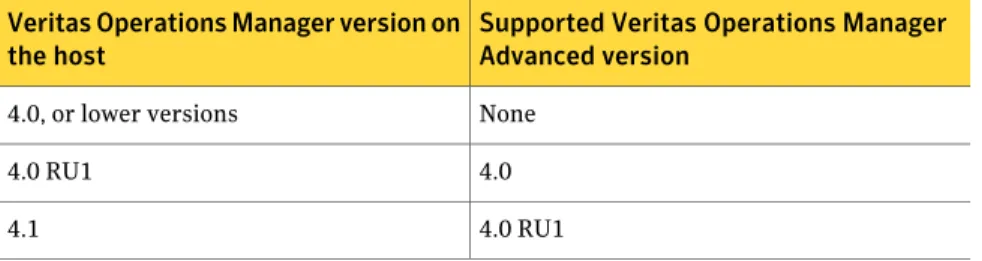
If you plan to install both Veritas Operations Manager and Veritas Operations Manager Advanced on a single host, you need to check the support for coexistence of both the products. Only certain versions of Veritas Operations Manager can be installed with certain versions of Veritas Operations Manager Advanced. The coexistence support also depends on the sequence in which the products are installed.
Table 1-2describes the coexistence support when Veritas Operations Manager is installed before Veritas Operations Manager Advanced:
Table 1-2 Coexistence support when Veritas Operations Manager is installed first
Supported Veritas Operations Manager Advanced version
Veritas Operations Manager version on the host
None 4.0, or lower versions
4.0 4.0 RU1
4.0 RU1 4.1
Planning your Veritas Operations Manager installation
Coexistence of Veritas Operations Manager and Veritas Operations Manager Advanced
Table 1-3describes the coexistence support when Veritas Operations Manager Advanced is installed before Veritas Operations Manager:
Table 1-3 Coexistence support when Veritas Operations Manager Advanced is installed first
Supported Veritas Operations Manager version
Veritas Operations Manager Advanced version on the host
4.0 RU1, or later versions 4.0
4.1 4.0 RU1
21 Planning your Veritas Operations Manager installation
Planning your Veritas Operations Manager installation
Coexistence of Veritas Operations Manager and Veritas Operations Manager Advanced
System requirements
This chapter includes the following topics:
■ Operating system requirements ■ Third-party required libraries ■ System resource requirements ■ Supported hardware
■ Web browser requirements ■ Network and firewall requirements
Operating system requirements
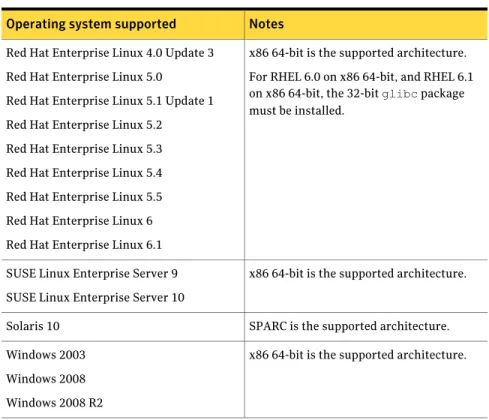
Table 2-1provides an overview of Veritas Operations Manager operating system requirements for Management Server:
2
Table 2-1 Veritas Operations Manager operating system requirements for Management Server
Notes Operating system supported
x86 64-bit is the supported architecture. For RHEL 6.0 on x86 64-bit, and RHEL 6.1 on x86 64-bit, the 32-bitglibcpackage must be installed.
Red Hat Enterprise Linux 4.0 Update 3 Red Hat Enterprise Linux 5.0
Red Hat Enterprise Linux 5.1 Update 1 Red Hat Enterprise Linux 5.2
Red Hat Enterprise Linux 5.3 Red Hat Enterprise Linux 5.4 Red Hat Enterprise Linux 5.5 Red Hat Enterprise Linux 6 Red Hat Enterprise Linux 6.1
x86 64-bit is the supported architecture. SUSE Linux Enterprise Server 9
SUSE Linux Enterprise Server 10
SPARC is the supported architecture. Solaris 10
x86 64-bit is the supported architecture. Windows 2003
Windows 2008 Windows 2008 R2
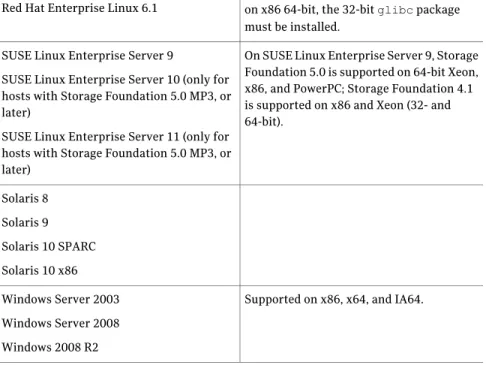
Table 2-2provides an overview of Veritas Operations Manager operating system requirements for managed hosts:
Table 2-2 Veritas Operations Manager operating system requirements for managed hosts having Storage Foundation or Storage Foundation and High Availability products
Notes Operating system supported
On AIX hosts, the xlC runtime environment must be version 8.0, or later. Use thelslpp -lc | grep xlC.rtecommand to verify the version of the xlC runtime environment. AIX 5.2
AIX 5.3
AIX 6.1 (only for hosts with Storage Foundation 5.0 MP3, or later)
AIX 7.1 (only for Storage Foundation 5.1 SP1 PR1 hosts)
PA RISC is the supported architecture. HP-UX 11.11 (only for Storage Foundation
3.5 hosts) System requirements
Operating system requirements
Table 2-2 Veritas Operations Manager operating system requirements for managed hosts having Storage Foundation or Storage Foundation and High Availability products (continued)
Notes Operating system supported
HP-UX 11.23 HP-UX 11.31
On Red Hat Enterprise Linux 4.0, Storage Foundation 5.0 is supported on 64-bit Xeon, x86, and PowerPC; Storage Foundation 4.1 is supported on x86 and Xeon (32- and 64-bit).
For RHEL 6.0 on x86 64-bit, and RHEL 6.1 on x86 64-bit, the 32-bitglibcpackage must be installed.
Red Hat Enterprise Linux 4.0
Red Hat Enterprise Linux 5.0 Update 2 (only for hosts with Storage Foundation 5.0 MP3, or later)
Red Hat Enterprise Linux 6 Red Hat Enterprise Linux 6.1
On SUSE Linux Enterprise Server 9, Storage Foundation 5.0 is supported on 64-bit Xeon, x86, and PowerPC; Storage Foundation 4.1 is supported on x86 and Xeon (32- and 64-bit).
SUSE Linux Enterprise Server 9
SUSE Linux Enterprise Server 10 (only for hosts with Storage Foundation 5.0 MP3, or later)
SUSE Linux Enterprise Server 11 (only for hosts with Storage Foundation 5.0 MP3, or later)
Solaris 8 Solaris 9 Solaris 10 SPARC Solaris 10 x86
Supported on x86, x64, and IA64. Windows Server 2003
Windows Server 2008 Windows 2008 R2
Veritas Operations Manager operating system requirements for managed hosts that do not have Storage Foundation or Storage Foundation and High Availability products:
■ AIX 5.2, or later
■ HP-UX 11.23, or later
■ Red Hat Enterprise Linux 4.x, or later
25 System requirements
■ SUSE Linux Enterprise Server 9, or later
■ Solaris 9
■ Solaris 10 SPARC
■ Solaris 10 x86
■ Windows Server 2003
■ Windows Server 2008
■ Windows Server 2008 R2
For the most complete, up-to-date platform support documentation for Storage Foundation (UNIX) and Storage Foundation HA for Windows, visit the Symantec Technical Support Web site :
www.symantec.com/techsupp/
Third-party required libraries
This section lists third-party libraries required to run Veritas Operations Manager:
■ 32-bit SNIA Common HBA API required on Windows hosts
32-bit SNIA Common HBA API required on Windows hosts
For proper discovery of Fibre Channel attached devices—including discovery of HBA and its target ports—Veritas Operations Manager requires installation of the 32-bit SNIA Common HBA API on all Windows managed hosts running HBA controllers.
The Common HBA API is typically available as part of your HBA vendor’s driver kit, or you can download it from your HBA vendor’s site.
Follow these steps to determine if the SNIA Common HBA API is already present on your Windows host.
To verify that the 32-bit SNIA Common HBA API is installed on a Windows host
1
Open the registry editor on the managed host using theregeditcommand.2
Check the following location to get the SNIA library information:HKEY_LOCAL_MACHINE\SOFTWARE\SNIA\HBA\hba_model
On 64-bit platforms, Veritas Operations Manager requires 32-bit libraries installed as a pre-requisite. For more information, see your HBA vendor documentation.
System requirements
Third-party required libraries
System resource requirements
The amount of memory and disk space that Veritas Operations Manager requires are listed in this section. The requirements are in addition to the resources that are already consumed by other software applications running on the host. For Management Server:
■ CPU required: Dual processor for every 1000 managed hosts.
■ Memory required:
■ 4GB for every 1000 managed hosts.
■ Add 4GB of memory if Management Server is used for the deep discovery of enclosures using the Storage Insight Add-on.
■ Add 4GB of memory if Management Server is used for the discovery of VMware virtualization infrastructure.
■ Disk space required: 15GB of disk space for every 1000 managed hosts. For a managed host:
■ CPU required: See Veritas Storage Foundation documentation.
■ Memory required: See Veritas Storage Foundation documentation.
■ Disk space required:
■ On UNIX hosts: 50MB to 200MB in/var/optfor discovery state files; 100MB
in/opt.
■ On Windows hosts: 50MB to 200MB inInstall_path\Veritas\VRTSsfmh;
100MB in %COMMONAPPDATAFOLDER%\Symantec.
Read the following Symantec Technical Support TechNotes for the latest information on updates, patches, and software issues regarding this release:
http://www.symantec.com/docs/TECH157641
See“About the frequency of managed host information discovery”on page 27.
About the frequency of managed host information discovery
The following table describes the frequency of the managed host information updates in the Management Server database. The discovery on each managed host is divided into families to focus on a particular functional area:
27 System requirements
Discovered information Frequency
in minutes Family
The operating system, packages, and networking for the host. Typically, most of the information that is related to this family does not change frequently.
1440 Host
Volume Manager, File Systems, and the related storage network.
30 SF
Veritas Cluster Server and the related information. 60
VCS
Oracle, DB2, MSSQL, and Sybase databases and their storage dependencies.
60 DB
The licenses that are installed on the hosts. 1440
LDR
Configuration status and external faults. 5
NR
Third-party volume management information. 360
Native
Oracle Solaris zones and their storage dependencies. 120
Zones
Oracle Solaris LDoms, and related CPU and memory information.
120 LDoms
ESX servers, virtual machines, and their storage dependencies. Note:This information is discovered only when Control Host Add-on is installed on a managed host that is designated as the control host.
360 VMware System requirements
System resource requirements
Discovered information Frequency
in minutes Family
The following information on the hosts that are configured on the control host for agentless:
■ The IP addresses, operating system, and the usage of the CPU and memory
■ The host bus adapters (HBAs) on the host
■ The disks on the hosts and their correlation with the array LUNs and multipathing
■ The volumes and the volume groups on the native Volume Manager
■ The mount points of the file systems and the correlation of the file systems with the disks
■ In a VMware guest environment, the correlation of the guest with the virtual machine and the correlation of the storage in the guest with the storage exported from the ESX server.
Note:This information is discovered only when Control Host Add-on is installed on a managed host that is designated as the control host.
360 Agentless
Note:The discovery for the Storage Foundation and Veritas Cluster Server families is event driven and scheduled. This means that the discovery is triggered when configuration changes occur on the managed hosts. As a result, this information must be updated in the Veritas Operations Manager database in the following update. If configuration changes are not detected on the managed hosts, the communication between the managed host and Management Server is restricted to the heartbeat communication that occurs every five minutes. You can connect a managed host to multiple Management Servers. The performance of a managed host is not affected in this scenario because the discovery happens only once. Reporting of the state as per the host configuration is done based on the number of Management Servers to which the managed host reports.
Supported hardware
The following TechNotes contain the Hardware Compatibility List (HCL) for Veritas Operations Manager 4.1 and Storage Foundation products on UNIX:
■ Storage Foundation 5.0 for UNIX:
http://www.symantec.com/business/support/index?page=content&id=TECH47620 29 System requirements
■ Storage Foundation 5.1 for UNIX:
http://www.symantec.com/business/support/index?page=content&id=TECH74012
The following TechNotes contain the Hardware Compatibility List (HCL) for Veritas Operations Manager 4.1 and Storage Foundation products on Windows:
■ Storage Foundation 5.0 for Windows:
http://www.symantec.com/business/support/index?page=content&id=TECH50141 ■ Storage Foundation 5.1 for Windows:
http://www.symantec.com/business/support/index?page=content&id=TECH59118
Web browser requirements
The Veritas Operations Manager console is a graphical user interface that displays reports and other information for users of the Storage Foundation products through a standard Web browser.
The Web browsers that the Veritas Operations Manager console supports are:
■ Internet Explorer versions 6.x to 9.x
■ Firefox 3.x, or later
Additional considerations for supported Web browsers:
■ Your browser must support JavaScript 1.2, or later.
■ If you use pop-up blockers (including Yahoo Toolbar or Google Toolbar), either disable them or configure them to accept pop-ups from the Veritas Operations Manager Web server to which you connect.
■ For Internet Explorer 6.0 on Windows 2003 (Server and Advanced Server), set the default intranet zone security level to Medium, or lower.
■ For Internet Explorer, when popup-blocker is turned on, make sure that the filter level is set to Medium or lower.
■ For Internet Explorer, ensure that the site is incuded in the list of trusted sites. If you cannot add the site to the list of trusted sites, enable the Binary and script Behaviors option in security settings.
■ You must install Adobe Flash plug-in version 10, or later.
Use the following criteria to identify the kind of system you need to run the Web console:
■ The Web console host must be able to access Veritas Operations Manager Management Server.
■ Veritas Operations Manager must support the Web browser.
System requirements
Web browser requirements
Network and firewall requirements
If you plan to manage hosts within multiple domains, update the network settings to resolve the host from all domains.
You need to ensure that the localhost can be resolved from the host.
If localhost cannot be resolved from the host, update your network settings to enable it.
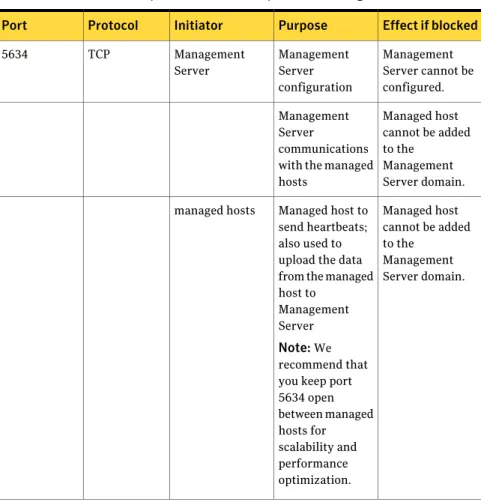
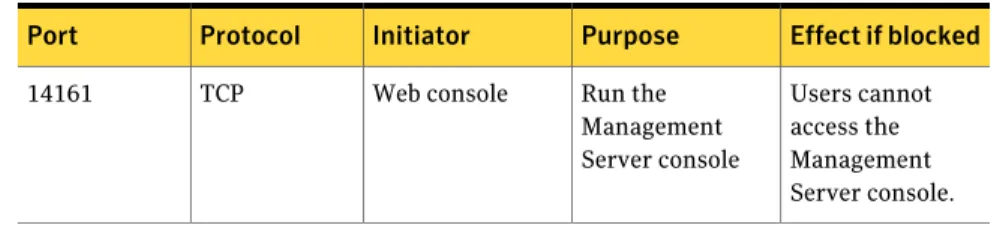
Veritas Operations Manager uses the default ports as shown inTable 2-3to transfer information.
Table 2-3 Default ports in an Veritas Operations Manager installation
Effect if blocked Purpose
Initiator Protocol
Port
Management Server cannot be configured. Management Server configuration Management Server TCP 5634 Managed host cannot be added to the Management Server domain. Management Server communications with the managed hosts
Managed host cannot be added to the
Management Server domain. Managed host to
send heartbeats; also used to upload the data from the managed host to
Management Server Note:We recommend that you keep port 5634 open between managed hosts for scalability and performance optimization. managed hosts 31 System requirements
Table 2-3 Default ports in an Veritas Operations Manager installation
(continued)
Effect if blocked Purpose
Initiator Protocol
Port
Users cannot access the Management Server console. Run the
Management Server console Web console
TCP 14161
System requirements
Network and firewall requirements
Installing, upgrading, and
uninstalling Veritas
Operations Manager
This chapter includes the following topics:
■ Packages included in Veritas Operations Manager
■ Installing Veritas Operations Manager 4.1 Management Server ■ Verifying Management Server installation on UNIX
■ Verifying Management Server installation on Windows
■ Configuring Veritas Operations Manager 4.1 on UNIX and Windows ■ Setting up the Web browser for Veritas Operations Manager ■ Installing Veritas Operations Manager 4.1 host management
■ Installing Veritas Operations Manager 4.1 host management through Solaris JumpStart
■ Verifying host management installation on UNIX ■ Verifying host management installation on Windows
■ About installing or upgrading Veritas Operations Manager 4.1 Add-ons ■ Upgrading Management Server to Veritas Operations Manager 4.1 ■ Backing up Veritas Operations Manager 4.1 data on UNIX
■ Backing up Veritas Operations Manager 4.1 data on Windows
3
■ Upgrading host management to Veritas Operations Manager 4.1 ■ Verifying the version of Management Server in the console
■ Verifying the version of a Veritas Operations Manager managed host in the console
■ Uninstalling Management Server on UNIX ■ Uninstalling Management Server on Windows ■ Uninstalling host management on UNIX ■ Uninstalling host management on Windows
Packages included in Veritas Operations Manager
Table 3-1lists the software packages that are included in Veritas Operations Manager.Table 3-1 Software packages
Description Package name
Veritas Operations Manager package that is required on Management Server
VRTSsfmcs
Veritas Operations Manager package that is required on the managed host
VRTSsfmh
See“Downloading Veritas Operations Manager 4.1”on page 13.
Installing Veritas Operations Manager 4.1
Management Server
You can install Management Server on any one of the following hosts:
■ A Linux host
■ A Solaris host
■ A Windows host
After you install Management Server, you have to configure Veritas Operations Manager before you can use it.
For information on system requirements, see the Veritas Operations Manager
Release Notes.
Installing, upgrading, and uninstalling Veritas Operations Manager
Packages included in Veritas Operations Manager
See“Installing Management Server on UNIX”on page 35. See“Installing Management Server on Windows”on page 36.
Installing Management Server on UNIX
You can install the Veritas Operations Manager Management Server on a Linux host or a Solaris host using a.binfile. The.binfile installs theVRTSsfmcsand theVRTSsfmhpackages on the target host.
Note:On a Solaris host, you can install Management Server on both global and non-global zones.
To install Veritas Operations Manager Management Server on UNIX
1
Make sure that the host where you plan to install Management Server meets or exceeds system and operating system requirements.For information on system requirements, see the Veritas Operations Manager
4.1 Release Notes.
See“Choosing a Management Server host”on page 19.
2
Download and unzip the installation file.See“Downloading Veritas Operations Manager 4.1”on page 13.
3
Open an operating system console.4
On the host where you plan to install Management Server, log on as root.5
Change directory to the location where you unzipped the.binfile.6
At the command prompt, enter one of the following:■ On a Linux host:
./Veritas_Operations_Manager_CMS_4.1_Linux.bin ■ On a Solaris host:
./Veritas_Operations_Manager_CMS_4.1_SolSparc.bin
If you see the errorPermission Denied, change the permissions for the.bin
file so that it can be run. Enter one of the following:
■ On a Linux host:
chmod +x Veritas_Operations_Manager_CMS_4.1_Linux.bin ■ On a Solaris host:
chmod +x Veritas_Operations_Manager_CMS_4.1_SolSparc.bin
35 Installing, upgrading, and uninstalling Veritas Operations Manager
7
To accept the End User License Agreement and proceed with installation, type y.The installation is complete when you see messages similar to the following:
Installation is complete. You will need to configure Veritas Operations Manager Management Server.
Please open your browser and type the following URL to configure:
https://myhost.example.com:5634/
Please skip this step if you intend to use this host as a standby node for Veritas Operations Manager Management Server HA.
8
Verify that the packages are installed and the processes are started. See“Verifying Management Server installation on UNIX”on page 37.9
Configure Veritas Operations Manager.See“Configuring Veritas Operations Manager 4.1 on UNIX and Windows”
on page 38.
Installing Management Server on Windows
You can install the Veritas Operations Manager Management Server on a Windows host using theVeritas_Operations_Manager_CMS_4.1_Win.exefile.
To install Veritas Operations Manager Management Server on Windows
1
Make sure that the host where you plan to install Management Server meets or exceeds system and operating system requirements.For information on system requirements, see the Veritas Operations Manager
Release Notes.
See“Choosing a Management Server host”on page 19.
2
On the host where you plan to install Management Server, log on as a user with administrator privileges.3
Download and unzip the installation file.See“Downloading Veritas Operations Manager 4.1”on page 13.
4
Turn off the Windows firewall, or, open ports 5634 and 14161 for TCP/IP communication.5
Ensure that there is no pending restart from Windows Update. If there is, restart the host before launching the installer.6
To launch the installer, run theVeritas_Operations_Manager_CMS_4.1_Win.exefile. Installing, upgrading, and uninstalling Veritas Operations Manager
Installing Veritas Operations Manager 4.1 Management Server
7
To proceed with the Management Server installation, accept the End User License Agreement.8
Click Install and follow through the installation process.9
After the installation is complete, click Finish.The Web browser is launched to configure Veritas Operations Manager.
10
Configure Veritas Operations Manager.See“Configuring Veritas Operations Manager 4.1 on UNIX and Windows”
on page 38.
11
Verify that Management Server is installed and the required services are started.See“Verifying Management Server installation on Windows”on page 37.
Verifying Management Server installation on UNIX
You can verify the Management Server installation by making sure that the packages are installed and the required processes are started.
To verify Management Server installation on UNIX
1
On the host where you installed Management Server, check whether theVRTSsfmcspackage is installed. Enter one of the following:
■ On a Linux host:rpm -q VRTSsfmcs ■ On a Solaris host:pkginfo -l VRTSsfmcs
2
Check whether theVRTSsfmhpackage is installed. Enter one of the following:■ On a Linux host:rpm -q VRTSsfmh ■ On a Solaris host:pkginfo -l VRTSsfmh
3
Check whether thexprtldprocess is started. Enter the following: ps -ef | grep xprtldSee“Verifying the version of Management Server in the console”on page 56.
Verifying Management Server installation on Windows
You can verify the Management Server installation by making sure that the Veritas
Operations Manager for Windows program is installed, and the Veritas Storage
Foundation Messaging Service is started.
37 Installing, upgrading, and uninstalling Veritas Operations Manager
To verify Management Server installation on Windows
1
On the host where you installed host management, on the Windows Control Panel, click Add or Remove Programs.2
Check whether Veritas Operations Manager for Windows appears in the list of installed programs.3
On the Windows Services panel, check whether the Veritas StorageFoundation Messaging Service has started.
See“Verifying the version of Management Server in the console”on page 56.
Configuring Veritas Operations Manager 4.1 on UNIX
and Windows
If you are installing Management Server on a UNIX host, messages similar to the following are displayed after successful installation of Management Server:
Installation is complete. You will need to configure Veritas Operations Manager.
Please open your browser and type the following URL to configure:
https://myhost.example.com:5634/
Use the URL displayed in the message to configure Veritas Operations Manager.
Note:You may configure the networking on Management Server in either the IPv4 mode, or in the mixed mode (IPv4 and IPv6). For Management Server that runs in the mixed mode, use only the IPv4 address during the installation and configuration process and not the IPv6 address.
If you are installing Management Server on a Windows host, the Web browser is automatically launched with the URL to configure Veritas Operations Manager. For Internet Explorer 7.0, or later, on Windows Server 2008, or Firefox 3.0, or later, if the Web page does not get displayed, you have to set up the Web browser. See“Setting up the Web browser for Veritas Operations Manager”on page 40. During the configuration, you are prompted to specify a location to store the Veritas Operations Manager database. You can accept the default location or specify your own.
Installing, upgrading, and uninstalling Veritas Operations Manager
Configuring Veritas Operations Manager 4.1 on UNIX and Windows
Note:For Management Server configuration with IPv6 address, the localhost, 127.0.0.1, ::1 should be bound to a network interface (for example, lo0 on Solaris and Linux), and lo0 is up and running.
To configure Veritas Operations Manager on UNIX and Windows
1
Do the following tasks to launch the Web browser. If you are configuring Veritas Operations Manager on a Windows host, skip this step.■ On a host that has a network connection to the Management Server host, open a Web browser.
■ In the Web browser’s address field, type the following URL and press
Enter:
https://hostname:5634/
where hostname is the Management Server's host name, fully-qualified host name, or IP address. This is applicable for IPv4 mode. For dual mode (IPv4 and IPv6 mode) configuration, you can give only the host name. For example: https://myhost.example.com:5634/
For the dual mode of Management Server, the IPv6 address and the hostname entries of the managed hosts should be present in Management Server's/etc/hostsfile. Also, all the managed hosts should have an entry of the IPv6 address and the host name of Management Server in their respective/etc/hostsfile.
2
In the Authentication Required dialog, enter Management Server host's root user name and password.3
In the Server Setting page, check and modify the Server Name, if required.4
Check and modify the Server Address, if required.5
In the Database Setting page, check the default Database location and modify it, if required.The default database directory is/var/opt/VRTSsfmcs/dbon UNIX,
%ALLUSERSPROFILE%\Application Data\Symantec\VRTSsfmcs\dbon Windows
2003, and%ALLUSERSPROFILE%\Symantec\VRTSsfmcs\dbon Windows
2008/2008 R2.
6
Click Next.7
In the Analytics Setting page, select Enable Analytics Gathering to allow Symantec to gather data on your Veritas Operations Manager usage.8
Do one of the following:■ To change settings, click Back,
39 Installing, upgrading, and uninstalling Veritas Operations Manager
■ To start the configuration, click Finish.
At the end of the Veritas Operations Manager configuration, messages similar to the following are displayed:
Configuration successful
Click the Launch Web Console button to login.
9
Click Launch Web Console to log on to Veritas Operations Manager on the configured Management Server host.See“Installing Management Server on UNIX”on page 35. See“Installing Management Server on Windows”on page 36.
See“About configuring Veritas Operations Manager in high availability environment”on page 62.
Setting up the Web browser for Veritas Operations
Manager
If you use Internet Explorer 7.0, or later, on Windows Server 2008, or Firefox 3.0, or later, the Web pages for configuring and launching Veritas Operations Manager are not displayed. You need to set up the Web browser to display the Web pages. For Internet Explorer 7.0, or later, on Windows Server 2008, if the Web pages are not automatically displayed, add each Web site to the Trusted Sites list. On Firefox 3.0, or later, if a security exception is displayed, add the exception to the Web browser to override how Firefox identifies the sites.
To set up Internet Explorer 7.0, or later, on Windows Server 2008 for Veritas Operations Manager
1
In Internet Explorer, select Tools > Internet Options.2
Select the Security tab.3
Click Sites to add the following Web sites:■ https://hostname:5634/—URL to configure Veritas Operations Manager ■ https://hostname:14161/—URL to launch Veritas Operations Manager
where, hostname is the name of the Management Server host.
Installing, upgrading, and uninstalling Veritas Operations Manager
Setting up the Web browser for Veritas Operations Manager
To set up Firefox 3.0, or later, for Veritas Operations Manager
1
On the security exception page that is displayed when you attempt to open an Veritas Operations Manager Web page, click the Or you can add anexception link.
2
Click Add Exception.For Firefox 3.6.x, or later, the users should first click the I Understand the
Risks button before they click the Add Exception button.
3
In the Add Security Exception dialog, verify that the location is one of the following:■ https://hostname:5634/—URL to configure Veritas Operations Manager ■ https://hostname:14161/—URL to launch Veritas Operations Manager
where, hostname is the name of the Management Server host.
4
Click Get Certificate.5
Select the Permanently store this exception check box.6
Click Confirm Security Exception. The Web page is now displayed.See“Configuring Veritas Operations Manager 4.1 on UNIX and Windows”
on page 38.
Installing Veritas Operations Manager 4.1 host
management
You must install theVRTSsfmhpackage on a host so you can manage it using
Veritas Operations Manager Management Server.
Three varieties of managed hosts are supported in Veritas Operations Manager: a Storage Foundation 5.x managed host, a Storage Foundation 4.x managed host, or a Storage Foundation 3.5 managed host on HP-UX.
After you install theVRTSsfmhpackage on the host, you need to add the host to
the Management Server domain. You can add the host using the Veritas Operations Manager console, or thegendeploy.plscript.
For more information on adding hosts to a Management Server domain, see the
Veritas Operations Manager Administrator's Guide.
For information on system requirements, see the Veritas Operations Manager
Release Notes.
41 Installing, upgrading, and uninstalling Veritas Operations Manager
See“Installing host management on UNIX”on page 42. See“Installing host management on Windows”on page 43. See“About cloning virtual machines”on page 44.
See“About migrating virtual machines”on page 44.
Installing host management on UNIX
You can install Veritas Operations Manager host management on a UNIX host by installing theVRTSsfmhpackage on it.
Note:By default, theVRTSsfmhpackage is installed in the/optdirectory. You
cannot specify a different location to install the package.
To install Veritas Operations Manager host management on a UNIX host
1
Make sure that the host where you plan to install host management meets or exceeds system and operating system requirements.See“Operating system requirements”on page 23.
2
Download the managed host installation files bundle, and unzip it. See“Downloading Veritas Operations Manager 4.1”on page 13.3
Open an operating system console.4
On the host where you plan to install host management, log on as root.5
Change directory to the location where you unzipped the installation files bundle.If the host is an AIX host, or an HP-UX host, decompress the downloaded file. See“Downloading managed host files”on page 14.
6
At the command prompt, enter one of the following commands to install the package:■ For AIX, enter the following:
installp -ac -d VRTSsfmh_4.1.xxxx.0_AIX.bff VRTSsfmh
where,xxxxis the build number for the release.
■ For HP-UX, enter the following:
swinstall -s $PWD VRTSsfmh
■ For Linux on x86 or Xeon, enter the following:
rpm -ivh VRTSsfmh_4.1.xxxx.0_Linux.rpm
where,xxxxis the build number for the release.
Installing, upgrading, and uninstalling Veritas Operations Manager
Installing Veritas Operations Manager 4.1 host management
■ For Linux on PowerPC, enter the following:
rpm -ivh VRTSsfmh_4.1.xxxx.0_Linux_arch_ppc64.rpm
where,xxxxis the build number for the release.
■ For Solaris on SPARC, enter the following:
pkgadd -d VRTSsfmh_4.1.xxxx.0_SunOS_arch_sparc.pkg
where,xxxxis the build number for the release.
■ For Solaris on x86, enter the following:
pkgadd -d VRTSsfmh_4.1.xxxx.0_SunOS_arch_i386.pkg
where,xxxxis the build number for the release.
7
Verify that theVRTSsfmhpackage is installed and the required processes havestarted.
See“Verifying host management installation on UNIX”on page 45.
Installing host management on Windows
You can install Veritas Operations Manager host management on a Windows host by running a.msifile on it.
To install Veritas Operations Manager host management on a Windows host
1
Log on to the target host as a user with administrator privileges.2
Make sure that the host where you plan to install host management meets or exceeds system and operating system requirements.See“Operating system requirements”on page 23.
3
Download the managed host installation files bundle, and unzip it. See“Downloading Veritas Operations Manager 4.1”on page 13.4
From the directory to which you unzipped the installation files bundle, do one of the following:■ On a 32-bit host, runVRTSsfmh_4.10.xxxx_Windows_arch_x86.msi
■ On a 64-bit host, runVRTSsfmh_4.10.xxxx_Windows_arch_x64.msi
■ On a IA64 host, runVRTSsfmh_4.10.xxxx_Windows_arch_IA64.msi
where,xxxxis the build number for the release.
See“Downloading managed host files”on page 14.
5
On the Welcome screen of the InstallShield Wizard, click Next.6
On the Ready to Install the Program screen, click Install to start the installation.43 Installing, upgrading, and uninstalling Veritas Operations Manager
7
Click Finish to exit the InstallShield Wizard.8
Verify that the host management program is installed and the required service has started.See“Verifying host management installation on Windows”on page 46.
About cloning virtual machines
VRTSsfmhpackage generates a globally unique identifier for the host using
parameters such as host id and MAC address of the host. Veritas Operations Manager Management Server identifies a managed host using this identifier. Some virtualization technologies such as VMware create a new BIOS UUID for a Virtual Machine when it is cloned. The Veritas Operations Manager Agent (VRTSsfmh package) uses this UUID to know if the host has been cloned. On other virtualization technologies, you need to reset the host id of the clone is reset. If host id is not reset, both the clone and the cloned hosts are recognized as the same, which can cause data corruption in the Veritas Operations Manager database. After you reset the host id of the clone, Veritas Operations Manager removes any managed host-related configuration from the clone that gets copied over from the cloned host. The clone is treated as a new host and has to be added as a managed host to the Management Server domain.
About migrating virtual machines
When theVRTSsfmhpackage is installed on a host, it generates a globally unique
identifier for the host. Veritas Operations Manager Management Server identifies a managed host using this identifier. Veritas Operations Manager generates this unique identifier using parameters such as host id and MAC address of the host. Veritas Operations Manager tries to maintain the same identifier for the host in case the host is migrated.
On some virtualization technologies such as LPAR or LDOM, the MAC address of the host changes when it is migrated. You need to ensure that Veritas Operations Manager uses the same identifier for a managed host even when it is migrated. For this purpose, you need to ensure that the host id of the virtual machine does not change after migration. In most of the virtualization technologies, host id of the virtual machine remains the same after migration.
Exception to this is LDOM, where, if host id is not explicitly set for an LDOM guest (using the commandldm set-domain), then the host id changes after migration
of the Virtual Machine. It causes VRTSsfmh package to regenerate the unique host identifier and the current configuration of the managed host is lost. In such
Installing, upgrading, and uninstalling Veritas Operations Manager
Installing Veritas Operations Manager 4.1 host management
cases, the managed host can no longer actively report data to the Veritas Operations Manager Management Server.
Installing Veritas Operations Manager 4.1 host
management through Solaris JumpStart
You can install host management and add a managed host to the domain through Solaris JumpStart installation without any user interaction. You can use the
gendeploy.plscript to create a script that adds the host to the Management Server domain. The script that is generated bygendeploy.plcan be included in
the finalized stages of the Solaris JumpStart installation process.
The following are the highlights of installing Veritas Operations Manager host management as a part of the Solaris JumpStart installation:
■ Use thegendeploy.plscript to create a script that adds the host to the Management Server domain.
■ In the finalized stages of the Solaris JumpStart installation, run the script that is created throughgendeploy.pl.
To create the script to be used for adding the hosts in Solaris JumpStart installation
1
Log on as root on Management Server.2
Rungendeploy.plto create the script file:/opt/VRTSsfmh/bin/gendeploy.pl --out scriptfilename
where, scriptfilename is the name of the script file that has to be copied to the managed host, and then run to add the host to the Management Server domain.
See the Veritas Operations Manager Administrator's Guide for more information on adding hosts to a Management Server domain.
Verifying host management installation on UNIX
You can verify host management installation on UNIX by making sure that the
VRTSsfmhpackage is installed, and the required processes are started.
To verify host management installation on UNIX
1
On the host where you installed host management, enter one of the following at the command prompt to verify that the package is installed:■ On AIX, enter the following:
lslpp -l VRTSsfmh
45 Installing, upgrading, and uninstalling Veritas Operations Manager