Facility
Self-Assessment
(Mock Survey)
LONG-TERM CARE SURVEY MANUAL
PREPARED BY MU NHA CONSULTANT
Updated March 2013
S
ECTION5
-
F
ACILITYS
ELF-A
SSESSMENT(M
OCKS
URVEYT
OOLS)
Facility Self-Assessment
-
Mock surveys are an opportunity to look at systems, procedures and
processes of care and to identify potential survey-risk areas. Mock surveys should be performed
on a scheduled basis and shared with nursing home staff. The most important part of the survey
process is what you do after it is over with the results. F-tags are used in this section. Be advised
that CMS makes revisions to the F-tags on a regular basis.
SECTION
PAGE #
Article: Mock Survey: An Important Component
5. 2
Survey Preparation
Self-Assessment/Mock Survey
5.3
Guide to F-Tag Numbers
5.4-5.5
“F” Tag Deficiencies
5.6-5.30
Quality Indicator Report Results
5.31
Process-Survey Tasks
5.32-5.34
Meal Monitor Assignment and Times
5.35
Mock Survey Assignments
5.36
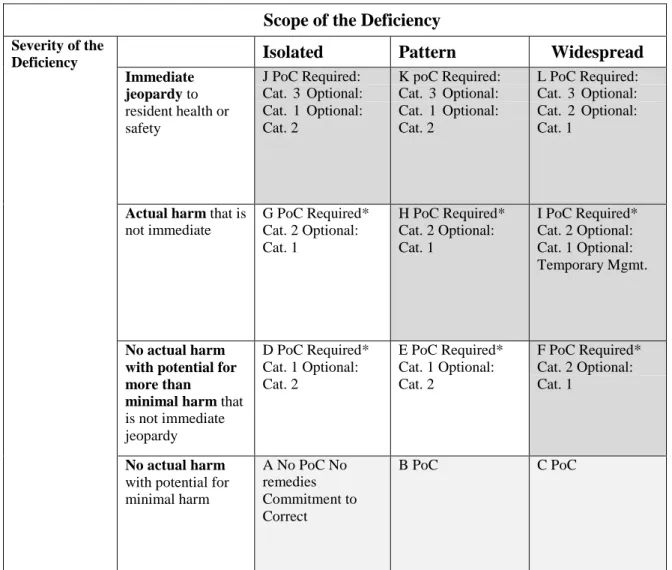
Survey Scope & Severity Grid
5.37-5.38
Resident Review Worksheet
5.39-5.42
General Observations of the Faculty
5.43-5.44
First Impressions Checklist
5.45
Surveyor Notes Worksheet
5.46
Administration Checklist
5.47
Contract Book Checklist
5.48
Personnel File Checklist
5.49
Environment
5.50
Physical Plant Rounds-Initial Tour
5.51-5.56
File Drill Grid
5.57
QA Review: Surveyor Notes Worksheet
5.58-5.59
Nursing
5.60
Resident Review Worksheet
5.61-5.64
Quality of Care
5.65
MDS Audit Tool
5.66
Investigative Protocol Hydration
5.67-5.72
Non-Sterile Dressing Change
5.73
Discharge Records Review
5.74
Chart Audit Tool
5.75-5.76
Med Pass Technique
5.77
CMS-677 Medication Pass Worksheet
5.78-5.80
Dietary
5.81
Dietary Observations
5.82
Monthly Meal Quality Review
5.83
Monthly Sanitation/Infection Control Review
5.84
Meal Audit Tool
5.85
LONG-TERM CARE SURVEY MANUAL
PREPARED BY MU NHA CONSULTANT
Updated March 2013
Social Services
5.88
Social Services Audit
5.89
Quality of Life Assessment Observation of
5.90
Non-Interviewable Resident
Quality of Life Assessment Resident Interview
5.91
Resident Interview
5.92-5.94
Quality of Life Assessment Family Interview
5.95-5.97
Quality of Life Assessment Group Interview
5.98-5.101
Resident Council Meeting Audit
5.102-5.103
5.2
Mock Survey
An Important Component of Survey Preparation
Many long-term care providers strive to be ‘survey-ready’ all year round. But just like many of us schedule the big spring
cleaning some time in advance of company arriving for their annual summer visit; some LTC providers opt to conduct a
Mock Survey in anticipation of their annual licensure/certification visit.
Mock Surveys can serve several purposes:
A Mock Survey can be an opportunity to take a fresh look at systems, procedures and processes of care, and
identify potential survey-
risk
areas. And survey-risk can translate into litigation-risk.
A Mock Survey also can reveal how staff will function under stressful circumstances.
Taking that fresh and objective look is essential in order to reap the maximum benefit from the Mock Survey process.
LTC providers are discovering the hard way that the procedures, protocols and monitoring/QA systems that served them
well enough in the past are no longer sufficient to avoid survey deficiencies. ‘But we’ve always done it this way; the
surveyors never cited us on this in the past; we thought we were doing this correctly; we’ve always done well on our
surveys before – how could this be happening?’ It is hard to stay current with new standards and the more stringent
application of existing standards like F314 Pressure Ulcers, F315 Continence/Catheters, F323 Accidents, etc. It is hard to
look at one’s own organization and see its shortcomings.
One way to get a fresh and objective perspective and to minimize survey-risk is to have the Mock Survey process
conducted by someone external to your organization. This ‘someone’ could be a consultant or an experienced and well
informed professional from a neighboring LTC community. If, however, you elect to manage the process using your own
personnel, incorporating the following approaches can facilitate objectivity:
Assign department heads to ‘survey’ departments other than their own. In nursing, have charge nurses/unit
managers, supervisors, etc., assigned to audit other units and/or aspects of care for which they are not usually
responsible. It is often hard to see your own forest for the trees.
Although obviously the internal ‘surveyors’ will know that a Mock Survey will be taking place at some point, it
could be more beneficial if direct care staff and other workers were not informed. This maximizes the surprise
and stress factor.
Even though the internal ‘surveyors’ know that the process is planned, the Mock Survey should be unannounced.
The Administrator walks in one morning and proclaims it to be Mock Survey Day. This simulates ‘real life’
conditions...
The most important part of the Mock Survey process is what you do after it’s over. If you have about three months
between the Mock Survey and the earliest likely date of the next survey, then I recommend the ‘Systems’ approach. The
Systems approach includes a broader review and analysis of organizational policies, procedures, protocols and practices
that may be contributing to Quality Indicator Report flags and/or to the ‘findings’ of the Mock Survey ‘survey team.’ If
you have one month or less between the Mock Survey and the earliest likely date of the next survey, then I recommend
you go into ‘Manage the Damage Mode.’ What are your high-risk areas, which residents have experienced negative
outcomes, how can the risk be lessened and/or the negative outcome be explained and/or otherwise addressed?
In either scenario, “Systems” or “Manage the Damage Mode” develop a Corrective Action Roadmap that assigns
responsibility, targets timeframes and breaks down the plan into operational steps.
Pre-survey preparation and risk management are the two most effective tools we have to weather today’s regulatory
climate. Most LTC providers, if they haven’t endured it already themselves, know of a provider in their area- good
reputation, well respected in their community, satisfactory survey history – that has been blown out of the water during
their last survey. Wouldn’t you rather have a ‘friendly outsider’ or your own team discovers the dust-bunnies before the
surveyors do?
Reprint from The Edge, April 29, 2009
The Edge is provided to members of the Kansas Association of Homes and Services for the Aging in partnership with Life Services Network, the Illinois AAHSA affiliate. Authored by Dorrie J. Seyfried, Vice President of Method Management, Risk Management & LTC Consultants based in St. Charles, Illinois.
5.3
Self-Assessment/Mock Survey
Today, more than ever, nursing facilities must be prepared to demonstrate compliance with federal regulations
not only at survey time, but all year long. Survey teams can arrive at facilities as soon as nine months after the
last annual survey. They can appear at any time to conduct complaint investigation surveys. And, these days,
they are likely to begin surveys at nontraditional times and on weekends. These changes in the frequencies,
times and types of surveys make it imperative that facilities be prepared at all times.
Nevertheless, with rapidly increasing turnover rates for nursing staff and managers, facility staff might not be
familiar with surveyors' procedures, care observations, interviews, and record reviews and could be unprepared
to meet these challenges.
To adequately prepare staff to succeed at survey time, and to ensure that the facility complies with regulations
at all times, periodic self-assessments or mock surveys can be an important feature of a facility's quality
assurance process. A mock survey can be performed by facility staff, by corporate advisors or by outside
consultants. In whatever manner your facility chooses to provide these services, there are a few guidelines to
bear in mind.
1. Enlist "fresh eyes" to see existing problems clearly. Be sure to include new employees, an "outsider" or other
mock surveyors who are not overly familiar with the facility's staff and residents. If using facility staff, ask
them to review areas outside their direct span of control.
2. Replicate "real" survey procedures as faithfully as possible. Use precise observation methods, select a sample
of residents according to survey guidelines and interview the same staff that real surveyors are likely to
interview.
The following pages include a variety of tools for you to use for your own self-assessment—use all or some of
them. Remember, if you find any deficient practices be sure you bring it to your Quality Assurance Meetings,
document your findings, and come up with a workable plan to correct the problem.
5.4
GUIDE TO “F” TAG
NUMBERS
483.10 RESIDENT RIGHTS F-151Exercise of Rights F-152Resident Competency F-153Access to RecordsF-154Informed of Health Status or Care F-155Refusal of Treatment
F-156 Medicaid Services and Charges F-157 Notification of Changes F-158 Protection of Resident Funds F-159 Personal Fund Management F-160 Conveyance Upon Death F-161 Assurance of Financial Security F-162 Limitation on Charges to Personal Funds F-163 Free Choice on Physician Informed re:
Care (refer to F-154) Planning care (refer to F-280) F-164 Privacy and Confidentiality F-165 Voice Grievances F-166 Resolution of Grievances F-167 Examination of Survey Results 168 Agencies Acting as Advocates F-169 Work
F-170 Mail
F-171 Access to Stationary F-172 Access & Visitation Rights F-173 Ombudsman Access to Records F-174 Telephone
Personal Property (refer to F-252) F-175 Married Couples
F-176 Self Administration of Drugs F-177 Refused of Certain Transfers
483.12 ADMISSION, TRANSFER & DISCHARGE F-201 Transfer & Discharge Requirements
F-202 Documentation of Transfer & Discharge F-203Notice before transfer
F-204 Orient re Transfer & Discharge F-205 Bed-hold Policy and Readmission F-206 Return to the Facility
F-207 Equal Access to Quality Care F-208 Admissions Policy
483.13 RESIDENT BEHAVIOR & FACILITY PRACTICE
F-221 Restraints (physical) F-222 Restraints (chemical) F-223 Abuse
F-224 Treatment of Residents & their Property F-225 Employ Individuals Guilty of Abuse F-226 Policy & Procedure on Abuse
483.15 QUALITY OF LIFE F-240 Quality of Life F-241 Dignity
F-242 Self-determination/Participation F-243 Participate in Resident/Family Groups F-244 Resident/Family Recommendation F-245 Participation in other Activities F-246 Accommodations of Needs F-247 Notification of Room Changes F-248 Activities
F-249 Qualified Activity Professional F-250 Social Services
F-251 Full Time Social Worker Qualifications of Social Worker F-252 Environment
F-253 Housekeeping & Maintenance F-254 Linens Clean and in Good Condition F-256 Lighting Levels
F-257 Comfortable Temperature F-258 Comfortable Sound Levels 483.20 RESIDENT ASSESSMENT F-271 Admission Orders F-272 Comprehensive Assessments F-273 Frequency of Assessments F-274 Significant Change F-275 Annual Assessments
F-276 Quarterly Review Assessments (Refer to F-279)
F-278 Accuracy/Coordination, RN Cert. F-279 Comprehensive Care Plans F-280 Care Plan Development
F-281 Services Meets Professional Standards F-282 Services by Qualified Persons F-283 Discharge Summary F-284 Post-Discharge Plan of Care F-285 Preadmission Screening for MI F-286 MDS Data Storage & Maintenance F-287 Encoding & Transmitting 483.25 QUALITY OF CARE F-309 Quality of Care F-310 ADL Abilities
F-311 Appropriate Treatment & Services F-312 Care for ADL Dependent Residents F-313 Vision & Hearing
F-314 Pressure Sores F-315 Urinary Incontinence F-317 Range of Motion Diminished F-318 Range of Motion Treatment & Services F-319 Mental & Psychosocial Functioning F-320 Adjustment Difficulty
F-321 Naso-gastric Tubes
F-322 Services to Prevent Aspiration
F-323 Accidents F-325 Nutrition F-327 Hydration
QUALITY OF CARE (Continued) F-328 Special Needs
F-329 Unnecessary Drugs
F-332 Medication Errors 5% or Greater F-333 Significant/Non-Significant Med. Errors
F-334 Influenza & Pneumococcal Immunizations
483.30 NURSING SERVICES F-353 Nursing Services/Sufficient Staff F-354 Registered Nurse Hours F-355 SNF Waiver for Licensed Nurse F-356 Posting Nursing Staff
483.35 DIETARY SERVICES F-360 Dietary Services F-361 Staffing F-362 Sufficient Staff
F-363 Menus and Nutritional Adequacy F-364 Food
F-365 Food Meets Individual Needs F-366 Substitutes Offered F-367 Therapeutic Diets F-368 Frequency of Meals F-369 Assistive Devices F-371 Sanitary Conditions F-372 Dispose of Garbage & Refuse Properly
F-373 Paid Feeding Assistants (Michigan does not have this program)
483.40 PHYSICIAN SERVICES F-385 Physician Services/Supervision F-386 Physician Visits
F-387 Frequency of Physician Visits F-388 Visits by Physician Exception F-389 Physician Available for Emergency Use
F-390 Dr. Delegation of Tasks Performed in SNF/NF 483.45 SPECIALIZED REHABILITATION SERVICES F-406 Provision of Services F-407 Qualifications 483.55 DENTAL
F-411 Skilled Nursing Facilities Dental Services
5.5
483.60 PHARMACYF-425 Pharmacy Services/Procedures F-428 Drug Regimen Review
F-431 Control, Labeling & Storage of Drugs 483.65 INFECTION CONTROL F-441 Infection Control
483.70 PHYSICAL ENVIRONMENT F-454Physical Environment
F-455Emergency Power
Space & Equipment (Refer to F-246) F-456 Patient Care Equipment is Safe
Resident Rooms (Refer to F-252) F-457Bedroom Accommodations F-458Square Footage/Room F-459Direct Access to Exit F-460Full Visual Privacy
F-461Room with Window/Floor at Grade F-462Toilet Facilities
F-463Resident Call System F-464Dining & Resident Activities F-465Other Environmental Conditions F-466Available Water Supply F-467Outside Ventilation F-468 handrails
F-469Pest Control Program 483.75 ADMINISTRATION F-490 Administration F-491 licensure
F-492 Federal, State, & Local Laws
F-493Governing Body F-494 Required Training NA F-495 Competency
F-496Registry Verification/Retraining F-497Regular In-Service Education F-498Proficiency of Nurse Aides F-499Staff Qualifications F-500Use of Outside Resources F-501Medical Doctor F-502Laboratory Services F-503Laboratory Requirements F-504 Physician Ordered Lab Services F-505 Promptly Notify Dr. of Findings
F-506 Transportation To/From F-507Lab Reports in Resident File F-508Radiology & Diagnostic Services
Meets Resident Needs
F-509Radiology & Diagnostic Requirements F-510MD Ordered Radiology Services F-511 Promptly Notify Dr. of Findings F-512 Transportation To/From F-513 X-ray Reports in Resident File F-514Clinical Records
F-515Retention of Clinical Records F-516Safeguard Clinical Records F-517Disaster & Emergency F-518Training for Emergency F-519 Transfer Agreement F-520 Quality Assessment & Assurance
5.6
“F” TAG DEFICIENCIES
Facility Name: Dates of Quality Review: Reviewer: ID
PREFIX TAG
SUMMARY STATEMENT OF FINDINGS FINDINGS PLAN OF CORRECTION DATE OF
COMPLETION RESIDENT RIGHTS
F-151 Exercise of Rights.
1. The resident has the right to exercise his or her rights as a resident of the facility and as a citizen or resident of the United States.
2. The resident has the right to be free of interference, coercion, discrimination, and reprisal from the facility in exercising his or her rights.
/ /
F-152 Resident Competency.
1. In the case of a resident adjudged incompetent under the laws of a State by a court of competent jurisdiction, the rights of the resident are exercised by the person appointed under State law to act on the resident’s behalf.
2. In the case of a resident who has not been adjudged incompetent by the State court, any legal-surrogate designated in accordance with State law may exercise the resident’s rights to the extent provided by State law.
/ /
F-153 Access to Records. The resident or his or her legal representative has the right:
1. Upon an oral or written request, to access all records pertaining to himself or herself including current clinical records within 24 hours (excluding weekends and holidays); and
2. After receipt of his or her records for inspection, to purchase at a cost not to exceed the community standard, photocopies of the records or any portions of them upon request and 2 working days advance notice to the facility.
/ /
F-154 Informed of Health Status or Care.
1. The resident has the right to be fully informed in a language that he or she can understands, of his or her total health status, including but not limited to, his or her medical condition.
2. The resident has the right to be fully informed in advance about care and treatment and of any changes in that care or treatment that may affect the resident’s well-being.
5.7
F-155 Refusal of Treatment. The resident has the right torefuse treatment, to refuse to participate in experimental research, and to formulate an advance directive.
/ /
F-156 Medicaid Services and Charges. The facility must inform the resident both orally and in writing in a language that the resident understands, of his or her rights and all rules and regulations governing resident conduct and responsibilities during the stay in the facility. The facility must also provide the resident with the notice (if any) of the State. Such notification must be made prior to or upon admission and during the resident’s stay. Receipt of such information, and any amendments to it, must be acknowledged in writing.
/ /
F-157 Notification of Changes. A facility must immediately inform the resident; consult with the resident’s physician; and if known, notify the resident’s legal representative or an interested family member when there is:
1. An accident involving the resident which results in injury and has the potential for requiring physician intervention;
2. A significant change in the resident’s physical, mental, or psychosocial status (i.e., a deterioration in health, mental, or psychosocial status in either life- threatening conditions or clinical complications).
/ /
F-158 Protection of Resident Funds. The resident has the right to manage his or her financial affairs, and the facility may not require residents to deposit their personal funds with the facility.
/ /
F-159 Personal Fund Management. Upon written authorization of a resident, the facility must hold, safeguard, manage, and account for the personal funds of the resident deposited with the facility.
/ /
F-160 Conveyance Upon Death. Upon the death of a resident with a personal fund deposited with the facility, the facility must convey within 30 days the resident’s funds and a final accounting of those funds, to the individual or probate jurisdiction administering the resident’s estate.
/ /
F-161 Assurance of Financial Security. The facility must purchase a surety bond, or otherwise provide assurance satisfactory to the Secretary, to assure the security of all personal funds of resident deposited with the facility.
/ /
F-162 Limitation on Charges to Personal Funds.
1. The facility may not impose a charge against the
5.8
personal funds of a resident for any item(s) or servicesfor which payment is made under Medicaid or Medicare (except for applicable deductible and coinsurance amounts).
2. The facility may charge to resident’s funds, any item(s) or services requested by a resident, if the facility informs the resident there will be a charge and if payment is not made by Medicaid or Medicare. F-163 Free Choice/Physician. The resident has the right to
choose a personal attending physician regarding: Care (refer to F-154)
Planning Care (refer to F-280).
/ /
F-164 Privacy and Confidentiality. The resident has the right to personal privacy and confidentiality of his or her personal and clinical records.
/ /
F-165 Voice Grievances. The resident has the right to voice grievances without discrimination or reprisal. Such grievances include those with respect to treatment which has been furnished as well as that which has not been furnished.
/ /
F-166 Resolution of Grievances. The resident has the right to prompt efforts by the facility to resolve grievances the resident may have, including those with respect to the behavior of other residents.
/ /
F-167 Examination of Survey Results. The facility must make the results of the most recent survey (Federal or State) available for examination in a place readily accessible to residents and must post a notice of their availability.
/ /
F-168 Agencies Acting as Advocates. The resident has the right to receive information from agencies acting as client advocates, and be afforded the opportunity to contact these agencies.
/ /
F-169 Work. The resident has the right to refuse to perform services for the facility.
/ / F-170 Mail. The resident has the right to privacy in written
communications, including the right to send and promptly receive mail that is unopened.
/ /
F-171 Access to Stationary. The resident has the right to have access to stationery, postage, and writing implements at the resident’s own expense.
/ /
F-172 Access & Visitation Rights. The facility must provide reasonable access to any resident by an entity or individual that provides health, social, legal, or other services to the resident, subject to the resident’s right to
5.9
deny or withdraw consent at any time.F-173 Ombudsman Access to Records. The facility must allow representatives of the State Ombudsman to examine a resident’s clinical records with the permission of the resident or the resident’s legal representative, and consistent with State law.
/ /
F-174 Telephone. The resident has the right to have
reasonable access to the use of a telephone where calls can be made without being overheard.
Personal Property (refer to F-252)
/ /
F-175 Married Couples. The resident has the right to share a room with his or her spouse when married residents live in the same facility and both spouses consent to the arrangement.
/ /
F-176 Self Administration of Drugs. The resident has the right to self-administer drugs if the interdisciplinary team has determined that this practice is safe.
/ /
F-177 Refused of Certain Transfers. The resident has the right to refuse a transfer to another room within the facility if it does not affect the resident’s eligibility or entitlement to Medicare or Medicaid benefits.
/ /
ADMISSION, TRANSFER AND DISCHARGE F-201 Transfer & Discharge Requirements. The facility must
permit each resident to remain in the facility and not transfer or discharge the resident from the facility unless:
1. The transfer or discharge is necessary for the resident’s welfare;
2. The transfer or discharge is appropriate because the resident’s health has improved;
3. The safety of individuals in the facility is endangered;
4. The resident (or Medicare or Medicaid) has failed to pay for a stay at the facility.
5. The facility ceases to operate.
/ /
F-202 Documentation of Transfer & Discharge. The
resident’s clinical record must be documented when the facility transfers or discharges a resident
5.10
F-203 Notice Before Transfer. Before a facility transfers ordischarges a resident, the facility must notify the resident and a family member or legal representative of the resident, of the transfer or discharge and the reasons for the move, in writing and in a language and manner they understand.
/ /
F-204 Orient Regarding Transfer & Discharge. The facility must provide sufficient preparation and orientation to residents to ensure safe and orderly transfer or discharge from the facility.
/ /
F-205 Bed-Hold Policy and Readmission. The facility must provide written information that specifies the duration of the bed-hold policy, to the resident and a family member or legal representative, before transfer of a resident to a hospital or allowing a resident to go on therapeutic leave.
/ /
F-206 Return to the Facility. The facility must establish and follow a written policy under which a resident whose hospitalization or therapeutic leave exceeds the bed- hold period is readmitted to the facility.
/ /
F-207 Equal Access to Quality Care. The facility must establish and maintain identical policies and practices regarding transfer, discharge, and the provision of services for all individuals regardless of source of payment.
/ /
F-208 Admissions Policy. The facility must not require residents or potential resident to waive their rights to Medicare or Medicaid, nor require oral or written assurance that residents or potential residents are not eligible for, or will not apply for, Medicare or Medicaid benefits.
/ /
RESIDENT BEHAVIOR & FACILITY PRACTICE F-221 Restraints (physical). The resident has the right to be
free from any physical restraints imposed for purposes of discipline or convenience and not required to treat the resident’s medical symptoms.
/ /
F-222 Restraints (chemical). The resident has the right to be free from any chemical restraints imposed for purposes of discipline or convenience and not required to treat the resident’s medical symptoms.
5.11
F-223 Abuse. The resident has the right to be free fromverbal, sexual, physical, and mental abuse, corporal punishment, and involuntary seclusion.
/ /
F-224 Treatment of Residents & Their Property. The facility must identify residents whose personal histories render them at risk for abusing other residents, and
development of intervention strategies to prevent occurrences, monitoring for changes that would trigger abusive behavior, and reassessment of the interventions on a regular basis.
/ /
F-225 Employ Individuals Guilty of Abuse. The facility must not employ individuals who have been found guilty of abusing, neglecting or mistreating residents by a court of law.
/ /
F-226 Policy & Procedure on Abuse. The facility must develop and implement policies and procedures that include screening and training employees, protection of residents and for the prevention, identification,
investigation, and reporting of abuse, neglect, mistreatment and misappropriation of property.
/ /
QUALITY OF LIFE F-240 Quality of Life. The facility must care for its residents
in a manner and in an environment that promotes maintenance or enhancement of each resident’s quality of life.
/ /
F-241 Dignity. The facility must promote care for residents in a manner and in an environment that maintains or enhances each resident’s dignity and respect in full recognition of his or her individuality.
/ /
F-242 Self-Determination/Participation. The resident has the right to:
1. Choose activities, schedules, and health care consistent with his/her interests, assessments and plans of care;
2. Interact with members of the community both inside and outside the facility;
3. Make choices about aspects of his/her life in the facility that are significant to the resident.
/ /
F-243 Participate in Resident/Family Groups. The resident has the right to organize and participate in resident groups and/or meet with the families of other residents.
5.12
F-244 Resident/Family Recommendation. The facility mustlisten to the views and act upon the grievances and recommendations of resident and families concerning proposed policy and operational decisions affecting resident care and life in the facility.
/ /
F-245 Participation in Other Activities. The resident has the right to participate in social, religious, and community activities that do not interfere with the rights of other residents in the facility.
/ /
F-246 Accommodations of Needs. The resident has the right to reside and receive services in the facility with reasonable accommodations of individual needs and preferences, except when the health or safety of the individual or other residents would be endangered.
/ /
F-247 Notification of Room Changes. A resident has the right to receive notice before the resident’s room or roommate in the facility is changed.
/ /
F248 Activities. The facility must provide for an ongoing program of activities designed to meet, in accordance with the comprehensive assessment, the interests and the physical, mental, and psychosocial well-being of each resident.
/ /
F-249 Qualified Activity Professional. The activities program must be directed by a qualified therapeutic recreation specialist or an activities professional who is licensed, registered or certified, if applicable, in the State where practicing.
/ /
F-250 Social Services. The facility must provide medically- related social services to attain or maintain the highest practicable physical, mental and psychosocial well- being of each resident.
/ /
F-251 Full Time Social Worker. A facility with more than 120 beds will employ a qualified social worker on a full time basis.
Qualifications of Social Worker: a bachelor’s degree in social work or in a human services field, and one year of supervised social work experience working directly with individuals.
5.13
F-252 Environment. The facility must provide a safe, clean,comfortable and homelike environment, allowing the resident to use his or her personal belongings,
including some furnishings and appropriate clothing, as space permits, unless to do so would infringe upon the rights or health and safety of other residents.
/ /
F-253 Housekeeping and Maintenance. The facility must provide housekeeping and maintenance services necessary to maintain a sanitary, orderly, and comfortable interior.
/ /
F-254 Linens Clean and in Good Condition. The facility must provide clean bed and bath linens that are in good condition.
/ /
F-256 Lighting Levels. The facility must provide adequate and comfortable lighting levels in all areas.
/ / F-257 Comfortable Temperature. The facility must provide
comfortable and safe temperature levels maintaining a temperature range of 71-81°F.
/ /
F-258 Comfortable Sound Levels. The facility must provide for the maintenance of comfortable sound levels.
/ /
RESIDENT ASSESSMENT F-271 Admission Orders. At the time each resident is
admitted, the facility must have physician orders for the resident’s immediate care.
/ /
F-272 Comprehensive Assessments. The facility must conduct initially and periodically a comprehensive, accurate, standardized reproducible assessment of each resident’s functional capacity.
/ /
F-273 Frequency of Assessments. The facility must conduct a comprehensive assessment of a resident within 14 calendar days after admission, excluding readmissions in which there is no significant change in the resident’s physical or mental condition.
/ /
F-274 Significant Change. The facility should determine if there has been a significant change (major decline or improvement) in a resident’s status which requires intervention, interdisciplinary review or revision of the care plan.
5.14
F-275 Annual Assessments. The facility shall conduct aresident assessment not less than once every 12 months.
/ /
F-276 Quarterly Review Assessments. The facility must assess a resident not less frequently than once every 3 months.
(refer to F-279)
/ /
F-278 Accuracy/Coordination, RN Cert.
1. The facility must ensure that each resident receive an assessment that accurately reflects the resident’s status. 2. A registered nurse must conduct or coordinate each assessment with the appropriate participation of health professionals.
/ /
F-279 Comprehensive Care Plans. The facility must develop a comprehensive care plan for each resident that includes measurable objectives and timetables to meet a resident’s medical, nursing and mental and
psychosocial needs that are identified.
/ /
F-280 Care Plan Development. The resident has the right to participate in planning his/her care and treatment or changes in his/her care and treatment, unless adjudged incompetent or otherwise found to be incapacitated under the laws of the State.
/ /
F-281 Services Meet Professional Standards. The facility must assure that services being provided meet professional standards of quality and are provided by appropriate qualified persons.
/ /
F-282 Services by Qualified Persons. The services provided or arranged by the facility must be provided by qualified persons in accordance with each resident’s written plan of care.
/ /
F-283 Discharge Summary. The facility must have a
discharge summary that includes a recapitulation of the resident’s stay, a final summary of the resident’s status at the time of discharge to ensure appropriate planning and communication of necessary information to the continuing care provider.
/ /
F-284 Post-Discharge Plan of Care. The facility will develop a post-discharge plan of care, with the participation of the resident and his/her family, which will assist the resident in adjusting to his/her new living environment.
5.15
F-285 Pre-Admission Screening for Mental Illness. Thefacility must coordinate assessments with the pre- admission screening and resident review program to ensure that individuals with mental illness and mental retardation receive the care and services they need in the most appropriate setting.
/ /
F-286 MDS Data Storage & Maintenance. A facility must maintain all resident assessments completed within the previous 15 months in the resident’s active record.
/ /
F-287 Encoding & Transmitting. Within 7 days after a facility completes a resident’s assessment, the facility must encode and be capable of transmitting the appropriate information for each resident in the facility, in the specified format to the appropriate agency.
/ /
QUALITY OF CARE F-309 Quality of Care. Each resident must receive and the
facility must provide the necessary care and services to attain or maintain the highest practicable physical, mental, and psychosocial well-being, in accordance with the comprehensive assessment and plan of care.
/ /
F-310 ADL Abilities. The facility must ensure that a resident’s abilities in activities of daily living do not diminish unless circumstances of the individual’s clinical condition demonstrate that diminution was unavoidable. This includes the resident’s ability to:
1. Bathe, dress, groom; 2. Transfer and ambulate; 3. Toilet;
4. Eat; and
5. Use speech, language, or other functional systems.
/ /
F-311 Appropriate Treatment & Services. The facility must ensure that a resident is given appropriate treatment and services to maintain or improve his or her ADL abilities listed in F-310.
/ /
F-312 Care for ADL Dependent Residents. The facility must ensure that a resident who is unable to carry out ADL receives the necessary services to maintain good nutrition, grooming, and personal and oral hygiene.
5.16
F-313 Vision & Hearing. The facility must ensure thatresidents receive proper treatment and assistive devices to maintain vision and hearing abilities by making appointments and arranging transportation to the offices of the appropriate professionals.
/ /
F-314 Pressure Sores. The facility must ensure that 1. A resident who enters the facility without pressure sores does not develop pressure sores unless the individual’s clinical condition demonstrates that they were unavoidable.
2. A resident having pressure sores receives necessary treatment and services to promote healing, prevent infection and prevent new sores from developing.
/ /
F-315 Urinary Incontinence. The facility must ensure that a resident who enters the facility without an indwelling catheter is not catheterized unless the resident’s clinical condition demonstrates that catheterization was necessary and a resident that is incontinent of bladder receives appropriate treatment and services to prevent UTI’s and to restore as much bladder function as much as possible.
/ /
F-317 Range of Motion Diminished. The facility must ensure that a resident who enters the facility without a limited range of motion does not experience reduction in range of motion unless the resident’s clinical condition demonstrates that a reduction in range of motion is unavoidable.
/ /
F-318 Range of Motion Treatment and Services. The facility must ensure that a resident with a limited range of motion receives appropriate treatment and services to increase range of motion and/or to prevent further decrease in range of motion.
/ /
F-319 Mental & Psychosocial Functioning. The facility must ensure that a resident who displays mental or
psychosocial adjustment difficulty receives appropriate treatment and services to correct the assessed problem and/or assist him/her in reaching and maintaining the highest level of mental and psychosocial functioning.
5.17
F-320 Adjustment Difficulty. The facility must ensure that aresident whose assessment did not reveal a mental or psychosocial adjustment difficulty does not display a pattern of decreased social interaction and/or increased withdrawn, angry, or depressive behaviors, unless the resident’s clinical condition demonstrates that such a pattern is unavoidable.
/ /
F-321 Naso-Gastric Tubes. The facility must ensure that a resident who has been able to eat enough alone or with assistance is not fed by naso-gastric tube unless the resident’s clinical condition demonstrates that the use of a naso-gastric tube was unavoidable.
/ /
F-322 Services to Present Aspiration. The facility must ensure that a resident who is fed by an N/G or G/T receives the appropriate treatment and services to prevent aspiration pneumonia, diarrhea, vomiting, dehydration, metabolic abnormalities, and nasal- pharyngeal ulcers and to restore, if possible, normal eating skills.
/ /
F-323 Accidents. The facility must ensure that the resident’s environment remains as free of accident hazards as is possible, and each resident receives adequate
supervision and assistance devices to prevent accidents.
/ /
F-325 Nutrition. The facility must ensure that:
1. A resident maintains acceptable parameters of nutritional status, such as body weight and protein levels, unless the resident’s clinical condition demonstrates that this is not possible.
2. A resident receives a therapeutic diet when there is a nutritional problem.
/ /
F-327 Hydration. The facility must provide each resident with sufficient fluid intake to maintain proper hydration and health.
5.18
F-328 Special Needs. The facility must ensure that residentsreceive proper treatment and care for the following special services:
1. Injections;
2. Parental and enteral fluids;
3. Colostomy, ureterostomy or ileostomy care; 4. Tracheostomy care;
5. Tracheal suctioning; 6. Respiratory care; 7. Foot care; and 8. Prostheses.
/ /
F-329 Unnecessary Drugs. Each resident’s drug regime must be free from unnecessary drugs. Residents who use antipsychotic drugs receive gradual dose reductions, and behavioral interventions, unless clinically
contraindicated, in an effort to discontinue these drugs.
/ /
F-332 Medication Errors 5% or Greater. The facility must ensure that it is free of medication error rates of five percent or greater.
/ /
F-333 Significant/Non-Significant Med. Errors. The facility must ensure that residents are free of any significant medication errors.
/ /
F-334 Influenza & Pneumococcal Immunizations. The facility must develop policies and procedures that ensure the following:
1. Before offering the immunization, each resident or the resident’s legal representative receives education regarding the benefits and potential side effects of the immunization;
2. Each resident is offered an immunization, unless the immunization is medically contraindicated or the resident has already been immunized;
3. The resident or the resident’s legal representative has the opportunity to refuse immunization;
4. The resident’s medical record includes
documentation that indicates, at the minimum, the following:
a. that the resident or resident’s legal representative was provided education regarding the benefits and potential side effects of the immunization; and b. that the resident either received the immunization or did not receive the immunization due to medical contraindications or refusal.
5.19
NURSING SERVICESF-353 Nursing Services/Sufficient Staff. The facility must have sufficient nursing staff to provide nursing and related services to attain or maintain the highest practicable physical, mental and psychosocial well- being of each resident, as determined by resident assessments and individual plans of care.
/ /
F-354 Registered Nurse Hours.
1. The facility must use the services of a registered nurse (except when waived) for at least 8 consecutive hours a day, 7 days a week;
2. The facility must designate a registered nurse (except when waived) to serve as the director of nursing on a full time basis;
3. The director of nursing may serve as a charge nurse only when the facility has an average daily occupancy of 60 or fewer residents.
/ /
F-355 SNF Waiver for Licensed Nurse. The State may waive certain requirements with respect to the facility if: 1. The facility demonstrates that despite diligent efforts, the facility has been unable to recruit appropriate personnel;
2. The State determines a waiver will not endanger the health or safety of individuals staying in the facility; 3. The State finds, for any periods in which licensed nursing services are not available, a registered nurse or a physician is obligated to respond immediately to telephone calls from the facility;
4. A waiver granted under the conditions listed in paragraph (c) of this section is subject to annual State review;
5. In granting or renewing a waiver, a facility may be required by the State to use other qualified, licensed personnel;
6. The State agency granting a waiver of such
requirements provides notice of the waiver to the State long term care ombudsman, and the protection and advocacy system in the State for the mentally ill and
/ /
mentally retarded; and
7. The nursing facility that is granted such a waiver by a State notifies residents of the facility (or, where appropriate, the guardians or legal representatives of such residents) and members of their immediate families of the waiver.
5.20
F-356 Posting Nursing Staff.1. Data requirements: The facility must post the following information on a daily basis:
a. Facility name; b. Current date;
c. Total number and actual hours worked by the following categories of licensed and unlicensed nursing staff directly responsible for resident care per shift:
- Registered nurses,
- Licensed practical nurses or licensed vocational nurses.
- Certified nurse aides, d. Resident census; 2. Posting requirements:
a. Facility must post the nurse staffing date specified in paragraph (e)(1) of this section on a daily basis at the beginning of each shift.
b. data must be posted as follows: - Clear and readable format,
- In a prominent place readily accessible to residents and visitors.
3. Public access to posted nurse staffing data. 4. Facility data retention requirements.
/ /
DIETARY SERVICES F-360 Dietary Services. The facility must provide each
resident with a nourishing, palatable, well-balanced diet that meets the daily nutritional and special dietary needs of each resident.
/ /
F-361 Staffing. The facility must employ a qualified dietitian either full-time, part-time, or on a consultant basis.
/ / F-362 Sufficient Staff. The facility must employ sufficient
support personnel competent to carry out the functions of the dietary service.
/ /
F-363 Menus and Nutritional Adequacy.
1. Meet the nutritional needs of resident in accordance with the recommended dietary allowances of the Food and Nutritional Board of the National Research Council, National Academy of Sciences; 2. Be prepared in advance; and
3. Be followed.
5.21
F-364 Food. Each resident receives and the facility provides:1. Food prepared by methods that conserve nutritive value, flavor and appearance;
2. Food that is palatable, attractive, and at the proper temperature.
/ /
F-365 Food Meets Individual Needs. Each resident receives and the facility provides food prepared in a form designed to meet individual needs.
/ /
F-366 Substitutes Offered. Each resident receives and the facility provides substitutes offered of similar nutritive value to residents who refuse food served.
/ /
F-367 Therapeutic Diets. Therapeutic diets must be prescribed by the attending physician.
/ / F-368 Frequency of Meals.
1. Each resident receives and the facility provides at least three meals daily, at regular times comparable to normal mealtimes in the community.
2. There must be no more than 14 hours between a substantial evening meal and breakfast the following day, except as provided in (4) below.
3. The facility must offer snacks at bedtime daily. 4. When a nourishing snack is provided at bedtime, up to 16 hours may elapse between a substantial evening meal and breakfast the following day if a resident group agrees to this meal span, and a nourishing snack is served.
/ /
F-369 Assistive Devices. The facility must provide special eating equipment and utensils for residents who need them.
/ /
F-371 Sanitary Conditions. The facility must store, prepare, distribute, and serve food under sanitary conditions.
/ / F-372 Dispose of Garbage & Refuse Properly. The facility
must dispose of garbage and refuse properly.
5.22
F-373 Paid Feeding Assistants. (Michigan does not have thisprogram)
1. A facility may use a paid feeding assistant if the assistant has successfully completed a State-approved training course.
2. The feeding assistant must work under the supervision of a registered nurse.
3. A facility must ensure the feeding assistant feeds only residents who have no complicated feeding problems.
/ /
PHYSICIAN SERVICES F-385 Physician Services/Supervision. A physician must
personally approve in writing a recommendation that an individual be admitted to a facility. Each resident must remain under the care of a physician.
/ /
F-386 Physician Visits. The physician must:
1. Review the resident’s total program of care, including medications and treatments at each visit. 2. Write, sign, and date progress notes at each visit. 3. Sign and date all orders with the exception of influenza and pneumococcal polysaccharide vaccines, which may be administered per physician-approved facility policy after an assessment for
contraindications.
/ /
F-387 Frequency of Physician Visits.
1. The residents must be seen by a physician at least once very 30 days for the first 90 days after admission, and at least once every 60 thereafter.
2. A physician visit is considered timely if it occurs not later than 10 days after the date the visit was required.
/ /
F-388 Visits by Physician Exception.
1. All required physician visits must be made by the physician personally.
2. At the option of the physician, required visits in SNFs, after the initial visit, may alternate between personal visits by the physician and visits by a physician assistant, nurse practitioner or clinical nurse specialist.
/ /
F-389 Physician Available for Emergency Use. The facility must provide or arrange for the provision of physician services 24 hours a day, in case of emergency.
5.23
F-390 Doctor Delegation of Tasks Performed in SNF/NF.1. A physician may delegate tasks to a physician assistant, nurse practitioner, or clinical nurse specialist. 2. A physician may not delegate a task when the regulations specify that the physician must perform it personally or when the delegation is prohibited under State law or by the facility’s own policies.
/ /
SPECIALIZED REHABILITATION SERVICES F-406 Provision of Services. The facility must provide or
obtain the required services from an outside source if specialized rehab services, such as but not limited to, PT, ST, OT or mental health rehab for mental illness or mental retardation are required in the resident’s comprehensive care plan.
/ /
F-407 Qualifications. Specialized rehabilitative services must be provided under the written order of a physician by qualified personnel.
/ /
DENTAL F-411 Skilled Nursing Facilities Dental Services. The facility
must provide or obtain from an outside resource, routine and emergency dental services to meet the needs of each resident.
/ /
F-412 Nursing Facilities Dental Services. The facility must: 1. Provide or obtain from an outside resource the following dental services to meet the needs of each resident:
a. Routine dental services b. Emergency dental services
2. If necessary, assist the resident with making appointments and/or arranging transportation. 3. Must promptly refer residents with lost or damaged dentures to a dentist.
5.24
PHARMACYF-425 Pharmacy Services/Procedures. The facility must provide
1. Routine and emergency drugs and biologicals to its residents, or obtain them under an agreement. 2. Permit unlicensed personnel to administer drugs if State law permits, but only under the general supervision of a licensed nurse.
3. Provide pharmaceutical services (including procedures that assure the accurate acquiring, receiving, dispensing and administering of all drugs and biologicals) to meet the needs of each resident. 4. Must employ or obtain the services of a licensed pharmacist who provides consultation on all aspects of the provision of pharmacy services in the facility.
/ /
F-428 Drug Regimen Review.
1. The drug regimen must be reviewed at least once a month by a licensed pharmacist.
2. The pharmacist must report any irregularities to the attending physician, and the director of nursing and these reports must be acted upon.
/ /
F-431 Control, Labeling and Storage of Drugs. The facility must:
1. Employ or obtain services of a licensed pharmacist who establishes a system of records in order to maintain and reconcile the disposition of all controlled drugs.
2. Drugs and biologicals used in the facility must be labeled in accordance with currently accepted professional principles, include the appropriate accessory and cautionary instructions and expiration date when applicable, and be stored in accordance with State and Federal laws.
/ /
INFECTION CONTROL F-441 Infection Control.
The facility must establish and maintain an infection control program designed to provide a safe, sanitary, and comfortable environment and to help prevent the development and transmission of disease and infection.
5.25
PHYSICAL ENVIRONMENTF-454 Physical Environment. The facility must be designed, constructed, equipped, and maintained to protect the health and safety of residents, personnel and the public.
/ /
F-455 Emergency Power, Space & Equipment. The facility must have:
1. An emergency electrical power system adequate for lighting, maintaining the fire, alarm, extinguishing systems and life support systems.
2. Provide sufficient space and equipment to enable staff to provide residents with needed services as required and identified in each resident’s plan of care. (refer to F-246)
/ /
F-456 Patient Care Equipment is Safe/Resident Rooms. The facility must maintain all essential mechanical, electrical, and patient care equipment in safe operating condition. (refer to F-252)
/ /
F-457 Bedroom Accommodations. Resident rooms must be designed and equipped for adequate nursing care, comfort and privacy of residents.
/ /
F-458 Square Footage/Room. Rooms must measure at least 80 square feet per resident in multiple resident bedrooms, and at least 100 square feet in single resident rooms.
/ /
F-459 Direct Access to Exit. Resident rooms must have direct access to an exit corridor.
/ / F-460 Full Visual Privacy. Bedrooms must be designed or
equipped to assure full visual privacy for each resident.
/ / F-461 Room with Window/Floor at Grade Level. Resident
rooms must have at least one window to the outside and have a floor at or above grade level.
/ /
F-462 Toilet Facilities. Each resident room must be equipped with or located near toilet facilities.
/ / F-463 Resident Call System. The nurses’ station must be
equipped to receive resident calls through a
communication system from resident rooms and toilet and bathing facilities.
5.26
F-464 Dining & Resident Activities. The facility mustprovide one or more rooms designated for resident dining and activities that are well lighted, well ventilated, adequately furnished and have sufficient space to accommodate all activities.
/ /
F-465 Other Environmental Conditions. The facility must provide a safe, functional, sanitary, and comfortable environment for residents, staff and the public.
/ /
F-466 Available Water Supply. The facility must establish procedures to ensure that water is available to essential areas when there is a loss of normal water supply.
/ /
F-467 Outside Ventilation. The facility must ensure there is adequate outside ventilation by means of windows, mechanical ventilation, or a combination of the two.
/ /
F-468 Handrails. The facility must ensure corridors are equipped with firmly secured handrails on each side.
/ / F-469 Pest Control Program. The facility must maintain an
effective pest control program so that the facility is free of pests and rodents.
/ /
ADMINISTRATION F-490 Administration. The facility must be administered in a
manner that enables it to use its resources effectively and efficiently to attain or maintain the highest practicable physical, mental, and psychosocial well- being of each resident.
/ /
F-491 Licensure. The facility must be licensed under applicable State and local law.
/ / F-492 Federal, State & Local Laws. The facility must operate
and provide services in compliance with all applicable Federal, State, and local laws, regulations, and codes, and with accepted professional standards and principles that apply to professionals providing services in such a facility.
/ /
F-493 Governing Body. The facility must have a governing body that is legally responsible for establishing and implementing policies regarding the management and operation of the facility; and appointing the
administrator who is licensed by the State (where required) and responsible for the management of the facility.
5.27
F-494 Required Training NA. The facility must not use anyindividual working in a facility as a nurse aide for more than 4 months, on a full-time basis, unless that
individual has completed a training and competency evaluation program or is deemed competent.
/ /
F-495 Competency. The facility must not use any individual who has worked less than 4 months as a nurse aide in that facility unless the individual:
1. Is a full-time employee in a State-approved training and competency evaluation program;
2. Has demonstrated competence through satisfactory participation in a State-approved nurse aide training and competency evaluation program or competency evaluation program; or
3. Has been deemed competent.
/ /
F-496 Registry Verification/Retraining.
1. The facility must receive registry verification that the individual has met competency evaluation requirements before allowing an individual to serve as a nurse aide.
2. If 24 months have passed since an individual’s most recent completion of a training and competency evaluation program and paid nursing or nursing-related services, the individual must complete a new training and competency evaluation program.
/ /
F-497 Regular In-Service Education. The facility must complete a performance review on every nurse aide at least once every 12 months and provide regular in- service education based on the outcome of these reviews.
/ /
F-498 Nurse Aide Proficiency. The facility must ensure that nurse aides are able to demonstrate competency in skills and techniques necessary to care for residents’ needs, as identified through resident assessments and described in the plan of care.
/ /
F-499 Staff Qualifications. The facility must employ on a full-time, part time or consultant basis , professionals who are licensed, certified, or registered in accordance with applicable State laws, and necessary to carry out all requirements.
5.28
F-500 Use of Outside Resources. The facility must provideservices to residents by a person or agency outside the facility if the facility does not employ a qualified professional person to furnish a specific service.
/ /
F-501 Medical Doctor. The facility must designate a physician to serve as medical director.
/ / F-502 Laboratory Services. The facility must provide or
obtain lab services to meet the needs of its residents. The facility is responsible for quality and timeliness of the lab services.
/ /
F-503 Laboratory Requirements. If the facility provides its own laboratory services, the services must meet the applicable requirements for laboratories.
/ /
F-504 Physician Ordered Lab Services. The facility must provide or obtain laboratory services only when ordered by the attending physician.
/ /
F-505 Promptly Notify Doctor of Findings. The facility must promptly notify the attending physician of the findings.
/ / F-506 Transportation To/From. The facility must assist the
resident in making transportation arrangements to and from the source of service, if needed.
/ /
F-507 Lab Reports in Resident File. The facility will file in the resident’s clinical record, laboratory reports that are dated and contain the name and address of the testing laboratory.
/ /
F-508 Radiology & Diagnostic Services Meets Resident Needs. The facility must provide or obtain radiology and other diagnostic services to meet the needs of its residents. The facility is responsible for the quality and timeliness of the services.
/ /
F-509 Radiology & Diagnostic Requirements. If the facility provides its own diagnostic services, the services must meet the applicable conditions of participation for hospitals.
/ /
F-510 MD Ordered Radiology Services. The facility must provide or obtain radiology and other diagnostic services only when ordered by the attending physician.
/ /
F-511 Promptly Notify Doctor of Findings. The facility must promptly notify the attending physician of the findings.
5.29
F-512 Transportation To/From. The facility must assist theresident in making transportation arrangements to and from the source of service, if needed.
/ /
F-513 X-Ray Reports in Resident File. The facility will file in the resident’s clinical record, signed and dated reports of x-rays and other diagnostic services.
/ /
F-514 Clinical Records. The facility must maintain clinical records on each resident in accordance with accepted professional standards and practices that are:
1. Complete;
2. Accurately documented; 3. Readily accessible; and 4. Systematically organized.
/ /
F-515 Retention of Clinical Records. The facility must retain clinical records for:
1. The period of time required by State law; or 2. Five years from the date of discharge when there is no requirement in State law; or
3. For a minor, three years after a resident reaches legal age under State law.
/ /
F-516 Safeguard Clinical Records. The facility must safeguard clinical record information against loss, destruction, or unauthorized use.
/ /
F-517 Disaster & Emergency. The facility must have detailed written plans and procedures to meet all potential emergencies and disasters, such as fire, severe weather, and missing residents.
/ /
F-518 Training for Emergency. The facility must train all employees in emergency procedures when they begin to work in the facility and periodically review the procedures with existing staff.
/ /
F-519 Transfer Agreement. The facility must have in effect a written transfer agreement with one or more hospitals approved for participation under the Medicare and Medicaid programs, that reasonably assures timely admission to the hospital when transfer is medically appropriate.
5.30
F-520 Quality Assessment & Assurance. The facility mustmaintain a quality assessment and assurance committee consisting of designated key members that identify quality deficiencies, develops and implements plans of action to correct these quality deficiencies, including monitoring the effect of implemented changes and making needed revisions to the action plans.
/ /
F-522 Disclosure of Ownership. The facility must comply with disclosure requirements by providing written notice to the State agency responsible for licensing the facility at the time of change, if a changes occurs in: 1. Persons with an ownership or control interest. 2. The officers, directors, agents, or managing employees.
3. The corporation, association, or other company responsible for the management of the facility. 4. The facility’s administrator or director of nursing. 5. Notice must include the identity of each new individual or company.
5.31
QUALITY INDICATOR REPORT RESULTS
QI/QM PROFILE RESULTS
SPECIFIC QI/QM
RESIDENTS APPLIED TO
A. SENTINEL EVENT
Fecal Impaction
Dehydration
Pressure Ulcers, Low Risk
1. Prevalence of Fecal Impaction:
2. Prevalence of Dehydration:
3. Prevalence of Pressure Ulcers, Low
Risk
B. Flagged 90
thpercentile
1.
2.
3.
4.
5.
C. Unflagged 75
thpercentile
1.
2.
3.
4.
5.
D. Concerns
1.
2.
3.
4.
5.
Pre-select residents for the Phase 1 sample to represent the concerns that have been selected, including selecting residents who
have sentinel event QI conditions (if multiple residents have a sentinel event QI condition it is not necessary to select them all).
5.32
Process – Survey Tasks
Survey Task Responsible Action Item Reference
One:
Survey Preparation Before FQR
Team Review QI Profile, Facility Characteristics Report, OSCAR Data, Survey History of facility
Phase One – Sample selection from 6 month QI Profile and Resident Level QI Summary. Select one half of sample size that Table 1 (p-23) would indicate. Pre-identify any possible focus areas (flagged indicators, sentinel events, above 75th)
Make copies of all Exhibit Worksheets
Survey Manual: Appendix P Pages P-5 to P-11
Two: Entrance Conference Day One
Team Conduct entrance conference with Administrator and Department Heads. Request materials (Survey Readiness Book).
Identify facility personnel to assist with tour.
Survey Manual: Appendix P Pages P-11 to P-15
CMS-805 Resident Review Worksheet CMS-803 General Observation of Facility First
Impressions Checklist Three:
Initial Tour Day One
Team Validate that residents pre-selected in Task One are still present. Identify possible other residents to add to the Phase One sample.
Identify other issues that may require investigation (i.e. restraint use, hydration, grooming, elopements, reportable events, falls)
Survey Manual: Appendix P Pages P17 to P-23
Four:
Sample Selection Day One
Team Finalize Phase One sample. Pull records and begin comprehensive/focused reviews. Survey Manual: Appendix P Pages P-17 to P-23
Day Two Morning
Team Discuss focused areas based on results of comprehensive reviews and day one observations.
Select Phase Two Sample. Conduct focused reviews. Complete focused reviews (if not completed on day one)
Survey Manual, Pages P-7 to P-21 CMS-805 Resident Review Worksheet
5.33
Process – Survey Tasks
Survey Task Responsible Action Item Reference
Four: (continued) Day Two
Morning
Nursing Team Observe Medication Pass
Observe Treatments
Task 5-E Medication Pass, Pages 59 to P-60
CMS-677 Medication Pass Worksheet Treatment Observation Sheet
Adm Review Facility quality Assurance Program
Determine if committee has method to identify, respond and evaluate identified problems.
Review 3 months minutes/Actions Plans and Follow-Up.
Interview 1 CNA, 1 Nurse and 1 Department Head regarding QA Program knowledge
Task 5-F LTC Manual Wandering and At
Risk for Elopement Policies Safety Committee
Meeting Minutes Adm Conduct Resident Group Interviews. Review
Activity and Grievance programs.
CMS-806B Group Interview
Adm Resident Trust Fund – Internal Audit Criteria Facility Petty Cash – Internal Audit Criteria Five: Information Gathering Day One All Day 12:00 noon Team lunch to review morning findings
Team Conduct comprehensive reviews. Record any concerns on Exhibit Worksheets. Begin focused reviews. Record any concerns on Exhibit Worksheet
Survey Manual, Exhibit 93, Pages 1-4 Survey Manual, Exhibit 95
Team Kitchen Observation Meal Observation
Focused Review: Weight Loss/Hydration