
RELATION OF SWINE INDUSTRIAL LIVESTOCK OPERATION AIR EMISSIONS EXPOSURES TO SLEEP DURATION AND TIME OUTDOORS IN RESIDENTIAL HOST
COMMUNITIES
Nathaniel Scott MacNell
A dissertation submitted to the faculty at the University of North Carolina at Chapel Hill in partial fulfillment of the requirements for the degree of Doctor of Philosophy in the Department
of Epidemiology in the Gillings School of Global Public Health.
Chapel Hill 2018
ii © 2018
iii ABSTRACT
Nathaniel Scott MacNell: Relation of Swine Industrial Livestock Operation Air Emissions Exposures to Sleep Duration and Time Outdoors in Residential Host Communities
(Under the direction of David Richardson)
Residents of communities hosting swine industrial livestock operations (ILOs) in North Carolina are exposed to mixtures of air pollutants originating from animal confinements, waste lagoons, and waste spray-field systems. To add to the understanding of swine ILO impacts on nearby community residents, I estimated the impact of swine ILO air emissions on sleep and time outdoors. These outcomes have not been formally assessed using epidemiologic methods, but are important components of quality-of-life, have implications for health and disease, and have been raised as concerns by community members.
Acute exposure effects on sleep and time outdoors were estimated by applying discrete-time hazard models to data collected in the Community Health Effects of Industrial Hog Operations (CHEIHO) study. CHEIHO was a community-based, participatory research study that coupled continuous monitoring of pollutant plume markers with twice-daily odor and
activity diaries. Dynamic Bayesian network models were used to estimate the total chronic effect of exposures accounting for potential feedback between subsequent exposures and outcomes.
iv
estimated that the total effects of exposures exceeded the expected total effect calculated by summing individual acute effects, suggesting the importance of a feedback mechanism.
vi
ACKNOWLEDGEMENTS
This work was conducted with helpful direction and assistance from a team including Steve Wing, David Richardson, Whitney Robinson, Chandra Jackson, Chris Heaney, and Steve Marshall.
I am indebted to my peers, mentors, and family – in particular my partner Lillian MacNell - for their reflection, guidance, and support during my studies.
vii
TABLE OF CONTENTS
LIST OF TABLES ... x
LIST OF FIGURES ... xii
LIST OF ABBREVIATIONS ... xiii
CHAPTER 1: BACKGROUND ... 1
SWINE INDUSTRIAL LIVESTOCK OPERATIONS IN NORTH CAROLINA ... 1
COMMUNITY HEALTH IMPACTS OF SWINE INDUSTRIAL LIVESTOCK OPERATIONS ... 3
SWINE ILO AIR EMISSIONS AND SLEEP ... 5
SWINE ILO AIR EMISSIONS AND TIME OUTDOORS ... 7
ESTIMATING FEEDBACK EFFECTS IN MODERN EPIDEMIOLOGY ... 8
SWINE ILOS AND ENVIRONMENTAL JUSTICE ... 13
REFERENCES ... 17
CHAPTER 2: AIMS, DESIGN AND METHODS... 31
SPECIFIC AIMS ... 31
METHODS OVERVIEW ... 34
DATA SOURCE AND POPULATION ... 35
viii
OUTCOME ASCERTAINMENT ... 38
MODEL SELECTION ... 39
POTENTIAL CONFOUNDING... 42
EFFECT MEASURE MODIFICATION ... 44
MISSING DATA ... 45
REFERENCES ... 47
CHAPTER 3: EFFECTS OF REPEATED EXPOSURES TO AIR EMISSIONS FROM SWINE INDUSTRIAL LIVESTOCK OPERATIONS ON SLEEP DURATION AND AWAKENINGS ... 49
OVERVIEW... 49
INTRODUCTION ... 50
METHODS... 51
RESULTS... 55
DISCUSSION ... 56
REFERENCES ... 61
CHAPTER 4: EFFECTS OF REPEATED EXPOSURES TO AIR EMISSIONS FROM SWINE INDUSTRIAL LIVESTOCK OPERATIONS ON TIME OUTDOORS ... 71
OVERVIEW... 71
INTRODUCTION ... 72
METHODS... 72
RESULTS... 75
ix
REFERENCES ... 87
CHAPTER 5: ESTIMATING CHRONIC EXPOSURE EFFECTS IN REPEATED-MEASURES STUDIES BY G-ESTIMATION USING DYNAMIC BAYESIAN NETWORKS. ... 89
OVERVIEW... 89
INTRODUCTION ... 89
METHODS... 90
RESULTS... 95
DISCUSSION ... 96
REFERENCES ... 99
CHAPTER 6: DISCUSSION ... 104
SYNTHESIS OF FINDINGS ... 104
STRENGTHS AND WEAKNESSES OF DESIGN AND METHODOLOGY ... 106
STATISTICAL METHODS ... 110
PUBLIC HEALTH SIGNIFICANCE ... 112
NETWORKED SENSORS IN REPEATED-MEASURES DESIGNS ... 114
FINAL CONCLUSIONS AND SUMMARY ... 114
x
LIST OF TABLES
TABLE 2.1. SUMMARY OF CHEIHO EXPOSURE ASSESSMENT
METHODS USED IN THIS DISSERTATION ... 38 TABLE 2.2. SUMMARY OF REGRESSION MODELS USED IN THIS
ANALYSIS AND THEIR RELATIONSHIP TO STUDY AIMS ... 41 TABLE 3.1. DISTRIBUTIONS OF DEMOGRAPHIC CHARACTERISTICS
OF STUDY PARTICIPANTS BY GROUPED BY ELIGIBILITY
AND NUMBER OF RECORDS ... 66 TABLE 3.2. DISTRIBUTIONS [N (%)] OF ODOR RATINGS, HYDROGEN
SULFIDE CONCENTRATION (H2S) AND SLEEP, ON HOURLY,
DAILY, AND NIGHTLY SCALES. ... 67 TABLE 3.3. ESTIMATED CHANGE IN DAILY SLEEP DURATION BY
HYDROGEN SULFIDE, EVENING, AND NIGHTLY ODORS IN THE COMMUNITY HEALTH EFFECTS OF INDUSTRIAL HOG
OPERATIONS (CHEIHO) STUDY, NORTH CAROLINA. ... 68 TABLE 3.4. ESTIMATED ASSOCIATION BETWEEN AWAKENING
FROM SLEEP AND POLLUTANT EXPOSURE INDICATORS ... 69 TABLE 3.5. HYPOTHETICALSLEEP AND ODOR RECORD FOR
A STUDY PARTICIPANT ... 70 TABLE 4.1. DISTRIBUTIONS [N (%)] OF DEMOGRAPHIC CHARACTERISTICS
OF STUDY PARTICIPANTS GROUPED BY ELIGIBILITY AND
NUMBER OF RECORDS ... 83 TABLE 4.2. DISTRIBUTIONS [N (%)] OF PERSONS AND PERSON-HOURS
BY ODOR RATING, HYDROGEN SULFIDE CONCENTRATION
(H2S), AND TIME OUTDOORS. ... 84
TABLE 4.3. MODEL COEFFICIENTS FOR REGRESSION MODELS OF ASSOCIATIONS BETWEEN EXPOSURE INDICATORS AND
TIME OUTSIDE. ... 85 TABLE 4.4. MODEL COEFFICIENTS FOR REGRESSION MODELS OF
ASSOCIATIONS BETWEEN EXPOSURE INDICATORS AND
TIME OUTSIDE AMONG PARTICIPANTS WITH LOW BUTANOL
xi
TABLE 5.1. DISTRIBUTIONS [N (%)] OF DEMOGRAPHIC CHARACTERISTICS, EXPOSURES, AND OUTCOMES OF INTEREST AMONG STUDY
PARTICIPANTS ... 100 TABLE 5.2. ESTIMATED DIFFERENCES IN SLEEP AND TIME OUTDOORS BY
xii
LIST OF FIGURES
FIGURE 1.1. GEOGRAPHICAL DISTRIBUTION OF SWINE ILOS
IN NORTH CAROLINA. ... 1 FIGURE 1.2. RELATIONSHIP BETWEEN EXPOSURES, POTENTIAL EFFECTS,
AND MEDIATING FACTORS ... 6 FIGURE 1.3. SCHEMATIC DIAGRAM OF POTENTIAL RELATIONSHIPS
BETWEEN SLEEP, OUTDOOR ACTIVITY, AND ILO POLLUTANT
EXPOSURE ... 9 FIGURE 1.4: FEEDBACK EFFECTS CAN BE SUMMARIZED AS A MARKOV
PROCESS BY A TIME-INDEXED DIRECTED ACYCLIC GRAPH ... 10 FIGURE 2.1. SIMPLIFIED CHEIHO EXPOSURE MODEL ... 37 FIGURE 2.2. HYPOTHETICAL SLEEP RECORD SHOWING SLEEP CODING ... 39 FIGURE 5.1. COMPARISON OF THE DYNAMIC BAYESIAN NETWORK
APPROACH TO THE DIRECTED ACYCLIC GRAPH. ... 102 FIGURE 5.2. DIRECTED ACYCLIC GRAPH OF ONE TIME SLICE FROM
xiii
LIST OF ABBREVIATIONS
BN Bayesian network
CHEIHO Community health effects of industrial hog operations
DAG Directed acyclic graph
DBN Dynamic Bayesian network
H2S Hydrogen sulfide
H Hours
HR Hazard ratio
ILO Industrial livestock operation
M Minutes
OE Odds ratio
PDAG Probabilistic directed acyclic graph
PPB Parts per billion
PPM Parts per million
1
CHAPTER 1: BACKGROUND
Swine Industrial Livestock Operations in North Carolina
To date, nearly all of the pork consumed and exported by the United States is produced using Industrial Livestock Operations1 (ILOs). North Carolina is a leading producer of pork in the United States – with over 2,000 permitted swine operations and 9 million hogs2,3 – and is
second only to Iowa in hog production4. Global and national technological and economic shifts led to the rapid development of industrialized pork operations in eastern North Carolina starting in the 1970’s, arising in the economic context of dwindling tobacco trade5. Economies of scale,
geographically concentrated farm loss, and a moratorium on new operations has created an industry densely concentrated in the southeastern part of the state (Figure 1.1)6. Duplin and
Sampson counties, the top two producing counties in the state, are also the top two hog-producing counties in the entire United States4.
2
Industrial livestock production systems differ from traditional methods of animal husbandry in their structure and functions. In the case of pork production, technological and organizational innovations have enabled unprecedented gains in production efficiency7,8.
Selective breeding and genomics has led to the development of swine stocks optimized for rapid gestation, development, and weight gain9. Re-organization of the farm system into an industrial model has enabled the use of sequential habitats designed to economically optimize development at different stages of the life course (for instance, farrow-to-weaning, weaning-to-feeder, and feeder-to-finish). Large operations with high animal densities reduce infrastructure capital investment costs per animal and can enable even higher densities through active climate control. Advancements in nutrition and veterinary science have allowed for growth-promoting diets and prophylactic treatment of diseases that might hinder growth10. These technological advancements have been made possible by a re-organization of the hog farming business into a franchise
model, where individual ILO operators compete for hog-rearing contracts from a centralized integrator11. The integrator sets the prices for finished hogs, organizes large-scale supply logistics, and manages the processing and marketing of finished hog products.
The systematic gains in production efficiency made possible by technological and business innovations have come at a cost, which is disproportionately borne by those closer to hog production “on the ground,” including farm workers and members of disproportionately
3
workers, but fringe benefits are scarce, job security is limited, injury rates are high, and few hog industry workers are represented in collective bargaining agreements14–16.
Community Health Impacts of Swine Industrial Livestock Operations
Neighbors of ILOs in host communities face an array of impacts from ILO activities, many of which have been documented by researchers, the press, and community members17,18. Transfer of feed and hogs between operations increases heavy truck traffic, which brings noise, bright lights, air pollution, and road wear to the neighborhood day or night. Barn ventilation systems release odorous mixtures of residual feed dusts, animal dander, and dried waste
particulates into the air. In some cases, dead animals are left in dumpsters termed “dead boxes”
near property boundaries, which putrefy for some time before being disposed of.
Swine waste management activities introduce many other negative impacts. In North Carolina, ILO operations can be issued water quality permits from the State Department of Environmental Quality (DEQ) for lagoon-and-spray field waste management systems, and are used at nearly all swine ILOs in the state19. In this system, liquid hog wastes (a mixture of urine,
feces, dander, and dusts) fall through slatted floors and flow downhill into a large open cesspool of waste (“lagoon”)20,21. In the cesspool, anaerobic bacteria consume nutrients from the wastes
and produce mixtures of metabolic byproducts that are added to the waste mixture. Periodically, the waste mixture is sprayed onto adjacent land as an aerosol using high-pressure spray systems. This reduces the quantity of waste in the lagoon and also aerates the waste (increasing
4
aerosols depositing films of hog waste on their homes, vehicles, and property. Genetic tracing has shown that much of this waste ultimately runs off into local waterways25.
Swine ILO waste aerosols are complex mixtures of pollutants in two functional classes. The first class contains pollutants directly produced by hogs, including allergens present in hog dander, swine intestinal bacteria, heavy metals used as growth promoters in feed, and metabolites from veterinary pharmaceuticals23. The second class of pollutants are created as a result of the waste treatment system. Anaerobic decomposition of urine and feces produces microorganisms and microbial metabolites including ammonia and hydrogen sulfide26, which can be released through passive off-gassing in addition to spraying.
These components of hog waste aerosols have demonstrated physiological impacts. Hog barn dusts have been shown to cause symptoms of respiratory disease in exposed cell cultures27–
30, animals31–33, hog confinement workers13,34–50, and healthy volunteers51–64. Ammonia and
hydrogen sulfide have been historically common occupational exposures in industrial settings and cause respiratory and sensory irritation. Other potential impacts have been hypothesized but not extensively studied. Genetic marker studies suggest that swine ILO workers can become colonized by bacterial strains from their workplace. Limited international evidence suggests that the swine ILO environment could contribute to antibiotic resistance65. Active pharmaceutical
metabolites could have biological effects but have not been studied in this context. Odorants in hog waste mixtures are an important pathway of effect, through both chemoreception26,66 and direct nociception (trigeminal nerve activation)67,68. Most odors are processed by specific olfactory neurons with receptors that respond to gas-phase molecules – this corresponds to odors in the popular sense69. Exposure to compounds can also trigger the
5
idea that exposure to sulfur compounds from a fresh-cut onion stimulates receptors in the trigeminal nerve that result in a sensation of burning in the eyes and nose.
In the epidemiologic context, community exposures to swine ILO pollutant mixtures has been associated with respiratory disease symptoms including excessive coughing70,71, asthma 72–
74, wheezing71,75, difficulty breathing71,75, runny nose70,71, sore throat70,75, and chest tightness71,75.
Other observed adverse outcomes associated with exposure include mucosal
immunosuppression76, feelings of loss of control71, increased mood disturbances77, increased
blood pressure78, and higher infant mortality79. Ethnographic research has also documented a link between ILO emissions and disruption of sleep and outdoor activities80.
Swine ILO Air Emissions and Sleep
This work aims to quantify the impacts of swine ILO emissions on sleep. Sleep is a primary determinant of health. Sleep quantity and quality influences an array of disease risk factors and diseases, and is also an important component of quality-of-life. Sleep is important for DNA repair81, cellular metabolism, tissue maintenance, immunological response, mood
regulation, and memory consolidation82,83. Based on the importance of sleep to health, the National Sleep Foundation recommends 7 to 9 hours of sleep per night for adults 18-65 and 7 to 8 hours per night for adults over 6584. Getting less than this recommendation (<7 h) has been linked to increased risks of diabetes and obesity85–96, cardiovascular disease97–99, accidents100,101,
6
Sleep is regulated through two main mechanisms: sleep-wake regulation, in which sleep propensity increases with more time spent awake and vice versa; and circadian regulation, in which sleep is regulated based on an internal hormonal clock influenced by environmental time cues like light114. In addition to awakenings and sleep timing delays, psychological and
environmental stressors can interfere with sleep indirectly by influencing the regulation of sleep homeostasis115,116. Effects on homeostatic regulation of sleep also mean that repeated, acute sleep impacts could also have more severe chronic impacts on sleep than might be expected from the sum of individual sleep effects alone117–119.
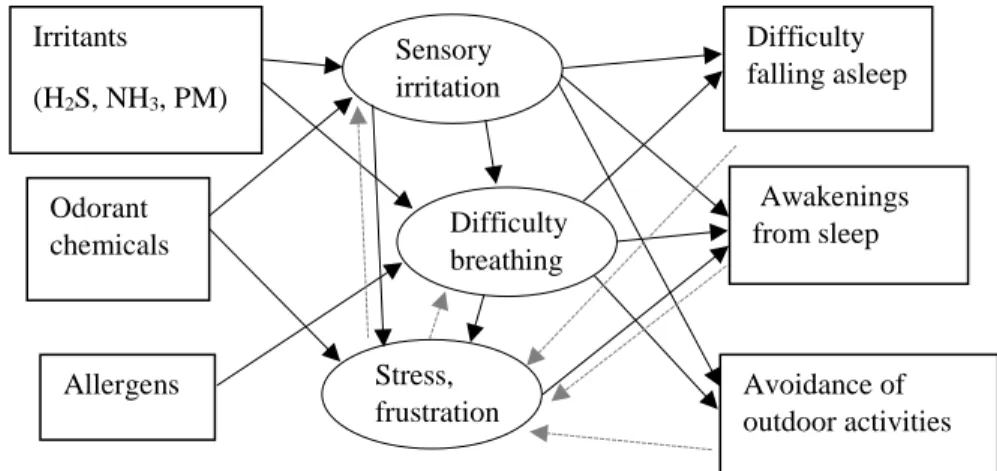
Exposure to ILO pollutants is associated with three main categories of health effects and symptoms of disease that could impact sleep duration and outdoor activity: sensory
irritation75,120,121, difficulty breathing33,34,37,38,75, and psychological stress77,122 (Figure 1.2,
below). Disrupted breathing can make falling asleep difficult123, cause awakenings from sleep124,
interfere with outdoor activities125, and produce psychological stress77,122,126.
Figure 1.2. Relationship between exposures, potential effects, and mediating factors. Dotted grey arrows show feedback effects, which are difficult to model using traditional methods.
Awakenings from sleep
Avoidance of outdoor activities
Difficulty falling asleep
Difficulty breathing Sensory irritation
Stress, frustration Odorant
chemicals
7
Studies of communities exposed to ILO pollutants have documented sensory effects consistent with olfactory and trigeminal nerve irritation127 and nausea71,75, burning nose and
eyes70,71,75, and headaches70. These effects could make sleeping difficult. Disease symptoms, the cultural and psychological meanings of malodor122,128, the inability to control odors, and
interference with outdoor functional physical activity and exercise80 could also make falling asleep more difficult and influence sleep schedules. Exposure to ammonia odorants like those found in swine ILO pollutants have long been known to cause awakenings from sleep; this property is exploited in the clinical context with the use of smelling salts129.
Swine ILO Air Emissions and Time Outdoors
This work also aims to quantify the impacts of swine ILO emissions on time outdoors. Outdoor activities are an important site for leisure-time and functional physical activity for rural residents, who typically have poor access to indoor facilities like gymnasiums and indoor swimming pools130. Rural residents of the U.S. South report more barriers to physical activity and less frequent physical activity131–135. Similarly, low-income and Black neighborhoods like those where swine ILOs are concentrated are less likely to have indoor exercise facilities136. Physical activity is important for quality of life and lack of physical activity is well-known as risk factor for many diseases including diabetes, heart attack, stroke, and cancer. Physical
8
but also an important component of quality-of-life144–146. Particularly in rural contexts, outdoor activities have important implications for health promotion and disease prevention. Rural populations rely on the outdoors for gardening, hunting, fishing, and raising animals to improve access to nutritious foods80. Time spent outdoors is an important venue for relaxation, reflection, and stress reduction in the general population, but has a special meaning to those who grew up and live “in the country”80. Because rural homes often lack central heating and air conditioning
due to their age or design, many rural residents cool their homes in summer months by opening windows – an economically and environmentally sustainable solution that relies on access to clean air. Rural neighborhoods also rely on the outdoors as a space for holding social, cultural, and religious gatherings – which strengthen and enrich both individual and community lives147.
Estimating Feedback Effects in Modern Epidemiology
Methods for estimating the acute effects of exposure are well developed in epidemiology. In contrast, estimating the total effects of repeated, mutually-influencing exposures and
outcomes in epidemiology has proven a difficult problem. In the context of repeated exposures to swine ILO air emissions, a person’s experiences of sleep, outdoor activity, and environmental
9
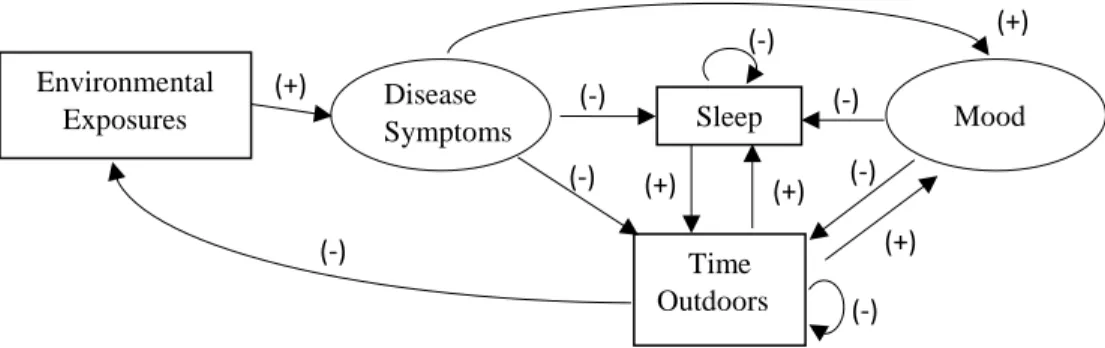
subsequent days as potential tertiary effects. A model version of this system is shown in Figure 1.3.
Figure 1.3. Schematic diagram of potential relationships between sleep, outdoor activity, and ILO pollutant exposure. Arrows in this diagram represent effects at a later time point; an equivalent directed acyclic graph (DAG) can be created by drawing a copy of the diagram for each time point t and drawing each arrow from ti to ti+1 (see Figure 1.4, below).
Feedback processes are ubiquitous in nature for example, predator-prey dynamics and biological homeostasis – and thus in the study of nature through the biological, medical, physical, chemical, social, and ecological sciences148 from which public health knowledge is
derived. In epidemiology, feedback has been studied in the context of epidemics, where agent-based (stochastic) and compartmental (differential) approaches have been used to model diffusion of effects between units149; the general problem of effect diffusion between units of study has been considered as interference in the context of infectious disease150.
Causal reasoning about systems with feedback has proven difficult in modern epidemiology. This paradigm uses insights from graph theory to reduce complex causal relationships to the simpler problem of comparing outcome distributions among
otherwise-(+) (+)
(+) (-)
(+)
(-)
(-)
(-)
Sleep Environmental
Exposures Disease Symptoms Mood
(-)
(-) (+)
(-)
10
similar exposed and unexposed populations. Practically, this amounts to identifying the most appropriate set nuisance factors (“confounders”) that must be included in a data transformation
step to make the observed data comparable across exposure categories; popular methods of transformation include participant exclusion, stratification, covariate adjustment, standardization, matching, and weighting. The approach has proven effective for estimating short-term causal effects, but faces limitations in describing complex systems151. In the broader context of graph theory, the modern epidemiological approach for selecting adjustment sets is equivalent to the problem of identifying the Markov blanket associated with a particular exposure-outcome relationship if interest152.
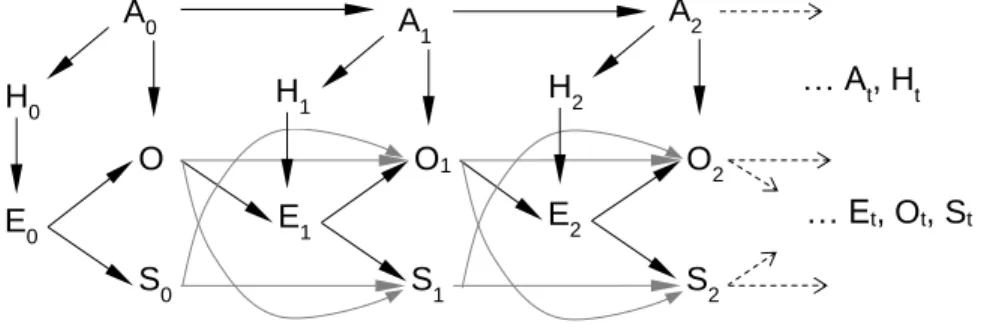
The acute effects of swine ILO emissions exposures on sleep and time outdoors can be assessed using standard epidemiological analysis and repeated measurements data with a few simplifying assumptions (Figure 1.4). The results of this approach are detailed in Chapters 2 and 3. These estimates result from comparing time periods with different exposure and outcome values within participants and are robust to potential confounding biases due to differences between individuals or from time-varying confounders (due to adjustment by time of day).
Figure 1.4: Feedback effects can be summarized as a Markov process by a time-indexed directed acyclic graph. Atmospheric conditions (A) influence hog emissions (H) and
participants’ time outdoors (O). Hog emissions in turn influence participants’ Exposures (E),
S0 E0
O
S1 E1
O1
S2 E
2
O2
… Et, Ot, St
H1
H0 H2
A1 A
0 A2
11
which directly influence future values of time outdoors (O) and sleep (S). Values of outdoors influence future values of outdoors, sleep, and exposure; sleep values influence future values of outdoors and sleep. The acute effects of exposure can be estimated using traditional
epidemiological methods.
The limitation of the traditional model in this context is the potential for inaccurate characterization of chronic effects of repeated exposures, which might differ from the sum of individual observed acute effects. If the effect measures observed in periods later in the study are influenced by measures from earlier periods in the study, the overall estimate of acute effect will be biased, although the extent of this bias will depend on several factors including the strength of association between values of the outcome measure as subsequent times. The aim of this
dissertation is to estimates average acute effects in a chronically-exposed population, rather than the effect of cumulative chronic exposure in an unexposed population.
To address this limitation, this dissertation used dynamic Bayesian networks, which have seen use in addressing feedback in other contexts. Like the standard epidemiology approach, this approach is guided by a directed acyclic graph but aims to simultaneously estimate multiple parameters. Using these learned parameters, the network can be used to estimate chronic effects by comparing exposure specified exposure regimes – for instance the observed exposures and a counterfactual situation of no exposure. Let the estimation of this effect (of exposure
immediately following values of sleep and outdoors) be indicated by the simplified notation
𝐸𝑡 ? → 𝑆𝑡+1
𝐸𝑡 ? → 𝑂𝑡+1
12
are not represented by arrows in a directed acyclic graph. Consider the effects of a single
exposure on subsequent sleep occurring in a following window of length 𝑘, offset from exposure by time ℎ:
𝐸𝑡 ?
→ ∑ 𝑂𝑖 𝑘
𝑖=ℎ
This measure could indicate the effect of a single hour’s exposure on total sleep during the next 8 hours for 𝑘 = 8 and ℎ = 1. Alternatively, consider the total impact of exposures across several time periods on one outcome:
∑ 𝐸𝑖
𝑘
𝑖=ℎ ? → 𝑂𝑡
These example measures estimate the effect of one exposure on multiple outcomes, or of one outcome on multiple exposures. A further formulation considers the effect of exposure regimes (multiple exposures across time) on outcome regimes (multiple, temporally-intersecting
outcomes)
∑ 𝐸𝑖
𝑤
𝑖=0 ?
→ ∑ 𝑂𝑗 𝑘
𝑗=ℎ
13
model estimating the single effect of multiple averaged exposures might also see a reduced estimate of impact (below 1 hour) because the averaged exposure windows would become more similar and might include exposure terms influenced by one another.
This dynamic Bayesian network approach can directly estimate this quantity by comparing the expected outcome distribution under different exposure regimes. Conditional probabilities can be used to perform sequential inference and estimate the total impact of a specified exposure regime. This approach could have wider applicability to other epidemiology studies that using repeated measures of interrelated individual states in the presence of time-dependent confounding.
Swine ILOs and Environmental Justice
Swine ILOs in North Carolina are concentrated in rural, poor, and Black communities12. Residents of these communities are more susceptible to environmental exposures because they have higher burdens of chronic disease, fewer health-promoting resources, and poorer access to disease mitigation services153,154. In North Carolina and the U.S. South, race and social class are
tightly intertwined. This relationship can be traced to history; Black Americans have been economically exploited by Whites for over 300 years155. Despite being emancipated by the federal government in the mid-19th century, Black slaves and their descendants have faced an evolving system of exploitation perpetrated by the descendants of enslavers and their White allies. Components of this system have included convict-lease programs156 coupled with the
14
chances of Black Americans163. Exploitation has also been met with resistance: community organizing efforts beginning with the abolitionist movement and slave resistance networks have evolved through the Freedman’s, Civil Rights, and the recently-developed Black Lives Matter164
movement.
Health and disease disparities between Black and non-Black populations in the United States have been well documented. Blacks face more life stressors – both at home and at work – including discrimination165 in housing, education, and employment. Black populations face
higher prevalence and severity of chronic diseases – including diabetes, kidney disease, cancer, and cardiovascular disease; unjustly, Black patients also receive poorer care for chronic disease and have higher associated mortality rates. In the context of the present research, Black
populations score more poorly on measures of quality of life, sleep duration, nutrition, and physical activity compared to Whites166. In the historical context, disrupted Black sleep – and the
very concept of an inherently different pattern to Black sleep – is rooted in the use of sleep environments as a weapon to control slaves167. Racial differences in sleep duration and quality have been considered as fundamental causes of health disparities in the U.S., particularly for cardiovascular outcomes168.
15
coping with poverty typically requires sacrificing or compromising on these important expenditures – each of which can be important to health and quality of life.
Swine ILOs are also concentrated in rural areas, which have been historically
underserved by public health services, facing shortages of healthcare facilities, providers, and funding170. Rural areas consistently score poorly on population health indicators170,171.
Communities in rural areas are experiencing social transitions that create health challenges172: a shift to corporate agriculture, job loss, outmigration of young and working people, and poorer access to nutritious food173.
In parallel to these environmental justice issues, the problems presented by hog ILOs have proven resistant to public health intervention, partially because of the strength and economic importance of the North Carolina’s hog industry. Community members are often employed by or have family members employed by the industry, and local governments can be influenced by the industry’s presence on boards, relationships with sheriff’s departments, and
health departments174. Institutions that might assist communities in finding solutions, including public universities, might also have conflicts of interest based on their economic and political relationship to the industry175. These relationships can make community members doubt the claim that public institutions value their interests, rather than the interests of the industry, and can make research engagement challenging.
16
impacted by ILOs, but scientific research can also be an important form of evidence in environmental justice court cases176.
Improved hog waste treatment methods exist and continue to be actively developed177,178. But without a legal mandate for their use, these systems have not been widely implemented because their use feasibility has been assessed based on the costs to producers alone179, without consideration of potential health or environmental impacts. These health and environmental costs of improper waste disposal are externalities of prodution180 – an economic subsidy that creates
higher profits for ILO industry at the public’s expense. While the State of North Carolina offers cost-sharing for lagoon conversions programs, the program typically only supports two or three (of the state’s over 2,000) system conversions per year181.
Although externalities of production have been addressed through policies including taxes, production rules, and offsets, purely market-based solutions have also been proposed and have become more popular in the current political climate. Similar to policy interventions, these solutions require more transparency in production so that the market can reflect the true costs of production182. For example, disclosure of production costs including avoidance of pesticides and additives, fair labor practices, and appropriate animal stewardship can be appealing to consumers and help pressure other firms to adopt similar practices.
A holistic quantification of the health effects of swine ILO emissions is therefore important for community, industry, policy, and market-based changes that could improve the public’s health by reducing exposures to swine ILO pollutants. Scientific evidence about the
17
REFERENCES
1. MacDonald JM, McBride WD. The transformation of US livestock agriculture scale, efficiency, and risks. Economic Information Bulletin. 2009;(43).
2. National Agricultural Statistics Service. 2012 Census of Agriculture - State Data: Table 19. Hogs and Pigs - Inventory: 2012 and 2007.
3. North Carolina Field Office NASS. News Release: June 2016 Hog Report. June 2016. 4. National Agricultural Statistics Service. 2012 Census of Agriculture Highlights: Hog and Pig Farming. June 2014.
5. Furuseth OJ. Restructuring of Hog Farming in North Carolina: Explosion and Implosion. The Professional Geographer. 1997;49(4):391-403. doi:10.1111/0033-0124.00086
6. Edwards B, Ladd AE. Environmental justice, swine production and farm loss in North Carolina. Sociological Spectrum. 2000;20(3):263–290.
7. Key N, McBride W. The changing economics of US hog production. USDA Agricultural Research Service. 2007.
8. Starmer E, Wise TA. Living High on the Hog: Factory Farms, Federal Policy, and the Structural Transformation of Swine Production. Tufts University; 2007. Accessed August 11, 2015.
9. Gerrits RJ, Lunney JK, Johnson LA, et al. Perspectives for artificial insemination and genomics to improve global swine populations. Theriogenology. 2005;63(2):283–299.
10. Key N, McBride WD. Sub-therapeutic antibiotics and the efficiency of US hog farms. American Journal of Agricultural Economics. 2014;96(3):831–850.
11. McBride WD, Key N. Economic and structural relationships in US hog production. 2003. 12. Wing S, Cole D, Grant G. Environmental injustice in North Carolina’s hog industry. Environmental Health Perspectives. 2000;108(3):225.
13. Donham KJ, Rubino M, Thedell TD, Kammermeyer J. Potential health hazards to agricultural workers in swine confinement buildings. Journal of Occupational and Environmental Medicine. 1977;19(6):383–387.
14. Duke Center on Globalization, Governance, and Competitiveness. NC Hog Farming. North Carolina in the Global Economy: Hog Farming. Accessed October 13, 2018.
15. McCurdy SA, Carroll DJ. Agricultural injury. American Journal of Industrial Medicine. 2000;38(4):463-480.
16. Smithfield Foods, Inc. Smithfield Foods 10-K.
18
17. Kuo L. The world eats cheap bacon at the expense of North Carolina’s rural poor. Quartz. Accessed August 14, 2015.
18. Mikesell RE, Kephart KB, Abdalla CW. Overview of Social Issues Related to the Swine Industry. Illinois Livestock Trail. Accessed August 11, 2015.
19. Lado ME, D’Ambrosio J. Complaint Under Title VI of the Civil Rights Act of 1964, 42 U.S.C. § 2000d, 40 C.F.R. Part 7. September 2014.
20. Lim T-T, Heber AJ, Ni J-Q, Sutton AL, Shao P. Odor and gas release from anaerobic treatment lagoons for swine manure. Journal of environmental quality. 2003;32(2):406–416. 21. Lovanh N, Loughrin JH, Cook K, Rothrock M, Sistani K. The effect of stratification and seasonal variability on the profile of an anaerobic swine waste treatment lagoon. Bioresource technology. 2009;100(15):3706–3712.
22. Green CF, Gibbs SG, Tarwater PM, Mota LC, Scarpino PV. Bacterial plume emanating from the air surrounding swine confinement operations. Journal of occupational and
environmental hygiene. 2006;3(1):9–15.
23. Millner PD. Bioaerosols associated with animal production operations. Bioresource Technology. 2009;100(22):5379-5385.
24. Wing S, Horton RA, Marshall SW, et al. Air pollution and odor in communities near industrial swine operations. Environ Health Perspect. 2008;116(10):1362–1368.
25. Heaney CD, Myers K, Wing S, Hall D, Baron D, Stewart JR. Source tracking swine fecal waste in surface water proximal to swine concentrated animal feeding operations. Sci Total Environ. 2015;511:676-683.
26. Schiffman SS, Bennett JL, Raymer JH. Quantification of odors and odorants from swine operations in North Carolina. Agricultural and Forest Meteorology. 2001;108(3):213–240. 27. Slager RE, Allen-Gipson DS, Sammut A, et al. Hog barn dust slows airway epithelial cell migration in vitro through a PKCα-dependent mechanism. American Journal of Physiology-Lung Cellular and Molecular Physiology. 2007;293(6):L1469–L1474.
28. Wyatt TA, Sisson JH, Von Essen SG, Poole JA, Romberger DJ. Exposure to hog barn dust alters airway epithelial ciliary beating. European Respiratory Journal. 2008;31(6):1249– 1255.
29. Tian C, Shao CH, Fenster DS, et al. Chloroform extract of hog barn dust modulates skeletal muscle ryanodine receptor calcium-release channel (RyR1). Journal of Applied Physiology. 2010;109(3):830–839.
19
31. Rubinstein I, Von Essen SG. Hog barn dust extract increases macromolecular efflux from the hamster cheek pouch. Journal of Applied Physiology. 2006;101(1):128–134.
32. Gamage LNA, Charavaryamath C, Swift TL, Singh B. Lung inflammation following a single exposure to swine barn air. J Occup Med Toxicol. 2007;2:18.
33. Charavaryamath C, Keet T, Aulakh GK, Townsend HG, Singh B. Lung responses to secondary endotoxin challenge in rats exposed to pig barn air. Journal of Occupational Medicine and Toxicology. 2008;3(1):24.
34. Donham KJ, Zavala DC, Merchant JA. Respiratory symptoms and lung function among workers in swine confinement buildings: a cross-sectional epidemiological study. Archives of Environmental Health: An International Journal. 1984;39(2):96–101.
35. Donham K, Haglind P, Peterson Y, Rylander R, Belin L. Environmental and health studies of farm workers in Swedish swine confinement buildings. British journal of industrial medicine. 1989;46(1):31–37.
36. Donham KJ. Health effects from work in swine confinement buildings. Am J Ind Med. 1990;17(1):17–25.
37. Bongers P, Houthuijs D, Remijn B, Brouwer R, Biersteker K. Lung function and respiratory symptoms in pig farmers. British journal of industrial medicine. 1987;44(12):819– 823.
38. Haglind P, Rylander R. Occupational exposure and lung function measurements among workers in swine confinement buildings. Journal of Occupational and Environmental Medicine. 1987;29(11):904–907.
39. Holness DL, O’Blenis EL, Sass-Kortsak A, Pilger C, Nethercott JR. Respiratory effects and dust exposures in hog confinement farming. American journal of industrial medicine. 1987;11(5):571–580.
40. Viegas S, Mateus V, Almeida-Silva M, Carolino E, Viegas C. Occupational exposure to particulate matter and respiratory symptoms in portuguese Swine barn workers. Journal of Toxicology and Environmental Health, Part A. 2013;76(17):1007–1014.
41. Zejda JE, Hurst TS, Rhodes CS, Barber EM, McDuffie HH, Dosman JA. Respiratory health of swine producers. Focus on young workers. CHEST Journal. 1993;103(3):702–709. 42. Cormier Y, Boulet L-P, Bedard G, Tremblay G. Respiratory health of workers exposed to swine confinement buildings only or to both swine confinement buildings and dairy barns. Scandinavian journal of work, environment & health. 1991:269–275.
43. Heederik D, Brouwer R, Biersteker K, Boleij JS. Relationship of airborne endotoxin and bacteria levels in pig farms with the lung function and respiratory symptoms of farmers.
20
44. Zuskin E, Zagar Z, Schachter EN, Mustajbegovic J, Kern J. Respiratory symptoms and ventilatory capacity in swine confinement workers. British journal of industrial medicine. 1992;49(6):435–440.
45. Choudat D, Goehen M, Korobaeff M, Boulet A, Dewitte JD, Martin MH. Respiratory symptoms and bronchial reactivity among pig and dairy farmers. Scandinavian journal of work, environment & health. 1994:48–54.
46. Von Essen SG, Scheppers LA, Robbins RA, Donham KJ. Respiratory tract inflammation in swine confinement workers studied using induced sputum and exhaled nitric oxide. Clinical Toxicology. 1998;36(6):557–565.
47. Wilhelmsson J, Bryngelsson I-L, Ohlson C-G. Respiratory symptoms among Swedish swine producers. American journal of industrial medicine. 1989;15(3):311–318.
48. Dosman JA, Graham BL, Hall D, et al. Respiratory symptoms and alterations in pulmonary function tests in swine producers in Saskatchewan: results of a survey of farmers. Journal of Occupational and Environmental Medicine. 1988;30(9):715–720.
49. Zhou C, Hurst TS, Cockcroft DW, Dosman JA. Increased airways responsiveness in swine farmers. CHEST Journal. 1991;99(4):941–944.
50. Vogelzang PF, van der GULDEN JW, FOLGERING H, et al. Endotoxin exposure as a major determinant of lung function decline in pig farmers. American journal of respiratory and critical care medicine. 1998;157(1):15–18.
51. Malmberg P, Larsson K. Acute exposure to swine dust causes bronchial
hyperresponsiveness in healthy subjects. European Respiratory Journal. 1993;6(3):400–404. 52. Larsson KA, Eklund AG, Hansson L-O, Isaksson B-M, Malmberg PO. Swine dust causes intense airways inflammation in healthy subjects. American journal of respiratory and critical care medicine. 1994;150(4):973–977.
53. Wang Z, Malmberg P, Larsson P, Larsson B-M, Larsson K. Time course of interleukin-6 and tumor necrosis factor-alpha increase in serum following inhalation of swine dust. American journal of respiratory and critical care medicine. 1996;153(1):147–152.
54. Zhiping W, Malmberg P, Larsson B-M, Larsson K, Larsson L, Saraf A. Exposure to bacteria in swine-house dust and acute inflammatory reactions in humans. American journal of respiratory and critical care medicine. 1996;154(5):1261–1266.
55. Cormier Y, Duchaine C, Israel-Assayag E, Bedard G, Laviolette M, Dosman J. Effects of repeated swine building exposures on normal naive subjects. European Respiratory Journal. 1997;10(7):1516–1522.
21
57. Wang Z, Larsson K, Palmberg L, Malmberg P, Larsson P, Larsson L. Inhalation of swine dust induces cytokine release in the upper and lower airways. European Respiratory Journal. 1997;10(2):381–387.
58. Wang Z, Manninen A, Malmberg P, Larsson K. Inhalation of swine-house dust increases the concentrations of interleukin-1 beta (IL-1β) and interleukin-1 receptor antagonist (IL-1ra) in peripheral blood. Respiratory medicine. 1998;92(8):1022–1027.
59. Kölbeck K-G, Ehnhage A, Juto J-E, et al. Airway reactivity and exhaled NO following swine dust exposure in healthy volunteers. Respiratory medicine. 2000;94(11):1065–1072. 60. Kölbeck K-G, Sardh E, Gyllenhammar H, Palmberg L, Larsson K, Palmblad J.
Modulation of plasma levels of soluble adhesion molecules and nitric oxide in healthy volunteers by exposure to swine dust. Inflammation. 2002;26(6):291–296.
61. Sundblad B-M, Palmberg L, Larsson K. Bronchial responsiveness to eucapnic hyperventilation and methacholine following exposure to organic dust. CHEST Journal. 2002;122(1):363–368.
62. Sundblad M, Larsson M, Palmberg L, Larsson K, others. Exhaled nitric oxide and bronchial responsiveness in healthy subjects exposed to organic dust. European Respiratory Journal. 2002;20(2):426–431.
63. Acevedo F, Palmberg L, Larsson K. Exposure to organic dust causes activation of human plasma complement factors C3 and B and the synthesis of factor C3 by lung epithelial cells in vitro. Inflammation. 2005;29(1):39–45.
64. Schiffman SS, Studwell CE, Landerman LR, Berman K, Sundy JS. Symptomatic effects of exposure to diluted air sampled from a swine confinement atmosphere on healthy human subjects. Environmental health perspectives. 2005:567–576.
65. Létourneau V, Nehmé B, Mériaux A, Massé D, Cormier Y, Duchaine C. Human
pathogens and tetracycline-resistant bacteria in bioaerosols of swine confinement buildings and in nasal flora of hog producers. International journal of hygiene and environmental health. 2010;213(6):444–449.
66. Blanes-Vidal V, Hansen MN, Adamsen APS, Feilberg A, Petersen SO, Jensen BB. Characterization of odor released during handling of swine slurry: Part I. Relationship between odorants and perceived odor concentrations. Atmospheric Environment. 2009;43(18):2997–3005. 67. Kawabata A, Ishiki T, Nagasawa K, et al. Hydrogen sulfide as a novel nociceptive
messenger. Pain. 2007;132(1-2):74–81.
68. Licon CC, Manesse C, Dantec M, Fournel A, Bensafi M. Pleasantness and trigeminal sensations as salient dimensions in organizing the semantic and physiological spaces of odors. Scientific reports. 2018;8(1):8444.
22
70. Wing S, Wolf S. Intensive livestock operations, health, and quality of life among eastern North Carolina residents. Environmental health perspectives. 2000;108(3):233.
71. Bullers S. Environmental stressors, perceived control, and health: the case of residents near large-scale hog farms in eastern North Carolina. Human Ecology. 2005;33(1):1–16. 72. Mirabelli MC, Wing S, Marshall SW, Wilcosky TC. Asthma symptoms among
adolescents who attend public schools that are located near confined swine feeding operations. Pediatrics. 2006;118(1):e66–e75.
73. Sigurdarson ST, Kline JN. School proximity to concentrated animal feeding operations and prevalence of asthma in students. CHEST Journal. 2006;129(6):1486–1491.
74. Pavilonis BT, Sanderson WT, Merchant JA. Relative exposure to swine animal feeding operations and childhood asthma prevalence in an agricultural cohort. Environmental research. 2013;122:74–80.
75. Schinasi L, Horton RA, Guidry VT, Wing S, Marshall SW, Morland KB. Air Pollution, Lung Function, and Physical Symptoms in Communities Near Concentrated Swine Feeding Operations: Epidemiology. 2011;22(2):208-215.
76. Avery RC, Wing S, Marshall SW, Schiffman SS. Odor from industrial hog farming operations and mucosal immune function in neighbors. Archives of Environmental Health: An International Journal. 2004;59(2):101–108.
77. Schiffman SS, Miller EAS, Suggs MS, Graham BG. The effect of environmental odors emanating from commercial swine operations on the mood of nearby residents. Brain research bulletin. 1995;37(4):369–375.
78. Wing S, Horton RA, Rose KM. Air pollution from industrial swine operations and blood pressure of neighboring residents. Environ Health Perspect. 2013;121(1):92–96.
79. Sneeringer S. Does animal feeding operation pollution hurt public health? A national longitudinal study of health externalities identified by geographic shifts in livestock production. American Journal of Agricultural Economics. 2009;91(1):124–137.
80. Tajik M, Muhammad N, Lowman A, Thu K, Wing S, Grant G. Impact of odor from industrial hog operations on daily living activities. New Solutions: A Journal of Environmental and Occupational Health Policy. 2008;18(2):193–205.
81. Bellesi M, Bushey D, Chini M, Tononi G, Cirelli C. Contribution of sleep to the repair of neuronal DNA double-strand breaks: evidence from flies and mice. Scientific Reports. 2016;6. Accessed January 26, 2017.
82. Stickgold R. Sleep-dependent memory consolidation. Nature. 2005;437(7063):1272– 1278.
23
84. Hirshkowitz M, Whiton K, Albert SM, et al. National Sleep Foundation’s updated sleep duration recommendations: final report. Sleep Health. 2015;1(4):233-243.
doi:10.1016/j.sleh.2015.10.004
85. Gildner TE, Liebert MA, Kowal P, Chatterji S, Josh Snodgrass J. Sleep duration, sleep quality, and obesity risk among older adults from six middle-income countries: Findings from the study on global ageing and adult health (SAGE). American Journal of Human Biology. 2014;26(6):803–812.
86. Ohkuma T, Fujii H, Iwase M, et al. U-shaped association of sleep duration with
metabolic syndrome and insulin resistance in patients with type 2 diabetes: the Fukuoka Diabetes Registry. Metabolism. 2014;63(4):484–491.
87. Stamatakis KA, Brownson RC. Sleep duration and obesity-related risk factors in the rural Midwest. Preventive medicine. 2008;46(5):439–444.
88. Park SE, Kim HM, Kim DH, Kim J, Cha BS, Kim DJ. The association between sleep duration and general and abdominal obesity in Koreans: data from the Korean National Health and Nutrition Examination Survey, 2001 and 2005. Obesity. 2009;17(4):767–771.
89. Buxton OM, Marcelli E. Short and long sleep are positively associated with obesity, diabetes, hypertension, and cardiovascular disease among adults in the United States. Social science & medicine. 2010;71(5):1027–1036.
90. Shankar A, Syamala S, Kalidindi S. Insufficient Rest or Sleep and Its Relation to Cardiovascular Disease, Diabetes and Obesity in a National, Multiethnic Sample. PLOS ONE. 2010;5(11):e14189.
91. Hsieh SD, Muto T, Murase T, Tsuji H, Arase Y. Association of short sleep duration with obesity, diabetes, fatty liver and behavioral factors in Japanese men. Internal Medicine.
2011;50(21):2499–2502.
92. Altman NG, Izci-Balserak B, Schopfer E, et al. Sleep duration versus sleep insufficiency as predictors of cardiometabolic health outcomes. Sleep Medicine. 2012;13(10):1261-1270. 93. Ohkuma T, Fujii H, Iwase M, et al. Impact of Sleep Duration on Obesity and the Glycemic Level in Patients With Type 2 Diabetes The Fukuoka Diabetes Registry. Diabetes Care. 2013;36(3):611–617.
94. Yi S, Nakagawa T, Yamamoto S, et al. Short sleep duration in association with CT-scanned abdominal fat areas: the Hitachi Health Study. International Journal of Obesity. 2013;37(1):129–134.
95. Kita T, Yoshioka E, Satoh H, et al. Short sleep duration and poor sleep quality increase the risk of diabetes in Japanese workers with no family history of diabetes. Diabetes care. 2012;35(2):313–318.
24
97. Miller MA, Cappuccio FP. Inflammation, sleep, obesity and cardiovascular disease. Current vascular pharmacology. 2007;5(2):93–102.
98. Amagai Y, Ishikawa S, Gotoh T, Kayaba K, Nakamura Y, Kajii E. Sleep Duration and Incidence of Cardiovascular Events in a Japanese Population: The Jichi Medical School Cohort Study. Journal of Epidemiology. 2010;20(2):106-110. doi:10.2188/jea.JE20090053
99. Hoevenaar-Blom MP, Spijkerman AM, Kromhout D, van den Berg JF, Verschuren WM. Sleep duration and sleep quality in relation to 12-year cardiovascular disease incidence: the MORGEN study. Sleep. 2011;34(11):1487–1492.
100. Leger D, Bayon V, Ohayon MM, et al. Insomnia and accidents: cross-sectional study (EQUINOX) on sleep-related home, work and car accidents in 5293 subjects with insomnia from 10 countries. Journal of sleep research. 2014;23(2):143–152.
101. Choi S-W, Peek-Asa C, Sprince NL, et al. Sleep quantity and quality as a predictor of injuries in a rural population. The American journal of emergency medicine. 2006;24(2):189– 196.
102. Zeitlhofer J, Schmeiser-Rieder A, Tribl G, et al. Sleep and quality of life in the Austrian population. Acta Neurologica Scandinavica. 2000;102(4):249–257.
103. LeBlanc M, Beaulieu-Bonneau S, Mérette C, Savard J, Ivers H, Morin CM.
Psychological and health-related quality of life factors associated with insomnia in a population-based sample. Journal of Psychosomatic Research. 2007;63(2):157-166.
104. Faubel R, Lopez-Garcia E, Guallar-Castillón P, et al. Sleep duration and health-related quality of life among older adults: a population-based cohort in Spain. Sleep. 2009;32(8):1059– 1068.
105. Ramsawh HJ, Stein MB, Belik S-L, Jacobi F, Sareen J. Relationship of anxiety disorders, sleep quality, and functional impairment in a community sample. Journal of Psychiatric
Research. 2009;43(10):926-933.
106. Fortier-Brochu É, Beaulieu-Bonneau S, Ivers H, Morin CM. Relations between sleep, fatigue, and health-related quality of life in individuals with insomnia. Journal of Psychosomatic Research. 2010;69(5):475-483.
107. Magee CA, Caputi P, Iverson DC. Relationships between self-rated health, quality of life and sleep duration in middle aged and elderly Australians. Sleep medicine. 2011;12(4):346–350. 108. Kakizaki M, Kuriyama S, Sone T, et al. Sleep duration and the risk of breast cancer: the Ohsaki Cohort Study. British journal of cancer. 2008;99(9):1502.
25
111. Alvarez GG, Ayas NT. The impact of daily sleep duration on health: a review of the literature. Progress in cardiovascular nursing. 2004;19(2):56–59.
112. Drake CL, Roehrs T, Richardson G, Walsh JK, Roth T. Shift work sleep disorder: prevalence and consequences beyond that of symptomatic day workers. Sleep. 2004;27(8):1453– 1462.
113. Buxton OM, Cain SW, O’connor SP, et al. Adverse metabolic consequences in humans of prolonged sleep restriction combined with circadian disruption. Science translational
medicine. 2012;4(129):129ra43–129ra43.
114. Fuller PM, Gooley JJ, Saper CB. Neurobiology of the Sleep-Wake Cycle: Sleep Architecture, Circadian Regulation, and Regulatory Feedback. Journal of Biological Rhythms. 2006;21(6):482-493.
115. Riemann D, Spiegelhalder K, Feige B, et al. The hyperarousal model of insomnia: A review of the concept and its evidence. Sleep Medicine Reviews. 2010;14(1):19-31.
doi:10.1016/j.smrv.2009.04.002
116. Bonnet MH, Arand DL. Hyperarousal and insomnia: State of the science. Sleep Medicine Reviews. 2010;14(1):9-15. doi:10.1016/j.smrv.2009.05.002
117. Kant GJ, Pastel RH, Bauman RA, et al. Effects of chronic stress on sleep in rats. Physiology & behavior. 1995;57(2):359–365.
118. Winwood PC, Lushington K. Disentangling the effects of psychological and physical work demands on sleep, recovery and maladaptive chronic stress outcomes within a large sample of Australian nurses. Journal of advanced nursing. 2006;56(6):679–689.
119. Âkerstedt T. Psychosocial stress and impaired sleep. Scandinavian journal of work, environment & health. 2006:493–501.
120. Nielsen GD ard. Mechanisms of activation of the sensory irritant receptor by airborne chemicals. Critical reviews in toxicology. 1991;21(3):183–208.
121. Smeets MAM, Dalton PH. Evaluating the human response to chemicals: odor, irritation and non-sensory factors. Environmental Toxicology and Pharmacology. 2005;19(3):581-588. 122. Horton RA, Wing S, Marshall SW, Brownley KA. Malodor as a trigger of stress and negative mood in neighbors of industrial hog operations. Am J Public Health. 2009;99(suppl 3):S610–S615.
123. Gottlieb DJ, Whitney CW, Bonekat WH, et al. Relation of sleepiness to respiratory disturbance index: the Sleep Heart Health Study. American journal of respiratory and critical care medicine. 1999;159(2):502–507.
26
125. Donaldson GC, Wilkinson TM, Hurst JR, Perera WR, Wedzicha JA. Exacerbations and time spent outdoors in chronic obstructive pulmonary disease. American journal of respiratory and critical care medicine. 2005;171(5):446–452.
126. Kilburn KH. Human impairment from living near confined animal (hog) feeding operations. Journal of environmental and public health. 2012;2012.
127. Hummel T, Livermore A. Intranasal chemosensory function of the trigeminal nerve and aspects of its relation to olfaction. International archives of occupational and environmental health. 2002;75(5):305–313.
128. Schiffman SS. Livestock odors: implications for human health and well-being. Journal of animal science-menasha illinois-. 1998;76:1343–1355.
129. McCrory P. Smelling salts. British journal of sports medicine. 2006;40(8):659.
130. Eyler AA, Vest JR. Environmental and policy factors related to physical activity in rural white women. Women & health. 2002;36(2):109–119.
131. Wilcox S, Castro C, King AC, Housemann R, Brownson RC. Determinants of leisure time physical activity in rural compared with urban older and ethnically diverse women in the United States. J Epidemiol Community Health. 2000;54(9):667-672.
132. Wilcox S, Bopp M, Oberrecht L, Kammermann SK, McElmurray CT. Psychosocial and perceived environmental correlates of physical activity in rural and older African American and white women. The Journals of Gerontology Series B: Psychological Sciences and Social
Sciences. 2003;58(6):P329–P337.
133. Martin SL, Kirkner GJ, Mayo K, Matthews CE, Durstine JL, Hebert JR. Urban, rural, and regional variations in physical activity. Age (mean, SD). 2005;47(26.4):46–4.
134. Reis JP, Bowles HR, Ainsworth BE, Dubose KD, Smith S, Laditka JN. Nonoccupational physical activity by degree of urbanization and US geographic region. Medicine and Science in Sports and Exercise. 2004;36(12):2093–2098.
135. Parks SE, Housemann RA, Brownson RC. Differential correlates of physical activity in urban and rural adults of various socioeconomic backgrounds in the United States. J Epidemiol Community Health. 2003;57(1):29-35.
136. Powell LM, Slater S, Chaloupka FJ, Harper D. Availability of Physical Activity–Related Facilities and Neighborhood Demographic and Socioeconomic Characteristics: A National Study. Am J Public Health. 2006;96(9):1676-1680.
137. Loprinzi PD, Loenneke JP. Engagement in muscular strengthening activities is associated with better sleep. Preventive Medicine Reports. 2015;2:927-929.
27
mental health and good objective and subjective sleep in young adults. Physiology & Behavior. 2014;135:17-24.
139. Lang C, Brand S, Feldmeth AK, Holsboer-Trachsler E, Pühse U, Gerber M. Increased self-reported and objectively assessed physical activity predict sleep quality among adolescents. Physiology & Behavior. 2013;120:46-53.
140. Chang JJ, Pien GW, Stamatakis KA, Brownson RC. Association Between Physical Activity and Insomnia Symptoms in Rural Communities of Southeastern Missouri, Tennessee, and Arkansas. The Journal of Rural Health. 2013;29(3):239-247.
141. Reid KJ, Baron KG, Lu B, Naylor E, Wolfe L, Zee PC. Aerobic exercise improves self-reported sleep and quality of life in older adults with insomnia. Sleep medicine. 2010;11(9):934– 940.
142. Brand S, Gerber M, Beck J, Hatzinger M, Pühse U, Holsboer-Trachsler E. High Exercise Levels Are Related to Favorable Sleep Patterns and Psychological Functioning in Adolescents: A Comparison of Athletes and Controls. Journal of Adolescent Health. 2010;46(2):133-141. 143. Passos GS, Poyares D, Santana MG, et al. Effects of moderate aerobic exercise training on chronic primary insomnia. Sleep Medicine. 2011;12(10):1018-1027.
doi:10.1016/j.sleep.2011.02.007
144. Abraham A, Sommerhalder K, Abel T. Landscape and well-being: a scoping study on the health-promoting impact of outdoor environments. International Journal of Public Health. 2010;55(1):59–69.
145. Stigsdotter UK, Ekholm O, Schipperijn J, Toftager M, Kamper-Jørgensen F, Randrup TB. Health promoting outdoor environments-Associations between green space, and health, health-related quality of life and stress based on a Danish national representative survey. Scandinavian journal of public health. 2010;38(4):411–417.
146. Maas J, Verheij RA, de Vries S, Spreeuwenberg P, Schellevis FG, Groenewegen PP. Morbidity is related to a green living environment. Journal of Epidemiology & Community Health. 2009:jech–2008.
147. Glei DA, Landau DA, Goldman N, Chuang Y-L, Rodríguez G, Weinstein M.
Participating in social activities helps preserve cognitive function: an analysis of a longitudinal, population-based study of the elderly. Int J Epidemiol. 2005;34(4):864-871.
148. Levins R, Lewontin R. The Dialetical Biologist. Harvard University Press; 1985. 149. Rahmandad H, Sterman J. Heterogeneity and network structure in the dynamics of diffusion: Comparing agent-based and differential equation models. Management Science. 2008;54(5):998–1014.
28
151. Philippe P, Mansi O. Nonlinearity in the epidemiology of complex health and disease processes. Theoretical medicine and bioethics. 1998;19(6):591–607.
152. Cozman FG. Generalizing variable elimination in Bayesian networks. In: Workshop on Probabilistic Reasoning in Artificial Intelligence. Editora Tec Art São Paulo, Brazil; 2000:27– 32.
153. Lasser KE, Himmelstein DU, Woolhandler S. Access to care, health status, and health disparities in the United States and Canada: results of a cross-national population-based survey. Health Policy: Crisis and Reform in the US Health Care Delivery System. 2008:379.
154. Statistics (US NC for H. Health, United States, 2015: with special feature on racial and ethnic health disparities. 2016.
155. Zinn H. A People’s History of the United States: 1492-Present. Routledge; 2015. 156. Fierce MC. Slavery Revisited: Blacks and the Southern Convict Lease System, 1865-1933. Africana Studies Research Center, Brooklyn College, City University of New York; 1994. 157. Adamson CR. Punishment after slavery: Southern state penal systems, 1865-1890. Social Problems. 1983;30(5):555–569.
158. Dray P. At the Hands of Persons Unknown: The Lynching of Black America. Random House Publishing Group; 2007.
159. Chalmers FG. The origins of racism in the public school art curriculum. Studies in Art Education. 1992;33(3):134–143.
160. Harlan LR. Separate and Unequal: Public School Campaigns and Racism in the Southern Seaboard States, 1901-1915. Univ of North Carolina Press; 2011.
161. Vaught SE. Racism, Public Schooling, and the Entrenchment of White Supremacy: A Critical Race Ethnography. Suny Press; 2011.
162. Angelo L. Wage labour deferred: The recreation of unfree labour in the US South. The Journal of Peasant Studies. 1995;22(4):581–644.
163. Blackmon DA. Slavery by Another Name: The Re-Enslavement of Black Americans from the Civil War to World War II. Anchor; 2009.
164. Rickford R. Black Lives Matter: Toward a Modern Practice of Mass Struggle. New Labor Forum. 2016;25(1):34-42. doi:10.1177/1095796015620171
165. Jones CP. Levels of racism: a theoretic framework and a gardener’s tale. American journal of public health. 2000;90(8):1212.
29
167. Reiss B. Wild Nights: How Taming Sleep Created Our Restless World. Basic Books; 2017.
168. Jackson CL, Redline S, Emmons KM. Sleep as a potential fundamental contributor to disparities in cardiovascular health. Annual review of public health. 2015;36:417–440. 169. Syme SL, Berkman LF. Social class, susceptibility and sickness. American journal of epidemiology. 1976;104(1):1–8.
170. Hartley D. Rural health disparities, population health, and rural culture. American Journal of Public Health. 2004;94(10):1675–1678.
171. Eggebeen DJ, Lichter DT. Health and Well-Being Among Rural Americans: Variations Across the Life Course. The Journal of Rural Health. 1993;9(2):86–98.
172. Phillips CD, McLeroy KR. Health in rural America: remembering the importance of place. American Journal of Public Health. 2004;94(10):1661–1663.
173. Morton LW, Blanchard TC. Starved for access: life in rural America’s food deserts. Rural Realities. 2007;1(4):1–10.
174. Wing S, Horton RA, Muhammad N, Grant GR, Tajik M, Thu K. Integrating
Epidemiology, Education, and Organizing for Environmental Justice: Community Health Effects of Industrial Hog Operations. Am J Public Health. 2008;98(8):1390-1397.
175. Wing S. Social responsibility and research ethics in community-driven studies of industrialized hog production. Environmental Health Perspectives. 2002;110(5):437.
176. Ottinger G, Cohen BR. Technoscience and Environmental Justice: Expert Cultures in a Grassroots Movement. MIT Press; 2011.
177. Vanotti MB, Szogi AA, Hunt PG, Millner PD, Humenik FJ. Development of environmentally superior treatment system to replace anaerobic swine lagoons in the USA. Bioresource Technology. 2007;98(17):3184–3194.
178. Vanotti MB, Szogi AA, Millner PD, Loughrin JH. Development of a second-generation environmentally superior technology for treatment of swine manure in the USA. Bioresource technology. 2009;100(22):5406–5416.
179. Murray BC. Benefits of Adopting Environmentally Superior Swine Waste Management Technologies in North Carolina: An Environmental and Economic Assessment. 2003.
180. Osterberg D, Wallinga D. Addressing externalities from swine production to reduce public health and environmental impacts. American Journal of Public Health.
2004;94(10):1703–1708.
181. Soil & Water Conservation Division - Cost Share Programs.
30
31
CHAPTER 2: AIMS, DESIGN AND METHODS Specific Aims
Swine Industrial Livestock Operations (ILOs) are a significant source of air pollution in eastern North Carolina. The state’s 2,292 permitted swine ILOs1 are concentrated in rural, poor, and Black neighborhoods2 with limited resources and access to public health services. Swine ILOs negatively impact rural life by disrupting outdoor activities3 and causing disease symptoms including respiratory disease4, stress, negative mood5, and increased blood pressure6. This
dissertation fills an important gap in the literature on swine ILO impacts by estimating the effects of ILO pollutant exposures on sleep duration and time outdoors. Sleep is essential for health and the enjoyment of life; less-than-recommended (<7h) sleep duration is associated with mental illness, weight gain, accidents, high blood sugar, high blood pressure, and mortality7 through circadian, stress, and hormonal pathways. Outdoor activities including physical activity, home and vehicle maintenance, gardening, socialization, and relaxation are important to health and quality of life in rural areas hosting swine ILOs3, particularly for children. Quantifying the impact of swine ILO pollutants on sleep duration and time-outdoors is important for developing policies that protect public health and promote responsible agricultural production.
32
facilitate effect estimation in the presence of feedback effects between less-than-recommended sleep duration and time outside. Feedback systems are ubiquitous in nature but have not been extensively studied in epidemiology; if unaccounted for, feedback could bias effect estimates. To improve the state of knowledge of how swine ILOs impact public health and to advance the epidemiological study of dynamic systems, I address the following specific aims:
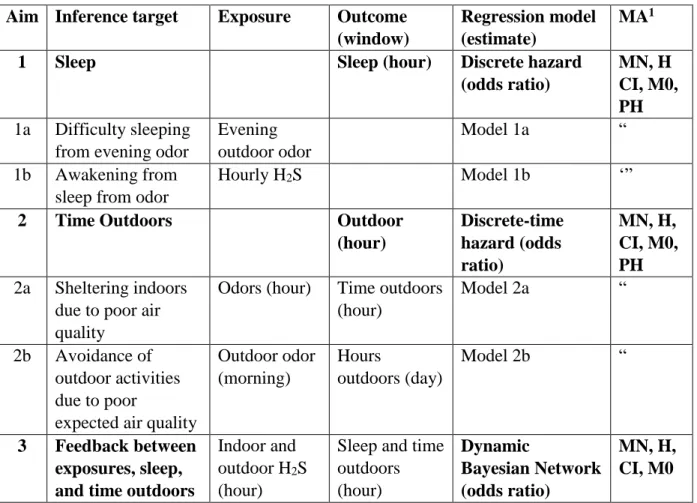
Aim 1 - Association between ambient swine ILO pollutant concentrations and sleep
duration. Using measurements from air monitors, odor diaries, and sleep logs, I investigate two hypotheses about ILO exposure effects on sleep: Greater cumulative ILO odorant exposure during the evening leads to shorter total reported nightly sleep duration the following night
(hypothesis 1a), and exposure to higher ILO odorant concentrations at night leads to a greater
of rate of awakening from sleep (hypothesis 1b) that night.
Aim 2 - Association between ambient swine ILO pollutant concentrations and time outdoors. Using measurements from air monitors, odor diaries, and activity logs, I investigate two hypotheses about ILO exposure effects on time outside: Stronger outdoor odors during morning data collection decrease time outdoors later that day (hypothesis 2a), and time periods
during the day with higher odorant concentrations have a lower proportion of time outdoors
(hypothesis 2b)
33
exposures and outcomes: The estimated total effect of ILO odorant exposures are of greater magnitude when feedback effects are accounted for (hypothesis 3).
This dissertation contributes to the literature on community swine ILO impacts by assessing the effect of exposure to swine ILO air pollutants on sleep duration and time outdoors. A better understanding of these impacts is important for guiding policy and technology
development to protect the health of communities hosting swine ILOs without hindering




![Table 3.2. Distributions [n (%)] of odor ratings, hydrogen sulfide concentration (H 2 S) and sleep, on hourly, daily, and nightly scales](https://thumb-us.123doks.com/thumbv2/123dok_us/8328386.2208726/80.918.106.681.205.669/table-distributions-ratings-hydrogen-sulfide-concentration-hourly-nightly.webp)

