Patient-Reported Outcomes
in Performance Measurement
in Performance Measurement
David Cella, Elizabeth A. Hahn,
Sally E. Jensen, Zeeshan Butt, Cindy J. Nowinski,
Nan Rothrock, Kathleen N. Lohr
Research Triangle Institute. The RTI logo is a registered trademark of Research Triangle Institute.
This work is distributed under the terms of a Creative Commons Attribution-NonCommercial-NoDerivatives 4.0 license (CC BY-NC-ND), a copy of which is available at https://creativecommons.org/licenses/ by-nc-nd/4.0/legalcode.
Any views or opinions presented in this book are solely those of the authors and do not necessarily represent those of RTI International or Northwestern University Feinberg School of Medicine.
Library of Congress Control Number: 2015948921
ISBN 978-1-934831-14-4 (refers to printed version)
RTI Press publication No. BK-0014-1509
https://doi.org/10.3768/rtipress.2015.bk.0014.1509
This publication is part of the RTI Press Book series. RTI International
3040 East Cornwallis Road, PO Box 12194 Research Triangle Park, NC 27709-2194 USA
www.rti.org
tools, and technical expertise to a national and international audience. RTI Press publications are peer-reviewed by at least two independent substantive experts and one or more Press editors.
Introduction 1
The National Quality Forum Project 2
Concepts and Definitions 3
Types of Patient-Reported Outcomes 7
Health-Related Quality of Life 8
Functional Status 9
Symptoms and Symptom Burden 9
Health Behaviors 10
Patient Experience of Care 11
Method and Mode of Administration, Data Collection, and Analysis 15
Modes and Methods Issues 17
Mode: Self-Administration Versus Interviewer Administration 20
Method of Administration 21
Patient-Reported Outcome Measures in the Clinical Setting 23 Scoring: Classical Test Theory Versus Modern Test Theory 26 Linking or Cross-Talk Between Different Measures of the Same Construct 27
Addressing Barriers to Patient-Reported Outcomes Measurement 28
Vulnerable Populations 28
Literacy 29
Language and Culture 30
Functional Abilities 31
Response Shift, Adaptation, and Other Challenges to Detecting True Change 33
Implications of the Different Methods and Modes for Response Rate,
Reliability, and Validity 34
Implementing Data Collection Methods 34 Using Different Method or Mode Than the One Originally Validated 34 Using Multiple Methods and Modes 35 Accounting for the Impact of Nonresponders 35
Selection of Patient-Level PROMs 36
Patient-Centered Outcomes Research 36
Attributes of PROMs 37
Important Differences in PROM Attributes 42
Instrument Length 42
Implications of PRO Data for Action 43 History of Successful Use of PROMs 43 Documentation of Particular Attributes of PROMs 44
PROM Characteristics for Consideration 45
Generic Versus Condition-Specific Measures 45
Measurement Precision 47
Sensitivity to Change, or Responsiveness 47 Minimally Important Differences 49
Essential Conditions to Integrate PROMs Into the Electronic Health Record 51 General Considerations for Health Information Technology 51 Examples of PROMs in Electronic Health Record Applications 53 Selection of PROMs That Meet Recommended Characteristics for Use
in Performance Measures 55
Conclusions 57
References 59
Acknowledgments 93
About the Authors 95
Contents (continued)
Tables
Table 1. Definitions and key concepts for patient-reported outcomes and measures 4
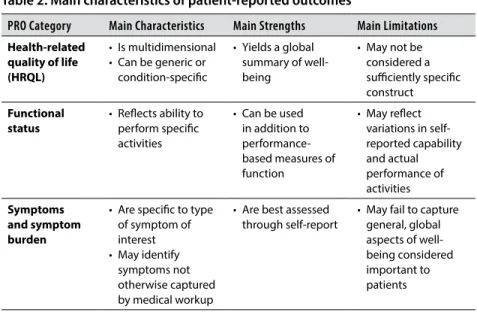
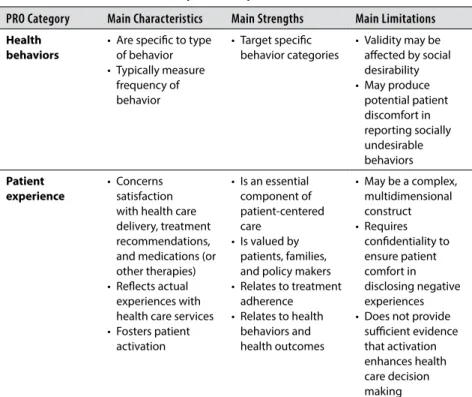
Table 2. Main characteristics of patient-reported outcomes 7
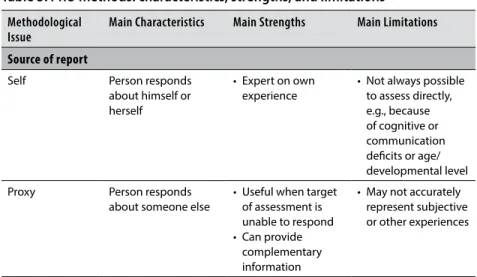
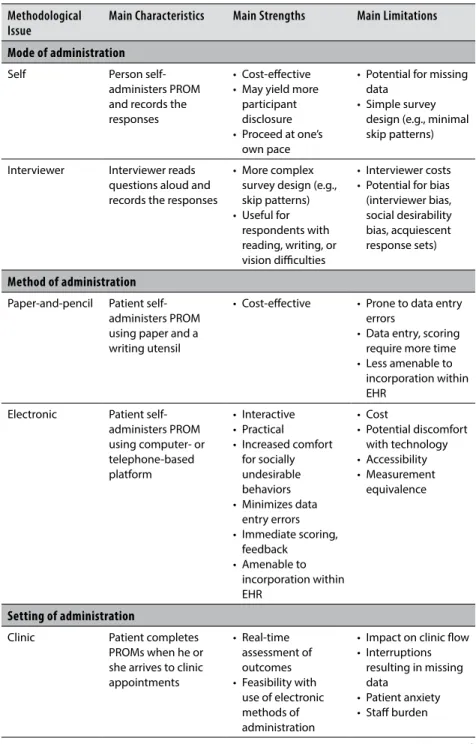
Table 3. PRO methods: characteristics, strengths, and limitations 15
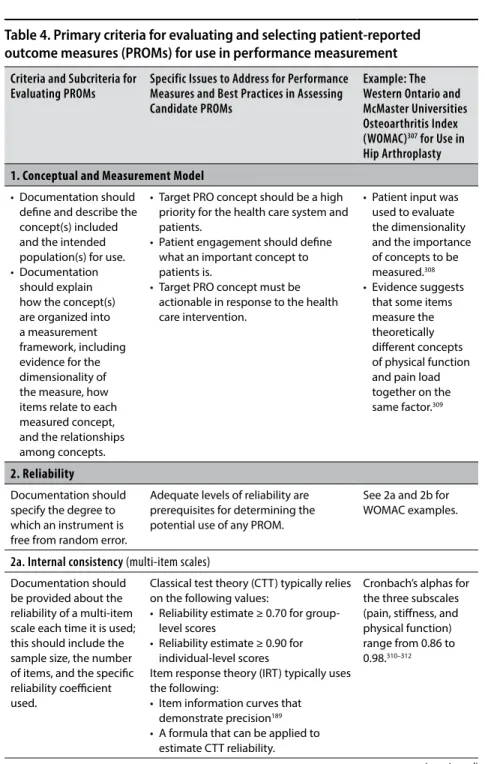
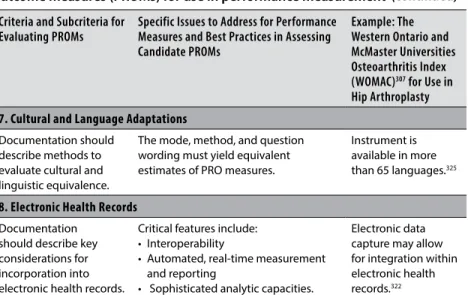
Table 4. Primary criteria for evaluating and selecting patient-reported outcome
measures (PROMs) for use in performance measurement 38
Figure
Figure 1. Types of respondent sources of data and modes and methods
The increasing integration of health care delivery systems provides an
opportunity to manage entire episodes of care in a patient-focused manner and to assess the impact of care on patient outcomes, including patient-reported outcomes (PROs).1 The National Institutes of Health (NIH) PROMIS initiative
(for Patient Reported Outcomes Measurement Information System) describes PROs as direct feedback from patients “on their feelings or what they are able to do as they are dealing with chronic diseases or conditions.” They reflect the health status or health-related quality of life circumstances of patients (broadly defined). Such information is reported by individuals themselves or, in some cases, by proxy respondents such as parents for young children or close relatives of persons unable to report for themselves.
PRO information is widely gathered in clinical and health services research; it is increasingly collected and used in clinical practice settings as well.2–7 PROs
are relevant for many activities: helping patients and their clinicians make informed decisions about health care, monitoring the progress of care, setting policies for coverage and reimbursement of health services, improving the quality of health care services, and tracking or reporting on the performance of health care delivery organizations.
These last two activities are gaining increasing attention in the US health care system. The nation is engaging in more efforts to expand health care coverage to many millions of citizens through the Patient Protection and Affordable Care Act (ACA). Many organizations are working to ensure higher value of health care through enhanced attention to measuring and improving quality of care and patient outcomes.8 For example, the Patient-Centered
The National Quality Forum Project
The National Quality Forum (NQF), a national organization that has been deeply involved in moving the quality-improvement agenda forward for many years (http://www.qualityforum.org), endorses and promulgates quality-of-care and performance measures that various provider groups, regulatory agencies, payers and insurers, and others can use for accountability and quality improvement activities. In 2012 and 2013, the organization began an initiative to find PROs that might be added to its extensive collection of performance measures. Its National Voluntary Consensus Standards for Patient Outcomes: A Consensus Report defined outcomes as being important because they “reflect the reason that an individual seeks healthcare services.”1 The individual
patient’s voice in many performance measures, however, has largely been missing. Few ways to assess performance are available at the organizational level, even though patients are often the best able to report on the experiences and results of their individual care.
To fill that gap, NQF convened an expert panel at two public meetings and, as background for its deliberations, commissioned two authoritative background papers. This monograph is a revised and updated version of the first of these two papers, which provided the background on issues about selecting PROs for use in a variety of applications pertinent to the NQF mission and activities. The second paper, Patient-Reported Outcomes in Performance Measurement,9 dealt with issues relating to processes for
endorsing performance measures that reflect the end results (ultimate outcomes) of health care. Its primary focus was on accountable health care organizations.
To accomplish our assigned objective, we completed a comprehensive review of the published peer-reviewed literature as well as published documents (e.g., book chapters, position statements; guidance from the US Food and Drug Administration10) about standard measurement theory.
Based on our findings in the published literature, we created a comprehensive annotated outline reflecting the methodological considerations most important to address. We then revised it in consultation with representatives from NQF to ensure that the paper accomplished the NQF’s high-priority objectives.
Following the initial drafting of the manuscript, our group of authors at Northwestern University worked in conjunction with Kathleen Lohr, RTI International, who comprehensively reviewed and revised the manuscript draft. We submitted the revised manuscript draft for review and comment at the NQF Patient Reported Outcomes Workshop 1 in July 2012. A final version of the manuscript, which incorporated revisions based on feedback from the workshop, was submitted to NQF in September 2012. That manuscript includes numerous authoritative citations to research from this field up through that date. Dr. Lohr and the other authors revised the manuscript further to meet the requirements of an RTI Press monograph and to update some of the citations; the result is this monograph.
Concepts and Definitions
Table 1. Definitions and key concepts for patient-reported outcomes and measures
Key Concept Definition
Patient A person who is receiving health care services or using long-term health
care support services.
Patient-reported outcome (PRO)
Any information on the outcomes of health care obtained directly from patients without modification by clinicians or other health care professionals. For purposes of this monograph, we use this term broadly to include any patient input, whether or not it is standardized or gathered with a structured questionnaire.
Patient-reported outcome measure (PROM)
Any standardized or structured questionnaire regarding the status of a patient’s health condition, health behavior, or experience with health care that comes directly from the patient (i.e., a PRO). The use of a structured, standardized tool such as a PROM will yield quantitative data that enables comparison of patient groups or providers. One example of a PROM is the nine-item Patient Health Questionnaire (PHQ-9).
Performance measure
Numeric quantification of health care quality for a designated accountable health care entity, such as a hospital, health plan, nursing home, clinician, etc.
PRO-based performance measure (PRO-PM)
A performance measure that is based on patient-reported outcomes assessed through data often collected through a PROM and then aggregated for an accountable health care entity. One example is the percentage of patients in an accountable care organization with an improved depression score as measured by a standardized tool such as the PHQ-9.
e-health Health-related Internet applications that deliver a range of content,
connectivity, and clinical care. Examples include online formularies, prescription refills, test results, physician-patient communication.11,12
Patient-centered outcomes research (PCOR)
Integration of patient perspectives and experiences with clinical and biological data collected from the patient to evaluate the safety and efficacy of an intervention (www.pcori.org).
Reliability The extent to which a scale or measure yields reproducible and
consistent results.13 Reliability of data elements refers to repeatability and reproducibility of the data elements for the same population in the same time period. Reliability of the measure score refers to the proportion of variation in the performance scores attributable to systematic differences across the measured entities (or signal) in relation to random error (or noise).
Validity The extent to which an instrument measures what it is intended
Using Patient-Reported Outcome Measures (PROMs)
A large literature supports the use of PROMs and provides cogent evidence suggesting that clinicians are limited in accurately estimating outcomes for patients.14–18 PROMs enable clinicians, patients and families, and others to
assess patient-reported health status domains (e.g., health status; physical, mental, and social functioning; health behavior; experience with health care). A wide variety of patient-level instruments to measure PROMs have been used for clinical research purposes and to guide clinical care. Many have been evaluated and catalogued by the NIH PROMIS network and made available through the PROMIS Assessment Center (www.nihpromis.org/software/ assessmentcenter).
Two major challenges to using PROMs for purposes of accountability and performance improvement must be addressed. First, they have not yet been widely adopted in clinical use; thus, they are unfamiliar to many health care professionals, payers, and others in health care systems. Second, little is known about the best set of responsive questions to aggregate for the purpose of measuring performance of the health care organizations and systems.
Many in the health sector are showing increasing interest in moving toward use of PROMs for these clinical, quality improvement, and accountability applications. Foundational work still needs to address methodological and data challenges. Efforts in the early 2010s focused on developing and testing mechanisms for collecting patient-reported data. A crucial element of this is considering methodological issues in some depth. Among the more difficult problems are collecting PRO data in the clinical environment and aggregating data to assess organization- and clinician-level performance.
PROMs can be used to assess a wide variety of health-relevant concepts. Of particular salience for quality and performance measurement efforts are the following five categories: health-related quality of life, functional status, symptoms and symptom burden, health behaviors, and the patient’s health care experience. These concepts are neither mutually exclusive nor exhaustive.
Table 2 summarizes the main characteristics of these types of PROMs. In the table, we highlight only key advantages or drawbacks for each PRO category. In the subsections that follow, we focus on core components or attributes of the specific category in question of particular relevance for measurement (including efficient performance measurement). Consequently, the information for any given PRO category may differ from that for other categories.
Table 2. Main characteristics of patient-reported outcomes
PRO Category Main Characteristics Main Strengths Main Limitations
Health-related quality of life (HRQL)
• Is multidimensional • Can be generic or
condition-specific
• Yields a global summary of well-being
• May not be considered a sufficiently specific construct
Functional status
• Reflects ability to perform specific activities
• Can be used in addition to performance-based measures of function
• May reflect variations in self-reported capability and actual performance of activities Symptoms and symptom burden
• Are specific to type of symptom of interest • May identify
symptoms not otherwise captured by medical workup
• Are best assessed through self-report
• May fail to capture general, global aspects of well-being considered important to patients
Health-Related Quality of Life
One class of PRO measures health-related quality of life (HRQL). HRQL is a multidimensional19 construct encompassing physical, social, and emotional
well-being associated with illness and its treatment.20 Different types of HRQL
measures21,22 are useful for different purposes.23 Numerous generic health status
measures, such as the Medical Outcomes Study Short Form SF-36 (and related measures) and the Sickness Impact Profile are classic examples.24–27 This type
of PROM is useful in assessing individuals both with and without a health condition. Such data allow researchers, clinicians, and others to compare groups with and without a specific condition and to estimate population norms.
A health utility or preference measure is also not disease-specific. It
provides a score ranging from 0 (death) to 1 (perfect health) that represents the value that a patient places on his or her own health.28 Experts can use scores
from these types of measures to calculate quality-adjusted life years or compare information to population norms.
Table 2. Main characteristics of patient-reported outcomes
PRO Category Main Characteristics Main Strengths Main Limitations
Health behaviors
• Are specific to type of behavior • Typically measure
frequency of behavior
• Target specific behavior categories
• Validity may be affected by social desirability • May produce
potential patient discomfort in reporting socially undesirable behaviors Patient experience
• Concerns satisfaction with health care delivery, treatment recommendations, and medications (or other therapies) • Reflects actual
experiences with health care services • Fosters patient
activation
• Is an essential component of patient-centered care
• Is valued by patients, families, and policy makers • Relates to treatment
adherence • Relates to health
behaviors and health outcomes
• May be a complex, multidimensional construct • Requires
confidentiality to ensure patient comfort in disclosing negative experiences • Does not provide
Many PROMs are intended for use in populations with chronic illnesses.29–31
Over the past 8 years, the PROMIS network has developed a considerable number of PROMs in physical, mental, and social health for adults and infants, children, and adolescents with chronic conditions.32,33 Neuro-QOL is another
measurement effort focused on capturing important areas of functioning and well-being in neurologic diseases.34 These measurement efforts do not reference
a specific disease in the items; thus, they permit comparisons across conditions. Other PROMs are targeted on a specific disease (e.g., spinal cord injury) or treatment (e.g., chemotherapy).35,36 Often these instruments are developed
so that investigators can demonstrate responsiveness to treatment in a clinical trial rather than compare data against population norms or information on other conditions.37 Condition-specific PROMs often provide additional,
complementary information about a patient’s HRQL.30,38–40
Functional Status
Another type of PROM is a functional status measure. Functional status refers to a patient’s ability to perform both basic and more advanced (instrumental) activities of daily life.41 Examples of functional status include physical function,
cognitive function, and sexual function. As with HRQL instruments, a large number of functional status measures exist, but they vary widely in quality.42 Some may address a very specific type of function (e.g., Upper Limb
Functional Index) or be developed for use in a specific disease population (e.g., patients with multiple sclerosis), whereas others may be appropriate for use across chronic conditions.43–49
Symptoms and Symptom Burden
Symptoms such as fatigue and pain intensity are key domains for PROMs. Symptoms are typically negative, and their presence and intensity are best assessed through patient report.50 Scales characterize the severity of the
symptoms. The impact of symptoms, such as the degree to which pain
interferes with usual functioning, is also a common focus of PROMs. Symptom burden captures the combination of both symptom severity and impact experienced with a specific disease or treatment.50
chronic obstructive pulmonary disease.51,52 PROMIS investigators developed
the PROMIS Pain Interference measure, which quantifies the impact of pain on functioning.53
Health Behaviors
Yet another category of PROMs assesses health behaviors. Although health behaviors may be considered predictors of health outcomes, they are also health outcomes in their own right in the sense that health care interventions can have an impact on them. Information from health behavior PROMs serves several important clinical purposes. Clinicians can use it to monitor risk behaviors with potentially deleterious health consequences. This information enables practitioners to identify areas for risk reduction and health promotion interventions among their patients. Health behavior PROMs can also be used to assess patients’ response to health promotion interventions and to monitor health behaviors over time.
Health risk assessments (HRAs) illustrate how health behavior PROMs can be incorporated into health promotion and disease prevention programs. Defined by the US Centers for Disease Control and Prevention (CDC) as tools to measure individual health, HRAs may consist of clinical examination or laboratory test results as well as health behavior PROMs.54 A recent
report from the US Agency for Healthcare Research and Quality (AHRQ) identified three key components in the process of implementing HRAs in health promotion: (1) patient self-reported information to identify risk factors for disease, (2) individualized health-specific feedback to patients based upon the information they reported, and (3) at least one health promotion recommendation or intervention.55
Although HRAs have been implemented in community settings, universities, and health maintenance organizations, they have been most commonly implemented in workplace settings.55 An extensive review of
HRA program outcomes concluded that, in many cases, implementing HRA programs improved health behaviors and intermediate health outcomes (e.g., blood pressure); however, the evidence did not demonstrate whether using HRAs affected disease incidence or health outcomes over the medium to long term.55
category. Two examples of health behavior PROMs measuring multiple risk factors that the National Committee for Quality Assurance has certified are the Personal Wellness Profile56 and the Insight Health Risk Appraisal Survey.57
In addition, several large-scale health behavior assessment systems provide additional context for the use of general health behavior PROMs. The Behavioral Risk Factor Surveillance System (BRFSS), created in 1984 by the CDC as a state-based system, uses a standardized questionnaire to measure health risk and health promotion behaviors. These include health awareness, tobacco use, consumption of fruits and vegetables, physical activity, seatbelt use, immunization, and alcohol consumption.58 The National Health and
Nutrition Examination Survey (NHANES) constitutes another large-scale implementation of health behavior PROMs. Established by the CDC in the 1960s, NHANES includes health behavior surveys in addition to clinical examinations to assess health status at the population level.59
The health behavior survey portion of NHANES assesses a wide range of health risk and health promotion behaviors, including smoking, drug use, alcohol use, sexual practices, physical activity, dietary intake, and reproductive health practices.59 Health behavior PROMs can also assess risk factors
associated with specific diseases (e.g., smoking) or those related to specific behavioral categories (e.g., physical activity, seatbelt use, food consumption). The health risk survey, an interactive computer-based survey assessing alcohol consumption and smoking,60 is one example. Another is the CAGE-Adapted to
Include Drugs (CAGE-AID) questionnaire, a self-reported screening measure of substance use disorder among treatment-seeking adolescents. Its name derives from its four main questions (Cutting down, being Annoyed if people criticize drinking, feeling Guilty about drinking, and needing an Eye-opener).61
A subset of health behavior PROMs assesses health-promoting behaviors. Examples of such PROM instruments include “Starting the conversation,” a brief measure of dietary intake;62 “Exercise as the fifth vital sign,” a brief
measure of physical activity;63 School Health Action, Planning and Evaluation
System (SHAPES), a school-based self-report physical activity measure;64 and
the Morisky Medication Adherence Scale (8-item).65
Patient Experience of Care
self-efficacy and self-management skills for patients; and the patient’s experience of care.66,67 Measurement of patient ratings is a complex concept that is related
to perceived needs, expectations of care, and experience of care.68–75 Patient
ratings can cover the spectrum of patient engagement, from experience to shared decision making to self-management to full activation.
Clinicians’ recognition of patient preferences and values can help health care professionals tailor treatments based on informed decisions that their patients might make based on those preferences. In fact, improving decision quality is one critically important step that the nation can take to improve the quality (processes and outcomes) of health care and thus enhance value for health care expenditures. For this reason, patients’ ratings of their experiences with care not only provide information very salient to patients and families, but they also have considerable policy implications. Each safe practice in the updated NQF consensus report includes a section titled “Opportunities for Patient and Family Involvement.”76
The three major types of patient health care ratings relate to evaluations of patient satisfaction, patient motivation and activation, and patient reports of their actual experiences. Patient satisfaction is a multidimensional construct that includes patient concerns about the disease and its treatment, issues of treatment affordability and financial burden for the patient, communication with health care providers, access to services, satisfaction with treatment explanations, and confidence in the physician.77–83 Shikiar and Rentz proposed
a three-level hierarchy of satisfaction: (1) satisfaction with health care delivery, including issues of accessibility, clinician-patient communication, and quality of facilities; (2) satisfaction with the treatment regimen, including medication, dietary and exercise recommendations, and similar elements of therapies; and (3) satisfaction with the medication itself, rather than the broader treatment.73
Patient satisfaction has important implications for clinical decision making and enhancing the delivery of health care services; it is increasingly the focus of research and evaluation of medical treatments, services, and interventions.84
It is an important indicator of future adherence to treatment.72,85–90 Satisfaction
has a long history of measurement, and numerous instruments are available.70,75,91–99
One potentially important predictor of health outcomes is patient
activation, or the degree to which patients are motivated and have the relevant knowledge, skills, and confidence to make optimal health care decisions.100-102
Measure (PAM),103,104 which demonstrated favorable psychometric properties
in several cross-sectional and some longitudinal studies.101 Although
appreciation of the benefits of activated patients is increasing,105 commensurate
support is lacking to help patients become more activated with respect to their health care decision making.104 Although research supports the claim
that improvements in patient activation are associated with improvements in self-reported health behaviors,101,105 additional research is necessary to better
understand both these relationships and their relevance to actual behavior. Patient activation, as measured by the PAM or otherwise, may be a useful moderator or mediator of PROs that will in turn contribute to performance measurement.
An important contemporary focus is on measuring patient reports of their actual experiences with health care services.106 Reports about care are
often regarded as more specific, actionable, understandable, and objective than general ratings alone.107,108 The Consumer Assessment of Healthcare
and Analysis
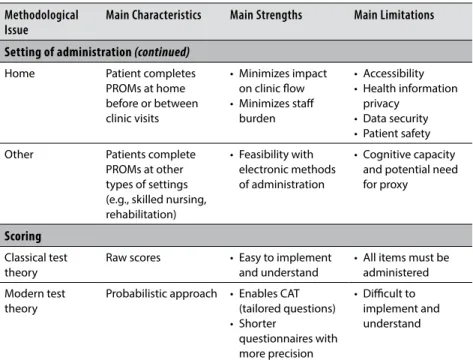
To accommodate the needs of patients with diverse linguistic, cultural, educational, and functional skills, clinicians and researchers require some flexibility in choosing appropriate methods and modes of questionnaire administration for PROMs.109 Numerous issues complicate scoring and
analyzing PROM response data. We first describe these methods issues (Table 3)—sources of reports, modes of administration, methods of administration, settings, and scoring—and then discuss barriers.
As with the earlier descriptions of core PRO categories such as health-related quality of life, we highlight in this section the critical issues for measurement methods—i.e., the advantages or drawbacks that users would most need to take into account. This information reflects standard measurement theory (classical or contemporary) and is based on decades of published research and theoretical papers and inputs from experts involved with projects such as PROMIS.
Table 3. PRO methods: characteristics, strengths, and limitations Methodological
Issue Main Characteristics Main Strengths Main Limitations
Source of report
Self Person responds
about himself or herself
• Expert on own experience
• Not always possible to assess directly, e.g., because of cognitive or communication deficits or age/ developmental level
Proxy Person responds
about someone else
• Useful when target of assessment is unable to respond • Can provide
complementary information
• May not accurately represent subjective or other experiences
Table 3. PRO methods: characteristics, strengths, and limitations Methodological
Issue Main Characteristics Main Strengths Main Limitations
Mode of administration
Self Person
self-administers PROM and records the responses
• Cost-effective • May yield more
participant disclosure • Proceed at one’s
own pace
• Potential for missing data
• Simple survey design (e.g., minimal skip patterns)
Interviewer Interviewer reads questions aloud and records the responses
• More complex survey design (e.g., skip patterns) • Useful for
respondents with reading, writing, or vision difficulties
• Interviewer costs • Potential for bias (interviewer bias, social desirability bias, acquiescent response sets)
Method of administration
Paper-and-pencil Patient self-administers PROM using paper and a writing utensil
• Cost-effective • Prone to data entry errors
• Data entry, scoring require more time • Less amenable to
incorporation within EHR
Electronic Patient self-administers PROM using computer- or telephone-based platform
• Interactive • Practical
• Increased comfort for socially undesirable behaviors • Minimizes data
entry errors • Immediate scoring,
feedback • Amenable to
incorporation within EHR
• Cost
• Potential discomfort with technology • Accessibility • Measurement
equivalence
Setting of administration
Clinic Patient completes
PROMs when he or she arrives to clinic appointments
• Real-time assessment of outcomes • Feasibility with
use of electronic methods of administration
• Impact on clinic flow • Interruptions
resulting in missing data
• Patient anxiety • Staff burden
(continued)
Modes and Methods Issues
Administering PRO instruments (PROMs) requires users to make decisions about three aspects of data collection (Figure 1):
• Data source—i.e., the source of the PRO (the patient or, in some cases, a proxy or other reporter)
• Mode by which information was recorded—i.e., self-administered or interviewer-administered
• Method used to capture the information (such as paper-and-pencil questionnaire or telephone- or computer-assisted technologies). Each of these aspects is described below. These three aspects can be combined in various ways. For example, a patient might use the telephone to self-administer a PROM, or an interviewer might use a computer to read questions and record answers.
Table 3. PRO methods: characteristics, strengths, and limitations Methodological
Issue Main Characteristics Main Strengths Main Limitations
Setting of administration (continued)
Home Patient completes
PROMs at home before or between clinic visits
• Minimizes impact on clinic flow • Minimizes staff
burden
• Accessibility • Health information
privacy • Data security • Patient safety
Other Patients complete
PROMs at other types of settings (e.g., skilled nursing, rehabilitation)
• Feasibility with electronic methods of administration
• Cognitive capacity and potential need for proxy
Scoring
Classical test theory
Raw scores • Easy to implement and understand
• All items must be administered Modern test
theory
Probabilistic approach • Enables CAT (tailored questions) • Shorter
questionnaires with more precision
• Difficult to implement and understand
CAT, computer-assisted testing; EHR, electronic health record; PRO, patient-reported outcome; PROM, patient-reported outcome measure.
Source: Data are from Data Collection Methods. Quality of Life and Pharmacoeconomics in Clinical Trials130 and Psychological Aspects of Health-Related Quality of Life Measurement: Tests and Scales. Quality of Life and Pharmacoeconomics in Clinical Trials.131
The patient’s perspective is the focal point of PRO assessment. In some circumstances, directly obtaining this perspective may be difficult or impossible. In adults, cognitive and communications deficits and burden of disease, for example, can limit potential subjects’ ability to complete PROMs.110
This is especially likely to occur with the elderly and with people of any age who have severe disease or suffer from neurological disorders. Children’s participation can be limited by these same factors plus issues specific to their age and developmental level.110–112
Failing to include these populations can result in potentially misleading interpretations of results. Thus, attempting to include them in PRO assessment efforts is crucial. Using all possible mechanisms for obtaining self-reports is a high priority, but accomplishing this may be out of the question for some populations.
Proxy Report as a Substitute for Self-Report
One way to include the greatest number of patients is to use proxy respondents to obtain PRO information for patients who are unable to respond. Using either significant others (e.g., parents, spouses or other family members, friends) or formal caregivers (physicians, nurses, aides, teachers) as proxies can provide many potential benefits. It not only allows inclusion of a broader and more representative range of patients in the entire measurement effort, but it can also help minimize missing data and increase the feasibility of longitudinal assessment.
Data Source:
Self-report vs. Proxy/Observer
Mode:
Method:
Self-administration
• Paper-and-pencil
• Telephone
• Computer
Interviewer-administration
The usefulness of proxy responses as substitutes for patient responses depends on the validity and reliability of proxy responses compared with those attributes for patient responses. When evaluating the quality of proxy responses, analysts usually compare proxy responses with patient responses. This is a reasonable approach, when proxy responses are being used to replace patient responses.
Agreement between the proxy and patient is typically assessed at either the subscale level, via the intraclass correlation coefficient (ICC), or the item level, by the kappa statistic, although other types of analyses have been advocated.113
Patient and proxy responses are also often compared at the group level by comparing mean scores. Group comparisons help detect the magnitude and direction of any systematic bias that might be present.
Both the adult and pediatric literatures suggest that agreement between proxy and patient ratings is higher when rating observable functioning or HRQL dimensions such as physical and instrumental activities of daily living, physical health, and motor function. Agreement is typically lower for more subjective dimensions such as social functioning, pain, cognitive status or function, and psychological or emotional well-being.112,114–118 Using
continuous rather than dichotomous ratings improves agreement.119 Extent of
disagreement increases with increasing age of adolescents120 and as the severity
of patient illness, cognitive impairment, or disability rises.121–124 Type of proxy
(e.g., parent versus caregiver) and proxy characteristics such as age, education, and level of stress may also affect agreement.125,126 In terms of direction of
disagreement, proxies for adults tend to rate them as having more symptoms, functional difficulties, emotional distress, and negative quality of life; the main exception is pain, about which proxies tend to under-report.114 Patterns of
disagreement for child- versus proxy-reported outcomes are inconsistent.127
Even when self- and proxy reports disagree for either children or adults, differences tend to be small.127,128
Proxy Report as a Complement to Self-Report
Proxy assessment may substitute for patient assessment where needed, but it may also complement it. Proxies can be asked to assess the patient as they think the patient would respond (i.e., proxy-patient perspective), or they can be asked to provide their own perspective on the patient’s functioning or HRQL. This type of additional rating may be better described as either an external or “other” rating129 for the sake of clarity. An important consideration
The external (i.e., “other”) perspective may provide particularly relevant information when the person is unable to provide any self-assessment, but it can be important even when the patient can give his or her own answers. In such cases, patient-other agreement may not necessarily be desirable. For example, patients in the earlier stages of dementia may be able to provide responses to PROMs but fail to recognize the extent of their impaired well-being and physical role functioning. In such cases, a next-of-kin caregiver such as a spouse could provide an external assessment that indicates that the patient has some degree of problems in functioning, such as getting the groceries from car to kitchen or being comfortable in a social setting. In these circumstances, external (proxy) respondents can clearly introduce clinically important information.
Mode: Self-Administration Versus Interviewer Administration
Self-administration of PROMs is neither expensive nor influenced by interviewer effects; for these reasons, this mode of administration has traditionally been preferred. However, self-administration is not feasible for some patient populations, such as those who may be too ill to self-administer a questionnaire. In these cases, interviewer administration is often required. Until recently, interviewer administration was also required for those with low literacy; however, new multimedia methods are now available to overcome this barrier.
Main Advantages and Disadvantages of Different Modes of Administration
Table 3 summarized the principal benefits and drawbacks of different modes of administration, based on authoritative sources.130,131 Self-administered
instruments are more cost-effective from a staffing perspective, and they may yield more patient disclosure, especially when collecting sensitive information.132 Disadvantages include the potential for more missing data and
It may arise from systematic differences from interviewer to interviewer or, occasionally, systematic errors on the part of many or even all interviewers.133
Additional Concerns About Sources of Bias
Other sources of bias for both administration modes include social desirability response set (the tendency to give a favorable picture of oneself) and
acquiescent response set (the tendency to agree or disagree with statements regardless of their content).134,135
Legitimate concerns arise about the potential biasing effects of mode of administration on data quality and interpretation.136 Overall, evidence
supports high reliability for instruments administered with different modes, but response effects have varied and have not been consistently in the same direction.121–124 For example, some studies have reported more favorable reports
of well-being on self-administered questionnaires,137 whereas others have
found the opposite effect.138–140 Still other studies reported mixed results141
or found no important differences attributable to mode of administration after adjusting for other factors.130,142,143 Fortunately, many types of error and
bias can be overcome by appropriate selection and training of interviewers. Effects of different modes can also be evaluated with various psychometric and statistical techniques and models to determine the potential impact of response effects.144–148
Method of Administration
Advances in technology have changed the face of PROM assessment, increasing the number of administration options available. Multiple methods of self-administration currently exist, and the different methods may have different effects on the quality of the data.136 Although diverse administration
methods provide more options for researchers and clinicians, they require different skills and resources of people being asked to respond to the questionnaire. This means that the choice of method of administration may pose differing levels of respondent burden.136
Several factors may account for differences in data quality across methods of administration: impersonality of the method, cognitive burden on the respondent, ability to establish the legitimacy of the reasons for which patients or others are even being asked to complete a questionnaire, control over the questionnaires, and communication style.136 Thus, when users are deciding on
Historically, paper-and-pencil administration served as the primary method of PROM assessment. Many PROMs were originally developed with the intention of paper-based administration, but they may be (and typically are) amenable to an electronic-based administration.149 Paper-and-pencil remains a
widely used PROM administration method, with its primary advantage being cost-effectiveness in situations in which users face few mailing and follow-up costs.
However, the paper-and-pencil method has disadvantages. For example, it may require that a person’s responses be manually entered into a database for scoring purposes, raising the possibility of data entry errors that threaten the integrity of the results. Similarly, the need for manual data entry and scoring can be time-intensive. Although the availability of optical mark recognition and optical character recognition allow scanning of paper-and-pencil PROMs, this process still requires an extra step on the part of staff and may limit the acceptability of paper-and-pencil administration for purposes in which timely scoring and interpretation are important.
Advances in technology and the increasingly widespread availability of electronic resources have provided several alternatives to paper-and-pencil administration. Improved telephone technology has enabled the use of interactive voice response to administer PROMs. Interactive voice response involves a computer audio-recording of PROM questions administered via telephone to which people indicate their responses by selecting the appropriate key.136,149
In addition, computer-based administration methods have emerged as feasible alternatives to paper-and-pencil, such as web-based platforms, touchscreen computers, and multimedia platforms that can accommodate people with a range of literacy and computer skills (e.g., Talking
Touchscreen/la Pantalla Parlanchina, audiovisual computer-assisted self-interviewing).136,149–151 Newer mobile forms of technology such as tablet
computers and smartphones also offer promise as methods of PROM administration.
electronic PROM administration has been shown to be practical, acceptable, and cost-effective.60 Electronic methods may also provide people with
increased comfort when responding to questions about socially undesirable behaviors.152
Nonetheless, these advantages must be considered in light of several important disadvantages. First, the cost of purchasing technology-based platforms may exceed that of traditional paper-and-pencil methods.
Additionally, some patients may experience discomfort with technology or lack the skills necessary to navigate electronic administration methods. Moreover, reliance upon methods such as web-based platforms or smartphones raises questions about people’s access to these technologies, if they are not provided in the relevant settings as part of clinical practice, quality improvement, or other assessment efforts.
The availability of multiple methods of PROM administration highlights the importance of measurement equivalence across methods.149 Measurement
equivalence is determined by comparing the psychometric properties of data obtained via paper-based administration and data collected through electronic administration.149 It can be assessed via cognitive testing, usability testing,
equivalence testing, or psychometric testing (or various combinations of these techniques).149 A growing body of research documents the equivalence of
electronic and paper-and-pencil administration of PROMs.153–155 These findings
support the viability of electronic PROM administration as an alternative to paper-and-pencil methods.
In addition to measurement equivalence, patient privacy is another concern that cuts across both paper-and-pencil and electronic administration methods, albeit in differing ways. For paper-based PROMs, physical transfer of the PROM from patient to provider, as well as the physical existence of the completed PROM, may pose risks to the privacy and confidentiality of patients’ responses. Privacy also emerges as a concern about electronic methods, given potential security breaches related to transfer of data, computer errors, or unauthorized access to patient-reported data. These threats underscore the need for reliable and secure electronic platforms to protect patients’ privacy in the context of PROM assessment.
Patient-Reported Outcome Measures in the Clinical Setting
Collecting PRO data as part of clinical care has become common.2,156–158
making promises many benefits. Advocates for using PROMs in clinical care propose that the results assist clinical providers in managing their patients’ care,159 enhance the efficiency of clinical practice,155,160 improve patient-provider
communication,155,160-162 identify patient needs in a timely manner,155, 163 and
facilitate patient-centered care.155 Other findings, however, suggest regional
variation in perceived health and no positive effect of feedback via PROMs on care, even when combined with guideline-recommended interventions.164–166
As PROMs are used more in clinical practice, some methodological issues pertaining to the settings in which they are administered merit consideration.
A growing number of studies have investigated the use of PROMs in the clinic setting.155,160,162,163,167–170 When selecting PROMs for administration in
clinical practice, users need to consider the efficiency of PROM administration, scoring, and interpretation. These factors are especially important because of the time-sensitive nature of the clinic workflow.155,167 In addition, acceptability
of both the PROM and the data collection process for both patients and clinic staff is essential.155,167,171
Historically, several barriers have impeded widespread implementation of PRO data collection in clinical settings of all sorts, but especially for smaller or private practices. Many drawbacks are associated with paper-and-pencil administration of PROMs. One such barrier involves concerns about the potential disruption to the clinical workflow if patients are asked to complete PROMs.159 In addition, staff burden and clinician disengagement may hamper
obtaining PRO data in clinical settings.159
Fortunately, technology advances, and the increased opportunities for methods of PROM administration that they afford, may help to overcome some barriers to PRO data collection in clinical practices and settings.167 For
example, research supports the feasibility of using tablet computers155,163 and
touchscreen computers for these purposes.150,151,162,167,168 Employing computers
to administer PROMs may streamline and expedite the process and minimize staff burden and impact on clinic flow.
Conversely, concerns arise regarding the impact of clinic flow on the integrity of data collection, given the potential for patients to be interrupted while completing PROMs, which could potentially result in missing data.159 Another potential barrier involves the possibility that patients may
experience anxiety in completing PROMs in the clinical settings before their appointments.159 Similarly, a possible lack of privacy when completing PROMs
to adequate PROM administration. Many of these concerns can be addressed by incorporating PROMs into the clinical workflow. This may also enhance completion rates. Both patients and providers will then be more likely to see this effort as integral to patient care.
Completing PROMs from home before or between medical appointments has been proposed as one strategy to overcoming the problems outlined above.159,172,173 Both web-based PROM administration and interactive voice
response constitute possible methods for at-home PRO data collection.151,161,162
Although the home may serve as a feasible alternative to the clinical practice setting for various reasons, those considering implementing home-based PRO data collection need to consider several factors.159,172 First, for patients
to be able to complete PROMs at home, they must have access to the type of technology by which the PROM is administered (e.g., Internet). Second, patients must find completing PROMs at home acceptable. Third, users should have a plan in place to address situations in which home-based PROM responses suggest critical or acute problems. This may pose a logistical challenge in comparison with PROMs completed in-clinic, where medical providers and access to intervention are readily available.
As with any setting, health information privacy is paramount; therefore, one barrier to home-based PROMs is the availability of secure data
collection platforms.159,174 Finally, an especially difficult issue may be clinician
acceptability of home-based PRO data collection. The problems include reimbursement for clinicians’ time using a website to address outcomes that patients report, rather than meeting directly with patients to discuss questions or problems that their patients raise through answers to the PROMs.159,174
Implementing PRO data collection in other settings, such as rehabilitation or skilled nursing facilities, may also yield valuable clinical information and guide interventions. Less research has addressed the issues in administering PROMs in these settings. However, handheld technology may offer a means of facilitating collection of PRO data in the rehabilitation setting following orthopedic surgery.175
Scoring: Classical Test Theory Versus Modern Test Theory
Many PROMs involve the measurement of latent (not directly observable) variables; examples might include symptoms (not signs) of gastrointestinal disease or pain. The only way to estimate a person’s level on a particular attribute is by asking questions that represent the attribute in question. Most PROMs comprise multiple items that are aggregated in some way to produce an overall score. The most common multi-item instruments are designed to reflect a single underlying construct. The item responses either are caused by or are manifestations of the underlying latent attribute, and the items are expected to correlate with one another.176–179
In some other kinds of multi-item measures, the items may cluster together but would not be expected to correlate. A common example of this latter measure is a comorbidity index comprising various health conditions, e.g., diabetes, asthma, and heart disease. Another example might be a measure of access to care consisting of problems with paying for care, having a regular provider, ease of transportation to care, and ease of making an appointment. Although such items would not necessarily be correlated, together they might form an adequate measure of access. The discussion on scoring below refers to the former type of instrument reflecting underlying constructs with items expected to correlate with one another.
Scoring is based on classical test theory (raw scores) or modern test theory (item response theory [IRT]).180–189 Multiple items are preferred because a
response to a single item provides only limited information to distinguish among individuals.190 In addition, measurement error (the difference between
the true score and the observed score) tends to average out when responses to individual items are summed to obtain a total score.190–192
Classical test theory estimates the level of an attribute as the sum, perhaps weighted, of responses to individual items, i.e., as a linear combination.13,190,193–196 This approach requires all items on a particular
PROM to be used in every situation for it to be considered valid. Hence, the instrument is test-dependent.194,196–198
IRT, by contrast, enables test-free measurement; i.e., the latent trait can be estimated using different items as long as their locations (difficulty levels) have been calibrated on the same scale as the patients’ ability levels.13,190,196–201
scale scores can be estimated more precisely for any given test length. This also means that different patients do not need to complete the same set of items in every situation.13
Using IRT poses nontrivial challenges, however. Understanding the assumptions and the psychometric jargon—e.g., “calibration,” “difficulty levels”—is not easy. The methodology and software are complex. IRT is also not appropriate for causal variables and complex latent traits.13,196,197,202 Overall,
however, IRT offers a very convenient and efficient framework for PRO measurement, and it is becoming increasingly well understood and easier to adopt.
Linking or Cross-Talk Between Different Measures of the Same
Construct
A common problem when using an array of health-related outcomes for diverse patient populations and subgroups is establishing the comparability of scales or units on which the outcomes are reported.203,204 Typically the metric
has been emphasized more than the measure. Equating is a technique to convert the system of units of one measure to that of another. Analysts have successfully used this process of deriving equivalent scores in educational testing to compare test scores obtained from parallel or alternate forms that measure the same characteristic with or without having common anchor items.
Theoretically (and in practice when certain conditions are met), different age-specific measures could be linked, thus placing child, adult, and geriatric estimates on a common metric. For example, the many items that constitute a condition-specific (e.g., cancer) quality of life scale could be incorporated into a single shared bank and linked through a common-anchor design.203
Addressing Barriers to Patient-Reported Outcomes
Measurement
Users need to address yet other barriers to PRO measurement. These include administering PROMs in vulnerable populations; literacy, health literacy, and numeracy; language and cultural differences; differences in functional abilities; response shift; use of different methods and modes of administration; and the impact of nonresponders to items and questionnaires. In discussing these issues below, we also note best practices and recommendations for addressing them.
Vulnerable Populations
Recognition is growing that some population subgroups are particularly vulnerable to receiving suboptimal health care and to failing to achieve health outcomes equivalent to those experienced by the general population.205–207
Vulnerability is multifaceted. It can arise from age, race, ethnicity, or sex (or gender); health, functional, or developmental status; financial circumstances (income, health insurance); place of residence; or ability to communicate effectively.205 Moreover, many of these factors are synergistic, so that
vulnerability has many sources that present a complicated picture for persons in these groups. This definition encompasses populations who are vulnerable because of a chronic or terminal illness or disability and those with literacy or language difficulties.150,206 It also includes people residing in areas with health
professional shortages.168
Administration of PROMs is usually performed with paper-and-pencil instruments, and multilingual versions of questionnaires are often not available. Interviewer administration is labor-intensive and cost-prohibitive in most health care settings. Therefore, patients with low literacy, those with certain functional limitations, and those who do not speak English are typically excluded, either explicitly or implicitly, from any outcome evaluation in a clinical practice setting in which patient-reported data are collected on forms.
Outcome measurement in these patients may provide new insight into disease or treatment problems that may have gone undetected simply because many studies have not been able to accommodate the special needs of such patients.206,208
Literacy
Low literacy is a widespread but neglected problem in the United States. The 1992 National Adult Literacy Survey (NALS)209 and the 2003 National
Assessment of Adult Literacy (NAAL)210 measured three kinds of English
language literacy tasks that adults encounter in daily life (prose literacy, document literacy, quantitative literacy). Almost half of the adult population experiences difficulty in using reading, speaking, writing, and computational skills in everyday life situations. An additional seven million adults in the US population were estimated to be nonliterate in English. Generally speaking, health literacy problems complicate matters of both health care delivery and PRO measurement.211,212
Health literacy is “the degree to which individuals have the capacity to obtain, process, and understand basic health information and services needed to make appropriate health decisions.”213 This involves using a range
of skills (e.g., reading, listening, speaking, writing, numeracy) to function effectively in the health care environment and act appropriately on health care information.214, 215 Limited health literacy is widespread214,216 and is associated
with medication errors, increased health care costs, hospitalizations, increased mortality, decreased self-efficacy, and inadequate knowledge and self-care for chronic health conditions.211,214,217–219 Health literacy may be more limiting than
functional literacy because of the unfamiliar context and vocabulary of the health care system.212,214,220
Contributing to poor understanding of the importance of literacy skills is the fact that low literacy is often underreported. The NALS reported that 66 percent to 75 percent of adults in the lowest reading level and 93 percent to 97 percent in the second-lowest reading level described themselves as being able to read or write English “well” or “very well.”209 In addition, low-literacy
individuals are frequently ashamed of their reading difficulties and try to hide the problem, even from their families.221,222 Lack of recognition and denial of
reading problems create a barrier to health care. Some low-literacy patients have acknowledged avoiding medical care because they are ashamed of their reading difficulties.221,222 In addition, because everyday life may place only
their reading problems until a literacy-challenging event occurs (e.g., reviewing treatment options, reading a consent document, completing health assessment forms).221,222
A reader’s comprehension of text depends on the purpose for reading, the ability of the reader, and the text that is being read. Two important factors in the readability of text are word familiarity and sentence length.223 Unfamiliar
words are difficult when first encountered. Long sentences are likely to contain more phrases or clauses. Although longer sentences may communicate more information and more ideas, they are more difficult for readers to manage than more, but shorter, sentences that convey the same information. Moreover, longer sentences may also require the reader to retain more information in short-term memory.224–227
Addressing health literacy is now recognized as critical to delivering person-centered health care.228 It is an important component of providing
quality health care to diverse populations, and it will be incorporated into the National Standards for Culturally and Linguistically Appropriate Services.229
For example, translating highly technical medical and legal language into easily understood language is challenging, whether into English or another language. Health literacy practices are also included in the National Quality Forum 2010 updated set of safe practices.76 A recent discussion paper summarized
10 attributes that exemplify a “health literate health care organization.”228
These attributes cover practical strategies across all aspects of health care, from leadership planning and evaluation, to workforce training, to clear communication practices for patients.
Language and Culture
The availability of multiple language versions of PROMs has enabled users to administer them relatively routinely in diverse research and practice settings. For various purposes, doing analyses on data that have been pooled across all patients is desirable. Yet concern is often voiced about combining data from different cultures or languages.10 In some research and practice-based
initiatives, evaluating cross-cultural differences in PROMs is of interest. In all these applications, researchers must use unbiased questionnaires that can detect important differences among patients.206,230,231
noncomparable language versions of PROMs.233,235,236 For a questionnaire to be
suitable for use as an unbiased measure of a PRO, items in the questionnaire must perform similarly across different groups (i.e., they must be cross-culturally or cross-linguistically equivalent).231,237–248 Without assurances that
the PROM is culturally and linguistically “fair,” detected treatment differences caused by items that function differently across groups could incorrectly be interpreted to reflect real treatment differences. Similarly, differences in questionnaire performance may mask true treatment differences, especially when language or cultural groups are not balanced across the populations, practices, or settings to be compared.
Functional Abilities
Ideally, PROMs that are intended to be used in performance measurement applications can be completed by all patients in the target populations. Otherwise, if a significant proportion of the population is left out, the remaining individuals being assessed may be unrepresentative of the whole practice or setting. This problem can (and probably will) compromise the validity of the performance measure.
Functional limitations associated with disability are one type of potential barrier to PRO assessment that could affect PRO use in performance measurement. The prevalence of disability, defined as specific functional or sensory limitations, is estimated at 47.5 million Americans, or 22 percent of the US population.249 People with a disability are more likely to develop health
conditions and be consumers of health care than those with no disabilities of these types. Thus, they are an important group to include when evaluating health care, but one that is frequently not included in such clinical, quality improvement, or simulation initiatives.250,251
Common disabilities that can affect PROM assessment include problems with vision (e.g., decreased visual acuity, color-blindness), hearing, motor skills (e.g., upper extremity limitations), and cognitive deficits (e.g., impaired comprehension, reading). Fortunately, to address many of these barriers, those administering such measures have a variety of techniques: choosing appropriate methods and modes of data collection, enabling use of assistive devices and technology, and using principles of universal design when developing instruments.201–202
adaptation or specialization.252,253 A well-known example of universal design
is the use of curb cuts. Initially intended to facilitate the use of wheelchairs, curb cuts have also benefited bicycle riders and people pushing children in strollers, among others. An exhaustive examination of how to apply the principles of universal design to PROM assessment is beyond the scope of this paper, and those developing or modifying measures according to the principles of universal design are encouraged to consult with relevant experts. Also, if developers are creating an instrument based on information technologies, using the standards in Section 508 of the Rehabilitation Act Amendments of 1998 can maximize flexibility.254 Although we cannot list all potential ways to
address functional limitations, we identify below some common ways to do so. Harniss and colleagues describe how PROMIS is taking a systematic approach to enhancing accessibility.255
In general, providing multiple means of understanding and responding to measures is important. These include visual, voiced, and tactile mechanisms. The specific means may differ depending on the method and mode of administration.
For instance, for people with impaired vision, one might consider using in-person or telephone interviews (advantages and disadvantages discussed in an earlier section), an interative voice response system, Braille responses for Braille users, or touchscreen with tactile or audio cues. Information technology-based systems should accommodate assistive devices such as screen readers and screen-enlargement software. For patients with hearing impairments, options include providing visual presentation of words or images, using TTY (text telephones) or a video relay service, and allowing the user to adjust the sound level. For persons with motor limitations, response modes that are easier to manipulate (track ball) or are nonmotoric (e.g., using voice recognition software) can be helpful. For those with certain types of cognitive deficits (e.g., limited reading comprehension), the methods to address literacy described earlier should be considered. However, if cognitive deficits are severe, a proxy respondent may be more appropriate.
Response Shift, Adaptation, and Other Challenges to Detecting True
Change
The ability to detect true change over time in PROMs poses another barrier to the integrity of valid PRO assessment. Often, detecting true change is associated with the phenomenon of response shift. This has been defined as “a change in the meaning of one’s self-evaluation of a target construct as a result of: (a) a change in the respondent’s internal standards of measurement (i.e., scale recalibration); (b) a change in the respondent’s values (i.e., the importance of component domains constituting the target construct); or (c) a redefinition of the target construct (i.e., reconceptualization).”256,p.1532 A change
in perspective over time may result in patients’ attending to PROMs in a systematically different way from one time point to another.257
Response shift serves as a barrier to PRO assessment for several important reasons. For example, it threatens longitudinal PRO assessment validity, reliability, and responsiveness.257–260 Response shift can complicate the
interpretation of PROM scores; a change in a PROM may occur because of response shift, an effect of treatment, or both.261
Monitoring for response shift can aid PROM users in interpreting longitudinal PRO data.259 Several strategies have been proposed to identify
response shift, although each has limitations. The “then test” compares an actual pre-test rating and a retrospective pre-test rating to assess for shift, but it is less robust than other methods of detecting response shift257 and it is
confounded with recall bias.260 Structural equation modeling has also been
proposed as a way to identify response shift, but it is sensitive only if most of the sample is likely to make response shifts.262 Finally, growth modeling
creates a predictive growth curve model to investigate patterns in discrepancies between expected and observed scores, thus assessing response shift at the individual level.263 Although growth modeling enables users to detect both the
timing and shape of response shift,259 it cannot differentiate between random