THE ROLE OF CHILD CUSTODY LOSS TO CHILD PROTECTIVE SERVICES IN SHAPING HEALTH AND WELLBEING AMONG WOMEN WHO DO SEX WORK
IN VANCOUVER, CANADA.
Kathleen S. Kenny
A dissertation submitted to the faculty at the University of North Carolina at Chapel Hill in partial fulfillment of the requirements for the degree of Doctor of Philosophy in the Department of Maternal and Child Health in the Gillings School of Global Public Health.
Chapel Hill 2018
Approved by Sherri L. Green Clare Barrington
ABSTRACT
Kathleen S. Kenny: The role of child custody loss to child protective services in shaping health
and wellbeing among women who do sex work in Vancouver, Canada. (Under the direction of Sherri L. Green)
The child protection system can be a highly consequential social institution for mothers who do sex work, yet the health impacts of its policies on this already disadvantaged population remain under-examined. This dissertation aims to understand how child custody loss through this system shapes the health and wellbeing of women sex workers in Vancouver (Canada), a high proportion of whom are Indigenous women.
Two studies were conducted with the Evaluation of Sex Workers’ Health Access (AESHA) prospective cohort study. In the first study, analyses drew on longitudinal data from 2010-2015 in a subsample of women sex workers (n=466) who ever had a live birth and
examined the association between involuntary child removal by the child protection system and self-rated health, as well as joint effects on health when child removal spanned two generations (themselves as children and their own children). Results showed child removal was associated with poorer self-rated health among sex workers that was further worsened when family separation spanned two generations; an intergenerational consequence that disproportionately affected Indigenous women.
In the second study, drawing on data from in-depth, semi-structured qualitative interviews with a subsample of AESHA participants (n=31), analyses identified three
custody loss were described as leading to a proliferation of stress, most evident in mental distress, including suicidality and grief, and increased use of drugs/alcohol. Second, women experienced increased poverty following losses that was more severe among Indigenous women, and also contributed to worsening health during this period. Third, women faced increased social displacement in aftermath, undermining access to social relationships and support as resources for health.
To my parents, Edward and Valerie Kenny, for your beyondness of generosity and
ACKNOWLEDGEMENTS
This has been a collective project, and there are many, many people who have supported me in making this happen. First, my deepest gratitude to the women in the AESHA Cohort Study who participated in this research and were open to sharing their experiences. Your stories have left a profound influence on my thinking and my commitment to the bigger goals of this work. Sincere thanks to my dissertation committee for thinking through this project with me: Sherri Green (chair), for your unwavering belief in the importance of this research topic since before the PhD journey began; Clare Barrington (minor chair), for your thought-provoking engagement with me throughout and your mentorship in qualitative methods; Carolyn Halpern, for your help in more clearly articulating and positioning this research within public health; Kavita Singh Ongechi, for your careful critiques and your openness to joining my committee at a late stage; Brian Pence, for your epidemiological guidance with all my quantitative questions; and Kate Shannon (University of British Columbia), for your support of my mixed methods ambitions and your trust in letting me work with women in the AESHA Cohort.
qualitative outputs. To Jennifer Morris and Brittney Udall, I also owe deep thanks, both for introducing me first-hand to the above and beyond work of AESHA’s street outreach team in June 2014 and for opening many doors to ensure the success of the study’s qualitative
component. Special thanks also to Putu Duff and Meaghan Thumath, for your stores of
knowledge and research in this area, and to Melissa Braschel, for assisting with many AESHA data-related queries. Thanks also to all the front-line and research staff at the Centre for Gender and Sexual Health Equity, who accepted my presence and questions during my many trips to Vancouver. Much gratitude also to family physician Ron Abrahams at BC Women’s Fir Square Combined Unit and staff at Sheway, for your tremendous work every day and for providing valuable comments at different stages of this research. While in Vancouver, I worked in the Downtown Eastside, an extremely poor and incredibly vibrant neighborhood with a rich history in social justice organizing on issues of violence, poverty, and the rights of people who use drugs. It is also a neighborhood that has been increasingly under siege by the Drug War and over the course of my fieldwork experienced staggering losses of lives to overdose. These deaths personally touched me and many of the participants and staff involved in this project, leaving an indelible mark on my life and my strength to keep fighting this war.
Dissertation Completion Fellowship, Off-Campus Dissertation Fellowship, Summer Research Fellowship, Cynthia H. Cassell Dissertation Award, and Jean T. Lassiter Award.
In Toronto, I want to acknowledge, with indebted gratitude, the mothers I have worked and organized with who have experienced the separation of their families through the child protection system, both at COUNTERfit Harm Reduction Program and Community Action for Families. You started me down this path 10 years ago and are a key inspiration for this project. Thanks especially to Sheryl Jarvis, for your leadership and for always widening my scope of thinking on these issues. This research has also been nurtured by a fierce community of harm reduction friends and colleagues, particularly those I worked with closely at COUNTERfit, like Molly Bannerman, Zoë Dodd, and the late Raffi Balian. Raffi, we all learned so much from you. How to think better. How to fight better. How to be better people. You were extraordinary.
I am also lucky to have had immense support from close friends and family. My heartfelt thanks to Susan Mazza, the Ouellette-Schmidt family, and Suzanne Roberts Smith, for your friendship through many walks of life. Deep gratitude also to Karen Ouellet and Murray
Kennedy, for your generous hospitality in hosting me so many times in your mountain refuge in North Vancouver. Special thanks also to Anthony Davidson, for the gift of a laptop for the PhD to write this dissertation, and to Marigold Maher, for your support of journeys off the beaten path and all your love since the beginning.
TABLE OF CONTENTS
LIST OF TABLES ………...xiv
LIST OF FIGURES ……….xvi
LIST OF ABBREVIATIONS………...xvii
CHAPTER 1: INTRODUCTION ………...1
Introduction ……….1
Sex Work, Motherhood, and Family Separation ………2
Health Vulnerabilities of Sex Workers ………...2
Sex Work and Motherhood ………...4
Family Separation Among Sex Workers ………5
Family Separation and Sex Workers’ Health ………..7
Family Separation Through Child Protective Services and Health ………8
Family Separation and Women’s Health ………9
Intergeneration Family Separation and Health ……….11
Study Aims and Overview……….13
CHAPTER 2: THEORETICAL FRAMEWORK ……….17
Life Course Theory ………...17
Postcolonial Theory ………..18
Intersectionality Theory ………....19
CHAPTER 3: FAMILY SEPARATION AND NEGATIVE SELF-RATED HEALTH: EVIDENCE FROM A
PROSPECTIVE COHORT OF MARGINALIZED
MOTHERS IN A CANADIAN SETTING ………...22
Background ………...22
Methods ………25
Study Sample ………25
Measures ………...26
Statistical Analyses ………...28
Results ………...30
Discussion ……….31
Limitations ………33
Conclusion ………34
CHAPTER 4: HEALTH CONSEQUENCES OF MOTHER- CHILD SEPARATION AMONG MARGINALIZED WOMEN SEX WORKERS: CONSIDERING TRAJECTORIES, MECHANISMS, AND RESILIENCIES ………..38
Background ………..38
Methods………..42
Theoretical Framework ……….42
Recruitment and Sample ………...43
Data Collection and Analysis ………44
Results ………...47
Mental Distress ……….49
Caretaking and Family Regeneration ………58
Discussion ……….62
Limitations ………65
Conclusion .………...65
CHAPTER 5: CONCUSIONS AND IMPLICATIONS FOR PUBLIC HEALTH ………...67
Family Separation and Maternal Health………67
Overview of Findings ...68
Research, Policy and Intervention Implications of Key Findings ...71
Future Research Directions………71
Policy and Intervention Implications……….73
APPENDIX A: CHILD PROTECTION SYSTEM HISTORIES - AESHA COHORT ……….77
APPENDIX B: CHILD CAREGIVING ARRANGEMENTS - AESHA COHORT ……….78
APPENDIX C: CHARACTERISTICS OF MOTHERS OF CHILDREN ADOPTED OR IN FOSTER CARE – AESHA COHORT ………79
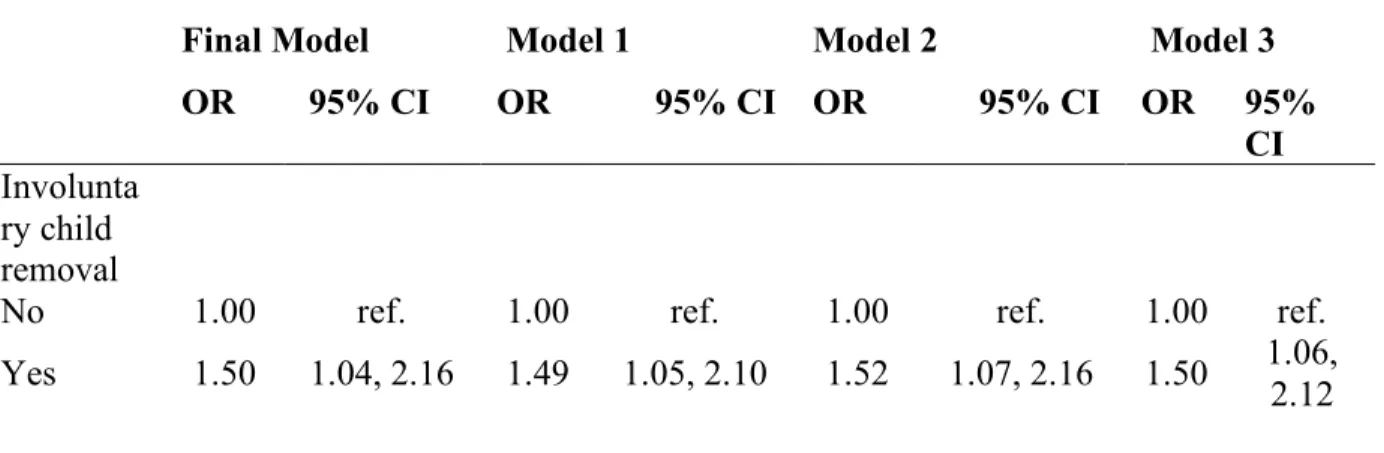
APPENDIX D: SENSITIVITY ANALYSES WITH IMPUTATIONS FOR CHILDHOOD TRAUMA – AESHA COHORT ……….80
APPENDIX E: SENSITIVITY ANALYSES WITH EXPOSURE OF CHILD REMOVAL – AESHA COHORT ………..81
APPENDIX F: MODEL OF INTERSECTION OF INDIGENOUS IDENTITY AND INVOLUNTARY CHILD REMOVAL – AESHA COHORT ………...82
APPENDIX I: SEMI-STRUCTURED, IN DEPTH QUALITATIVE
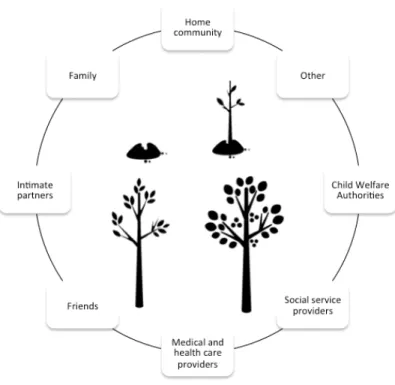
INTERVIEW GUIDE ………...85 APPENDIX J: VISUAL QUESTIONS IN QUALITATIVE INTERVIEW
GUIDE………...94 APPENDIX K: SOCIO-DEMOGRAPHIC CHARACTERISTICS
FOR QUALITATIVE SAMPLE………...96 APPENDIX L: BROAD CODES FOR QUALITATIVE ANALYSIS………...97 APPENDIX M: OUPUT FROM QUALITATIVE ANALYSIS
DEPICTING CASCADE OF NEGATIVE SOCIAL
CONSEQUENCES FOR SEX WORKERS IN AFTERMATH
LIST OF TABLES
Table 1 - Study sample characteristics of women sex workers who reported having a live birth at baseline interview, stratified by ever having child(ren) removed by Child Protective Services and Indigenous Identity, AESHA Cohort Study 2010-2015, Vancouver,
Canada..………..35 Table 2 - Odds ratios for association of involuntary child
removal with current poor/fair self-rated health among
women sex workers in AESHA Cohort Study, 2010-2015………...…36 Table 3 - Odds ratios (OR) for joint effect of having involuntary
child removal and childhood history of removal from parents on current poor/fair self-rated health among women sex workers,
AESHA Cohort Study, 2010-2015………37 Table 4 – Child protection system histories, stratified by
Indigenous Identity, among women sex workers, AESHA
Cohort Study 2010-2015, Vancouver, Canada………..77 Table 5 – Child caregiving arrangements, stratified by Indigenous
Identity, AESHA Cohort Study 2010-2015, Vancouver, Canada ………78 Table 6 – Child protection histories of mothers with children
currently adopted or in foster care, AESHA Cohort Study 2010-2015,
Vancouver, Canada ……….………..79 Table 7 – Comparison of odds ratios (OR) of involuntary child removal
on current poor/fair self-rated health, with imputed values for childhood
trauma, AESHA Cohort Study, 2010-2015 ………..……80 Table 8 – Sensitivity analyses of odds ratios (OR) of involuntary
child removal on current poor/fair self-rated health, assessing role of the exposure per child removal and per number of removals,
AESHA Cohort Study, 2010-2015 ………...81 Table 9 – Odds ratios (OR) for effect of intersection of Indigenous
identity and involuntary child removal on current poor/fair self-rated health among women sex workers, AESHA
Cohort Study, 2010-2015 …………..………82 Table 10 – Odds ratios (OR) for bivariable associations of confounders
with outcome of poor/fair self-rated health among women sex workers,
LIST OF FIGURES Figure 1 – Conceptual model for relationship between
involuntary removal and self-rated health ………84 Figure 2 – Visual prompt 1 used in qualitative interview guide………94 Figure 3 – Visual prompt 2 used in qualitative interview guide………95 Figure 5 - Depiction of cascade of negative social consequences
LIST OF ABBREVIATIONS AESHA An Evaluation of Sex Workers Health Access GEE Generalized estimating equations
HCV Hepatitis C virus
HIV Human Immunodeficiency virus
CHAPTER 1: INTRODUCTION AND BACKGROUND Introduction
It is undisputed that disadvantaged parents are at greatest risk of experiencing the child protection system, with interventions occurring along a continuum, from family support services and referrals, to home monitoring, to, at its most consequential, temporary or permanent
mothers,(16,17) recognizing and addressing the health impacts of custody loss on this population of mothers is a crucial step in supporting family reunification and preventing successive losses of children,(18), and further, constitutes an underexplored area of health disparities research.
Among structurally disadvantaged populations of longstanding interest to public health, sex workers - those who exchange sex for money - experience disproportionately high levels of intervention by the child protection system, largely influenced by the ways that poverty, racism, colonialism, the sex work legal environment, and stigma intersect in their lives.(19–26) In these contexts, women sex workers can face barriers to raising their children, as well as formidable fear of losing parental rights, which introduce additional challenges to accessing needed health, social, and legal services for themselves and their children.(20,24,27) Though studies in
industrialized country settings suggest a high percentage of sex workers are not living with their children.(19,21,28–30), scant attention has been paid to understanding the precise role that events of mother-child separation may play in the lives and health of women in this population. Sex Work, Motherhood, and Family Separation
Literature shows that sex workers face heightened health vulnerabilities, including a disproportionately high burden of HIV infection and high rates of physical and sexual
violence.(31–33) While an established body of research on contextual factors such as sex work legal frameworks, stigma, economic inequities, and work environments point to their critical role in shaping health and HIV risk in this population,(31,32,34–36) little to date has accounted for how these intersect with mothering, including the potential unique structural influence of the child protection system on their health status.
Health Vulnerabilities of Sex Workers
to flourish in many jurisdictions despite widespread criminalization of all or many of its activities and participants.(37) Most recent estimates suggest there are as many as 40 million people working as sex workers worldwide, though the often clandestine nature of this occupation presents challenges in quantifying populations in many developed and developing countries, including Canada.(38) Sex workers represent a diverse population, working in different contexts with varying ecologies of risk.(33,39,40) The hidden spheres characterizing many sex work contexts, and the social, economic, physical, and policy forces colluding in this invisibility, have resulted in the frequent relegation of sex workers to unsafe work environments. Unsafe work environments are often characterized by reduced power to negotiate sexual risk reduction, and are well established as strongly associated with negative health outcomes, including increased HIV and sexually transmitted infections.(41–48) In calls to improve workplace safety and reduce health harms in this population, international policy bodies, such as the World Health
Organization, have petitioned for the full decriminalization of activities relating to consensual sex work for both sellers and purchasers.(49) While policy-legal frameworks in several jurisdictions (i.e., Sweden, Norway, Canada, France, Northern Ireland) have changed over the past twenty years from criminalizing sex workers toward criminalizing buyers,(35) New Zealand has been the only jurisdiction where full decriminalization has been fully implemented, and where empirical evidence has shown improvements to sex workers’ health and safety.(50–53)
Sex workers, as well as their clients and intimate partners, are a key population at risk for HIV infection. UNAIDS indicates that HIV prevalence among sex workers is 12 times greater than among the general population.(54) In aiming to move away from individual-level
government policy, institutionalized racism, poverty, and stigma. Through this lens, research has pointed to the centrality of structural factors in influencing sex workers’ health, including sex work environments,(32,55–57) systemic stigma,(58) housing status,(59) and the sex work sociolegal landscape.(32,35,60) As many sex workers have historically been and continue to be from marginalized populations, this emphasis has also directed new attention to the different social positionalities shaping sex workers’ lives, and the usefulness of intersectional frameworks to examine the different experiences of sex workers, including those who are street-based, as well as those who are transgender, Indigenous, migrants, and drug using.(34,36,61)
Notably, the predominant public health focus on understanding and preventing infectious disease transmission in this population has also corresponded to a neglect of other health and social needs, including mental health and trauma.(62) For example, despite overall high levels of psychological distress in this population, studies examining mental health outcomes remain rare,(32,59,63–66) and few have documented mechanisms through which mental health may influence or be influenced by other facets of sex workers’ health.(36) Further, while evidence identifies higher levels of trauma among sex workers, including childhood trauma (67,68) and adult sexual/physical violence (31,69–71), to be associated to with increased HIV risk
behaviors,(45,48,57,63) there has yet to be clear understanding of how trauma may also relate to other physical health sequelae.
Sex Work and Motherhood
workers can encounter within norms of mothering, and socio-legal and moral framings of their profession as fundamentally risky and dangerous to their children.(23,72) In industrialized country contexts, research points to poverty as a main reason for doing sex work while raising children.(24,73), and while evidence cites the benefits of job flexibility and economic
empowerment as supportive to caring and providing a certain standard of living for children,(20,36,74) research also points to risks of sex work environments to the safety of mothers and children, citing the potential for violence and exposure of children to clients, drugs, or drug paraphernalia.(22,30,73,75) Studies further report that mothers who are sex workers face significant stigmatization as they contend with “society’s diametrically opposed perceptions of sex worker and ‘good mother’ (Dodsworth, 2012, p.1)’”;(20) ‘dual identities’; barriers shown to be especially hard to navigate when women are working out of economic necessity.(23,76) Stigma is also compounded by the criminalization of sex work, the dominant public policy approach in the sex industry, which for mothers confers additional risks of being “discovered” as a sex worker, potentially limiting their mothers’access to health, social and legal services for themselves and their children.(20,73,77) For sex workers, these challenges of mothering are also made more onerous by structural and interpersonal inequalities that can also limit parenting abilities, including poverty, low social support, housing instability, unemployment, racism, classism, and colonialism.(23,25,77) Facing these intersecting barriers, mothers who are sex workers frequently contend with a formidable fear of losing custody of their children, as well as higher rates of family separation.(20,24,79).
Family Separation among Sex Workers
study to date of 1,963 street-based sex workers in New York (US), 69% of women had children and 80% of children did not live with their mothers.(29) In a more recent study of 333 sex workers in the UK, 50% of women were parents, and children were nearly twice as likely to be living away from their mothers as with them.(21) In a study of pregnancy outcomes of 176 women sex workers in Vancouver (Canada), over half of women reported having little or no contact with their children due to their children being involuntarily removed by the child protection system (32%), adopted (19%), or placed with other family members (28%).(28) A second larger study of 350 mothers in the same study population in Vancouver showed higher levels of involuntary child removal, reporting that 134 (38%) women experienced forced separation from their children, among which 79 (59%) were Indigenous women.(19)
In addition to being separated from their own children, there is also evidence that sex workers face a higher prevalence of intergenerational family separation through the child protection system.(19) In a study of street-involved sex workers, Dewey et al. (2018)
contextualize this phenomenon as a consequence of intergenerational poverty, noting how the ‘shared precarities’ both prevalent in the lives of mothers and their biological families,
substantially increase challenges encountered in the child protection system, elevating likelihood of child removal and of long term separation.(23) In a study by Duff et al. (2014), sex workers who had themselves been removed from parents by child protection showed a 48% elevated likelihood in also having their own children removed. Also notable in this study was the markedly higher intergenerational family separation among Indigenous sex workers, a
work.(81,82)
Family Separation and Sex Workers’ Health
The body of literature reporting on experiences of child custody loss among sex workers in industrialized country contexts is limited to a few qualitative and ethnographic studies, which broadly point to events of mother-child separation as contributing to elevated mental distress, drug and alcohol use, street-involvement, and social exclusion.(20,22–24,78,83) In one
qualitative study of 68 sex workers undertaken in Canada (where most participants had children), separation from children, whether instigated by the parent or involuntary, was described as resulting in profound mental distress.(24) Findings of mental distress were also reported by McClelland & Newell (2008) who conducted focus groups with 20 women sex workers who use drugs in the UK and described the aftermath of separation from children as marked by a
subsequent increase in sex work as a mechanism to support their elevated use of drugs and alcohol.(22) Looking at other consequences, Dewey et al.’s (2018) study of 43 street-based sex workers in two North American cities, reported that participants defined a causal effect between child custody loss and their increased drug use and street-involvement.(23) Also, ethnographic findings by Knight (2015) on the institutional challenges faced by street-involved women in the perinatal period, show how time-sensitive windows imposed by institutions during this period can pose additional barriers and sources of mental distress for street-involved women who are trying to keep their families together.(78)
Taken as a whole, this literature highlights the important role of social and structural factors in shaping sex workers’ health, as well as the unique challenges faced by mothers in this population. While to date, sex workers’ experiences with the child protection system have
events of mother-child separation through this system may have on the health status of this key population, including attention on how this added health burden may intersect with the
economic, social and health disadvantages many sex workers already face. Family Separation through the Child Protection System and Health
understanding of foster care effects on children are critical, also vital is understanding and addressing its consequences for birth mothers, including effects on the broader organization of their health and lives, which is central in determining how women can productively engage with the system to achieve reunification, and be better positioned to maintain ties to children.
Family Separation and Women’s Health
While early quantitative work by Jenkins and Norman (1972) was the first to systematically document the painful “filial deprivation” and suffering experienced by birth parents following court-ordered removal of their children by the child protection system,(96) the field of study examining effects on parents has been relatively small. Limited qualitative research examining impacts of child custody loss through child protection on mothers describes this form of loss to be a unique type of adversity with potential long-term implications for women’s well-being, described in a range of both individual-level outcomes, including grief, depression, anxiety, suicidality, and social-structural advertisities, including residential instability, social isolation, stigma, intimate partner violence, and economic disconnection.(99–104) Among studies examining women’s mental health during this period, this type of loss is put forward as a form of institutional trauma, which may exacerbate or lead to the development of posttraumatic stress, as well as contribute to other incidence or worsening of mental health issues, including depression and anxiety.(97,99,100) In my own qualitative research in this area with mothers who use drugs,(99,103) women described the aftermath of separation from their children in persistent symptoms of post-traumatic stress, as well as anxiety, and depression, and increased substance us, which was complicated by panic and worry about their children’s state of well-being in foster care. Though not expansively examined, some women also pointed to worsening
initiation/reinitiation of injection drug use and sex work. In women’s accounts of this period, losses were also describes as deeply stigmatizing, which had wide-ranging consequences, including derailing women’s sense of agency in moving forward with life ambitions, including employment, and negatively affecting formation and quality of intimate and social relationships. To this extent, women also articulated an absence of social acknowledgment of their losses; a process of additional “disenfranchisement” recalled as further compounding women’s social isolation and psychological distress in a social process similar to that referred to by some scholars as ‘‘disenfranchised grief’’.(97,100,104,105)
While population health literature on health outcomes among mothers following child removal through the child protection system was absent when conceptualizing this project, a recently emergent body of quantitative literature by Wall-Wieler et al. (106–108) lends support to the above qualitative findings, providing evidence of several adverse effects on child custody loss on maternal health. In a first study using administratively linked child protection
who had lost a child to death (n=1,143), with results again showing significantly higher rates of mental illness diagnoses, including depression and anxiety, as well as increased substance use among women following child removal.(109) Also, a fourth study comparing mortality rates among 3,948 mothers from 1,974 families in which one sister had a child removed by child protection and one did not, showed much higher avoidable and unavoidable cause mortality among mothers who had a child removed compared to referent group of sisters who did not have a child removed.(107) Together, these studies by Wall-Wieler et al. are the first to quantitatively describe health and social outcomes associated with family separation among birth mothers using robust counterfactuals. They are, however, limited in generalizability due mainly to the unique demographics of the study setting, where Indigenous children represent 90% of all children in out-of-home placement through the child protection system.(110) Given this sample
composition, and since Indigeneity was not an identifier that could be adjusted for in these analyses, in the majority of these studies it is difficult to disentangle the unique effects of family separation from other adverse social and economic compositional effects in this population that result from racism and ongoing colonialism. Thus, while these studies are foundational in
advancing understanding of some of the negative maternal health and social sequelae for women, replication of similar studies is needed in other settings, including in population-specific studies with mothers who are at highest risk of child protection involvement and most in need of tailored preventative interventions. Further, more precise identification in future studies of mechanisms contributing to these health disparities would also be useful in facilitating of intervention relevant information.
Intergenerational Family Separation and Health
have their own children removed (111,112), there is a strong public health rationale to also consider the potential unique implications of intergenerational child protection involvement on health. In a few studies, findings identify post-removal mental health and reunification outcomes to be worse for mothers who themselves were removed from their parents.(113) This includes a recently published Swedish study by Wall-Wieler et al. (2018) where mothers with two
generations of involvement in out-of-home placement (themselves as children and their own children) experienced five times greater risk of death by suicide, including more than double the risk of suicide of women with one-generation of involvement. Notably, for fathers in this study, any exposure to out-of-home placement (across one or two generations) did not affect risk of death by suicide. Looking to potential mechanisms that may underlie increased mental health morbidity among intergenerationally involved families, literature suggests the likely roles of family history of mental illness, adverse childhood experiences,(114,115) and accumulated social disadvantage throughout the life course, as equipping some mothers with fewer resources to rely upon when parenting, thereby increasing likelihood of child removal and of long term separation.(112,113) Much in this field of inquiry, however, remains unknown, including attention to the potential roles of worsening poverty and social exclusion that may result from family separation and be carried forward to the next generation, resulting in increased
disenfranchisement and renewed involvement in the system.(98)
Intergenerational family separation is particularly important to highlight in this project because of the high proportion of Indigenous women in our study who have experienced multiple generations of family separation.(19,82) This practice, occurring on these lands for the past 400 years, began with the Residential and Boarding School Systems in the early1600s, forced
in the foster care system.(80) This systematic disruption of family bonds is widely recognized as a central modality of colonial power,(116,117) and form of systemic dehumanization and
genocide.(80,118–121) The cycle of forced family separation is also reinforced by ongoing systemic stigma toward Indigenous mothers, who have been historically constructed as
legitimate sites of colonial intervention, blamed and pathologized for their parenting ‘problems’ that are sourced in the effects of colonialism and their marginalized social status.(116,120,122) While the association between attendance at Residential School and poor health has been well documented in health literature, and is also shown to be implicated in health disparities between Indigenous and non-Indigenous people,(80,123,124) fewer health studies have quantitatively examined the association of residential school and the health of subsequent
generations,(125,126) and no known health studies have investigated the health impacts of intergenerational family separation through the child protection system. This paucity of health literature, however, should not disregard perspectives of Indigenous leaders and scholars, who have precisely articulated historical and current traumas related to forced separation of families, as well as other losses (e.g., land, cultural traditions, self-determination) as key factors
undermining health.(118–121) This includes Indigenous scholars, Brave Heart and Debruyns (1998), who pioneered the concept of ‘historical trauma’ in psychology literature to capture the burden of cumulative health injury and devastation caused by colonial policies, such as forced family separation, as extending beyond that suffered by direct survivors, to affect their children, grandchildren and future generations.(127)
Study Aims and Overview
health analyses into specific health impacts for sex workers, a disproportionately affected
population, are limited. To this extent, it remains unclear how and through what mechanisms this form of loss can exert influence on sex workers’ health. More systematic understanding of the nature of these relationships is worthwhile to inform recommendations for policy and
programming to improve parenting experiences and family reunification outcomes in this
population. This dissertation marks the first in-depth examination of links between child custody loss and the health status of sex workers, and is guided by the following overarching research question: What is the role of child custody loss to Child Protective Services in shaping health and wellbeing among women who do sex work?
To help anchor this dissertation, in Chapter 2, I outline various theoretical perspectives to help frame and interpret understanding of the link between child custody loss and maternal health. To answer my research question, quantitative and primary qualitative data (collected over the course of this project) were drawn from An Evaluation of Sex workers’ Health Access (AESHA) study, an observational open cohort of 950 sex workers in Vancouver, Canada. Using a convergent parallel mixed-methods design,(128) where there is relative independence of both quantitative and qualitative components, this dissertation explores the following research questions:
Chapter 3. To what extent is prior child custody loss to child protection associated with
wellbeing (self-rated health) among women sex workers? Are there differences in the association with wellbeing by characteristics of child protection histories (number of times children were removed, number of children removed, intergenerational family separation) and by
race/ethnicity?
workers’ health and wellbeing?
In Chapter 2, I outline contributions of various theoretical perspectives that inform and frame understanding of the relationship between child custody loss and women’s health. Life course, postcolonial and intersectionality theories, as well as critical perspectives on trauma, represent important theoretical points of departure for this dissertation. Integrating these theoretical positions allows closer examination of historical, structural, social and individual-level explanations of how events of child custody loss impact health.
In Chapter 3, using longitudinal AESHA data, I examine the relationship between lifetime events of involuntary child removal reported at baseline and repeated measures of women’s subjective wellbeing in follow up. Contributing to a growing literature of life course influences on health, I conceptualize that women’s past experiences of child removal are a unique type of traumatic life event leading to a proliferation of stress and deterioration in health.(129) In models, I adjust for confounders selected based on the literature, and adjust for clustering due to repeated observations on individuals over time. In secondary analyses, I investigate potential interaction and effect measure modification by Indigenous ancestry and intergenerational family separation, and further, in sensitivity analyses test the role of the exposure per child removal and per number of removals.
help regenerate their families and health.
CHAPTER 2: THEORETICAL FRAMEWORK
In examining the health impacts of the child protection system, a social institution that is associated with racially and historically marginalized families, theory is important in elevating analyses beyond the micro level to an examination of the complex socioeconomic, historical, and political relations in which women’s experiences of this system are embedded.(130–132) Life course, postcolonial and intersectionality theories, and critical perspective on trauma are therefore important points of departure informing my dissertation.
Life Course Theory
physiological dysregulation, accelerated aging, or premature death.(134) Life course theorists also argue that stress proliferation can alter an individual’s social environment, leading to secondary adverse exposures, such as financial hardship or loss of housing, that compound harms to health.(129) “Sensitive periods” or timing of stressors is another useful component of the life course perspective, particularly in interpreting effects of intergenerational family
separation on health. For example, when a mother was herself removed from her parents by child protection in the developmentally sensitive period of early life, this additional stress is likely to exert a “biological embedding” of health vulnerability,(135) which can have far-reaching effects on biological systems and health over the life course that should be considered in analyses of child protection-affected populations.(84) Additionally, life course theory highlights the concept of “linked lives,” which elevates the interdependence of mothers’ and children’s health, and undergirds the public health rationale for mitigating the negative health effects of family separation on birth mothers, as a vital step to improving family reunification outcomes and strengthening mother-child relationships, both of which are well-established as positively affecting mothers’ and children’s wellbeing.(136)
Postcolonial Theory
child protection system and colonialism are closely connected and have intertwined histories, the former perceived as a modality of colonial power that sustains settler society by reinforcing dispossession of Indigenous peoples of their lands and sovereignty.(116,119,122) This theoretical approach recognizes the ways that colonialism is carried in bodies and how the experiences of Indigenous women in this study are situated within a causal sequence shaped by colonial history and its long-standing disempowerment of Indigenous women and mothers as primary targets of colonial intervention.(119–121,141)
Intersectionality Theory
To understand the intersections of mothering and sex work, and the structural
impediments through which health vulnerability is produced for this population, careful attention is further needed to interconnections between different systems of injustice and forms of
(p.1267).”(145) In study analyses, this framework recognizes sex workers as an ‘intersectionally-targeted’ population,(146) and helps to articulate how social, economic, historical, and racial positionalities combine to differentially alter women’s institutional interactions, as wel as conditions of motherhood and health. This framework also advocates for the importance of intersectional interventions developed from the perspectives of marginalized populations (i.e., sex worker-led) to remedy the injustices faced while acting carefully to not legitimize more harm.
Trauma
Limited previous research identifying child custody loss through the child protection system as a source of institutional trauma for birth mothers is a central starting point for my dissertation. (97,99,100) In framing ‘trauma’, I draw on a critical perspective from medical anthropology, which bring to analyses a conceptualization of trauma that is inseparable from the social conditions and institutional arrangements underlying its transmission. Tracing the social history of ‘trauma’ scholarship, Fassin & Rechtman (2009) challenge prevailing constructions of trauma that operate to reduce traumatic events and their conditions of injustice to an inventory of symptoms and disorders.(147) They also direct critical attention to what factors determine how events become legitimized as ‘traumatic’ for some people, while not for others.(147) Though not disputing the legitimacy of clinical services for symptoms of trauma, these modalities (put forward by Fassin and Rechtman and others) challenge tendencies for intra-individual somatic explanations of trauma, and bring into question the positioning of trauma as both cause and end result of suffering.(147–149)
about Indigenous peoples’ mental health without directly account for the roles of colonial processes and structures.(121,150,151) This literature further argues that the conception of ‘trauma’ as occurring within an ‘individual’ is an inherently flawed logic, rooted in colonial norms and definitions of illness, which denies the collective nature of colonial trauma for Indigenous peoples, thus enacting what Indigenous scholar Taiaiake Alfred (2009) describes as the ‘final stage of colonialism’.(152)
CHAPTER 3: FAMILY SEPARATION AND MATERNAL SELF-RATED HEALTH: EVIDENCE FROM A PROSPECTIVE COHORT OF MARGINALIZED MOTHERS IN
A CANADIAN SETTING. Background
Recent population estimates of children residing out-of-home due to involvement with child protective services indicate that 428,000 children in the US and 62,428 children in Canada are currently living apart from their parents.(153,154) There is mounting evidence demonstrating that child protection involvement is a socially patterned phenomenon, where poor families are more likely to experience intervention by the child protection system,(6) have children
removed,(7) and face lower rates of reunification;(8) and where racially marginalized families, especially Indigenous and Black families, are widely overrepresented.(118,155) While health studies in this area have primarily focused on the health of children placed out-of-home, showing a higher frequency of negative physical and psychological health outcomes over the life
course,(156) the consequences of out-of-placement on parents’ health, particularly mothers (often primary caregivers at the time of out-of-home placement), remain under-investigated. Since a majority of children formally reunify or eventually reestablish ties with mothers, understanding the health effects of child removal on women, especially those cited in literature as already structurally disadvantaged and vulnerable to poor health, is an important step in preventing successive removals and supporting mother-child relationships, and further, constitutes an under-explored area of health disparities research.
their lives that are shaped by poverty, racism, and the sex work policy/legal environment, which can differentially influence the likelihood of child protection intervention into their
families.(19,23,24,157) Research shows sex workers can face formidable fear of losing parental rights, which has been shown to negatively impact their health by introducing additional barriers to accessing health, social, and legal services for themselves and their children,(20,24) and often contributes to a mistrust of government services.(27) Epidemiologic findings point to a high burden of child custody loss in this population, though research to date has been mostly limited to the experiences of street-based sex workers.(19,28) In the largest North American study on reproductive outcomes in this population, findings from a sample of 350 sex workers in Vancouver (Canada), of which 43% were Indigenous women, showed that 38% of women had experienced child removal, and among these 59% were Indigenous women.(28) This racial disproportionality suggests interactions with the child protection system are more consequential for Indigenous sex workers, and also reflect a wider trend in Canada and the US, whereby Indigenous children are at greatest risk for foster care compared to all other racial/ethnic groups.(5,118) This phenomenon is recognized as an extension of government-sanctioned removal of Indigenous children from their families dating back to the 1600s with the beginning of the Residential and Boarding School Systems in North America, and later through involuntary adoptions.(80,120) Such colonial initiatives, along with ongoing removal of land and basic provisions of housing, food and income, have been long acknowledged as forms of genocide and collective trauma for Indigenous peoples,(127) and notably have also been linked to the
overrepresentation of Indigenous women in street-based sex work.(82,158)
child removal was associated with increased odds of injection drug use and reduced occupational safety.(19) A small number of qualitative studies further describe child removal as precipitating elevated mental health distress, housing instability, and increased drug use.(20,24) Previous research examining child removal among women in other populations also shows higher levels of mental health distress (including suicidality, grief, depression, anxiety) and increased drug use, as well as poorer physical health and higher mortality.(97,99,100,106–108) Among these, some studies postulate that child removal constitutes a traumatic exposure,(100) associated with post-traumatic stress, as well as worsening social-structural disadvantage, including housing instability and intimate partner violence.(99,108) Examining intergenerational involvement with child protection, studies also suggest that post-removal maternal mental health and reunification outcomes are worse for mothers who themselves were removed from their parents.(113) This is an important consideration for sex workers, which some research suggests face a higher
frequency of intergenerational familial separation compared to the general population.(19) Looking to develop a theoretical foundation to better understand the potential
mechanisms underlying the relationship between child removal and sex workers’ health, and its role in women’s health disparities overall, we draw on a life course perspective (133) and the “weathering” process (134). We conceptualize that women’s experiences of child removal (themselves as children, their own children, or both) are structural-level traumatic stressors with subsequent reverberating effects, including on the pathways between child removal and
“weathering” process to account for how child removal, along with other stressors, may get “under the skin,” triggering a “wearing out” of the body and sustained increases in allostatic load, which over time leads to physiological dysregulation, accelerated aging or death.(134) In this conceptualization, events of child removal are theorized as independently and cumulatively increasing women’s traumatic stress, allostatic load, and health disadvantage, a process that may be particularly damaging for Indigenous women in our study because of conditions of historical and ongoing colonialism.(141)
To address the paucity of research on the link between child removal and the health of marginalized women, the objective of our study was to examine the relationship between involuntary child removal and women’s health trajectories in a prospective cohort study of sex workers, An Evaluation of Sex workers’ Health Access (AESHA). We estimated the association between child removal and sex workers’ self-rated health over time, and also estimated the joint effects of child removal and childhood history of removal from one’s own parents.
Methods Study sample
Our study used data from the AESHA Study, a community-based open prospective cohort initiated in 2010 (n>950) in Metro Vancouver (Canada). The study builds upon longstanding community collaborations with sex work agencies since 2005,(159) and continues to be monitored by a Community Advisory Board of representatives from 15 community agencies.
Individuals who self-identify as women (trans-inclusive), are 14 years and older, have exchanged sex for money in last 30 days, and provide written informed consent, are eligible for inclusion in the cohort.(160) Because of challenges of recruiting sex workers in isolated
sex workers) in spaces identified through a community mapping process where solicitation occurs and/or where services are exchanged, including indoor sex work establishments (i.e., massage parlors), and outdoor sex work venues (i.e., parks, underpasses).(159) The study holds ethical approval through Providence Health Care/University of British Columbia Research Ethics Board.
At enrollment and on a semi-annual basis, participants complete an
interviewer-administered questionnaire and HIV/STI/HCV serology testing by a project nurse. In the main questionnaire information is gathered on socio-demographic characteristics, sex work patterns, drug use patterns, physical work environments, social/interpersonal environment, and structural environmental factors, and geographic data. Sex workers have the option to visit one of two storefront offices in Vancouver or to complete the interview-administered questionnaire and nursing component at their work or home location. Participants receive an honorarium of $40 CAD at each biannual visit.
Measures
We restricted our analysis to a sample of women sex workers who reported a live birth at the first baseline interview and responded to the baseline question about involuntary child removal
(n=466). We conceptualized the exposure of child removal as a structural-level traumatic stressor, and identified structural, interpersonal, and individual-level confounders based on the literature.
Exposure –Involuntary child removal
Exposure to involuntary child removal was assessed at baseline according to participants’ response to the question “Have you ever had any children apprehended by Child Welfare
having a live birth in the last 6 months were again asked in follow-up interviews, if they had any children removed in the last 6 months. Among 12 participants reporting child removal in follow-up periods, all had also reported events of child removal at baseline. A sensitivity analysis was conducted to assess bias due to time-varying confounding when including these participants. This analysis showed a negligible difference in the main effect estimate (<2%) in the full versus restricted sample, and thus a decision was made to include these participants in the exposed category. Further sensitivity analyses were conducted to evaluate the role of the number of children removed and the number of removals.
Outcome – Self-rated health
We assessed women’s health dynamics over time using repeated measures of self-rated health (every 6 months). Self-rated health is based on the following question “in general, how would you rate your health?” with answer options of “excellent,” “very good,” “good,” “fair,” or “poor”?’ Constructed as a five-point scale, it is frequently dichotomized as “excellent, very good, or good health” versus “fair or poor health,” and in our analysis was dichotomized following this approach. As a measure, self-rated health has been shown to be associated with a person’s morbidity and mortality, as well as accounting for an integrated perception of overall health, including the dimensions of physical, mental and social wellbeing.(161)
Covariates
removal from parents were obtained via self-report during baseline interviews. Indigenous identity was categorized as “First Nation”, “Inuit”, “Aboriginal” or “Métis” versus no to all. History of childhood trauma was a continuous variable measured using the Childhood Trauma Questionnaire,(162) a 25-item scale, with high numbers indicating greater traumatic stress. Residential stability in the last 6 months was obtained at baseline and every 6-months thereafter, stable housing was assessed as living in an “apartment/house alone” or in an “apartment/house with roommates/ intimate partner/ family”, and all other housing arrangements were considered “unstable” (e.g., “single-room occupancy”, “couch surfing”, “shelter/hostel”,
“treatment/recovery house”, etc.). A dichotomized variable for physical and/or sexual violence in the last 6-months was created to indicate any violence by a client or intimate partner versus none. A variable was created for any injection and/or non-injection drug use in the last 6 months
(excluding marijuana and alcohol) versus “none”. Material support from social network in the last 6 months was assessed at baseline and every 6-months thereafter, using the question “When you need money, who do you most often rely on to get it?” Relying on “clients”, “intimate partners”, “family”, “friends” or “other” indicated material support versus relying on “yourself” only. Primary place of sex work solicitation in the last 6-months was obtained at baseline and in follow-up interviews, and categorized as street-level versus indoor/independent off-street (e.g. online/phone) or no sex work in the last 6-months (referent category). For purposes of describing intergenerational family separation, we also included a variable assessing whether a participant’s biological parents or family members spent any time in the Residential School System.
Statistical analyses
estimating equations (GEE) and an exchangeable correlation structure was used to estimate crude and adjusted odds ratios (OR) and 95% confidence intervals (CI) of the relationship between child removal and repeated measures of self-rated health assessed over an average of 4 waves of follow-up. A complete case analysis was used to handle missing observations in multivariable models. To account for omitted cases due to non-random missing data for the childhood trauma covariate (10%), we undertook a sensitivity analysis, where we imputed participants’ median, highest, and lowest value for childhood trauma for all of the observations with missing values. We then conducted multivariable logistic regression with full model including the imputed values. The magnitude and precision of estimates in full models with and without imputations were similar and thus we have reported the non-imputed estimates.(Appendix D) Other missing data considerations included multiple imputation for childhood trauma, however this was not possible based on available variables and information collected by the AESHA study.
Confounders included in the full model were determined according to a priori justification and by strength of associations with: a) exposure; and b) outcome among
unexposed. Since the outcome of self-rated health assesses dimensions of mental health, we did not adjust for mental health status to avoid blocking the hypothesized causal pathway. To avoid over-adjustment, multicollinearity was assessed using variance inflation factors and Pearson correlation for each variable pair. The fully adjusted model was considered the least biased model, and a backwards elimination, change-in-estimate approach was used where inclusion of confounders was based on change in confidence limit ratios (a prior >0.01) observed in
comparison to a change in estimate (a priori >0.05).
from own parents were assessed using stratum-specific odds ratios with 95% Cis (Tables 3 and 9) and the Quasi-likelihood Information Criteria to compare the fully-adjusted main effects model and reduced models. All analyses were performed using SAS (version 9.4; SAS Institute, Cary, NC).
Results
Baseline characteristics of the sample are shown in Table 1. Of 466 mothers, 180 (38.6%) experienced the exposure of involuntary child removal. Women who experienced child removal were more than twice as likely to have a history of removal from their parents (51.1% vs. 19.2%). They were also more likely to be Indigenous women, to be younger, to be born in Canada, to have elevated levels of childhood trauma, to have not completed high school, and to have a mental health diagnosis. Further, in the last 6-months they were more likely to have residential instability, to have done street-based sex work, to have used injection or non-injection drugs, and to have experienced physical and/or sexual violence by clients or intimate partners.
As previously documented,(19) Indigenous mothers (n=173) in the sample were more than twice as likely to have experienced child removal compared to non-Indigenous women (60.7% vs. 25.6%), and were more than three times as likely to have experienced
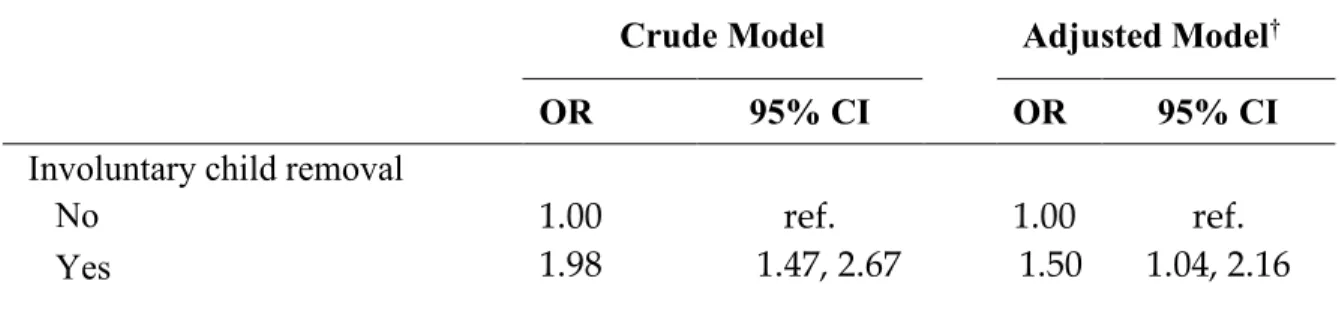
Table 2 shows the relationship between child removal and women’s self-rated health in a crude model and multivariable adjusted model. In the adjusted model, women who experienced child removal had increased odds (OR 1.50, 95% CI 1.04, 2.16) of poorer health compared to women who did not. Sensitivity analyses of the number of children removed and the number of times removals occurred were not associated with worsened health (Appendix E, F).
In effect modification analyses by Indigenous status, the relationship between child removal and self-rated health was similar for both Indigenous and non-Indigenous women (Appendix G). When child removal and history of removal from one’s own parents were
considered as joint exposures, each experience individually was associated with worse self-rated health and the combination of the two was associated with the worst health (OR 2.04, 95% CI 1.27, 3.27) (Table 3).
Discussion
Using prospectively collected data on sex workers in Vancouver (Canada), we found that women’s prior experience of involuntary child removal was associated with poorer self-rated health over the study follow-up period. This relationship was attenuated but remained significant after adjustment for individual, interpersonal and structural-level risk factors, highlighting their potential explanatory and mediating influences. We also found some evidence that the joint intergenerational effect of child removal and history of removal from one’s parents was associated with a higher burden of poor health.
such as loss of income and housing instability,(98,108) which are also well-established as having deleterious effects on health. Results support earlier studies with mothers who are sex workers documenting the aftermath of child removal as characterized by worsened mental health and increased drug use (19,20,24) while also extending this literature by formally assessing the relationship between child removal and health status in this population. Together, these findings are compatible with the theory that child removal can be a widely disruptive life event conferring additional health and social-structural disadvantages to sex workers, and, as shown in our study, poorer self-rated health over time.
The odds of poorer self-rated health was greatest for women facing two generations of child removal, a majority of whom were Indigenous sex workers. Descriptive results showed extremely high prevalence of family separation among Indigenous women, which in some cases spanned three or more generations, including removal from biological parents and familial attendance at Residential School. This finding supports earlier research on diminished wellbeing of second generation mothers involved in the child protection system,(113) and adds to a
growing evidence base positioning this system as a vector of colonization, that is inseparable from other forms of colonial dispossession, including loss of lands and culture, and inequitable provisions of housing, food, income, and health services.(80,118) This finding also suggests that intergenerational child removal may have a larger cumulative influence on life course health trajectories than each generation individually, and thus supports the likelihood of family
implications for population-level health disparities between Indigenous and non-Indigenous
peoples, of which the extent and impact requires attention. Our findings support the salience of initiatives to preserve families and prevent child
removal among marginalized women, such as efforts to promote positive parenting experiences from birth. These include ‘rooming-in’ hospital-based programs for mothers with drug-exposed newborns, which have been shown to decrease lengths of stay of newborns, increase maternal custody of infants at discharge,(163) and reduce hospital expenditures.(164) The sheer
magnitude of this exposure among sex workers in our study also highlights the need for tailored services for marginalized mothers, including sex worker-led family support and preservation services, including systemic advocacy to prevent child removal, and in cases of removal, post-removal health, legal, and social supports. Further, the disproportionately high number of Indigenous sex workers dealing with child removal, and intergenerational family separation, greatly emphasize the need to challenge colonial structures, and ensure development of
Indigenous sex worker-led pregnancy and parenting services, including culturally safe birthing services and family-centered housing.
Limitations
status pre- and post-child removal to accurately assess causality, nor could we ascertain specific reasons for child removal, and whether these were associated with health status. Second, while we had acceptable data on child removal, we did not have data on event timing and could not account for how time-lapse since the event may differentially affect health. Third, we could not assess current status of mother-child relationship, including whether reunification had occurred following events of removal. Fourth, measurement inaccuracy of variables is also a limitation due to poor recall, a wish for privacy, or other reasons, however, good rapport with the AESHA interview staff may minimize social desirability bias.
Conclusion
Our findings echo calls for researchers to take account of the effects of the child protection system in the patterning of health among marginalized populations, including
Table 2: Odds ratios for association of involuntary child removal with current poor/fair self-rated health among women sex workers in AESHA Cohort Study, 2010-2015.
Crude Model Adjusted Model†
OR 95% CI OR 95% CI
Involuntary child removal
No 1.00 ref. 1.00 ref.
Yes 1.98 1.47, 2.67 1.50 1.04, 2.16
†Adjusted for: age, education, Indigenous identity, childhood history of removal from parents, childhood trauma, sexual or physical violence by a client or partner, housing status, injection or non-injection drug use, material support from social network and place
Table 3: Odds ratios (OR) for joint effect of having involuntary child removal and childhood history of removal from parents on current poor/fair self-rated health among women sex workers, AESHA Cohort Study, 2010-2015.
n OR† 95% CI
No childhood history of removal from parents No involuntary child removal 225 1.00 ref. Involuntary child removal 80 1.56 0.95, 2.57
Childhood history of removal from parents
No involuntary child removal 55 1.41 0.81, 2.46 Involuntary child removal 92 2.04 1.27, 3.27
Adjusted for: age, education, Indigenous identity, childhood trauma, sexual or physical violence by a client or partner, housing status, injection or non-injection drug use,
CHAPTER 4: HEALTH CONSEQUENCES OF MOTHER-CHILD SEPARATION AMONG MARGINALIZED WOMEN SEX WORKERS: CONSIDERING
TRAJECTORIES, MECHANISMS, AND RESILIENCIES.
The child protection system can be a highly consequential social institution for
marginalized mothers, who amid intersecting forces of poverty, racism, colonialism, and
criminalization, often face temporary or permanent termination of parental
rights.(19,21,23,25,30,165) While to date, an established body of scholarship has shown a mix of
effects of involuntary removal on the social and health outcomes of children placed
out-of-home,(88,93,94,156) there has been limited assessment of its impacts on birth mothers;(12,110)
virtually all of whom are poor and thus already face a health disadvantage. Aiming to think more
expansively about this institution through its health influences on marginalized mothers, this
paper considers how event of mother-child separation were perceived as affecting trajectories of
health and wellbeing in a Canadian sample of street-based sex workers, a majority of whom were
Indigenous women and have faced intergenerational separation of their families.
Background
Across industrialized jurisdictions, the majority of street-involved sex workers are of
reproductive age and have children,(19) yet their reproductive health and parenting experiences
are rarely documented in research, and there is little understanding of how these domains interact
with social institutions, such as the child protection system. Inattention to these issues has
broadly obscured the conflicts that sex workers can encounter with cultural norms of mothering,
dangerous to their children.(23,72) Sex workers face high levels of stigmatization as
mothers,(23,25) as they contend with “society’s diametrically opposed perceptions of sex worker
and ‘good mother’ (Dodsworth, 2012, p.1)’”;(20) ‘dual identities’, which may be further harder
to navigate when women are working out of economic necessity.(23,76) The stigma facing this
population can also be compounded by criminalization of sex work, the dominant public policy
approach to the sex industry, which confers additional risks to mothers of being “discovered” as
a sex worker, and in turn, can create barriers to health, social support, and legal services for
themselves and their children.(20,73,77) Moreover, these challenges are complicated by the
numerous structural and interpersonal inequalities that sex workers are often facing, such as
poverty, low social support, racism, and colonialism, which can severely limit access to positive
maternal identities.(19,23,78)
Given these multiple barriers, women sex workers frequently contend with a formidable
fear of losing child custody,(20,24,79) and several North American studies point to a high
burden of this form of loss in this population.(19,25,26,28,29) For sex workers, some evidence
suggests this may also more commonly reflect an intergenerational cycle of family separation,
whereby women facing the removal of their own child(ren) are also likely to have been removed
from their parents as children.(19,30) Dewey et al. (2018) articulate this as a consequence of
intergenerational poverty, revealing how the ‘shared precarities’ both prevalent in the lives of
mothers and their biological families, can substantially increase challenges encountered by sex
workers in the child protection system, elevating likelihood of child removal and of long term
separation.(23) In a Canadian study by Duff et al.,(2014) sex workers who had themselves been
removed from parents by child protection showed a 48% increased odds in subsequently having
separation among Indigenous sex workers; a phenomenon that is widely recognized as
inseparable from ongoing colonial policies in Canada, which also have been closely linked to the
overrepresentation of Indigenous women in street-based sex work.(82,158)
Colonialism and intergenerational family separation are closely interconnected for
Indigenous sex workers in several colonial jurisdictions (i.e., Canada, the United States,
Australia, and New Zealand), where previous research shows an extremely high burden of child
protection interventions in this population.(19,79,166) This pattern is also reflective of the wider
experience of Indigenous peoples and longstanding colonial policies targeting their families. In
Canada, these practices began the arrival of Europeans and the genocidal policies of the
Residential School System, which for almost 400 years, sanctioned the forced removal of
150,000 Indigenous children as young as 3 years old from their parents and communities.(80)
This System was eventually replaced beginning in the 1960s through 1980s by state-led
initiatives of forced adoption of thousands of Indigenous children into White families (known as
the ‘Sixties Scoop’), followed by its latest iteration, known as the ‘Millenium Scoop’,(167)
observed in the significant over-representation of Indigenous children in foster care, where they
presently comprise over 50% of foster care children under 4 years, despite accounting for only
7% of Canada’s child population.(168) More broadly, the generations of forced family separation
have also reinforced and made less repressible other forms of colonial violence towards
Indigenous peoples that have targeted Indigenous lands, culture, and sovereignty, which further
act to deeply undermine the health and livelihoods of Indigenous peoples.(141,151) In
discussions of the health impacts of colonial family separation policies, it is also instructive to
recognize that while Indigenous communities and scholars have precisely articulated historical