THE EFFECT OF CRIME IN MEXICO ON HEALTHCARE ACCESS AND UTILIZATION IN THE UNITED STATES-MEXICO BORDER REGION
Kimberley Lynn Heard Geissler
A dissertation submitted to the faculty of the University of North Carolina at Chapel Hill in partial fulfillment of the requirements for the degree of Doctor of Philosophy in the Department
of Health Policy and Management.
Chapel Hill 2013
Approved by:
George Mark Holmes, PhD Charles Becker, PhD Sheila Leatherman, MSW Frank Sloan, PhD
Sally Stearns, PhD
© 2013
ABSTRACT
KIMBERLEY L. H. GEISSLER: The Effect of Crime in Mexico on Healthcare Access and Utilization in the United States-Mexico Border Region
(Under the direction of George Mark Holmes, PhD)
The United States (US)-Mexico border region is an important and understudied area for research on disparities in healthcare access, quality, and cost. There is a long history of crossing the border for healthcare, in which many US citizens and legal residents from the border region cross into Mexico for medical treatment and/or to purchase pharmaceuticals. Border crossing is common due to a low supply of healthcare services on the US side of the border, cultural preferences, dissatisfaction with care in the US, looser prescription requirements, and more affordable provider options. With increased violence in northern Mexico beginning in late 2006, it was not known whether patterns of border crossing had changed. No prior studies had
addressed the impact of crime in Mexico on border crossing for healthcare, and it was not known whether people would continue crossing into Mexico for medical care, substitute care from Mexico with care from a US provider, or forego care altogether.
healthcare access in the four border states (Arizona, California, New Mexico, and Texas) as measured by self-reports of having a regular healthcare provider, needing medical care but not being able to access due to cost, and cervical/breast cancer screening. In Study 2, I examined the association between homicide rates and hospitalization for ambulatory care sensitive conditions in Arizona, California, and Texas. I found a positive relationship in border counties, indicating that individuals may be suffering from reduced access to ambulatory care in border counties with high crime rates in nearby Mexican municipalities. In Study 3, I examined the association
between homicide rates and potentially avoidable emergency department encounters and did not find a statistically significant association.
ACKNOWLEDGEMENTS
I would like to acknowledge the support of the many people who helped in the
completion of this dissertation. I am extremely grateful to my committee – Mark Holmes, Sally Stearns, Sheila Leatherman, Charlie Becker, Harsha Thirumurthy, and Frank Sloan – for their patience, guidance, and generous time and support during this process.
I would also like to thank staff, colleagues, and friends in HPM and at Duke for their support and assistance. Morris Weinberger was instrumental in guiding me through the PhD program. Members of my dissertation writing group (Jeff Federspiel, Alice Fortune-Greeley, Ashley Kranz, Mona Kilany, Liz La, and Laurel Trantham) provided generous help in turning vague ideas and first drafts into final products, providing a sounding board for methodological challenges, and giving unwavering support throughout the past few years. The development economics reading group at Duke was extremely supportive in helping me find datasets and providing new insights and ideas. Additionally, many thanks to Sarah Hamilton for her help and perseverance with obtaining data and walking me through unfamiliar processes.
I am grateful to my family and friends for providing unending encouragement and support. In particular, to Chris – I couldn’t have done it without you.
Additional acknowledgements are due to the National Bureau of Economic Research for providing Arizona inpatient data and to the State of California Office of Statewide Health Planning and Development for providing California inpatient and emergency department data. I appreciate the time of the interviewees that provided helpful background information on
Lastly, I would like to acknowledge the funding sources for this work. This project was supported by the Agency for Healthcare Research and Quality, US Department of Health and Human Services, Rockville, MD (grant number R36HS021074). I also received support from the Lovick P. Corn Dissertation Fellowship, the University of North Carolina Royster Society of Fellows, and the Robert and Kristen Greczyn Scholarship in Public Health. The content is solely the responsibility of the author and does not necessarily represent the official views of the
PREFACE
TABLE OF CONTENTS
LIST OF TABLES ... x
LIST OF FIGURES ... xii
LIST OF ABBREVIATIONS ... xiii
Chapter 1. INTRODUCTION ... 1
I.A. Background ... 1
I.B. Overall Study Purpose and Approach ... 1
I.C. Specific Aims ... 2
I.D. Summary and Significance ... 4
2. LITERATURE REVIEW AND CONCEPTUAL MODEL ... 5
I.A. Background on the US-Mexico border region ... 5
I.B. Border crossing for healthcare ... 6
I.C. Increased violence in northern Mexico ... 7
I.D. Estimates of impact of violence on healthcare available in Mexico ... 9
I.E. Conceptual model ... 10
I.F. Figures and Tables ... 12
3. QUALITATIVE INTERVIEWS ... 14
I.A. Introduction ... 14
I.B. Responses ... 14
I.C. Summary of Responses ... 23
4. STUDY 1 – EXPLORING THE ASSOCIATION OF HOMICIDES IN NORTHERN MEXICO AND HEALTHCARE ACCESS FOR
US RESIDENTS ... 26
I.A. Overview ... 26
I.B. Introduction ... 26
I.C. Methods ... 28
I.D. Results ... 35
I.E. Discussion ... 39
I.F. Figures and Tables ... 43
5. STUDY 2 – VIOLENCE IN MEXICO AND HOSPITALIZATIONS FOR AMBULATORY CARE SENSITIVE CONDITIONS IN THE US: EVIDENCE FROM THE US-MEXICO BORDER REGION ... 50
I.A. Overview ... 50
I.B. Introduction: ... 51
I.C. Methods: ... 52
I.D. Results ... 59
I.E. Discussion ... 63
I.F. Figures and Tables ... 67
6. STUDY 3 – POTENTIALLY AVOIDABLE EMERGENCY DEPARTMENT USE IN THE US AND VIOLENCE IN MEXICO: IS THERE A RELATIONSHIP? ... 74
I.A. Overview ... 74
I.B. Introduction ... 74
I.C. Methods ... 76
I.D. Results ... 81
I.F. Figures and Tables ... 86
7. DISCUSSION ... 89
I.A. Results ... 89
I.B. Limitations ... 91
I.C. Policy Implications and Future Directions ... 93
I.D. Summary ... 94
LIST OF TABLES
Table 3.1: Summary table of qualitative interviews...24
Table 4.1: Poisson model predicting number of US entries from Mexico………...44
Table 4.2: BRFSS summary statistics for analytic sample………...45
Table 4.3: Linear probability models predicting reporting having a personal healthcare provider………..………..47
Table 4.4: Linear probability models results for selected subgroups and different outcomes………..………...49
Table 5.1: Summary statistics for analytic sample………...68
Table 5.2: Regression estimation results………...70
Table 5.3: Subgroup analyses………...72
Table 5.4: Sensitivity analyses………...73
Table 6.1: Descriptive statistics for ED encounters in Arizona and California (2005-2010)……..………....87
Table 6.2: Estimation results for full analytic sample………..…88
Table 6.3: Estimation results for sample of uninsured and underinsured patients………...88
LIST OF FIGURES
Figure 2.1: Map of Border Region………....…12
Figure 2.2: Conceptual Model………...13
Figure 4.1: Conceptual Model………...43
Figure 5.1: Construction of Analytic Sample……….………...67
Figure 6.1: Construction of Analytic Sample………...86
LIST OF ABBREVIATIONS ACS – Ambulatory Care Sensitive Condition
ARF – Area Resource File AZ – Arizona
BRFSS – Behavioral Risk Factor Surveillance System CA – California
ED – Emergency Department
EDCNPA – Emergency Department Care Needed, Potentially Avoidable EDCNNPA – Emergency Department Care Needed, Not Potentially Avoidable EPCT – Emergent, Primary Care Treatable
ICD-9 – International Classification of Disease, Ninth Edition
INEGI – Instituto Nacional de Estadística y Geografía (Mexican National Institute of Statistics and Geography)
LPM – Linear Probabiity Models MSA – Metropolitan Statistical Area NE – Non-Emergent
NM – New Mexico TX – Texas
US – United States
1. INTRODUCTION I.A. Background
The United States (US)-Mexico border region is an important and understudied area for research on disparities in health care access, quality, and cost. The region has witnessed a rapid growth in population, with most residents being members of racial or ethnic minorities with low income and high rates of uninsurance.1-3 Many US citizens and legal residents from the border region cross into Mexico for medical treatment and/or pharmaceuticals. Border crossing is common due to inadequate health care services on the US side of the border, cultural
preferences, dissatisfaction with the US health care system, looser prescribing requirements, and more affordable provider options.2,4-7
Since 2006, violent crime related to drug cartels operating in northern Mexican states along the US border has increased rapidly; victims have included those not involved in drug trafficking.8 I hypothesized that increasing crime in Mexico would increase the cost (both financial and non-financial) of crossing the border for health care and decrease the likelihood of seeking care in Mexico. I used variation in crime rates over time and geographic area to identify any effects of rising crime on health care access and utilization of US residents in the border region.
I.B. Overall Study Purpose and Approach
decreased access to outpatient care (Aim 1), increased probability of ambulatory care sensitive (ACS) hospitalizations (Aim 2), and increased use of emergency department (ED) emergency department services for potentially avoidable conditions (Aim 3). The first study used
administrative data on legal US entries and self-reported survey data on healthcare access. The second study relied on inpatient discharge data from three border states; the third study used this inpatient discharge data in addition to ED discharge data.
I.C. Specific Aims
To address the central hypothesis, I pursued three specific aims.
Aim 1: Estimate the impact of the homicide rates in Mexico on total border crossing and on the likelihood of reporting a personal healthcare provider for US residents. The hypothesis was increased homicide rates would be associated with decreased total border
crossing and decreased access to care for those in border counties, as measured by whether the
respondent reported having one or more personal healthcare provider(s). To measure changes in
total border crossing, I used data from the Bureau of Transportation Statistics9 from 2002 to 2010 to determine the association between homicide rates and legal US entries at land border
crossings. To quantify effects on healthcare access, I used a difference-in-difference approach with reporting a personal healthcare provider as the outcome variable for the 2002 to 2010 period; this approach compared US regions where there is significant crime on the Mexican side of the border to US regions where crime is lower, and border counties to non-border counties. This empirical approach was designed to identify the causal impact of border crime on reporting a personal healthcare provider. The change in crime rates over time and across geographic space provided variation to control for existing differences in health care access. Data from the
healthcare provider.10,11 Government homicide statistics from Mexico were used to calculate
homicide rates.12,13 As sensitivity analyses, I also explored changes in sample composition over time and the relationship between reporting a personal healthcare provider, individual
characteristics, and seeking healthcare in Mexico.
Aim 2: Estimate the impact of homicide rates in Mexico on inpatient hospital utilization for ambulatory care sensitive (ACS) conditions. The hypothesis was increased homicide rates in Mexico would be associated with increased use of inpatient care in the US for
ACS admissions for patients residing in border counties.
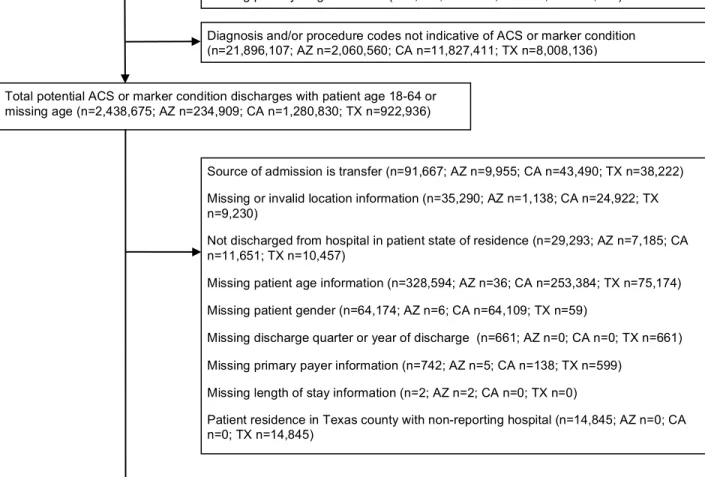
This aim relied on the variation in crime over time and geographic region as described above to identify the effect of increased crime on ACS admissions as compared to a set of marker conditions (i.e., conditions that are not sensitive to changes in access). I used inpatient data from Arizona, California, and Texas for 2005-2010 and identified discharges that were for either an ACS or marker condition.12-15 I used a method designed by Basu et al (2002)16 that did not require the use of population rates to determine whether there was an association between an increased likelihood of a discharge being for an ACS versus marker condition and homicide rates. A rise in the likelihood of the discharge being for an ACS condition associated with homicide rates was expected to be an indicator of reduced access to primary care or reduced compliance with prescription regimens due to a decreased ability to receive these services in Mexico.
potentially avoidable conditions for patients residing in border counties, particularly those who
are uninsured or on Medicaid.
Using data on ED encounters in Arizona and California, including those that resulted in an inpatient admission,12,13,17,18 I used a difference-in-difference strategy to estimate the effects of homicide rates in Mexico on the probability that an ED encounter was for a condition that was potentially avoidable. ED encounters were classified using an algorithm that calculated the probability that the treated condition was potentially avoidable – that is, either non-emergent, treatable in a primary care setting, or required ED care but was preventable with access to primary care.19 For subgroup analyses, I focused on the uninsured and underinsured as these are the populations that may be principally impacted by any changes to access in Mexico. Some studies have found that access to primary care 20-22 and continuity of care 23 are important factors in preventing ED use.
I.D. Summary and Significance
2. LITERATURE REVIEW AND CONCEPTUAL MODEL I.A. Background on the US-Mexico border region
Rapid growth in the number of individuals living along the United States (US)-Mexico border has brought attention to concerns about this population’s health and health care access.1-3 The US portion of this region is defined as counties within 100 km (62 miles) of the US-Mexico border 3 and extends approximately 2,000 miles from San Diego, California to Brownsville,
Texas (Figure 2.1). Border areas have high rates of disease and inadequate health services.7 Residents have high levels of obesity and diabetes; the self-reported prevalence of diabetes in the border region was 16.1 percent 3 compared to 11.3 percent nationally.24
I.B. Border crossing for healthcare
As a result of low priced provider options and looser prescribing requirements in Mexico, dissatisfaction with the US healthcare system, and cultural preferences,2,4-6 many US citizens and legal US residents living near the border in Arizona, California, New Mexico, and Texas cross into Mexico for medical treatment or to purchase pharmaceuticals. Cost is a particularly
important reason that people choose to seek care in Mexico, with those who could not afford to see a doctor due to cost significantly more likely to seek alternatives to formal care in the US.26
The availability of cross-border health care has both positive and negative aspects. The population has access to a second health care system, which may allow use of necessary health services and compliance with recommended prescription regimens. However, patients may be more likely to receive duplicate tests or experience undesirable medication interactions due to having a provider both in the US and in Mexico.1,2,6 The intersection of a confluence of factors, including easy access to services in Mexico and “informal” health services to substitute in place of formal US healthcare, may make efforts used nationally to increase healthcare access more complicated in the border region.26
Recent studies of the rates of border crossing to seek medical treatment find estimates ranging from 11% to greater than 50% of the population in border regions.2,4-6,10,27,28 The most recent published study of rates of border crossing for healthcare in a population based study conducted by telephone are from early 2008; they showed that in Texas border counties, over a third had crossed into Mexico in the previous year for either a doctor’s visit (37%) or medication purchases (43%).6 A question in the Texas BRFSS in 2007 asked survey respondents in border
care while 38% reported purchasing pharmaceuticals in Mexico (author’s calculations from Texas BRFSS 2007).10
Border crossing is more common among the uninsured, low-income households, the non-elderly, and those of Hispanic ethnicity1,2,27. Bastida and colleagues (2007) found that very low income households (<$7,000 per year) were less likely than all other income groups to have visited a doctors in Mexico; many of these households reported Medicaid coverage or the use of free or reduced cost medical assistance or the emergency department in case of an emergency.1 Border crossing was more than twice as likely among the uninsured as people with some insurance coverage.1,6 Acculturation also matters, with first-generation Mexican Americans being more likely to use care in Mexico than later-generation Mexican Americans even after controlling for insurance coverage, demographic, and socioeconomic factors.29 Using the 2001
California Health Interview Survey, Wallace et al. (2009) showed that in California long stay Mexican immigrants (>15 years in the US) were most likely to use services in Mexico, followed by short stay Mexican immigrants, US born Mexican-Americans, and then US born non-Latino whites.30 For Mexican immigrants, care in Mexico provides an important safety net if they encounter accessibility or acceptability barriers in the US.30 Despite the common use of care in
Mexico, US residents are unlikely to access care in Mexico for major health emergencies.2,6,31 I.C. Increased violence in northern Mexico
in towns and cities, particularly along the northern border of Mexico, often in broad daylight in public venues.8,32 Trends in violence have varied geographically, intensifying much more quickly in some areas than others. For example, in the Mexican state of Sonora (adjacent to Arizona), the number of homicides increased 151% between 2005 and 2010, while in the Mexican state of Chihuahua (containing Ciudad Juarez, adjacent to El Paso, TX) the number of homicides increased 830% in the same period.33,34 The absolute homicide rates along the
Mexican side of the border were extremely high, both relative to the Mexican interior and to the US. In 2010, the rate of homicides per 100,000 population in Chihuahua was 183.33,34 For
comparison, in 2010, rates for all of Mexico was 22.2 homicides per 100,000 population.33,34 The rate for the US in 2009 was 5.0 homicides per 100,000 population.35 It appears that there was little to no spillover of the violence from Mexico into the US. A recent report from the
Government Accountability Office interviewed officials from state and local law enforcement officials in border regions and 31 of 37 officials interviewed said that they had not observed violence from Mexico within their counties.36 Additionally, rates of violent crimes decreased in border and non-border counties between 2004 and 2011, with rates lower in border counties than non-border counties.36
system in the border region looking forward. Having an estimate of the impact may be important to find timely policy solutions.
I.D. Estimates of impact of violence on healthcare available in Mexico
Significant anecdotal evidence of reduced crossing for healthcare exists, but there have not been any academic studies attempting to quantify the effect of the violence on border crossing or healthcare access.37-39 In 2010, the president of the Medical College of Tijuana
estimated there was a 50% decline in border crossing for healthcare by Americans to Mexico due to fear and increased border wait times due to stricter security checks.40 In a qualitative study of HIV positive patients seeking care in El Paso clinics, Shedlin et al (2012) found that decreased ability to cross the border due to violence and increased wait times and border security served as barriers to care.41 Goldenberg et al (2011) conducted a study examining HIV risk among clients
of female sex workers and noted through their field observation in 2008 that the proportion of foreign visitors to Tijuana’s red light district declined with escalating violence along the border.42 Homedes (2012) noted that if there was a reduction in crossing the border for
healthcare, it may be that the uninsured who need care continue to seek it in Mexico, but choose providers closest to the border to avoid the danger as much as possible.38
The focus of this study is on those living in the US, although it should be noted that several studies have looked at the health related impacts of the drug-related violence on people living in the border region in Mexico. Beletsky et al (2012) study female sex workers who are also injection drug users in Tijuana and Juarez and found that respondents in Juarez, which had a higher police and military presence, reported significantly higher levels of police abuse including confiscation of syringes, requests for free sexual services, robbery, and financial extortion.44
Qualitative research of families of young children in Juarez by Hernandez and Grineski (2012) found that social and economic capital declined significantly because of the violence, with decreased opportunities to gain cultural capital.37 Leiner et al. (2012) found children’s exposure to poverty and collective violence in Juarez was associated with higher scores of psychosocial and behavioral problems than exposure to poverty alone in El Paso.45
I.E. Conceptual model
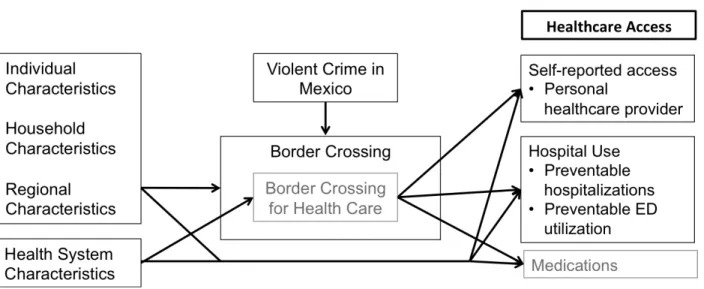
The conceptual model for this study (Figure 2.2) theorized that individual, household, and regional characteristics influenced border crossing. Border crossing for healthcare is a subset of total border crossing; as the percentage of crossings for the specific purpose of obtaining healthcare was not available in existing data sources, I was not able to test empirically whether this association changes over time. I was unable to find estimates of the percentage of border crossings that were for health care during this period or for the border region as a whole; the most recent estimate available was that 4.2% of the monthly border crossings in the San Diego-Tijuana region were health related in 1999 46.
Individual, household, regional, and health system characteristics were hypothesized to influence total border crossing, border crossing for healthcare, and healthcare access measures.
Fluctuations in violence may cause changes in the level and intensity of border crossing, including crossing for healthcare services; this may be associated with changes in health care access and utilization (including care obtained both in the US and in Mexico). Several factors related to violence in Mexico may increase the price of care in Mexico, measured in pecuniary and non-pecuniary terms: the perception of increased personal risk during care seeking, a decreased supply of Mexican providers, and increased border security and wait times as a result of the violence. The decreased supply may increase prices of care or make seeking care less convenient due to shorter hours of operations, harder to find locations, or the termination of an existing doctor-patient relationship due to the provider ceasing care provision.
As these prices of care in Mexico rise, individuals may either a) pay the increased
I.F. Figures and Tables
Figure 2.2: Conceptual Model
3. QUALITATIVE INTERVIEWS I.A. Introduction
To contextualize the quantitative findings, I conducted semi-structured interviews with various stakeholders in the US-Mexico border region. These interviews were conducted in April 2012, and all but two were conducted by telephone (one by email, one in person). The seven people I interviewed were a convenience sample and represented different regions and
perspectives. Notably, there was only one respondent from the El Paso-Ciudad Juarez area, who was a researcher in border health. As the violence has been much worse in Ciudad Juarez than in other places along the border, this is an important limitation. I did not conduct any formal
analysis on the qualitative findings; I have presented here the main points made by the
respondent during the interviews. Information from these interviews provided important context and was incorporated into the quantitative analytical approach (Table 3.1). These comments should not be considered to be representative of thoughts or opinions of those in the border region.
I.B. Responses
characteristics of patients, but as he practiced in the Mexican formal public sector, he did not see many people who crossed the border for health services in his practice.
We discussed border crossing for healthcare more generally rather than based on his experience as a practicing physician. He noted that while it is mostly Hispanics who cross the border for healthcare, it happens across all groups (“everyone crosses”). He noted that people aged 50 and older were more likely to cross, mostly for chronic conditions. He also noted that for emergencies, patients do not come to Mexico. Another reason that some may cross (and continue crossing despite the violence) is to get a second opinion prior to surgery due to the fact that surgery is expensive and invasive. Reasons mentioned for why people would cross into Mexico to seek health care included that it is much cheaper to see a Mexican providers and patients may trust them more, in part due to the fact that the doctors are also Hispanic.
He said that people were absolutely scared of the increased violence. He mentioned that for those who do not continue coming to Mexico due to crime or increased wait times at border crossings, a lot have substituted to “clinicas Latinas” (Latino clinics) in Los Angeles, mostly for chronic conditions. We did not discuss in detail what type of clinics these were. When asked whether there was a difference between the quality of these clinics in Los Angeles and private clinics in Tijuana, he noted that there was not really, at least from a patient perspective, and that patients liked the doctors in the Los Angeles clinics because they were also Hispanic.
ransom, so many of them had moved to the US but continue practicing in Mexico due to
licensing requirements and existing client bases. He noted that the violence had been much more severe in Ciudad Juarez, and doctors there may have had stronger responses.
Respondent 2 was an employee of a home health telemonitoring service in the Rio Grande Valley. The primary clients of this service were home health agencies, although he was familiar with the general medical environment for the elderly. He was “pretty aware” of border crossing for health care and knows that it continues to go on. He also knew people who no longer crossed into Mexico for healthcare due to fear. Those people mostly live in border towns that are connected to towns in Mexico that are now suffering economic consequences from the lack of traffic; this is having effects on the economy of the US border towns as well, with general traffic and spending down in these areas. He also noted that in the US, hospitals were particularly concerned with treating undocumented immigrants due to the fact that to receive payment under reimbursements designed to pick up the cost of this care, the hospital is forced to prove that the person is undocumented. This results in patients leaving the hospital before they are formally discharged to avoid problems with immigration authorities.
Most of the rest of the conversation revolved around Medicare policy in the Rio Grande Valley, including changes in managed care penetration and resulting policy effects, and fraud in healthcare reimbursement, which has been a large problem in this region.
Additionally, some things might only be available on one side or the other – for example, designer jeans were historically more readily available in the US than in Mexico. After the September 11th attacks, there was much more separation between the two towns as immigration enforcement to enter the US increased and border wait times spiked. Now, with normal wait times for cars at the primary border crossings between the two cities of two hours or more, people consider crossing much more carefully. Furthermore, the addition of well-known commercial establishments such as Costco on the Mexican side made it easier to not cross.
We discussed a recent healthcare incident in which he suffered an injury in the US and sought care in Mexico. Although he was covered by US health insurance and assumed it would apply in an emergency situation, he had never used it before and was not sure how to use it or how much the copayments would be. His family was able to recommend a physician in Mexico. He had a friend drive him to the provider, who took X-rays, diagnosed a fracture, set it, and prescribed pain medication. For the entire visit, including fees, medication, and supplies, the total charge was less than $150. The total time elapsed from the time of the injury to leaving the doctor’s office was less than two hours, which he speculated was less than the amount of time it would have taken to see a provider in the emergency room. However, he noted that had it been a more severe injury necessitating more immediate care or had he not had access to a car and someone to drive him, he would have used an emergency room in the US.
agriculture, on both sides of the border, and thus many migrated throughout to follow the crops. In the off season, this population has significantly lower income from jobs and a lack of
economic opportunity, resulting in increased substance abuse and domestic violence. Based on the huge influx of people who live in Mexico and commute for work, there are often long wait lines at the crossings, including a two to three hour wait on each side. She also noted that the US region has a huge influx of winter residents from colder climates.
For many of the migrant farmworkers, the remainder of the family stays home in Mexico. She noted that some companies (covering as much as 25-30% of the agricultural population she worked with) offered insurance in Mexico to their employees during the time that they were employed for both the employee and his family. This did not provide any coverage for US healthcare. A lot of the workers do not prioritize healthcare during the season, as if they miss work due to illness or doctor’s visits, they are not paid.
We discussed a large annual community health fair organized by the nonprofit she worked for, which had been taking place for more than a decade. During this fair, information was provided to about 5,000 attendees about the healthcare system, immigration, housing, and other items of interest for this population. A lot of attendees report that this is their only source of healthcare. During the fair, there is screening for chronic diseases, including cholesterol checks, body mass index measurements, blood pressure measurements, HIV tests (as supplies are available), and vision and hearing tests. Many doctors in the community participate in this event.
are culturally proficient and “speak the language” as they are from the communities in which they work. They begin with their immediate communities and as their skills develop, they expand their network. They primarily focus on chronic disease prevention, serving as “cultural brokers” to increase use of healthcare in these communities. The communities they work in may have high rates of tobacco use and HIV infection, and many forego care or use folk medicine, and there is little to no culture around prevention. The promotoras teach members in the communities how to access services, and network within the community to find safe referral sources for the recipients. The promotoras may also provide information on eligibility for Medicaid and community non-profit services, as the majority of this population is documented and may qualify. As Proposition 200 in Arizona denies services to undocumented immigrants and obligates those identifying undocumented immigrants to report them to authorities, the promotoras have established networks of providers where they can refer individuals so that they
will not be at increased risk from seeking services. She estimated that only about 15-20% of the population she serves is undocumented, but the proportion may be much higher in some areas.
When asked about how the provision of services may have changed over the last 5-10 years, she noted that services by nonprofits had probably been decreasing as a result of the national economy and resulting funding cuts. Additionally, services in Arizona have been disrupted by strict immigration laws and stereotyping around undocumented immigrants.
Respondent 5 resided in the Rio Grande Valley in Texas and was an employee of an advocacy group working on behalf of seniors for community outreach services. I interviewed her primarily with the perspective of a patient who sought care in Mexico. She mentioned that there were several reasons she and many of her friends sought care in Mexico: time, cost, and
there was a 15 minute wait in Nuevo Progreso (a Mexican town on the border between McAllen and Brownsville, TX), and the doctors had much more time to spend with patients. It was $20 to $25 for the doctor’s visit, and the provider was definitely a physician rather than an RN or nurse practitioner. Teeth cleanings cost about $10. She mentioned that she changed from a US doctor to a Mexican one despite the fact that she had private insurance because it was the same price or cheaper than her copayment and she was more satisfied with her care. Border crossing was very common among her friends, many of whom lost private insurance with the recession, and it was primarily about saving money; if they could get the same services for a lower cost in Mexico, why would they use them in the US? She noted that she preferred to go to Mexico due to the fact that in the US, it was “machinery medicine” and one might have to be referred to several
specialists in order to get a firm diagnosis. In Mexico, providers were much more likely to treat with effective drugs in office; for example, for a case of laryngitis, the physician administered an injection of penicillin and Vitamin A. This brought quick resolution of the problem, so she considered it very cost-effective. She noted that fewer Medicare patients crossed although the ones that did were satisfied with the services because the doctors spent more time with them and were able to resolve their conditions more quickly. She said that when she went to Mexico for healthcare, she went for a specific condition rather than waiting for another reason to combine the trips (e.g., with a trip to visit friends or family). She noted that there was a huge influx of winter Texans from October to May, and many of these people may go to Mexico for care.
In terms of violence and the relationship with border crossing for healthcare, she
she went to Reynosa for care, but as violence increased she started going to Nuevo Progreso instead. She noted that this was a common transition for many people that she knew. She also mentioned that at the time of the interview there had been a recent decrease in crime in Reynosa and so people were starting to return there. When I asked whether she avoided Reynosa entirely as a result of the violence, she mentioned that the local media kept region residents up to date on the situation; before going to Reynosa, people would seek advice from family and the local media via TV and Facebook. Additionally, at the border, the Mexican consulate would let people know that it was not safe in Reynosa and advise against entering Mexico. People also avoided going at night, and restricted their travel to during the day.
Respondent 6 was a researcher in Arizona who previously was an active border health researcher. He had transitioned away from this research. We discussed research he was aware of, most of which was conducted in the late 1990s. There were recent changes along the border, as crossings were down due to increased border patrol enforcement and the bad economy, which may have resulted in population loss on the US side of the border. Immigration enforcement in Arizona was particularly tight, and the border was highly policed. There were about 15 roads that travel north from the border, and travelers are regularly stopped on all of them. There might be an increase in people seen at Federally Qualified Health Centers and Community Health Centers due to the violence and immigration enforcement, as before they never asked questions about immigration status.
The Medicare Modernization Act allocated about $250 million nationally to pay
undocumented. As a result of the policy changes requiring additional documentation,
undocumented immigrants were much less likely to use services. He did not think many were deterred from going south based on the violence, and that policy changes including the donut hole in Medicare and Medicaid cutbacks might influence people to continue seeking care (or at least prescriptions) in Mexico. He did note that they now required a physician signed
prescription to get back into the US with a prescription, so this might influence people’s use. He also noted that there were recent developments in cross border insurance networks, but we did not discuss this further.
Respondent 7 was a researcher in El Paso, who said all of her research on cross border care had been conducted before the upsurge in violence. At the time of the interview, there were Mexican stores in US border cities selling Mexican remedies. As a lot of people from Mexico relocated in the US due to the violence, she was sure many doctors were providing services and selling Mexican remedies but she had been unable to find any of them but a dentist. Most of the others practice in secret and she was not able to identify them. One thing that facilitates this practice is that Mexican prescriptions are honored in the US, so Mexican physicians with a prescription pad can “de facto and illegally practice” in the US, but this is a very risky operation for them and it is thus difficult to identify the specific persons. She noted that many who cross for healthcare do not have a usual source of care in Mexico; a few may, but most will use different providers or only the pharmacy. There is regular access to preventive screening
She gave further information on her research on pharmacies, which noted that physicians are not supposed to prescribe within the pharmacy but that there are informal arrangements in place. Consultations with a physician in a pharmacy generally cost about $2. Additionally, prescriptions are not retained by the pharmacy and can thus be reused by the patient. The prescription requirement in place (requiring a prescription for many medications that were previously available without a prescription) is only enforced for controlled substances and antibiotics, since August 2010. This enforcement remains relatively lax. People purchase prescriptions in Mexico despite the fact that the price of the top 15 medicines purchased in Mexico tend to be cheaper at Wal-Marts in the US and in the community health centers. Chronic disease patients may not be aware of the fact that their prescriptions would be cheaper in the US. I.C. Summary of Responses
These qualitative interviews provided contextual insight into the behavior and trends within the border region, both in relation to violence in Mexico and otherwise. Most of the information provided corroborated information found in the academic literature or lay media (e.g., that cost and dissatisfaction with the US healthcare system were important reasons for seeking care in Mexico); however, some of the information was new to me. I was able to locate sources that verified most of this new information in things that had been published between the initiation of my research and the completion (e.g., information about physicians illegally
I.D. Figures and Tables
Table 3.1: Summary table of qualitative interviews Resp
onde nt
Location of Respondent
Position Important Points of Interview
1 Tijuana, Mexico Doctor in formal Mexican national healthcare sector
•People do not come to Mexico for
emergencies
•Substitution to Latino clinics in Los
Angeles due to increased violence
•Physicians scared of violence but not
enough to close practices, but might change hours
•Many physicians relocated families to
Chula Vista, CA for safety
2 Rio Grande
Valley, TX
Home health telemonitoring company
•Violence and reduced crossing due to
violence is definitely happening
•Border towns in US and Mexico
economically affected by reduced crossing
•Hospitals particularly concerned about
financial implications of treating
undocumented immigrants, because have to prove the patient is undocumented to receive federal reimbursement for care 3 San Diego, CA /
Tijuana, Mexico Resident •Exchange rate and availability of goods/services important part of general crossing behavior
•Normal wait times in Tijuana area are two
hours or more, making people consider crossing much more carefully
•Cost for comprehensive medical visit for
injury was $150, extremely low by US standards
4 Arizona Expert on border
region, worked for non-profit focusing on farmworkers
•Wait times of two to three hours for
people crossing for employment
•Many migrant farmworkers leave famiy in
Mexico, and a moderate proportion have employers who offer coverage in Mexico for family
•Annual health fair offers health screenings
and information, and is often only source of healthcare for attendees (approx. 5,000)
Resp onde nt
Location of Respondent
Position Important Points of Interview
common within these populations to improve health risk factors and work with individuals to find safe providers given documentation status
•Services by non-profits likely to have
decreased over last five to ten years with decreases in government funding
5 Rio Grande
Valley, TX
Senior advocacy
group •Cross because of short wait times, low-cost
•Many cross because had lost private
health insurance with jobs, and because sometimes visits were cheaper than copayments
•Seasonal residents go to Mexico for care •Substitution of care from one Mexican
town to another due to violence
•Information about violence spread
through news sources and Mexican consulate
6 Arizona Former border health
researcher •Undocumented immigrants much less likely to use services due to changes in hospital policies surrounding
documentation for reimbursement
•Recent developments in cross border
insurance networks 7 El Paso, TX Border health
researcher •Mexican providers practicing in US illegally
•Many crossing for healthcare do not have
usual source of care in Mexico
•Preventive screening may happen through
non-governmental organizations and health fairs in US
•Children may have better access to
Federally Qualified Health Centers
•Enforcement lax on requirement for
prescriptions in Mexico
•Price of medications in Mexico may
4. STUDY 1 – EXPLORING THE ASSOCIATION OF HOMICIDES IN NORTHERN MEXICO AND HEALTHCARE ACCESS FOR US RESIDENTS
I.A. Overview
Recent increases in homicides in Mexico may impact healthcare access for US residents due to decreased border crossing for healthcare. We used population representative data from California, Arizona, New Mexico, and Texas (2002-2010) to measure healthcare access, matched with homicide rates of Mexican border municipalities. Increased homicide rates were associated with decreased legal entries to the US from Mexico. Multivariate difference-in-difference linear probability models evaluated impacts of homicide rates on healthcare access measured by binary
indicators of personal healthcare provider(s), cost as barrier to care-seeking, and cervical and breast cancer screening. Contrary to expectations, homicide rates were not significantly
associated with the four healthcare access measures in US border counties. Despite a decrease in
border crossings, increased violence in Mexico did not appear to negatively affect access for
individuals likely to receive healthcare in Mexico. It is unknown whether individuals continued
to receive care in Mexico or substituted domestic care.
I.B. Introduction
Much of the population in the United States (US)-Mexico border region1 is medically vulnerable with a high burden of chronic disease, a low supply of health professionals, and high rates of uninsurance and poverty.1,3,25 Almost half the population is Hispanic.3 The large and
rapid growth of this population has heightened the importance of addressing healthcare access issues and associated health outcomes.3,7,25
Multiple factors, including low-priced provider options and looser prescribing
requirements in Mexico, dissatisfaction with the quality of US healthcare, language preferences, and cultural preferences cause US citizens and legal residents residing in the border region to cross into Mexico for medical treatment or to purchase pharmaceuticals.2,4-6,28 Estimates of the
population in border regions crossing from the US to Mexico to receive health care services range from 11% to greater than 50%.2,4-6,27,28 Crossing is more common among the uninsured, low-income households (but not the very poor), the non-elderly, and those of Hispanic
ethnicity.1,2,27 Many crossing the border for healthcare also seek care in the US,2 and lack of care coordination is a major challenge for a population with low health literacy.38
Recent developments within Mexico may affect patterns of border crossing, both
generally and for healthcare. Starting in late 2006, widespread efforts to combat drug trafficking resulted in a rapid increase in violence throughout Mexico32,47. There were almost 100,000 homicides from 2007 to 2011, the majority of them attributed to drug-related violence.48 Rates and trends vary along the border, but some have experienced substantial increases; for example, the homicide rate in Chihuahua, the Mexican state adjacent to El Paso, TX, increased 930% from 2005 to 2010, from 19.7 to 183.0 homicides per 100,000 population.33,34
Since having a usual source of care and access to care are correlated with improved use of preventive health services,49-52 lower rates of disease, improved health status, and decreased mortality,53 any decrease in cross-border care-seeking in response to increased violence could
This study uses population representative survey data to examine whether increased violence in northern Mexico, as measured by the homicide rate in Mexican municipalities adjacent to legal border crossings, is associated with reductions in healthcare access. Access to care is measured in four ways: report of a personal healthcare provider, identification of cost as a barrier to seeking care, and cervical and breast cancer screening practices.
New Contribution:
Some evidence of reduced crossing for healthcare due to violence exists, but to our knowledge, no studies have quantified the effect of the violence on border crossing or healthcare access37,38,43. In 2010, the president of the Medical College of Tijuana estimated a 50% decline in medical tourism by Americans to Mexico due to fear and increased border wait times due to stricter security checks 40. In a qualitative study of HIV positive patients seeking care in El Paso
clinics, Shedlin et al (2012) find decreased ability to cross the border due to violence as well as increased wait times and border security served as barriers to care.41 Homedes (2012) notes that although there may be reduced border crossing for healthcare, the uninsured who need care may continue to seek it in Mexico but choose providers closest to the border to minimize the danger. In addition to potential border crossers’ fear of violence, the supply of doctors in the Mexican border region has been compromised by violence as doctors are targeted in kidnappings.38 In heavily affected Juarez and Tijuana, 30-50% of private clinics and pharmacies have closed.34,37 I.C. Methods
Conceptual Model
Mexico also increases in pecuniary and non-pecuniary ways. The perception of increased personal risk during care seeking, increased border security and wait times as a result of the violence, and a decreased supply of Mexican providers (manifesting in increased prices of care or travel time due to shorter hours of operations, harder to find locations, or the termination of an existing doctor-patient relationship) all increase the price of care in Mexico. Those receiving some care from Mexico may either a) pay the increased price and continue seeking care in Mexico, b) substitute care from a Mexican provider with a US provider, or c) forego care
altogether. Since violence in Mexico will not have a direct effect on any of the healthcare access measures for US residents not accessing care in Mexico, the only way it affects these indicators is through changes in border crossing.
To empirically test the model, we first assessed whether changes in the homicide rate led to changes in total border crossing rates (Path 1 on Figure 4.1). Since we do not have
information on border crossing for healthcare, we are unable to directly estimate Path 2; we empirically tested the joint effect of Path 1 and Path 2.
Effect of Homicide Rate on Entries into the US from Mexico Data and Measures:
Dependent Variable: The aggregate number of people entering at each port per month was the outcome variable for analyzing total border crossings.2 US Bureau of Transportation Statistics data (2002-2010) contain the number of people entering at each port of entry. Port-level data are aggregate counts reflecting crossings from any road, tunnel, or bridge in a defined port.9
Independent Variables: The primary independent variable of interest was the homicide rate, H, of the Mexican municipality (similar to a county in the U.S.) adjacent to a port. We calculated
monthly homicide rates as the number of homicides divided by the INEGI (Instituto Nacional de Estadística y Geografía; National Institute of Statistics and Geography) Mexican census
population estimate.3,33,34 To match homicide rates to port level border crossing data, we determined the adjacent Mexican municipality to the port using Google Maps.4,5,54
Individuals may update their view of the risk of border-crossing with some delay due to factors such as public news reports not being instantaneous and updates to risk perception based on social network effects; there may be an additional delay in behavior change if the reasons for crossing are not discretionary in the short term (e.g., a person must cross to get from his home to his place of employment). We specify a vector of one- to six- month lags all analyses, although we examined the sensitivity of the results to various model specifications. We also include the adjacent US county unemployment rate 55 and the US dollar-Mexican peso exchange rate.56
Statistical Analysis: The number of crossings, y, for port j in month t was modeled using a Poisson model:
E[yjt ]= exp(b0 + b1Hj,lag(t) + b2ExRatet +b2UnempRatejt +b2yeart + mt + µj + mt*µj) (Eqn. 1)
Month fixed effects, mt, and a linear time trend, year, controlled for seasonality and
secular trends. The exchange rate, ExRate, and US county unemployment rates, UnempRate, controlled for cross-border and local economic conditions. Port-level fixed effects, µj, controlled
for time-invariant port characteristics. Fixed effects for port-month interactions controlled for within-port seasonality. To obtain consistent estimates of standard errors to provide for valid
3 Census estimates were available for 2000, 2005, and 2010; populations in years between censuses were estimated using linear interpolation.
4 For ports with more than one entry point (e.g., bridge, road) and all entry points not adjacent to the same municipality, we calculated the mean of these rates.
inference, we employed robust standard errors.57,58 Including six months of lagged homicide
rates was preferred to including one month and three months of lagged homicide rates based on Wald tests for model specification; sensitivity analyses were conducted. To meaningfully
interpret the six coefficients on homicide rates, we calculated the “combined effect” of a one-unit (1 homicide/100,000 population) increase in each of the lags included in the model and is
interpreted as the estimated increase due to a persistent (six month) increase in the homicide rate. This combined effect (instead of the individual coefficients) was considered the outcome of interest in all analyses; significance was assessed using a Wald test.
Effects of homicide rate and border residence on healthcare access Data:
Measures of healthcare access come from the Behavioral Risk Factor Surveillance System (BRFSS), a cross-sectional national telephone health surveillance survey with individual survey data on demographics, healthcare access, and healthcare utilization 10,11.6 Sampling weights correct for sampling probability and non-response to make results representative of the non-institutionalized adult population.
The analytic sample was restricted to respondents aged 18 to 64 residing in one of the four US border states (California, New Mexico, Arizona, or Texas) at the time of the interview from 2002 to 2010. Data from border and border counties were included to allow for non-border counties to act as controls for trends in access unrelated to violence. We excluded respondents from all analyses if they had incomplete information regarding having a personal doctor or control variables. County of residence was censored in the BRFSS if there were fewer
than 50 respondents in a given year. The final analytic sample included 151,933 respondents of the total 192,550 respondents from border states aged 18-64 in survey years 2002-2010.
Additional exclusion criteria were applied to certain analyses. Models examining receipt of a Pap smear were limited to women 18-64 with an intact uterus. Analyses for receipt of a mammogram were restricted to women aged 40-64. Questions regarding Pap smears and mammograms were asked for all eligible respondents in even years (e.g., 2004), but were asked for only a small subset of respondents in odd years. The subgroup with chronic conditions included respondents in 2005, 2007, and 2009 who reported they currently had asthma, had ever been diagnosed with diabetes, had ever had a heart attack or been diagnosed with angina or coronary heart disease, or had ever had had a stroke.
US county level estimates of physician supply were obtained from the Area Resource File (ARF).7,59 Whether a county was part of a metropolitan statistical area (MSA) was determined using US Office of Management and Budget definitions.8,60
Measures:
For the primary analyses of healthcare access, we examined the dichotomous variable of the response to “Do you have one (or more) person(s) you think of as your personal doctor(s) or health care provider(s)?” (yes/no). As secondary analyses, three other dichotomous outcomes were examined, including having had a Pap smear in the past three years, having received a mammogram in the past two years, and whether the respondent needed to see a doctor but could not because of cost in the prior year. We included the outcomes related to Pap smear and
7 Interviews conducted in 2008, 2009, and 2010 were assigned the 2008 physician supply.
mammogram as we are interested in access and there are limited access measures available; we used these utilization measures as proxy measures for access. Observations were at the
respondent level.
The main independent variables were border county residence and homicide rates in the closest Mexican municipality. Forty-eight counties were identified as border counties using the United States-Mexico Border Health Commission definition – any part of the county is within 100 km (62 miles) of the US-Mexico border.3 We linked individual-level BRFFS survey data with the homicide rate of the closest Mexican municipality, calculated using road distance from county centroids to the closest border crossing. A total of 12 Mexican municipalities were considered adjacent to border crossings.
Statistical Analysis:
We used a difference-in-difference approach, comparing high crime areas to low crime areas (continuous) and border counties to non-border counties. This allows us to separate the causal impact of violence from unrelated trends in access. Specifically, we estimated linear probability models (LPM) to predict the report of a personal healthcare provider, p:
pict = β0 + β1borderc + β2*Hc + β3*Hc*borderc + β4*Xi + β5*Cct + mt + yeart + εicm (Eqn 2)
Individual demographic characteristics, X, county characteristics (including an indicator for whether a county is a border county, border), C, and a vector of six lagged homicide rates, H, for each individual i in county c interviewed at time t were included. Six months of lagged homicide rates were included as separate variables to allow for varying effects of homicides over time. The effects of interest were the interaction terms of the homicide rate variables and border county residence (Hc*borderc) to allow different effects of homicide rates on the probability of
using the combined effect described previously. Wald tests for model fit indicated six months of lagged homicide rates and interactions were preferred.
Interview year (yeart) and month fixed effects (mt) controlled for secular trends and
seasonality in healthcare access. County level physician supply controlled for local access.61,62 A binary indicator for MSA status was included. Individual characteristics included sex (binary), age (categorical), race (categorical), state of residence (categorical), income (categorical), educational attainment (categorical), and health status (continuous) measured as number of days in the prior month that poor physical or mental health restricted usual activities. We incorporated the complex survey design of the BRFSS using linearized standard errors and population
weights.
We conducted sensitivity analyses for report of a personal healthcare provider by examining four subgroups: 1) the uninsured, 2) persons of Hispanic race, 3) those with chronic conditions, and 4) Texas residents. The uninsured or those of Hispanic race may be sensitive to any changes in access in Mexico as these subgroups are more likely to seek care in Mexico. Respondents with chronic conditions may need to see a doctor more frequently for ongoing treatment and monitoring, and thus may be more sensitive to changes in access in Mexico. We focused on Texas residents to ensure state level policy trends were not driving the results; Texas had adequate sample size and significant variation in the homicide rates of adjacent Mexican municipalities.
years. We conducted sensitivity analyses regarding sample composition and the empirical relationship between seeking care in Mexico and reporting a personal healthcare provider.
To test differences in means between border and non-border counties, weighted
regression tests were used for binary and continuous variables; chi-squared tests were used to test for differences in the distributions of categorical variables. To test the statistical significance of the “combined effect” of lagged homicide rates on outcome variables in the regression models, we used Wald tests.
All statistical analyses were conducted in Stata 12.0 (StataCorp, College Station, TX). Results were considered statistically significant at an alpha of 0.05. To account for testing multiple hypotheses with the same sample, we apply Bonferroni corrections to the set of subgroup tests (n=5) with significance at the 0.01 level; we also apply it to the set of access outcomes (n=4) with significance at the 0.0125 level.
I.D. Results
Border crossings
Poisson regressions show homicide rates in the adjacent municipality were associated with a significant decrease in the number of US entries, with the controls noted in Equation 1 (Table 4.1). A one unit increase in the one through six month lags of the homicide rates was associated with a 0.42% decrease in US entries, holding other factors in the model constant. For the sample from 2002-2010, an increase from the median monthly homicide rate (0.92
Healthcare access Sample Description:
Characteristics of the population weighted analytic sample are shown in Table 4.2. Compared to those in non-border counties, individuals residing in border counties were less likely to report a personal healthcare provider and less likely to have had a mammogram in the prior two years. They were more likely to be uninsured, have a lower education level, have lower annual household income, be of Hispanic race, have lower physician supply, and to answer the BRFSS in Spanish. Populations in border and non-border counties were similar in self-reported health status.
Regression Results:
Population weighted results for the estimation of Equation 2 (Table 4.3; column 2) show no association between homicide rates and reporting having a personal care provider in border counties, and a statistically significant negative association in non-border counties (with and without Bonferroni correction). Holding other things in the model constant, being uninsured was associated with a 37.4 percentage point decrease in the probability of having a personal
healthcare provider; residing in a border county was associated with a 1.8 percentage point decrease in the probability of having a personal healthcare provider.
We examined additional indicators of healthcare access by estimating Equation 2 for three additional binary outcome variables (Table 4.4A): 1) needing to see a doctor but not being able to due to cost; 2) having had a Pap smear in the prior three years; and 3) having had a mammogram in the prior two years.9 Homicide rates were not significantly associated with
outcomes in border counties; homicide rates were negatively associated with having had a mammogram in the prior two years for those in non-border counties, although this was not significant with the Bonferroni correction.
We conducted subgroup analyses for the personal doctor outcome variable with four subgroups expected to be differentially affected by homicides: the uninsured (Table 4.4B; column 1), Hispanics (Table 4.4B; column 2), those with chronic conditions (Table 4.4B; column 3), and Texas residents (Table 4.4B; column 4). We found a statistically significant negative impact of homicides in non-border counties for the uninsured (with and without Bonferroni correction); otherwise, homicide rates were not significantly associated with the probability of reporting a personal healthcare provider in either border or non-border counties. Sensitivity Analyses:
To address concerns about unmeasured changes in the sample composition (e.g., migration from Mexican border cities to US border counties), we conducted several checks. Region of birth was available for Texas BRFSS respondents in 2007 and 2010 (n=15,681). In border counties, a significantly higher proportion of the population was Mexican born in 2010 than in 2007 (40.5% vs. 34.3%; p=0.004); this is not the case in non-border counties (8.2% vs. 8.3%; p=0.87). To assess the correlation between this compositional change and violence, we regressed a binary indicator of Mexican born on race and six months lags of homicide rates; combined coefficients on homicide rate measures were not significant, providing some evidence that increased violence was not associated with changes in the unmeasured composition of the sample.
Restricting the regression to women aged 50-64, the combined effect of homicides in border and non-border
As we cannot control for nativity for most respondents, we estimated the same model as in Table 4.3, column 2 including an indicator for Spanish survey administration, which was highly correlated with being Mexican born (corr: 0.75). We found combined coefficients on homicide rates in non-border (-0.0025; p=0.004) and border counties (-0.0001; p=0.69) were similar to results not controlling for Spanish questionnaire. We repeated this regression controlling for Spanish questionnaire and including a Mexican born indicator. Results showed nativity did not have a separate influence on reporting a personal healthcare provider (beta=-.0221, p=0.47; n=15,681) and there was no substantive change in magnitude or direction of the combined coefficients for the homicide rate measure.
A small subset of respondents in Texas border counties in 2007 reported whether they had obtained any healthcare in Mexico in the prior year (n=2,460). We regressed reporting a personal healthcare provider on insurance status, gender, age, race, education, income, health status, physician supply, MSA, Spanish questionnaire, and a binary indicator of obtaining care in Mexico without population weights using robust standard errors. Seeking healthcare in Mexico was negatively associated with the probability of reporting a regular care provider (beta=-0.064, p=0.01). This result holds when we limit the definition of obtaining care in Mexico to those who report having obtained healthcare in Mexico more than once in the last year. We ran the same regression with the outcome of inability to see a doctor due to cost and found a positive
association with obtaining healthcare in Mexico (beta=0.114, p<0.01). Repeating the regression for reporting a personal healthcare provider with the inclusion of an indicator for Mexican born and an interaction term of Mexican born and obtaining healthcare in Mexico shows no