INFLUENCE OF THE ENABLING ENVIRONMENT ON DRINKING-WATER PROGRAMS: QUALITATIVE AND QUANTITATIVE ANALYSES
Edema Ojomo
A dissertation submitted to the faculty at the University of North Carolina at Chapel Hill in partial fulfillment of the requirements for the degree of Doctor of Philosophy in the Department of
Environmental Sciences and Engineering in the Gillings School of Global Public Health
Chapel Hill 2016
Approved by: Jamie Bartram Bruce Gordon
Jackie MacDonald-Gibson Mark Sobsey
iii ABSTRACT
Edema Ojomo: Influence Of The Enabling Environment On Drinking-Water Programs: Qualitative And Quantitative Analyses
(Under the direction of Jamie Bartram)
Accounting for drinking-water quality, approximately 1.8 billion people lack access to safe drinking-water, increasing their risk of diarrheal diseases. To remedy this, Sustainable Development Goals, particularly target 6.1 to “achieve universal access to safe and equitable water” by 2030, were established. It is believed achieving this will require an enabling environment. However, the enabling environment for drinking-water programs is ill-defined. The term “enabling environment” is
increasingly used in the water field but its meaning is vague and its influence on drinking-water programs has not been determined. The purpose of this dissertation is to clarify the meaning of the enabling environment and investigate its influence on drinking-water programs. I use the institutional analysis and development framework to explain the enabling environment. Key informant interviews are carried out to determine the influence of the enabling environment on drinking-water programs, specifically household-water treatment and safe storage (HWTS) programs and climate change adaptation of drinking-water systems. Additionally, multiple regression analyses are conducted to determine the significance of enabling environment variables on expenditures on drinking-water systems, a proxy for decision-making about providing access to drinking-water.
iv
objectives. All enabling environment elements—formal rules, informal rules, and the physical environment—were found to influence the drinking-water programs analyzed; however, their relative degree of influence varied. In the HWTS study, informal rules (e.g. cultures), were found to determine adoption of HWTS practices more than formal rules (e.g. policies). Formal rules had a greater impact on decisions to adapt drinking-water systems to climate change than informal rules. Formal and informal rules about partnerships were a recurrent theme in both studies. Regression analyses showed that policies supporting user participation and cross-sectoral partnerships had significant effects on expenditures on drinking-water systems regardless of rural or urban setting.
v
ACKNOWLEDGEMENTS
I would like to thank my advisor, Dr. Jamie Bartram, for his support and encouragement throughout my graduate program. His constant guidance and review of my papers made my doctoral study successful and enjoyable. I thank staff and students of the Water Institute for their support. Their willingness to share their knowledge with me is appreciated. Particularly, I would like to thank Dr. Jeanne Luh. She reviewed my papers and was always available to talk through questions I had. Chris Weisen of the Odum Institute assisted in statistical analyses and his assistance taught me a lot.
I would like to thank Dr. Mark Elliott for his assistance during my program. We worked together on a number of projects and he mentored me through the years. His constant support, even after our projects ended is greatly appreciated. I thank Lorelei Goodyear, Glenn Austin, and Michael Forson for this support during my project on household water treatment practices. I appreciate their comments on my paper.
My family has been extremely supportive throughout my entire program. They have encouraged me in times of struggle and have celebrated with me in times of success. I thank Edefe Ojomo for reviewing my dissertation—I know few people that are willing to read an entire
dissertation willingly. I also thank my friends, particularly Roland Kamdem and Demi Alabi, for always being there.
I thank the organizations that provided funding for my work: Royster fellowship, UNICEF, PATH, World Health Organization, and United States Agency for International Development.
vi
TABLE OF CONTENTS
LIST OF TABLES ... ix
LIST OF FIGURES ... xi
CHAPTER 1: INTRODUCTION ... 1
1. Exploring the enabling environment for drinking-water programs ... 1
BIBLIOGRAPHY ... 11
CHAPTER 2: THE ENABLING ENVIRONMENT FOR DRINKING WATER PROGRAMS: DESCRIPTION AND DIAGNOSTIC FRAMEWORK. ... 15
1. Introduction ... 15
2. Defining the enabling environment for drinking water programs using the Institutional analysis and development framework ... 18
3. Enabling environment diagnostic tool ... 32
4. Important reflections about the enabling environment ... 41
5. Conclusion ... 43
BIBLIOGRAPHY ... 46
CHAPTER 3: SUSTAINABILITY AND SCALE-UP OF HOUSEHOLD WATER TREATMENT AND SAFE STORAGE PRACTICES: ENABLERS AND BARRIERS TO EFFECTIVE IMPLEMENTATION... 50
1. Introduction ... 50
2. Methods ... 52
3. Results ... 54
2. Discussion ... 60
vii
BIBLIOGRAPHY ... 79
CHAPTER 4: ADAPTING DRINKING-WATER SYSTEMS TO COASTAL CLIMATE CHANGE: EVIDENCE FROM VIET NAM AND THE PHILIPPINES ... 83
1. Introduction ... 83
2. Methods ... 86
3. Results ... 89
4. Discussion ... 93
5. Conclusion ... 101
Acknowledgements ... 102
BIBLIOGRAPHY ... 103
CHAPTER 5: RELATIONSHIP BETWEEN THE ENABLING ENVIRONMENT AND EXPENDITURES ON DRINKING-WATER AND SANITATION SYSTEMS: A MULTI-COUNTRY ANALYSIS ... 108
1. Introduction ... 108
2. Methods ... 110
3. Results ... 122
4. Discussion ... 133
5. Conclusion ... 138
Acknowledgement ... 139
BIBLIOGRAPHY ... 140
CHAPTER 6: COMPREHENSIVE DISCUSSION ... 143
1. Common themes across the qualitative and quantitative studies ... 143
2. Points of difference across the three studies ... 149
viii
4. Evidence for impact on drinking-water programs from changing the
enabling environment ... 155
5. Recommendations for drinking-water programing ... 157
BIBLIOGRAPHY ... 160
CHAPTER 7: CONCLUSION ... 162
APPENDIX 1: CHAPTER 3 INTERVIEW GUIDES ... 166
ix
LIST OF TABLES Table 2.1: Definitions of the enabling environment broken into
elements, impact, and objectives ... 18 Table 2.2: Sub-elements of the enabling environment in the literature ... 28 Table 2.3: Sample use of the diagnostic tool for the case study presented
above ... 37 Table 3.1: HWTS work experience of interviewees by region and
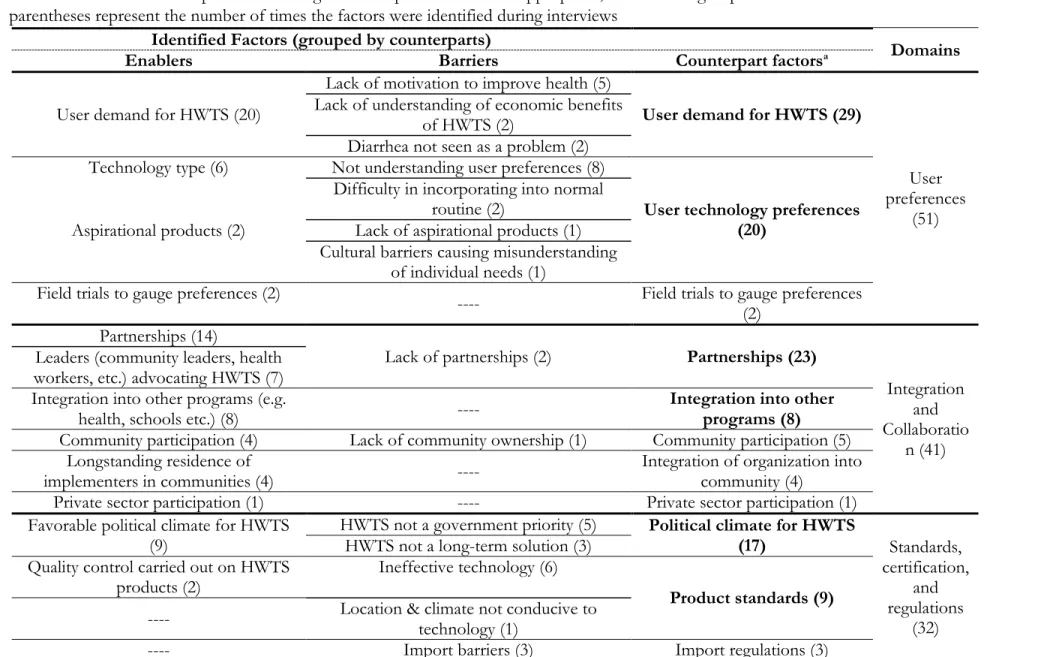
organization type ... 54 Table 3.2: List of factors identified that influence sustainability and scale-up
of HWTS practices. ... 56 Table 3.3: Using DoI theory to assess defined domains for sustainability and
scale-up of HWTS practices ... 74 Table 4.1: Study participants by country and organization type ... 87 Table 4.2: Identified factors relevant to climate change adaptation ... 91 Table 4.3: Fitting the structural elements of the Moser and Ekstrom (2010)
framework into the factors identified by respondents. ... 92 Table 4.4: Relevance of each factor throughout the decision-making process ... 93 Table 5.1: Description of predictor variables used in the study for
drinking-water analyses ... 115 Table 5.2: Description of predictor variables used in the study for
sanitation analyses ... 117 Table 5.3: GLAAS questions linked to the enabling environment variables. ... 119 Table 5.4: Multivariable regression results for assessing the relationship
between the enabling environment and expenditures on drinking-water and
sanitation systems using the 2009 GLAAS dataset^ ... 123 Table 5.5: Multivariable regression results for assessing the relationship
between the enabling environment and expenditures on drinking-water and
sanitation systems using the 2009 GLAAS dataset^ ... 127 Table 5.6: Number of outcome variables each enabling environment variables
had a significant effect on and the type of effect for all regressions carried out
x
Table 5.7: Enabling environment variables that had a significant effect on only one outcome variable for a regression using the same dataset, for the same system, and
the same setting ... 131 Table 5.8: Number of countries with changes in policies and government actions
xi
LIST OF FIGURES
Figure 1.1: Structure of the dissertation ... 10
Figure 2.1: The Institutional Analysis and Development framework, adapted from Ostrom (2011) ... 22
Figure 2.2: Framework for identifying relevant elements and sub-elements that influence drinking water programs and the interactions between these elements. Developed based on the IAD framework. The arrows represent the interactions among different elements. ... 25
Figure 2.3: Tool for diagnosing the enabling environment of drinking water programs... 34
Figure 2.4: Project plan to achieve project goal – lessen the negative impact of water shortage through improved efficiency of water use in agricultural lands. ... 36
Figure 2.5: Schematic showing where and when resources should be put to shape the enabling environment. ... 40
Figure 4.1: Structural elements of the framework. This framework has been modified for this study from a barrier diagnostic framework developed by Moser & Ekstrom (2010). ... 89
Figure 5.1: Method for estimating per capita expenditure in 2015 ... 112
Figure 5.2: Fitted values against real values using 2009 GLAAS data for ... 125
Figure 5.3: Fitted values against real values using 2011 for GLAAS data for ... 129
1
CHAPTER 1: INTRODUCTION
1. Exploring the Enabling Environment for Drinking-Water Programs 1.1.Defining the Enabling Environment for Drinking-Water Programs
Recent decades have seen dramatic changes in the way development initiatives are defined and approached. The 1960s and 70s focused on training and provision of tools and equipment for individuals in key positions, a movement labeled “technical assistance” and later “technical
cooperation.” Eventually, focus shifted to developing “organizational capacities” and building a sense of “ownership” in recipient countries in addition to increasing technical capacities (DFID, 2002; UNDP, 2002; OECD, 2008). Subsequently, development actors shifted focus away from project characteristics and training towards features of the target environments that impact the sustainability of development programs (Brinkerhoff, 2004). The shift brought about a new concept in the development community—the enabling environment. This concept broadly denotes the environment within which actors perform and the conditions of this environment that impact the capacity of actors to carry out activities. The term “enabling environment” is increasingly used, especially in the drinking-water field, as can be seen in the growing number of publications on the enabling environment for drinking-water programs (examples include Johnson and Perez, 2002; EAWAG, 2005; Adank et al., 2013); however, efforts to explore its meaning have been minimal and, as a result, it is currently a vague concept that is often imprecisely defined (Konig, et al., 2013). Varied interpretations may lead to confusion during discussions and/or false expectations, which if reduced or eliminated, could aid in more effective delivery of services in different areas of
2
With the increasing interest in the concept of the enabling environment and the increasing number of publications that call for the implementation of programs in an enabling environment (e.g. Brinkerhoff, 2012, Zearly, 1993, Haddad, 2013, Loza, 2004, United Nations, 2015), it is important to determine what the enabling environment for drinking-water programs is; if and what elements of the enabling environment impact drinking-water programs; and possible reasons why they have an impact, as these could improve implementation practices. This assessment will improve the understanding of the term and findings will assist drinking-water program stakeholders in
determining what elements of the enabling environment are broadly associated with specific drinking-water programs, given the growing importance of the enabling environment. The understanding of the enabling environment for drinking-water programs is particularly important given the commitment to pursue “policy coherence and an enabling environment for sustainable development at all levels” in the achievement of the Sustainable Development Goals (SDGs), including SDG target 6.1 to “achieve universal and equitable access to safe and affordable drinking water for all” by 2030 (United Nations, 2015, p. 31).Target 6.b of the SDGs, highlights a means of implementation to facilitate achievement of SDG target 6.1 which is an environment that supports and strengthens community participation in water management. In addition to this, achieving SDG 6 (ensure water and sanitation for all), will require an enabling environment that includes strong leadership, clear roles and responsibilities, and supportive policies (United Nations, 2015). The achievement of the drinking-water target of the SDGs has implications for public health and economic development; therefore, it is important that if this achievement is, even partly, dependent on the enabling environment, a better grasp of this environment is achieved.
3
people in the world, majority of whom reside in low-income countries, lack access to improved drinking water sources, that is, sources “that, by nature of their construction, are protected from outside contamination, particularly fecal matter.” National and global analyses accounting for drinking water quality have shown that people with “improved” drinking water do not necessarily have access to a water source that is microbiologically safe to drink (Bain, et al., 2012; Baum, et al., 2014; Onda, et al., 2012). In 2012, there were approximately 842,000 diarrheal deaths as a result of inadequate water, sanitation, and hygiene (WaSH) practices worldwide and approximately 380,000 of these deaths were children under the age of five (Prüss-Üstün, et al., 2014). Consuming unsafe water also has adverse effects on school attendance and economic development, as illnesses like diarrhea lead to high rates of school absenteeism, missed workdays, and increased expenditures on healthcare (Hutton & Haller, 2004; Monse, et al., 2013). Additionally, lack of access near the home increases time spent collecting water, which contributes to decreased school attendance and a reduction in other productive activities (Hutton & Haller, 2004; Hutton, et al., 2007; Sorenson, et al., 2011).
Considering the implications unsafe drinking-water has on public health and economic development, it is important that resources being put towards achieving universal access to safe drinking-water are not wasted. One way to ensure effective use of resources is to improve the understanding of the conditions, including the enabling environment, that will foster the
4
number of people affected by the decisions made are vastly different, and the organizations that implement these programs vary. Therefore, the specific enabling environment factors that are
influential, if they indeed are, may vary. This approach is intended to produce a more comprehensive understanding of the enabling environment. The quantitative study looks at the influence of the enabling environment on expenditures on drinking-water systems, which is a proxy for decision-making about increasing access to drinking-water sources. The findings from these three studies will help clarify the impact the enabling environment has on drinking-water programs.
1.2.1. Rationale for Investigating the Enabling Environment for Climate Change Adaptation
Water resources (surface water and groundwater) and drinking-water infrastructure have been, and continue to be, adversely affected by the changing climate (IPCC, 2014). This is
particularly true of coastal areas where it is believed the impacts of climate change will be greater due to the susceptibility of these areas to additional climate impacts like sea level rise, storm surges, and cyclones (EPA, 2015). Additionally, coastal areas are particularly important because of their
economic significance and high population. Three-quarters of all large cities are located on the coast and more than 40% of the global population resides within 100km of the coast (UNEP,
5
Adaptation to climate change is dependent on a number of conditions including high costs of adaptation (estimated by the World Bank (2009) to be billions of dollars a year for low-income countries) and other conditions which may include the enabling environment. However, these conditions are not well known and understood, particularly for drinking-water systems in low-income countries. Most of the literature on enablers and barriers to climate change adaptation focuses on high-income countries (examples include Bierbaum et al., 2012, Hunt and Watkiss, 2011, Jantarasami et al., 2010, Lawrence et al., 2015, and Measham et al., 2011). With the projected impacts climate change will have on water systems and on low-income countries (IPCC, 2015), research specific to low-income countries is warranted, since almost half of the world’s population (3.45 billion people) resides in low- and lower middle income countries (World Bank, 2015). This research has implications for the goal of universal access. With the changing climate, the ideal solution to lack of access to safe drinking-water is to ensure universal access to safe and climate-resilient water supplies However, achieving this will require shaping conditions, such as the enabling environment, that are favorable to the building and maintenance of these systems (World Bank, 2010). In the meantime, individuals must obtain their water from unimproved and/or climate vulnerable sources.
1.2.2. Rationale for Investigating the Enabling Environment for Household Water Treatment and Safe Storage Programs
6
climate disasters. HWTS interventions have been demonstrated to yield improvements in drinking water quality and reductions in diarrheal disease (Sobsey, et al., 2008; Clasen, et al., 2007). However, there have been studies that show that HWTS practices are not as effective in diarrheal disease reduction as is often claimed, especially when assessed over periods longer than those typical of HWTS studies (Boisson, et al., 2013; Hunter, 2009). The success of HWTS interventions in preventing disease is a function of many factors, including efficacy of the practiced method at removing or inactivating pathogens of concern, rates of consistent and correct use, and the presence of other pathogen exposure routes (Enger, et al., 2013; Brown & Clasen, 2012).
Despite evidence that HWTS practices can be effective in reducing diarrheal diseases when used correctly and consistently, centuries of practice by individuals, and years of advocacy and implementation efforts by non-governmental organizations (NGOs), HWTS practices, except boiling, are yet to achieve scale (Clasen, 2008). There is limited research on ways to scale-up and sustain HWTS practices and limited understanding of the factors that influence people’s decisions. Most research on choices to treat water at home or to select particular treatment methods focus mainly on individual and demographic characteristics (e.g. EAWAG SANDEC, 2002, POUZN, 2007, and SODIS, 2007). Research on individual and demographic factors in addition to community level factors such as the context within which HWTS interventions are being carried out is limited (e.g. Clasen 2008). A comprehensive assessment on conditions that drive scale-up and sustainability of HWTS practices will provide information on the influence of the enabling environment, if there is one, on people’s decisions to adopt and continue to use HWTS products and technologies.
1.2.3. Rationale for the Quantitative Analysis
7
quantitative studies aid in giving confidence that the conclusions made through the qualitative studies were not random occurrences and help determine the magnitude of the effect of these factors on the outcomes. The implementation of drinking-water programs, whether HWTS
programs or climate change adaptation, has costs that are incurred by a wide range of stakeholders, including governments, private sector organizations, NGOs, and consumers. It has been estimated that universal access to improved drinking-water sources would cost billions of dollars per year from 2015 to 2030 and these costs are not incurred equally by all countries owing to a number of factors, including population size (e.g. China’s population is 1.3 billion while Cape Verde’s population is about 500,000 (World Bank, 2016)) and current access to drinking-water which hints at past expenditures in providing access (Hutton and Varughese, 2016).
Studies have analyzed household (Soares, et al., 2002) and national (Bain, et al., 2013; Luh & Bartram, 2016) determinants of access to improved drinking-water sources or change in access to improved drinking-water sources over time. Luh and Bartram (2016) found no correlation between nine country characteristics, one of which was official development assistance, and normalized rate of change in access over time. Bain et al. (2013) also found no association between the volume of aid and progress. The same conclusions were drawn by Botting et al. (2010) and Wolf (2007) when gross domestic product (GDP) per capita was controlled for.
8
The focus on the enabling environment in the SDGs1 makes clarifying the enabling
environment for drinking-water programs necessary because of the implications drinking-water has on public health and economic development and because a better understanding of the enabling environment and how it influences drinking-water programs can lead to more effective allocation of resources towards the important elements.
1.3.Purpose and Research Questions
The purpose of this dissertation is to develop a working definition of enabling environment and examine the influence of the enabling environment on decisions about drinking-water
programs. To achieve this, I use mixed methods research to explore the concept of the enabling environment, the influence of this enabling environment on climate adaptation and HWTS
programs, and the extent to which different factors of the enabling environment influence drinking-water system expenditures. By using mixed methods, I approach the dissertation from multiple views, thereby providing a more complete perspective. Specifically, I achieve this by answering the following questions:
1. What is the enabling environment for drinking-water programs and what elements does it comprise?
2. Does the enabling environment influence scale-up and sustainability of HWTS practices? If it does, what elements of the enabling environment influence scale-up and
sustainability of HWTS practices?
3. Does the enabling environment influence climate change adaptation of water systems in low-income coastal countries? If it does, what elements of the enabling environment influence adaptation of water systems, specifically piped water systems?
9
4. What country-level enabling environment factors influence expenditure on drinking-water systems?
To answer these questions, I (a) used the Institutional Analysis and Development (IAD) framework to analyze the concept of the enabling environment and to build a framework for diagnosing the enabling environment for drinking-water programs; (b) conducted interviews with key informants in HWTS programs to determine enablers and barriers to the scale-up and
sustainability of HWTS programs; (c) conducted interviews with key informants in drinking-water programs, specifically water utilities and government officials involved in climate change to
determine enablers and barriers to adaptation of drinking-water systems to climate change; and (d) performed multiple regressions to determine the association between enabling environment variables obtained from the Global Analysis and Assessment of Sanitation and Drinking Water (GLAAS) dataset, and expenditures on drinking-water systems.
1.4.Structure of the Dissertation
11
BIBLIOGRAPHY
Adank, M., Butterworth, J., Sutton, S. & Abebe, Z., 2013. Innovative approaches for extending access to water services: the potential of multiple-use water services and self-supply. In: R. Calow, E. Ludi & J. Tucker, eds. Achieving Water Security: Lessons from research in water supply, sanitation and hygiene in Ethiopia. Warwickshire, UK: Practical Action Publishing, pp. 69-88.
Bain, R. E. et al., 2012. Accounting for water quality in monitoring access to safe drinking-water as part of the Millennium Development Goals: lessons from five countries. Bulletin of the World Health Organization, pp. 228-235.
Bain, R., Luyendijk, R. & Bartram, J., 2013. Universal access to drinking water: The role of aid, s.l.: WIDER Working Paper, No. 2013/088.
Baum, R., Kayser, G., Stauber, C. & Sobsey, M., 2014. Assessing the Microbial Quality of Improved Drinking Water Sources: Results from the Dominican Republic. Am J Trop Med Hyg, 90(1), p. 121–123.
Bierbaum, R. et al., 2012. A comprehensive review of climate adaptation in the United States: more than before, but less than needed. Mitig Adapt Strateg Glob Change, Volume 18, pp. 361-406. Boisson, S. et al., 2013. Effect of Household-Based Drinking Water Chlorination on Diarrhoea
among Children under Five in Orissa, India: A Double-Blind Randomised Placebo-Controlled Trial. PLOS Medicine, p. DOI: 10.1371/journal.pmed.1001497.
Botting, M. J. et al., 2010. Water and sanitation infrastructure for health: The impact of foreign aid. Globalization and Health, 6(12).
Brinkerhoff, D. W., 2004. The Enabling Environment for Implementing the Millennium Development Goals: Government Actions to Support NGOs, Washington, D.C.: George Washington University Conference.
Brinkerhoff, J., 2012. Creating an enabling environment for diasporas' participation in homeland development. International Migration, 50(1).
Brown, J. & Clasen, T., 2012. High Adherence is Necessary to Realize Health Gains from Water Quality Interventions. Plos ONE, p. DOI: 10.1371/journal.pone.0036735.
Clasen, T. F., 2008. Scaling Up Household Water Treatment:Looking Back, Seeing Forward, Geneva: World Health organization.
Clasen, T. et al., 2007. Interventions to improve water quality for preventing diarrhoea: systematic review and meta-analysis. Br. Med. J., p. doi:10.1136/bmj.39118.489931.BE.
12
EAWAG SANDEC, 2002. Solar Water Disinfection: A Guide for the Application of Sodis, Duebendorf, Switzerland: SANDEC Report No 06/02.
EAWAG, 2005. Household-Centred Environmental Sanitation: Implementing the Bellagio Principles in Urban Environmental Sanitation, s.l.: s.n.
Enger, N. K., Rose, J. & Eisenberg, J., 2013. The joint effects of efficacy and compliance: A study of household water treatment effectiveness against childhood diarrhea. Water Research, pp. 1181-1190.
EPA, 2015. Coastal and Ocean Waters. [Online]
Available at: http://water.epa.gov/scitech/climatechange/Coastal-and-Ocean-Waters.cfm
Haddad, L., 2013. How Can We Build an Enabling Political Environment to Fight Undernutriton?. European Journal of Development Research, Volume 25, pp. 13-20.
Howard, G. et al., 2007. Securing 2020 vision for 2030: climate change and ensuring resilience in water and sanitation services. Journal of Water and Climate Change, 1(1), pp. 2-16.
Hunt, A. & Watkiss, P., 2011. Climate change impacts and adaptation in cities: a review of the literature. Climatic Change, 104(1), pp. 13-49.
Hunter, P. R., 2009. Household Water Treatment in Developing Countries: Comparing DIfferent Intervention Types using Meta-Regression. Env. Sci. Technol., pp. 8991-8997.
Hutton, G. & Haller, L., 2004. Evaluation of the Costs and Benefits of Water and Sanitation Improvements at the Global Level, Geneva: WHO.
Hutton, G., Haller, L. & Bartram, J., 2007. Global cost-benefit analysis of water supply and sanitation interventions. Journal of Water and Health, 5(4), pp. 481-502.
IPCC, 2014. Climate Change 2014: Impacts, Adaptation adn Vulnerability. Contribution of Working Group II to the Fifth Assessment Report of the Intergovernmental Panel on Climate Change, New York, NY: Cambridge University Press.
Jantarasami, L. C., Lawler, J. J. & Thomas, C. W., 2010. Institutional Barriers to Climate Change Adaptation in U.S. National Parks and Forests. Ecology and Society, 15(4), p. 33.
Johnson, E. & Perez, E. A., 2002. Creating an Enabling Environment for Community-Based Rural Water Supply, Sanitation and Hygiene Promotion Systems. Case Study: Reforming the Rural Department of the National Water Agency (INAPA) in the Dominican Republic, Washington, DC: Environmental Health Project.
13
Lawrence, J. et al., 2015. Adapting to changing climate risk by local government in New Zealand: institutional practice barriers and enablers. Local Environment: The International Journal of Justice and Sustainability, 20(3), pp. 298-320.
Loza, J., 2004. Business–Community Partnerships: The Case for Community Organization Capacity Building. Journal of Business Ethics, 53(3), pp. 297-311.
Luh, J. & Bartram, J., 2016. Drinking water and sanitation: progress in 73 countries in relation to socioeconomic indicators. 94(111-121A).
Measham, T. G. et al., 2011. Adapting to climate change through local municipal planning: barriers and challenges. Mitigation and Adaptation Strategies for Global Change, 16(8), pp. 889-909. Monse, B. et al., 2013. The Fit for School health outcome study - a longitudinal survey to assess
health impacts of an integrated school health programme in the Philippines. Biomed Cent. Public Health, p. 256.
OECD, 2008. The Paris declaration on aid effectiveness and the Accra agenda for action, s.l.: OECD. Onda, K., LoBuglio, J. & Bartram, J., 2012. Global Access to Safe Water: Accounting for Water
Quality and the Resulting Impact on MDG Progress. International Journal of Environmental Research and Public Health, pp. 880-894.
POUZN Project, 2007. Best Practices in Social Marketing Safe Water Solution for Household Water Treatment: Lessons Learned from Population Services International Field Programs, Bethesda, MD: The Social Marketing Plus for Diarrheal Disease Control: Point-of-Use Water Disinfection and Zinc Treatment (POUZN) Project, Abt Associates Inc..
Prüss-Üstün, A. et al., 2014. Burden of Disease from Inadequate Water, Sanitation and Hygiene in Low- and Middle- Income Settings: A Retrospective Analysis of Data from 145 Countries. Trop. Med. and Int. Health, pp. 894-905.
Soares, L. C. R. et al., 2002. Inequities in access to and use of drinking water services in Latin America and the Caribbean. Rev Panam Salud Publica, 11(5-6).
Sobsey, M. D. et al., 2008. Point of Use Household Drinking Water Filtration: A practical, Effective Solution for Providing Sustained access to Safe Drinking Water in the Developing World. Environment Science and Technology, pp. 4261-4267.
SODIS, 2011. Projects. [Online]
Available at: http://www.sodis.ch/projekte/index_EN [Accessed 19 August 2012].
14
UNEP, HABITAT, 2005. Coastal zone pollution and cities, Nairobi, Kenya: UNEP and UN-HABITAT.
United Nations, 2015. Transforming out world: The 2030 agenda for sustainable development, s.l.: A/RES/70/1.
UN, n.d. Human Settlements on the coast. [Online] Available at:
http://www.oceansatlas.org/servlet/CDSServlet?status=ND0xODc3JjY9ZW4mMzM9KiY zNz1rb3M~
[Accessed 2014].
UN-Water, 2015. Consolidated technical input from UN agencies on water and sanitation related indicators: List of proposed indicators and metadata for proposed indicators, prepared for the Inter-agency and Expert Group on Sustainable Development Goal Indicators (IAEG-SDG, s.l.: UN-Water.
WHO and UNICEF, 2015. Progress on Sanitation and Drinking Water: 2015 Update and MDG Assessment, New York, NY: WHO and UNICEF.
Wolf, S., 2007. Does Aid Improve Public Service Delivery?. Review of World Economics, 143(4), p. 650– 672.
World Bank, 2009. The Costs to Developing Countries of Adapting to Climate Change: New Methods and Estimates, s.l.: The Global Report of the Economics of Adaptation to Climate Change Study. World Bank, 2010. Developing Countries Ratcheting Up Action on Climate Change. [Online]
Available at: http://climatechange.worldbank.org/climatechange/content/developing-countries-ratcheting-up-action
[Accessed May 2011].
World Bank, 2015. Countries and Economies. [Online] Available at: http://data.worldbank.org/country [Accessed August 2015].
15
CHAPTER 2: THE ENABLING ENVIRONMENT FOR DRINKING WATER
PROGRAMS: DESCRIPTION AND DIAGNOSTIC FRAMEWORK2.
1. Introduction
With the inception of the Sustainable Development Goals (SDGs) in 2015, drinking water practitioners are exploring ways to ensure universal access to safe water in a sustainable fashion because hundreds of thousands of people die from diarrheal diseases that result from unsafe water, inadequate sanitation, and poor hygiene practices every year (Prüss-Üstün, et al., 2014). There have been dramatic changes in the way development initiatives are defined and approached. The 1960s and 70s focused on training and provision of tools and equipment for individuals in key positions, a movement labeled “technical assistance” and later “technical cooperation” to imply a change in towards more equal partnership between donor and recipient countries (GSDRC, 2009). Eventually, focus shifted to developing “organizational capacities” and building a sense of “ownership” in recipient countries in addition to increasing technical capacities (DFID, 2002; UNDP, 2002; OECD, 2008). Each of these has been a focus of activity for development organizations. Subsequently, development actors shifted focus away from project characteristics and training towards features of the target environments that impact the success of development programs (Brinkerhoff, 2004). The shift brought about a new concept in the development community – the “enabling environment.”
The meaning of enabling environment is vague and it is often imprecisely defined, despite its increasing use (FAO, 2013). The enabling environment is broadly described as the context within which actors perform and programs are developed and implemented; although these contexts vary,
16
for example depending on the sector employing the term, definitions vary and remain broad and lacking in detail even when employed by authors working in the same sector (EAWAG, 2005; Johnson & Perez, 2002; WSP, n.d.). This may be because “like much of the vocabulary of
international development and assistance discourse, the term exhibits an apparent clarity that masks the underlying complexity inherent in the conceptual territory it subsumes” (Brinkerhoff, 2004, p. 1). Additionally, the term is more recent than many other international development terms and has not been the subject of rigorous analysis in the drinking water field.
Target 6.1 of the SDGs is to “achieve universal and equitable access to safe and affordable drinking water for all” by 2030 (UN, 2015, p. 6). According to the United Nations (UN, 2015, p. 29), one of the ways in which effective implementation will occur is in the presence of an enabling environment and there is a commitment to pursue “policy coherence and an enabling environment for sustainable development at all levels” in the achievement of the SDGs. However, it is unclear what this enabling environment would look like for the SDG targets.
Within the drinking water field, the enabling environment is defined in various ways3 and
while a perfect definition, agreed upon by everyone, may not be possible, it is important that the meaning of the term, as it relates to drinking water programs, is explored. Different interpretations may lead to poor communication between stakeholders which if eliminated, could aid in more effective delivery of water services. With the increasing use of the term, practitioners, policy makers, researchers, and other actors in the drinking water sector may be well served by some clarification.
This paper clarifies the meaning of the enabling environment as it relates to drinking water,
3Johnson & Perez (2002) define it as those organizational and/or social structures that, when
17
18
2. Defining the Enabling Environment for Drinking Water Programs Using the Institutional Analysis and Development Framework
2.1.Building the Foundation for the Enabling Environment Definition
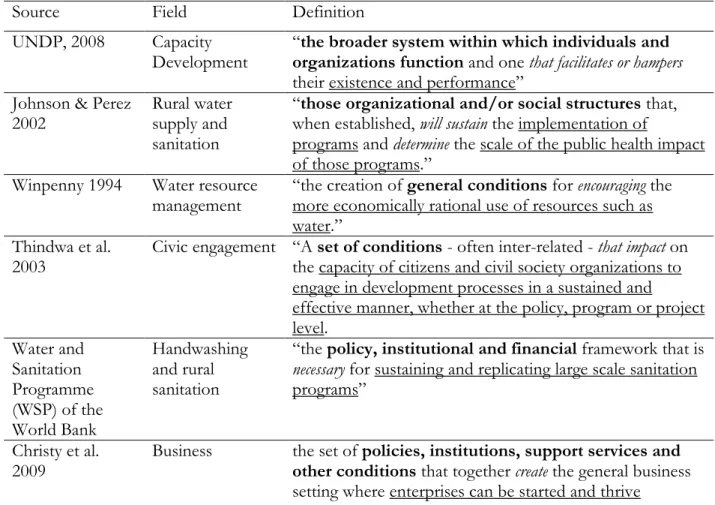
Table 1 provides a sample list of definitions used in different sectors and shows the parts that generally comprise an enabling environment definition. The bolded, italicized, and underlined words in the table represent the elements, impacts, and objectives, respectively.
Table 2.1: Definitions of the enabling environment broken into elements, impact, and objectives
Source Field Definition
UNDP, 2008 Capacity Development
“the broader system within which individuals and organizations function and one that facilitates or hampers their existence and performance”
Johnson & Perez
2002 Rural water supply and sanitation
“those organizational and/or social structures that, when established, will sustain the implementation of
programs and determine the scale of the public health impact of those programs.”
Winpenny 1994 Water resource
management “the creation of general conditions for encouraging the more economically rational use of resources such as water.”
Thindwa et al. 2003
Civic engagement “A set of conditions - often inter-related - that impact on the capacity of citizens and civil society organizations to engage in development processes in a sustained and
effective manner, whether at the policy, program or project level.
Water and Sanitation Programme (WSP) of the World Bank
Handwashing and rural sanitation
“the policy, institutional and financial framework that is necessary for sustaining and replicating large scale sanitation programs”
Christy et al. 2009
Business the set of policies, institutions, support services and other conditions that together create the general business setting where enterprises can be started and thrive
* Bolded items are the factors, italicized items are the suggested impact, and underlined items are the objectives
19
environment on the objective, and the elements of the enabling environment, that is, components that make up the enabling environment (Table 1). It is, therefore, based on these parts that we develop a definition of the enabling environment for drinking water.
Definitions of the enabling environment are dependent on the objective a proposed program. This is because an environment may be simultaneously enabling for one program, e.g. a drinking water program, and disabling for another program, e.g. an irrigation program. The specificity of the objective is directly linked to the specificity of the conditions that are assumed to impact the achievement of that objective. Some definitions of the enabling environment (Table 1) list precise enabling environment elements that are believed to aid in achieving the desired objective (e.g. Johnson and Perez, 2002 and WSP, n.d.) while others are not precise about the elements (e.g. UNDP, 2008). For this paper, the enabling environment is defined and assessed in relation to achieving the objective of improving access to and use of safe and sustainable drinking water.
Numerous publications describe the impact of the enabling environment as facilitating (e.g. Johnson and Perez, 2003, Winpenny, 1994); however, the enabling environment is sometimes described in terms of conditions that influence, that is either hinder or facilitate, these outcomes (e.g. Thindwa et al., 2003, e.g. UNDP 2008). The reason for this is an environment can be facilitating at one time but hindering at another; or a positive condition may unintentionally cause adverse consequences. For these reasons, an enabling environment is one that impacts the capacity of individuals and organizations to carry out their responsibilities and achieve their objectives.
20
environment is understood as the context within which actors perform; for drinking water programs it is then important to ask what contextual conditions impact the capacity of actors to achieve their desired outcomes? There are three contextual conditions, henceforth called elements, highlighted in the enabling environment literature: formal rules, informal rules, and the physical environment. However, they are rarely listed collectively.
Formal rules are written, created, communicated, and enforced by official entities such as police, courts and judges (Soysa & Jutting, n.d.). They set the boundaries for action, assign roles to different actors, and establish the guidelines for engagement and relationships between individuals and organizations that influence objectives. They include policies, regulations, standards, laws, and formal guidelines. Formal rules generally have predictable outcomes; however, they do not generate the exact same outcomes everywhere and every time (Soysa & Jutting, n.d.). One reason for this is the existence of informal rules.
Informal rules typically represent unwritten and socially-shared guidelines that are enforced outside official channels (self-enforced, enforced by community chiefs, etc.) (Soysa & Jutting, n.d.). Informal rules, like formal rules, govern the behaviors, modes of operation, relationships, and mandates of individuals and organizations (UNDP, 2008). They include social norms, culture, religious beliefs and power relations. For drinking water programs, informal rules are particularly relevant because even if access to drinking water systems is achieved, use and maintenance of these systems can be influenced by informal rules.
21
within the context of empowerment of women (Kardam, 2005) or civic engagement (Thindwa, et al., 2003), it is rarely discussed. However the influence of climate, land-use, groundwater levels and other physical environment components on drinking water programs makes the physical
environment important to consider when analyzing the enabling environment for drinking water programs.
Formal, informal rules, and the physical environment contribute, in differing degrees depending on the situation, to the success of drinking water programs. These enabling environment elements impact the success of interventions. For example, the financial capacity of an organization may be low in a country with high corruption and stringent import regulations whereas the capacity of that organization may be sufficient in another country with the same available resources where there is low corruption and there are favorable tax regulations. Additionally, these elements cannot be adequately approached in isolation of one another; because interactions among them (section 2.2) can play an important role in determining whether an environment facilitates or hinders desired objectives.
Now that the foundations for the enabling environment definition have been built, a
framework, which can aid in comprehensively assessing the enabling environment, it will be used to fully develop the definition of the enabling environment using the information from this section as the groundwork.
2.2.Using the Institutional Analysis and Development Framework to Comprehensively Analyze the Elements of the Enabling Environment
A framework can be used to systematically and comprehensively determine elements that influence the success of drinking water programs. Such frameworks help to identify the elements that influence program implementation and the relationships between these elements, the
22
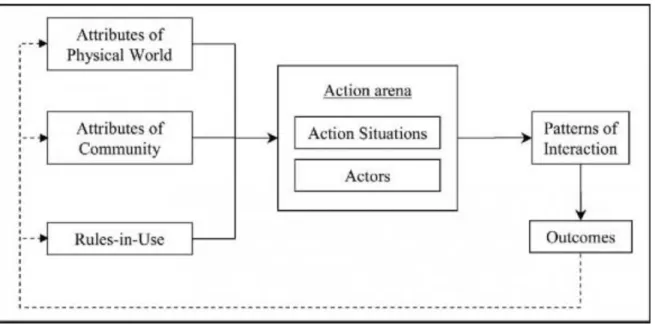
framework, the Institutional Analysis and Development (IAD) framework (Figure 1) is used to assess the enabling environment drinking water programs. The framework is a product of many social scientists who have, over the past 25 years, participated in the Workshop in Political Theory and Policy Analysis (Polski & Ostrom, 1999). The framework can be used to analyze and design policy interventions across diverse fields. The IAD framework is versatile and widely accepted; it has been applied successfully to evaluation in a diverse range of settings and sectors (Ostrom, 2011). The framework has been used to analyze fisheries policies (Imperial & Yandle, 2005),
co-management measures (Whaley & Weatherhead, 2014), and general policy analysis and design (Polski & Ostrom, 1999). The IAD framework emphasizes contextual factors and does not assume that one factor is preferred or more important that another. It helps to generate questions that need to be addressed during analysis, thereby ensuring a comprehensive approach that systematically organizes the relationships among different elements of the enabling environment: formal rules, informal rules, physical environment.
23
The IAD framework has the following components: the external variables, the action situation, interactions, and outcomes. The components used are the external variables, actors within the action situation, interactions, and outcome. The other part of the action situation—positions, information, control, and net costs and benefits—are not used in this paper because they are related to analyzing actors and the actions they carry out based on a their position. This assessment is not an actor analysis and as a result this in-depth study of actors is left out of this section. In addition to its widespread use and acceptance, the IAD was also chosen for this analysis because the external variables components of the IAD framework mirror the enabling environment elements—formal
rules, informal rules, and the physical environment—identified in the preceding section.
The external variables include the “biophysical environment”, “rules-in-use”, and “attributes of
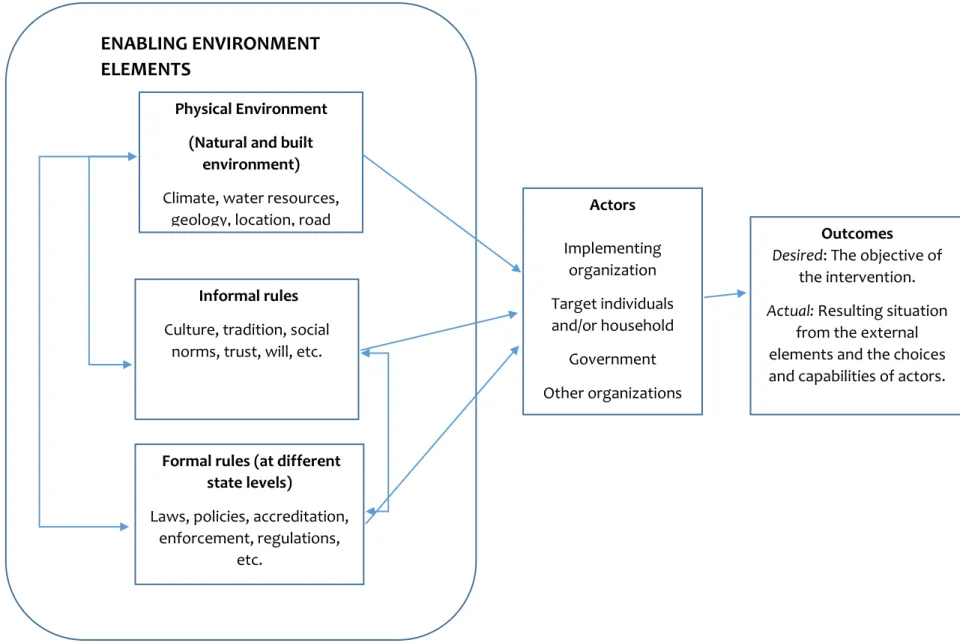
the community” as named in the IAD framework. Henceforth, these external variables are called the physical environment, formal rules, and informal rules, respectively and will be identified as the enabling environment elements. These elements directly or indirectly influence and/or are
influenced by a group of actors that are involved in a specific drinking water program. The actors are included in the analysis of the enabling environment because they can shape the enabling
24
10 years (Republic of Kenya, 2014). The outcomes are the consequences of the actions of these actors as they work within the boundaries of the enabling environment.
25
ENABLING ENVIRONMENT ELEMENTS
Figure 2.2: Framework for identifying relevant elements and sub-elements that influence drinking water programs and the interactions between these elements. Developed based on the IAD framework. The arrows represent the interactions among different elements.
Physical Environment
(Natural and built environment)
Climate, water resources, geology, location, road networks, health facilities,
etc.
Formal rules (at different state levels)
Laws, policies, accreditation, enforcement, regulations,
etc.
Informal rules
Culture, tradition, social norms, trust, will, etc.
Outcomes
Desired: The objective of the intervention. Actual: Resulting situation
from the external elements and the choices and capabilities of actors.
Actors
Implementing organization Target individuals and/or household
26
2.2.1. The Enabling Environment Elements for Drinking Water Programs
The Enabling Environment Elements
This section describes the enabling environment elements with regard to drinking water programs and provides examples of how these elements have influenced drinking water programs, access to and/or use of drinking water systems.
The physical environment element of the enabling environment is important because a hostile environment or natural disaster can reduce or eliminate access to water supply infrastructure. For example, in 2004, floods in Bangladesh caused contamination of water sources, posing a health risk to the population and reducing access to existing water systems (Sirajul, et al., 2007). By
understanding this environment, implementers can make the right decisions about the types of water technologies to promote and the most effective location for infrastructure. While the physical environment can sometimes be altered by human activities (e.g. urban development of a forest area), sometimes it cannot (e.g. lands with boundaries with the ocean cannot be made land-locked).
Although, the physical environment cannot always be modified, it is important that it be considered as part of the enabling environment during planning and implementation because the physical environment can affect other elements of the enabling environment. An example of this is building regulations (formal rules) for countries are sometimes based on location, climate, and common natural disaster. In Florida, construction is prohibited within 50ft of the mean high water line at any coastal location (International Code Council, 2014).
27
(Brinkerhoff, 2004). In 1994, Uganda developed a Water Action Plan (WAP) that outlined a
framework for integrated water resource management process and defined roles and responsibilities of key stakeholders. This plan has fostered stakeholder participation and promoted decentralization which has facilitated local level involvement (Jønch-Clausen, 2004). Although country specific rules are important, international policies can influence country decision making as well, such as
recognition of access to safe water as a human right which prompted nations to put into law the right to safe water (Otieno, 2015; UN, 2002). In terms of formal rules, the presence of favorable policies, regulations, and standards is insufficient. Implementation of these policies, enforcement of regulations, and accountability of government officials are critical to ensuring that desired outcomes occur. In Buea, Cameroon, laws exist to protect source waters but the limited capacity to enforce these laws allows pollution of water sources and illegal construction of buildings within zones not designated for infrastructure (Folifac, et al., 2009). It is, therefore, necessary to understand that managing implementation is just as important as designing good policies. The policy implementation process calls for “consensus-building, participation of key stakeholders, conflict resolution,
compromise, contingency planning, and adaptation.” (Brinkerhoff & Crosby, 2002, p. 6). One way to push forward the implementation process is to determine stakeholder interests and set incentives for performance within formal policies and ensure that these are enforced. For example, in Kenya, the private sector organizations involved in promoting household water treatment are granted importation waivers of foreign-produced products for proven household water treatment technologies (WHO & UNICEF, 2011).
28
town’s residents expended most of their efforts to fight the diseases based on their traditional understandings of the nature of disease and curative methods. Their methods included eliminating all sour fruits, confections, egg plants and some other foods from their diets and improving moral behaviors to please the gods. Residents also eliminated dirt and animal feces on the streets to make the air and ground clean for the gods. Although they carried out some measures known scientifically to improve sanitation and mitigate cholera, the reasoning was not scientific but rather cultural. Western medical facilities were present in the town; however, these facilities were largely ignored or inconsistently used and when they were used, this was in conjunction with cultural practices. This shows that to effectively introduce new systems and knowledge, it is beneficial to recognize that individuals respond according to their cultural beliefs (Hsu, 1955).
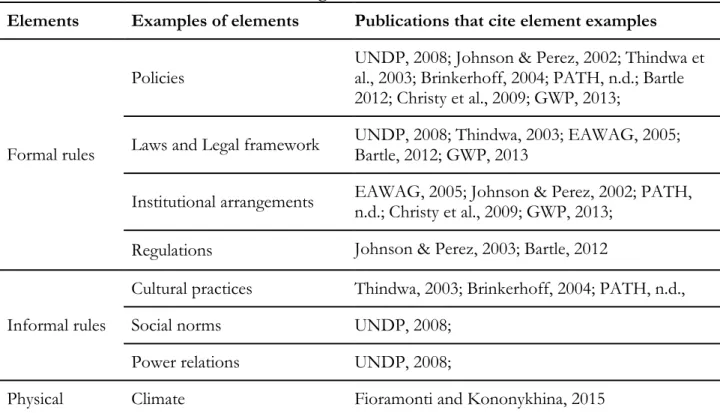
Table 2 lists some sub-elements found in the literature. These sub-elements are examples of formal rules, informal rules, and the physical environment.
Table 2.2: Sub-elements of the enabling environment in the literature
Elements Examples of elements Publications that cite element examples
Formal rules
Policies UNDP, 2008; Johnson & Perez, 2002; Thindwa et al., 2003; Brinkerhoff, 2004; PATH, n.d.; Bartle 2012; Christy et al., 2009; GWP, 2013;
Laws and Legal framework UNDP, 2008; Thindwa, 2003; EAWAG, 2005; Bartle, 2012; GWP, 2013
Institutional arrangements EAWAG, 2005; Johnson & Perez, 2002; PATH, n.d.; Christy et al., 2009; GWP, 2013;
Regulations Johnson & Perez, 2003; Bartle, 2012
Informal rules
Cultural practices Thindwa, 2003; Brinkerhoff, 2004; PATH, n.d.,
Social norms UNDP, 2008;
Power relations UNDP, 2008;
29
environment Location Fioramonti and Kononykhina, 2015
Infrastructure (e.g. road
networks, schools, etc.) Brinkerhoff, 2004; Hodgman, 2011
Interactions between the Enabling Environment Elements
In addition to considering the enabling environment elements discussed above,
implementers may benefit from examining the interactions between these elements. Even within a particular element, for example formal rules, there are interactions to consider. According to Ostrom (2010), decisions made about rules at one level are usually based on a structure of rules on another level. For example, sub-national regulations are dependent on national level policies. In the United States, for example, states must adhere to the protection of water sources under federal protection in accordance with the Clean Water Act and can only make modifications to the regulations if these modifications are more stringent than that of the federal regulations (Environmental Law Institute, 2013). Thus rules at different state levels may need to be considered depending on the level at which the program is being carried out. Leković (2011) notes that formal and informal rules can be
30
2.2.2. Actors and Their Interactions with the Enabling Environment
Knowing the actors involved in drinking water programs and their interactions is important to understanding and improving the enabling environment (Ostrom, 2011). This is because informal rules are specific to different actors and formal and informal rules are enforced by some of these actors. There are numerous actor analysis models available (e.g. CAP-NET 2005, IFC, 2007, NETSSAF 2008, Rietbergen-McCracken et al., 1998, SSWM, n.d.) that can assist implementers in identifying the relevant actors. This paper does not focus on that; rather it emphasizes the
importance of actors for understanding the enabling environment based on the influence they have on the enabling environment.
Actors interact, sharing ideas and interests, with the goal of achieving their own objectives. Sometimes, these objectives are complementary and at other times they are conflicting. Generally, actors find a broad common goal (e.g. community investment, public health, environmental stewardship, etc.) and build from this to develop partnerships (IFC, 2007). Although these
partnerships can be voluntary, they can also be mandatory, that is guided by formal rules, and have ruling guidelines that set the roles and responsibilities of different actors. For example, in Ghana, the government will, where feasible, enter into contracts which articulate roles and responsibilities of public and private operators to manage water systems (Government of Ghana, 2007). One of the key actors in any drinking water program is the government (IFC, 2007). Governments set the national and sub-national policies that guide if and how implementers carry out activities (see public private partnership act in section 3). In some cases, community leaders enforce social norms and thereby influence whether and how communities accept different safe drinking water practices (Pejovich, 1999). In addition to knowing and understanding what the enabling environment
31 2.2.3. Defining Desired Outcomes
The outcome of a drinking water program is dependent on the enabling environment, the actors, and the interactions that occur between and within these elements of the framework. However, by defining desired outcomes at the beginning of a program, a process that can be recurrent, implementers can determine what enabling environment elements may influence those desired outcomes and carry out activities to shape the enabling environment, when possible, because the interactions among the enabling environment and actors may create unintended outcomes that may be beneficial or detrimental. This can cause the final outcome to be similar to the desired outcome.
32 3. Enabling Environment Diagnostic Tool
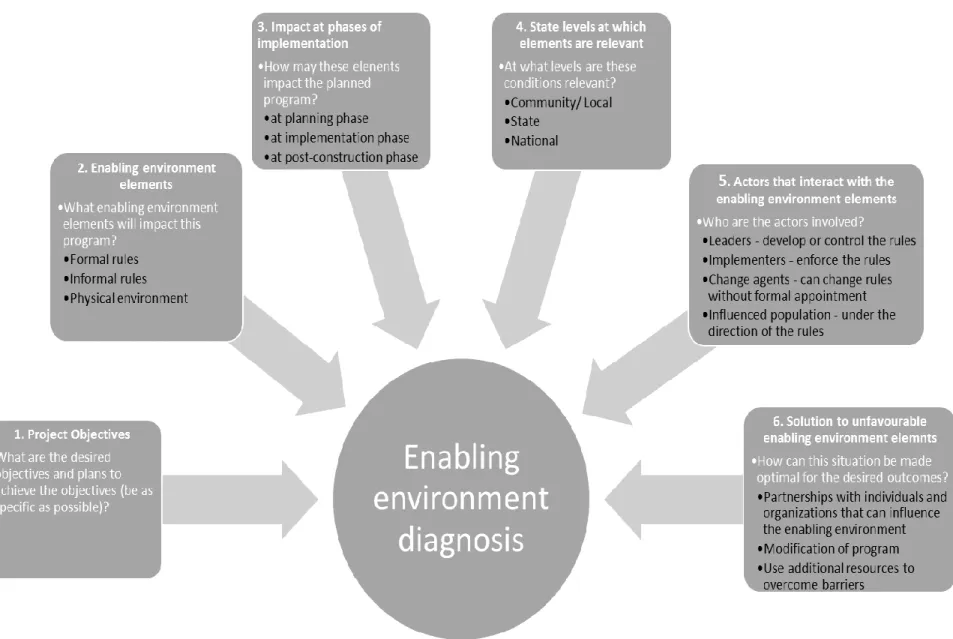
The discussion above on the use of the IAD framework shows how the proposed enabling environment elements relate to drinking water programs. It also shows how these elements have influenced drinking water programs; however, the extent to which they impact drinking water programs varies. A diagnostic tool can aid drinking water program implementers in determining which elements influence their specific program objectives by highlighting constraints and enablers to the achievement of their program objectives, identifying ways the constraints can be eased, and proposing where resources should be put in terms of making needed changes to enhance the
enabling environment. This tool can be used prospectively for shaping the enabling environment for a planned project or retrospectively for determining what the enabling environment would be for a completed or an already started project; this will help in making modifications to projects not yet completed and in informing future program planning.
The diagnostic tool (Figure 3) is useful for gathering information to comprehensively fill out the framework (Figure 2). By using this tool, information on which identified elements will impact the program, which actors that control certain elements, and what stages in the implementation process the identified elements are important can be obtained. This information can assist implementers in putting together effective strategies to modify the environment, if needed.
33
34
35
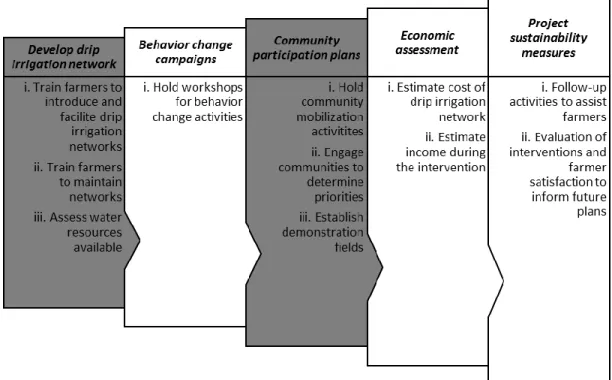
We use a case study of a sustainable water management project in Salamieh district in Syria to illustrate the use of the diagnostic tool in comprehensively assessing the enabling environment for the project. This is a retrospective analysis. The information presented for this analysis was obtained from Al-Zein (2015) case study report on this project. The goal of the project was to lessen the negative impacts of water shortage in the district such as poor crop yields and low income. This was achieved through improved productivity and efficiency of water use by employing modern irrigation systems, particularly drip systems. The project included interventions to assist farmers in
implementing water saving irrigation measures. Farmers from 120 villages were targeted for the intervention. Although this case study focuses on the use of water for irrigation, it mirrors drinking-water projects focused on improving access to safe drinking-drinking-water as new technologies and
measures are introduced to a community. This case study was chosen because it provided details on the specific interventions carried out, the results, and the challenges faced which enables the
accurate use of the diagnostic tool.
36
Figure 2.4: Project plan to achieve project goal – lessen the negative impact of water shortage through improved efficiency of water use in agricultural lands.
37
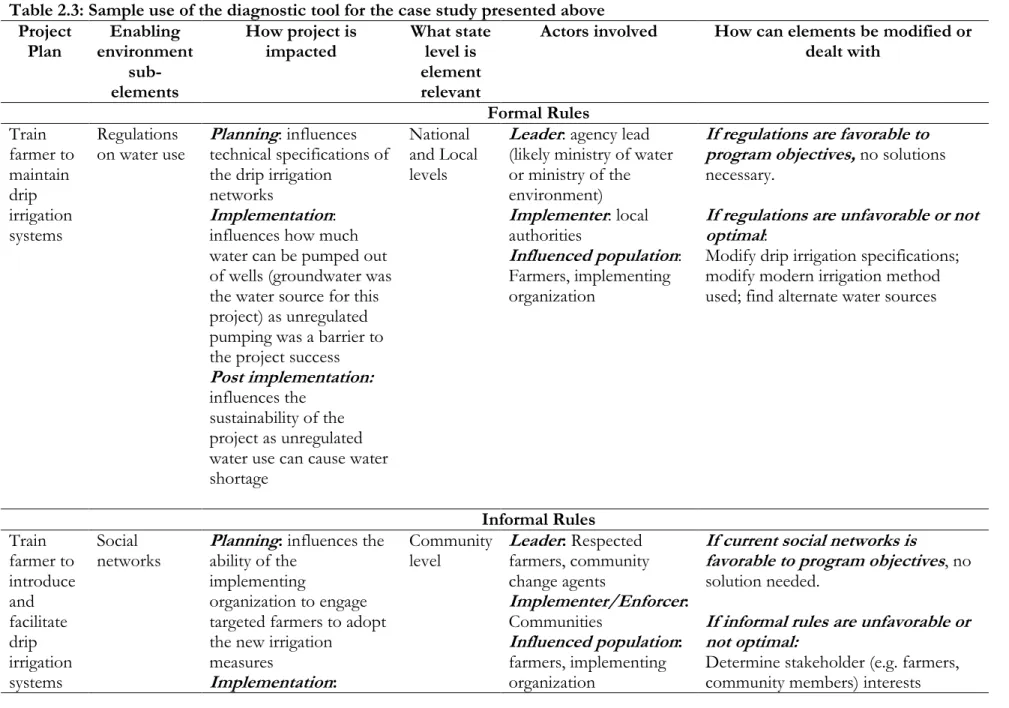
Table 2.3: Sample use of the diagnostic tool for the case study presented above Project
Plan environment Enabling sub-elements
How project is
impacted What state level is element relevant
Actors involved How can elements be modified or dealt with Formal Rules Train farmer to maintain drip irrigation systems Regulations
on water use Planning: influences technical specifications of the drip irrigation
networks
Implementation: influences how much water can be pumped out of wells (groundwater was the water source for this project) as unregulated pumping was a barrier to the project success Post implementation: influences the
sustainability of the project as unregulated water use can cause water shortage
National and Local levels
Leader: agency lead (likely ministry of water or ministry of the environment) Implementer: local authorities Influenced population: Farmers, implementing organization
If regulations are favorable to program objectives, no solutions necessary.
If regulations are unfavorable or not optimal:
Modify drip irrigation specifications; modify modern irrigation method used; find alternate water sources
Informal Rules Train farmer to introduce and facilitate drip irrigation systems Social
networks Planning: influences the ability of the implementing
organization to engage targeted farmers to adopt the new irrigation
measures
Implementation:
Community
level Leader: Respected farmers, community change agents Implementer/Enforcer: Communities Influenced population: farmers, implementing organization
If current social networks is
favorable to program objectives, no solution needed.
If informal rules are unfavorable or not optimal:
38
influences the continued success of the drip irrigation system as trust is essential when issues with the systems arise. Post implementation: ensures that after the implementing
organization leaves the community, there are community members present to continue impelling farmers to the advantages of the systems
Engage relevant stakeholders, particularly change agents
Communicate goals in a manner that highlights shared interests
Individual values of farmers
Planning: influences the choice of farmers
Implementation:
influences the compliance of the farmers to the new irrigation methods Post-implementation: influences chances of scaling up the
intervention to additional villages Individual and community Leader: individual farmers Implementer: self-enforced by individuals Influenced population: farmers, implementing organization
If values is favorable to program objectives, no solution needed. If informal rules are unfavorable or not optimal:
Conduct behavior change activities Communicate goals in a manner that highlights shared interests
The Physical Environment (Natural) Assess water resource availability Water source quantity (in this case, groundwater was used)
Planning: influences the type of irrigation
measures taken Implementation: influences the amount of water used by farmers Post-implementation: influences the
Community
level Influenced population: Implementing organization, farmers
If water source type is favorable to program objectives, no solution needed.
If water source type is unfavorable or not optimal:
39
sustainability of the networks over time as rainfall is unevenly distributed over seasons
Diversify water sources
The Physical Environment (Built) Building
drip irrigation networks
Road
networks Planning: influences travel to and from community to assess feasibility of program Implementation: influences the transport of construction materials if not available in the community
Post-implementation: influences availability of spare parts when repairs are needed
Community
levels Influenced population: Implementing organization, community members, water
committee
If road networks are favorable, no solutions necessary.
If road networks are unfavorable or not optimal:
40
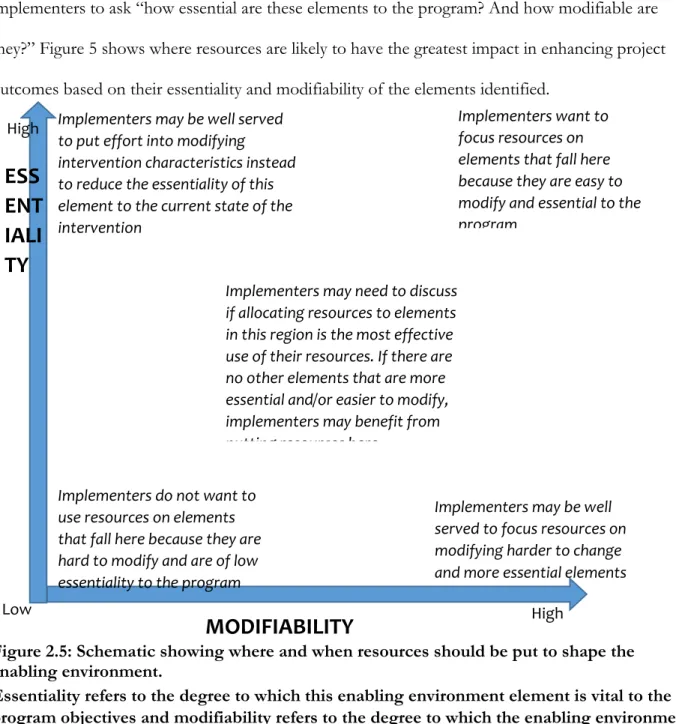
Through the activities carried out to improve the efficiency of water used and the barriers identified after project completion, we could identify elements of the enabling environment that impacted the project using the diagnostic tool. This can aid in future programming. In addition to this, the analysis highlighted the possible solutions to unfavorable environments which compels implementers to ask “how essential are these elements to the program? And how modifiable are they?” Figure 5 shows where resources are likely to have the greatest impact in enhancing project outcomes based on their essentiality and modifiability of the elements identified.
Essentiality refers to the degree to which this enabling environment element is vital to the program objectives and modifiability refers to the degree to which the enabling environment element can be changed by the implementing organization, either directly or indirectly.
ESS
ENT
IALI
TY
MODIFIABILITY
Low High
High Implementers want to focus resources on
elements that fall here because they are easy to modify and essential to the program
Implementers may be well served to put effort into modifying
intervention characteristics instead to reduce the essentiality of this element to the current state of the intervention
Implementers may be well served to focus resources on modifying harder to change and more essential elements Implementers may need to discuss
if allocating resources to elements in this region is the most effective use of their resources. If there are no other elements that are more essential and/or easier to modify, implementers may benefit from putting resources here
Implementers do not want to use resources on elements that fall here because they are hard to modify and are of low essentiality to the program
41
4. Important Reflections about the Enabling Environment
The notion of shaping an enabling environment is one of the most repeated ideas in the enabling environment literature. Enhancing an enabling environment is an aspiration that is shared in many in different fields (Asaolu & Ofoezie, 2003; Bertucci, 1998; Longfield, et al., 2011;
Mutabingwa, 2005; Rao, et al., 2007). However, the modification of an enabling environment is influenced by the ease of changing the existing environment, the actors with the capacity to make changes, and the larger global environment in which the enabling environment of concern resides. These issues, modifiability, relevant actors, and the global environment, are discussed below.
4.1.Modifiability of the Environment
To enhance an enabling environment is to generate conditions that cause a shift from an unfavorable or neutral environment to one that is enabling or to further improve an environment that is already facilitating. This means changing unfavorable formal rules (e.g. policies, regulations, laws), informal rules (e.g. cultures, social norms), and physical environment (e.g. water sources) for the better. These are elements that can take as little as a few hours or days to change or as long as years. For example, to change a policy, one has to consider the entire policy cycle (agenda setting, policy formulation, decision making, policy implementation, and policy evaluation (Howlett & Ramesh, 1995) as well as policy lags (the delays that occur during the policy implementation cycle). This entire process can take many years. For example, a decade after a Palestine national plan authorized seven wastewater treatment plants, only one was operational (The World Bank, 2009). However, it can also take a shorter time, for example, the pollution of a water source. Floods can transport contaminants to a water source. When it comes to the physical environment, change is sometimes impossible as some elements of the physical environment cannot be changed by human influence (e.g. geography). This begs the questions: is the perfect enabling environment an