HEALTHCARE WASTE MANAGEMENT FOR HOSPITALS IN RESOURCE-CONSTRAINED SETTINGS: WHAT DETERMINES EFFECTIVE IMPLEMENTATION?
Jacqueline Au McPherson
A dissertation submitted to the faculty at the University of North Carolina at Chapel Hill in partial fulfillment of the requirements for the degree of Doctor of Public Health in the Department of Health
Policy and Management in the Gillings School of Global Public Health.
Chapel Hill 2015
© 2015
ABSTRACT
Jacqueline Au McPherson: Healthcare Waste Management for Hospitals in Resource-Constrained Settings: What Determines Effective Implementation?
(Under the direction of John E. Paul)
The effective management of healthcare waste is a critical component of a hospital’s infection control program and is central to occupational safety for healthcare workers and the health of the environment and community. In low-income countries, where hospital administrators are burdened by resource constraints and struggle to maintain basic health services, healthcare waste management (HCWM) can be a significant challenge. There are, however, examples of hospitals in low-income countries that are effectively implementing HCWM systems that use new technology and practices and focus on reducing, reusing and recycling their waste. This research aimed to identify the determinants of effective implementation of the HCWM systems in three such hospitals located in Kathmandu, Nepal.
This study utilized a multiple case study design with a mixed methods approach. A conceptual model for implementation effectiveness of complex innovations in organizational settings was used to guide the study design.
The key findings from this study identified four determinants that facilitated effective
implementation across all sites including 1) the presence of an innovation champion within the hospital who advocated for use of the system; 2) a strong perception of the primary users (nurses and ward
non-profit). The length of implementation and level of management engagement were also found to influence the level of implementation effectiveness.
The findings suggest that large hospitals in low-income countries like Nepal can effectively manage their waste through systems that minimize harm to the environment, hospital staff and
ACKNOWLEDGEMENTS
This dissertation is the culmination of three years of study at the University of North Carolina in Chapel Hill. There are many people who have supported me along the way.
I would like to first express my sincere gratitude to the members of my dissertation committee for their guidance and support. My committee chair, John Paul, was an extraordinary dissertation advisor who offered unique perspectives based on his long history with and love for Nepal. His insightful questions challenged me to think deeply about my topic and how this study might be used to effect change. I also felt privileged to have a group of committee members with a breadth and depth of experience and expertise. I am grateful to Sue Babich, who was a wonderful teacher and mentor throughout my doctoral studies; Bryan Weiner, who provided invaluable advice on implementation science and qualitative research methodology; Bill Rutala, who shared his in-depth knowledge and extensive experience over several decades working on healthcare waste management issues across the globe; and Janet Robinson, who was instrumental in shaping my views of the environmental impact of the healthcare sector and the role of strong healthcare waste management systems.
During this process, I was fortunate to be working at FHI 360, an organization that unequivocally supports the pursuit of higher education and places high value on research. I am deeply indebted to many people at FHI 360 for their support throughout this process, especially my colleagues in the FHI 360 Asia Pacific Regional and Nepal Country Offices. I would like to specifically acknowledge Ward Cates, who first encouraged me to embark on this academic adventure and whose infectious optimism kept me on a steady course; Laura Kayser, who supported me in many ways both in Chapel Hill and Bangkok; Amy Weissman—colleague, classmate, study partner; and friend; and Tony Bondurant, who has always been an unwavering source of wisdom, guidance and inspiration.
I am very thankful for the kind support of the dedicated Nepali staff from the three hospitals and the NGO that participated in this study. I would like to also thank Mahesh Nakarmi, Hare Ram Bhattarai and Saraswoti Thakur who provided expert guidance throughout this process.
I was honored to have had the opportunity to study with the members of Cohort 8 and am very thankful for their friendship, openness and trust. Our shared love of learning and sense of humor carried me through and made it easy to have class at 4:00 a.m. in Bangkok.
TABLE OF CONTENTS
LIST OF TABLES ... xii
LIST OF FIGURES ... xiv
LIST OF ABBREVIATIONS ... xv
CHAPTER 1: INTRODUCTION ... 1
1.1 Statement of the Problem ... 1
1.1.1 A Case Study from Nepal ... 2
1.1.2 Understanding Healthcare Waste Management - An Implementation Science Approach ... 3
1.2. Background ... 5
1.2.1 Healthcare Waste Management in South Asia ... 5
1.2.2 Healthcare Waste Management in Nepal ... 10
1.3 Significance of the Problem ... 15
1.3.1 Contribution to the Literature ... 16
1.3.2 Policy Implications ... 16
CHAPTER 2: LITERATURE REVIEW ... 17
2.1 Overview ... 17
2.2 Healthcare Waste Management ... 17
2.2.1 A Global Overview of Healthcare Waste Management ... 17
2.2.2 Healthcare Waste Management in High-Income Countries ... 18
2.2.3 Healthcare Waste Management in South Asia ... 20
2.3 Implementation Science ... 25
CHAPTER 3: METHODOLOGY ... 28
3.2 Study Design ... 29
3.3 Data Collection Methods and Sources ... 30
3.3.1 Survey - Individual Rapid Assessment Tool ... 31
3.3.2 Document Review ... 32
3.3.3 Key Informant Interviews ... 33
3.3.4 Semi-structured Interviews ... 33
3.3.5 Direct Observations ... 34
3.4 Data Management ... 35
3.5 Data Analysis ... 36
3.5.1 Qualitative Data Analysis ... 36
3.5.2 Case Study Analysis ... 37
3.6 Strengthening the Study Design ... 38
3.6.1 Internal Validity ... 38
3.6.2 External validity ... 39
3.6.3 Construct Validity ... 39
3.6.4 Reliability ... 39
3.7 Ethical Review ... 40
CHAPTER 4: RESULTS ... 41
4.1 Case Study A ... 41
4.1.1 Background ... 41
4.1.2 Findings ... 42
4.2 Case Study B ... 46
4.2.1. Background ... 46
4.2.2 Findings ... 47
4.3.2 Findings ... 50
4.4 Cross-Case Analysis... 53
4.4.1 Background ... 54
4.4.2 Pre-Implementation ... 54
4.4.3 Startup ... 54
4.4.4 Implementation Effectiveness ... 55
4.4.5 Determinants of Implementation Effectiveness ... 56
4.4.6 Facilitators and Barriers across Hospitals ... 76
4.4.7 Expected vs Observed Relationships between Constructs in the Conceptual Framework ... 77
4.4.8 Summary of Results for Modified Conceptual Framework ... 81
CHAPTER 5: DISCUSSION ... 83
5.1 Key Determinants for Implementation Effectiveness ... 83
5.1.1 Facilitating Factors for Implementation Effectiveness ... 84
5.2.2 Barriers to Implementation Effectiveness ... 88
5.2.3 Factors Associated with Higher Implementation Effectiveness ... 89
5.2.4 Factors that Varied by Type of Hospital ... 92
5.2 Applicability of the Conceptual Framework ... 95
5.3 Limitations of this Study ... 95
5.3.1 Site Selection ... 96
5.3.2 Data Collection ... 97
5.3.3 Coding and Analysis ... 98
5.4 Recommendations for Further Research ... 99
5.4.1 Cost-benefit Analysis of HCWM ... 99
5.4.2 Modified Conceptual Framework for Implementation Effectiveness ... 99
6.1.1 Goal 1: Expand Non-incineration HCWM to all Large Hospitals in Nepal ... 103
6.1.2 Goal 2: Strengthen the Regulatory Framework for HCWM in Hospitals in Nepal ... 107
6.2 Plan for Change in Nepal: The Process ... 110
6.3 Catalyzing the Spread of Non-incineration HCWM beyond Nepal ... 116
APPENDIX 1: HEALTHCARE WASTE TERMS AND DEFINITIONS ... 118
APPENDIX 2: NATIONAL PROGRESS ON HCWM IN NEPAL (1996-PRESENT) ... 119
APPENDIX 3: DEFINITIONS OF KEY CONSTRUCTS ... 122
APPENDIX 4: INTERVIEW CONSENT FORMS ... 124
APPENDIX 5: INTERVIEW GUIDES ... 126
APPENDIX 6: COMPLETE RESULTS – IRAT SURVEY ... 136
APPENDIX 7: EXAMPLE ADVOCACY SHEET FOR HCWM ... 142
LIST OF TABLES
Table 1: Estimates of Medical Waste Generation in South Asia ... 2
Table 2: Hazardous Waste Classification ... 5
Table 3: Global Conventions that Address HCWM ... 9
Table 4: National Policies in South Asia related to HCWM ... 10
Table 5: Data Methods and Sources ... 30
Table 6: Interview Respondents and Number per Case Study Site... 34
Table 7: Criteria for Determining Salience and Valence ... 37
Table 8: IRAT Scores for All Hospitals ... 43
Table 9: Ten Salient Factors Affecting Implementation Effectiveness ... 56
Table 10: Management Support - Main Themes and Illustrative Quotes ... 58
Table 11: Resource Availability - Main Themes and Illustrative Quotes ... 59
Table 12: Implementation Policies and Practices - Main Themes and Illustrative Quotes ... 61
Table 13: Innovation-Values Fit - Main Themes and Illustrative Quotes ... 65
Table 14: Innovation Champion - Main Themes and Illustrative Quotes ... 67
Table 15: Implementation Climate - Main Themes and Illustrative Quotes ... 69
Table 16: Partnerships - Main Themes and Illustrative Quotes ... 70
Table 17: Innovation-Task Fit - Main Themes and Illustrative Quotes ... 71
Table 18: Organizational Readiness For Change - Main Themes and Illustrative Quotes ... 73
Table 19: Innovation Effectiveness – Main Themes and Illustrative Quotes ... 75
Table 20: Common Facilitators and Barriers for Implementation Effectiveness ... 76
Table 21: Summary of Key Study Findings ... 84
Table 22: Facilitating Factors for Implementation Effectiveness in All Sites and Implications ... 87
Table 23: Barriers to Implementation Effectiveness in All Sites and Implications ... 88
LIST OF FIGURES
Figure 1: Healthcare Waste Management Process ... 6
Figure 2: Implementation Science Theories, Models and Frameworks ... 27
Figure 3: Conceptual Framework for Implementation Effectiveness ... 28
Figure 4: Study Design ... 29
Figure 5: Components of the IRAT Tool ... 31
Figure 6: Organizational Factors for Implementation Effectiveness of HCWM System - Hospital A ... 46
Figure 7: Organizational Factors for Implementation Effectiveness of HCWM System - Hospital B ... 49
Figure 8: Organizational Factors for Implementation Effectiveness of HCWM System - Hospital C ... 53
Figure 9: Modified Conceptual Framework for Implementation Effectiveness ... 77
Figure 10: Strength of Observed Relationships between Constructs ... 82
LIST OF ABBREVIATIONS DoHS Department of Health Services
EHIA Environmental Health Impact Assessment EPA Environmental Protection Agency
GGHH Global Green and Healthy Hospitals HCWM Healthcare Waste Management HIV Human Immunodeficiency Virus IPPs Implementation Policies and Practices IRAT Individualized Rapid Assessment Tool IRB Internal Review Board
ISO International Organization for Standardization JAR Joint Annual Review (Nepal)
MDG Millennium Development Goal MoHP Ministry of Health and Population MWM Medical Waste Management MWTA Medical Waste Tracking Act MTR Midterm Review
NGO Non-Governmental Organization NHRC Nepal Health Research Council NHSP Nepal Health Sector Programme OPD Outpatient Department
UNC-CH University of North Carolina, Chapel Hill UN GEF United Nations Global Environment Facility
UK United Kingdom
CHAPTER 1: INTRODUCTION
1.1 Statement of the Problem
Healthcare facilities throughout the world provide essential prevention, treatment and care services to improve health and quality of life. Paradoxically, one of the byproducts of these services, healthcare waste,1 creates potential risk for injury, infection, and environmental pollution. The effective management of healthcare waste is a critical component of a healthcare facility’s infection control program and is central to occupational and environmental safety for healthcare workers (1). While approximately 80% of waste generated from the healthcare industry is classified as non-risk (non-infectious, non-hazardous) general waste, the remaining 20% is considered hazardous and needs specialized handling, treatment and disposal (2). Properly managed, hazardous waste should pose no threat to humans or the environment. Yet for most healthcare facilities, especially in low-income
countries, the management of healthcare waste is a formidable challenge. A 2002 WHO study of 22 low-income countries showed that 18 to 64% of healthcare facilities did not use proper disposal methods for healthcare waste (3).
Over the past decade, the volume of healthcare waste in low-income countries has significantly increased due to exponential population growth, the expansion of healthcare facilities and higher utilization of disposable items (4-6). The problem is particularly acute in South Asia2, the most densely populated region of the world with more than 20% of the world’s population and three of the ten most
1 See Appendix 1 for definitions of key terms.
populous countries: India, Pakistan and Bangladesh (Table 1) (6). Healthcare facilities throughout South Asia, constrained by limited resources and often struggling to meet the most basic health needs of the populations they serve, often neglect the management of healthcare waste. Numerous descriptive studies from South Asia indicate that the majority of healthcare facilities have under-resourced, antiquated and poorly-managed systems for the treatment and disposal of hazardous waste (5,7). There are, however, also striking examples of successful implementation of healthcare waste management (HCWM) systems in South Asia that can be studied to better understand the key determinants for effective implementation. One such example from Nepal is described below.
Table 1: Estimates of Medical Waste Generation in South Asia
Country
Waste Generation
Kg/bed/day Tons/year
Bangladesh 0.8 - 1.7 93,000 (Dhaka)
Bhutan 0.27 73
India 1.0 - 2.0 330,000
Nepal 0.5 365
Pakistan 1.1 250,000
Sri Lanka 0.4 6,600 (Colombo)
Source: Visvanathan, 2006
1.1.1 A Case Study from Nepal
In 2010, a dramatic change occurred in a large government hospital in Kathmandu, Nepal. Previously, this hospital, like most healthcare facilities in Nepal, had no proper system for the
legislation regulating HCWM and the facility reportedly had HCWM policies in place, these policies were not properly implemented (8).
In July 2010, the hospital administration made the decision to adopt a non-incineration HCWM system. The hospital established a model ward to demonstrate state-of-the-art waste management. They used the model ward to train all hospital staff, purchased two large steam autoclaves for disinfecting waste, and established additional projects linked to the HCWM system such as gas production from bio-degradable waste using bio-digestion, fertilizer production using vermiculture, and construction of a place to store and contain items that used mercury (8). In January 2013, the Office of the Prime Minister lauded this healthcare facility as the gold standard for HCWM and publicly announced that all hospitals in the city must manage their waste in accordance with the law or face severe penalties including closure (9).
The successful implementation of a non-incineration HCWM system in this hospital, operating in a severely resource-constrained setting, was remarkable in that it happened at a time of great social and political upheaval in the country. The healthcare waste problem had been lingering for years and was only one of many problems that the hospital was facing. How was the decision made to adopt this new system? Why was the implementation so successful?
Following this example, two other large healthcare facilities in Kathmandu made the decision to adopt and replicate this non-incineration HCWM model. The implementation process started in each facility with varying degrees of success. The factors that enabled or limited implementation effectiveness in each facility were not well understood.
1.1.2 Understanding Healthcare Waste Management - An Implementation Science Approach
The adoption and implementation of a non-incineration HCWM system takes time, resources and organizational commitment to develop new practices and technologies, establish recording and reporting systems, train staff, monitor implementation, maintain equipment and upgrade the system as needed. This type of new system is referred to in the literature as a complex innovation, defined as:
The implementation of complex innovations that require cultural shifts and new technology often has a low rate of success (11). Research that seeks to better understand this process of implementation for complex innovations, particularly in resource-constrained settings, will contribute to improvement of implementation effectiveness and, finally, the outcomes of the innovation.
The primary research questions for this study were
1) How do hospitals in resource-constrained settings implement non-incineration HCWM systems; and
2) What are the organizational determinants (facilitating factors and barriers) to effective implementation?
To address these questions, the study utilized an implementation science approach. The literature provided several conceptual frameworks for implementation effectiveness of complex innovations that could be used to guide this type of research (10-13). Many of these conceptual frameworks were tested in high-income countries in various sectors including manufacturing and healthcare (12,13). This study contributed to the literature by testing a conceptual framework in a low-income country.
1.2. Background
1.2.1 Healthcare Waste Management in South Asia
The World Health Organization (WHO) defines six categories of hazardous waste although some categories are not relevant in every healthcare facility in South Asia (Table 2) (6,14).
Table 2: Hazardous Waste Classification
Waste Category Description
Infectious Waste Waste that may contain pathogens and pose a risk of disease transmission. Examples include laboratory cultures, waste from isolation wards, materials or equipment that were in contact with infected patients or excreta.
Pathological Waste Human tissues, organs or fluids; body parts; fetuses, placentas, unused blood products.
Sharps Waste Sharp waste. Examples include needles, infusion sets, scalpels, knives, blades, broken glass and pipettes.
Pharmaceutical Waste (including cytotoxic waste)
Waste containing pharmaceuticals. Examples include pharmaceuticals that are expired or no longer needed; items contaminated by or containing
pharmaceuticals (bottles, boxes). Cytotoxic waste containing substances with genotoxic properties (i.e., can cause genetic damage). Examples include waste containing cytostatic drugs (used in cancer treatment) and genotoxic
chemicals.
Chemical Waste containing chemical substances. Examples include laboratory reagents, film developer, disinfectants that are expired or no longer needed, and
solvents. Waste with high content of heavy metals including batteries, broken thermometers, blood-pressure gauges, etc.
Radioactive Waste containing radioactive substances. Examples include unused liquids from radiotherapy or laboratory research, contaminated glassware, packages or absorbent paper.
Source: WHO, 2013
The volume and type of healthcare waste varies widely and depends on several factors such as the type of healthcare facility and department, proportion of outpatients, waste segregation practices,
generate more hazardous waste than emergency departments; healthcare facilities with strict policies on waste segregation at source generate much lower quantities of hazardous waste; and high- and middle-income countries in Asia generate higher amounts of healthcare waste than low-middle-income countries (6,16).
Segregation of healthcare waste at source is the first and most important step in the HCWM process in a healthcare facility
(Figure 1). Segregation of hazardous and non-hazardous waste protects healthcare workers, reduces the amount of hazardous waste in need of treatment, minimizes impact on the environment and significantly
reduces costs (17). In most healthcare facilities in South Asia, this critical component is either poorly
implemented or bypassed completely (7,18,19). Often hazardous waste is mixed with general waste and either dumped illegally, burned in open pits or unregulated incinerators, or disposed of through the municipal waste system (2,5,7).
Following segregation at source, healthcare waste is transported to a storage facility. Depending on the type of waste, the healthcare facility may choose to treat the waste by disinfection (chemical or thermal) or sterilization (steam or microwave irradiation) and dispose of it through the regular municipal waste management system. Alternatively, many healthcare facilities skip treatment and dispose of
should depend on the type of hazardous waste. In low-income countries, however, there are multiple factors that drive treatment and disposal techniques including presence or absence of government legislation and regulations, policies of the healthcare establishment and the available resources to invest in treatment and disposal technology.
Problems related to mismanagement of healthcare waste
The highest risk of disease transmission from healthcare waste is at the point of generation; thus, there have been only a limited number of reported cases of infectious disease outbreaks in the general population in South Asia due to healthcare waste. In March 2009, a hepatitis B outbreak in Gujarat, India claimed at least 60 lives and affected 240 people. The outbreak was initially linked to contaminated needles and subsequent investigation uncovered an illegal black market trade in healthcare waste (20,21). In 2008, seven children in western Afghanistan were reportedly infected with hepatitis B and other infectious diseases while scavenging through healthcare waste (22). A study from 2002 reported that scavengers in Karachi, Pakistan report three to five needle stick injuries per day while sifting through healthcare waste searching for items to resell although there were no data regarding infection rates from this practice (23).
Healthcare waste mismanagement poses a more serious threat to healthcare workers and waste handlers who are in daily contact with hazardous waste products including infectious waste. A 2013 study to determine bacterial agents in clinical waste showed the presence of nosocomial pathogenic bacterial strains (24). Sharps are a particular concern. A 2005 study that assessed the global burden of disease attributable to contaminated sharps injuries among health workers showed that occupational exposures are a substantial source of Hepatitis C virus, Hepatitis B virus and HIV infections (25). The health impact on healthcare workers is rarely monitored in South Asia.
in children, suppressed immune function and infertility (26). Incineration also produces other toxic pollutants including airborne mercury and toxic ash residue that can leach into water supplies (27). Although most high-income countries have already substantially reduced reliance on incineration for healthcare waste disposal, the use of this method is increasing in South Asia (28,29). This is due, in part, to concerns of governments, donors and public health professionals about the growing amount of waste. In resource-constrained settings, healthcare facilities may be forced to dispose of large volumes of waste through low-cost techniques such as open burning, locally-produced incinerators or unregulated centrally-located incinerators.
Global conventions related to healthcare waste management
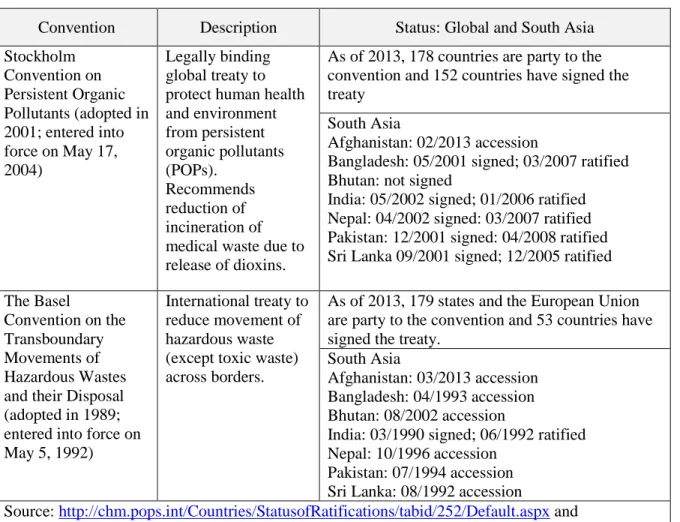
Over the past decade there has been increasing global interest in the topic of HCWM. The WHO has developed a number of policy papers and guidelines for management of healthcare waste in low-income countries (30-32). Two global conventions have come into force that address specific aspects of HCWM: the Stockholm Convention on Persistent Organic Pollutants (POPs) and the Basel Convention on the Transboundary Movements of Hazardous Wastes and their Disposal.
The Stockholm Convention specifically addresses the problem of unintended release of dioxins from the use of incinerators in the management of healthcare waste and recommends cessation of open burning (33). The Basel Convention focuses on the reduction and proper management of hazardous waste,
Table 3: Global Conventions that Address HCWM
Convention Description Status: Global and South Asia Stockholm
Convention on Persistent Organic Pollutants (adopted in 2001; entered into force on May 17, 2004)
Legally binding global treaty to protect human health and environment from persistent organic pollutants (POPs). Recommends reduction of incineration of medical waste due to release of dioxins.
As of 2013, 178 countries are party to the convention and 152 countries have signed the treaty
South Asia
Afghanistan: 02/2013 accession
Bangladesh: 05/2001 signed; 03/2007 ratified Bhutan: not signed
India: 05/2002 signed; 01/2006 ratified Nepal: 04/2002 signed: 03/2007 ratified Pakistan: 12/2001 signed: 04/2008 ratified Sri Lanka 09/2001 signed; 12/2005 ratified The Basel
Convention on the Transboundary Movements of Hazardous Wastes and their Disposal (adopted in 1989; entered into force on May 5, 1992)
International treaty to reduce movement of hazardous waste (except toxic waste) across borders.
As of 2013, 179 states and the European Union are party to the convention and 53 countries have signed the treaty.
South Asia
Afghanistan: 03/2013 accession Bangladesh: 04/1993 accession Bhutan: 08/2002 accession
India: 03/1990 signed; 06/1992 ratified Nepal: 10/1996 accession
Pakistan: 07/1994 accession Sri Lanka: 08/1992 accession
Source: http://chm.pops.int/Countries/StatusofRatifications/tabid/252/Default.aspx and
http://www.basel.int/Countries/Statusofratifications/PartiesSignatories/tabid/1290/language/en-US/Default.aspx#a-note-1;
Table 4: National Policies in South Asia related to HCWM
Country National Policies, Acts, Regulations Afghanistan No current policies
Bangladesh Bangladesh Environment Protection Act, 1995 Biomedical waste management rules 2008
Bhutan Waste Prevention and Management Act 2009 Waste Prevention and Management Regulation 2012
India Biomedical Waste (Management and Handling) Rules, 1998 (amended Mar 2000, Jun 2000, 2003
Nepal National Healthcare Waste Management Guidelines 2002 Solid Waste Management Act 2011
Pakistan Hospital Waste Management Rules, Aug 2005
Sri Lanka National Environment Act No 47, 1980 Draft National Policy on MWM, 2001
Although there is some recognition of the HCWM problem, efforts to develop comprehensive strategies for improvement in South Asia are hampered by limited understanding of the current policies. Despite the international treaties, WHO guidelines and adoption of national policies in some South Asian countries, HCWM policies have not been fully implemented in healthcare facilities across much of the region.
1.2.2 Healthcare Waste Management in Nepal Background on Nepal
Development Index3 of 0.54 (South Asia average is 0.58) (38). The Gross National Income is only $730 per capita (2013) and approximately 25% of the population lives below the poverty line (37). Public spending on health in 2011 was 5.4% of Gross Domestic Product (38).
The Nepal Health System
The Nepal health system has been in a state of flux since the national elections held in November 2013. Although the health system was slated for restructuring based on decisions regarding
decentralization of power to state and local bodies, the political situation has remained unclear. Currently, the Nepal Ministry of Health and Population (MoHP) is working under the Nepal Health Sector Programme (NHSP) II (2010-2015). The midterm review for NHSP II was conducted in February 2013 showing mixed results, with good progress on a number of Millennium Development Goal (MDG) indicators and limited progress on others (39). The MoHP also leads a collaborative process for reviewing progress on the NHSP II through a Joint Annual Review (JAR) with the MoHP, donor community and civil society (40). The most recent JAR was conducted in February 2015. The NHSP III (2015-2020) documents have been drafted under the leadership of a committee chaired by the Minister of Health and include a strategy document, implementation plan and results framework (41).
Healthcare Waste Management in Nepal
HCWM in Nepal is a low priority and has received only intermittent attention over the past two decades although this has slowly started to change in the past few years.4 In October 1996, Nepal signed the Basel Convention and in December 1997, the MoHP held a workshop titled National Workshop on Hospital Waste Management (42). The outcome of the workshop was a set of recommendations that included implementation of legislation for HCWM, the establishment of cooperative waste treatment facilities, and the development of national guidelines and a training program (42).
3 A composite measure of life expectancy, years of schooling and income.
In 2002 the World Bank provided financial support to the MoHP to move forward with these recommendations. The Nepal Health Research Council (NHRC), an autonomous body originally created under the MoHP to promote scientific research, worked in collaboration with WHO and the MoHP to develop two documents: National Health Care Waste Management Guidelines and Training Manual for Medical Professionals (43). The Guidelines provided details on policies and process with a focus on feasibility. For example, they gave mention to WHO’s nine categories5 and the State of India’s ten categories of hazardous waste, with a final recommendation to simplify the process in Nepal by narrowing this to just three categories—sharps, hazardous waste and general waste—given the limited resources at most facilities for segregation. It is unclear whether the training manual was ever used. In 2002, the MoHP also drafted legislation for the regulation of HCWM and submitted this to the Nepal Parliament. However, due to the volatile political situation, the legislation was not passed at that time (42).
In 2003, the World Bank supported a national study to assess the status of HCWM in government healthcare facilities with the aim of developing a strategic framework and action plan. The study found extremely poor HCWM practices, but the findings were questioned because it used only secondary data collected from a non-governmental organization (NGO) and there were no field visits to sites outside the Kathmandu Valley. When the report was disseminated there were also concerns raised about the
presentation of costs. The budget projections for the adoption of HCWM in a healthcare facility were, in some cases, higher than the budget for the entire facility (42).
Since 2003 there have been a handful of studies published in the literature about HCWM in Nepal, all with similar findings: no facility-level policies or guidelines in place about HCWM; inadequate HCWM systems; and lack of knowledge among health workers about HCWM (44-47). Although some larger hospitals reportedly had incinerators on site, they did not incorporate anti-pollution control devices.
There were no central facilities for waste disposal and approximately 300 tons of healthcare waste was reportedly burned each year in hospital compounds throughout the country (48).
There are now over 4,000 public and private healthcare facilities in Nepal (not including approximately 13,000 small primary health centers) that generate an estimated 2,000 tons of healthcare waste annually with no oversight for its management from any regulatory body (49). In May 2012 the Government approved a bill titled Solid Waste Management Act 2011 that included provisions to levy fines against institutions for violating the law (36). Although there is still no robust system for monitoring compliance of healthcare facilities, there has been increasing interest in HCWM from donors,
international and national NGOs and hospital administrators with successful examples of systemic changes in select facilities (8).
The MoHP conducted its 2nd Joint Annual Review (JAR) of the Nepal Health Sector Programme II (NHSP II) in January 2012. It was noted in the 2012 JAR report that the situation with HCWM in Nepal continued to pose a hazard to human and environmental health. The JAR recommended implementation of the following before mid-March 2012: 1) print and distribute the Environmental Health Impact Assessment (EHIA) Plan to healthcare facilities and measure compliance, 2) assess the situation of healthcare waste, including placenta pits, at different health facilities, and 3) develop a “strategy for healthcare waste management based on geographical locations and volume of waste generated at different facilities.” (40)
action points for the MoHP were to scale up this model in other zonal and regional hospitals by April 2013 and present the progress on compliance of HCWM guidelines in the January 2014 JAR (50).
From September to December 2012, an external team conducted an independent Midterm Review (MTR) of the NHSP II for the Government of Nepal. These results were also shared during the 2013 JAR (39). The MTR team commented on the progress of the agreed upon actions for HCWM from the JAR 2012, stating that:
Nepal does not have a focused regulatory framework for healthcare waste management but the Department of Health Services (DoHS) has prepared HCWM Guidelines and an Orientation Manual. The MoHP and DoHS agreed that this activity has been extremely delayed and assured the World Bank mission that a detailed Action Plan will be ready by end August (2013), in time for discussions during the midterm review. The midterm review was not made aware of any Action Plan (39).
The MTR also reported findings and recommendations related to nine output areas, including Output 7: Improved Physical Assets and Logistics Management, under which HCWM was a key component. The findings were as follows:
Lack of institutional integration of HCWM in health offices and enforcement of rules are a risk to
effective waste management;
Incinerators at healthcare facilities are not present or not adequately managed, creating a risk for
staff and environment;
Improper healthcare waste disposal creates an immediate risk for population and environment
near health facilities (39).
The January 2014 JAR reported that the MoHP had started the process to implement a new model
for HCWM in four zonal hospitals—Koshi, Janakpur, Bheri, and Seti—based on the 2013 JAR
recommendations. A follow up recommendation was made for further scale up to two more hospitals. The
report acknowledged that compliance for HCWM had still not been assessed although new HCWM
guidelines were drafted and waiting for endorsement (51). The latest February 2015 JAR report stated
that the HCWM guidelines had been revised and were now consistent with international standards. The report also reported that orientation and trainings had been provided to concerned health officials on HCWM including on-site coaching for hospital in-charges and nurses and that separate budget allocations were made specifically for HCWM by zonal and regional hospitals. For other hospitals, resources were allocated under MoHP’s district strengthening programme, thus ensuring budget for all 75 districts for this purpose. The reported goal of the government is to now roll out the guidelines to 1000 public and private health facilities by the end of September 2015 (41).
1.3 Significance of the Problem
1.3.1 Contribution to the Literature
Currently there are very few published articles from Nepal related to HCWM and most of these are studies that measured waste generation rates and described HCWM practices. There were no studies found from Nepal or elsewhere in South Asia that used a conceptual framework to explore the
implementation process for HCWM systems in individual hospitals. This study seeks to fill this gap and provide insight into how hospitals that are severely resource constrained can successfully implement a complex innovation.
1.3.2 Policy Implications
Although it is possible for forward-thinking hospital administrators to make pioneering changes in the HCWM systems in their individual facilities, to have broader impact on the management of healthcare waste across a state or country requires government intervention. Experience from high-income countries has shown that strong regulatory bodies and robust external monitoring systems are critical for ensuring the proper management of healthcare waste. In South Asia, only India currently has a system in place for HCWM regulation at the state level. In Nepal, given the competing priorities of the MoHP and the Ministry of Environment, Science and Technology, the task of developing a regulatory system for HCWM has been difficult. The findings and recommendations from this study will be shared with key relevant donors and policy makers in Nepal with the goal of catalyzing action towards
CHAPTER 2: LITERATURE REVIEW
2.1 Overview
This review covers two main bodies of literature: 1) HCWM and 2) implementation science. The section on HCWM reviews the global literature with an in-depth focus on the policies and practices in South Asia. The implementation science section includes a brief overview of the field of implementation science.
2.2 Healthcare Waste Management
2.2.1 A Global Overview of Healthcare Waste Management
The growing global interest in HCWM is reflected in the scientific peer-reviewed literature. An increasing number of single and multi-country studies have been published in the last decade on topics such as HCWM policies and practices, healthcare waste generation, new technologies for healthcare waste disposal and models for assessing HCWM systems. These studies are predominantly found in journals that are focused on environmental protection and waste management. The Journal of Waste Management & Research, for example, devoted a substantial part of the June 2008 and June 2009 editions to studies on healthcare waste (52,53).
The global conversation around healthcare waste has recently expanded to include a larger environmental agenda for healthcare facilities and a movement towards greener hospitals (54,55). There are several global initiatives that advocate for examination of hospital systems with the aim of reducing costs and impact on the environment. For example, the Global Green and Healthy Hospitals (GGHH) Network, a project under the international coalition, Health Care Without Harm, has members
healthcare facilities related to ten core areas: leadership, chemicals, waste, energy, water, transportation, food, pharmaceuticals, buildings and purchasing (56)
Although these efforts to raise the profile of healthcare waste and the environment have met with some success, the research shows that many countries still lack legislative frameworks and regulatory controls for healthcare waste disposal (7,57). Many healthcare facilities around the world, especially in low-income countries, do not have even the most rudimentary systems for segregating waste. In many places, treatment technology is outdated and disposal options are primitive or non-existent.
A 2009 systematic literature review exploring HCWM practices in 40 countries found a number of recurrent themes related to failed implementation. The primary themes that emerged were that
healthcare workers were “undertrained, uninformed and had limited access to waste segregation systems.” (5) There were also substantial problems related to disposal systems and confusion on who bears ultimate responsibility for the management of healthcare waste (5). A 12-country study in South East Asia
conducted in 2010 reinforced these findings and offered recommendations centered on changing the mindset of stakeholders including academics, policy makers, patients and their families, health workers and funders (7). Three key areas were identified for priority support for governments and healthcare facilities: developing policies and legislation, budget support, and technology and knowledge
management (7). The most recent systematic literature review on waste management in 2015 reviewed 150 studies from Africa, Asia, Middle East and Latin America (57). The findings showed significant differences in HCWM across countries related to economic conditions, particularly with treatment and disposal practices. There were also examples of best practices across a range of low-, middle- and high-income countries.
2.2.2 Healthcare Waste Management in High-Income Countries
Environmental Protection Agency (EPA) to originate from illegal injecting drug use and home healthcare, the public outcry over perceived illegal dumping of medical waste led to rapid congressional action to pass federal regulations for healthcare waste disposal through the Medical Waste Tracking Act (MWTA) (60,61). This two-year Act provided the first official definition of healthcare waste in the United States, set standards for healthcare waste management, established a system for tracking waste and provided a structure of fines and punishments for non-compliance.
The MWTA expired in 1991 and since that time healthcare waste disposal in the United States has been primarily regulated at the local and state level; thus, definitions and approaches differ among states (62). The exception is toxic healthcare waste, including emissions from healthcare waste incineration, which is regulated by federal laws (29,63).
In 1997, the EPA released guidelines that called for emissions limits for healthcare waste incinerators due to the release of toxic substances (dioxins and furans). Healthcare institutions in the United States began looking for alternative disposal methods since the cost of outfitting incinerators with anti-pollution control devices was high and public opinion towards incineration was negative (64,65). A 2003 study in Massachusetts, where hospitals were incinerating nearly all of the hazardous healthcare waste, investigated waste generation patterns and the cost effectiveness of treatment and disposal options in three hospitals (66). The study concluded that a combination of on-site incineration and microwave technology was the most cost effective option along with stricter segregation of waste (66). A 2003 review detailed the advantages and disadvantages of conventional and alternative technologies for infectious waste treatment including microwave, chemical and pyrolysis treatments (67).
In 2009, the EPA issued stricter guidelines for incinerators that were challenged in court by two industry groups and upheld (68). The result was a dramatic decrease in the number of healthcare waste incinerators from an estimated 6,200 in 1988 to only 57 operating in 2011 across the country (69).
States vary widely with hospitals reporting an approximate average of 0.5 kilograms of waste generated per bed-day (63).
In the United Kingdom (UK) and Europe, HCWM regulations and practices have evolved over several decades (70). There are multiple factors that have driven this process. After the 1970s, the volume of healthcare waste expanded due to increased use of disposable equipment and supplies, overwhelming the incineration system under the National Health Service. The older incinerators did not meet strict emission standards and were taken out of service. In the 1980s the UK also experienced incidents, similar to those in the United States, of intensified public concern over transmission of infectious diseases through healthcare waste. This led to more stringent regulations about the management and disposal of infectious and other hazardous waste (71). Despite this, there were still documented problems with haphazard collection and storage of waste in UK hospitals (70).
A survey of HCWM in five European countries in 2003 showed wide differences by country in the classification of healthcare waste, disposal practices and costs (72). A study in Canada showed similar variations across provinces, particularly with regard to regulatory practices (73). More recent legislation from the European Union in 2008 has now streamlined the approach to HCWM throughout Europe, including the UK (28).
In other high- and middle-income countries, HCWM is uniformly regulated under one governing body (74-76). The focus in most developed countries now is on improving treatment/disposal
technologies and practicing the 3Rs: reduce (minimize waste), reuse (decrease use of disposable items) and recycle (77). The lessons learned and best practices for HCWM in high- and middle-income countries can and should be shared and applied to low-income settings (16).
2.2.3 Healthcare Waste Management in South Asia Legislative Frameworks, National Policies and Guidelines
Bio-to implement these rules in their own facilities (78-80). One exploraBio-tory study in 2007 reported that health managers from two large Pakistani hospitals were aware of the national policies and guidelines on HCWM, although could not produce the documents when requested (81). One problem identified by these Pakistani health managers was the lack of detail in the 1998 national policies that made it difficult to uniformly implement HCWM practices across hospitals. Evidently, the hospital had not yet seen the updated and very detailed 2005 national policies (81).
Studies from healthcare facilities in India also referred to the Government of India 1998 Biomedical Waste (Management and Handling) Rules (82-84) and its subsequent amendments in 2000 and 2003 (85-87). These rules detail the regulations on waste management and outline the legal
obligations of state governments and health facilities in this process. The document contains guidelines for all steps in the waste management process. It also states clearly that disposal is the responsibility of the generator:
“It shall be the duty of every occupier of an institution generating bio-medical waste which includes a hospital, nursing home, clinic, dispensary, veterinary institution, animal house, pathological laboratory, blood bank by whatever name called to take all steps to ensure that such waste is handled without any adverse effect to human health and the environment.” (88)
Several studies from India referred directly to this clause that specifies that facilities are responsible for their own waste disposal. The regulations are reportedly enforced by the State Pollution Control Boards. The lack of reference to policies and guidelines at the facility level in India may be because the national policies already provide very explicit operating procedures on the waste management process. Thus, healthcare administrators might not see the need for another set of guidelines for their individual facility. This practice is not ideal as the step-by-step process of HCWM should be specific to a facility.
multiple facilities in Dhaka stated that the problem with HCWM was lack of regulation and oversight by the government (91).
In Nepal, the Solid Waste Management Act 2011 outlines local government authority to control hazardous waste disposal (47). Several other policies and acts in Nepal also address aspects of HCWM, for example, the Labor Act (1991) that covers occupational health and safety and requires removal of hazardous waste from the workplace; the National Urban Sanitation Policy (2007) that promotes healthy, livable environments; the Environment Protection Act (2010) that regulates emissions and controls pollution, and others (47).
There were no HCWM-focused studies found for Bhutan and very few for Sri Lanka. Although both countries produce relatively small amounts of healthcare waste compared to other countries in South Asia, this volume is expected to increase. One 2005 study from Sri Lanka explored the broader issue of municipal waste management and included a review of the legislation and national policies that govern disposal of waste, including healthcare waste (92).
There are significant gaps in the literature on policy formulation and implementation at the healthcare facility level. Only one study was found from a hospital in Nepal that reported on the
development and successful implementation of a comprehensive HCWM policy at the hospital based on WHO guidelines and the Nepal national HCWM guidelines (93). The study did not address the
motivation behind the change although a second paper published from this hospital reports change in pre- and post-test scores using a rapid assessment tool for HCWM and shows a very low pre-implementation score. This low score may have motivated the management to act (94). Aside from this study, the question of how the topic of HCWM gets put on the agenda of healthcare facility administrators in low-income countries, especially given the constrained resources and other health priorities, is left unanswered.
Healthcare Waste Management Practices in South Asia
In stark contrast to the lack of facility-based HCWM policy information in the peer-reviewed literature for South Asia, there was an abundance of data on waste management practices, with detailed descriptions of waste segregation, collection and disposal in healthcare facilities in South Asia. These descriptions, based on both direct observations and interviews with healthcare workers, provided strong evidence of significant problems with the waste management systems in healthcare facilities throughout the region. There was reportedly little to no adherence to either facility-level or government policies. Reasons for gaps and system failures included lack of training of healthcare workers in HCWM processes and lack of monitoring and enforcement of regulations.
Waste segregation is the most important step in the waste management process and the point at which the volume of hazardous waste can be minimized. Waste minimization would contain costs and reduce the risk to health personnel and the environment (95,96). Although waste segregation is a relatively simple process if implemented systematically throughout a hospital or clinic, it is largely ignored in most facilities in South Asia. A 2008 study in hospitals, private clinics and diagnostic centers in Bangladesh, reported that some facilities segregated the waste but then mixed it together at disposal with no treatment for the infectious waste (97). Another study from Bangladesh reported that 65% of healthcare facilities collected their waste without segregation and deposited it in the municipal waste bins for collection (98). Likewise, studies from India showed that healthcare facilities did not have the proper supplies for waste segregation, did not follow regulation color codes, did not segregate at source and often left the task of segregation to waste pickers who would scavenge for materials for resale (99-102).
systematic literature review that examined healthcare waste disposal practices and challenges in 40 low-income countries, including 21 in Asia, and the 2010 review on HCWM practices and their effect on environment and human health. (5,24). There were a number of barriers to good practices identified, many related to policy issues. These included lack of policies and guidelines at the health facility, no enforcement of government policies and lack of training of staff.
There were some limited studies that showed good disposal practices and some facilities reported using a central facility for disposal of healthcare waste (87,105). There were two main drivers for
implementation of good practices including engagement of an external organization, such as WHO, to assist with the development of the system of waste management, and outsourcing healthcare waste disposal to private sector companies. Centralized healthcare waste disposal sites are common in many middle-income countries in Asia and can increase cost efficiency and lower environmental risk, since these sites often have the resources to invest in more advanced technology (76,81).
Gaps in the literature
There is a dearth of information in the literature on policy implementation and rigorous analysis of the link between policy and practices in HCWM. To address this gap in the literature, health
2.3 Implementation Science
Implementation is defined in the literature as a “specified set of activities designed to put into practice an activity or program of known dimensions.” (106). Implementation is distinct from adoption, defined as “a decision to make full use of an innovation as the best course of action available” (107). Adoption occurs prior to implementation and signifies an intention to implement. The transition between adoption and implementation, particularly in organizations, can be lengthy and complex (108).
There are multiple challenges associated with implementation and numerous examples of programs that were supported by positive results from efficacy trials, adopted and introduced with great enthusiasm, only to fail when programmers attempted to implement them in real world conditions (109).
Although implementation processes can be observed and studied, researchers often face
challenges in measuring determinants of implementation effectiveness (110). The implementation process is complex with a variety of multi-level factors that impact on success, especially in the context of the “messy…under-resourced public health settings around the world.” (111). The gap in understanding about how to move from positive research results (i.e., efficacy trials) to effective practice (i.e., implementation and scale-up) has led some public health researchers to propose a shift in focus away from efficacy trials and towards practice-based implementation research, where the focus would be to identify factors that lead to successful and sustainable scale up of programs and innovations that have high public health impact (111). This area of implementation research has been referred to generally as implementation science, defined as “the scientific study of methods to promote the systematic uptake of research findings and other evidence-based practices into routine practice, and, hence, to improve the quality and
effectiveness of health services” (112).
journal achieved an Impact Factor of 3.47 and ranked 8th among 217 journals on health policy worldwide. One of the reasons for creating a new journal was to provide a “flagship home” for implementation research since previously this research was published across a wide range of journals making it difficult to access (112). Even now, numerous articles continue to be published in several specialty areas that seek to understand the reasons for implementation success and failure and identify factors that influence
implementation effectiveness (12,13,108,110,113-117).
In the past decade, a number of systematic literature reviews were published on implementation research in the health field. Four of these reviews addressed key areas in implementation: best practices in scale-up and sustainability of innovations in health service delivery and organizations; implementation processes and the multi-level influences on implementation effectiveness; the impact of implementation on program outcomes; and the core components needed for effective community-based interventions (106,109,118,119). Although these reviews addressed different questions and different types of programs, all four systematic reviews identified eleven common factors that influence implementation: funding, skill proficiency, work climate, shared decision making, coordination with other agencies, formulation of tasks, leadership, program champion, management support, training and technical assistance (109).
Based on these reviews and other published studies, a number of implementation frameworks, models and theories have been developed and used to guide implementation research (120). One review found that many of these theories had overlapping constructs and each missed some important elements (121). Another review synthesized information from 25 implementation frameworks to construct the Quality Implementation Framework, a “conceptual overview of the critical steps that comprise the process of quality implementation” (122). The most recent systematic review assessed the
select an appropriate framework or a combination of frameworks to guide research or project implementation (123).
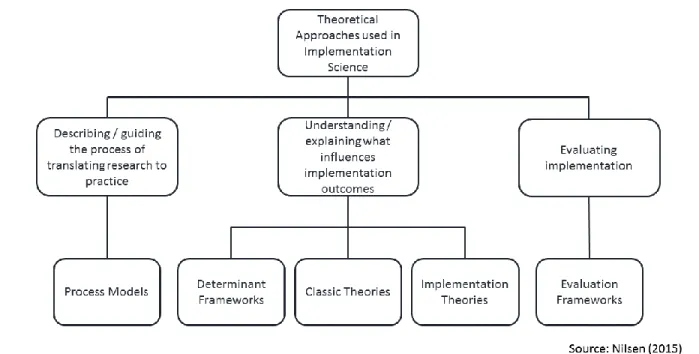
In an attempt to bring order to the plethora of theories, models and frameworks that have emerged in the implementation science literature, one recent paper proposed a taxonomy with five categories of theoretical approaches to achieve three broad aims (Figure 2) (124).
This structure provides a useful way for implementation researchers to assess gaps in the implementation science literature. In the case of low-income countries, for example, there have been numerous studies that use evaluation frameworks to evaluate implementation of interventions (125). There is, however a significant gap in the literature related to the use of implementation theories in low-income countries to identify and explain what influences implementation outcomes. This study seeks to fill this gap by conducting research using implementation theory to identify organizational determinants of implementation effectiveness in a low-income country context.
CHAPTER 3: METHODOLOGY
3.1 Conceptual Framework
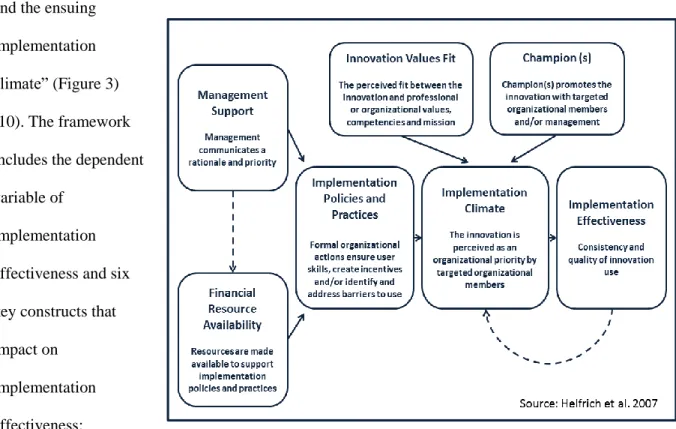
This research used a conceptual framework that was specifically designed to study complex innovations at the organizational level. The hypothesis of the framework is that “implementation is a function of management support and resource availability, mediated by the organization’s specific policies and practices
and the ensuing implementation climate” (Figure 3) (10). The framework includes the dependent variable of
implementation effectiveness and six key constructs that impact on
implementation effectiveness:
management support, financial resource availability, innovation values fit, champion(s), implementation policies and practices (IPPs), and implementation climate. The conceptual and operational definitions for the six key constructs are described in Appendix 3.
3.2 Study Design
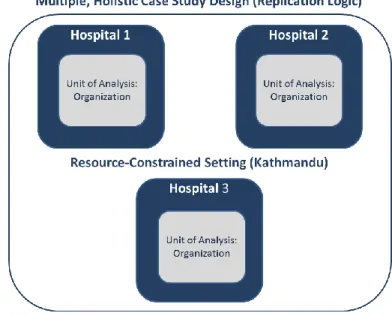
This research used a multiple, holistic case study design using theoretical replication logic for data analysis (Figure 4). The case study design was selected because this methodology is highly relevant for explaining a present phenomenon that requires in-depth description. It is the preferred method when the primary research questions ask
how and why and the researcher has little control over events (126). The research included three cases and each case was treated as a separate study. The design was holistic because there was only a single unit of analysis: the organization (126,127). Theoretical replication logic was used because these three cases varied in type of hospital and governance structure.
The first facility was a private hospital, the second was a government hospital, and the third was a non-profit hospital that was run by an NGO. It was expected that this variable would show different patterns in specific constructs in the model such as financial resource availability.
The cases were selected for this study based on two criteria: 1) location (all hospitals were located in Kathmandu Valley) and 2) implementation length (the hospital administration officially adopted the innovation of interest in this study, non-incineration HCWM system, and started implementation by January 2014). This allowed for at least one year of implementation prior to the start of the data collection in December 2014. There were three hospitals in Kathmandu that met this criteria. The Principal
Investigator met with each hospital director and explained the purpose of the research. The hospital directors granted written permission to conduct the research at each site.
The Principal Investigator consulted with two experts who had specialized skills and global experience in the field of HCWM systems in resource-constrained settings. These experts were consulted on research protocol and measures of implementation effectiveness and other constructs in the conceptual framework. They were also requested to review case study results and provide advice on the plan for change.
3.3 Data Collection Methods and Sources
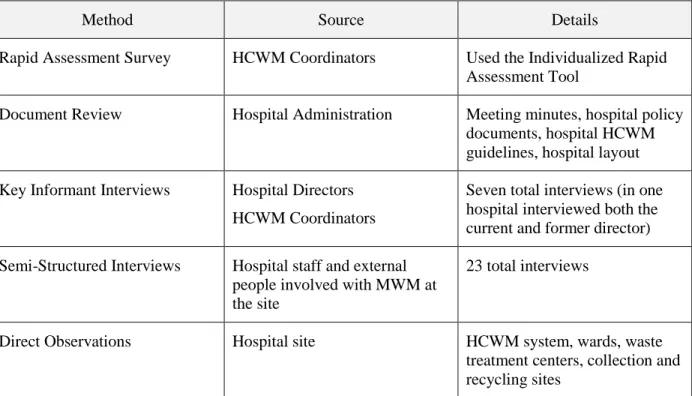
This study used a mixed methods approach that drew on the strengths of both qualitative and quantitative research and multiple sources of evidence in order to triangulate the data. The phenomenon of interest was the implementation of the HCWM system and the data was collected in order to “provide multiple measures of the same phenomenon.” (126) The methods included 1) document review, 2) in-depth interviews, 3) semi-structured interviews, 4) direct observations and 5) a quantitative survey to measure implementation effectiveness (Table 5). A detailed case study protocol was developed and pilot tested in one hospital and a case study database was created to organize the data.
Table 5: Data Methods and Sources
Method Source Details
Rapid Assessment Survey HCWM Coordinators Used the Individualized Rapid Assessment Tool
Document Review Hospital Administration Meeting minutes, hospital policy documents, hospital HCWM guidelines, hospital layout Key Informant Interviews Hospital Directors
HCWM Coordinators
Seven total interviews (in one hospital interviewed both the current and former director) Semi-Structured Interviews Hospital staff and external
people involved with MWM at the site
23 total interviews
Direct Observations Hospital site HCWM system, wards, waste
3.3.1 Survey - Individual Rapid Assessment Tool
A rapid assessment of the HCWM system was conducted at each hospital site using the Individualized Rapid Assessment Tool (IRAT) developed in 2009 by the United Nations Global Environment Facility (UN GEF) (128). This tool was designed specifically for individual healthcare facilities to measure the state of the HCWM system. The tool was simple to administer and provided an automatic score at the end of the data collection that was used as a proxy for implementation
effectiveness. If took approximately one hour to complete including an initial interview with the HCWM coordinator (0.5 hours); tour of the facility and post tour interview with the HCWM coordinator to review the score (0.5 hours).
One index score for implementation effectiveness was calculated for each site based on scores from two parts: an interview and a facility tour. Part I (the interview) included questions in six topic areas: 1) organization; 2) policy and planning; 3) training; 4) occupational health and safety; 5) monitoring, evaluation and
corrective action; and 6) financing.
Part II (the facility tour) covered questions regarding the waste management process including
classification and segregation, waste generation data, collection and handling, color coding and labeling, posters or signage, transportation inside health facility, storage, hazardous chemical, pharmaceutical and radioactive waste, treatment and disposal and wastewater (Figure 5Figure 5).
3.3.2 Document Review
Review of documentation was a critical data collection method for this study to trace the progress of implementation and triangulate document information with data collected from in-depth interviews, observations and the IRAT survey. Collection of documentation followed a standardized protocol that was applied across all sites. The Principal Investigator, after receiving verbal approval from the hospital administration to access relevant documents, requested the following types of documents in person from the HCWM Coordinator:
1) Minutes of meetings during which the process of adoption or implementation of the HCWM system was discussed;
2) Documents that referred to the HCWM policies or practices or the adoption or implementation of the HCWM system;
3) Hospital policy documents / standard procedures / guidelines related to infection control and HCWM including the process of handling healthcare waste in the facility; and
4) HCWM-related documents such as reports, proposals, budgets, contracts, internal records, internal studies, evaluations.
Summaries of all documents were prepared in English. Any contradictory information was followed up with the HCWM Coordinator and explored further to clarify discrepancies. The
documentation also lead to additional questions for investigation. Separate results related to document review were not included in Chapter 4: Results, since the primary purpose of the document review was to verify results from other data collection methods.
3.3.3 Key Informant Interviews
In Nepal, the director of the hospital is in charge of leading the formulation of policies and guidelines for hospital systems and an instrumental figure in the implementation of any complex innovations. For this research, the director of the hospital at each study site was considered a key
informant. If there was a change in directors within one year prior to the adoption of the HCWM system, then the previous director was also considered a key informant and interviewed.
Each hospital had a HCWM coordinator and this person was also considered a key informant since she was directly in charge of implementation of the HCWM system.
Prior to beginning the key informant interviews, the Principal Investigator provided information to the key informant about the study and obtained written informed consent for the interview in either English or Nepali language, based on the preference of the respondent (Appendix 4).
Key informant interviews were held in English or Nepali depending on the preference of the informant. The Principal Investigator is fluent in Nepali and did not use a translator for this study. Notes were taken by computer during most interviews and all interviews were audiotaped (with consent from key informant) except one because the key informant did not consent to audiotaping. The interviews followed the Key Informant Interview Guide for the director or HCWM coordinator with flexibility to probe and follow other areas of key interest that emerged during the interview (Appendix 5). Interview notes were expanded immediately following the interview and audiotapes were used for verification. These expanded interview notes were used for data analysis.
The key informants were asked to provide names of other persons to interview in the hospital including nursing staff, hospital workers or others involved with HCWM and any external individuals who were critical to the adoption and/or implementation process for HCWM.
3.3.4 Semi-structured Interviews
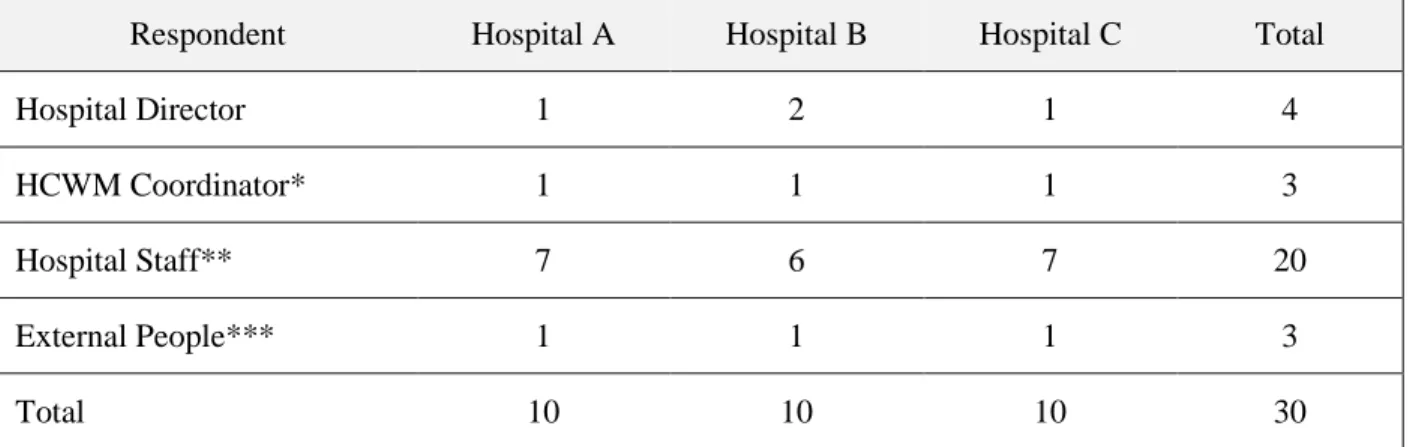
interview guides were used for each interview (Appendix 5). One interview was conducted in each hospital with an individual external to the hospital who was directly involved with the adoption or implementation of the HCWM system (Table 6).
The interviews lasted from 30 minutes to one hour and most were conducted in Nepali language. The Principal Investigator took notes on the computer during the interview. All interviews were
audiotaped (with consent from the respondent). Interview notes were expanded immediately following the interview using the audiotapes for verification. The expanded interview notes were used for data analysis. Table 6: Interview Respondents and Number per Case Study Site
Respondent Hospital A Hospital B Hospital C Total
Hospital Director 1 2 1 4
HCWM Coordinator* 1 1 1 3
Hospital Staff** 7 6 7 20
External People*** 1 1 1 3
Total 10 10 10 30
* These were current staff members: Nursing Supervisor, Matron, Head of Housekeeping
** Included Matron (1), Ward In-Charge (4), Nurse (7), Ward Attendant/Helper (5), HCWM Staff (3) *** People providing technical assistance to the hospital
3.3.5 Direct Observations
Informal observations were also made and recorded throughout the study. The Principal Investigator received oral permission from the hospital HCWM Coordinators in all sites to take photographs to record the HCWM process. There were no photos taken of patients or private rooms.
Data collected from observations was used in the IRAT survey and triangulated with data
collected from in-depth interviews and document review. Observation data was directly used in the IRAT survey as part of the survey protocol. Separate results related to observation visits were not included in Chapter 4: Results, since the primary purpose of the observations was for the IRAT survey (reported separately under IRAT results for each case study and in the cross-case analysis) and to verify results from other data collection methods.
3.4 Data Management
Confidentiality of the data was maintained at all times. Copies of documents collected through the document review were electronic and stored in a password-protected computer that was accessible only by the Principal Investigator. All documents were deleted upon completion of the study.
To protect the confidentiality of interview data, each respondent was given a unique numeric identifier. Names and numeric identifiers of all respondents were kept in a locked password-protected computer file separate from study protocols and transcripts. Respondent names were not included in transcripts; respondents were identified through numeric codes only. The files were accessible only to the Principal Investigator.